Xi'an in China
Xi'an in China sits at the geographic heart of ancient Chinese civilization, cradled in the Wei River valley of Shaanxi Province some 900 kilometers southwest of Beijing. This city of roughly 13.6 million people was known as Chang'an — "Perpetual Peace" — for over a thousand years, serving as the imperial capital for thirteen dynasties from the Zhou to the Tang. Today, it remains one of China's four ancient capitals, its layers of history visible in every direction: the Terracotta Army's underground pits lie 40 kilometers east, while the best-preserved Ming city wall in China forms a 14-kilometer loop around the historic core.
The modern metropolis retains its Silk Road character in the narrow lanes of the Muslim Quarter, where Hui vendors skewer lamb over charcoal and hand-pulled noodles arrive in hand-painted bowls. Visitors arrive year-round, drawn by the pull of the ancient world — and by the straightforward logistics of reaching China's heart from anywhere in the country.
Quick Facts
Where Is Xi'an in China

Xi'an in China
Geography and Position
Shaanxi Province occupies a critical position in central-northwest China, anchoring the middle of the Yellow River basin on the Guanzhong Plain. Xi'an sits roughly 900 kilometers by road southwest of Beijing and approximately 1,400 kilometers northwest of Shanghai — distances that place it within comfortable reach by high-speed rail or domestic flight. The Loess Plateau rises to the north, while the Qinling Mountains form a natural boundary to the south, sheltering the valley from extreme weather.
The Wei River runs east to west through the city, cutting across the Guanzhong Plain and providing the water supply that sustained dynasties. Rail and air links connect Xi'an to every major Chinese city, and the highway network reaches deep into the western interior.
A Capital Across Dynasties
The city was called Chang'an — meaning "Perpetual Peace" — throughout its imperial period. For more than 1,100 years and across thirteen dynasties, this was the seat of Chinese power and culture. It served as the eastern terminus of the overland Silk Road, and in 2014 UNESCO inscribed the "Silk Roads: the Routes Network of Chang'an-Tianshan Corridor," recognizing its global significance.
The Ming-era city wall, completed in 1370, stretches 14 kilometers and contains 18 gates — the most complete surviving city wall in China. Modern Xi'an, with its metro area population of roughly 13.6 million, still clusters within and around the historic walled boundary.
🏰 Explore the Historic Sights: Beyond the world-famous city walls and nearby archaeological pits, the city is packed with ancient pagodas, temple complexes, and scenic mountain parks. Plan your perfect sightseeing checklist using our guide to the top Xian Tourist Places.
Top Things to See and Do in Xi'an
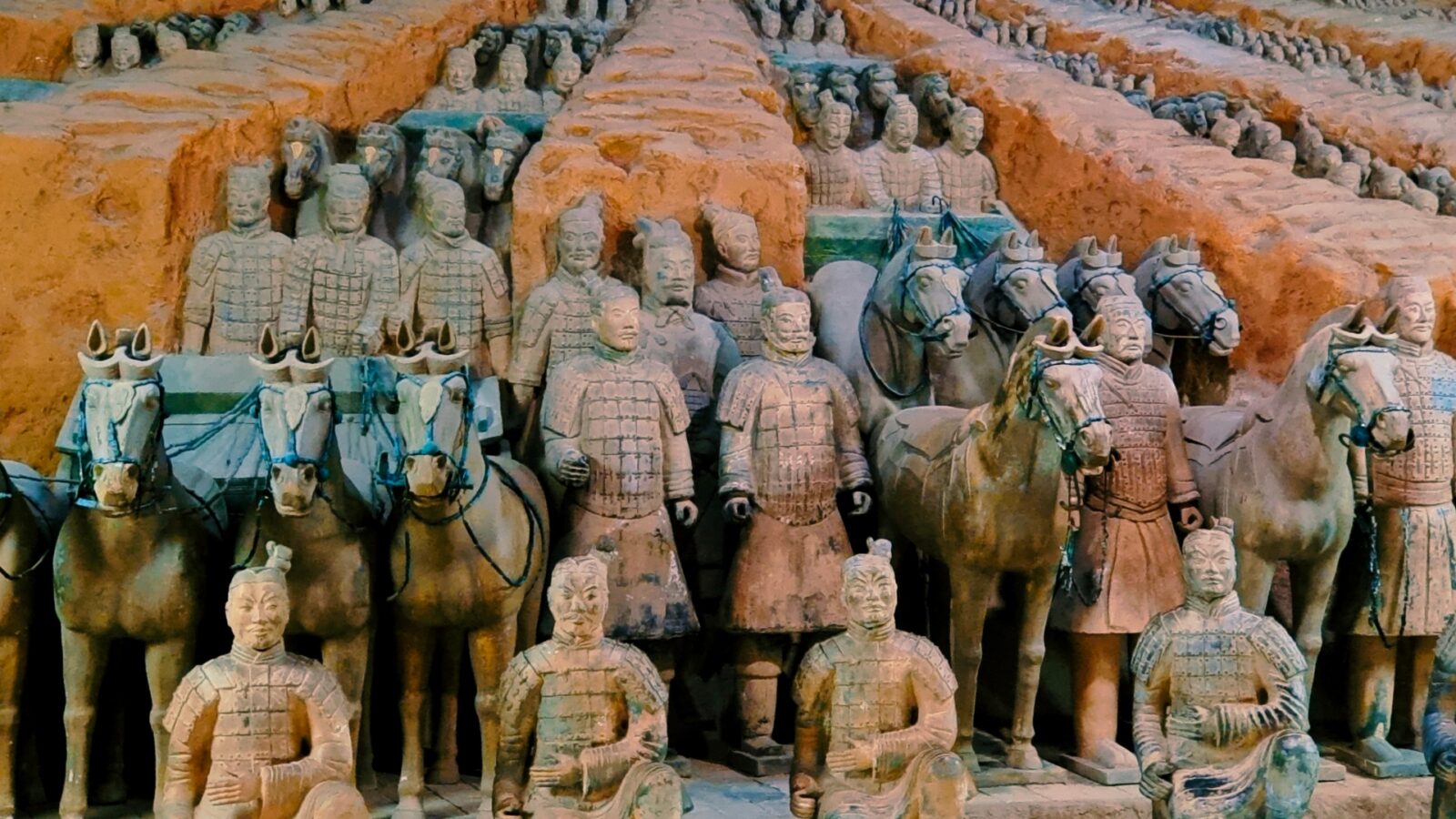
Terracotta Army
Xian Terracotta Army
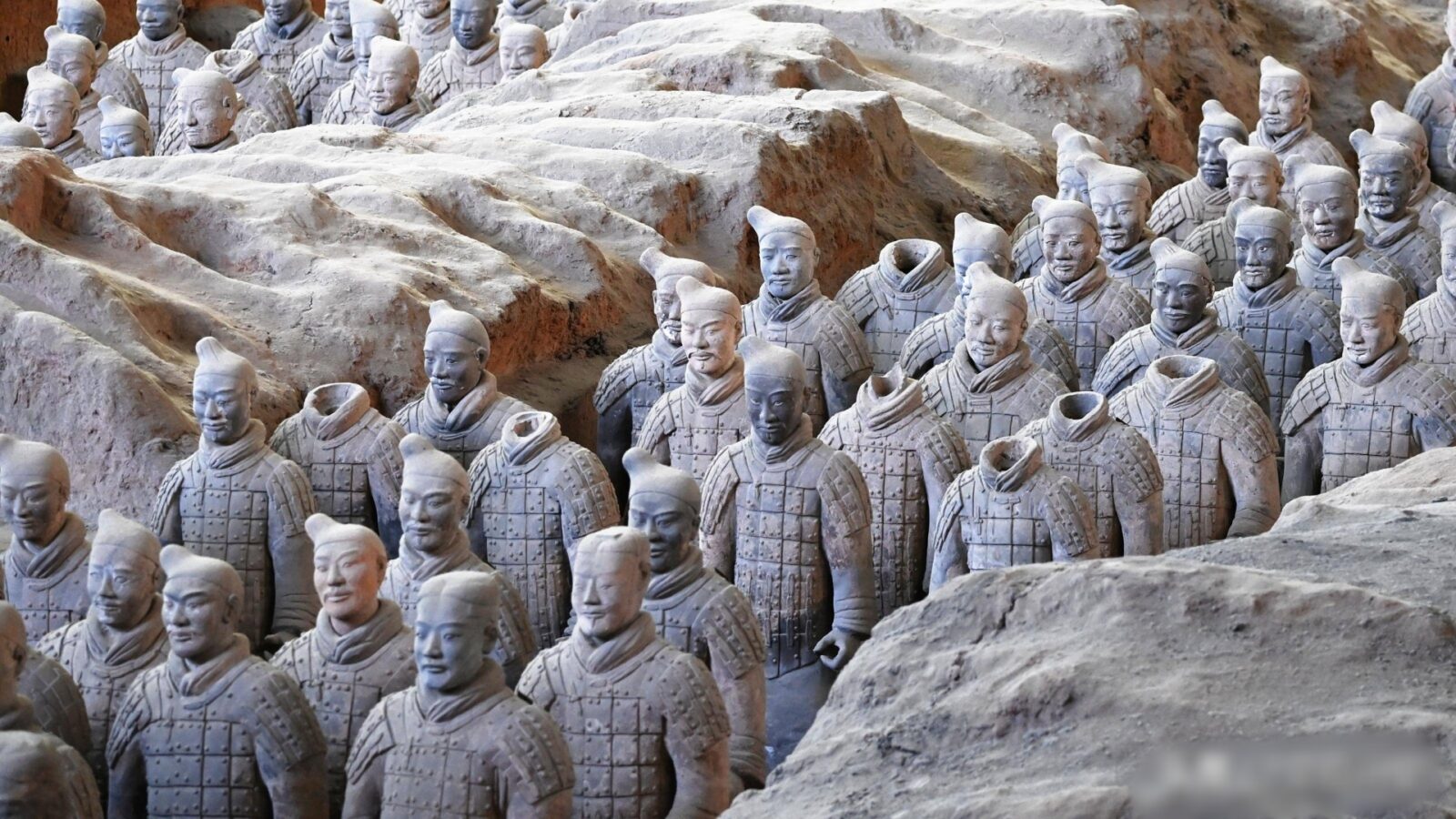
The Terracotta Army sits roughly 40 kilometers east of central Xi'an. Visitors reach it by tourist shuttle bus or by taking Metro Line 9 to Huaqing Palace East, then bus 613. The journey takes about an hour each way. Tickets cost about $14 (¥120) for standard entry or about $21 (¥150) including Huaqing Palace — book both together on Trip.com or Klook, since the venue's own WeChat reservation system requires a mainland phone number.
The site contains three excavation pits and a separate hall displaying two reconstructed Bronze Chariots. Allow three hours minimum. Arrive before 9:00 a.m. — tour groups descend after noon, and Pit 1 becomes congested. The army was discovered in 1974 by local farmers digging a well, and the ongoing excavations continue to reveal new figures.
🚄 Visit from the Capital: Thanks to China's incredibly fast high-speed rail network, travelers short on time can easily visit this ancient wonder and return to Beijing within a single day. Learn how to map out the logistics and train schedules in our guide to a Day Trip from Beijing to Terracotta Warriors.
Xi'an City Wall

Xi'an City Wall
The Ming city wall, completed in 1370, forms a 14-kilometer rectangular loop that encloses the historic city center. The wall stands 12 meters high and roughly 15 meters wide, with 18 gates distributed around the perimeter. A full circuit on foot takes about four hours; bike rental at South Gate or North Gate costs about $3 (¥20) per hour, and the full circuit ticket is about $5 (¥34).
The most complete surviving city wall in China, it is wide enough for bikes, scooters, and pedestrians. Sunset rides are popular — the light over the inner city's grey-tile rooftops and the modern skyline beyond is one of the better urban views in central China.
🚲 Discover Local Experiences: From cycling along the top of the massive Ming-era ramparts to wandering through buzzing creative hubs and lively night markets, there is no shortage of activities to fill your itinerary. Find your inspiration with our curated list of the best Things to Do in Xi'an.
Big Wild Goose Pagoda and Da Ci'en Temple

Big Wild Goose Pagoda
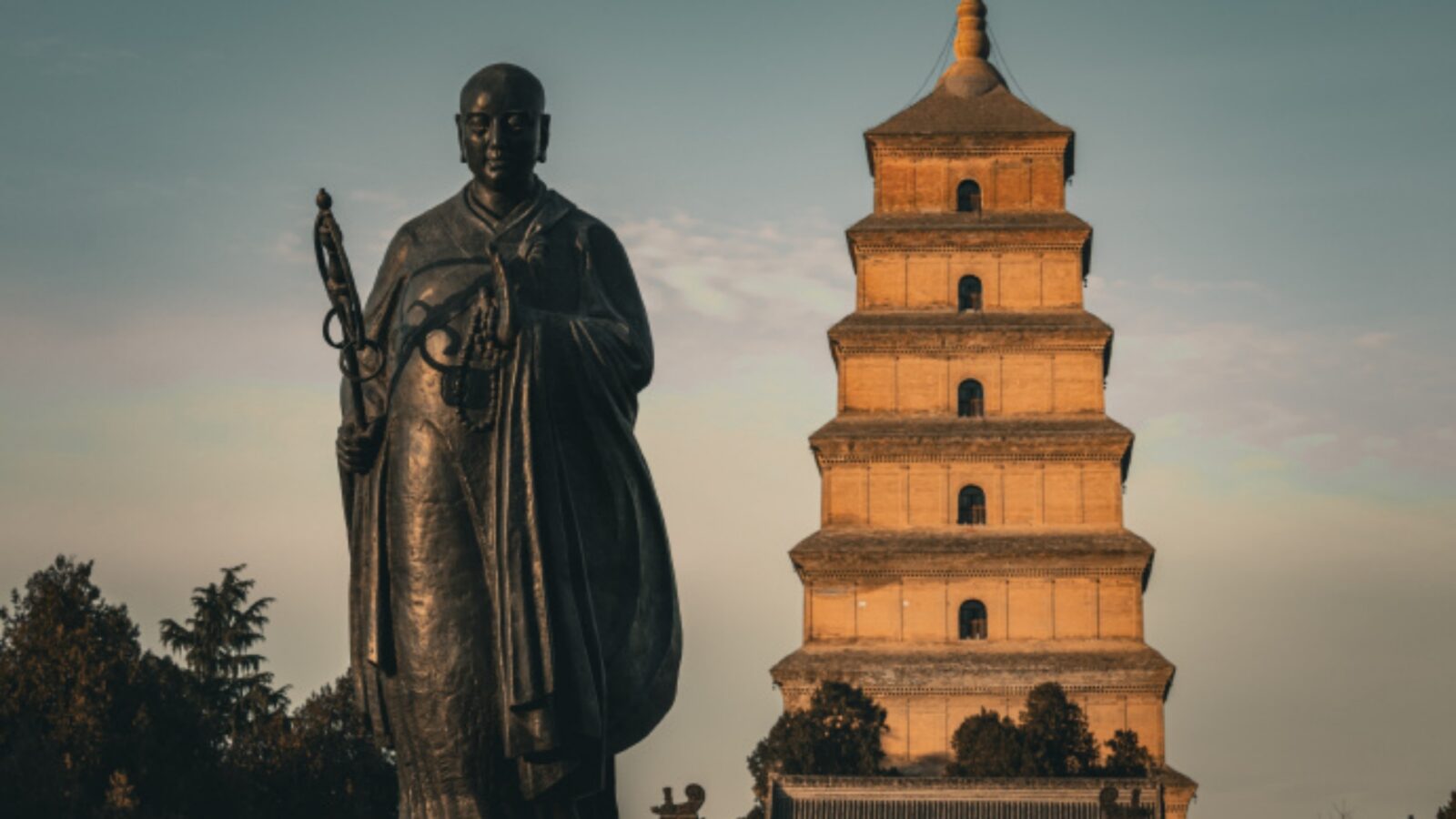
Da Ci'en Temple charges about $3 (¥20) for entry. Climbing the pagoda — seven stories, 64 meters — costs about $7 (¥50). The structure was built in 652 CE under Emperor Gaozong to house the Buddhist sutras that monk Xuanzang carried back from India along the Silk Road. Xuanzang spent the rest of his life here translating the texts.
The North Square Music Fountain runs free evening shows; verify current times on site before your visit. After dark, Datang Everbright City and the surrounding pedestrian zone illuminate with colored lights, making the area worth a walk after the pagoda visit.
Shaanxi History Museum (Qin Han Branch)
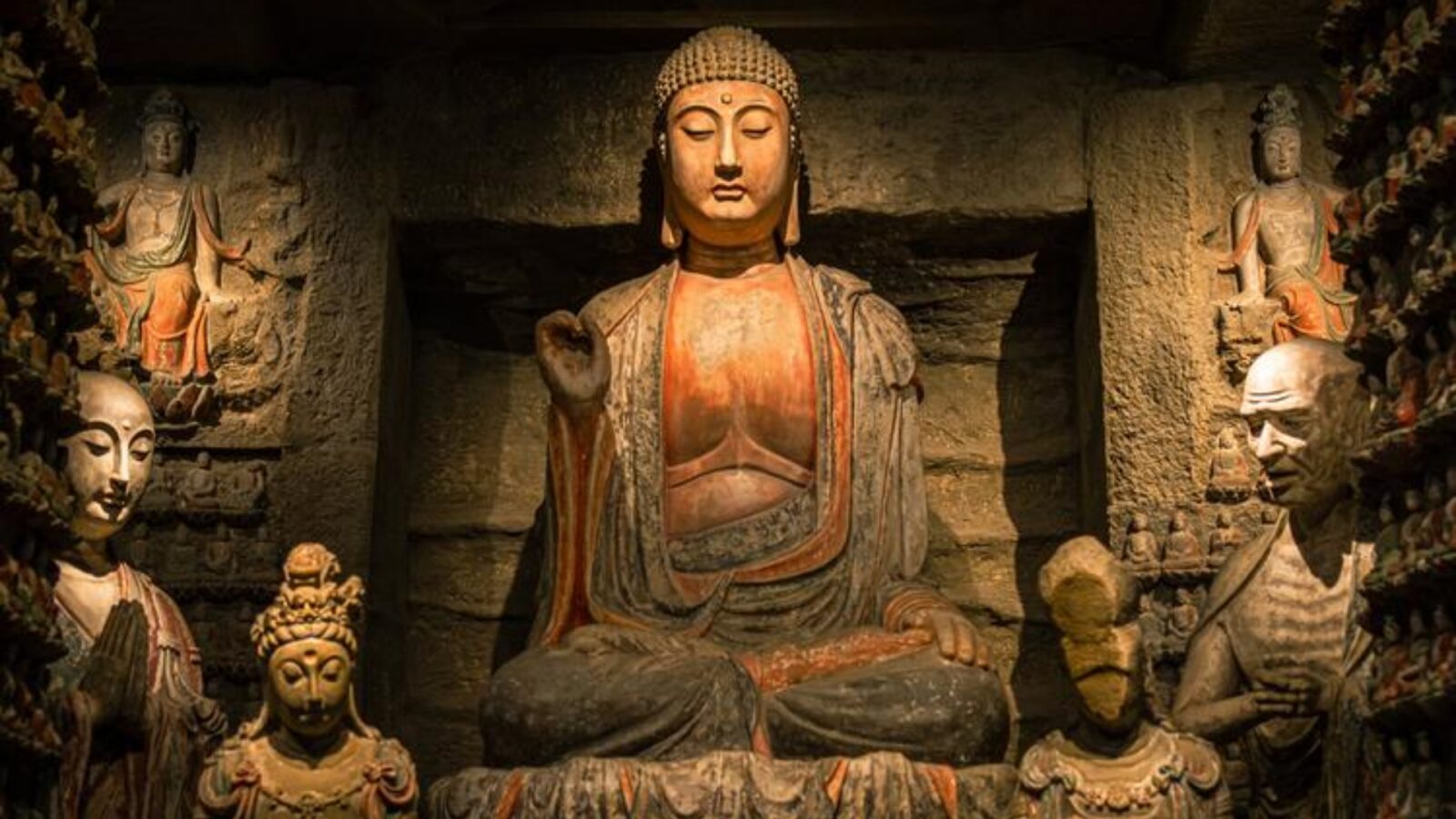
Shaanxi History Museum
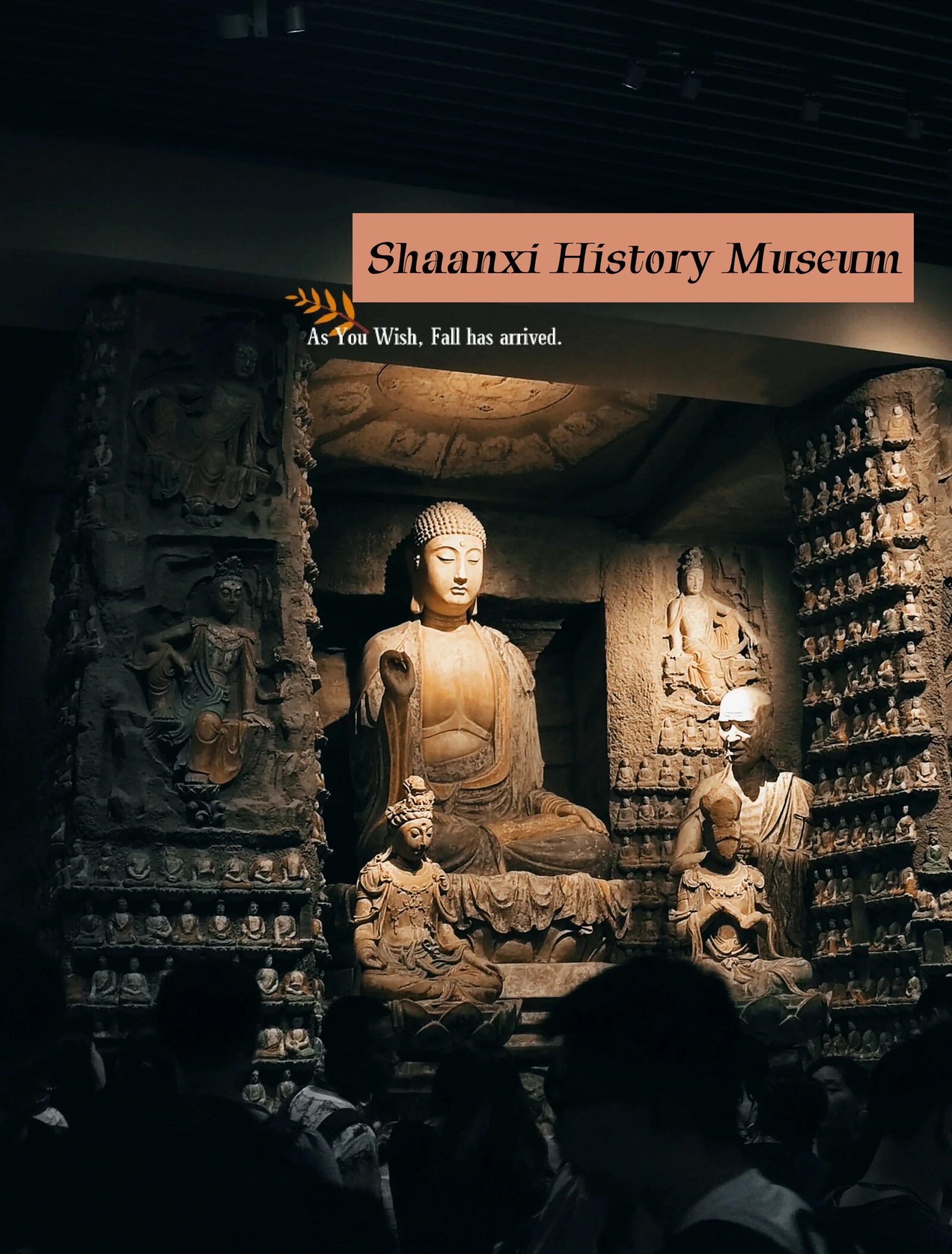
The main Shaanxi History Museum offers free entry but its official WeChat booking system is not functional for foreign passports. International visitors are routed to the Qin Han Museum branch on the east side of the city — roughly an hour by metro. Entry is free, and advance reservation through Trip.com or Klook is required.
The collection covers the Qin and Han dynasties in depth, with artifacts drawn from excavations across Shaanxi Province including the Terracotta Army site. Plan for two to three hours. The building itself is modern and well-signposted in English.
🏺 View Ancient Treasures: To truly appreciate the rich heritage of the thirteen dynasties that ruled from this imperial capital, a visit to the region's premier national gallery is essential. Learn how to book tickets and see the finest collection of Tang murals and bronze relics in our guide to the Shaanxi History Museum, Xi'an, China.
Muslim Quarter, Bell Tower, and Drum Tower
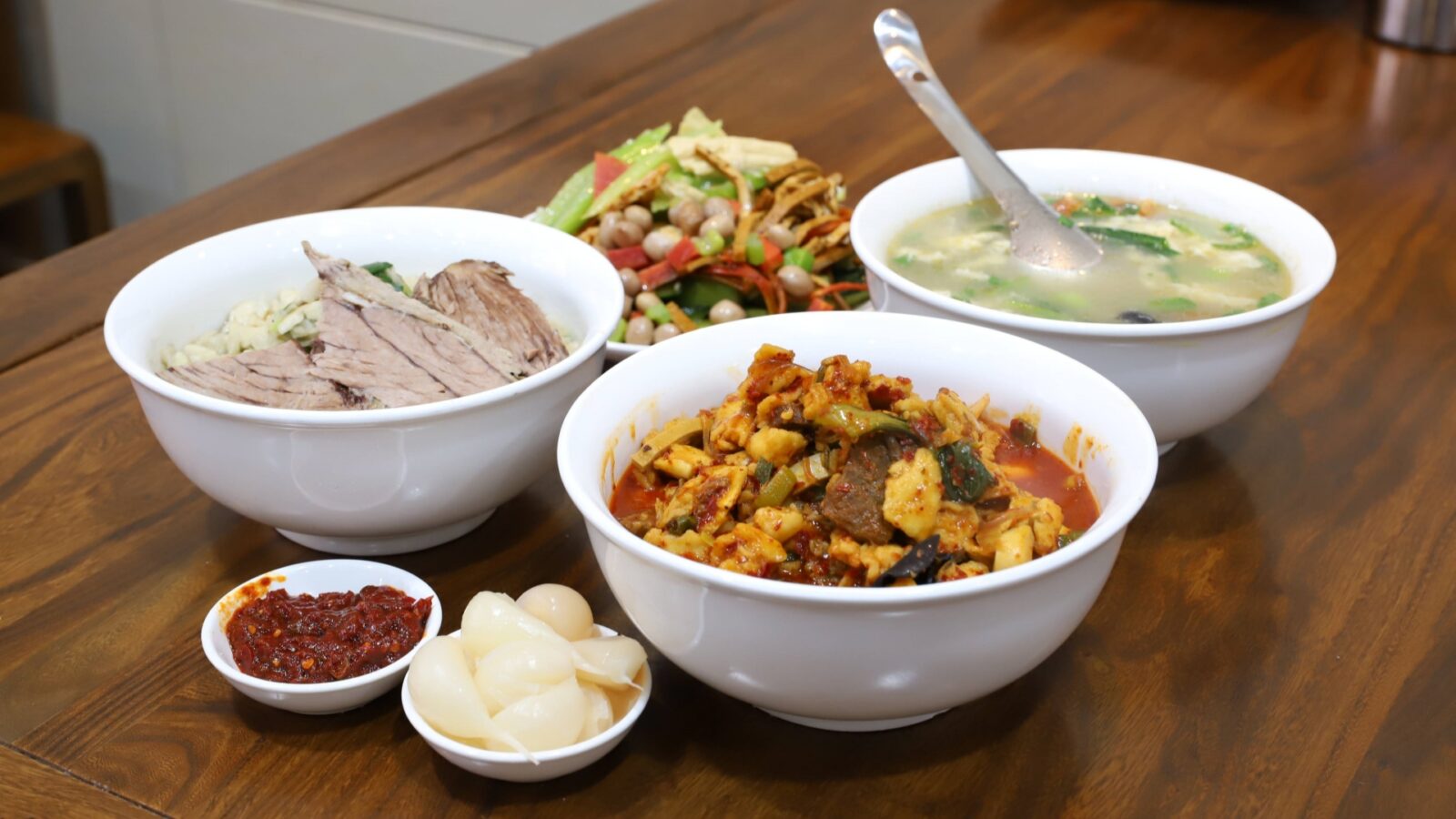
Halal Food at Muslim Quarter
The Bell Tower and Drum Tower sit at the city center's main intersection, about 400 meters apart. Bell Tower entry is about $4 (¥30); Drum Tower entry is about $3 (¥25), with hourly drum performances from 9:30 to 16:20. Both are easiest to visit on foot from the South Gate or Bell Tower metro station.
The Great Mosque of Xi'an — entry about $3 (¥25) — sits inside the Muslim Quarter. Modest dress (covered shoulders and knees) is required. Huimin Street is the main food lane; the older Muslim Dasi Residential Quarter behind it offers souvenir shopping at lower prices. The single best introduction to Xi'an's street food culture is a late-afternoon walk through the Quarter on an empty stomach.
🍜 Taste the Regional Flavors: The unique Silk Road heritage of the city is best experienced through its robust culinary scene, famous for savory mutton stews, tangy cold noodles, and flatbread sandwiches. Dive into the local culinary culture with our ultimate guide to Shaanxi Food.
When to Visit and What to Wear
Weather by Season
What to Pack and Wear for Xi'an's Sites
Comfortable closed-toe walking shoes are the single most important item. Terracotta pit floors are gravel, City Wall ramparts are uneven in places, and Big Wild Goose Pagoda stairs are steep and narrow. A rolled ankle is an avoidable outcome on broken paving stones.
Breathable layers work year-round. In spring and autumn, a light jacket for mornings and evenings over a t-shirt handles the temperature swings. December through February require a proper insulated jacket — the pits are unheated, and the wind off the Loess Plateau cuts through light layers. Summer visitors should pack breathable cotton or linen alongside a sunhat and refillable water bottle.
The Great Mosque requires modest dress: covered shoulders and knees, and no head coverings inside the prayer hall itself. Women visiting any religious site should carry a scarf as a flexible cover. Bring a small daypack for water, layers, and souvenirs on Terracotta day. Mid-range hotels inside the walls almost universally offer same-day laundry service, so packing for a week is straightforward.
How Many Days to Spend in Xi'an
One Day in Xi'an
A single day covers the essentials at pace. The Terracotta Army takes the morning — depart the city by 7:30 and arrive before 9:00 to move through the site ahead of the tour bus arrivals that crowd the pits after noon. Budget three hours on-site. A bowl of biangbiang noodles near Huaqing Palace or back in the city center makes a quick lunch.
The afternoon fits a City Wall bike circuit from South Gate. Sunset is the popular window, and the light over the inner city from the ramparts is genuinely good. Finish with street food on Huimin Street in the Muslim Quarter. This day is tight but executable.
Two Days in Xi'an
Two days removes the urgency and adds depth. Day one covers the city: Bell Tower, Drum Tower (catch the hourly drum performance, 9:30 to 16:20), the Forest of Stone Steles Museum, lunch in the Muslim Quarter, and a City Wall bike ride at sunset. Day two starts with the Terracotta Army in the morning, moves to Huaqing Palace in the afternoon, and ends at Big Wild Goose Pagoda for the Music Fountain show after dark.
This is the practical minimum for a first visit. It covers the headline attractions, provides evening entertainment, and does not feel rushed.
Three Days in Xi'an
Three days introduces side trips that require a full day. Mount Hua is the most dramatic option — take the high-speed train from Xi'an North Station (about 1.5 hours each way) and plan a full day for the cable cars, summit trails, and granite peaks.
Alternatively, Han Yang Ling, about 30 minutes north of the Terracotta site, holds the underground tomb of Emperor Jing of Han and is less crowded than the main Warriors. A third option pairs Daming Palace National Heritage Park in the morning with the Shaanxi History Museum's Qin Han branch in the afternoon — the latter requires advance booking but is free.
Getting to and Around Xi'an
Arriving in Xi'an
Getting Around by Metro, Taxi, and Bike
Xi'an's metro system runs eight lines plus the airport express, making it the most efficient way to cross the city. Line 2 runs north to south through the city center and connects directly to North Railway Station. Single rides cost roughly $0.30–1.20 (¥2–9). A 24-hour pass costs about $2 (¥15) but is available only at manned ticket windows — look for the service counter rather than the automated machines.
Didi (use the international version) works for taxis; not all drivers speak English, so showing your destination in Chinese characters from a map screenshot is more reliable than attempting verbal communication. Bike-share stations from HelloRide and Meituan are dense inside the walls and useful for short hops between sites. Expect security screening — airport-style bag checks — at every metro entrance.
Apps, Payments, and Language
Google, Facebook, Instagram, and WhatsApp are blocked in mainland China. Install a VPN before arrival and test it on your devices before departure. Trip.com and Klook accept foreign passports and overseas cards for attraction bookings and train tickets without requiring a mainland phone number.
Alipay has a Tourist version that links to Visa, Mastercard, or Amex. WeChat Pay works for full in-China transactions but requires a Chinese bank account. English is spoken at international hotels, on the Terracotta shuttle bus, and by licensed tour guides — rarely in taxis or regular restaurants. Translation apps such as DeepL or Pleco are practical tools. The official venue WeChat accounts used by domestic visitors for museum reservations are not accessible to foreign passports at many state-run sites.
Where to Stay and Eat in Xi'an
Where to Stay
Inside the city walls, the area around Bell Tower and South Gate offers the most convenient base — most major city sights are within walking distance. Qujiang New District, south of the walls, has modern four-star hotels near the Big Wild Goose Pagoda and the Datang Everbright City entertainment zone. Staying in Lintong, the district nearest the Terracotta Army, trades city atmosphere for a 6:30 a.m. departure advantage.
Mid-range hotels inside the walls typically cost $50–90 (¥360–650) per night. Luxury properties near the Bell Tower or in Qujiang run $150+ (¥1,080+). Book through Trip.com or Klook for English-language confirmation emails and foreign-card payment support — domestic booking platforms require Chinese identity documents.
What to Eat
Xi'an's food culture runs through the Muslim Quarter, and the single best introduction to the city is a late-afternoon walk on Huimin Street with no breakfast. Biangbiang noodles — wide hand-pulled wheat noodles in chili-oil sauce — cost about $2–4 (¥15–30) per bowl. Rou jia mo, braised pork or beef in a small flatbread bun, is the local equivalent of a hamburger at about $1–2 (¥8–15). Yangrou paomo — crumbled flatbread soaked in mutton broth — is the signature Xi'an dish and is eaten with the fingers, pulling the soggy bread apart before the stew arrives.
Evening vendors set up along the side streets with cumin-dusted lamb and chili-spiced seafood skewers grilled over charcoal. Persimmon cakes and steamed jujube cakes are the traditional breakfast sweets. The Hui food culture of the Muslim Quarter is the most accessible introduction, but Xi'an's broader Shaanxi cuisine appears on menus throughout the city — look for the wide noodles and the vinegar-forward chili oils that characterize the regional palette.
Frequently Asked Questions
Q: Where is Xi'an located in China?
Xi'an sits in Shaanxi Province, central-northwest China, in the Wei River valley on the Guanzhong Plain. It lies roughly 900 kilometers southwest of Beijing and approximately 1,400 kilometers northwest of Shanghai. The Loess Plateau borders the region to the north, and the Qinling Mountains rise to the south.
Q: How many days should I spend in Xi'an?
Two full days is the practical minimum for first-time visitors. One day can cover Terracotta, City Wall, and Muslim Quarter at speed, but it does not allow for a relaxed pace. Three days lets you add Mount Hua, Han Yang Ling, or Daming Palace without rushing the core sites.
Q: Is Xi'an the oldest city in China?
It is one of the oldest continuously inhabited cities in the world, with an archaeological record extending back roughly 6,000 years. As Chang'an, it served as imperial capital for 13 dynasties across more than 1,100 years. It is not officially designated as "the oldest city in China," but it is consistently listed among the four ancient capitals.
Q: What is Xi'an most famous for?
The Terracotta Army of Emperor Qin Shi Huang, discovered in 1974 and now a UNESCO World Heritage site, is the primary draw. It is also known for the 14-kilometer Ming-dynasty city wall — the most complete in China — the Big Wild Goose Pagoda and Da Ci'en Temple, and its historical role as the eastern terminus of the ancient Silk Road.
Q: When is the best time of year to visit Xi'an?
April through May and September through October offer the mildest weather and clearest skies. July and August are hot (32–35°C), humid, and prone to thunderstorms. December through February are cold (-5 to 8°C) but uncrowded. March can bring dust from the Loess Plateau to the north.
Q: How do I book Terracotta Army tickets as a foreigner?
Book through Trip.com or Klook — both accept foreign passports and overseas cards. The on-site WeChat booking system requires a mainland phone number and is not usable by most international visitors. Standard entry costs about $14 (¥120); combined ticket with Huaqing Palace is about $21 (¥150). Arriving before 9:00 a.m. avoids the heaviest afternoon crowds.
Q: Do I need a visa to visit Xi'an?
30-day visa-free entry is available for holders of many passports — including most EU countries, Australia, New Zealand, South Korea, and Japan — under current transit and visa-free policies. Other nationalities need a tourist L visa. Check the current rule for your passport before booking flights.
Q: Is English spoken in Xi'an?
English is spoken at international hotels, on the Terracotta shuttle bus, and by licensed tour guides. In regular restaurants, taxis, and small shops, English is rare. Written English signage at major sites is improving but remains limited. A translation app (DeepL or Pleco) is strongly recommended.
Q: What should I wear when visiting the Terracotta Army?
Comfortable closed-toe walking shoes — pit floors are gravel and the ground is uneven. Light layers work year-round; the pits are unheated and can feel cold in winter, warm in summer. A hat and refillable water bottle are useful from June through August. The same shoe advice applies to the City Wall bike ride and the Big Wild Goose Pagoda climb.
Q: What time zone is Xi'an in?
China Standard Time, UTC+8. The entire mainland uses a single time zone year-round with no daylight saving adjustment. This applies regardless of how far east or west you are within China.