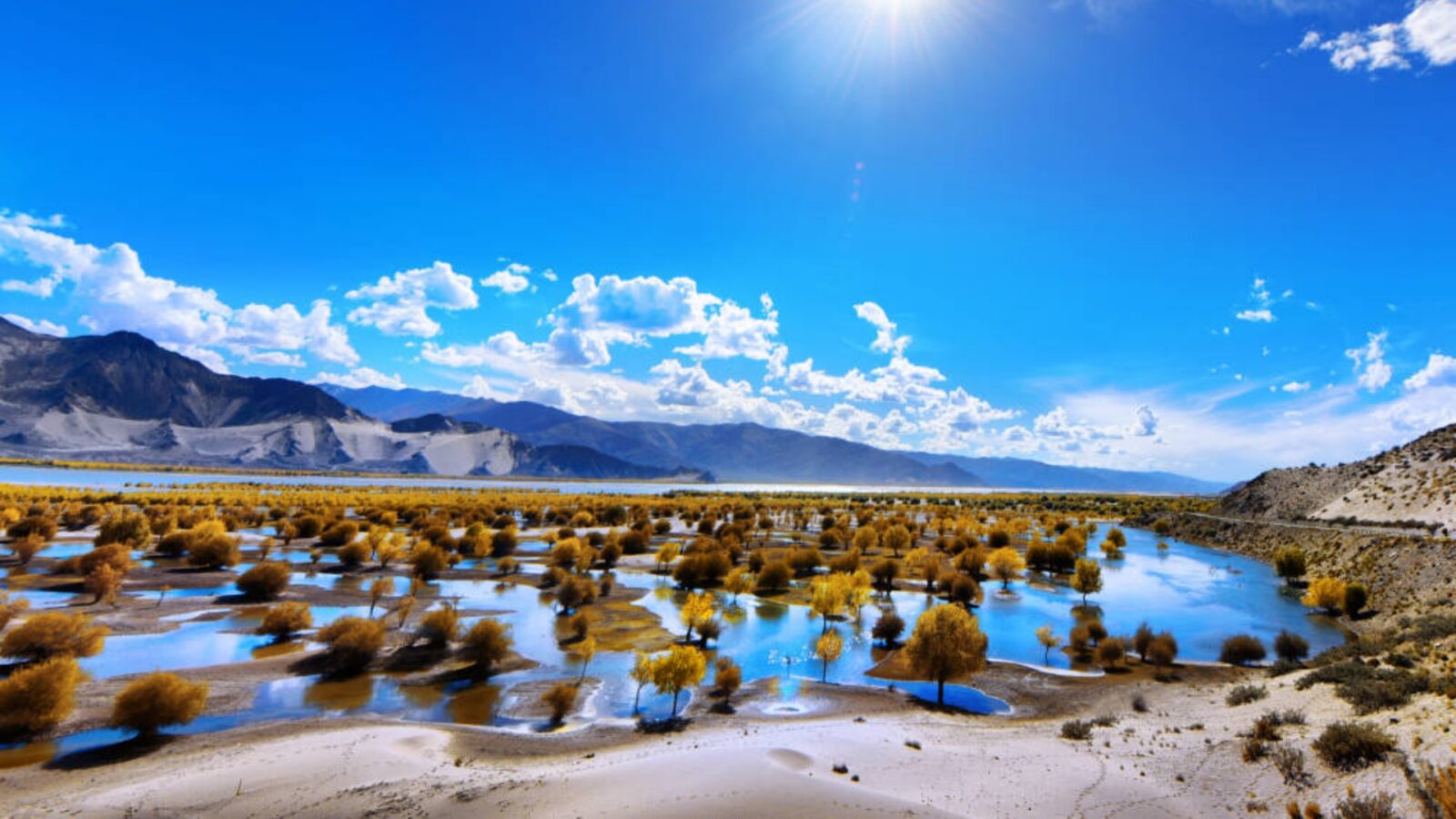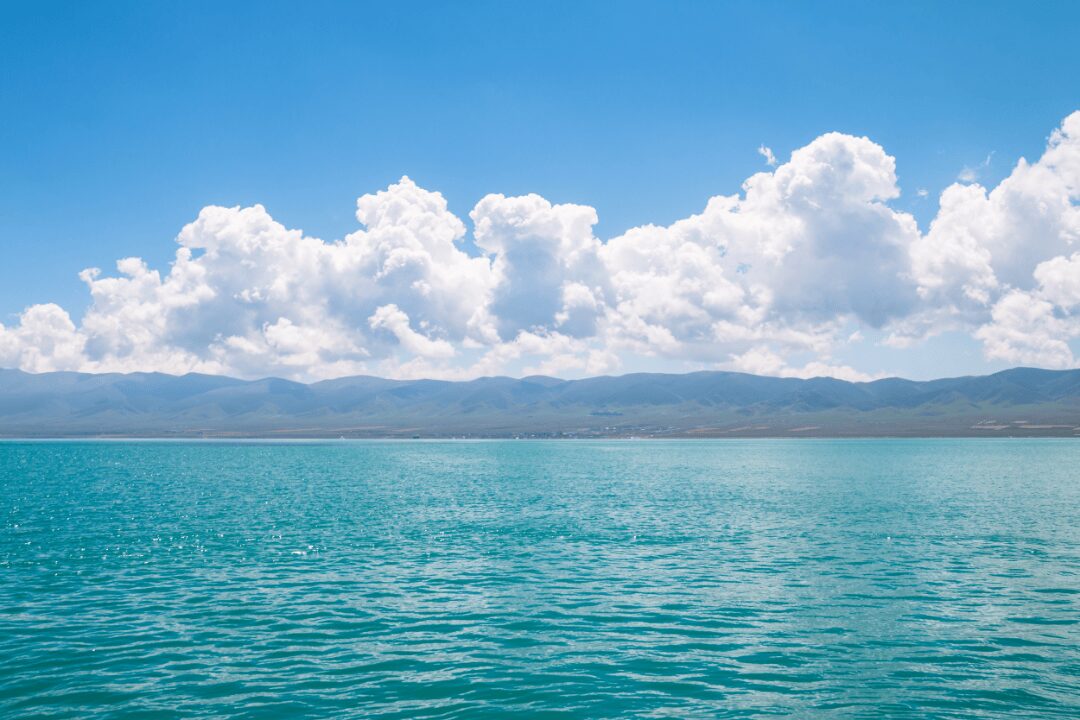
Everest from Tibet
The Tibetan plateau delivers the world's most dramatic approach to Mount Everest. From Lhasa, a 700-kilometer overland journey across high passes and ancient monasteries brings you to the North Base Camp at 5,200 meters—closer to the summit than the Nepal-side camp and framed by the full north face of the mountain. The route is tightly regulated: foreign visitors must travel through authorized agencies, and a layered permit system controls access to this border region. For climbers, the Tibet side offers the original 1960 route up the North Ridge, now managed by the China Mountaineering Association. For sightseers, a four-day tour from Lhasa puts you at the foot of the Rongbuk Glacier with views of six 8,000-meter peaks. This guide covers the route, the paperwork, the cost, and the best months to go.
Quick Facts
⛰️ China's Pinnacle Peak: Towering along the border at 8,848 meters, learn more about the geography and climbing history of the Highest Mountain Peak in China.
The North Route from Lhasa to Base Camp
The standard approach to Everest Base Camp from the Tibetan side is entirely overland. Most travelers start in Lhasa, a city sitting at 3,650 meters on the Lhasa River valley, then drive south through Gyantse and Shigatse before cutting east toward the border ranges. The road crosses the Karo La and Kamba La passes en route, each above 5,000 meters, before dropping into the town of Tingri at 4,300 meters. From Tingri, a 110-kilometer gravel track climbs over Pang La pass at 5,200 meters—the highest road point before Base Camp—then descends to the Rongbuk Monastery and the North Base Camp at 5,200 meters on the Rongbuk Glacier moraine. The full Lhasa-to-EBC drive covers roughly 700 kilometers and takes about ten to twelve hours across two days, with an overnight stop in Shigatse for altitude acclimatization.
The Rongbuk valley has long served as the gateway for expeditions approaching the north face. Trekkers who lack summit ambitions can walk the final 24 kilometers from interim camp (5,800 m) to ABC (6,400 m) without pushing higher. Meanwhile, full climbing expeditions use ABC as the launchpad for rotations up the North Col, Camp 2, and Camp 3 before a summit push on the Northeast Ridge. An alternative entry from Kathmandu via the Friendship Highway through Zhangmu and Nyalam once offered a shorter route to Tingri, but this border crossing has remained closed to foreign tourists since 2019.
The Friendship Highway from Lhasa to Tingri
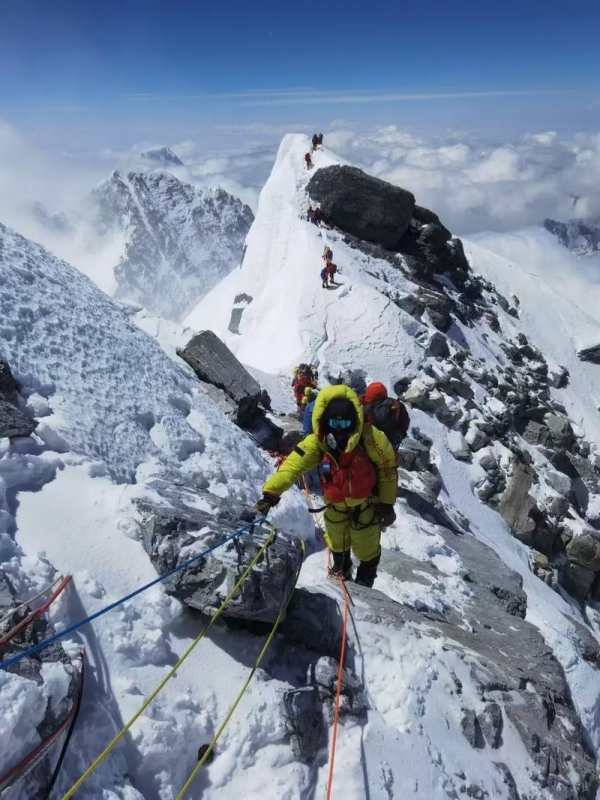
Mount Everest (Chinese Highest Mountain)
The first 360 kilometers from Lhasa to Tingri run along the sealed Friendship Highway. The road passes through Gyantse, where the Kumbum Stupa and Pelkhor Chode monastery sit at the foot of the surrounding hills, then continues to Shigatse, Tibet's second-largest city and the seat of the Panchen Lama at Tashilhunpo Monastery. Most tour groups break here at 3,800 meters for a night before pushing higher. The altitude profile climbs gradually from Lhasa's 3,650 meters through Shigatse's 3,800 meters up to Tingri's 4,300 meters. Travelers should budget two days for this leg, with the first day's drive to Shigatse and the second pushing on to Tingri for better acclimatization.
Tingri to Rongbuk and Base Camp
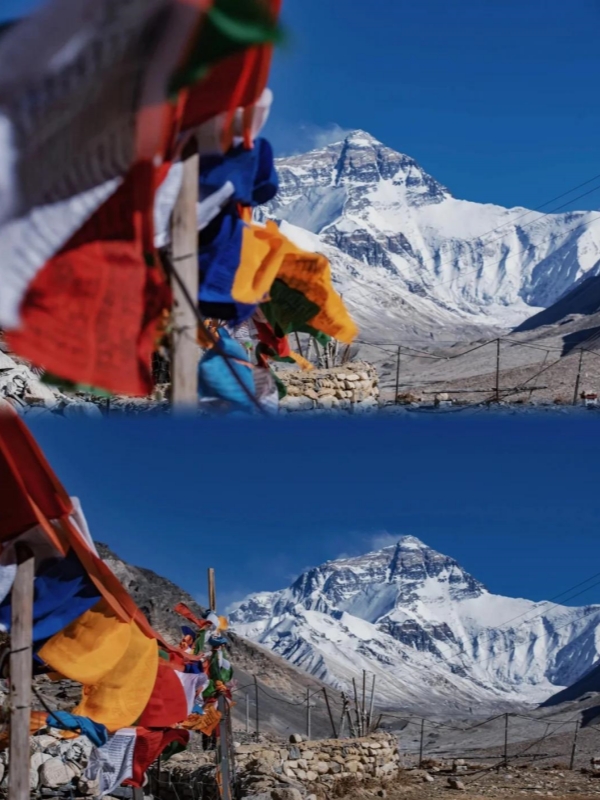
Rongbuk
The 110-kilometer road from Tingri to Rongbuk climbs sharply over the 5,200-meter Pang La pass before descending along the Rongbuk valley toward the monastery. The road is unpaved throughout this section—gravel, washboard, and occasional river crossings—and remains so despite occasional reports suggesting otherwise. The Tibet Tourism Bureau checkpoint at Rongbuk Monastery marks the last control point before North Base Camp, and only authorized expedition and tour vehicles are permitted beyond it. Travelers on standard tour packages will reach the monastery and the EBC viewing area but cannot proceed further up the valley without specific expedition credentials.
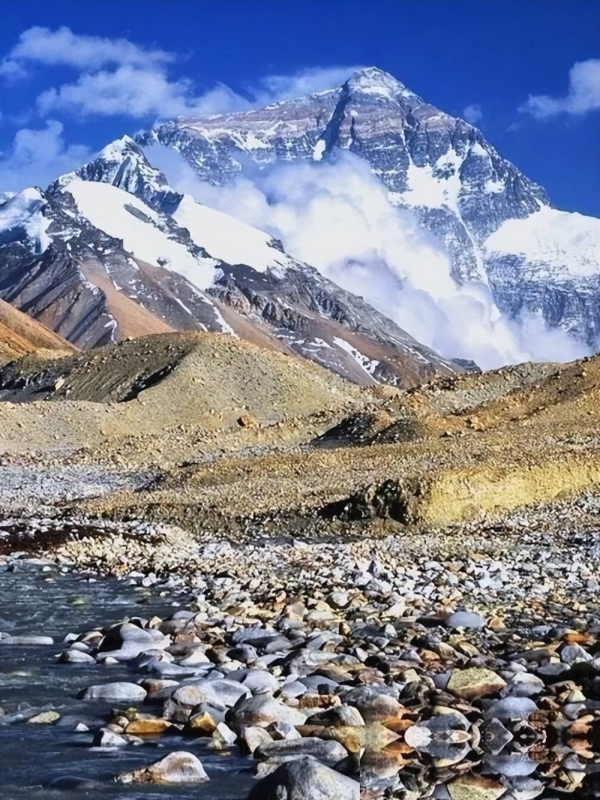
The Rongbuk Monastery itself sits at approximately 5,000 meters, claiming the title of the world's highest monastery. The compound faces directly toward the north face of Everest, and on clear mornings the mountain fills the frame between the valley walls. A short walk from the monastery leads to the river crossing that is the standard photograph point. Near the base camp site, a memorial honors George Mallory and Sandy Irvine, the early British explorers whose 1924 expedition ended in disappearance on the north face. For most visitors on a four-day tour, this is the final high point before returning to lower altitudes.
4-Day and 7-Day Tour Options
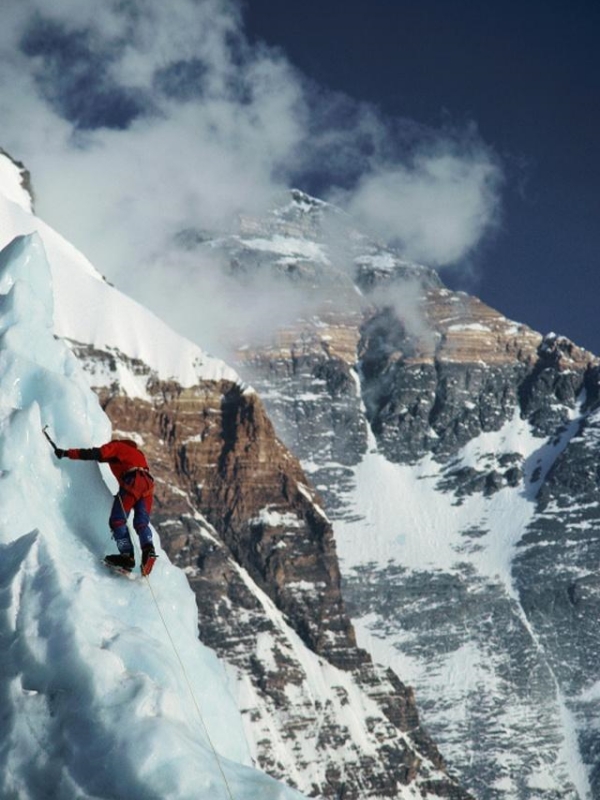
Everest from Tibet
The most common way to visit the North Base Camp without climbing is through a multi-day tour departing from Lhasa. Small-group departures typically run with four to twelve travelers in a shared vehicle, while private tours can be arranged year-round for individuals or families. Both formats include a licensed guide, 4WD transport, accommodation, and permit processing. The four-day itinerary is the standard product most visitors book.
- 4-day outline: Day 1: Lhasa to Shigatse via Gyantse. Day 2: Shigatse to Tingri, acclimatization. Day 3: Tingri to Pang La pass, Rongbuk Monastery, and North Base Camp; return toward Tingri or Shigatse. Day 4: Return drive to Lhasa.
- 7-day outline: Extends the route with an extra Namtso Lake day or a longer Gyantse monastery stop; adds flexibility for altitude adjustment and covers more of the plateau's highlights.
- Small-group vs. private: Small-group four-day tours run about $500–800 (¥3,500–5,700) per person in twin-share accommodation. A private four-day tour for two to four travelers costs roughly $1,300–2,100 (¥9,200–14,900) per vehicle.
- Typical inclusions: Tibet Travel Permit processing, English-speaking guide, driver and 4WD, accommodation rated three-star in Lhasa and best-available guesthouses in Tingri or Rongbuk tent camps, meals on the road, and an oxygen bottle in the vehicle.
🏔️ Explore Plateau Culture & Highlights: Beyond the Himalayan peaks, discover historic monasteries, sacred lakes, and cultural landmarks in What is Tibet Known For.
Where to See Everest Without Climbing
For travelers who want to witness Everest without committing to a climb or a multi-week trek, the Tibet side offers several accessible viewpoints. The mountain is not visible from Lhasa—the summit sits roughly 300 kilometers away behind intervening ranges—but it reveals itself dramatically as the road climbs toward the border. Three main stopping points give progressively closer views, each with distinct advantages for photography and altitude experience.
Pang La Pass Viewpoint
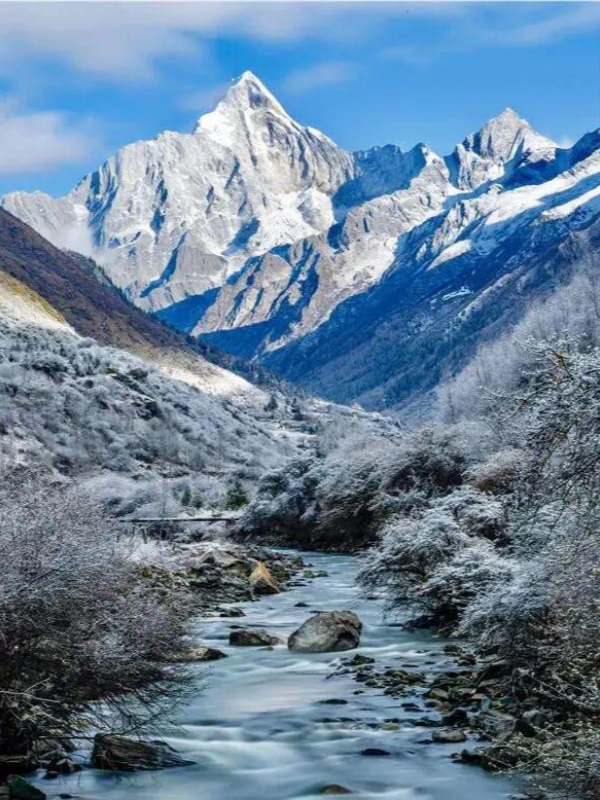
The Pang La Pass Viewpoint
Pang La pass sits at 5,200 meters, approximately 50 kilometers before Rongbuk Monastery along the Tingri road. On a clear day, the panorama is exceptional: Everest occupies the center of the view, flanked by Lhotse, Lhotse Shar, Makalu, Cho Oyu, Shishapangma, and Kangchenjunga—six of the world's fourteen 8,000-meter peaks visible from a single roadside stop. The pass is typically covered in snow from November through March, adding to the drama but requiring warmer clothing. Wind is common at this altitude, and most visitors spend fifteen to thirty minutes at the viewpoint before continuing toward Rongbuk. This is the first high-altitude reality check on the drive from Lhasa, and the surrounding light changes quickly with cloud movement.
Rongbuk Monastery and Riverside
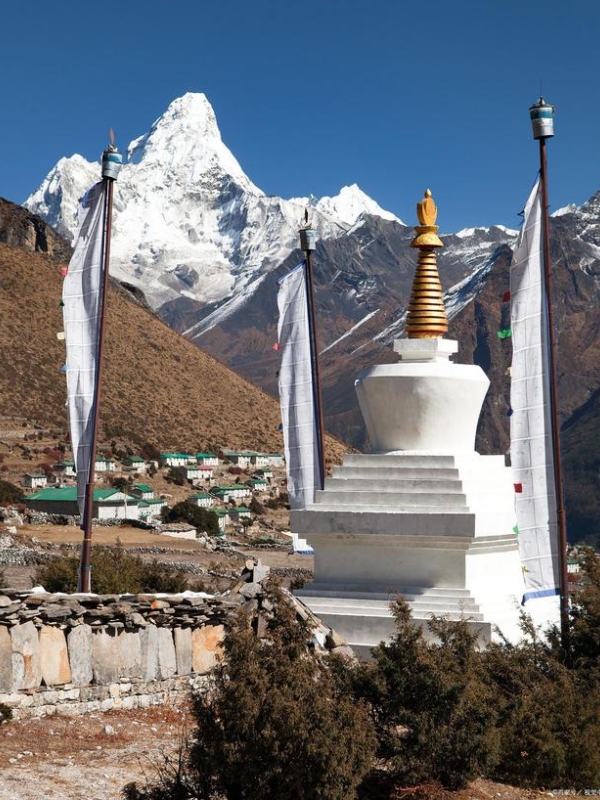
Rongbuk Monastery
The Rongbuk Monastery complex at approximately 5,000 meters provides a spiritual counterpoint to the mountain's scale. The world's highest monastery sits about eight kilometers below North Base Camp, and the valley walls frame Everest in a way that feels more intimate than the panoramic pass views. The small river crossing near the monastery grounds is the standard photograph angle, with the north face rising behind the prayer flags. Tour vehicles can reach the monastery freely, but the road beyond it toward base camp is restricted to authorized expedition traffic. Visitors with tent-guesthouse accommodation in the Rongbuk valley can spend the night here, waking to an unobstructed sunrise view of the summit.
Tingri Town Lookout
For those who want their first Everest view before tackling the high passes, the Chomolungma (Everest) monument on the hill above Tingri town offers a accessible alternative. The granite monument honors the mountain itself, and the hilltop gives an unobstructed line of sight to Everest, Cho Oyu, and Pumori on clear days. Tingri sits at 4,300 meters—lower than the passes but still a significant altitude—and the short walk up to the monument takes about thirty minutes from the main street. Tour groups often stop here at sunrise or sunset to catch the mountain in the best light before continuing toward Pang La and Rongbuk. It functions equally well as an acclimatization stopping point on the drive south from Shigatse.
🏞️ Explore Amdo Tibetan Culture: If you want to experience Tibetan monasteries and grasslands without needing a special travel permit, explore Gannan Travel Guide.
Permits and Paperwork for Foreign Visitors
Every foreign visitor to the Tibet Autonomous Region must enter as part of a registered tour or expedition. Independent travel is not permitted, and the permit system reflects this: an authorized travel agency or licensed expedition operator acts as the sole applicant for all required documents. The process begins with the Tibet Travel Permit, issued by the Tibet Tourism Bureau and tied to a specific tour itinerary. For the Everest border area, a second document—the Alien's Travel Permit—adds access to restricted zones near the Nepal frontier. Climbers require a separate Mountaineering Permit issued by the China Mountaineering Association. Processing typically takes twelve to fifteen working days, and the original passport must be submitted to the agency well in advance of departure.
Required Permits and Who Issues Them
Climbing Permit Cost and What It Covers
The mountaineering fee on the Tibet side is set by the China Mountaineering Association and covers the permit itself. The published rate stands at roughly $11,000 (¥78,000) per climber for a mid-sized team, with the per-head cost scaling downward as team size increases. Larger expedition parties pay less per person under the CMA schedule. However, the climbing fee is only one component of the total budget.
- Mountaineering fee: ~$11,000 (¥78,000) per climber for a standard team (CMA rate; some published listings give ~$10,000–12,000 depending on size).
- What the climbing fee covers: the permit only — the authorization to attempt the summit on the north route, issued by the CMA.
- What it does NOT cover: gear, transport to/from Lhasa, yak support, Sherpa labor, oxygen bottles, high-altitude food, base camp accommodation, and all logistics beyond the permit itself.
- Typical all-in range: Full Tibet-side summit expedition, including operator logistics, oxygen, and support, lands at $35,000–70,000 (¥250,000–500,000) per person for a mid-sized team.
Booking Through an Authorized Operator
Foreign visitors cannot submit permit applications independently. All applications pass through either an authorized Tibetan travel agency for standard tours or a licensed expedition operator for climbing trips. The same requirement applies whether you are booking from abroad, from Kathmandu, or through an online platform. The agency submits the passport scan and itinerary to the relevant authorities in Lhasa; the Tibet Tourism Bureau handles the TTP and ATP, while the CMA handles the mountaineering permit for climbers. Standard lead time is twelve to fifteen working days, so bookings need to be made several weeks in advance. Most operators retain the permit fees if cancellation occurs after the permit has been issued, though this policy varies by company.
💵 Managing Money on the Plateau: Mobile payment apps work well in major cities, but remote base camps and small roadside stops require physical cash. Read our complete guide to Tibet Currency.
Best Season to Visit Everest from Tibet
The Tibet side of Everest has two distinct weather windows that coincide with the broader Himalayan climbing calendar. April and May form the primary summit season, when the jet stream lifts off the summit and stable high-pressure systems settle over the plateau. September and October offer the secondary window, after the summer monsoon retreats and the air clears significantly. Both windows bring thin, sharp skies and temperatures at base camp ranging from roughly minus 10 degrees Celsius at night to mid-teens during the day. Trekking groups and climbing expeditions operate simultaneously during these months, and the road to North Base Camp is reliably open. The spring window tends to be busier with climbers, while autumn generally sees fewer teams on the mountain.
Spring — April and May Summit Window
April marks the beginning of the main climbing season. Teams arrive at North Base Camp to set up operations and begin the acclimatization rotation: from BC to ABC at 6,400 meters, then to Camp 2 around 7,500 meters, Camp 3 near 8,300 meters, and finally the summit via the North Col and the three steps of the Northeast Ridge. The typical summit push window opens around May 12 and holds until approximately May 25, though the exact dates shift with weather patterns each year. For non-climbing visitors on tour packages, this period offers the same stable conditions and fixed-rope infrastructure, making it the most reliable time to visit EBC. Temperatures at camp hover between minus 10 and plus 15 degrees Celsius depending on sun exposure and wind chill.
Autumn — September and October
Post-monsoon clarity makes autumn the preferred window for photographers and sightseers. After the Indian summer monsoon clears, the Tibetan plateau dries out and the atmosphere becomes remarkably transparent—some observers describe the views as sharper than in spring. Fewer climbing teams operate during this window, so the base camp feels quieter. The trade-off is more variable jet-stream behavior, which can bring sudden weather changes and earlier snowfall on the upper mountain. The October 2025 blizzard that stranded trekkers on the north side is a reminder that even this window carries risk at extreme altitude, and off-window travel should not be treated as risk-free.
Winter and Summer Conditions
The shoulder months outside April–May and September–October present serious practical obstacles for most visitors. A brief breakdown helps travelers plan around the worst conditions.
- Summer monsoon (June–August): The Indian monsoon pushes cloud cover over the Himalaya on most days, obscuring summit views. Lower elevations receive rain, and trail conditions deteriorate. The road to EBC generally remains open, but visibility for photography is poor.
- Winter (November–February): Temperatures at North Base Camp drop to minus 25 degrees Celsius or lower. Pang La pass and other high-altitude roads can close to traffic without notice. Rongbuk Monastery operates on a skeleton staff. Climbing activity essentially stops. Tourist services are minimal.
- Losar and Chinese New Year (variable, January–March): Permit processing and guide availability slow for one to two weeks. Travel agencies and government offices may operate reduced schedules. Plan around these dates if tight timing is a factor.
🏔️ Scaling World-Class Peaks: For climbers and trekking enthusiasts planning high-altitude itineraries across China's major ranges, check out Chinese Highest Mountain.
Tibet vs Nepal — Side by Side
The choice between the north and south sides of Everest is not simply a matter of cost or logistics—it reflects fundamentally different approaches to the mountain. The Tibet side offers a quieter, more remote experience with a more dramatic overland journey from Lhasa. The Nepal side is more developed, with better rescue infrastructure and a longer commercial climbing history. For visitors who only want to see the mountain rather than climb it, the north side often provides a fuller view of the massif, including the entire north face and the Rongbuk Glacier, without the crowds of the popular EBC trekking trail on the south side.
Route and Technical Difficulty
Cost Differences
Cost comparisons between the two sides are frequently oversimplified in marketing materials. The headline climbing-permit fee on the Tibet side is lower than on the Nepal side, but this gap narrows significantly when total expedition costs are factored in.
- Climbing permit: Tibet ~$11,000 (¥78,000) per climber vs. Nepal ~$12,000–15,000 per climber for a standard team of seven or more.
- All-in summit package: Tibet $35,000–70,000 (¥250,000–500,000) per person; Nepal $45,000–80,000 (¥320,000–570,000) per person. Nepal's higher costs reflect greater Sherpa infrastructure, more logistical support, and higher oxygen logistics expenses.
- Non-climbing EBC visit: Nepal EBC trek roughly $1,200–2,500 (¥8,500–18,000) per person; Tibet EBC tour roughly $500–900 (¥3,500–6,500) per person for a four-day package. The Tibet tour is notably cheaper for pure sightseeing.
- Hidden cost drivers: Yak transport above BC on the Tibet side, where no roads exist above base camp, adds to the logistical bill. Sherpa-to-client ratios and oxygen consumption are the largest variables on both sides.
Crowds and Experience
Visitor volumes differ sharply between the two sides. Nepal's south-side base camp processes over 1,500 climbers in a strong season, while the Tibet side accommodates roughly 300 to 500. The Nepal EBC trekking trail through the Khumbu Valley is one of the world's busiest high-altitude hiking routes in peak season, with teahouses, lodges, and a steady stream of trekkers along the entire path. By contrast, the Tibet EBC approach is quieter by design—the mandatory tour structure and limited permit numbers keep visitor numbers low. Remoteness and solitude are the most commonly cited reasons foreign travelers choose the north side over the south.
Frequently Asked Questions
Q: Can you climb Everest from Tibet?
Yes. The North Ridge route has been in continuous use since the 1960 Chinese expedition, which achieved the first confirmed ascent from the north side. The China Mountaineering Association manages access through licensed expedition operators, and foreign independent climbers cannot self-organize on the Tibet side. All climbers must be part of a registered expedition with a valid Mountaineering Permit.
Q: Is it easier to climb Everest from Tibet or Nepal?
Neither route is easy—both are extreme high-altitude expeditions. The Nepal south side generally has more support infrastructure, higher Sherpa-to-client ratios, and helicopter rescue options above base camp. The Tibet north side is technically harder on the upper mountain, with a longer high-altitude approach and no helicopter evacuation above BC, but fewer climbers operate there per season, which can reduce crowding on the route.
Q: Can you see Mount Everest from Lhasa?
No. Lhasa lies roughly 300 kilometers south of Everest, and intervening mountain ranges block any direct line of sight. The closest easily accessible viewpoint on the road from Lhasa is the 5,200-meter Pang La pass, about seven to eight hours' drive from the city. Tingri town also offers views on clear days, but a direct sightline from Lhasa is not possible.
Q: How much does it cost to climb Everest from the Tibet side?
The climbing permit alone costs from about $11,000 (¥78,000) per person for a mid-sized team, according to the China Mountaineering Association schedule. Full expedition packages including logistics, oxygen, yak transport, and Sherpa support typically run $35,000–70,000 (¥250,000–500,000) per person. Non-climbing four-day EBC tours from Lhasa cost roughly $500–900 (¥3,500–6,500) per person.
Q: Can foreign tourists visit Everest Base Camp on the Tibet side?
Yes. Registered four-day and seven-day tour packages from Lhasa regularly include visits to North Base Camp at 5,200 meters. Foreign visitors must travel with an authorized Tibetan tour agency, hold a Tibet Travel Permit, and carry an Alien's Travel Permit for the Everest border area.
Q: Do I need a permit to visit Everest Base Camp in Tibet?
Yes. A Tibet Travel Permit for the Tibet Autonomous Region is required for all foreign visitors, and an Alien's Travel Permit is required specifically for the Everest border zone near the Nepal frontier. Both are arranged by your tour agency before arrival in Tibet. Processing typically takes twelve to fifteen working days.
Q: Is the Tibet side of Everest closed to tourists?
The Tibet side was closed to foreign tourists during specific periods, notably in 2020–2022 and briefly during the October 2025 blizzard emergency, but it is currently open to registered tours via authorized agencies. Restrictions can change without notice depending on weather, political conditions, or border circumstances. Travelers should confirm current access status with their operator before booking.
Q: How long is the drive from Lhasa to Everest Base Camp?
The road distance is roughly 700 kilometers. Most tours split the drive over two days with an overnight stop in Shigatse at 3,800 meters for altitude acclimatization. Pure driving time is approximately ten to twelve hours, but tours run slowly for safety and altitude reasons. An alternative entry from Kathmandu via the Friendship Highway and Zhangmu has been closed to foreign tourists on the Tibet side since 2019.