6 Types of Chinese Tea
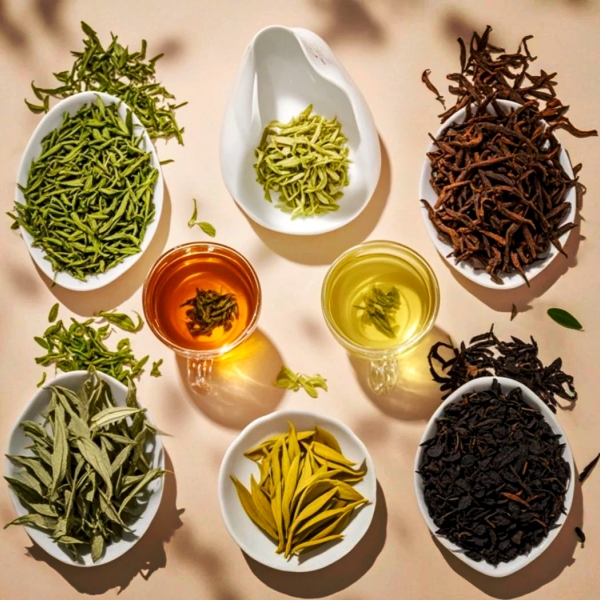
China has cultivated tea for over two thousand years, developing six distinct categories that are defined by processing methods rather than the Camellia sinensis plant itself. Each type carries its own flavor identity, cultural weight, and growing region. Whether you are sipping Long Jing in a Hangzhou teahouse, browsing vacuum-sealed pu erh cakes in Guangzhou, or ordering a sampler online before your trip, knowing the six types transforms how you shop, taste, and bring tea home.
Quick Facts
China's six types of true tea (Camellia sinensis) are defined by processing, not by plant variety. The table below summarizes each at a glance.
Origin Map: Where Each Chinese Tea Grows
Tea cultivation in China follows distinct regional traditions shaped by microclimate, elevation, and cultivar heritage. Each of the six types has one or more principal growing provinces where the conditions produce its signature character.
- Green Tea: Zhejiang dominates — Long Jing and Mao Feng grow around Hangzhou and Huangshan respectively. Jiangsu produces Bi Luo Chun near Taihu.
- White Tea: Fujian is the origin — Fuding and Zhenghe counties in the northeast supply Bai Hao Yin Zhen and Bai Mu Dan.
- Yellow Tea: Anhui (Huo Shan) and Hunan (Jun Shan) are the two anchor provinces, with a smaller production in Sichuan (Meng Ding).
- Oolong Tea: Fujian splits into two distinct zones — Anxi produces Tie Guan Yin, while Wuyi Shan grows Da Hong Pao and Rou Gui. Guangdong's Chao Shan region produces Dan Cong varieties.
- Red Tea: Anhui (Qi Men / Keemun) and Yunnan (Feng Qing / Dian Hong) lead. Fujian's Wuyi Shan also produces Zheng Shan Xiao Zhong (Lapsang Souchong).
- Dark Tea: Hunan Anhua makes Fu Brick. Guangxi produces Liu Bao. Yunnan is the home of pu erh in both sheng (raw) and shou (cooked) forms.
Spring harvest runs March through May across most provinces. High-mountain oolong picking peaks April through June.
🍵 Health Profile & Tea Varieties: Beyond the rich flavors and history, each processing style offers distinct antioxidant and wellness benefits. Learn more in Chinese Teas and Benefits.
Signature Processing & Flavor Profile of the Six Types
Understanding the six types requires a brief terminology note. In the West, "fermentation" suggests microbial activity. In Chinese tea, the word 发酵 (fa jiao) describes enzymatic oxidation — the same process that turns an apple brown. Microbial post-fermentation (渥堆, wo dui) belongs only to Hei Cha, the sixth category.
Green Tea (Lǜ Chá 绿茶)
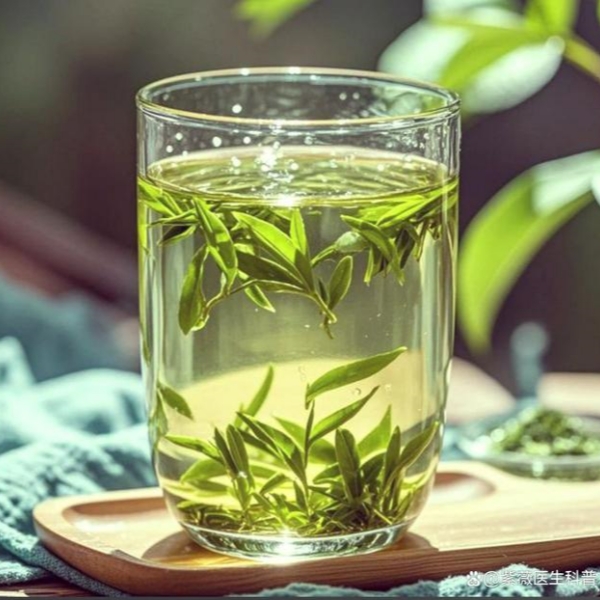
Green Tea (Lǜ Chá 绿茶)
The signature step is Sha Qing (杀青, "kill-green") — applied heat that halts oxidation immediately after picking. This locks in a fresh, vegetal character with distinct umami and occasional nuttiness or floral notes. Zhejiang's Long Jing (Dragon Well) is the most recognizable example, prized for its flat, hand-pressed leaves and sweet chestnut aroma. Other notable green teas include Bi Luo Chun from Jiangsu and Huangshan Mao Feng from Anhui.
White Tea (Bái Chá 白茶)
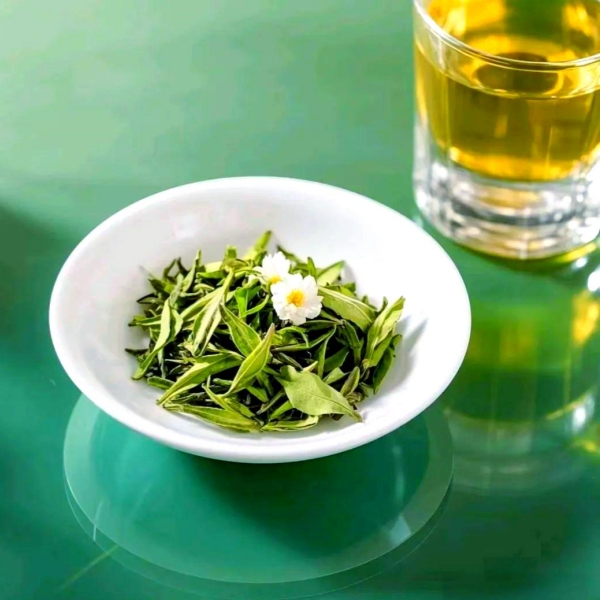
Chinese White Tea (Bái Chá 白茶)
Wei Diao (萎凋, sun-wilt) is the defining step — leaves are spread to wither gently under natural light, with minimal oxidation. The resulting profile is light-bodied with a sweet cotton-floral undertone. Bai Hao Yin Zhen (Silver Needle) from Fuding uses only tender buds. Bai Mu Dan (White Peony) adds one leaf per bud. Despite the delicate flavor, white tea leaves are surprisingly robust and age well for years.
Yellow Tea (Huáng Chá 黄茶)
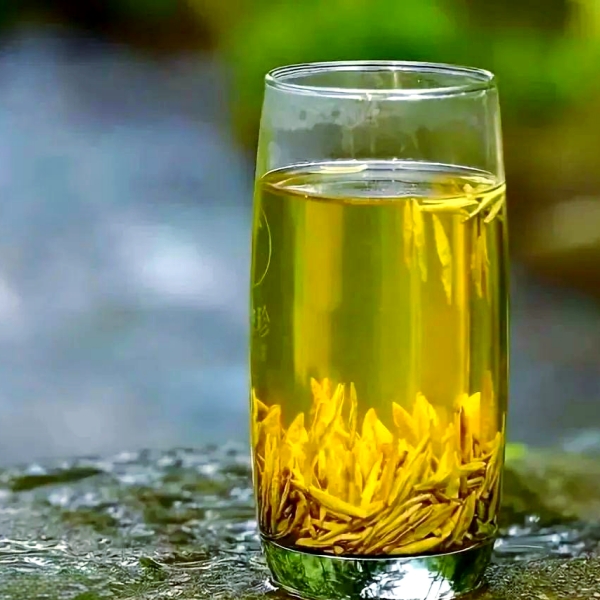
Yellow Tea (Huáng Chá 黄茶)
Men Huang (闷黄, "sealed yellowing") follows Sha Qing — leaves are briefly wrapped to undergo a controlled, low-heat micro-fermentation before final drying. This gives yellow tea a smoother, mellower profile than green, with sweet-corn notes and rounded tannins that feel less astringent. Huo Shan Huang Ya from Anhui and Jun Shan Yin Zhen from Hunan represent the best-known examples. Production is small, and much of it stays within China.
Oolong / Wu Long Tea (Wū Lóng Chá 乌龙茶)
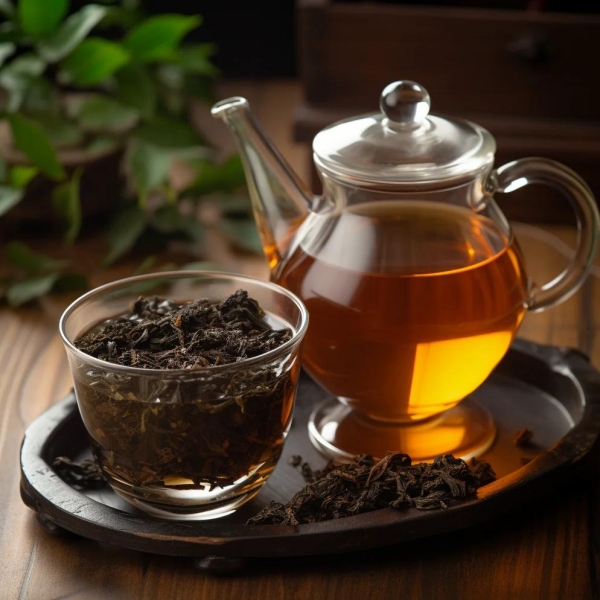
Wu Long Tea (Wū Lóng Chá 乌龙茶)
Yao Qing (摇青, "shake-bruise") partial oxidation sets oolong apart — leaves are shaken or tumbled to bruise their edges, triggering controlled enzymatic browning that stops short of full oxidation. The result is a layered flavor profile that can be floral, roasted, fruity, or creamy depending on the cultivar and region. Tie Guan Yin from Anxi is floral and rounded. Da Hong Pao and Rou Gui from Wuyi Shan are darker and mineral. Dan Cong from Guangdong Chao Shan offers single-tree varieties with intense aromatics.
Red Tea (Hóng Chá 红茶)
Red Tea (Hóng Chá 红茶)
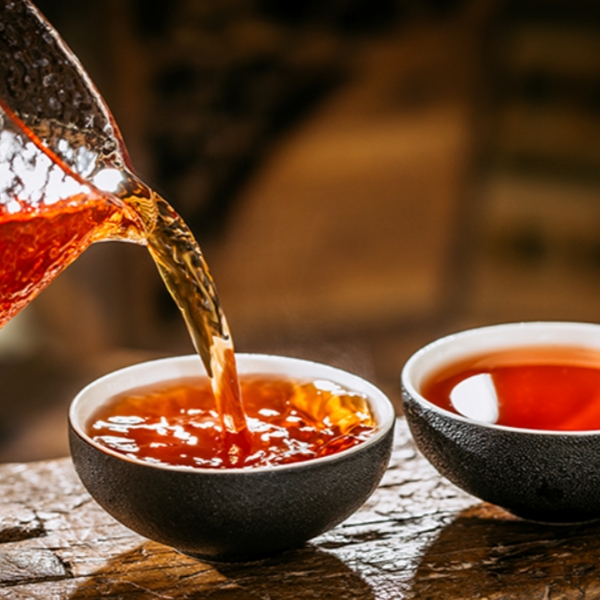
Fa Jiao (发酵, full enzymatic oxidation) transforms fresh leaves into a smooth, dark liquor. The flavor profile centers on floral and honeyed notes with a malty backbone. Qi Men Hong Cha from Anhui — sold internationally as Keemun — is among the most admired. Yunnan produces Dian Hong from large-leaf cultivars, yielding a golden, honey-sweet cup. What Westerners call "black tea" is simply 红茶 — the most-produced tea category globally.
Dark Tea (Hēi Chá 黑茶)
Red Tea (Hóng Chá 红茶)
Wo Dui (渥堆, "piled fermentation") is the critical step — dampened leaves are stacked in piles where controlled microbial activity transforms the tea over days or weeks. This post-fermentation separates Hei Cha from all other categories. The flavor is earthy and woody, often described as forest-floor, with a smooth, mellow finish. Liu Bao from Guangxi and Fu Brick from Hunan age gracefully for decades. Shou pu erh, the cooked variety from Yunnan, delivers immediate dark earthiness with no aging required.
🥤 Discover Street Tea Shops: Curious about ordering boba and cheese-foam teas alongside classic brewed cups? Explore modern ordering tips in Milk Tea in China.
Buying Guide for Foreign Visitors
Visitors have two practical channels for purchasing authentic Chinese tea: ordering online before or after the trip, and buying directly at wholesale markets while in China. Both routes offer distinct advantages in price, variety, and authenticity.
- Online Specialty Retailers: International retailers ship loose-leaf tea worldwide. Typical 100g prices: Green (Long Jing, Mao Feng) about $20–50 (¥140–350); White (Bai Mu Dan) about $15–30 (¥100–210); Yellow (Huo Shan Huang Ya) about $40–90 (¥280–630, scarce); Oolong (Tie Guan Yin, Rou Gui) about $25–55 (¥180–390); Red (Qi Men, Dian Hong) about $15–30 (¥100–210); Dark (Shou Pu, Liu Bao) about $20–50 (¥140–350).
- Multi-Type Samplers: Retailers selling across all six categories offer sampler sets averaging about $25–50 (¥180–350) for roughly 25–50g of each type. These are the most practical starting point for visitors wanting to explore the full range.
- Wholesale Tea Markets in China: Beijing's Maliandao Tea Market (马连道), Guangzhou's Fangcun Tea Market (芳村), and Kunming's South-West Tea Wholesale Market are free-entry wholesale districts where individual shops sell by the gram. Bring your passport, bargain politely, and request vacuum-sealing before flying home.
- Tea-House Tasting + Ceremony: Before committing to a purchase, many visitors book a guided tea-house session — typically about $10–35 (¥70–250) per person — to taste multiple teas and ask staff for buying recommendations.
🍃 Deep Dive into Green Tea: As the most widely consumed category in China, unfermented leaves like Longjing require specific water temperatures and steeping techniques. Learn more in Chinese Green Tea Drink.
How to Brew Each Chinese Tea Properly
Two brewing traditions coexist in China. Western brewing uses more water, more leaves, and a single long steep. Gongfu brewing (工夫茶) uses less water, more leaves, and multiple short infusions that reveal how the tea evolves across steepings. Water temperature is the single most important variable — lighter teas scorch and turn bitter at boiling, while dark teas need near-boiling temperatures to open up.
- Rinse dark teas: Always pour off the first steep of pu erh and Liu Bao after 10 seconds — this washes dust and awakens the leaves for subsequent infusions.
- Warm your vessel: Pre-rinse porcelain or clay pots with hot water before brewing. A warm vessel holds temperature more consistently.
- Use filtered water: Chlorine and high mineral content mask subtle floral notes, particularly in green and white teas. Spring or filtered water makes a measurable difference.
🍵 Dining Culture & Tea Pairings: Discover popular house brews like Jasmine, Pu-erh, Tieguanyin, and Chrysanthemum served at dining tables across regional dining styles in What Tea Is Served at Chinese Restaurants?
Tea Culture & Tasting Etiquette for Visitors
Chinese tea culture is a living practice — it shapes social rituals, hospitality norms, and even business etiquette in ways that visitors encounter directly. Understanding a few conventions helps frame the experience rather than just consuming it.
- Receiving a cup: Present both hands when accepting tea from a host. This signals respect for the person serving.
- Tapping as thanks: During a tea ceremony, guests tap two fingers on the table when the host pours — a gesture of gratitude that originated with the Qianlong Emperor.
- Oolong aroma: For oolong teas, swirl the empty cup and lift it to your nose before drinking. The "three-sniff" method — wet leaves, dry leaves, wet again — reveals how the aroma evolves through brewing.
- Avoid strong perfume: Tea houses request that guests skip heavy fragrances. Scent competes directly with the subtle aromatic compounds in light and oolong teas.
- Food pairing principles: Light teas (green, white, yellow) suit dim sum and seafood. Oolong and red handle richer dishes. Dark teas cut through fatty or oily foods — a practical reason pu erh is popular after heavy meals in Yunnan and Hunan.
- Experience Gongfu Cha: The multi-steep ritual, where a small clay pot produces eight to twelve short infusions, is worth at least one dedicated session during a visit. Most major cities offer guided sessions in teahouses designed for visitors.
Frequently Asked Questions
Q: How many types of Chinese tea are there?
There are six true tea types derived from Camellia sinensis: green, white, yellow, oolong, red, and dark. Herbal infusions, jasmine-scented teas, and blended teas fall outside this classification and are not part of the six-type framework.
Q: What is the difference between Chinese red tea and Western black tea?
They are the same thing. What the West calls "black tea" is Chinese 红茶 (hóng chá) — fully oxidized tea such as Keemun or Yunnan Dian Hong. What Chinese call 黑茶 (hēi chá, "dark tea") is microbially post-fermented, a category virtually unknown in Western markets.
Q: Which Chinese tea is best for beginners?
It depends on your palate. Green teas like Long Jing or Bi Luo Chun offer the most familiar entry point — light, vegetal, and widely available. Bai Mu Dan is the gentlest option. Red tea (Keemun) tastes most like familiar Western black tea. Oolong rewards the curious with complex aromatics if you are willing to try gongfu brewing.
Q: Is pu erh tea a separate category from dark tea?
Technically, no. Sheng pu erh (raw) is a sun-dried green tea; shou pu erh (cooked) falls under Hei Cha. Both come from Yunnan and follow unique aging traditions. Most international retailers group them together under "pu erh" for simplicity, but they occupy the same sixth category.
Q: Where can foreign visitors buy authentic Chinese tea?
Three channels work best. Online specialty retailers with international shipping offer 100g loose-leaf from about $15–50 (¥100–350) depending on type. Multi-type samplers covering all six categories run about $25–50 (¥180–350). Inside China, Beijing's Maliandao Tea Market, Guangzhou's Fangcun Tea Market, and Kunming's wholesale hubs offer direct purchase with vacuum-sealing for export.
Q: How do visitors brew Chinese tea at home?
Match the method to the tea. Green, white, and yellow teas need cooler water (75–85°C) and short steeps (1–3 minutes) in glass or porcelain. Oolong and red teas require hotter water (90–95°C) in a gaiwan or small pot. Dark teas and pu erh need near-boiling water (95–100°C) with a quick rinse before multiple short infusions. The brewing table above gives full parameters.
Q: Which Chinese tea has the most caffeine?
No single ranking applies. Caffeine content varies by cultivar, growing elevation, and processing. Generally, fully oxidized teas (red, dark, dark oolong) carry more caffeine than light teas (green, white, yellow). Shou pu erh typically delivers the strongest effect per cup. Brew time and water temperature affect extraction more than the tea category itself.
Q: Can visitors attend a tea ceremony in China?
Yes. Gongfu Cha ceremonies are available at teahouses in Beijing, Hangzhou, Chengdu, Xiamen, Guangzhou, and most major cities. Sessions typically cost about $10–35 (¥70–250) per person for 60–90 minutes. Most include a hands-on brewing component and tastings of three to six teas.