Chinese Green Tea Drink
The phrase "Chinese green tea drink" means more than a brewed cup. Across China, drinking green tea is woven into meals, business meetings, ceremonies, and quiet hours at home — and the tea itself shifts character depending on where the leaves were grown, when they were picked, and how they are brewed. This guide covers the main varieties a visitor will encounter, how the Chinese actually drink it day to day, which tea houses are worth sitting down in, the regions where origin trips make sense, the brewing technique that makes the difference, and what to know before buying. Prices are quoted USD-first because that is what most foreign travelers will see on booking platforms; Chinese yuan equivalents follow in parentheses.
Quick Facts
🍵 Health Profile & Tea Varieties: Beyond the fresh taste, loose-leaf varieties are prized for their antioxidant properties and digestion support. Discover more in Chinese Teas and Benefits.
What Counts as Chinese Green Tea
Major Chinese Green Tea Varieties
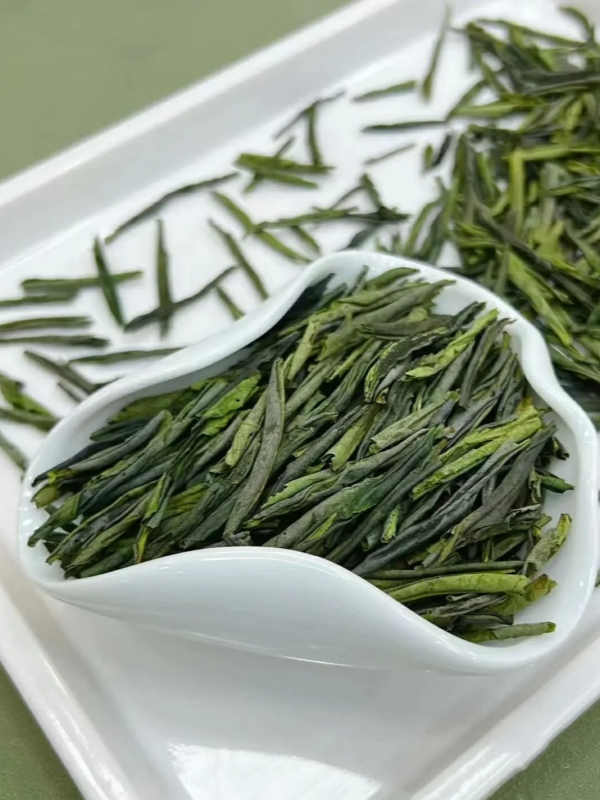
A Chinese green tea drink starts as fresh leaves that are heated quickly after plucking — usually in a hot pan or by steaming — to stop oxidation. That single step is what separates "green" from black, oolong, and white tea, and it is also why the brewed cup stays light, vegetal, and relatively low in caffeine compared with black tea. The category covers hundreds of named varieties, but most fall into a small number of shape families: flat and needle-like (Longjing, Taiping Houkui), tightly curled spirals (Biluochun), straight needle buds (Xinyang Maojian), and feathery single buds (Huangshan Maofeng). All of them share the same Camellia sinensis plant; what changes is terroir, harvest date, and craft.
Major Chinese Green Tea Varieties at a Glance
What Makes a Tea "Chinese Green"
Three concrete tests separate Chinese green tea from other categories. First, the leaf is fixed by pan-fire or steam — not sun-withered like white tea. Second, it stays whole-leaf rather than being cut into small pieces. Third, it brews at lower water temperatures than black tea: typically 70–85 °C (158–185 °F), never boiling. These three points are the baseline for every named variety in the table above.
🥛 Traditional Herbal Beverages: Beyond green tea leaves, discover classic herbal infusions, plum juice, and grain drinks in Bebidas Chinas Healthy Traditional Drinks.
Top Tea Regions and Origin Trips
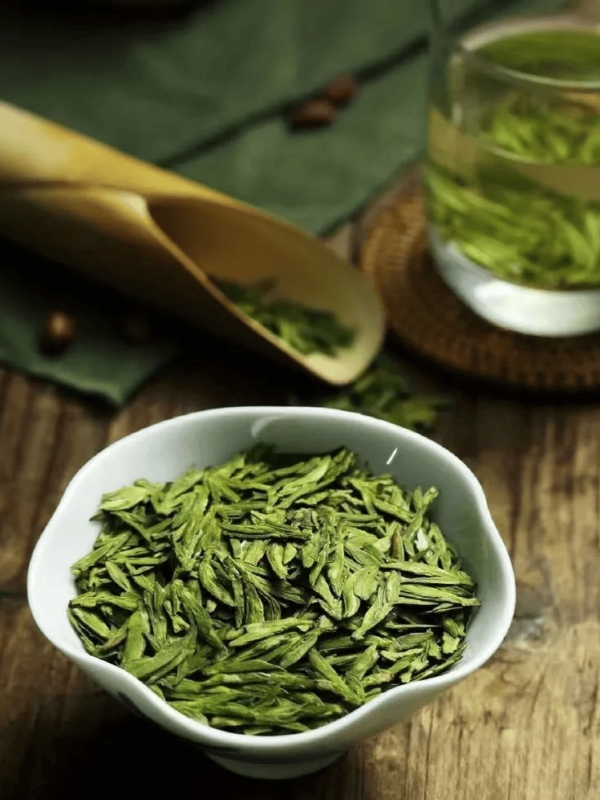
West Lake Longjing
For a visitor, the most rewarding way to learn what makes a Chinese green tea drink distinctive is to go where it is grown. Each major producing region has its own harvest calendar, leaf shape, and tasting signature, and most of them are easy day trips from major cities. The classic trio — Hangzhou (Longjing), Suzhou (Biluochun), Huangshan (Maofeng) — sits within a high-speed rail network that ties them together in about a week. A focused one-day trip to any single one is also worth it on its own.
China's Top Tea Regions Compared
Hangzhou and West Lake — Longjing Country
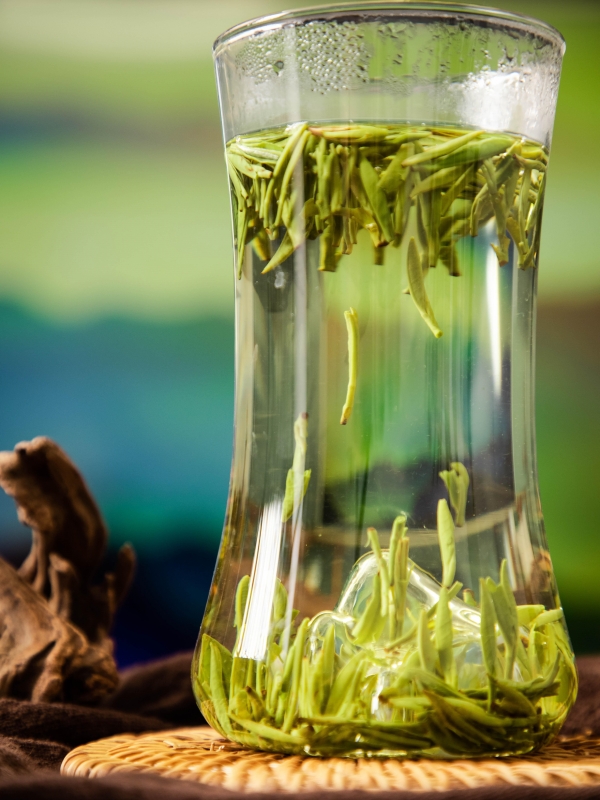
The protected West Lake Longjing zone covers roughly 42 sq km around Shi Feng and Meijiawu villages. Spring picking begins around the Qingming Festival in early April for the prized Pre-Qingming grade — the price and demand spike sharply at this time. In Longjing village itself, teahouses brew leaves in glass so visitors can watch them settle; prices run ~$4–11 (¥30–80) per cup for village-grade leaf. The China National Tea Museum offers ~$2 (¥15) entry with partial English signage. HSR from Shanghai Hongqiao takes roughly 60 minutes and costs ~$10–15 (¥73–117) second class.
🍃 Explore Hangzhou in Bloom: Want to walk through vibrant green hillsides and sample freshly picked pre-Qingming tea leaves? Check out top seasonal routes in Spring Tours in Hangzhou.
Suzhou Dongting Mountain — Biluochun Country
Dongting Shan sits on a lake island roughly 90 minutes by HSR from Shanghai. Harvest starts earlier than Longjing — mid-March is peak. The curled bud sets are famous for a peach-and-fruity aroma that surprises people expecting only grassy green tea. Local tea farm visits typically run ~$20–40 (¥150–300) per person including tasting. The island setting adds a scenic layer: combine the tea visit with a boat crossing and a lakeside meal.
🎋 Experience Teahouse Culture: For one of Southwest China's most authentic outdoor teahouse settings surrounded by bamboo groves, plan a visit to Wangjianglou Park.
Huangshan — Huangshan Maofeng Country
Anhui-side origin trips pair the UNESCO Huangshan mountain scenery with tea farms in its foothills. Maofeng season opens in early-to-mid April. Tea-farming villages like Xieyushan offer small-group picking-and-tasting days for ~$30–60 (¥200–430) per person. Entry to Huangshan Scenic Area runs ~$22 (¥160) in peak season, ~$14 (¥95) off-peak — confirm on-site for current rate. The combination makes this the most visually striking origin trip of the three.
🥤 Discover Street Tea Shops: Curious how younger generations blend traditional tea bases with fresh fruit and milk? Check out popular ordering tips in Milk Tea in China.
Visiting a Tea House in China
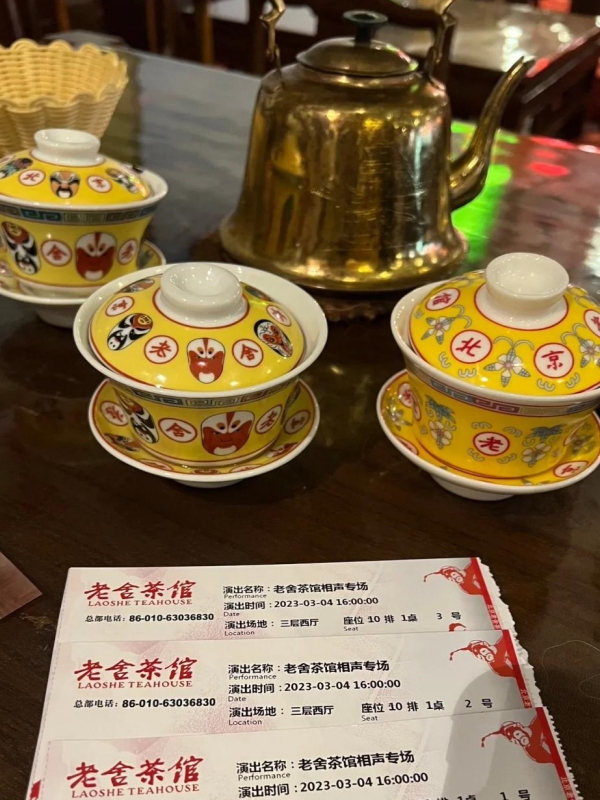
Lao She Teahouse
A traditional tea house (茶馆 cháguǎn in Mandarin, 茶樓 chalou in Cantonese) is the easiest place for a visitor to taste a range of Chinese green tea drinks in one sitting. Order at the counter or from a rolling cart, and you will usually get a small pot or a glass set on a wooden tray with a timer; staff will refill hot water for free. Expect a cover charge in Chengdu's old teahouses — often a flat ~$1–3 (¥8–20) per person for the seat — and a per-pot price elsewhere. Most tea houses open by mid-morning and run until late evening, and many serve simple snacks like dried fruit, sunflower seeds, or dim sum alongside the tea.
What to Order on Your First Visit
Six starting picks cover the main flavor profiles. These are listed from most approachable to most characterful, so work your way down if you want to build familiarity.
- Longjing (West Lake grade): Mellow, chestnut note, easy entry point for green tea beginners.
- Biluochun: Fruitier, lighter body, notable for its peach aroma.
- Huangshan Maofeng: Clean, orchid aroma, very balanced on the palate.
- Xinyang Maojian: Gentle, sweet, forgiving of minor brewing errors.
- Taiping Houkui: Visual drama — a single long leaf stands upright in the glass, and the flavor is nutty and distinctive.
- Anji White Tea: Technically a green tea despite the name, with the softest and sweetest profile — best for those who find other varieties too assertive.
Avoid ordering "iron goddess" (Tieguanyin) on a first visit — it is oolong, not green, and tastes very different.
Tea House Etiquette and Tipping
Five rules cover the most common situations. Get these right and you will fit in naturally.
- The host pours: Accept refills with a small two-finger tap on the table — this is the silent thank-you gesture.
- Temperature: Do not blow on the surface to cool it; this signals impatience. Wait or sip carefully.
- Pacing: Sip slowly. The same leaves are usually re-steeped three to six times across the session.
- Tipping: Not expected in most Chinese tea houses. Round up only in upscale Chengdu or Beijing venues.
- Ice: Ask before adding ice. Chinese green tea is traditionally served hot, even in summer.
Famous Tea Houses Worth Knowing
Five named venues a visitor can walk into. Each represents a distinct strand of Chinese tea house culture.
- Lao She Teahouse (老舍茶馆): Qianmen, Beijing — full ceremony shows with traditional performance, a theatrical introduction to the ritual.
- Heming Tea House (鹤鸣茶社): People's Park, Chengdu — outdoor bamboo chairs by the lake, the classic Sichuan teahouse experience at its most local.
- Mingqing Tea House: West Lake area, Hangzhou — specializes in Longjing tastings with knowledgeable staff who can explain the varieties.
- Longjing Village teahouses: Hangzhou — drink the tea where it grows, with many village households offering tastings from their own production.
- Nanluoguxiang and Houhai teahouses: Beijing — modern, more English-friendly, smaller ceremony sessions for visitors who want a gentler introduction.
How the Chinese Actually Drink It
Most Chinese people drink green tea as part of daily life, not as a special occasion. The custom that surprises foreign visitors is when it shows up: alongside breakfast, during a long lunch, mid-afternoon at the office, after dinner. The cup is rarely sweetened — plain loose-leaf brewed strong in a small porcelain cup is the default, and in restaurants it often arrives as a free refill from a thermos. The phrase "Chinese green tea drink" in everyday Chinese life usually means a plain cup sipped slowly between tasks rather than a formal gongfu ceremony, and that relaxed, refill-friendly style is what most travelers should expect on a first trip.
When and Why the Cup Appears
Timing anchors structure the day. Morning cups appear alongside breakfast, especially in southern provinces where tea culture runs deep. Mid-meal cups arrive at restaurants without being ordered. After-meal cups are common in business settings — the host pours as a signal of hospitality. Afternoon cups serve as a natural pick-me-up, similar to coffee elsewhere. Post-meeting reset cups close out long discussions. Throughout all of these, unsweetened is the traditional default in most regions. A few northern tea rooms add rock sugar, and Fujian or Taiwan lean toward lightly sweetened oolong rather than green. By caffeine content, a typical 3 g cup sits lower than an equivalent black-tea cup.
Inside a Traditional Tea Session
Three elements stand out once you know what to watch for. The host warms the vessels with hot water first — this is not optional, it is the opening ritual. Then leaves and water are added in sequence; in Gongfu style this is done with precision and speed, while everyday glass steeping follows a simpler rhythm. The same leaf is usually re-steeped three to six times, and each infusion reveals a different facet of the flavor. Finally, the host refills the guest's cup, not the other way around — reaching across to pour for yourself breaks the social script.
How to Brew Chinese Green Tea Properly
The single biggest upgrade a visitor can make is to brew green tea with cooler water than black tea — 70–85 °C (158–185 °F), not a rolling boil. Boiling water scorches the leaf, kills the aroma, and produces a bitter, astringent cup. Beyond temperature, two styles dominate: a quick everyday brew (3 g leaf in 250 ml, 2–3 minutes, one infusion) and a Gongfu-style steep (5–8 g leaf in a 100–150 ml gaiwan, 20–40 seconds, multiple infusions). Both are correct; the difference is whether you want one easy cup or a slow tasting.
Gongfu vs Western Brewing at a Glance
Common Brewing Mistakes
Five errors appear repeatedly. Each one is avoidable once you know what to watch for.
- Boiling water: Using a rolling boil scorches the leaf and kills the aroma — stay at 70–85 °C (158–185 °F).
- Over-steeping: Going past 3 minutes pulls out bitterness and tannins. Set a timer.
- Day-old leaf: Reusing the same leaves across separate days means the second day cup will have almost no aroma. Use fresh leaf each session.
- Poor storage: Keeping opened tea in the original foil pouch exposes it to air and odor. Transfer to a sealed tin away from light and strong spices.
- Confusing leaf grades: Green tea bags are often blends or aged leaf. Whole-leaf Chinese green tea is a different product — check for named origin and harvest date on the packaging.
Health, Pregnancy, and Buying Guide
Chinese green tea is regularly studied for its catechin content, especially EGCG, antioxidant load, and modest caffeine level. Reported associations cover cardiovascular support, blood-sugar regulation, dental health, and alertness — but the clearest signals come from regular moderate intake (3–5 cups a day), not mega-doses. For pregnancy, mainstream guidance caps caffeine at roughly 200 mg per day. A 200 ml Chinese green tea cup runs about 30–50 mg, so two cups is the conservative ceiling; many doctors recommend reducing further later in pregnancy. The bigger practical risk for visitors is not the tea itself but fake or stale leaf sold as premium grade in tourist markets.
Health Benefits of Regular Drinking
Four evidence-aligned points are worth knowing. First, the antioxidant and catechin content — particularly EGCG — supports the body's response to oxidative stress. Second, modest cardiovascular and lipid support has been reported in regular moderate drinkers. Third, catechins inhibit certain oral bacteria, which is why green tea is traditionally associated with dental health. Fourth, the caffeine plus L-theanine combination produces a steadier alertness lift than coffee alone. Frame all of this as "regular moderate intake" rather than a cure or guarantee.
Pregnancy and Caffeine Limits
A 200 ml cup of Chinese green tea contains roughly 30–50 mg caffeine. Mainstream medical guidance sets the pregnancy ceiling at about 200 mg per day, which allows roughly 3–4 cups early in pregnancy. Most Chinese obstetrics guidance recommends reducing this further as pregnancy progresses, and switching to caffeine-free alternatives in the third trimester. Decaf green tea is widely sold but quality varies — check the label for "decaffeinated" or "低咖啡因".
Buying Authentic Chinese Green Tea
Five rules protect you from overpaying for low-grade leaf. Follow them whether you are buying in a market or ordering online.
- Buy named origins: Hangzhou for Longjing, Suzhou Dongting for Biluochun, Huangshan foothills for Maofeng — not generic "China green tea."
- Check the harvest date: Spring-picked leaf should list the year and ideally "Pre-Qingming" or "Pre-Rain" grade for the highest quality.
- Inspect the leaf shape: Longjing should be flat and uniform. Biluochun should be tightly curled. Maofeng should show single buds with a tiny leaf attached.
- Book through foreign-friendly channels: Trip.com tea tours, Klook tea-house experiences, and the official Longjing or Biluochun co-op stores in origin towns accept foreign cards.
- Avoid unmarked airport and tourist-market tea: Unless the seller offers a tasting cup and a printed origin label, assume the leaf is blended or aged beyond its stated grade.
Frequently Asked Questions
Q: Is Chinese green tea the same as Japanese green tea?
No. Both come from Camellia sinensis and both are unoxidized, but Chinese greens are typically pan-fired — producing a chestnut or roasted note — while Japanese greens are steamed, which gives a grassier, marine note. The flavor profile differs substantially even when the same plant cultivar is used.
Q: Should Chinese green tea be sweetened?
Traditionally unsweetened. Plain hot leaf in a small cup is the cultural default across most of mainland China. A few northern teahouses offer rock sugar on the side. If you want it sweet, ask for "加冰糖" (jiā bīngtáng) rather than assuming it will arrive sweetened.
Q: How much green tea do Chinese people drink per day?
National consumption averages around 0.5 kg per person per year, which works out to roughly 1–3 cups per day for regular drinkers. Consumption runs higher in tea-producing provinces like Zhejiang, Fujian, and Anhui, and among older demographics.
Q: Can pregnant women safely drink Chinese green tea?
Yes in moderation. A 200 ml cup contains roughly 30–50 mg caffeine, and the widely cited pregnancy ceiling is about 200 mg per day — which allows 3–4 cups early in pregnancy. Most Chinese obstetrics guidance recommends reducing further as pregnancy progresses and switching to caffeine-free alternatives in the third trimester.
Q: When is the best time of day to drink it?
Mid-morning to mid-afternoon works best. Caffeine peaks roughly 30–60 minutes after the cup. Avoid very late evening — Chinese green tea still carries enough caffeine to disrupt sleep in sensitive drinkers. Drinking on an empty stomach can upset some people; pairing with a small snack is the common Chinese custom.
Q: Does Chinese green tea help with weight loss?
There is modest support from catechins and caffeine for short-term metabolic rate, but the effect is small — single-digit percentage points at best. Treat it as part of an overall diet and exercise routine rather than a standalone weight-loss tool.
Q: How long does Chinese green tea stay fresh?
Spring-picked whole-leaf green tea is best within 6 months of harvest. Tightly sealed and refrigerated storage can stretch this to about a year. Once opened, finish within 2–3 months for peak aroma. Vacuum-sealed gift tins sold at airports often contain older leaf — check the production date before buying.
Q: Is it rude to refuse tea when offered in China?
Yes, it is generally considered impolite. Accepting a cup of tea is part of the basic social script. If you cannot drink it for health, fasting, or late-pregnancy reasons, the polite move is to accept the cup, set it down, and explain briefly. When you are the host, pour for others before yourself.