Tianshan Tea City Shanghai
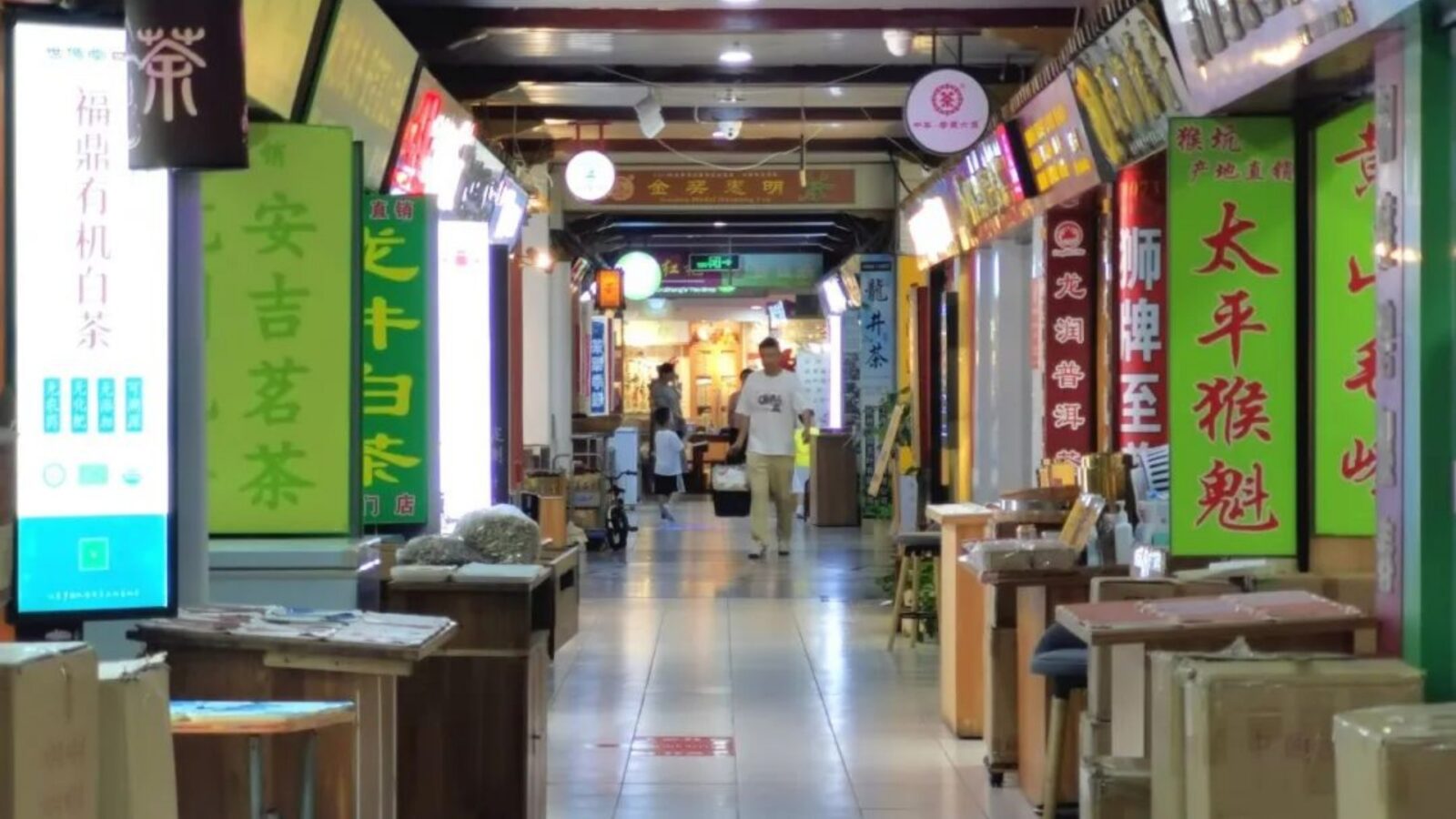
Step through the main door of Tianshan Tea City and the morning hits in layers. Dried leaves release a low, woody sweetness as you pass stacked tins. A porcelain lid taps against a gaiwan at a tasting table two stalls down. A shop owner greets you with a phone translation screen already open and a row of multilingual labels above the jars. Three floors, around 400 stalls, and a market the local government now calls an "international living room" for tea. The only question is where to start.
Use this guide to walk all three floors with intent, recognise the stalls that handle international visitors well, and leave with tea and teaware that match your taste — not someone else's markup.
Quick Facts
Walking the Three Floors of Tianshan Tea City
Tianshan Tea City Shanghai
The first thirty seconds inside Tianshan Tea City tell you almost everything you need to know. The ground floor smells of stored leaves and carries the loudest pouring sounds. The second floor is quieter, lined with glass cases and porcelain. The third floor feels closer to a curio market, with framed calligraphy and small antiques catching the afternoon light. Match your goal to a floor before you start walking.
Floor 1: Six Tea Families in One Building
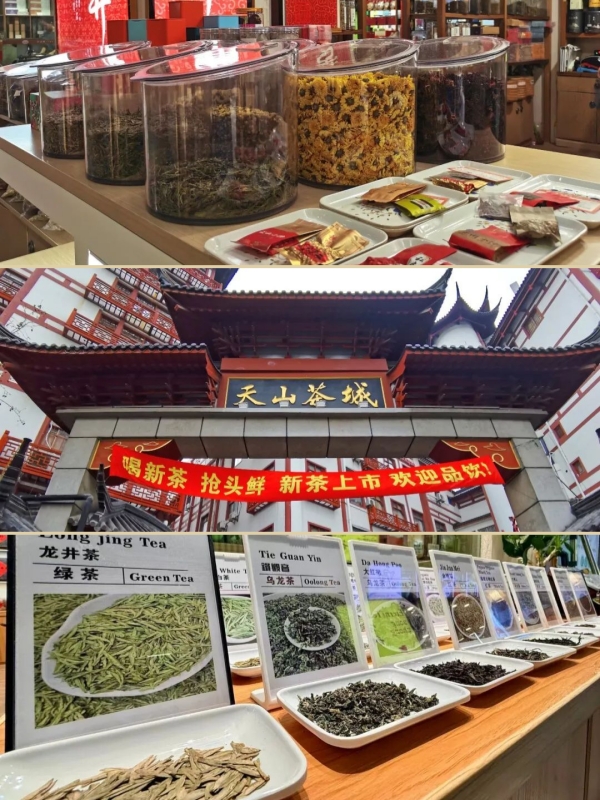
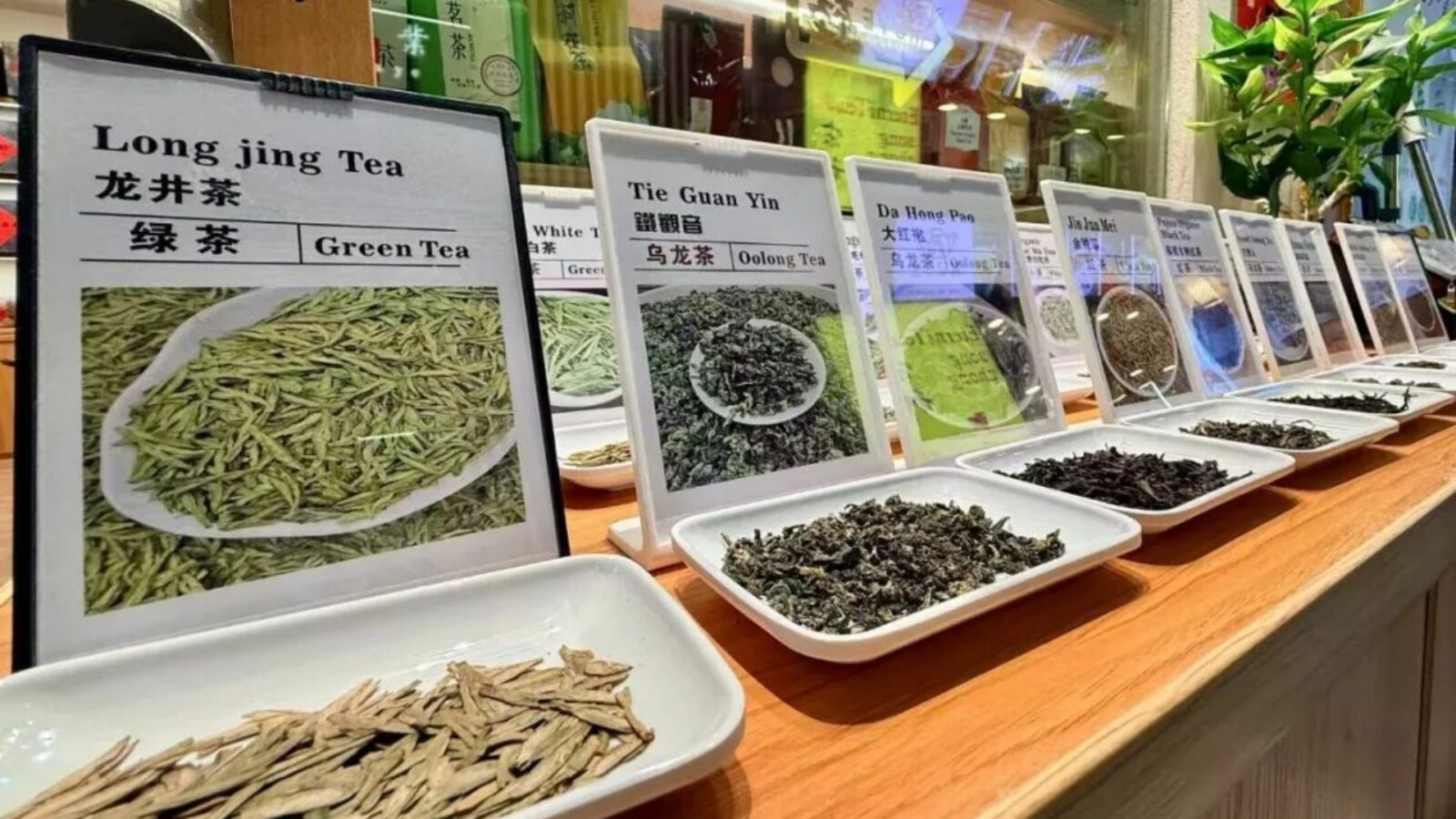
Floor 1 is where most visitors spend their time. The stalls cluster around the six tea families that organise nearly every Chinese tea menu:
- Green — longjing, bi Luo chun, xinyang maojian. The first-floor green tea section is busiest in spring when fresh harvests land.
- Black — keemun, lapsang souchong, jin jun mei. A good starting point for new drinkers, often sweeter on the palate.
- Oolong — Wuyi yancha (da hong pao), dancong (including the famously named "duck-droppings fragrance"), tieguanyin. Most sellers here will pour a comparison in a gaiwan.
- White — Fuding and Zhenghe white teas, both loose-leaf and pressed cakes. Older cakes are often boiled on the spot for tasting.
- Pu'er — raw (sheng) and ripe (shu). Mid-aged cakes are common on the floor and easy to compare by year.
- Yellow — junshan yinzhen, mengding huangya. A smaller selection, but a useful corner if lighter, less common teas interest you.
Floor 2: Teaware from Travel Sets to Zisha
Floor 2 is where you pair what you just bought. Most foreign visitors who buy tea on Floor 1 walk upstairs within the hour. The stalls split into six recognisable categories:
Floor 3: Tea Culture, Training and Quiet Seating
Floor 3 moves at a slower pace. The stalls here often double as small studios: tea ceremony classes, a tea-history display tucked into one corner, agarwood samples laid out on a side table, and a few private rooms you can hire for a longer tasting session. It is the right floor to slow down on, especially with children or with friends who want a sit-down rather than another round of cupping.
🍵 Traditional Brews & Varieties: Want to explore the history, health benefits, and processing methods of dragonwell and jasmine brews? Read our complete overview of Chinese Green Tea Drink.
Five Anchor Stalls and the Counter Phrases to Know
-

- Tianshan Tea City Shanghai
-
- Tianshan Tea City Shanghai
Among the several hundred stalls on three floors, a small number set the tone. These five — three for tea, two for teaware and a tea break — give you a starting cast for the visit. None of them is a must, but each shows a different way the market handles foreign visitors.
Three Tea Stalls Worth Knowing
The three stalls below are the easiest ones to walk into without speaking Chinese. They cover three very different styles: a long-running old-tea shop, a stall with multilingual service, and a commercial oolong seller.
- Xiancaosanqian (闲草三千) — A twenty-plus-year shop on the tea floor that the local government has profiled for its old-tea atmosphere. Sells Anhua dark tea and Fuding white tea; the room has a vintage feel with grass-and-wood lighting. A good place to sit for a while.
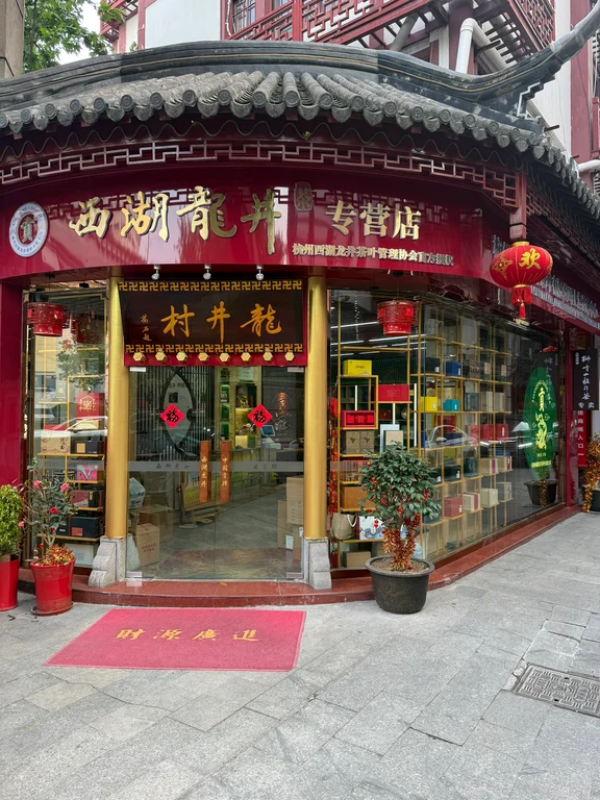
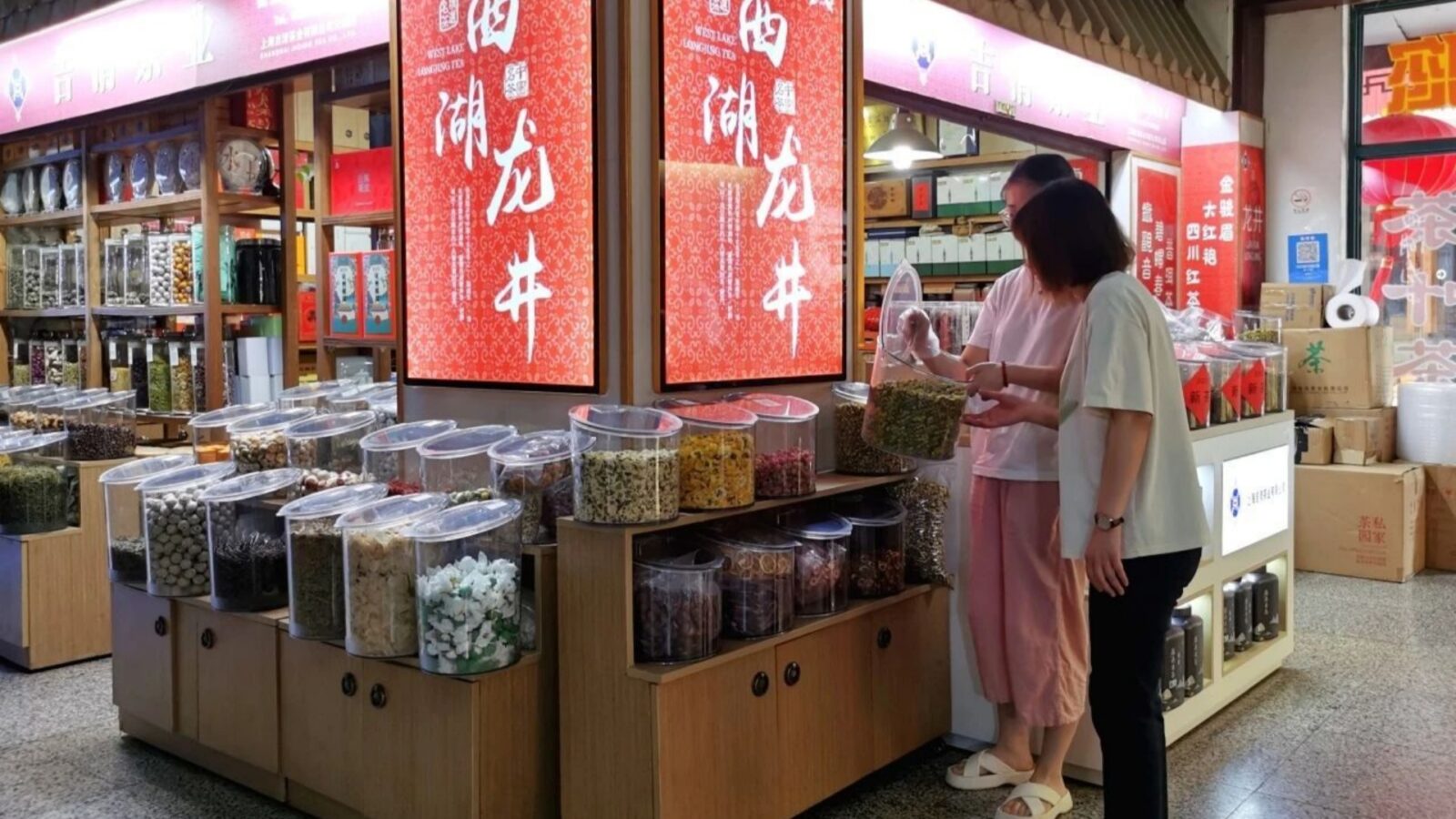
- Jiqing Tea (吉清茶业) — One of the first stalls to put up bilingual and even trilingual signage, with English and Russian labels alongside Chinese. This is the floor's de facto "international living room" stop.
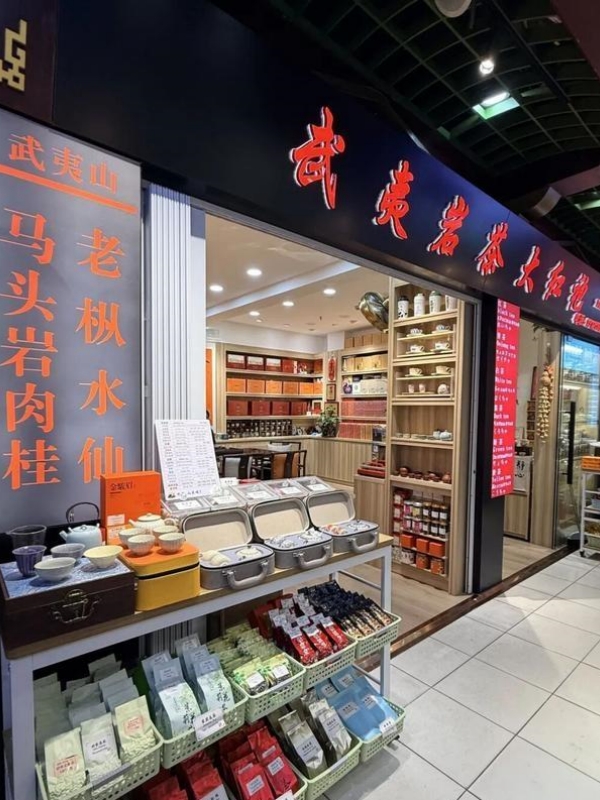
- Dongnanlai Tea (东南来茶) — Located at Stall 1055 on Floor 1, a Wuyi yancha house with a long-running reputation for da hong pao and dancong oolong. Ask for a low-grade and high-grade comparison before deciding.
Two Floor-2 Spots for Teaware and Tea Breaks
After the tea, the second floor holds two useful anchors. One is a working teaware shop, the other a tea-room you can sit in for a few hours.
- Longhao Teaware (龙好茶具) — A larger, well-stocked teaware shop on Floor 2 with both travel sets and full gongfu sets. Cited in the same local government profile as a place that handles foreign visitors. The staff will match the teaware to the tea you bought downstairs.
- Chunyu Chaqi (春雨茶契) — A small tea room on the second floor where a pot of tea buys you an hour or two of sitting. Worth knowing about if your feet need a break, though operating hours and current status aren't publicly listed.
Five English Phrases for the Counter
Once you sit down at a stall, the entire buying process fits in five English lines. Keep them on your phone and run them in order:
- "Is there a tasting fee? Is a purchase required?" — Settle this before any tea is poured.
- "How much for 50 grams?" — Anchors every later comparison.
- "Could you write down the tea name and origin?" — What you can't remember at the next stall, you'll need then.
- "Is the price negotiable?" — Asked politely, this is normal here. It is not a request for a fixed discount.
- "Could you mark the sample?" — Prevents the cup in front of you from drifting apart from the bag at the end.
These five lines, used in order, take most of the friction out of a foreign-language buy. They do not replace the seller's judgement — they just keep the conversation on the same page.
🍹 Modern Tea Culture: Interested in exploring modern boba trends, cheese foam toppings, and top nationwide chains? Check out our visitor guide to Milk Tea in China.
Set Your Budget, Flavor, and Tools Before You Walk In
Tianshan Tea City Shanghai
Three decisions set before you leave the hotel turn a busy market into a manageable one. Each takes less than a minute; together they cut most of the on-the-spot hesitation that makes a tea visit drag.
Pick a Total Budget, Not a Unit Price
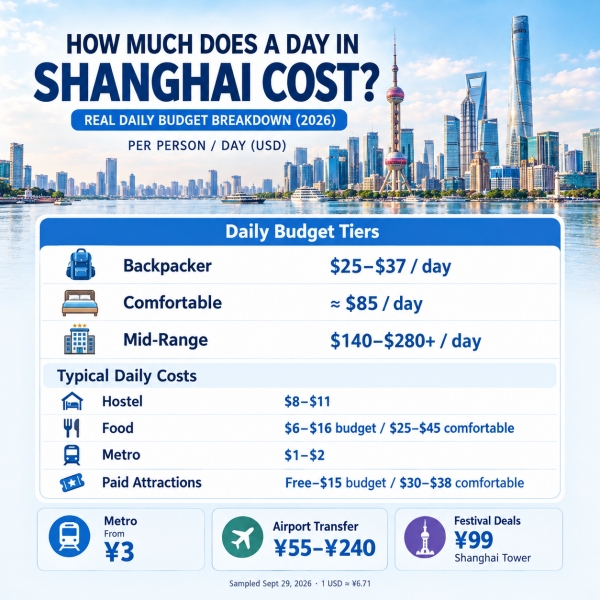
Decide what you want to spend in total before stepping inside. Saying "My total budget is $28 (¥200)" to a seller is more useful than asking how much per jin or per 50 grams — it tells them you have a cap, and it gives you a simple stop point. First-time buyers who arrive insisting on a fixed weight and grade often overshoot their budget. Start with "a small amount to try," and only step up once the cup in your hand has earned it.
Describe Flavor in Four Words
Plain English is enough to start. Sellers at Tianshan Tea City understand four basic flavour words even when the rest of the conversation runs through a translator:
- Light — green, white, young sheng pu'er, anything delicate.
- Floral — tieguanyin, dancong oolong, jasmine blends.
- Roasted — yancha (Wuyi rock tea), traditional shu pu'er, heavily fired oolongs.
- Strong — aged shu pu'er, dark teas, blends built for body.
Pick one or two of these when you sit down. The seller's reply usually narrows the tasting to two or three options that fit — which is exactly the comparison you came for.
Bring a Phone and a Pocket Translation Card
The single most useful item at the market is a smartphone with a working translation app. Even stalls without English speakers can keep a conversation moving through typed phrases and screenshots. Pre-load these before you go:
- "How much for 50 grams?" — anchors any price comparison.
- "Is there a tasting fee?" — clears the air before you sit down.
- "Can I buy a smaller amount?" — useful when the smallest pack is still more than you want.
- "Could you write down the tea name?" — turns a verbal answer into something you can check later.
Camera, note app, screenshot of the previous stall's price tag — keep them all within reach. None of them replace the seller's knowledge, but together they remove the friction that turns a tea visit into a guess.
🥤 Classic Beverages: Curious about famous traditional herbal teas, rice wines, and regional drinks across the country? Discover our guide on Famous Chinese Drinks.
Teaware on Floor 2 and the "International Living Room" Feel
Tianshan Tea City Shanghai
After the tea is bought, two things make Tianshan Tea City more than a shopping stop. The first is the choice on Floor 2 between a starter set and a full box. The second is the atmosphere that has quietly grown up around multilingual service and cross-cultural browsing — what local press now calls the market's "international living room" feel.
A Three-Piece Starter Beats a Five-Piece Box
The fastest way to overspend on Floor 2 is to buy a full gongfu box on your first visit. A three-piece setup — gaiwan, fairness cup, tasting cup — covers the brewing you'll actually do for the first few months. Trays, strainers, kettles, tea pets and the "six gentlemen" tools can wait until you know what you really need. The stall will still be there next time.
Where the "International Living Room" Photo Spots Are
The market has leaned into the foreign-visitor crowd over the past year, and a few photo opportunities come with that. Multilingual signs, bilingual tea menus, and stalls like Jiqing Tea with English or Russian labels give the interior an unmistakably international cast. The vintage Xiancaosanqian storefront, with its grass-and-wood lighting and bamboo-wrapped tea buckets, is the other end of the spectrum — a quiet, old-Shanghai look. For either backdrop, ask the stall owner before taking close-up photos of staff or other visitors, and keep the framing wide enough to include the stall itself.
Carb-Heavy Lunch Within Walking Distance
When the tea visit runs long, a few food options sit in the wider Changning / Loushan Guan Road area — not on the same block, but within a short ride. A traditional carb-heavy stretch along Loushan Guan Road is the closest cluster, with Huijin Department Store a stop for Shanghai pastries and an Aldi-style supermarket at one end of the Tianshan night market for bread and snacks. Note that current opening status, menu and prices of individual stalls are not consistently published in English, and "next door" in this district can mean a few minutes by foot, not a single doorway. For something closer, the Sichuan restaurant listed at 1F-2F of the tea market building itself is one address that does appear in a public dining directory — though whether it's open on the day you visit is worth a quick check.
Three Red Flags at the Stall: When to Walk Out
Tea markets like Tianshan Tea City run on trust. Most stalls deserve it. A small number don't, and the difference is easier to spot once you've sat through one good cupping. These three signals are your cue to stand up, thank the seller, and walk on.
When the Sample Doesn't Match the Bag
The cup in front of you and the tea in the bag should be the same. If a swap happens mid-tasting, or the seller quietly opens a different jar for the bag, that's a reason to pause. Ask once, clearly: "Is this the same tea I'm tasting?" A second vague answer is a reason to leave.
When the Seller Can't Name Origin or Year
Good stalls know their teas. "Somewhere in Fujian" or "this year's harvest" is not enough detail for a meaningful purchase. Ask which village or county the tea is from, what year it was picked, and how it has been stored. Soft answers to any of these are not a deal-breaker on a small buy. On a big one, they are.
When the Sale Feels Pressured
Language barriers, a crowded counter, a friend at your elbow — pressure to close a deal comes in many shapes. None of them require an answer today. "I want to think about it" exists in any translation. "I'll come back" leaves the door open. The next aisle is always one floor away.
Frequently Asked Questions
Q: Is Tianshan Tea City foreigner-friendly?
It's among the most international-friendly tea markets in Shanghai. Local press has profiled it as an "international living room," and stalls like Jiqing Tea put up multilingual labels and trilingual signage, but English fluency still varies from seller to seller. A translation app and a small set of pre-written English phrases carry most of the day.
Q: Do shops at Tianshan Tea City accept small-quantity purchases?
Many stalls price their tea per 50 grams, which already supports small purchases. Whether a particular stall will open a fresh bag for a 50-gram sale depends on the seller and the tea. It is worth asking "Do you sell smaller quantities?" before sitting down; some sellers prefer the full half-jin or jin, especially for higher-grade leaves.
Q: Is the tea tasting free at Tianshan Tea City?
It depends on the stall. Some pour comparison cups for free, expecting a sale; others charge a small tasting fee or set a minimum purchase. The polite, expected question is "Is there a tasting fee?" — it gives a clear answer before you commit your time to the seat.
Q: How do I get to Tianshan Tea City by subway?
The market sits in Changning District between Yuping South Road and Zhongshan West Road. Plan the walk from your starting subway stop in a map app, and aim the destination at "Tianshan Tea City Building 1" rather than a similarly named night market or food street in the same area. Official reporting does not endorse a specific exit as the closest one to the tea market, so the map app is the safer guide.
Q: What is the best floor for what I want?
The Floor 1 for tea, Floor 2 for teaware, Floor 3 for tea culture. Floor 1 splits into the six tea families (green, black, oolong, white, pu'er, yellow) and is the busiest, with the most sellers offering tasting. Floor 2 divides by teaware type (zisha, porcelain, silverware, travel sets, full gongfu sets, curios). And Floor 3 is the slow floor: classes, tea history, agarwood, and a few private tasting rooms.
Q: Is bargaining normal at Tianshan Tea City?
Yes, bargaining is part of the market, but only after the gram weight and the tea grade are on the table. Compare two stalls at the same price band and weight before negotiating. Polite, anchored offers work better than aggressive ones, and a stall that won't name a grade or origin is not a stall you should bargain with at all.