What Tea Is Served at Chinese Restaurants
After being seated at virtually any Chinese restaurant, the first thing to arrive at your table is a pot of tea. Within moments, a server will ask what kind you prefer — or simply place a pot in front of you. In most cases, the answer comes from a short, predictable list of five teas: jasmine, pu-erh, chrysanthemum, oolong, and longjing. Each carries its own flavor profile, caffeine content, and cultural weight. Understanding what these teas are, how to pronounce their names, and the etiquette surrounding them transforms a routine menu moment into something more interesting. This guide covers every tea you're likely to encounter, how to order it in both Cantonese and Mandarin, and the customs worth knowing before you raise your cup.
Quick Facts
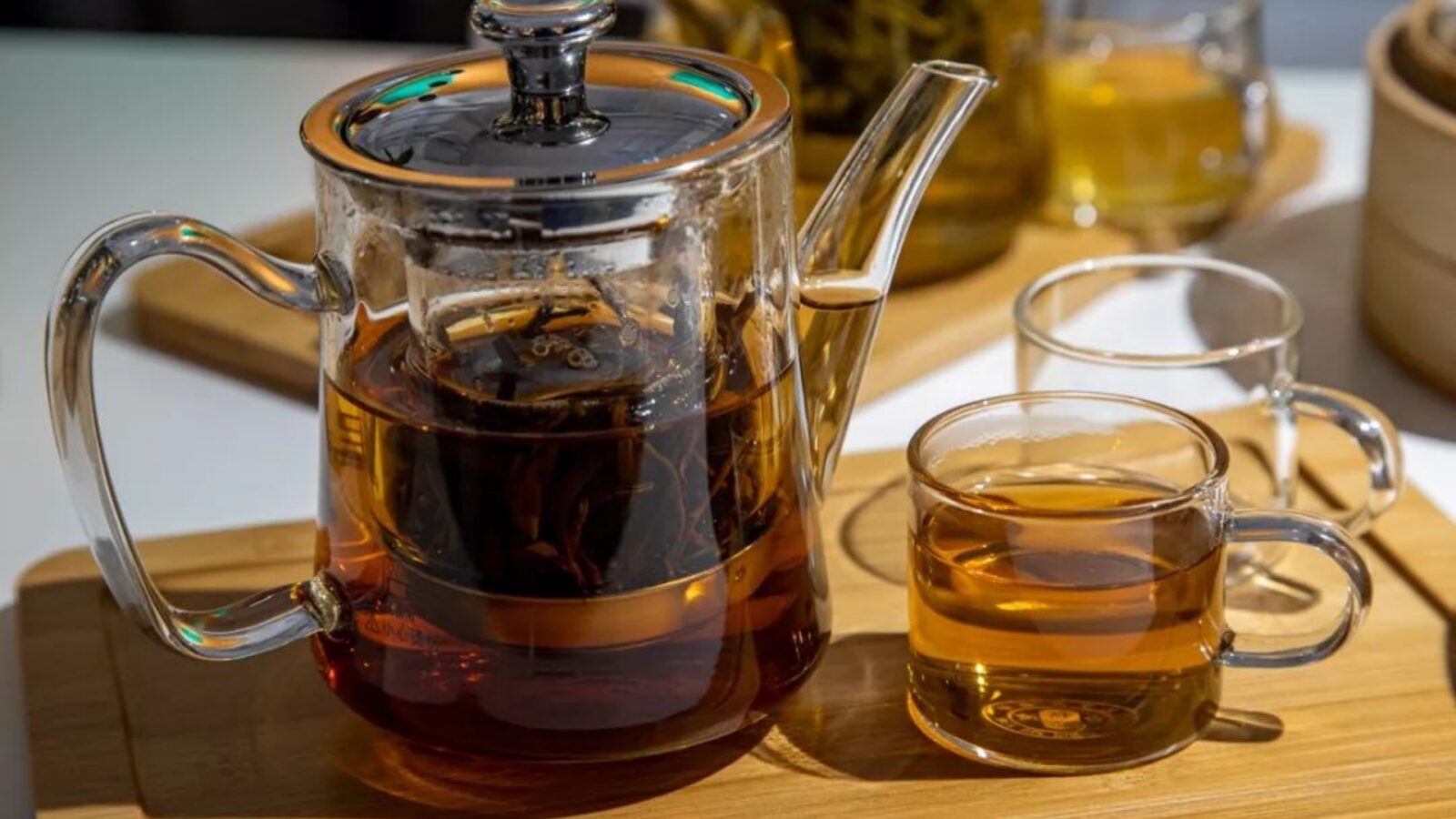
Typical tea cost: about $0.50–1.50 (¥3–10) per person in mainland China; $1–2 per person at overseas Chinese restaurants. Tea is poured from a small clay or glass pot and often arrives with a small "tea-seat fee" (茶位费) in mainland restaurants.
Why Chinese Restaurants Serve Tea
What Tea Is Served at Chinese Restaurants
Tea opens nearly every meal in Chinese dining culture. The word for tea itself — 茶 (chá) — is so central that it gave English its own vocabulary. In Cantonese dim sum culture, the entire ritual is called yum cha 饮茶, which literally means "drink tea." Families and friends gather not just for the food but for the tea itself, treating the pot as a social anchor throughout the meal. The practice goes deeper than habit. Tea is believed to aid digestion of the often rich, oily dishes that accompany dim sum, and its astringency helps cleanse the palate between bites.
Offering tea first is also a signal of hospitality — a warm welcome before any menu is consulted. In many mainland Chinese restaurants, that first pot formalizes the table itself. The "tea seat" (茶位, chá wèi) is a recognized charge, sometimes a small per-person fee, sometimes waived. At overseas Chinese restaurants the custom persists even when the tea is simply placed on the table unprompted.
🍵 Beverage Culture: Explore the wider variety of traditional beverages and refreshment options with our guide to Famous Chinese Drinks.
The 5 Most Common Teas at Chinese Restaurants
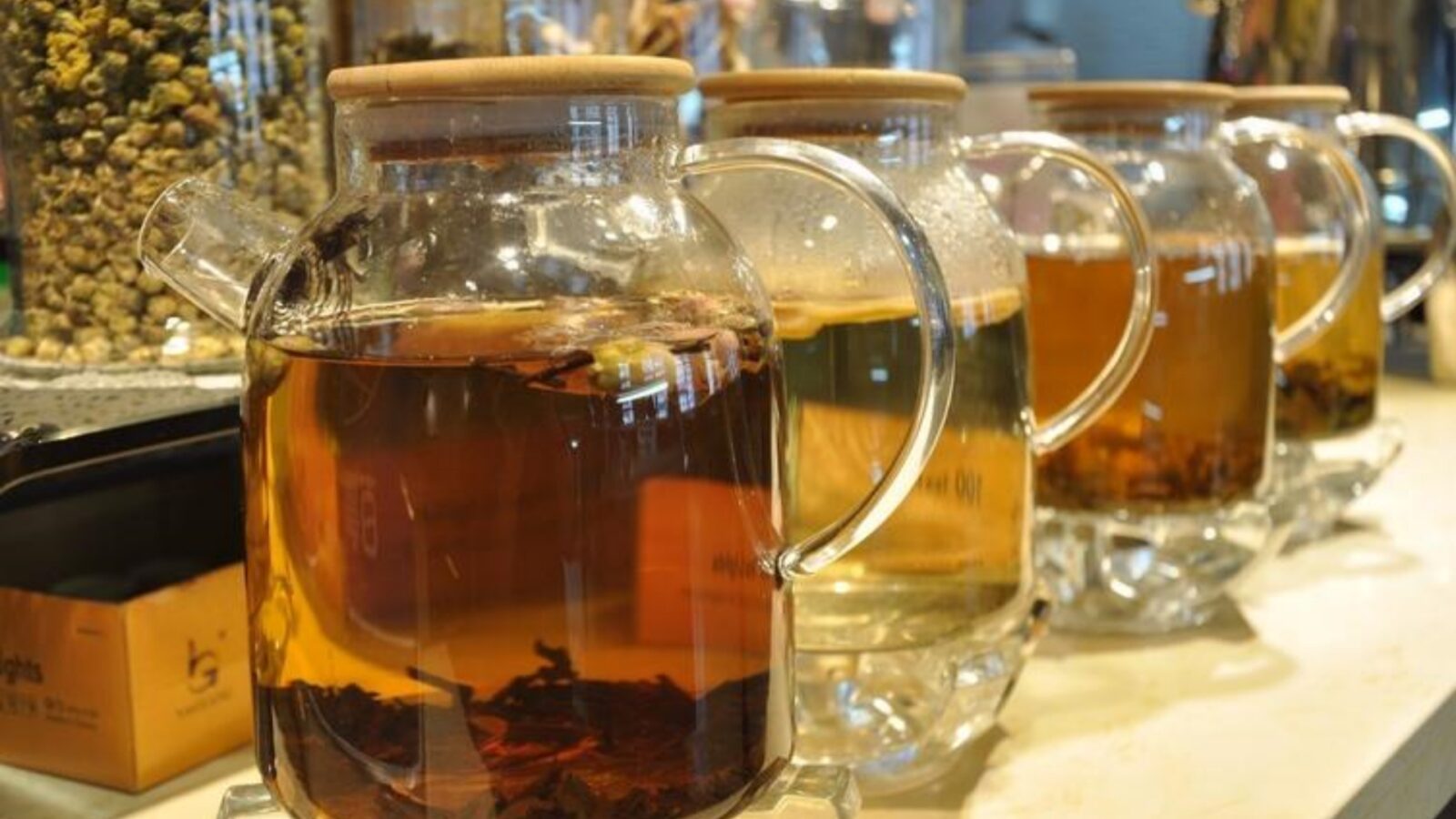
Five teas dominate the menus at Chinese restaurants worldwide: jasmine, pu-erh, chrysanthemum, oolong, and longjing. They are chosen not for their rarity but for their practicality — they are affordable, shelf-stable, and broadly palatable to international diners. Three of them (pu-erh, oolong, and longjing) are classic Chinese teas with centuries of heritage behind them. Jasmine is the global default for restaurants that cater to unfamiliar palates, while chrysanthemum serves those who want something gentle or caffeine-free. Most restaurants stock at least jasmine and one of the traditional picks; many carry all five. The sections below break down each one in detail.
Jasmine Tea — The Default in Most Restaurants
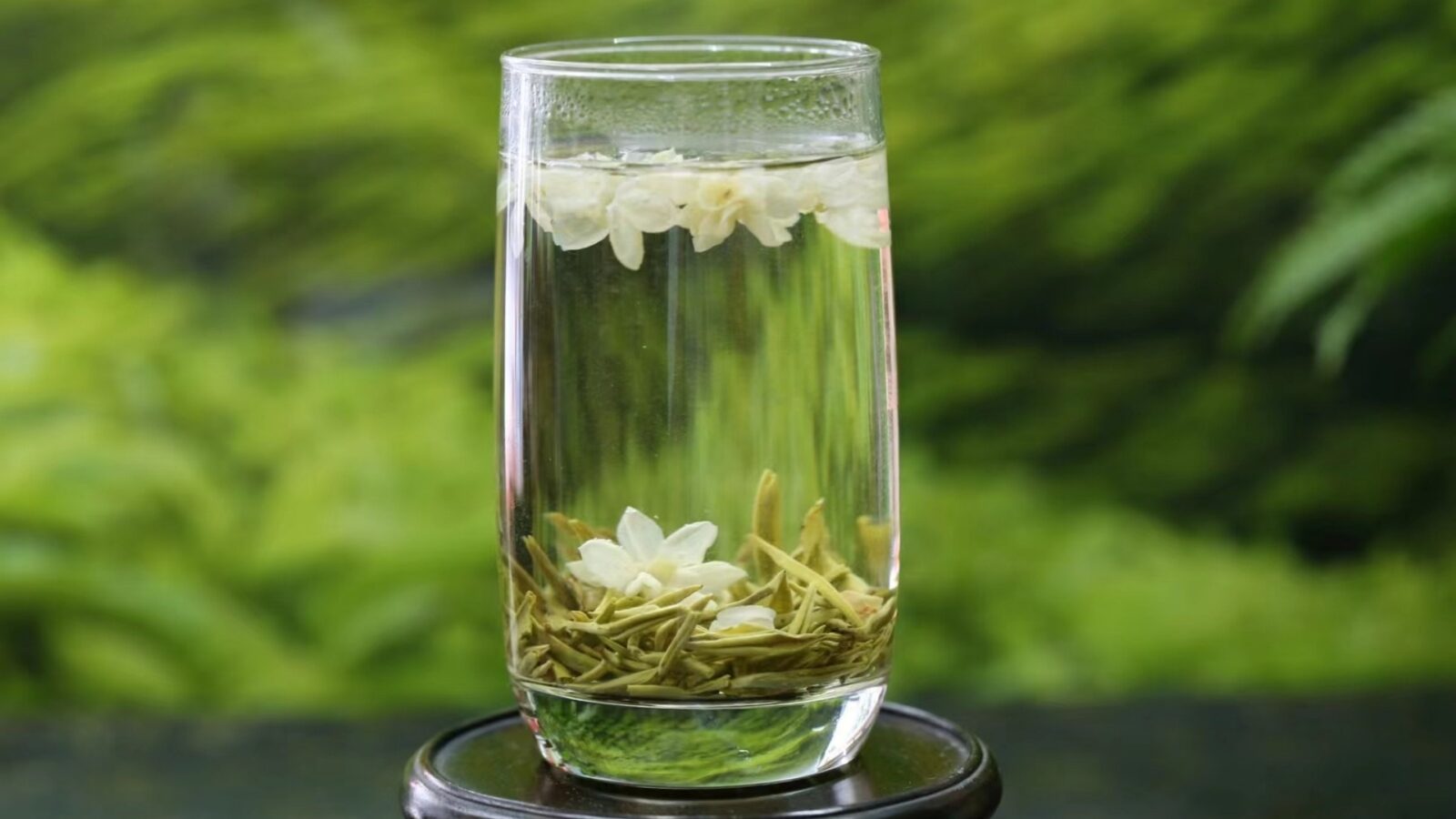
The Jasmine Tea
In most Chinese restaurants outside mainland China, jasmine is the default and most frequently served tea. It is made from green or black tea leaves scented with jasmine blossoms (茉莉花茶, mòlìhuā chá), producing a light, floral cup with a faintly sweet finish. The caffeine content comes from the tea base, so it sits around 30–50 mg per pot — similar to a cup of brewed coffee. Because jasmine does not overpower food, it pairs well with dim sum, seafood, and lighter dishes. It is also the safest choice for anyone who does not know what to order. The dried jasmine buds are sometimes visible floating in the pot, which is normal and not a quality issue.
- Mandarin: 茉莉花茶 (mòlìhuā chá)
- Cantonese: mo-lei-fa (茉莉花)
- Flavor: light, floral, faintly sweet
- Caffeine: yes — green-tea base, ~30–50 mg per pot
- Best paired with: dim sum, seafood, light dishes, or anyone who is unsure what to pick
Pu-Erh (Bo-Lay) — The Traditional Black Tea
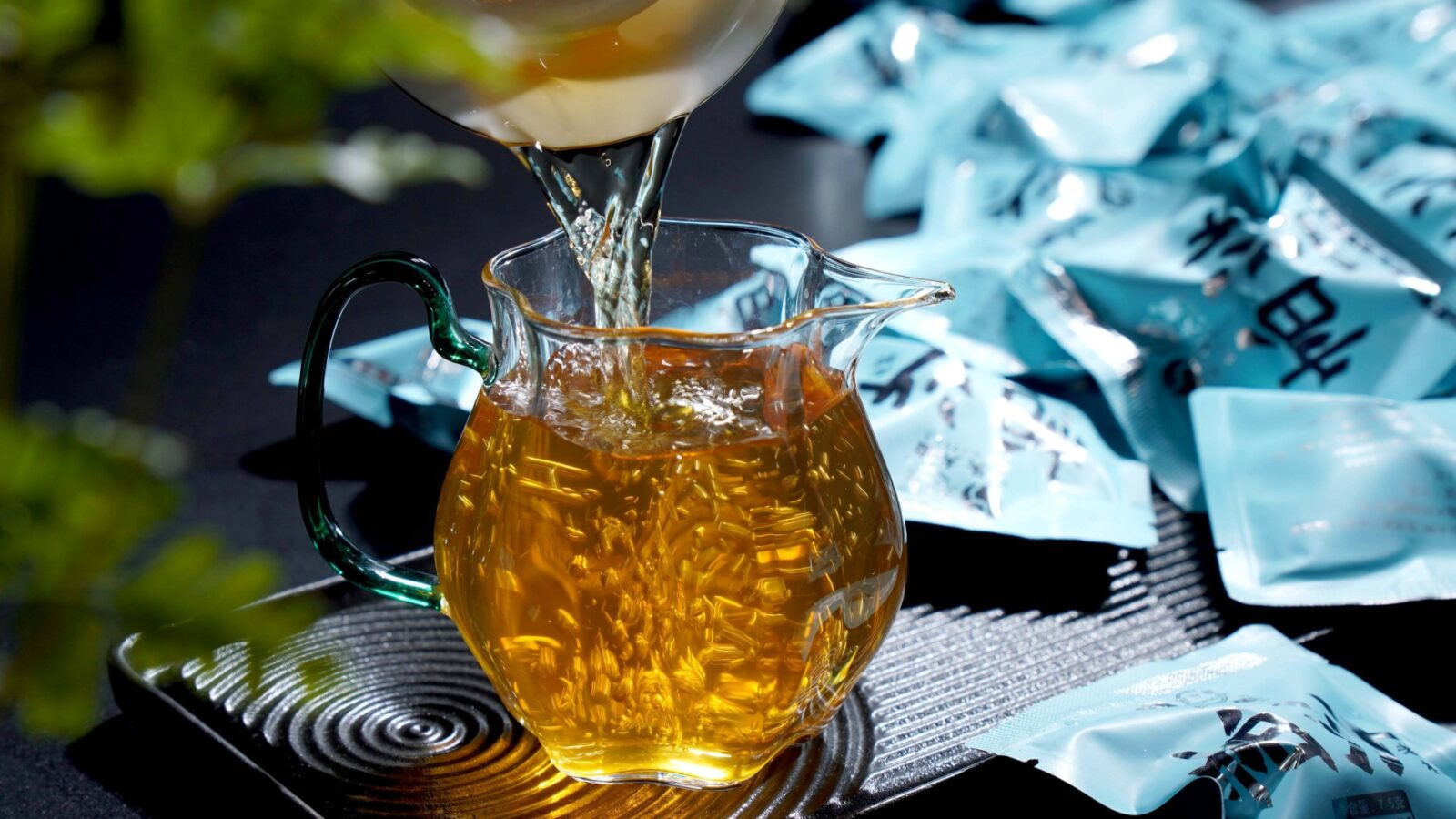
The Pu-Erh (Bo-Lay)
Pu-erh is the traditional tea of Cantonese dim sum halls and remains the first choice at many yum cha restaurants. It is a fermented tea with a deep, earthy, slightly musty character that some describe as having a forest-floor quality. The Chinese name is 普洱茶 (pǔ'ěr chá); in Cantonese it is pronounced "boh-lé" or simply "bo-lay." Older pu-erh is treated with the same respect as aged wine, and rare vintage cakes can command high prices. At the restaurant level, however, it is a workhorse — served from a pressed disc, brick, or loose dark leaves. The flavor profile makes it especially effective against greasy foods. We recommend it whenever the menu features fried dumplings, rich meats, or anything particularly oily.
- Mandarin: 普洱茶 (pǔ'ěr chá)
- Cantonese: bo-lay
- Flavor: earthy, deep, woody
- Caffeine: yes — ~40–60 mg per pot
- Best paired with: fried dumplings, rich meats, oily dishes — cuts through grease
Chrysanthemum (Gook-Fa) — The Caffeine-Free Choice
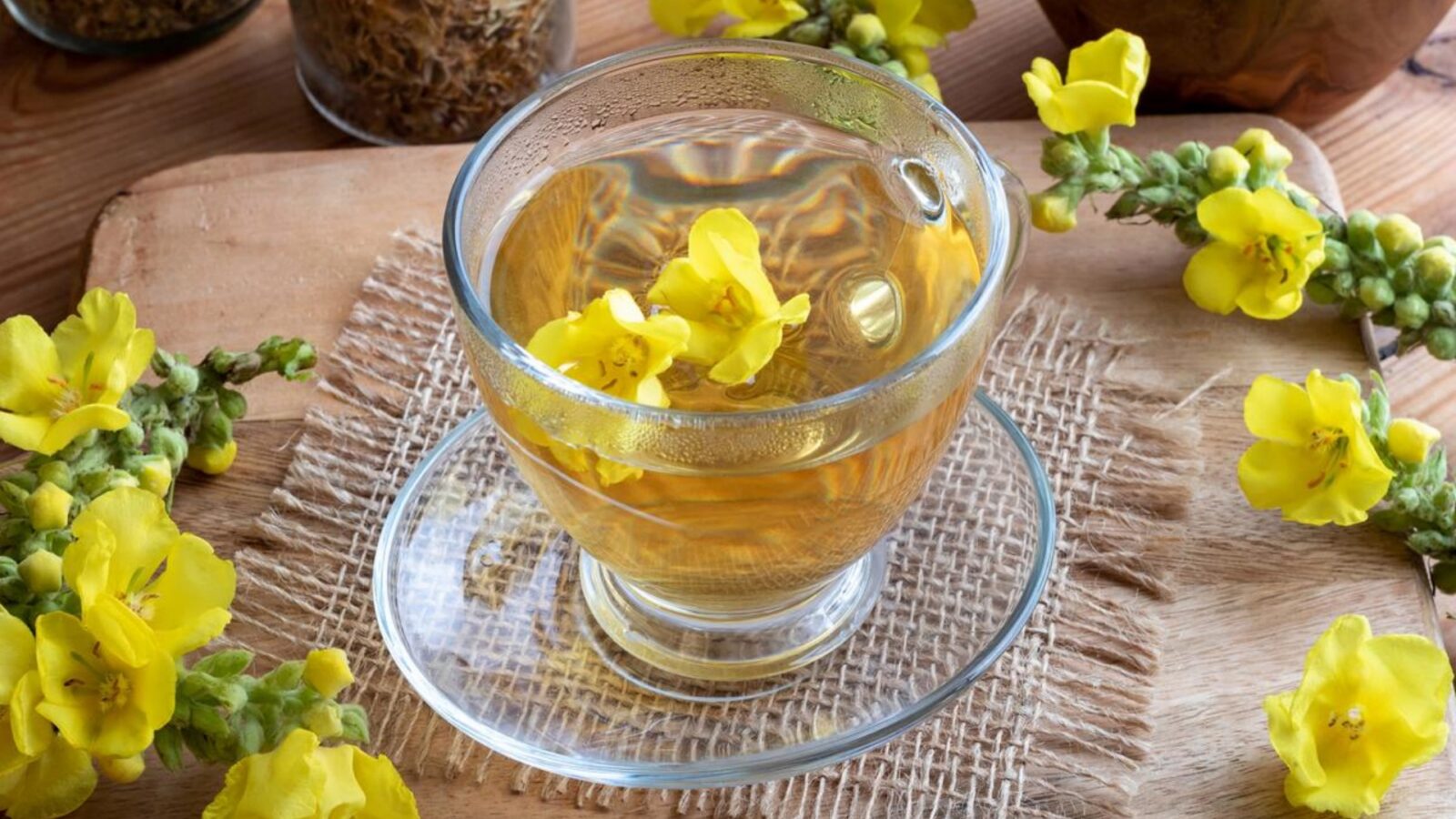
The Chrysanthemum (Gook-Fa)
Chrysanthemum is the only fully caffeine-free option commonly found at Chinese restaurants. Brewed from dried chrysanthemum flower buds, it produces a pale yellow liquor with a naturally sweet, mild flavor reminiscent of chamomile. The Chinese name is 菊花茶 (júhuā chá); in Cantonese it goes by "gook-fa" or "goh boh." Because it is an herbal infusion rather than a Camellia tea plant, it contains no caffeine at all. It pairs naturally with steamed dumplings, seafood, light desserts, and is a sensible choice for children. Some restaurants will add rock sugar to the pot on request if you prefer more sweetness.
- Mandarin: 菊花茶 (júhuā chá)
- Cantonese: gook-fa / goh boh
- Flavor: light, floral-sweet, chamomile-like
- Caffeine: none — herbal infusion, not Camellia tea
- Best paired with: steamed dumplings, seafood, light desserts, children
Oolong (Wu-Long) — The All-Round Pick

The Oolong (Wu-Long)
Oolong sits between green and black tea on the fermentation scale, giving it a balanced, slightly roasted flavor that works with almost anything on the dim sum menu. The Chinese name is 乌龙茶 (wūlóng chá); in Cantonese it is "wu-long." The liquor has a coppery hue and a faint toasty quality that complements both savory dumplings and baked items like char siu bao and egg tarts. At finer restaurants, the specific oolong variety served is often Tieguanyin (铁观音), a renowned high-mountain cultivar named after the Iron Goddess of Mercy. If you want a safe, versatile choice, oolong is the answer.
- Mandarin: 乌龙茶 (wūlóng chá)
- Cantonese: wu-long
- Flavor: balanced, roasted, faintly toasty
- Caffeine: yes — ~30–50 mg per pot
- Best paired with: most dim sum, salty or spicy meat dishes, baked buns (char siu bao, egg tarts)
Longjing (Lung-Jeng) — The Green Tea
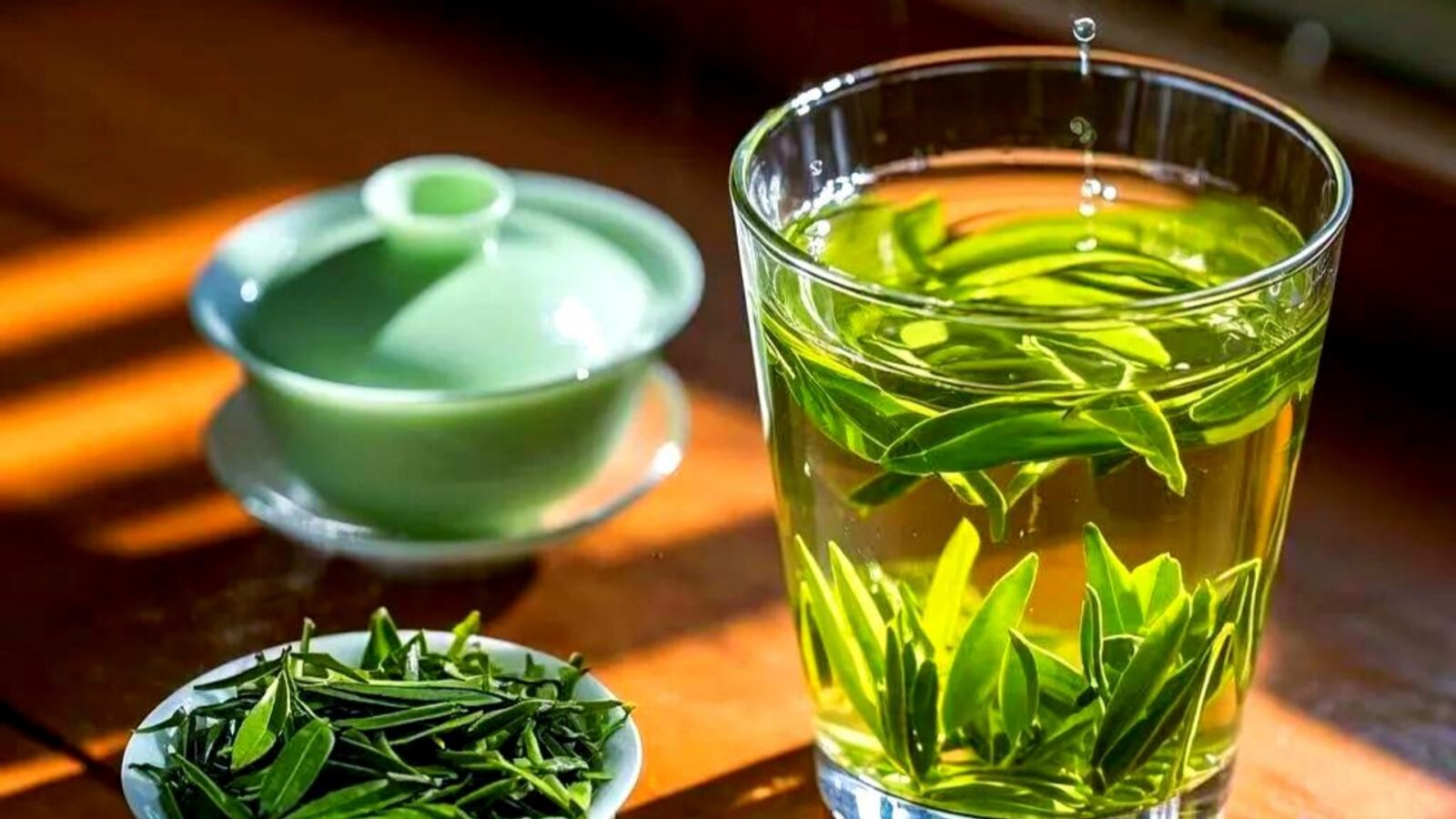
The Longjing (Lung-Jeng)
Longjing, also known as Dragonwell, is the green tea of the Chinese restaurant world. It comes from Hangzhou and is distinctively pan-fired rather than steamed, giving it a grassy, vegetal character closer to steamed greens than to more astringent green teas. The Chinese name is 龙井茶 (lóngjǐng chá); in Cantonese it is "lung-jeng" or "lung ching." Like pu-erh, it handles oily food well, but it does so more gently — Longjing is better understood as a palate cleanser. When brewed, the leaves lie flat and the liquor runs pale jade-yellow. It pairs well with lighter dishes and is a good choice for between-course refreshment.
- Mandarin: 龙井茶 (lóngjǐng chá)
- Cantonese: lung-jeng / lung ching
- Flavor: grassy, vegetal, steamed greens
- Caffeine: yes — ~25–40 mg per pot
- Best paired with: lighter dishes, palate cleanser between bites; leaves are flat and jade-yellow when brewed
🍃 Tea Categories: To learn how these popular varieties fit into broader traditional categories, check out our breakdown of the 6 Types of Chinese Tea.
How to Order Tea at a Chinese Restaurant
Once you understand the five teas available, the next step is knowing how to ask for them. The ordering moment comes quickly — usually within a minute of being seated. In mainland China, the waiter will typically ask "喝什么茶?" (drink what tea?) or simply bring a pot unannounced. At overseas Chinese restaurants, the server may place jasmine on the table and wait to see if you object. The sections below cover pronunciation and the customs that follow the pour.
Saying the Tea Name in Cantonese and Mandarin
At Cantonese-style restaurants — which includes most dim sum halls and the majority of overseas Chinese restaurants — using the Cantonese name is the most direct approach. Staff recognize these pronunciations instantly and the interaction proceeds without friction. At northern Chinese or Mandarin-dominant restaurants, the Mandarin name works better. Below are the five pronunciations to use.
- Pu-erh: "bo-lay" (Cantonese) / "pǔ'ěr chá" (Mandarin)
- Chrysanthemum: "gook-fa" or "goh boh" (Cantonese) / "júhuā chá" (Mandarin)
- Oolong: "wu-long" (Cantonese) / "wūlóng chá" (Mandarin)
- Longjing: "lung-jeng" or "lung ching" (Cantonese) / "lóngjǐng chá" (Mandarin)
- Jasmine: "mo-lei-fa" (Cantonese) / "mòlìhuā chá" (Mandarin) — often simply called "jasmine tea" in English at overseas restaurants
Etiquette: Pouring, Tapping, and Refills
Chinese tea culture carries a set of customs that most regular diners follow without thinking about them. These etiquette points are not strict rules, but knowing them shows cultural awareness and makes the experience more comfortable.
- Pour for others first: Always pour tea for others at the table before pouring for yourself. When serving an elder or higher-status guest, use both hands on the teapot as a sign of respect.
- Finger-tap thank-you (叩指礼, kòu zhǐ lǐ): When someone pours tea for you, tap two fingers — index and middle — lightly on the table to acknowledge their service without interrupting conversation. This gesture replaces the verbal "thank you" during a busy meal.
- Refills: In mainland China, refills are usually complimentary or included in the tea-seat fee of about $0.50–1.50 (¥3–10) per person. At overseas Chinese restaurants, each pot may cost $1–2 with refills charged separately. Always check with the server if you are unsure.
- Sharing the pot: The small clay or glass pot at your table is meant to be shared. The server typically sets one cup per diner, but the tea itself is communal — refills come from the same pot.
- Upscale option — gong fu cha: At higher-end restaurants, a server may perform gong fu cha (功夫茶), a multi-pot pouring ceremony using smaller vessels and shorter steeps. This is an optional service at finer establishments, not the norm at most restaurants.
🌱 Featured Variety: If you are interested in exploring popular green tea selections, learn more with our guide to Chinese Green Tea Drink.
Sweet, Hot, or Black — Identifying the Tea You're Served
If tea arrives at your table without a clear label, use your senses to identify it. The table below maps sensory clues to the five common varieties.
One note on the word "hot": Chinese restaurant tea is almost always served piping hot by default, poured from a clay or glass pot at the table. "Hot" describes the serving temperature, not a separate variety. The heat is the default, not an identity.
Frequently Asked Questions
Q: What is the sweet tea served at Chinese restaurants called?
Chrysanthemum tea (菊花茶, gook-fa) is the naturally sweet option — caffeine-free and mild. Some restaurants serve it with rock sugar added for extra sweetness. At fancier establishments, osmanthus-scented oolong (桂花乌龙) is another sweet-adjacent option worth asking about.
Q: What is the hot tea served at Chinese restaurants?
Chinese restaurant tea is almost always served piping hot from a clay or glass pot — "hot" describes how it is poured, not a separate variety. Pu-erh and jasmine are the two most commonly served steaming hot; chrysanthemum is sometimes offered warm rather than boiling.
Q: What type of black tea is served at Chinese restaurants?
Pu-erh (bo-lay, 普洱茶) is the standard "black tea" at Chinese restaurants — a fermented tea with an earthy, deep flavor. In finer restaurants, aged or premium pu-erh from Yunnan may be offered. Jasmine uses either a green or black tea base scented with jasmine blossoms.
Q: Is Chinese restaurant tea caffeinated?
Jasmine, pu-erh, oolong, and longjing all contain caffeine, roughly 25–60 mg per pot — similar to or less than a cup of coffee. Chrysanthemum (gook-fa) is the only fully caffeine-free option commonly served, as it is brewed from flower buds rather than the Camellia tea plant.
Q: Do Chinese restaurants charge extra for tea?
In mainland China, tea is usually complimentary or carries a small "tea-seat fee" (茶位费) of about $0.50–1.50 (¥3–10) per person. At overseas Chinese restaurants, tea is often $1–2 per person, with refills sometimes charged separately. Premium varieties or gong fu service can cost more.
Q: Is pu-erh tea safe to drink?
Yes for most people. Concerns about mycotoxins in poorly-stored pu-erh exist but are rare in restaurant-grade pu-erh. If you are sensitive or buying loose pu-erh for home, source from a reputable vendor. Jasmine or chrysanthemum are lower-risk alternatives if you prefer to avoid the question.
Q: Can I ask for a different tea if my first choice isn't available?
Yes. Most Chinese restaurants carry a small set of teas — jasmine, pu-erh, chrysanthemum, oolong, and longjing are the standard five. Ask by name. If the one you want is not stocked, the server will usually suggest the closest alternative from what is available.