What Chinese People Have for Breakfast
Breakfast in China is fast, cheap and fiercely regional. Unlike the Western model of cereal or eggs, Chinese morning food is built around portable wheat and rice staples, steaming pots of congee and a national love affair with soy milk. For visitors, the breakfast stall is one of the most vivid and accessible windows into daily Chinese life — but knowing what to order, where to find it and how much it costs requires a little context.
China spans eight major regional breakfast cultures, from the millet-heavy northern plains to the rice-noodle dim sum tables of Guangdong. This guide maps the five core food categories, breaks down each region's signature dishes and gives practical advice for eating breakfast as a tourist.
Quick Facts
The Big 5 Chinese Breakfast Categories
Five food families dominate every Chinese breakfast, regardless of region. Each category spans a wide price range and appears in multiple forms across the country.
- Soy milk and youtiao: The signature national pairing — hot soy milk with deep-fried dough sticks.
- Steamed buns: Baozi, mantou and huajuan — wheat-flour buns, filled or plain.
- Congee and porridge: Plain or flavored rice porridge, a comfort staple nationwide.
- Wheat noodle soups: Hand-pulled lamian, beef noodle, wonton and dan dan noodles.
- Savory pancakes and crepes: Jianbing, jidan guanbing and regional flatbread variants.
Soy Milk and Youtiao (豆浆油条)
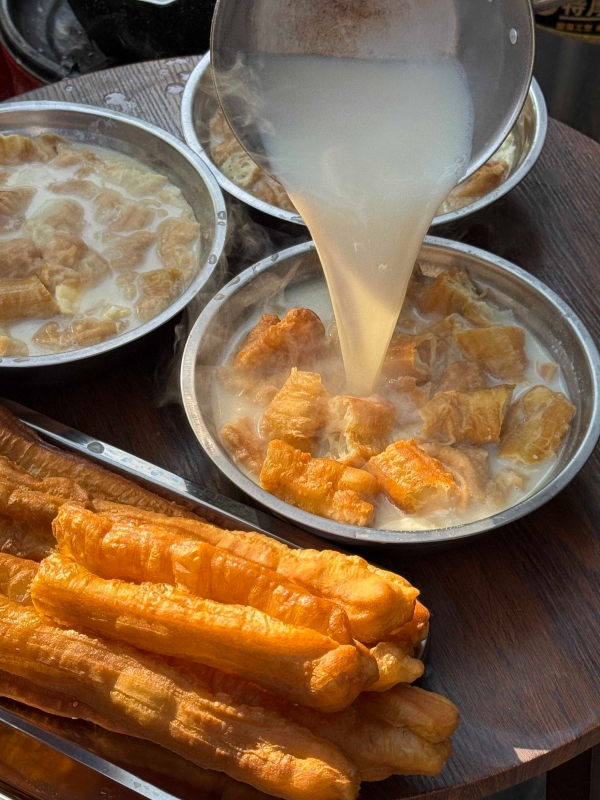
Soy Milk and Youtiao
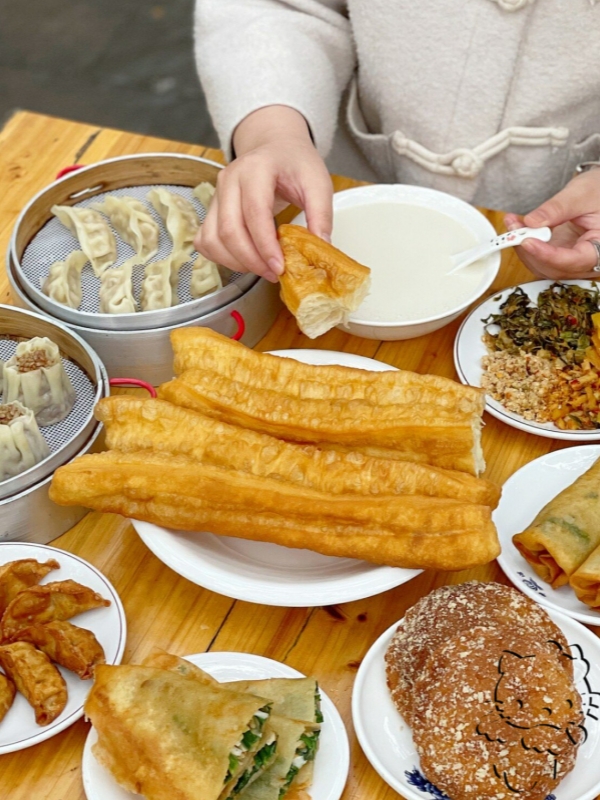
This is the closest thing China has to a universal breakfast. Hot soy milk is sold plain or sweetened; a savory version adds a salted egg or pickled vegetables. Youtiao are long, hollow rods of fried dough, crisp on the outside and airy inside. Dipping youtiao into warm soy milk softens the crust and blends the flavors. A bowl of soy milk costs about $0.70–1 (¥5–7) at any street stall. Youtiao run $0.50–0.80 (¥3–5) per stick. The pairing is cheap, fast and available in every city, from Shanghai morning markets to small-town northern provinces.
Steamed Buns: Baozi, Mantou and Huajuan (包子/馒头/花卷)
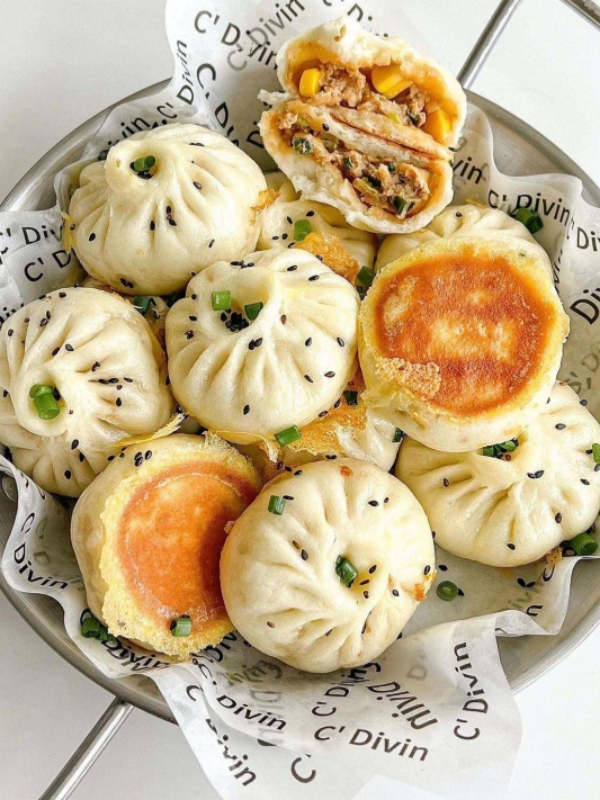
Baozi
Baozi are soft wheat buns folded around a filling. Pork and chive is the most common savory variety; vegetable-only versions serve vegetarians. Sweet fillings include red bean paste and custard. Mantou are plain steamed buns with no filling, often split and toasted. Huajuan are coiled buns brushed with scallion oil between each layer. A single baozi costs about $0.70–1.50 (¥5–10). Xiaolongbao — soup dumplings with a thin skin and hot broth inside — are a Shanghai specialty sold as a small steamer of eight for roughly $4–6 (¥28–42). The bamboo steamer is the visual marker of every baozi cart.
Congee and Rice Porridge (粥)
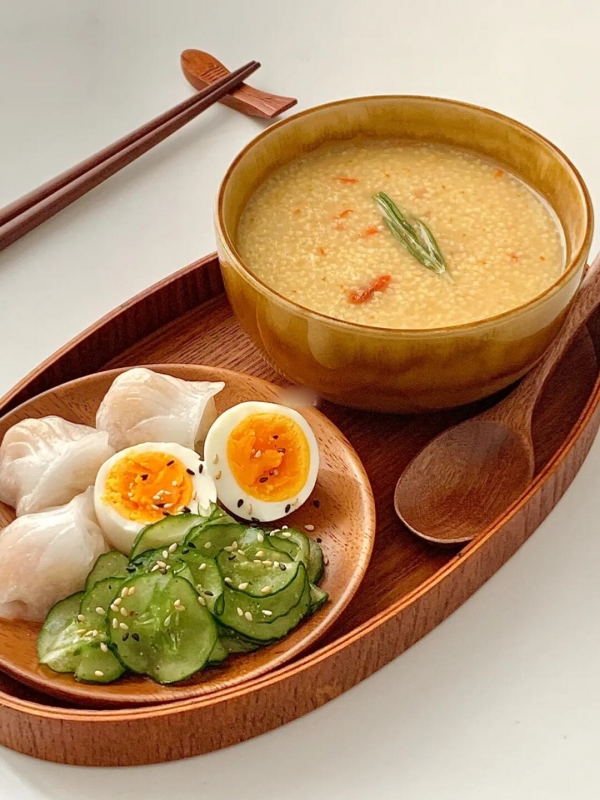
Rice Porridge
Congee is rice boiled in water until it breaks down into a thick, smooth porridge. Plain congee (白粥) is the base; flavored versions add pork floss, century egg, chicken, fish or pickled vegetables. Sweet red bean porridge (红豆粥) appears at breakfast counters across eastern China. Congee is eaten with youtiao, fried bread sticks or pickled sides. One bowl typically costs $1–2 (¥7–15). In winter, families in the north switch to millet congee (小米粥). The texture ranges from thin and soupy in the south to thick and stodgy in northern provinces.
Wheat Noodle Soups (面)
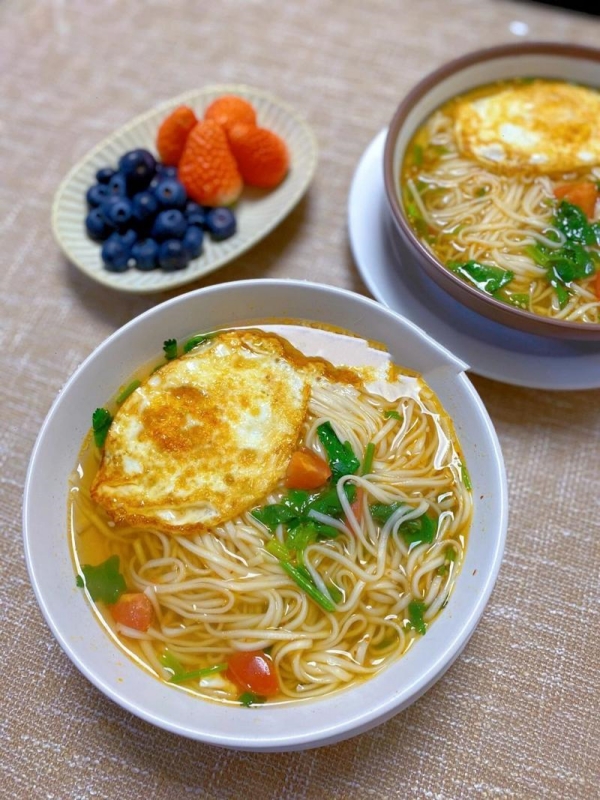
Noodle Soups
Noodles at breakfast are common across northern and central China, where wheat is the dominant grain. Beef noodle soup, wonton noodles, dan dan noodles with sesame paste and chili oil, and hand-pulled lamian all appear on morning menus. A bowl costs roughly $2–4 (¥15–30), making it more filling than a baozi-and-soy-milk combination. In Chongqing and Sichuan, small bowls of noodles with spicy broth are a standard morning choice. The portions tend to be larger and the broth more complex than in other meals of the day.
Pancakes and Savory Crepes (煎饼/鸡蛋灌饼)
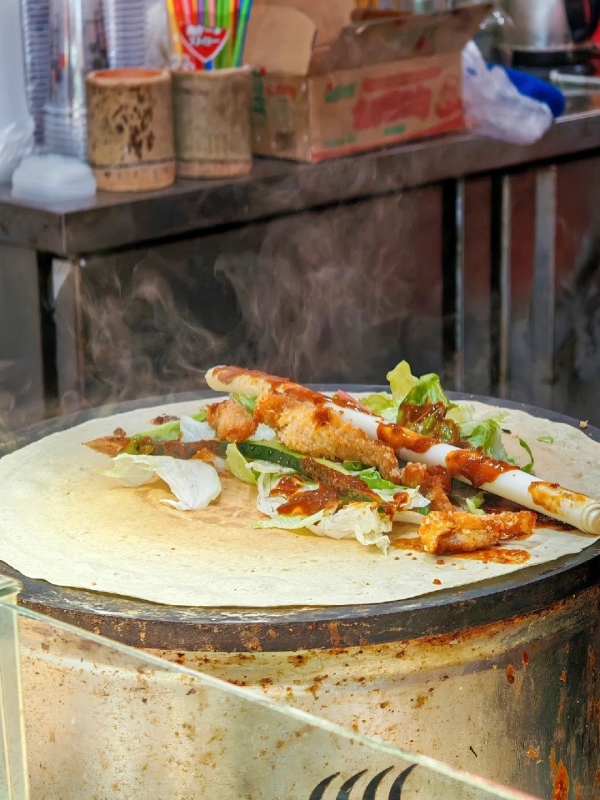
Jianbing
Jianbing is a Shandong creation made from a thin mung-bean batter spread on a hot flat iron, topped with egg, scallion, cilantro, hoisin sauce and a crispy cracker folded into quarters. It is cooked to order and eaten folded, standing at the cart. The Henan variant, jidan guanbing, stuffs an egg into a flatbread pocket with scallion and chili. One crepe costs about $1.50–2.50 (¥10–18). Both are breakfast-on-foot items — there is rarely a seat. The wok and the batter-spreading ladle are the only equipment the vendor needs.
Regional Breakfast Map
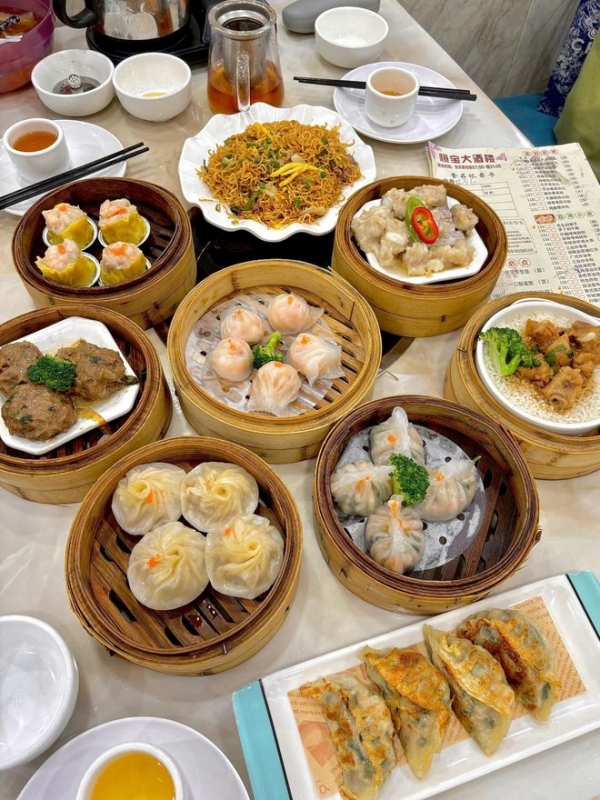
Cantonese Breakfast
China's eight major regional breakfast cultures reflect local grains, climate and taste preferences. A northern breakfast runs heavy on wheat and fried dough; a southern morning centers on rice, noodles and tea. Here is how the five largest regions break down.
- Beijing and the North: Jianbing, douzhi, millet congee — heavy on wheat, soy and egg.
- Shanghai and the Yangtze Delta: Xiaolongbao, scallion oil pancakes, sweet soy milk — sweet-savory balance.
- Guangdong and Guangzhou: Yum cha, rice noodle rolls, har gow — tea culture with dim sum.
- Sichuan and Chongqing: Dan dan noodles, cold noodles, chili oil — spicy mornings.
- Hong Kong and Pearl River Delta: Char siu bao, lo mai gai, egg waffles — Cantonese with British influence.
Beijing and the North
The northern breakfast reflects the cold winters and wheat-farming heritage of the region. Jianbing costs roughly $1.50–2.50 (¥10–18) at Beijing morning carts. Douzhi — a fermented mung-bean drink with a tangy, acquired taste — sells for about $1 (¥7) per bowl and is a Beijing classic. Lǘdǎgūn, a chewy mung-bean noodle roll dipped in savory sauce, also runs around $1 (¥7). Fried dough rings, scallion pancakes and millet congee round out the northern table. In rural Shanxi, vinegar and noodles appear at breakfast more often than anywhere else in China.
Shanghai and the Yangtze Delta
Shanghai breakfast carries a sweet-savory balance that distinguishes it from the north. Xiaolongbao — the Shanghai-born soup dumpling — costs about $4–6 (¥28–42) per eight-piece steamer. Cōng yóu bǐng, a scallion oil pancake pressed flat and pan-fried, sells for roughly $1.50–2.50 (¥10–18). Dàbāo, a deep-fried rice ball with sweet or savory filling, is a common street-side snack. Soy milk in Shanghai is typically served slightly sweetened. Nearby Suzhou adds sweet dim sum and osmanthus cake; Hangzhou favors fish broth noodles with breakfast.
Guangdong, Guangzhou and Cantonese Mornings
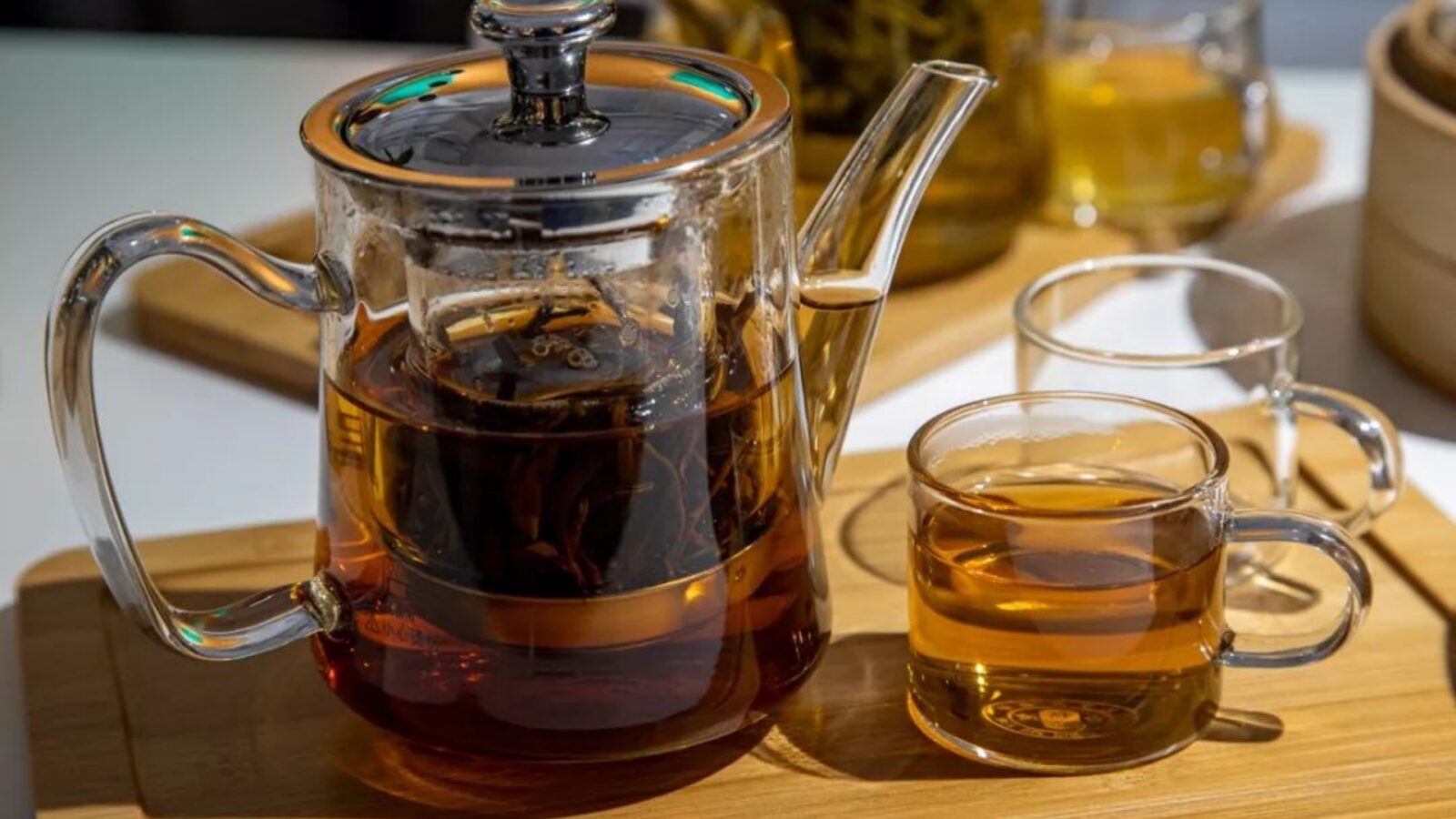
Cantonese breakfast centers on yum cha — the ritual of drinking tea and eating small dishes at a teahouse. Dim sum counters offer dozens of morning items: cháng fěn (rice noodle rolls with various fillings) for about $2–3 (¥15–22), har gow (shrimp dumplings in a pleated translucent skin) at $3–4 (¥22–28) for four pieces, siu mai pork-and-shrimp dumplings, and char siu bao (steamed BBQ pork buns) at $2–3 (¥15–22). Tea is the anchor — usually oolong, pu'er or Chrysanthemum. Congee is served with youtiao and pickled vegetables. A yum cha session typically runs from 8:00 to 11:00 AM on weekends.
Sichuan, Chongqing and the Spicy Southwest
The Southwest makes its presence known at every meal, including breakfast. Dan dan noodles — sesame paste, chili oil, pickled vegetables and ground pork over wheat noodles — cost roughly $2–3 (¥15–22) and are a standard Chongqing morning bowl. Cold noodles (liáng miăn), sour-and-spicy rice noodles and sweet-water noodles round out the roster. Chili oil appears even in the morning congee. The region also produces millet congee (xiǎomĭ zhōu) as a milder counterweight. Chongqing is known for its small-noodle bowls — the broth is darker, more intense and more heavily spiced than in other provinces.
Hong Kong and the Pearl River Delta
Hong Kong breakfast blends Cantonese tradition with British colonial food culture. Char siu bao costs roughly $2–3 (¥15–22); lo mai gai — sticky rice steamed in lotus leaf with lotus seed paste, mushrooms and pork — runs $3–4 (¥22–28). Egg waffles (gai daan zai), a street cart snack of waffle-like egg batter, are uniquely Hong Kong. A distinctly Hong Kong breakfast item is macaroni soup in clear broth, served with a fried egg and ham — a leftover from British colonial menus. Hot milk tea and yuanyang (half coffee, half tea) are the drinks of choice. Prices in Hong Kong run roughly 20–30% higher than across the border in Guangdong.
🥟 Regional Breakfast Deep Dives:
🥢 Beijing Morning Specialties: Dive into northern street-food classics like jianbing, douzhi, and piping-hot pork baozi in our guide to Beijing Breakfast.
🥢 National Morning Food Culture: Explore the complete guide to regional morning staples, cart ordering tips, and stall etiquette across the country in Chinese Breakfast.
🥢 Shanghai & Yangtze Delta Flavors: Learn about soup dumplings (xiaolongbao), scallion oil pancakes, and sweet-savory morning delights in Shanghai Breakfast.
🥢 Everyday Street Eats: Discover savory bites, sweet treats, and famous local street delicacies in our guide to Traditional Chinese Snacks.
Where Tourists Can Actually Eat Breakfast in China
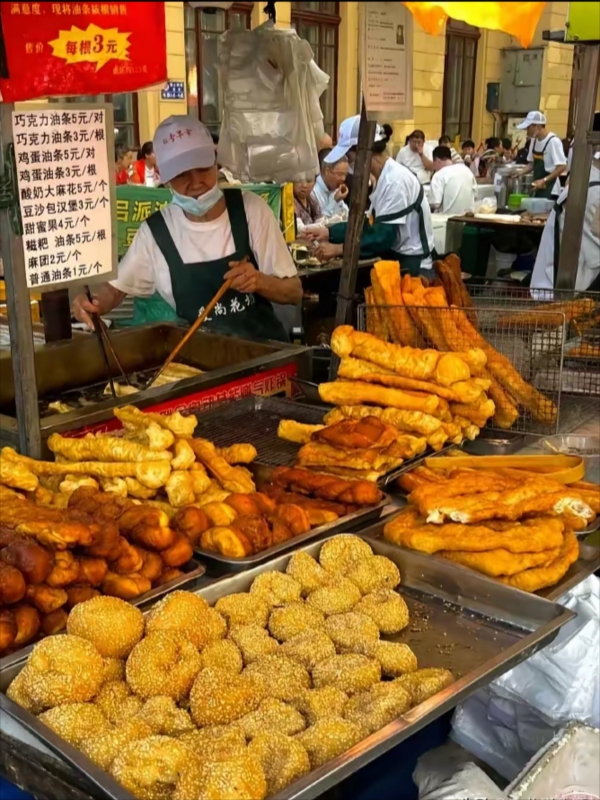
Where to Eat Breakfast in China
Four venue types cover most tourist breakfast scenarios, ordered here from most authentic to most convenient.
- Street stalls and breakfast carts: Cheapest and most authentic — open early, serve one item, turn over fast.
- Local chain restaurants: Air-conditioned, picture menus, sometimes English — moderate prices.
- Hotel breakfast buffets: Safest option, mixed Chinese and Western, English-speaking staff.
- Self-service ordering: Point-and-pay, cash, translation apps — practical for navigating stalls.
Street Stalls and Breakfast Carts
Street stalls are the cheapest way to eat breakfast in China. A full stall meal — soy milk plus youtiao plus a baozi — runs $1–3 (¥7–20) depending on the city tier. Most open between 5:30 and 6:00 AM and close by 9:30 AM. Vendors accept cash RMB or WeChat/Alipay; tourists without those apps can pay via the vendor's ordering QR code or by showing a mobile payment screen from a local guide. The morning rush at a busy stall is a reliable quality signal — high turnover means fresh preparation.
Local Chain Restaurants
National chains offer a reliable middle ground for visitors unsure about street food. Yonghe King (永和大王) serves soy milk, baozi sets and fried dough for roughly $5–7 (¥35–50) per person. Dicos (德克士) functions as China's KFC equivalent with breakfast sets around $4–6 (¥28–42). Real Kungfu and South Beauty operate casual sit-down restaurants with illustrated menus. Most chains have air conditioning, staff uniforms and, in major cities, English signage or picture boards. These are the most common venues in airport terminals and train station food courts.
Hotel Breakfast Buffets
Hotel breakfast buffets cost $15–22 (¥108–158) as a walk-in rate and are often included with mid-range to upper-tier rooms. International chain hotels — Marriott, Hilton, Hyatt — typically staff their breakfast service with English-speaking employees. The food mix ranges from full Chinese stations (steamed buns, congee, wok-fried noodles) to Western items (eggs, toast, bacon). Buffets are the safest option for the first morning in China and the best choice for guests with dietary restrictions or young children.
How to Order Without Speaking Mandarin
Learning four phrases covers most situations: 包子 (bāozi), 豆浆 (dòujiāng), 加油条 (jiā yóutiáo) and 谢谢 (xièxiè, thank you). Trip.com and Klook list menus and prices for major chain restaurants in English. Most breakfast stalls in tourist cities now accept UnionPay card terminals, though carrying ¥50–100 in small RMB notes covers vendors who do not. A translation app with image capture helps at stalls with no picture menu.
A Sample Chinese Breakfast and What It Costs
A northern Chinese street breakfast for one person — soy milk, youtiao, a pork baozi and pickled vegetables — costs roughly $3–4 (¥20–28). A Shanghai-style breakfast with xiaolongbao and scallion oil pancake runs $4–6 (¥28–42). Cantonese yum cha for one, with rice noodle rolls and har gow, comes to $5–8 (¥35–55).
Chinese Breakfast Etiquette and Customs
Breakfast timing in China runs earlier than in Western countries. Most street stalls open at 5:30 AM and see their heaviest traffic between 6:30 and 8:00 AM. Office workers typically eat between 7:00 and 8:30 AM before commuting. Weekend breakfast culture in the south diverges sharply: families in Guangdong and Hong Kong gather for yum cha between 8:00 and 11:00 AM, treating the meal as a social occasion rather than a functional refuel.
Eating on foot is normal. Youtiao, baozi and jianbing are designed to be carried in one hand. Sit-down breakfast is reserved for noodle soups, congee bowls and yum cha. The neighborhood breakfast stall doubles as a social hub in residential areas — regulars have a preferred vendor and a usual order.
Skipping breakfast is more common among younger urban workers than it was a generation ago, driven by late nights and fast-paced commutes. Western fast food chains — McDonald's, KFC, Burger King — have all introduced breakfast menus in China, often adapting to local tastes with baozi-style breakfast sandwiches. However, these occupy a niche rather than replacing the street stall culture that feeds most of urban China each morning.
Frequently Asked Questions
Q: Do Chinese people eat breakfast at home or outside?
Roughly half eat outside. On weekdays, most working adults buy breakfast from a street stall or cart. On weekends, families in the south commonly gather for yum cha at a teahouse — a sit-down, social meal that can stretch over two hours.
Q: How much does a typical Chinese breakfast cost?
A simple stall meal — soy milk, youtiao and a baozi — costs $1.50–3 (¥10–20). A fuller Cantonese yum cha breakfast runs $4–8 (¥28–55) per person. A hotel breakfast buffet costs $15–22 (¥108–158).
Q: What time do Chinese people eat breakfast?
Most street vendors serve 5:30–9:30 AM. Office workers typically eat 7:00–8:30 AM. Weekend yum cha in Guangdong and Hong Kong commonly runs from 8:00 to 11:00 AM.
Q: Is Chinese breakfast spicy?
Most northern and eastern breakfasts are mild. Sichuan, Chongqing, Hunan and Guizhou mornings include chili oil and spicy noodles, but plain congee and steamed buns are always available as a non-spicy baseline.
Q: What do Chinese people drink with breakfast?
Hot soy milk — sweet or plain — is the national breakfast drink. Hot water is universal. Tea pairs with Cantonese dim sum. Hong Kong adds milk tea and yuanyang, a blend of coffee and tea. Juice is uncommon at traditional stalls.
Q: Can tourists eat Chinese street breakfasts safely?
Yes. Look for a queue, cooked-to-order items and bamboo steamers that are visibly steaming. Stick to bottled water and hot drinks rather than tap water.
Q: What is the difference between Chinese breakfast and dim sum?
Dim sum (yum cha) is the Cantonese sit-down morning ritual centered on small steamer baskets and tea. Everyday Chinese breakfast is the broader national category — baozi, congee, jianbing, youtiao and noodles — eaten standing, walking or at a counter.