Chinese Alcohol
China produces and consumes more alcoholic beverages than almost any other country on Earth. Yet for foreign visitors, the selection on offer can feel intimidating. Bottles labeled in characters, unfamiliar spirits served in tiny cups, and an entire etiquette system built around toasts and hierarchy — where does a tourist even begin? The three categories that dominate Chinese tables are baijiu (distilled grain spirit), huangjiu (fermented rice wine), and mijiu (sweet rice wine). Each has a distinct character, a different role in a meal, and a different level of accessibility for the uninitiated. Understanding what lands on your table — and why — transforms a bewildering experience into an engaging one.
Chinese drinking culture is inseparable from hospitality, business, and family. Refusing a toast outright carries social weight, but pacing yourself and choosing the right drink for the right moment is perfectly acceptable. This guide covers every major category, explains how each one is made and served, and gives you the practical vocabulary and price benchmarks to navigate any restaurant or banquet with confidence.
Quick Facts
🍷 Explore Iconic Brands: Discover top historical labels and regional distilleries in our overview of Famous Chinese Drinks.
Baijiu (白酒): China's National Spirit
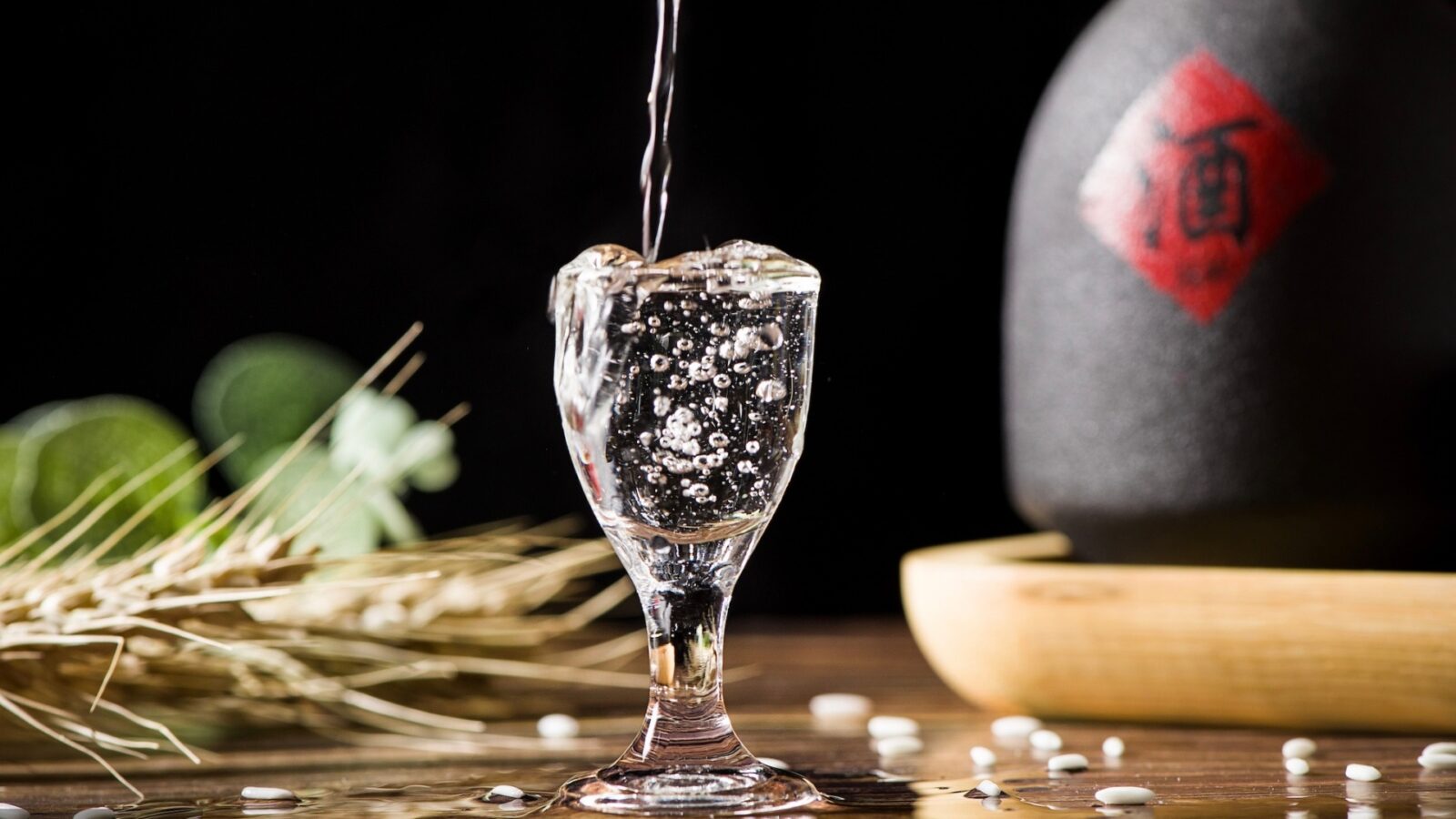
Baijiu (白酒)
Baijiu is the drink that defines Chinese celebrations, business dinners, and ceremonial occasions. It is a distilled grain spirit, typically clear, almost always strong, and utterly unlike anything found in Western liquor aisles. Most foreign visitors encounter it first at a banquet or a formal dinner, where refusing the host's pour requires careful politeness. The flavor profile ranges from earthy and soy-sauce-like to floral and fruity, depending on the production region and the aromatic classification. Understanding these categories transforms baijiu from an intimidating unknown into a drink with genuine complexity worth exploring.
- 酱香 (Sauce Aroma): Earthy, savory, with soy-sauce and fermented-grain notes. Moutai is the defining example.
- 浓香 (Strong Aroma): Fruity and floral, smooth on the palate. The most common style in restaurants. Wuliangye and Luzhou Laojiao lead this category.
- 清香 (Light Aroma): Clean and slightly sweet, less aggressive than other styles. Fenjiu from Shanxi is the benchmark.
- 米香 (Rice Aroma): Light and rice-forward, the mildest of the four. Guilin Sanhua represents this style.
What Baijiu Is and How It's Made
Baijiu — literally "white liquor" — is a distilled spirit produced through solid-state fermentation. The defining characteristic is the use of sealed pits, where grains (primarily sorghum, but also wheat, corn, and rice) ferment alongside a wheat-based starter called qu. This process can last from a few weeks to several months. The resulting liquid is then distilled and aged in ceramic jars for anywhere from one year to over a decade. The long aging is what develops baijiu's characteristic depth; younger versions can taste harsh and one-dimensional, while aged bottles develop complexity and smoothness that even skeptical visitors find surprising.
Major Aroma Styles and What They Taste Like
The four aromatic categories — 酱香, 浓香, 清香, and 米香 — are the primary way Chinese consumers navigate baijiu, and they are equally useful for foreign visitors. The majority of baijiu served in restaurants falls into the 浓香 (strong aroma) category, which tends to be the most approachable for newcomers. If a restaurant offers baijiu without specifying the type, it is most likely a 浓香. Sauce aroma (酱香) is the most complex but also the most challenging — it takes most visitors several sips before their palate adjusts to its savory, fermented character.
Famous Brands Tourists Will See on Menus
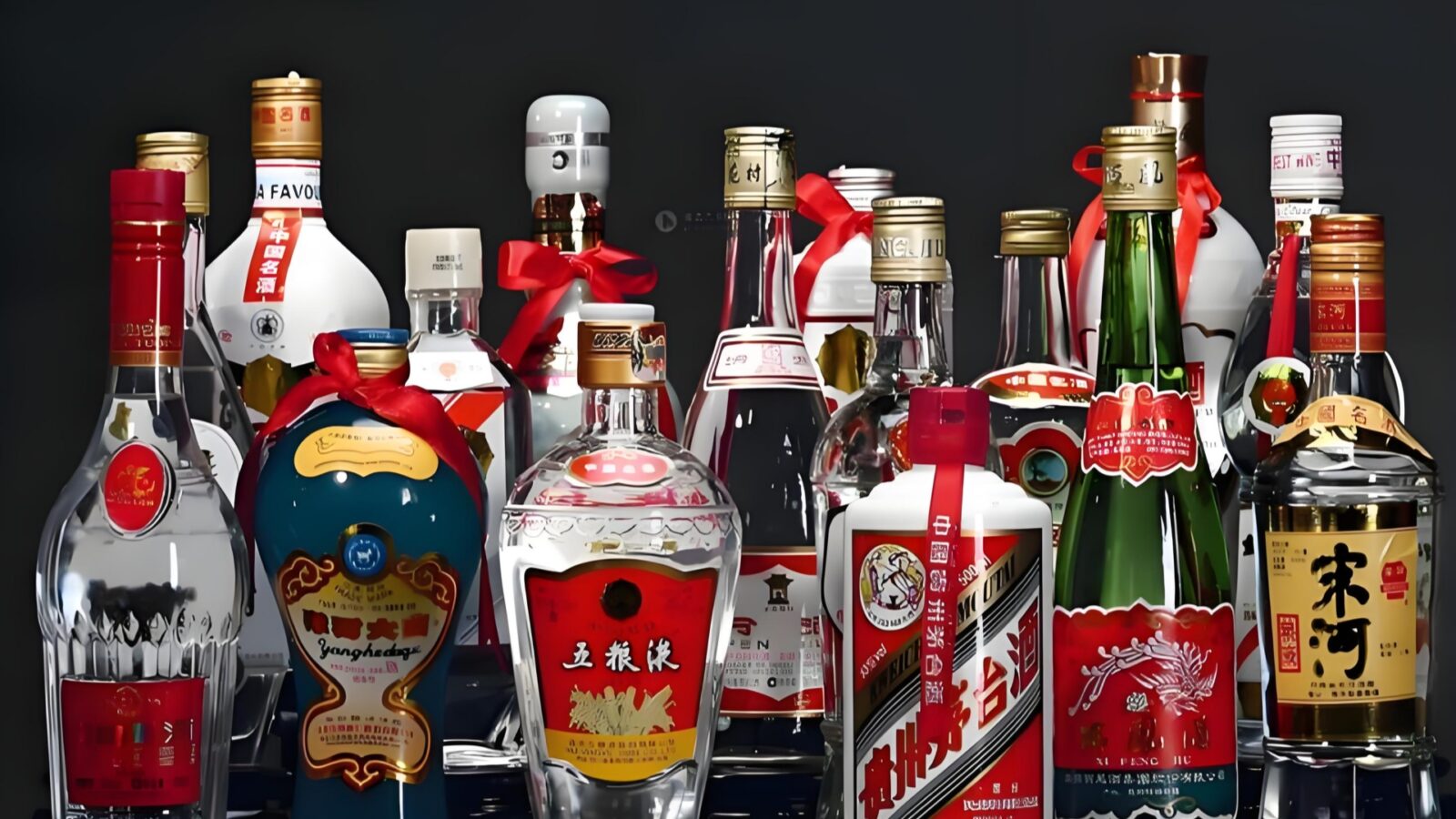
Several baijiu brands appear consistently on restaurant menus and in duty-free shops. Knowing what they are and where they sit in the price hierarchy helps you make quick decisions.
- 茅台 (Moutai): Kweichow province. The most famous baijiu globally. Premium tier, $210–280 (¥1,500–2,000) per 500 ml bottle on the mainland.
- 五粮液 (Wuliangye): Sichuan. Strong-aroma style, fruity and smooth. Mid-to-premium tier, $50–100 (¥360–700) typical retail.
- 泸州老窖 (Luzhou Laojiao): Sichuan. Strong-aroma, widely stocked. Mid-tier, $25–50 (¥180–360).
- 汾酒 (Fenjiu): Shanxi. Light-aroma, clean and gentle. Mid-tier, $20–40 (¥140–280).
- 剑南春 (Jiannanchun): Sichuan. Strong-aroma, solid reputation. Mid-tier, $20–45 (¥140–320).
- 洋河 (Yanghe): Jiangsu. Strong-aroma, smooth and floral. Mid-tier, $20–40 (¥140–280).
- 古井贡 (Gujing Tribute): Anhui. Strong-aroma, historical brand. Mid-tier, $20–45 (¥140–320).
How Baijiu Is Served and Drunk
Baijiu is never poured into large glasses or consumed as a Western-style shot. The standard serving vessel is a small ceramic cup (一口杯 or 小杯), holding roughly 30–50 ml. The drink is meant to be sipped, not downed in one motion — though the toast 干杯 (gānbēi, "dry the cup") is often said before each sip. Traditionally, baijiu is served at room temperature; in colder months, some hosts warm it slightly in a water bath. The host typically pours for all guests (斟酒), and the most senior person at the table drinks first. Pacing matters because the ABV ranges from 38% to 65% — a few cups on an empty stomach will take effect quickly.
Huangjiu (黄酒): The Ancient Rice Wine
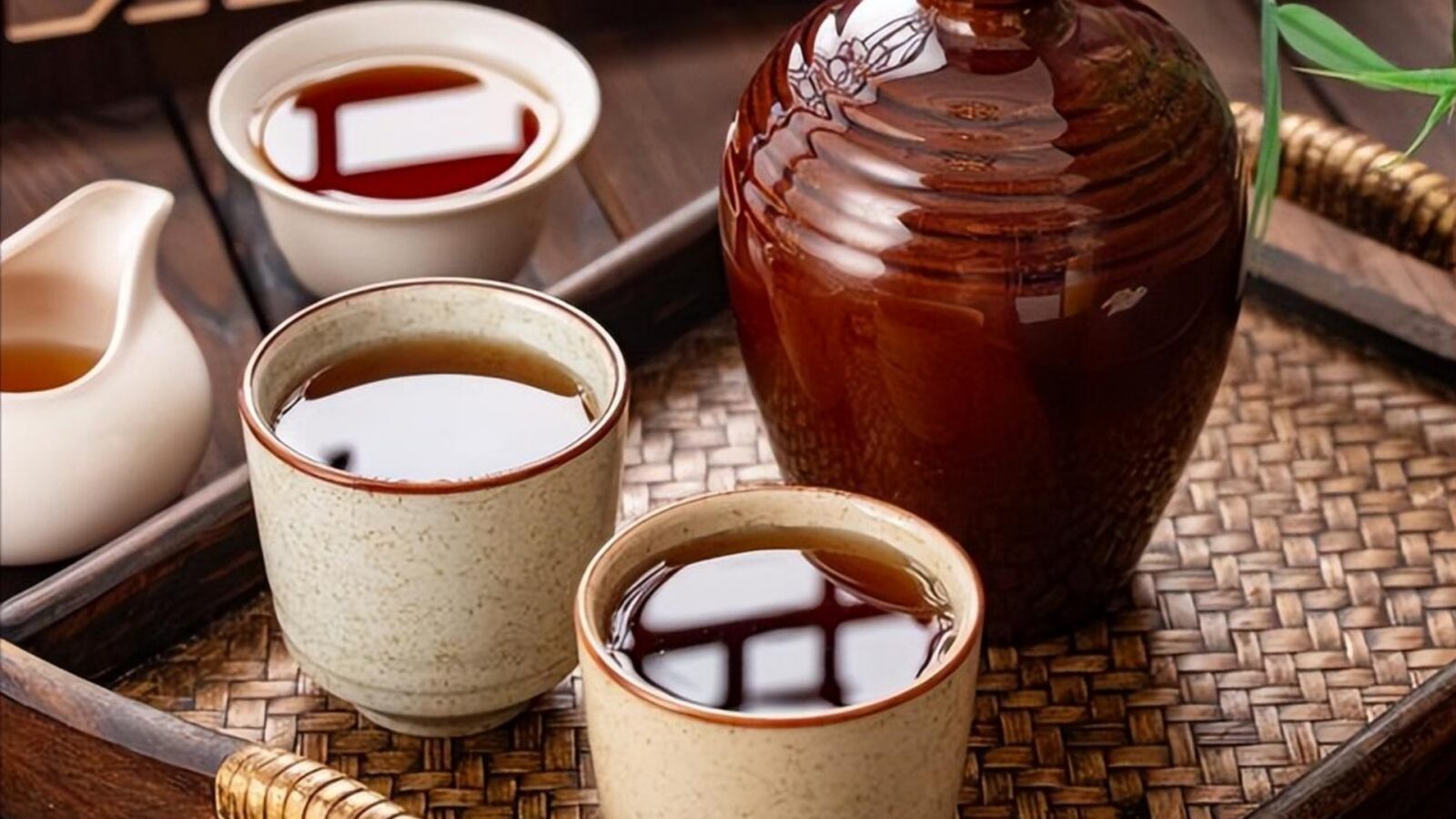
Huangjiu (黄酒)
Huangjiu occupies a different role on the Chinese table than baijiu. It is a fermented rice wine, not a distilled spirit, which means lower alcohol content and a flavor profile closer to grape wine or sherry. It has been produced in China for over 2,000 years, making it one of the oldest continuously made alcoholic beverages in the world. For foreign visitors, huangjiu is often more immediately approachable than baijiu — it is less aggressive, more complex, and pairs naturally with food in ways that feel familiar.
The category spans a wide dryness scale, from bone-dry to dessert-sweet. This range means huangjiu can anchor a formal banquet or a humble street-side meal, depending on which end of the scale is selected.
- 干型 (Dry): Minimal residual sugar, crisp and clean.
- 半干 (Off-Dry): Slight sweetness, the most versatile range.
- 半甜 (Off-Sweet): Noticeable sweetness, softer on the palate.
- 甜型 (Sweet): Pronounced sweetness, often enjoyed warm.
What Huangjiu Is and How It's Made
Huangjiu is brewed from glutinous rice using a wheat-based qu starter. The process involves two fermentation stages, which develop the wine's body and depth. After fermentation, the liquid is aged in sealed ceramic jars — sometimes for years, occasionally for decades. The aging process is responsible for huangjiu's amber color and its characteristic nutty, caramel-like complexity. Commercial huangjiu typically ranges from 14% to 20% ABV, putting it in the same ballpark as table wine. One practical note: the product labeled 烹饪料酒 (cooking wine) is salted and unsuitable for drinking. Drinking-grade huangjiu is labeled differently and sold in separate sections of shops.
Shaoxing Wine and Other Regional Styles
When Chinese people refer to huangjiu, they are most often thinking of Shaoxing wine from Zhejiang province — it is the default reference point for the entire category. However, several other regions produce distinctive styles worth knowing.
- 绍兴黄酒 (Shaoxing): Zhejiang. The standard huangjiu. Clean, balanced, versatile. Retail ¥30–60 ($4–9) for standard grades.
- 即墨老酒 (Jimo Lao Jiu): Shandong. Slightly darker, nuttier flavor. A northern alternative to Shaoxing.
- 龙岩沉缸酒 (Longyan Chen Gang): Fujian. Sweet and strong, a specialty of the southeast.
- 花雕 / 女儿红 (Huadiao / Nü'erhong): Aged premium Shaoxing, 5–20+ years. These are the bottles reserved for gifts and celebrations. ¥100–280 ($15–40) for aged bottles.
Warm vs. Cold: The Traditional Way to Drink It
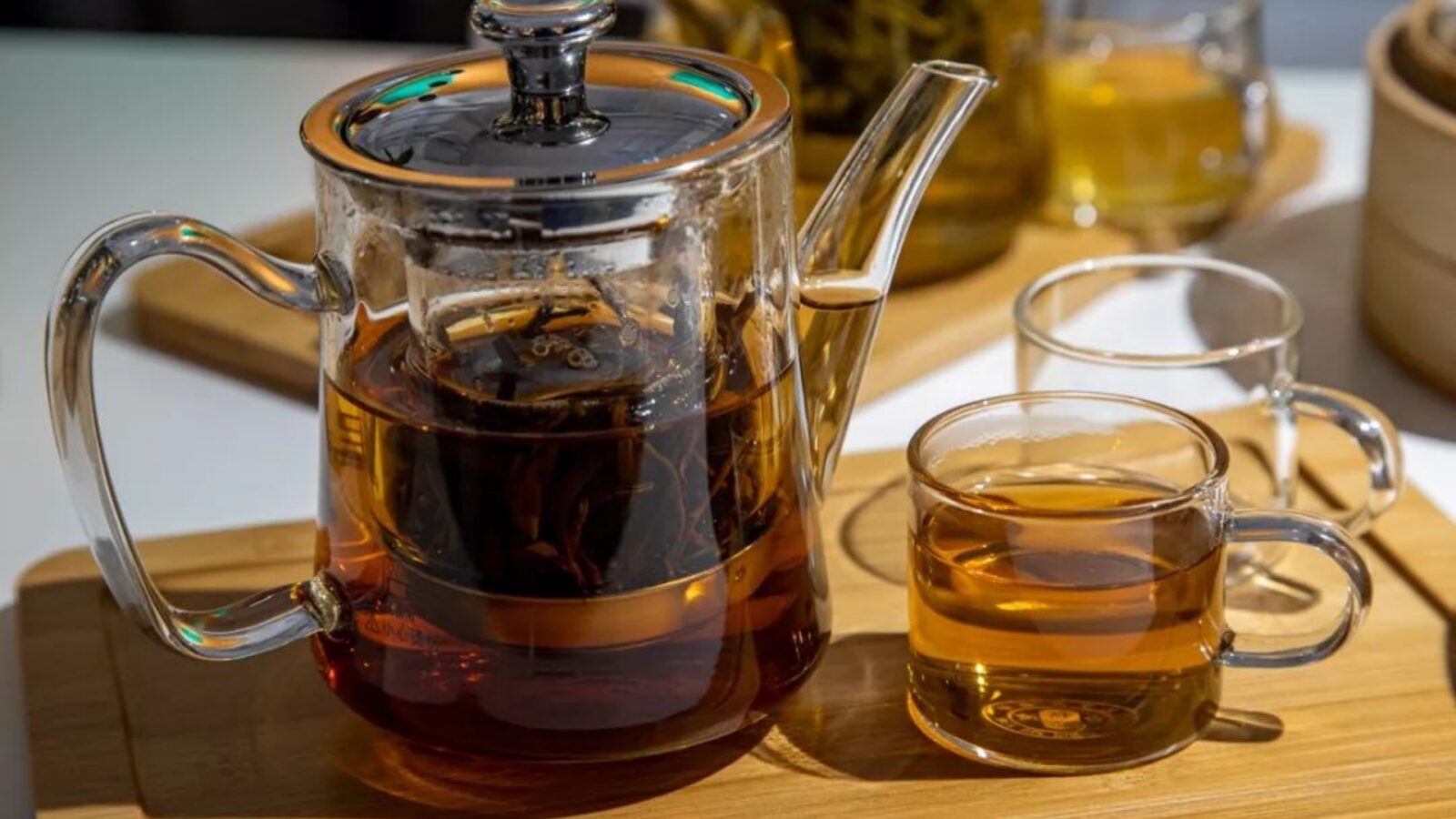
Temperature matters in huangjiu service. In winter, huangjiu is traditionally warmed in a small porcelain pot or 酒壶 set over a portable stove — this releases the aroma and softens the alcohol burn. In summer, it is served chilled or at room temperature. The small ceramic cup used for huangjiu is identical to the baijiu cup, but the slower pace and lower ABV make the experience feel more relaxed. As for pairings, huangjiu reaches its peak at the Chinese table alongside hairy crab in autumn, salt-baked chicken, or dim sum. The warm-served version in winter is the more memorable sensory experience for visitors who have not encountered it before.
Mijiu and Sweet Rice Wine (米酒): The Gentle Entry Point
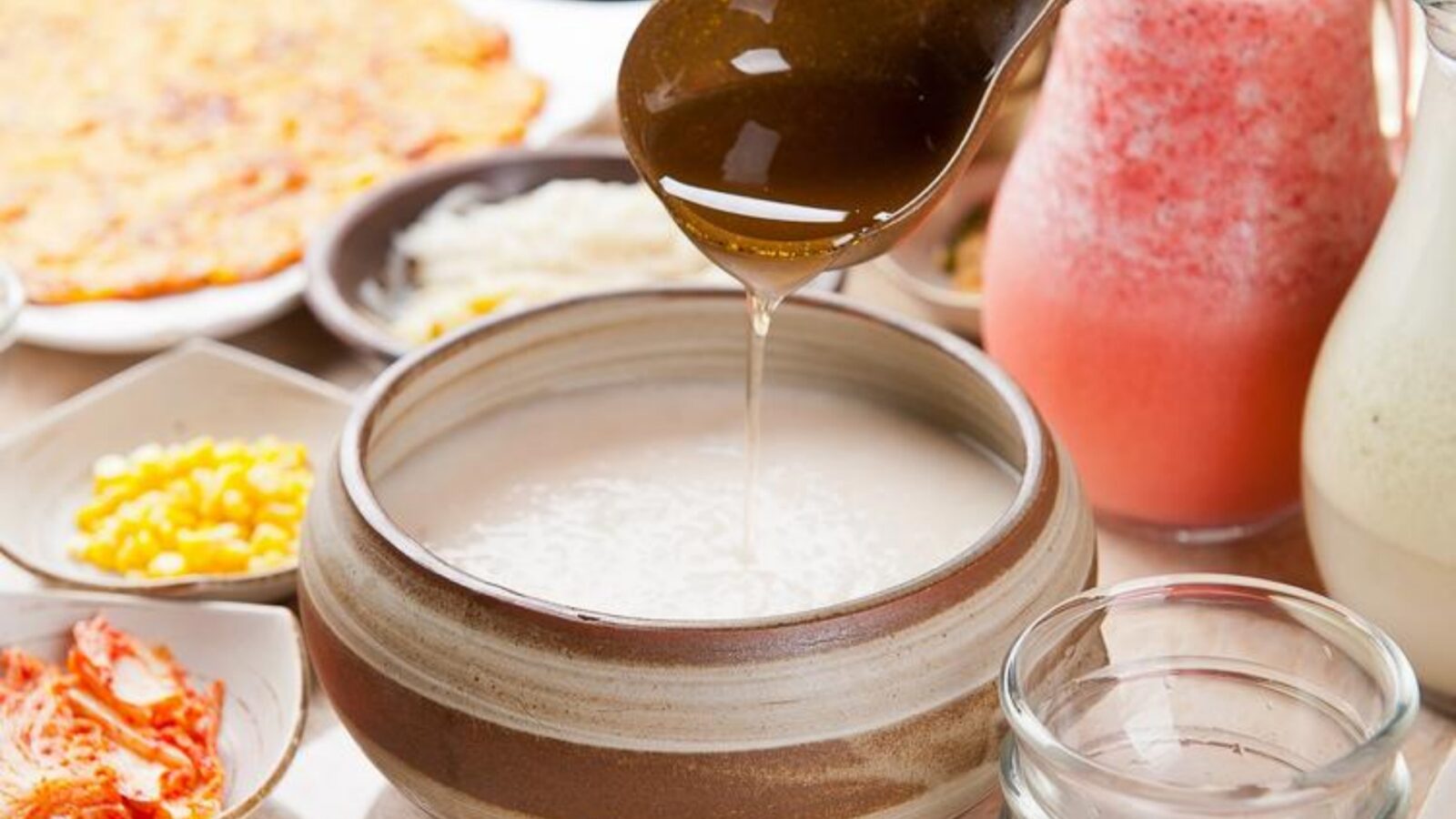
Mijiu and Sweet Rice Wine (米酒)
Mijiu is the most accessible category of Chinese alcohol for most foreign visitors. It is a sweet fermented rice wine, typically very low in alcohol (0.5–5% ABV), with a flavor somewhere between rice pudding and a light syrup. It is not a spirit, not a wine in the Western grape sense, and not quite a dessert — it occupies its own category. For tourists who find baijiu overwhelming or huangjiu unfamiliar, mijiu offers a low-stakes way to participate in Chinese drinking culture without the commitment of a 50% spirit.
What Mijiu Is (and Why It's Tourist-Friendly)
Mijiu is made by fermenting glutinous rice with qu starter for a short period — typically one to three days. The result is a sweet, slightly tangy liquid with visible rice particles. It can be served warm or chilled, and it is often consumed as much for its comforting texture as for its mild alcohol content. The overlap with 醪糟 (láozāo) and 酒酿 (jiǔniàng) — terms used for the same or similar preparations — can cause confusion, but the underlying product is consistent: a gentle, sweet fermented rice that most palates find immediately agreeable. At ¥5–25 ($0.70–4) per serving at street stalls, it is also the cheapest category on the Chinese alcohol spectrum.
Where You'll Encounter It: Street Food, Dim Sum, Desserts
Mijiu appears across China in settings that feel casual rather than ceremonial. The most common encounters for tourists are:
- Night-market stalls: 醪糟鸡蛋 — sweet rice soup with a poached egg — is a staple at food markets across Sichuan, Hunan, and Yunnan.
- Dim sum restaurants: Southern Chinese dim sum carts often include small bowls of sweet rice wine alongside tea service.
- Yunnan's specialty versions: Pearl liqueur (泡梨酒) and rose dew (玫瑰露) are local variations with fruit and floral infusions.
- Shanghai breakfast culture: Sweet rice wine appears in morning soup dishes and as a warming drink in winter.
- Hunan and Hubei breakfast shops: Vendors serve 醪糟 as a breakfast beverage, often sweetened and warm.
🍸 Urban Speakeasies: Check out world-class cocktail hubs, rooftop lounges, and trendy bars in Shanghai Bars.
Other Chinese Drinks Tourists Will See: Beer, Beer Brands
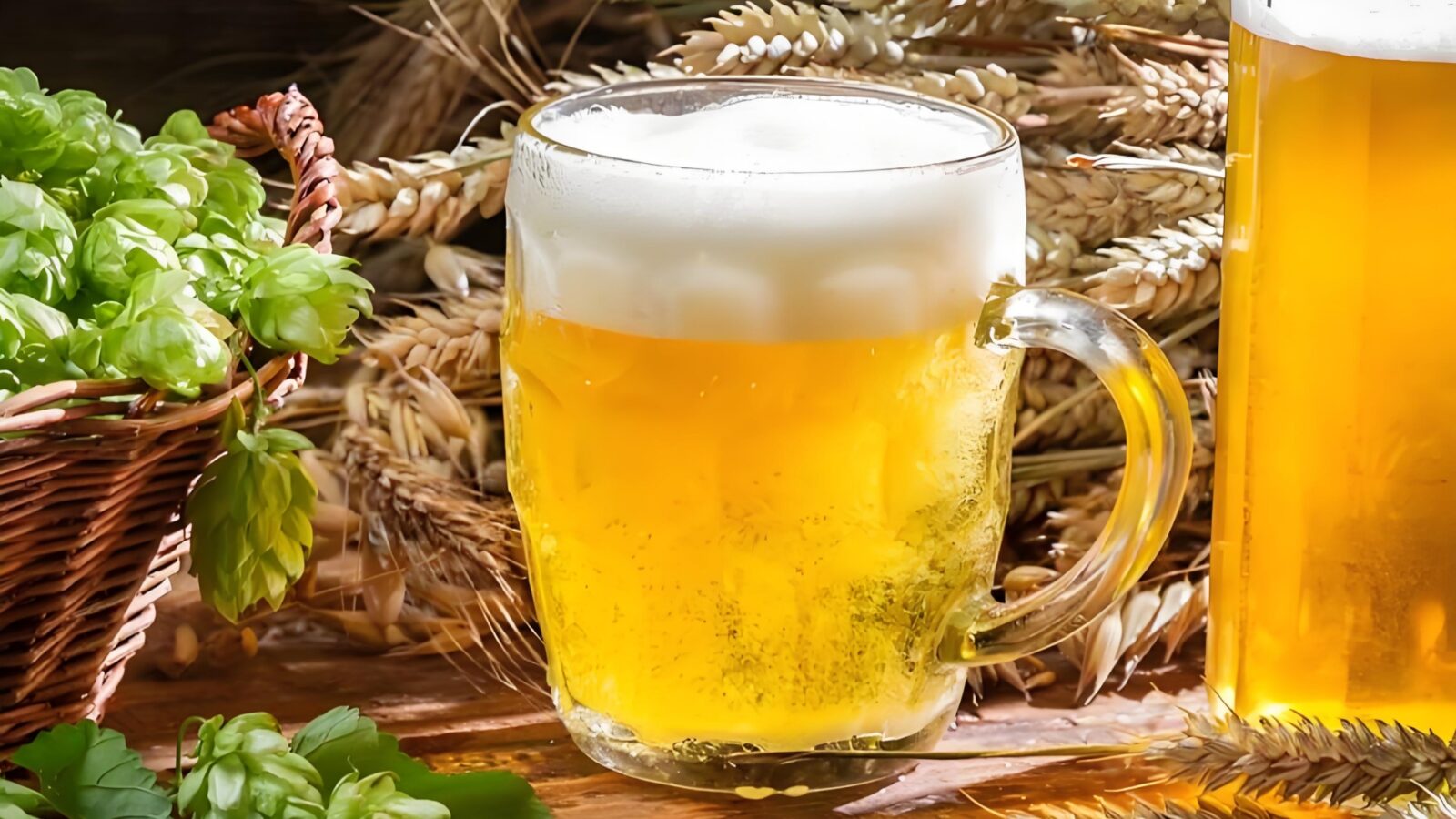
Beer (啤酒)
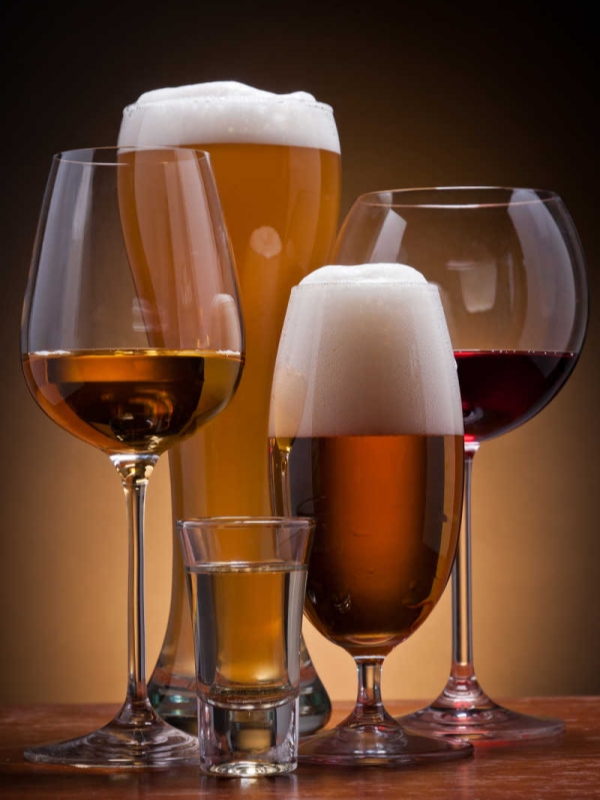
Beer is the dominant everyday drink across China by volume, and visitors will encounter it far more frequently than baijiu in casual settings. The major brands are:
- 青岛啤酒 (Tsingtao): Shandong. The most internationally recognized Chinese beer, widely exported.
- 雪花啤酒 (Snow): The highest-volume beer brand in China by production output.
- 哈尔滨啤酒 (Harbin): Northeast China. Known for slightly darker lagers in winter.
- 燕京啤酒 (Yanjing): Beijing's hometown brand, popular in northern restaurants.
- 乌苏啤酒 (Wusu): Xinjiang. Higher ABV than standard Chinese lagers, gaining popularity nationally.
🎵 Lakeside Nightlife: Plan a evening out along historic canals and lively music spots with our guide to Houhai Bar Area.
Food Pairings and Snacks to Drink With
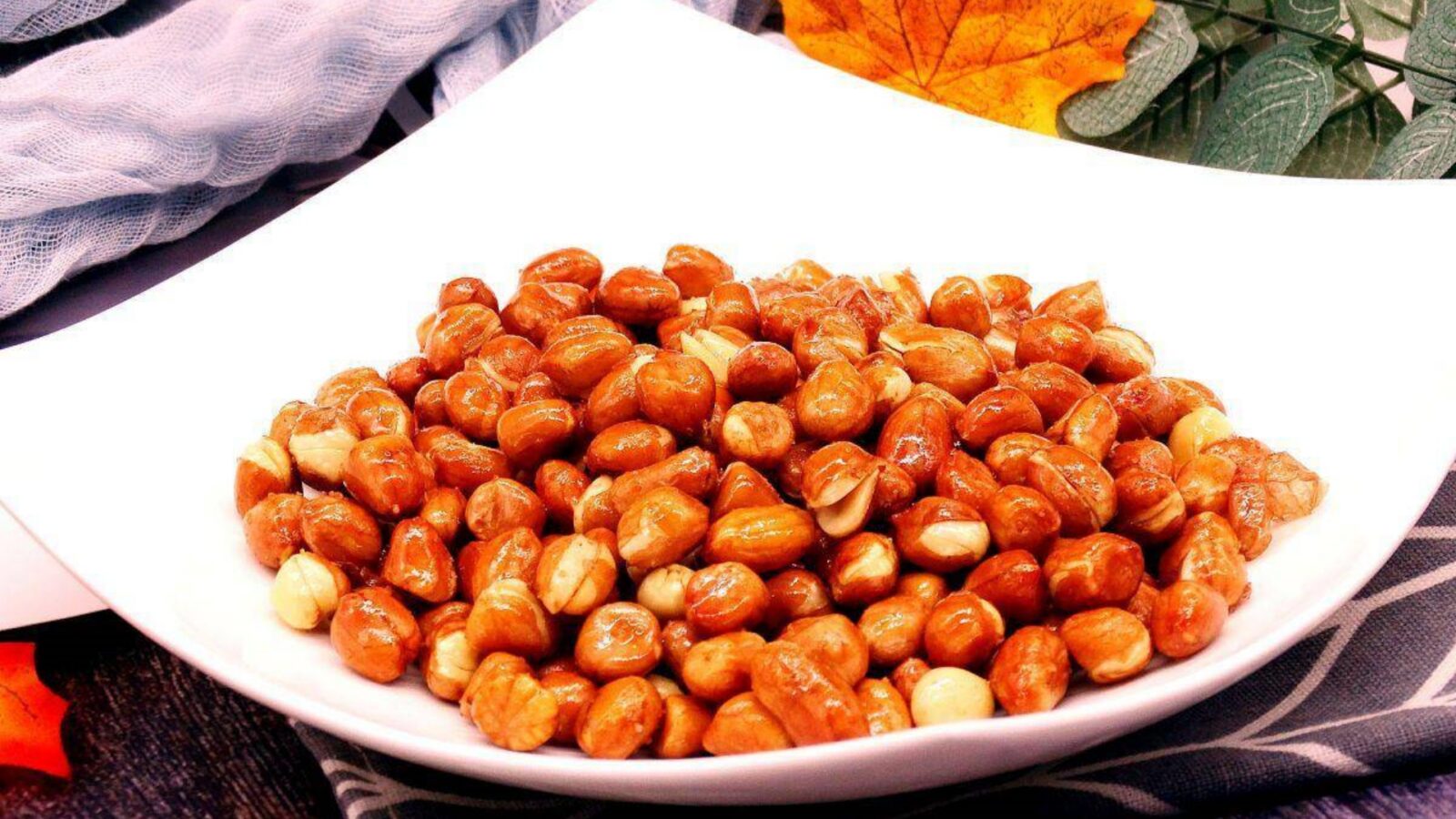
Food Pairings and Snacks to Drink With
Chinese alcohol is designed to be consumed with food, and certain pairings are so established they appear on menus as combinations. These are the most reliable pairings across categories.
- Baijiu: Peanuts (花生), edamame (毛豆), red-braised pork (红烧肉), hot pot — savory, fatty dishes that balance the spirit's intensity.
- Huangjiu: Hairy crab (大闸蟹, autumn classic), salt-baked chicken (盐水鸭), steamed dim sum — delicate dishes that complement the wine's warmth.
- Mijiu: Sweet rice balls (汤圆), fried dough sticks (油条), sesame balls — sweet and comforting, particularly at breakfast or as a dessert.
- Beer: Grilled skewers (烤串), spicy crayfish (麻辣小龙虾), dry pot (干锅) — anything with bold seasoning that benefits from a carbonated palate cleanser.
Chinese Drinking Culture and Settings
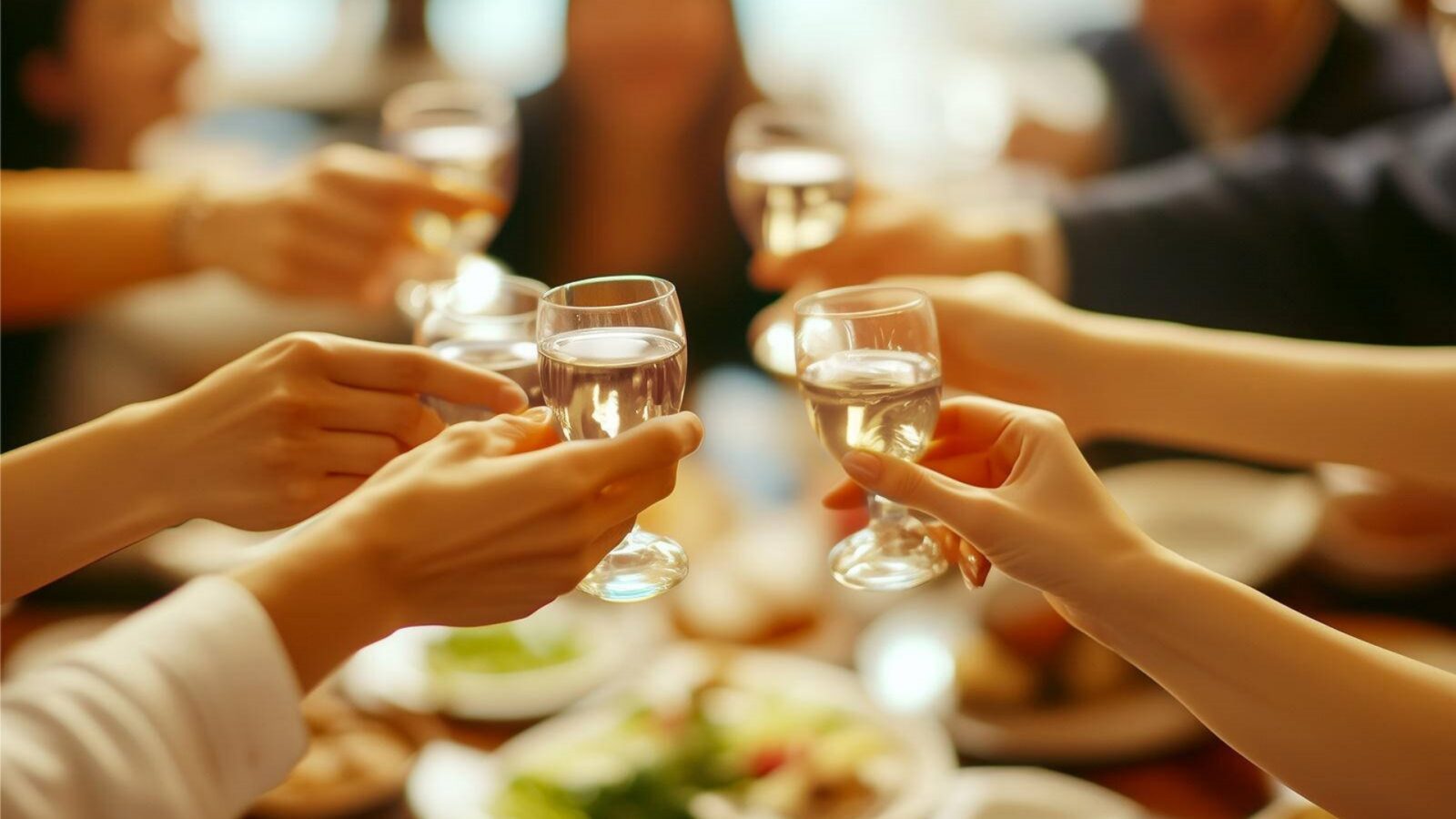
Drinking Culture and Settings
Chinese drinking culture is fundamentally social. The drink itself matters less than the context in which it is consumed — a toast at a banquet carries different weight than a shared bottle at a hot pot dinner. Understanding the unwritten rules prevents awkwardness and helps visitors participate appropriately, whether they choose to drink or politely decline. Beer is the everyday social lubricant for most casual meals, while baijiu and huangjiu occupy more formal or ceremonial roles.
- 干杯 (gānbēi): Literally "dry the cup." The standard cheers phrase used in almost every drinking scenario.
- 敬酒 (jìngjiǔ): The ritual of offering a toast, typically from host to guest or junior to senior.
- 劝酒 (quànjiǔ): The practice of encouraging others to drink. This varies in intensity by region and setting — it is strongest at formal banquets.
- Glass-height etiquette: Younger people hold their glass lower than elders or senior colleagues when toasting, as a sign of respect.
- Foreign visitor response: Saying 谢谢 (xièxie, "thank you") alongside 干杯 is perfectly acceptable and often appreciated.
Banquets, Toasts, and Ganbei (干杯)
The formal Chinese banquet is where drinking culture is most explicitly structured. The host typically stands, raises their glass, and moves around the table to clink glasses individually with each guest — a process called 敬酒. Guests respond in kind, typically holding their glass lower than the host's as a sign of respect. The phrase 干杯 is said before each round, but the actual consumption is at the drinker's discretion in most settings. Foreign visitors who find the pace too intense can signal moderation early with phrases like 不太能喝 (bù tài néng hē, "I can't drink much"). This is understood without offense, particularly when stated politely and early in the meal.
Home Meals, Hot Pot, and Regional Customs
Outside the formal banquet, Chinese drinking culture shifts considerably by region and setting. Hot pot meals often bring baijiu back onto the table as a digestive and palate-cleanser between rich broth courses. Northern China leans heavily toward baijiu; southern China, particularly Zhejiang and Shanghai, favors huangjiu. In rural parts of Hunan, Hubei, and Sichuan, the practice of 早酒 (morning rice wine) — a small glass of huangjiu taken with breakfast — persists as a local custom. Female guests or those who prefer not to join the baijiu round are commonly offered mijiu or juice as an alternative, and this is never treated as unusual.
Ordering Chinese Alcohol: A Tourist's Practical Guide
Most restaurant menus in China do not include photographs of bottles, and the alcohol section is often the shortest part of the menu — sometimes just a few lines in small characters. Knowing how to ask, what to expect, and what to avoid transforms this from a guessing game into a straightforward decision. Beer is the default safe choice in any restaurant. Baijiu requires slightly more context to order well. Huangjiu and mijiu are increasingly available in tourist-friendly venues and are the easiest to navigate independently.
How to Order at a Restaurant (with Phrases)
These phrases cover the most common ordering situations. Pinyin is provided for pronunciation reference.
- 你们有什么酒? (Nǐmen yǒu shénme jiǔ?): "What alcohol do you have?" — use this when the menu is unclear.
- 来一瓶啤酒 (Lái yī píng píjiǔ): "One bottle of beer" — the standard safe default.
- 来二两白酒 (Lái èr liǎng báijiǔ): "Two liǎng of baijiu" — liǎng is ~50 ml, so two liǎng is a small pour. Common unit for spirits.
- 少来一点 (Shǎo lái yīdiǎn): "A little, please" — useful for signaling you want a small portion only.
- 不太能喝 (Bù tài néng hē): "I can't drink much" — a polite signal to reduce pressure to drink heavily.
- 不要酒 (Bù yào jiǔ): "No alcohol, thanks" — direct and understood without offense in casual settings.
Beginner-Friendly Picks and What to Try First
If you are new to Chinese alcohol, a logical progression helps build familiarity without overcommitting. The following approach works across most restaurant settings.
- First glass: Mijiu or a low-ABV sweet huangjiu. Both are gentle, food-friendly, and easy to sip slowly.
- Second glass: A 浓香 baijiu such as Wuliangye or Luzhou Laojiao. The fruity, floral notes are the most approachable entry into baijiu's intensity.
- Skip for now: Moutai 53°. The iconic baijiu is worth trying eventually, but its flavor intensity makes it a poor introduction.
- Next step for tolerance: Fenjiu (light aroma) or a mid-tier 浓香. Clean, less aggressive, good for building palate familiarity.
- Practical option: Ordering a half-bottle (半瓶, bànpíng) is accepted in most restaurants and prevents overcommitment.
Price Ranges by Tier (What Tourists Actually Pay)
Restaurant pricing for Chinese alcohol varies widely depending on venue tier and city. The following ranges reflect what most visitors encounter at mid-range restaurants and tourist-area establishments.
- Budget baijiu (single pour): $3–7 (¥20–50) per small pour — entry-level restaurant brands.
- Mid-tier baijiu (bottle): $25–50 (¥180–360) — Wuliangye, Luzhou Laojiao, Fenjiu at retail.
- Moutai 53° (bottle, mainland): $210–280 (¥1,500–2,000) — banquet and duty-free pricing.
- Moutai 53° (overseas/duty-free): $280–420 (¥2,000–3,000) — significantly marked up outside mainland China.
- Shaoxing huangjiu (per pot, warmed): $4–9 (¥30–60) — standard restaurant portion.
- Aged 花雕 (bottle): $15–40 (¥100–280) — premium aged huangjiu, gift-tier pricing.
- Mijiu (per bowl/stall serving): $0.70–4 (¥5–25) — street stalls to mid-range venues.
- Beer (bottle): $1.50–3 (¥10–20) — standard domestic lager at restaurants.
What to Avoid and Common Tourist Traps
A few specific situations catch unwary visitors. Being aware of them in advance prevents unnecessary expense or disappointment.
- 烹饪料酒 as drinking wine: Bottles labeled 料酒 (cooking wine) are salted and undrinkable. They are sold in food aisles, not with other alcoholic beverages.
- Discounted "aged Moutai" outside official stores: Moutai is the most counterfeited alcoholic product in China. Any offer of a heavily discounted "30-year Moutai" outside an official retailer is almost certainly fake.
- Unmarked corkage fees (开瓶费): Some small restaurants charge a corkage fee for bringing your own drinks. Confirm prices before ordering in unmarked venues.
- Pressure to 干杯 after signaling moderation: If you have said 不太能喝, you are not obligated to match every round. Politely repeating the phrase is sufficient.
- Drinking on an empty stomach: Baijiu at 40–60% ABV hits significantly harder without food. Always eat first.
🍻 Legal Framework: Plan your trip responsibly by checking age restrictions, venue rules, and ID requirements in China Drinking Age.
Frequently Asked Questions
Q: Is Chinese alcohol safe for tourists to drink?
Yes — regulated commercial products from sealed branded bottles are safe to consume. Stick to established brands and avoid unlabeled or informally packaged "village brews." Baijiu's ABV (40–60%) is significantly higher than most Western spirits, so pacing and eating food alongside it matters. Pace yourself, stay hydrated, and you will have a far better experience than if you match your hosts cup for cup.
Q: What is the most popular Chinese alcohol?
By volume, beer leads everyday consumption — Tsingtao, Snow, and regional brands fill far more glasses than any spirit. By cultural weight, baijiu dominates celebrations, business dinners, and ceremonial occasions. For foreign visitors specifically, mijiu is the most accessible entry point, and huangjiu tends to be the most "palate-friendly" for those accustomed to wine.
Q: What is the difference between baijiu and Japanese sake?
The two share East Asian grain-and-rice origins but are fundamentally different in process and result. Baijiu is a distilled spirit — higher ABV (38–65%), clear, and character-driven by fermentation aroma styles. Sake is brewed like wine — lower ABV (15–20%), gentler, and produced in stainless steel or wooden vessels. The flavors are completely distinct; a first-time taster would not confuse them.
Q: How do you say "cheers" in Chinese?
干杯 (gānbēi) — literally "dry the cup" — is the standard cheers phrase used in virtually every setting, from casual meals to formal banquets. A more formal alternative is 敬你一杯 (jìng nǐ yī bēi), meaning "a toast to you." In a Mandarin-speaking environment, 干杯 alone is universally understood.
Q: Where can tourists buy authentic baijiu to take home?
Official brand flagship stores in major cities, airport duty-free shops (particularly T2 and T3 at Beijing Capital and Shanghai Pudong), and overseas listings on Klook and Trip.com are the most reliable channels. Taobao Global and JD Worldwide also offer international shipping. Be cautious of street vendors selling "aged" bottles at steep discounts — Moutai 53° is among the most counterfeited alcoholic products in China.
Q: How much baijiu should a beginner drink?
Start with one or two small cups (each roughly 30–50 ml) consumed over the course of an hour. Each cup of 40–60% baijiu is equivalent in alcohol content to two to three standard Western spirits. Never drink baijiu on an empty stomach. If the intensity feels overwhelming, switch to huangjiu or mijiu — there is no obligation to finish a baijiu pour.
Q: Is Chinese rice wine (mijiu) alcoholic?
Yes, but mildly. Mijiu typically ranges from 0.5% to 5% ABV, putting it in the same territory as a strong kombucha or a light beer. Its flavor is sweet and rice-pudding-like, making it the easiest and least intimidating category of Chinese alcohol for visitors who find baijiu or huangjiu too strong.
Q: Do Chinese restaurants serve alcohol to foreign visitors?
Yes — Chinese restaurants routinely serve alcohol to all customers, including foreign visitors. Most establishments do not ask for identification. Tourist-area restaurants often have English menus, though the alcohol section may still be in Chinese only. Referring to the Quick Facts table in this article and pointing to the desired category on a menu is a practical workaround when language barriers exist.