China Drinking Age 18 Legal
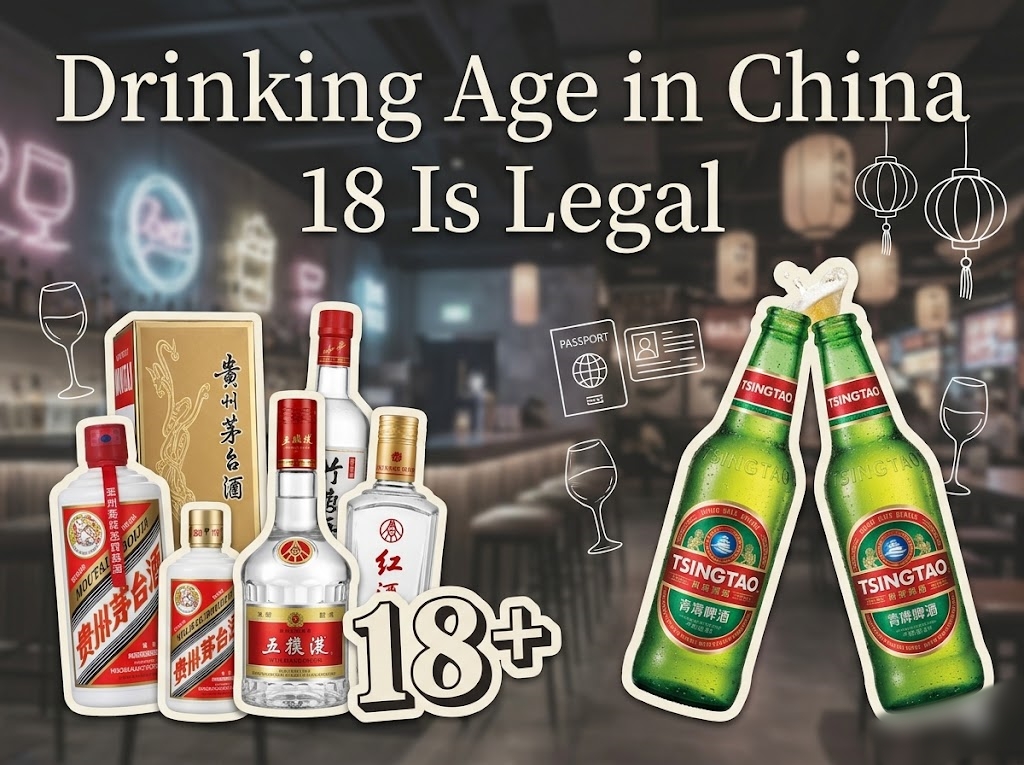
China drinking age is 18 (but people travel to these shores unsure the rule even exists!). Mainland China, Hong Kong, Macau and Taiwan all have their own systems in place. We’ll tell you enough to order your first drink! The 2006 Law on Protection of Minors formally set the age limit at 18. The 2020 revision tightened this significantly, but the actual implementation of the law can vary dramatically between different venues. For example, convenience stores seldom ask for ID, but duty-free shops in airports always do!We will cover the law, reality of enforcement, what to drink, where to go, and how China relates to the rest of the world!
Legal Framework: Age 18 Across China
Drinking Age by Region
The core rule is simple: 18 is the legal minimum in mainland China. However, Hong Kong and Macau follow their own separate frameworks. Therefore, check the table below before traveling between regions.
| Region | On-premise Sale | Off-premise Sale | Consumption | Age Verification | Legal Basis |
|---|---|---|---|---|---|
| 🇨🇳 Mainland China | 18 | 18 | 18 | Required — rarely enforced offline; auto-verified online | Law on Protection of Minors 2006 (Art. 37); significantly strengthened by 2020 amendment |
| 🇭🇰 Hong Kong | 18 | No minimum | No minimum | On-premise licensed venues only | Dutiable Commodities Ordinance (Cap. 109); Intoxicating Liquors Ordinance (Cap. 389) |
| 🇲🇴 Macau | No minimum | No minimum | No minimum | N/A | No statutory minimum drinking age (IARD, 2024). Note: casino entry separately requires age 21 — an independent rule unrelated to alcohol. |
| 🇨🇳 Taiwan | 18 | 18 | 18 | Required — uneven offline enforcement; online sales via unverifiable channels prohibited | Child and Youth Welfare and Rights Protection Act (Art. 43); Tobacco and Alcohol Administration Act (Art. 30) |
Source: IARD Minimum Legal Age Limits Database, verified April 2026.
Key points for travelers:
- If you are 18 or over, you are legally clear throughout mainland China.
- The law targets sellers, not buyers. Businesses selling to under-18s face fines of ¥5,000–¥30,000.
- Repeat offenders risk license revocation under China’s Food Safety Law and related regulations.
- In practice, venues have a legal obligation to check age. However, few do so consistently in everyday settings — see the enforcement section below.
Evolution of Legal Drinking Age
China’s formal drinking age is relatively recent. Therefore, a quick look at the timeline helps explain the current rules.
| Year | Key Event | What It Means for Visitors |
|---|---|---|
| Pre-2006 | No formal minimum age on record | Alcohol was largely unregulated by age; IARD lists China as “not established” for this period |
| 2006 | Law on Protection of Minors (未成年人保护法) — Age 18 established | First time selling alcohol to under-18s became a national legal obligation |
| 2012 | Amendment introduces preliminary enforcement clauses | Initial vendor penalties added; however, enforcement remained limited in practice |
| 2020 | Major revision of Law on Protection of Minors — most significant update to date | Substantially raised penalties; expanded obligations to online platforms; most cited in current enforcement discussions |
| 2019–2021 | Digital compliance rollout: Taobao and JD.com (京东) add age-gate pop-ups; Tencent (腾讯) introduces facial recognition | Online alcohol purchases now trigger automatic checks — in some ways stricter than buying at a local store |
🚬 Understand Regulations on Tobacco & Cigarettes: Similar to alcohol sales, regulations surrounding tobacco purchases, duty-free limits, and age restrictions vary across convenience stores and airports. Read our complete guide to Chinese Cigarettes.
Quick Comparison: China vs. Other Global Countries
Legal Drinking Age Around the World
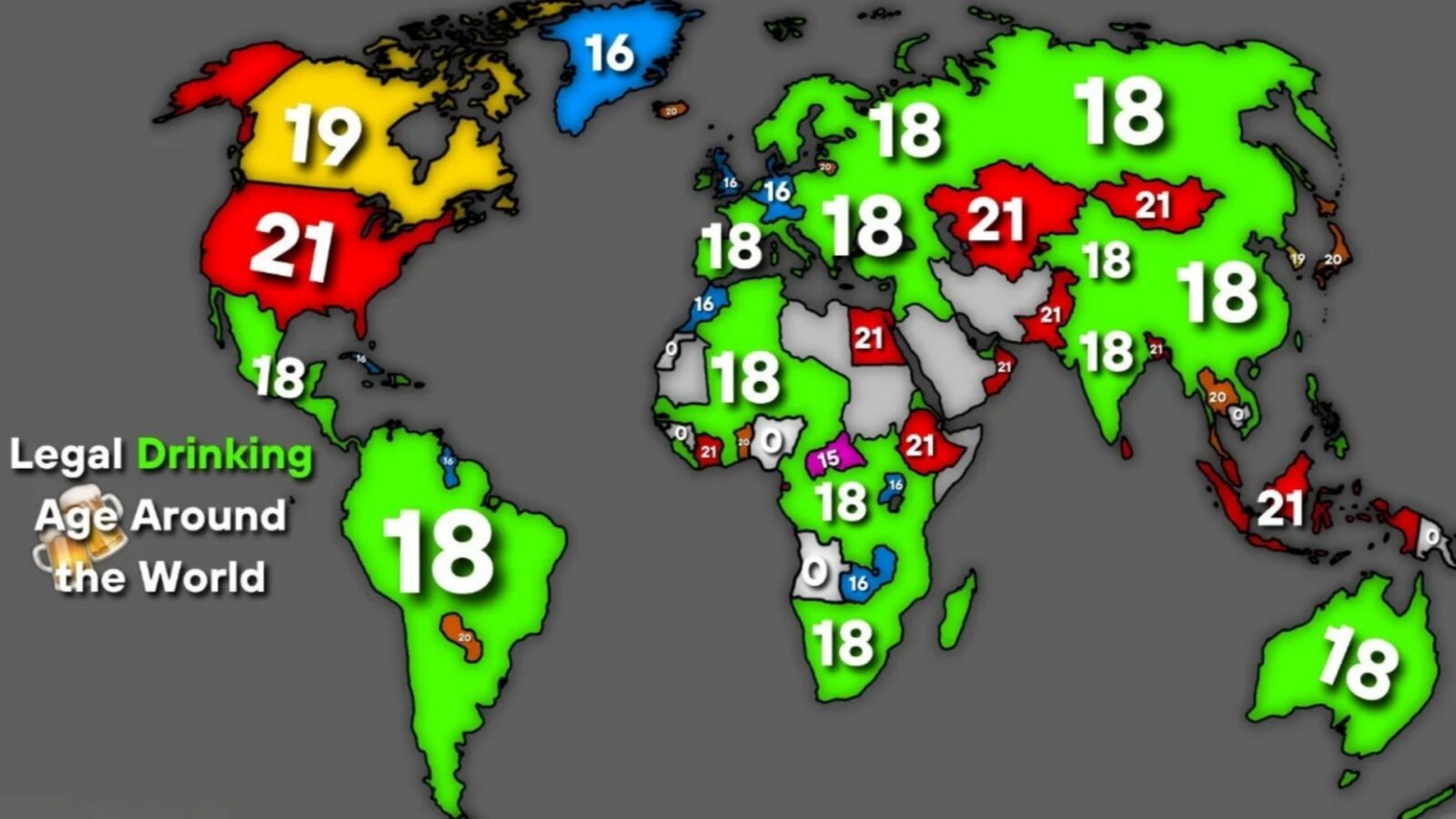
China’s 18 sits comfortably in the middle of the global range. But the number tells half the story. For example, Japan’s 20 is typically enforced harder than China’s 18 in everyday terms. The table below draws on data from the IARD (International Alliance for Responsible Drinking) global database.
| Country / Region | On-premise | Off-premise | Consumption | Age Verification? | Notes |
|---|---|---|---|---|---|
| 🇨🇳 China (Mainland) | 18 | 18 | 18 | Yes (rarely offline; auto online) | Law on Protection of Minors 2006; strengthened 2020 |
| 🇯🇵 Japan | 20 | 20 | 20 | Yes (incl. vending machines) | Minor Drinking Prohibition Law 1922 |
| 🇰🇷 South Korea | 19 | 19 | 19 | Sometimes | Youth Protection Act |
| 🇹🇭 Thailand | 20 | 20 | 20 | Sometimes | Alcohol Control Act 2008 |
| 🇸🇬 Singapore | 18 | 18 | 18 | Yes (stricter enforcement) | Liquor Control Act 2015 |
| 🇻🇳 Vietnam | 18 | 18 | 18 | Rarely | Law on Prevention of Harmful Alcohol Effects 2019 |
| 🇩🇪 Germany | 16 / 18* | 16 / 18* | 16 / 18* | Yes | *16 for beer/wine; 18 for spirits. Jugendschutzgesetz |
| 🇺🇸 United States | 21 | 21 | 21 | Yes (strict) | National Minimum Drinking Age Act 1984 |
Source: IARD Minimum Legal Age Limits Database. Retrieved April 2026.
Enforcement Reality: ID Checks and Tourist Experiences
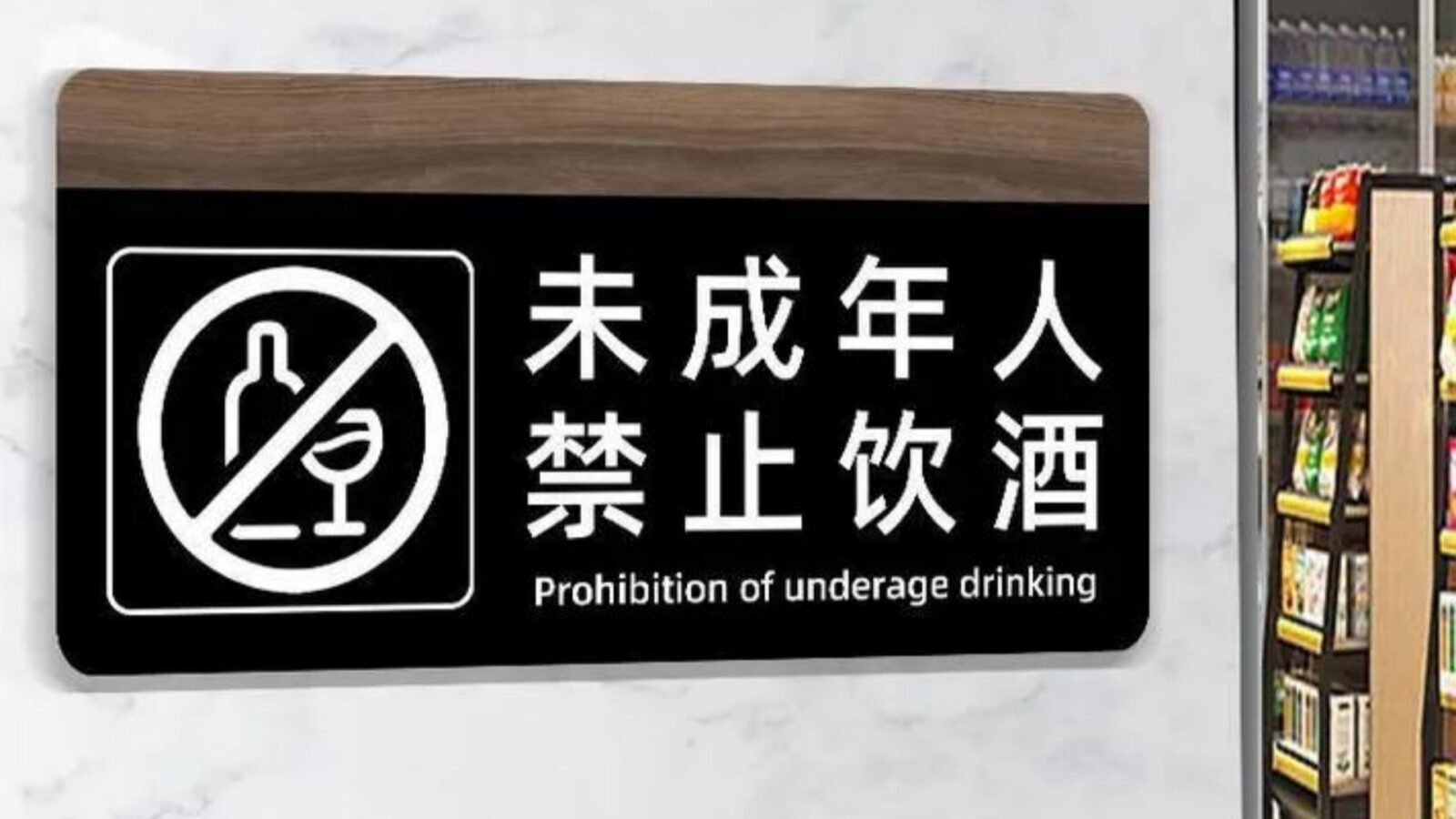
Underage Drinking Warning Sign in a Chinese Store
Offline Enforcement: Low Likelihood of ID Checks
Here is the practical picture for adult travelers across mainland China:
- If you’re over 18, there are no legal consequences so you can buy alcohol almost anywhere at your leisure.
- Convenience stores and local restaurants almost never ask for ID. You can buy a cold Tsingtao (青岛) at 7-Eleven without showing any ID at all.
- International bars/nighclubs in touristy districts like Sanlitun (三里屯) in Beijing and The Bund (外滩) in Shanghai check your ID most the time.
- Airport duty free always checks to see that international law isn’t broken so always remember to carry your passport, or at least a clear photocopy.
Venue Guide: ID Check Likelihood for Tourists
| Venue Type | ID Check Likelihood | Practical Tip for Travelers |
|---|---|---|
| Convenience store (7-Eleven, FamilyMart) | Very low — almost never | Just pay and go; WeChat Pay (巤信支付) or Alipay (支亦宝) accepted |
| Local restaurant / night market | Low | No need to present ID proactively |
| International bar / nightclub (Sanlitun / The Bund / Taikoo Li) | Medium — likely checked at the door | Bring your passport or a clear photocopy |
| KTV private room (卡拉OK) | Low to medium — young-looking faces occasionally checked | Bringing your own drinks is usually allowed |
| Airport duty-free | High — consistently enforced | Always bring valid ID; purchase quantity limits apply per person |
| Online (Taobao / JD.com / WeChat mini-programs) | High — automatic system verification | Real-name phone account handles the age check; Age Gate pop-up appears before checkout |
Online Purchases: Stricter Age Verification System Rules
If you order alcohol through Chinese apps like Taobao (滰宝) or JD.com (京东), the process is quite different from walking into a shop. Therefore, it helps to know how the verification system works before you shop online.
| Verification Layer | How It Works | What This Means for Visitors |
|---|---|---|
| Layer 1: Real-name account registration | Chinese phone numbers link to a national ID. Therefore, the platform can infer your age automatically. | Foreign visitors using an international number may skip this layer. However, they still reach Layer 2. |
| Layer 2: Age Gate pop-up at checkout | Taobao and JD.com show an “I confirm I am 18+” checkbox before adding alcohol to cart. Entering an underage birth year redirects to an educational page. | Simply enter your real details. This is a platform compliance step, not specifically targeted at foreign users. |
| Layer 3: Youth Mode platform block | Accounts in Youth Mode cannot access some branded alcohol content. Tencent introduced facial recognition in 2021 to prevent minors bypassing adult accounts. | Adult traveler accounts are unaffected. This layer reflects China’s broader digital youth-protection approach. |
In short: China’s online alcohol controls are stricter than most physical stores. Therefore, just confirm your real age at checkout — the process is quick and straightforward.
Drinking Scene: Alcohol Types, Venues, and Etiquette
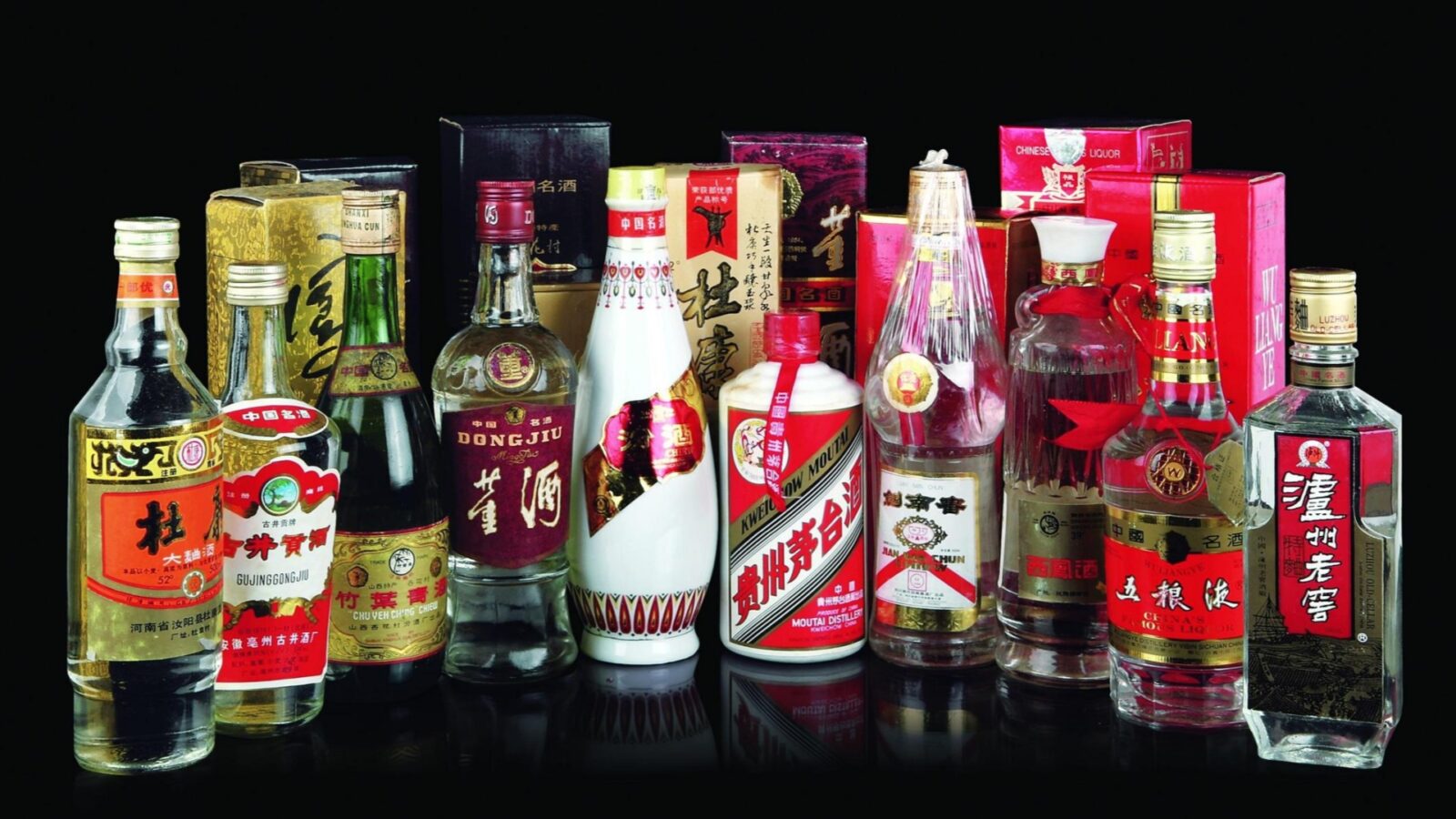
Famous Baijiu of China
Drink Types: Baijiu, Beer, and Popular Alcohol
China’s alcohol landscape goes well beyond baijiu (白酒). For instance, local beer is everywhere, and imported wines fill supermarket shelves. Next, the table below maps the main drink categories you’ll encounter.
| Category | Notable Brands | ABV | Where to Buy | Traveler Note |
|---|---|---|---|---|
| Baijiu (白酒) | Moutai (茅台), Wuliangye (五粮液), Jiangxiaobai (江小白) | 38%–53% | Specialty shops, supermarkets, restaurants | Very strong — start with a lower-ABV option like Jiangxiaobai (~40%) first |
| Beer (啤酒) | Tsingtao (青岛), Yanjing (燕京), Harbin (哈尔滨), craft beers | 3%–7% | Convenience stores, supermarkets, bars, night markets | Most accessible and affordable; a great starting point for travelers |
| Huangjiu (黄酒) | Shaoxing Huadiao (绍兴花雕), Nü’erhong (女儿红) | 12%–20% | Jiangzhe (江浙) restaurants, supermarkets | Distinctive flavor; pairs well with food |
| Wine (葡萄酒) | Great Wall (长城), Changyu (张裕); imported red & white | 12%–15% | Supermarkets, international bars, restaurants | Wide imported selection available in major cities |
| RTD / Pre-mixed (预调酒) | RIO (锐澳), Bingru (冰锐) | 3%–7% | Convenience stores (7-Eleven / FamilyMart) | Sweet and easy; popular with younger crowds |
Baijiu plays a central role in Chinese festival culture. For traditional toasting customs and festive beverage choices around Chinese New Year, see: Chinese New Year Drinks 2026: Traditional Toasts & Festive Beverages.
Venue Options: Pricing, Vibe, and Tourist Tips
Options range from budget street stalls to upscale cocktail bars. Therefore, knowing your choices helps you plan the right evening out.
| Venue Type | Typical Drinks | ID Check | Approx. Price (per person) | Traveler Tips |
|---|---|---|---|---|
| Convenience store (7-Eleven / FamilyMart) | Beer, RTD mixers, small-format spirits | Very low | ¥5–30 | Most branches open 24 hours; pay with WeChat Pay or Alipay |
| Large supermarket (Freshippo / RT-Mart) | Full range: baijiu, wine, craft beer, imports | Very low | ¥10–200+ | Best prices; check premium bottles carefully to avoid counterfeits |
| Local restaurant / night market | Beer, baijiu, huangjiu | Low | ¥10–80 | The classic Ganbei (干枵) setting — embrace it |
| International bar / nightclub (Sanlitun / The Bund) | Cocktails, craft beer, imported spirits | Medium — ID likely at door | ¥60–200+ | Bring your passport; pricing approaches Western levels |
| KTV private room (卡拉OK) | Beer packages, spirits + mixers | Low to medium | ¥50–150 (incl. package) | Young-looking faces occasionally checked; BYOB usually allowed |
| Airport duty-free | Premium baijiu, spirits, wine | High — consistently enforced | ¥100–2,000+ | Always carry valid ID; quantity limits apply per person |
Not in the mood for alcohol? China has a world-class non-alcoholic drinks culture too. For instance, see our guide to Milk Tea in China: The Ultimate Guide to Chinese Bubble Tea Culture.
Local Etiquette: Ganbei Rules and Drinking Culture
Drinking in China is a social ritual. Therefore, a few etiquette basics go a long way in earning respect at any table.
| Situation | Custom / Norm | Traveler Advice |
|---|---|---|
| Ganbei (干枵) toast | Tradition calls for finishing the whole glass; host and guest each toast the other | Say “Suíyì (随意)” to signal you’ll drink a smaller amount — not considered rude |
| Toasting order | Host toasts first; younger toasts elder; junior toasts senior | Following the order earns respect quickly; stepping out of order can seem awkward |
| Opting out of alcohol | Substituting tea (以茶代酒) is fully accepted culturally | Non-drinkers can state this upfront — no loss of face |
| Trying baijiu for the first time | Wide ABV range (38%–53%); served in small shot glasses | Start with a lighter option like Jiangxiaobai (~40%) before attempting a 53° Moutai |
FAQ Section: 10 Drinking Age Questions Answered
Q: Is the drinking age in China 18 or 21?
China drinking age is actually just 18 — not 21. This can be confusing to American citizens traveling there, because drinking in the US is limited to those 21 and older. In mainland China, the drinking rule sets the limit at anyone 18 or older since the 2006 Law on Protection of Minors.
Q: What was China’s drinking age before 2006?
Before 2006, it seems that China had no established drinking age on the record. In the IARD database China is classified as “not established” for that period. Essentially, China had no age-based restrictions on the sale and consumption of alcohol during that time. However, the 2006 Law on Protection of Minors set the china drinking age for the first time at 18.
Q: Can tourists freely buy and drink alcohol in China?
Yes. If you’re 18 or over, China’s drinking age rules apply to tourists as well as locals. Alcohol is widely available in supermarkets, at 7-elevens and other convenience stores, and of course in bars and restaurants. Airport duty-free always requires valid ID though, so your passport is the best document to carry while you travel.
Q: What happens if you drink underage in China?
As Chinese law concern drinking age, the blame falls on the seller rather than the drinker. Tourists under 18 won’t face legal ramifications, but the venue that served them can seriously get hit with fines ranging from ¥5,000 to ¥30,000. In the worst cases, businesses risk having their licenses revoked. Drinking to the letter of the law helps everyone out.
Q: What is the drinking age in Hong Kong?
Hong Kong’s drinking age is 18. However, it’s a narrower scope than mainland china’s drinking age framework. The 18 minimum applies only to licensed on-premise venues - bars and restaurants who hold a a liquor license. There is actually no minimum age for purchase at supermarkets and off premise retail shops.
Q: Does China check ID for alcohol purchases?
It depends on where you buy. In most convenience stores, china’s drinking age is rarely enforced through ID checks. However, international bars and airport duty-free shops check more consistently. Online platforms like Taobao and JD.com use automatic age verification. Therefore, the online purchase system is actually stricter than most physical stores.
Q: What is the youngest legal drinking age in the world?
Several countries set no statutory minimum, including Macau — relevant within the broader china drinking age discussion. Meanwhile, Germany permits 16-year-olds to drink beer and wine. However, no major economies allow drinking below 16. Most Asian neighbors — including Japan (20) and South Korea (19) — set their limits above China’s 18.
Q: What age counts as a minor in China?
In China, anyone under 18 is legally a minor. Therefore, the china drinking age aligns directly with the country’s age of majority. The Law on Protection of Minors (2006, revised 2020) defines this boundary for alcohol-related rules. For instance, both purchasing and consuming alcohol before age 18 falls under the same legal framework.
Q: Is baijiu freely available to buy in China?
Yes — baijiu (白酒) is widely available. Supermarkets, specialty shops, and restaurants all stock it. Therefore, any traveler meeting the china drinking age requirement of 18 can purchase it freely. However, premium brands like Moutai (茅台) can be expensive, and counterfeits exist. Always buy from reputable retailers or large supermarket chains.
Q: How does China compare to Japan and South Korea?
China’s drinking age of 18 is lower than both Japan (20) and South Korea (19). Therefore, travelers moving across these countries should adjust their expectations accordingly. However, Japan enforces its limit more strictly than china enforces its drinking age in everyday settings. For instance, Japanese vending machine alcohol sales include age-verification steps rarely seen in China.