Wood in the Chinese Zodiac
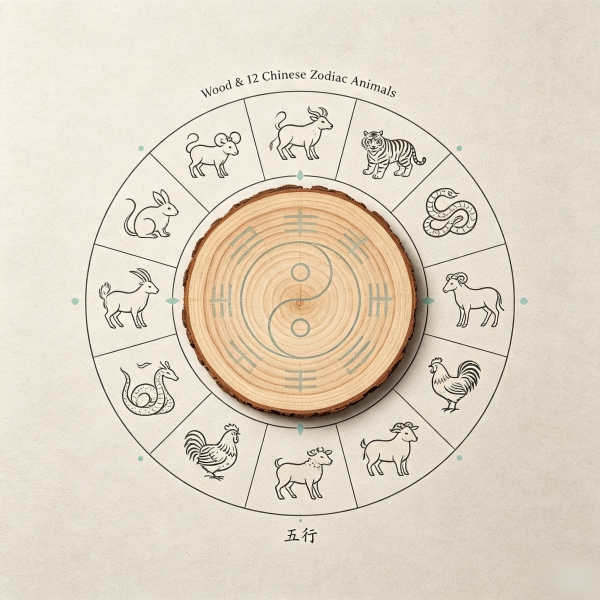
Wood is the first of the Five Elements in Chinese cosmology — the force of spring, growth, and new shoots pushing through cold ground. It corresponds to the liver and gallbladder in traditional Chinese medicine, to the virtue of benevolence (仁, Rén), and to the direction of the rising sun. In the Chinese zodiac it pairs with each of the twelve animals to create twelve distinct Wood-animal combinations spanning the 60-year stem-branch cycle. The most recent pairing, the Wood Snake of 2025, has sparked renewed global interest in what this element means for personality, timing, and travel. This guide explains the Wood element's place in Wu Xing theory, lists every Wood zodiac year from 1934 to 2025, and connects the element to Chinese landscapes, seasons, and cultural experiences that foreign visitors can actually reach.
Quick Facts
What the Wood Element Means in Chinese Astrology
The Wood element sits at the heart of Wu Xing (五行, Five Elements) theory — a dynamic framework that has governed Chinese cosmology, medicine, and personality analysis for over two thousand years. Wood works in two complementary cycles. In the generating (相生) cycle, Wood feeds Fire as fuel and is itself nourished by Water. In the controlling (相克) cycle, Wood governs Earth through root growth that breaks and aerates soil, while Metal challenges Wood as an axe challenges a tree. This constant interplay shapes how Wood zodiac signs relate to other elements across the cycle.
Within the Wood element itself, a yin-yang split produces two distinct stems. Yang Wood (甲, Jia) behaves like a tall pine — assertive, direct, and architecturally ambitious. Yin Wood (乙, Yi) grows like a vine or spread of grass — adaptive, flexible, and cooperative. Both stems share a diplomatic, growth-oriented flavor that colors every zodiac animal they touch, adding qualities of generosity, creativity, and a natural inclination toward cooperation rather than confrontation.
Philosophically, Wood's roots reach into the Yijing (易经, Book of Changes), where the trigrams of spring and east carry Wood's generative energy, and into the Neijing (内经, Yellow Emperor's Inner Canon), which maps Wood to the liver and the virtue of benevolence. When Wood and Earth appear together in a chart or relationship, the dynamic can produce productive tension — Wood is upward-moving and expansive while Earth is steady and downward-rooting — a pairing that demands mutual respect to reach its potential.
⚔️ Deep Dive into the Five Elements System: To see how all five elements balance one another across seasons and architecture, check out our full overview of Metal WuXing.
The Twelve Wood Zodiac Animals and Their Years
The 60-year stem-branch cycle pairs each of the five Wu Xing elements with each of the twelve zodiac animals twice — once on a Yang stem and once on a Yin stem. The table below lists every Wood zodiac animal, its stem, and its recent years of occurrence.
🐉 Calculate Your Lunar Zodiac Sign: Before comparing how Wood interacts with your personal profile, confirm your birth year sign in our simple breakdown on What Is My Chinese Zodiac Sign.
Wood Snake (1965, 2025)
Wood Snake (1965, 2025)
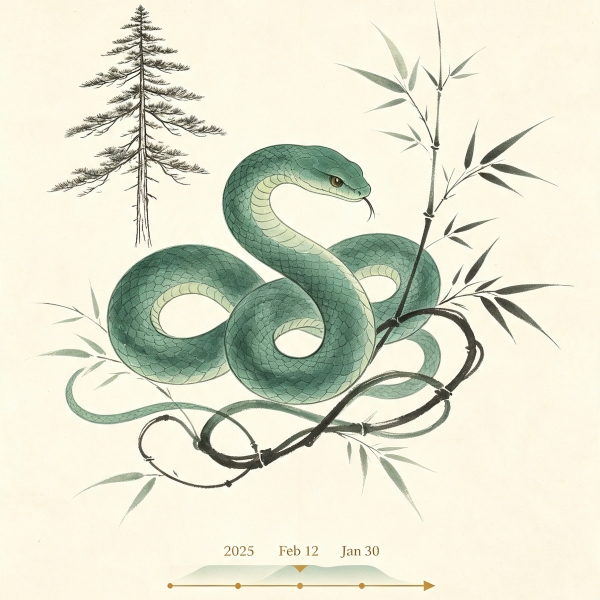
The Wood Snake carries the Yin Wood (乙, Yi) stem — the flexible, vine-like variety of Wood rather than the towering pine of Yang. This pairing produces a personality that is thoughtful, intuitive, and intellectually agile. The Snake's natural secretive caution softens under Yin Wood's cooperative influence, producing someone who reads a room quickly and speaks with measured precision rather than blunt directness.
The 2025 Wood Snake year runs from February 12, 2025 to January 30, 2026 on the Gregorian calendar. Unlike more solitary Snake years, 2025 carries cooperative energy — a year better suited to patient negotiation and quiet progress than to bold, confrontational moves. For foreign travelers, timing a visit to China during this window offers a chance to observe the year's quieter, more reflective temperament firsthand.
Wood Pig (1935, 1995)
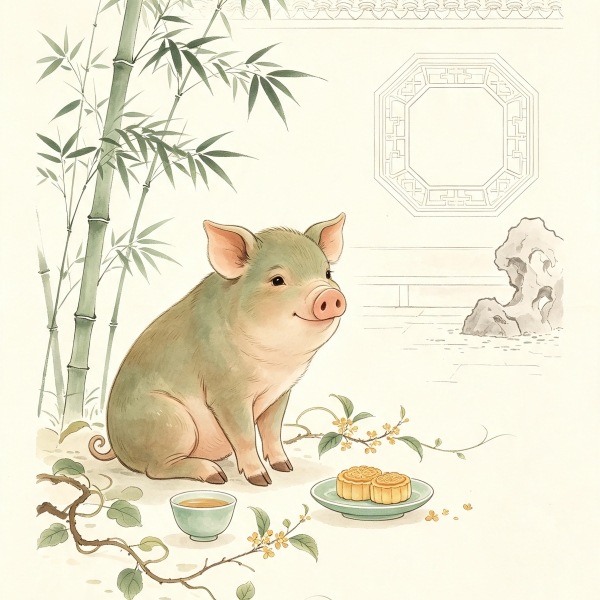
Wood Pig (1935, 1995)
The Wood Pig shares the Yin Wood (乙, Yi) stem with the Wood Snake, yet the combination produces a markedly different character. Where the Snake uses Wood's flexibility to sharpen intellectual insight, the Pig channels it toward generosity, aesthetic appreciation, and a love of comfort. Wood Pigs are cultured without being pretentious — they enjoy fine food, beautiful surroundings, and thoughtful company, but their generosity makes them natural hosts rather than aloof connoisseurs.
Travelers who identify as Wood Pigs may find themselves drawn to destinations that reward slow, sensory exploration: classical Chinese gardens, tea regions, and quiet countryside retreats rather than rushed city circuits. The 1995 cohort of Wood Pigs is now entering early adulthood, making this a relevant time for anyone researching birth-year characteristics for career or family planning purposes.
🐷 Zodiac Predictions & Monthly Forecast: Discover career outlooks, relationship compatibility, health advice, and monthly fortune insights in Is Pig Lucky in 2026?
Wood Monkey (1944, 2004)
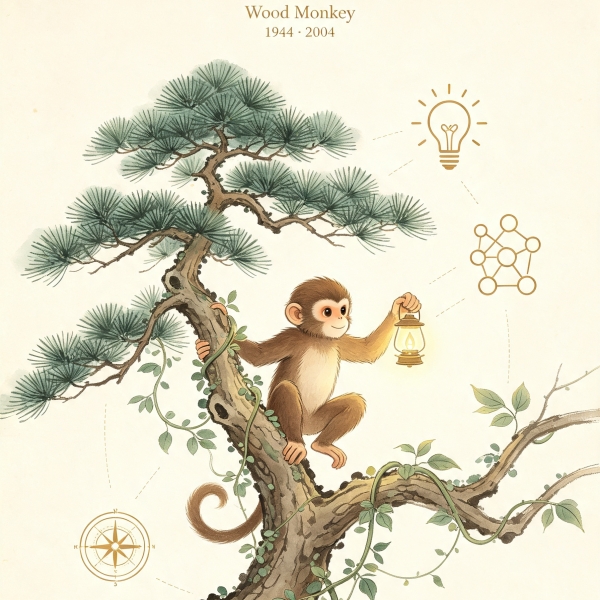
Wood Monkey (1944, 2004)
The Wood Monkey carries the Yang Wood (甲, Jia) stem, which gives the sign an entrepreneurial edge absent in the Yin Wood animals. The Monkey's native wit and improvisational skill combine with Wood's growth impulse to produce someone who generates ideas rapidly and finds creative ways to bring others on board. This is a team-smart sign — clever enough to see multiple angles and persuasive enough to rally support for a vision.
For those researching the 2004-born Wood Monkey cohort, this group has now reached adulthood, entering careers and relationships where their inventive energy meets real-world constraints. Unlike the purely mischievous Monkey archetype, the Wood variant tends toward purposeful innovation — a trait that plays well in collaborative fields, technology, and the creative arts.
🐵 Compare Water & Wood Zodiac Profiles: Learn how the adaptable energy of the Water Monkey interacts with the growth and renewal of Wood signs in our detailed profile of the Water Monkey Chinese Zodiac (1992).
Wood Element in Chinese Travel and Culture
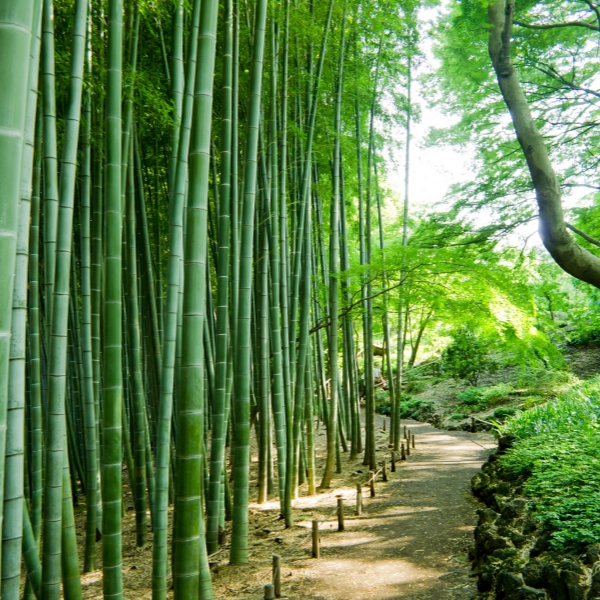
Anji Bamboo Sea
Spring marks the height of Wood energy in the Wu Xing calendar, spanning roughly the lunar months of February through April. Eastern China — Jiangsu, Zhejiang, Anhui, and Fujian — is the geographic heart of Wood, where ancient gardens, bamboo forests, and mist-wrapped pine peaks have shaped Chinese aesthetic ideals for centuries. Travelers who plan a spring trip to these provinces align their journey with the element's most active season, when the landscape itself embodies the growth and renewal that Wu Xing theory describes.
The 24 Solar Terms (二十四节气) track the subtle shifts within each season, and the term Lichun (立春, Start of Spring), falling around February 4–5, marks the precise moment when Wood energy begins its annual ascent. Traditional Chinese medicine and gardening practice both treat this period as optimal for planting, cleansing, and beginning new projects — a cultural logic that foreign visitors can experience directly by visiting during these weeks.
Chinese philosophy reinforces the Wood-virtue connection through the concept of benevolence (仁, Rén), the cardinal virtue assigned to the Wood element among the Five Constants (五常). The cultivated gentleman (君子, junzi) ideal draws frequent metaphor from the steady, growing, unshakeable tree — an image so deeply embedded in classical literature that visitors to China's garden and temple complexes are constantly moving through spaces designed to evoke it.
Wood and the Chinese Seasons
Wood reaches peak expression during spring, when the landscape shifts from winter's dormancy into visible renewal. In the Wu Xing seasonal map, spring governs roughly the period from February 5 to May 5 on the Gregorian calendar, with its astrological anchor at Lichun (立春, Start of Spring) — the first solar term of the agricultural year. Eastern China receives the first green growth each year, which is one reason the region hosts so many classical garden complexes: their designers deliberately sought to capture and hold spring's energy in stone and water.
The seasonal foods and teas of this window carry particular resonance. Longjing (Dragon Well) green tea from Hangzhou and Biluochun (碧螺春) from Dongting Mountain are both harvested in early spring, their fresh, slightly sweet profiles reflecting the tender new growth of the Wood season. Travelers visiting teahouses during this period are tasting the element directly — a sensory connection to Wu Xing theory that no textbook can replicate.
Experiencing Wood Energy in Chinese Landscapes
Five destinations stand out for visitors seeking to engage with the Wood element through landscape and architecture. Each offers a distinct expression of the element's qualities — from the architectural restraint of classical gardens to the raw physical presence of ancient bamboo forests.
Eastern China Wood-Themed Nature & Classical Gardens
- Anji Bamboo Sea (浙江安吉竹子博览园): Tickets about $10–14 (¥58–98). The bamboo forests of Anji County in Zhejiang Province are the most concentrated expression of Wood energy in China — a vast canopy of green that moves in wind and filters light into emerald tones. Foreign visitors can walk elevated paths through groves that stretch for kilometers.
- Huangshan 黄山, Anhui: Entrance about $30 (¥190); cable cars about $11–22 (¥80–160) each way. Huangshan's iconic pines — twisted by wind and mist into forms that have inspired Chinese painting for a thousand years — are the elemental signature of Wood in mountain landscape. Spring visits offer clearest skies and the start of new needle growth.
- Suzhou Humble Administrator's Garden 拙政园: Tickets about $8–12 (¥60–90). The supreme classical garden of Suzhou was designed around the principle of contained nature — trees, bamboo, water, and stone arranged to simulate natural Wood energy within a walled space. It is the architectural textbook expression of cultivated Wood.
Western & Northern China Wood-Filled Scenic Spots
- Jiuzhaigou 九寨沟, Sichuan: Tickets about $28–32 (¥190–220) off-peak, higher in peak season. A forested alpine valley of extraordinary color — turquoise lakes, cascading falls, and dense forest cover that embodies Wood's growth and water-nourishment in a single panorama. Spring flow is at its most powerful as snowmelt feeds the system.
- Chengde Mountain Resort 承德避暑山庄, Hebei: Tickets about $8 (¥50–60) in low season, about $13 (¥90) in peak. A northern landscape of lakes, grasslands, and extensive tree planting commissioned by Qing emperors as a summer retreat. The scale and variety of its planted areas make it a surprisingly rich Wood destination outside the eastern provinces.
🔴 Enhance Fortune with Traditional Color Hues: Learn which colors complement your personal zodiac element for luck, harmony, and wardrobe styling in Chinese Lucky Colors.
Wood Zodiac Compatibility and Relationships
The Wu Xing framework offers several layers of compatibility analysis for zodiac pairs. Three dynamics prove most useful for understanding how Wood signs interact across the cycle.
- Three Harmonies (三合): The Wood Tiger, Wood Horse, and Wood Dog form a mutually supportive trio. Wood Dog fits best with Tiger and Horse; Wood Tiger pairs naturally with Horse and Dog; Wood Horse aligns with Tiger and Dog. The Rabbit serves as the Dog's secret friend (六合) across all element combinations, adding a layer of quiet understanding to any pairing that includes both.
- Wood generates Fire: Because Wood fuels Fire, Wood Snake and Wood Horse naturally support Fire Snake and Fire Horse partners. The energy flows in a productive direction — Wood provides the kindling, Fire provides the warmth. These pairings tend toward dynamic balance rather than rivalry.
- Wood controls Earth: Wood Ox, Wood Dragon, Wood Goat, and Wood Dog signs face friction when paired with Earth counterparts. The two elements have opposing priorities — Wood seeks to grow upward, Earth seeks to ground downward. Mutual respect makes these pairings workable, but they require conscious effort.
- Water nourishes Wood: Water Rat (1932, 1992) and Water Pig or Water Rabbit give Wood a steadying foundation. The pairing feels calm and restorative — Water's flow meets Wood's roots without competing for the same space. These are among the most serene zodiac combinations available to Wood signs.
- Metal challenges Wood: Pairings with Metal Monkey or Metal Rooster can feel sharp-edged at first. Metal's cutting quality confronts Wood's growth impulse directly. The Wood side benefits from compromise and flexibility — a trait Yin Wood signs possess more naturally than Yang Wood, which may experience more friction.
Career, Wealth, and Health Patterns for Wood Signs
Six career clusters suit the Wood personality's growth-oriented, cooperative nature particularly well. Education and teaching draw on the element's generous impulse to nurture others' development. Environmental work, conservation, and forestry connect directly to Wood's natural domain. Design, architecture, and the classical arts channel creative energy into form. Mediation, diplomacy, and human resources leverage Wood's diplomatic gifts. Healthcare and traditional Chinese medicine align with the element's connection to the liver and gallbladder organs. Cultural-heritage work — museums, classical gardens, traditional crafts — taps into the cultivated, rooted quality the junzi ideal represents.
Financially, Wood signs tend toward disciplined saving and a preference for steady, long-horizon growth rather than speculative risk. Real estate and long-term investment funds suit this temperament better than short-term trading. The Wood approach to money works best when paired with a trusted advisor who can introduce balance on decisions where enthusiasm might outpace caution.
Health considerations for Wood focus on the liver and gallbladder — the organs traditionally linked to the element. Spring is the natural detox season, when Chinese medicine recommends lighter eating, leafy greens, and gentle movement to support the liver's function. Wood's growth-oriented drive carries a risk of overwork, so stress management matters as much as diet. Forest walks, garden visits, and any activity that places a person within established greenery serve as natural resets for the Wood temperament.
Frequently Asked Questions
Q: What is the Wood element in the Chinese zodiac?
The Wood element is the first of the Five Elements (Wu Xing) in Chinese cosmology. It corresponds to spring, the east direction, green and blue-green colors, and the virtue of benevolence (仁, Rén). In the 60-year stem-branch cycle, Wood pairs with each zodiac animal twice — once on a Yang stem (甲, Jia) and once on a Yin stem (乙, Yi) — producing twelve distinct Wood zodiac signs.
Q: What does Wood mean in the Chinese zodiac?
Wood acts as a personality modifier that adds growth, flexibility, generosity, and cooperation to whatever animal sign it joins. Yang Wood (甲, Jia) behaves like a tall pine — assertive and direct in growth. Yin Wood (乙, Yi) grows like a vine or grass — adaptive and cooperative. Both share a diplomatic, creative flavor that distinguishes Wood signs from their element counterparts.
Q: Which animal is the Wood Snake?
The Wood Snake pairs the Yin Wood (乙, Yi) stem with the Snake branch. Recent years: 1965 and 2025. This combination produces a wise, flexible, intellectually agile Snake rather than a secretive or sharp one. The 2025 Wood Snake year ran from February 12, 2025 through January 30, 2026.
Q: How often does the Wood element appear in the zodiac?
Wood appears twice in every 12-year animal cycle — once with Yang Wood (甲, Jia) and once with Yin Wood (乙, Yi). Across the full 60-year stem-branch cycle, there are 24 Wood years, and each zodiac animal appears with Wood once every 60 years.
Q: Which Wood zodiac signs are most compatible?
Within the Three Harmonies (三合) group, Wood Dog fits best with Tiger and Horse; Wood Tiger pairs with Horse and Dog; Wood Horse aligns with Tiger and Dog. The Rabbit is the Dog's secret friend (六合) across all elements. Wood–Fire pairs also flow naturally because Wood generates Fire — Wood Snake supports Fire Snake, and Wood Horse supports Fire Horse.
Q: What is the difference between Wood Snake and Fire Snake?
Wood Snake (1965, 2025) carries Yin Wood (乙, Yi) energy — thoughtful, diplomatic, and flexible. Fire Snake (1977) carries Yang Fire (丙, Bing) energy — sharper, more charismatic, more outward, with a stronger ego. Both share Snake intuition, but the Wood Snake reads situations quietly and acts with precision, while the Fire Snake projects its insights more boldly.
Q: Where in China can visitors experience Wood element landscapes?
Key destinations include Anji Bamboo Sea (about $10–14 / ¥58–98), Huangshan with its famous pines (about $30 / ¥190 entrance), Suzhou's classical gardens (about $8–12 / ¥60–90), Jiuzhaigou's forested alpine valley (about $28–32 / ¥190–220), and Chengde Mountain Resort (about $8–13 / ¥50–90 depending on season). Visiting during spring (lunar February–April) intensifies the Wood energy resonance of any landscape.
Q: What is the 2025 Wood Snake year known for?
The 2025 Wood Snake year, spanning February 12, 2025 to January 30, 2026, is the most recent and widely discussed Wood zodiac year. Forecast themes drawn from canonical Wu Xing reading point toward patient negotiation, intellectual growth, and quiet progress rather than dramatic leaps. Long-horizon planning aligns well with the year's cooperative energy.