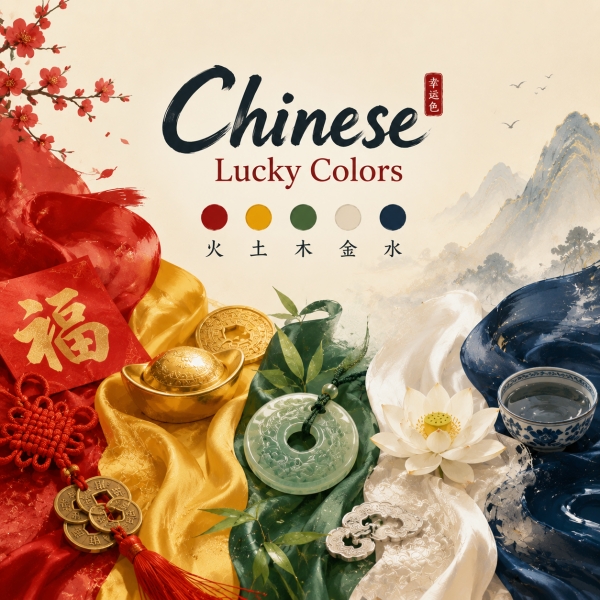
Chinese Lucky Colors
In China, color carries weight. A red envelope appears at every celebration. Gold trim frames a new business sign. Jade green shows up on a first date. These are not random choices. They are part of a layered system that ties specific hues to fortune, harmony, and protection. The framework draws from the Five Elements (Wu Xing), shifts with each zodiac year, and adapts to your own sign. This guide covers all three layers—what each color means, which ones to reach for in 2026 (Year of the Fire Horse), and how to apply them to your wardrobe, home, and gifts.
Quick Facts
What Are Chinese Lucky Colors?
Chinese Lucky Colors
Chinese lucky colors are part of a cultural system where specific hues are believed to attract fortune, harmony, or protection. The system draws from the Five Elements (Wu Xing: Wood, Fire, Earth, Metal, Water), the cycle of zodiac years, and centuries of imperial, ceremonial, and folk use. It operates on several layers simultaneously. There is the cultural default—red and gold across most celebrations. There are situational rules—red at weddings, white at funerals. And, there is the year-specific layer, which shifts with each zodiac animal and its element. Finally, there is the personal layer, which depends on your own zodiac sign and its element. The system is not monolithic. A color that is universally lucky in one context may be specifically wrong in another.
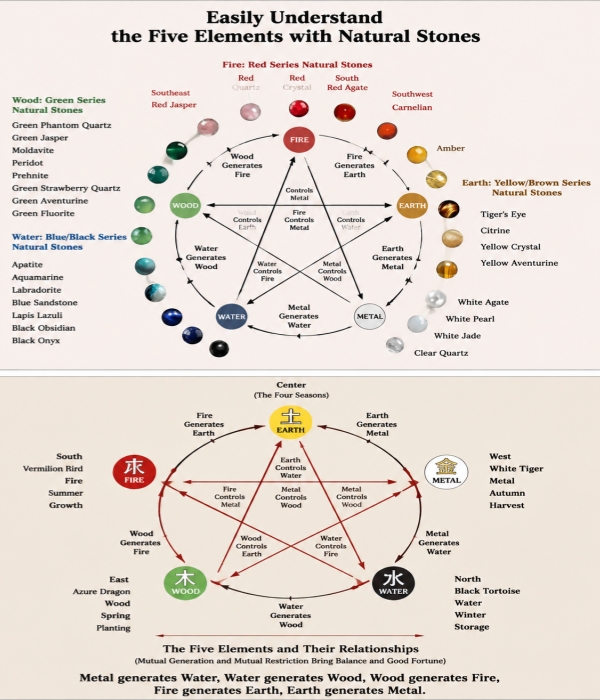
The Five Elements (Wu Xing) Framework
Each element maps to a color family. Wood corresponds to green, Fire to red, Earth to yellow and brown, Metal to white, gold, and silver, while Water aligns with blue and black. These elements interact through generating and controlling cycles—Wood feeds Fire, Fire creates Earth (ash), Earth bears Metal, Metal collects Water, Water nourishes Wood. In the controlling cycle, Fire melts Metal, Metal cuts Wood, Wood pierces Earth, Earth absorbs Water, Water douses Fire. This interaction explains why mixing certain colors is considered balancing (fire colors with metal or water colors) while mixing others may create tension (wood with metal, which cuts it). The Five Elements framework underpins both the year-based and the zodiac-based recommendations in this article.
How Color Became Tied to Luck
The habit of assigning luck to color grew from three roots. Imperial color hierarchy established yellow as the emperor's exclusive color, red as celebration, and white as mourning. Ceremonial practice reinforced these associations—weddings in red, funerals in white, Lunar New Year in red and gold. Folk belief and feng shui then formalized color as a tool: adjust the colors in your home, wardrobe, or business to match the elements and attract fortune. Over centuries, the system became self-reinforcing. Families taught children which colors to wear at which event. Businesses chose colors based on the zodiac year. Today, the habit is embedded in daily life across mainland China, Hong Kong, Taiwan, and the global diaspora.
Lucky Colors by Meaning and Element
This table serves as the central reference for the main lucky colors in Chinese culture, organized by element, traditional meaning, and common use. Each color has specific contexts where it is auspicious and others where it is inappropriate.
Red — Fire, Prosperity, Joy
Red is the dominant auspicious color in Chinese culture. It is tied to the fire element, the southern direction, vitality, and celebration. Red appears at weddings, openings, New Year, milestone birthdays, and gift-giving. The color is notably absent in mourning settings, where white takes its place. Directionally, red governs the south and activates fire energy in feng shui layouts.
Gold and Yellow — Earth and Metal, Wealth
Yellow was historically the emperor's exclusive color and ties to the earth element, representing the center, stability, and harvest. Gold and silver connect to metal, bringing clarity and precision. Gold attracts wealth accumulation; yellow conveys central authority. Imperial yellow was once forbidden to commoners. Today, yellow is freely worn, though deeper shades still carry imperial connotations.
🧧 Festival Dress Code & Customs: Discover traditional color meanings, modern holiday outfit ideas, and wardrobe etiquette in our guide on What to Wear to Chinese New Year.
Green — Wood, Growth and Harmony
Green represents spring, growth, family harmony, and the wood element. Jade green is particularly prized across many contexts. Green headwear, however, carries a specific cultural warning: in Chinese slang, a green hat signals a cuckolded husband. This is a well-known cultural fact and is noted neutrally.
White — Metal, Purity and Protection
White corresponds to the metal element and is the color of mourning in Chinese tradition. It is not generally used at celebrations but appears at funerals and certain religious rites. Metal's positive associations—clarity, decisiveness—can be activated with white or silver accents in moderation, particularly in business and professional settings.
Blue, Black and Purple — Water, Wisdom
Blue and black tie to the water element, representing wisdom, depth, and career authority. Black is acceptable in many settings but is avoided at weddings and New Year. Purple carries a long imperial history—the "purple Forbidden City" is a common idiom for the imperial palace—and is associated with nobility and spirituality. Some classifications link purple to the zodiac Snake. Brown and beige connect to earth, providing grounding energy.
🐐 Look Ahead to the Next Zodiac Year: As the Fire Horse year comes to a close, prepare for the upcoming seasonal shifts and lucky colors of the next cycle in our guide to the Chinese New Year 2027 Animal.
Lucky Colors by Chinese Zodiac Sign
Each zodiac sign carries one of five elements, and that element determines its core lucky colors. In 2026, the Fire Horse year, each sign's color profile gets a specific note: whether to amplify, balance, or support the year's energy. The table below organizes the 12 signs by element group.
Fire and Earth Signs
The Fire signs (Snake, Horse) and Earth signs (Ox, Dragon, Goat, Dog) each carry distinct energy in 2026. Fire signs experience amplified energy due to the year's dominant element. Earth signs, by contrast, provide grounding stability that balances the excess fire. For Snake and Horse, adding white and gold helps prevent the fire from becoming overwhelming. For Ox, Dragon, Goat, and Dog, green and yellow work as supportive tones, enhancing the earth element's natural stability.
Metal and Water Signs
Metal signs (Monkey, Rooster) and Water signs (Rat, Pig) approach 2026 from a different angle. Metal's clarity cuts through the year's fire intensity. Monkey and Rooster benefit from white and silver as anchor colors, with yellow and green adding warmth without overwhelming. Water signs find balance through the water-fire interaction. Rat and Pig can lean into blue and black, but adding yellow and gold prevents the water energy from feeling too cold in a fire year. The element relationships keep the energy moving rather than stagnating.
Wood Signs
Tiger and Rabbit are Wood signs, and Wood has a generating relationship with Fire—Wood feeds Fire. In 2026, this means the year's energy naturally supports Tiger and Rabbit. Green is amplified for both signs. However, if the fire energy becomes too strong, blue and black provide balance by introducing water, which controls fire. Tiger can carry more intense colors like turquoise and aquamarine, while Rabbit suits softer pale greens and pale blues. Both should watch for overstimulation and dial back if needed.
⚔️ Deep Dive into the Metal Element: Learn how the Metal phase governs clarity, structure, and lucky metallic tones within traditional Chinese philosophy in our breakdown of Metal WuXing.
Red and the Chinese New Year Tradition
Color Red and the Chinese New Year Tradition
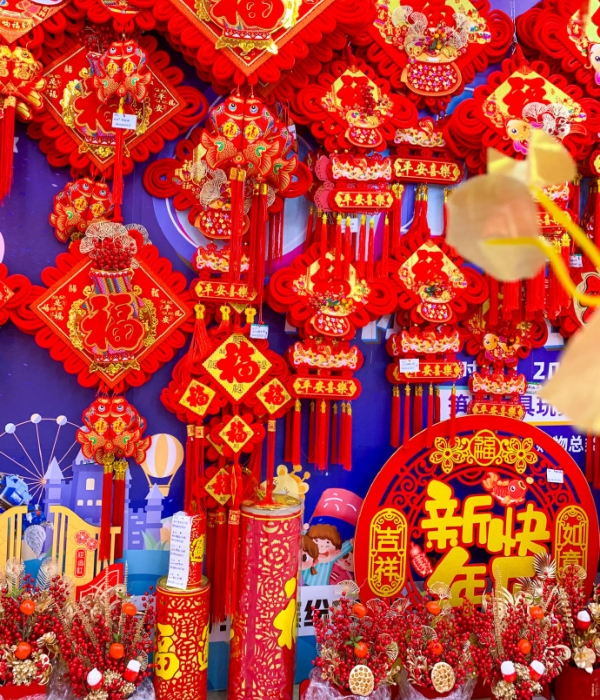
Red dominates Lunar New Year more than any other color. The reason traces back to the legend of the Nian—a mythical beast that emerged once a year to devour villagers. According to the tale, the Nian feared the color red and fire. Villagers began hanging red decorations and setting off firecrackers at the start of each lunar year, and the beast never returned. The tradition stuck. Today, red couplets (chunlian) frame doorways, red lanterns hang from eaves, and red envelopes (hongbao) filled with money pass between family members on New Year's Day. The color is inseparable from the celebration itself.
Why Red Is the Most Auspicious Color
Red links to fire, the south, vitality, and celebration. It is the default color at weddings, grand openings, signings, birthdays, and Lunar New Year. In feng shui, red activates the fire element and draws yang energy. It wards off misfortune and attracts good fortune when used in the right contexts. The color appears on envelopes, lanterns, paper cuttings, couplets, and clothing throughout the season. Outside New Year, red is worn at openings, business signings, and festivals year-round. It is the most widely recognized lucky color in Chinese culture, both domestically and among the global diaspora.
Other New Year Colors and What They Mean
Gold and yellow represent wealth and imperial authority at New Year. Gold ties to metal and financial prosperity; yellow to earth, harvest, and central authority. Green signifies growth and spring, appearing symbolically in certain dishes and decorations. White and black, however, are avoided. Both are associated with mourning in Chinese tradition. White clothing and black clothing carry funeral connotations and are considered bad luck at the start of a new year. The practical rule is simple: wear something new and red on New Year's Day if possible, and add gold accessories for wealth energy.
Several taboos govern what not to do during the New Year period. These are widely observed traditions rather than strict rules, but they reflect the cultural logic behind the colors.
- No black clothing: Associated with mourning and bad luck at the start of a new cycle.
- No white clothing: The primary mourning color; avoided at all celebratory occasions.
- Avoid washing hair on Day 1: "Hair" (fa) shares a sound with "wealth" (fa); washing it is thought to wash away good fortune.
- Sweep outward only: Sweeping dirt inward is believed to bring bad luck into the home.
2026 Lucky Colors in the Year of the Fire Horse
Lucky Colors in the Year of the Fire Horse
In 2026, the Chinese zodiac cycle brings the Year of the Fire Horse (bing wu). The Horse's natural element is fire, and the current feng shui period—Period 9, running from 2024 to 2043—is also fire-dominant. The result is a year where fire energy is doubly strong. This affects which colors are emphasized and which serve as balancing tools.
Why the Fire Horse Changes the Balance
The double fire emphasis amplifies red and warm tones across the year. It also shifts the role of other elements. Water-element colors (blue, black) gain importance as balancing tools, cooling the excess fire. Metal-element colors (white, gold, silver) provide clarity and precision that cuts through fire's intensity. Wood-element colors (green) support fire, which means green acts as a supportive rather than dominant energy. Earth-element colors (yellow, brown) ground the year's energy and prevent it from becoming overwhelming. The Five Elements cycle governs how colors interact, and in a Fire Horse year, balance comes from the controlling and supporting elements.
The Five Core Lucky Colors for 2026
These five colors carry the strongest energy for 2026, each tied to a specific element and use case. They work both for general luck and for specific contexts like New Year, business, or personal wardrobes.
- Red (Fire): Amplifies fire energy for confidence and visibility. Best for openings, presentations, and Lunar New Year. Worn as an accent or full garment.
- Gold (Metal): Attracts wealth and adds clarity. A reliable accessory color year-round. Pairs well with red for the New Year period.
- Emerald Green (Wood): Supports fire through the generating cycle, promoting growth and renewal. Works in spring and summer contexts.
- White (Metal): Provides clarity and protection by activating metal energy. Useful in moderation—small accessories rather than full outfits.
- Blue (Water): Balances fire excess by introducing water energy. Best for calming spaces, professional settings, and late summer.
🐉 Calculate Your Lunar Zodiac Sign: Before picking daily lucky colors or wardrobe accents, confirm your birth year sign using our simple breakdown on What Is My Chinese Zodiac Sign.
How to Wear and Use Chinese Lucky Colors
Lucky colors work best as intentional accents rather than full outfits. A head-to-toe red or gold look reads as costume outside of ceremonial contexts like New Year dinner or a wedding. Small, deliberate touches carry the symbolism effectively. This section covers clothing, accessories, home décor, and gift-giving.
Clothing, Accessories, and the Workplace
For everyday use, stick to small accents—a red scarf, a gold watch, a jade bracelet, a blue tie. These carry the symbolism without overwhelming an outfit. In professional settings, blue and white project clarity; gold accessories add wealth energy without appearing excessive. Red ties and red dresses are common at Lunar New Year dinners and grand openings. For a date or social event, red or pink works well as an accent color. The key principle is proportion: an accessory or single garment piece signals intention; a full outfit signals costume.
- Small accents over full outfits: A red scarf, gold watch, or jade bracelet carries symbolism without looking overdone.
- Workplace: Blue ties, white shirts, and gold accessories project clarity and authority.
- Social and dates: Red or pink accents signal warmth and positive energy.
- Avoid costume effect: Head-to-toe red or gold reads as ceremonial, not everyday.
Home Décor and Gift-Giving
In the home, lucky colors function as environmental energy. Living rooms benefit from red cushions, gold-framed photos, or jade-green plants in social zones. Bedrooms work better with soft pinks or whites for harmony and rest. Studies and workspaces favor green plants and jade accents for growth and focus. White ceramics and metallic frames bring clarity to any room when used in moderation.
- Living rooms: Red throw pillows, gold frames, jade-green plants for active social energy.
- Bedrooms: Soft pinks and whites for harmony; avoid strong reds here.
- Studies and workspaces: Green plants and jade accents support growth.
- Gift wrapping: Red and gold for celebrations, white or muted tones for sympathy. Never use white wrapping at celebrations or black at weddings.
Frequently Asked Questions
Q: What is the luckiest color in Chinese culture?
Red is the most universally auspicious color in Chinese culture. It ties to fire, vitality, celebration, and protection from misfortune. It appears by default at weddings, Lunar New Year, grand openings, and milestone birthdays. No other color has the same breadth of cultural application.
Q: Why is red considered lucky in Chinese culture?
Red is linked to fire, the sun, and life force. In folk tradition, it repelled the mythical Nian beast, which gave rise to the New Year tradition of red decorations and firecrackers. Over centuries, this protective quality became associated with celebration and good fortune across all major life events.
Q: What is the Chinese lucky color for 2026?
2026 is the Year of the Fire Horse. The year's emphasized colors are red, gold, emerald green, white, and blue, with red and gold the most prominent. Because fire is doubly strong—both the Horse's element and the feng shui period—red and gold carry the highest energy, while white and blue serve as balancing tools.
Q: What colors should I wear for Chinese New Year?
Red and gold are the classic pair. Many wear a new red garment on New Year's Day and add gold accessories. Green is also appropriate as a growth and spring color. Avoid white and black, which are associated with mourning and considered bad luck at the start of a new year.
Q: What color should I avoid during Chinese New Year?
Avoid white and black clothing, as both are tied to mourning in Chinese tradition. Also avoid sharp objects and scissors on Day 1, as cutting is thought to sever good fortune. Do not sweep dirt inward—sweep outward only, to keep luck from being swept out of the home.
Q: How do I find my personal lucky color?
Your personal lucky colors come from your zodiac animal's element. Water signs (Rat, Pig) favor blue and black. Fire signs (Snake, Horse) favor red and purple. Wood signs (Tiger, Rabbit) favor green. Metal signs (Monkey, Rooster) favor white and silver. Earth signs (Ox, Dragon, Goat, Dog) favor yellow, brown, and jade.
Q: Is yellow a lucky color in Chinese culture?
Yellow is traditionally the most imperial and authoritative color, tied to earth and the emperor. Historically, only the emperor wore deep yellow. Today, yellow is freely worn, but deeper shades still carry connotations of authority and centrality. It is considered lucky in the sense of stability and harvest.
Q: Are black and white unlucky in Chinese culture?
Black and white are not inherently unlucky. Both are the traditional mourning colors, which is why they are avoided at celebrations like weddings and Lunar New Year. In everyday and professional contexts, black and white are perfectly acceptable and carry positive associations—black signifies career authority and water-element wisdom, while white signifies clarity and metal-element precision.