Typical Chinese Names
Typical Chinese names are built from one surname followed by one or two given-name characters. This structure has been standard for centuries, rooted in ancient clan systems and refined through imperial, literary, and philosophical traditions. Whether you are choosing a name, reading Chinese text, or simply curious, this guide covers the surnames, first names, and meanings you will see most often.
Names carry weight in Chinese culture. A single character can reference the Five Elements, honor a family generation, or echo a line from classical poetry. Understanding the building blocks — xìng (surname) and míng (given name) — unlocks why certain characters appear repeatedly and what they convey about the person.
Quick Facts
How Chinese Names Are Built
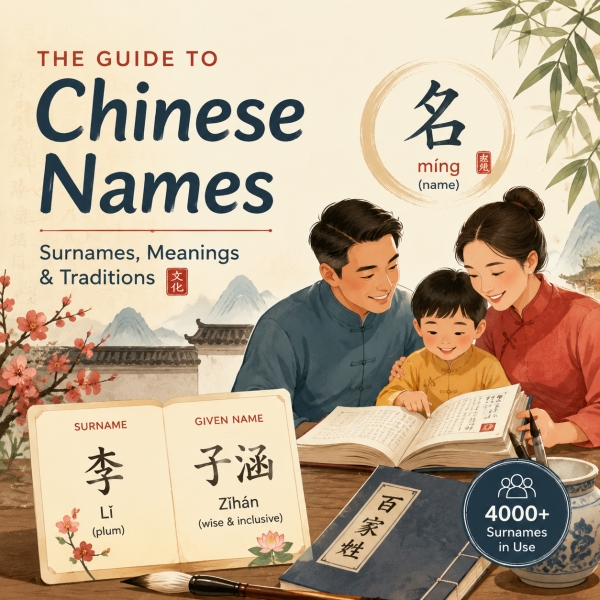
Every Chinese name splits into two parts: xìng (姓) — the surname inherited from the father's line — and míng (名) — the given name chosen by the parents. The surname always comes first, regardless of context. This is the opposite of most Western conventions, so a name like Li Wei in Chinese reading order is Wei Li when rendered Western-style.
Pinyin romanization captures the sound but not the meaning of tone marks. The same syllable carries different meanings depending on its tone: Lǐ means "plum," while Lì means "stand." Tones are part of the name and must be preserved in accurate romanization.
Five structural rules apply across most Chinese names:
- Surname position: The surname appears first in all Chinese contexts and retains that position even when the full name is written in English order.
- Character count: The surname is always one character, with the exception of compound surnames.
- Given-name length: The given name is one or two characters; one character is common, two characters is equally common.
- Full-name total: Most full names are either 2 characters (1+1) or 3 characters (1+2).
- Compound surnames: A small group of two-character surnames (复姓 fùxìng) exists; when combined with a two-character given name, the full name reaches 4 characters.
Surname-First Order
In Chinese culture, the family name carries the weight of lineage, inheritance, and social identity. It precedes the given name without exception. When Chinese names appear in international contexts — athlete Yao Ming on a scoreboard, author Ha Jin in a byline — the original surname (Yao, Ha) is preserved even as the reading order shifts.
One or Two Characters
The surname is always a single character. The given name follows, most commonly as one character or two. A one-character surname paired with a one-character given name produces a two-character full name; a one-character surname plus two-character given name produces three characters total. The four-character full name occurs only when a compound surname (欧阳 Ōuyáng, 司马 Sīmǎ) is followed by a two-character given name.
🔢 Explore Modern Digital Expressions: In modern digital communication, numbers are frequently used as homophonic shorthand for words and names. Learn how digits translate into everyday phrases in our guide to Chinese Number Slang.
Typical Chinese Surnames
The distribution of Chinese surnames follows a steep concentration. Just over 4,000 surnames are in use, but the top 10 alone cover roughly 40% of China's population. This means any short walk through a Chinese city or classroom will repeatedly surface the same family names.
The Most Common 10
How Surnames Are Chosen
In traditional Chinese practice, children inherit their father's surname patrilineally. Marriage does not change a woman's surname; she retains her birth surname throughout her life. This pattern remains the norm in modern urban China, though some couples with single-child families have begun discussing alternative arrangements. The surname is therefore predetermined for most naming decisions, leaving the parents to focus entirely on the given name.
🗣️ Improve Your Spoken Mandarin: To practice listening, speaking, and recognizing Chinese characters and daily vocabulary, discover how audio-based learning works in our guide to Pimsleur Chinese Mandarin.
Typical Female First Names
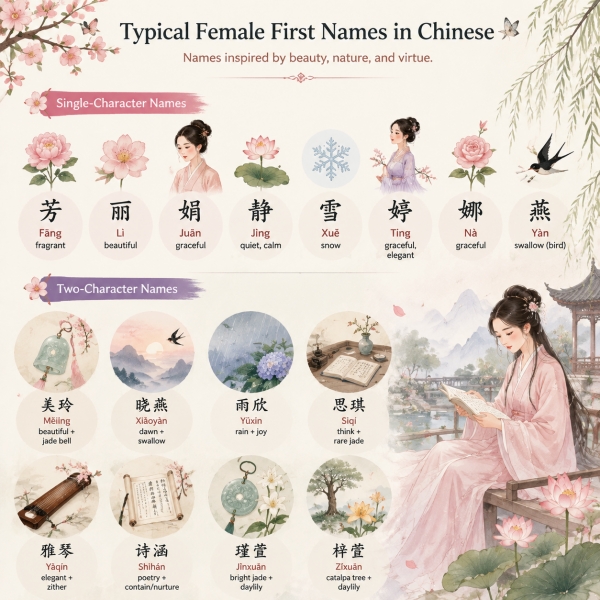
Typical Female First Names
Female given names in Chinese tend to draw from a vocabulary of beauty, grace, nature, and virtue. Single-character names and two-character names both appear frequently, with two characters offering more room to layer meanings or echo a poetic phrase.
Single-Character Names
These characters are frequently used as standalone given names for women. Each carries a clear meaning associated with femininity, nature, or positive qualities.
- 芳 Fāng: "fragrant" — evokes flowers and pleasant scent
- 丽 Lì: "beautiful" — one of the most common female name characters
- 娟 Juān: "graceful" — often used for elegant, slender figures
- 静 Jìng: "quiet, calm" — conveys inner tranquility
- 雪 Xuě: "snow" — associated with purity and delicate beauty
- 婷 Tíng: "graceful, elegant" — used for a poised bearing
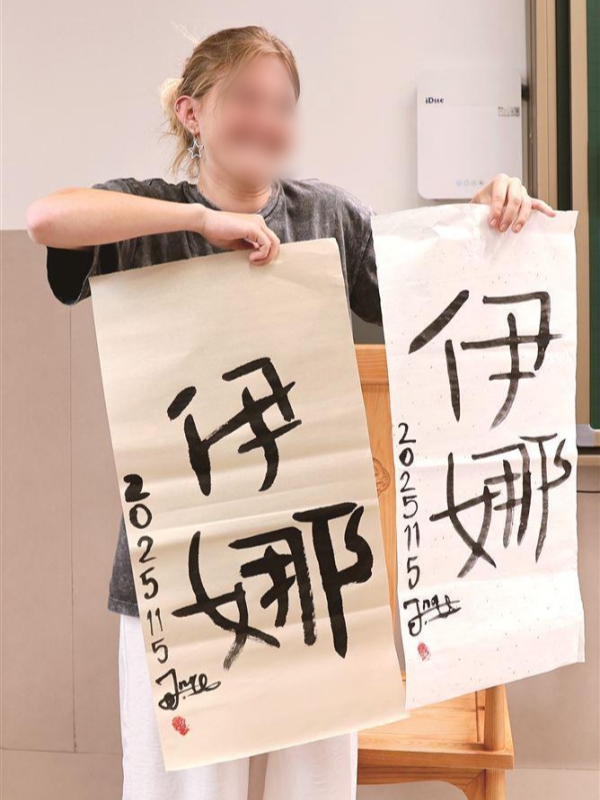
- 娜 Nà: "graceful" — borrowed from Sanskrit, popular in modern names
- 燕 Yàn: "swallow (bird)" — associated with lightness and spring
Two-Character Names
Two-character female names often pair a virtue or beauty character with a softer closing character that rounds out the sound and meaning.
- 美玲 Měilíng: "beautiful + jade bell" — beauty paired with a precious object
- 晓燕 Xiǎoyàn: "dawn + swallow" — evokes early morning lightness
- 雨欣 Yǔxīn: "rain + joy" — happiness following rain
- 思琪 Sīqí: "think + rare jade" — thoughtfulness with a precious quality
- 雅琴 Yǎqín: "elegant + zither" — grace combined with artistic refinement
- 诗涵 Shīhán: "poetry + contain/nurture" — poetic depth and warmth
- 瑾萱 Jǐnxuān: "bright jade + daylily" — preciousness with floral charm
- 梓萱 Zǐxuān: "catalpa tree + daylily" — nature imagery with longevity symbolism
Typical Male First Names
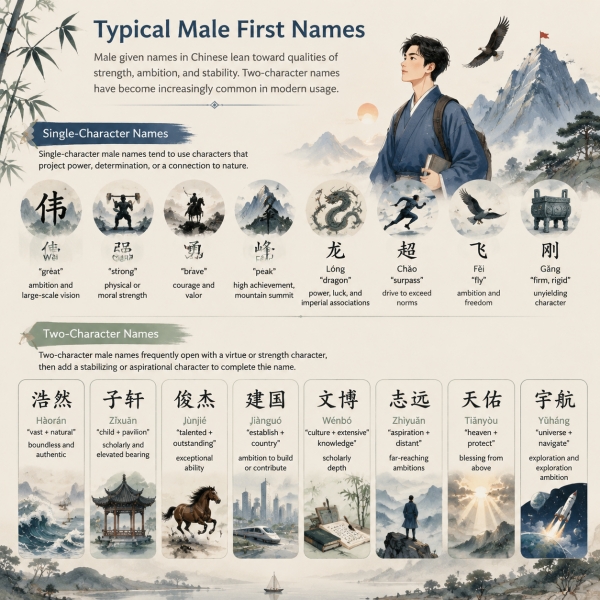
Typical Male First Names
Male given names in Chinese lean toward qualities of strength, ambition, and stability. Two-character names have become increasingly common in modern usage, giving parents space to combine a virtue with a complementary character.
Single-Character Names
Single-character male names tend to use characters that project power, determination, or a connection to nature.
- 伟 Wěi: "great" — ambition and large-scale vision
- 强 Qiáng: "strong" — physical or moral strength
- 勇 Yǒng: "brave" — courage and valor
- 峰 Fēng: "peak" — high achievement, mountain summit
- 龙 Lóng: "dragon" — power, luck, and imperial associations
- 超 Chāo: "surpass" — drive to exceed norms
- 飞 Fēi: "fly" — ambition and freedom
- 刚 Gāng: "firm, rigid" — unyielding character
Two-Character Names
Two-character male names frequently open with a virtue or strength character, then add a stabilizing or aspirational character to complete the name.
- 浩然 Hàorán: "vast + natural" — boundless and authentic
- 子轩 Zǐxuān: "child + pavilion" — scholarly and elevated bearing
- 俊杰 Jùnjié: "talented + outstanding" — exceptional ability
- 建国 Jiànguó: "establish + country" — ambition to build or contribute
- 文博 Wénbó: "culture + extensive knowledge" — scholarly depth
- 志远 Zhìyuǎn: "aspiration + distant" — far-reaching ambitions
- 天佑 Tiānyòu: "heaven + protect" — blessing from above
- 宇航 Yǔháng: "universe + navigate" — exploration and exploration ambition
🐼 Explore Famous Panda Names & Meanings: Beyond human naming traditions, double-character repeating names and auspicious characters—like Bao Bao ("precious treasure") and Hua Hua—play a unique role in Chinese culture. Discover character meanings and origins in our guide to Famous Panda Names.
Meanings Behind Typical Names
Chinese naming goes beyond sound preference. Many families consider the Five Elements (wǔ xíng), consult birth charts, or select characters from classical poetry. Understanding these layers explains why certain characters appear across generations or carry weight in specific contexts.
The Five Elements
Nature and Virtue Themes
Beyond the Five Elements, Chinese names draw from recurring thematic categories that have shaped naming conventions for centuries. These themes connect individuals to cultural ideals or natural imagery.
- Flowers and plants: Characters referencing plum blossoms (梅 Méi), orchids (兰 Lán), bamboo (竹 Zhú), or chrysanthemums (菊 Jú) — beauty, resilience, and refinement
- Mountains and water: Characters like 山 Shān "mountain," 峰 Fēng "peak," 海 Hǎi "sea," 河 Hé "river" — stability, breadth, and depth
- Moral virtues: 仁 Rén "benevolence," 义 Yì "righteousness," 忠 Zhōng "loyalty," 孝 Xiào "filial piety" — ethical grounding
- Scholarly aspirations: 文 Wén "culture," 学 Xué "learning," 博 Bó "extensive knowledge" — intellectual achievement
- Brightness and light: 明 Míng "bright," 晖 Huī "sunshine," 皓 Hào "bright white" — clarity and positive outlook
- Family hopes: Characters expressing wishes for health (安 Ān "peace"), happiness (福 Fú "fortune"), or longevity (寿 Shòu "longevity")
Frequently Asked Questions
Q: Are Chinese names typically two characters?
A typical Chinese name consists of a one-character surname plus either a one-character or two-character given name. This means most full names are two or three characters total. The four-character format (two-character surname plus two-character given name) is uncommon but exists within the compound surname group.
Q: What is the most common Chinese surname?
王 Wáng is the most common surname, used by roughly 92 million people in China. The top five surnames are 王, 李 Lǐ, 张 Zhāng, 刘 Liú, and 陈 Chén. Together, the top 100 surnames cover the vast majority of the Chinese population.
Q: What were typical ancient Chinese names?
Pre-Han naming used three elements: xìng (clan name derived from an ancestor or fief), shì (branch name), and a given name. Historical figures like 屈原 Qū Yuán, 诸葛亮 Zhūgě Liàng, and 李白 Lǐ Bái reflect this structure. The modern surname-plus-given-name format gradually standardized after the Han dynasty.
Q: What are typical Chinese American names?
Chinese Americans often use standard Chinese names written in pinyin, reordered to Western convention (given name first). In English-language contexts, some adopt anglicized given names like "May" or "Lily" as legal names, while retaining the Chinese name as a middle name or home name.
Q: What are typical Chinese English names?
Chinese English names are English given names adopted for daily use in international settings — for example, "Kevin," "Lily," or "Amy." The original Chinese name remains the official legal name. English names are typically chosen for pleasant sound or personal affinity rather than meaning.
Q: What are typical Filipino-Chinese surnames?
Filipino-Chinese communities commonly use surnames such as 陈 Chén, 吴 Wú, 林 Lín, 黄 Huáng, 庄 Zhuāng, 蔡 Cài, 柯 Kē, 施 Shī, and 刘 Liú. Hokkien and Cantonese renderings — Lim, Tan, Co, Ong — also appear frequently. In some cases, Spanish colonial naming patterns (surname first, then Chinese surname) such as "Jose Tan" are used.
Q: How do parents choose a typical Chinese name?
The surname is predetermined by lineage. For the given name, parents combine a sound they find pleasing with a meaning they value. Many families still consult the child's birth chart to balance the Five Elements, adding characters associated with elements lacking in the chart. In families following a generation-name tradition, siblings share a designated character from a family poem.