Pimsleur Chinese Mandarin
Pimsleur Chinese Mandarin is an audio-first language program built around 30-minute conversational lessons. The course uses Dr. Paul Pimsleur's spaced-repetition method, developed in the 1960s and now available for over 50 languages. Each Mandarin lesson places you inside real-world scenarios—ordering food, asking for directions, checking into a hotel—with native speakers guiding your pronunciation from the very first prompt. The Mandarin edition spans five progressive levels of 30 lessons each, giving learners a structured path from absolute beginner through more complex conversations. This guide covers the full course structure, current pricing across all plans, and how to decide whether Pimsleur fits your Mandarin goals before you buy.
Quick Facts
How the Pimsleur Method Works for Mandarin
The Pimsleur method was developed by Dr. Paul Pimsleur, a linguist who began researching language acquisition in the 1960s. His core insight was that learners retain vocabulary best when it is reintroduced at carefully spaced intervals. The Mandarin edition applies the same framework used across Pimsleur's 50+ language programs. Every lesson places you inside a practical scenario, then prompts you to respond aloud before the native speaker delivers the correct phrase.
- Lesson length: Each Pimsleur Mandarin lesson runs approximately 30 minutes of audio.
- Spaced repetition: Vocabulary returns at widening intervals to anchor retention without conscious memorization.
- Real-world scenarios: Units cover greetings, food, directions, hotel check-in, shopping, family, transport, and emergencies.
- Active recall prompts: You speak and respond before the native speaker model is shown.
- Dual speaker format: Both male and female Mandarin speakers alternate throughout each lesson.
The Audio-First Format and Spaced Repetition
The entire Pimsleur Mandarin course is built around audio—there are no flashcards, videos, or written exercises in the core curriculum. Spaced repetition drives the method: earlier vocabulary returns at increasing intervals, reinforcing memory without traditional study. Some digital editions include a "Voice Coach" or "Speak Easy" interactive prompt. However, the course does not formally teach Chinese characters; it focuses entirely on pronunciation and conversational recall through pinyin romanization.
- Fully audio-based: No flashcards, videos, or written materials in the core course.
- Spaced intervals: Vocabulary reappears at widening gaps to build long-term retention.
- Interactive prompts: Voice Coach or Speak Easy features appear in select digital editions.
- No character instruction: The method focuses on pronunciation and aural comprehension, not reading or writing.
Strengths and Limitations of the Approach
Pimsleur Mandarin works well for commuters, auditory learners, and anyone preparing for travel who needs conversational confidence quickly. The daily 30-minute format builds consistent habit, and the method does produce recognizable pronunciation gains. However, the approach has real limits: it covers no character reading or writing, visual learners may find the audio-only format sparse, and lesson pacing is fixed in the official app. The "intermediate fluency in 30 days" marketing claim does not reflect typical adult learner outcomes.
- Strengths: Develops pronunciation and conversational confidence quickly; works well during commutes; builds retention through systematic repetition.
- Limitations: No character reading or writing practice; minimal visual content; fixed lesson speed; the "30-day fluency" claim overstates typical results.
💬 Master Online Slang & Number Codes: Beyond formal audio courses, modern Chinese speakers frequently use numerical shortcuts in texting and social media. Discover popular chat codes and internet slang in our guide to Chinese Number Slang.
Levels, Lesson 1, and the Full Course Structure

Pimsleur Chinese Mandarin
The Pimsleur Mandarin edition is organized as five progressive levels, each containing 30 core lessons plus roughly 30 bonus practice prompts. That gives 150 core lessons in total—approximately 75 hours of audio. Learners typically search for "lesson 1," "level 1," and "level 4" to gauge whether the course matches their timeline and goals. This section details every level and walks through what actually happens in Lesson 1.
Pimsleur Mandarin Levels 1 Through 5 at a Glance
150 core lessons total approximately 75 hours of audio across all five levels.
What Happens in Lesson 1
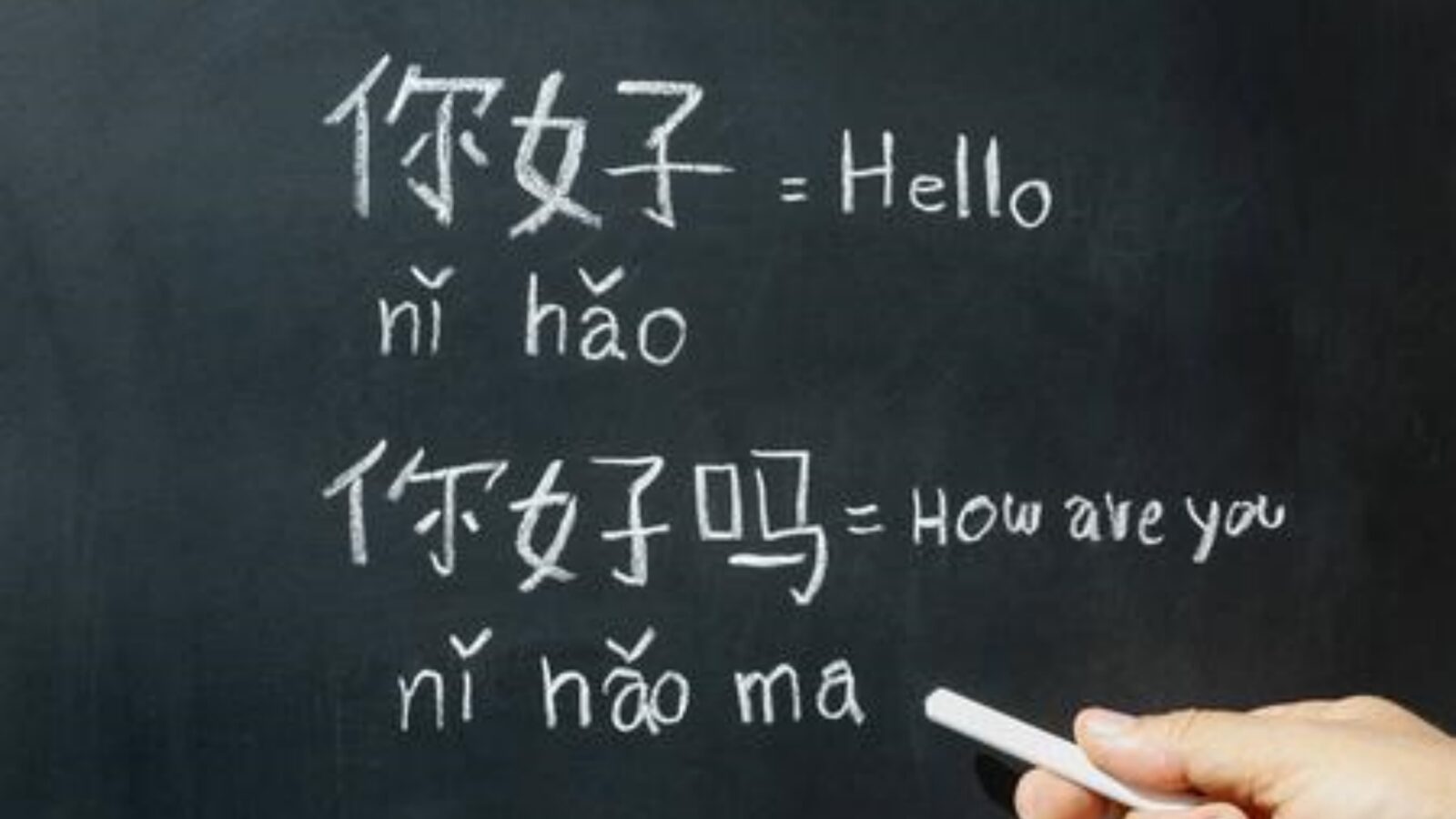
Lesson 1 of Pimsleur Mandarin follows a consistent four-part structure. The opening dialogue introduces a brief Mandarin conversation between two native speakers. The narrator then breaks the dialogue into manageable chunks, prompting you to repeat after each segment with English context. Spaced-recognition prompts test recall of vocabulary and pronunciation from earlier in the same lesson. The lesson closes with a small conversational scenario—typically meeting someone, saying "nihao," and introducing yourself using "wo jiao..." followed by your name. Lesson 1 finishes in roughly 30 minutes, with the first ten minutes being the densest for absolute beginners.
- Opening dialogue: Native speakers model a short Mandarin conversation.
- Chunked repetition: The narrator breaks dialogue into segments; you repeat after each prompt.
- Recall prompts: Earlier vocabulary returns within the lesson to test short-term retention.
- Mini-scenario: The lesson ends with a brief real-world exchange—greetings and self-introduction.
Pricing, Plans, and Where to Buy
Pimsleur Chinese Mandarin is sold through subscription plans, lifetime access, and per-level CD or digital download. Users frequently search for download options, eBay listings, free trial access, and torrent copies—their intent is practical: they want to know the legitimate paths to access the course and the realistic cost before committing. This section breaks down every buying channel with current USD-first pricing.
Monthly Subscriptions Compared
Lifetime access historically ranges from approximately $500 up to $575 (¥3,600–4,150) and is sold through the official Pimsleur website—never on third-party booking or travel sites.
Used Copies, eBay, and Other Buying Channels
Several legitimate alternatives to monthly subscription exist. Per-level CD or MP3 download packages are sold directly by Pimsleur at approximately $150 (¥1,080) per level. Used Pimsleur Mandarin CD sets appear on eBay and Amazon Marketplace—these are usually older editions, provide audio only, and do not include app access. Audible and library apps such as Hoopla, Libby, and OverDrive occasionally carry older Pimsleur Mandarin audio editions for digital borrow. Unofficial torrent files and PDF packs exist online but are unauthorized, carry unreliable audio quality, and face active takedowns. The 7-day free trial is the cleanest way to test the format before any payment.
- Per-level CD or download: Approximately $150 (¥1,080) per level, sold directly by Pimsleur.
- Used CD sets: eBay and Amazon Marketplace carry older editions; audio only, no app access.
- Audible and library apps: Older Pimsleur Mandarin editions sometimes available for digital borrow.
- Torrent and unofficial PDF packs: Not legitimate; quality is unreliable and takedowns are frequent.
Pimsleur Mandarin for Kids and Families

Pimsleur Chinese Mandarin
Pimsleur does not publish formal kid-track branding for its Mandarin course, so parents need an age-by-age framework to decide when and how to use it effectively. Families preparing for a China trip and mixed-age households are the primary audiences for this section. The audio-first format makes Pimsleur flexible across ages—it requires no screen, works during car trips or flights, and scales from passive background exposure to active self-study depending on the learner's age.
Age-by-Age Recommendations
Each age band uses Pimsleur Mandarin differently. The key variable is how much active recall the child can manage, and whether a parent needs to be present to guide sessions.
- Ages 3–5: Listen alongside a parent; treat audio as background exposure, roughly 10 minutes per session; do not expect active recall at this age.
- Ages 6–8: Can attempt short pronunciation drills with a parent present; pair each lesson with a 5-minute Mandarin cartoon or song to sustain motivation.
- Ages 9–12: Can complete a full 30-minute lesson independently; many benefit from pairing audio with a transcript or Anki deck to anchor characters they hear.
- Ages 13–17: Closest fit to the official target audience; one 30-minute lesson per day moves through Level 1 in roughly one month.
- Adults: The default audience; 30 minutes per day, five days per week, completes approximately one lesson per session.
Using Pimsleur as a Family Before a Trip
For families heading to China, Pimsleur works best as a pre-trip primer rather than a sole learning program. The 7-day free trial lets every family member test whether they tolerate the audio format before committing to a paid plan. Car trips and flights are ideal listening contexts—no screen is required. Cross-reference the trip duration with lesson volume: even 20–25 lessons give a usable greeting and restaurant vocabulary set for short visits; longer stays benefit from completing at least one full level. Since Pimsleur does not teach characters, add a separate kids' character tool such as a graded reader or Pleco if reading signs or menus matters on the trip. After arrival, use real situations—ordering food, buying transit tickets—to reinforce the audio drills rather than adding new lessons immediately.
- Test with the free trial: Every family member can try the format for 7 days at no cost before subscribing.
- Car-trip and flight listening: No screen required; lessons work well during travel as passive or active listening.
- Match lesson volume to trip length: 20–25 lessons cover basic greetings and restaurant phrases for short trips; one full level suits longer stays.
- Add character exposure separately: Pimsleur does not teach characters; pair with a graded reader or Pleco if reading menus or signs matters.
- Reinforce after arrival: Use real conversations in situ to lock in audio drills rather than rushing through new lessons.
Transcripts, PDFs, and Companion Study Tools
Pimsleur Mandarin is audio-only by design, but several official and community-built tools help learners anchor what they hear. These range from the official app's interactive features to community-created Anki decks and borrowed library editions. This section maps every companion tool to a concrete option so learners can build a study stack that fits their needs.
- Official Pimsleur app: Adds interactive flashcards, voice recognition, and progress tracking; does not include written transcripts.
- Community-built Anki deck: A shared deck for Pimsleur Chinese Mandarin offers 2,055 bilingual audio-plus-character cards across 5 units, 150 lessons, and 30 bonus packs.
- Community PDF notes: Searches for "Pimsleur Mandarin notes PDF" return community-scanned materials; quality varies and they are not officially endorsed.
- Audible audio edition: Older Pimsleur Mandarin courses sometimes appear on Audible; verify the listing specifies Mandarin, not Cantonese.
- Library apps: Hoopla, Libby, and OverDrive occasionally carry older Pimsleur Mandarin CDs for free digital borrow.
- Pimsleur interactive drills: "Quick Match" and "Speak Easy" features are included in the app at higher subscription tiers.
How Pimsleur Mandarin Compares to Alternatives
Pimsleur is one of several audio-leaning Mandarin courses available, each structured around a different learning philosophy. Story-based courses build reading and listening through graded narratives. Podcast and video lesson libraries offer broader topic coverage and cultural context. HSK-aligned textbook programs prepare learners for the official proficiency exam. Tutoring and language-exchange apps provide live conversation practice. The best results typically come from combining two or more formats rather than relying on a single program.
- Story-based Mandarin course: Better for learners who want reading plus listening through graded stories; weaker on active pronunciation drilling than Pimsleur.
- Podcast or video lesson library: Broader topic and cultural coverage; less rigorous on spaced-repetition recall than Pimsleur's method.
- HSK-aligned textbook course: Best for learners targeting the official HSK exam; heavier reading and writing load than Pimsleur.
- Tutoring or language-exchange app: Best for live conversation practice; Pimsleur serves as a stronger standalone primer before sessions begin.
- Blended approach: Pimsleur for audio drilling, a character tool for reading, and occasional live conversation for fluency is the most common effective path.
If your main goal is conversational confidence for an upcoming trip, Pimsleur's audio-first format is one of the most direct routes. If you need characters or HSK preparation, layer it with another tool.
Frequently Asked Questions
Q: Is Pimsleur Chinese Mandarin worth it?
Pimsleur Chinese Mandarin is worth it for learners who want audio-driven conversational drilling and can commit to 30 minutes daily. It is less suited for learners who need character reading practice or exam preparation.
Q: Can I download Pimsleur Mandarin for free?
The official 7-day free trial is the legitimate free option. Pimsleur does not publish a permanent free version of Mandarin. Unofficial PDF or torrent packs are not endorsed by the company.
Q: What level should a complete beginner start with?
Start with Mandarin Level 1. It assumes zero prior Chinese and works through greetings, introductions, and basic questions across 30 lessons—roughly 15 hours of audio.
Q: Does Pimsleur teach Chinese characters or only pinyin?
The core Pimsleur Mandarin course focuses on pronunciation and pinyin romanization. It does not formally teach characters. Pair it with a character tool if you need to read signs or menus.
Q: Is there a transcript or PDF for each lesson?
Pimsleur's official materials do not include full transcripts. Community-built Anki decks and note PDFs exist, but quality varies and they are not officially endorsed.
Q: How is Pimsleur Mandarin different from Pimsleur English for Chinese Speakers?
They are separate tracks: "Pimsleur Chinese Mandarin" teaches Mandarin to English speakers. "Pimsleur English for Chinese Speakers" teaches English to Mandarin speakers—different audio, different prompts, different scenarios.
Q: How long does it take to finish Pimsleur Mandarin Level 1?
One 30-minute lesson per day finishes Level 1 (30 lessons) in roughly one month. A pace of 3 lessons per week takes about 2.5 months.
Q: Are torrent copies of Pimsleur Mandarin legal to use?
No. Pimsleur Mandarin audio and PDFs are copyrighted. Torrent copies are unauthorized, and the company actively issues takedowns. Use the free trial or a paid plan instead.