Traditional Chinese New Year Clothing
Traditional Chinese New Year clothing is one of the most visible parts of the festival — red and gold fills the streets long before any fireworks are set off. The two most common outfits are the Tang suit for men and the cheongsam (also called qipao) for women, both rooted in centuries of dress history and re-cut for the modern holiday. New clothes matter as much as the style: buying and wearing something new is itself a tradition, a symbol of fresh starts and good luck. This guide covers the main traditional outfits, how they differ, and where visitors can actually buy or rent one — in Beijing, Shanghai, and Hong Kong — with realistic price ranges for each tier.
Quick Facts
Why New Clothes Define the New Year
Buying new clothes for the new year is one of the oldest Chinese New Year traditions. The act of wearing something new represents a clean slate — the old year is finished, and the new one deserves a fresh start. This belief ties directly into Chinese concepts of renewal and fortune: showing up in something new signals that you are ready to receive the year's luck. Red is the dominant lucky color during the festival. It represents joy, vitality, and protection — the color is said to scare away the Nian beast that ancient legend identifies with the holiday. Gold and yellow appear as accents for wealth and imperial blessing.
Both black and white are traditionally avoided during Chinese New Year. In Chinese culture, these colors carry associations with mourning. White in particular is considered deeply inappropriate for reunion dinners and family gatherings during the festival. For visitors who want to participate in the tradition without committing to a full red outfit, a red scarf or red underwear counts as fulfilling the spirit of the custom.
Tang Suit: Men's Traditional Chinese New Year Clothing
Traditional Chinese New Year Clothing
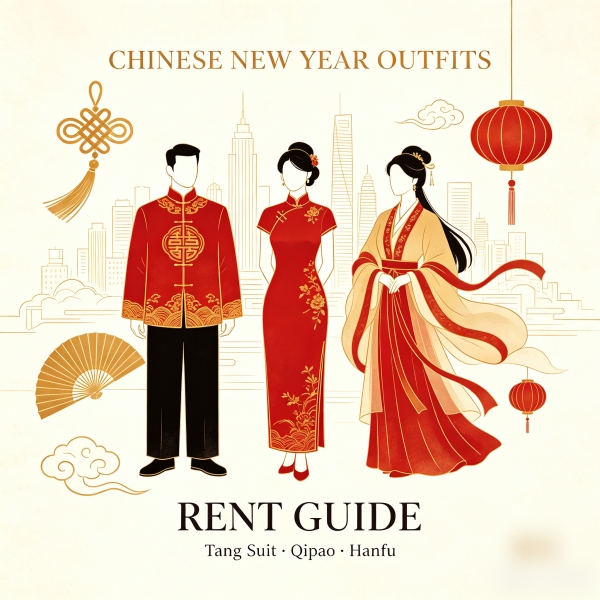
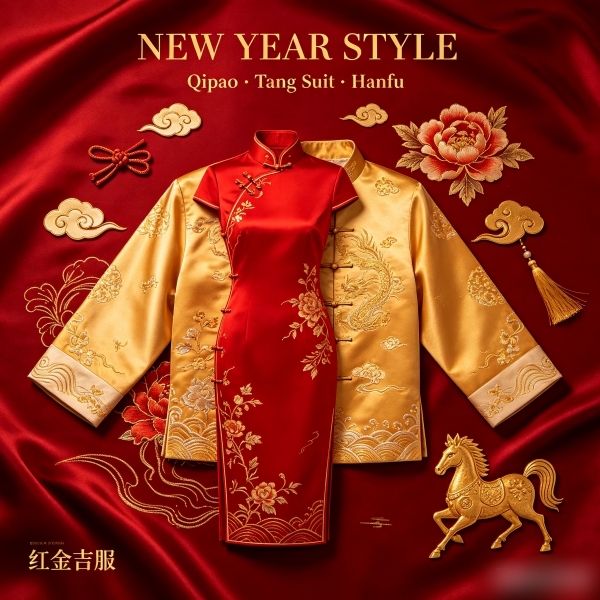
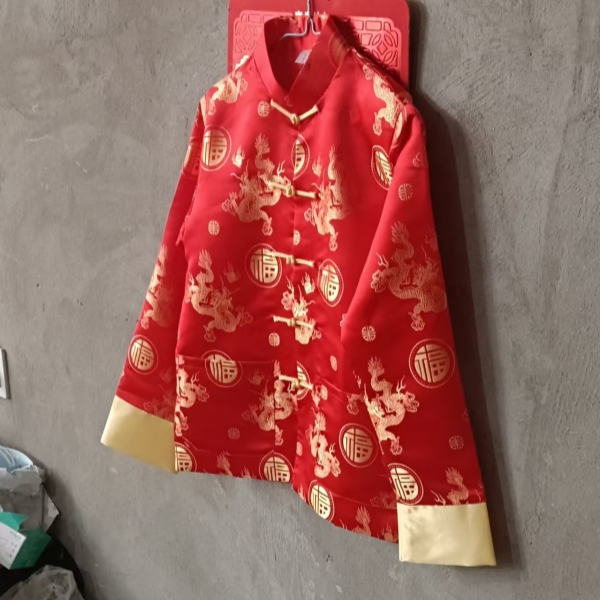
The Tang suit (唐装) is the default outfit for men during Chinese New Year. It developed as a 20th-century style inspired by Tang Dynasty dress but adapted for modern everyday wear. The most practical version for the holiday is a jacket-and-trousers set in silk, satin, or brocade. Mass-market ready-to-wear runs $28–55 (¥200–400); mid-tier silk and brocade pieces reach $70–140 (¥500–1000); bespoke tailoring at specialist shops in Shanghai or Hong Kong starts at $280 (¥2000+). The Tang suit fits comfortably over regular Western clothing, which makes it the easiest entry point for foreign visitors who want to participate in the tradition.
Features of a Tang Suit
The Tang suit has a set of recognizable features that distinguish it from other traditional Chinese garments. These elements carry both practical and cultural weight, and understanding them helps when selecting a piece for the holiday.
- Mandarin collar: A short, upright stand-up collar that sits close to the neck — a signature detail of the style.
- Frog closures: Decorative knot-buttons made of cord, called frog toggles, run down the front of the jacket. They are functional and ornamental at the same time.
- Jacket and trouser set: The standard modern Tang suit is a matched jacket-and-trousers combination. Some versions include a long gown (changshan) worn underneath for more formal occasions.
- Fabrics: Silk, satin, and brocade are the standard materials, chosen for their sheen and their traditional association with prosperity.
- Color: Red is the dominant choice, often with gold embroidery or trim. Burgundy and maroon offer a quieter alternative for men who prefer less visual impact.
Common Styles for the New Year
Different styles of Tang suit suit different levels of formality and personal preference. Most men choose based on the type of gathering they are attending — a family dinner calls for something different than a temple fair visit.
- Red silk jacket set: The most common New Year choice. Red silk with minimal embellishment is festive without being ostentatious, and it works at most family events.
- Red and gold brocade: More traditional and heavier in weight. This style is particularly popular among older men and for formal reunion dinners where the outfit signals respect for the occasion.
- Burgundy or maroon: A softer alternative to bright red. Some men prefer these tones for daytime visits when full red feels too loud, while reserving bright red for the evening reunion dinner.
- Changshan (long gown): A full-length robe worn underneath or as a standalone piece. It is the most formal option and is commonly seen at formal family gatherings in Hong Kong and among overseas Chinese communities.
📜 Imperial Dress Aesthetics: Curious how historical dynasty trends influenced traditional collars, necklines, and robe silhouettes? Discover the details in Tang Dynasty Neckline.
Cheongsam & Qipao: Women's Traditional Chinese New Year Clothing
Traditional Chinese New Year Clothing
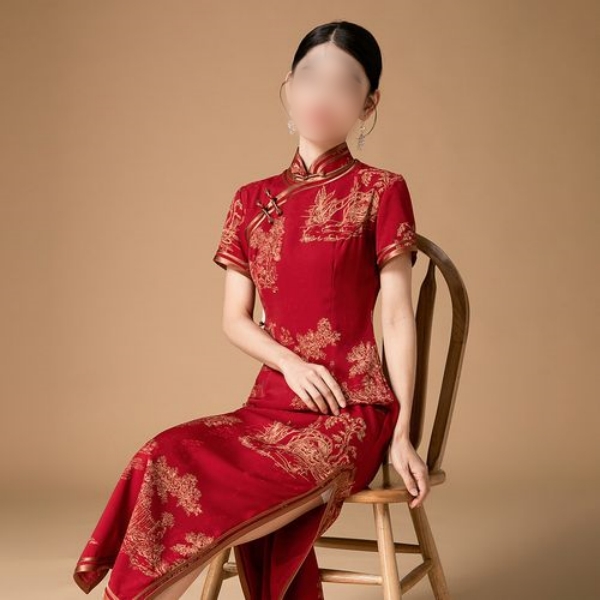
The cheongsam (长衫) and qipao (旗袍) are the same garment under two names — qipao is the Mandarin term most common on the Chinese mainland, while cheongsam is the Cantonese term used in Hong Kong and overseas communities. The dress took its modern form in 1920s Shanghai and has been the default festive outfit for women ever since. Modern New Year versions feature red, gold, or red-and-gold combinations, often with phoenix, peony, or cloud embroidery. Ready-to-wear cheongsams range from $42–140 (¥300–1000); bespoke pieces from a Shanghai or Hong Kong tailor cost $280–700+ (¥2000–5000+), depending on fabric and complexity. For visitors, the practical default is a knee-length version that allows easy movement — long versions are reserved for more formal dinners.
Features of a Cheongsam
The cheongsam is a precise garment with a set of defining characteristics that have remained consistent since its modern revival in the 1920s. Knowing these details helps when evaluating quality and fit.
- High mandarin collar: Like the Tang suit, the cheongsam features a stand-up collar that frames the neckline. The collar height varies by era and style.
- Form-fitting silhouette: The dress follows the body's lines without being restrictive. Modern versions allow for comfortable sitting and walking, which matters during a long day of visits.
- Side slits: One or two side slits allow movement and add a subtle elegance to the silhouette. Slit height varies from practical to dramatic.
- Frog closures or hidden zips: Traditional cheongsams close with decorative frog buttons, but many modern ready-to-wear versions use a concealed zip for easier wear.
- Embroidery: Phoenix, peony, and cloud motifs are the most common festive decorations, each carrying its own auspicious meaning in Chinese tradition.
👗 Evolution of the Modern Qipao: The body-fitting cheongsam worn today gained widespread popularity in Republican-era Shanghai. Learn more about the tailored silhouettes and vintage aesthetics of Chinese 1920s Fashion.
Common Styles for the New Year
Cheongsam styles for Chinese New Year range from practical everyday wear to formal statement pieces. Most women own more than one for different occasions during the holiday period.
- Knee-length red satin: The most wearable option for visitors. It is comfortable, easy to move in, and appropriate for casual visits and temple fair outings.
- Long red silk with gold embroidery: Reserved for formal family dinners and reunion dinners. The length and detail make it the most impressive choice in the wardrobe.
- Short modern cheongsam: A contemporary cut that sits above the knee. Popular for daytime visits and casual gatherings among younger women.
- Red and gold brocade with phoenix or peony motifs: The most traditionally elaborate option. Brocade fabric carries more weight and formality than satin or silk, and the embroidery makes a clear statement at family events.
Hanfu & Other Traditional Outfits
Traditional Chinese New Year Clothing
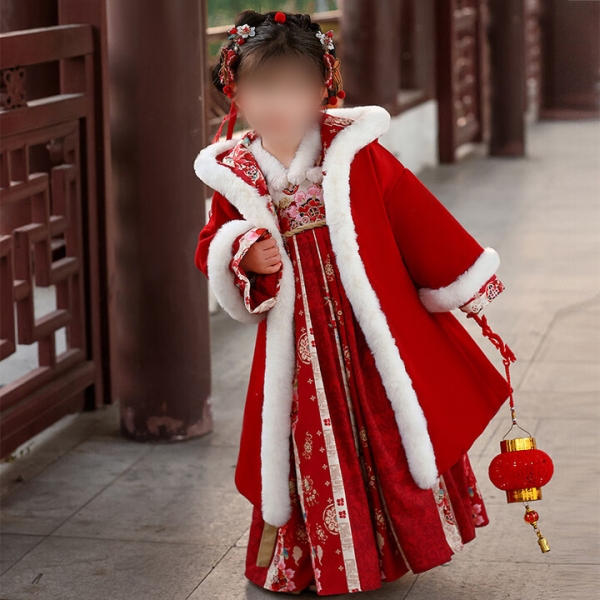
Hanfu (汉服) refers to the pre-Qing dynasty clothing of the Han Chinese and has become a visible cultural revival since the early 2000s. For Chinese New Year, the look is red or red-and-gold, with optional phoenix or cloud embroidery. Hanfu is not the everyday CNY outfit for most modern Chinese families — the Tang suit and cheongsam remain the dominant choices — but hanfu is popular for photoshoots, temple visits, and cultural events during the holiday period.
- Quju: A curved-hem robe with crossed fronts. One of the most recognizable hanfu forms, suitable for festive occasions.
- Shenyi: A one-piece wrap garment that creates a draped silhouette. More elaborate than Quju and often seen at cultural performances.
- Beizi: A jacket-and-skirt combination that offers more flexibility in layering. Practical for cooler weather and easier to wear than a full robe.
- Mass-market hanfu sets: Start around $28–70 (¥200–500) for basic cotton or synthetic sets.
- Mid-tier silk hanfu: Runs $85–170 (¥600–1200) for quality silk with better embroidery and construction.
- Hanfu rental: Many shops in tourist areas offer full hanfu rental with hair styling for $28–55 (¥200–400) per day. This is the most practical option for visitors who want the experience without buying.
Where Tourists Can Buy Traditional Chinese New Year Clothing
Foreign visitors can buy or rent traditional Chinese New Year clothing in three main cities and via online channels. Three price tiers exist: mass-market ready-to-wear, mid-tier silk and brocade, and bespoke tailoring. Bring a passport for tax refunds at department stores. Bargaining is normal at markets and bazaars, but fixed-price boutiques do not expect negotiation.
🎁 Pairing Outfits with Festive Gifts: Wearing new clothes is just one part of the celebration. Discover what items to bring when visiting local hosts in our guide to Chinese New Year Gift Ideas.
Beijing
Beijing has a strong selection of ready-to-wear Tang suits, making it the most accessible city for men looking to buy a traditional outfit. The shopping areas cater to visitors with fixed prices and English-language signage at major venues.
- Wangfujing pedestrian street: Large department stores and smaller traditional boutiques line this central Beijing shopping district. Prices are fixed and staff are accustomed to foreign customers. Best for mid-tier silk and satin Tang suits.
- Qianmen and Dashilan: A heritage shopping street rebuilt in traditional architectural style. It stocks a mix of mass-market and mid-tier pieces. Prices trend lower than Wangfujing, and some bargaining is expected at smaller stalls.
- Panjiayuan antique market area: Some vintage-style and mid-tier traditional pieces can be found here, particularly on weekends. The selection is less consistent than purpose-built shopping streets, but the atmosphere is more local.
Shanghai
Shanghai is the best destination for visitors who want a custom-made cheongsam. The city's fabric market and tailor trade make bespoke tailoring accessible to tourists on a short visit, with reasonable turnaround times.
- Yu Garden Bazaar: Tourist-oriented and convenient, with ready-to-wear Tang suits and cheongsams on display at fixed prices. The quality is solid for the price, but there is limited scope for customization.
- South Bund Fabric Market: The main attraction for custom cheongsam tailoring. Visitors choose their fabric and design, have measurements taken, and return for a fitting one or two days later. A silk custom cheongsam typically costs $280–420 (¥2000–3000).
- Nanjing Road department stores: Mid-tier branded options at fixed prices. Less distinctive than specialty shopping, but reliable for consistent quality.
Hong Kong
Hong Kong is the premium destination for bespoke traditional clothing, particularly cheongsams. The territory's tailoring tradition has produced several specialist houses that serve both local and visiting customers, including walk-in tourists willing to commit to multiple fittings.
- Hollywood Road tailors in Central: Long-established tailors specializing in bespoke cheongsams. Walk-ins are accepted, and most visitors can complete a piece in one to three fittings. A quality silk custom cheongsam runs $420–700+ (¥3000–5000+).
- Tsim Sha Tsui boutiques: Nathan Road and Carnarvon Road have a concentration of ready-to-wear and mid-tier shops with fixed prices. More convenient for visitors not staying in Central.
- Stanley Market: Casual market shopping with some traditional pieces at lower price points. The atmosphere is relaxed and suited to visitors who want to browse without pressure.
Online & Overseas Channels
For visitors who prefer to arrange their outfit before arriving in China, or who want a hanfu experience in a different city, several online channels offer access to traditional clothing.
- Trip.com experience listings: Bundle hanfu or Tang suit rental with a professional photoshoot in cities including Xi'an, Luoyang, and Hangzhou. Packages start around $28–85 (¥200–600) and include the outfit, hair styling, and accessories for the day.
- Klook experience bundles: Similar offerings to Trip.com, with hanfu-rental-with-photoshoot packages in major tourist cities. Price points are comparable and the booking process is foreigner-friendly.
- Etsy and overseas hanfu shops: International shipping is available from specialty retailers. Full silk hanfu sets run $70–170 (¥500–1200). For Chinese New Year delivery, order at least two to three weeks in advance. Note that Taobao and Pinduoduo require a mainland phone number and Alipay or WeChat Pay — most foreign visitors cannot check out directly and would need a shopping agent to access those platforms.
Frequently Asked Questions
Q: What is the traditional clothing for Chinese New Year?
The most common traditional Chinese New Year clothing is the Tang suit — a red or gold jacket-and-trouser set — for men, and the cheongsam (also called qipao) — a form-fitting high-collared dress — for women. Hanfu is a revival option that is popular for photoshoots and cultural events during the holiday.
Q: Can tourists wear a Tang suit or cheongsam if they are not Chinese?
Yes. There is no restriction on who wears Tang suits or cheongsam. Visitors are encouraged to take part in the dress tradition, especially at temple fairs, cultural events, and photoshoots.
Q: Is it okay to wear black or white to Chinese New Year?
Traditionally avoided. Both are mourning colors in Chinese culture. Red is the dominant lucky color, and gold is the wealth accent. For visitors: avoid head-to-toe black or white for family dinners. Small accents such as a watch strap or handbag are generally fine.
Q: How much does a traditional Chinese New Year outfit cost?
Mass-market ready-to-wear costs $28–55 (¥200–400) for Tang suits and $42–140 (¥300–1000) for cheongsams. Mid-tier silk or brocade runs $85–170 (¥600–1200). Bespoke cheongsam tailoring in Hong Kong or Shanghai starts at $280–700+ (¥2000–5000+), depending on fabric and complexity.
Q: Do I need to wear new clothes on every day of Chinese New Year?
No. The tradition of wearing something new applies primarily to Chinese New Year's Day and the family reunion dinner on New Year's Eve. Those two occasions carry the most symbolic weight for the tradition.
Q: Where can I rent a hanfu instead of buying one?
Hanfu rental is common in historic cities — Xi'an, Luoyang, and Hangzhou have the densest clusters of rental shops near old-town and temple areas. Trip.com and Klook both list hanfu-rental-with-photoshoot bundles starting around $28–85 (¥200–600). Rental usually includes the outfit, hair styling, and accessories for the day.
Q: Are Tang suits and hanfu the same thing?
No. Tang suits (唐装) are a 20th-century style inspired by Tang-dynasty dress, designed for modern everyday wear — typically a jacket-and-trouser set. Hanfu (汉服) refers to the broader historical clothing of the Han Chinese across many dynasties before the Qing, with multiple forms such as Quju, Shenyi, and Beizi, and tends to be more elaborate. For most modern Chinese families, Tang suits and cheongsams remain the default Chinese New Year outfits; hanfu is a cultural revival specialty.
Q: What is the difference between cheongsam and qipao?
They refer to the same garment — a form-fitting, high-collared dress with side slits. Qipao (旗袍) is the Mandarin term and more common on the Chinese mainland. Cheongsam (长衫) is the Cantonese term, common in Hong Kong and overseas Chinese communities. The garment is the same regardless of which name is used.