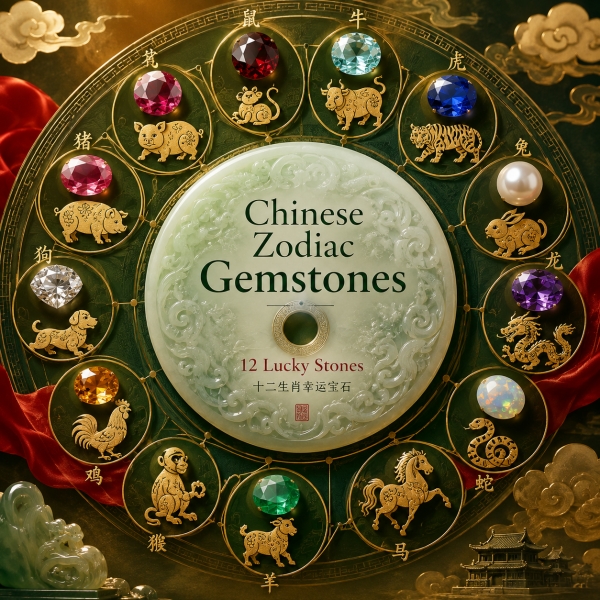
Chinese Zodiac Gemstones
In Chinese cultural practice, each of the 12 zodiac animals is traditionally associated with a specific lucky gemstone. These zodiac gemstones are believed to support balance, focus, and well-being by aligning the wearer's energy with their birth sign — a framework that draws on the same principles as feng shui. Travelers to China frequently encounter zodiac jewelry and carved stone pendants in markets and jade shops, making gemstone shopping a popular activity from Beijing's Panjiayuan to Hong Kong's Jade Hawkers Bazaar. This guide covers the full 12-sign reference chart, the Five Elements layer that shapes stone color choices, where to buy authentic pieces in major Chinese cities, and how to care for your stone once you bring it home.
Quick Facts
🔮 Find Your Personal Animal Sign: Before selecting a gemstone aligned with your birth year and element, calculate your exact sign using our guide on What Is My Chinese Zodiac Sign.
The 12 Chinese Zodiac Signs and Their Gemstones
Use this chart to find your zodiac animal based on your birth year, then read across to its primary lucky gemstone and common alternatives. The zodiac cycle runs in 12-year increments starting from 1924.
How to Read the Chart
Find your zodiac animal by matching your birth year to the 12-year cycle from 1924 onward. The primary stone column shows the most widely cited pairing for each sign. The alternatives column lists stones also commonly associated with that zodiac in feng shui practice. One important note: Chinese New Year typically falls between late January and mid-February, so if you were born in January or February, check the exact Chinese New Year date for your birth year — your zodiac may correspond to the previous year's animal. Multiple stones can be worn together in jewelry if desired.
Traditional Pairings vs Feng Shui Alternatives
The two-column stone listing in the chart reflects two distinct traditions that travelers encounter in the market.
- Traditional chart: One primary stone per zodiac sign, widely cited in Western-facing references and the most common format found on charm bracelets and tourist-market pendants.
- Feng shui practice: Often lists two or three stones per sign, selected based on the sign's element, yin/yang polarity, and the wearer's personal energy profile.
- Common ground: Jade, garnet, amethyst, citrine, and tiger's eye appear in both traditions across multiple signs — these stones have broad appeal regardless of which system a buyer follows.
- Practical takeaway: Pick either system, or combine stones from both lists when purchasing jewelry. The two approaches are complementary rather than contradictory.
🐅 Gemstones for Fiery Zodiac Profiles: Powerful Fire-element signs often pair with red and warm-toned stones like ruby, garnet, and red jasper. Read about these dynamic traits in our profile on the Chinese Zodiac Fire Tiger.
🐉 Discover Fire Dragon Symbolism & Red Stones: The Fire Dragon (火龙) represents intense vitality and imperial power, typically associated with red and orange gemstones. Explore its cultural meaning in Fire Dragon in Chinese.
Why Gemstones Matter in Chinese Belief
-
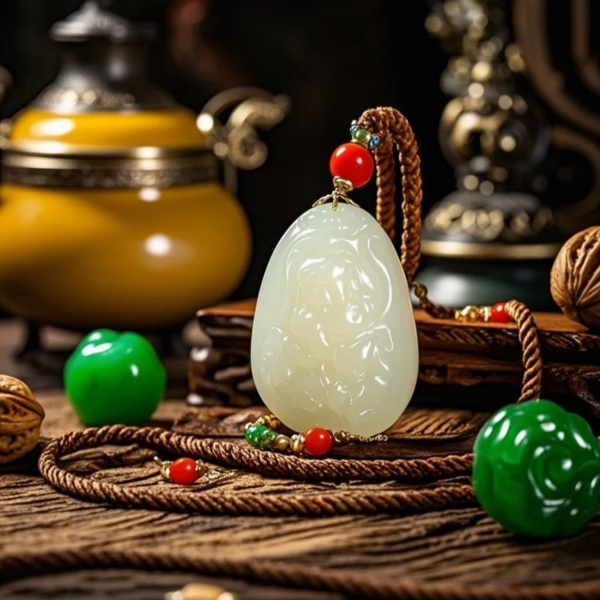

- Jade
-
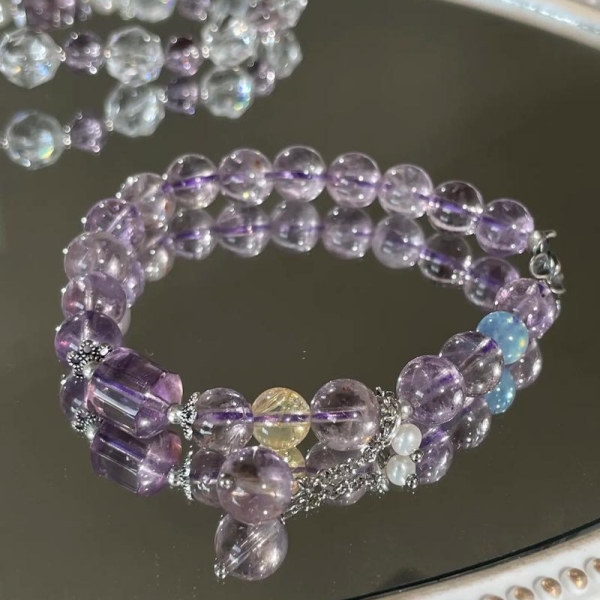
- Amethyst
-
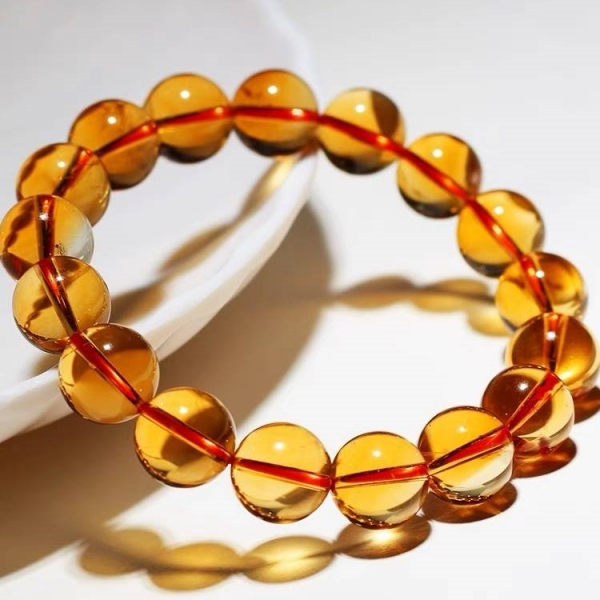
- Citrine
-
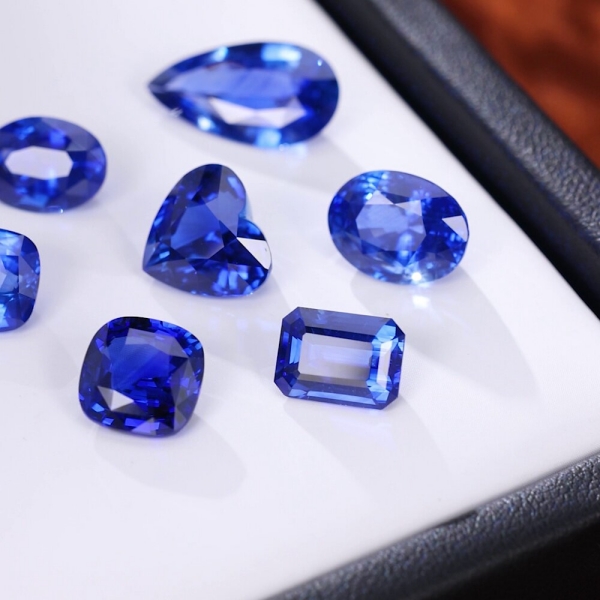
- Sapphire
Jade has been revered in China for over 7,000 years and is widely regarded as the national stone. Gemstones in Chinese culture are tied to balance, protection, and the wearer's elemental harmony — the same logic that underpins feng shui and traditional Chinese medicine. Each material carries a specific energy that interacts with the wearer's birth sign. The practice of pairing zodiac animals with gemstones draws on older Chinese cosmological ideas — the Five Elements, yin/yang, and planetary symbolism — combined with the global birthstone tradition. This synthesis became popular in mainland China in the late 20th century.
Symbolic Meanings of Common Zodiac Stones
Common zodiac stones carry established symbolic meanings in Chinese cultural practice. The chart below shows the most frequently cited associations for stones that appear across multiple zodiac signs.
- Jade: Harmony, protection, good fortune
- Garnet: Vitality, commitment, energy
- Amethyst: Calm, clarity, spiritual focus
- Citrine: Wealth, optimism, career luck
- Sapphire: Wisdom, discipline, loyalty
- Tiger's Eye: Courage, focus, grounding
- Rose Quartz: Love, compassion, emotional balance
- Obsidian: Protection, grounding, insight
Gemstones in Chinese Cultural History
Jade carving dates to the Neolithic Hongshan and Liangzhu cultures, roughly 5000–3000 BCE, making it one of the oldest continuously worked materials in Chinese art. The Silk Road gemstone trade, active from the Han dynasty onward, brought imported materials — sapphire, garnet, turquoise — into Chinese decorative arts and widened the range of stones available beyond jade. The zodiac-gemstone pairings most travelers encounter today are a modern synthesis: they apply the 12-sign framework to the global birthstone tradition, blending traditional cosmology with the jewelry customs familiar to international visitors.
🌳 Understand Wood Element Symbolism: Discover how the Wood element shapes gemstone color pairings and seasonal energies across the 60-year cycle in our breakdown of the Wood Chinese Zodiac.
The Five Elements Behind Your Zodiac Stone
In feng shui, each zodiac sign maps to one of the Five Elements: Wood, Fire, Earth, Metal, or Water. The element shapes which stone colors and materials are considered most supportive for that sign. The element also works as a secondary filter alongside the zodiac stone itself. A Tiger born under the Wood element may find green jade especially resonant, while the zodiac tradition also assigns sapphire as the Tiger's stone — both approaches are valid and can be combined when shopping.
Element-to-Stone Color Mapping
How Element and Zodiac Combine
The element sets the color family; the zodiac sign sets the specific material. A Tiger (Wood) might choose a green stone such as jade for elemental harmony, or a sapphire for zodiac tradition — both are valid. The two layers do not conflict. Visitors buying zodiac jewelry in China can ask vendors to combine both: a green jade pendant for a Wood-element Rat, or a red garnet ring for a Fire-element Horse. Most market vendors understand the distinction and can guide the selection.
Buying Zodiac Gemstones as Souvenirs in China
China's major cities offer a wide range of zodiac gemstone options, from budget bead bracelets to premium Hetian jade carvings. The shopping environment varies significantly between independent market stalls, where bargaining is expected and English is limited, and chain jewelers or department stores, where prices are fixed and staff may speak English. Mobile payments (WeChat Pay, Alipay) are widely accepted but require a mainland-linked account; travelers should carry RMB cash or a foreign-capable card when shopping at independent stalls.
Best Markets and Shops by City
Major Chinese cities have well-established markets and retail districts for zodiac and jade jewelry. Each venue has a distinct atmosphere and pricing style.
- Beijing: Panjiayuan Antique Market (weekend-only, large selection of jade and zodiac carvings, bargaining expected); Liulichang Street (carved stone and cultural crafts, fixed-price shops alongside stalls)
- Shanghai: Yuyuan Bazaar and the surrounding Old City blocks (zodiac pendants, agate, jade); Nanjing Road department-store counters (fixed-price, English-friendly)
- Hong Kong: Jade Hawkers Bazaar in Yau Ma Tei (jade and zodiac jewelry, bargaining expected); chain jewelers in Tsim Sha Tsui (certified pieces, English-speaking staff)
- Guangzhou: Hualin Street jade market (wholesale and retail, large carved selection)
Typical Prices for Zodiac Gemstone Souvenirs
Prices for zodiac gemstone items in China span a wide range depending on stone quality, craftsmanship, and the venue. Market-stall prices are typically negotiable; chain-jeweler and department-store prices are fixed.
- Entry-level bead bracelet: $7–21 (¥50–150)
- Mid-range zodiac pendant: $14–56 (¥100–400) in amethyst, citrine, or garnet
- Carved zodiac-animal pendant in jade: $35–140 (¥250–1,000)
- Multi-stone zodiac bracelet: $21–70 (¥150–500)
- High-grade Hetian or mutton-fat jade piece: $700–2,800 (¥5,000–20,000)
- Gold-accent zodiac jewelry: $140–560 (¥1,000–4,000)
Authenticity and What to Watch For
Jade and carved zodiac pieces vary widely in quality. A few practical checks help ensure a satisfactory purchase. For jade purchases over $140 (¥1,000), request an authenticity certificate from the National Gemstone Testing Center (NGTC) — these offices operate in major cities and can issue certification within one to three days. Ask the vendor to write the stone type, weight, and purchase price on the receipt as a basic safeguard. Treated stones (dyed, heat-treated) are legal to sell but must be labeled as such; inquire if the treatment status is unclear. For zodiac animal carvings, verify that the animal matches your sign — a small relief-carved rat is harder to misidentify than a generic bead.
Caring for Your Zodiac Gemstone
Gemstones require different care depending on their hardness and porosity. A few straightforward practices preserve both appearance and energetic properties. For hard stones such as amethyst and citrine, a monthly sea-salt water soak of 30–60 minutes is common. Softer stones such as jade, pearl, and turquoise clean best with a soft cloth wipe only. Morning sunlight — 15–30 minutes — recharges most stones, though amethyst should be kept out of direct sun to prevent fading. Full-moon exposure is a traditional feng shui practice cited in the cultural literature. Cracked stones are generally considered ineffective in feng shui practice and should be replaced rather than continued in use.
Cleansing and Activation
Different stone types call for different cleansing methods. Choose the approach that matches the hardness and porosity of your specific piece.
- Sea-salt water soak: Suitable for hard stones such as amethyst, citrine, garnet, ruby — soak for 30–60 minutes monthly; rinse with clean water afterward
- Soft cloth wipe: Preferred for jade, pearl, turquoise, and moonstone — no soaking; wipe gently after each wear
- Morning-sunlight recharge: 15–30 minutes of gentle morning sun for all stones except amethyst, which fades under direct UV
- Full-moon exposure: A traditional feng shui practice — place the stone outdoors or on a windowsill during a full moon; not required but commonly followed
- Never use: Ultrasonic cleaners on cracked or porous stones; chemical jewelry dips on jade, turquoise, or pearl
Wearing and Storing Your Stone
Proper daily handling extends the life of zodiac gemstone jewelry. Five practical tips cover the most common care situations.
- Store individually: Keep each piece in a soft pouch or lined jewelry box to prevent scratching — harder stones will abrade softer ones if stored together
- Remove before water exposure: Take off zodiac jewelry before swimming, bathing, or household cleaning; porous stones such as turquoise are particularly sensitive to chlorine and soaps
- Apply products first: Put jewelry on after using lotions, perfumes, or hair products to avoid residue buildup on the stone surface
- Wipe after wearing: A soft cloth pass after each use removes body oils and maintains luster
- Restring stringed bracelets: If worn daily, have bracelets restrung every one to two years to prevent cord wear and breakage
Frequently Asked Questions
Q: Which gemstone is lucky for the Year of the Dog?
Diamond is the most widely cited primary stone for the Dog in the traditional 12-sign chart. Feng shui practice also commonly lists garnet (for resilience) and fluorite (for emotional stability). Wear any of these in jewelry, especially on the right hand according to traditional placement advice.
Q: What gemstone is linked to the Snake in the Chinese zodiac?
Opal is the traditional 1:1 pairing for the Snake; feng shui practice also commonly lists red tiger's eye (protection) and garnet (romance). Snake years in the recent cycle include 1989, 2001, 2013, and 2025.
Q: Are Chinese zodiac gemstones the same as Western birthstones?
No — the two systems differ in their basis. Western birthstones are mapped to calendar months; Chinese zodiac gemstones are mapped to the 12 animal signs of the birth year. Some overlap exists — garnet, pearl, ruby, and emerald appear in both — but most pairings are distinct.
Q: Where can I buy zodiac gemstone jewelry in China?
Best-known options include Beijing's Panjiayuan Antique Market and Liulichang Street, Shanghai's Yuyuan Bazaar and Nanjing Road jewelers, Hong Kong's Jade Hawkers Bazaar in Yau Ma Tei, and Guangzhou's Hualin Street jade market. Department stores and chain jewelers offer fixed prices and English-speaking staff; independent market stalls require bargaining and may have limited English.
Q: How much does zodiac gemstone jewelry cost in China?
Entry-level zodiac bracelets start around $7–21 (¥50–150); carved zodiac-animal pendants run $35–140 (¥250–1,000); multi-stone pieces $21–70 (¥150–500); premium jade pieces can reach $700–2,800 (¥5,000–20,000). Market-stall prices are negotiable; chain-jeweler prices are fixed.
Q: Do zodiac gemstones really work?
In Chinese cultural practice, zodiac gemstones are believed to support balance, focus, and well-being by aligning the wearer's energy with their birth sign — the same framework as feng shui. Whether you take the metaphysical claim literally or not, zodiac stones represent a meaningful cultural tradition and a popular gift category.
Q: How do I cleanse or activate my zodiac gemstone?
Standard methods include a monthly sea-salt water soak for hard stones (amethyst, citrine, garnet), a soft cloth wipe for softer stones (jade, pearl, turquoise), and brief morning-sunlight recharge for 15–30 minutes. Full-moon exposure is a traditional feng shui practice cited in the cultural literature. Avoid chemical cleaners and ultrasonic baths on any of these stones.
Q: Which zodiac gemstone is best for attracting wealth?
Citrine (Monkey, Rooster) and jade (Ox, Dragon, Monkey, Pig) are the stones most frequently cited in feng shui practice for wealth energy. Green jade is considered a broad prosperity stone; citrine is associated with business and career luck.