Fire Dragon in Chinese
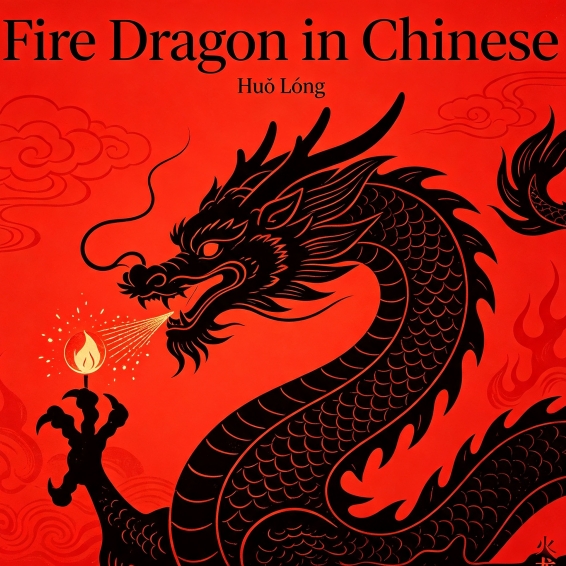
Among the most visually dramatic figures in Chinese ceremonial tradition, the fire dragon combines two of the culture's most potent symbols. The character 火 (huǒ) means fire, while 龙 (lóng) is dragon — together, 火龙 carries both the raw energy of flame and the imperial authority of the serpentine creature that has represented Chinese power for millennia. Whether encountered as a living ritual during the Mid-Autumn Festival, as a zodiac year tied to a 60-year celestial cycle, or as imagery woven into temple architecture, the fire dragon offers foreign visitors one of the most immediately recognizable and deeply rooted expressions of Chinese cultural identity.
Understanding 火龙 opens doors to several layers of Chinese life simultaneously. It explains why certain festival performances draw thousands of spectators, why a Dragon-year birth is considered especially auspicious, and why fire and dragon motifs appear together on imperial rank badges and modern Lunar New Year decorations alike. This article covers the linguistic basics, zodiac personality, mythology context, and — most practically for travelers — the major festivals where the fire dragon dance can be witnessed in person.
Quick Facts
How to Say and Write Fire Dragon in Chinese
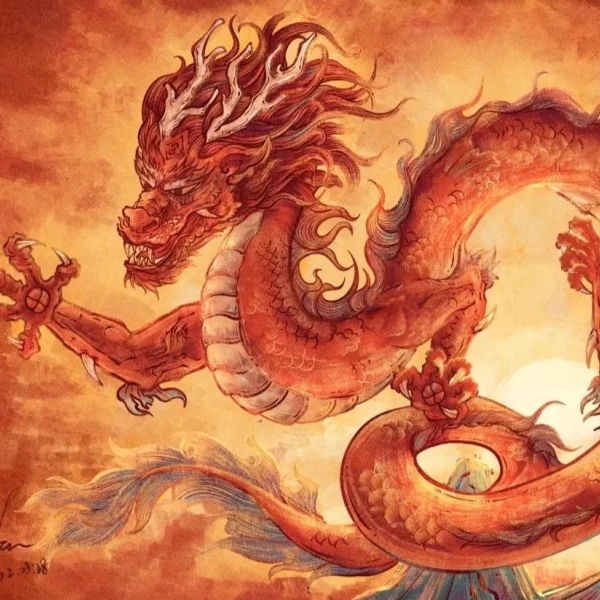
Fire Dragon
The two characters that form 火龙 are straightforward in structure but carry layers of cultural weight. 火 (huǒ) — fire — contains four strokes and resembles flames rising from a base. 龙 (lóng) — dragon — is five strokes in simplified form, sixteen in traditional (火龍). The pair is written left to right and reads top to bottom, following standard Chinese character order. For travelers encountering 火龙 on festival signage, temple banners, or zodiac calendars, this pairing is the consistent marker across both simplified and traditional writing systems.
- 火龙舞: fire dragon dance — the full ceremonial performance term
- 火龙灯: fire dragon lantern — lantern displays incorporating dragon forms with fire elements
- 舞火龙: to perform the fire dragon — verb phrase used when describing the act of dancing the dragon
- 火龙年: Fire Dragon year — the zodiac year governed by the Fire element
- 火龙果: dragon fruit — pitaya, a tropical fruit; same characters as fire dragon but completely unrelated meaning
Pronunciation and Pinyin
The Pinyin for 火龙 is Huǒ Lóng, with the third tone (falling-rising) on the first syllable and the second tone (rising) on the second. The most common learner error involves drifting toward "huǒ lòng" (fourth tone on the second syllable) or "huò lóng" (fourth tone on the first). Listening to native Mandarin recordings and practicing the tone contour carefully — descending then rising on huǒ, a clear rise on lóng — produces an immediately recognizable improvement in pronunciation quality.
In the Cantonese-speaking context of Hong Kong, where the Tai Hang Fire Dragon Dance takes place, the same characters are read "fo lúng." Visitors attending the Hong Kong festival will hear this Cantonese pronunciation used alongside Mandarin references in bilingual signage.
🐉 Sacred Palette & Symbolism: Learn how yellow, red, azure, white, and black dragons represent elements, directions, and virtues across Chinese history in What Color Are Dragons?
Common Chinese Phrases with Fire Dragon
Beyond the standalone term, several compound phrases place 火龙 into everyday cultural contexts. These are the combinations most likely to appear in signage, media, and conversation during a visit to China or Hong Kong. Understanding them prevents the single most common source of confusion: the false friend between 火龙 (fire dragon) and 火龙果 (dragon fruit). Despite sharing the same two characters, the fruit term refers exclusively to pitaya, a cactus fruit with a scaly exterior. The two usages have no etymological connection, and context alone — or a glance at the radical — distinguishes them reliably.
🐉 Calculate Your Lunar Zodiac Sign: Before determining how dragon years align with your birth profile, confirm your lunar sign using What Is My Chinese Zodiac Sign.
Fire Dragon in the Chinese Zodiac
The Chinese zodiac operates on a 60-year cycle governed by the Wu Xing, or Five Elements system. Rather than twelve signs repeating indefinitely, each animal is paired with one of five elements — Wood, Fire, Water, Metal, and Earth — producing a 60-year rotation before any animal-element combination recurs. The Dragon appears once in this cycle every twelve years, and the Fire Dragon specifically surfaces approximately once every sixty years. Understanding this structure clarifies why Dragon years feel particularly significant in Chinese culture: the animal carries innate associations with power, fortune, and auspiciousness, and when the Fire element is added, the result is considered the most energetic and outwardly magnetic of the five Dragon variants.
The 1976 Fire Dragon Year
The most recent Fire Dragon year ran from January 31, 1976, through February 17, 1977. Individuals born during this period carry the Dragon's characteristic ambition and charisma alongside the Fire element's intensity and directness. The 1976 cohort has recently entered mid-adulthood, and cultural retrospectives on their zodiac year have appeared in Chinese media with some regularity. The next Fire Dragon year falls in 2036, placing it within reach for forward-looking travel planning. The year range itself follows the lunar calendar precisely, meaning Dragon-year births are tied to the Chinese lunar new year rather than the Gregorian calendar shift.
Fire Dragon Personality and Compatibility
Fire Dragon individuals are typically confident, talkative, and natural leaders. They approach goals with energy and expect the same intensity from others, which can read as demanding in close relationships. Their strengths include charisma, a strong work ethic, and an ability to inspire others during periods of uncertainty. On the weaker side, they may be short-tempered, blunt in ways that alienate more diplomatic personalities, and prone to sharing ambitions before they are fully formed.
In matters of zodiac compatibility, the Fire Dragon aligns most harmoniously with the Rooster, Rat, and Monkey. These pairings benefit from mutual respect for ambition and a shared comfort with direct communication. The Dog, by contrast, tends to clash with the Dragon's need for dominance and rapid decision-making, producing friction that both signs find exhausting over time.
🐉 Explore Other Elemental Dragon Years: Discover how different Wu Xing elements shape the dragon personality across 60-year cycles in our breakdown of 1928 & 1988 Earth Dragons: A Classic in the Chinese Lunar Zodiac.
Fire Dragon in Chinese Mythology and Symbolism
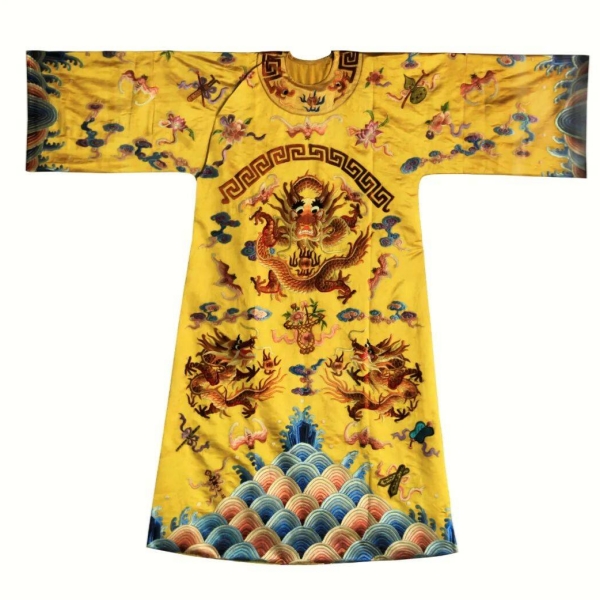
Imperial Dragon Robe
The fire dragon occupies a distinctive position within the broader taxonomy of Chinese cosmological symbols. The dragon itself — long, serpentine, and often depicted with scales and flames — is one of the Four Symbols (四象) alongside the phoenix, turtle, and qilin, representing the cardinal directions and seasonal cycles. However, it was the fusion of the dragon's imperial associations with fire's yang energy that produced the fire dragon as a distinct cultural figure. In this combined form, the fire dragon represents not merely power but transformative power — the force behind seasonal renewal, harvest abundance, and the energy that drives prosperity forward. This symbolism makes it a natural fit for festivals that mark transitions, particularly the Lunar New Year and Mid-Autumn Festival.
- Fire ↔ Red: the color most associated with fire appears throughout Chinese ceremonial decoration during fire dragon events
- Fire ↔ South: the cardinal direction paired with fire in Wu Xing cosmology; southern-facing temples and buildings often incorporate fire dragon motifs
- Fire ↔ Summer: the season linked to fire's expansive, outward energy; fire dragon dances peak in late summer and early autumn
- Fire ↔ Yang: fire represents pure yang energy — active, warming, and outwardly projecting; fire dragon rituals are deliberately performed at night to maximize the yang-yin contrast
Imperial Dragon and Fire Imagery
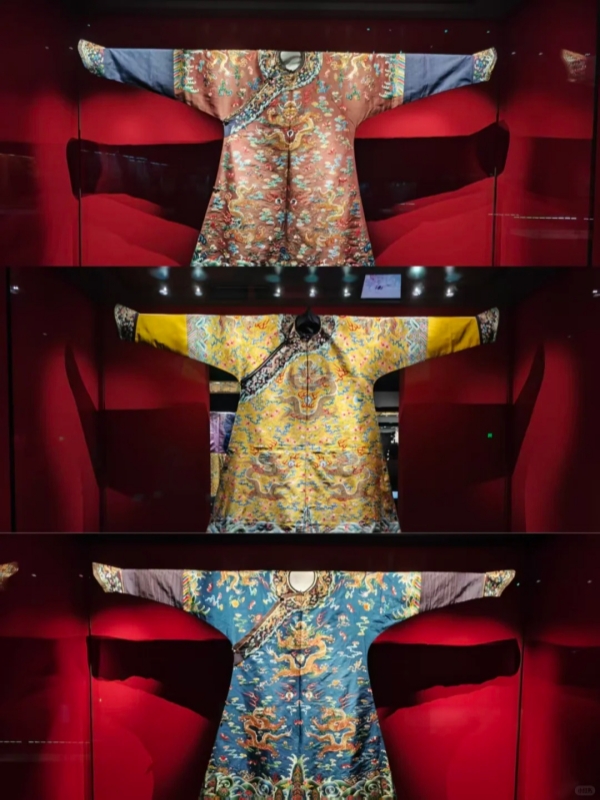
The dragon's most formalized expression in Chinese culture appears on the buzi rank badges used during the Ming and Qing dynasties to indicate civil and military rank. The five-clawed dragon was reserved exclusively for the emperor; lower ranks used four-clawed or three-clawed variants. On these badges, the dragon was frequently paired with the fire pearl (火珠), a circular motif representing the dragon's spiritual counterpart. The fire pearl imagery — a flaming orb held in the dragon's claws or positioned before its snout — established the visual language of the fire dragon long before it appeared as a street festival figure. The Pacific Asia Museum's collection of Ming-era rank badges provides documentary evidence of this imperial fusion between serpentine authority and fire symbolism, and similar specimens appear in major auction house catalogues.
Fire as a Cultural Element
Within the Wu Xing framework that underpins much of Chinese philosophical and practical thinking, Fire occupies a specific relational position. It generates Earth (fire produces ash), conquers Metal (fire melts metal), is itself conquered by Water (water extinguishes fire), and is generated by Wood (wood fuels fire). This relational matrix means fire is never isolated — it acts upon other elements and is acted upon in turn, a dynamic that mirrors the fire dragon's festival role as both transformative and responsive to the surrounding community. The vermilion bird (朱雀), a mythical fire-bird, serves as Fire's creature counterpart in the Four Symbols system, and travelers will notice fire bird and fire dragon imagery appearing together in southern Chinese temple architecture, particularly in Guangdong and Fujian provinces.
🐵 Compare Water vs. Fire Elemental Signs: Discover how fluid Water energy balances fiery zodiac profiles in our complete breakdown of the Water Monkey Chinese Zodiac (1992).
Fire Dragon Dances and Festivals Tourists Can See
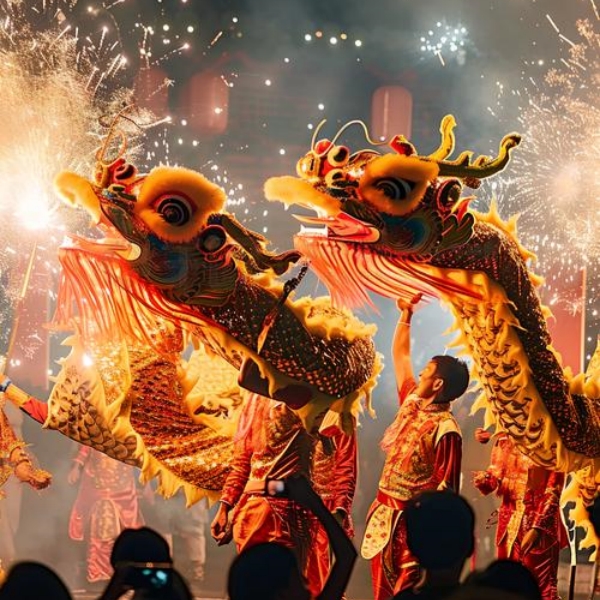
The Fire Dragon Dances
For foreign visitors, the fire dragon is most immediately accessible as a living performance rather than a historical symbol. Three major festival venues offer reliable annual opportunities to witness fire dragon dances in culturally authentic settings, each with distinct characteristics that reflect regional performance traditions.
- Hong Kong Tai Hang Fire Dragon Dance: Mid-Autumn Festival (14th–16th day of the 8th lunar month); free public street event; approximately 67 meters long with over 30,000 burning incense sticks; 300 performers per session
- Beijing Ditan Temple Fair: Spring Festival (Chinese New Year period); admission about $2–4 (¥10–30); daily dragon and lion dance performances; English signage at major temple fairs
- Foshan Ancestral Temple, Guangdong: Lunar New Year and major holidays; admission about $4–7 (¥25–50); Foshan recognized as a national hometown of dragon-lion dance tradition; year-round performances available near Lingnan Pearl Workmanship Museum
Hong Kong Tai Hang Fire Dragon Dance
The Tai Hang Fire Dragon Dance (大坑舞火龙) in Hong Kong's Causeway Bay district stands as the premier expression of living fire dragon tradition. Held across three consecutive nights during the Mid-Autumn Festival, the performance draws participants from the local Tai Hang community who have maintained the practice since the 1880s. The dragon itself stretches approximately 67 meters and requires coordinated teamwork among roughly 300 performers, who pass it hand-over-hand along the route through the neighborhood's narrow streets.
The defining visual element is the incense. Over 30,000 burning incense sticks are inserted into the dragon's bamboo-and-rattan frame before the procession begins, creating a moving constellation of sparks and ash. The effect is both ceremonial and visually extraordinary, particularly when the dragon moves through the tight alleyways of Tai Hang with sparks trailing behind. The Hong Kong government added the Tai Hang Fire Dragon Dance to the national intangible cultural heritage list in 2011, and the performance has appeared on UNESCO-level cultural documentation lists. Attendance is free, and the event draws significant local and tourist crowds — arriving early on the first night is advisable for anyone who prefers space to watch.
Beijing Temple Fair Dragon Performances
During the Spring Festival, Beijing's temple fairs offer some of the most accessible dragon dance performances on the mainland. The Ditan (Temple of Earth) Park fair is among the most established, with daily dragon and lion dance shows running throughout the holiday period. Admission costs about $2–4 (¥10–30), making it one of the most affordable cultural events in the city during peak season.
- Entry fee: approximately $2–4 (¥10–30) at Ditan Park; check Trip.com or Klook for advance booking during peak Spring Festival days
- Language accessibility: major temple fairs like Ditan and Longtan Lake have English signage and occasionally English-language performance narration during official events
- Peak times: the first three days of the lunar new year see the highest attendance; the Dragon and Lion Dance finals on the third day are particularly well-attended
Foshan and Guangdong Dragon Traditions
Foshan in Guangdong Province holds official recognition as a national hometown of dragon-lion dance, a designation that reflects the region's deep-rooted performance traditions and its role in training performers who go on to compete nationally. The Foshan Ancestral Temple (Foshan Zongmiao) provides both a historical venue and a practical performance schedule during major holidays, with entry around $4–7 (¥25–50) depending on the season. The Foshan-style fire dragon form incorporates bundled incense along the spine of the dragon, creating a segmented glow that distinguishes it from Hong Kong's continuous-spark approach.
Beyond the Ancestral Temple, the Lingnan Pearl Workmanship Museum area hosts year-round demonstrations of dragon craft — including the construction of dragon frames, the preparation of incense bundles, and the making of scales and scales-and-fire ornamentation. For travelers interested in the material culture behind the performance, these demonstrations offer context that the festival performance alone does not provide.
🐐 Look Ahead in the Lunar Calendar Cycle: As celestial years transition following peak Dragon and Horse cycles, prepare for future zodiac shifts in our guide to the Chinese New Year 2027 Animal.
Fire Dragon vs. Other Element Dragons
The Dragon zodiac sign cycles through all five Wu Xing elements, producing a distinct personality profile and elemental association for each sixty-year appearance. Comparing the five Dragon types reveals how the Fire Dragon's characteristics differ from its elemental siblings.
🐉 Mythological Differences & Features: Compare toe counts, regional symbolism, facial characteristics, and historical evolutions across East Asia in our guide to Chinese vs Japanese Dragon.
Frequently Asked Questions
Q: How do you say fire dragon in Chinese?
The term is 火龙 in simplified characters or 火龍 in traditional form. Pinyin pronunciation is Huǒ Lóng — third tone on ǒ (huǒ), second tone on lóng. In Cantonese, as used in Hong Kong's Tai Hang Fire Dragon Dance context, the same characters read "fo lúng."
Q: How do you write fire dragon in Chinese characters?
Fire is 火 (four strokes). Dragon is 龙 in simplified form (five strokes) or 龍 in traditional form (sixteen strokes). The complete 火龙 is written left to right, with the fire radical on the left and the dragon character on the right.
Q: What is a fire dragon in the Chinese zodiac?
A Fire Dragon is one of five elemental variants of the Dragon zodiac sign, determined by the Wu Xing (Five Elements) cycle. The Fire Dragon appears in years governed by the Fire element within the 60-year cycle. The most recent Fire Dragon year ran from January 31, 1976, through February 17, 1977, and the next falls in 2036.
Q: When is the next Fire Dragon year?
The next Fire Dragon year begins in 2036. It follows the 60-year Wu Xing cycle, which means any specific Dragon-year element repeats at sixty-year intervals. The previous Fire Dragon year was 1976.
Q: Is 火龙 the same as 火龙果 (dragon fruit)?
No. The characters 火龙 on their own refer to the fire dragon — a mythological and zodiacal figure. The term 火龙果 (dragon fruit) refers to pitaya, a tropical cactus fruit. Despite sharing the same two characters, the two terms are entirely unrelated and appear in completely different contexts.
Q: What does the fire dragon symbolize in Chinese culture?
The fire dragon combines the dragon's traditional associations with imperial authority, fortune, and auspiciousness with the Fire element's qualities of yang energy, south, red, and summer. It appears in festivals marking renewal and transition — particularly Lunar New Year, temple fairs, and the Mid-Autumn Festival — as a symbol of transformative vitality and collective prosperity.
Q: Where can visitors see a fire dragon dance in China?
Three primary venues offer reliable annual fire dragon dance performances. Hong Kong's Tai Hang district hosts the Tai Hang Fire Dragon Dance during the Mid-Autumn Festival, free of charge. Beijing's Ditan Temple Fair presents dragon and lion dances during the Spring Festival, with entry about $2–4 (¥10–30). Foshan's Ancestral Temple in Guangdong features dragon-lion dance performances during Lunar New Year and major holidays, with admission around $4–7 (¥25–50). Multiple smaller venues offer performances during the Lantern Festival across southern China.
Q: What does dreaming of a fire dragon mean in Chinese culture?
In traditional Chinese dream interpretation, a fire dragon is read as a yang-on-yang symbol — an exceptionally strong positive sign associated with incoming fortune, a significant life change, or the presence of a powerful ally. Interpretations vary across regional folk traditions, and no single fixed meaning applies universally. The dream is generally regarded as auspicious rather than ominous.