China Largest Mountains
China contains the world's largest concentration of high mountains. The Tibetan Plateau and its surrounding ranges hold most of the planet's peaks above 7,000 meters, drawing foreign visitors from more than 40 countries every year. These peaks are not just high — they shape weather systems, drain major rivers, and anchor sacred landscapes across four religions. Understanding which is China's largest mountain depends entirely on how you measure it, and for visitors the more practical question is which peaks you can actually reach without a mountaineering expedition.
This guide ranks 12 of China's biggest mountains by elevation, explains why prominence and area produce very different lists, and covers everything from Tibet travel permits to the best seasons for visiting each peak. The rankings focus on peaks that sit at least partly within Chinese-administered territory, with details on which are drive-in, which require treks, and which are closed to climbing entirely.
Quick Facts
What Makes a Mountain China's "Largest"?
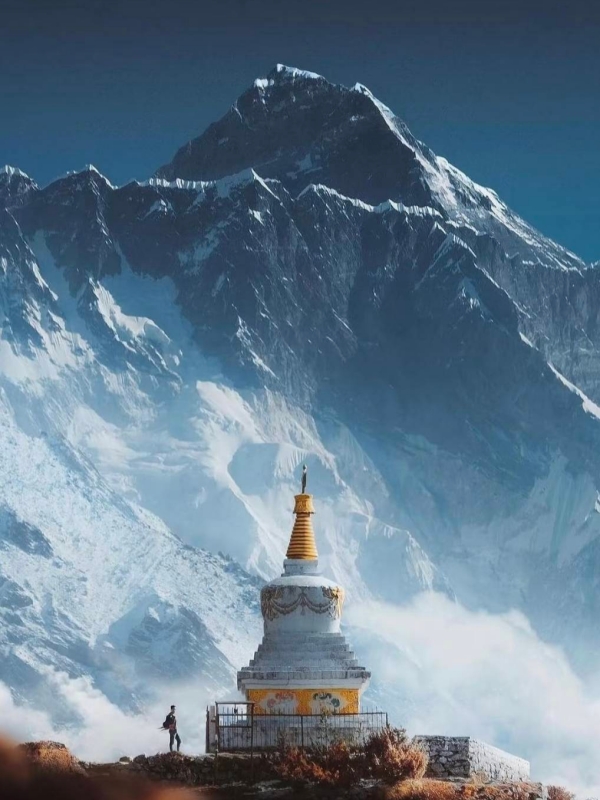
Mount Everest (Chinese Highest Mountain)
The word "largest" seems straightforward until you apply it to mountains. Three separate measures produce three different winners, and most visitors are asking about elevation without realizing that climbers and geographers mean something quite different when they rank peaks by prominence or area.
The article ranks mountains by elevation above sea level, which is what travelers most often want to know. However, the prominence and area rankings below are essential context — they change the list significantly.
- Elevation: The peak's height above sea level. Mount Everest tops this measure at 8,848 m / 29,032 ft.
- Prominence: How much the peak rises from the lowest contour line connecting it to a higher summit. Namcha Barwa outranks Everest here, with a rise of 4,105 m from its surrounding valleys.
- Area: The physical footprint or mass of the mountain itself. Tianshan wins on this measure, a 2,500-km chain covering the largest area of any range inside China.
Elevation vs. Prominence vs. Area
Elevation is the standard measure for "tallest" and the one most geographic rankings use. Prominence, however, is how geographers decide whether a peak is a mountain in its own right or a sub-peak of a higher neighbor. By that measure, Namcha Barwa (7,782 m) — which rises 4,105 m from its surrounding valleys — actually stands taller above its landscape than Everest does above its own base. For visitors, this distinction matters because Namcha Barwa is far harder to reach than Everest's base camp, which is reachable by paved road. The "biggest" question does not have a single answer; it depends on which dimension you value.
Where Mountain Ranges Fit In
Ranges compete for "largest" in their own right, separate from individual peaks. Three ranges dominate the conversation:
- Himalayas: Home to the highest absolute peaks — 70+ peaks above 7,000 m straddle the China-Nepal and China-India borders on the Tibetan Plateau. Most visitors asking about China's largest mountains mean the Himalayas.
- Kunlun Mountains: The longest mountain chain entirely within China, running roughly 3,000 km along the northern edge of the plateau. They contain no 8,000ers but anchor the northern boundary of the Tibetan Plateau.
- Tianshan: Covers the largest area of any range in China, stretching approximately 2,500 km across Xinjiang. Some sections are accessible from Kashgar as a travel base.
🏔️ Explore Southwestern Mountain Ranges: Below the Tibetan Plateau, neighboring provinces offer stunning snow-capped massifs and deep alpine valleys that are easily accessible to travelers. Discover top routes in our guide to Mountains in Yunnan.
The 12 Tallest Mountains in China
Mount Everest: Reaching the North Side
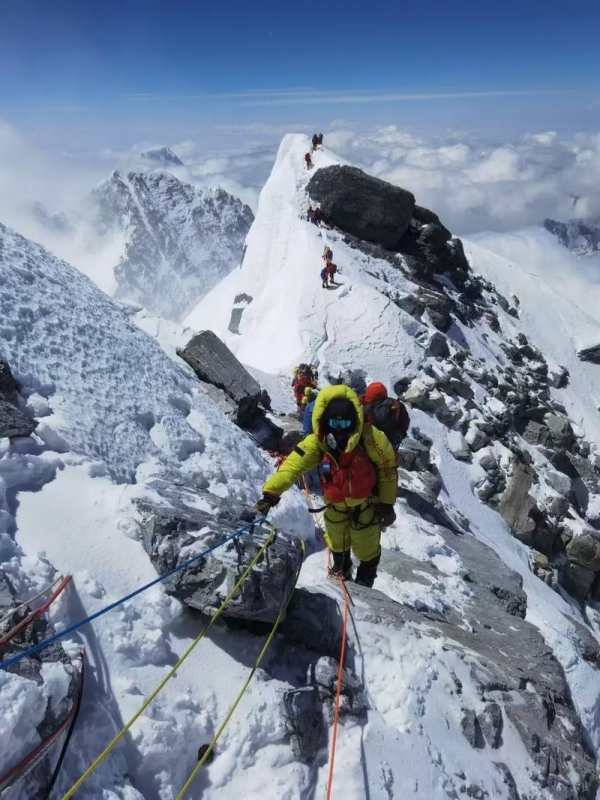
Mount Everest (Chinese Highest Mountain)
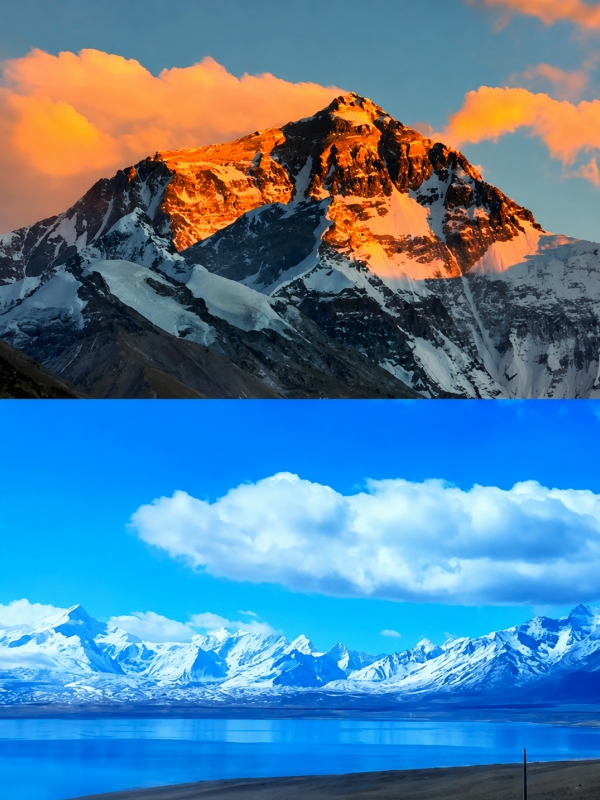
Mount Everest (8,848 m / 29,032 ft) sits on the China-Nepal border, with its north face and summit ridge falling within Xizang. The north side is notably more accessible to non-climbers than the Nepalese south side — a paved road runs from Lhasa through Shigatse all the way to the Rongbuk Monastery and Everest Base Camp at 5,200 m. Standing at base camp puts you in sight of the world's highest summit without any climbing gear.
Foreign visitors need three things before they can reach Everest's north base camp. First, a standard Chinese tourist visa. Second, a Tibet Travel Permit with an admin fee of about $50 (¥350) issued through a licensed tour operator. Third, a booked tour package — the most common is a 5-day overland route from Lhasa to base camp and back, available from about $700–1,500 (¥5,000–11,000) per person depending on group size and accommodation tier. Self-drive travel is not permitted in Xizang; a guide and vehicle are mandatory.
The summit itself remains closed to anyone without a full commercial expedition. Those climbs require 6–8 weeks, costs of $50,000 or more, and months of acclimatization. For most visitors, the north base camp viewing platform at 5,200 m is as close as it gets — and that view, with the world's largest mountain rising above a high-altitude Buddhist monastery, is remarkable by any measure.
Mount Gongga and Muztagh Ata: Climbable High Peaks
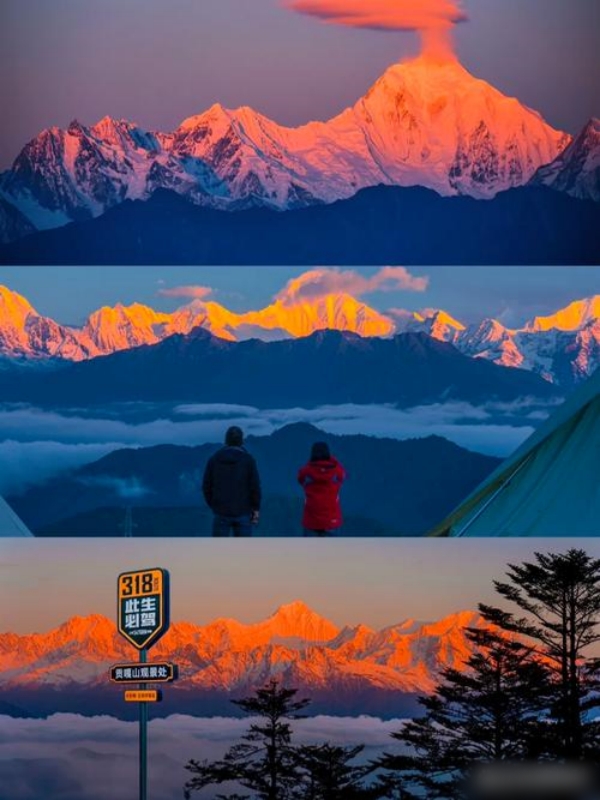
Mount Gongga
Of the twelve peaks above 7,500 m in China, only two are genuinely accessible to visitors without joining a multi-week expedition. Mount Gongga offers high-altitude scenery without climbing; Muztagh Ata offers actual mountaineering within reach of fit non-specialists.
Mount Gongga (7,556 m / 24,790 ft) rises in Sichuan as the easternmost 7,000-meter peak on Earth. It sits inside Hailuogou Glacier Forest Park, which charges an entry ticket of about $28 (¥198) per person. Visitors do not climb the summit — instead, a sightseeing cable car carries them to approximately 3,600 m, where they walk on the glacier and look up at the peak's north face. The park is fully accessible by road from Kangding, making Gongga the most practical high mountain experience in China for travelers without climbing skills.
Across the country in Xinjiang, Muztagh Ata (7,546 m / 24,757 ft) on the Pamir plateau is promoted by licensed operators as the most accessible 7,500 m+ summit for climbers without prior 8,000-m experience. Commercial expeditions typically depart Kashgar and run 14–21 days, including a 14-day acclimatization cycle on the mountain itself. The total cost for a guided climb runs about $3,500–5,000 (¥25,000–36,000) per person. The label "easiest" should not be taken lightly — the route crosses glaciers above 5,000 m, temperatures plunge well below freezing at night, and altitude sickness affects most climbers above 4,500 m. Kongur Tagh, another Pamir peak near Muztagh Ata, offers similar high-altitude terrain but with more technical climbing requirements.
- Gongga cable car: Non-climbers can reach ~3,600 m and view the glacier and summit face from a scenic park accessible by road from Kangding.
- Muztagh Ata climb: Commercial expeditions make the summit achievable for fit trekkers with proper acclimatization, departing Kashgar.
- Kongur Tagh alternative: A nearby Pamir peak offering comparable altitude and scenery with more technical demands.
⛩️ Discover Sacred Summits & Cultural Hubs: Beyond their sheer geographic elevation, many of China's most famous ranges serve as sacred sites deeply tied to ancient philosophy and religion. Learn more in our guide to Holy Cities of Daoism.
Mount Kailash and Other Sacred Peaks
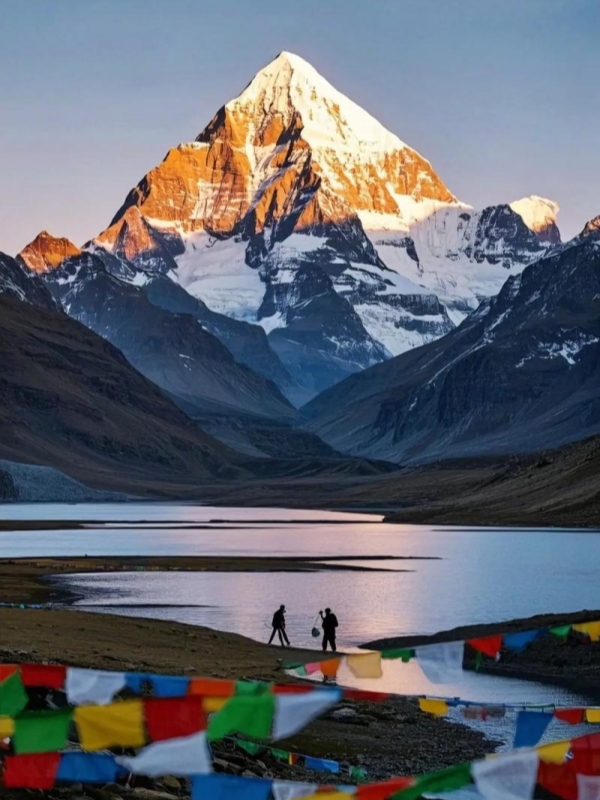
The Mount Kailash
Mount Kailash (Gang Rinpoche, 6,638 m / 21,778 ft) stands in far western Xizang near the Nepalese border. It is sacred to Buddhism, Hinduism, Jainism, and Bon — a combination of faiths that has kept the summit closed to climbers for decades, protected by Chinese regulations recognizing the mountain's religious significance. Instead of climbing, pilgrims circumnavigate the peak on the kora, a 52-km trail that typically takes three days at altitudes between 4,600 m and 5,600 m. The pilgrim permit costs roughly $50 (¥350) and is arranged through tour operators.
Two other major peaks follow the same pattern. Meili Snow Mountain (Kawagebo, 6,740 m) in Yunnan has been closed to climbing since 2003 following a disputed expedition. Mount Amnye Machen in Qinghai holds equal sacred status in Tibetan Buddhism and remains unclimbed. In each case, the path to experiencing these mountains runs through organized pilgrimage rather than mountaineering — the kora and walking routes bring you to the mountain's flanks at close range.
⛰️ Overview of China's Top Peaks: Whether you are looking for drive-in viewpoints, high-altitude trekking routes, or iconic granite summits across the country, explore our guide to Mt in China.
How to Plan a Visit to China's Biggest Mountains
Reaching China's highest peaks requires more preparation than a typical domestic trip. Permits, seasonal access windows, and the requirement to travel with licensed operators in restricted regions all shape what is feasible for foreign visitors. The planning sections below cover the essentials.
Permits and Access Rules
Four permit types gate most of China's major mountain regions. Each has its own issuing authority, cost, and validity period, and all must be arranged before arrival in the region.
- Tibet Travel Permit: Required for all foreign visitors to Xizang, admin fee ~$50 (¥350), issued through a licensed Chinese tour operator before entering the region.
- Alien's Travel Permit: Required for each restricted zone within Xizang and Xinjiang, fee ~$7 (¥50) per region, issued locally by thePSB.
- Border Area Pass: Required for the Pamir plateau region in western Xinjiang, fee ~$20 (¥140), obtainable in Kashgar through licensed operators.
- Mount Kailash Pilgrim Permit: A separate religious-access permit for the kora trail, fee ~$50 (¥350), arranged by tour operators with a minimum group size.
Foreign visitors cannot self-drive in Xizang or most of Xinjiang. A licensed Chinese tour operator must arrange transport and a registered guide for all restricted regions.
Best Seasons and Crowds
High-altitude mountain access in China follows a narrow seasonal window. Most roads above 4,000 m close between November and March due to snow. The optimal periods are April–May and September–October, when weather is most stable and temperatures are relatively mild. Summer (June–August) brings the monsoon to the eastern Himalayas and Yunnan, creating landslide risks and leech infestations on trails below 3,000 m. For each major destination, the access window varies slightly.
- Everest (Xizang): April–May and September–October. October offers clearer skies; April-May brings more stable temperatures.
- Gongga / Sichuan: April–June and September–November. Summer months can bring heavy rain and landslides on mountain roads.
- Muztagh Ata / Pamir (Xinjiang): June–September. The Karakoram Highway is passable; earlier months risk road closures from spring snowfall.
- Mount Kailash (Xizang): May–October. The kora trail is snow-free and the pilgrim permit is issued only in this window.
Costs, Tours, and What to Pack
Total trip costs vary widely depending on destination, group size, and accommodation level. A 7-day guided tour from Lhasa to Everest Base Camp runs about $700–1,500 (¥5,000–11,000) per person in a group of 4–6. A Muztagh Ata climbing expedition costs $3,500–5,000 (¥25,000–36,000) per person, including guides, base camp logistics, and equipment sharing. Prices are per person and drop significantly for larger groups.
Packing for high-altitude China requires prioritizing cold weather gear and altitude-related essentials over typical travel items.
- Down jacket (–20 °C capable): Temperatures at base camps and above 4,000 m plunge after sunset regardless of season.
- Altitude medication: Diamox (acetazolamide) is commonly used for acute mountain sickness; consult a doctor before travel.
- Sunscreen SPF 50+: UV radiation at altitude above 4,000 m is extreme and causes severe burns within minutes.
- Power bank (20,000 mAh+): Cold temperatures drain lithium batteries rapidly; carry backup capacity for phones and cameras.
- High-altitude sleeping bag (–30 °C rated): Even base camp accommodation is not heated to comfortable levels at 5,000 m.
Frequently Asked Questions
Q: What is the largest mountain in China?
Mount Everest (8,848 m / 29,032 ft) is China's largest mountain by absolute elevation, with its summit on the China-Nepal border and its north face in Xizang. By topographic rise from surrounding valleys, however, Namcha Barwa (7,782 m) in southeast Xizang actually exceeds Everest — it rises 4,105 m from its base, a greater standalone prominence than Everest's own rise above its lowest connecting contour.
Q: What is the largest mountain range in China?
The answer depends on how you define "largest." The Himalayas contain the highest peaks, including Everest and seven other 8,000ers. The Kunlun Mountains form the longest range entirely inside China, running roughly 3,000 km. The Tianshan covers the largest area across Xinjiang at approximately 2,500 km long. Most visitors asking this question mean the Himalayas.
Q: Which is the largest mountain in China by area?
Tianshan ranks first by geographic footprint — a 2,500-km-long chain that crosses most of Xinjiang. Most encyclopedia rankings frame "largest" by elevation, which places the Himalayas and individual peaks like Everest at the top. By area, Tianshan is larger than any single peak.
Q: Can tourists visit the largest mountain in China?
Yes, the north base camp of Mount Everest is accessible to tourists. The visit requires a Chinese visa, a Tibet Travel Permit (~$50 / ¥350), and a booked guided tour from Lhasa — typically 5–7 days at a cost of $700–1,500 (¥5,000–11,000) per person. The summit itself is off-limits to anyone without a full commercial mountaineering expedition.
Q: What is the tallest mountain a non-climber can reach in China?
The Everest North Base Camp viewing platform at 5,200 m is the highest point accessible without mountaineering equipment. Mount Gongga's scenic cable car in Sichuan reaches approximately 3,600 m, offering glacier views below the summit. Both are reachable without climbing skills or specialist gear.
Q: Is Mount Everest the largest mountain in China?
By absolute elevation, yes — Everest at 8,848 m is the highest point in China. However, Namcha Barwa (7,782 m) rises 4,105 m from its surrounding valleys, more than Everest's rise from its own base, giving it a higher topographic prominence. By geographic area, the Tianshan range is larger than any individual peak.
Q: How do I get to the largest mountains in China?
Fly to Lhasa for Everest and other Xizang peaks, to Chengdu for Mount Gongga in Sichuan, or to Kashgar for Muztagh Ata in Xinjiang. Once there, join a licensed guided tour — independent travel is not permitted in Tibet or most of Xinjiang. All restricted-region permits must be arranged through a registered Chinese tour operator before arrival.
Q: Are there world-record mountains in China?
Mount Everest holds the global elevation record at 8,848 m, officially confirmed by the 2020 China-Nepal joint survey. Namcha Barwa is frequently cited as the most topographically prominent peak entirely within one country, with a rise of 4,105 m from its surrounding valleys. Muztagh Ata is marketed by licensed operators as the easiest 7,500 m+ summit accessible to climbers with standard mountaineering skills.