Most Beautiful Yunnan Mountains:Snowy majesties, golden peaks, sacred sanctuaries, blooming valleys, rushing rivers
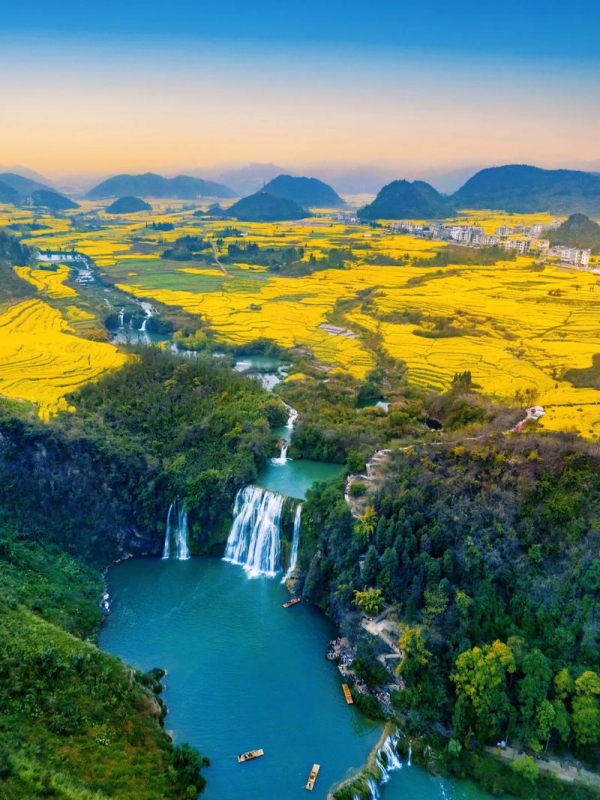
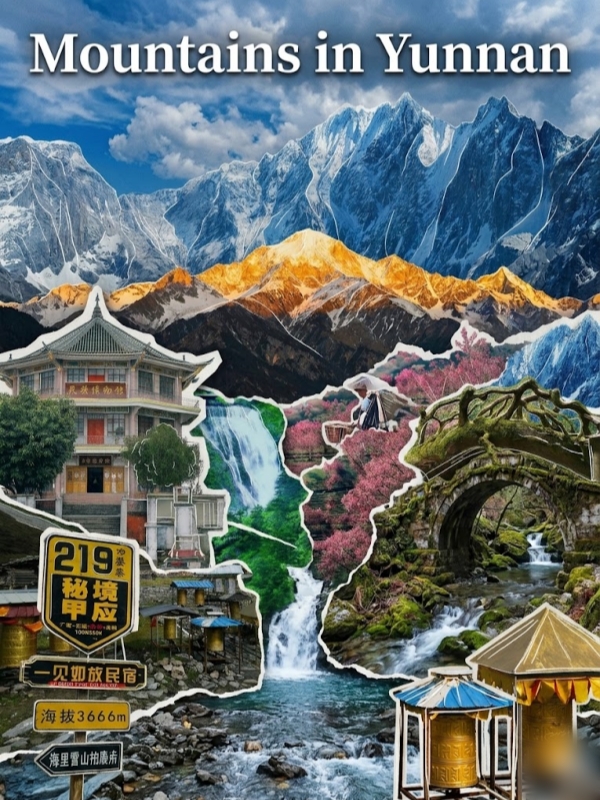
Yunnan has some of the wildest mountain scenery on the planet. Its peaks rise across six major ranges – from snow-dusted Hengduan Mountains that start out in the northwest to cloud-carpeted Ailao ridges in the south. These mountains in Yunnan are a vertical world where glaciers, alpine meadows, ancient pilgrim trails and ethnic villages march side by side across single footfalls, uprooting cultures as you go. The mountains also anchor the Three Parallel Rivers UNESCO World Heritage Site, one of Earth’s richest and narrowest biological superhighways. This guidebook features 12 essential peaks with practical travel information and route advice for every type of traveller.
Nature’s Vertical Theater
Epic Geology and Vertical Climate
In the northwest, the earth finally throws off any restraint the crust may have imposed in this feat of drama: the Nu, Lancang, and Jinsha Rivers etch the last, most terrific of its actions. Parallel gorges cleave in between Gaoligong, Nu, and Yunling Mountains—skeleton of the “Three Parallel Rivers” — with elevation gains of over 1,000 m and climatic zones so compressed they could produce the “four seasons on one mountain,” the bottom line of Yunnan’s beautiful scenery.
Iconic Peaks and a Living Ark
Heavenward rise the glacial watches: the pristine Jade Dragon, the Meili (Kawagebo), venerated sanctum, the imposing Haba Snow Mountain. In this vertical world lies a pocket garden. Representing only ~ 4% of the land mass of the country, Yunnan wears ~ 20% of its plants and 25% of its animals: a bastion for the wild Asian elephant, and the green peafowl, of course.
1. Jade Dragon Snow Mountain (玉龙雪山)
Jade Dragon Snow Mountain
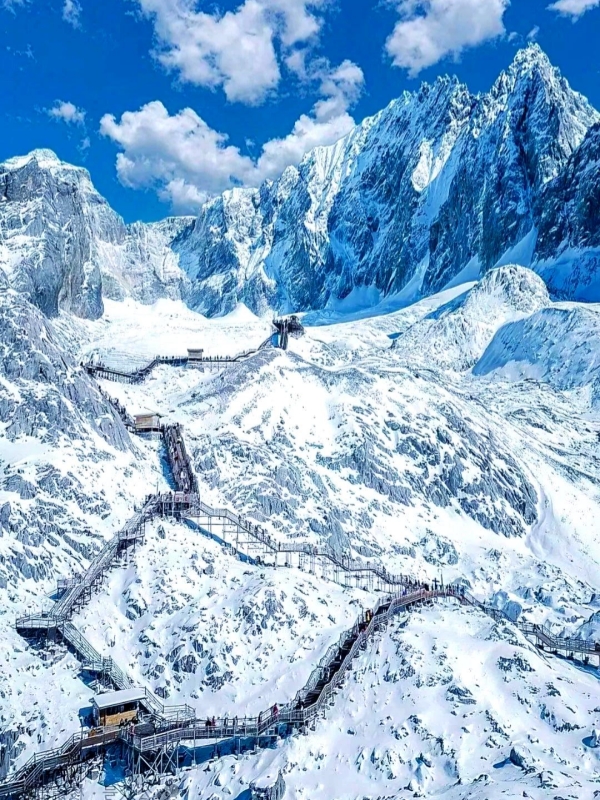
Jade Dragon Snow Mountain (玉龙雪山) looks down on ancient Lijiang, appearing like a monstrous snowcapped dog lying at the town’s feet. Its glacier-flecked ridgeline is a permanent fixture of the morning sky, and it is probably the most famous scene in all of southwest China — the first and often most vivid introduction to mountains in Yunnan for most travelers.
Essential Travel Information
- 📍 Location: Yulong Naxi Autonomous County (玉龙纳西族自治县), Lijiang City — approximately 15 km north of Lijiang Old Town (丽江古城).
- ⛰️ Elevation: Main peak Shanzidou (扇子陡) reaches 5,596 m. The highest public viewing platform sits at 4,680 m.
- 🚡 Transportation: Specifically, three gondola lines serve the mountain: the Glacier Park Gondola (冰川公园大索道) reaches 4,506 m, the Yak Meadow Mid-Gondola (牦牛坪中索道) serves 3,700 m, and the Spruce Meadow Mini-Gondola (云杉坪小索道) reaches 3,240 m. Eco-shuttles link all zones.
- 📅 Best Time to Visit: November through May delivers clear skies and sharp snow lines. Furthermore, December to March is ski season on the lower slopes. Summer clouds frequently obscure the peaks.
Key Highlights Worth Seeing
-

- Ganhaizi Grassland
-
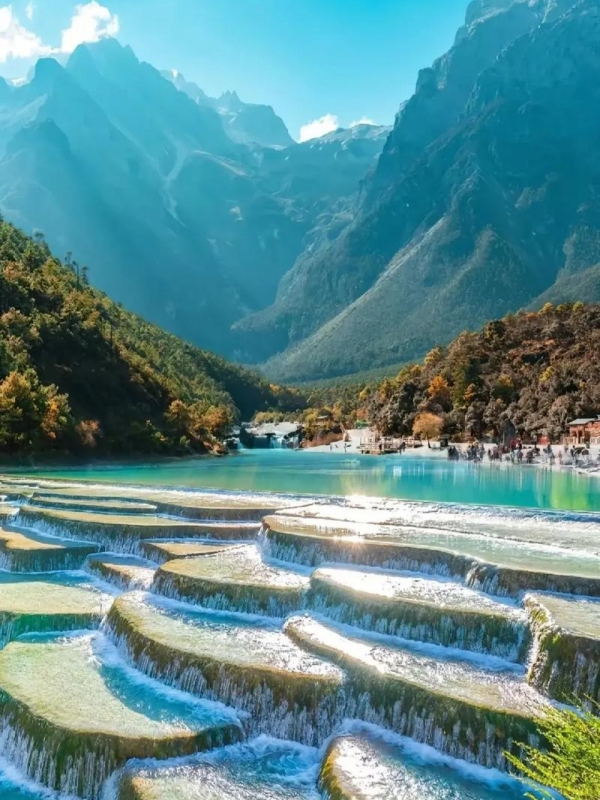
- Blue Moon Valley
-
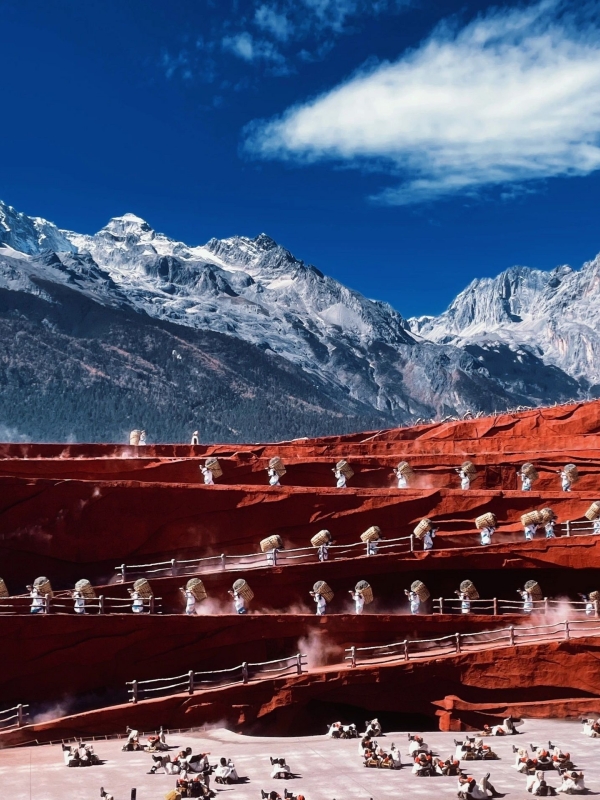
- Impression Lijiang
- Modern Glacier: The Glacier Park ice field is one of the Northern Hemisphere’s lowest-latitude maritime glaciers. Indeed, gondola access makes it uniquely approachable for visitors without mountaineering experience.
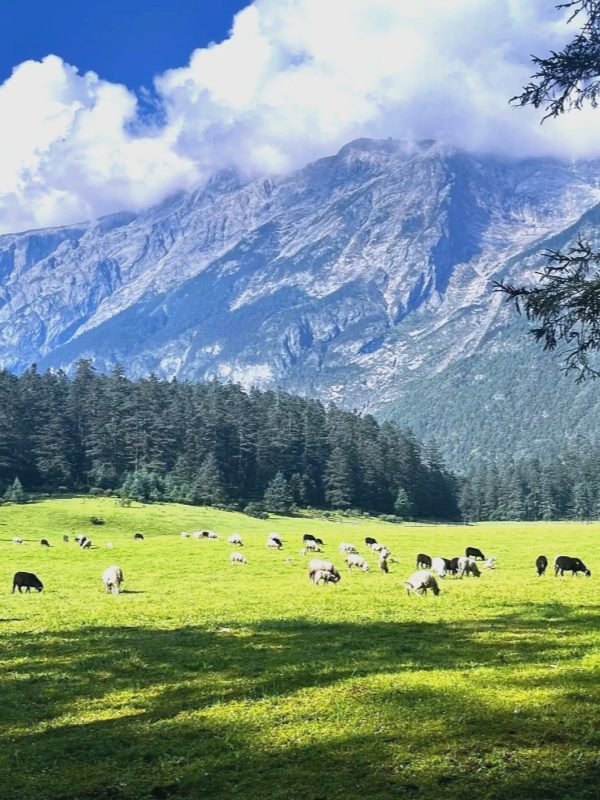
- Vertical Ecological Zones: The ascent traces a full landscape gradient — from Ganhaizi grassland (甘海子草甸) and Spruce Meadow forest (云杉坪) to Yak Meadow pasture (牦牛坪) and glacier above.
- Blue Moon Valley (蓝月谷): The White Water River (白水河) turns vivid turquoise in sunlight. As a result, it ranks among Yunnan’s most photographed natural reflections.
- Impression Lijiang (印象·丽江): Zhang Yimou’s open-air performance frames the snow mountain as its living backdrop. No theatrical production in China matches its alpine scale.
Recommended Routes & Trails
- Classic Sightseeing Route: Ride the Glacier Park Gondola to 4,506 m, walk the boardwalk to the 4,680 m viewing platform, then explore Blue Moon Valley (蓝月谷). Allow a full day.
- Ganhe Dam Trekking Route (甘河坝徒步路线): Depart from Yuhu Village (玉湖村), pass Ganhe Dam (甘河坝) and Joseph Rock’s former residence, then reach Milk Lake (牛奶湖) — approximately 16 km and 6–8 hours. However, this route suits experienced hikers with altitude acclimatization only.
- Alpine Meadow Loop: Walk through Spruce Meadow (云杉坪) or Yak Meadow (牦牛坪) amid ancient conifers under snow peaks. Specifically, this suits families and low-intensity visitors seeking scenic beauty without physical challenge.
🔗 Planning a detailed trip to Jade Dragon Snow Mountain? Gondola booking tips, altitude precautions, and on-site logistics are fully covered in our dedicated guide — read the full article: Jade Dragon Snow Mountain: Complete Travel Guide.
2. Shika Snow Mountain (石卡雪山)
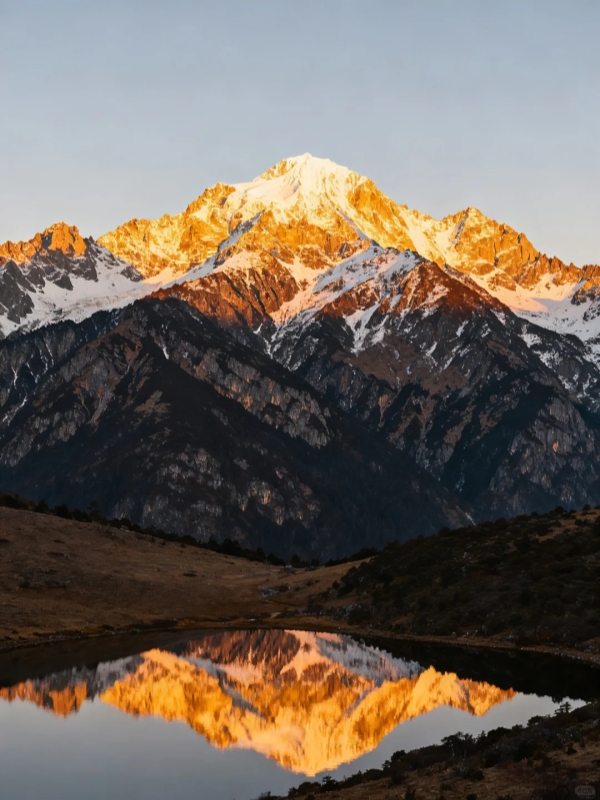
Shika Snow Mountain
Shika Snow Mountain (石卡雪山) soars above the high plateau above Shangri-La to crown the area in a magnificent sweep. From the summit, eight major snow ranges fan from the snow-capped peak, stretching towards the horizon in every direction. It’s rare to have a view of such grandeur available from a single point in Yunnan, and one can ride Asia’s longest beating gondola straight to the top, making for an easy visit for all ages and fitness levels.
Essential Travel Information
- 📍 Location: Southwest of Jiantang Town (建塘镇), Shangri-La City (香格里拉市), Diqing Tibetan Autonomous Prefecture (迪庆藏族自治州) — approximately 7 km from the city center.
- ⛰️ Elevation: The main peak stands at 4,449.5 m. The gondola delivers visitors to approximately 4,500 m at the summit station.
- 🚡 Transportation: Asia’s longest pulsating gondola completes a single uninterrupted ride to the summit. However, severe winter weather may cause temporary closures.
- 📅 Best Time to Visit: May through November offers the most reliable access. Specifically, spring brings wildflowers, summer turns pastures lush, and autumn adds golden and crimson foliage to every slope.
Key Highlights Worth Seeing
-
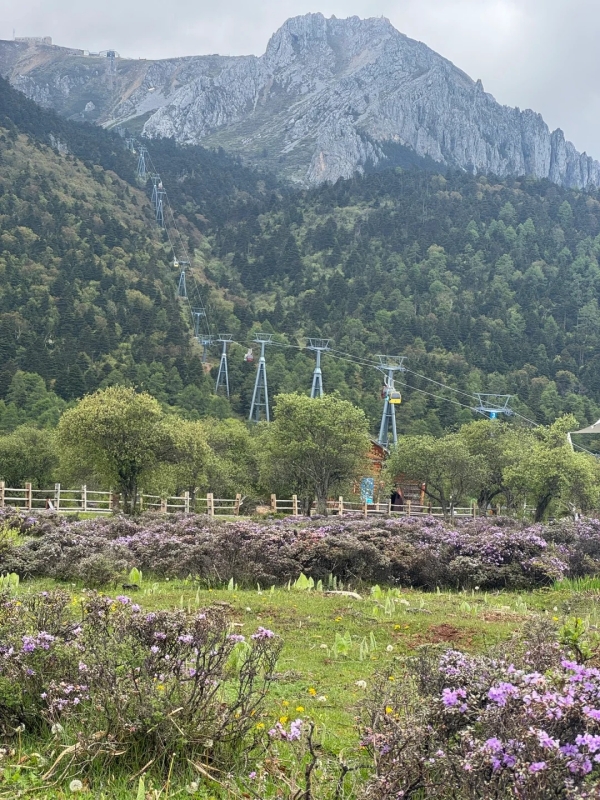
- Yala Qingbo Highland Pasture
-
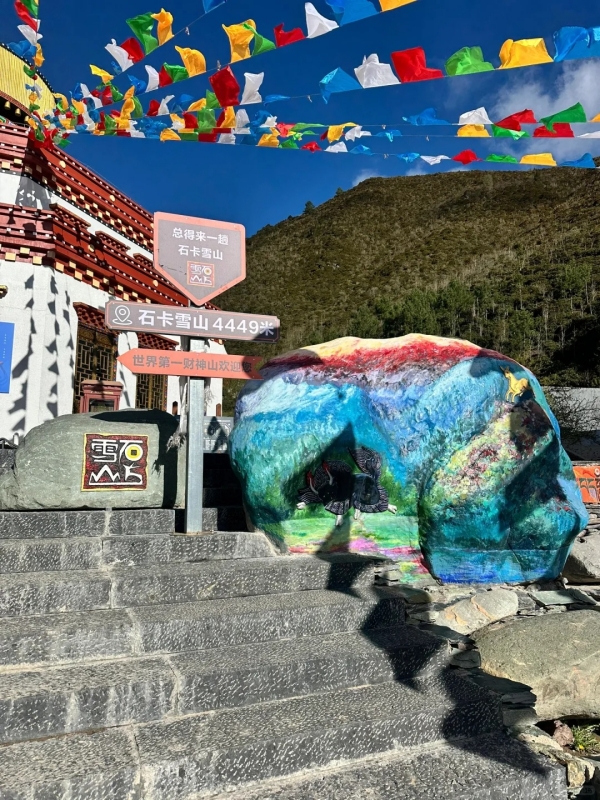
- Tibetan Religious Landscape
-
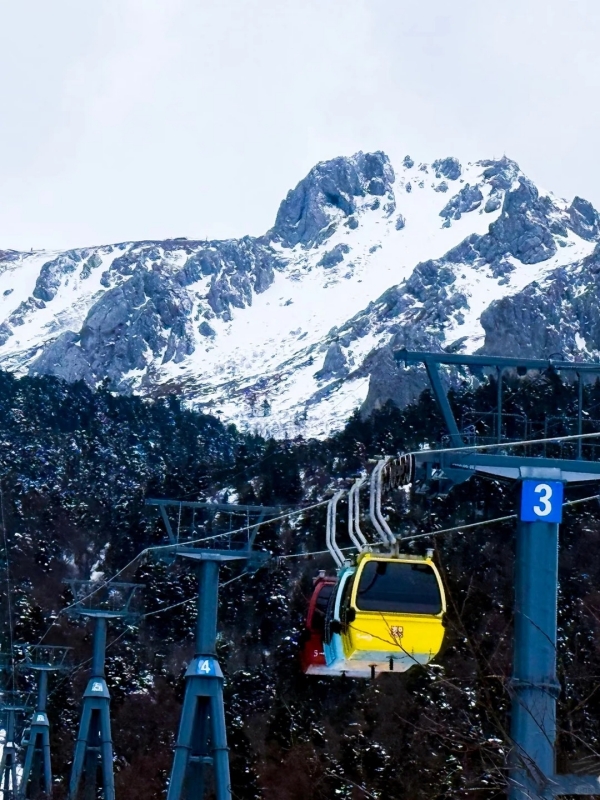
- Gondola Summit Panorama Loop
- 360° Summit Panorama: On clear days, the summit reveals eight iconic snow peaks — including Meili, Biluo, Haba, and Yulong. Indeed, no single vantage point in Yunnan matches this panoramic reach.
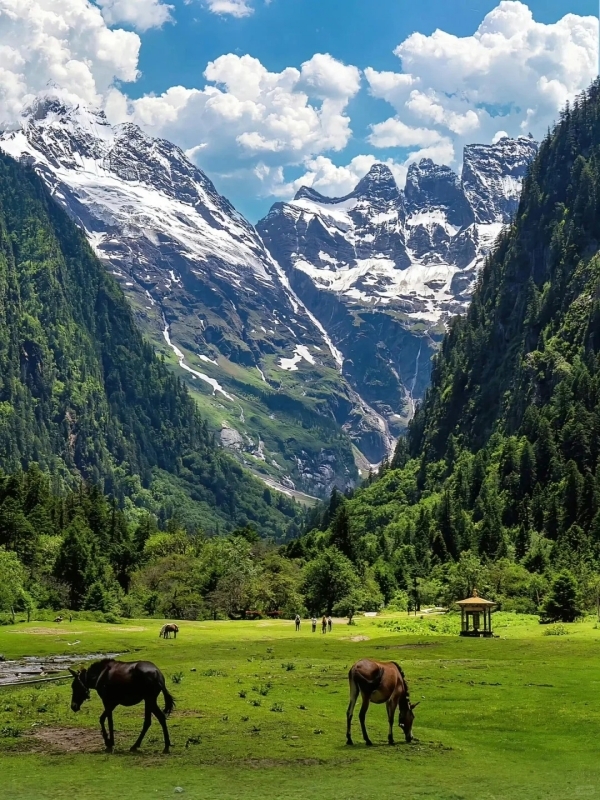
- Yala Qingbo Highland Pasture (亚拉青波牧场): The mid-station opens onto a broad alpine grazing meadow. Spring and summer fill it with wildflowers as yaks roam freely — a vivid Tibetan pastoral scene.
- Tibetan Religious Landscape: The mountain holds sacred features including Lingxi Lake (灵犀湖), mani stone walls (玛尼堆), and incense altars (煨桑台). Moreover, Tibetan communities gather here regularly for circumambulation and prayer.
Recommended Routes & Trails
- Gondola Summit Panorama Loop: Ride to the top, follow the circular boardwalk for multi-directional snow mountain views, then descend to Yala Qingbo Pasture (亚拉青波牧场). This suits all visitor types.
- Alpine Meadow Light Trek: A flat, easy circuit around Yala Qingbo Pasture takes 1–2 hours at a gentle pace. Specifically, this is ideal for families, seniors, or visitors still acclimatizing to 3,500 m.
🔗 Want to dive deeper into planning your Shika Snow Mountain visit? From altitude tips to the best photography spots on the summit boardwalk, our dedicated guide has every detail — read the full article: Shika Snow Mountain: Complete Travel Guide.
3. Meili Snow Mountain (梅里雪山)
Meili Snow Mountain
Meili Snow Mountain (梅里雪山) is not a mountain to conquer. It is a God to bow to. Kawagebo Peak (卡瓦格博), at 6,740 m, is not only the highest mountain in Yunnan but one of the most sacred peaks to Tibetan Buddhism. No ascender ever made it to the summit. To those devoted to religious pilgrimage in particular, Meili is unique among the Yunnanese mountains.
Essential Travel Information
- 📍 Location: Deqin County (德钦县), Diqing Tibetan Autonomous Prefecture (迪庆藏族自治州), Yunnan Province.
- ⛰️ Elevation: Main peak Kawagebo (卡瓦格博) stands at 6,740 m — Yunnan’s highest point. The massif contains 13 peaks above 6,000 m.
- 🚡 Transportation: No cable car serves the main peak. Viewpoints at Feilaisi (飞来寺) and Wunongding (雾浓顶) offer distant panoramas. For close access, take a 4WD to Xidang Village (西当村), then trek or ride to Yubeng Village (雨崩村). The summit remains permanently closed to climbing.
- 📅 Best Time to Visit: October through May offers the most reliable clear skies. Furthermore, November–February delivers the highest chance of witnessing the “Golden Mountain at Dawn.” Summer clouds often shroud the peaks entirely.
Key Highlights Worth Seeing
-
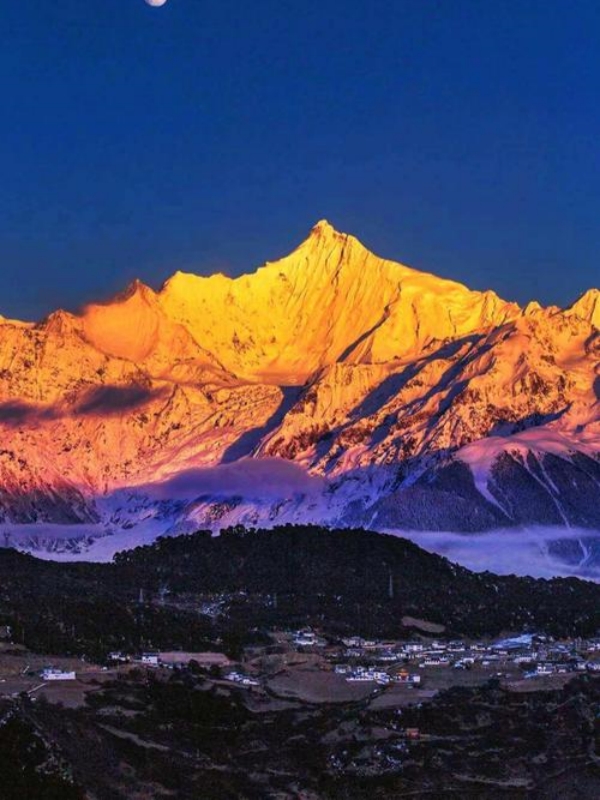
- Golden Mountain at Dawn
-
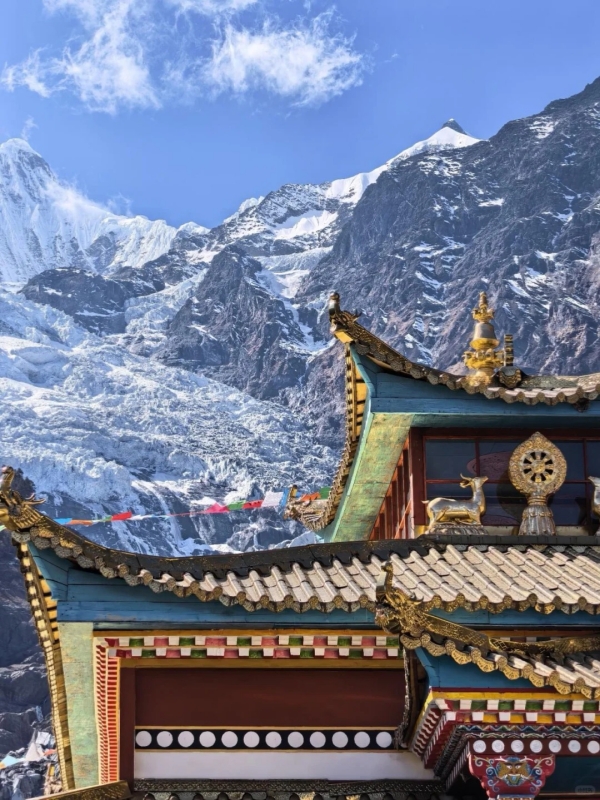
- Mingyong Glacier
-
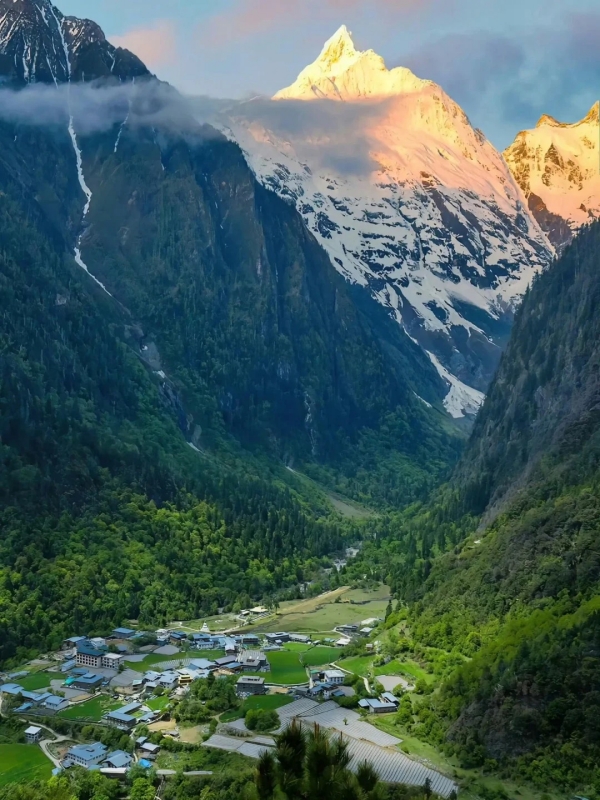
- Yubeng Hidden Valley
- Golden Mountain at Dawn (日照金山): At daybreak, sunlight ignites the snow peaks in gold, orange, and rose. Indeed, this spectacle at Feilaisi viewpoint (飞来寺) ranks among China’s most celebrated natural phenomena.
- Glacier Wonders: Mingyong Glacier (明永冰川) and Sinong Glacier (斯农冰川) are rare low-latitude maritime glaciers. Specifically, they descend to unusually low elevations due to the mountain’s monsoon exposure — a geological phenomenon of global significance.
- Yubeng Hidden Valley (雨崩秘境): This remote village is reachable only on foot or horseback. Moreover, trails to the Sacred Waterfall (神瀑) and Ice Lake (冰湖) rank among Yunnan’s finest multi-day treks.
- Living Pilgrimage Culture: Meili draws pilgrims year-round as one of Tibetan Buddhism’s holiest mountains. Witnessing circumambulation rituals and prayer flag landscapes here adds a cultural depth no other mountain in the region replicates.
Recommended Routes & Trails
- Inner Circumambulation — Yubeng Trek (3–5 days): Xidang Village (西当村) → Upper Yubeng (上雨崩) → Ice Lake (冰湖) / Sacred Waterfall (神瀑) → Nianong Gorge (尼农峡谷). Indeed, this trail threads sacred terrain beneath Kawagebo’s western wall. Moderate to challenging difficulty.
- Outer Circumambulation (approximately 2 weeks): A full pilgrimage circuit around the Meili massif, crossing high passes into Tibet. However, this suits only highly experienced trekkers with permits and full logistical support.
4. Haba Snow Mountain (哈巴雪山)
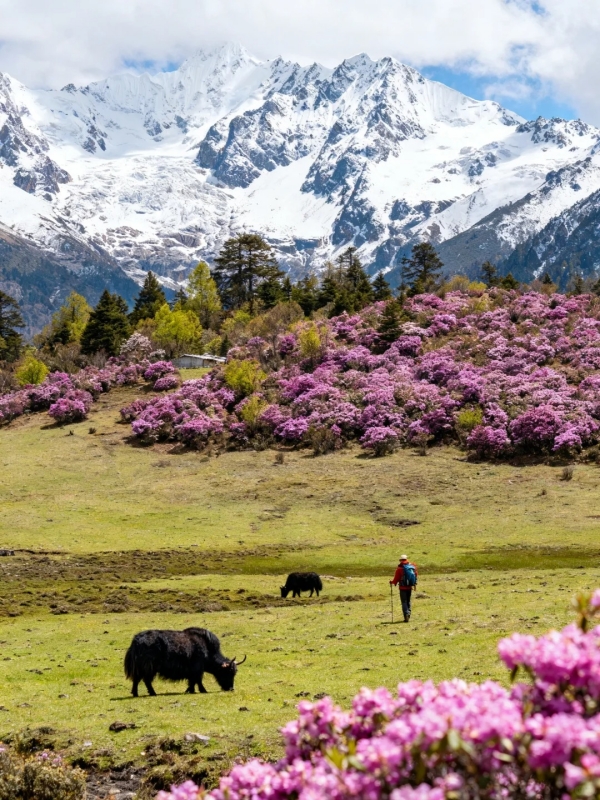
Haba Snow Mountain
Haba Snow Mountain (哈巴雪山) stands opposite Jade Dragon Snow Mountain on the far side of Tiger Leaping Gorge, and has developed a very appealing reputation. At 5,396 m, Haba is known throughout China as “the perfect first snow peak”. Motivated travellers with no prior experience on a mountain will reach this summit in every season. For thousands of climbers, Haba is that first big tick among the Yunnan peaks.
Essential Travel Information
- 📍 Location: Southeastern Shangri-La City (香格里拉市), Diqing Prefecture (迪庆州) — facing Yulong Snow Mountain (玉龙雪山) across Tiger Leaping Gorge (虎跳峡) to the east.
- ⛰️ Elevation: Main summit at 5,396 m. Base camp sits at approximately 4,100 m — where most climbers rest before summit day.
- 🚡 Transportation: No cable car. The approach begins from Haba Village (哈巴村, 2,600 m) by foot or horse to base camp. Crampons, ice axe, and a local guide are mandatory — all arranged through village operators.
- 📅 Best Time to Visit: March–June and September–December offer stable weather and optimal snow. However, the July–August monsoon destabilizes the snowpack, making ascents inadvisable.
Key Highlights Worth Seeing
-
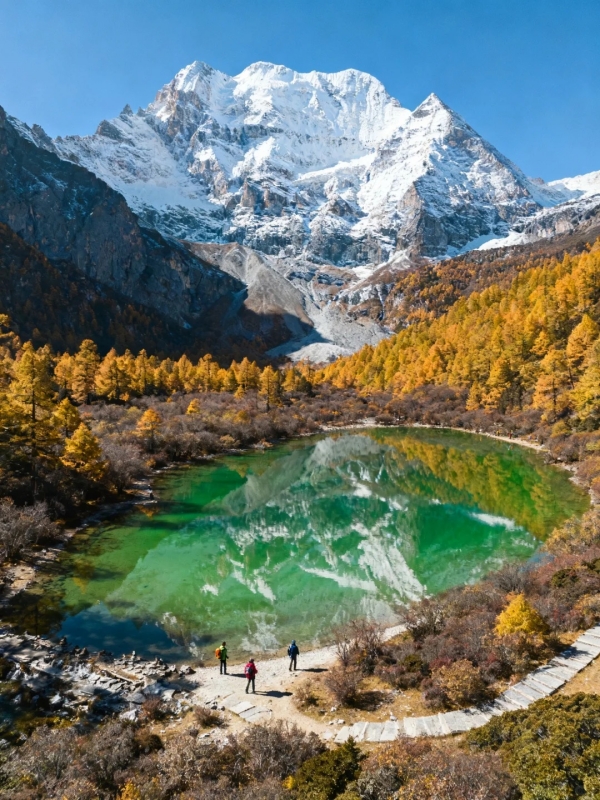
- Haba Snow Mountain
-
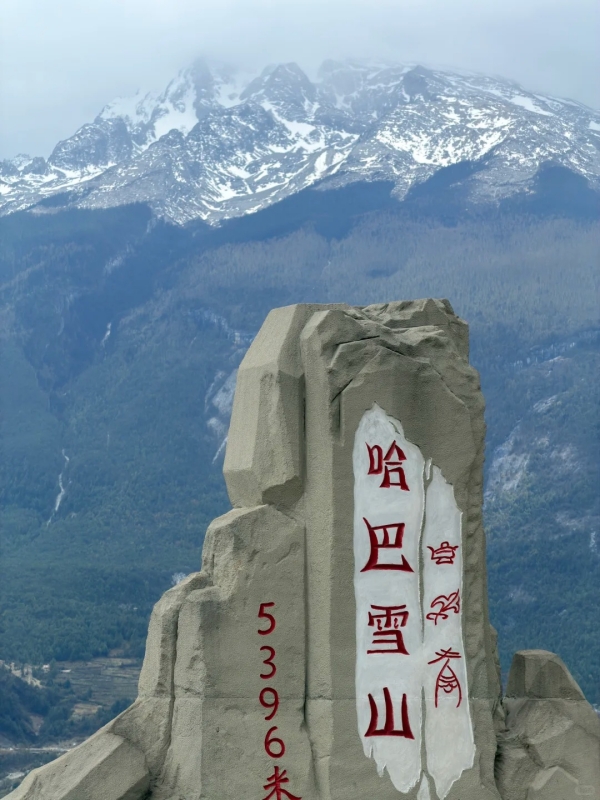
- Haba Snow Mountain
-
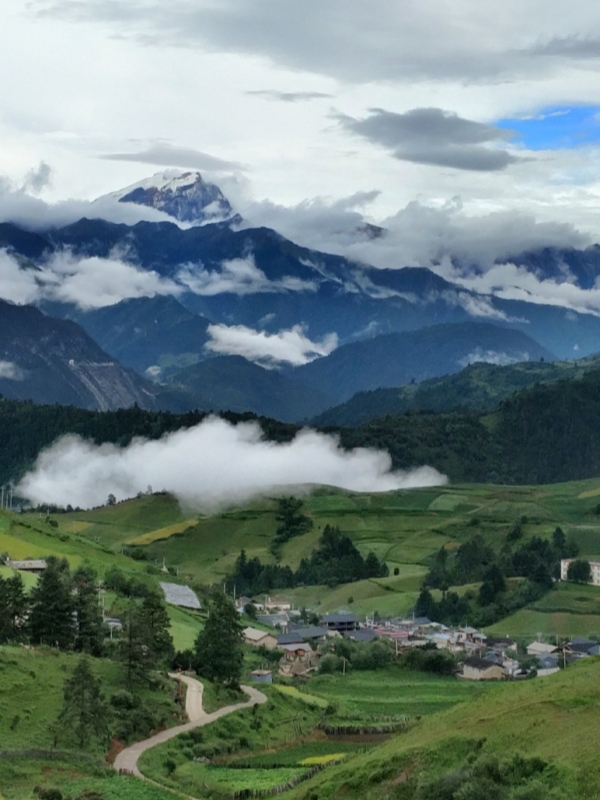
- Haba Snow Mountain
- Beginner-Friendly Summit Climb: Haba involves glacier travel and basic ice skills, yet remains manageable for well-prepared first-timers. Indeed, success rates stay consistently high during peak season with proper acclimatization and professional guidance.
- Vertical Natural Tapestry: The route climbs through subtropical forest, subalpine fir, alpine scree, and the glaciated summit pyramid. Specifically, each zone opens a new sensory world — a complete ascent through nature’s vertical layers.
- Tiger Leaping Gorge Perspective: From the high trail, both Haba and Jade Dragon simultaneously frame the world’s deepest canyon. Moreover, this panoramic encounter ranks among Yunnan’s most dramatic on-foot experiences.
Recommended Routes & Trails
- Standard Summit Route (3–4 days): Haba Village → Base Camp at 4,100 m (Day 1) → Summit at 5,396 m (Day 2, alpine start) → Descent to Haba Village (Day 3). Crampons, ice axe, and a certified guide are mandatory. Furthermore, prior high-altitude experience is strongly recommended.
- Black Sea Lake Trekking Route (黑海湖徒步线): Haba Village → Orchid Meadow (兰花坪) → Black Sea Lake (黑海湖). This rewarding non-technical day hike reveals the snow mountain reflected in a glacial lake. Specifically, it suits travelers seeking alpine scenery without technical summit commitment.
🔗 Thinking about making Haba your first snow peak? Physical preparation, guide selection, gear packing, and acclimatization schedules are all covered in our step-by-step climbing guide — read the full article: Haba Snow Mountain: Complete Climbing & Trekking Guide.
5. Cangshan Mountain (苍山)
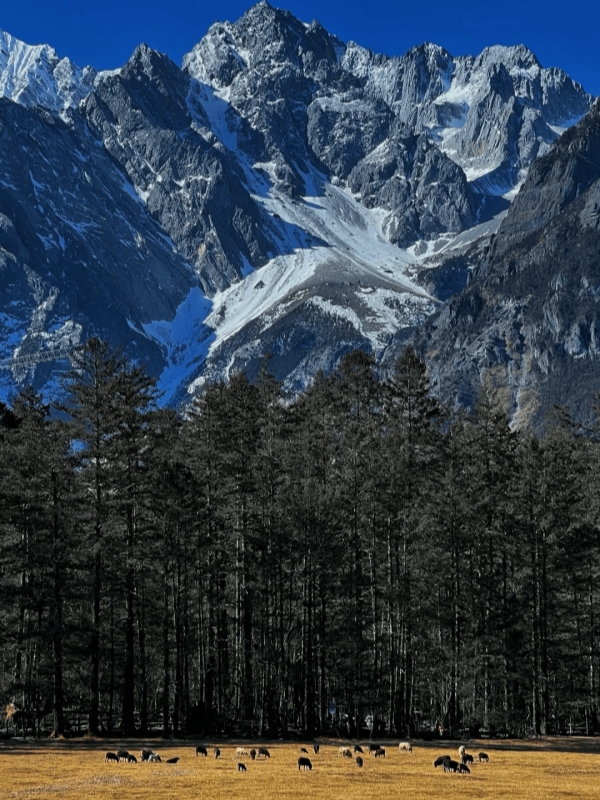
Cangshan Mountain
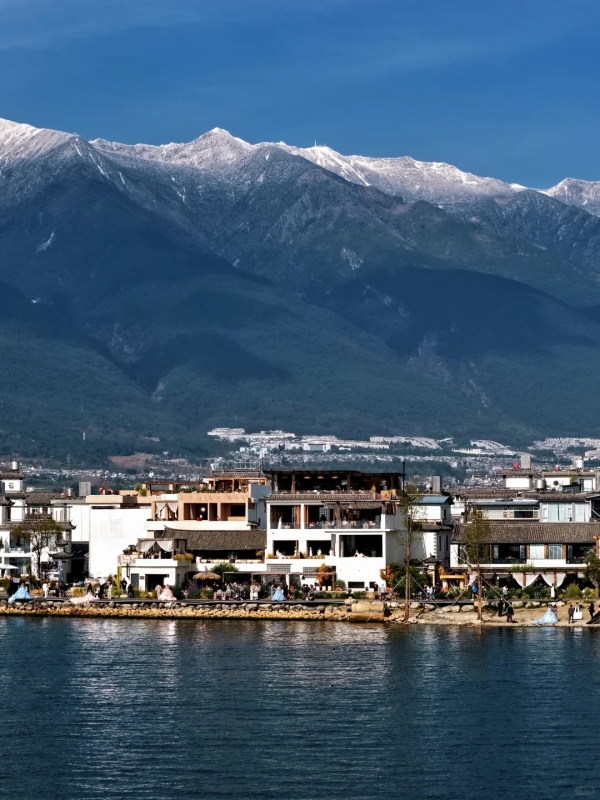
Cangshan (苍山) stands behind the city Dali (大理) like an old, timbered savannah wall. Nineteen peaks, eighteen mountain streams share alternating distance through the wild. Truly, for the Bai族 (白族) this is the fabric of culture, a mountain range woven into their production for now over a thousand years. To visitors, the mountain is worthy of every elevation, every improved uncovered centimetre, to boost your visibility of the highlands ahead.
Essential Travel Information
- 📍 Location: Western side of Dali City (大理市), Dali Bai Autonomous Prefecture (大理白族自治州), Yunnan Province.
- ⛰️ Elevation: Highest peak Malong Peak (马龙峰) reaches 4,122 m. Visitor-accessible areas span from 2,100 m up to 3,920 m at Xima Lake (洗马潭).
- 🚡 Transportation: Three cable car lines serve the mountain. Specifically, the Gantong Gondola (感通索道) reaches Qingbi Stream (清碧溪), the Xima Tan Gondola (洗马潭索道) runs to Xima Lake at 3,920 m, and the Zhonghe Gondola (中和索道) offers broad valley views. Local buses connect Dali Old Town (大理古城) to all three gondola bases.
- 📅 Best Time to Visit: Cangshan rewards year-round visits. Specifically, April–May brings rhododendron blooms, winter deposits snow on the peaks, and summer offers cool highland temperatures above the valley heat.
Key Highlights Worth Seeing
-
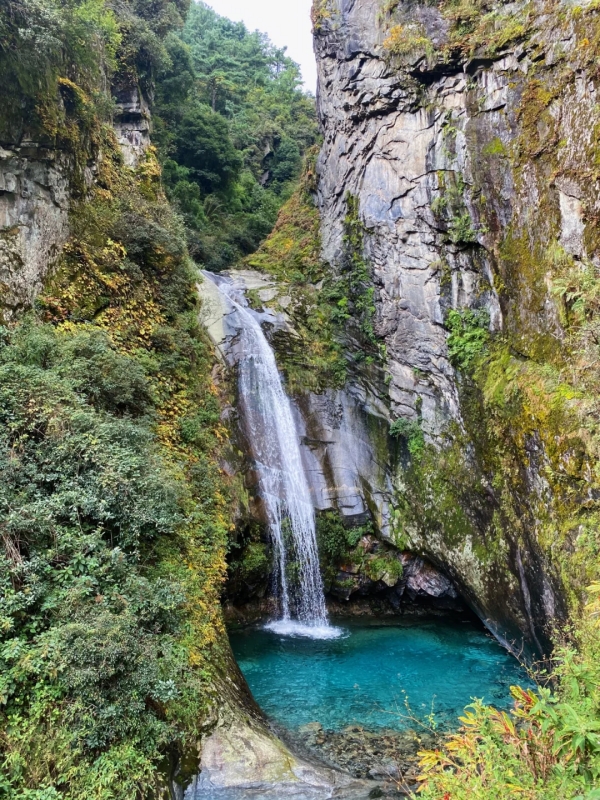
- Nineteen Peaks and Eighteen Streams
-
- Cangshan Mountain
-
- Jade Belt Cloud Trail
- “Wind, Flower, Snow and Moon” — Cangshan’s Snow: The snowcap is one of Dali’s Four Scenes (大理四景). Indeed, this cultural designation reflects the mountain’s deep symbolic presence in Bai ethnic tradition.
- Nineteen Peaks and Eighteen Streams (十九峰十八溪): The alternating ridge-and-ravine geography creates distinct ecological corridors. As a result, each stream carves its own forest zone with a different microclimate and character.
- Glacial Alpine Lakes: Xima Lake (洗马潭), Black Dragon Pool (黑龙潭), and Yellow Dragon Pool (黄龙潭) are remnant glacial cirque lakes above 3,800 m. Moreover, their subalpine fir-lined shores offer scenes of quiet highland beauty.
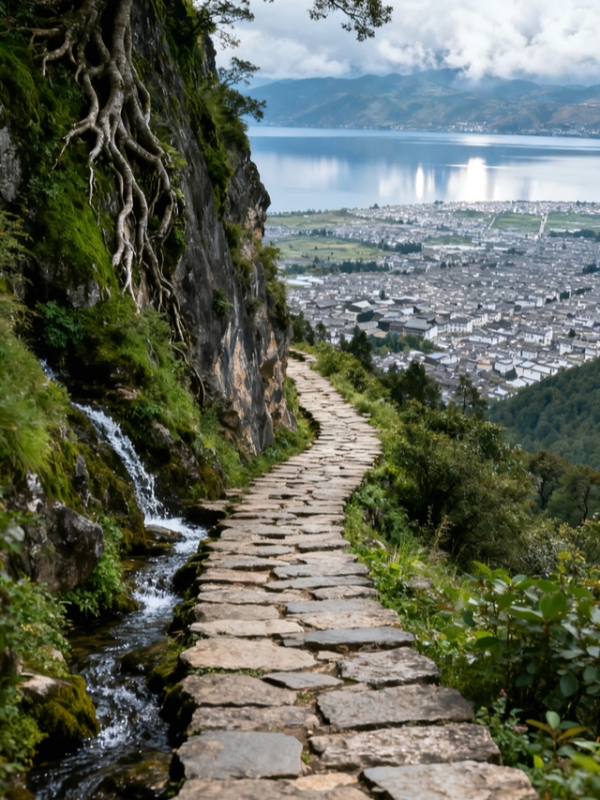
- Jade Belt Cloud Trail (玉带云游路): A mid-mountain path at approximately 2,600 m traverses the entire range. Specifically, it delivers sweeping views over Erhai Lake (洱海) and ranks among Yunnan’s most scenic easy walks.
Recommended Routes & Trails
- Xima Lake Gondola Route: Ride the Xima Tan Gondola (洗马潭索道) to the upper station, hike through old fir forest to Xima Lake at 3,920 m, and explore the glacial shoreline. Allow a half-day for this moderate itinerary.
- Jade Belt Cloud Trail Traverse (玉带云游路全线): Ascend via the Gantong Gondola (感通索道), walk the Jade Belt trail approximately 11 km westward, then descend via the Zhonghe Gondola (中和索道) to Dali Old Town. Indeed, the path is predominantly flat and well-maintained. Allow 4–5 hours.
6. Gaoligong Mountain (高黎贡山)
Gaoligong Mountain
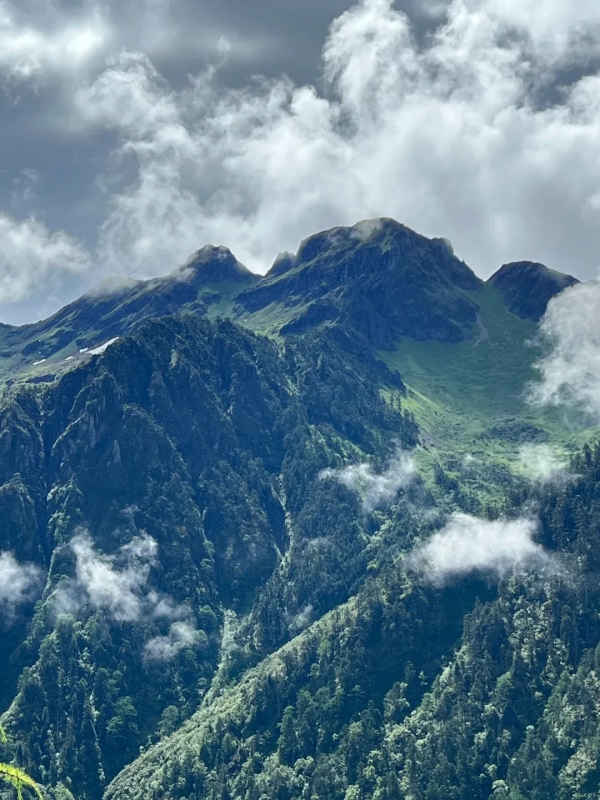
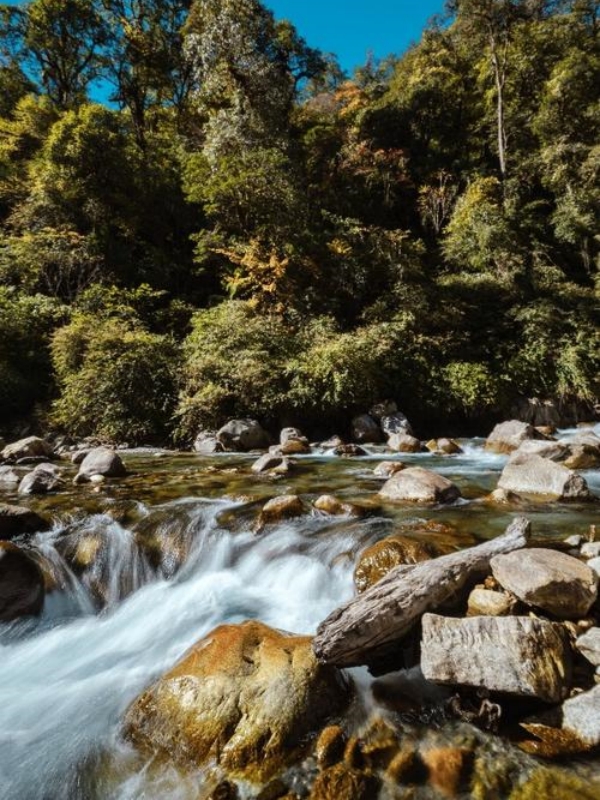
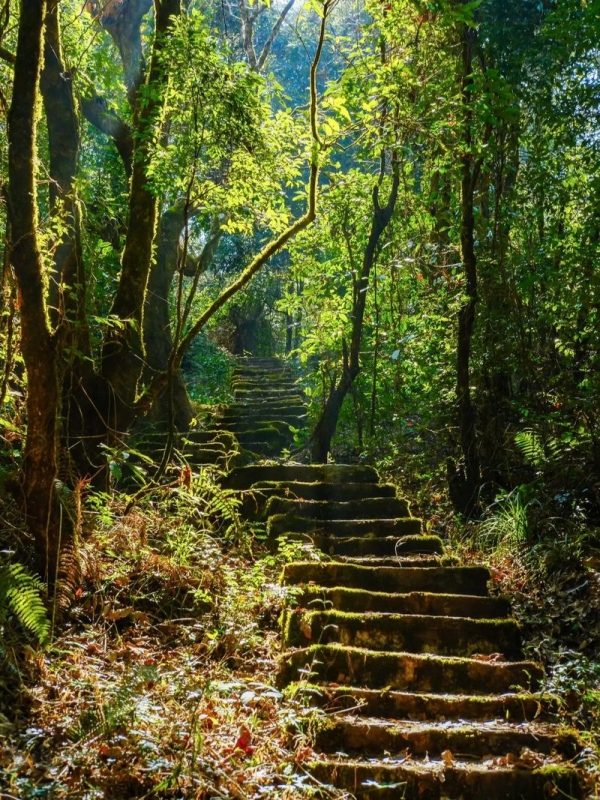
Gaoligong Mountain (高黎贡山), referred to by scientists as Yunnan’s “Ecological Crown Jewel”, harbours forests often described as a gene bank of the world’s species. Over decades of field research, dozens of plants and animals new to science have been collected here. In addition to the flora and fauna unique to these mountains, there trails of ancient trading routes and lanes where wartime supplies were carted! Making them unlike any mountain in Yunnan.
Essential Travel Information
- 📍 Location: Western Yunnan, along the Hengduan Mountains’ western edge — spanning Baoshan City (保山市) and Nujiang Prefecture (怒江州) from south to north.
- ⛰️ Elevation: Highest peak Gawagarpu (嘎娃嘎普峰) reaches 5,128 m. Most trekking activity takes place between 1,600 m and 3,500 m in the southern and central sections.
- 🚡 Transportation: No cable car. Access is by self-drive or chartered vehicle to reserve entry points in Baoshan (保山), Tengchong (腾冲), and Nujiang (怒江) segments. Multiple trailheads operate through reserve management stations.
- 📅 Best Time to Visit: October through April (dry season) provides stable trail conditions. Furthermore, spring (March–April) brings rhododendrons and magnolias into full bloom across the upper slopes.
Key Highlights Worth Seeing
-
- Gaoligong Mountain
-
- Gaoligong Mountain
-
- Gaoligong Mountain
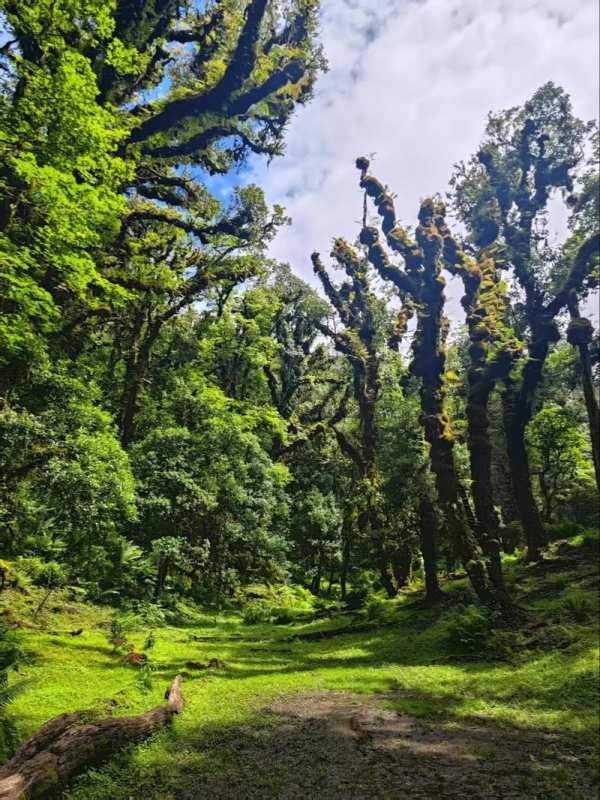
- World-Class Biodiversity: Gaoligong harbors a remarkable concentration of rare endemic species — including dozens of bird species that draw ornithologists from across the globe. Indeed, few protected areas in Asia match its ecological completeness.
- Complete Vertical Climate Zones: The mountain spans tropical lowland rainforest through subtropical broadleaf, temperate conifer, and subalpine meadow. As a result, every 500 m of elevation opens an entirely new ecosystem with its own sights and sounds.
- Ancient Trade Road Heritage: The Southern Silk Road (南方丝绸之路) and wartime Stilwell Road (史迪威公路) both crossed Gaoligong. Specifically, ancient cobblestone paving and wartime engineering remain visible along trek routes today.
- Natural Hot Springs: Geothermal vents create natural hot spring pools along the trails. Moreover, soaking in these mountain springs after a long day of trekking is a restorative experience uniquely tied to Gaoligong’s highland character.
Recommended Routes & Trails
- Baihua Ridge Loop Trek (百花岭徒步环线, Baoshan Section): This classic trail passes waterfalls, Yin-Yang Valley hot springs (阴阳谷温泉), and ancient cobblestone sections. Indeed, birdwatching opportunities here are exceptional. Guides are recommended; the route suits a full day or overnight extension.
- Southern Silk Road Ancient Trail (南斋公房古道穿越): A 2-day traverse from Baoshan’s Baihua Ridge (百花岭) to Tengchong’s Linjiapu (林家铺), retracing the Southern Silk Road alignment. However, this carries moderate-to-high difficulty and requires a guide with overnight camping or homestay arrangements.
7. Jiaozi Snow Mountain (轿子雪山)
Jiaozi Snow Mountain
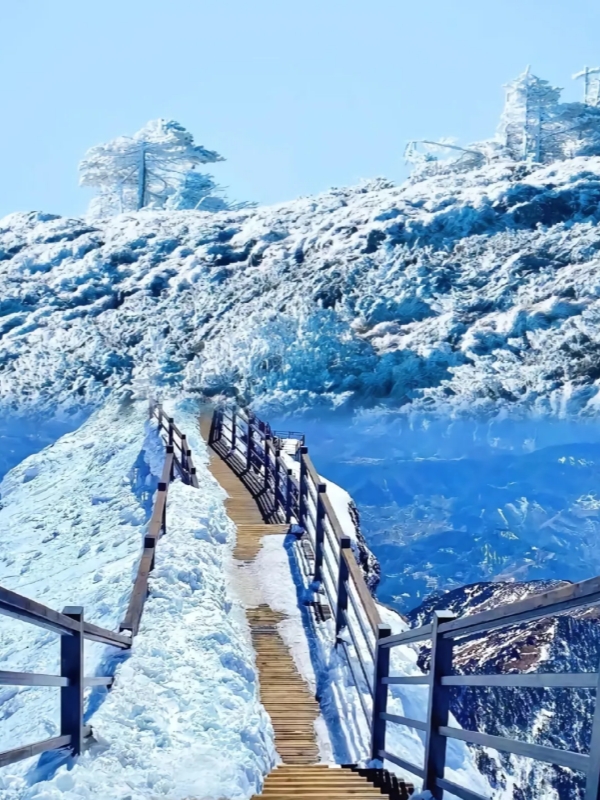
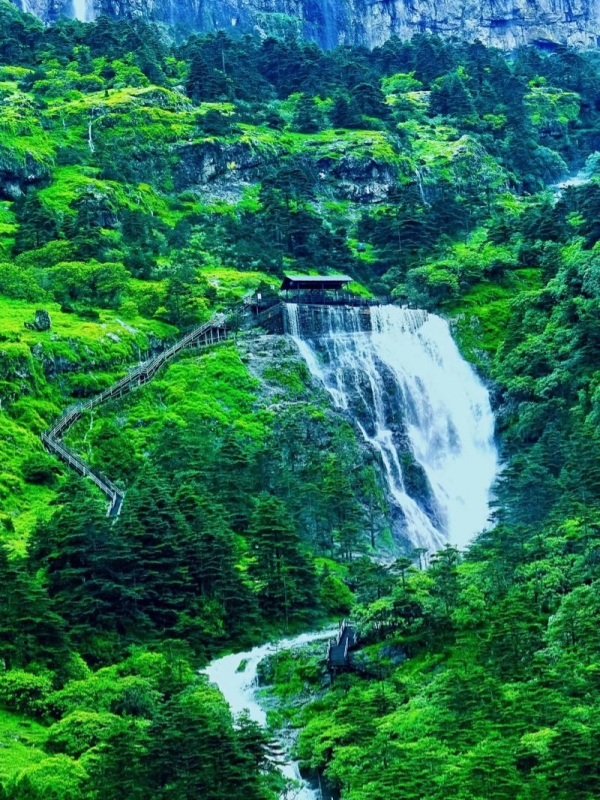
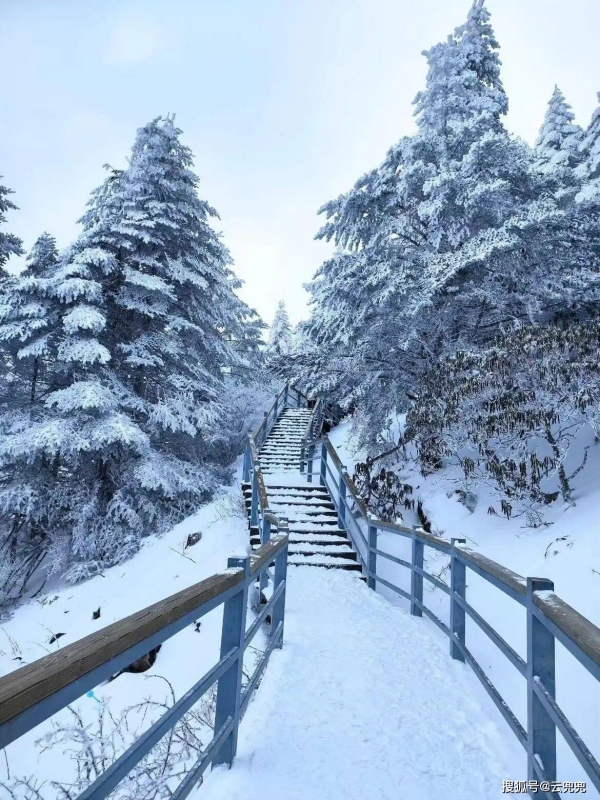
Jiaozi Snow Mountain (轿子雪山: jiàozǐ xuěshān) is Kunming’s backyard mountain — the roof of the Kunming municipality, kept in ice and frost from November to April. Just a few hours road travel from the provincial capital, it takes city-dwellers directly among real snow scenery and high-altitude ecology. Regularly underrated and consistently rewarding, of all the reachable mountains in Yunnan, most of which are reached from major cities, only Jiaozi is underrated and consistently rewarding.
Essential Travel Information
- 📍 Location: On the border between Luquan County (禄劝县) and Dongchuan District (东川区), Kunming City — the highest point within the Kunming municipality.
- ⛰️ Elevation: Summit Jiao Ding (轿顶) sits at 4,223 m. The gondola delivers visitors to approximately 3,800 m, from where boardwalk trails continue to the top.
- 🚡 Transportation: Eco-shuttles operate to the gondola base. The gondola reaches approximately 3,800 m, and the final ascent follows a wooden boardwalk. The mountain is approximately 3–4 hours by road from central Kunming.
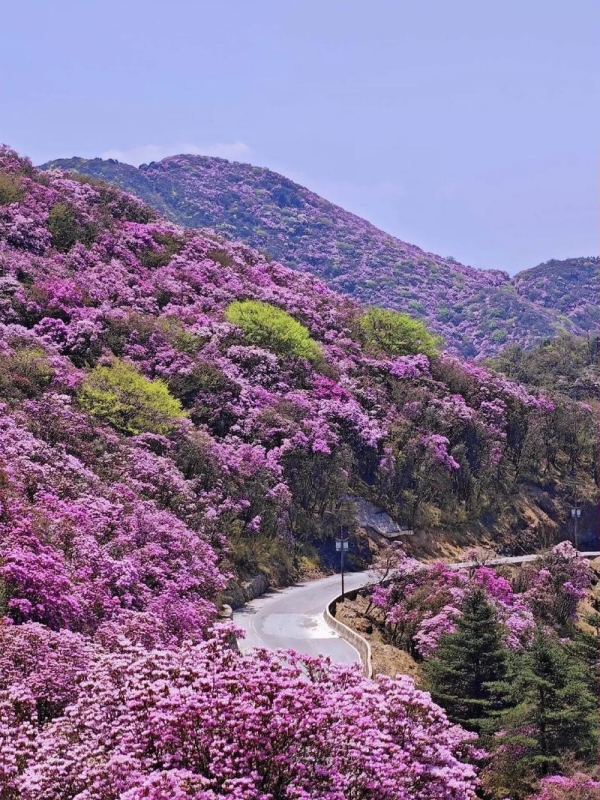
- 📅 Best Time to Visit: November through April showcases ice waterfalls, rime frost, and snow-draped ridgelines. Furthermore, May–June brings spectacular rhododendron blooms. Weather shifts rapidly at any season — layered clothing is always essential.
Key Highlights Worth Seeing
-
- Jiaozi Snow Mountain in Spring
-
- Jiaozi Snow Jiaozi Snow Mountain in Summer
-
- Jiaozi Snow Mountain in Winter
- Seasonal Spectacles: Winter brings frozen waterfalls and frost-coated forest. Specifically, spring and summer replace them with thousands of flowering rhododendrons blanketing the slopes in vivid pink and red.
- Dramatic Highland Terrain: The upper mountain features sheer cliff faces, glacial landforms, and cirque lakes including Heavenly Pool (天池) and Jinggui Lake (精怪潭). Indeed, these concentrate in a compact summit area, maximizing visual impact per hour of hiking.
- “Four Seasons in One Day”: The extreme elevation gradient creates a striking microclimate effect. As a result, visitors pass through the sensations of spring, summer, autumn, and winter within a single ascent — a phenomenon unique to Jiaozi.
Recommended Routes & Trails
- Standard Scenic Route (5–7 hours): Take the gondola to the upper station, then hike the boardwalk through Heavenly Pool (天池), the “Dead Forest” ghost trees (死亡林), and “Iron Bones Forest” (傲骨林) to Jiao Ding summit at 4,223 m. Altitude acclimatization is needed for visitors arriving from low elevation.
- Wilderness Traverse (Advanced): Approach from Dongchuan’s Tanfang Village (炭房村) or the Xunian (寻甸) direction through unmarked original terrain. However, this requires navigation skills and an experienced outdoor team — not recommended for independent travelers.
8. Biluo Snow Mountain (碧罗雪山)
Biluo Snow Mountain
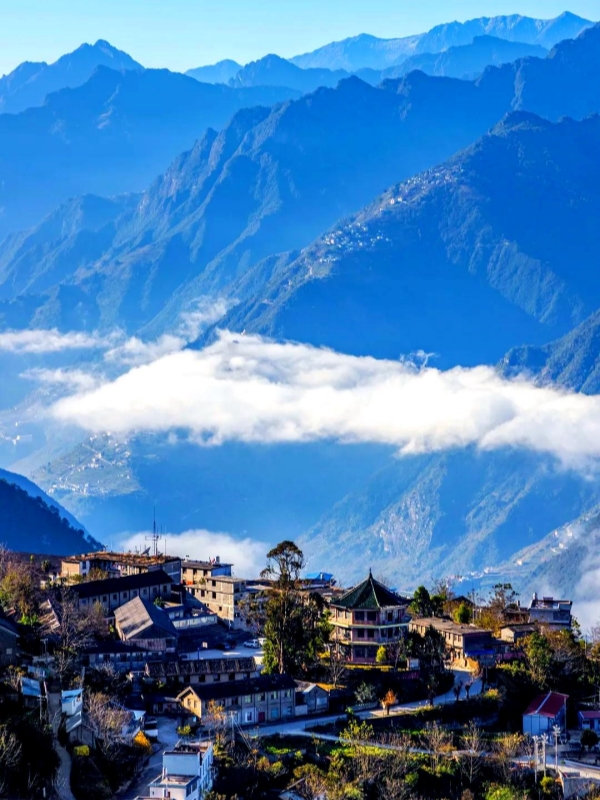
Biluo Snow Mountain (碧罗雪山) forms the hidden spine between two of the world’s great rivers — the Lancang (Mekong / 澜沧江) and the Nu (Salween / 怒江). Undeveloped and largely roadless high above the treeline, it’s one of the most genuinely wild mountain environments left in China. Very few travelers ever come here. But of those that do, all see … glacial lake clusters, ancient forest, and multi-ethnic highland communities no outsider has ever set eyes on.
Essential Travel Information
- 📍 Location: Nujiang Lisu Autonomous Prefecture (怒江傈僳族自治州), Yunnan — running between the Lancang (澜沧江) and Nu (怒江) river valleys at the core of the Three Parallel Rivers UNESCO Heritage Zone (三江并流核心区).
- ⛰️ Elevation: Highest peak Laowo Mountain (老窝山) stands at 4,500 m. Most trekking routes cross passes between 3,500 m and 4,000 m.
- 🚡 Transportation: No cable car or tourist infrastructure. Access requires local 4WD to trailheads at villages like Dimalo (迪麻洛) and Yongzhi (永支村), then multi-day trekking. Local guides are essential for all visitors.
- 📅 Best Time to Visit: May through October provides the most reliable access. Specifically, wildflowers peak in June–September and October brings golden autumn forest. However, July–August monsoon rains create hazardous trail conditions requiring careful planning.
Key Highlights Worth Seeing
-
- Laowo Mountain Lake
-
- Qicai Lian Lake
-
- Multi-Ethnic Cultural Corridor
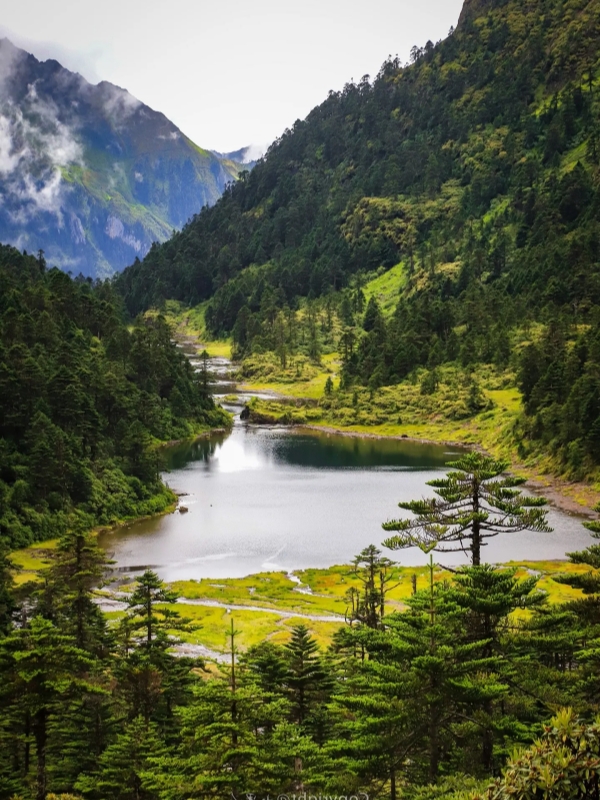
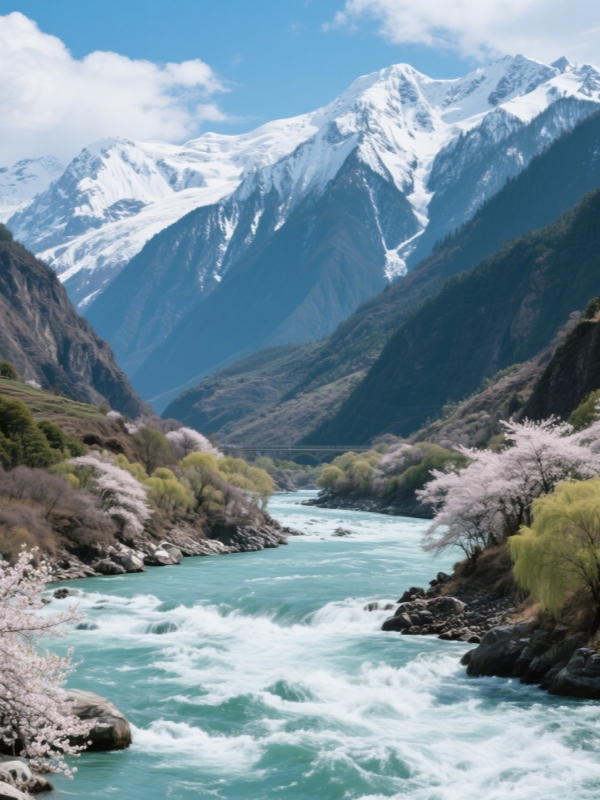
- Highland Lake Archipelago: Biluo scatters hundreds of glacially carved alpine lakes across its terrain, including sacred Laowo Mountain Lake (老窝山圣湖) and multi-colored Qicai Lian Lake (七彩莲湖). Indeed, the mountain is locally known as the “Mountain of Ten Thousand Waterfalls and a Thousand Lakes.”
- Pristine Wilderness Landscape: Old-growth conifer forest, unspoiled alpine meadows, and glacier-carved valleys remain largely untouched here. As a result, Biluo preserves a wilderness character increasingly rare among Yunnan’s more accessible peaks.
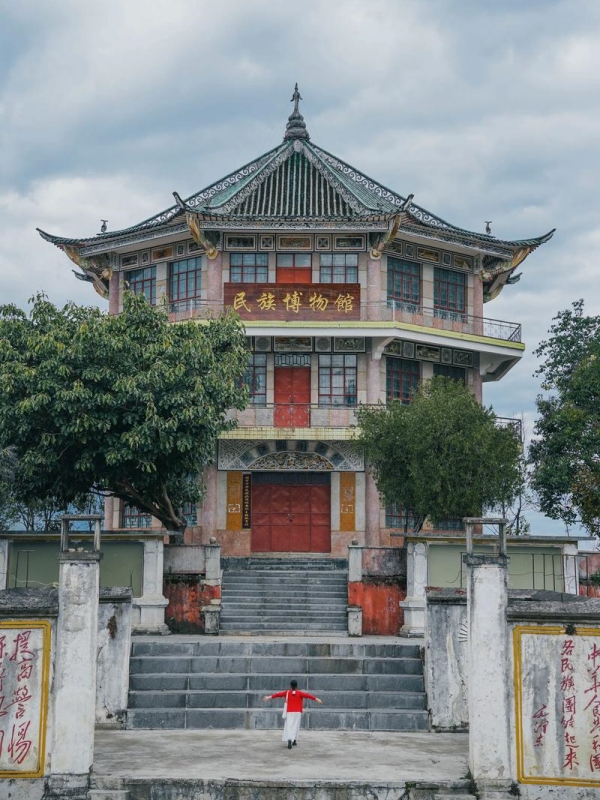
- Multi-Ethnic Cultural Corridor: Trek routes pass through Lisu (傈僳族), Nu (怒族), and Tibetan (藏族) villages. Moreover, each maintains distinct traditional architecture, clothing, and festival practices — a living cultural landscape across the terrain.
Recommended Routes & Trails
- Dimalo–Yongzhi East–West Traverse (迪麻洛-永芝穿越线, 2–3 days): Begin at Dimalo Village (迪麻洛村), ascend through dense forest, cross the Kongque Mountain Pass (孔雀山垭口, approximately 3,900 m), then descend to Yongzhi Village (永芝村) on the Lancang River side. Indeed, this crossing between two great river systems defines the Biluo experience.
- Laowo Mountain Summit Trek (老窝山徒步线): A more demanding route targeting the main summit and high-altitude lakes. Route conditions vary significantly by season; an experienced guide and camping equipment are required for all parties.
9. Ailao Mountain (哀牢山)
Ailao Mountain
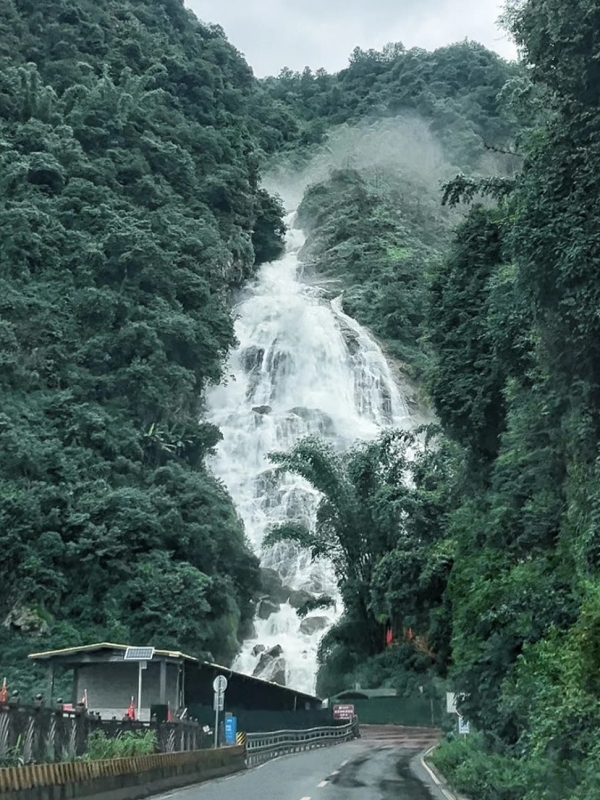
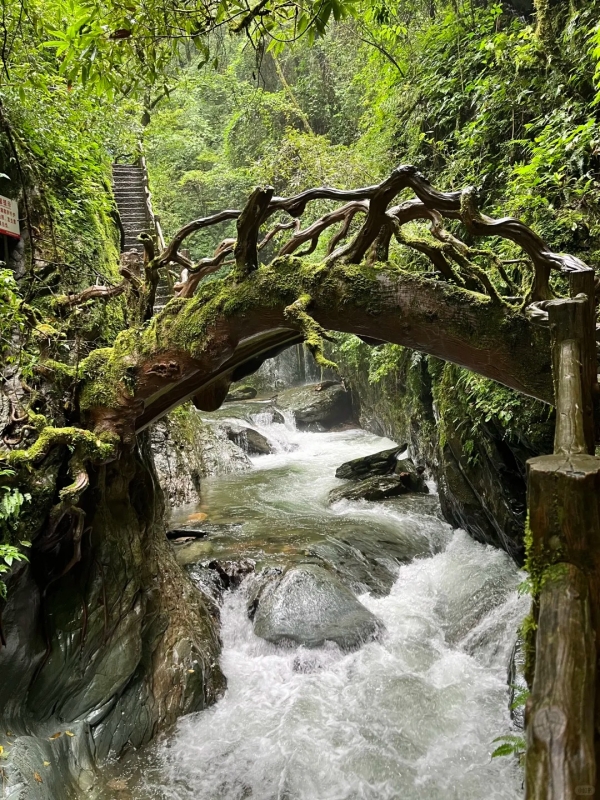
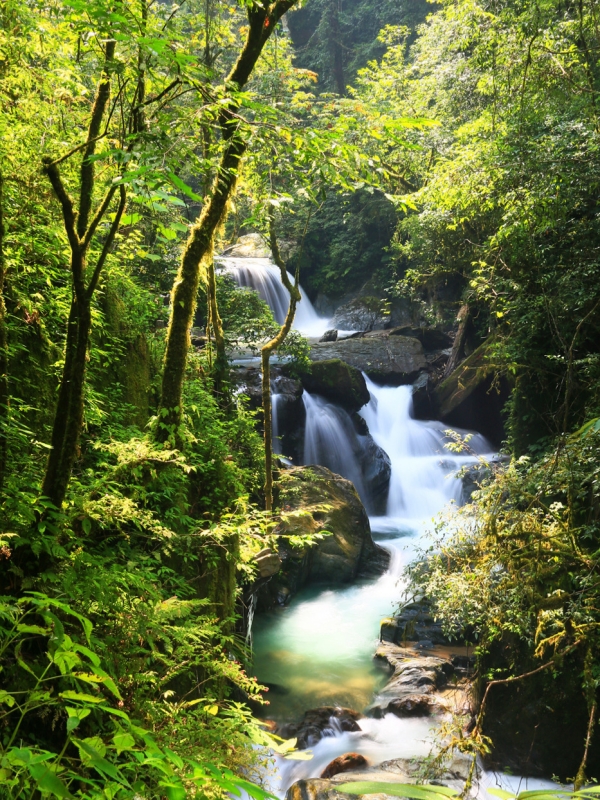
Ailao Mountain (哀牢山) sits quietly at the edge of Yunnan’s great divide, the demarcation between the Yunnan-Guizhou Plateau to the north and the Hengduan ridges that run to the south, a ridge that separates two completely different climates and worlds in culture and ecology. The nature of this atmosphere is elemental: sea-of-cloud sunrises, ancient subtropical forest and long silences that settle over the mountain and remain long after the journey ends.
Essential Travel Information
- 📍 Location: Central Yunnan, spanning Yuxi (玉溪), Pu’er (普洱), and Chuxiong (楚雄) prefectures — forming the geographical boundary between the Yunnan-Guizhou Plateau and the Hengduan Mountain system.
- ⛰️ Elevation: Main peak Daxueguo Mountain (大雪锅山) stands at 3,137 m. Most visitor activity concentrates along the S218 Provincial Road (S218省道) corridor.
- 🚡 Transportation: No cable car. Best explored by self-drive along the S218 Provincial Highway (哀牢山公路). Access points exist at Xinping (新平县), Zhenyuan (镇沅县), and Jingdong (景东县) counties. Chartered vehicles are available from all county towns.
- 📅 Best Time to Visit: Ailao rewards year-round visits. Specifically, March–April brings vivid spring greenery and September–November delivers clear autumn skies. Meanwhile, sea-of-cloud spectacles peak at dawn from October through March — arriving before sunrise dramatically increases your chances.
Key Highlights Worth Seeing
-
- Ailao Mountain
-
- Ailao Mountain
-
- Ailao Mountain
- Sea of Clouds at Sunrise: Jinshan Ya Pass (金山丫口) and Shimen Gorge (石门峡) are prime vantage points for Ailao’s most celebrated phenomenon. Indeed, an unbroken ocean of cloud fills the valleys at dawn, with ridgelines emerging like islands — a spectacle that rewards early rising.
- Yuanyang Terraced Rice Fields (元阳梯田): The UNESCO-listed terraces of Yuanyang in neighboring Honghe Prefecture are geographically and culturally connected to Ailao. Moreover, they represent one of Asia’s most extraordinary human-made landscapes — a natural extension of the Ailao journey.
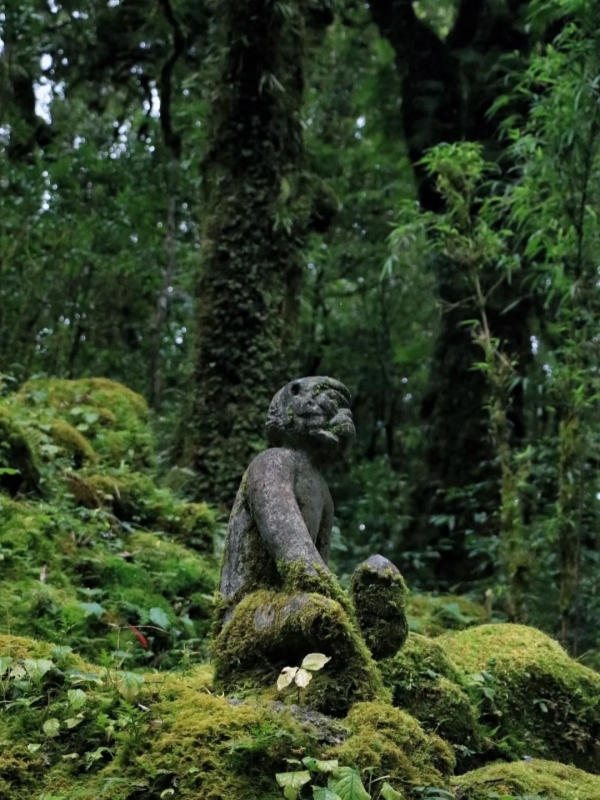
- Subtropical Primeval Forest: The core reserve protects one of China’s best-preserved subtropical evergreen broadleaf forests. Specifically, it shelters rare endemic birds and Ailao flying squirrels in a moss-draped, immersive atmosphere.
- Ancient Tea Horse Road Heritage (茶马古道): Qianjia Zhai (千家寨) in Zhenyuan and surviving Tea Horse Road stone paving preserve Ailao’s role as a historic trade corridor. Furthermore, ancient wild tea trees here represent living botanical heritage of global significance.
Recommended Routes & Trails
- Ailao Mountain Road Self-Drive (2–3 days): Enter from Xinping County (新平县), follow S218 through Nanyi Waterfall (南恩瀑布), Shimen Gorge (石门峡), Tea Horse Road sections, and Jinshan Primeval Forest (金山原始森林). Exit at Zhenyuan or Jingdong. Indeed, the road itself is the experience — one of Yunnan’s most scenic mountain drives.
- Qianjia Zhai Forest Trek (千家寨徒步): A deep-forest walk to Qianjia Zhai and its ancient wild tea tree community — including a specimen estimated at 2,700 years old. Specifically, it ranks among the world’s oldest cultivated tea trees, carrying immense cultural and botanical significance.
10. Jiaying Snow Mountain (甲应雪山)
Jiaying Snow Mountain
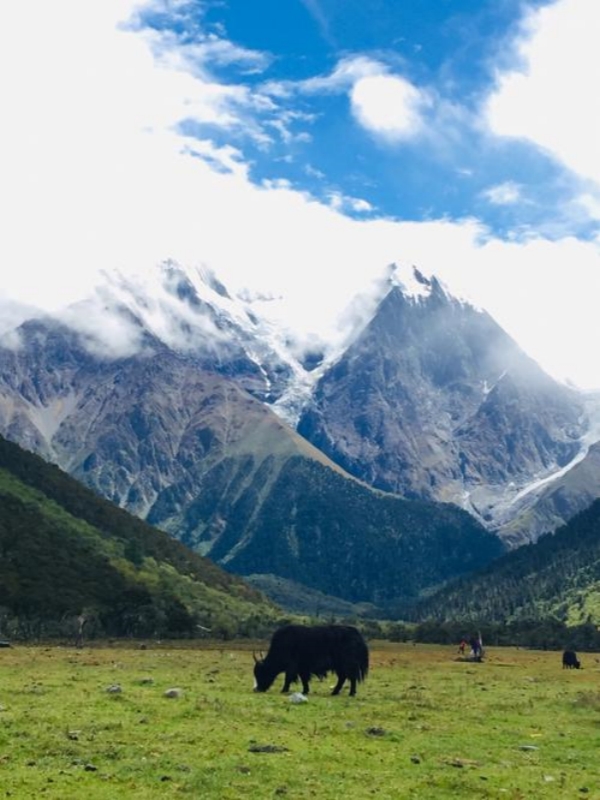
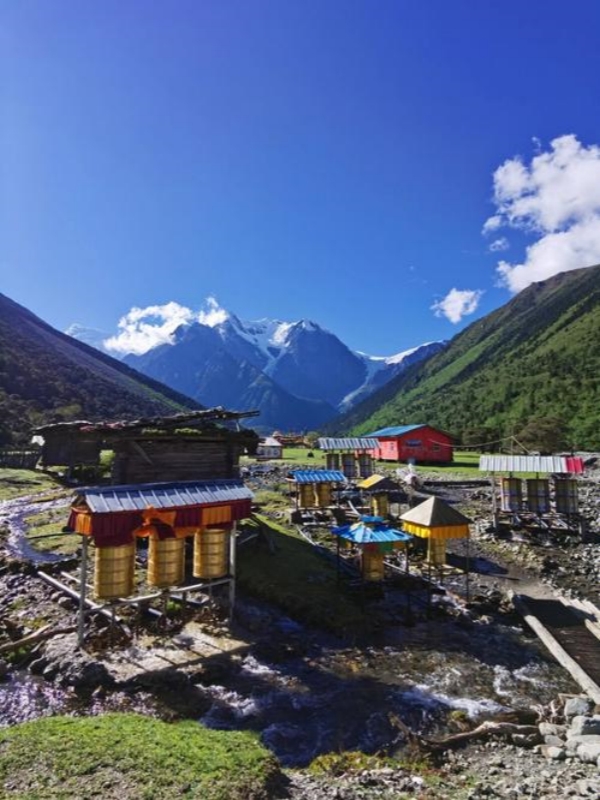
Jiaying Snow Mountain (甲应雪山), or Lion Snow Mountain, which stands a little the wrong side of the tracks, administratively speaking, in Tibet’s Chayu County (茶域县, Chayuxian), but whose soul and visage cannot be separated from the territory of the Meili Snow Mountain (梅里雪山) complex. Its four-household village at 3700m is the closest and most breath-taking of any vantage on Kawagebo’s western wall accessible to mere mortals. Few places amid the farthest flung of Yunnan’s mountains and open skies leave such a gnawing weight upon the heart.
Essential Travel Information
- 📍 Location: Chawalong Township (察瓦龙乡), Chayu County (察隅县), Linzhi City (林芝市), Tibet — geographically part of the greater Meili Snow Mountain region, and traditionally approached in conjunction with Yunnan’s Deqin County (德钦县).
- ⛰️ Elevation: Main summit stands at approximately 5,500 m. Jiaying Village (甲应村), the base for all exploration, sits at approximately 3,700 m.
- 🚡 Transportation: No cable car. Visitors travel by 4WD from Deqin County or Chawalong Township to Jiaying Village. All movement beyond the village is on foot or horseback. Tibet Travel Permits are required for the Tibetan-side approach.
- 📅 Best Time to Visit: May–June and September–October offer stable weather and low precipitation. Specifically, these windows maximize the probability of clear mountain views. Heavy winter snowfall may render routes impassable from December through February.
Key Highlights Worth Seeing
-
- Jiaying Snow Mountain
-
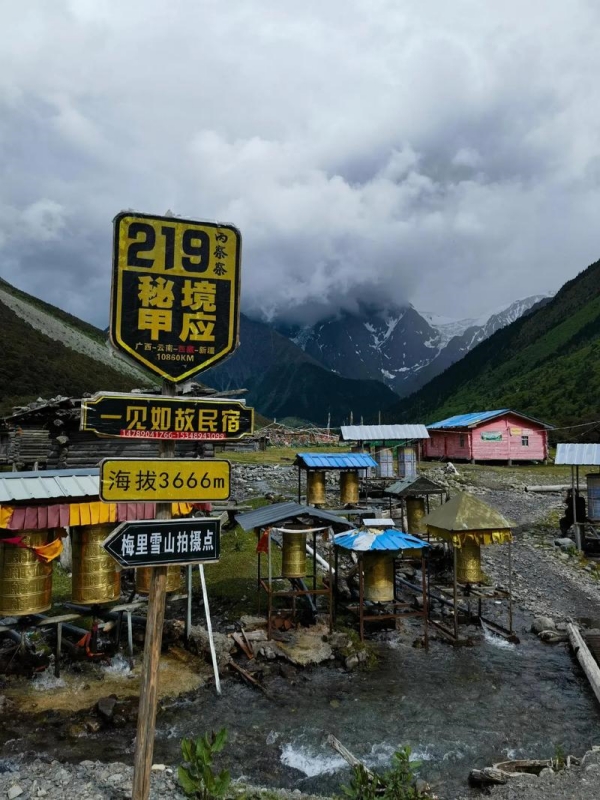
- Jiaying Snow Mountain
-
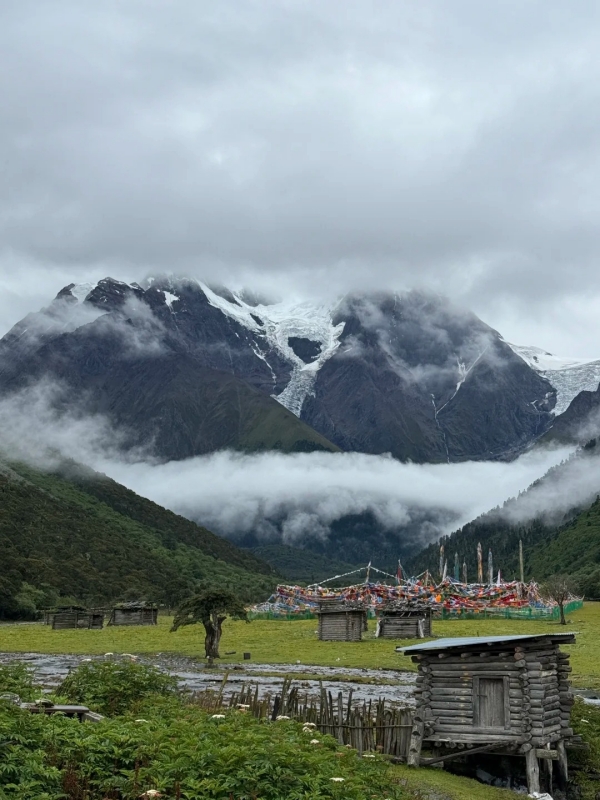
- Jiaying Snow Mountain
- Meili’s Western Wall: Standing beneath Kawagebo’s near-vertical western face — thousands of meters of ice and rock rising directly overhead — is a physical experience of mountain scale no photograph fully conveys. Indeed, this encounter defines the Jiaying journey.
- Jiaying Village — A World Apart: With only four resident households, Jiaying is among China’s most isolated inhabited settlements. Specifically, daily life here in the shadow of a sacred peak becomes its own profound form of travel.
- Glacier and Glacial Lake: Trails from the village lead to active glaciers and moraine-dammed lakes at the mountain’s base. Moreover, the raw, frontier terrain contrasts starkly with the developed mountain parks elsewhere in Yunnan.
Recommended Routes & Trails
- Jiaying Village Light Trek (1–2 days): Explore on foot from the village to the glacier front, the glacial lake above, and the hillside viewpoint for multiple perspectives on Kawagebo’s western wall. Distances are relatively short, though significant altitude gain requires careful acclimatization.
- Bingzalala Road Extension (丙察察线延伸游): Jiaying serves as a key branch stop on the legendary “Bingzalala” overland route (Bingzhongluo–Chawalong–Chayu / 丙中洛-察瓦龙-察隅). Furthermore, most multi-day 4WD expeditions allocate 1–2 additional days here as an essential part of the journey.
11. Laojun Mountain (老君山)
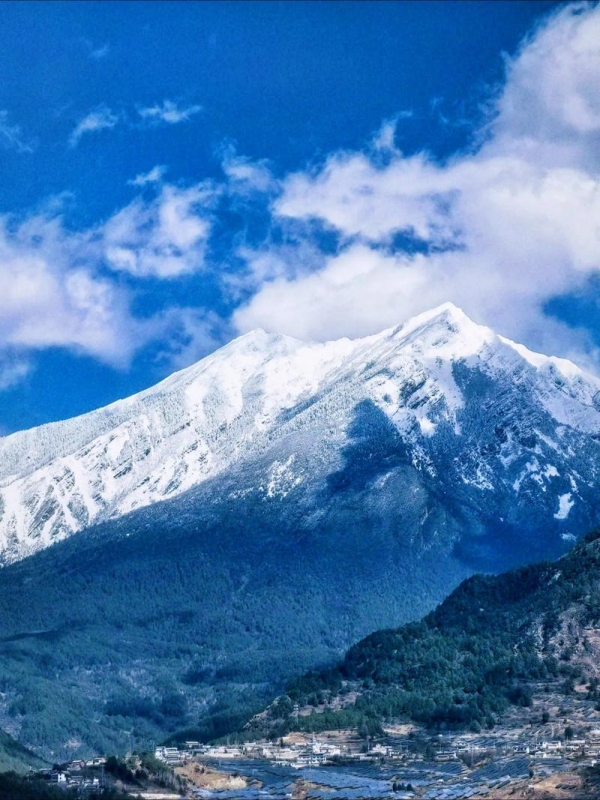
Laojun Mountain(Snow Mountain Range)
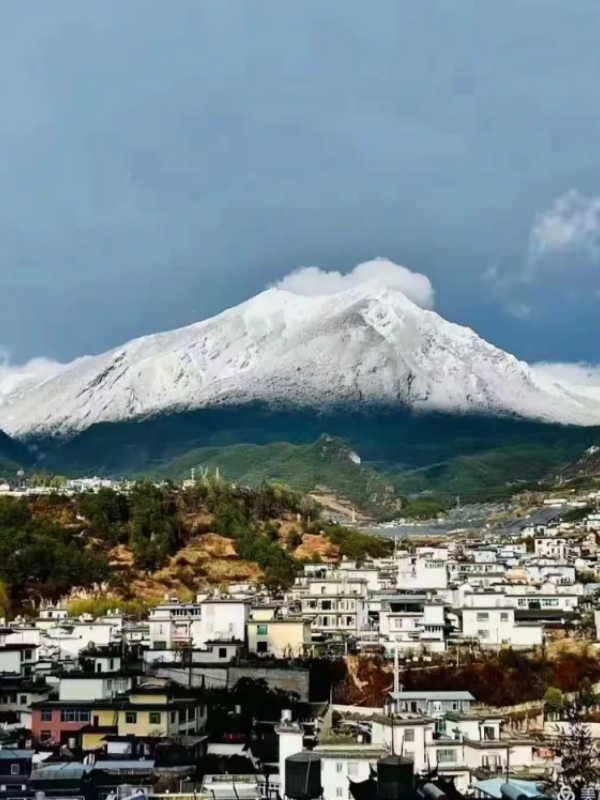
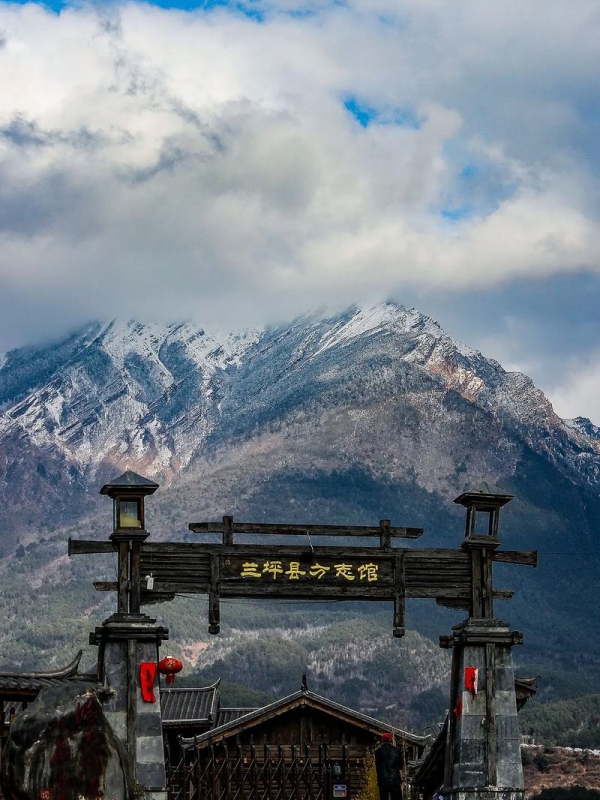
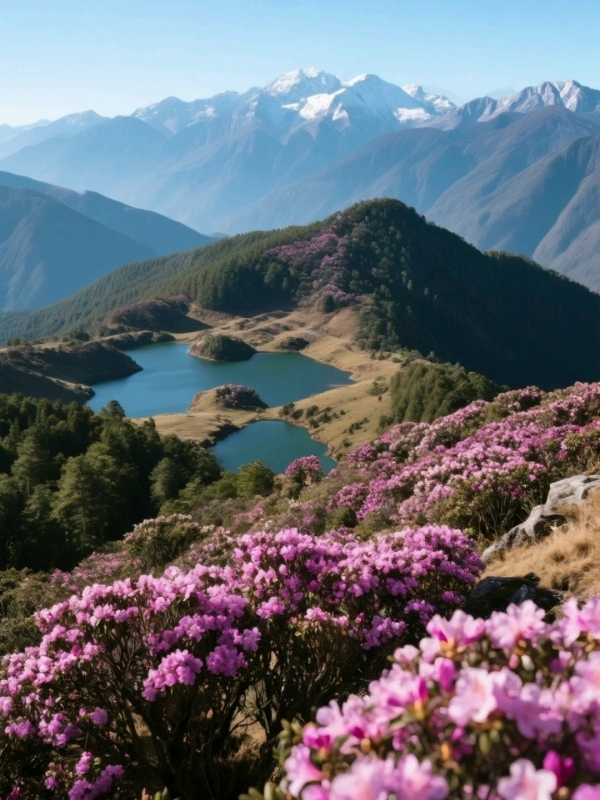
Laojun Mountain (老君山) or Snow Mountain Range (雪邦山) boasts visual contrasts that few other peaks in Yunnan can touch. Crimson Danxia sandstone cliffs compete for attention with snow-capped ridgelines, glacial lakes abide above 3,800 m while endangered Yunnan golden monkeys swing through old-growth forest below. For a mountain of its size and character, Laojun is astonishingly yet to be discovered by most international travellers, a deficiency not easily explained on the basis of its spectacular geology.
Essential Travel Information
- 📍 Location: Western Yulong County (玉龙县), Lijiang City — situated between the Lancang (Mekong / 澜沧江) and Jinsha (Upper Yangtze / 金沙江) river valleys, forming the main summit of the Yunling Range (云岭山脉).
- ⛰️ Elevation: Highest peak Jinsi Chang (金丝厂) stands at 4,513 m. The scenic summit Taishang Peak (太上峰) reaches 4,247 m.
- 🚡 Transportation: The Liming Scenic Area (黎明景区) features a via ferrata gondola (飞拉达索道). However, most areas require scenic shuttle vehicles or hiking. Lijiang City is the main gateway, approximately 2–3 hours by road to different entry points.
- 📅 Best Time to Visit: May through October is optimal — cool summer temperatures make it an ideal highland retreat. Specifically, May–June brings rhododendron blooms, and September–October delivers crisp autumn air with exceptional long-range visibility.
Key Highlights Worth Seeing
-
- Laojun Mountain(Snow Mountain Range)
-
- Laojun Mountain(Snow Mountain Range)
-
- Laojun Mountain(Snow Mountain Range)
- Liming Danxia Red Rock Landscape (黎明丹霞地貌): The Liming–Qiangui Mountain (黎明-千龟山) zone contains China’s most extensive high-altitude Danxia landform. Indeed, enormous red sandstone columns, vertical walls, and slot canyons streaked in crimson and gold offer a visual vocabulary entirely unlike Yunnan’s glacier peaks.
- Ninety-Nine Dragon Pools (九十九龙潭): Above 3,800 m, dozens of glacially formed alpine lakes scatter across the summit plateau. Moreover, the combination of still water, fir forest, and distant snow peaks creates exceptional scenes in summer and early autumn.
- Yunnan Golden Monkey Habitat (滇金丝猴): Laojun Mountain is a key protected habitat for the Yunnan snub-nosed monkey — one of China’s rarest endemic mammals. Specifically, ranger-guided wildlife observation opportunities are available in season at the reserve station.
Recommended Routes & Trails
- Liming Danxia Trail & Via Ferrata (黎明丹霞徒步): Explore the Qiangui Mountain (千龟山) canyon landscape, then take the via ferrata on iron-rung cliff faces with sweeping Danxia views. Indeed, this combination suits adventurous visitors without full mountaineering skills and stands out among Yunnan mountain experiences.
- Ninety-Nine Dragon Pools Trek (九十九龙潭徒步, 2–3 days): Approach from western Lijiang and hike to the Jinsi Chang (金丝厂) summit area and surrounding glacial lake plateau. However, this requires camping or homestay overnight and a reasonable level of physical fitness.
12. Wuliang Mountain (无量山)
Wuliang Mountain
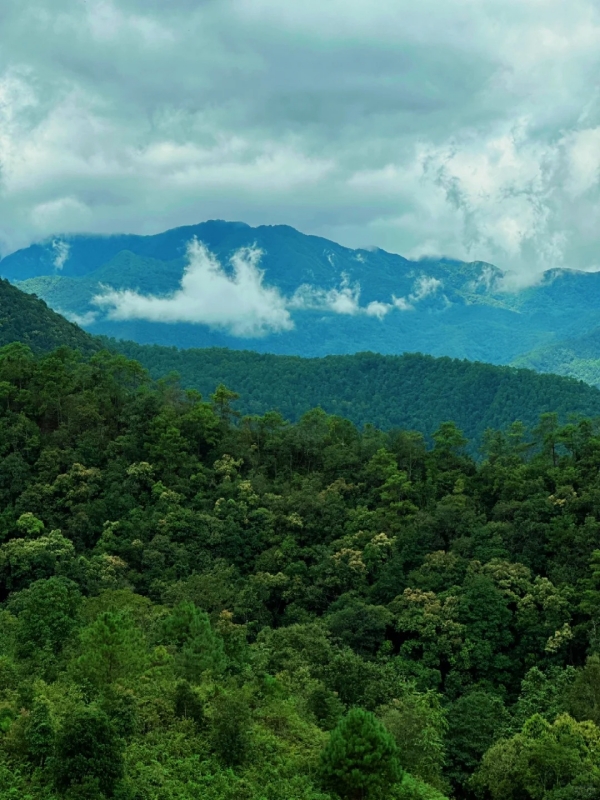
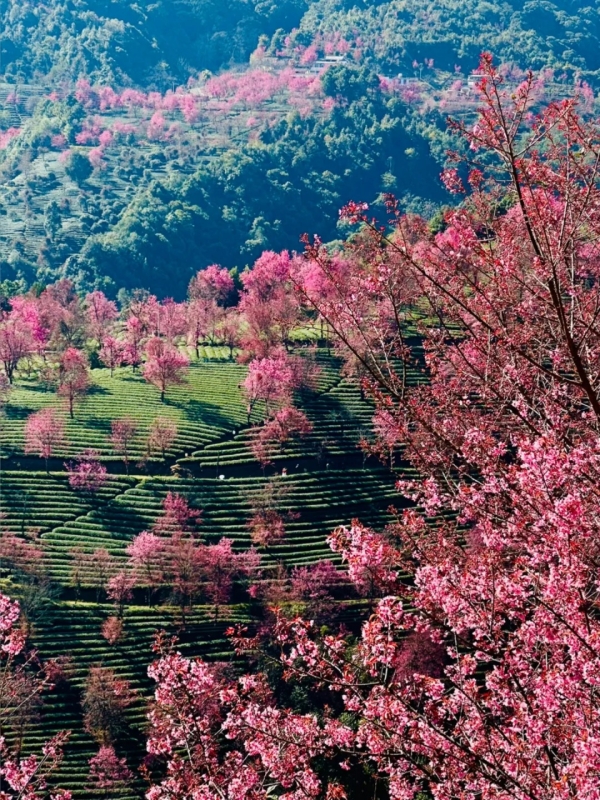
Turning from winter to late winter, you find Wuliang Mountain (无量山) in bloom while the rest of China is frozen. Cherry blossoms bloom on its ancient tea terraces — a reversal of the season one can trace as the origin of its name, “the place where spring arrives first”. With its wonder of plants and trees, highland tea society, embraced ecological wealth, and the literary legend of Jin Yong’s martial arts novels, you find no mountain in Yunnan like Wuliang Mountain.
Essential Travel Information
- 📍 Location: Jingdong County (景东县) and Nanjian County (南涧县), Pu’er City (普洱市), Yunnan Province — forming the watershed between the Lancang (Mekong / 澜沧江) River and the Bian River (把边江), a tributary of the Yuan River (元江).
- ⛰️ Elevation: Highest peak Maotou Mountain (猫头山) stands at 3,306 m. Key visitor areas sit between 1,800 m and 2,600 m, where tea gardens and cherry blossom zones concentrate.
- 🚡 Transportation: No cable car. Best accessed by self-drive or chartered vehicle. Specifically, Cherry Blossom Valley (樱花谷), Qianjia Zhai (千家寨), and Andin Rhododendron Lake (安定杜鹃湖) are geographically dispersed. County towns of Jingdong and Nanjian serve as bases.
- 📅 Best Time to Visit: Late November through early December for the winter cherry blossoms — typically 2–3 peak weeks. Furthermore, March–April brings spring azaleas and mountain greenery. Summer offers highland coolness.
Key Highlights Worth Seeing
-
- Wuliang Mountain
-
- Wuliang Mountain
-
- Wuliang Mountain
- Nanjian Cherry Blossom Valley (南涧樱花谷): Wild cherry trees unique to Wuliang’s altitude bloom in December, when the rest of China awaits spring. Indeed, the sight of snow-white blossoms above ancient tea terraces in deep winter ranks among Yunnan’s most surprising seasonal landscapes.
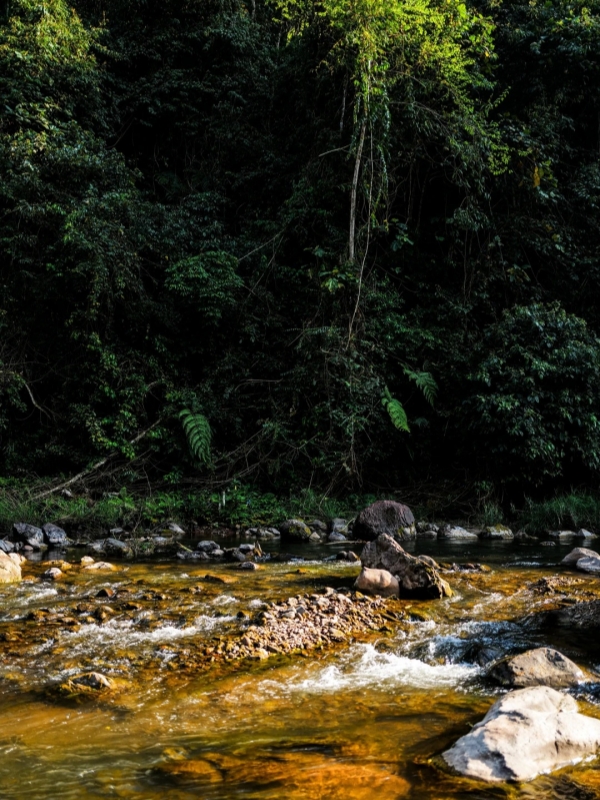
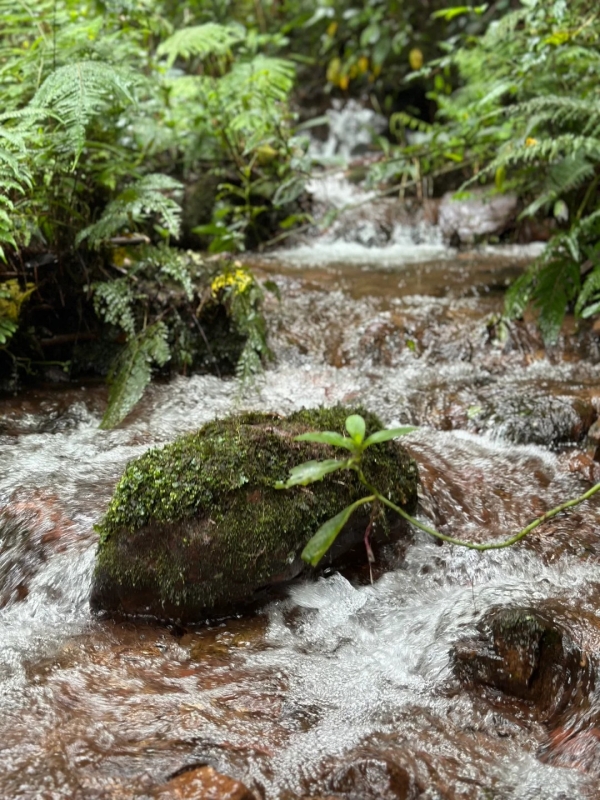
- Nature Reserve Ecology: The Wuliang Mountain Nature Reserve (无量山自然保护区) protects a complete subtropical evergreen broadleaf forest ecosystem. Specifically, it shelters gibbon populations, endemic plants, and extraordinary bird diversity — making it compelling for wildlife-focused visitors year-round.
- Highland Tea Garden Scenery: Wuliang’s upper slopes carry ecological tea gardens producing Pu’er-style teas prized for their mountain-grown character. Moreover, the terraced landscape forms part of the scenic experience, particularly in December’s golden morning light.
- Jin Yong Martial Arts Legacy: Wuliang Mountain features prominently in Jin Yong’s iconic wuxia novel Demi-Gods and Semi-Devils (天龙八部). As a result, it carries a literary dimension that adds storytelling depth for many Chinese-speaking visitors.
Recommended Routes & Trails
- Cherry Blossom Valley Photography Route (樱花谷摄影游): Concentrated in December — arrive before dawn at Nanjian’s Cherry Blossom Valley to photograph morning mist rising through blossoming trees above tea terrace rows. Indeed, the quality of light in the first hour after sunrise is exceptional. Accommodation in Nanjian town (南涧县城) is recommended for early-morning access.
- Jingdong Self-Drive Circuit (景东自驾环线): Using Jingdong County (景东县) as a base, visit Andin Rhododendron Lake (安定杜鹃湖), Huangcao Ridge Ecological Village (黄草岭生态村), and the Wuliang Mountain Nature Reserve outer zone. Furthermore, an afternoon tea experience at a highland garden rounds out this relaxed 2-day itinerary combining ecology, scenery, and Yi ethnic culture (彝族风情).
FAQs: Mountains in Yunnan — Your Questions Answered
Q: Which mountain in Yunnan is the most famous and most visited?
Jade Dragon Snow Mountain (玉龙雪山) leads all mountains in Yunnan in annual visitor numbers. Situated near Lijiang, it draws millions each year. Indeed, its three-line gondola system reaches 4,506 m — among China’s highest gondola endpoints. Therefore, even visitors with no hiking experience can access the glacier zone directly, making it the region’s most accessible high-altitude encounter.
Q: Which mountain in Yunnan is the best choice for beginner mountaineers?
Haba Snow Mountain (哈巴雪山) consistently ranks as the ideal first technical peak among the mountains in Yunnan. At 5,396 m, the summit requires crampons and an ice axe — but no advanced climbing skills. Moreover, certified local guides and rental equipment are available directly from Haba Village. As a result, success rates remain high throughout spring and autumn climbing seasons for well-prepared participants.
Q: Which mountains in Yunnan have cable cars or gondolas?
Several mountains in Yunnan offer gondola or cable car access. Specifically, Jade Dragon Snow Mountain has three gondola lines (highest at 4,506 m), Shika operates Asia’s longest pulsating gondola to 4,500 m, Cangshan has three cable car lines, and Jiaozi offers a gondola to approximately 3,800 m. In contrast, Meili, Haba, Gaoligong, and Biluo require full trekking access with no mechanized infrastructure.
Q: What is the best time of year to visit mountains in Yunnan?
The ideal season for the mountains in Yunnan depends on your destination and goals. For glacier scenery at Jade Dragon and Meili, October through May is optimal. Furthermore, April–June delivers rhododendron and wildflower blooms across most elevations. However, the summer rainy season brings lush landscapes alongside frequent cloud cover — Gaoligong and Biluo treks are most affected, so advance planning is essential.
Q: Is Meili Snow Mountain open for technical climbing?
Meili Snow Mountain (梅里雪山) has been permanently closed to climbing since 1991, following the loss of an entire mountaineering expedition. Moreover, the closure reflects Kawagebo’s sacred status in Tibetan Buddhism. However, visitors exploring the mountains in Yunnan can access the base area through Yubeng Village (雨崩村) and observe the peaks from established viewpoints — an experience that remains deeply moving.
Q: Do I need special permits to visit mountains in Yunnan?
Most mountains in Yunnan require only standard scenic area entrance tickets. For instance, Jade Dragon, Shika, Cangshan, and Jiaozi all operate on ticket-based entry. However, Haba Snow Mountain requires registration with the local mountaineering office before a summit attempt. Additionally, Jiaying Snow Mountain sits in Tibet — a Tibet Travel Permit and potentially an Alien Travel Permit are required for the Tibetan-side approach.
Q: How should I manage altitude sickness when visiting mountains in Yunnan?
Proper acclimatization is essential when visiting high-altitude mountains in Yunnan. Spend at least one night at moderate elevation — Lijiang at 2,400 m or Shangri-La at 3,200 m — before ascending further. Indeed, the Jade Dragon gondola lifts visitors to 4,506 m in minutes, frequently triggering symptoms. Furthermore, staying hydrated, avoiding alcohol on arrival, and consulting a doctor about altitude medication all significantly reduce risk throughout your journey.
Q: Can I combine multiple mountains in Yunnan into a single trip?
Combining multiple mountains in Yunnan on one trip is not only possible — it is the recommended approach. Indeed, northwest Yunnan’s geography makes this practical. For instance, a classic circuit links Lijiang (Jade Dragon) → Shangri-La (Shika) → Deqin (Meili) in 7–10 days. Furthermore, Cangshan pairs naturally with a Dali stay, and Haba is accessible from Lijiang as a 4–5 day extension with minimal additional travel.
Q: What should I pack for visiting high-altitude mountains in Yunnan?
Packing correctly for the mountains in Yunnan requires thinking in layers. A waterproof outer shell, thermal mid-layer, and UV sunglasses are non-negotiable at altitude. Indeed, conditions change rapidly — especially on Jiaozi and Jade Dragon. For overnight treks to Meili or Haba base camp, bring a sleeping bag rated to at least −5°C. Moreover, carry cash — ATMs are scarce in mountain areas throughout the region.
Q: Are guided tours necessary for mountains in Yunnan?
Guide requirements vary significantly across the mountains in Yunnan. For cable-car peaks — Jade Dragon, Shika, Cangshan, and Jiaozi — independent travel is fully straightforward. However, for Meili’s Yubeng trek and Gaoligong’s forest trails, a local guide adds meaningful safety and cultural depth. For Haba’s summit, hiring a certified guide is effectively mandatory. Moreover, for Biluo and Jiaying, the remoteness makes a local guide essential for all visitors.