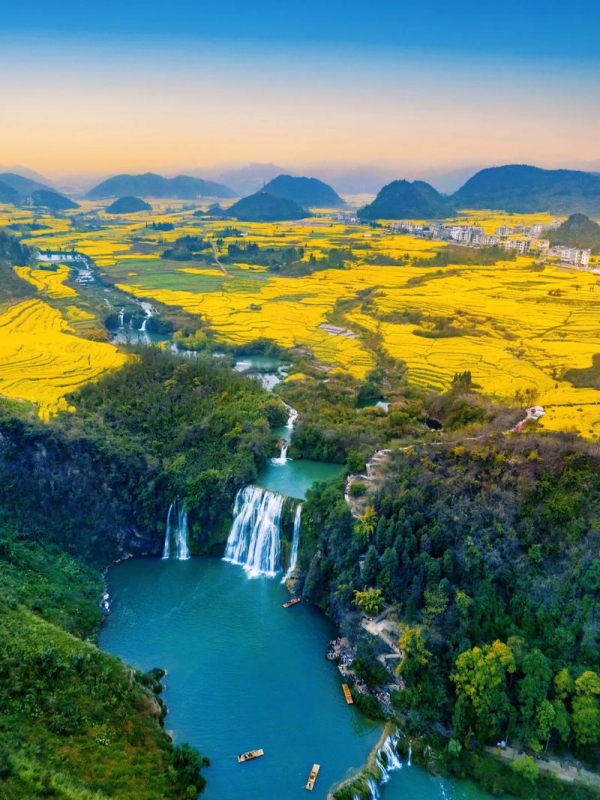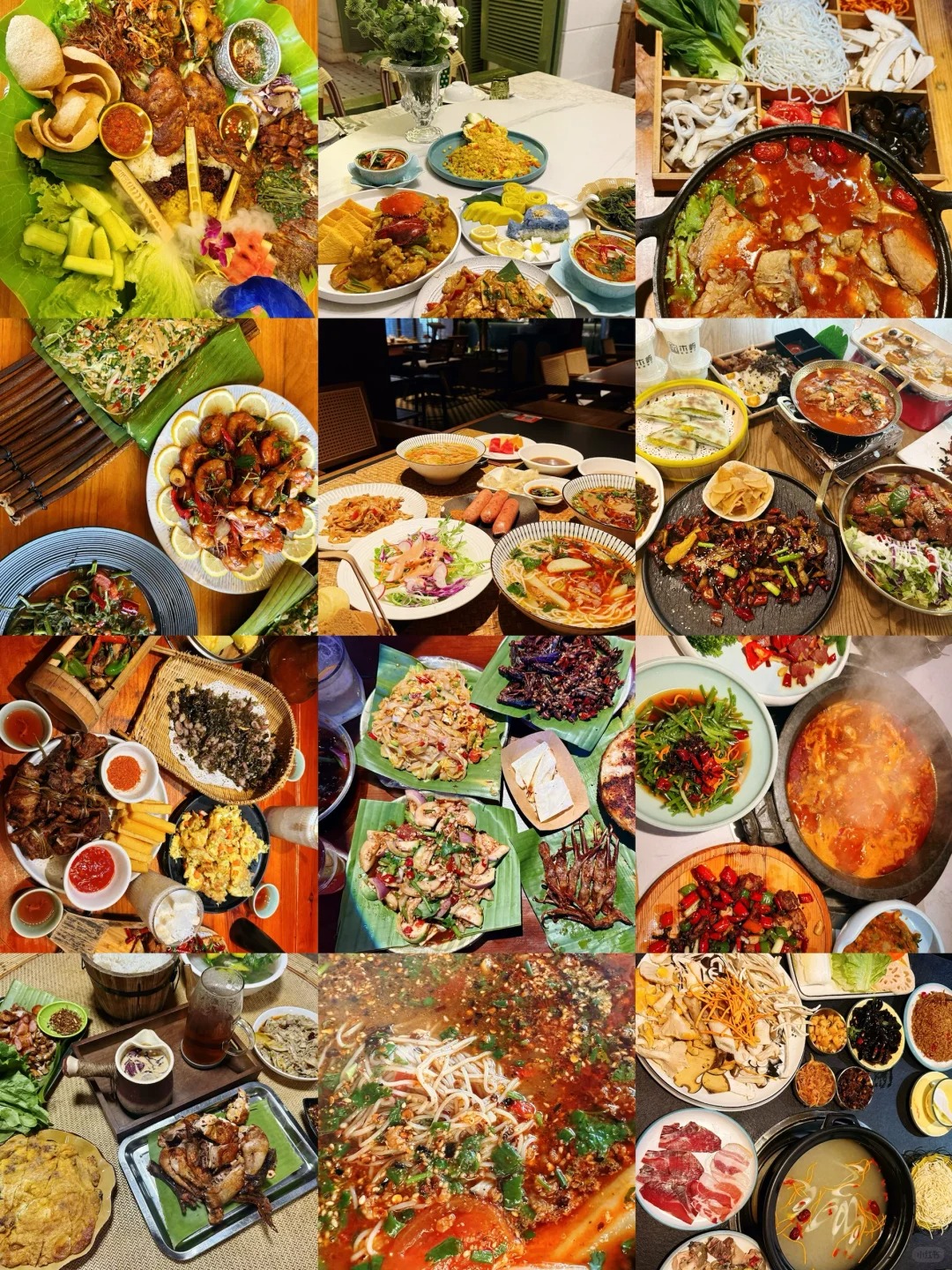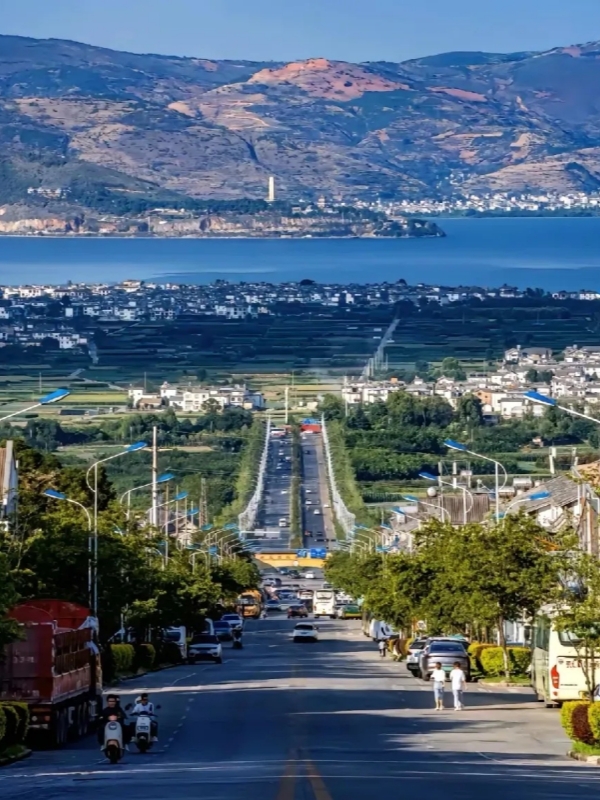
Dali, Yunnan Province
Sitting between the 19 peaks of Cangshan and the long mirror surface of Erhai Lake, Dali in Yunnan Province is the kind of place where you can climb a mountain in the morning, cycle a lakeside road in the afternoon, and end the day under lantern-lit old-town eaves. This guide puts the practical side first — how to get here from Kunming, the old-town walking route that links the best street markets, what to wear across four seasons, and the ticket prices a foreign visitor actually pays at the gate.
Quick Facts
Where Is Dali in Yunnan Province
Dali occupies a long, narrow strip of Yunnan's northwest — the Cangshan range rises steeply to the west while Erhai Lake stretches along the eastern flank, and the old town sits between them on the lake's west shore. Most visitors arrive from Kunming, roughly 330 km to the east, by air or high-speed rail. Local transport options include DiDi, e-bike rental, and the rural bus line that connects the old town to nearby Bai villages.
- By air: Dali Fengyi Airport (DLU) handles direct flights from Kunming (~1 hr), Beijing, Shanghai, Chengdu, and Guangzhou. International routes are limited — most foreign travelers fly into Kunming Changshui (KMG) and connect onward.
- By high-speed rail: The Kunming South to Dali line covers ~2 hours; second class costs about $28–35 (¥200–250), first class about $42–56 (¥300–400). Trains run roughly hourly. Book via Trip.com or Klook with a foreign card.
- Getting around: DiDi covers most sights for ~$3–8 (¥20–55). E-bikes rent near the south gate of the old town for ~$7–10 (¥50–70) per day. The rural bus to Xizhou and Zhoucheng costs ~$1–2 (¥8–14).
Top Things to Do in Dali
Four attractions anchor most Dali itineraries: the Three Pagodas on the old town's north side, the lantern-lit streets of Dali Old Town itself, Erhai Lake to the east, and the Cangshan peaks rising to the west. Each is independently worth a half-day or more.
Three Pagodas of Chongsheng Temple

Three Pagodas
The three-tier pagoda cluster on the north side of Dali old town dates back over a thousand years. The full-complex ticket runs ~$42 (¥298); a pagoda-only outer garden ticket costs ~$28 (¥198) if you only want the landmark photograph. Plan two to three hours. The site draws domestic tour groups mid-morning — arriving before 09:00 keeps the experience quieter and the light better for photos of the three towers against Cangshan.
Within the complex, the main hall of Chongsheng Temple sits to the left as you enter, and the central pagoda of the trio rises 69 meters. The smaller two pagodas flank it to the north and south, each 42 meters tall. A small museum near the entrance covers the pagodas' history through the Nanzhao and Dali Kingdom periods.
🏯 Historic Landmarks: Discover the history and photography tips for the Three Pagodas of Chongsheng Temple.
Dali Old Town
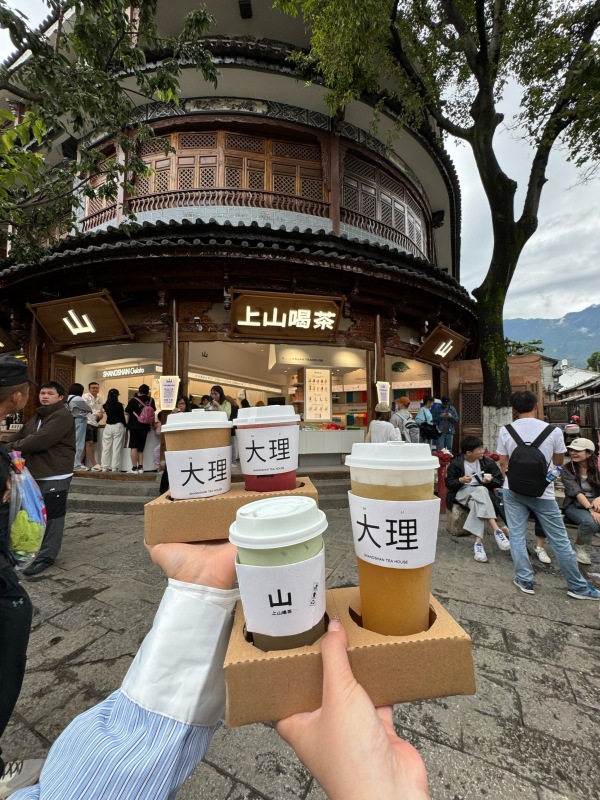
Fuxing Road in Dali Ancient Town
The old town is free to enter and open around the clock. The main walking axis runs roughly 1.5 km south to north along Renmin Lu, anchored by the South Gate, the Five Phoenix Tower at the midpoint, and the North Gate at the top end. Sunrise visits bring fewer vendors; after 19:00 the lanterns come on and the atmosphere shifts.
- South Gate (双廊门): Primary taxi drop-off point, market stalls on either side.
- Five Phoenix Tower (五华楼): Climb the free viewing deck for a Cangshan panorama.
- North Gate (北门): Quieter exit; easy taxi pickup for the Three Pagodas or Cangshan.
Erhai Lake Cruise & Bike Ride
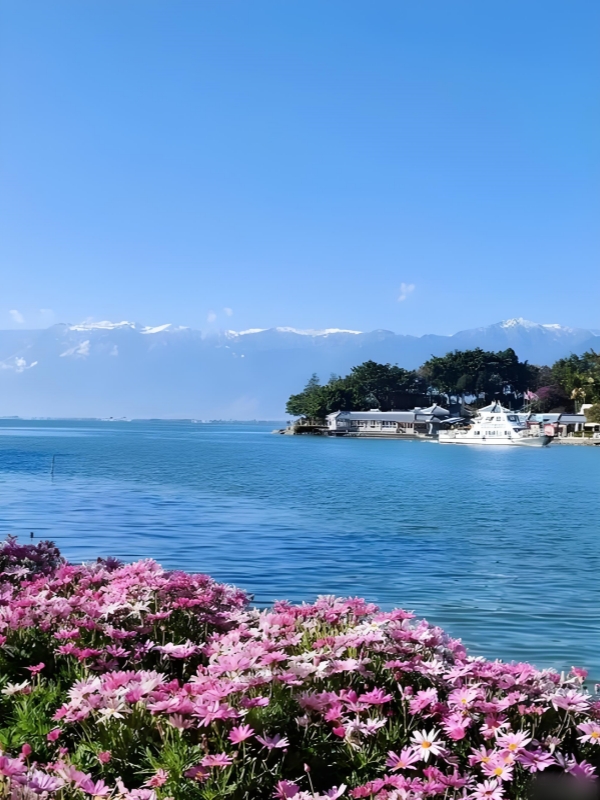
Erhai Lake
Erhai is the long, shallow plateau lake that stretches north–south east of the city. Two options serve different preferences. The large sightseeing boat departs from Xiaguan or Shuanglang pier for ~$14–21 (¥100–150) and runs two to three hours. Alternatively, the east-shore e-bike loop covers roughly 50 km on flat terrain — bikes rent near the south gate for ~$7–10 (¥50–70) per day. Sun protection and water are essential; mobile signal drops on the north shore.
🚲 Scenic Waterway Adventures: Find e-bike routes and cruise details at Erhai Lake Guide.
Cangshan Mountain & Cableways

Cangshan Mountain
Nineteen peaks run north–south along Dali's western edge. Two cableways welcome visitors. The Gantong Cableway (感通索道) reaches the Zhonghe Temple area for ~$18 (¥128) round trip. The higher Ximatan Cableway (洗马潭索道) climbs to the alpine meadow for ~$28 (¥198) round trip, weather permitting — it closes when wind exceeds safe limits. Either option needs a half-day minimum. Height restrictions apply on both lines; confirm on site before boarding.
🗺️ Dali Highlights & Itineraries: Plan your full trip with Things to Do in Dali.
Old Town Walking Route & Street Markets
The old-town walk from south to north covers about 2.5 km in roughly three hours if you detour through the side markets and stop for food. Two natural extensions — Xizhou and Zhoucheng — are Bai villages that most visitors pair with the old town on a day trip.
The South Gate to North Gate Old-Town Loop
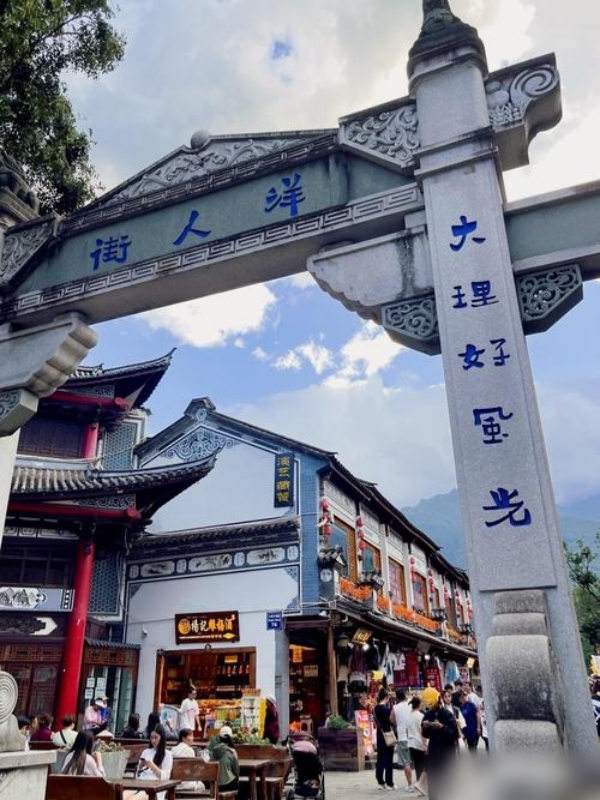
Foreigner Street
Start at the South Gate where taxis drop off. Head west briefly to Foreigner Street — the stretch between Dali First High School and Wenxian Lu — where cafés with English menus and ATMs accepting Visa or Mastercard cluster together. From there, walk east back to Renmin Lu and north toward the Five Phoenix Tower, climbing the free viewing deck for a Cangshan panorama before continuing north.
Renmin Lu is the main shopping street. Tie-dye shops line the blocks between the South Gate and Five Phoenix Tower; prices run roughly $8–14 (¥60–100) for a finished piece. Past the tower, the Jiangbian Old Market area opens to the east — a small wet market in the mornings with breakfast stalls selling baba flatbread and soy milk. The walk ends at the North Gate, quieter than the south end and a straightforward taxi point for onward sights.
- South Gate (双廊门): Taxi drop-off; morning market stalls.
- Foreigner Street (洋人街): Cafés, English menus, Visa ATMs.
- Five Phoenix Tower (五华楼): Free climb; Cangshan view.
- Renmin Lu walking street: Main shopping strip; tie-dye shops.
- Jiangbian Old Market: Morning wet market + breakfast stalls.
- North Gate (北门): Quiet exit; easy taxi out.
Connecting the Old Town to Xizhou & Zhoucheng
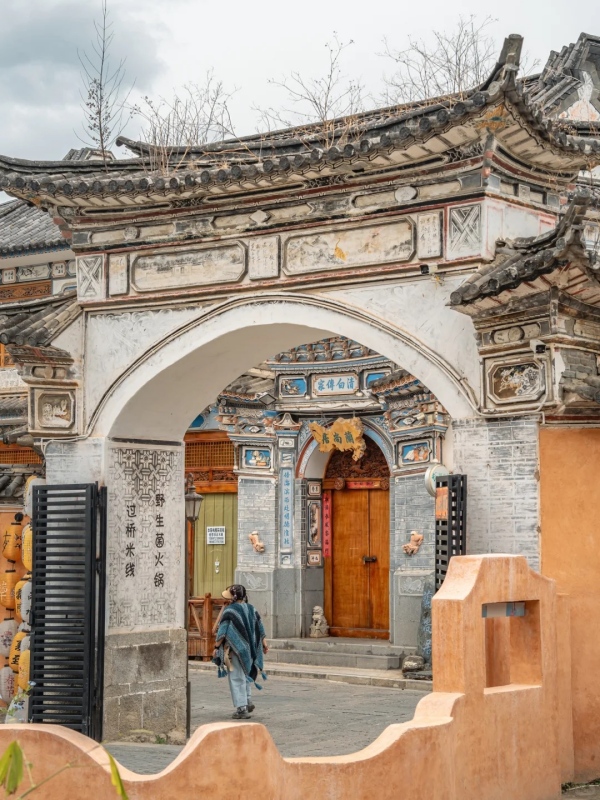
Xizhou Ancient Town
Two Bai villages make natural day-trip extensions from the old town. Xizhou Ancient Town lies roughly 25 km north and is known for its preserved Bai courtyard architecture. The Yan Family Compound (严家大院) charges ~$4 (¥28) for entry and gives a clear picture of a merchant's residence from the early 20th century. Baba flatbread stalls line the main square — try one hot from the griddle.
Zhoucheng sits roughly 20 km north and is the main Bai tie-dye village. Hands-on workshops let you dye and take home a scarf for ~$8–14 (¥60–100); most operate on a walk-in basis. The rural bus from the old town's north bus stop reaches both villages in about an hour each way. Combining both in one day is realistic but tight — depart by 08:30.
🎨 Bai Heritage & Tie-Dye: Explore traditional crafts and Bai architecture in Zhoucheng Village Guide.
Where to Eat & Stay in Dali

Erkuai
Bai cuisine centers on sour-spicy flavors, fermented ingredients, and fresh lake fish. Rushan cheese (乳扇) — a baked or fried dairy fold — appears at nearly every street stall. Erkuai rice cakes (饵块) come grilled with toppings or sliced into soups. A meal at a mid-range Bai restaurant runs about $7–14 (¥50–100) per person. The night market on Fuxing Lu, which sets up after 18:00, offers inexpensive street food into the evening.
- Bai fish hot pot: Erhai lake fish cooked tableside with pickled vegetables and chili — a signature dish, ~$10–18 (¥70–130) per person at mid-range restaurants.
- Rushan cheese: Sold at street stalls near the South Gate, ~$1–2 (¥8–14) per piece.
- Baba flatbread: Available in Xizhou Ancient Town and at the Jiangbian Old Market; try it hot from the griddle with butter and sugar.
- Erkuai rice cakes: Found at casual eateries along Renmin Lu; grilled versions make a quick lunch, ~$2–4 (¥15–30).
Accommodation falls into two zones. Courtyard guesthouses cluster around the South Gate and Five Phoenix Tower area, ranging from $25–70 (¥180–500) per night — many have roof terraces with Cangshan views. Erhai lakeside resorts, particularly around Shuanglang on the east shore, run $90–250 (¥650–1,800) per night for a lake-view room. Book via Trip.com or Klook for foreign-card payment.
🍲 Local Dining & Food: Savor regional specialties, street food, and Bai fish hot pot with Yunnan Cuisine & Local Specialties.
What to Wear in Dali by Season
Spring (March–May)
Mornings still carry a chill, but afternoons reach a comfortable 18–22°C. Wildflowers bloom around Erhai Lake in March, making early spring a scenic time to cycle the lakeside road. A light long-sleeve top layered with a thin fleece or hoodie handles the temperature swing between morning and midday.
Summer (June–August)
Daytime highs settle around 23–25°C — warm but never oppressive thanks to the altitude. This is the main rainy window, though showers tend to be short and sharp rather than all-day downpours. Pack T-shirts, a light rain jacket or compact umbrella, and sunscreen. UV is stronger at altitude than at lower latitudes. One pair of closed walking shoes handles wet cobblestones; sandals work for dry days.
Autumn (September–November)
Most visitors consider this the best window. Clear skies, mild daytime temperatures, and cool evenings create comfortable conditions for walking, cycling, and cableway rides. Layering works well — a T-shirt under a light jacket handles afternoon warmth and evening chill alike. Pack one warmer pullover for nights at higher elevation.
Winter (December–February)
Daytime highs drop to 12–15°C, with lows approaching freezing overnight. The old town feels noticeably colder than Kunming at the same latitude. Cangshan peaks above 3,000 m occasionally receive snow, which can affect cableway operations. A proper winter coat, scarf, and long pants are necessary for outdoor sightseeing.
How to Get to Dali
By Air to Dali Airport
Dali Fengyi Airport (DLU) sits roughly 25 minutes by taxi from the old town. Direct flights connect Dali with Kunming, Beijing, Shanghai, Chengdu, Guangzhou, and a handful of Southeast Asian hubs, though international connectivity remains limited. Most travelers fly into Kunming Changshui Airport (KMG) first and take a connecting flight or the high-speed rail onward.
By High-Speed Rail
The Kunming–Dali Intercity Railway runs roughly two hours from Kunming South to Dali Railway Station. Second-class fares come to about $28–35 (¥200–250); first class runs $42–56 (¥300–400). Trains depart hourly from early morning through late evening. Trip.com and Klook accept foreign cards for booking, while the domestic 12306 platform requires a mainland phone number.
Getting Around Dali
Three transport modes cover most visitor needs. DiDi ride-hailing works through Alipay or WeChat Pay and reaches all major sights for ~$3–8 (¥20–55). E-bike rental shops cluster near the south gate of the old town; a full-day rental for Erhai loop cycling costs ~$7–10 (¥50–70). The Dali–Xizhou–Zhoucheng rural bus line serves the nearby Bai villages for ~$1–2 (¥8–14) each way.
Frequently Asked Questions
Q: How many days do you need in Dali?
Three full days covers the essentials — one day for the old-town walk and Three Pagodas, one day for Erhai Lake by bike or boat, and one day for Cangshan. A fourth day lets you add the Xizhou and Zhoucheng side trip without rushing.
Q: Is Dali Old Town free to enter?
Yes. The old-town streets are open 24/7 with no entry charge. Only named sites inside the old town — Three Pagodas, Yan Family Compound in Xizhou, the Cangshan cableways — charge separate tickets.
Q: Can you visit Erhai Lake without a tour?
Yes. Most visitors rent an e-bike at the south gate of the old town and ride the east shore independently. No permit or guide is required. A public bus to Xizhou offers a second self-guided option.
Q: Do people in Dali speak English?
Limited English is common. Younger hotel and restaurant staff often manage basic conversation; older market vendors may not. A translation app is helpful in smaller shops and rural villages.
Q: Is Dali safe for foreign tourists?
Very safe by mainstream tourist standards. Petty street crime is rare. Standard precautions with passports and bags apply at the night market. Cangshan cableways have height and weather restrictions — confirm on site before boarding.
Q: When is the best month to visit Dali?
April–May and October–November offer the clearest skies, mildest days, and the lake at its bluest. The March 3rd Bai Festival draws cultural interest but brings heavier domestic-crowd pressure.
Q: How much does the Cangshan cableway cost?
The Gantong Cableway round trip runs ~$18 (¥128); the higher Ximatan Cableway costs ~$28 (¥198). Both are bookable on Trip.com and Klook. Ximatan closes in high wind — reconfirm the day of your visit.
Q: Is Dali included in the 240-hour visa-free transit list?
Dali has appeared as an eligible entry/exit point under China's expanded transit schemes, though eligible ports and qualifying nationalities change. Check the official Chinese immigration administration's current announcement before booking flights.