Shangri-La City in China
The name "Shangri-La" city in China carries two distinct meanings in modern travel. One is a global luxury hotel brand with properties across Asia and beyond. The other is a real highland city in northwestern Yunnan Province, China — a place of Tibetan monasteries, snow-capped peaks, and alpine meadows that visitors travel thousands of miles to reach. This article covers that second Shangri-La: the municipality officially known as Shangri-La City, which serves as the seat of Diqing Tibetan Autonomous Prefecture.
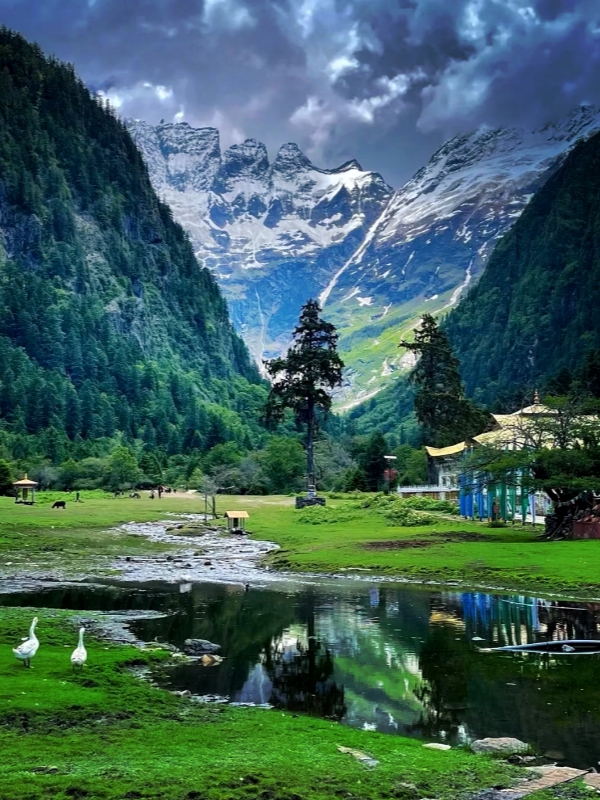
Positioned at roughly 3,459 meters above sea level, Shangri-La City draws visitors with Songzanlin Monastery, Potatso National Park , Dukezong Ancient Town, Napahai Lake, and Meili Snow Mountain. Each destination sits within a few hours of the city, making Diqing one of the most compact highland travel regions in western Yunnan.
Quick Facts
Understanding Shangri-La City and Diqing
Shangri-La City in China
Shangri-La City in China is a real municipality, not a fictional place or a brand name. The city sits in northwestern Yunnan Province as the administrative seat of Diqing Tibetan Autonomous Prefecture — a larger prefecture that also includes Deqin, Weixi, and Dêrong counties. This administrative distinction explains much of the naming confusion online: "Diqing" and "Shangri-La" refer to different levels of governance, yet they cover the same geographic area, which is why the two names appear interchangeably in search results and travel articles.
In 2001, Zhongdian County officially adopted the name "Shangri-La" to align with James Hilton's 1933 novel Lost Horizon, which described a mythical Tibetan utopia. The rebranding was a deliberate economic and tourism strategy, and it succeeded in raising the region's profile internationally. The older Tibetan name for the area, Gyalthang (建塘), remains in use among local residents and in certain official contexts.
The Shangri-La hotel chain, founded by Gordon Ivester and Robert H. Burns and now part of Hilton's portfolio, shares the name but operates independently. The brand did not originate in or from the city; the coincidence of names is a result of the hotel group's own choice to evoke the same literary reference.
- Real place: Shangri-La City is a municipality in northwestern Yunnan, not a hotel brand or a fictional location.
- Administrative level: It serves as the seat of Diqing Tibetan Autonomous Prefecture, which is a larger prefecture containing multiple counties.
- Unrelated brand: The Shangri-La hotel chain shares the name but is a separate commercial entity with no connection to the city government.
- Local Tibetan name: Gyalthang (建塘) is still used by residents and in some official Tibetan-language documents.
Top Things to Do in Shangri-La
The five signature attractions of Shangri-La City in China all lie within roughly two hours of the city center. These include a Tibetan Buddhist monastery dating to the 17th century, mainland China's first officially designated national park, a 1,300-year-old Tibetan old town, a seasonal highland wetland, and one of Yunnan's most revered snow mountains. A sixth section covers secondary destinations reachable as day or overnight trips from Shangri-La.
Songzanlin Monastery

Shangri-La City in China
Songzanlin Monastery is the largest Tibetan Buddhist monastery in Yunnan Province. It was founded in 1679 during the Qing dynasty and rebuilt in the 1980s following damage during the Cultural Revolution. The complex sits on a hillside above the city, and its two main halls are modeled after the Potala Palace in Lhasa — which gives the monastery its local nickname, "Little Potala." The architecture is the main draw: tiered golden roofs, crimson walls, and carved wooden balconies arranged on a steep slope that rises above the valley.
Visitors enter through a gate flanked by prayer wheels. Inside, the main assembly hall displays thangka tapestries, Buddha statues, and rows of butter lamps. A popular photograph vantage point is Ramjangzo Lake, accessible via a short trail across the valley — the monastery appears in full profile against the forested hills from the lake's far shore. Annual visitor numbers place Songzanlin among the most visited religious sites in northwestern Yunnan.
Tickets cost about $10–12 (¥75). The site opens daily from 8:00 to 18:00. The Gedong Festival, held on the 26th through 29th day of the 11th month of the Tibetan calendar, brings masked dances, chanting monks, and large pilgrim gatherings — it typically falls in late November or early December and is the best time to experience the monastery at its most active.
Potatso National Park
Shangri-La City in China
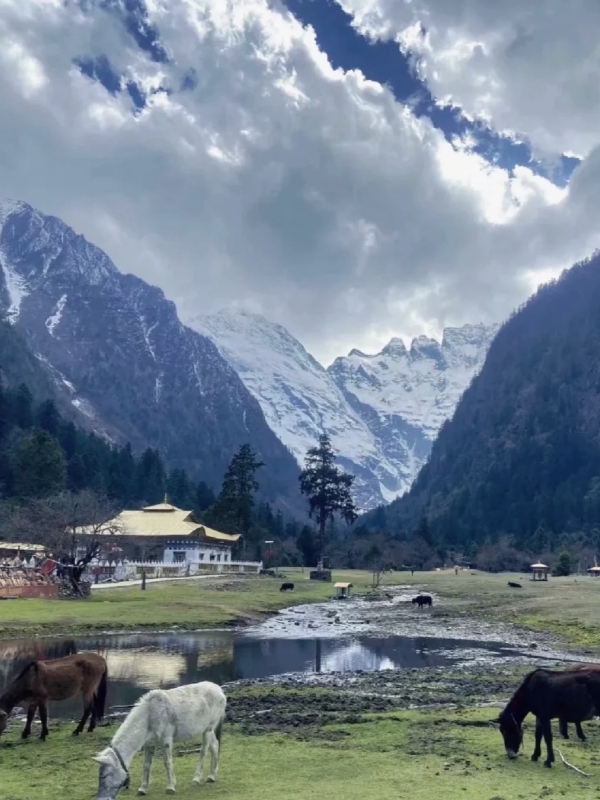
Potatso National Park holds the distinction of being mainland China's first national park, officially designated in 2007. It covers a large area of alpine forest, wetlands, and mountain terrain in the eastern part of Diqing Prefecture, roughly 30 kilometers from Shangri-La City in China. The park contains two principal lakes: Bita Lake (Bita Hai) and Shudu Lake (Shudu Hai). Bita Lake sits at a higher elevation and is the larger of the pair, framed by dense pine forest on three sides.
Access to the core park area requires a mandatory shuttle bus — private vehicles cannot enter. This rule applies year-round. The entry fee runs about $30–35 (¥215) and the shuttle adds roughly $8 (¥60) per person. A 4-kilometer boardwalk loop near Bita Lake provides an accessible route through the wetland margins. Militang, an alpine pasture area, offers open views and is popular for short hikes in summer.
- Bita Lake (Bita Hai): The larger lake at higher elevation, surrounded by pine forest and accessible via the boardwalk loop.
- Shudu Lake (Shudu Hai): Smaller and more secluded, reached by a longer trail from the main parking area.
- Militang Alpine Pasture: Open meadow area used by local Tibetan herders; popular for half-day hikes in July and August.
- 4 km Boardwalk Loop: Paved walkway near Bita Lake; wheelchair-friendly and the most accessible way to see the lake's margins.
The best months to visit are May through October. Rhododendrons bloom from late May through early June, covering the hillside in red and pink. Summer brings frequent afternoon rain, which can make trails muddy but also keeps the landscape green. Winter access is limited due to snow on the access roads.
Dukezong Ancient Town
Shangri-La City in China
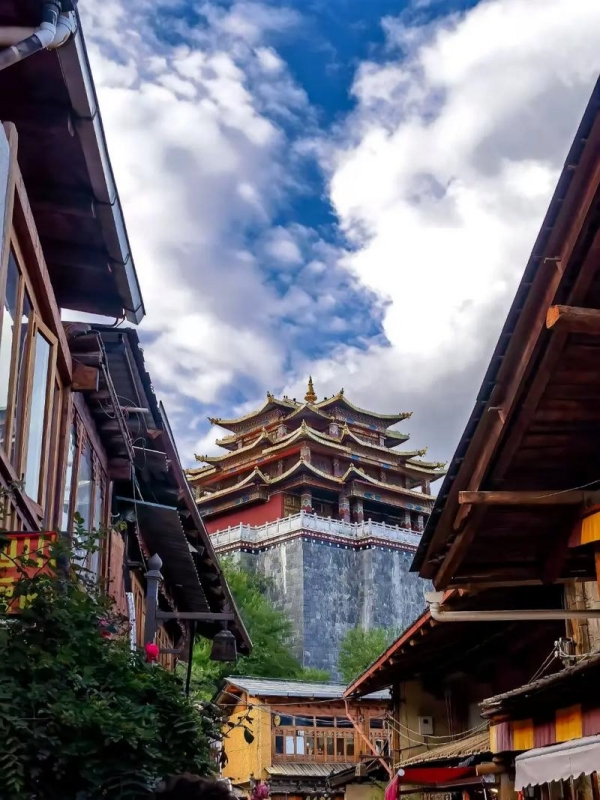
Dukezong is one of the oldest continuously inhabited Tibetan settlements in Yunnan. The town dates back more than 1,300 years, making it the largest and best-preserved Tibetan old town in the province. The street layout follows a grid that predates modern planning, with narrow cobblestone lanes, whitewashed Tibetan houses, and prayer flags strung between rooftops.
Guishan Park occupies the hill at the town's northern edge. It houses one of the world's largest manually spun prayer wheels — a massive bronze cylinder about 25 meters tall that rotates continuously on a steel axle. The wheel itself is free to view from the park. Visitors can spin smaller prayer wheels arranged around the base. Moon Square, the central plaza at the heart of the old town, serves as a gathering point and a navigation landmark for first-time visitors.
The old town is walkable without a ticket. A small number of museums and teahouses inside charge modest admission fees. The main activity is simply wandering — the lane between the south gate and Moon Square is the most atmospheric in the early morning, before tour buses arrive.
Napahai Lake and Grassland
Shangri-La City in China
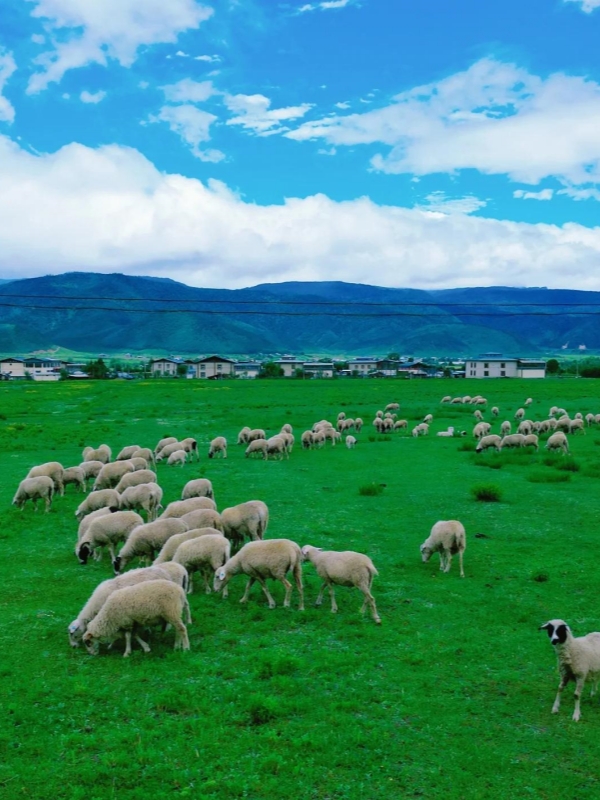
Napahai is a seasonal high-altitude wetland situated roughly 8 kilometers north of Shangri-La City in China. The lake occupies a depression in the grassland that fills with snowmelt from surrounding hills during the summer months. By late September the water level typically peaks, and migrating birds — including black-necked cranes — pass through the area before continuing south.
Access to the grassland itself is free. Local Tibetan operators at the entrance road offer horse rides and yak rides for roughly ¥30–80 depending on duration. Mountain bikes rent for about $5 (¥35) from rental stalls near the same area. The landscape is open and flat, with views toward the distant mountains to the north. Cycling the perimeter track takes roughly two to three hours at a leisurely pace.
The best window is July through September when water levels are highest and the grassland is green. From November through February the lake freezes over and the grassland turns brown, which is visually less striking but also much less crowded. Bring a windproof layer regardless of season — the plateau wind is persistent even on sunny winter afternoons.
Meili Snow Mountain

Shangri-La City in China
Meili Snow Mountain is a cluster of four peaks in Deqin County, western Diqing Prefecture. The tallest is Kawagebo at 6,740 meters — the highest peak in Yunnan Province and one of the most venerated mountains in Tibetan Buddhism. The standard sunrise viewpoint is at Feilai Temple, a small Buddhist shrine perched on a ridge about four hours by road from Shangri-La City in China.
At sunrise, when conditions are clear, the light hits Kawagebo's granite face and turns it gold for roughly 20 minutes — the so-called "golden sunrise." Visibility depends on weather: the phenomenon is most reliable from October through April when the monsoon clouds have retreated. During summer (June–August), cloud cover is frequent and mornings are often obscured. Checking the weather forecast before making the overnight trip to Feilai Temple is strongly advised.
Entry to the Meili viewing area costs about $15 (¥108). Accommodation near Feilai Temple is limited to basic guesthouses; most visitors stay overnight to catch the sunrise. Travelers interested in the glacier trekking routes beyond the viewing area should confirm current access conditions and permits on site — regulations change seasonally, and the steeper routes require guide accompaniment.
Other Diqing Destinations
Shangri-La City in China
Five additional destinations lie within a few hours' drive of Shangri-La City in China. These work well as day trips or overnight excursions if time allows.
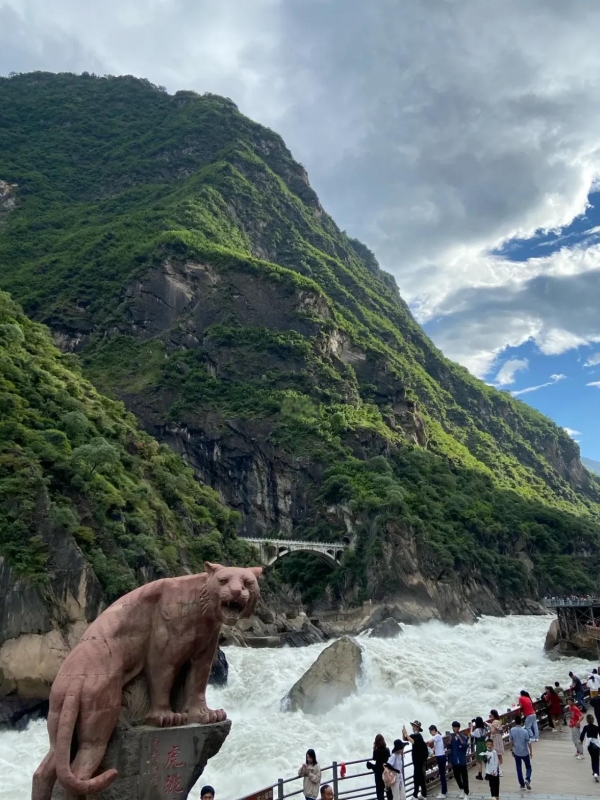
- Tiger Leaping Gorge: One of the deepest river gorges on Earth, with a river落差 of more than 3,000 meters between the surrounding peaks. Reached via the Lijiang road, about 2.5 hours north of Shangri-La. The 24-bend viewpoint on the Yunnan-Tibet Highway is the most dramatic stop.
- Haba Snow Mountain: A smaller, less crowded peak opposite Haba village. A half-day hike reaches the snow line without technical climbing requirements. The village is about three hours north of Shangri-La.
- Mingyong Glacier: A low-altitude glacier near Wunongding in southern Deqin County. Reached via a winding road about 5 hours west of Shangri-La. The glacier descends unusually low for the latitude, making it a notable geographic site.
- Baishuitai (White Water Terraces): A terraced calcium carbonate formation fed by a natural spring. The site is sacred to the Naxi people and features in their Dongba religious tradition. Located roughly 100 kilometers southeast of Shangri-La, accessible by bus or private vehicle.
- Balagezong Scenic Spot: A deep canyon with a cliffside Tibetan village and a narrow suspension bridge. About 1.5 hours north of Shangri-La by road. The canyon walls are steep and the village has been inhabited for centuries.
Stay, Eat, and Best Time to Visit
Shangri-La Accommodation & Local Cuisine Guide
Shangri-La City in China
Most visitors choose to stay in one of two areas. Downtown Shangri-La City in China offers the widest selection of hotels across all price tiers, with straightforward access to restaurants, banks, and the bus station. Dukezong Ancient Town has quieter Tibetan-style guesthouses and boutique inns within walking distance of the old town's lanes — a better choice for travelers who prefer a more atmospheric setting, though noise from the bars along the main street can carry late into the evening.
Hotel prices vary significantly by season and star rating. Budget accommodation runs about $25–50 (¥180–360) per night. Mid-range hotels typically charge $50–100 (¥360–720). Tibetan boutique properties in Dukezong, which often feature hand-carved woodwork and courtyard layouts, fall in the $120–300 (¥860–2,200) range. Prices are generally lower from November through March outside Chinese holiday weeks.
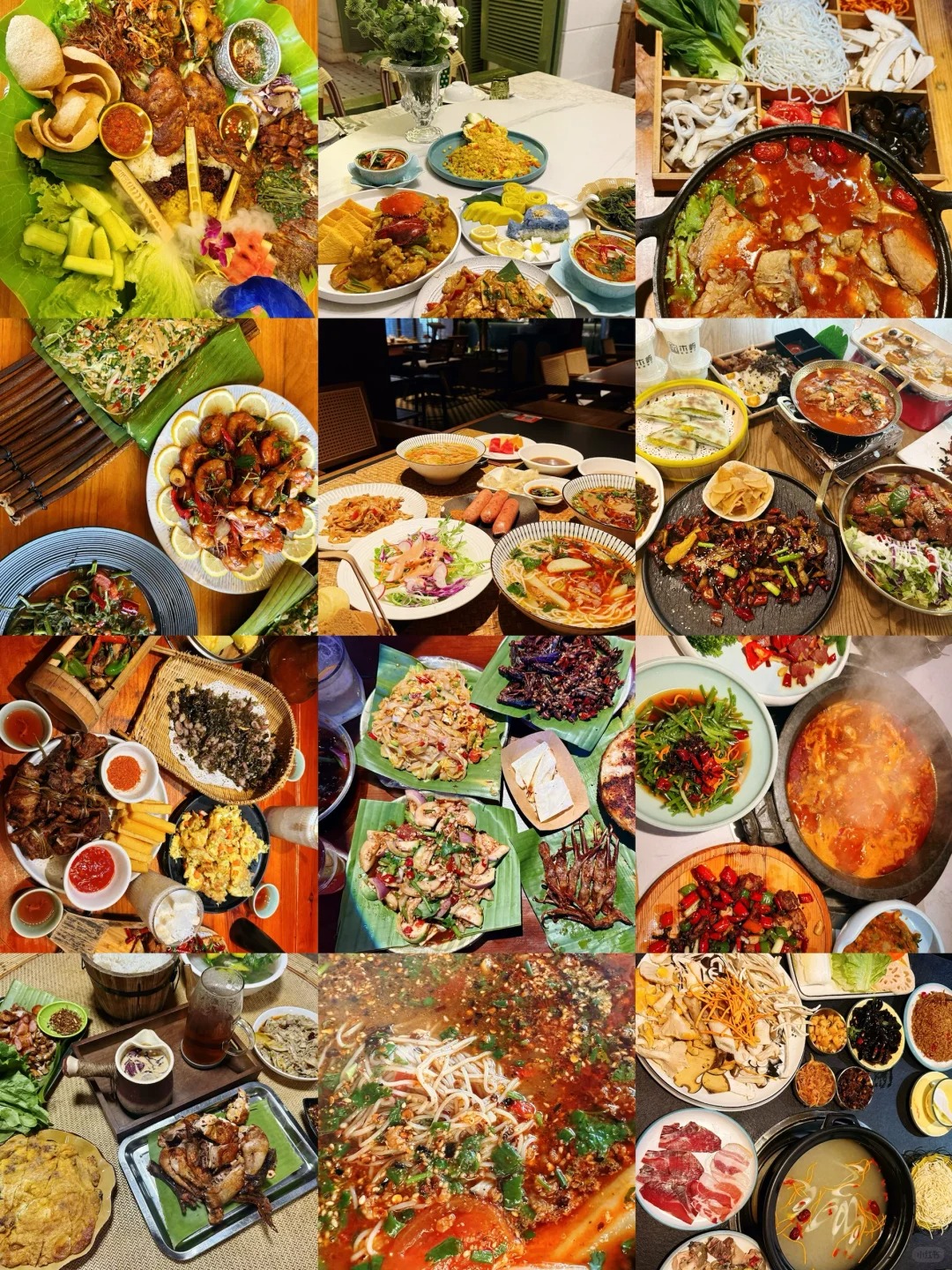
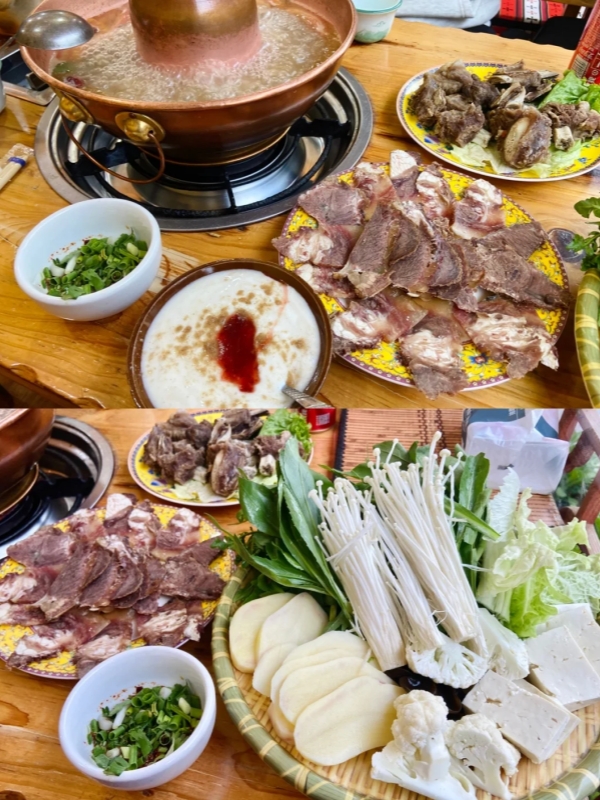
The food in Shangri-La reflects its Tibetan and Yunnanese heritage. Yak meat hotpot, butter tea, tsampa (roasted barley flour eaten as a paste or porridge), highland barley bread, and yak yogurt are widely available at local restaurants. Matsutake mushrooms — a seasonal delicacy — appear on menus from July through September when they are harvested from nearby forests. Pipa pork, a cured and braised pork dish, is another local specialty. A sit-down meal costs roughly $5–15 (¥35–110) per person depending on the restaurant and whether matsutake is ordered.
Travel Seasons, Altitude Tips & Packing Checklist
May through October covers the main travel window. May and June bring rhododendron blooms to Potatso and the hillside roads. September and October deliver autumn color, with golden larch and orange poplars visible from Dukezong's upper streets. July and August are warmer but rainier — afternoon thunderstorms are common and can disrupt mountain road travel. The three peak domestic holiday periods — Chinese New Year week, the May 1 Labor Day window, and the October 1 National Day week — should be avoided if possible because transport and hotels fill quickly and prices rise substantially.
Shangri-La City in China sits at roughly 3,459 meters. Altitude-related symptoms are common on the first day, particularly for visitors arriving from lowland cities. The standard advice is to take the first 24 hours easy, drink plenty of water, avoid strenuous activity, and limit alcohol. Pharmacies in the city stock ibuprofen and oxygen packets for altitude discomfort. Visitors with cardiac or respiratory conditions should consult a physician before travel.
- Windproof shell and warm layer: Required even in summer — the temperature drops sharply after sunset and on mountain roads.
- Sunscreen and sunglasses: UV intensity at 3,400+ meters is significantly higher than at sea level.
- Refillable water bottle: Staying hydrated helps counter altitude symptoms.
- Translation app: Download before arriving — Wi-Fi is available in hotels and cafes but connectivity on the road is intermittent.
- Passport: Required for hotel check-in and for purchasing attraction tickets; keep it on you at all times.
Getting to and Around Diqing
The most common entry point is Diqing Shangri-La Airport (DIG). The airport sits about 6 kilometers from the city center, with taxis and airport shuttles available outside the terminal. As of writing, there is no passenger railway station in Shangri-La City — the closest rail access is the high-speed line at Lijiang, after which a road transfer is required.
Within the city, taxis are the most practical option for visitors. Ride-hailing through the Didi app works, though the English-language interface is limited. Local minibuses run fixed routes to nearby villages and along the airport road, but schedules are not published in English. For day trips to Potatso or Napahai, hiring a car with a driver through a hotel or travel agency is common and usually affordable.
Frequently Asked Questions
Q: Is Shangri-La a real city in China?
Yes. Shangri-La City in China is a real municipality in northwestern Yunnan Province. It is the seat of Diqing Tibetan Autonomous Prefecture. The Shangri-La hotel chain shares the name but is a separate brand and has no connection to the city.
Q: Where exactly is Shangri-La city located?
It sits in northwestern Yunnan Province, China, near the borders of Sichuan and the Tibet Autonomous Region. The elevation is roughly 3,459 meters. The nearest major city, Lijiang, lies about 187 kilometers to the southeast.
Q: How do I get from Lijiang to Shangri-La?
The Lijiang–Shangri-La route covers approximately 187 kilometers and takes 4–5 hours by direct bus or shared van. Fares run roughly ¥80–120. There is no passenger railway on this route. Flights between Lijiang and Diqing Airport (DIG) exist but are limited and often require a connection through Kunming.
Q: Do I need to worry about altitude sickness in Shangri-La?
Altitude at the city center is approximately 3,459 meters. Mild symptoms such as headache and shortness of breath are common on the first day. Hydrate well, rest, avoid strenuous activity, and limit alcohol. Pharmacies in Shangri-La sell altitude remedies. Consult a doctor before travel if you have cardiac or respiratory conditions.
Q: How many days should I spend in Shangri-La?
Two to three days covers the core attractions: Songzanlin Monastery, Dukezong Ancient Town, Napahai Lake, and Potatso National Park. Add one to two days for Meili Snow Mountain, which requires an overnight near Feilai Temple, or for Tiger Leaping Gorge.
Q: Can I visit Shangri-La year-round?
Yes, but May through October is the best window. Winter from November through February is cold and occasionally snowy on mountain passes. Summer brings warmer temperatures but more rain, which can affect visibility on mountain roads and at Meili Snow Mountain.
Q: Is Shangri-La safe for foreign tourists?
Generally yes. Standard travel precautions apply: keep your passport on you, register at hotels as required by law, and use mobile payment where possible. Alipay and WeChat Pay are accepted at nearly all hotels, restaurants, and attractions in Shangri-La City in China.
Q: Do they speak English in Shangri-La?
English is limited outside major attractions and mid-range to high-end hotels. Mandarin is the working language in most interactions. A translation app and a few basic Mandarin phrases — nǐ hǎo (hello), xiè xie (thank you) — are useful tools for navigating daily interactions.