Mt in China
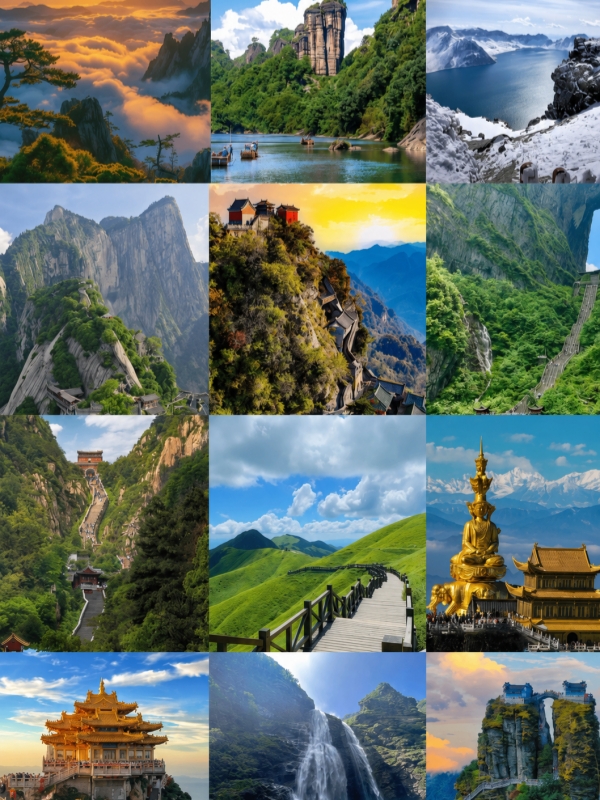
China holds seven of the world's twelve peaks above 8,000 meters within its borders, yet the country's mountain heritage extends far beyond altitude records. The Five Sacred Mountains of imperial China — Taoist peaks marking the cardinal directions and center — were sites of imperial Feng and Shan sacrifices for over two millennia. Four Buddhist mountains, each associated with a different bodhisattva, draw millions of pilgrims annually. Add iconic granite peaks like Huangshan, the sandstone pillars of Zhangjiajie, and the glaciated summits of Sichuan, and China offers a mountain experience for every fitness level and interest.
This guide ranks the most important mountains in China by regional location, climbing difficulty, and what it actually takes to visit them. A first-time pilgrim, a weekend hiker, and a seasoned alpinist will each find a relevant peak in these pages.
Quick Facts
Mt Everest in China: The North Side Explained
Mt Everest in China
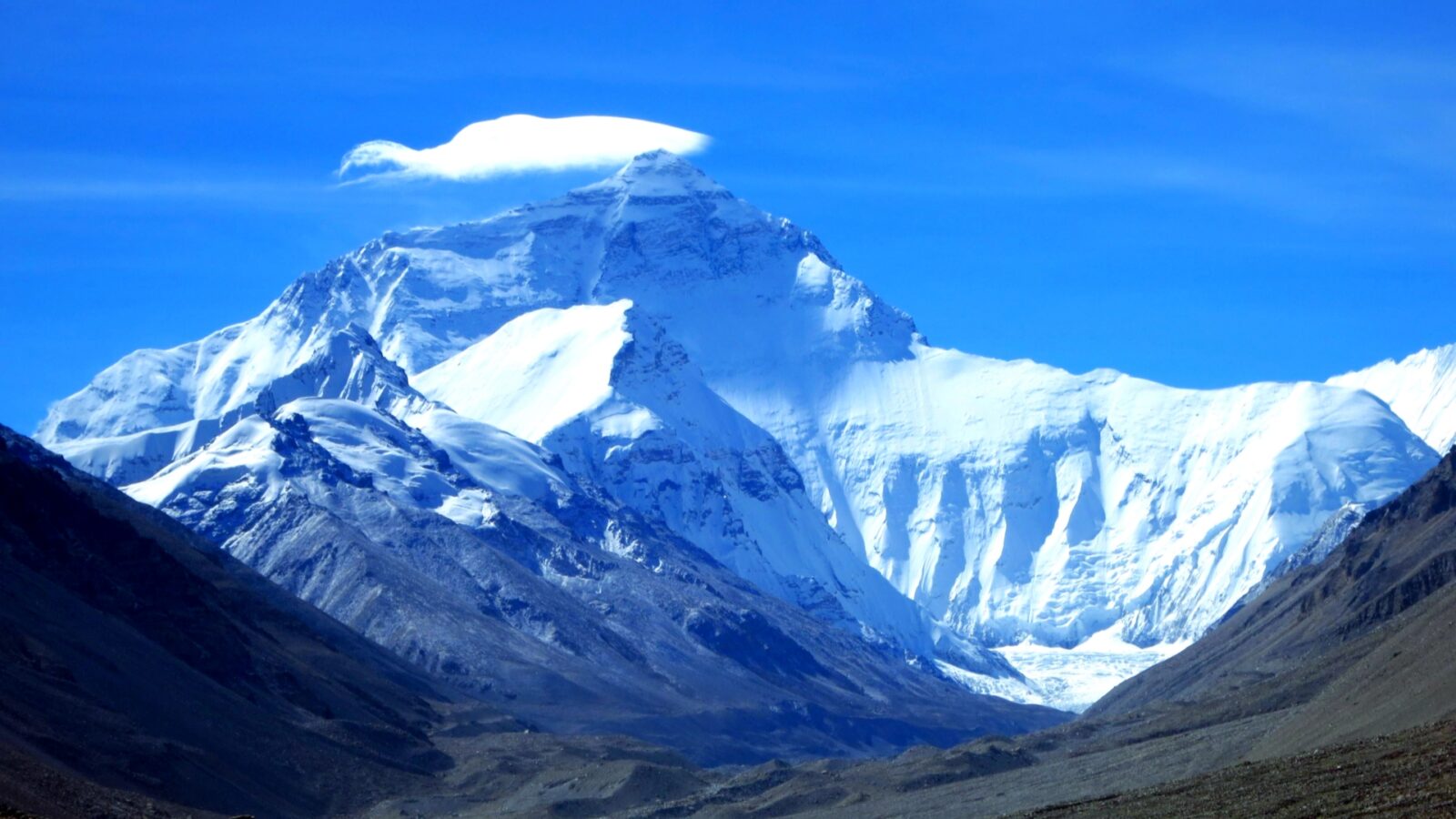
Mount Everest's summit sits on the international border between the Tibet Autonomous Region of China and Nepal. The Chinese side — known as Qomolangma (珠穆朗玛) — lies in Tingri County, Shigatse Prefecture. The road-accessible north base camp sits at approximately 5,200 meters, making it one of the highest vehicle-accessible points on Earth. The peak itself measures 8,848.13 meters, a figure confirmed by China's State Bureau of Surveying in 2005 and consistent with subsequent international surveys.
For foreign visitors, the Tibet side requires careful planning. Independent driving is not permitted. A Tibet Travel Permit arranged through a registered operator is mandatory for all visits to the Tibet Autonomous Region. Most visitors take a 4-to-8-day overland tour from Lhasa, which includes the drive to Rongbuk Monastery at roughly 5,000 meters and onward to the base camp viewing area. Tour packages typically cost $700–$1,200 per person depending on group size and season.
Summit climbing from the north side is an entirely different proposition. Climbing permits issued through the China Tibet Mountaineering Association (CTMA) apply to ascents above approximately 6,500 meters. Permit fees alone start around $15,000 per climber per season, with limited annual slots available. For over 95% of visitors, the realistic product is the overland tour — not a summit attempt.
🗺️ Understand China’s Geographic Backbone: Beyond individual sacred summits and famous scenic peaks, discover how major mountain chains format China's climate zones, river systems, and landscapes in our guide to China Mountain Ranges.
The Five Sacred Mountains (五岳)
The Five Sacred Mountains — known as Wuyue in Chinese — were formally designated during the Warring States period and remained central to imperial ritual for over two thousand years. The Feng and Shan sacrifices conducted at each peak by emperors affirmed heaven's mandate on the ruling house. The group marks the four cardinal directions (east, west, south, north) plus the center, forming a cosmological diagram of the imperial domain.
Mount Tai — The Eastern Sacred Mountain
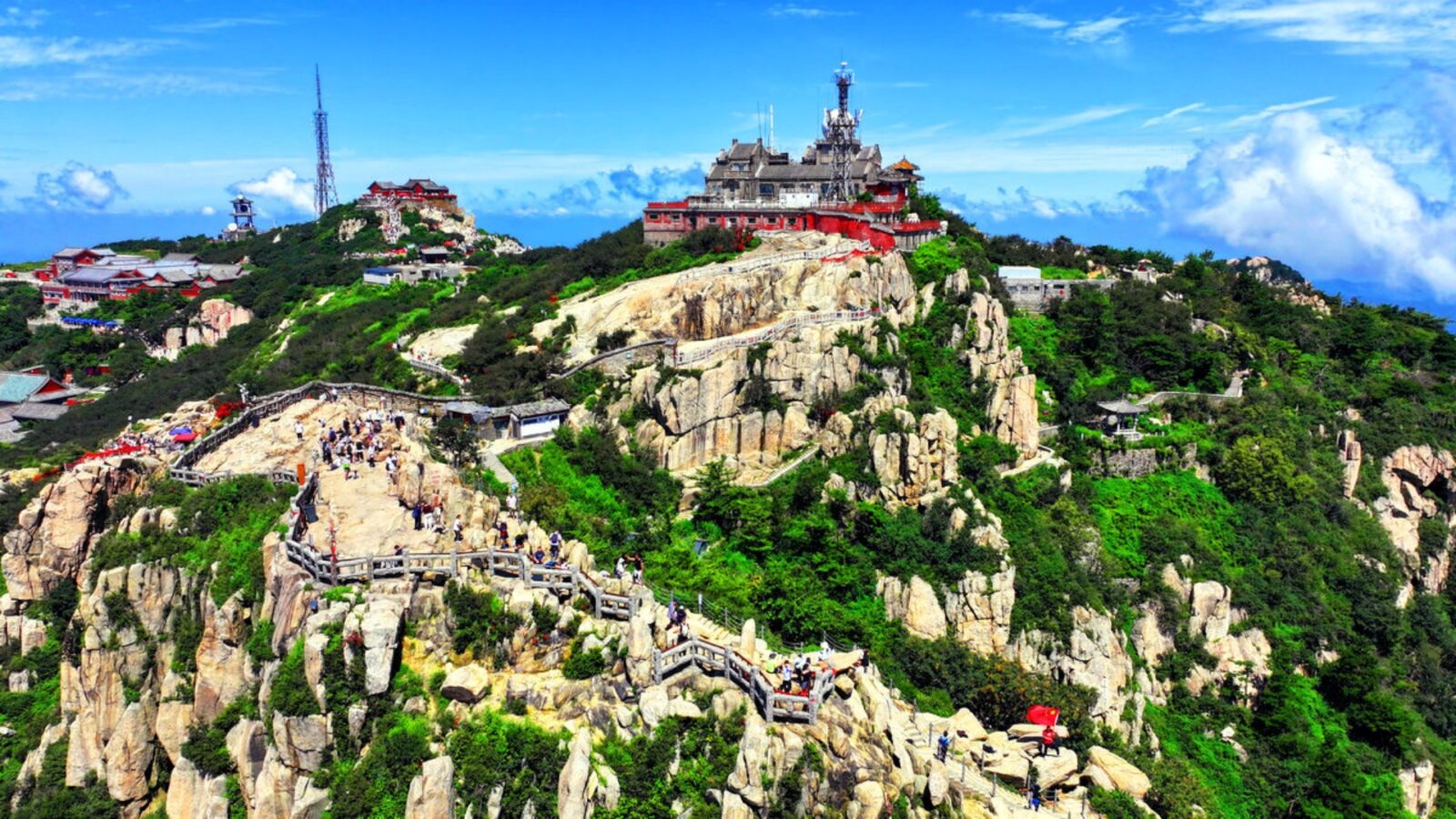
Mount Tai
Mount Tai rises 1,545 meters above Tai'an City in Shandong Province. The ascent follows 6,660 stone steps from the Red Gate to the Jade Emperor Peak. A cable car covers the final section for those short on time. The entrance fee is $17 (¥115) during peak season, with the cable car adding approximately $14 (¥100) one-way. Over 2,200 stone inscriptions and 220 surviving temples line the route. The mountain has been a UNESCO World Heritage Site since 1987. April through November offers the best conditions for sunrise viewing. Jinan Yaoqiang Airport serves the area, and HSR to Tai'an Station takes under 30 minutes.
Mount Hua — The Western Sacred Mountain
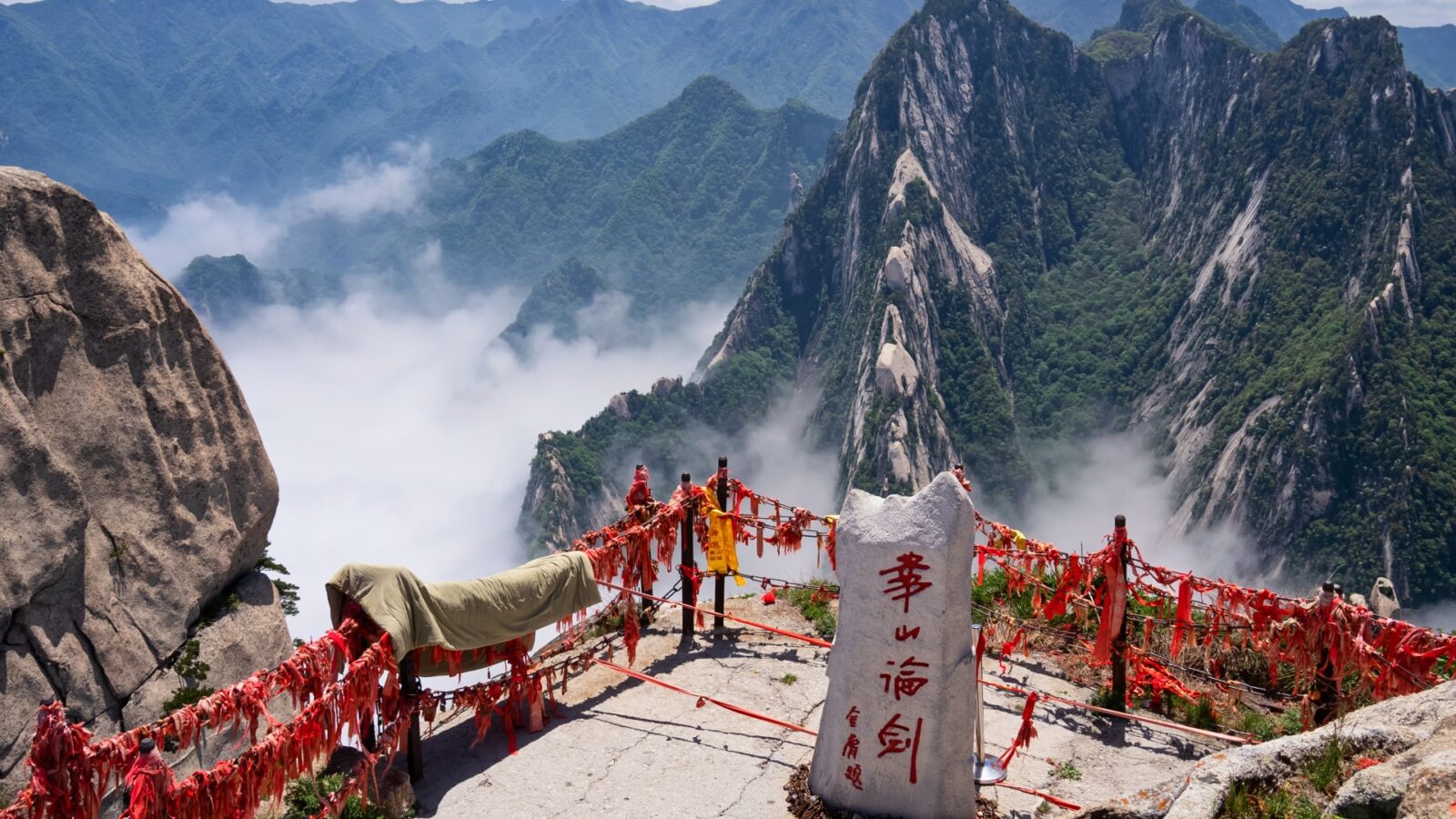
Mount Hua
Mount Hua in Weinan, Shaanxi, stands 2,154 meters tall. Its reputation rests on the plank walk — wooden pathways secured to vertical cliff faces at the summit. The route demands sustained attention and a head for heights. Most visitors take the cable car up one side, cross the summit ridge, traverse the plank walk, and descend the other direction. The entrance fee is $20 (¥140), while the west-peak cable car costs roughly $42 (¥300) round-trip. April through October is the standard visiting season. Xi'an North Station on the HSR network lies about 30 minutes from the trailhead by road.
Mount Heng (Hunan) — The Southern Sacred Mountain
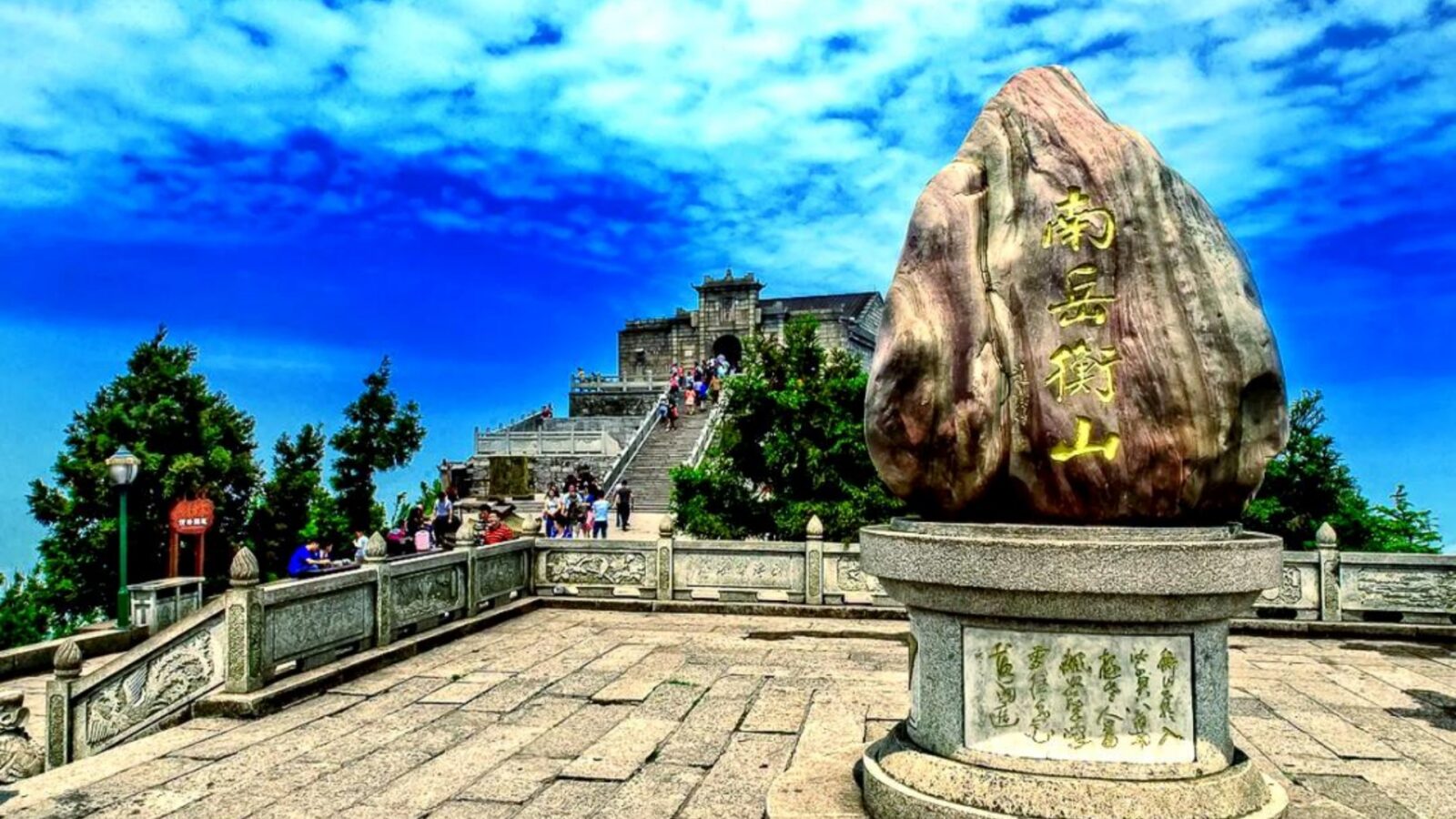
Mount Heng South
Mount Heng in Hunan Province reaches 1,300 meters at Zhurong Peak. The ridge walk is long but shaded, and cable cars reduce the climb significantly. The entrance fee is $15 (¥108). The Nanyue Damiao temple complex at the base provides cultural context before the ascent. Most visitors spend one to two days completing the round trip on foot. The nearest HSR station is Hengshan West. April through November covers the best weather window.
Mount Heng (Shanxi) — The Northern Sacred Mountain
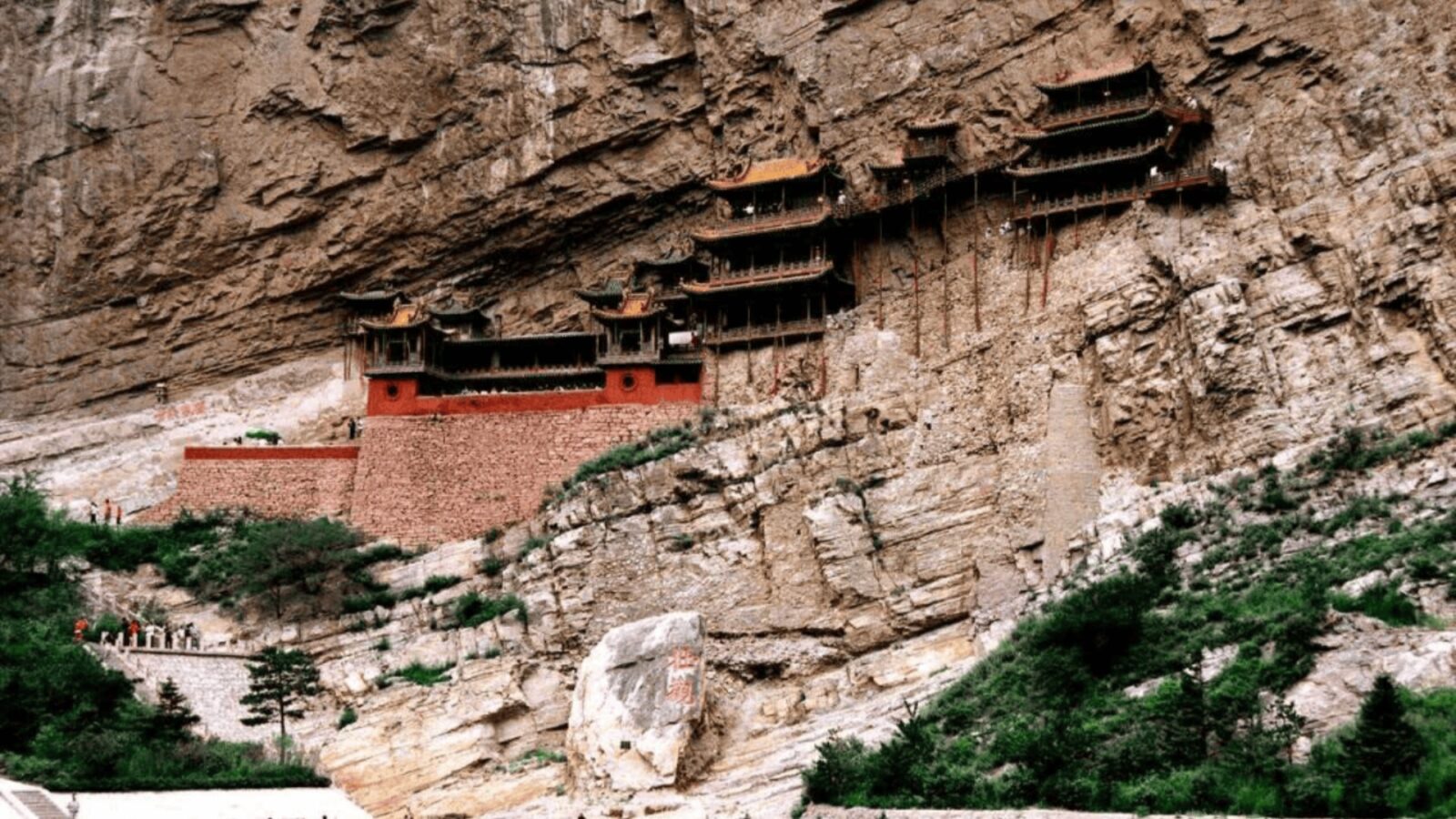
Mount Heng North
Mount Heng in Shanxi Province rises 2,066 meters. The Hanging Temple (Xuankong Si) sits 75 meters up a canyon wall approximately 1,500 years after its original construction. The temple remains standing on wooden pillars wedged into cliff crevices. A combo ticket covering both the mountain and temple costs roughly $22 (¥160). The entrance alone is $13 (¥90). May through October is the standard season. Datong Yungang Airport is roughly 90 minutes away by road.
Mount Song — The Central Sacred Mountain
Mount Song
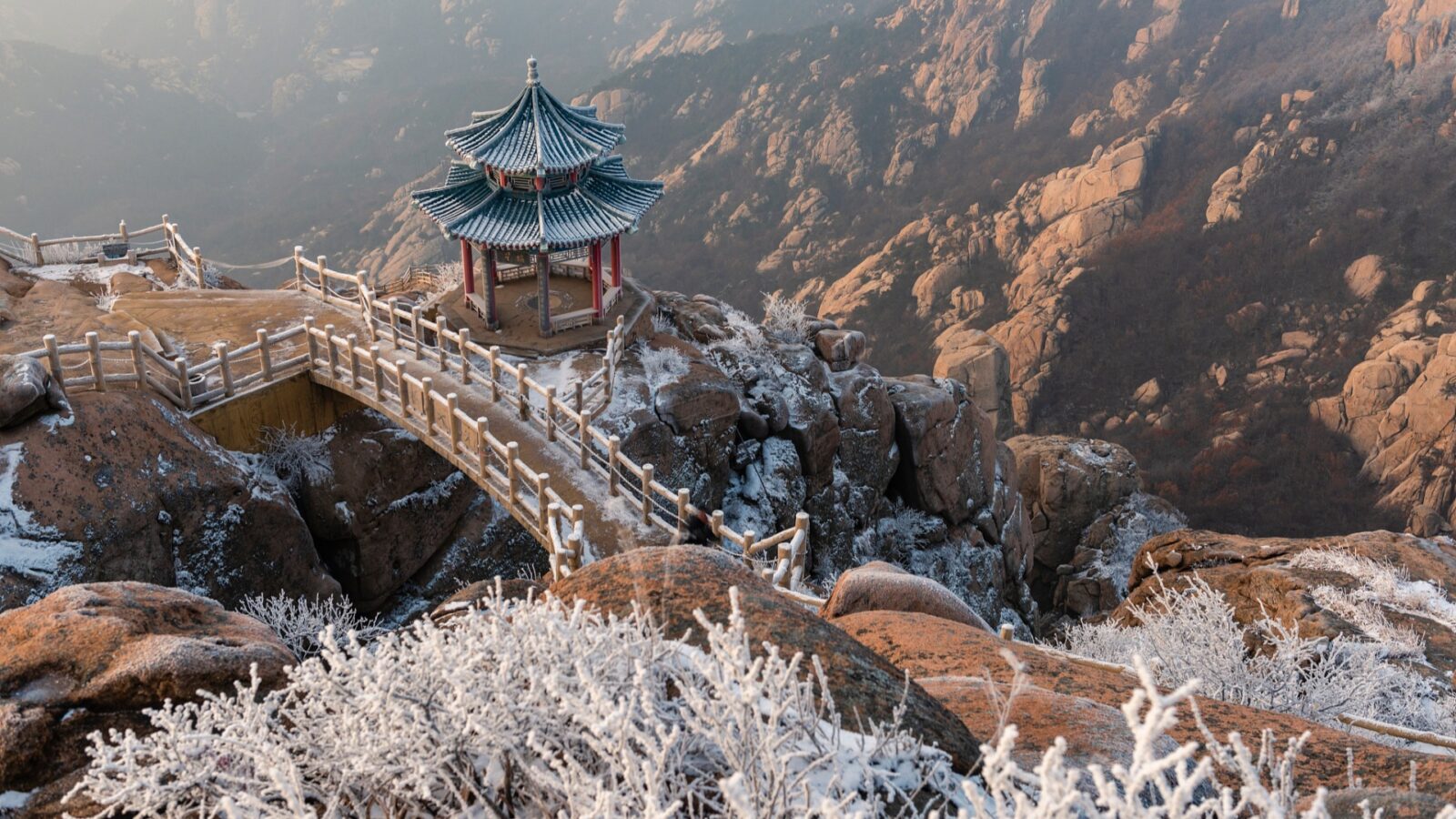
Mount Song in Dengfeng, Henan, reaches 1,512 meters at Shaoshi Peak. Cable cars serve the summit directly. The entrance fee is $13 (¥90), and the nearby Shaolin Temple requires a separate ticket of approximately $11 (¥80). The temple's status as the birthplace of Chan Buddhism and Kung Fu draws cultural visitors alongside pilgrims. The mountain lies an hour's drive from Zhengzhou, making it a practical half-day excursion. April through November covers the standard visiting season.
⛰️ Trace Ancient Pilgrimage Trails: For thousands of years, these five peaks served as the ultimate pilgrimage destinations for monks, scholars, and rulers alike. Many of these peaks host ancient temples and monasteries that remain spiritual sanctuaries to this day. Discover the sacred landscapes and historical hubs in our guide to the Holy Cities of Daoism.
The Four Sacred Buddhist Mountains
Mt in China
Chinese Buddhism developed its own sacred mountain system separate from the earlier Taoist tradition. The Four Sacred Buddhist Mountains — known as Sidaosichang — each serve as the earthly seat of a major bodhisattva. Millions of pilgrims complete the circuit annually, walking temple-to-temple along routes that can stretch for days. All four mountains are pilgrimage sites first and climbing objectives second; cable cars and shuttle buses accommodate visitors who prefer not to walk the full route.
Mount Emei — Sacred to Samantabhadra
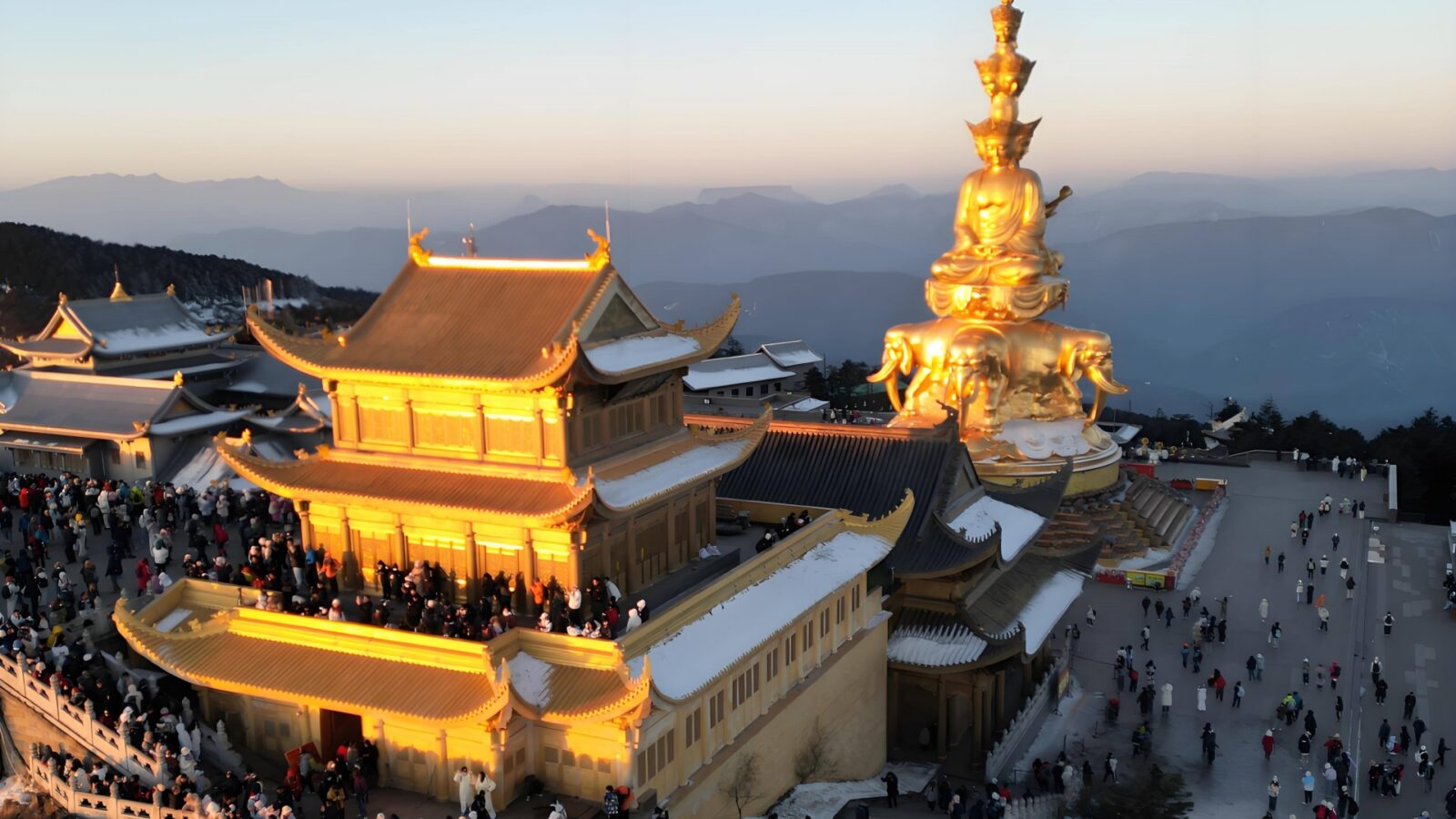
Mount Emei in Leshan, Sichuan, towers 3,099 meters. The Golden Summit (Jinding) hosts a 48-meter statue of Samantabhadra illuminated by morning sun. Wild macaques inhabit the mid-mountain sections — visitors should avoid carrying visible food. The full ridge route from base spans roughly 30 kilometers and takes two days on foot. Alternatively, a bus and cable car combination reaches the Golden Summit in a single day. Entrance costs $21 (¥150), with the summit cable car at approximately $14 (¥100). UNESCO inscribed the mountain jointly with the Leshan Giant Buddha in 1996. April through October covers the standard season; snow is possible at the summit from November through March. Chengdu Shuangliu Airport is two hours by bus.
Mount Wutai — Sacred to Manjushri
Mount Wutai in Xinzhou, Shanxi, measures 3,058 meters. The name translates as "Five Terraces" — five flat-topped peaks that give the mountain its characteristic profile. Unlike conical peaks, Wutai is a high-altitude plateau accessible by car. Over 50 temples survive across the mountain. Summer temperatures at the base hover around 20 degrees Celsius, making it a popular retreat from the lowland heat. The entrance fee is $20 (¥140). Free shuttle buses connect the main temple clusters. June through September represents the best visiting window. Taiyuan Wusu Airport is approximately two and a half hours away by road.
Mount Jiuhua — Sacred to Ksitigarbha
Mount Jiuhua in Chizhou, Anhui, rises to 1,342 meters at Tiantai Peak. The mountain features one of the largest Buddhist statue assemblies in China, anchored by a 99-meter Ksitigarbha statue at the newer hilltop site. Cable cars serve the upper sections, though steep stairs dominate the final approach. The entrance fee is $21 (¥150). April through November covers the standard season. The nearest HSR station is Chizhou, with a one-hour shuttle to the mountain.
Mount Putuo — Sacred to Avalokiteshvara
Mount Putuo occupies a small island in the Zhoushan Archipelago, Zhejiang. At 286 meters, it is the gentlest of the four Buddhist mountains — a flat island with paved walking paths. The ferry plus island entrance costs approximately $14 (¥100). Three large temple complexes and a 33-meter bronze Guanyin statue facing the sea form the core attractions. April through October is the standard season, though typhoons occasionally disrupt travel in July through September. Zhoushan Putuoshan Airport serves the island directly; ferries from Ningbo take roughly two hours.
🏔️ Discover China’s Extreme Altitudes: While sacred peaks and scenic granite ranges draw millions of casual hikers, China is home to the ultimate high-altitude summit. Learn more in our guide to the Chinese Highest Mountain.
Other Iconic Chinese Mountains Worth Climbing
Mt in China
Beyond the sacred mountain traditions, several Chinese peaks have earned global recognition through natural spectacle, UNESCO designation, or cinematic fame. These mountains rank among the most-searched outdoor destinations in Asia and draw visitors who may have no interest in religious pilgrimage.
Mount Huangshan (Yellow Mountain)
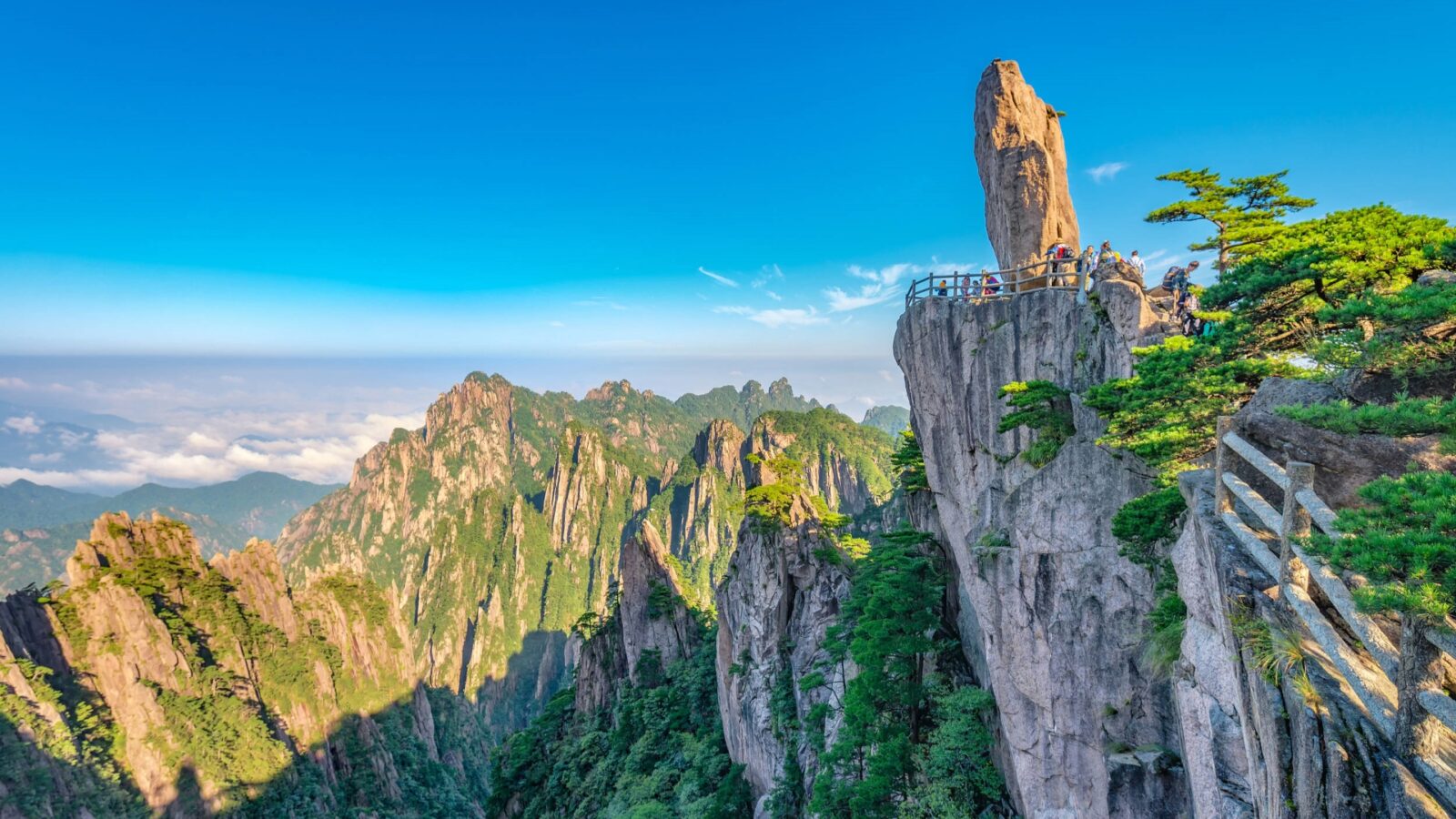
Mount Huangshan in Anhui Province reaches 1,864 meters at Lotus Peak. The granite formations and "sea of clouds" sunrise make it one of the most photographed landscapes in China. Over 3,000 stone steps cover the main walking routes, though a cable car reduces the vertical climb to approximately two hours. Entrance fees are $28 (¥190) from March through November and $23 (¥150) from December through February. UNESCO inscribed the mountain in 1990. Hot springs at the base offer post-hike relaxation. Huangshan Tunxi Airport serves the area.
Zhangjiajie National Forest Park
Zhangjiajie in Hunan Province features sandstone pillars reaching approximately 200 meters — the formations that inspired the "Avatar Hallelujah Mountains" in the 2009 film. The glass bridge spanning the canyon ranks among the world's highest pedestrian crossings. The multi-day park pass costs roughly $30 (¥225) and covers four days of access. The Avatar Mountain cable car adds approximately $13 (¥95). A single park area requires one to two days for a meaningful visit. Zhangjiajie Hehua Airport is 40 minutes by bus from the park entrance.
Mount Siguniang
Mount Siguniang in Xiaojin County, Sichuan, holds four main peaks. The highest, Yaomei Feng, reaches 6,250 meters and requires alpine climbing experience plus a registered expedition. The three lower peaks are hikeable with a guide and basic fitness. Multi-day treks across the accessible peaks cost roughly $420–$560 (¥3,000–4,000) including guide services, permits, and packhorses. The town access shuttle is approximately $11 (¥80). May through October covers the trekking season; April through May and September through October suit summit attempts. Chengdu Shuangliu Airport is four to five hours away by road.
🏔️ Discover China’s Most Massive Peaks: Beyond sacred pilgrimage trails, China is home to vast mountain massifs and enormous high-altitude ranges. Learn more about the scale and geography of these giants in our guide to China Largest Mountain.
Climbing Difficulty & Best Season in China
The mountains in this guide range from accessible half-day excursions to expedition-scale undertakings. The following difficulty grades apply across the article:
- Easy: paved or cable-car aided, suitable for casual visitors, under 2 hours of main climbing.
- Moderate: significant stair networks, 3–6 hours, basic fitness needed.
- Difficult: sustained steep terrain, technical sections like the Hua Shan plank walk, or multi-day climbs.
- Extreme: high altitude above 5,000 meters, technical alpine climbing, expedition registration required.
Permits govern access to only two destinations on this list: the Tibet Autonomous Region (requiring a Tibet Travel Permit) and the summit climb of Mount Siguniang (requiring an alpine registration). All other mountains are open to foreign visitors with standard entrance tickets.
Frequently Asked Questions
Q: Is Mt Everest in China or Nepal?
Mt Everest's summit sits directly on the international border between the Tibet Autonomous Region of China and Nepal. Both countries share the mountain. The southern approach and most popular trekking route start in Nepal, while the northern approach and the road-accessible north base camp are in Tibet, China.
Q: Where exactly is Mt Everest in China?
On the Chinese side, Mt Everest lies in Tingri County, Shigatse Prefecture, Tibet Autonomous Region. The Chinese name is Qomolongma (珠穆朗玛). The closest road-accessible viewpoint is Rongbuk Monastery at approximately 5,000 meters, with the north base camp at roughly 5,200 meters.
Q: What is the highest mountain entirely within China?
The summit often cited as the highest peak wholly within China is Gongga Shan (Minya Konka) at 7,556 meters in Sichuan. Many of the 8,000-meter peaks, including Everest and K2, sit on international borders rather than wholly within China.
Q: Which sacred mountain in China is easiest to climb?
Among the Five Sacred Mountains, Mount Song in Henan and Mount Heng in Hunan are typically the easiest, with cable cars and short walking sections suitable for casual visitors. Among the Four Buddhist Mountains, Mount Putuo (a flat 286-meter island) and Mount Wutai (drive-up plateau) are the gentlest.
Q: Do I need a permit to climb Mt Everest from the China side?
Yes. Foreign visitors need a Tibet Travel Permit arranged through a registered tour operator for any visit to Tibet, plus an Alien's Travel Permit for the Everest area, and a separate climbing permit issued through CTMA above approximately 6,500 meters. The road-accessible north base camp tour is the realistic option for most visitors and costs roughly $700–$1,200 per person.
Q: What is the best season to climb Mount Huangshan?
Late spring (April–May) and autumn (September–November) are best for stable weather and the iconic "sea of clouds" sunrise. Summer is hot and crowded. Winter (December–February) offers snow scenery but some trails and summit hotels close, and the entrance drops to approximately $23 (¥150).
Q: How many days do I need for Mount Hua?
Most visitors complete Mount Hua as a day trip from Xi'an. The mountain is roughly two hours by HSR from Xi'an North Station. A typical itinerary uses the cable car up one side, walks the summit ridge and the plank walk, then takes the cable car down the other side, returning to Xi'an by evening. An overnight at the summit is possible but rarely necessary.
Q: Can sacred mountains in China be visited in winter?
Most can. Mount Tai, Mount Song, and Mount Heng stay open year-round, though summit cable cars may close in heavy snow. And Mount Hua's plank walk is sometimes closed in icy conditions. Mount Emei's higher sections are often inaccessible in deep winter. Mount Wutai is the most reliably winter-accessible because of its drive-up plateau.