Zhaoxing Dong Village
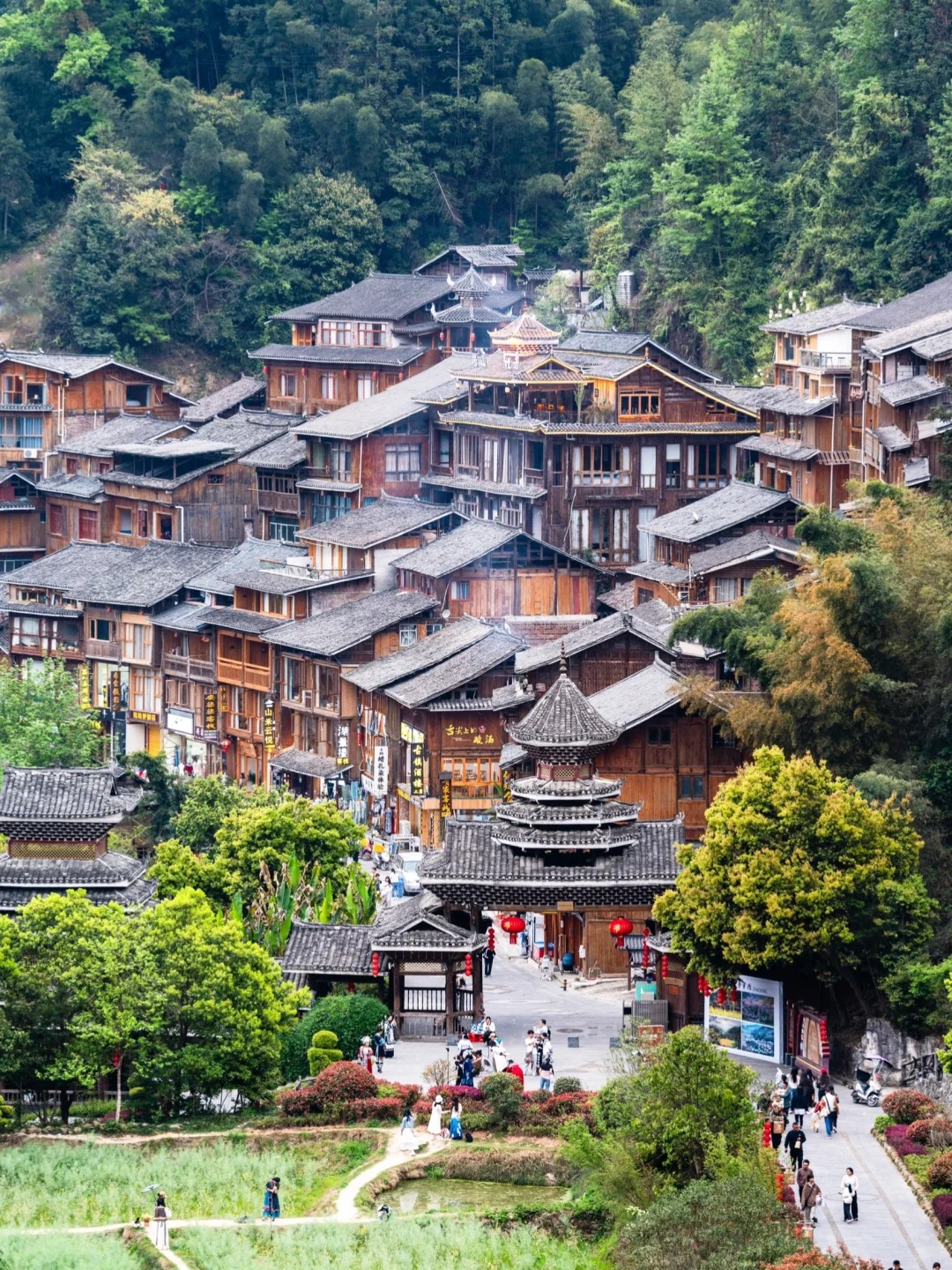
Zhaoxing Dong Village is one of the better-known Dong ethnic villages in Guizhou, surrounded by hills and wooden stilt houses built along narrow waterways. It has grown steadily in popularity thanks to its drum towers, covered bridges, and relatively preserved village layout.
Even with more visitors in recent years, the pace inside the village still feels slow. You can walk through most areas on foot, stop at small tea shops, and see daily life happening right beside tourist paths. Based on what I’ve seen, a simple plan and early arrival make the visit much more enjoyable.
Quick Facts of Zhaoxing Dong Village
| Item | Details |
|---|---|
| 📍 Location | Liping County, Guizhou Province, China |
| 🏡 Chinese Name | 肇兴侗寨 (Zhaoxing Dong Village) |
| 🗺️ Nearby Villages | Tang’an Dong Village, Huanggang Dong Village |
| 🎫 Entrance Fee | ~80 RMB (may include shuttle) |
| ⏰ Opening Hours | All day (ticket checked at entrance gate) |
| 🚄 Nearest Station | Congjiang Railway Station |
| 🚕 Distance from Station | ~15 minutes by car |
| 🌦️ Best Time to Visit | March–May, September–November |
| 🏨 Accommodation | Guesthouses inside the village |
| 🌏 Known For | Drum towers, wind-rain bridges, Dong culture |
Top Things to See
Drum Towers
Drum Towers
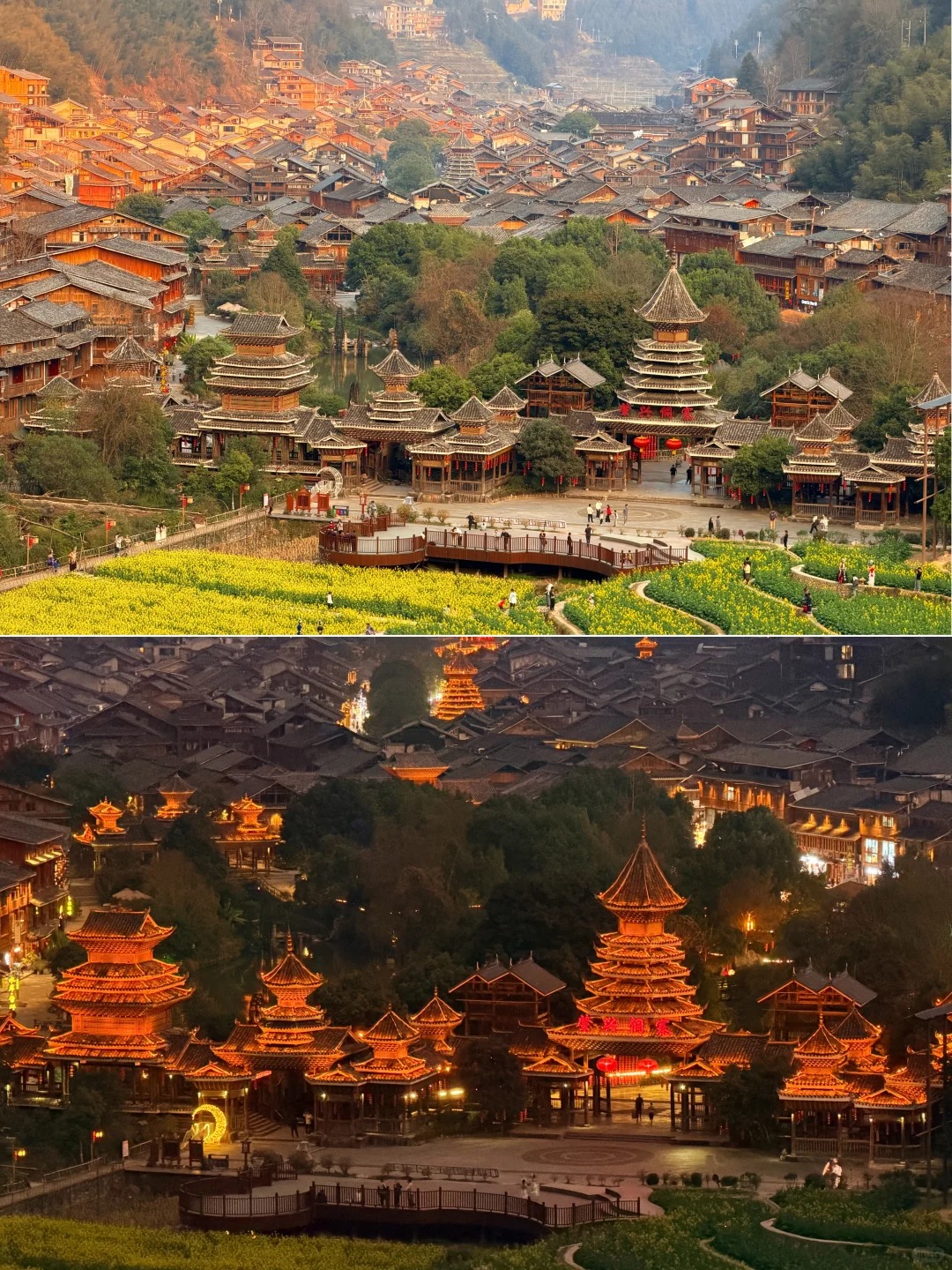
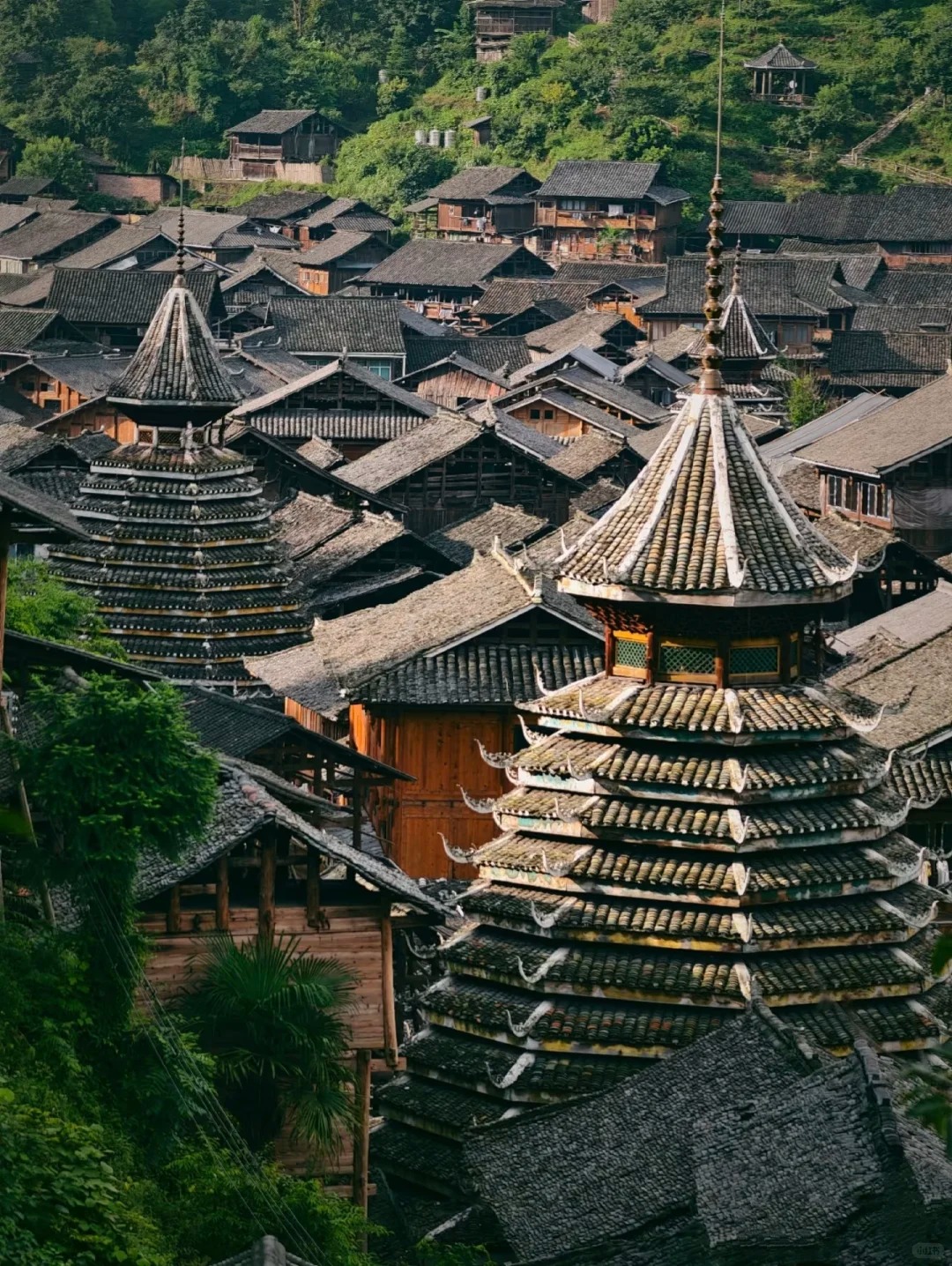
The drum towers sit at the center of village life in Zhaoxing Dong Village, and there are five main ones spread across different clan areas. Each structure follows traditional Dong architecture, built entirely with wood and without nails, which is easy to notice once you stand close. If you’re curious how drum towers compare across different regions in China, this guide gives a clear breakdown of their history and design.
- Location: Central and clan-based layout: The drum towers are distributed in different parts of the village rather than clustered in one spot. You will naturally pass at least one when walking through the main village axis.
- Feature: Wooden structure with cultural meaning: Each tower represents a clan and acts as a symbol of identity. The layered roofs and carved details follow a consistent local building style.
- Atmosphere: Quiet in morning, active in evening: In the morning, the area feels local and calm. In the evening, lights turn on and the towers become more visually dominant.
- Best timing: 7–9 am vs night lights: Morning is better for photos without crowds. Night is better for atmosphere, especially when warm lighting highlights the roof layers.
- Suitable for: First-time visitors & photographers: If time is limited, just visiting two or three drum towers is enough to understand the structure and layout of the village. Staying too long at each one is not necessary unless you are taking photos.
Wind and Rain Bridges
Wind and Rain Bridges
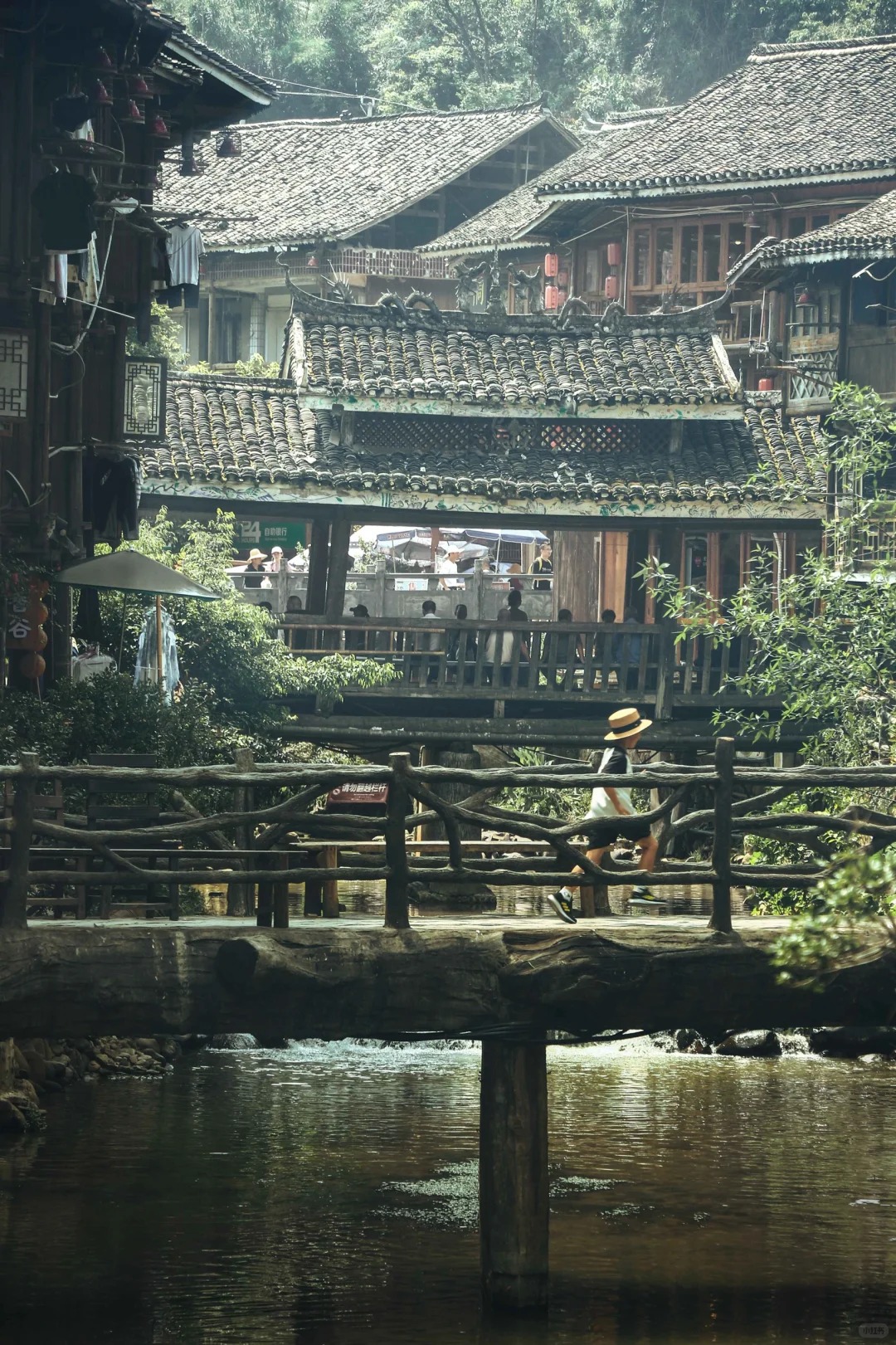
Wind and rain bridges in Zhaoxing Dong Village are covered wooden bridges built over water channels. They are not just functional structures but also social spaces where villagers naturally stop during daily movement.
- Location: Built across main water routes: You will find them along the river and connecting different parts of the village. They act as both passageways and resting points.
- Feature: Covered wooden structure for weather protection: The roof design protects people from rain and sun, which is why they are used year-round.
- Atmosphere: Slow and social: Locals often sit on benches or railings, talking without rushing. It feels more like a public living room than a bridge.
- Best photo angle: Side view across water: The most stable shots usually come from standing slightly away from the bridge, capturing both reflection and structure together.
- Suitable for: Casual walkers & photography lovers: These bridges are easy to access and don’t require planning. They are ideal if you prefer slow travel rather than fixed sightseeing routes.
Main Street and Alleys
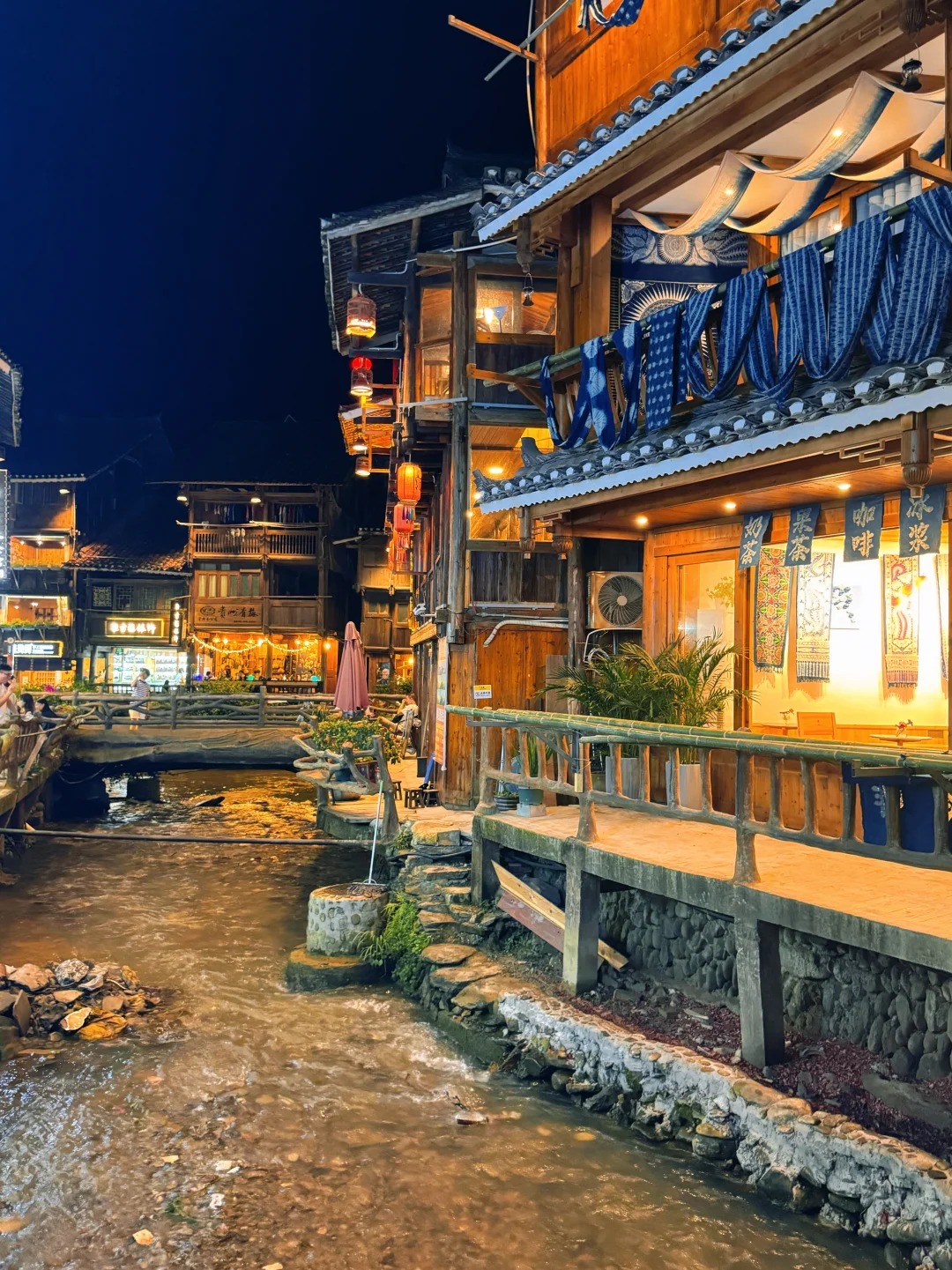
Main Street & Alleys
The main street in Zhaoxing Dong Village runs through the center and connects most visitor areas. It is also where most shops, restaurants, and small souvenir stores are located, making it the busiest part of the village.
- Location: Central pedestrian corridor: The main street is easy to find because it connects directly from the entrance to the drum tower area.
- Feature: Commercial but still walkable: You will see restaurants, snack shops, and local craft stores. It is more developed than side streets but still keeps a wooden village structure.
- Atmosphere: Mixed local and tourist flow: During daytime, it feels busy but not overwhelming. Evenings are more relaxed once groups leave.
- Side alleys: More authentic daily life: Once you turn away from the main road, the environment changes quickly—less noise, more residential activity, and fewer shops.
- Suitable for: First-time visitors & slow explorers: If you prefer structured walking, stay on the main street. If you want a more local feeling, spend more time in the alleys behind it.
Rice Terraces near Tang’an
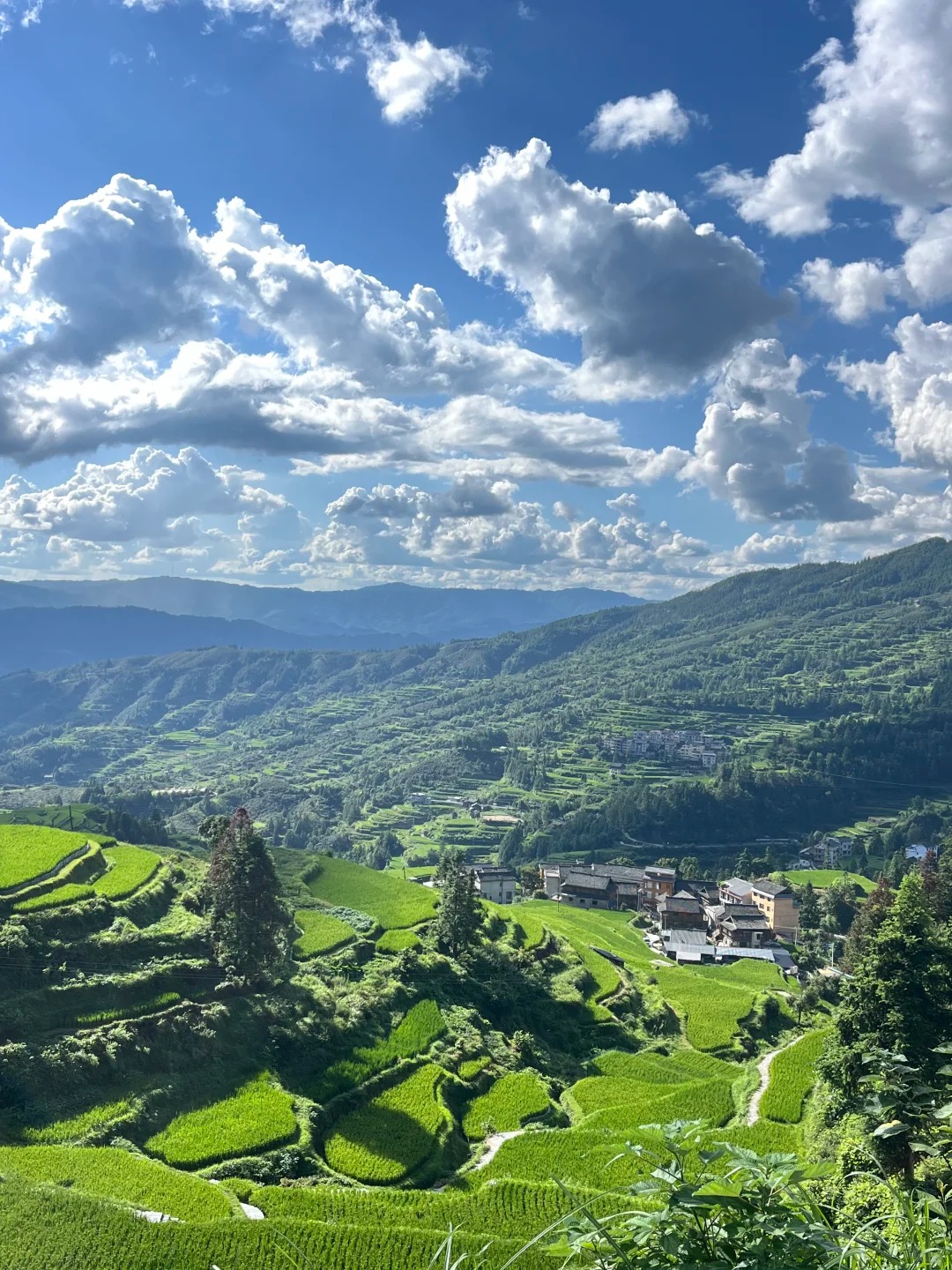
Rice Terraces near Tang’an
The rice terraces near Tang’an Dong Village are located on the hillside above Zhaoxing Dong Village. They are not inside the main village area, so visiting requires extra time but offers a completely different view.
- Location: About 30–40 minutes from Zhaoxing Dong Village: Tang’an is slightly uphill and usually accessed by road or arranged transport.
- Feature: Layered mountain farming landscape: The terraces change appearance depending on the season—green in summer, reflective in wet season, and dry golden tones in autumn.
- Atmosphere: Quiet and less tourist-heavy: Compared to the main village, this area feels more open and less crowded, especially in the early morning.
- Time cost: Half-day trip consideration: Visiting requires extra planning, so it is better suited for travelers staying at least two days in the region.
- Suitable for: Photography travelers & nature-focused visitors: If you want landscape shots beyond wooden architecture, this area is worth the detour, otherwise it can be skipped on short trips.
🖼️ Style Contrast: After experiencing the wooden drum towers of the Dong people, discover the stark beauty of Anhui’s white-walled heritage in our guide to Hongcun Village China: Where Ancient Architecture Meets Living Culture.
One Day Itinerary
Morning: Quiet Streets and Drum Tower Life

Sunrise of the Village
Morning in Zhaoxing Dong Village starts slow, and the whole place feels half-awake before tour groups arrive. The air is slightly humid, with faint smoke coming out of wooden kitchens. Most of the sound comes from footsteps on stone paths and low conversations near the drum towers.
- Route flow: Entrance → Central Drum Towers: Enter from the main gate and walk straight toward the central drum tower area. This simple route works best in the morning because side streets are still empty, and you can naturally follow the main village axis without planning too much.
Around the drum towers, daily life is easy to notice. Older residents sit in groups, talking or watching the street without much rush. It doesn’t feel staged; it’s just their normal morning routine. Shops are not fully open yet, so the focus is more on people than commerce.
Light conditions in the morning are also practical. Between 7:00 and 9:00 am, the sunlight is soft and shadows are not strong. Photos look clearer because there are fewer people blocking the view. You don’t need to wait for a perfect angle, just walk slowly and the scene changes naturally as you move deeper into the village.
Afternoon: River Walk and Wind and Rain Bridges
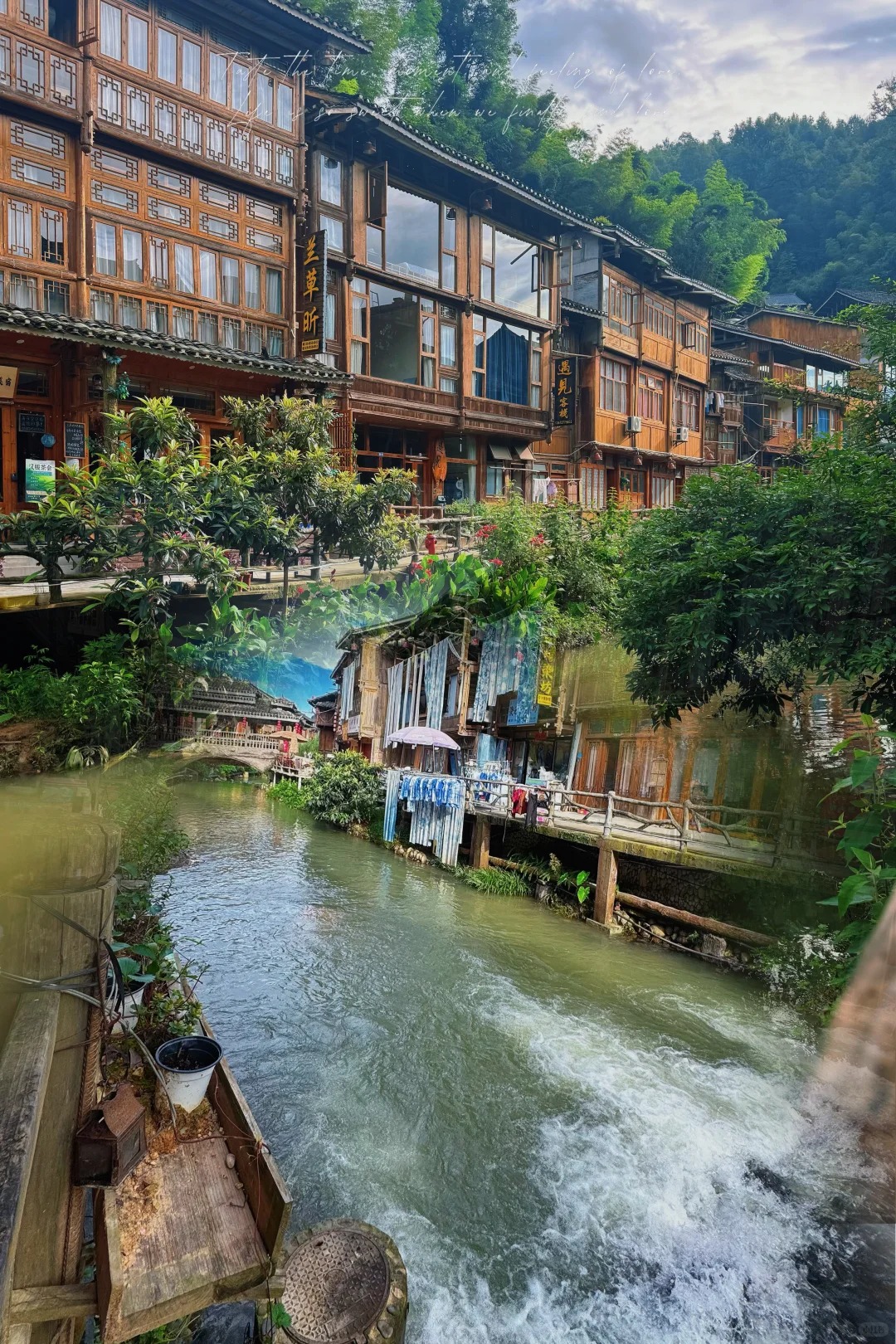
River Walk in Afternoon
In the afternoon, Zhaoxing Dong Village becomes busier. Small shops open completely, and most visitors start moving toward the river area. The atmosphere is more active but still manageable if you avoid staying only on the main street. If you’re into traditional water towns, it’s also worth checking how rural life looks in places like Wuyuan—see more here.
The walking experience usually follows a natural flow. You start from the main street, which has more restaurants and souvenir shops, then slowly turn into narrower alleys. These side streets are more interesting because you see daily life—laundry hanging outside, locals chatting, and fewer tourists.
Wind and rain bridges are the main highlight in this part of the day. They are not just crossing points but covered public spaces where people sit, rest, or meet each other. Even when it is sunny, you will see people staying under the roof structure because it is cooler and quieter.
Evening: Lights, Walks, and Slow Night Atmosphere

Night Scene of Village
Evening changes the feeling of Zhaoxing Dong Village quite clearly. Once the sun goes down, warm yellow lights switch on across wooden buildings and bridges. The reflection on water channels makes the village look more structured and calm compared to daytime.
There are cultural performances in the evening, but they are optional. Many visitors choose not to attend because the village itself already feels active enough. Based on general traveler feedback, the shows are more for first-time visitors rather than something essential.
The most common activity at night is slow walking. People move along the river, stop on bridges, or sit outside small restaurants. The pace is unstructured, and there is no fixed route needed. It is more about staying in the space than following a plan.
🏯 Guizhou Architecture Marvels: If you love the traditional wooden structures of Dong minority villages but want to contrast them with Guizhou's most controversial and dazzling modern architectural phenomenon, check out our guide to the spectacular Guiyang White House.
Food in Zhaoxing Dong Village
Local dishes you will see often
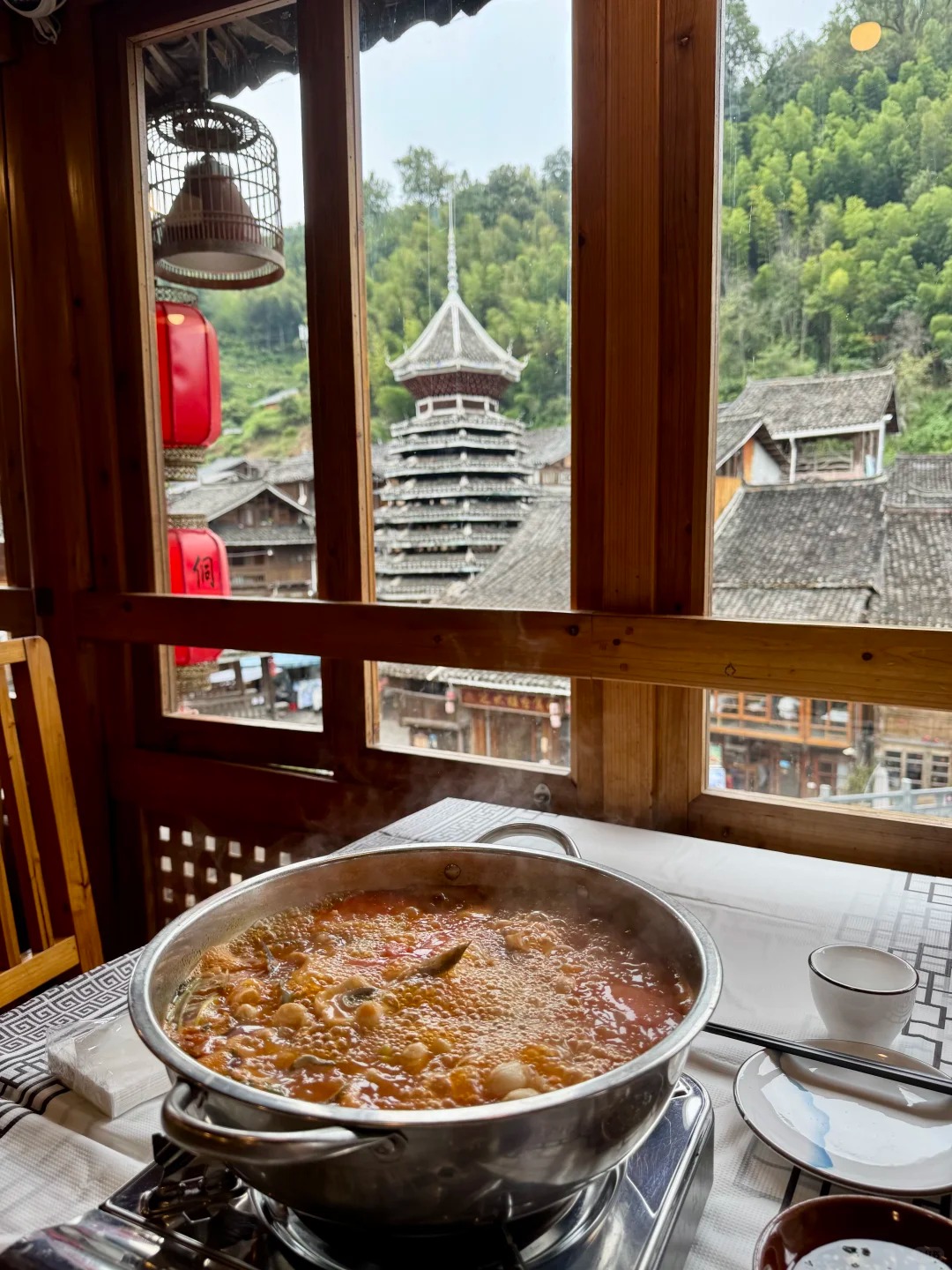
-
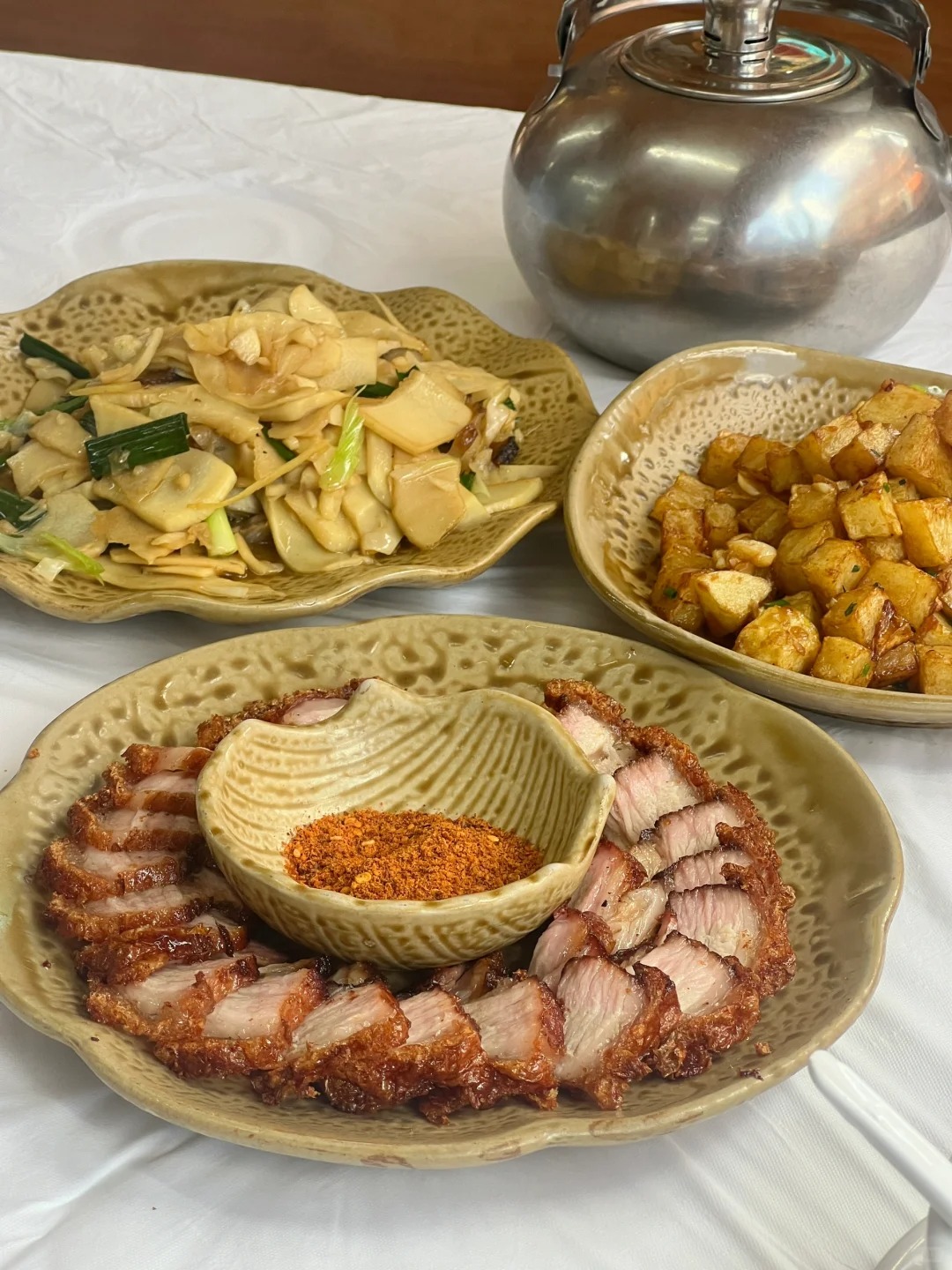

- Smoked Pork
-
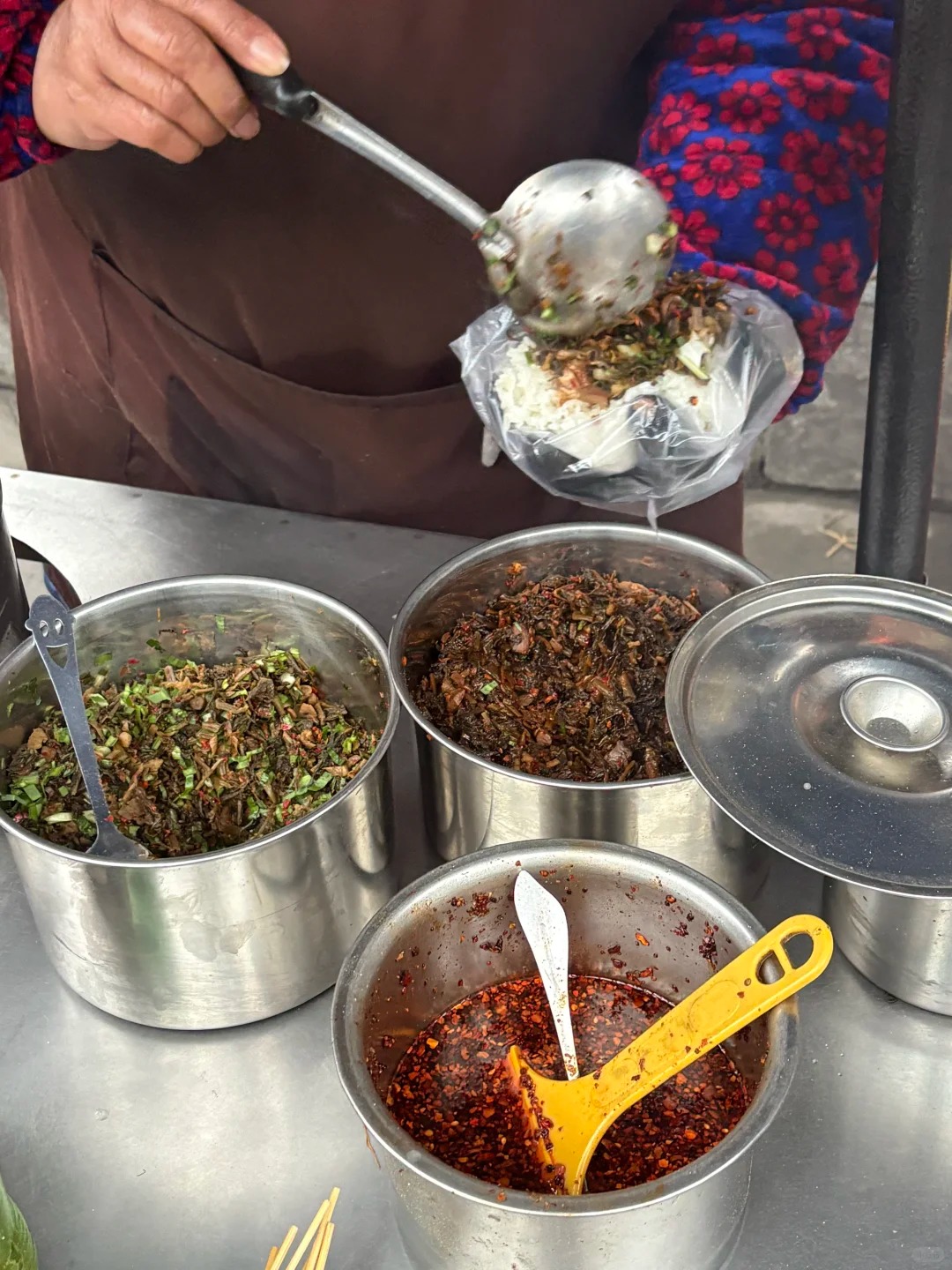
- Sticky Rice Dishes
Food in Zhaoxing Dong Village is simple and heavily based on sour, spicy, and preserved flavors. Most restaurants along the main street serve similar dishes, so you don’t need to overthink where to eat. The experience is more about trying local staples than finding “special” restaurants.
- Sour Fish Soup (Suan Tang Yu): This is the most common dish in Guizhou-style restaurants here. The broth is slightly sour with chili and tomato base. It is not very spicy by default, but the sour taste is quite strong and distinct.
- Smoked Pork (La Rou): Pork is cured and then smoked over wood fire. The texture is firm and salty, usually served with rice or stir-fried vegetables. It is heavy but very typical in Dong villages.
- Sticky Rice Dishes: You will see bamboo rice or wrapped sticky rice sold in small shops. These are easy to carry and often used as snacks while walking around the village.
- Local Vegetables: Seasonal greens are usually stir-fried with garlic or chili. They are simple but help balance the heavier meat dishes.
- Rice Wine (Mi Jiu): A mild local alcoholic drink served in small cups. Some restaurants offer homemade versions, but taste can vary a lot depending on the family.
Overall, food in Zhaoxing Dong Village is not designed for variety but for consistency. Most places cook in a similar way, so expectations should stay practical rather than high-end dining.
Practical food tips
Eating in Zhaoxing Dong Village is generally straightforward, but a few small details can make the experience smoother. Most menus are in Chinese, sometimes with unclear translations, so pointing or asking directly is common. English menus are not guaranteed, even in busier restaurants. If you want to understand basic manners before ordering or talking with locals in China, this short guide on etiquette might help.
Spice level is something to be careful about. Even “mild” dishes can still carry chili flavor, so it is better to clearly ask for less spicy if you are not used to it. Prices are usually reasonable, with most meals ranging around ¥40–80 per person, depending on portion size and location.
Restaurants near the main street are more convenient but slightly more tourist-oriented. If you walk a bit deeper into side streets, you may find smaller family-run places that feel more local and slightly cheaper. Timing also matters—dinner hours around 6–8 pm are the busiest, so earlier or later meals are usually more relaxed.
🌸 Explore Another Ethnic Mountain Escape: If you love the traditional architecture and scenic mountain landscapes of Zhaoxing, you might also want to explore a stunning Tibetan village known for its unique watchtowers and white stone architecture. Check out our guide to Jiaju China: Stone Houses, Pear Blossoms, and the Mountain Road from Chengdu.
Where to Stay During the Journey
-
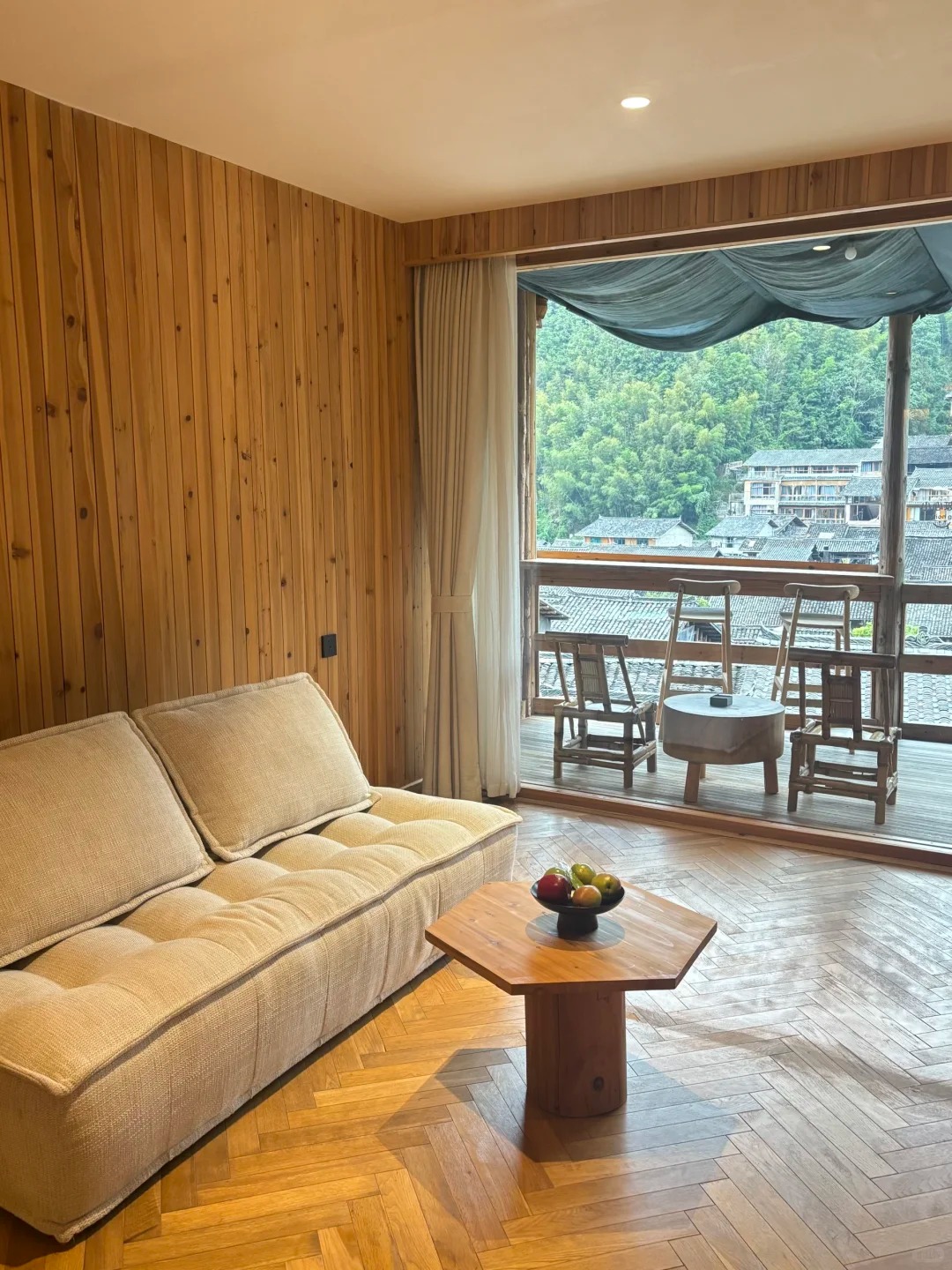
- Main Street Area
-
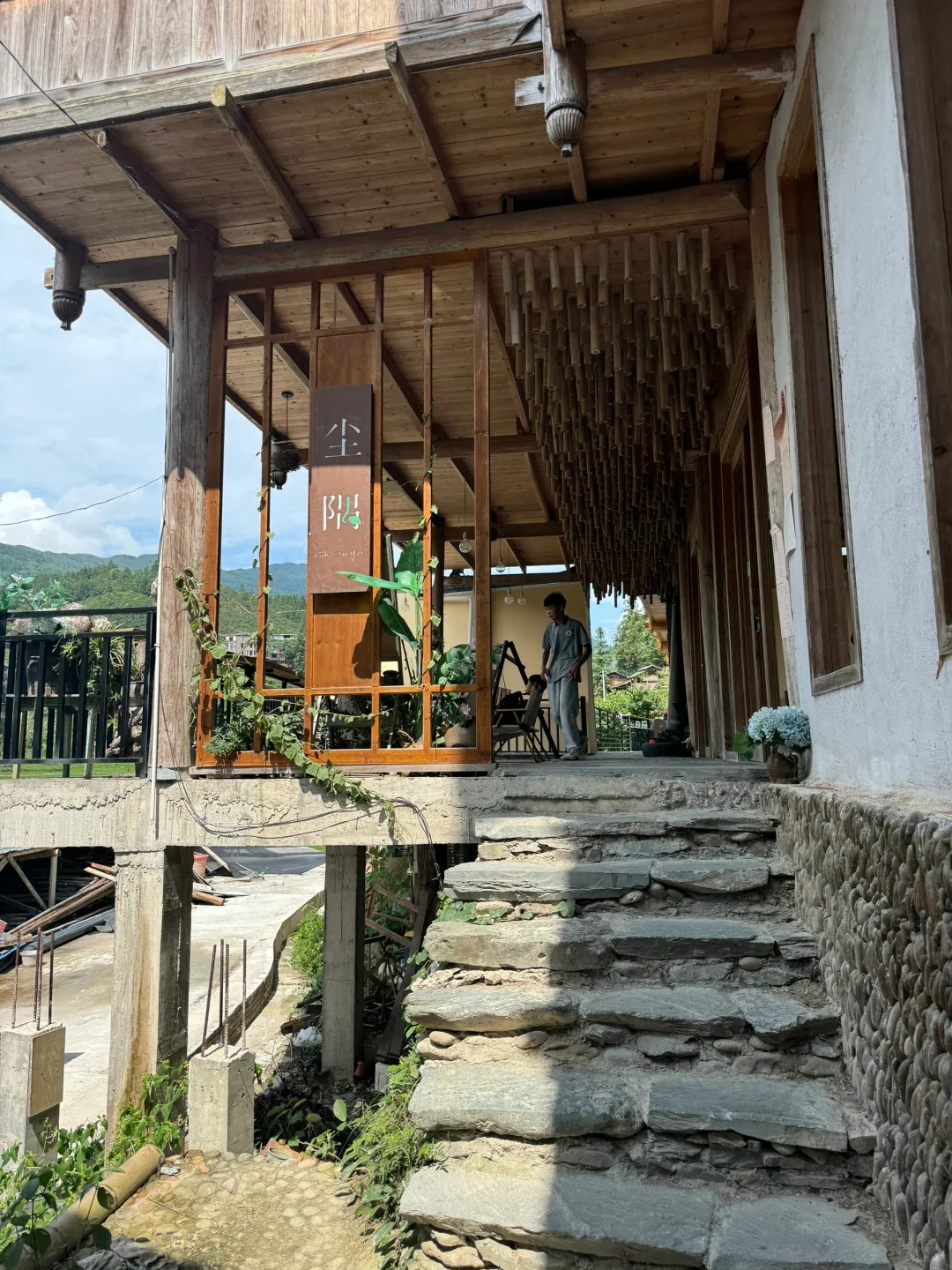
- Side Alley Area
-
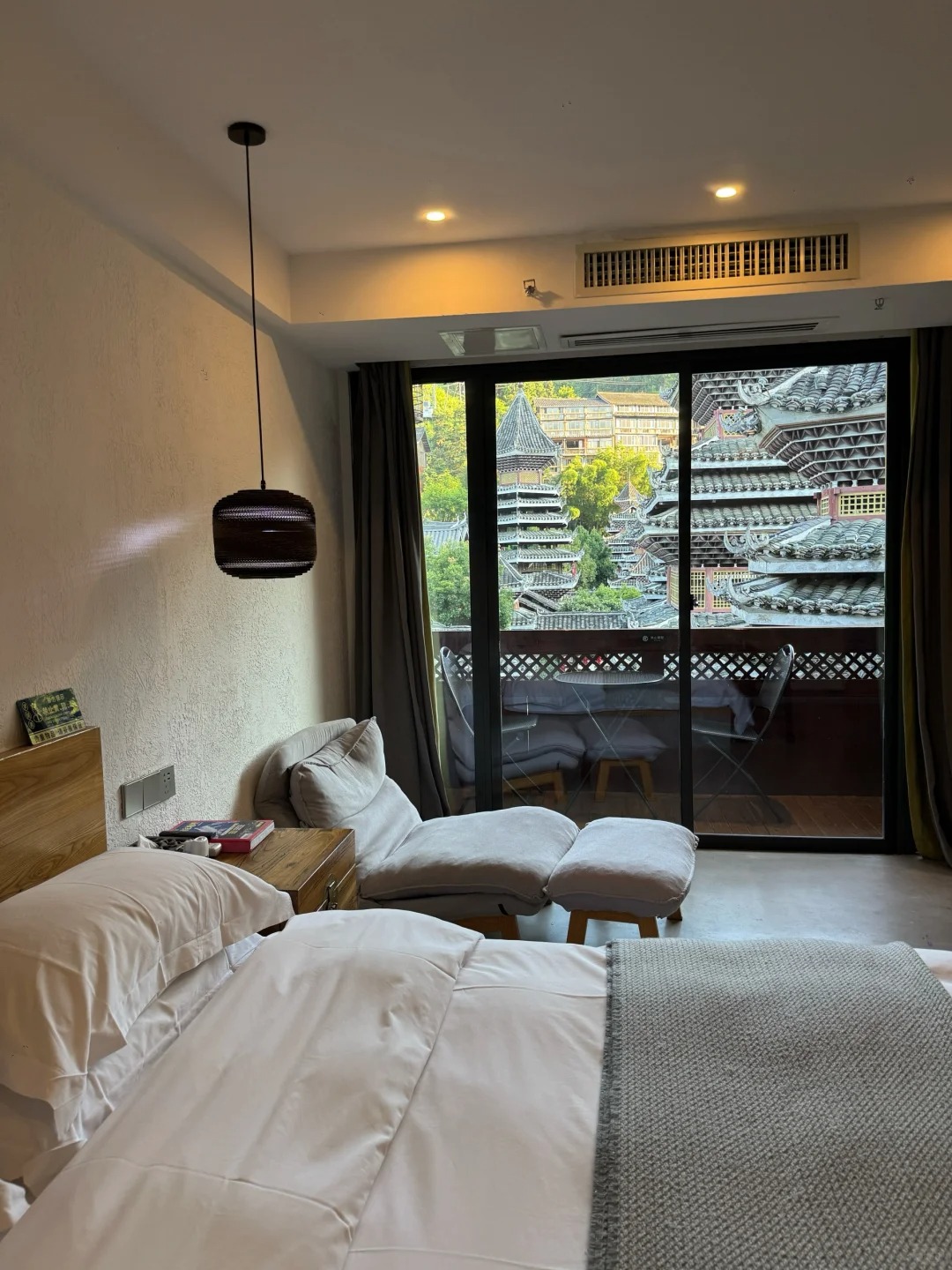
- Central Zone
Village Accommodation Areas
Where you stay inside Zhaoxing Dong Village makes a real difference in how the trip feels. Most guesthouses are located either along the main street or deeper inside the narrow side lanes. The distance is small, but the atmosphere changes quite a lot.
- Main street area: convenience & activity: Staying near the main street means you are close to restaurants, entrances, and the drum towers. It is easy to move around, especially if you arrive with luggage. However, it can feel busy at night, especially during peak travel season.
- Side alley area: quiet & local feel: Deeper inside the village, guesthouses are quieter and more hidden. You will hear fewer tourists and more daily village sounds, like water flow or early morning activity. Walking distance is slightly longer but still manageable.
- Central zone: balanced option: Some accommodations sit between the main street and residential lanes. These are usually the most balanced choice—close enough to access everything, but not directly exposed to crowd noise.
- Recommended for different travelers: If it is your first visit or a short stay, the main street is practical. If you prefer slow travel or photography, side alleys are better. Couples or light travelers often choose the middle zone for comfort and balance.
What Guesthouses Are Really Like
Most accommodations inside Zhaoxing Dong Village are family-run guesthouses rather than full hotels. They are generally clean, but expectations should stay realistic. The focus is more on location and atmosphere than luxury facilities.
Rooms usually come with basic amenities like hot water, simple beds, and Wi-Fi, but quality can vary slightly from place to place. Air conditioning is available in many guesthouses, although heating during colder months might be inconsistent. Soundproofing is also not strong, so you may hear footsteps or early morning village activity.
Based on general traveler feedback on platforms like Tripadvisor and Ctrip, most visitors describe the stay as “simple but comfortable enough for one or two nights.” The experience is often rated higher for atmosphere than for facilities. Prices typically range from ¥150–400 per night, depending on season and location.
Weather and Best Time to Visit
-
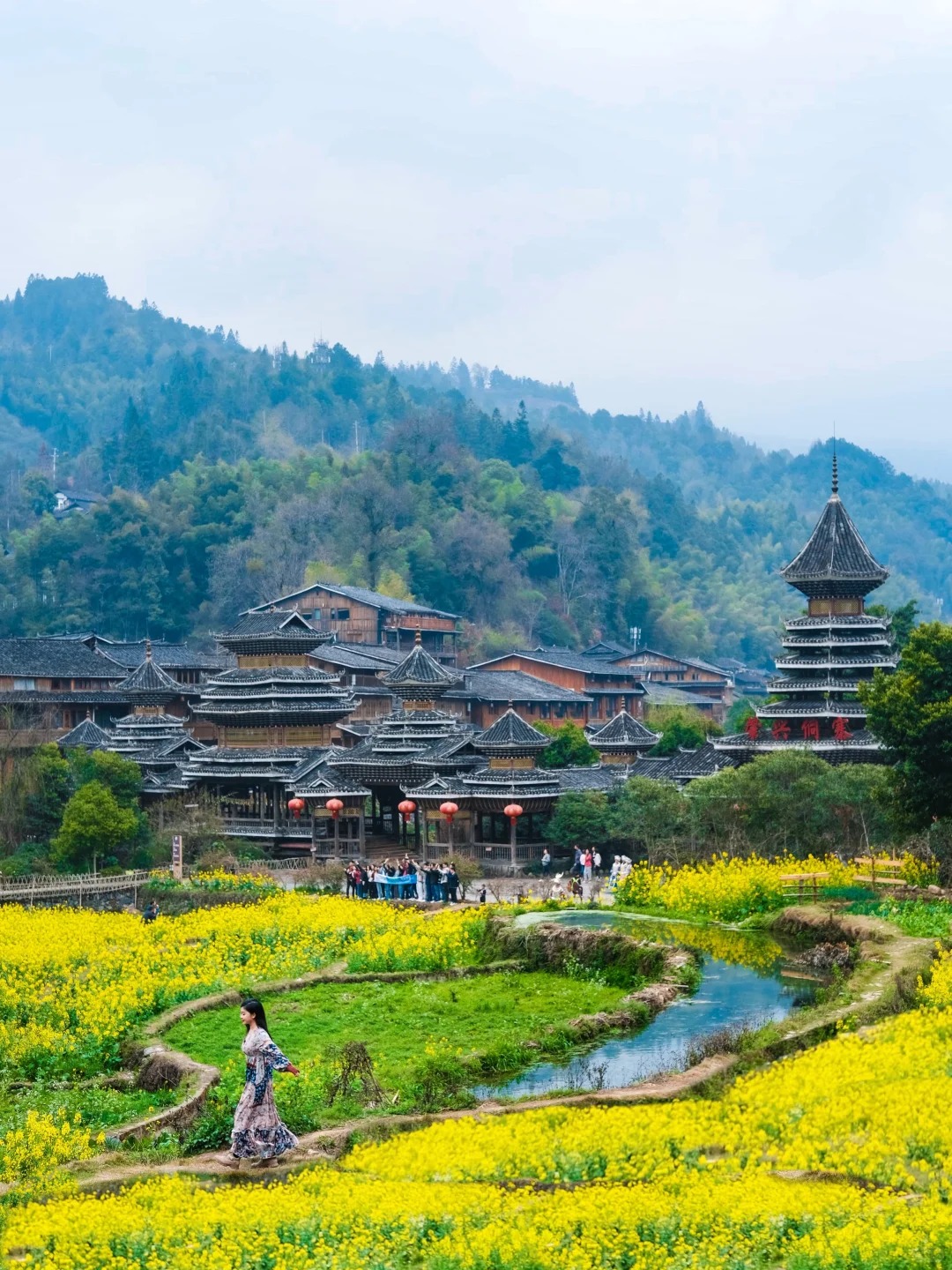
- Spring of Village
-
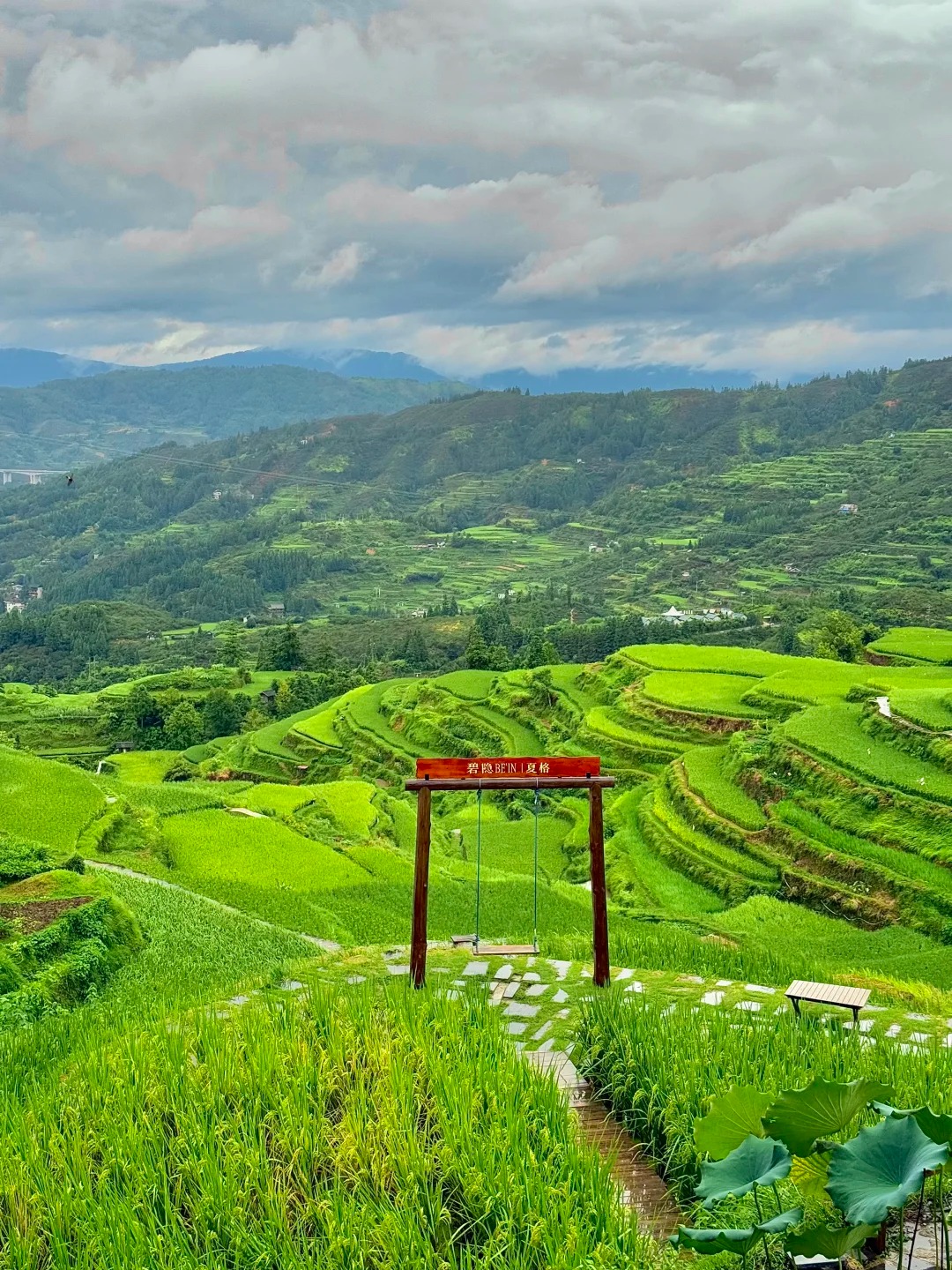
- Autumn of Village
Seasonal Conditions in Zhaoxing Dong Village
Weather in Zhaoxing Dong Village changes quite noticeably across seasons, and it affects how the village feels more than people expect. Spring and autumn are usually the most comfortable periods, with mild temperatures and clearer skies. Walking during these months feels easier, and the wooden streets stay dry for most of the day.
Summer is different. It turns greener and more humid, and you will likely notice heavier air, especially in the afternoons. Rain showers come and go quickly, so the village often feels damp but still very alive. Winter is quieter. Temperatures drop, sometimes close to freezing at night, but the upside is fewer tourists and a slower rhythm inside Zhaoxing Dong Village.
When to Avoid Crowds and Plan Better Visits
Crowd levels depend more on timing than season. Public holidays in China can change the atmosphere completely—what feels like a calm village on weekdays can turn busy around entrances and main bridges during peak travel days.
Weekdays are generally easier. Even in busy months, mornings feel manageable compared to weekends, when group tours arrive in waves. If the goal is photography or slow walking, early morning or late afternoon works best. Light is softer, and most visitors have not fully gathered around the central drum towers yet. In Zhaoxing Dong Village, timing often matters more than the season itself.
Nearby Dong Villages
Tang’an Dong Village
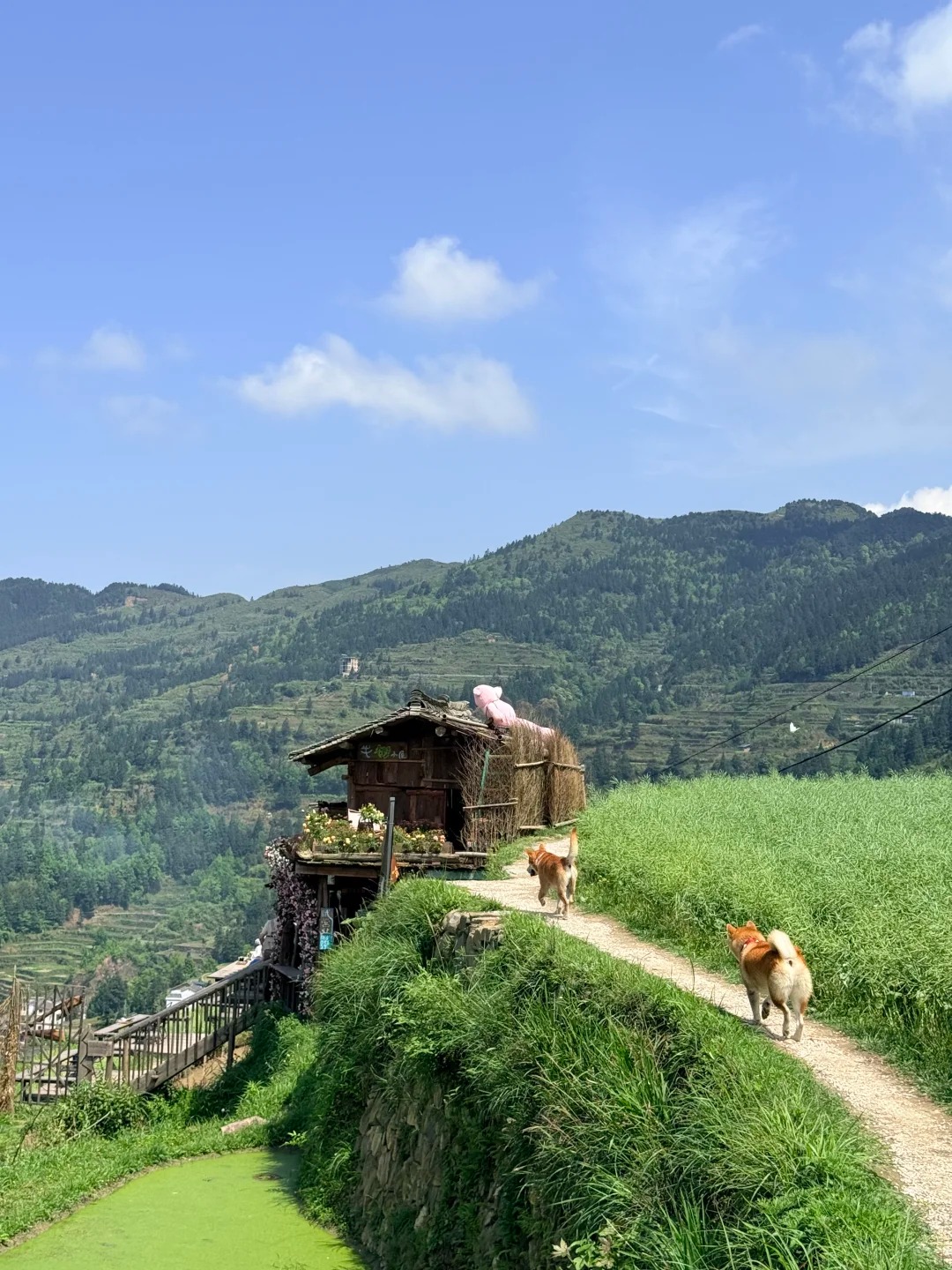
Tang’an Dong Village
Tang’an Dong Village sits higher in the mountains above Zhaoxing Dong Village, and the first thing people usually notice is the rice terrace view. The landscape opens up in layers, especially in spring and summer when the fields turn green and stretch across the hills. Compared with Zhaoxing, the environment here feels more open and less structured, with fewer commercial buildings and more natural scenery.
The village itself is smaller and quieter, and daily life feels more direct. You won’t see many shops or staged performances, just simple houses and farming activity depending on the season. For most travelers, Tang’an works best as a short half-day trip rather than an overnight stay. It is worth visiting if you want a broader view of the valley, but not necessary if your schedule is tight around Zhaoxing Dong Village.
Huanggang Dong Village
Huanggang Dong Village
Huanggang Dong Village is much more remote, and the road there already feels different from the main tourist route. It is less developed, with traditional wooden houses still forming the core of the settlement. Compared to Zhaoxing, you will notice far fewer visitors, sometimes almost none during regular weekdays.
The atmosphere is slower and more isolated. There are no large performance spaces or busy commercial streets, only daily village life and basic local activity. This makes it more suitable for travelers who are interested in deeper cultural observation rather than sightseeing. Huanggang is not designed for casual visits, so it usually requires extra time and intention to reach.
FAQ About Zhaoxing Dong Village
Q: Where is Zhaoxing Dong Village located?
Zhaoxing Dong Village is located in Liping County, Guizhou Province in southwest China. It sits in a valley surrounded by green hills and is part of the larger Dong ethnic minority region. The nearest transport hub is Congjiang Railway Station, which connects the village with cities like Guilin and Guiyang through high-speed rail. From the station, it usually takes around 15–20 minutes by car to reach the entrance of the village.
Q: How do I get to Zhaoxing Dong Village from Guilin or Guiyang?
The most common way is to take a high-speed train to Congjiang Station first. From Guilin, the journey usually takes around 2–3 hours, while from Guiyang it is slightly longer depending on the train type. After arriving at Congjiang, you can take a taxi or arranged shuttle directly to Zhaoxing Dong Village. The final leg is short but important, and most travelers find it easier than expected once they reach the station.
Q: What is Zhaoxing Dong Village called in Chinese?
In Chinese, Zhaoxing Dong Village is written as “肇兴侗寨” (Zhaoxing Dongzhai). The word “Dong” refers to the Dong ethnic minority group, which is known for its wooden architecture and drum tower culture. You will often see both the English and Chinese names used together on signs around the village, especially near the entrance and transport points.
Q: Do I need to buy a ticket for Zhaoxing Dong Village?
Yes, there is an entrance ticket for Zhaoxing Dong Village, which is usually around 80 RMB. This often includes access to the village area and sometimes shuttle transport inside depending on the season. Prices may vary slightly during holidays or peak travel periods. Tickets are checked at the main entrance, so it is difficult to enter without one unless you are staying inside the village.
Q: When is the best time to visit Zhaoxing Dong Village?
The best time to visit is generally spring (March to May) and autumn (September to November). During these months, the weather is comfortable and walking around the village is easier. Summer is greener but more humid, while winter is quieter but colder at night. Many travelers prefer early mornings regardless of season because the light is softer and the village is less crowded.
Q: How many days should I spend in Zhaoxing Dong Village?
Most visitors stay one or two days. A single day is enough to walk through the main areas, see the drum towers, and experience the bridges and night lighting. However, staying two days allows more time for nearby places like Tang’an Dong Village and for slower exploration without rushing. Longer stays are usually for travelers interested in photography or deeper cultural observation.
Q: Is Zhaoxing Dong Village very touristy or still local?
It is somewhere in between. Zhaoxing Dong Village has developed tourism infrastructure, but it still keeps a functioning village layout. You will see tourists in the main areas, especially around the bridges and main street, but side alleys and early mornings still feel local. It is not completely untouched, but it also does not feel like a fully commercialized theme park.
Q: Are there good hotels inside Zhaoxing Dong Village?
Yes, most accommodation inside the village consists of family-run guesthouses. They are generally clean and simple, with basic facilities like hot water and Wi-Fi. Some rooms may vary in comfort, especially in terms of soundproofing. Prices usually range from 150 to 400 RMB per night depending on location and season. Many of these guesthouses accept foreign travelers, but it is still better to confirm in advance.