Guizhou Tour
Guizhou sits in the hills of southwest China, laced with karst rivers, Buddhist summits, and some of the most intact ethnic villages in the country. A Guizhou tour threads together four signature landscapes — Huangguoshu Waterfall, Fanjingshan, Xiaoqikong, and Daqikong — with Miao and Dong communities in Qiandongnan and a pair of ancient towns within a day of Guiyang. The province is rural and lightly touristed compared with neighboring Yunnan or Guangxi, which keeps the pace slow and the views uncrowded.
Most itineraries start in Guiyang, the provincial capital, then loop south to Anshun, east to Tongren, and southeast toward Kaili and Libo. Seven to ten days covers the highlights; two weeks opens up the slower ethnic-village circuit through Qiandongnan.
Quick Facts
Top Attractions in Guizhou
Four flagship landscapes anchor any Guizhou tour, each tied to its own gateway city and a recommended full day on site. Plan a clockwise loop — Huangguoshu to the southwest, Fanjingshan to the northeast, Xiaoqikong and Daqikong to the south — and you cover the province's geology in a single sweep.
Huangguoshu Waterfall
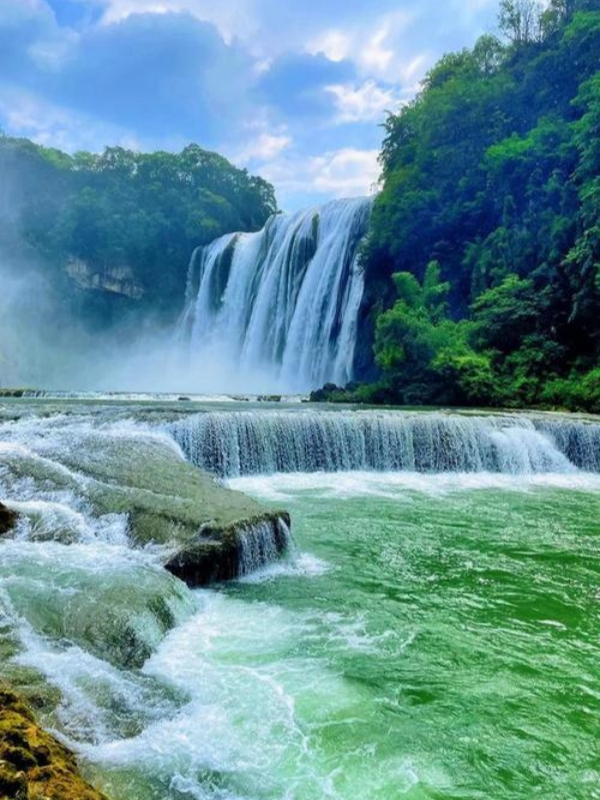
The Huangguoshu Waterfall
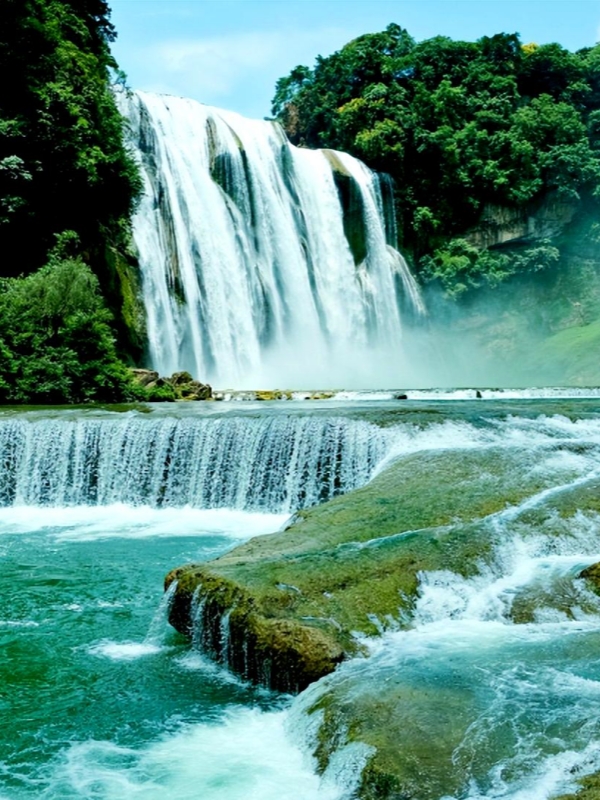
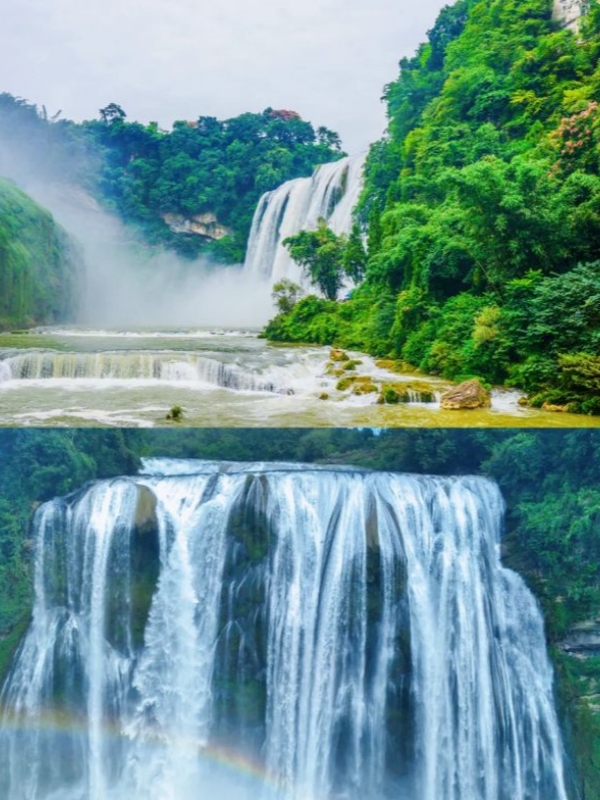
Huangguoshu sits in Anshun, roughly 130 km southwest of Guiyang, and is widely described as one of the largest karst waterfalls in Asia. The main drop is 77.8 m with a crest width of 101 m, set inside a 115-sq-km scenic area that folds in the Water-Curtain Cave — a tunnel you walk through behind the falling water — plus the upper Doupotang cascade and the Tianxing Bridge karst gorge. Plan a full day, and add the sightseeing bus and escalator: the on-foot distances inside the park are long.
- Ticket: about $22–31 (¥160–220) by season; sightseeing bus and escalator sold separately.
- From Guiyang: HSR to Anshun, then a local bus or short taxi to the gate.
- Photo stop: the Water-Curtain Cave — you walk through the spray itself.
Fanjingshan Mountain
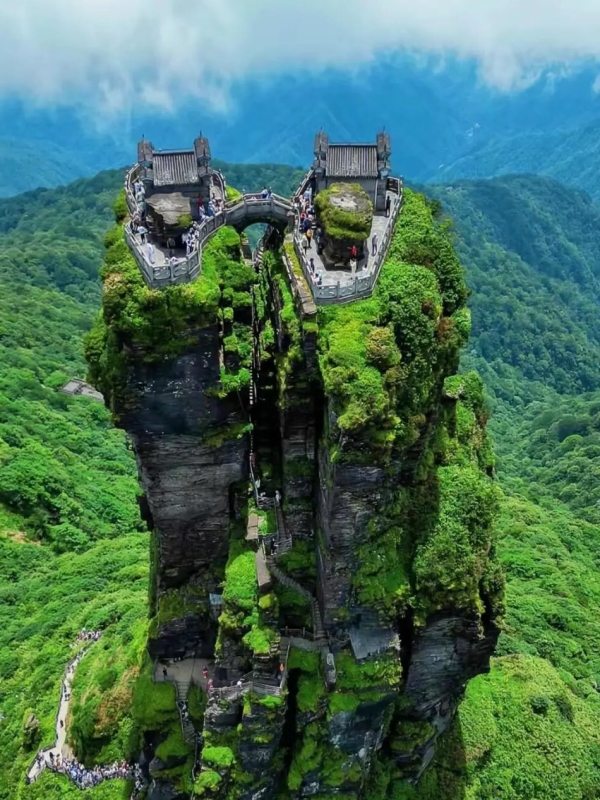
The Fanjingshan Mountain
Fanjingshan is a sacred Buddhist peak in Tongren, inscribed on the UNESCO World Heritage list in 2018 as an extension of South China Karst. The highest point reaches 2,572 m, and the narrow ridge at the summit — the Golden Summit (Hongyun Ding) — holds the Cheng-en Temple, perched on a knife-edge spine of rock. The round-trip cable car is the practical option for almost every visitor; the alternative is a long staircase climb that most travelers skip.
- Ticket: about $17–40 (¥120–280) by configuration; entrance ¥100 plus round-trip cable car around ¥160.
- From Guiyang: HSR to Tongren, then a connecting bus to the scenic-area base.
- Allow: a full day from Guiyang, including the cable car and the summit walk.
Xiaoqikong Scenic Area
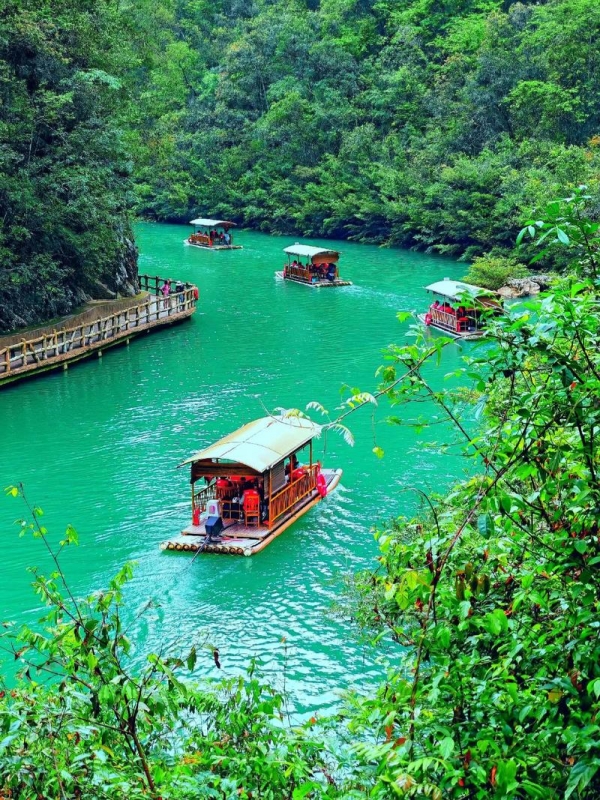
The Xiaoqikong Scenic Area
Xiaoqikong — the "Small Seven Arches" — is a 12-km valley in Libo, near the Guangxi border, crossed by a 19th-century stone bridge. The trail runs through 68-tier cascading waterfalls, the Laya Waterfall, and the Cuigu Wetland, and the whole valley forms part of the South China Karst UNESCO inscription. A sightseeing bus cuts the on-foot distance, and a half-day is comfortable; pair it with Daqikong for a full day.
- Ticket: about $14–19 (¥98–138) combined with Daqikong, sightseeing bus included.
- From Guiyang: HSR to Libo, then a short local transfer.
- Allow: 4–5 hours; wear shoes that grip on wet stone.
Daqikong
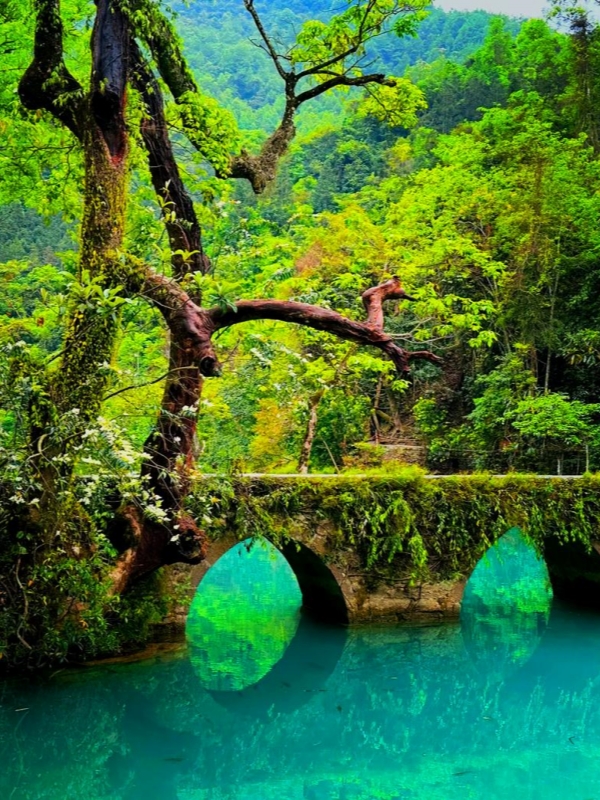
The Daqikong
Daqikong — the "Big Seven Arches" — is the wilder, less-crowded counterpart to Xiaoqikong, sharing the same scenic-area ticket. Its signature feature is the Tiansheng Bridge, a 200-m natural karst arch that spans the Zhangjiang River, followed by dark, navigable gorges downstream. Go in the morning for the best light on the arch; the afternoon often fills with day-trippers from Libo town.
- Ticket: covered by the combined Xiaoqikong + Daqikong pass.
- From Libo town: a short taxi or scenic-area shuttle.
- Combine: with Xiaoqikong as a morning-to-afternoon pair.
Miao and Dong Ethnic Villages
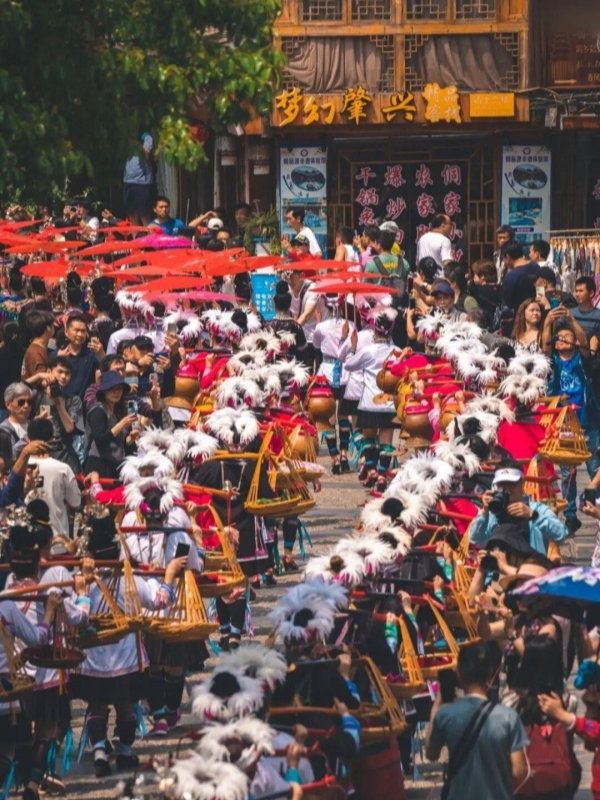
The Biasha Miao Village
Guizhou is the most ethnically diverse province in eastern China, and the Miao and Dong villages are the cultural backbone of any tour that goes beyond the landscape. Their wooden stilt houses (diaojiaolou), indigo textiles, and polyphonic song traditions survived the eras that flattened similar communities elsewhere. Visiting with a guide is the difference between a quick photo stop and a real conversation.
Biasha Miao Village
Biasha is a Miao settlement in Leishan County, in the Qiandongnan prefecture, often cited as one of the best-preserved Miao villages in the province. Residents still wear pleated indigo skirts and silver headpieces, and the men carry traditional firearms — used in ceremonies, not for hunting. A small entry fee of about $4–7 (¥30–50) is charged at the village gate, and a half-day visit pairs well with a local lunch.
- Access: roughly 1.5 hours by road from Kaili, the Qiandongnan transport hub.
- Best time: morning, when the welcome performance is at its fullest.
- Etiquette: ask before photographing elders, and avoid touching silver headdresses.
Dong Villages and Long Table Feast
The Dong cluster centers on Liping and Congjiang counties, with Zhaoxing and Dali as the most-visited stops. The signature communal meal — the Long Table Feast (Cang Zhuo Yan) — sets long tables down a village lane for a single banquet of sour-soup fish, sticky rice, and pork. The Dong are also known for the "Grand Song of the Dong" (Kgal Laox), an a cappella polyphonic singing tradition recognized by UNESCO. Village entry is typically about $7–11 (¥50–80).
- Best base: Zhaoxing or Dali, both with simple guesthouses.
- Best time: a weekday, when the villages are quieter than on weekend group tours.
- Ask ahead: not every village runs the Long Table Feast daily — confirm with your guide.
Miao Batik and Silver Smithing
The Miao batik (làhàn) is made by drawing with beeswax through a copper knife, dyeing the cloth in indigo, and unwaxing to reveal white patterns on blue. Miao silver-smithing (hua si yin shi) produces elaborate headdresses, collars, and horn-shaped pieces that historically served as a family's store of wealth. Short workshop visits in Kaili and around Xijiang Miao Village welcome travelers; small pieces are sold on site, and small-denomination RMB notes are useful.
- Where: Kaili's workshops for a half-day, Xijiang for an overnight.
- Buy: silver weight is stamped; ask for a written receipt before paying.
- Photography: some workshops charge a small fee; ask first.
Festival Tours
Festival tours peak twice a year — during the first lunar month and again in late autumn. Major events include the Miao New Year and Miao Lusheng Festival (Qiandongnan, November–December), the Dong Sanyuan New Year (Liping, third lunar month), the bull-fighting festivals, and the Sister's Meal Festival in May. Because dates follow the lunar calendar, confirm them against the local ethnic-culture office before booking. Expect dress-up and dancing that runs for hours, so wear something easy to remove and add layers.
- Book: festival tours 2–3 months ahead — accommodation fills fast.
- Pack: a light daypack for the long days on site.
- Ask: your hotel or guide for the exact village schedule — it shifts yearly.
Guiyang and Ancient Towns
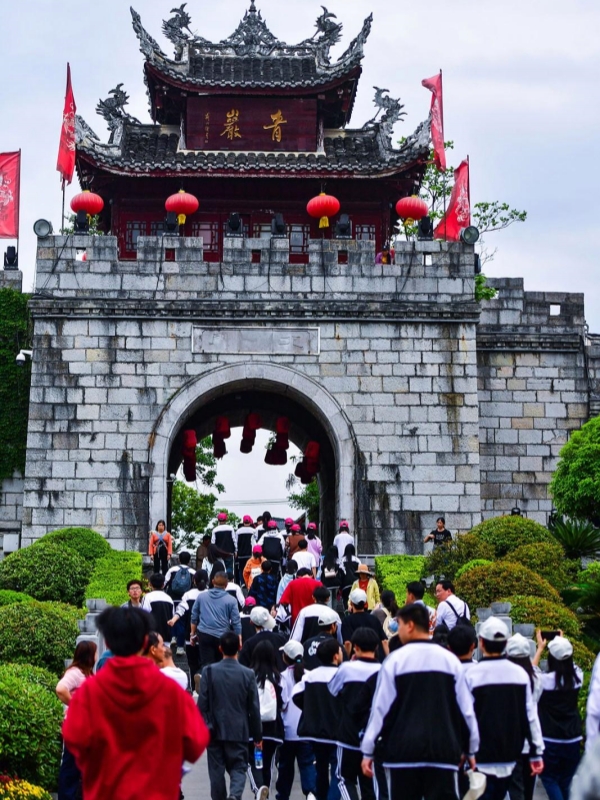
The Qingyan Ancient Town
Most Guizhou tours start and end in Guiyang, and two easy half-day detours from the capital fill in the slower side of the province. Both towns are well within a single-day return from a city hotel.
Guiyang City
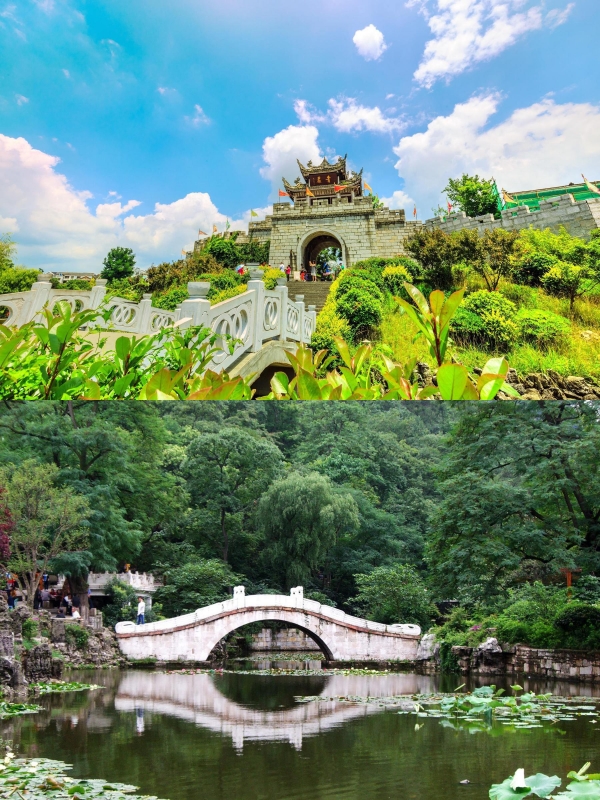
Guiyang is the capital of Guizhou, home to roughly 3.5 million people and the Longdongbao International Airport (KWE). For a half-day, walk to the Jiaxiu Tower on the Nanming River (built in 1598), browse the night market on Minsheng Road, and try the local Chang Wang noodles or siu wa stalls in the old town. North of center, the Yelang Valley Sculpture Park is a quiet, idiosyncratic garden of stone figures inspired by the ancient Yelang kingdom — worth a stop if you have two extra hours.
- Airport: Longdongbao (KWE), about 30 minutes from the city center by taxi.
- Food: try Chang Wang noodles and siu wa (small baked pastries) in the old town.
- Side trip: Yelang Valley Sculpture Park, 20 min north of center.
Qingyan Ancient Town
Qingyan is a Ming-era walled town 30 km south of Guiyang, founded in 1378. The layout is a stone main street, four gates, a Confucian temple, and a small 19th-century Catholic mission house — a quiet relic of inland China's missionary history. Entry is about $1–3 (¥10–20); weekends draw heavy domestic tourist traffic, so a weekday morning is best.
- From Guiyang: 30–40 minutes by car, or a direct bus from the city.
- Allow: 2–3 hours, plus time for lunch.
- Pair: with a Guiyang afternoon on the way back.
Longmen Town
Longmen is a Han-Chinese river-port village about 70 km east of Guiyang, on the Xiangshui River. Its distinctive feature is more than 100 stone dragon-head carvings — real and replica — arranged along the embankment, most dating from the late Qing. Entry to the village is free; a small fee of about $1–3 (¥10–20) covers the dragon-head galleries. A half-day round trip from Guiyang is enough.
- From Guiyang: roughly 1.5 hours by car.
- Allow: 3–4 hours total, including a riverside lunch.
- Note: a working village as well as a scenic stop — keep cameras ready but unobtrusive.
Best Time to Visit Guizhou
Guizhou has a humid subtropical climate and is open year-round, but the practical window runs from mid-March through October. Within that, May, June, and October are the sweet spots — warm, mostly dry, and with the autumn foliage on Fanjingshan peaking in mid-to-late October. July and August are the hottest and wettest months; winters stay mild at low elevations but turn cold and icy on Fanjingshan.
Getting to and Around Guizhou
Guiyang Longdongbao (KWE) is the main international gateway, with Kunming and Guangzhou as useful domestic alternates. Once in Guiyang, high-speed rail covers the major sightseeing nodes; within cities, taxis and Didi are standard, though English-speaking drivers are rare outside of pre-booked guides.
Practical Tips for Foreign Visitors
Three practical axes shape a Guizhou tour aimed at foreign visitors: language, money and booking, and connectivity. Each one has a clean workaround, and each one breaks down differently depending on whether you are in a city or a village.
Language and Tour Guides
Mandarin is the working language in the cities; Miao and Dong are the working languages in the villages. English is rare outside of pre-booked guides and international-brand hotels. For village visits, an English-speaking guide is essentially required for any conversation beyond gestures. Full-day private guides in Guizhou run about $120–220 (¥850–1,500) for a group of 1–4, and most are concentrated in Guiyang, Anshun, and Tongren.
- Book: a guide in advance — same-day hire is unreliable.
- Best fit: a driver-guide combination for any day that mixes two sights.
- Note: a Mandarin-only driver plus a phone-translation app is a workable budget option for cities.
Money and Booking Channels
Mobile payment (WeChat Pay and Alipay) dominates in cities, but small villages and rural shops often still take cash RMB. Foreign cards are accepted only at high-end hotels and brand restaurants, so bring a working supply of small notes. Tour packages and attraction tickets are best booked on Trip.com or Klook, which accept foreign credit cards and e-mail English-language confirmations; QR-code entry on a phone is standard at the gate.
- Cash: small RMB notes for villages — keep about ¥200–500 ($28–70) in small bills.
- Booking: Trip.com or Klook for hotels, tickets, and packages.
- On site: attraction tickets can be prepaid on Trip.com for QR-code entry.
Connectivity and SIM Cards
China Mobile and China Unicom are the two nationwide carriers; a 7-day tourist SIM with data costs about $10–15 (¥70–110) at the airport. Foreign apps (Google, WhatsApp, Instagram, Gmail) require a VPN in China, so install and test the client before you fly. In mountain scenic areas — the Fanjingshan summit and the inner valleys of Xiaoqikong — signal can drop, and a portable Wi-Fi rented at the airport is a useful backup.
- SIM: buy at the airport arrivals hall; bring your passport.
- VPN: install and test before departure — most foreign apps will not work in China without one.
- Backup: a portable Wi-Fi (Egg) rented at the airport for two or more devices.
Frequently Asked Questions
Q: How many days do you need for a Guizhou tour?
Plan on 7–10 days for a Guizhou tour covering Guiyang, Huangguoshu, Fanjingshan, and one or two ethnic village areas without rushing. Five days works if you focus on landscape only; twelve or more days opens up a slow loop through Qiandongnan and the Dong communities around Zhaoxing and Dali.
Q: What is the best time to visit Guizhou?
April through June and September through October are the best windows for a Guizhou tour — warm, mostly dry, and with autumn foliage on Fanjingshan peaking in mid-to-late October. Avoid the national-holiday weeks around October 1–7 and Chinese New Year, when domestic tourism spikes and prices climb. Winter stays mild at low elevations but cold and icy on Fanjingshan.
Q: How do I get to Huangguoshu Waterfall from Guiyang?
Take the HSR from Guiyang to Anshun — about 30 minutes and roughly $6 (¥40) — then a local bus or short taxi to the scenic area gate, around $3 (¥20). Total door-to-door time is about 1.5 hours, and a full-day round trip including the waterfall visit is comfortable. Buy tickets in advance on Trip.com for QR-code entry at the gate.
Q: Are English-speaking guides available?
Yes, but pre-booking is required. English-speaking guides in Guizhou are limited in number and concentrated in Guiyang, Anshun, and Tongren. Full-day private guides run about $120–220 (¥850–1,500) for a group of 1–4. The most reliable channels are Trip.com, Klook, or a Guizhou-based DMC contacted in advance.
Q: Can I book a Guizhou tour from Singapore?
Yes. Both Trip.com and Klook serve Singapore residents with SGD or USD billing and English-language confirmation e-mails, so the same Guizhou tour packages are bookable from Singapore as from any other country. Flights typically route through Guangzhou, Kunming, or Shenzhen; allow a 2–3 hour connection window on the way in.
Q: What ethnic villages are most worth visiting?
Biasha Miao Village in Leishan, the Xijiang Miao Village cluster, and a Dong village around Zhaoxing or Dali are the three most worthwhile stops. All three are reachable from Kaili as a base. Plan 2–3 nights in Qiandongnan for a meaningful visit, and add a Long Table Feast plus a half-day batik workshop near Kaili for cultural depth.
Q: How much does a Guizhou tour cost?
A 7–10 day private Guizhou tour runs about $1,200–2,200 (¥8,500–15,500) per person, excluding international flights; this typically covers hotels, transport, a guide, and most entrance tickets. Independent travelers can budget about $80–120 (¥550–850) per person per day, with the main variables being hotel tier and how many guide-days are hired.
Q: Is Guizhou safe for foreign tourists?
Yes. Violent crime against tourists is rare in Guizhou, and the main practical issues are language barriers, cash-only rural shops, and limited cell signal in mountain areas. Standard travel precautions apply: keep passport copies in a separate bag, watch for pickpockets at crowded festival sites, and confirm a guide's identity before getting in the car. The province is welcoming and low-stress for first-time visitors to China.