Huangguoshu Waterfall, Anshun, Guizhou
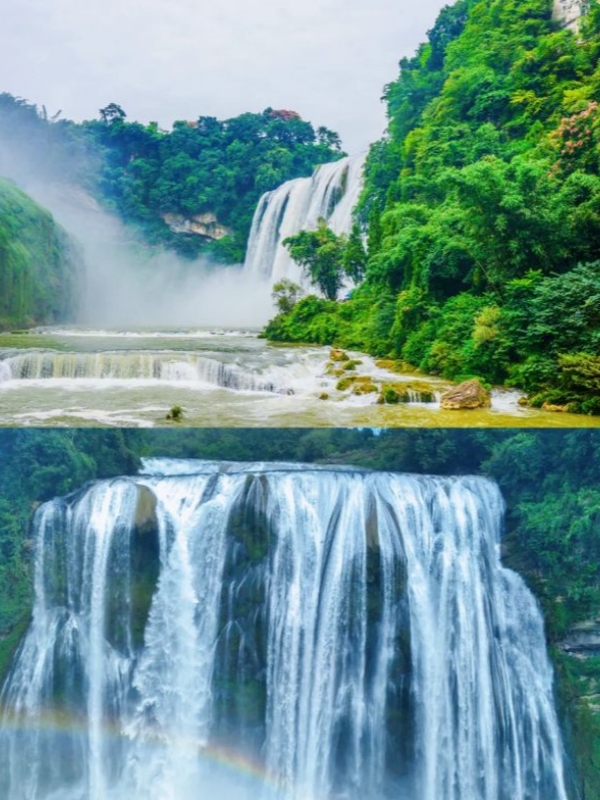
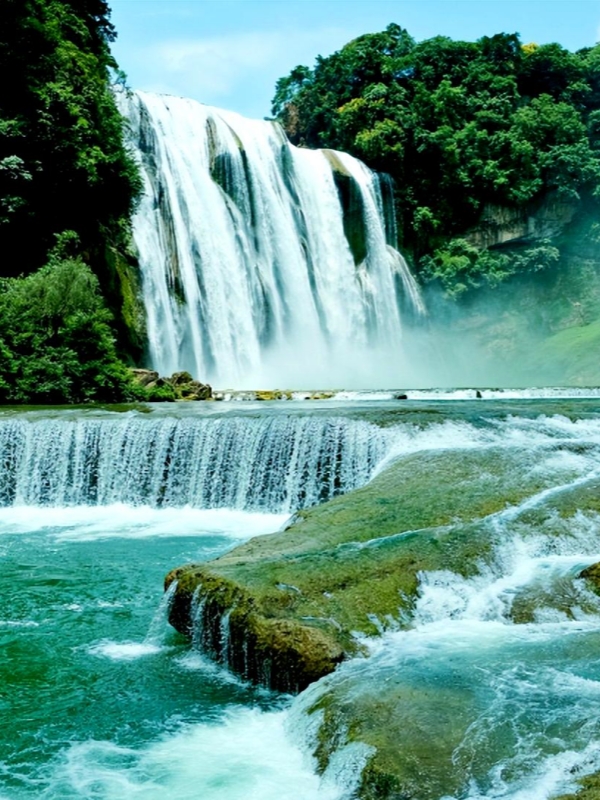
Huangguoshu Waterfall sits in a karst gorge on the Baishui River, about 128 km southwest of Guiyang in Anshun Prefecture, Guizhou. The main cataract is officially listed at 74 m tall and 81 m wide, with peak flow exceeding 700 cubic metres per second — enough to feed a 134 m cave that runs directly behind the cascade. The surrounding national park, first designated in 1982, contains 18 named falls along the same river, plus a karst pool, a bonsai-like stone forest and a Buyi/Miao stone village.
Most visitors pair the main falls with a walk through the cave, then loop to Doupotang, Tianxing Bridge and Rhinoceros Pool on the combined admission ticket.
Quick Facts
The Main Fall & the 18-Fall Cluster
Dimensions of the Main Falls
Huangguoshu Waterfall, Anshun, Guizhou
Huangguoshu's main cataract drops 74 m from a horseshoe-shaped cliff into a horseshoe-shaped plunge pool, with a peak flow that exceeds 700 cubic metres per second. Officially it is 74 m tall and 81 m wide, though some published accounts give 67 m and 83 m. The fall was first designated in 1982, the same year it became China's first officially recognised waterfall scenic area.
Doupotang Waterfall
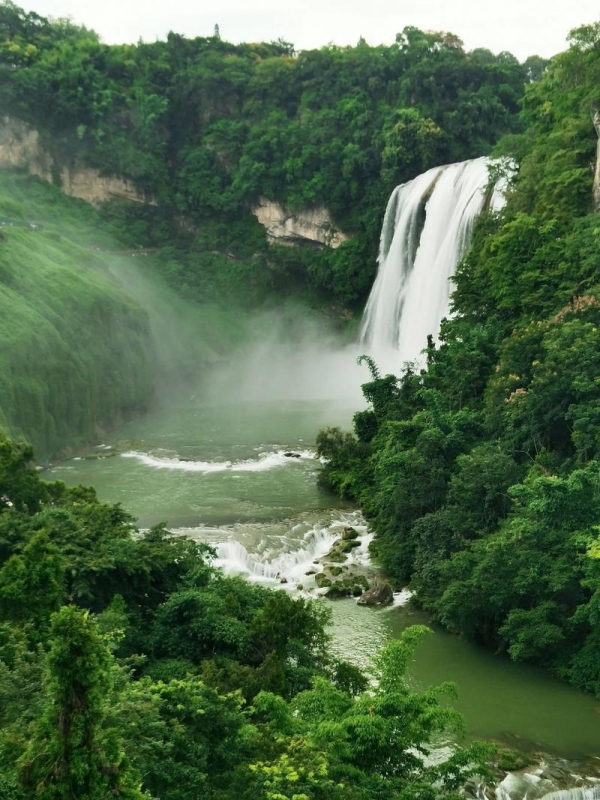
Huangguoshu Waterfall, Anshun, Guizhou
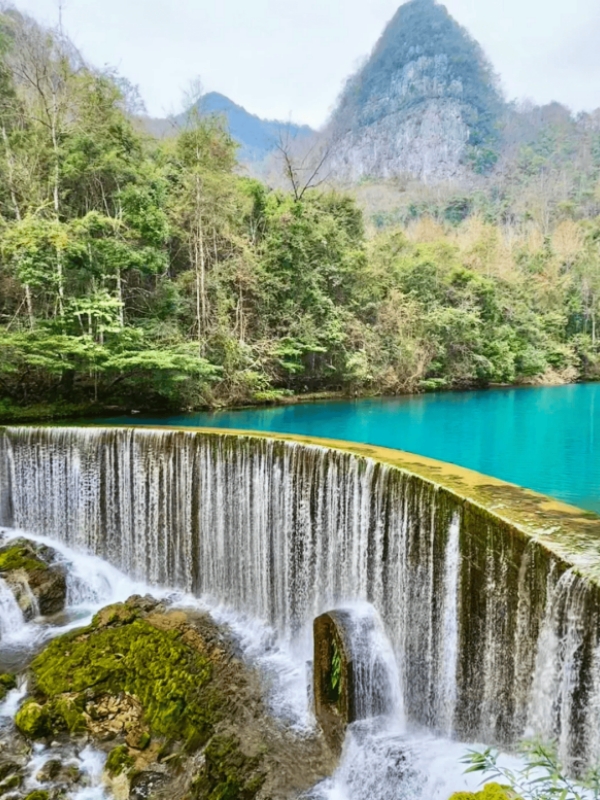
About 1 km upstream of the main cataract, Doupotang fans across the Baishui River at its widest — a low, 21 m curtain that stretches 105 m at full bank. It is the widest fall in the 18-fall cluster, and most visitors hit it on the way back from the main viewing platforms.
- Location: ~1 km upstream of the main fall, on the Baishui River.
- Width: 105 m at its widest point — widest fall in the cluster.
- Height: 21 m.
Silver-Chain, LuosiTan & Dishuitan
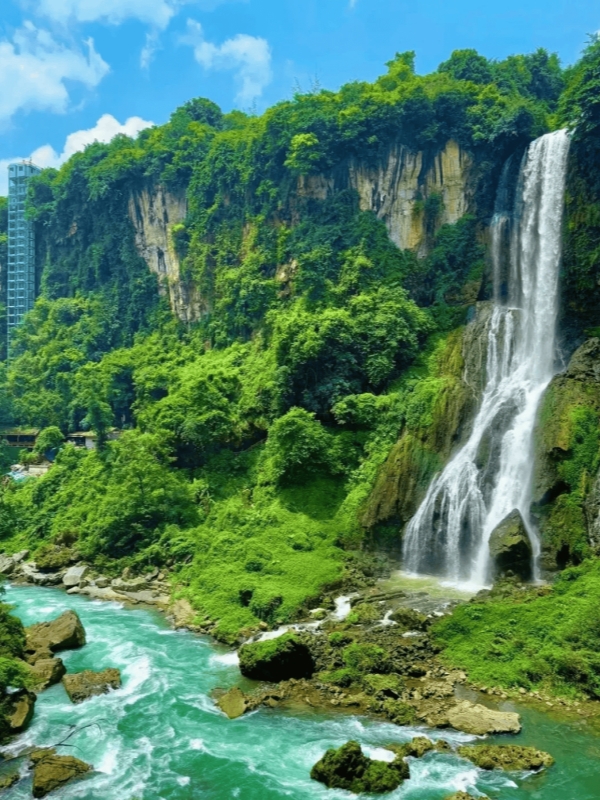
Huangguoshu Waterfall, Anshun, Guizhou
The Silver-Chain Pendant (Yinlianzhui Tan) is the small fall in the lower section, where threads of water thread the cliff face like a silver chain dripping into the river below. LuosiTan and Dishuitan sit mid-cluster, each with its own clean viewing angle onto the Baishui River and its own photogenic profile at low winter flow.
Guanjiaoxia & Yinlianzhui Tan
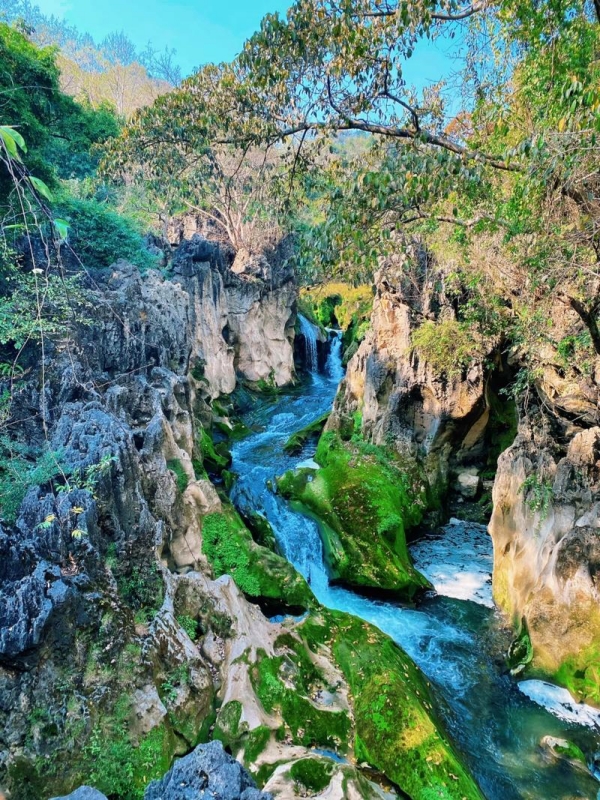
Huangguoshu Waterfall, Anshun, Guizhou
Guanjiaoxia sits about 40 km from the main falls in a separate gorge and drops 120 m across three tiers — a noticeably heavier flow than the main cataract in summer rain. The Silver Pendant Pool (Yinlianzhui Tan), the small but photogenic tier nearest the lower river, sits just below the main viewing deck.
🌊 Discover the Province: While this massive waterfall is the crown jewel of the region, the surrounding mountains hold even more ethnic villages, deep gorges, and hidden karst landscapes. Plan your complete regional itinerary with our comprehensive guide to a Guizhou Tour.
The Water-Curtain Cave
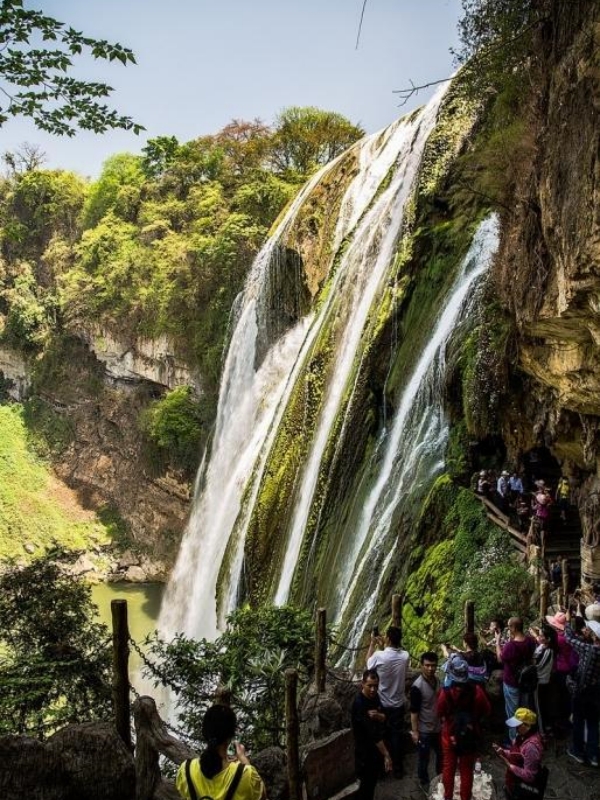
Huangguoshu Waterfall, Anshun, Guizhou
Behind the main cataract, a 134 m cave cuts through the cliff face and opens out at six windows set directly in the falling sheet. The carved passage holds five halls and six connecting corridors, with three vauclusian springs pushing water up through the floor — after sustained summer rain the cave mouth partially disappears behind a wall of spray. On sunny mornings, a natural rainbow arcs across the cascade as viewed from inside, one of the park's most-photographed scenes.
Spray reaches well into the inner corridor, so a light waterproof layer or a cheap park poncho is genuinely useful. The viewing windows stay open all year, regardless of water level.
Rhinoceros Pool & the Karst Sub-Spots
Rhinoceros Pool (Xi Niu Tan)
Huangguoshu Waterfall, Anshun, Guizhou
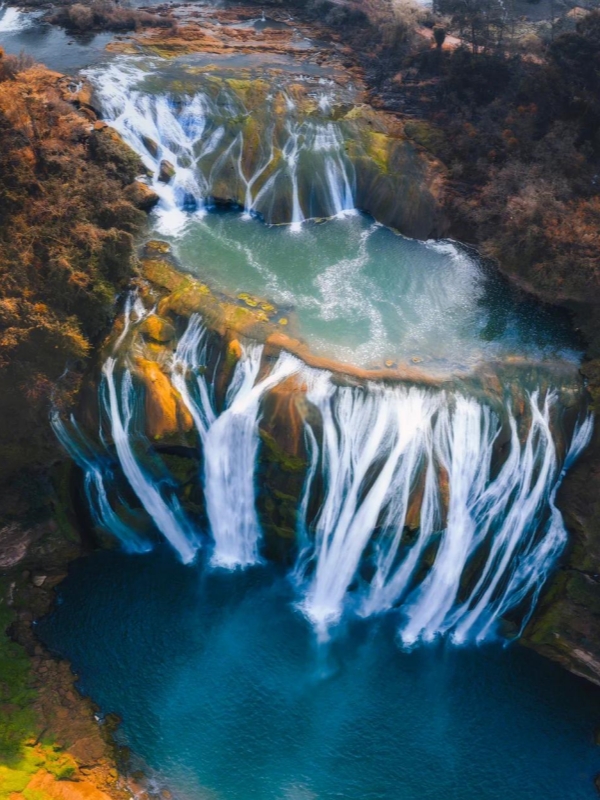
Eleven metres deep and submerged year-round, Rhinoceros Pool sits in a rhino-shaped basin at the foot of the main fall. Two pavilions ring the pool — Water-Viewing Pavilion (Wang Shui Ting) catches the bird's-eye silver-chain view, while Waterfall-Viewing Pavilion (Guan Pu Tai) lines up the head-on panorama. After dark the cascade is floodlit, and the pool becomes the recommended vantage for the night-light reflection on the river.
Tianxing Bridge & Stone Forest on Water
Six kilometres from the main fall, Tianxing Bridge is a karst passage laced with the Stone Forest on Water — banyan roots twisted across limestone boulders that read like a line of natural bonsai. Tianxing Cave (~18,000 m²) runs along the banks of Maoshui Pool, and the same admission ticket covers the bus ride from the main entrance. Allow about an hour here before continuing to Doupotang.
Baling River Stone Village
Huangguoshu Waterfall, Anshun, Guizhou
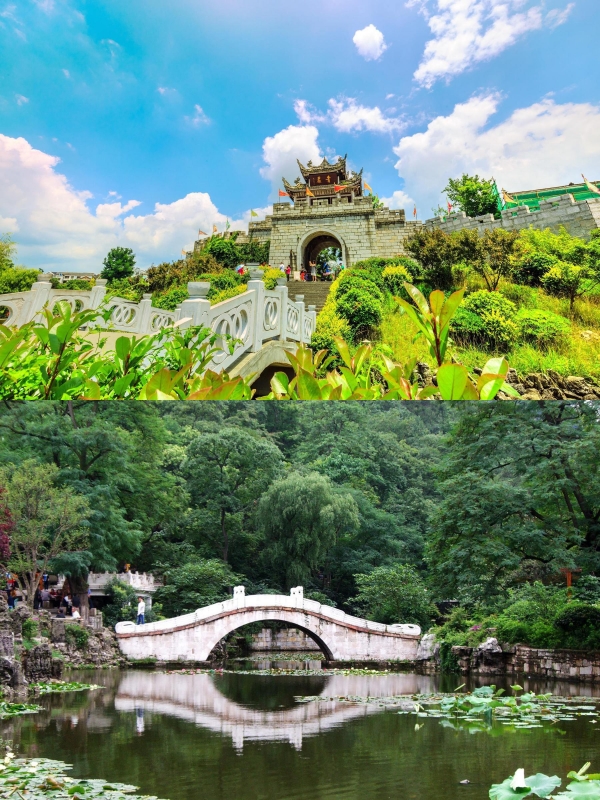
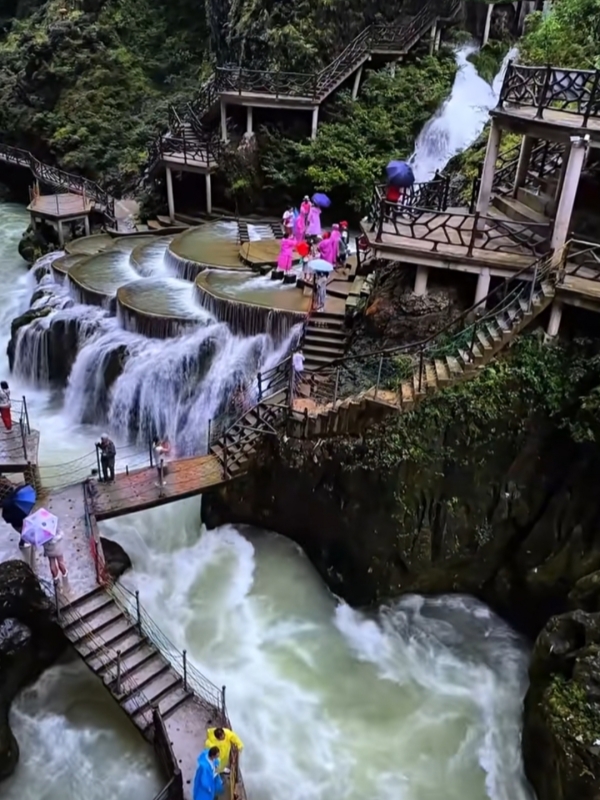
A Buyi and Miao village 6 km from the main fall, Baling River Stone Village is built almost entirely from local stone.
- Houses, roads and kitchens: walls, flagstone roads and even kitchenware are hewn from the same bedrock.
- Five-arch bridge: the five-arch stone bridge across the Baling River is the most photographed single object in the village.
- Bridge-hole framing: from the middle arch, midday reflections frame the surrounding mountains through each opening.
🏞️ Beat the Summer Heat: Because of its high elevation, rushing waters, and cool misty gorges, this national park is one of the country's ultimate escapes during the hot season. Discover more refreshing getaways in our guide to Cool Summer Destinations in China.
Getting to Huangguoshu Waterfall
From Anshun
Anshun has two direct bus stations into the park. Note the two frequency windows before settling on a route.
- Anshun South Passenger Transport Bus Station: buses roughly every 20 minutes from 07:00–19:00, ride time about one hour.
- Jinyang Passenger Transport Bus Station: direct buses roughly every 45 minutes from 07:40–12:45.
From Guiyang
There is no direct rail from Guiyang to the park; the 128 km road journey takes 2 to 2.5 hours. Most travellers book a day-tour coach through a Guiyang hotel or via the foreign-card-friendly channels below. Independent visitors can take an intercity coach to Anshun, then transfer onto the Anshun South bus into the scenic area.
Arriving Without Chinese Payment Apps
Intercity coaches and Anshun city taxis usually ask for WeChat Pay or Alipay, and the official WeChat mini-program ticket channel needs a mainland-registered phone and those same apps. Foreign-card-friendly options are day-tour coaches booked through Trip.com, private transfers through Klook, or guided tickets via TripAdvisor's booking partners. A passport scans cleanly at every turnstile, so keep it within reach.
Tickets, Hours & Booking Tips
Combined admission to the main fall, Tianxing Bridge and Doupotang runs $22 (¥160) from March through November, dropping to $21 (¥150) December through February. Foreign-card-friendly booking runs through Trip.com day-tour coaches, Klook private transfers and TripAdvisor's booking partners; the official WeChat mini-program is restricted to mainland-registered phones.
Best Time to Visit & Climate
Rainy-season flow runs June through October and brings Water-Curtain Cave rainbows on sunny mornings. From December through May, an upstream reservoir holds some water back, so the cascade runs measurably lower and the spray windows stay calmer. The annual average temperature sits around 16 °C, and the 2,000 m altitude makes the gorge a genuine summer escape from lowland heat. Plan a full day for the Waterfall + Water-Curtain Cave + Rhinoceros Pool + Tianxing Bridge + Doupotang combination; the main fall alone takes about two hours.
Frequently Asked Questions
Q: Where is Huangguoshu Waterfall in Guizhou?
Zhenning Buyei and Miao Autonomous County, Anshun Prefecture, Guizhou — about 45 km southwest of Anshun city and roughly 128 km southwest of Guiyang.
Q: How tall and wide is the main Huangguoshu Waterfall?
Officially 74 m tall and 81 m wide, though some published figures give 67 m and 83 m. Peak flow exceeds 700 cubic metres per second.
Q: How much does it cost to enter Huangguoshu Waterfall?
Peak admission (March–November) runs $22 (¥160); off-peak (December–February) $21 (¥150), covering the waterfall, Tianxing Bridge and Doupotang. Sightseeing bus $7 (¥50); escalator $7 (¥50) round-trip or $4 (¥30) one-way.
Q: How do you get from Guiyang to Huangguoshu Waterfall?
No direct rail; the 128 km road journey takes 2 to 2.5 hours. Book a Trip.com or Klook day-tour coach from Guiyang, or take an intercity coach to Anshun and transfer to the Anshun South passenger bus into the park.
Q: Can you walk behind the Huangguoshu waterfall?
Yes — the 134 m Water-Curtain Cave runs behind the main cascade, with six windows opening directly onto the falling sheet of water. Bring rain gear, because spray reaches the inner corridor.
Q: How many waterfalls are in Huangguoshu National Park?
Eighteen named waterfalls in the cluster; the most visited are the main Huangguoshu fall, Doupotang, Silver-Chain Pendant, LuosiTan, Dishuitan, Guanjiaoxia and Yinlianzhui Tan.
Q: How long does a visit to Huangguoshu Waterfall take?
About two hours for the main fall alone; allow a full day to combine the Waterfall, Water-Curtain Cave, Rhinoceros Pool, Tianxing Bridge and Doupotang scenic areas.
Q: Is Huangguoshu the largest waterfall in Asia?
The main cataract is 74 m tall and 81 m wide — widely described as Asia's largest. The surrounding park carries 17 other named falls along the Baishui River.