Guiyang, Guizhou, China
Guiyang, the capital of Guizhou Province in southwest China, sits at roughly 1,100 meters above sea level — a plateau city of about 5 million people that has quietly earned the title "Summer Capital of China" for its cool, liveable climate. While Guiyang itself has enough to fill two or three days, its real value for foreign visitors is logistical: the province's headline attractions — Huangguoshu Waterfall, Fanjingshan, the Miao villages near Kaili, and the UNESCO-listed karst around Libo — all radiate outward from this single hub. Guiyang Longdongbao International Airport (KWE) is the only full international gateway in the province, and Guiyang North Station sits at the intersection of China's fastest high-speed rail corridors. This article covers city sights, transport logistics, practical food and climate information, and day-trip options so visitors can plan a Guizhou itinerary from a single base.
Quick Facts
Why Guiyang Is Guizhou's Gateway
Guiyang, Guizhou, China
Guiyang's position as the provincial capital translates into concrete travel advantages. The city hosts Guizhou's only full international airport — Longdongbao (KWE) — with direct routes from Bangkok, Singapore, Kuala Lumpur, Tokyo, and Seoul alongside all major Chinese hubs. For visitors arriving from abroad, this means Guizhou's headline sights are not reachable via a second-tier airport; Longdongbao is the single entry point for the whole province.
Guiyang North HSR Station sits at the junction of the Shanghai–Guiyang, Guangzhou–Guiyang, and Chongqing–Guiyang corridors. The station is roughly 5 hours from Guangzhou, about 7 hours from Shanghai, and 2 hours from Chongqing — fast connections that put the province's interior within weekend range. Most of the province's best-known destinations — Huangguoshu Waterfall (~150 km west), Fanjingshan (~350 km northeast), the Miao villages around Kaili (~180 km east), and Libo Xiaoqikong (~250 km southeast) — are all reached most efficiently from Guiyang rather than any other city.
The city also benefits from altitude. Sitting at 1,100 meters, Guiyang stays roughly 8–10°C cooler than the eastern lowlands in summer. Average July highs reach 25–28°C, compared to 35°C or more in Shanghai or Guangzhou — a difference that makes Guiyang a recognized summer-resort destination in its own right, backed by the China Meteorological Administration's official summer-capital designation.
🗺️ Plan Your Province-Wide Journey: Because the capital serves as the ultimate logistical hub, it is the perfect base to organize a broader trip through spectacular ethnic villages, ancient towns, and towering karst peaks. Map out your complete itinerary with our expert Guizhou Tour guide.
Top Sights in Guiyang City
Jiaxiu Tower and the Nanming River
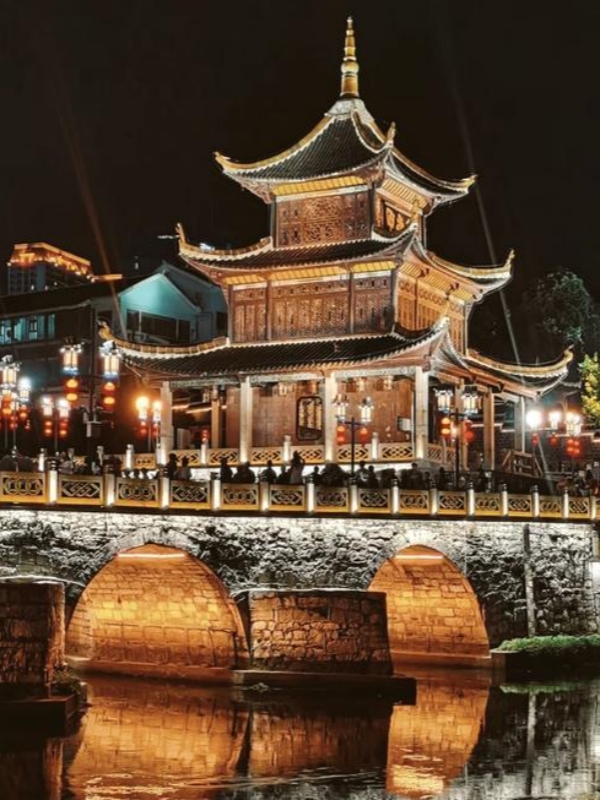
Guiyang Jiaxiu Tower
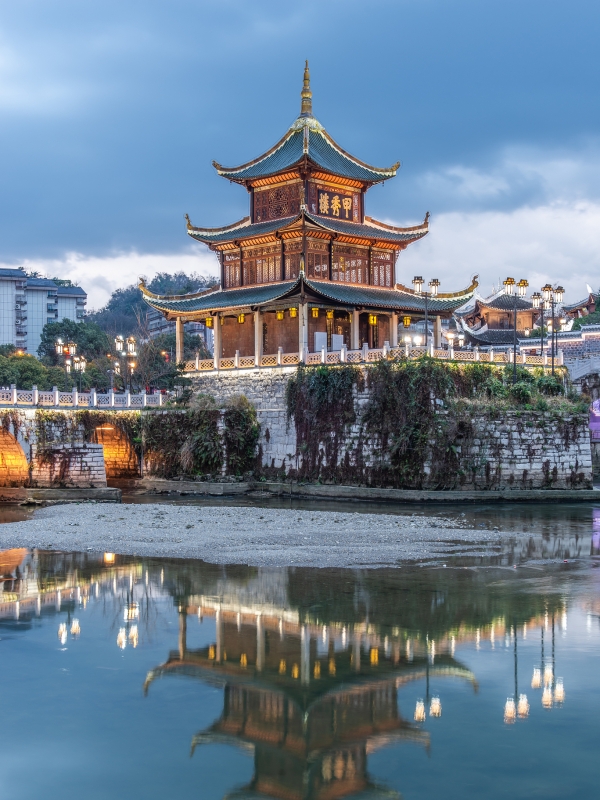
Jiaxiu Tower (甲秀楼) has stood on the Nanming River since the Ming dynasty, making it Guiyang's oldest surviving landmark. The three-story pavilion sits on a rock in the river with a curved bridge connecting it to the south bank — the view from either side is the classic Guiyang cityscape photo. Entry to the tower grounds is free. The surrounding riverbank area is popular in the evenings with locals doing tai chi and square dancing. Most visitors spend 30–60 minutes here, combining it with a walk along the south-bank promenade.
Qingyan Ancient Town
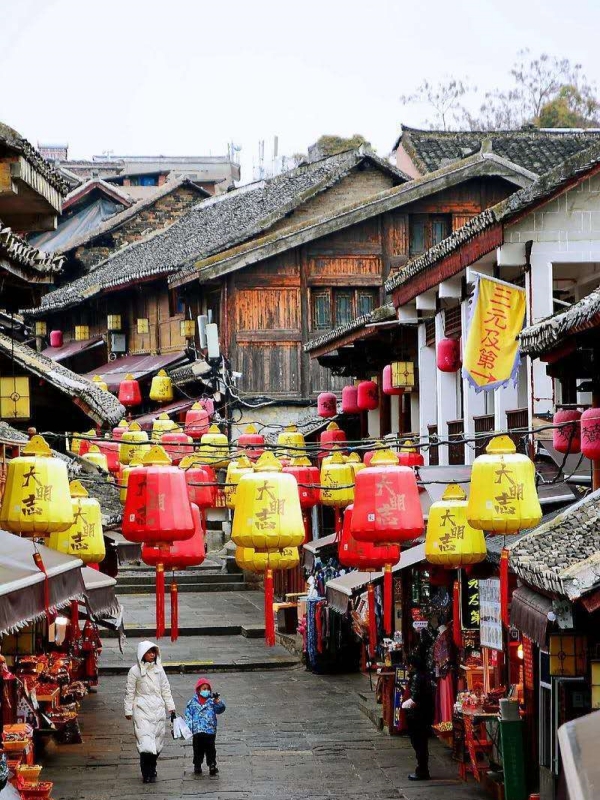
Guiyang Qingyan Ancient Town
Qingyan (青岩古镇) is a 600-year-old Ming-era walled town about 30 kilometers south of Guiyang. Stone streets, Qing-dynasty archways, and old Buddhist and Catholic temples sit side by side — a legacy of the town's historic role on the Yunnan-Guizhou trade route. Entry costs about $4 (¥30). Allow 3–4 hours to wander the market streets, climb a short section of the wall, and eat at one of the small tofu or rice-pudding stalls. Qingyan makes a reliable half-day trip by taxi or bus from downtown.
Qianling Park and Hongfu Temple
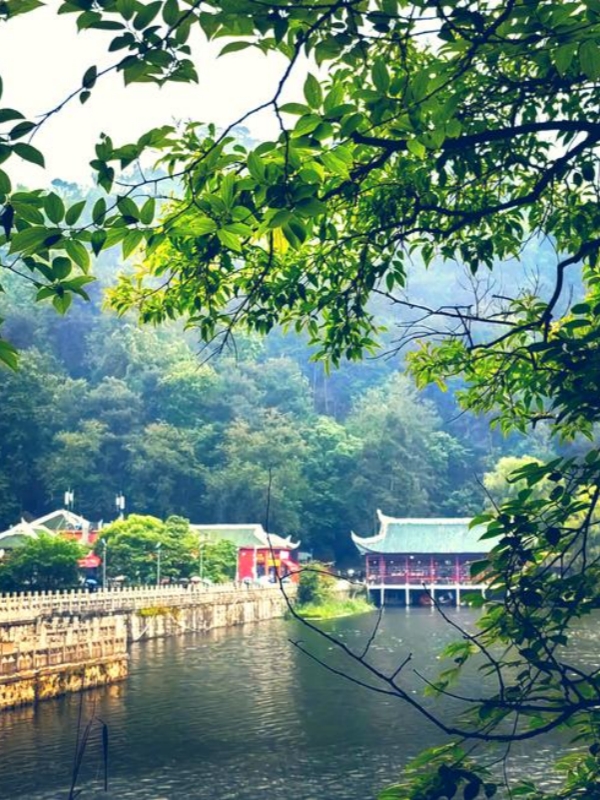
Guiyang Qianling Park
Qianling Park (黔灵山公园) is a 200-hectare urban hill park in the city's northwest. The standout draw is the troop of wild macaques that roam the mid-level paths — Guiyang's macaques are habituated to humans and can be viewed at close range without enclosure or cage. Hongfu Temple, a Buddhist complex first built in 1683, occupies the upper reaches of the park. Entry is about $0.50 (¥5). The park rewards visitors who hike to the top with panoramic views over the city. A half-day visit is the standard recommendation.
Huaxi Wetland Park and the University Town
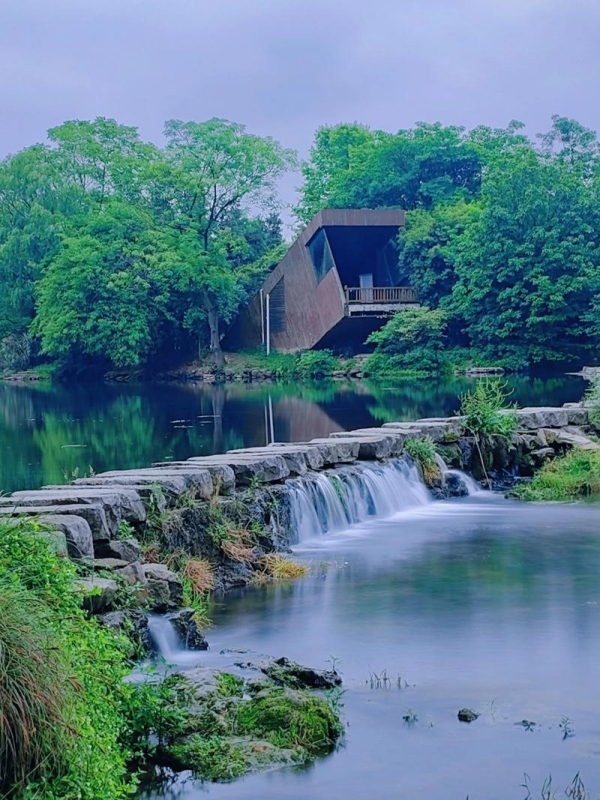
Guiyang Huaxi Wetland Park
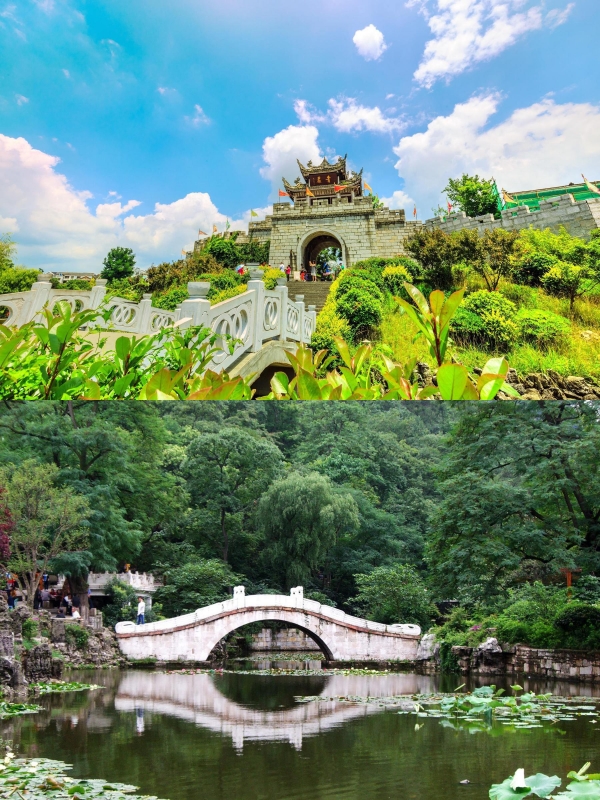
Huaxi Wetland Park (花溪公园) and the adjacent Guizhou University campus lie roughly 20 kilometers southwest of downtown. The park's lotus-filled waterways, willow-lined paths, and quiet pace make it a favourite weekend spot for local families. Guizhou University (贵州大学) main campus sits adjacent, and the area around the university's east gate has become a small but lively student eating quarter. Entry to both the park and university grounds is free. Visitors with 2–3 hours to spare and a desire to see how Guiyang residents spend a slow afternoon will find this area rewarding.
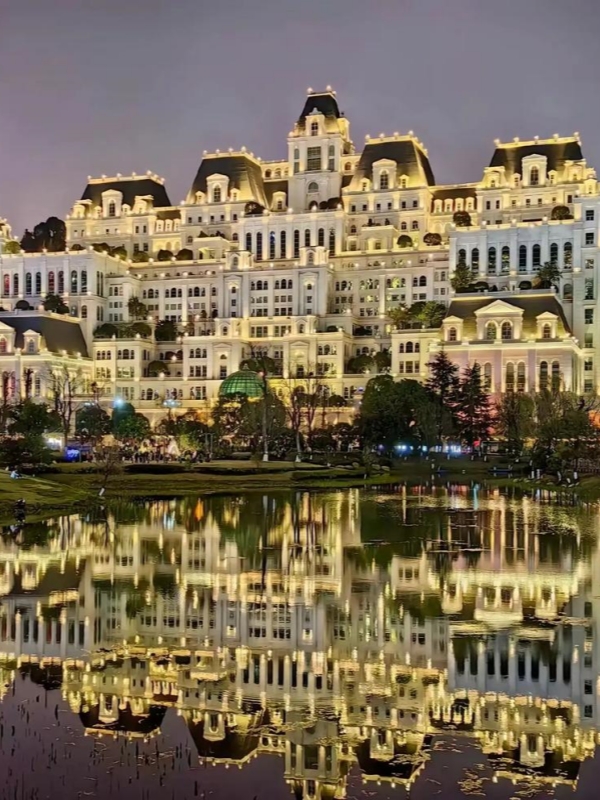
🏰 Explore Iconic City Sights: Within the capital itself, visitors can marvel at one of China's most visually striking and mysterious modern architectural landmarks—a massive, European-style castle nestled in the heart of the city. Discover this spectacular mansion in our guide to the Guiyang White House.
Day Trips Across Guizhou from Guiyang
From Guiyang, every major Guizhou attraction is within a day's travel — some require an overnight stay, but none demands a change of base. The table below summarises distances and travel times from Guiyang; prose details follow.
Huangguoshu Waterfall
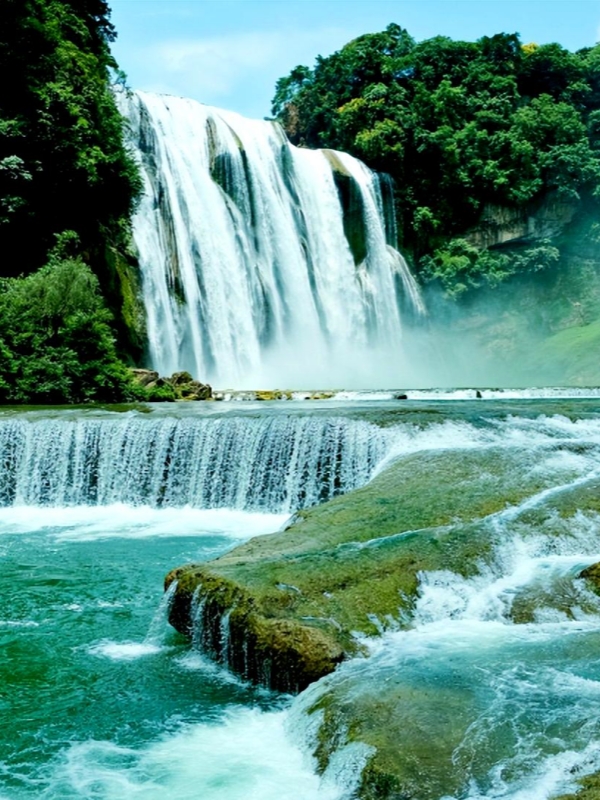
Huangguoshu Waterfall, Anshun, Guizhou
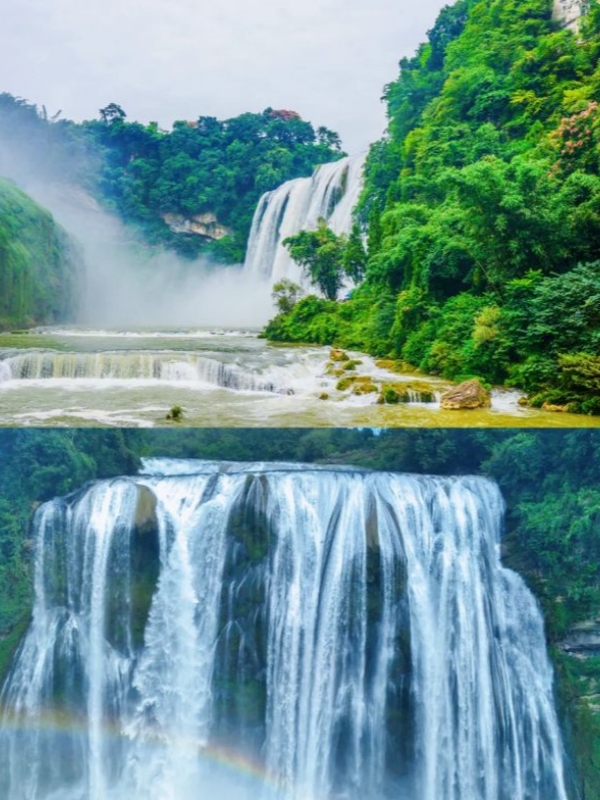
Huangguoshu is the largest waterfall group in Asia — the main drop is 77.8 meters high and the curtain spans 101 meters at peak flow. The most dramatic approach is the Water-Viewing Hole (shuiguan dong), a natural cave opening directly behind the falls where visitors stand within meters of the cascade's roar and spray. Access to the main scenic area costs about $32 (¥220) plus a mandatory scenic-shuttle fee of roughly $22 (¥160). A full day from Guiyang is standard. The falls are most voluminous from June to September, which coincides with the rainy season — expect wet mist in the viewing areas regardless of outside weather.
🌊 Visit China's Largest Cascade: With high-speed trains and day-trip buses radiating directly from the city's main stations, reaching the province's breathtaking, world-famous water torrent is incredibly straightforward. Plan your excursion with our visitor's guide to Huangguoshu Waterfall, Guizhou.
Fanjingshan
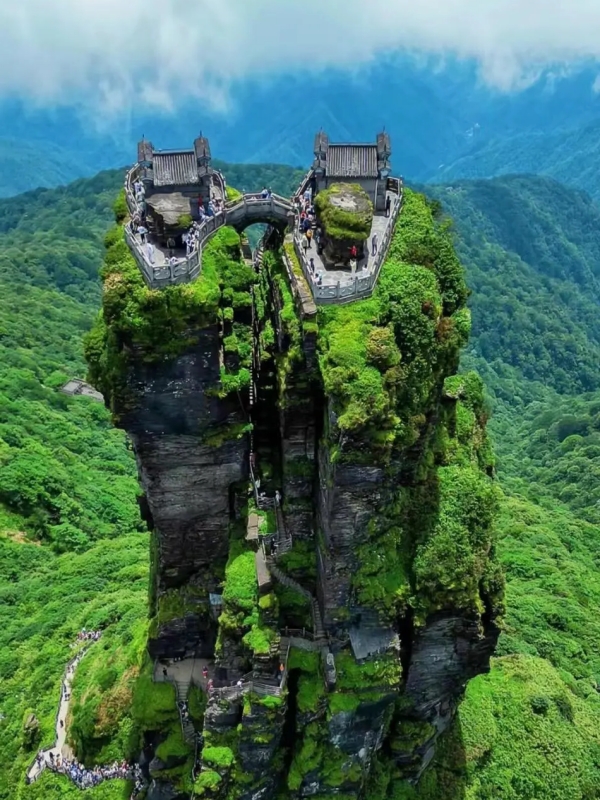
Guiyang Fanjingshan
Fanjingshan was inscribed as a UNESCO World Heritage Site in 2018. The mountain's red-cloud golden summit spires rise to 2,572 meters and support an ecosystem so isolated that roughly 40% of its plant species are found nowhere else on Earth. The standard itinerary from Guiyang is HSR to Tongren South (about 1 hour 40 minutes), then a shuttle or pre-arranged car to the park entrance (about 1.5 hours). Park entry is roughly $28 (¥200) and the cable car round-trip adds another $14 (¥100). Most visitors overnight near the park to catch sunrise at the summit — the light on the mushroom-rock formations in early morning is a frequent subject for landscape photographers. Budget 1.5–2 days for Fanjingshan from a Guiyang base.
Miao Villages around Kaili and Xijiang
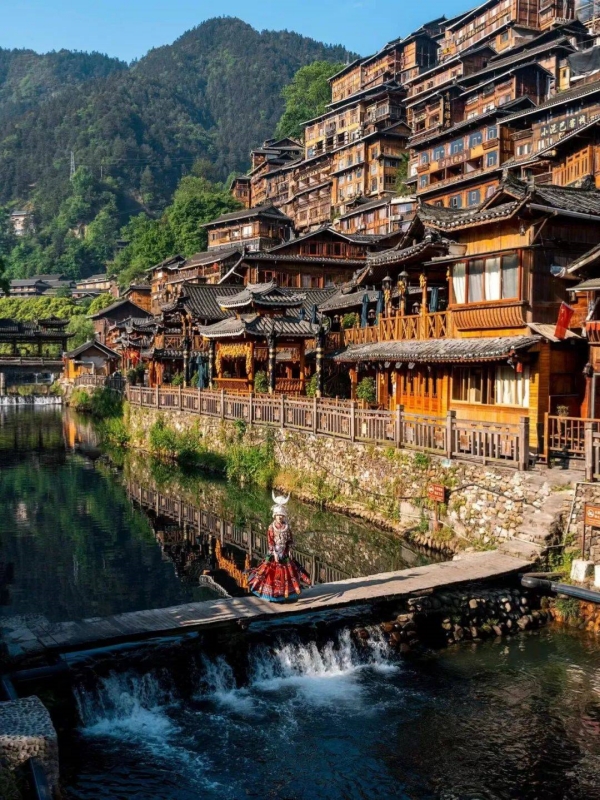
Guiyang Kaili
Kaili, about 180 kilometers east of Guiyang, is the cultural capital of the Miao and Bouyei peoples and the best transit hub for village visits. The flagship is Xijiang Qianhu Miao Village — roughly 1,300 households strung along a mountainside, the largest Miao settlement in China. The village is well-signed in Chinese and English, and self-guided visits are entirely normal. The rice-terrace landscape in the surrounding valley is most striking during the long-skirt festival in spring and the long-boat festival in autumn. Entry to Xijiang costs about $14 (¥100) plus a small shuttle-bus fee. From Guiyang, the round trip is feasible in a long day, but an overnight stay in the village lets visitors see the evening bonfire and early-morning炊烟 (cooking-smoke) atmosphere.
Libo Xiaoqikong and the Karst South
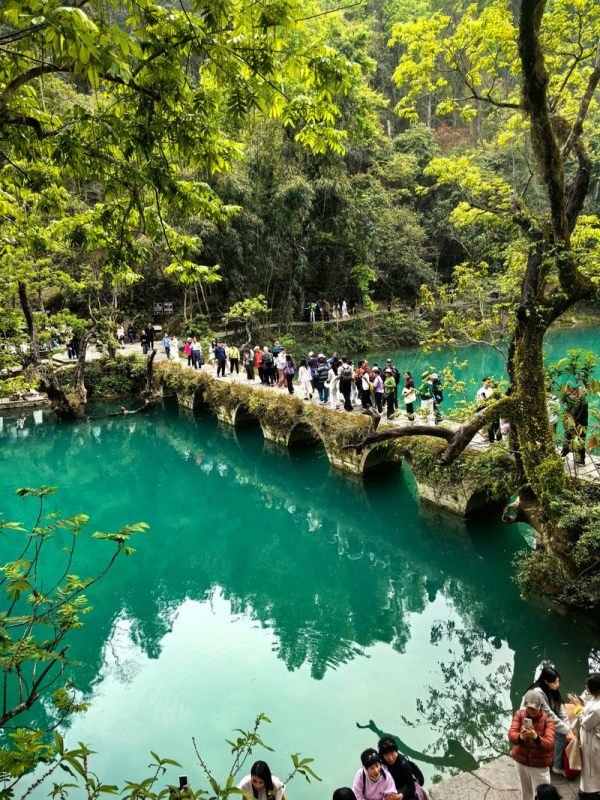
Guiyang Libo Xiaoqikong
Libo Xiaoqikong (Little Seven Holes) is a UNESCO World Heritage karst landscape about 250 kilometers southeast of Guiyang. The namesake feature is a natural stone bridge with seven孔 (arches or holes) carved by the Zhang River — the largest natural bridge of its kind in China. Beyond the bridge, the 68-level Waterfall Cascade and an ancient fern forest make this one of Guizhou's most varied outdoor areas. Entry is about $22 (¥150) plus a shuttle-bus fee of roughly $8 (¥60). The park is large enough that a full day is necessary to cover the main circuits. Public transport requires HSR to Duyun and then a local bus or car — the total door-to-park time is roughly 3.5–4 hours by car.
Zhenyuan Ancient Town and Chishui
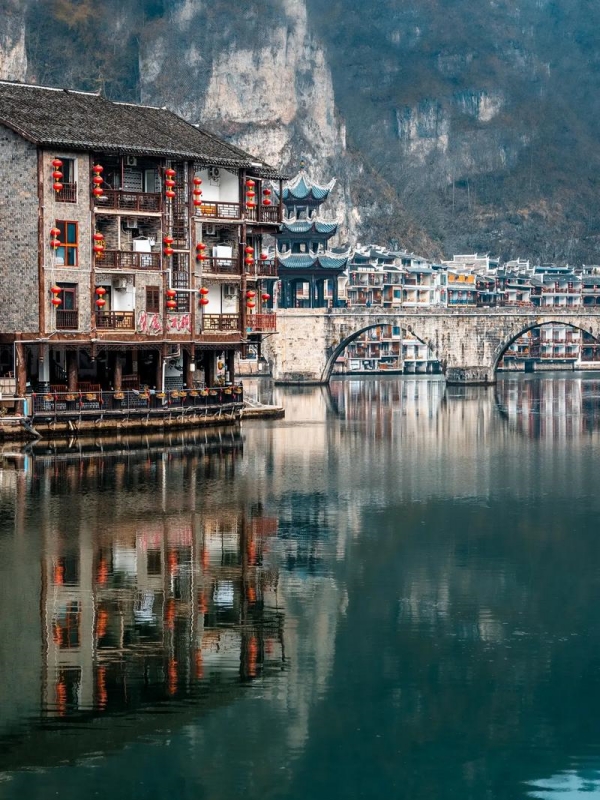
Guiyang Zhenyuan Ancient
Zhenyuan sits on the%%% river about 270 kilometers east of Guiyang — reachable by car from Kaili in roughly 2.5 hours total from Guiyang. The town is free to enter; its Qing-era wooden architecture and stone bridge are lit attractively at night, and a riverside boat ride (about $8 / ¥55) gives a different perspective on the town walls. Chishui, a further 400 kilometers north, is a Danxia-landform park famous for its red-rock cliff waterfalls. Chishui requires an overnight stay and at least one full day — most visitors combine the two, spending one night in Zhenyuan and one in the Chishui area. This is the most time-intensive day-trip option from Guiyang and is best planned as a two-night, three-day excursion rather than a day run.
Food and Local Cuisine
Guizhou cuisine is defined by sour, spicy, and mouth-numbing flavours — the province is one of China's most distinctive culinary regions. Guiyang city has the widest range of options, from street snack stalls to dedicated hotpot restaurants. Several signature dishes are worth seeking out.
Si Wa Wa and Street Snacks
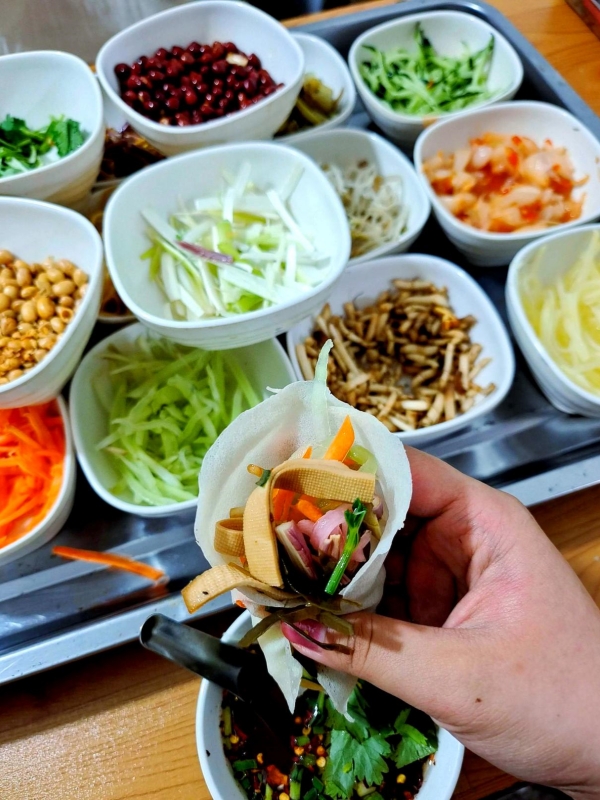
The Si Wa Wa
Si Wa Wa (丝娃娃) are thin rice-paper wrappers filled with shredded vegetables, beansprouts, and peanuts, then dipped in a sour-spicy sauce. A full set costs roughly $1.50 (¥10). They are an quintessential Guiyang snack, eaten quickly and casually. The main gathering points are Minsheng Road and Qingyun Road night markets, where stalls open from late afternoon and stay busy until well past 21:00. Another breakfast staple is Chang Wang Noodles (肠旺面) — chewy noodles with pork intestine and pork blood in a chili-oil broth, priced around $2 (¥15) per bowl.
Sour Soup Fish and Hotpot
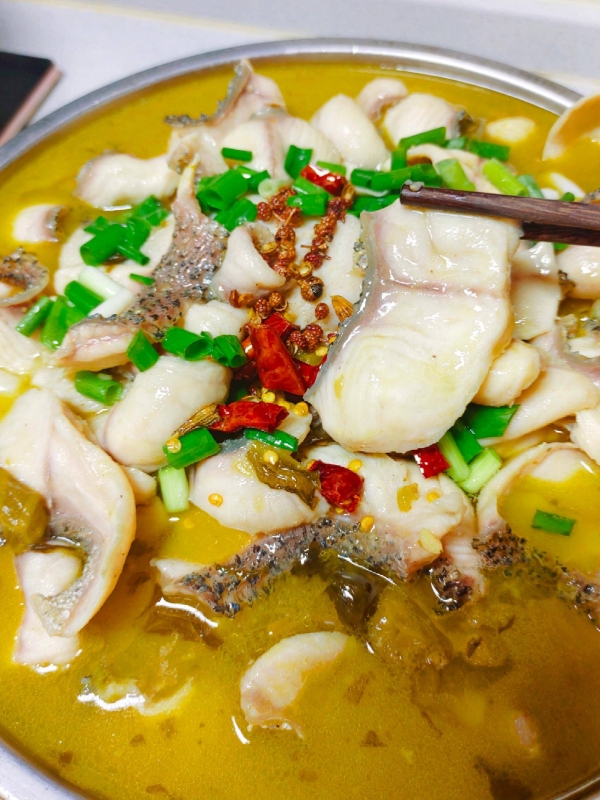
The Sour Soup Fish
Sour Soup Fish (酸汤鱼) is the signature dish of the Miao people and appears on menus across Guiyang and Kaili. River fish is cooked in a fermented red-rice soup — sour, slightly spicy, and addictive. A pot for two with rice and sides typically runs $15–25 (¥100–180) per person. Guiyang-style hotpot, heavier on the oil and the numbing mala (麻, Sichuan pepper) element, is equally popular in colder months. Visitors who enjoy bold, acidic flavours will find Guizhou food unlike anything in neighbouring Sichuan or Yunnan.
Famous Eating Streets
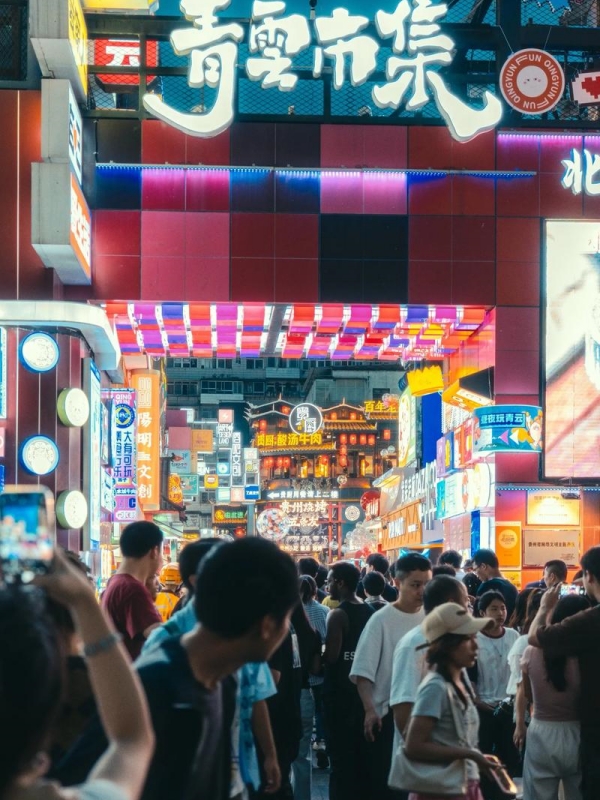
Qingyun Road
Minsheng Road (民生路) and Qingyun Road (青云路) are the two streets most frequently cited by locals for snack variety. Both run parallel north-south streets in the old-city grid. A third area worth noting is the university quarter near Guizhou University's east gate, which offers affordable student-priced meals alongside larger restaurant formats. These streets operate on a cash-and-app-mix basis — smaller stalls may not accept foreign cards, so carrying a small amount of CNY is advisable even with a working Alipay or WeChat account.
Getting There and Getting Around
Climate and the Best Time to Visit
Monthly Temperature and Rainfall
Best Months for Each Activity
For karst hiking, waterfall viewing, and general sightseeing, the sweet spot is April through June and September through October. May and October are particularly reliable — average highs of 22–24°C, lower rainfall than midsummer, and clear visibility for photography. July and August draw visitors specifically because the plateau climate stays 8–10°C below the eastern plains — a genuine summer refuge — but rain is heavier and some rural roads may be affected by landslides. The Chinese New Year period (late January or February) is best avoided for logistics: the city largely empties as workers return home, and transport tickets sell out early.
Frequently Asked Questions
Q: Do foreign visitors need a visa to visit Guiyang?
A standard China tourist visa (L-visa) is required for most nationalities and is applied at a Chinese consulate abroad before travel for entry to guiyang shi guizhou china. Guiyang itself does not issue visas on arrival. China also operates a 240-hour transit visa-free policy for eligible nationalities entering through designated ports — if Guiyang falls within an approved travel region at the time of travel, this option may apply. Check the current eligible-region list before booking flights, as rules are subject to change.
Q: Is English widely spoken in Guiyang?
English is limited outside tourist-facing venues across guiyang shi guizhou china. Airport staff, four-star-and-above hotel front desks, HSR ticket counters, and major scenic-area gates have some English capability. Independent taxi drivers, small restaurants, and market vendors almost always use Mandarin only. A translation app is a practical investment for most interactions outside hotels.
Q: How many days should I plan for Guiyang?
Two days covers city sights comfortably in guiyang shi guizhou china. Five to seven days allow Guiyang plus Huangguoshu and Qingyan. Eight to ten days accommodates Fanjingshan or the Xijiang Miao Village. A full Guizhou circuit including Libo Xiaoqikong and Zhenyuan runs 10–14 days.
Q: Can I use Alipay or WeChat Pay as a foreigner?
Yes — both apps accept foreign Visa or Mastercard after in-app ID verification, and work at hotels, larger restaurants, scenic-area ticket counters, Didi ride-hailing, and HSR ticket machines throughout guiyang shi guizhou china. Carry a small amount of CNY cash for small vendors and market stalls that may not accept foreign cards.
Q: Is Guiyang safe for tourists?
Guiyang shi guizhou china is generally very safe by Chinese city standards. Standard urban precautions apply — watch for pickpockets on crowded night-market streets. Tap water is not drinkable; bottled water is sold universally. Air quality is good by national standards year-round.
Q: What is the best way to reach Fanjingshan from Guiyang?
Take an HSR from Guiyang North to Tongren South (about 1 hour 40 minutes) departing from guiyang shi guizhou china, then a pre-arranged car or scenic-area shuttle to the park entrance (about 1.5 hours). Total door-to-cable-car time is roughly 4–5 hours. Overnight accommodation near the park is strongly recommended to reach the summit for sunrise.
Q: Do I need a guide for the Miao villages near Kaili?
Not strictly — Xijiang Qianhu Miao Village near guiyang shi guizhou china is adequately signed in both Chinese and English, and self-guided visits are normal. For deeper cultural access — indigo-dye workshops, silver-smith home studios, or timing a visit around the Long-skirt Festival — an English-speaking local guide adds clear value (roughly $50–80 / ¥350–560 per day).
Q: When is the best month to visit for mild weather?
May and October offer average highs of 22–24°C, low rainfall, and clear visibility for traveling in guiyang shi guizhou china — ideal for both karst scenery and waterfall visits. July and August are cooler than eastern China but rainier, making them better for escaping heat than for outdoor photography.