Jiaju China
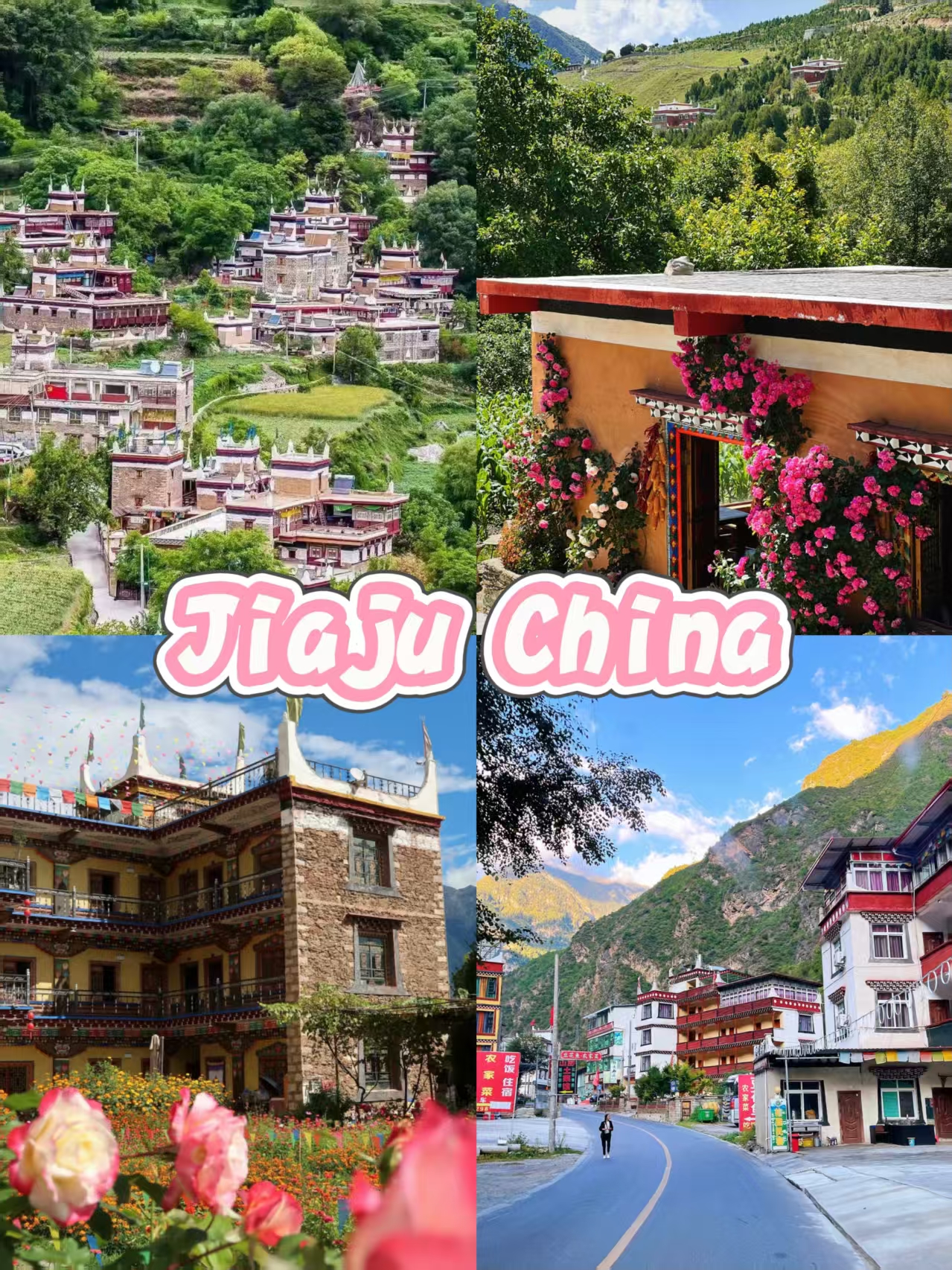
From the valley floor, the view stops you cold. Hundreds of Jiarong Tibetan stone houses layer up the mountainside — red-and-white walls, white-cornered rooftops, prayer flags lifting in the mountain wind. This is Jiaju China, the most celebrated Tibetan village by Chinese National Geographic's 2005 ranking, and the standout destination in Danba County, Sichuan.
Getting here from Chengdu takes seven to eight hours through the Hengduan Mountains. What follows covers what to expect on arrival, which season to choose, and exactly how to get there.
Quick Facts about Jiaju China
A Village Built for the Mountains
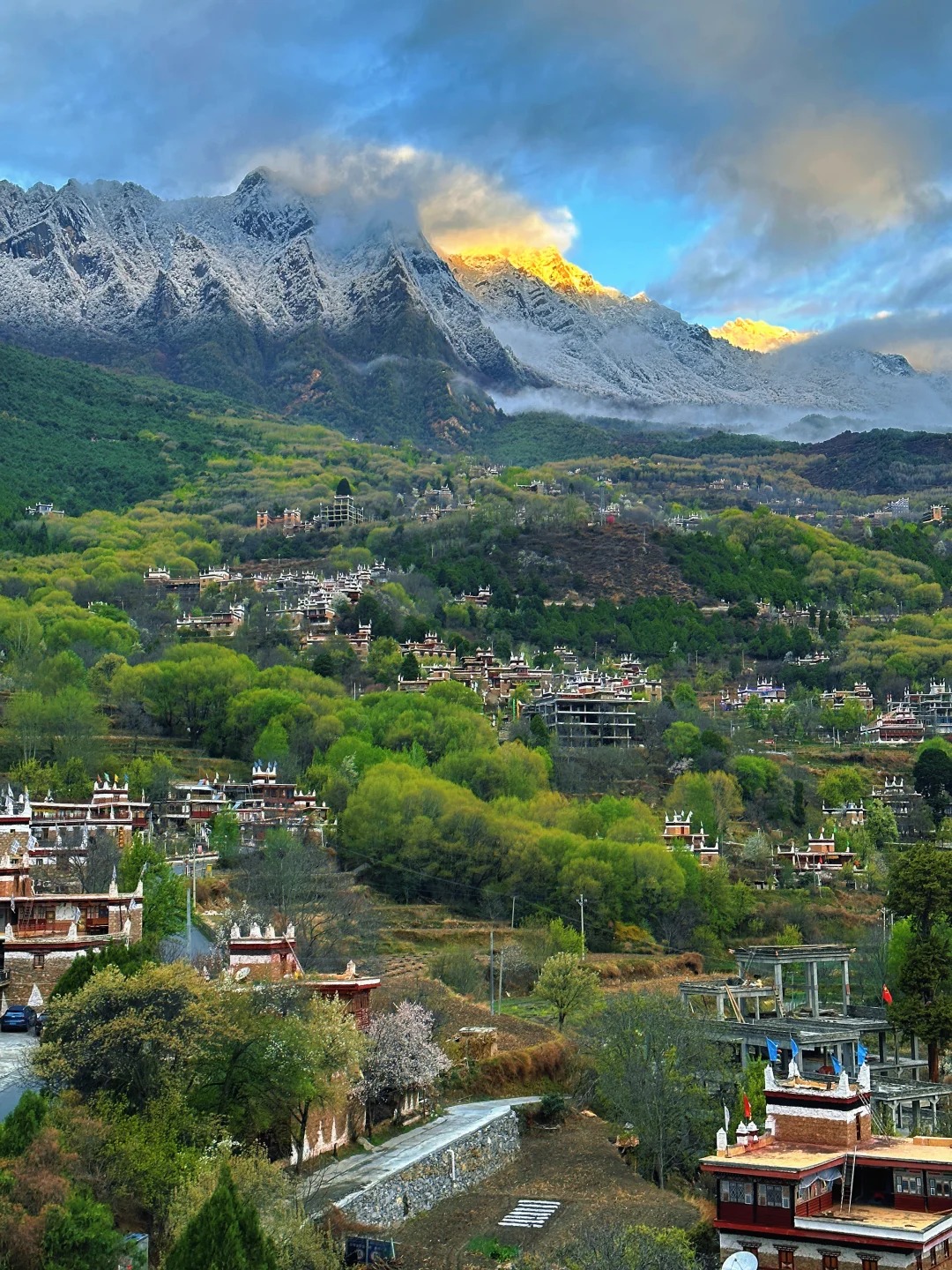
Scene of Jiaju Village
The Jiarong Tibetans have occupied the Dajin River Valley for well over a thousand years. They are a distinct group within the broader Tibetan world — historically isolated by the Hengduan Mountains on all sides, which shaped both their architecture and their culture into something that developed largely on its own terms.
The stone houses were not built for aesthetics. The multi-storey design kept livestock, food stores, and living quarters on separate floors as protection against the cold, flooding, and periodic conflict. The watchtowers served a military function during the Tang Dynasty and again during the Qing Dynasty's 18th-century Battle of Jinchuan — a prolonged campaign that left a dense scatter of defensive towers across the entire Danba valley system.
For most of the 20th century, Jiaju remained largely unknown outside Sichuan. That changed in 2005, when Chinese National Geographic ranked it first among China's most beautiful villages. The designation brought the first wave of outside visitors and, gradually, the guesthouses and visitor infrastructure that exist today. The 4A scenic area designation followed in 2016.
Around 140 households still live here. The village has not been preserved as a museum — families farm, dry grain on rooftop terraces, and keep livestock on the ground floor, exactly as they always have.
Highlights of the Jiarong Tibetan Village
A Multi-Storey House, Floor by Floor
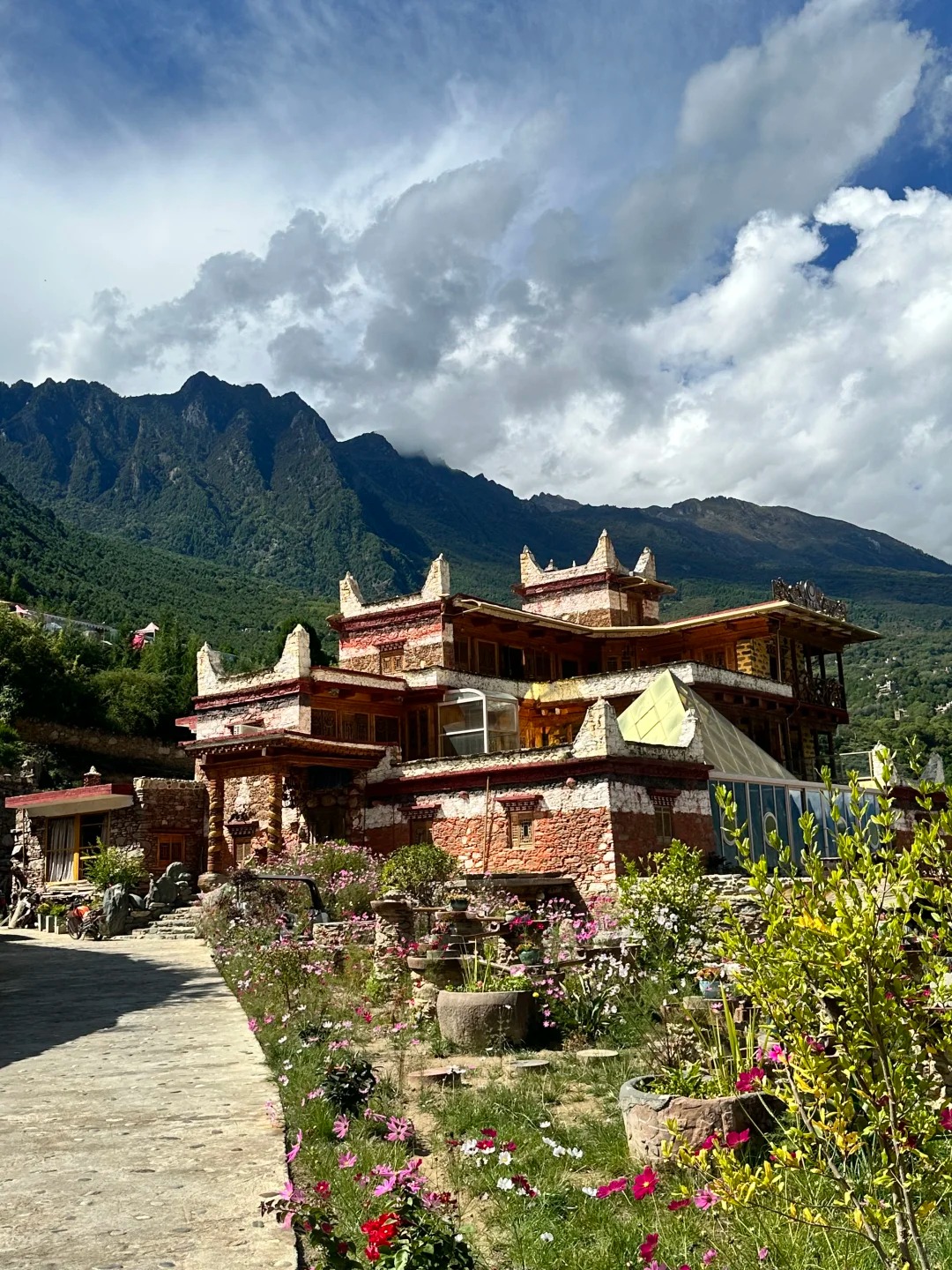
A Multi-Storey House, Floor by Floor
The houses here belong to the Jiarong Tibetan people — a distinct ethnic group whose stone-and-timber architecture exists nowhere else in China. Each building stands three to six storeys, faces south into the valley, and distributes domestic and spiritual life across its floors.
Beyond the floor plan, several exterior details make Jiarong Tibetan architecture immediately recognisable:
- Three-colour painted bands: Yellow, black, and white horizontal stripes ring every exterior wall in a fixed sequence — the Jiarong signature that no other Tibetan group replicates in quite the same way.
- Four white corner towers: Each roofline carries a small white stone tower at each corner, one per cardinal direction, functioning as spiritual markers rather than structural supports.
- Vivid window frames: Doors and window surrounds arrive in deep reds, blues, and yellows — no two households identical, yet the overall palette holds together across the whole hillside.
- Hanging toilets: A small balcony protrudes from the side wall, its floor open over a sealed pit below. Unexpected on a first walk through, impossible to miss on a second.
Watchtowers Above the Valley
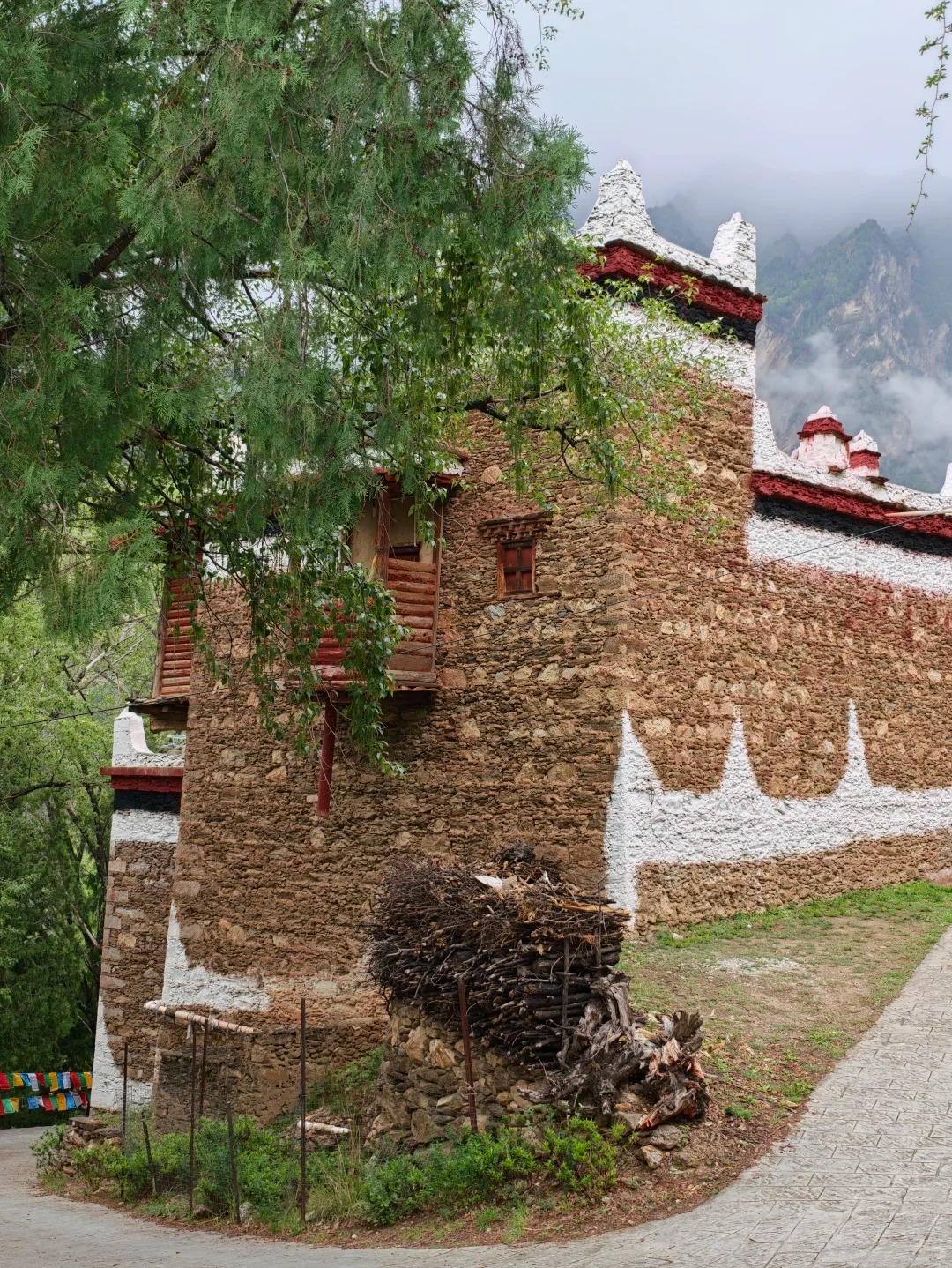
Watchtowers Above the Valley
The stone towers rising above Jiaju China are not decorative. Most date from the Qing Dynasty's 18th-century Battle of Jinchuan, built for military signalling; a handful are traced by local historians to the Tang Dynasty. Key facts worth knowing before you visit:
- Height: 10 to 30 metres, leaning slightly with age but structurally intact across the majority.
- Best viewing angle: Not from inside the village — cross to the opposite hillside and the full cascade of towers, coloured walls, and terraced orchards falls into a single frame. This is the angle behind the Chinese National Geographic photographs.
- Best time: The hour after dawn, when mist pools at mid-slope and the towers surface and vanish through it. This alone is reason enough to stay overnight in Jiaju Tibetan Village.
- Access: The opposite-hillside viewpoint is reachable by the scenic area shuttle bus from the visitor centre — included in the ¥35 shuttle ticket.
Getting to Jiaju China from Chengdu
Bus to Danba County
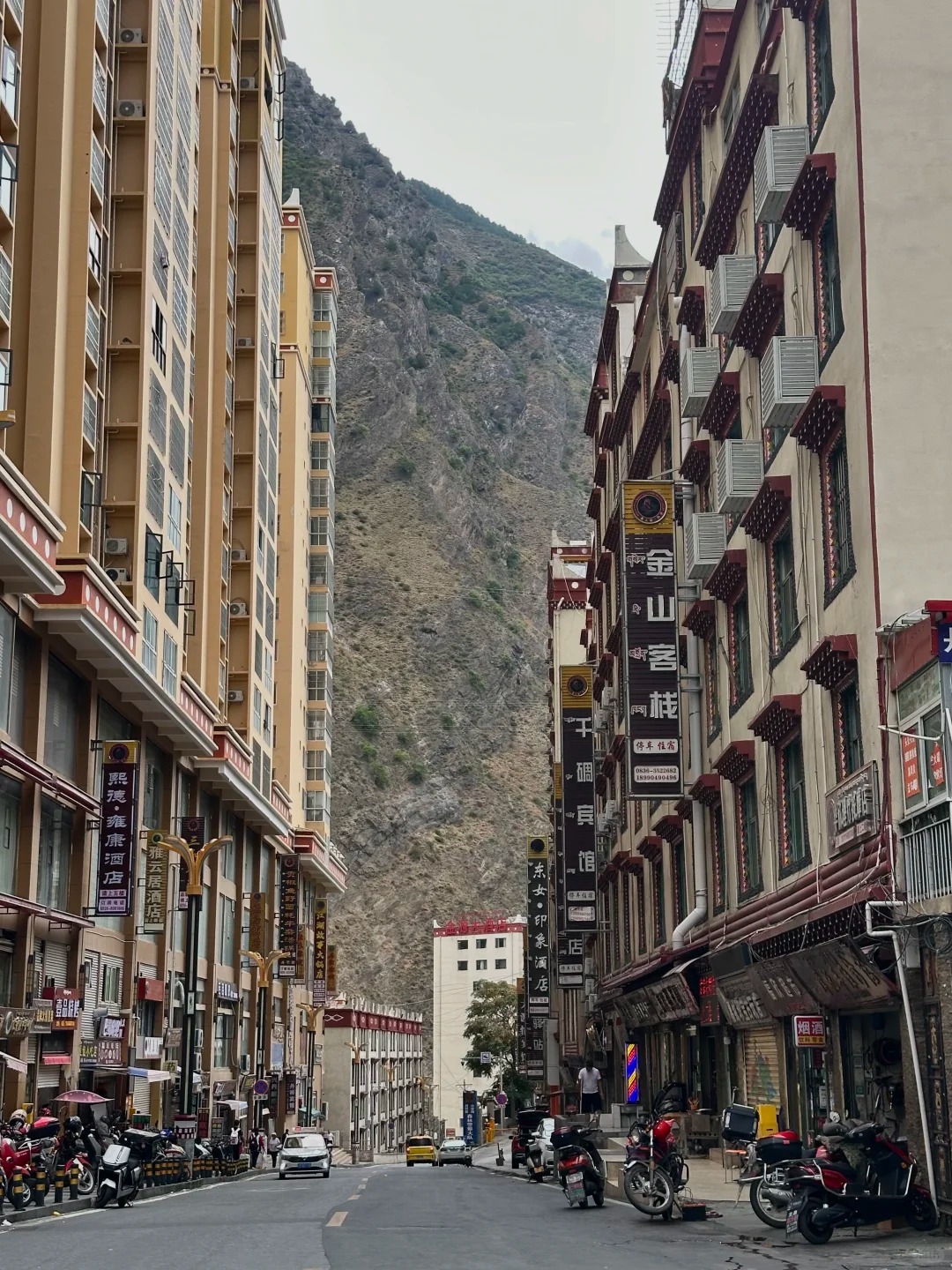
Danba County
No train reaches Danba. Every route in starts by road, and the most practical option for independent travellers is the long-distance bus from Chengdu.
Chadianzi Station sits in northwest Chengdu — the metro does not run early enough to get you there for the 06:30 departure, so plan a taxi or DiDi the night before and leave extra time. Buy your bus ticket at least one day ahead during pear blossom season (late March to April) and autumn peak (October to November); seats go fast.
The road to Danba crosses a high mountain pass above 4,000 metres. The bends are sharp and the final two hours have few roadside stops. Carry motion sickness tablets if you need them, and pack snacks before leaving Chengdu.
Danba Town to the Village Gate
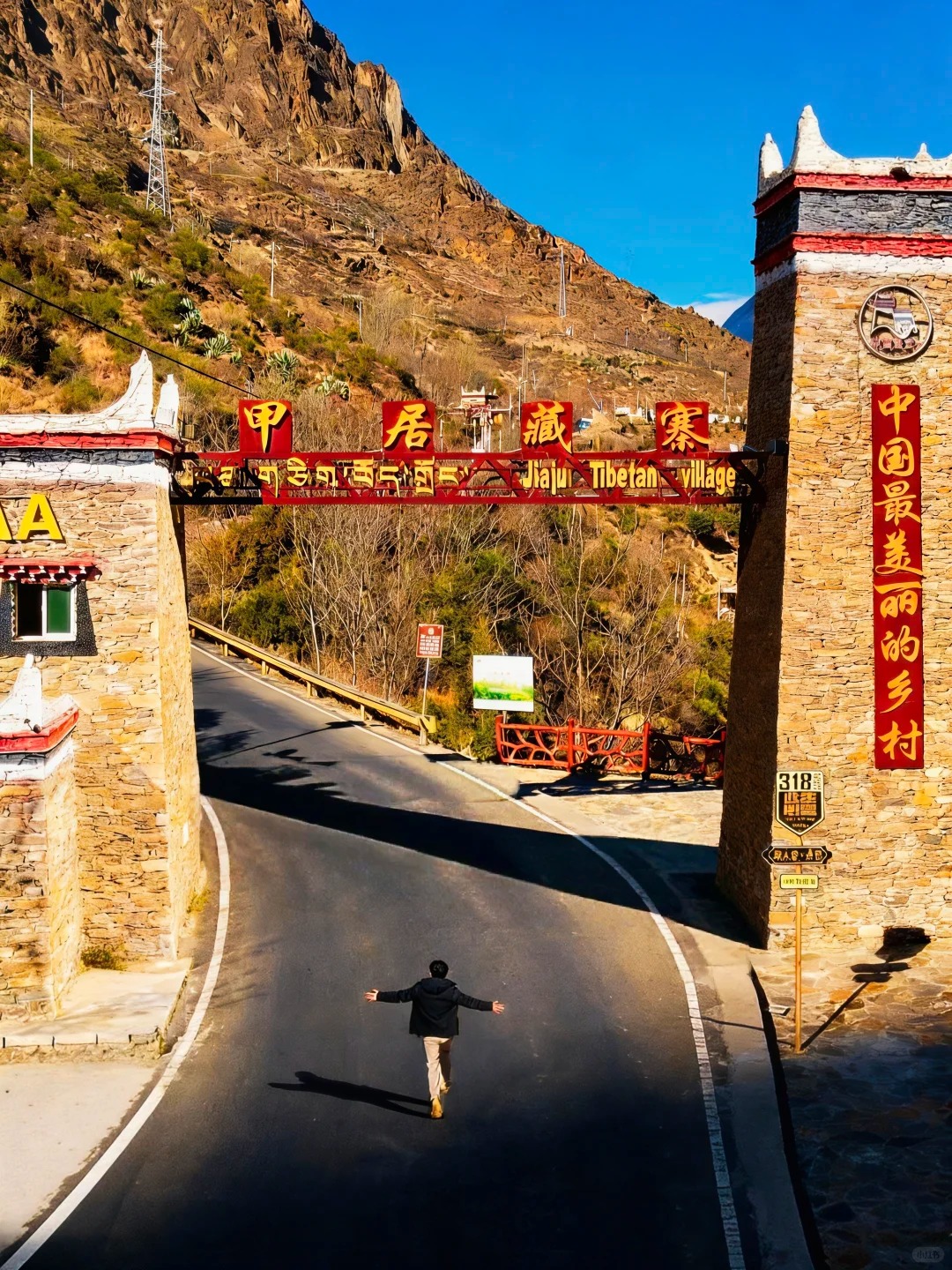
Village Gate
Danba Jiaju Tibetan Village sits 8 km northwest of Danba County town. From the bus station, two options get you to the village gate.
The entrance fee is ¥50 per person, paid at the visitor centre gate. The shuttle runs a fixed loop and drops visitors at key viewpoints. However, if you want to wander the village paths freely, skip the shuttle and walk in after paying.
Arrive before 09:00 or after 16:30 for noticeably thinner crowds and better light. Between 11:00 and 16:00, the shuttle is crowded and the main viewpoints fill up — worth avoiding on any visit to Danba Jiaju.
Best Times to Visit Jiaju Village
Spring Pear Blossoms, March to May
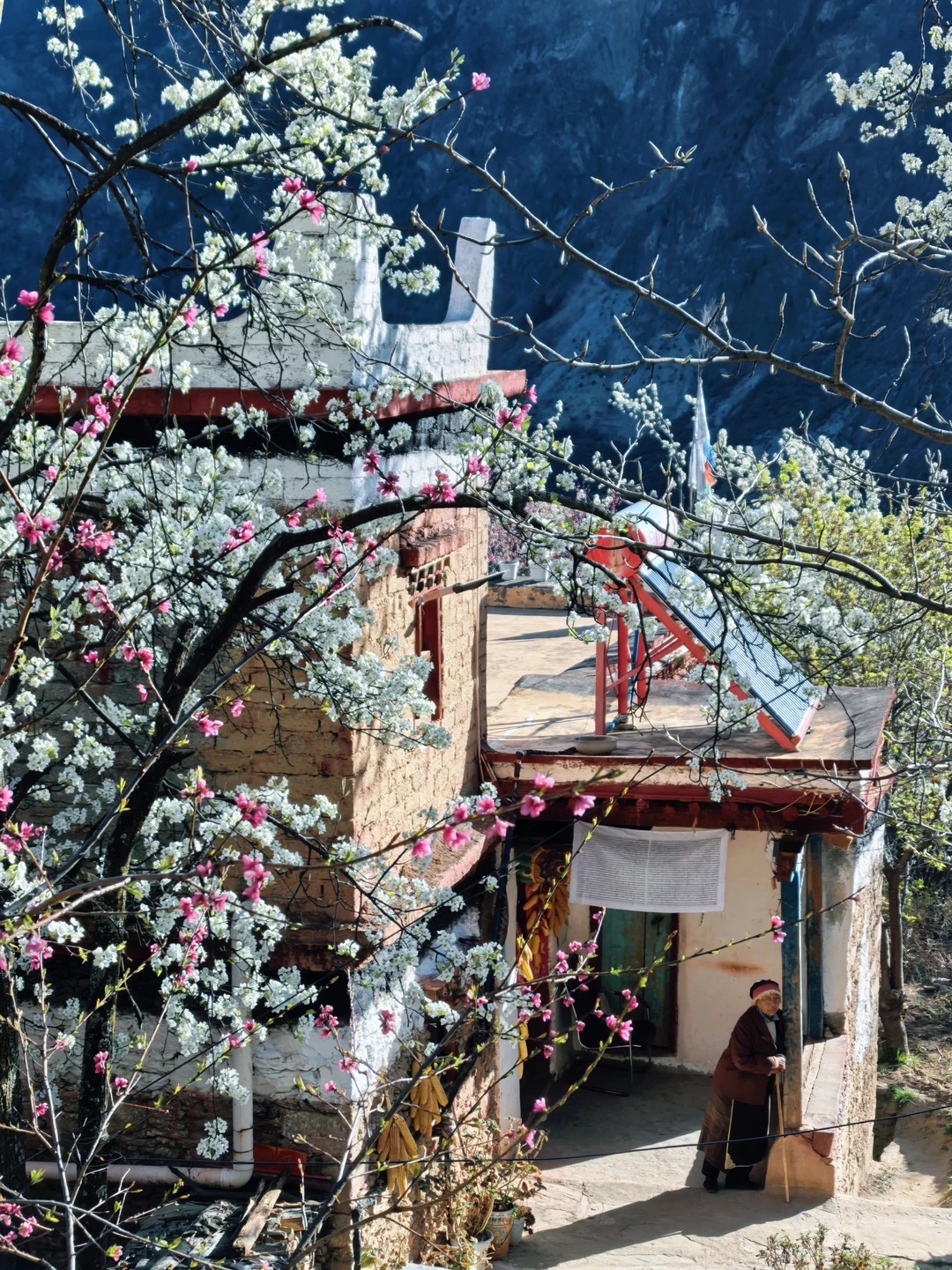
Spring Pear Blossoms
Late March to late April is when Jiaju village Sichuan earns its most-photographed reputation. The pear trees that cover the lower slopes come into full bloom and the effect is striking: white blossom canopies frame red-and-white stone houses, snow still caps the ridgeline behind, and the entire valley floor turns pale.
Most visitors pass through Chengdu before heading into the mountains — and this window happens to coincide with one of the most pleasant periods in the city. If you are planning the timing of your trip, our guide to the best time to visit Chengdu covers the spring season in full.
Temperatures in spring run 4–11°C on average, with mornings considerably colder. Layer up regardless of what the forecast says — the valley creates its own microclimate and cloud cover drops the temperature fast.
One practical warning: the annual Danba Pear Blossom Festival draws significant domestic crowds. During peak bloom, some approach roads operate one-way traffic restrictions between 11:00 and 16:00. Arrive before 10:00 or plan for a late afternoon entry to avoid the worst congestion.
The festival also brings Jiarong Tibetan cultural performances to the village — song, dance, and Guozhuang circle dances in the evenings. For visitors interested in culture rather than just scenery, spring offers more of both.
Autumn Colors, October and November
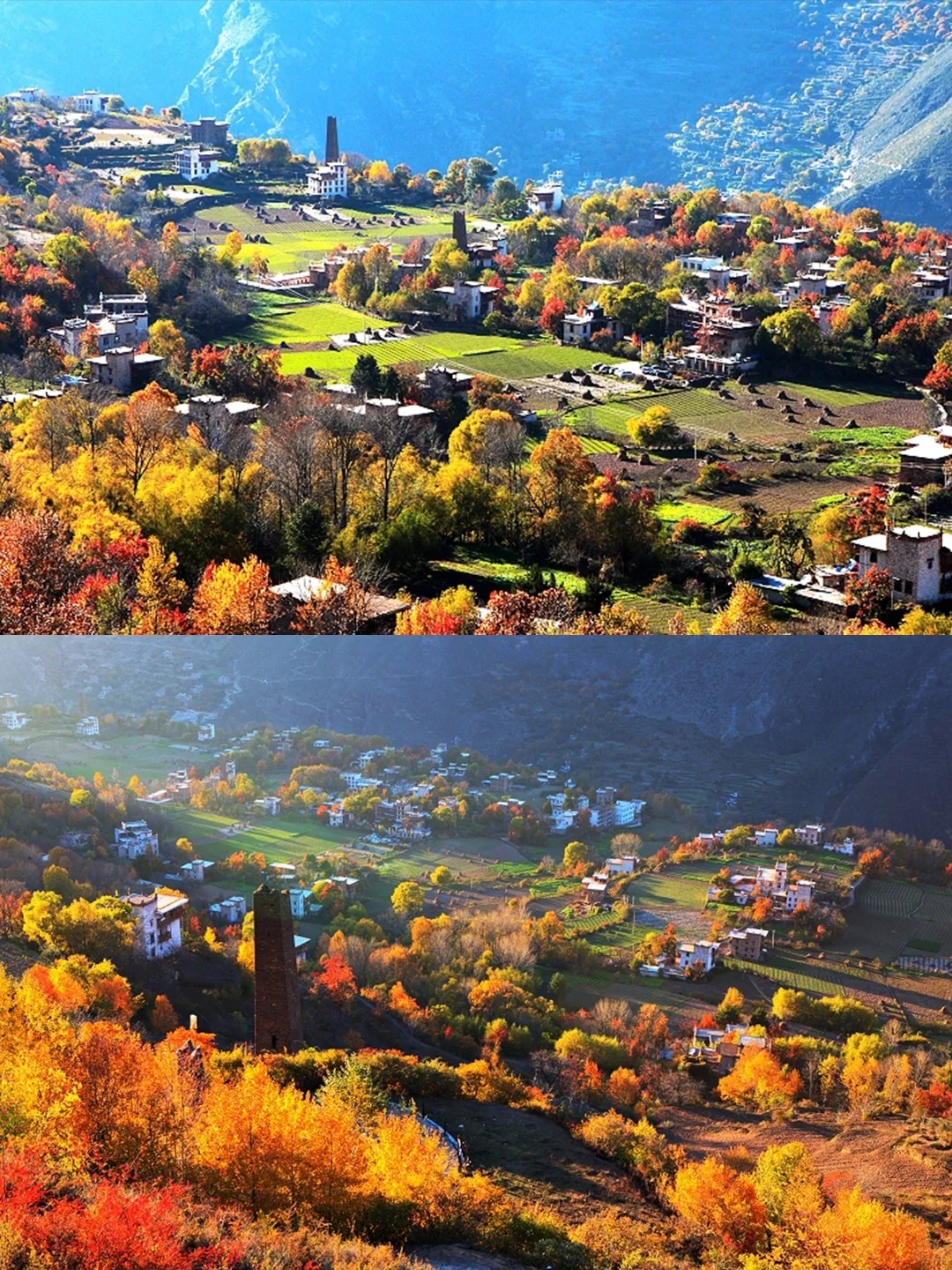
Autumn Colors
Mid-October to early November is the peak photography window for Jiaju China, and the most competitive period for guesthouses. The colour palette shifts from the delicate whites of spring to something considerably bolder.
Golden corn racks hang from eaves to dry. Pear leaves turn a deep, flame red. Against the white stone walls and the ink-blue plateau sky, the effect is close to overwhelming — this is the season most photographers return for.
The best light arrives in the hour after dawn, when low-angle sun catches the watchtowers and the east-facing house walls. Book guesthouses inside the village four to six weeks ahead for October visits; by mid-September the better rooms are already gone.
Temperatures in autumn average 5–18°C by day and drop near freezing overnight. A light down jacket and a warm layer for the early morning viewpoint are not optional — they are the difference between staying for the dawn light or retreating inside.
Sleeping and Eating in Danba Jiaju
Guesthouses Inside the Village
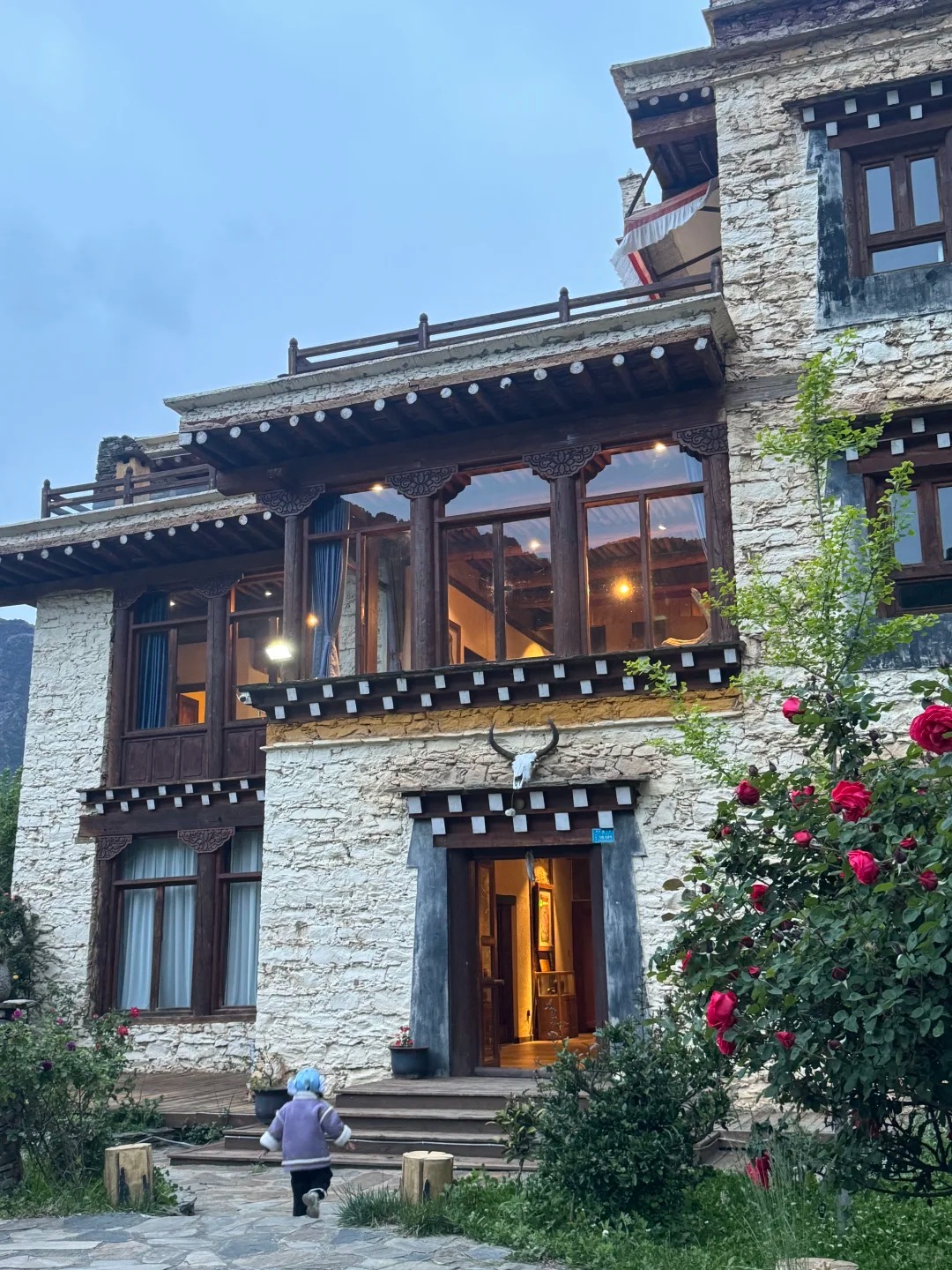
Guesthouses Inside the Village
Staying inside Jiaju Tibetan Village is worth the extra planning. The morning mist and dawn light that define the best photographs are only accessible if you are already on the hillside when they arrive.
Several Jiarong families run guesthouses in their own stone houses. The standard across the village is simple but honest — wooden-panel walls, firm beds, and mountain views that more expensive hotels rarely match. Prices run ¥200–400 per night for a private room, with home-cooked Tibetan meals available at extra cost or included depending on the host.
- Panghu Fusheng Guesthouse (胗狐浮生客智): A century-old stone house featured in a CCTV documentary. The rooftop terrace gives one of the cleanest panoramic angles over the village. Around ¥280 per night; message ahead on WeChat and they will arrange a pickup from the shuttle stop.
- Jiaju Yunshang Homestay: A standalone Tibetan-style house inside the village. Good for those who want more privacy; rates sit toward the lower end of the ¥200–400 range.
- General village guesthouses: Multiple family-run options at ¥200–250 per night. Facilities are basic but adequate; the views and the early-morning access to the village paths are what you are paying for.
Book at least four weeks ahead for spring and autumn peak periods. Most guesthouses operate through Trip.com or direct WeChat contact; English is limited but a translation app covers the essentials.
Food Around Danba
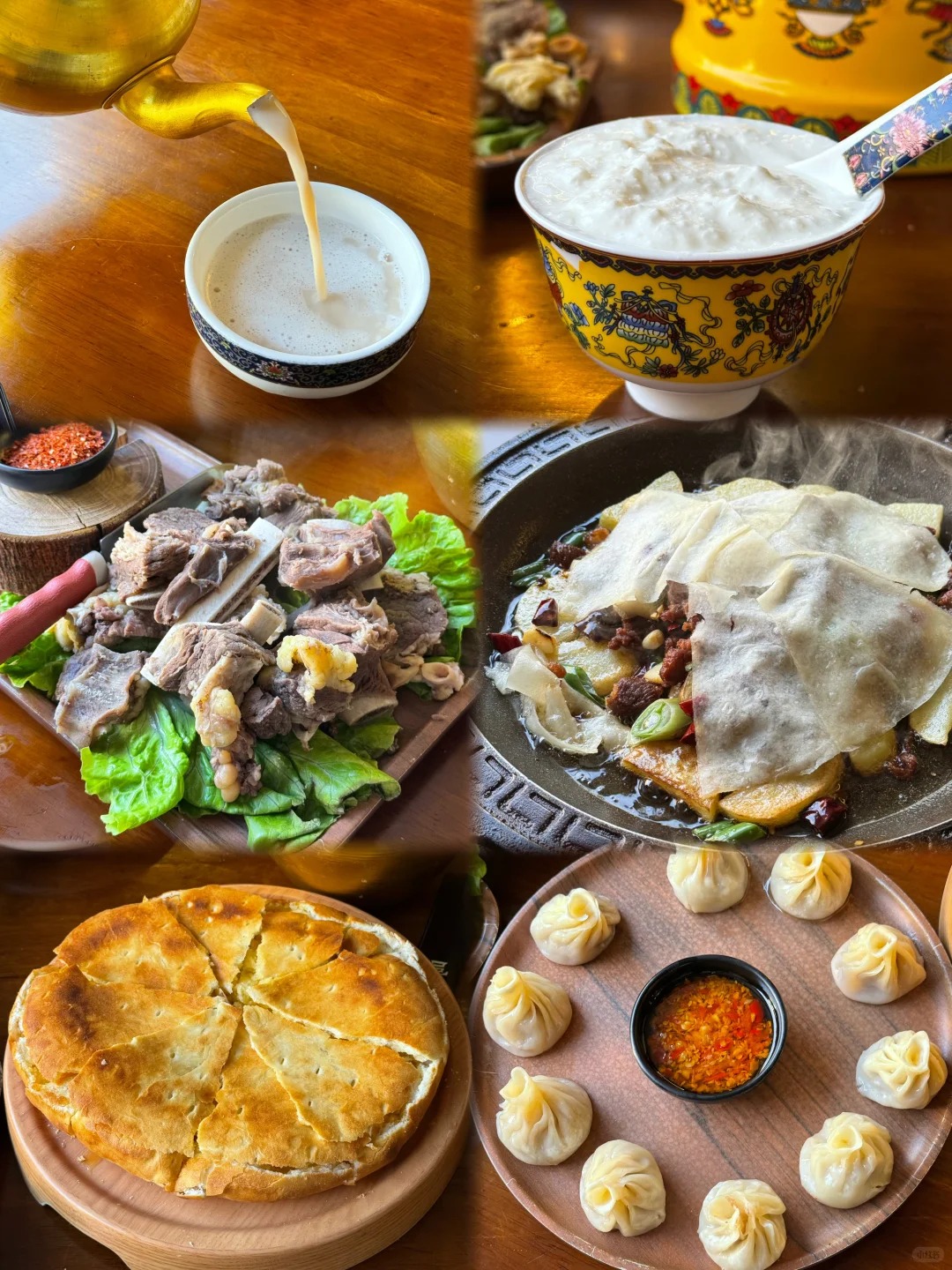
Food Around Danba
The food in and around Danba Jiaju is straightforward highland Tibetan — filling, unfussy, and worth trying on its own terms.
- Butter tea (鋹油茶): Salted, rich, and served hot at every guesthouse on arrival. It tastes nothing like tea in the conventional sense; give it two cups before deciding. It also helps with hydration at altitude.
- Tsampa (粔坦): Roasted barley flour mixed with butter tea into a thick paste. The staple food of the Jiarong Tibetans and a reliable source of slow-release energy for a morning on the hillside.
- Yak meat hotpot: Available at restaurants in Danba County town. Highland yak meat is leaner and more flavourful than lowland beef; the broth is clear, the portions are large, and the price is reasonable.
For a full dinner inside the village, arrange with your guesthouse host that morning — most families cook to order rather than running a fixed menu.
The food in Danba is a world apart from what you will find on the way in. If you are stopping in Chengdu before or after the trip, our Chengdu food tour guide covers the city's best eating in full.
Other Tibetan Villages Worth Visiting Nearby
Zhonglu Village, Free and Quieter
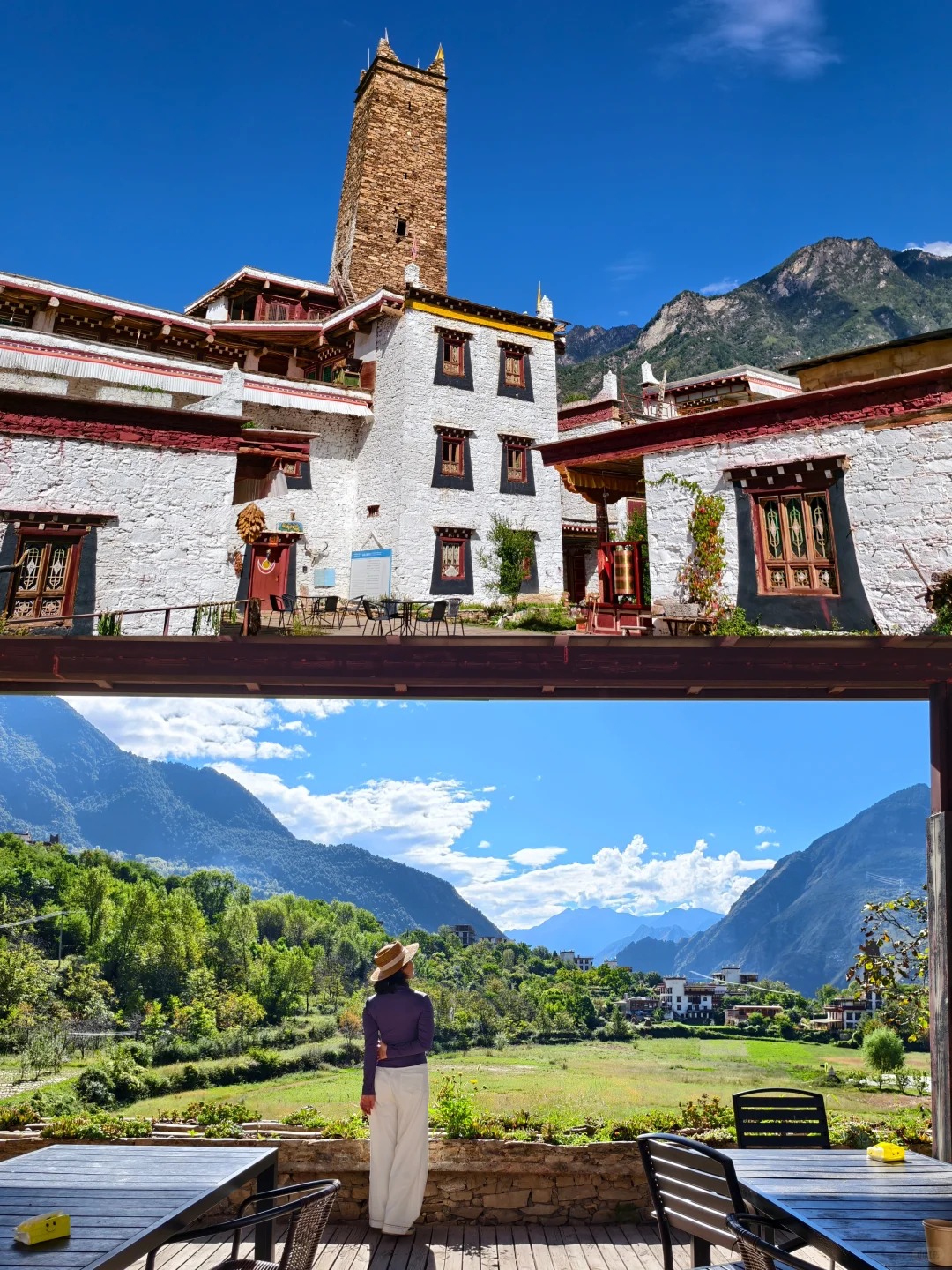
Zhonglu Village
Fourteen kilometres from Jiaju China, Zhonglu Village is the one most repeat visitors wish they had discovered first. There is no entrance fee, no shuttle bus, and considerably fewer people — the stone houses and orchards feel inhabited rather than observed.
The village holds 88 surviving ancient watchtowers, several traceable to the Tang Dynasty. From mid-slope, the sacred peak of Muoerduo Mountain fills the horizon to the north. Chinese National Geographic has listed Zhonglu among Sichuan's top 100 photography locations — a quieter endorsement than Jiaju's, but an honest one.
Sunrise and starfield photography are what most visitors come for specifically. If Jiaju is the introduction to Danba Tibetan villages, Zhonglu is where photographers tend to stay longer.
Suopo Watchtowers
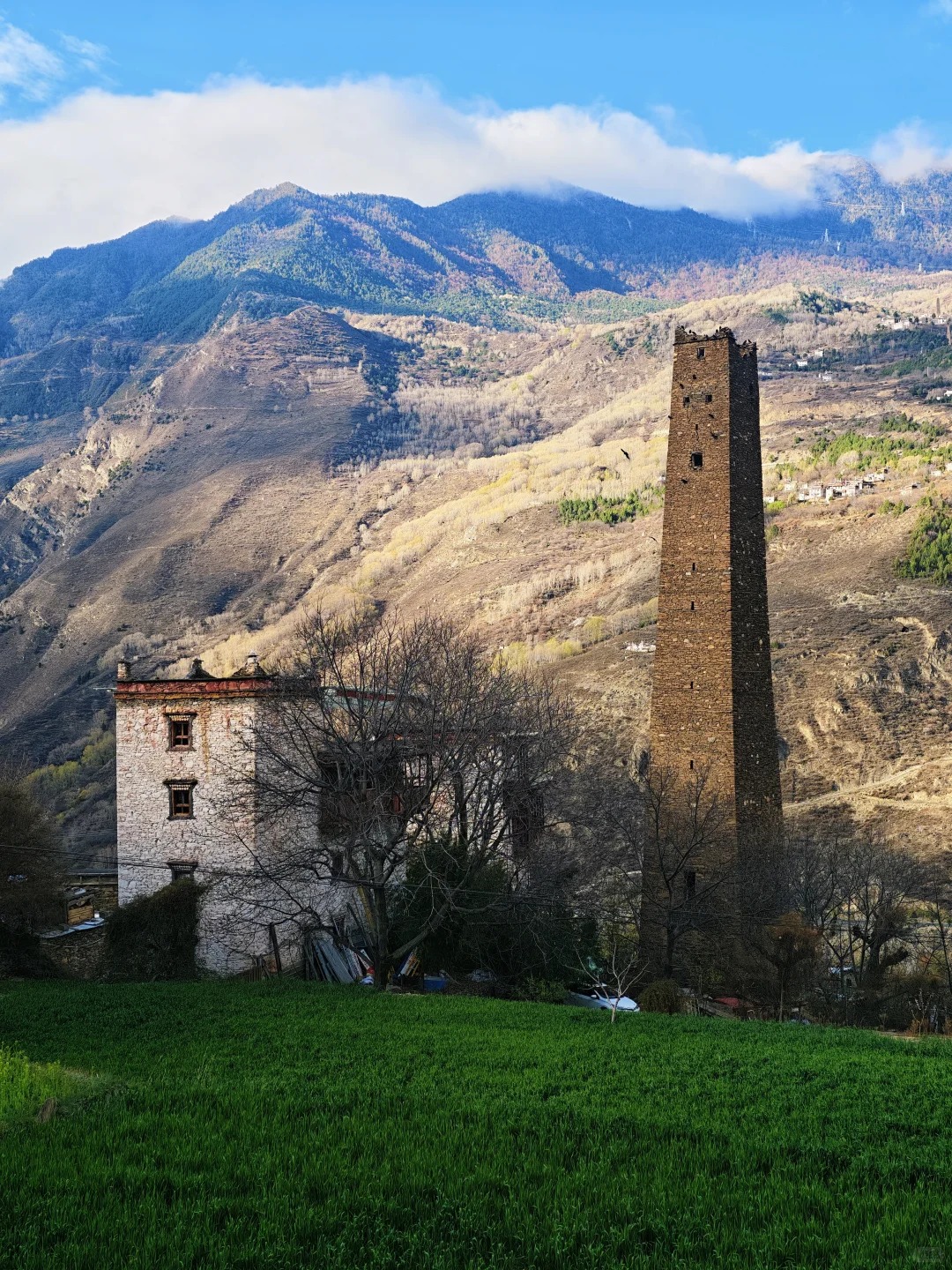
Suopo Watchtowers
Suopo sits directly across the valley from Danba County town — visible from the main road, reachable in around ten minutes by car. No entrance fee applies, though entering individual towers may cost a small additional charge.
The tower density here is the highest in Danba County. From the county-side road, the cluster reads as a single mass of stone against the hillside. For most visitors, Suopo works well as an afternoon stop paired with a Jiaju Tibetan Village morning — the two together cover the full range of what Danba's architecture offers.
FAQ about Jiaju China
Q: Where is Jiaju village in China?
Jiaju Tibetan Village is located in Danba County, Garzê Tibetan Autonomous Prefecture, western Sichuan Province. It sits roughly 8 km northwest of Danba town, along the Dajin River Valley at the foot of the Kapama Mountains. The full Chinese address is 四川省甘寺藏族自治州丹巴县章谷青町嬇安对尥. Jiaju China is approximately 350 km from Chengdu by road — around seven to eight hours depending on the route and road conditions.
Q: What is the entrance fee for Jiaju Tibetan Village?
The entrance fee is ¥50 per person, paid at the Jiaju Visitor Centre gate. A separate scenic area shuttle bus costs ¥35 per person and runs a fixed loop to the main viewpoints inside the village. The shuttle is optional — visitors who prefer to walk the paths freely can skip it. The scenic area is open all day year-round with no fixed closing time.
Q: How do I get to Jiaju China from Chengdu?
Take a long-distance bus from Chengdu's Chadianzi Station (茶店子客运站), departing at 06:30 daily, to Danba County — roughly seven to eight hours, around ¥150 per person. Note that the metro does not run early enough to reach Chadianzi for the morning departure, so arrange a taxi the night before. From Danba Bus Station, a taxi to the Jiaju Visitor Centre costs ¥30–60. Alternatively, carpooling from Chengdu runs ¥200–300 per person one way.
Q: What is the best season to visit Jiaju village?
Spring (late March to late April) and autumn (mid-October to early November) are the two peak seasons. Spring brings white pear blossoms against snow-capped ridges and Jiarong Tibetan cultural performances during the Danba Pear Blossom Festival. Autumn delivers golden corn racks, flame-red foliage, and the deepest blue skies of the year. Both seasons are spectacular; however, autumn colour tends to photograph more boldly, while spring has a quieter, more atmospheric quality.
Q: Is altitude sickness a risk at Jiaju?
Jiaju Tibetan Village sits at approximately 1,800–2,300 metres above sea level — moderate by Tibetan Plateau standards, and well below the threshold where serious altitude sickness typically occurs. Most healthy adults adapt without significant symptoms. Avoid strenuous activity on your first day and drink plenty of water. If you plan to continue to higher destinations nearby — such as Siguniang Mountain at 3,000–4,000 metres — prepare more carefully and carry altitude medication.
Q: How many days should I spend at Jiaju?
One full day is enough to see the village and reach the main viewpoint. Two days is more comfortable and allows time for Zhonglu Village or Suopo Watchtowers. Staying overnight inside Jiaju Tibetan Village is worth it specifically for the dawn light and morning mist — the two hours after sunrise are when the landscape looks most dramatic and the crowds have not yet arrived. For a wider western Sichuan loop including Siguniang Mountain or Tagong Grassland, allow four to five days.
Q: Can I stay overnight inside Jiaju Tibetan Village?
Yes. Several Jiarong Tibetan families run guesthouses inside the village, with private rooms available from ¥200 to ¥400 per night. Rooms are simple but comfortable, typically in century-old stone houses with mountain views and home-cooked Tibetan meals on request. Panghu Fusheng Guesthouse (胗狐浮生客智) is one of the most consistently recommended options. Book at least four weeks ahead during spring and autumn peak seasons; the better rooms fill quickly once the pear blossom or colour forecasts circulate online.
Q: How does Jiaju compare to Zhonglu Tibetan Village?
Jiaju Tibetan Village is more developed, more visited, and more accessible — with a visitor centre, shuttle bus, and entrance fee of ¥50. The panoramic views of layered stone houses across the valley are grand and immediately rewarding. Zhonglu Village, 14 km away, is free to enter, significantly quieter, and generally considered more authentic. Its 88 ancient watchtowers and proximity to Muoerduo Sacred Mountain make it the stronger choice for photographers willing to spend an extra half-day in the area.
Q: What should I pack for Jiaju village Sichuan?
For Jiaju village Sichuan, pack: a windproof and warm layer (mornings drop sharply even in summer), grip-soled walking shoes for uneven stone paths, cash for the entrance fee and guesthouses (card acceptance is limited), Alipay installed and loaded on your phone for shuttle buses and some shops, a power bank, and basic altitude medication as a precaution. Photographers should bring both a wide-angle lens for village interiors and a telephoto for the opposite-hillside viewpoint shots.