Five Color Lake
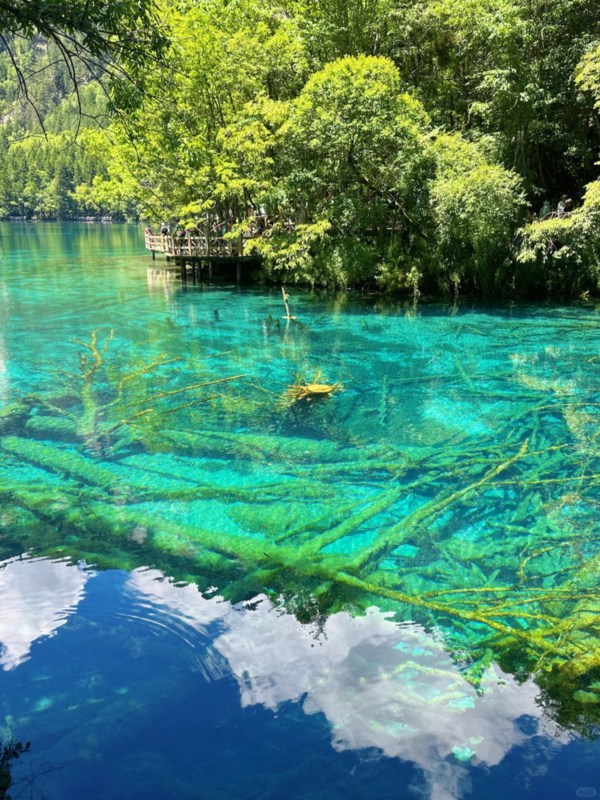
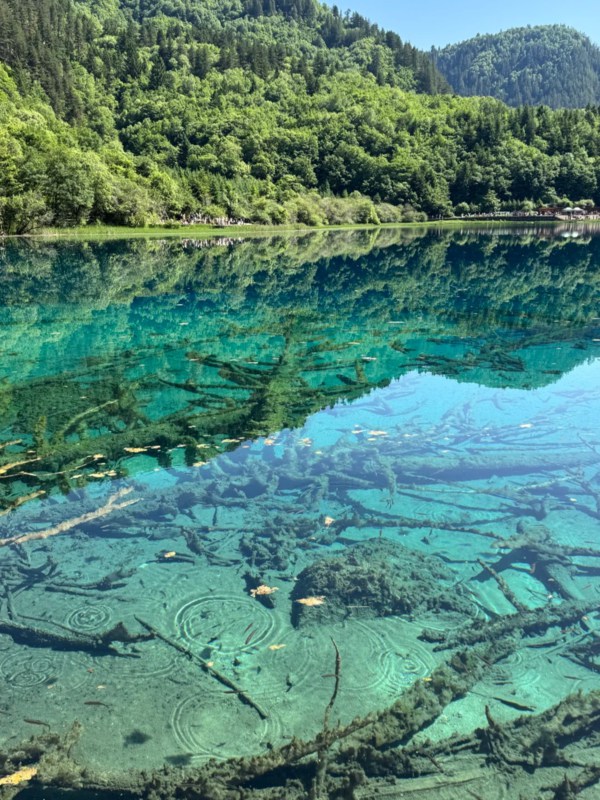
Five Color Lake sits quietly inside Jiuzhaigou National Park, along the wooden boardwalk in Rize Valley, not far from Panda Lake and Pearl Beach. The lake is small in size, but people tend to slow down here without being told to. The water stays shallow and clear, and fallen tree trunks rest visibly on the lakebed.
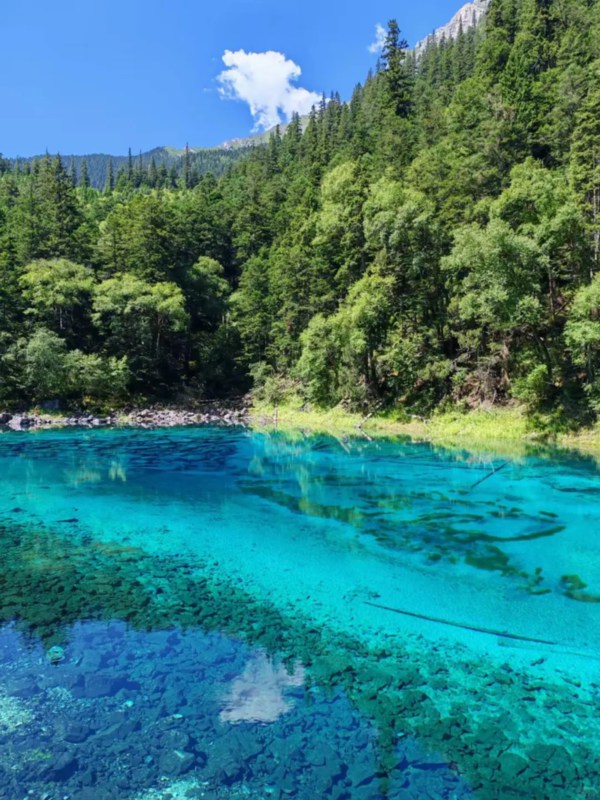
What makes Five Color Lake stand out is how the colors change with light and angle. Blues, greens, and hints of yellow appear naturally, not evenly spread, and never quite the same twice. It feels less like a dramatic highlight and more like a place you notice gradually—and then remember.
Quick Facts About Five Color Lake
| 🀄 Chinese Name | 五彩池 (Wǔcǎi Chí) |
| 📍 Location | Zechawa Valley, Jiuzhaigou National Park |
| ⛰️ Altitude | 2,995–3,010 meters (9,826 feet) |
| 📐 Size | 5,645 m² (smallest lake in Jiuzhaigou) |
| 🌊 Depth | 6.6 meters (21.6 feet) |
| 🍁 Best Time | September–November (autumn) |
| 🎟️ Ticket Price | Included in park admission (¥169–220) |
| ✨ Unique Feature | Never freezes + displays 5+ colors |
| ⏱️ Visit Duration | 30–45 minutes |
| ♿ Accessibility | Boardwalk accessible, ~100 m walk from bus stop |
Five Color Lake Highlights: What You'll Actually Experience
-

- The Ever-changing Color Show
-
- The Crystal-Clear Waters
-
- The Winter Miracle
The Ever-Changing Color Show Throughout the Day
In Morning at Five Color Lake, the feeling is suppressed. The tone of the light remains low, the water tends to bluish-green, nearly milk-like. Late in the morning colors become clearer. The light is delivered directly downwards, and in a flash, you see a colour of turquoise and jade, with fringe edges of pale yellow, which look painted in. It is at noon that people cease to speak. I could see the colors change to turquoise in several minutes, simply by walking several steps along the boardwalk, which changed to jade green.
Towards the end of the afternoon, the palette is warmed up. Gold sneaks in, and contemplations dim. One of the TripAdvisor reviews I would later read was a pretty good summation of the experience: You think you have seen it, then the light shifts and it is another one. Such inconsistency is what makes Five Color Lake unchanging colors, particularly to those who visit the five color lake at the first instance.
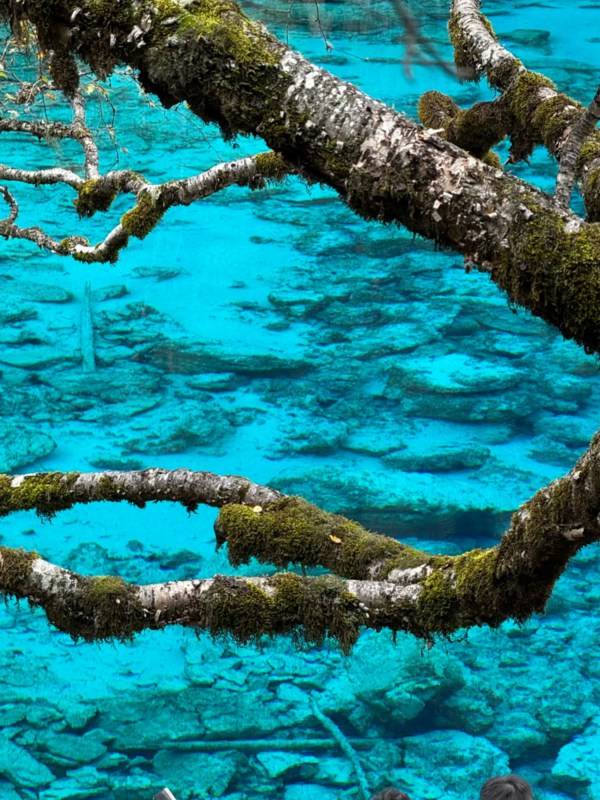
The Crystal-Clear Waters: See Every Detail on the Bottom
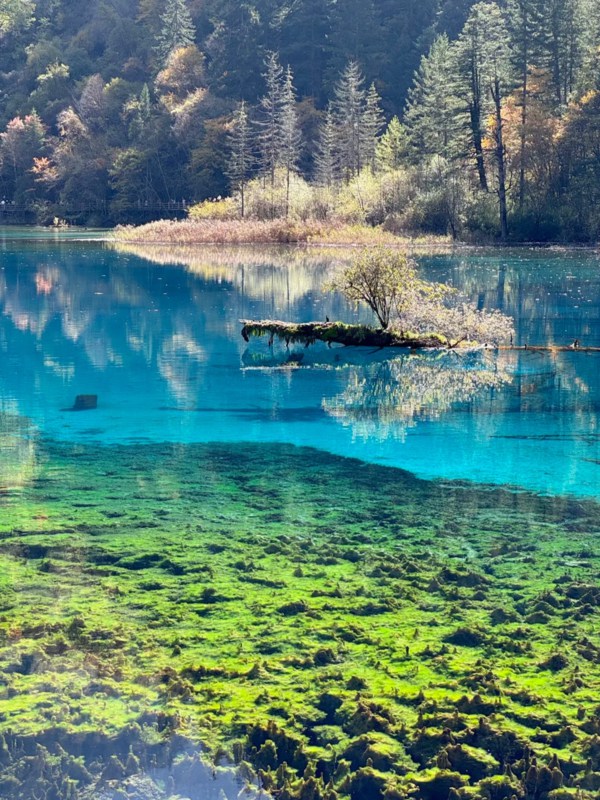
It is not the color that people find surprising, but the clearness. The water of Five Color Lake is nearly unreal. There is no need to squint to see down, right above the full 6.6 meters. There are submerged trunks of trees that are scattered all over the lake, and their textures are still sharp. Stones appear to be piled on top of each other, but nothing is organized here.
Encasing in the water the pebbles can be counted, even where the colour falls into blue. There are moss and little aquatic vegetation, clacking at the rocks, scarcely in motion. Such clarity of the Five Color Lake gives you the illusion that the lake is shallow and deep at the same time, disorienting your sense of distance.
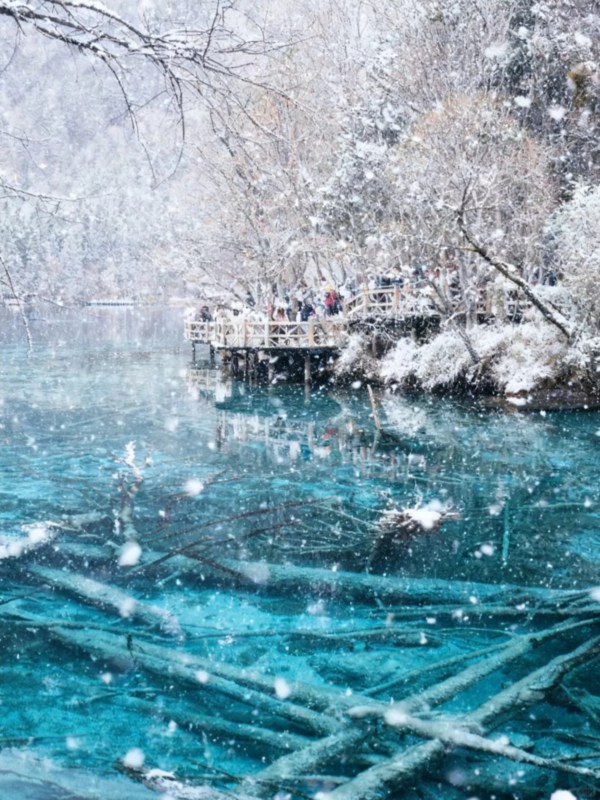
The Winter Miracle: Surrounding Ice vs Unfrozen Pool
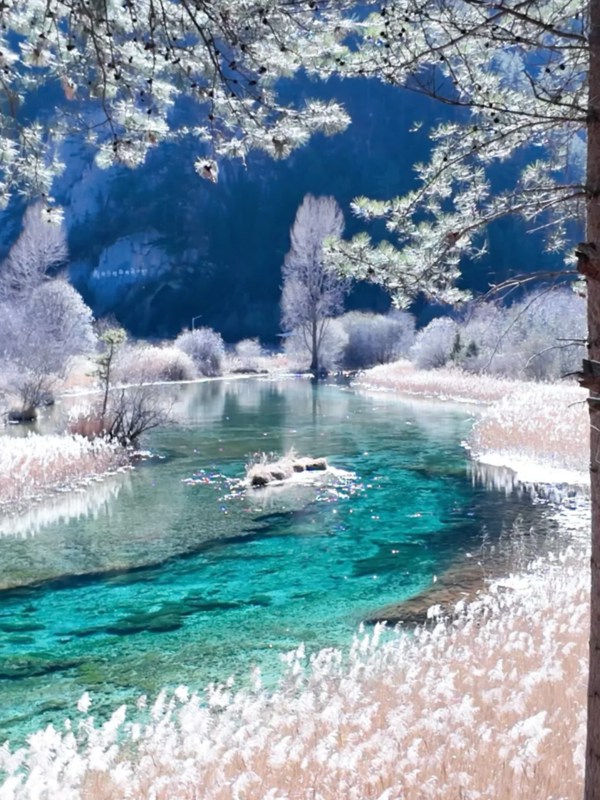
Winter flips expectations. Everything around Five Color Lake freezes, yet the lake itself keeps flowing. Snow piles up along the boardwalk, and steam sometimes rises from the surface. The contrast feels surreal, especially on sunny mornings.
Cold is the trade-off. Temperatures drop well below -10°C, and paths can be slippery. I’d only suggest this season if you’re prepared and flexible. For visuals alone, Five Color Lake in winter leaves a strong impression.
The Smallest Lake with the Biggest Wow Factor
When it comes to Five Color Lake, size isn’t as important. Five Color Lake is actually Jiuzhaigou's smallest lake, but that doesn’t stop many photographers from spending more time there than they originally planned on. Due to its size the Coloring Lake contains a far greater concentration of colour, depth & detail within each photograph taken compared with Five Flower Lake, which has a much wider view.
The same views seem to be shared by many visitors in regard to Five Color Lake—small area with a large effect. This balance is also the reason why most people conclude their discussions regarding the size of the Colouring Lake with the following: while it is easy to overlook Five Colour Lake on a map, it is far more difficult to forget seeing it in person.
The Science Behind Ever-Changing Surface of Five Color Lake
-
- The Mineral Magic
-
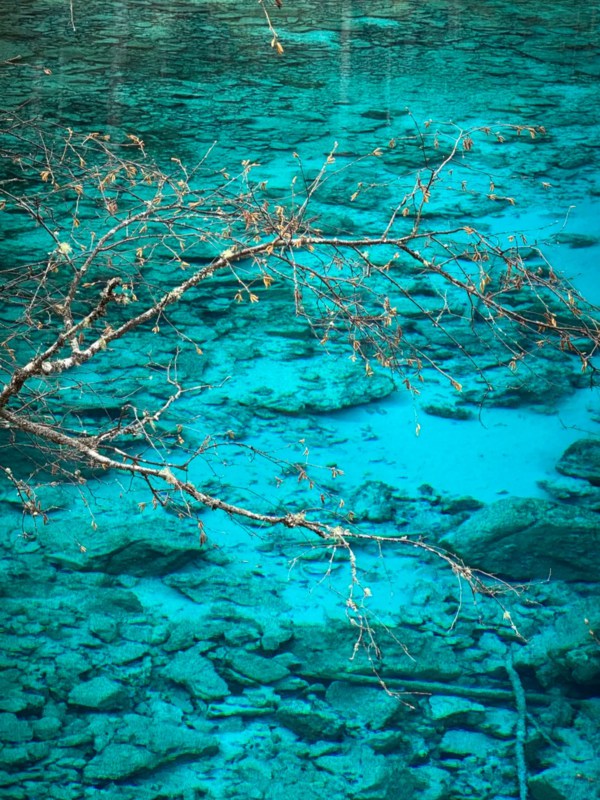
- Five Color Lake Never Freezes in Winter
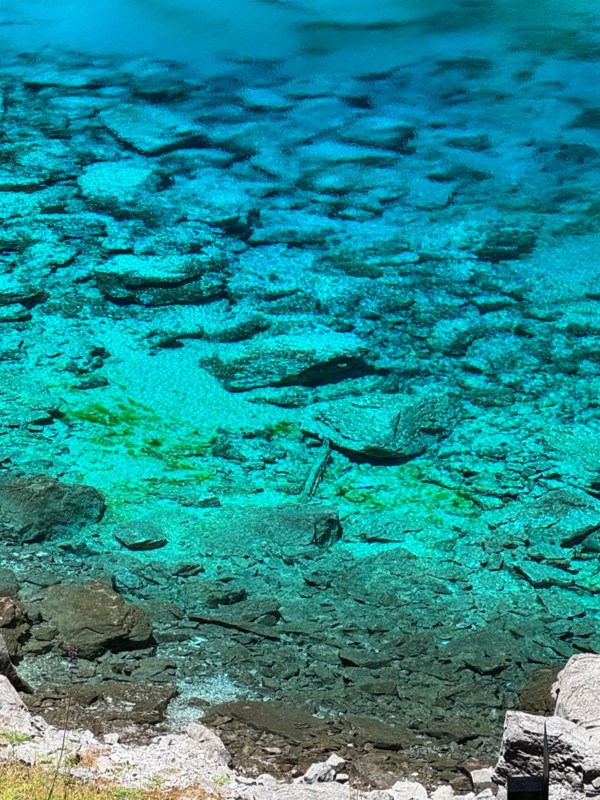
The Mineral Magic: Calcium Carbonate and Light Refraction
The shades in Five Color Lake are not algae-made and engineered. They begin with the deposits of calcium carbonate which accumulate gradually on the lakes bottom. These thin layers of minerals superimposed gradually make the bottom resemble a natural reflector. When the sun rays the water it does not simply reflect, but bends.
Depth plays a quiet role here. Light is bounced back more quickly in shallow areas which appear to be olive green or orange-red, particularly around sunken tree trunks. A little more profound shades turn to emerald green and sky blue. The bottom ones tend to appear sapphire blue, near to glassy. None of this stays fixed. The cloud cover, the time of the day, and where you are standing on the boardwalk make a difference. The combination of minerals and refraction is what gives Five Color Lake its distinctive colour, without making it sound too technical and artificial.
Why Five Color Lake Never Freezes in Winter
One of the details the guide points out, lowering their voice, is that Five Color Lake never freezes, even when nearby ponds do. The description is grounded in reality. Networks of underground springs feed the lake, some loosely connected to Long Lake further uphill. This continual flow circulates the water, preventing ice from forming.
Local stories tell it differently. People say the lake breathes through unseen pathways, or that it was blessed to remain clear all year round. Most of the heavy lifting comes in through science, but this mystery remains. Being there in winter, with the steam vaguely floating up, it is not hard to understand why the legend managed to survive-and why the name five-color lake still sounds right.
💎 Five-Color Lake's calcium carbonate chemistry produces water colors that shift from turquoise to jade depending on light and season — making it one of the most photographed alpine lakes on earth. It's featured alongside Tianchi, the Li River, and Kanas Lake in the alpine and karst lakes chapter of 15 Spectacular Natural Wonders of China, which compares China's most stunning water landscapes side by side and advises on the best season to visit each one.
Best Time to Visit Five Color Lake
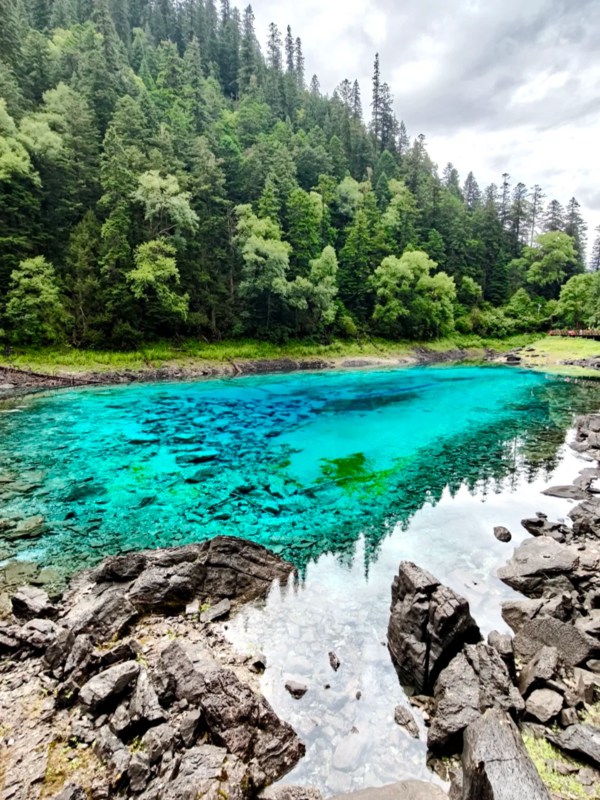
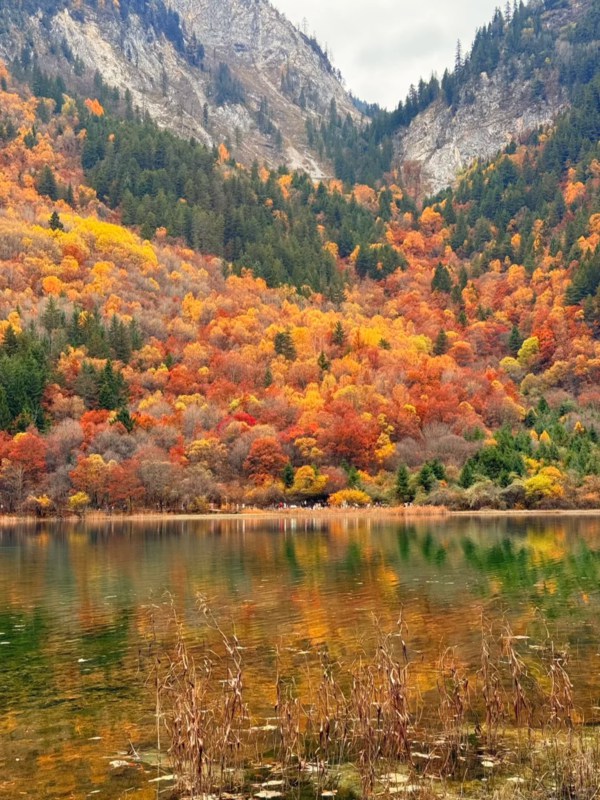
Autumn (September–November): When Colors Peak
Autumn is the safe choice and, really, it is the most common. Whitestem Lake has the greatest contrast of these months. The hills around are red and gold and those warm colors find their way into the reflection of the lake, and the blues and greens appear more vivid. When it is not cloudy, the skies are clear and therefore allow the color layers to be distinct and not combined.
Crowds are indeed built in, particularly during the week of the National Day in early October of China. Mid-day may be crowded on the boardwalk, and it is best to come early. Temperatures are about 5–15°C cold in the shade and fine during walking. I always have a light down jacket and windproof shell. Most guides say that it is the best season to go to Five color lake, but you have to schedule it when there are no crowds.
Spring (March–May): Fresh and Peaceful
The spring season has a more peaceful rhythm. The run-off from melting snow creates a calming effect over Five Color Lake – the water has a very clean and almost sharp appearance. The lake is not nearly as spectacular in the spring; however, it gives a sense of peace. There are fewer tour groups visiting during the spring, which means there is less of a rush to enjoy this beautiful place.
The beauty of the spring season is that the colors of the trees are less vibrant due to their being bare until late April. On cloudy days, the colors of the lake become muted and soft. If you are looking for space and less tourism-related "celebration" of this area, spring could be an excellent time for you to visit Five Color Lake.
Winter (December–February): The Frozen Fairytale (Except the Lake!)
Winter turns upside down all of our expectations. Everything surrounding the Five Color Lake freezes while the Five Color Lake itself continues to flow. Snow piles up on the boardwalk, and occasionally you’ll see steam rising off of the lake. When you see this, especially on sunny mornings, it feels surreal.
The cold is the downside of this season; it is not uncommon for temperatures to be well below -10°C, and the paths can be very slippery. I would only recommend this season if you are prepared and have a flexible mindset. As for visuals, Five Color Lake will leave you with an extremely strong impression during the winter months.
Summer (June–August): Pros and Cons
Energy and People Are Present During the Summer Season. Peak Season For Our Area; Expect Long Lines. Overcast Skies And Rain Will Affect The Brightness Of The Blue Colouration Of The Five Colour Lake, Thus Making It Appear Flat.
Still, it works well for families. Trails stay safe, shuttle buses run frequently, and temperatures remain comfortable. If summer fits your schedule, just manage expectations when you visit five color lake. If you want more tips on timing your visit and avoiding crowds in Sichuan, check out this complete guide to the best time to visit Chengdu.
Five Color Lake vs Five Flower Lake: Clearing Up the Confusion
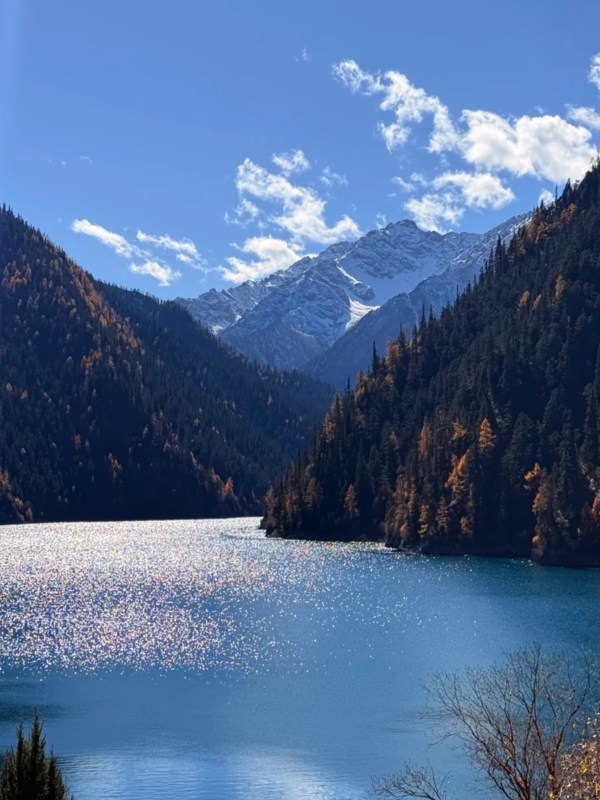
Five Color Lake (Wucai Chi): The Compact Gem
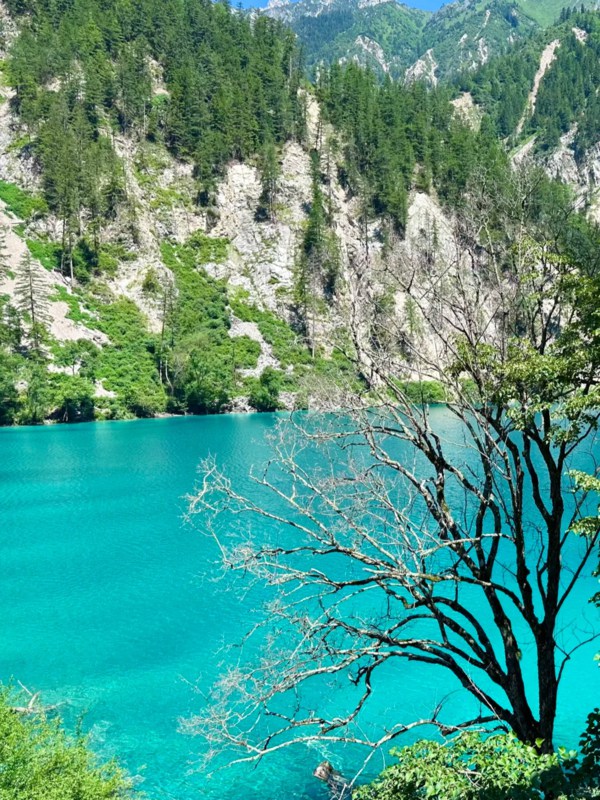
Zechawa valley has a small lake, Five Color Lake, hidden in the corner that is smaller than most people think but whose beauty is full of surprises. It is the smallest lake in Jiuzhaigou, around 5,645 m2, but the colors of the lake seem to be intense. The depth here is important, as the lake is 6.6 meters deep and makes the sapphire blues and emerald greens even deeper.
Winter makes it more interesting: when ice covers the surrounding lakes, Five Color Lake remains unfrozen, creating a surreal scene with running water between ice and snow. Visitors can easily access it via the boardwalk, and its small size allows photographers and casual visitors to capture the full range of the show without taking long walks. This concentrated beauty makes it one of the secret treasures that travelers can linger on during a vacation at Five Color Lake Jiuzhaigou.
Five Flower Lake (Wuhua Hai): The Popular Showstopper
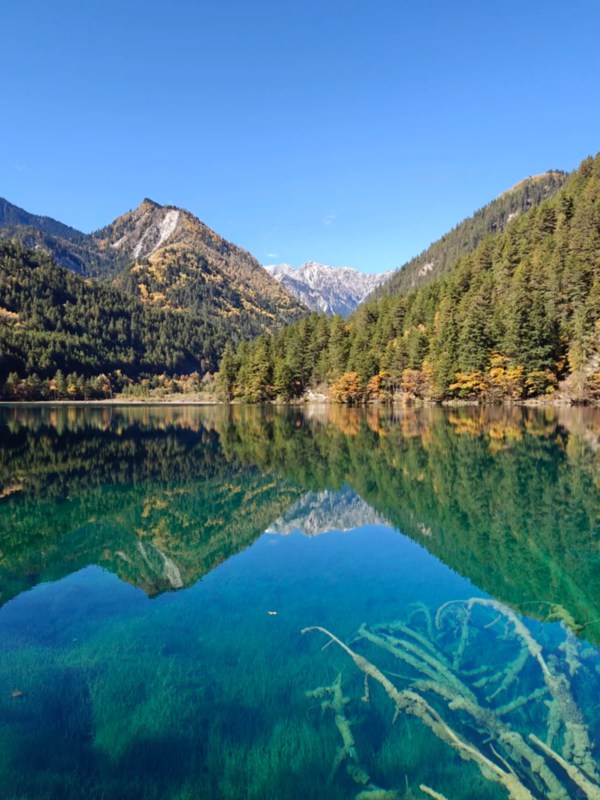
Five Flower Lake Jiuzhaigou, on the other hand, is spread over Rize Valley which is in a larger region. Its shallow waters also show the submerged forests and multicolored stones in general masonry, which are easier to be taken by visitors in sweeping photos. It is more accessible: it is nearer to primary shuttle destinations, and the boardwalk can comfortably accommodate the larger population.
Colors in this case are not as dramatic but provide a panorama of wow especially during autumn. Comparing Five Flower Lake, the size and exposure of it make it the postcard view of the park, and five color lake is intimate and dynamic. The visitors frequently remark on the fact that the two lakes are completely different even though they are just several valleys away.
Other Notable Lakes: Panda Lake, Mirror Lake & Long Lake
Panda Lake is located close to Jiuzhaigou Park's entrance; it is known for being tranquil and often allowing visitors to see wild animals. Jiuzhaigou's Mirror Lake reflects sunlight perfectly and provides many photo opportunities at the crack of dawn. Long Lake is one of the largest lakes in Jiuzhaigou. It flows into many other smaller lakes including the Five Color Lake, and it also has numerous trails that are less crowded than those of the other lakes. When combined with the main features of Jiuzhaigou, these lakes provide a rich experience for new visitors.
Which One Should You Prioritize? My Honest Recommendation
If pressed for time, choose based on your priorities. Five Color Lake offers a compact, vivid experience with striking winter and color contrasts. Five Flower Lake Jiuzhaigou delivers the classic, panoramic beauty most associate with the park. Personally, if I had only one chance, I’d pick Five Color Lake—its intensity and changing hues make choosing between Five Color Lake and Five Flower Lake feel less about size and more about lasting impression.
How to Get to Five Color Lake: Transportation Made Simple
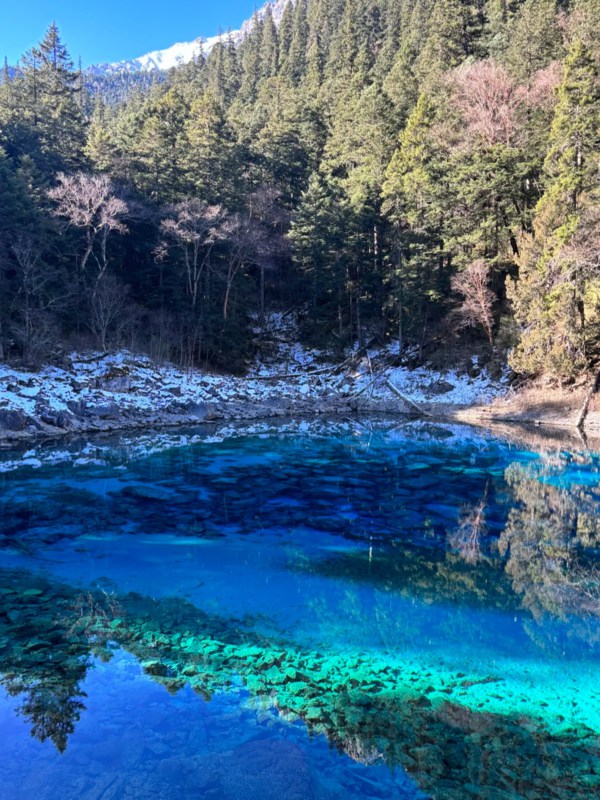
Scene of Five Color Lake
From Chengdu to Jiuzhaigou: Three Ways
Five color lake may be accessed by air, bus or self-drive when travelling in Chengdu. It takes approximately 1.5 hours to Jiuzhai Huanglong Airport at the price of approximately ¥400–700 one way in 2025. If you want a detailed guide comparing all travel options from Chengdu and insider tips for a smoother trip, you can check out this complete travel guide from Chengdu to Jiuzhaigou. The buses operate regularly out of Chadianzi Bus Station, and require 8-10 hours ( ¥150–200), however, what they leave out is that the buses will then stop every now and then, the seats are less comfortable, and the roads may also be rough.
Driving would provide freedom but would demand that one should be very careful on the mountain passes; not all local routes can be traced with the help of GPS. I personally like to fly early in the morning, and then take the park shuttle- it uses less energy and you do not have to put up with the long bus grind. The access to the Five Color Lake is the same in all directions.
Inside the Park: Reaching Five Color Lake
It is also easy to get to a Five color lake within Jiuzhaigou once one is inside Jiuzhaigou. The park system of shuttle buses unites the main valleys; use the line of Zechawa Valley and alight around the stopped point. It is then just a short (under 100 meters) stroll over the well-kept boardwalk. It is largely paved and accessible by wheelchair, with only a few inclines with small ramps.
There are English and Pinyin signs showing the way to the visitors. The bottlenecks are avoided even in high season because of the boardwalk design. To photographers or even in their free time, this convenient location allows you to spend time there without having to hike or even fearing to miss the shuttle.
FAQ About Five Color Lake
Q: Where exactly is Five Color Lake located in Jiuzhaigou?
Five Color Lake is situated in Zechawa Valley, toward the northern part of Jiuzhaigou National Park. It lies above Long Lake and downstream from Panda Lake, while being relatively close to Pearl Beach Waterfall. The lake is easily reached via the park’s shuttle system, with a short ~100-meter boardwalk walk from the bus stop. For first-time visitors, knowing where is Five Color Lake helps plan efficient routes, avoiding unnecessary backtracking across valleys. Its tucked-away location makes it a quieter stop than some more central lakes.
Q: Why is it called Five Color Lake? Are there really five colors?
The name Five Color Lake comes from the multiple shades visible on its surface, though you’ll often see more than five. Sapphire blue, emerald green, orange-red, sky blue, and olive green are most common. The effect comes from calcium carbonate deposits, water depth variations, and light refraction. Depending on the time of day and viewing angle, these colors shift constantly. Understanding why is it called Five Color Lake clarifies that it’s less a strict color count and more a description of its vivid, multi-hued appearance.
Q: How is Five Color Lake different from Five Flower Lake?
Five Color Lake vs Five Flower Lake is mainly about scale and experience. Five Color Lake in Zechawa Valley is compact, deep, and never freezes in winter, offering concentrated hues. Five Flower Lake Jiuzhaigou in Rize Valley is larger, shallower, and easier to photograph in panoramic shots. Accessibility differs too; Five Flower Lake is closer to shuttle stops, while Five Color Lake feels more tucked away. Each lake has a distinct visual impact, making comparison useful for planning your park route.
Q: Can you swim in Five Color Pool in Sichuan, China?
No, swimming is strictly prohibited in Five Color Pool Sichuan China. The ban exists for ecological preservation and visitor safety—water is shallow in some parts but very cold year-round. Disturbing sediments can alter the lake’s colors and harm fragile aquatic plants. Visitors can, however, enjoy walking the boardwalks, photographing reflections, and observing underwater details safely. Respecting rules ensures the Five Color Lake remains pristine for everyone.
Q: What is the best time of day to visit Five Color Lake?
The best time to visit Five Color Lake is usually between 9–11 a.m. or 3–5 p.m. Morning light brings soft blue-green tones, while afternoon sun creates richer turquoise and gold reflections. Avoiding midday helps skip heavier crowds and glare from direct sunlight. Observing Five Color Lake’s colors during these windows maximizes the chance to see subtle shifts and ensures photography conditions are optimal.
Q: How many lakes are in Jiuzhaigou, and where does Five Color Lake rank?
Jiuzhaigou contains around 108 lakes, ranging from small ponds to large expanses. Five Color Lake is one of the smallest in size but ranks high for visual impact due to its concentrated, changing hues. Other notable lakes include Panda Lake, Mirror Lake, Long Lake, and Five Flower Lake. For travelers asking how many lakes are in Jiuzhaigou, knowing this helps prioritize stops based on size, accessibility, and scenic interest.
Q: Do I need a tour guide to visit Five Color Lake?
A tour guide isn’t required; self-guided visits work well. Signage in English and Pinyin along the boardwalk is clear, and the shuttle system directs visitors efficiently. Hiring a guide helps if you want historical context, local legends, or photography tips. For most visitors, understanding Five Color Lake’s location and light patterns is enough to enjoy the lake fully without extra cost.
Q: Why is Jiuzhaigou famous, and what role does Five Color Lake play?
Jiuzhaigou is famous as a UNESCO World Heritage site for its pristine forests, waterfalls, and colorful lakes. Five Color Lake contributes uniquely by offering concentrated, multi-hued water that shifts with light and depth. Its small size contrasts with larger lakes but provides an intense visual experience. For anyone wondering why is Jiuzhaigou famous, visiting Five Color Lake shows a side of the park that blends scientific curiosity with serene beauty.