Leshan, Sichuan
Leshan sits at the exact point where three rivers—the Min, the Dadu, and the Qingyi—converge in southwest Sichuan. It is a mid-sized Chinese city of roughly 3.2 million people, yet its global reputation rests on a single monument: a 71-meter stone Buddha carved into a red sandstone cliff during the Tang dynasty, the largest seated Buddha of its kind in the world. The UNESCO inscription arrived in 1996, and the statue has been drawing pilgrims and visitors ever since.
The good news for travelers based in Chengdu is that the site lies just 110 to 120 kilometers away—roughly one hour by high-speed rail, making a full day visit entirely realistic without an overnight stay. Once you have seen the Buddha from the cliff, the stairway, and the river below, Leshan rewards a second layer of attention: its own distinct corner of Sichuan cuisine, lighter and more herbaceous than Chengdu's famously fiery cooking, built around dishes like Qiaojiao Nai, Bobo Chicken, and silky Doufu Nao.
Quick Facts
Leshan Giant Buddha
The Buddha at a Glance
Leshan Giant Buddha
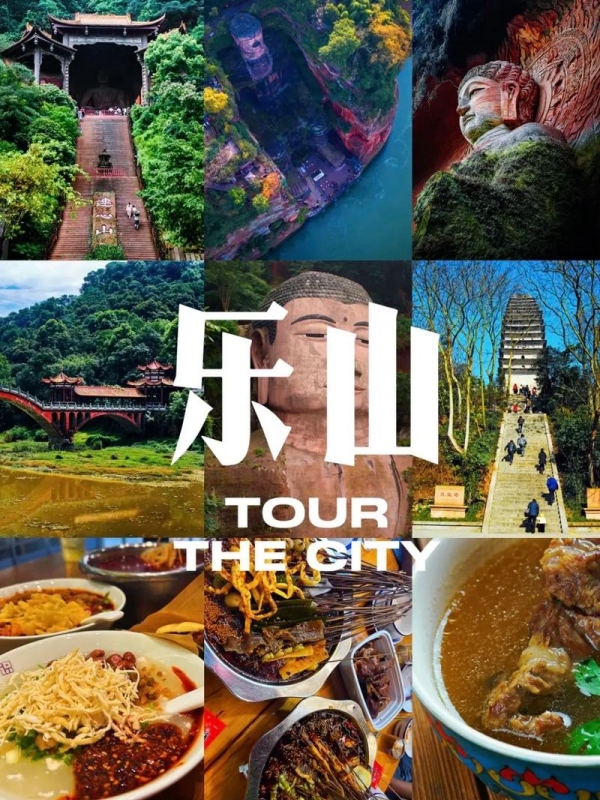
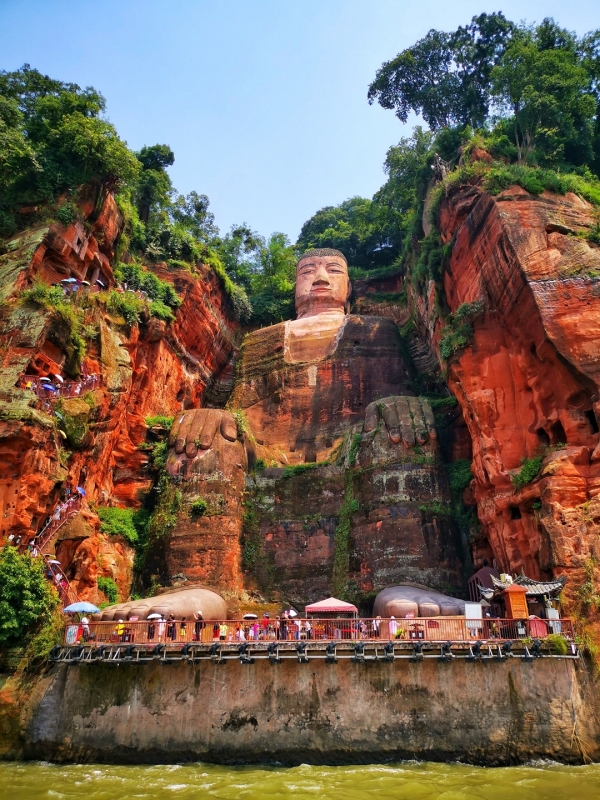
The Leshan Giant Buddha is a 71-meter stone figure carved directly into a cliff face at the confluence of three rivers. Its head alone measures roughly 14.7 meters, and its shoulders span approximately 28 meters across. When the statue was completed in 803 AD, it became—and remains—the largest stone-carved seated Buddha in the world, a designation recognized by UNESCO. The figure faces the churning waters downstream, its hands resting on its knees, its expression calm despite the turbulence the builders hoped it would pacify. More than 1,021 individual coils of hair were carved into the stone above the head, each one part of a hidden drainage system that has kept the structure largely intact for over twelve centuries.
Three distinct vantage points give the Buddha its drama. From the top of the head, visitors look down the zig-zag stairway carved into the cliff, with the Buddha's broad shoulders filling the foreground. From the narrow ledge at the statue's feet, the scale shifts again—the face looms overhead, nearly impossible to photograph in a single frame from this angle. The third view, from a boat on the river below, is the only spot where the full 71 meters fit into one view.
How the Buddha Was Built
Leshan Buddha
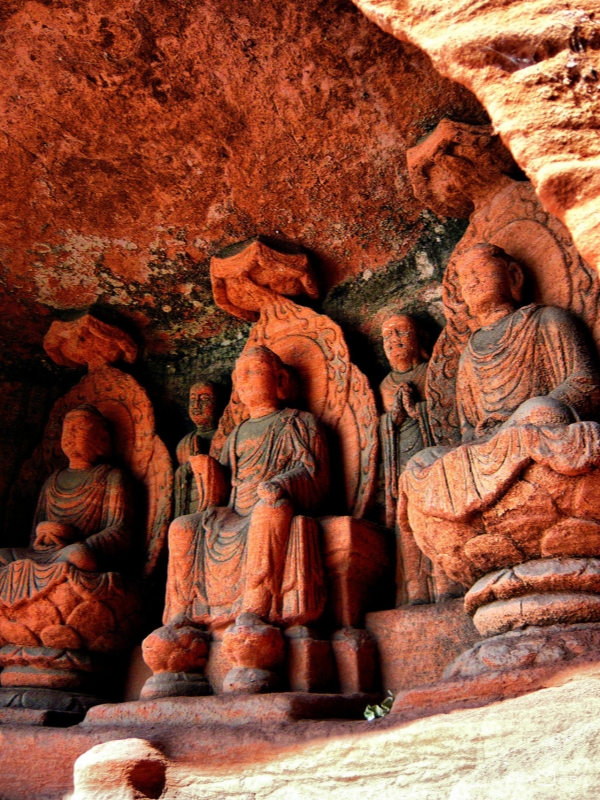
Construction began in 713 AD under the direction of a Buddhist monk named Haitong, during the reign of Emperor Xuanzong of the Tang dynasty. Haitong conceived the project as a spiritual answer to the dangerous river confluence below—the three rivers met in a point where fast currents and whirlpools regularly swamped boats, drowning passengers and cargo. Haitong believed that carving a giant Buddha into the cliff would channel divine protection and calm the waters. Funding came from donations across the empire, including contributions from the imperial court and from wealthy local merchants.
The project outlasted its founder. Haitong died before the statue was finished—according to some accounts, his eyes were gouged out by bandits who believed he was hoarding treasure for the project. Work continued nonetheless, and the Buddha was finally completed in 803 AD, roughly ninety years after it began. The hidden drainage system concealed within the hair coils has proven to be the statue's greatest engineering legacy, channeling rainwater away from the stone body and preventing the erosion that has claimed less carefully designed cliff carvings nearby.
How to Visit the Buddha Site
The main scenic-area admission costs about $14 (¥80) per person. Additional sub-tickets cover Wuyou Temple at roughly $7 (¥50) and the Mahao Cliff Tomb at about $4 (¥30); Lingyun Temple sits inside the main ticket boundary. Opening hours run approximately 07:30 to 18:30 in the shoulder seasons and extend to around 19:30 during summer high season.
- Main scenic area: ~$14 (¥80) per person
- Wuyou Temple: ~$7 (¥50) sub-ticket
- Mahao Cliff Tomb: ~$4 (¥30) sub-ticket
- Opening hours: ~07:30–18:30; high season to ~19:30
The classic visit starts at the top of the cliff and descends the carved stairway from the Buddha's head to the feet. The walk one way takes roughly 30 minutes, though the steps are steep and narrow in places. Visitors with mobility concerns should consider the river-boat option instead—the Wangyuhang boat leaves from the dock below and offers the panoramic view without any climbing. The Anlan cable bridge, a Song-dynasty suspension structure also known as the "old bridge," connects the Buddha site to the north bank of the Min River and is free to cross with the main scenic-area ticket. The crossing takes about ten minutes on foot.
A One-Day Chengdu Round-Trip Itinerary
Morning: Travel to Leshan & Enter the Buddha Site
Leshan, Sichuan
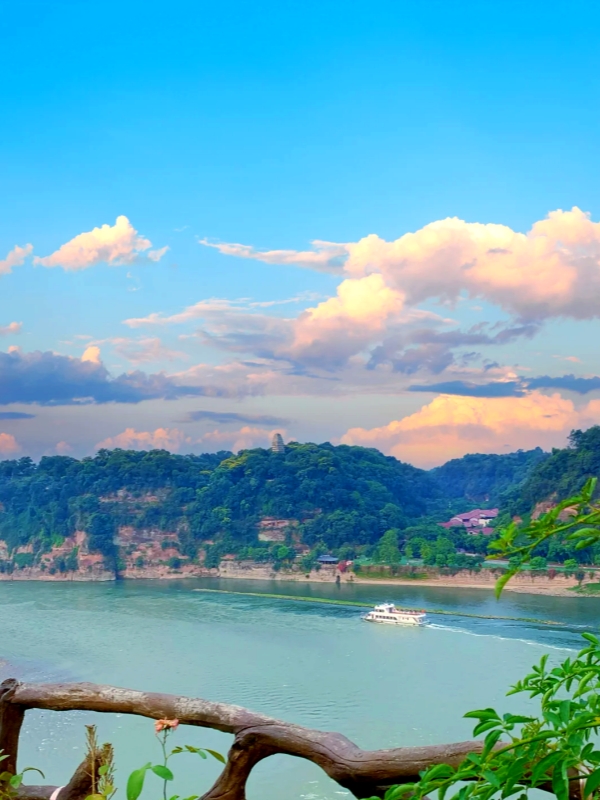
The most efficient approach is to take an early high-speed train from Chengdu South or Chengdu East, departing around 08:00. The journey takes approximately one hour, arriving at Leshan Station by 09:00. From there, a taxi to the scenic-area gate costs about $3–4 (¥20–25) and takes roughly ten minutes. Travelers who prefer not to manage the train-and-taxi logistics independently can book a full-day departure tour through Trip.com or Klook, typically priced around $70–110 (¥500–780) per person and including transport, a guide, and lunch.
The window between 09:30 and 10:00 is the optimal entry time. Tour buses from Chengdu and beyond begin arriving in larger numbers after 10:00, and the narrow Buddha stairway becomes genuinely congested by mid-morning. Reaching the gate early means descending the cliff path with relatively sparse foot traffic, a more contemplative experience than the afternoon allows.
Midday: Climb the Buddha & Lingyun Temple
Leshan, Sichuan
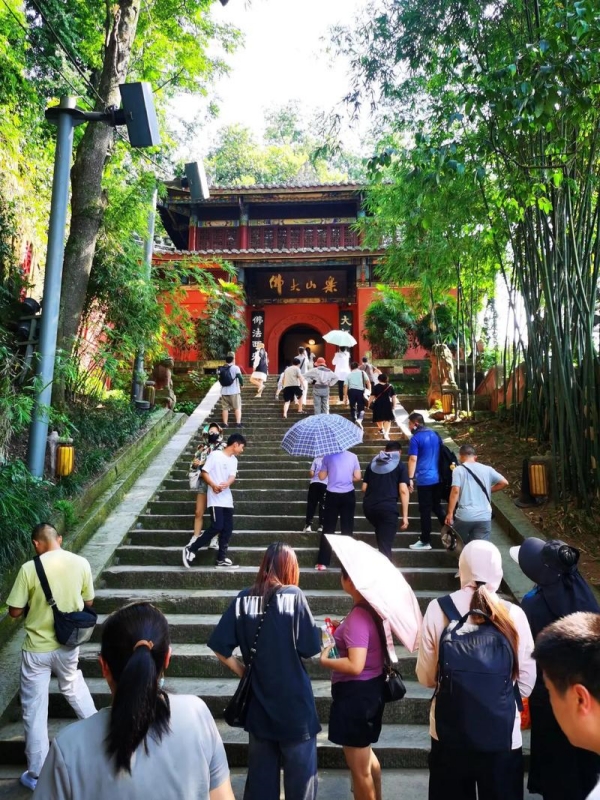
Lingyun Temple, built in the seventh to eighth centuries and situated within the main scenic area, makes a quieter starting point than the Buddha stairway itself. The temple grounds are cooler, shaded by trees, and receive far fewer visitors at opening time. From there, the path leads toward the Buddha's head and the start of the carved stairway descent. Budget roughly two hours for the main scenic area before breaking for lunch.
The descent from the Buddha's head to his feet follows a zig-zag path cut into the red sandstone cliff. The stairway was carved directly into the rock as part of the original Tang-dynasty project, so the steps are uneven and the handrails are essential in wet weather. At the bottom, the statue's feet—each toe roughly the size of a car tire—rest on a ledge above the river. The midday light hits the face at an angle that deepens the shadows around the eyes and brow, giving the stone a stern quality that contrasts with the serene shoulders and hands.
Afternoon: River Cruise & Return to Chengdu
Around 14:30, board the Wangyuhang river boat from the dock below the Buddha site. The cruise takes roughly 40 minutes and moves slowly upstream to a viewing point directly below the statue. This is the only vantage point where the entire 71-meter figure fits into a single frame, and the perspective—from the Buddha's feet looking up—reveals the proportions that the cliff-top view cannot match. Mid-afternoon light on the water produces a diffuse glow across the stone face that morning mist rarely allows.
Exit the site by 15:30, take a taxi back to Leshan Station, and catch the return HSR to Chengdu. Depending on the departure time, arrival back in Chengdu falls between 16:30 and 17:30. If time allows before the boat, the Mahao Cliff Tomb—a set of Han-dynasty burial chambers carved into the adjacent cliff face—takes roughly 40 minutes to visit and adds a layer of Sichuan provincial history the Buddha's Tang construction does not cover.
What to Eat in Leshan
Leshan's culinary identity sits within the broader Sichuan cuisine universe but leans in a different direction than Chengdu's famously aggressive málà heat. Leshan cooking tends toward lighter applications of Sichuan pepper, more focus on fresh herbaceous notes, and a willingness to let sweetness and savoriness coexist on the same plate. Several dishes have become so strongly associated with the city that Sichuan natives will claim them as Leshan exports even when they appear on menus elsewhere.
Signature Dishes
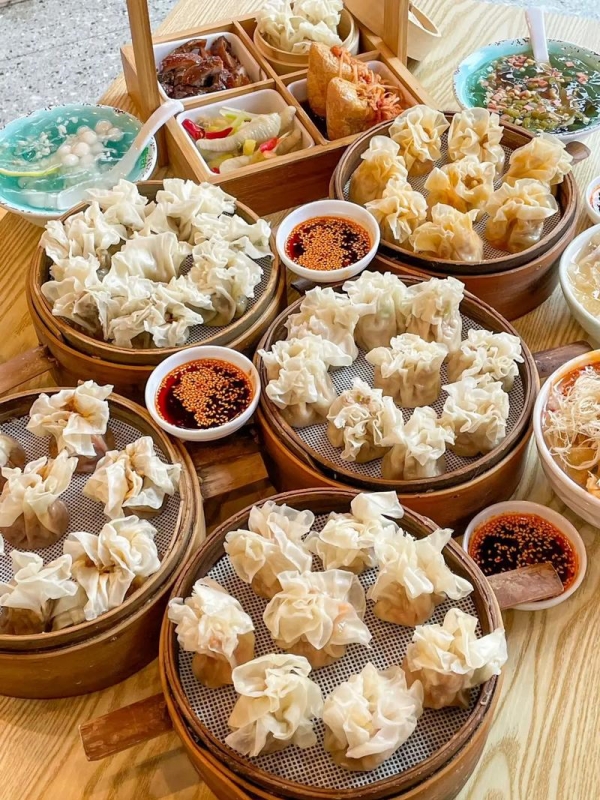
Leshan, Sichuan
Bobo Chicken (钵钵鸡)—cold poached chicken cut into bite-sized pieces and served on skewers, submerged in a vivid red chili-oil broth scattered with sesame seeds. The chicken is tender and mildly spiced; the broth delivers heat without the tongue-numbing Sichuan pepper that dominates many Chengdu preparations. Look for it at street stalls clustered near the old-town gate of the Buddha scenic area.
Qiaojiao Nai (跷脚牛肉)—a beef offal hotpot developed in Leshan's Shizhong District in the 1930s. The name refers to the way diners originally propped one leg on their stool while waiting for a seat, too impatient to sit properly. The broth is herbal and aromatic, simmered with medicinal-grade spices that differentiate it from the straightforward pork-bone stock of standard Sichuan hotpot. Offal is sliced thin and briefly swirled in the broth before serving—trust the kitchen on timing.
Savory Leshan Street Food & Local Staples
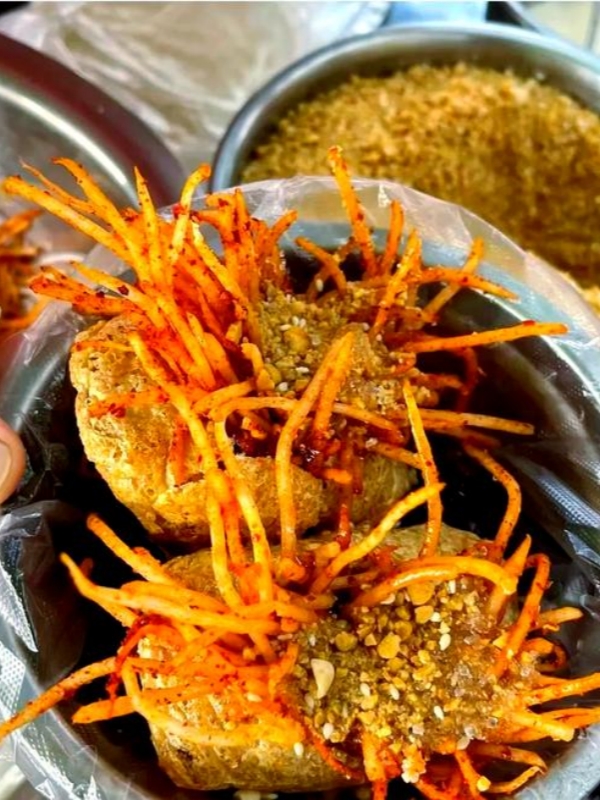
Leshan, Sichuan
Doufu Nao (豆腐脑)—a Leshan-style soft tofu pudding served in a savory broth with scallions, chili oil, and often a spoonful of meat sauce. The texture is the point: silky and yielding, somewhere between a soup and a custard. It is eaten from a bowl with a spoon, typically as a morning or midday meal rather than an evening one.
Cold Diced Chicken (白宰鸡, Bai Zai Ji)—poached chicken sliced and served cold with a dipping sauce heavy on chili oil and garlic. The preparation sounds simple and is deceptively so; the quality of the chicken and the balance of the sauce determine everything.
Sweet Leshan Street Snacks
Sweet Rice Crunch (米糖 / 咔咔)—puffed rice cakes or sweet rice crunch, a childhood street-snack staple. The version sold in Leshan tends toward the slightly caramelized, crispy edge.
Stuffed Tofu Puffs (包豆腐)—fried tofu pouches filled with spiced meat or vegetables, another old-town street offering.
Sugar-Coated Haws (糖葫芦)—candied hawthorn fruit on a skewer—appear at winter street stalls throughout the city center.
Where to Eat
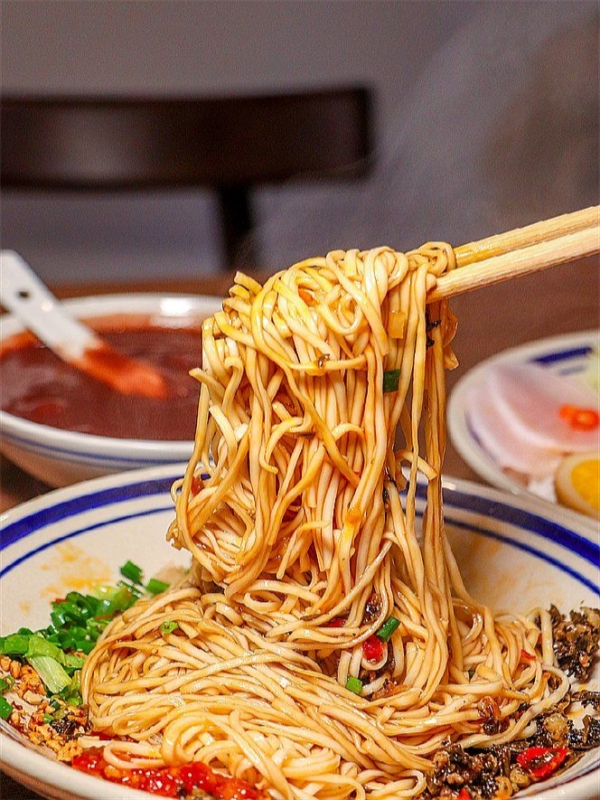
Leshan, Sichuan
The highest concentration of Leshan specialty stalls sits along the old-town streets immediately around the Buddha scenic-area gate. Bobo Chicken, Qiaojiao Nai, and stuffed tofu vendors cluster within a two-block radius, making a post-visit food circuit straightforward. For Qiaojiao Nai in a sit-down setting, the Zhang Gong Zhuang chain has multiple locations in the Shizhong District with more formal restaurant interiors and full menus.
The Starlight Night Market, open in the evenings in the central part of the city, gathers dozens of food stalls under one space. It is the most efficient single location for sampling multiple dishes in one visit. Budget roughly $1–5 (¥7–35) per person for street snacks, $5–15 (¥35–100) for a sit-down meal, and $15–25 (¥100–180) for a full Qiaojiao Nai hotpot spread for two.
Beyond the Buddha: Emeishan & More
Mount Emei
Mount Emei and the Leshan Giant Buddha share a single UNESCO World Heritage inscription, dated 1996. The mountain is one of China's Four Sacred Buddhist Mountains, a status that predates the Tang dynasty and draws pilgrims year-round to its network of temples and trails. The summit, known as Jinding or the Golden Summit, sits at 3,079 meters above sea level. A cable car carries visitors from the upper station to the summit in a few minutes, bypassing the multi-day hike that pre-dates the infrastructure. The summit view, on clear days, extends across the Sichuan basin; fog is common and can close the upper cable car without warning.
Admission to Mount Emei varies by season—approximately $17 (¥120) in low season and $22 (¥160) during peak periods. The Jinding cable car round-trip costs roughly $14 (¥99). Mount Emei requires its own dedicated day at minimum, or an overnight stay at one of the mountain's temple hotels for visitors who want to reach the summit at sunrise. Combining Emei with the Buddha in a single day is not realistic; the mountain lies roughly 40 kilometers west of Leshan and adding both sites to one itinerary means neither gets the time it deserves.
Other Day-Trip Stops Near Leshan
The Mahao Cliff Tomb, a short walk from the Buddha scenic area, contains Han-dynasty burial chambers carved directly into the cliff face. The tombs predate the Buddha by roughly a millennium and are included as a sub-ticket within the main site network. Wuyou Temple, on Wuyou Mountain directly opposite the Buddha across the river, requires a separate sub-ticket and is best combined with the Anlan cable bridge crossing, which connects the two banks and provides a different angle on both the temple and the statue.
The Anlan suspension bridge—the "old bridge" referenced in historical records—dates to the Song dynasty and spans the Min River on iron chains. Crossing it takes about ten minutes and is free with the main scenic-area ticket. The bridge sways slightly under foot traffic, which adds to the experience without creating genuine concern for most visitors.
Further Afield
Several attractions mentioned in local Leshan travel coverage require a separate half-day or full day from the city and do not fit alongside the Buddha in a single itinerary.
Jiayang Steam Train (Jiayan Xiao Tielu)—a narrow-gauge heritage railway in Qianwei County, roughly a two-hour drive from Leshan. The seasonal highlight is the spring rapeseed flower route, when the fields along the track bloom in yellow and the steam locomotive passes through corridors of flowers. Operating schedules vary; check current departure dates before planning.
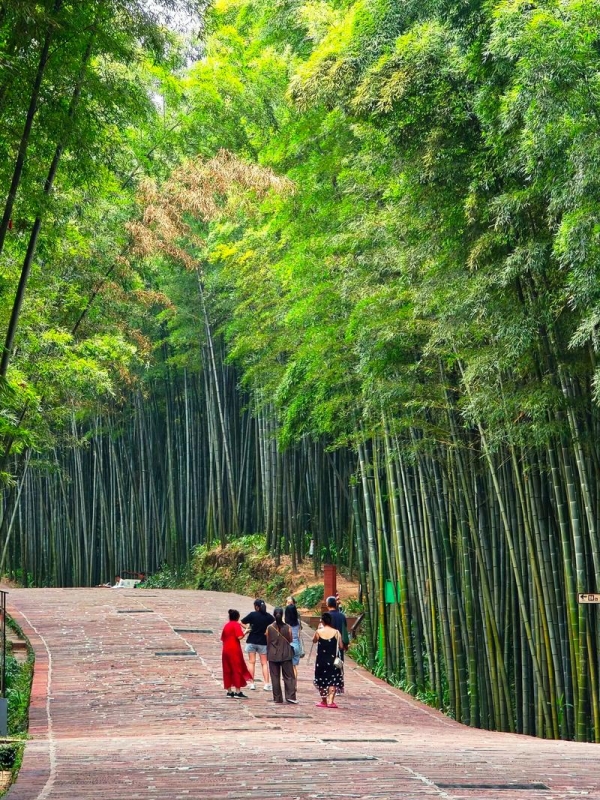
Heizhugou (Black Bamboo Gully)—a mountain scenic area in Ebian Yi Autonomous County, about three hours from Leshan by car. Winter snow brings most visitors; the gully transforms into a quiet white landscape that contrasts with the subtropical city below. Summer brings green bamboo and cooler mountain air.
Beifeng Mountain in Ebian—a 5,123-step staircase climb to the summit, featured in local coverage as a half-day or full-day physical challenge. The stairway is steep and continuous; fitness footwear and water are essential. Laoxiao Peak—a free-to-visit cultural and nature site in the Leshan area, described in local sources as a quieter alternative to the main Buddha circuit.
Getting to Leshan from Chengdu
High-speed rail is the clear choice for an independent day trip. Trains depart Chengdu South and Chengdu East multiple times per day, and tickets are bookable in advance on Trip.com using an international card. Same-day tickets are usually available at station counters, though advance booking is recommended during Chinese public holidays. Coaches from Xinnanmen Bus Station remain a viable budget option, running roughly every 30 minutes, but the train is faster and more comfortable. Private car charters and organized day tours make sense for groups of four or more, or for visitors who want a guide on site and prefer not to navigate the taxi haggling at Leshan Station.
Planning Your Visit
When to Go
Spring from March through May and autumn from September through November represent the best windows for a Leshan visit. During these months, daytime temperatures hover in the comfortable 18–25 °C range, visibility across the river confluence is generally clear, and the crowds at the Buddha site are manageable compared to the school holiday surges. The Leshan climate is subtropical monsoon—summers are hot and humid with rainfall concentrated between June and August, and the river mists that roll through the canyon in winter can obscure the Buddha's upper half from the water view.
Arriving at the scenic-area gate before 10:00 is the single most effective strategy for avoiding congestion. The Buddha stairway, which accommodates only single-file traffic in places, becomes genuinely slow during the 10:00–14:00 window when tour groups from Chengdu and beyond peak. The river-boat cruise, by contrast, is better in mid-afternoon, when the water surface is calm and the afternoon light illuminates the stone face from the front.
Where to Stay
Most visitors tackle Leshan as a day trip from Chengdu and do not require an overnight. For those adding Mount Emei or arriving late, the central Shizhong District of Leshan city offers the closest accommodation to the Buddha scenic area. Budget chain hotels run approximately $20–30 per night (¥140–210), mid-range options in the $40–80 range (¥280–560), and the Grand New Century Hotel in central Shizhong District occupies the upper end of the local market. All major booking platforms with international card support—Trip.com and Booking.com—list Leshan properties. Mount Emei's temple hotels, clustered around Baoguo Temple at the mountain's base, serve visitors pursuing the overnight summit-sunrise itinerary and require a separate reservation.
Frequently Asked Questions
Q: How long does it take to visit Leshan Giant Buddha?
Plan for 2–3 hours to cover the main scenic area—Lingyun Temple, the Buddha stairway descent, and the Anlan bridge. Adding the river-boat cruise brings the minimum to around 3–4 hours. Visitors who want to include Wuyou Temple or the Mahao Cliff Tomb should allow a full half-day or more.
Q: Is one day enough for Leshan from Chengdu?
Yes, a single day comfortably covers the Buddha site, one nearby stop, and a meal. The high-speed rail cuts the one-way journey to roughly one hour, leaving several hours on site. Do not attempt to combine Mount Emei with Leshan in the same day—that combination requires its own overnight and a minimum of two full days.
Q: What is the best way to get from Chengdu to Leshan?
The high-speed rail from Chengdu South or Chengdu East to Leshan Station is the fastest and most comfortable option. Second-class fares start around $8 (¥54) and the journey takes approximately one hour. A taxi from Leshan Station to the scenic-area gate adds roughly $3–4 (¥20–25) and ten minutes. Organized day tours from Chengdu, at around $70–110 per person, are a practical alternative for visitors who prefer not to handle the train and taxi connections independently.
Q: How much does Leshan Giant Buddha cost?
Main scenic-area admission is about $14 (¥80) per person. Sub-tickets add Wuyou Temple at roughly $7 (¥50) and the Mahao Cliff Tomb at about $4 (¥30). The river-boat cruise runs around $10 (¥70). Combo tickets and English-language booking are available on Trip.com and Klook.
Q: Can you see the Buddha from the river?
Yes—the Wangyuhang river boat departs from the dock below the Buddha site and provides the only vantage point where the full 71-meter statue fits in a single frame. Cruises run roughly every 30 minutes during the operating season. Tickets cost about $10 (¥70) per person.
Q: What food is Leshan known for?
Bobo Chicken (cold chili-oil chicken skewers), Qiaojiao Nai (herbal beef offal hotpot), and Doufu Nao (savory tofu pudding) are the most recognized Leshan signatures. Cold Diced Chicken (Bai Zai Ji) and sweet rice crunch snacks also appear frequently on local menus. The Starlight Night Market and the old-town streets around the Buddha scenic-area gate are the two most accessible eating zones for visitors.
Q: When is the best time to visit Leshan?
March through May and September through November offer the most reliable weather, clearest visibility for the Buddha views, and the smallest crowds of the year. Summer brings heat, rain, and Chinese school holiday volumes. Winter is quiet but fog can reduce visibility from the river, and some facilities operate reduced hours.