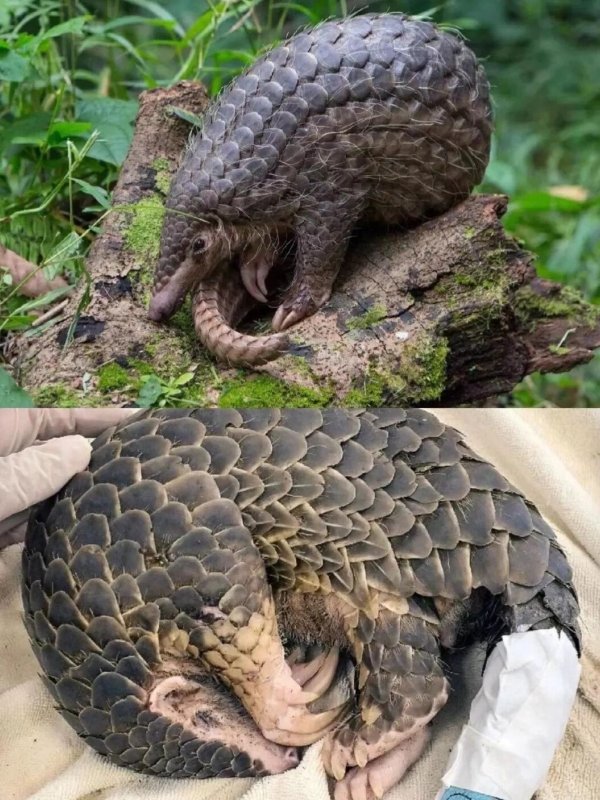
Pangolins in Shunan China Bamboo Forest
Short answer: Chinese pangolins historically ranged across southern Sichuan, including the area around the Shunan Bamboo Forest — the location behind the common question are there pangolins in shunan china bamboo forest — but the species is now critically endangered and almost never seen by visitors. This guide gives foreign travelers the species science—identification, status, behavior—along with the practical reality of wildlife viewing here: which animals are actually visible on the trails, how to reach the forest from Chengdu or Chongqing, and the etiquette that keeps the animals safe. Anyone planning a trip for a guaranteed pangolin sighting should look elsewhere; visitors interested in the broader bamboo ecosystem and its rare inhabitants will find the answer below.
Quick Facts
Are Pangolins Found in Shunan Bamboo Forest?
The Chinese pangolin (Manis pentadactyla) once ranged across much of southern China, and southern Sichuan falls squarely within its documented historical distribution. The Changning County area around the bamboo forest sits inside that range. However, populations have collapsed since the late twentieth century, and confirmed modern records from the bamboo sea itself are vanishingly rare. The forest's near-monoculture of even-aged bamboo is not ideal pangolin habitat. These animals need mixed forest with leaf litter and active ant or termite colonies for foraging — conditions the uniform bamboo canopy does not provide.
In practice, almost every contemporary confirmation of the species across its range comes from camera traps, confiscated trade specimens, or reports from forest workers rather than tourist sightings. Visitors should plan for the possibility of never seeing a pangolin here, even on a well-guided walk.
The Short Answer
Pangolins are historically present in the broader Yibin and southern Sichuan region. They are functionally absent from the bamboo sea interior today. No visitor should count on a sighting, and anyone organizing a trip specifically to see one will be disappointed.
🐼 Seek Out More Famous Sichuan Wildlife: While spotting a wild, critically endangered pangolin in the bamboo thickets is incredibly rare, you can enjoy a guaranteed and unforgettable encounter with Sichuan's most famous black-and-white residents nearby. Plan your trip with our visitor's guide to the Chengdu Panda Park.
The Chinese Pangolin: Species at a Glance
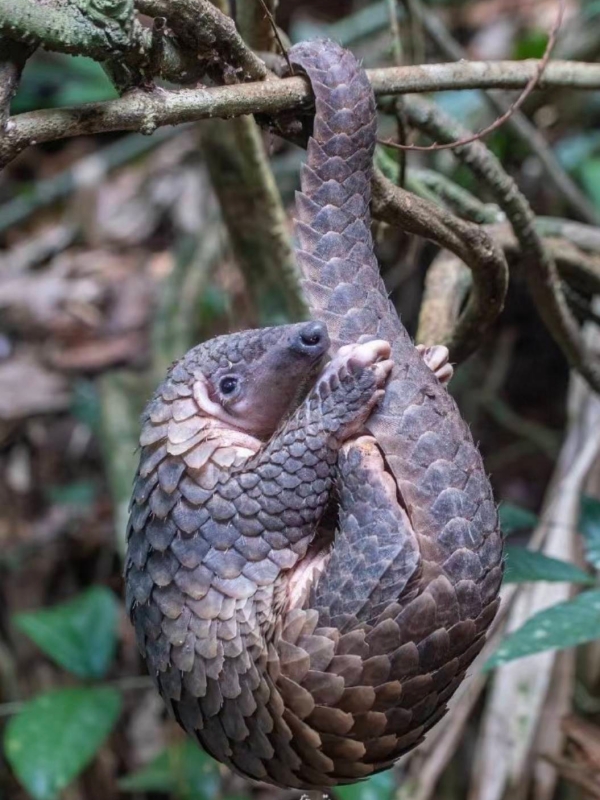
Pangolins in Shunan China Bamboo Forest
The Chinese pangolin — 穿山甲 (chuān shān jiǎ) in Mandarin — is one of eight pangolin species worldwide and the only one native to mainland China. Adults reach 40–58 cm in body length, with a tail adding another 25–38 cm. Weight ranges from roughly 2 to 7 kg. The animal's most distinctive feature is the full coat of overlapping keratin scales covering the back, sides, limbs, and tail; the same material as human fingernails. The belly and inner surfaces remain bare. A small head, tubular snout, and long prehensile tail complete the profile.
Its diet is strictly myrmecophagous — ants and termites, nothing else. The animal uses its powerful claws to tear open nests and mounds, then collects prey with a remarkably long, sticky tongue. When threatened, the response is instinctive and complete: the pangolin curls into a near-impenetrable ball.
Identification and Range
Dark brown to yellowish overlapping scales, a slender prehensile tail capable of gripping branches, and a tubular snout distinguish the Chinese pangolin from other mammals in the forest. The mainland subspecies (M. p. pentadactyla) ranges across Sichuan, Yunnan, Guangdong, Guangxi, Fujian, Zhejiang, Jiangsu, Hunan, Guizhou, and Taiwan. The Hainan Island subspecies (M. p. pusilla) is more restricted and genetically distinct. Southern Sichuan falls within the mainland clade's range.
Conservation Status
The Chinese pangolin holds IUCN Red List status of Critically Endangered, a designation it shares with its three Asian cousins. It appears on CITES Appendix I, which bans international commercial trade, and China lists it as a national first-class protected wild animal (国家一级保护动物). Domestic commercial trade became illegal in 2020. Poaching for scales and meat — driven by demand in traditional medicine — remains the primary threat alongside habitat loss. Officially listed as 95% decline in some assessments, though other published figures give 99.1% — both figures appear in credible literature.
Where They Hide and Why They're Hard to See
The Chinese pangolin is strictly nocturnal and entirely solitary outside mating. Daylight hours are spent underground in self-dug burrows or repurposed cavities. The species needs mixed forest with decomposing wood and soil mounds, where ant and termite colonies thrive. It forages by scent rather than sight, tearing into mounds with foreclaws and probing tunnels with its tongue.
The Shunan Bamboo Forest, by contrast, is dominated by vast stands of even-aged bamboo with little undergrowth, minimal leaf litter, and few soil mounds. The continuous canopy also limits the ant and termite activity pangolins depend on. These structural differences explain why the bamboo sea itself was never prime pangolin territory — even when the species was more abundant in the region.
Habitat and Behavior
Burrow-digging, ant and termite foraging, and solitary nocturnal activity define the species. A pangolin needs ground with workable soil, abundant insect prey, and overhead cover that conceals it from daytime predators. Dense, uniform bamboo does not deliver all three simultaneously.
Why Direct Sightings Are Rare
Severe population decline from decades of poaching has pushed the species into deeper forest, further from tourist trails. Its nocturnal habits, cryptic camouflage against forest-floor debris, and instinctive flight response mean that almost every modern record comes from camera traps or confiscated animals, not human encounters. Sightings by visitors anywhere in China are extraordinary events, not realistic expectations.
What You Will Actually See in the Forest
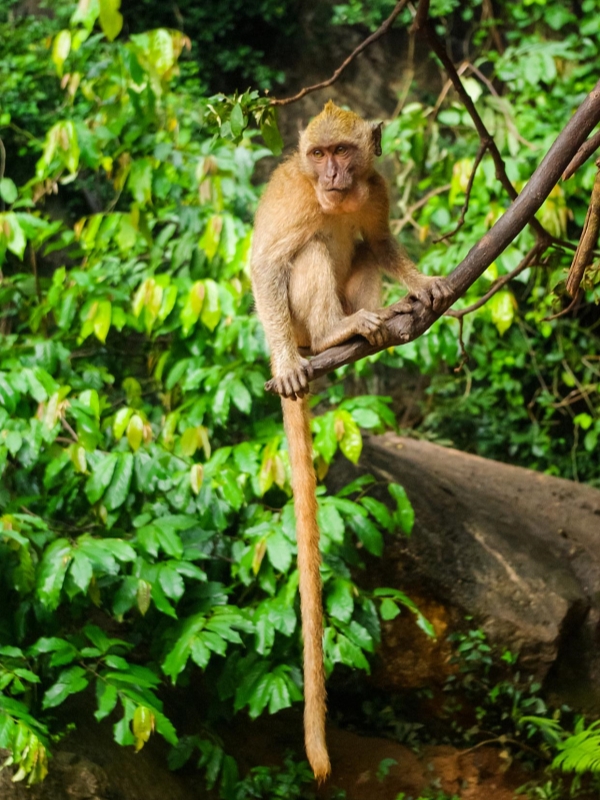
Wildlife in Forest
The forest rewards visitors who shift their focus. Bamboo rats move along the forest floor at dawn and dusk. Red-billed blue magpies flash blue and white through the canopy. Various pheasant species — including the rare white eared-pheasant — scratch for food in more open sections. Rhesus macaques range through the mid-elevation zones. Bamboo-specialist insects are abundant, and the forest floor supports a diverse community of ground-dwelling invertebrates that drives the broader food web.
Visitors should also note that giant pandas inhabit the southern Sichuan region broadly, but the bamboo sea itself is not a reliable panda site. Pandas require the specific bamboo species and altitudes found in dedicated reserves; the Shunan forest sits at a lower elevation and is managed as a scenic area. Panda viewing requires a separate itinerary — either the Chengdu Research Base of Giant Panda Breeding or the Bifengxia Panda Base near Ya'an — rather than a walk through the bamboo trails here.
More Observable Wildlife
Bamboo rats, pheasants, magpies, and macaques are far more likely than any pangolin. The 124 named sub-spots within the scenic area — including Heaven King Temple, Cloud Viewing Pavilion, and Seven Color Waterfall — offer varied terrain that attracts different species at different times of day. Early morning walks along the lower trails give the best chance of spotting the more visible mammals and birds.
Planning a Wildlife Visit to Shunan
Getting to the forest requires a two-stage journey from either Chengdu or Chongqing. High-speed rail connects both cities to Yibin in roughly 1.5 to 2 hours. A short transfer by intercity bus or taxi covers the remaining hour to Changning County and the scenic area entrance. The rail fare and bus cost are moderate, making this a viable day trip from either hub.
Tickets, Hours, and Best Season
Wildlife-Viewing Etiquette
The forest supports a fragile ecosystem. Visitors play a direct role in keeping it intact.
- Stay on marked trails: Off-trail walking damages undergrowth that ground-dwelling species depend on.
- No flash photography: Bright light startles animals and disrupts natural behavior.
- Never feed or handle wildlife: Food rewards alter natural foraging and can cause illness in wild animals.
- Do not approach pangolins, snakes, or large mammals: Retreat immediately and report any encounter to scenic-area staff.
- Hire a registered local guide: Guides trained in wildlife walks know the signs of animal activity and can position visitors without disturbing it.
- Pack out all litter: No food packaging, bottles, or waste should remain in the forest.
Frequently Asked Questions
Q: Are there pangolins in Shunan China bamboo forest today?
Southern Sichuan falls within the Chinese pangolin's historical range, so the species was once present in the broader Yibin region. Modern confirmed records from the bamboo sea interior itself are extremely rare, and visitors should treat pangolins as historically present rather than reliably observable wildlife today.
Q: Can tourists actually see a pangolin in the wild here?
Realistically, no. The species is nocturnal, solitary, and severely depleted across its range. Almost all tourist "sightings" worldwide involve rescued animals at licensed sanctuaries, not wild encounters. Plan the trip around bamboo-forest scenery and abundant birdlife, not a guaranteed pangolin encounter.
Q: Is the Chinese pangolin protected by law?
Yes. The species is listed as a national first-class protected wild animal (国家一级保护动物) under Chinese wildlife protection law, appears on CITES Appendix I, and holds IUCN Red List status of Critically Endangered. Hunting, trade, and consumption are illegal and actively prosecuted.
Q: When is the best time to visit Shunan for wildlife?
April through May and September through October offer the strongest conditions. Spring brings new bamboo shoots and active birdlife; autumn has cool, clear weather and fewer visitors. July and August bring the heaviest crowds and the heaviest rain, which suppresses wildlife activity and creates slippery trail conditions.
Q: Do visitors see giant pandas inside the bamboo sea itself?
Not generally. Pandas inhabit the broader southern Sichuan region and dedicated research bases; the Shunan bamboo sea is not a reliable panda-viewing site. Plan a separate day at a panda base such as the Chengdu Research Base of Giant Panda Breeding or Bifengxia near Ya'an if panda viewing is the priority.
Q: What is the difference between Chinese and Sunda pangolin?
The Chinese pangolin (Manis pentadactyla) is the only pangolin species native to mainland China, with darker overlapping keratin scales and a relatively long prehensile tail. The Sunda pangolin (Manis javanica) lives in Southeast Asia, is smaller and paler, and has a different scale pattern. Any pangolin a visitor might theoretically encounter in Sichuan is the Chinese pangolin.
Q: How do I get from Chengdu or Chongqing to the forest?
High-speed rail to Yibin from either city takes roughly 1.5 to 2 hours. Transfer by intercity bus or taxi to Changning County adds about one hour. Total journey time makes the forest comfortable as a day trip or overnight stay from either hub.