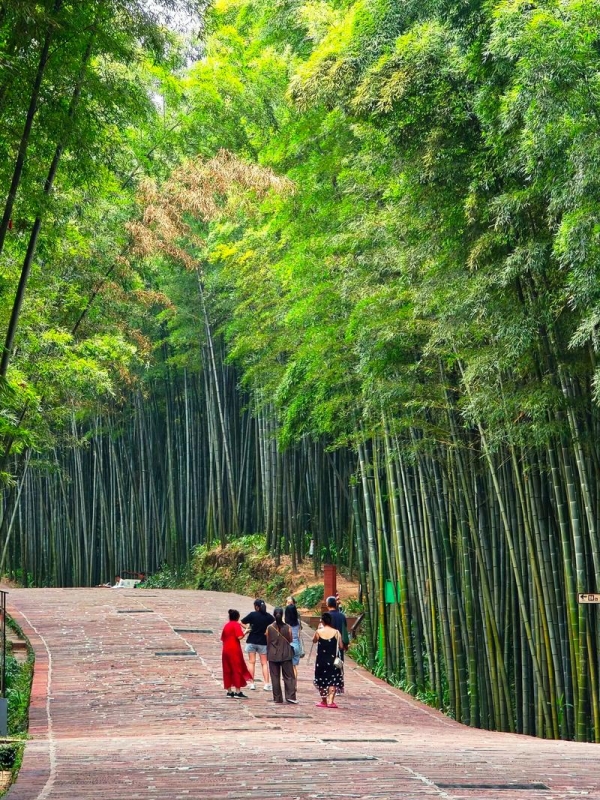
Shunan Bamboo Forest on Map
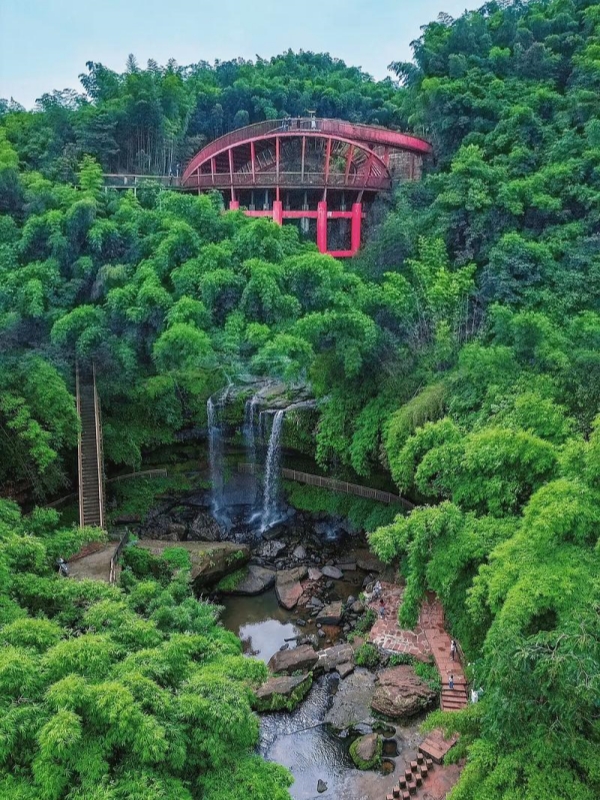
Sichuan's Shunan Bamboo Forest on map spreads across 120 square kilometers of Changning County, making it one of the largest bamboo expanses in China. Visitors come for the sea-of-green canopy views from Wangyun Lou, the karst formations at Xianyu Cave, and the tumbling Qicai Waterfall at the southern end of the park. The scenic area sits roughly 80 kilometers southeast of Yibin city, reachable by high-speed rail from Chengdu in under two hours. This guide walks through the official map layout zone by zone, the hiking routes that connect them, and every practical detail foreign visitors need to plan a smooth trip.
Quick Facts
Where Shunan Bamboo Forest Sits on the Map
Shunan Bamboo Forest on Map
The park occupies Changning County and Jiang'an County on the southeastern edge of Yibin Prefecture. From Chengdu, it lies roughly 280 kilometers south — about a 1.5-hour drive from the city center once you reach Yibin. The scenic area sits between the Yangtze River corridor to the north and the Sichuan–Yunnan border highlands to the south.
Most foreign visitors route through Chengdu first. The most convenient path involves taking a high-speed train from Chengdu East Railway Station to Yibin Station — second-class fares run about $35–45 (¥250–320) for a 1.5-to-2-hour journey. From Yibin Station, travelers transfer to an intercity bus or catch a weekend tourist coach to the West Gate. Those who prefer more control can arrange a Didi or taxi for roughly $40–55 (¥280–400) for the 1.5-hour drive. Self-drive is the most flexible option for visitors comfortable navigating rural Sichuan highways.
🐼 Discover Sichuan's Wildlife Sanctuaries: Beyond its vast bamboo groves, Sichuan Province is world-famous as the primary native sanctuary for giant pandas. Locate the top conservation bases across the region using our Map of Panda.
The Shunan Bamboo Forest Map: Zones, Attractions & Trails
Shunan Bamboo Forest on Map
The official scenic-area map divides the 120-square-kilometer expanse into six functional zones. Each zone centers on one or two signature attractions, linked by hiking paths and an outer-ring sightseeing-bus loop. Understanding the zone layout helps visitors decide where to spend time based on their interests — whether that means summit views, cave exploration, temple visits, or waterfall circuits.
Reading the Bamboo Forest Map
The park's layout follows a roughly north-south spine running from the West Gate at Tianbao Village down to the Qicai Waterfall zone in the south. An east-west corridor connects the Yongxing Temple ridge on the eastern side to the Hundred Flowers Slope on the western side. The sightseeing-bus loop traces the outer perimeter road, while the inner zones are reserved for foot traffic. This separation keeps the bamboo groves quieter and the bus routes efficient. The official site publishes an interactive map that labels each attraction individually — worth downloading before arrival since mobile signal can be patchy inside the forest.
Major Attractions by Zone
Hiking Routes on the Map
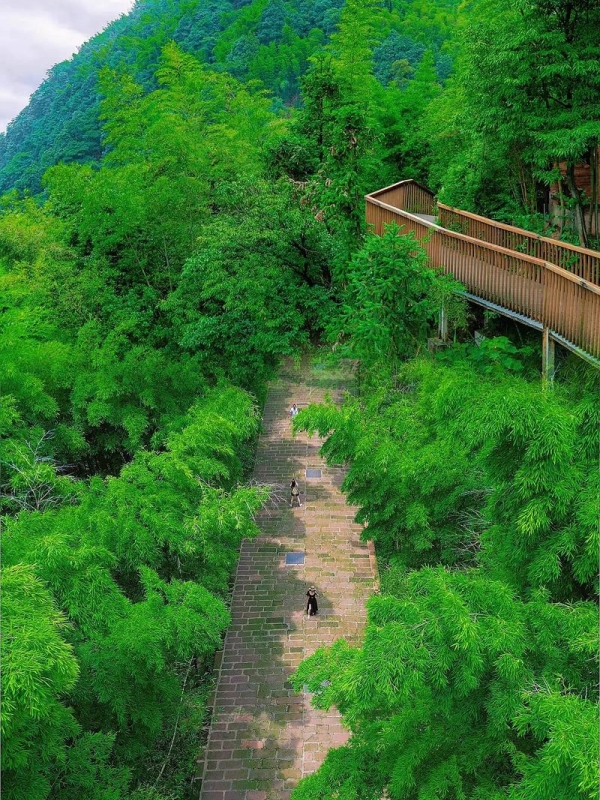
Three named routes cover the core footpaths. Route A runs from West Gate to Xianyu Cave — about 6 kilometers one-way on a mostly paved surface, taking 2–3 hours at a moderate pace. Route B links the central zone to the Wangyun Lou summit — roughly 3 kilometers of stone steps and boardwalk with a steady climb. Then, route C descends from West Gate to Qicai Waterfall over about 5 kilometers, threading through dense bamboo groves. Short connector trails also link Yongxing Temple to the eastern ridge area. Trailhead signage at these junctions is Chinese-only, so downloading an offline map beforehand is advisable.
Cable Cars & Scenic Walkways
The main cable car ferries visitors up to the Wangyun Lou summit in about 10 minutes, saving roughly 45 minutes of step climbing. One-way fares are about $7 (¥50). A secondary cable car or elevator serves the western flower belt zone. Throughout the park, elevated boardwalks — marketed on the official site as "colored cloud walkways" — cross several valleys. These narrow-gauge platforms provide close-canopy views that the standard footpaths miss.
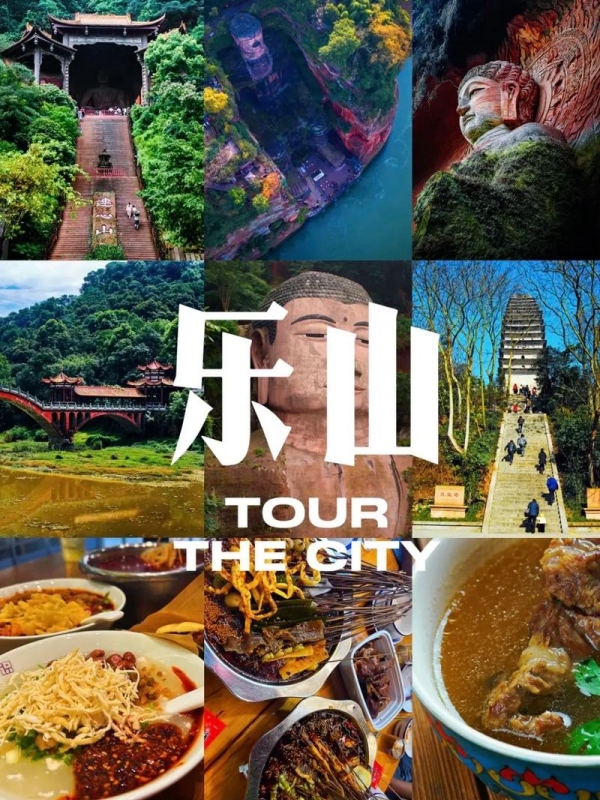
⛰️ Explore Nearby Sichuan Destinations: If you are building a broader itinerary through southern Sichuan, pair your peaceful forest hike with a visit to the world's largest carved stone Buddha statue. Plan your trip with our guide to Leshan, Sichuan.
Where to Eat and Stay Near the Bamboo Forest
Shunan Bamboo Forest on Map
Most dining options cluster around the West Gate area. Bamboo-shoot hotpot is the local specialty — fresh shoots sliced thin and cooked in a rich broth with Sichuan peppercorns. Whole-bamboo-tube rice (竹筒饭) is another regional dish, with glutinous rice steamed inside a hollow bamboo segment. River fish from local streams, prepared Sichuan-style with chili and garlic, appears on many menus. A sit-down meal costs roughly $7–14 (¥50–100) per person depending on the restaurant tier.
Yibin city itself is worth a stop for Yibin burning noodles (宜宾燃面) — a dry noodle dish with a distinctive chili-oil base. Many travelers save this for their arrival or departure day if staying overnight in the city.
For lodging, a small selection of bamboo-themed homestays operates inside the scenic area near the West Gate, typically charging $45–70 (¥320–500) per night. These range from simple guesthouses to more polished lodges with forest-facing rooms. The broader choice at lower rates is in Changning town, about a 15-minute drive from the West Gate, where mid-range hotels run $35–55 (¥250–400) per night. Booking through Trip.com or Klook works with foreign credit cards for both homestay and hotel options.
Getting Around Inside: Sightseeing Buses & Gates
The scenic area operates two fixed-loop sightseeing-bus lines. Line 1 connects West Gate through the central zone to the Wangyun Lou cable-car base. Line 2 runs from West Gate south to the waterfall zone and over to Yongxing Temple. Buses run roughly from 08:30 to 17:00 daily and are included in the combo ticket. The bus-only combo costs about $21–28 (¥150–198) and is the practical default for visitors covering multiple zones.
The West Gate (Tianbao Village) serves as the principal entrance, with the largest parking area and bus terminal. An East Gate also exists but handles far less traffic and is rarely used by foreign visitors. Private vehicles and taxis cannot enter the inner scenic area — the bus or footpaths are the only options once past the gate.
Tickets, Opening Hours & Best Time to Visit
General admission alone costs about $14–17 (¥100–120). The most popular option for first-time visitors is the sightseeing-bus combo at about $28–35 (¥198–248), which bundles entry with unlimited bus rides on the loop lines. The Wangyun Lou cable car costs an additional $7 (¥50) one-way and is purchased separately at the cable-car base. Foreign credit cards work on Trip.com and Klook, but the official WeChat mini-program requires a mainland phone number and Alipay or WeChat Pay — not practical for most international visitors.
The park opens daily from 08:30 to 17:30, with last entry around 16:30. It closes only on days of severe weather. April through June brings fresh bamboo shoots and mild temperatures, making it the peak season. September and October offer clear skies and autumn light with fewer storms. Chinese national holidays — particularly May 1 and October 1 — draw enormous day-tripper crowds from Chengdu and surrounding cities. Visiting mid-week outside these windows gives the best balance of conditions and lower foot traffic.
Frequently Asked Questions
Q: How do I get from Yibin to Shunan Bamboo Forest?
The most common route is high-speed rail from Chengdu to Yibin (about $35–45 / ¥250–320 second class, 1.5–2 hours), then an intercity bus from Yibin Nanxi Station to the West Gate (~$4–7 / ¥30–50, roughly 2 hours). Weekend tourist coaches run more frequently. A Didi or taxi from Yibin city costs roughly $40–55 (¥280–400) for the 1.5-hour drive. Self-driving is the most flexible option for visitors with a rental car.
Q: How long should I spend at Shunan Bamboo Forest?
One full day covers the bus loop with three to four main stops — the West Gate cluster, Wangyun Lou, one waterfall zone, and Yongxing Temple. An overnight stay lets you add an early-morning summit visit before the buses fill up, plus the night-lighted bamboo paths near the West Gate entrance area.
Q: When is the best season to visit?
April through June delivers fresh bamboo shoots, vivid green canopy, and mild daytime temperatures. September and October bring clearer air and autumn light without the storm risk of summer. Avoid May 1 and October 1 national holidays — the crowds can double or triple wait times at the cable car and bus stops. Summer heat is manageable because the bamboo canopy shades the main trails.
Q: Can foreign visitors hike the bamboo forest on their own?
Yes, independent hiking is feasible. Trail signage is Chinese-only, so download an offline map before arriving. The West Gate to Xianyu Cave route and the West Gate to Qicai Waterfall route are the two most straightforward options for self-guided walkers. The Wangyun Lou ascent follows a clear stepped path with no branching — easy to navigate without Chinese.
Q: Is the Sea-viewing Tower (Wangyun Lou) worth the climb?
The tower sits at roughly 1,000 meters elevation and offers the highest viewing platform in the scenic area — a near-360° sweep over 120 square kilometers of bamboo canopy. The summit is about 600 steps from the cable-car drop-off point, or roughly 45 minutes of climbing from the base. Early mornings tend to have the clearest views. The cable car round-trip costs about $14 (¥100) and is the practical choice if time is tight.
Q: Are there hotels actually inside the bamboo forest?
A limited number of bamboo-themed homestays operate within the scenic area near the West Gate, charging roughly $45–70 (¥320–500) per night. Most foreign visitors prefer the wider hotel selection in Changning town, a 15-minute drive away, where rates run $35–55 (¥250–400) for comparable comfort.
Q: How does Shunan compare to Mogan Mountain or Anji bamboo forests?
Shunan is significantly larger — about 120 square kilometers versus the smaller, more cultivated groves around Anji in Zhejiang. The landscape is flatter and more dramatic, with cable cars and a bus loop rather than dedicated long-distance hiking trails. Mogan Mountain in Zhejiang functions more as a cool-summer resort where bamboo forms a scenic backdrop rather than the primary draw. Shunan delivers the "sea of bamboo" experience at a scale the other two cannot match.
Q: Can I book tickets in English before arriving?
Yes. Both Trip.com and Klook list combo tickets for Shunan Bamboo Forest with foreign credit-card payment available. The scenic area's official WeChat mini-program requires a mainland Chinese phone number and domestic payment apps, which most foreign visitors do not have set up. Booking online in advance is advisable during peak season (April–June and September–October) to secure entry slots.