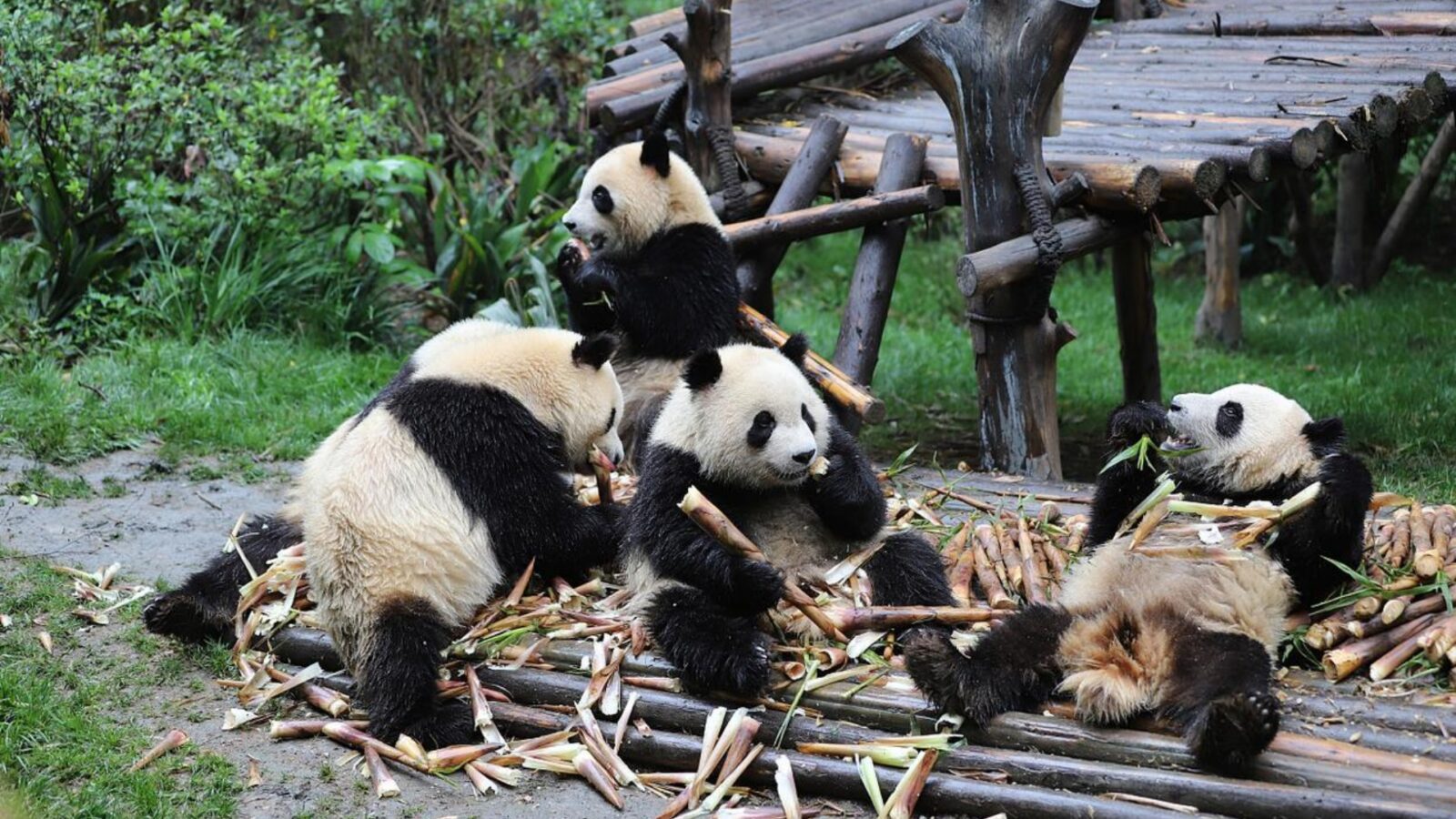
Map of Panda in China
Giant pandas inhabit a fragmented mountain landscape spanning three provinces in China, while red pandas range across a broader Himalayan and Hengduan band. The UNESCO-listed Sichuan Giant Panda Sanctuaries and the Chengdu Research Base of Giant Panda Breeding anchor most visitor itineraries. This guide maps every major giant panda habitat and red panda zone, ranks the four most accessible bases near Chengdu by travel time and cost, and covers transport, tickets, and the best viewing windows so foreign visitors can plan a focused trip without wading through generic content.
Quick Facts
Where Giant Pandas Live in China
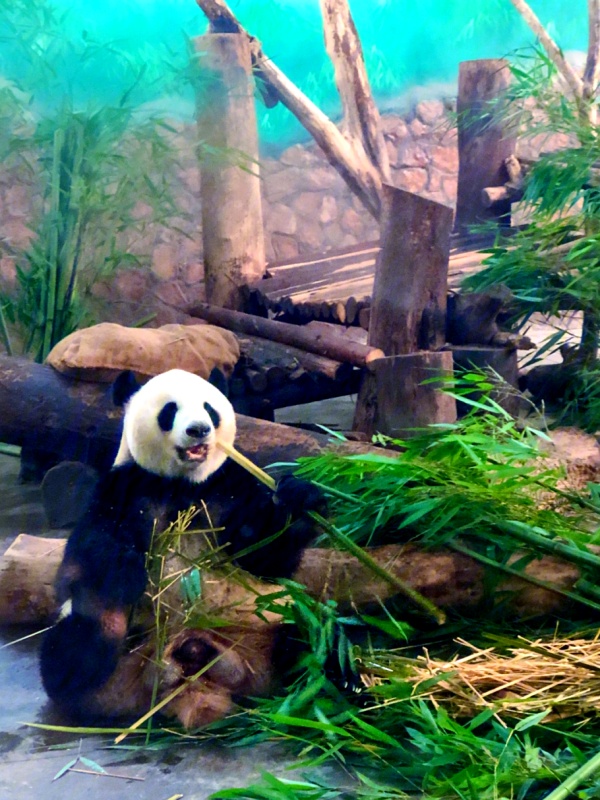
Map of Panda in China
Wild giant pandas today occupy roughly six disconnected mountain patches in three provinces. The core range is the Sichuan Giant Panda Sanctuaries — a continuous block of Wolong, Mt Siguniangshan, and the Jiajin Mountains. A separate Qinling subspecies lives in southern Shaanxi, and a small fragment persists in southern Gansu. The 2015 national survey counted 1,864 wild pandas, the highest total since records began.
Wild Range and the Sichuan Giant Panda Sanctuaries
Wolong, Mt Siguniangshan, and the Jiajin Mountains form the global stronghold for giant pandas. These three reserves together cover 924,500 hectares, with a further 527,100-hectare buffer zone. UNESCO inscribed the property in 2006 under criterion x (biodiversity). The habitat is mixed subalpine bamboo forest between roughly 1,500 and 3,400 meters. Pandas here live alongside over 100 other threatened species, including the snow leopard and takin.
Panda Populations Outside Sichuan
A genetically distinct Qinling subspecies (A. m. qinlingensis) occupies the Qinling Mountains in southern Shaanxi. This population lives at roughly 1,000–2,000 meters. Notably, the Qinling pandas display brown-and-white rather than black-and-white pelage. A small transboundary population also persists in southern Gansu along the Bailongjiang and Tao River catchments.
🐼 Discover Famous Panda Names & Meanings: Before visiting the breeding bases near Chengdu, learn how giant pandas get their double-character names and explore famous residents in our guide to Chinese Panda Names.
Top Panda Bases to Visit
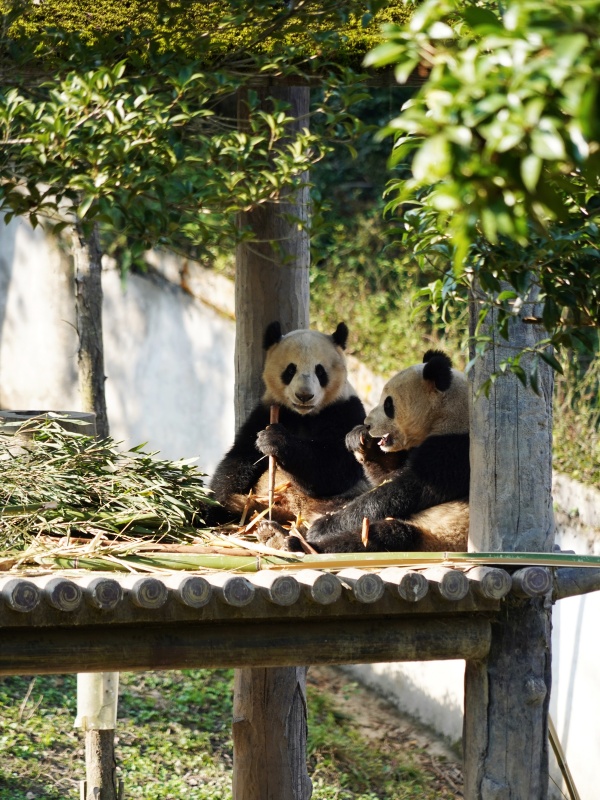
Map of Panda in China
Four visitor-facing giant panda bases cluster within roughly four hours of Chengdu. Chengdu Research Base and Dujiangyan Panda Base suit day trips from the city. Bifengxia and Wolong reward an overnight stay. Each base combines captive viewing with a conservation or research role.
Chengdu Research Base of Giant Panda Breeding
Founded in 1987 in Chengdu's Chenghua District, this is the closest base to the city center — roughly 10 kilometers or 30 minutes by Metro Line 3 from Tianfu Square. The base operates as both a breeding center and research facility. Entry costs about $7 (¥55). Timed entry applies; morning visits from 07:30 to 09:30 offer the most active panda behavior, as feeding happens during this window.
🐼 Plan Your Morning Visit: To ensure you secure a timed entry ticket for the peak morning feeding window and navigate the base smoothly from Metro Line 3, check out our comprehensive visitor's guide to the Chengdu Panda Park.
Bifengxia Panda Base
About 150 kilometers west of Chengdu in Ya'an, Bifengxia relocated from Wolong after the 2008 earthquake. The base sits inside a broader panda-themed scenic area. On-site facilities include the 2008 Earthquake Museum. Entry runs about $10 (¥68). An overnight stay in Ya'an works well, as the drive from Chengdu takes roughly three hours one-way.
Wolong Panda Center
The Shenshuping facility in Wolong National Nature Reserve lies roughly 120 kilometers from Chengdu. This post-earthquake center is the closest base to a wild panda population. Entry costs about $7 (¥50). The reserve sits at 1,800–4,000 meters elevation, so weather differs sharply from Chengdu — dress warmer, especially in winter.
Dujiangyan Panda Base
Dujiangyan city lies about 70 kilometers northwest of Chengdu. This base offers half-day "volunteer and keeper" experiences alongside standard viewing. Standard entry runs about $6 (¥40). Volunteer programs cost several hundred USD per session and require advance booking. The base is the closest to the Qingcheng Mountains UNESCO site, making it easy to combine with a mountain visit.
Red Panda Habitat and Range
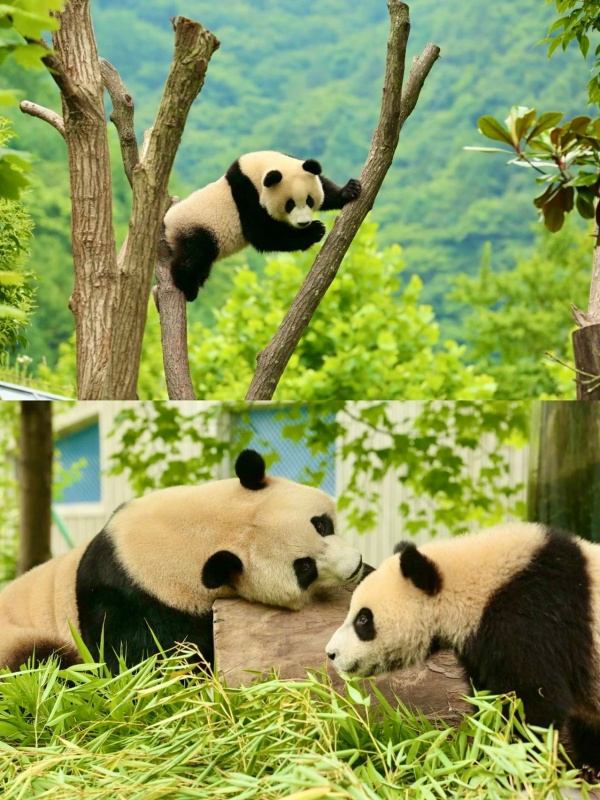
Map of Panda in China
The red panda (Ailurus fulgens) inhabits a discontinuous band across the Himalayas and Hengduan Mountains. Outside China, the range covers Nepal, Bhutan, northern India, and northern Myanmar. Within China, populations span Sichuan, Yunnan, and the Tibet Autonomous Region. Habitat is cool broadleaf and bamboo forest between roughly 2,200 and 4,800 meters elevation. The species is classified Endangered by the IUCN (2015 assessment, reaffirmed 2018), with an estimated global population under 10,000 mature individuals.
Foreign visitors can see red pandas at several Chinese zoos. Chengdu Zoo and Yunnan Safari Park both display the species. Red pandas do not appear on regular public display at the Chengdu Research Base. Sightings at Wolong and Mt Siguniangshan are possible but not guaranteed, as these are wild or semi-wild environments rather than dedicated exhibit spaces.
- Chengdu Zoo: red panda exhibit, city-center location
- Yunnan Safari Park: red panda enclosure, Kunming area
- Wolong / Mt Siguniangshan: possible sightings, not guaranteed
Planning Your Panda Trip
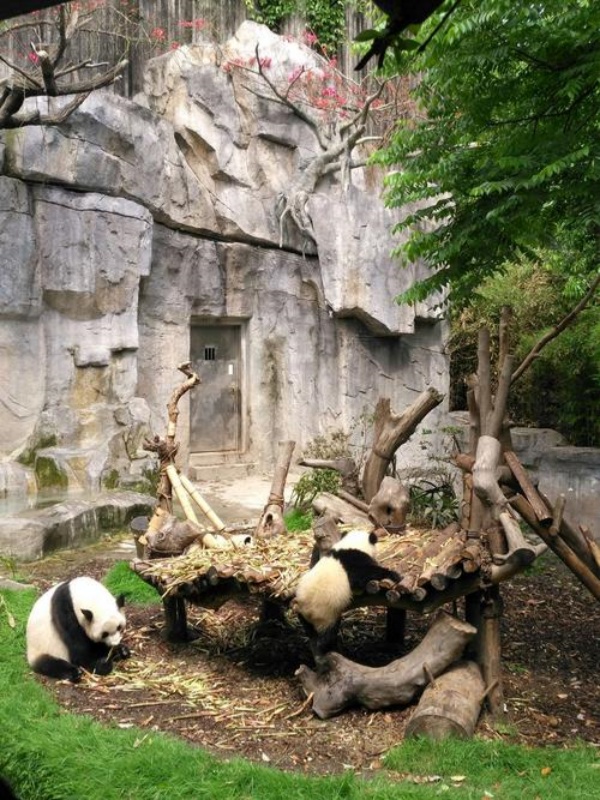
Map of Panda in China
From central Chengdu, three bases (Chengdu Research Base, Dujiangyan, Wolong) are reachable by car within 1.5–3 hours. Bifengxia requires roughly three hours one-way and usually needs an overnight in Ya'an. Metro and taxi work for Chengdu base, high-speed rail plus transfer for Dujiangyan, and pre-booked private car or tourist shuttle for Wolong and Bifengxia. Foreign-payment-friendly booking channels are Trip.com and Klook; cash on-site is increasingly uncommon.
Getting to the Panda Bases
Chengdu Research Base connects via Metro Line 3 — alight at "Panda Avenue" station and walk roughly 10 minutes (about $0.50 / ¥3 by metro). A taxi from Tianfu Square costs roughly $10 (¥70) for the 30-minute ride. For Dujiangyan Panda Base, take the high-speed rail from Chengdu-Xipu to Dujiangyan (roughly 30 minutes, a few USD per ticket) and then a short taxi. Wolong and Bifengxia both require a pre-booked private car or tourist shuttle from Chengdu — public buses exist but run infrequently and slowly.
Tickets and Opening Hours
Best Time to See Pandas in China
March through May and September through November are the two best windows. During these periods, weather is cool and dry, and pandas tend to spend more time outdoors. July and August bring humidity and heat — pandas rest indoors for long stretches. December through February is cold and often snowy at Wolong, which can limit outdoor viewing.
Within a single day, the most active viewing period at Chengdu Research Base is 07:30 to 09:30, when the pandas receive their morning feed. The "kindergarten" enclosure with cubs is most reliably populated from late summer through autumn, though year-round cubs may be visible since births are spread across several weeks.
Frequently Asked Questions
Q: Where do giant pandas live in the wild?
Giant pandas live in three main range blocks: the Sichuan Giant Panda Sanctuaries (Wolong, Mt Siguniangshan, Jiajin Mountains) inscribed by UNESCO in 2006, the Qinling Mountains in southern Shaanxi, and a small fragment in southern Gansu. The total wild population stands at roughly 1,864 individuals based on the 2015 national survey released in 2017.
Q: Where do red pandas live?
Red pandas range across a Himalayan and Hengduan band — Nepal, Bhutan, northern India, northern Myanmar, and in China across Sichuan, Yunnan, and the Tibet Autonomous Region. The species is Endangered (IUCN, 2015, reaffirmed 2018) with under 10,000 mature individuals globally. Habitat elevation is roughly 2,200–4,800 meters.
Q: Can I see pandas outside Sichuan?
Yes. The Qinling subspecies inhabits southern Shaanxi and can be seen at the Shaanxi Rare Wildlife Rescue and Breeding Research Centre near Zhouzhi, roughly 1.5 hours from Xi'an. Red pandas are visible at several zoos in Yunnan and elsewhere, though they are not routinely displayed at Chengdu Research Base.
Q: How do I get to the panda base from Chengdu airport?
From Shuangliu Airport (CTU), take Metro Line 10 to connect with Line 3 and alight at "Panda Avenue" station (roughly 45 minutes, about $1 / ¥7 total), then walk 10 minutes. From Tianfu Airport (TFU), allow 1.5–2 hours by metro, or budget roughly $25–35 (¥180–250) for a taxi.
Q: When are baby pandas visible at the bases?
Giant panda cubs are typically born in August and September and appear in public "kindergarten" enclosures from autumn through early winter. Cubs may be visible year-round because births are spread across several weeks, not concentrated in a single period.
Q: Do I need to book Chengdu panda base tickets in advance?
Booking is recommended during high season — weekends from March through November and Chinese holidays — because entry is timed and same-day slots can sell out. Tickets are bookable on Trip.com or Klook without requiring a mainland phone number.
Q: Is the Wolong reserve open to tourists?
The Shenshuping panda center inside Wolong is open to visitors from roughly 08:00 to 17:30, with entry at about $7 (¥50). The wider Wolong National Nature Reserve requires a separate permit and a guided tour for access to non-panda-viewing zones.
Q: What about "Pando" or "Panda Express" — are those the same thing?
No. Pando is a famous clonal aspen grove in Utah, and Panda Express is a U.S. restaurant chain. Neither has any connection to giant or red pandas. Search autocomplete sometimes surfaces these as unrelated results when the query includes "map of panda."