Where to Buy Chinese Cigarettes
China produces more cigarettes than any other country, and its brands—Hongtashan, Zhonghua, Nanjing—have built a loyal following among the Chinese diaspora and curious international smokers. Yet finding authentic Chinese tobacco outside mainland China is harder than it should be. The China National Tobacco Corporation (CNTC) controls all legal domestic sales, and most Western retailers stock only a handful of mainstream packs at inflated prices. This guide covers every reliable channel: where to buy in Shanghai, Beijing, or Guangzhou; which Chinatown shops in New York or London actually carry the real stock; which airport duty-free counters carry premium brands; and the import rules that govern each country. The goal is simple—get the right pack at the right price, stay legal, and avoid counterfeits.
Quick Facts
🚬 Popular Brands & Purchasing Channels: If you are curious about specific brand flavors, premium gift packaging, or local pricing, explore our complete overview of Chinese Cigarettes.
Where to Buy Chinese Cigarettes in Mainland China
Where to Buy Chinese Cigarettes
The China National Tobacco Corporation (CNTC) operates a state monopoly, and every legal pack sold in mainland China carries a tax-paid stamp and a QR anti-counterfeit code issued by the State Tobacco Monopoly Administration. Four retail channels serve buyers in China, each with distinct advantages. The most important thing to know is that foreign visitors do not typically need a Chinese national ID to purchase cigarettes—staff at most retail locations will sell to anyone who appears to meet the age requirement.
Tobacco Specialty Stores (烟酒专卖店)
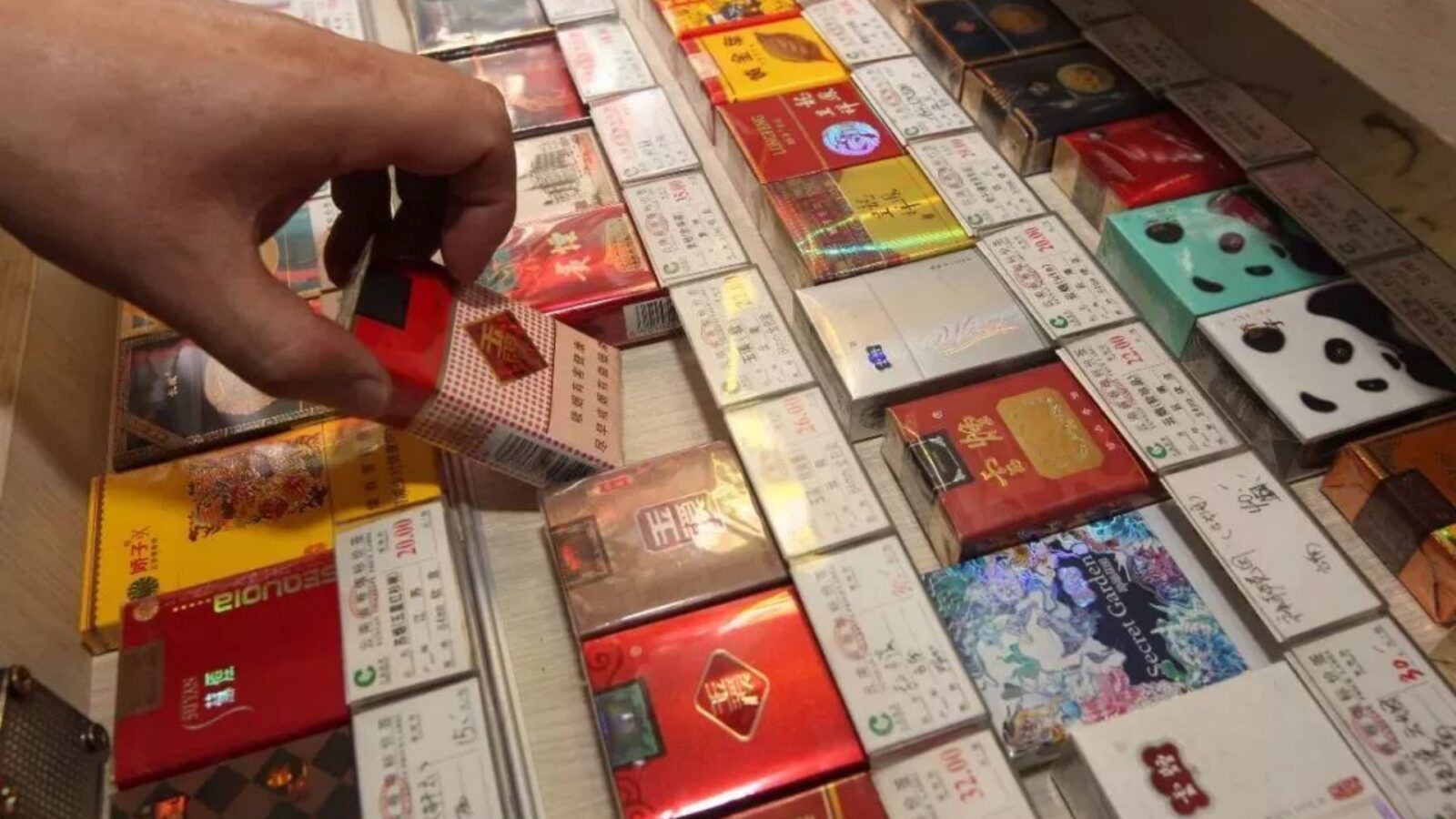
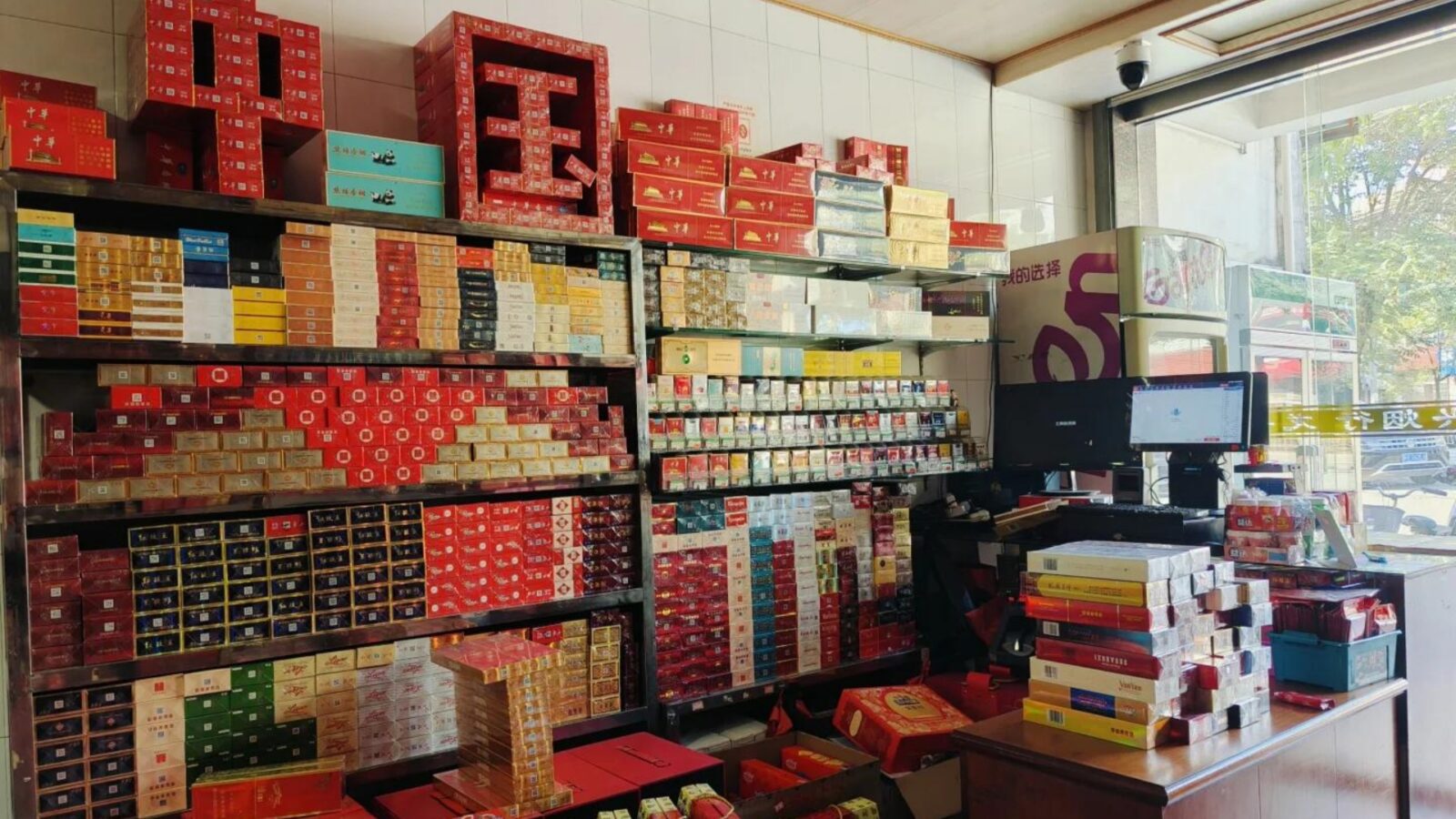
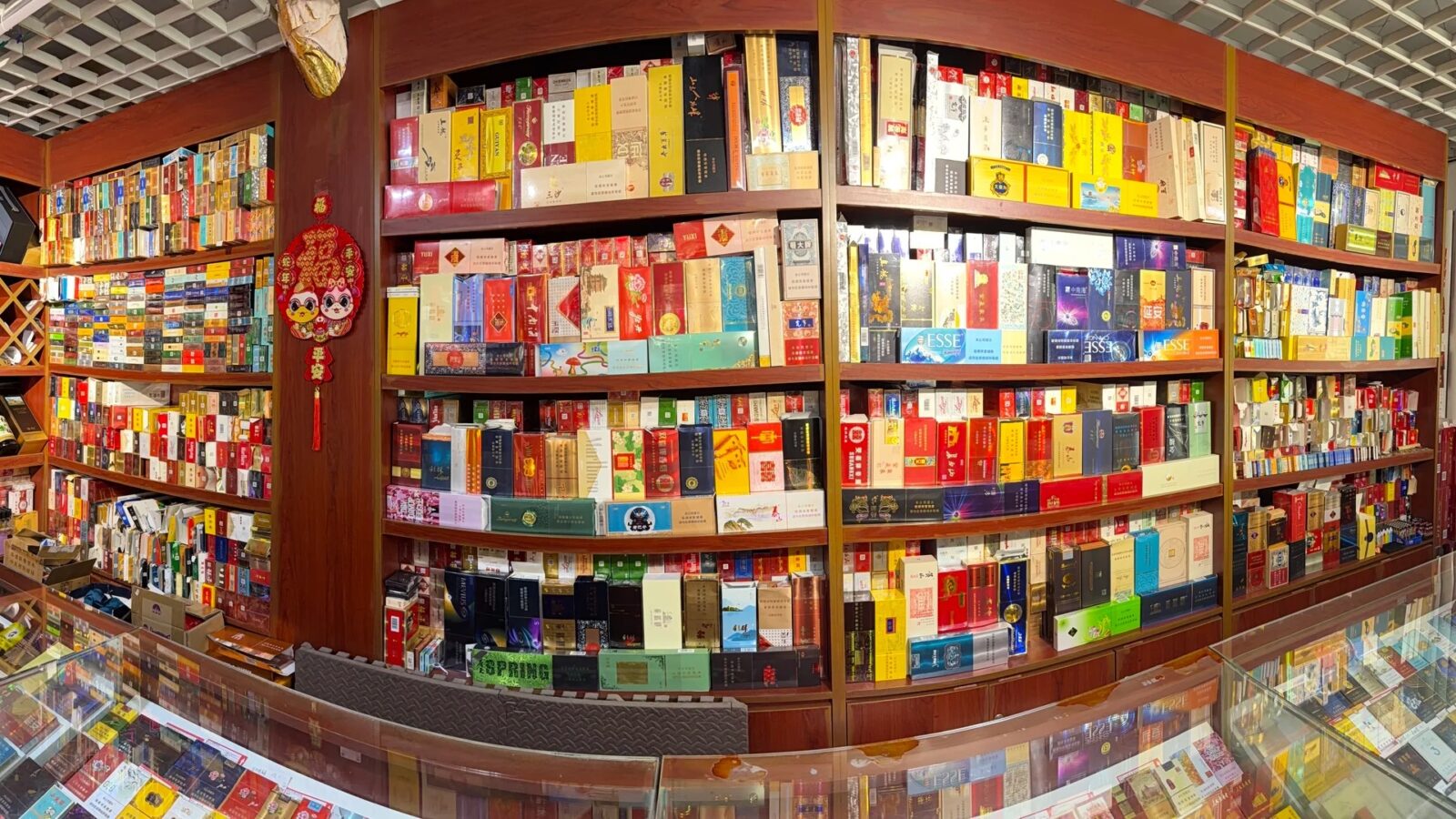
Dedicated tobacco-and-wine shops line nearly every commercial street in Chinese cities. These stores carry the widest brand range available anywhere, including regional labels, premium packs, and hard-to-find gift-grade cartons that convenience stores rarely stock. The counter offers individual packs (包, 20 sticks) and cartons (条, 10 packs). Payment is almost entirely mobile—WeChat Pay and Alipay dominate. Foreign credit and debit cards are rarely accepted at small shops. We recommend carrying small-denomination RMB or arranging mobile payment before arriving. Staff at these shops are generally knowledgeable about brand differences and can advise on regional specialties.
Convenience Stores, Supermarkets, and Hotel Shops
Four retail formats serve different buyer needs. Here is how they compare:
- Convenience store chains: 7-Eleven, FamilyMart, and Lawson operate widely in tier-1 cities. Sinopec Easy Joy (易捷) fills the same role at highway gas stations. These are the fastest option, but stock is limited to top-selling mainstream brands. Prices are slightly higher than at specialist shops.
- Supermarkets: Walmart China, RT-Mart, and Carrefour carry a moderate range at prices often better than convenience stores. They are a good option if you are already shopping for food or household items.
- Hotel shops: Four and five-star hotels typically stock premium Chinese brands at a markup. The convenience is obvious for travelers staying on-property, though you pay a premium for the privilege.
- Airport convenience stores: Located in departure halls, these carry a small selection but with no domestic tobacco tax included—making them a de facto duty-free channel for departing passengers.
For unusual or regional brands, the dedicated tobacco-and-wine shop remains the most reliable option.
What to Expect at the Counter
Walk-up purchase is the standard at every retail channel in China. No loyalty card, membership, or Chinese ID is required for foreign visitors in most cities. At the counter, staff will ask what you want—most visitors point to the pack they want or simply name the brand. Payment is mobile-first. Pricing tiers in mainland China break down as follows: budget brands cost roughly $1.40–$2.10 per pack (¥10–¥15), mainstream packs run $2.10–$3.50 (¥15–¥25), premium brands sit at $4.20–$14 (¥30–¥100), and ultra-premium gift packs start at $28 (¥200). Ask for a carton (条) when buying multiple packs—staff will often quote a per-pack discount for quantity purchases. Every tax-paid pack carries a CNTC QR anti-counterfeit code. Scanning it with WeChat verifies the pack's authenticity.
🛒 Where to Buy Everyday Supplies: For local snacks, drinks, and convenience store runs in major cities, discover top retail locations in our guide to Supermarket Chains in China.
Buying Chinese Cigarettes Outside China
Where to Buy Chinese Cigarettes
The Chinese diaspora in New York, Chicago, London, Toronto, Melbourne, and Singapore searches for reliable local sources every day. Outside mainland China, availability depends heavily on which city you are in and which neighborhood you know. Asian supermarkets and Chinatowns are the primary channels; a small number of licensed specialist tobacconists handle premium imports. Prices run $15–$30 per pack due to import duties and limited supply. The practical challenge is not just finding a shop—it is verifying that the packs carry the destination country's required health warnings. Packs without the Surgeon General's warning (United States), EU graphic warnings (Europe), or plain packaging (Australia) are gray-market and may be seized at customs.
United States: NYC, Chicago, and Other Cities
The United States has the largest Chinatown network outside Asia, and Chinese cigarettes flow through it reliably. Here is the city-by-city breakdown:
- New York City: Manhattan Chinatown (Canal Street, Mott Street, East Broadway) hosts multiple tobacco-and-snack shops stocking Hongtashan, Nanjing, Marlboro-China editions, and occasional harder-to-find regional brands. Pack price runs roughly $15–$22. Chinatown shops in Flushing, Queens serve the same function for the outer boroughs.
- Chicago: Chinatown on Wentworth Avenue in Armour Square carries mainstream Chinese brands. Illinois stacks a tobacco tax on top of import costs, so expect $18–$28 per pack.
- San Francisco and Los Angeles: San Francisco's Grant Avenue and Los Angeles's San Gabriel Valley (particularly the strip along Garfield Avenue and Valley Boulevard) offer working sources. Price range tracks closely with New York's.
- Boston and Houston: Both cities have smaller Chinatown retail cores with tobacco-and-snack shops that stock a limited Chinese-tobacco section.
Always verify that packs carry the US Surgeon General's warning. Packs without it are technically gray-market and may be confiscated.
United Kingdom, Canada, Australia, and Singapore
Each English-speaking country has its own regulatory framework and Chinatown infrastructure. London Chinatown clusters around Gerrard Street, with a handful of Soho and West End specialist tobacconists supplementing the market. Pack prices run £12–£20. In Canada, Toronto's Spadina and Dundas area and Scarborough Chinatown serve the Greater Toronto Area, while Vancouver's Richmond district handles the West Coast. Canadian pack prices sit around CAD $20–$30. Australia enforces plain packaging—Chinese branded packs sold there carry generic olive-brown wrappers—and high excise duties push prices to AUD $25–$40 per pack. Melbourne's Little Bourke Street and Sydney Haymarket are the main sourcing points. Singapore is the most restrictive market: purchases only from licensed tobaccoists, plain packaging mandatory, display advertising banned, and prices exceed SGD $20 per pack with severely limited brand selection.
Asian Supermarkets and Chinatowns
For buyers outside the major cities, Asian supermarket chains fill the gap. H Mart, 99 Ranch, and similar chains across the United States stock a small Chinese-tobacco section near the checkout counter. However, the selection is limited to the top three to five mainstream brands—no regional specialties, no premium gift packs. In the United Kingdom, SeeWoo, Loon Fung, and Wing Yip serve a similar function. Australia has equivalents like Wing On and T&T. One practical caution: packs near expiry or stored in poor conditions lose freshness and flavor. Check the production date stamped on the case before purchasing. We recommend avoiding unlabeled Chinese cigarettes sold informally by individuals—these are a primary counterfeit channel.
🍻 Age Restrictions for Regulated Goods: Just like tobacco, purchasing alcohol in mainland China involves specific age limits (18 and older) and venue policies. Review these rules in our guide to the China Drinking Age.
Online and Duty-Free Channels
Online Retailers and What Actually Ships
Major Western marketplaces do not permit tobacco listings. A search for "Chinese cigarettes" on Amazon or eBay returns only non-tobacco herbal sticks such as the Xuan Chi brand (roughly $14.80 per 2-pack). These are herbal products, not real tobacco cigarettes. A small number of licensed specialist tobacconists in the United States—Cigars International, Neptune Cigars, and some Chinatown retailers—offer mail-order under state tobacco retail licenses. The PACT Act requires registration with state tobacco administrators and the collection of applicable excise taxes. In practice, most US online tobacco retailers ship only within their home state. European equivalents exist in Germany and the Netherlands. Cross-border platforms like Taobao and JD.com reject foreign credit cards on tobacco orders and require a mainland-registered account verified with a Chinese national ID.
Duty-Free at International Airports
International airport duty-free shops are the most cost-effective legal channel for travelers leaving China. Beijing Capital Terminal 3-E, Shanghai Pudong Terminal 2, and Guangzhou Baiyun carry Chinese brands at significant discounts. Hong Kong International, Macau International, Singapore Changi, Dubai International, Incheon, and Frankfurt round out the list of major hubs with Chinese-brand duty-free sections. Common stock includes Hongtashan, Nanjing, Yunyan, Su Yan, and premium lines like He Xi Da Dao (和天下) and Zhonghua. The discount against domestic retail typically runs 20–40%. Combined with the standard 200-stick duty-free allowance per adult, departing travelers can legally bring one carton home at substantially lower cost than buying abroad.
Cross-Border Shipping and Customs Limits
Most countries allow 200 cigarettes (1 carton, 条) per adult as a duty-free personal allowance. The United States, United Kingdom, European Union, and Canada all follow this standard. Exceeding the limit triggers customs duty and possible seizure. The United States PACT Act has a practical secondary effect: most US online tobacco retailers ship only within their home state because interstate tobacco shipping requires extensive compliance infrastructure. Mailing tobacco internationally without a licensed importer is generally prohibited in every major destination country. Australia departs sharply from the norm—only 25 cigarettes per adult qualify for duty-free entry. Singapore is effectively zero. The practical rule is simple: bring one carton, declare it if asked, and do not rely on international mail forwarding services for tobacco shipments.
⚖️ Avoid Common Legal Pitfalls: Keeping up with local travel laws ensures a smooth journey through airports and public venues. Check out unexpected regulations in Weird Laws in China.
Popular Chinese Cigarette Brands to Know
Where to Buy Chinese Cigarettes
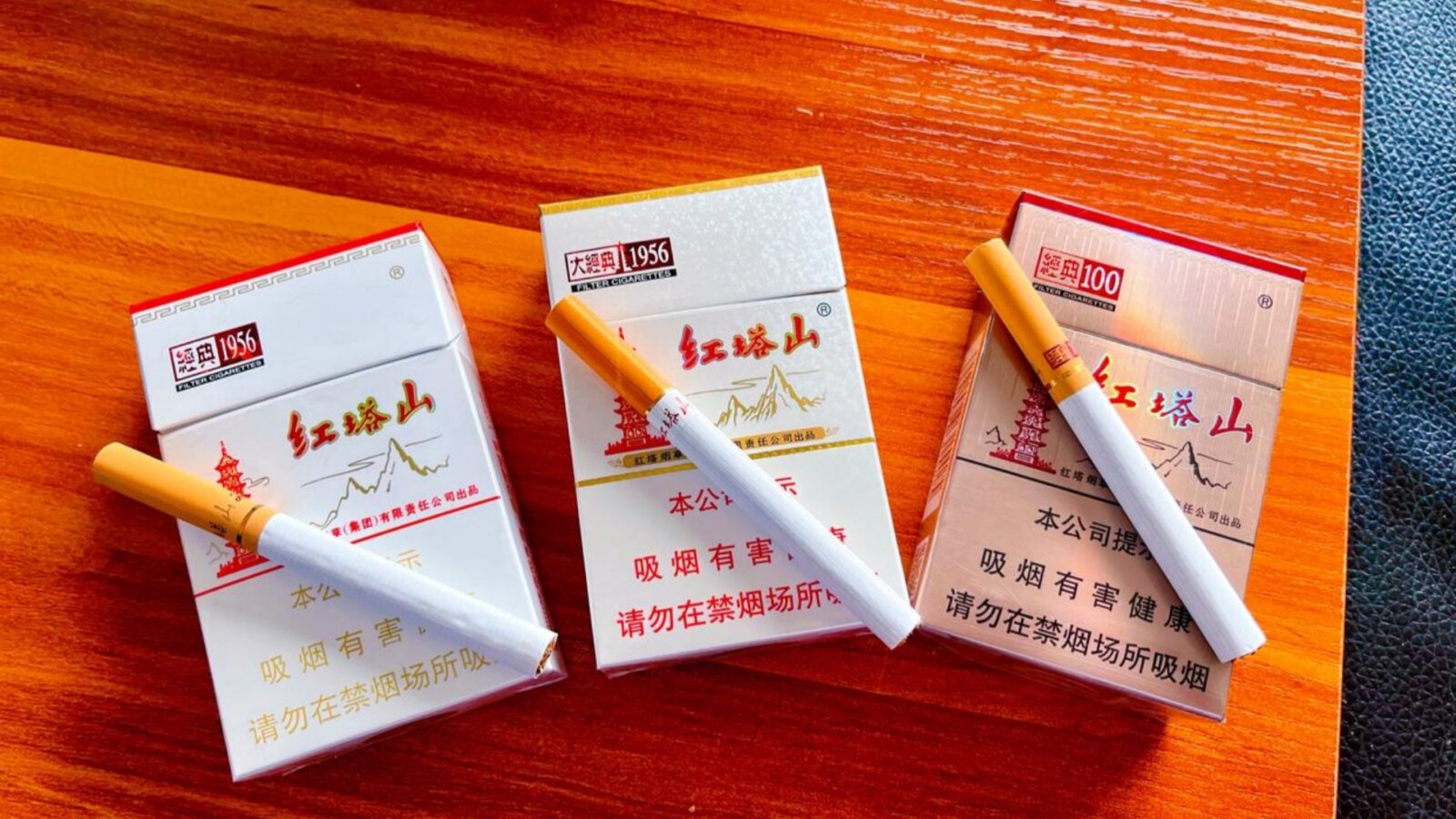
Six brand families cover the vast majority of buyer needs. Understanding them is essential for anyone navigating a Chinese tobacco counter, whether in Shanghai or in a Manhattan Chinatown shop. The CNTC operates these brands through provincial subsidiaries, and each has a distinct character and price tier.
Mainstream Brands: Hongtashan, Nanjing, Huangguoshu
These three brands represent the everyday mainstream of Chinese tobacco. Here is how they compare:
- Hongtashan (红塔山): Produced in Yuxi, Yunnan province. Mild, smooth flavor profile. Priced at roughly $1.40–$2.10 per pack (¥10–¥15). This is the most widely recognized everyday Chinese cigarette internationally.
- Nanjing (南京): Jiangsu-based brand with a slightly stronger profile than Hongtashan. The premium-line variant Nanjing Xuanmen (炫门) adds a menthol option. Price range $2.10–$3.50 (¥15–¥25).
- Huangguoshu (黄果树): Guizhou-based, light tobacco character, comparable price tier to Hongtashan at roughly $1.40–$2.10 (¥10–¥15). A solid everyday choice for first-time buyers.
All three are safe picks for buyers wanting authentic Chinese tobacco without souvenir-tier pricing.
Premium and Souvenir-Grade Brands
Five brands sit above the mainstream tier. They serve as diplomatic gifts, business hospitality items, and collectible purchases.
- Zhonghua (中华, "China"): The red-pack flagship. Introduced in the 1950s as a diplomatic gift, it remains the standard business and hospitality cigarette in China. Price runs roughly $6.30–$8.40 per pack (¥45–¥60). It is the most recognized Chinese cigarette internationally.
- He Xi Da Dao (和天下, "Harmony World"): Ultra-premium tier, ¥100+ ($14+) per pack, often sold in ornate tin cases. A prestige gift for formal occasions.
- Su Yan (苏烟, "Su Smoke"): Jiangsu premium brand, priced at roughly $4.20–$7 per pack (¥30–¥50). Known for a refined, lighter smoke.
- Panda (熊猫): Historical Mao-era favorite. Now rare outside specialty channels. Collectors pay a significant premium when authentic stock appears.
- Liqun (利群): Zhejiang-based mid-premium brand, roughly $2.80–$4.20 (¥20–¥30). A step above everyday brands without reaching diplomatic-gift territory.
Chinese Tea Cigarettes (a Separate Category)
Tea cigarettes (茶烟) are not a flavor variant of tobacco cigarettes. They are non-tobacco herbal sticks made from tea leaves, chrysanthemum, mint, and other botanicals. The closest international equivalent is the Xuan Chi brand sold on Amazon (roughly $14.80 per 2-pack of 40 sticks). Tea cigarettes contain no nicotine and no tobacco leaf. They are marketed as a smoking-cessation aid or flavor novelty, not as a substitute for real tobacco. Buyers searching for "Chinese tea cigarettes where to buy" should understand they are purchasing a herbal product. Chinese domestic brands in this category include Xuan Chi, Tianxia, and Dewei, selling 20-stick packs for roughly $10–$15 internationally. These products comply with regulations in countries where tobacco-analogues face restrictions, because they are not tobacco products.
Legal and Import Rules for Cross-Border Buyers
Five regulatory realities shape every cross-border cigarette purchase. Understanding them prevents customs problems, gray-market traps, and counterfeit losses.
- China's state monopoly: CNTC is the only legal producer of tobacco products in mainland China. Counterfeits are widespread outside official channels, particularly in informal export markets.
- United States FDA and PACT Act: The FDA prohibits sale of imported cigarettes that do not carry the Surgeon General's warning. The PACT Act requires online tobacco sellers to register with state administrators and collect applicable excise taxes. Most interstate tobacco shipping is effectively blocked.
- European Union Tobacco Products Directive: Mandates graphic health warnings on all tobacco products sold in EU member states. Chinese packs without these warnings are technically illegal to import for sale.
- Australia plain packaging: All tobacco products sold in Australia must carry generic olive-brown packaging with large graphic health warnings. Chinese-branded packs sold legally in Australia wear these wrappers rather than their original designs.
- Singapore, Hong Kong, Taiwan controls: Each jurisdiction has escalating restrictions including point-of-sale display bans, high excise taxes, and in some cases effectively zero duty-free allowance for tobacco.
Counterfeit and Gray-Market Risk
Counterfeit Chinese cigarettes represent an ongoing problem. CNTC and customs authorities seize millions of sticks annually at international borders. Warning signs include misspelled brand text on the pack, missing QR anti-counterfeit code, no CNTC tax-paid stamp, and an unusually low price—below $1 per pack or $5 per carton should raise immediate suspicion. Packaging that looks "almost but not quite right" is another indicator. The safest practice is to buy from CNTC-operated stores within China and from licensed, established tobacconists abroad. On tax-paid packs sold in mainland China, the CNTC anti-counterfeit QR code can be scanned with WeChat to verify authenticity. This is the single most reliable verification tool available to buyers.
Bringing Cigarettes Across International Borders
For personal use, bringing cigarettes across a border is straightforward within the duty-free allowance. Most countries permit 200 cigarettes (1 carton, 条) per adult. Going over that amount triggers customs duty—typically a per-stick or per-carton rate based on origin and destination. Australia allows only 25 cigarettes per adult duty-free. Singapore's allowance is effectively zero for personal imports. The practical workflow is: purchase a carton at duty-free on departure, keep the receipt, and declare it if asked at the destination country's customs. Do not attempt to import cartons commercially without engaging a licensed tobacco importer in the destination country. Airline cabin baggage rules are separate: smoking on board is prohibited on virtually all commercial flights, and lighters are restricted or banned in many jurisdictions.
Frequently Asked Questions
Q: Where can I buy Chinese cigarettes near me in the US?
The most reliable channel is the nearest Chinatown Asian supermarket or tobacco-and-snack shop. Manhattan, San Francisco, Los Angeles, Chicago, Houston, and Boston all have working sources with pack prices typically ranging from $15–$28 depending on state tobacco tax. Outside Chinatowns, H Mart and 99 Ranch stock a small Chinese-tobacco section near the checkout. Specialty tobacconists can mail-order within their home state under PACT Act rules.
Q: Can I order Chinese cigarettes online and have them shipped?
Major Western marketplaces (Amazon, eBay, Walmart.com) do not allow tobacco listings—search results for "Chinese cigarettes" return only non-tobacco herbal sticks such as Xuan Chi. Licensed US tobacconists can ship within state under their retail license with adult-signature delivery. Cross-border shipping via Taobao or JD.com requires a mainland Chinese account and rejects foreign credit cards on tobacco orders.
Q: Are Chinese cigarettes legal to import?
For personal use within the 200-cigarette duty-free allowance, yes. The United States, United Kingdom, European Union, and Canada all permit this. Australia allows only 25 cigarettes per adult, and Singapore effectively allows zero. Commercial import requires US FDA tobacco manufacturer or distributor registration, EU Tobacco Products Directive compliance, and excise tax payment. Packs without the destination country's required health warnings are technically contraband.
Q: How much do Chinese cigarettes cost in China vs. abroad?
In mainland China, mainstream brands cost roughly $1.40–$3.50 per pack (¥10–¥25), premium packs $4.20–$14 (¥30–¥100), and ultra-premium gift packs $28+ (¥200+). The same brands sold abroad through Asian supermarkets or Chinatowns run $15–$30 per pack due to limited supply, import duty, and retail markup. Chinese airport duty-free shops offer the best value for departing travelers at 20–40% below domestic retail.
Q: What are the best Chinese cigarettes to buy as gifts or souvenirs?
Zhonghua (中华, red pack) is the iconic diplomatic and business gift and the most recognized Chinese cigarette abroad. Su Yan (苏烟) and He Xi Da Dao (和天下) are premium picks for special occasions. Panda (熊猫) is rare and collectible. For everyday-taste authenticity, Hongtashan and Nanjing are the most representative mainstream options. We recommend buying from airport duty-free to minimize counterfeit risk on the return trip.
Q: Do Chinese cigarettes taste different from Western brands?
Yes—most Chinese cigarettes use Virginia and oriental tobacco blends with a milder, more aromatic profile compared to the heavier American blends common in Marlboro or Camel. The flavor is commonly described as smooth and lighter, with a tea-like quality. Premium exports like Zhonghua carry a distinctive plum or plum-honey aroma. Lower-tar cigarettes are also more prevalent in the Chinese market due to domestic demand patterns.
Q: What about Chinese tea cigarettes — are those the same thing?
No—tea cigarettes (茶烟) are a separate non-tobacco product. They are herbal sticks made from tea leaves, chrysanthemum, mint, and similar botanicals, comparable to the herbal sticks sold on Amazon by brands like Xuan Chi (roughly $14.80 per 2-pack). They contain no nicotine and no tobacco. And they are used as a smoking-cessation aid or flavor novelty rather than as a substitute for Chinese tobacco cigarettes.