What Side of the Road Do They Drive in China
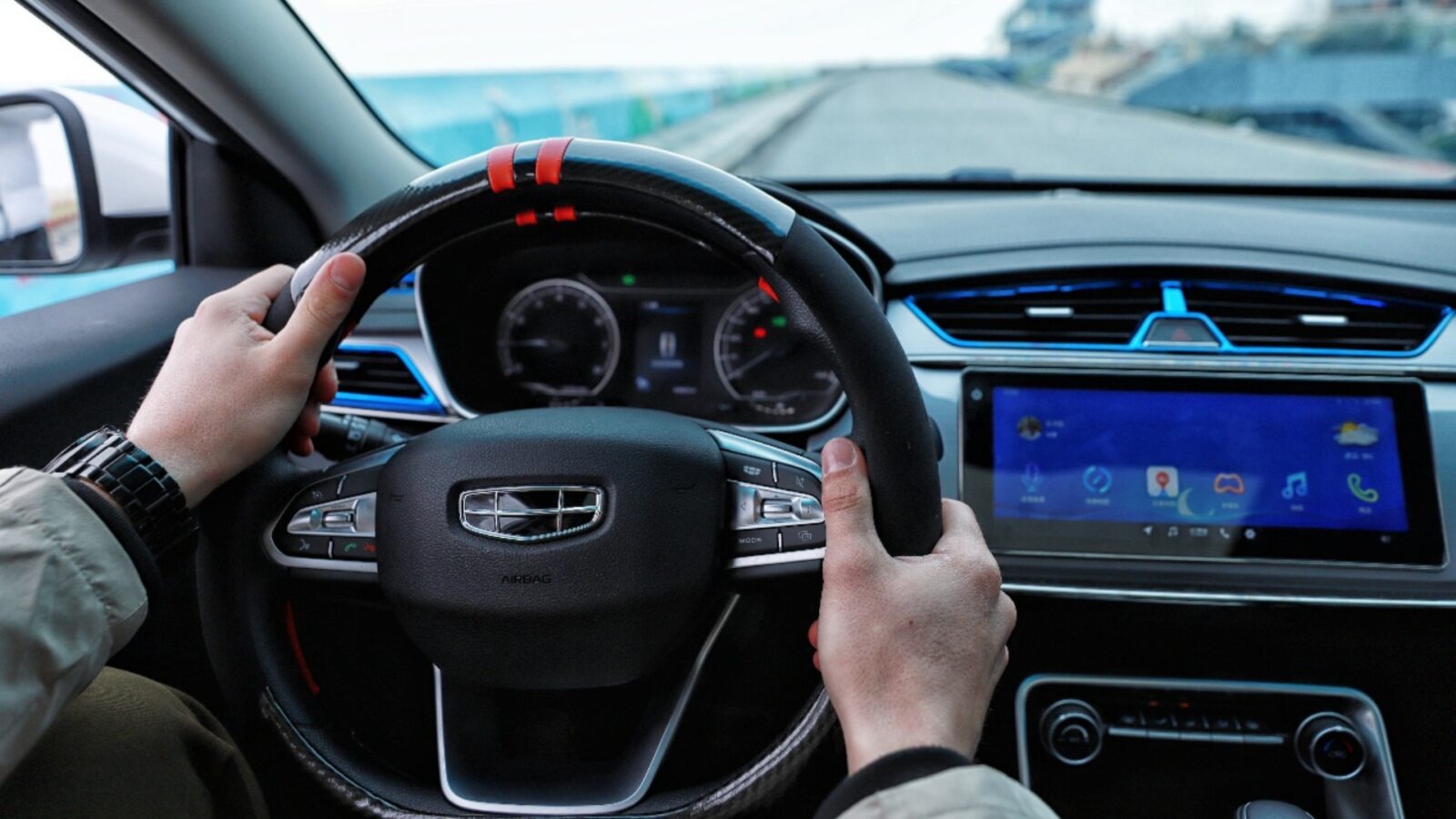
Mainland China drives on the right side of the road with left-hand-drive vehicles. This is the rule for the country's 1.4 billion residents and applies across every province and autonomous region on the mainland. The two notable exceptions are Hong Kong and Macau, both of which retained left-side driving after their respective handovers to China — Hong Kong in 1997 and Macau in 1999. These territories operate with right-hand-drive vehicles and maintain a mirror-image traffic system that can catch unfamiliar visitors off guard.
Getting this wrong is not a minor inconvenience. At intersections, on expressway exit ramps, and especially on the Hong Kong–Zhuhai–Macao Bridge, the difference between left and right determines who has the lane. Understanding which side applies before you arrive — and knowing where the exceptions fall — is the single most practical piece of knowledge any visitor can carry into Chinese traffic.
Quick Facts
Driving Side in Mainland China: Right-Side, Left-Hand Drive
Driving Side in Mainland China
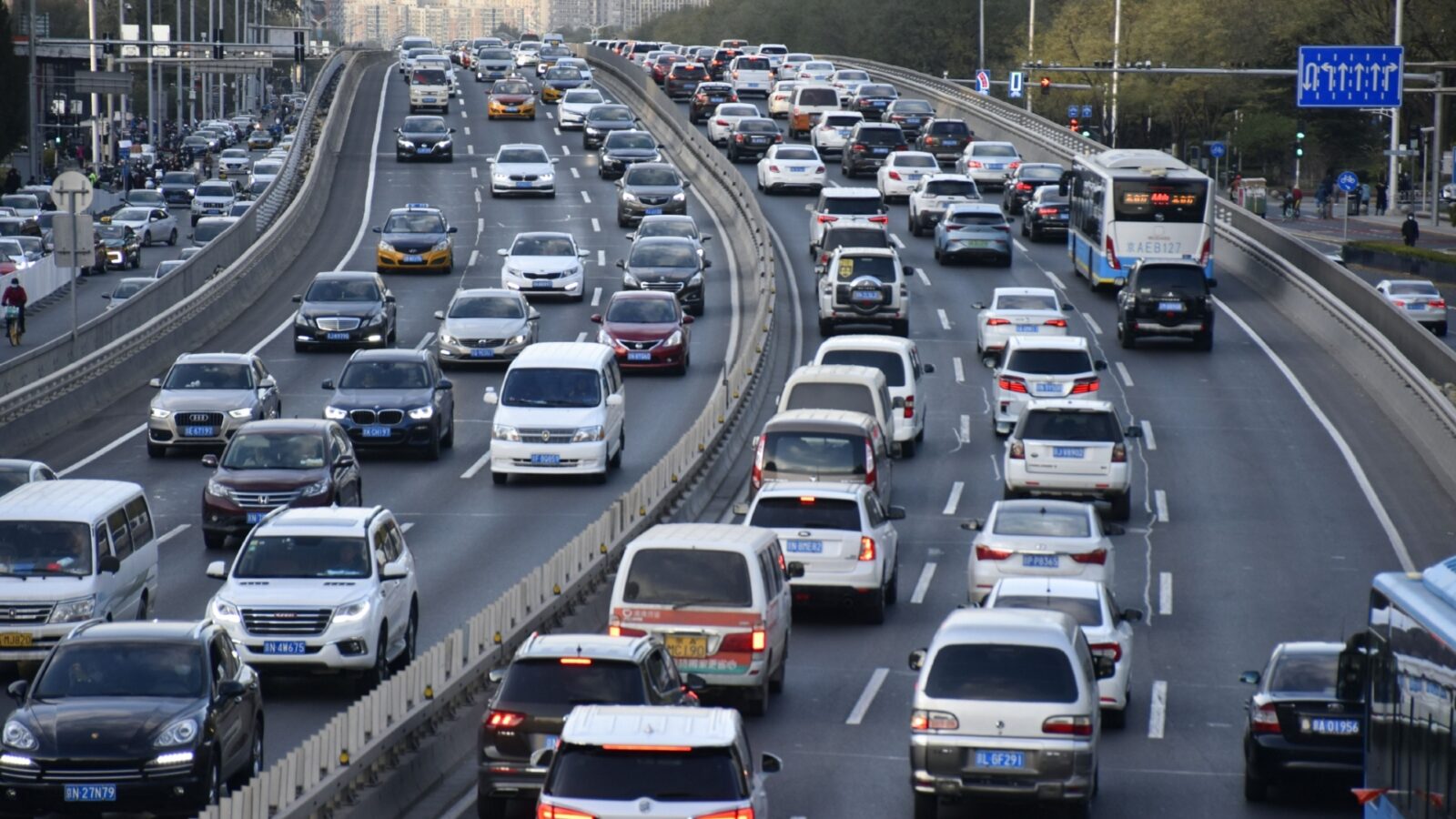
The PRC Road Traffic Safety Law requires all vehicles to keep to the right side of the road. The steering wheel sits on the left, which means oncoming traffic approaches from the driver's left. This is the standard across every mainland province — from Guangdong to Heilongjiang, from Shanghai to Xinjiang. The road network, including expressway exit ramps, tunnel signage orientation, and bus-stop bay design, is built entirely around right-side flow. If you are driving on the mainland, the rule is right-side, left-hand drive.
A Brief Historical Note
Right-side driving became the mainland standard during the Republican era, but the shift was consolidated in 1945 when a nationwide traffic regulation formalized the convention. American military vehicles stationed in China during World War II had already introduced the left-hand-drive, right-side pattern to many Chinese drivers. After 1945, the regulation aligned mainland China with the United States, continental Europe, and most of its Asian neighbors — Japan, South Korea, and Thailand all use right-side driving. The British-influenced territory of Hong Kong and the Portuguese-influenced territory of Macau did not follow. Both kept their colonial-era left-side conventions after their respective handovers and continue to drive on the left today.
What "Drive on the Right" Means Day-to-Day
For someone accustomed to left-side driving countries such as the United Kingdom, Australia, or Japan, mainland China's system works as a direct mirror. The practical points add up quickly once you are on the road.
- Oncoming traffic: approaches from your left, not your right.
- Lane discipline: you keep to the right lane and pass on the left, the reverse of the UK/Australia pattern.
- Roadside features: signs, signals, and reflector placement sit on the right shoulder, oriented for left-hand-drive vehicles.
- Turning geometry: right turns cross the near lane (tight, short-radius turns), while left turns must cross oncoming traffic — the opposite of left-side countries.
🏔️ Test Your Skills on Famous Mountain Roads: For drivers seeking iconic routes, Xinjiang’s Pamir Plateau features over 600 S-bends along the legendary Panlong Ancient Road.
🌄 Plan a High-Mountain Road Trip: Before tackling one of China's most celebrated road trip destinations, check opening schedules and route advice in Duku Highway.
Hong Kong, Macau, and Cross-Border Driving
The Hong Kong's Left-Side Traffic
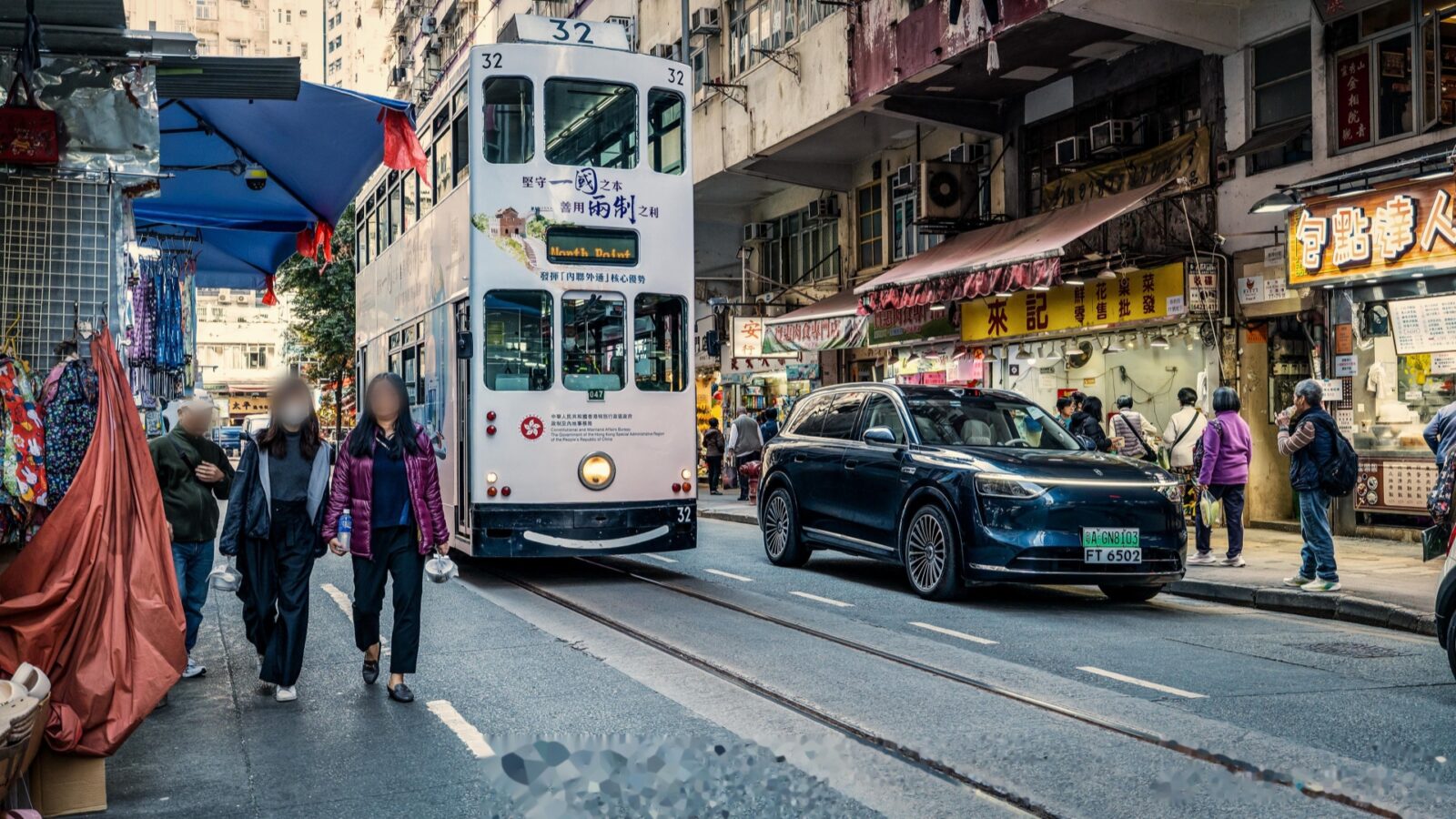
Hong Kong and Macau are the two places on Chinese soil where the rule flips entirely. Both territories have driven on the left since their colonial periods — Hong Kong under British administration from 1841, Macau under Portuguese administration from the mid-16th century. Neither changed the convention after reunification with China. For drivers crossing between territories, the boundary is where the rules shift.
Hong Kong's Left-Side Traffic
Hong Kong has driven on the left since the British arrived in 1841, and the convention survived the 1997 handover unchanged. Every vehicle on Hong Kong's roads has the steering wheel on the right. In practice, this means oncoming traffic approaches from the driver's right, right turns cross oncoming traffic, and left turns are short-radius turns across the near lane. The geometry is a perfect inversion of mainland China. Road markings, signal placements, and expressway signage are all oriented for right-hand-drive vehicles.
Macau's Left-Side Traffic
Macau drove on the left throughout the Portuguese colonial period and retained the convention after the 1999 handover to China. Right-hand-drive vehicles are the local norm. The territory remains closely integrated with mainland China in some respects — the Pataca is pegged to the Hong Kong dollar, and a growing bridge and border crossing connect it directly to Zhuhai and Hong Kong — yet the traffic system runs independently. Left-side driving is not negotiable and applies to every road in the territory.
Driving Across the Border
Crossing between Hong Kong or Macau and the mainland is straightforward in concept but requires preparation. Drivers switching between the two systems need to account for several practical details.
- Side switch required: HK-registered vehicles entering Guangdong must switch from driving on the left to driving on the right.
- HZMB bridge rule: the Hong Kong–Zhuhai–Macao Bridge opened in 2018 and operates on the right (mainland standard) — drivers from Hong Kong and Macau must switch at the boundary interchange on the bridge.
- Insurance gap: mainland motor insurance is mandatory and is not covered by a Hong Kong, Macau, or foreign policy alone — this is a legal requirement, not optional.
- RHD on mainland roads: right-hand-drive vehicles can legally drive on mainland roads, but the driver sits on the wrong side for right-side traffic, creating elevated blind-spot risk at roundabouts and during overtaking maneuvers.
Driving in China as a Foreign Visitor
For the great majority of foreign visitors, driving is not necessary. Urban public transport — metro systems in cities including Beijing, Shanghai, Guangzhou, and Shenzhen — and ride-hailing through the Didi app cover almost every trip a visitor needs to make. High-speed rail connects most major cities with a frequency and speed that makes self-driving irrelevant for inter-city travel. If you are considering driving, the practical requirements are significant, and the license situation requires careful preparation before arrival.
License Requirements
Mainland China does not recognize International Driving Permits issued under the 1949 Geneva Convention on their own. This is a specific legal position — the PRC is not a signatory to that convention — and it catches many visitors who assume an IDP is sufficient. The requirements break down into a few concrete points.
- IDP not valid alone: an International Driving Permit does not authorize driving on mainland roads by itself.
- Standard foreign license conversion: to drive on a mainland license, a foreigner must typically pass a Chinese road-rules theory test and a basic driving test at a provincial vehicle administration office.
- HK/Macau/Taiwan pathway: license holders from Hong Kong, Macau, and Taiwan may apply for a simplified conversion process under a separate arrangement in Guangdong province.
Insurance and RHD vs LHD Vehicles
For visitors who do need to drive on the mainland, the insurance and vehicle-type considerations are straightforward to address with advance planning.
- Mandatory mainland insurance: third-party motor liability insurance is required by law and is not covered by a Hong Kong, Macau, or foreign policy alone.
- Short-stay insurance options: mainland motor insurance for short-term visitors can be arranged through channel-bookable platforms such as Trip.com or Klook, with coverage available from about $70–140 (¥500–1,000) for short-stay policies.
- RHD vehicle risk: right-hand-drive vehicles are legal on mainland roads but create elevated blind-spot risk at roundabouts, lane merges, and overtaking zones — left-hand-drive vehicles are the practical preference where possible.
- Ride-hailing as default: for most foreign visitors, Didi ride-hailing combined with high-speed rail removes the need to drive at all, even for multi-city trips.
🚗 How to Legally Drive on Mainland Roads: Before getting behind the wheel, make sure you understand the paperwork, medical checks, and permit options outlined in Chinese Driver's License.
🚦 Minimum Driving Age & Rules: Planning a road trip? Check age qualifications, rental agency policies, and senior driver requirements in our guide to the Driving Age in China.
Road Signs, Signals, and Basic Traffic Rules
Road Signs and Signals in China
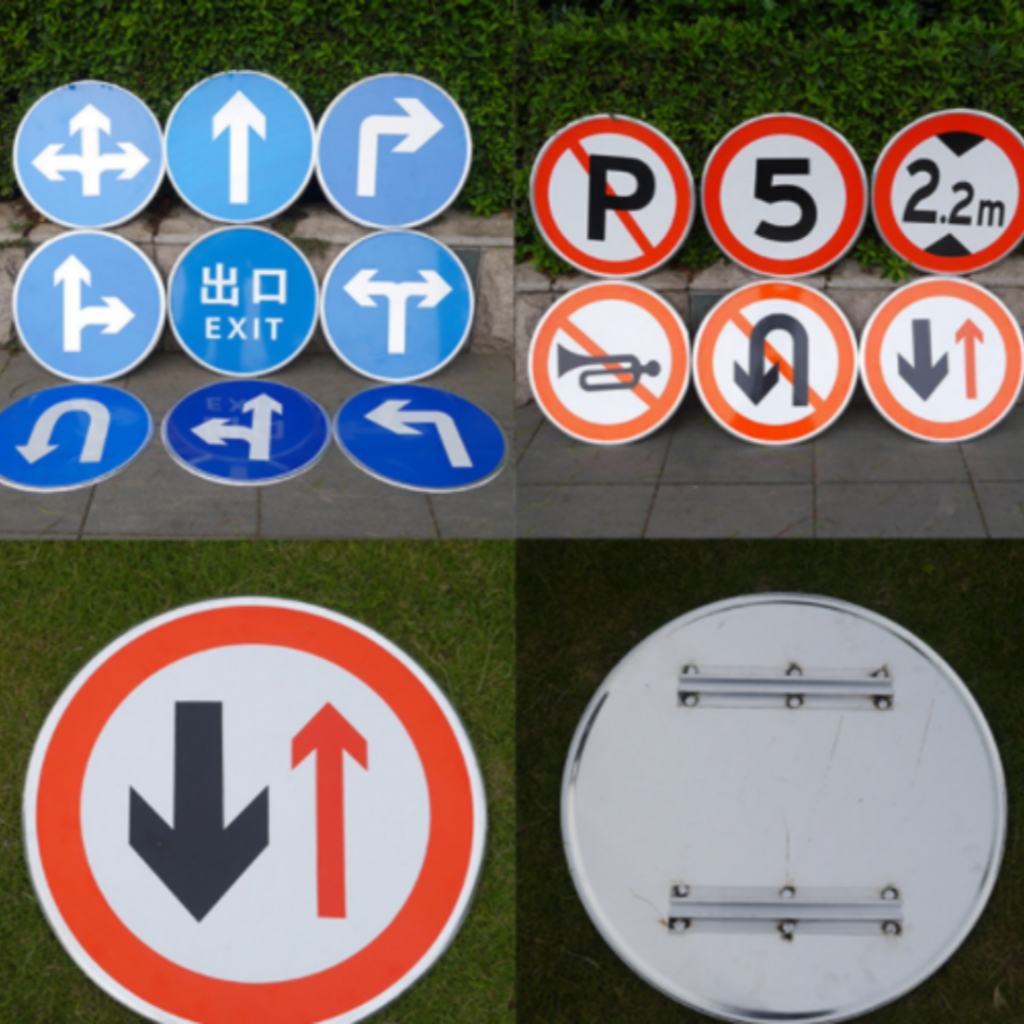
China acceded to the Vienna Convention on Road Signs and Signals in 1987, which means the visual language of its road signs shares much in common with European and international standards. Signs use simplified Chinese characters with pinyin transliteration on major routes. Understanding the four standard sign families and the speed-limit structure covers the majority of situations any driver will encounter.
Common Signs and Road Markings
Speed Limits and Highway Basics
Three additional rules apply universally: seatbelts are mandatory for front and rear passengers, the blood alcohol limit is 0.02% (effectively zero tolerance for drivers), and handheld phone use while driving is prohibited.
Safety Reality and Right-of-Way in China
Most visitors arrive knowing which side of the road to use. Fewer arrive knowing how priority works. This gap — between knowing the rule and understanding how traffic actually moves — is where most incidents involving foreign drivers occur. Chinese urban traffic operates with conventions that diverge meaningfully from Western norms, and anticipating those differences is more useful than any single traffic regulation.
Right-of-Way Differences from Western Norms
Visitors from countries such as the United States, Germany, or Australia will encounter right-of-way patterns that feel counter-intuitive. Four inversions appear frequently enough to be worth knowing before you drive.
- Left-turning vehicles: cars turning left will often enter the path of straight-through traffic, expecting the through-traffic driver to brake.
- Side-street merges: vehicles entering a main road from a side street frequently merge without a full mirror check, assuming through-traffic will yield.
- Two-wheeler behavior: e-bikes, electric scooters, and bicycles may enter the traffic lane from any direction and expect cars to give way.
- Uncontrolled intersections: eye contact and slow-speed negotiation often replace formal priority rules, especially in lower-volume secondary streets.
Real-World Risk Patterns
The WHO Global status report on road safety has classified road traffic injuries as a leading cause of death in China, with fatality rates higher than in most OECD countries. The risk is concentrated in specific patterns that foreign drivers should watch for.
- Two-wheeler density: urban roads carry high volumes of e-bikes and shared bicycles, often moving against or across the flow of car traffic.
- Mid-block pedestrian crossings: pedestrians crossing outside marked crossings are common, particularly in secondary cities and rural areas.
- Short-notice lane changes: lane changes and merges are frequently made with minimal signaling and short following distances.
- Night-time rural roads: mixed motorized and non-motorized traffic, limited street lighting, and pedestrians in dark clothing create compound risk on rural routes.
Defensive Driving Tips for Visitors
Defensive driving is the practical response to these conditions. The following habits reduce exposure to the most common incident patterns.
- Expect unsignaled side-street entries: treat every junction as an active merge, even when you have the formal right of way.
- Check the door-side shoulder: before opening a door or merging right, check the bicycle lane and right shoulder for e-bikes and cyclists.
- Eye contact at intersections: slow early at uncontrolled intersections and make eye contact with cross-traffic drivers before proceeding.
- Hold lane discipline: many local drivers follow lane discipline — matching that standard reduces unpredictability for other road users.
- Increase following distance: keep more distance than you would at home, especially when trailing two-wheelers that may stop or swerve without warning.
Frequently Asked Questions
Q: Do they drive on the left or right in China?
Mainland China drives on the right. Hong Kong and Macau are the two exceptions and drive on the left. For most visitors traveling to Shanghai, Beijing, Guangzhou, or other mainland cities, right-side driving with left-hand-drive vehicles is what applies.
Q: Why does Hong Kong drive on the left?
Hong Kong drove on the left throughout its period as a British colony, beginning in 1841. The convention was retained after the 1997 handover to China and has not changed. The British colonial road code was never altered.
Q: Which side is the steering wheel on in China?
On mainland China the steering wheel is on the left (left-hand drive). In Hong Kong and Macau it is on the right (right-hand drive), matching the left-side traffic system in both territories.
Q: Can you drive a Hong Kong car into mainland China?
Yes, with conditions. Valid mainland motor insurance is required — a Hong Kong policy does not cover mainland driving. Most Hong Kong license holders can apply for a simplified mainland conversion in Guangdong. Drivers must also switch from left-side to right-side driving at the boundary, including on the Hong Kong–Zhuhai–Macao Bridge, which operates on the right.
Q: Is driving in China dangerous for foreigners?
Driving on the mainland carries higher risk than in most OECD countries, primarily because right-of-way conventions differ from Western norms and two-wheeler density is far greater. For most visitors, public transport and ride-hailing are safer and more practical options.
Q: Do I need a special license to drive in China?
International Driving Permits under the 1949 Geneva Convention are not recognized on their own. To drive legally on the mainland, a foreigner generally needs to pass a Chinese road-rules test and a basic driving test at a provincial vehicle administration office. Holders of Hong Kong, Macau, and Taiwan licenses have access to a simplified conversion pathway in Guangdong.
Q: What side of the road does Macau drive on?
Macau drives on the left with right-hand-drive vehicles. This is a legacy of Portuguese colonial rule, retained after the 1999 handover to China. It is the same system as Hong Kong, not mainland China.