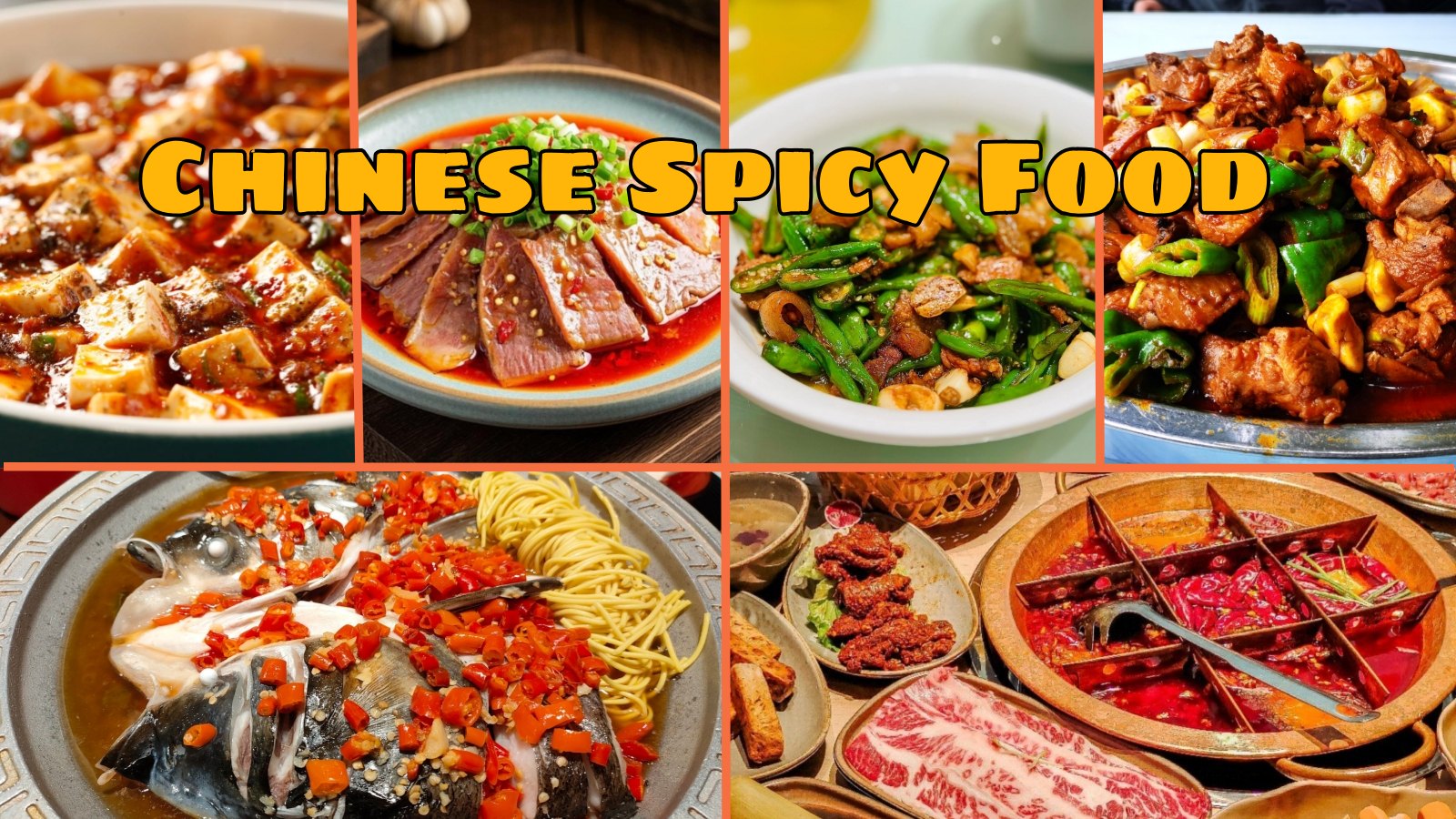
Chinese Spicy Food
In China, spice is not just a flavor preference — it’s living a philosophy that evolves through millennia, shaped by physical geography and climate, by the conviction that heat heals, warms, and connects. In Sichuan, diners describe a tingling, creeping numbness that builds slowly like a warm tide across the tongue; in Chongqing it’s a fiery, oily tsunami that accumulates with each bite yet refuses to leave; in Hunan and Jiangxi, fresh chilies deliver their punch in a clean, stark strike with no warning and no mercy. From the cumin-licked warmth of Xinjiang to the pungent fermented brightness of Guizhou, there’s a different spice logic waiting in each of the four corners of the country. Kung Pao Chicken has wooed the world with its gentle notes of sweet; Mapo Tofu has seduced skeptics with its silken complexity; Chongqing Hotpot has both humbled the brave and reformatted the cautious to its cult. These twenty-five of China’s hottest food Chinese dishes are mapped out, ranked and broken down here, one unforgettable fire at a time.
Regional Maps of Spice Zones
Sichuan Cuisine
Sichuan is the probably best known home of spicy food Chinese, where the magic mala flavor owns all great dishes. The artful chefs temper raging chili with the numbing spice of peppercorns — making the region astonishingly user-friendly for neophytes and the feasting entry point for anyone reticent.
🌶 The Sichuan Philosophy: Aroma First, Heat Second
Sichuan food prioritizes rich aroma over brutal heat, with sweet and sour profiles appearing regularly alongside the spice. The numbing peppercorn acts as a built-in buffer, slowing the perceived burn throughout each meal. Consequently, your stomach faces less direct trauma compared to other spicy regions — making Sichuan the safest and most rewarding starting point for newcomers.
🗺 Sichuan — 7 Key Dishes
| Dish Name | Flavor Profile | Expat Score | Toilet Risk 🚽 |
|---|---|---|---|
| Kung Pao Chicken (宫保鸡丁) | Sweet & Spicy | ★★★★★ | 🔥 Low |
| Mapo Tofu (麻婆豆腐) | Mala (Numbing) | ★★★★☆ | 🔥🔥🔥 Medium |
| Dan Dan Noodles (担担面) | Nutty & Spicy | ★★★★☆ | 🔥🔥 Med-Low |
| Mouthwatering Chicken (口水鸡) | Mala & Sesame | ★★★★☆ | 🔥🔥 Med-Low |
| Spicy Boiled Beef (水煮牛肉) | Red Oil Intense | ★★★☆☆ | 🔥🔥🔥🔥 High |
| Husband & Wife Beef (夫妻肺片) | Cold Mala | ★★★★☆ | 🔥🔥🔥 Medium |
| Twice-Cooked Pork (回锅肉) | Savory Heat | ★★★★★ | 🔥🔥 Med-Low |
🍜 Eager to explore Sichuan cuisine more deeply? Our comprehensive guide covers every essential dish, travel tip, and flavor secret you need — dive into the full world of Sichuan Cuisine and discover what makes this region China's most celebrated spice capital.
Chongqing Cuisine
Chongqing has a different style of food than you will find in Sichuan, but they are historically connected. The risk of encountering poor toilet facilities rises greatly when you enter this region, so be prepared for that both mentally and physically before you arrive.
🗺 Chongqing — 7 Key Dishes
| Dish Name | Flavor Profile | Expat Score | Toilet Risk 🚽 |
|---|---|---|---|
| Chongqing Hotpot (重庆火锅) | Extreme Mala | ★★☆☆☆ | 🔥🔥🔥🔥🔥 Extreme |
| Dry Chili Chicken (辣子鸡) | Dry Heat | ★★★☆☆ | 🔥🔥🔥🔥 High |
| Suancai Fish (酸菜鱼) | Sour & Spicy | ★★★★☆ | 🔥🔥 Med-Low |
| Chongqing Noodles (重庆小面) | Numbing Spice | ★★★☆☆ | 🔥🔥🔥🔥 High |
| Blood Curd Stew (毛血旺) | Extreme Mala | ★★☆☆☆ | 🔥🔥🔥🔥🔥 Extreme |
| Wanzhou Grilled Fish (万州烤鱼) | Smoky Mala | ★★★★☆ | 🔥🔥🔥🔥 High |
| Spicy Skewers (串串香) | Boiling Mala | ★★★★☆ | 🔥🔥🔥🔥 High |
🔥 Planning a trip to Chongqing or want to master its legendary heat before you arrive? Everything from broth secrets to must-visit hotpot halls is waiting in our dedicated guide to Chongqing Food — where fiery hotpot meets bold street culture.
Hunan & Jiangxi Cuisine
Across Hunan and Jiangxi, Chinese spice logic flips upside down — no more numbing numbing peppercorn spikes, just fresh green chilies delivering the heat in its most direct way. The burn arrives as soon as the food hits your tongue and, for most expats, this part of China is spicy food Chinese torture heaven.
🗺 Hunan & Jiangxi — 7 Key Dishes
| Dish Name | Flavor Profile | Expat Score | Toilet Risk 🚽 |
|---|---|---|---|
| Hunan Stir-Fried Pork (辣椒炒肉) | Raw Fire | ★★★☆☆ | 🔥🔥🔥🔥 High |
| Steamed Fish Head (剁椒鱼头) | Fermented Spice | ★★★☆☆ | 🔥🔥🔥🔥 High |
| Nanchang Noodles (南昌炒粉) | Sharp Spice | ★★★☆☆ | 🔥🔥🔥 Medium |
| Ningdu Chicken (宁都三杯鸡) | Savory & Spicy | ★★★★☆ | 🔥🔥🔥 Medium |
| Spicy Crayfish (麻辣小龙虾) | Aromatic Fire | ★★★☆☆ | 🔥🔥🔥🔥 High |
| Hunan Spicy Beef (小炒黄牛肉) | Fierce Fire | ★★★☆☆ | 🔥🔥🔥🔥 High |
| Stir-Fried Bacon (藜蒿炒腊肉) | Smoky Fresh | ★★★★☆ | 🔥🔥 Med-Low |
🌶️ Explore More Unique Flavors: While mastering the regional heat levels of these fiery dishes is essential for any food lover, China's culinary scene also features many unconventional textures and ingredients. Expand your gastronomic horizons by checking out our guide to Odd Chinese Food.
Other Provinces & Soups
Exceptional spicy food Chinese. This actually thrives outside of the four famous provinces. In the North are to be found some remarkable sour-spicy combinations, while the soups prepared more or less all over the country are slightly and gently warmed by spice and have a very low risk of digestive consequences. Exploring these regions rounds out the complete Chinese spice education.
🗺 Other Regions — Xinjiang · Xi'an · Guizhou · Hubei · Guangxi · Nationwide
| Dish Name | Flavor Profile | Expat Score | Toilet Risk 🚽 |
|---|---|---|---|
| Big Plate Chicken (大盘鸡) | Savory Heat | ★★★★☆ | 🔥 Low |
| Hot & Sour Soup (酸辣汤) | Sour & Pepper | ★★★★★ | 🔥 Low |
| Liangpi Cold Noodles (凉皮) | Vinegar & Chili | ★★★★☆ | 🔥🔥 Med-Low |
| Sour Soup Fish (酸汤鱼) | Tangy & Spicy | ★★★★☆ | 🔥🔥 Med-Low |
| Hot Dry Noodles (热干面) | Sesame & Chili | ★★★★☆ | 🔥🔥 Med-Low |
| Snail Noodles (柳州螺蛳粉) | Sour & Funky | ★★☆☆☆ | 🔥🔥🔥 Medium |
| Guizhou Spicy Chicken (贵州辣子鸡) | Fermented Heat | ★★★☆☆ | 🔥🔥🔥 Medium |
🌶️ Beyond the Spice: If you are feeling adventurous and want to explore China's most unconventional, rare, and daring delicacies that go far beyond just fiery peppers, take a look at our curiosity guide to Exotic Chinese Cuisine.
Deep Dives into 25 Classics
1. Kung Pao Chicken(宫保鸡丁)
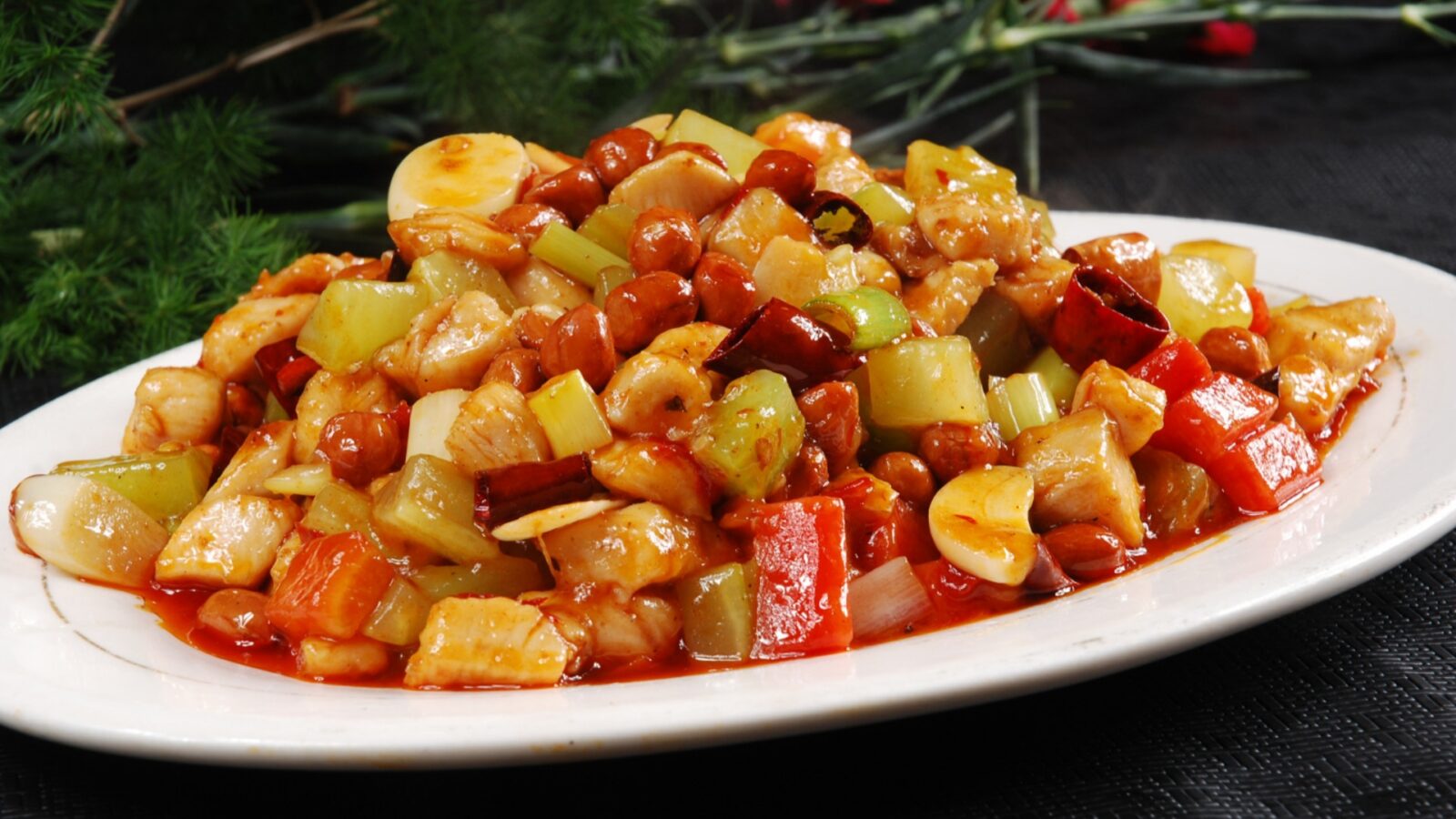
Kung Pao Chicken
🌶 Sweet & Spicy
★★★★★ Perfect First Dish
Kung Pao Chicken is the single most identifiable Chinese dish worldwide for very good reason — its dizzying rollercoaster of sweet, sour, and mildly spicy flavors, all at once, pleases almost any palate. Named after a Qing Dynasty governor by the name of Ding Baozhen, whose honorary title was “Kung Pao,” this imperial dish spread like wildfire from Chengdu banquet tables to all corners of the globe across two centuries. The hack is to stir-fry cubed chicken with dried chilies and roasted peanuts in a bright vinegar forward sauce, all in a smoking hot wok, so that each ingredient remains separate while absorbing the get-together flavor of the sauce.
The authentic version vs. the international adaptation
- Original Sichuan versions use Sichuan peppercorn for a subtle numbing tingle absent from most overseas versions
- The sauce balance is sharper and less sweet than the Americanized variant most foreigners recognize
What makes it the perfect gateway dish
- The peanuts, sweetness, and tender chicken create psychological comfort even before the spice registers
- Heat remains entirely manageable — it invites further spice exploration rather than deterring it
Ordering tip for your first authentic bowl
- Always request 宫保鸡丁 (Gōngbǎo Jīdīng) by name — staff in China recognize this immediately and universally
- Eat the peanuts last — they carry concentrated sauce flavor and serve as the ideal final note of each serving
2. Mapo Tofu(麻婆豆腐)
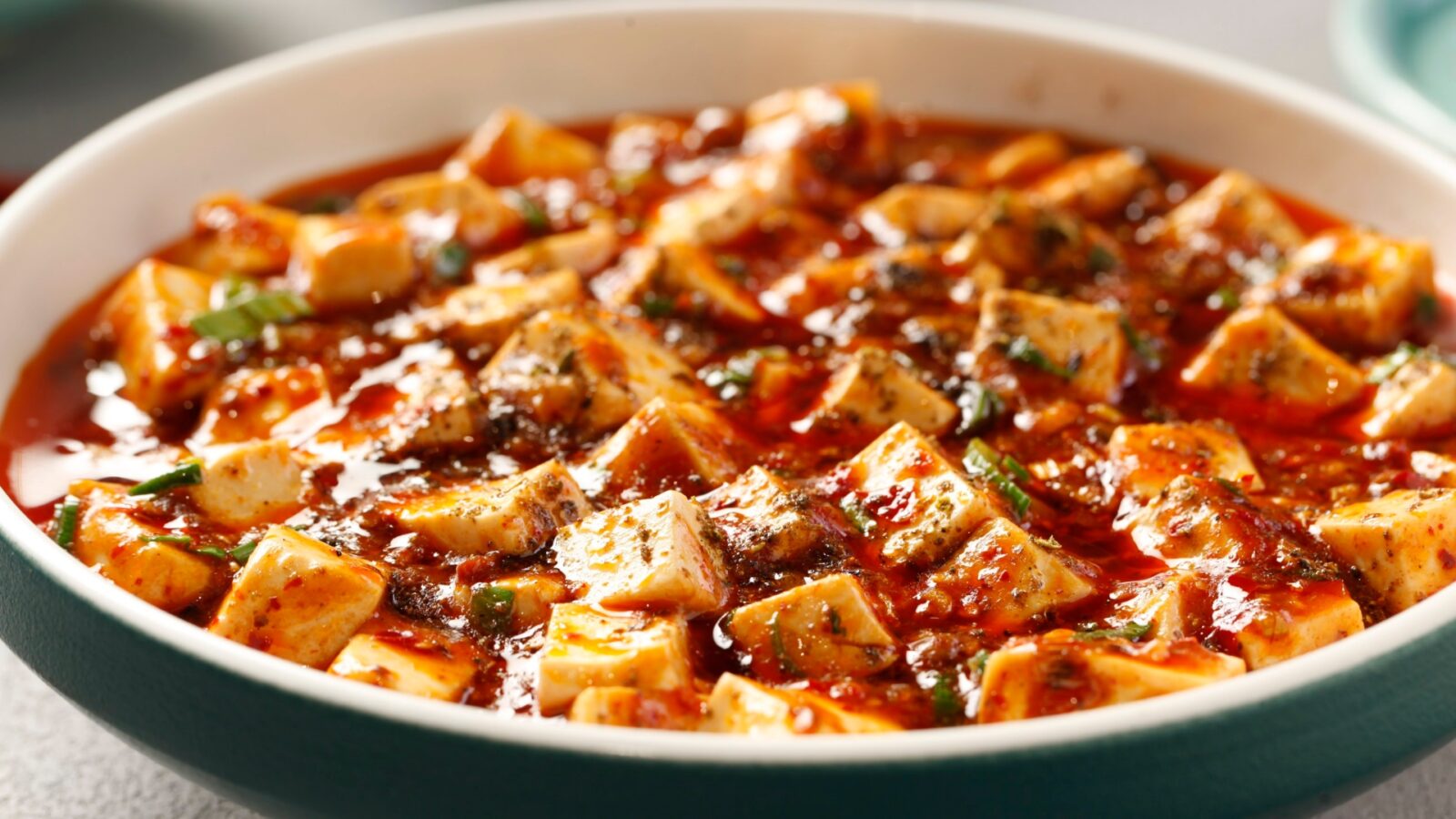
Mapo Tofu
🌶🌶🌶 Medium + Numbing
★★★★☆ Highly Recommended
If we could declare one dish as quintessentially representative of Sichuan food, it has to be Mapo Tofu, the creation of a woman named Chen in the Qing Dynasty. This brilliant dish conquered the whole nations of China and spread over the world in a matter of decades. Each single bite gives a full orchestral chorus in your mouth, with no weak or hollow note. Silken tofu snuggles next to minced meat at every level of texture. And those tingling peppercorns make the boiling chili heat truly graceful and unforgettable.
🌶 The Secret Balance: Always Eat It Piping Hot
Once Mapo Tofu cools even slightly, the numbing effect of the peppercorn fades significantly and rapidly. Therefore, pair it immediately with a generous bowl of fluffy white rice from the very start. The rice absorbs the red oil and slows the heat's cumulative impact on your stomach. Consequently, most first-time diners discover they have ordered a second bowl before even realizing it. 🍚
🍷 Flavor Pairing: To discover which drinks can beautifully balance and complement the intense numbness and fiery spices of this iconic dish, check out our guide on Wine and Chinese Food Pairing.
3. Chongqing Hotpot(重庆火锅)
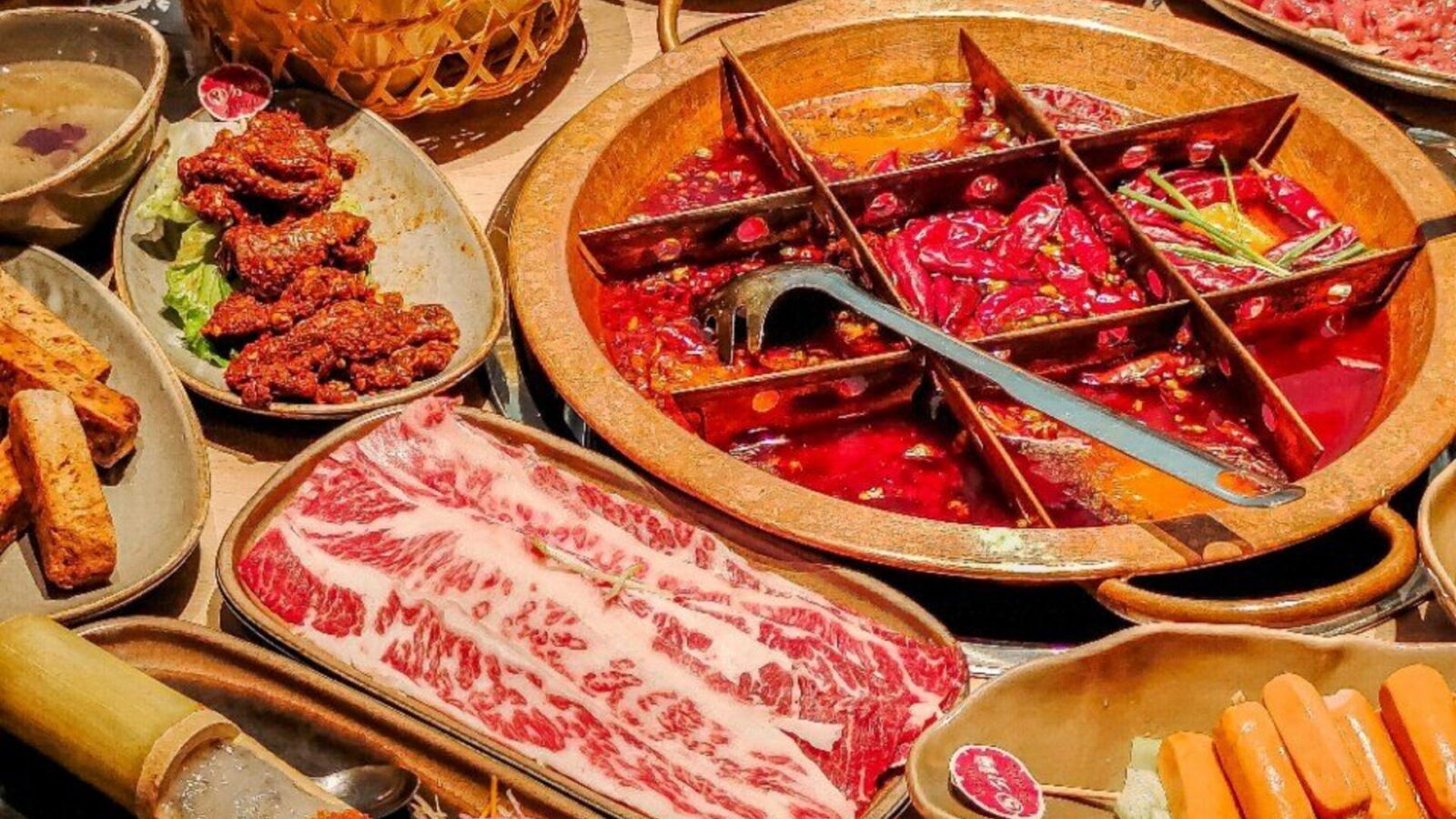
Chongqing Hotpot
🌶🌶🌶🌶🌶 Extreme
★★☆☆☆ — Split Pot Required
Chongqing hotpot delivers you a spice rush that feels rawer than anything China has to offer. Made with pure beef tallow as its bubbling red broth, the concentrated fat traps extreme heat that it spits back at you with every single mouthful you get down. Duck blood and crunchy tripe absorb the molten carnage best throughout, delivering your taste buds an unforgettable electrifying shock on any first encounter.
The initial moment overwhelms you completely — the heat, the red oil, the steam, everything arrives simultaneously. However, the deeply addictive numbing thrill pulls you back before the meal even ends. Consequently, pacing yourself becomes the single most important skill at any Chongqing hotpot table. Therefore, order sweet plum juice (梅子汁) alongside the meal — it genuinely helps with both heat management and digestion throughout.
4. Dan Dan Noodles(担担面)
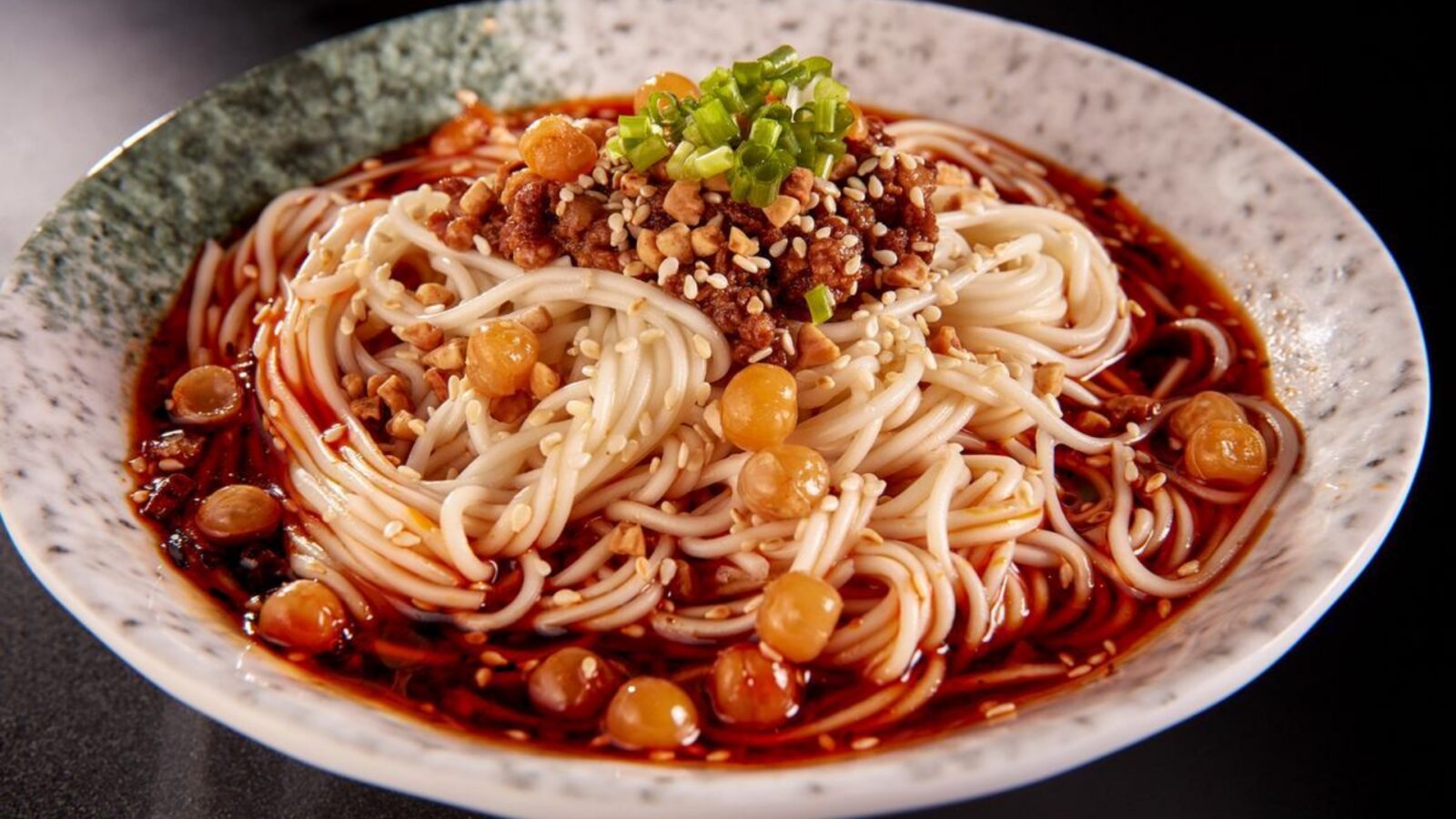
Dan Dan noodles
🌶🌶 Nutty & Spicy
★★★★☆ Street Food Essential
Dan Dan Noodles started as a basic Chengdu street food that vendors balanced on poles via baskets — Dan Dan means pole-carried noodles. Most reasons behind any “real” bowl being small and quick to eat stem from this starting point. A sauce of sesame paste, chili oil, Sichuan peppercorn, and minced pork translates into a rich and nutty paste that perfectly coats each strand; rather than hitting you all at once, the mild numbing warmth builds slowly. The preserved Yacai mustard greens — their sharp, atomic nature is marinated turnip — serve as a cellular wrecking ball to any richness that could become self-indulgent. Honestly, no wonder it’s a unique option — comforting enough for beginners, and complex enough to tide the spice veterans over with a single bowl.
🌶 The Authentic Version vs. The Export Version
Outside China, Dan Dan Noodles often arrive swimming in broth — but authentic Chengdu versions are nearly dry, with just enough sauce to coat. The dry version concentrates all flavors intensely onto the noodle surface. Therefore, if your bowl looks like soup, you are experiencing the Americanized adaptation rather than the real street original. Ask specifically for 干拌担担面 (gān bàn dāndān miàn) for the genuine dry-mixed version. 🍜
5. Hunan Stir-Fried Pork(辣椒炒肉)
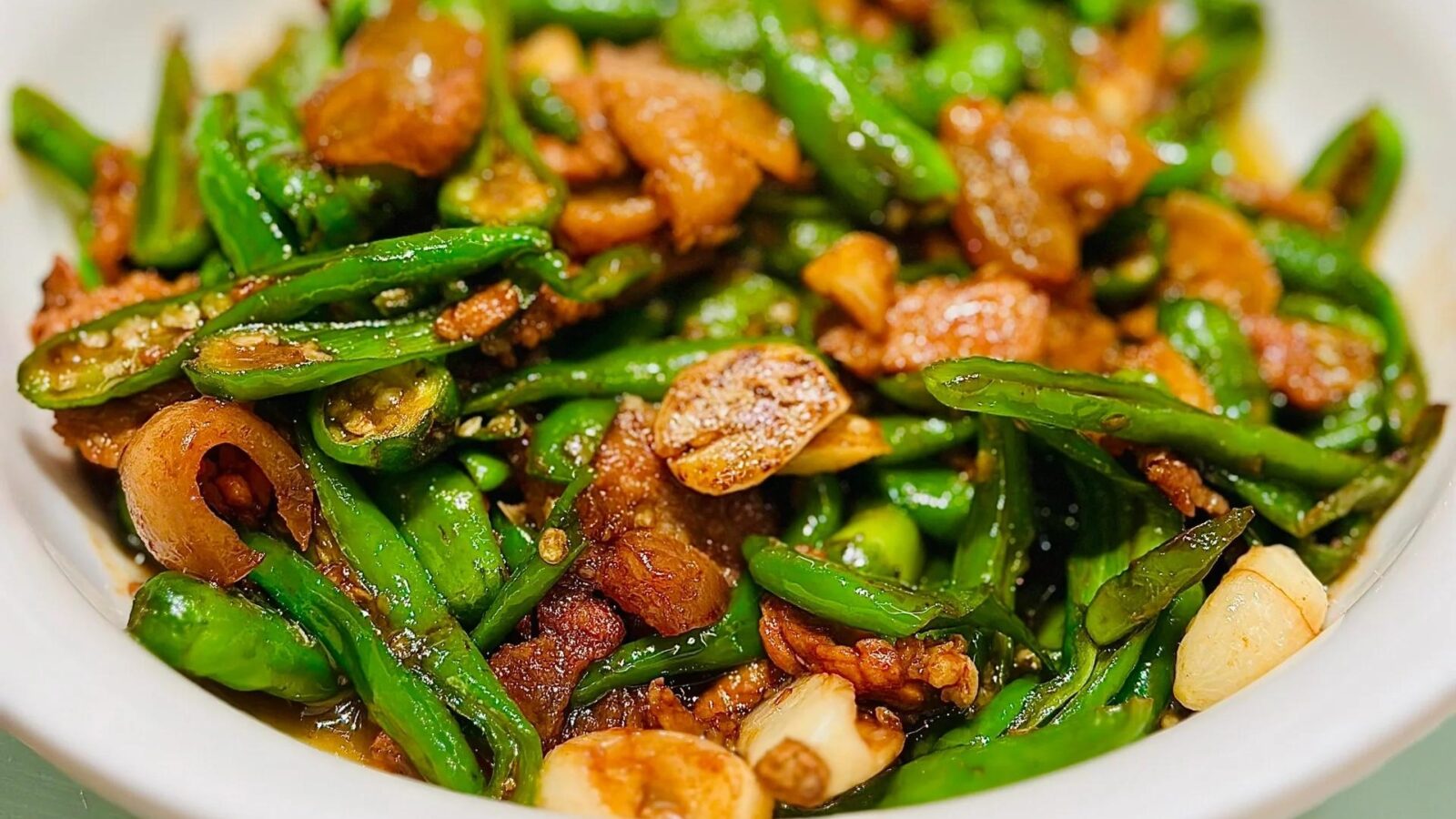
Hunan Stir-Fried Pork
🌶🌶🌶🌶 Raw Direct Heat
★★★☆☆ For Brave Diners
This simple stir-fry embraces the daily comfort food of Hunan with unapologetic completeness. Unnecessarily for the uninitiated, local chefs use fresh green chilies indiscriminately (unlike other areas where dried alternatives are utilised abundantly). The heat slaps the tongue with raw and unfiltered immediacy. Savoury pork fat tempers the sharp spice from being purely and exhaustively punitive, so that locals eat great mountains of white rice with this as an everyday staple.
🔥 Pure Heat Warning: Zero Numbing Buffer Present
Unlike every Sichuan dish, this stir-fry contains absolutely zero numbing peppercorn whatsoever. Consequently, the fiery heat is completely direct, linear, and totally unapologetic from the very first bite. Therefore, beginners should always request 少辣 (shǎo là) — less spicy — as a careful first attempt. However, even the reduced version carries genuine Hunan intensity that surprises most people. Watch local diners eat this dish with focused silence and a mountain of rice — that expression tells the entire story. 🌶
6. Steamed Fish Head(剁椒鱼头)
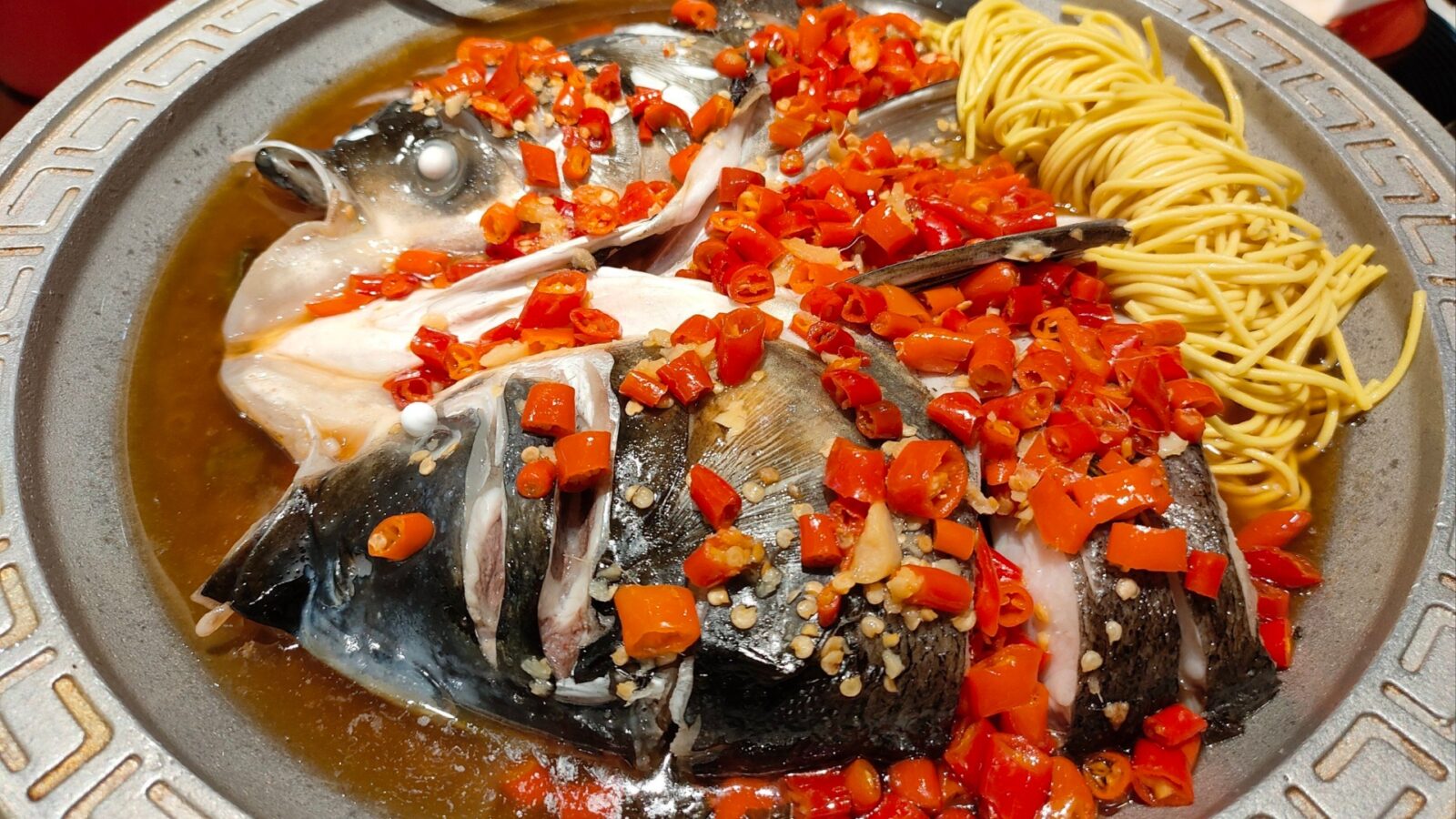
Steamed Fish Head
🌶🌶🌶🌶 High Heat
★★★☆☆ Requires an Open Mind
A massive fish head rests on a large platter beneath a thick blanket of bright, chopped fermented chilies. Initially, the striking visual presentation startles most Western diners seated at the table. However, the steaming process preserves the fish meat's astonishingly delicate texture throughout the entire cooking. Consequently, the fermented saltiness permeates the fresh fish in a beautifully complex and rewarding way. Furthermore, fermented chili delivers a mellower, more nuanced heat than any raw fresh alternative could provide.
The single best bite in the entire dish
- The tender cheek meat near the jaw melts almost instantly — it is the richest and most rewarding part
- Collagen from the head adds a silky richness that absolutely no fillet version can ever replicate
The perfect local way to finish the meal
- Toss plain noodles directly into the remaining spicy fermented broth at the very end of your meal
- This final noodle step is a genuine local tradition — the broth is simply too good to leave behind
The psychological hurdle for most Westerners
- The whole-head presentation confronts the food's origin directly and deliberately — this is intentional culture
- Every foreigner who overcomes this initial moment reports that the cheek meat conquers all hesitation immediately
7. Spicy Boiled Beef(水煮牛肉)
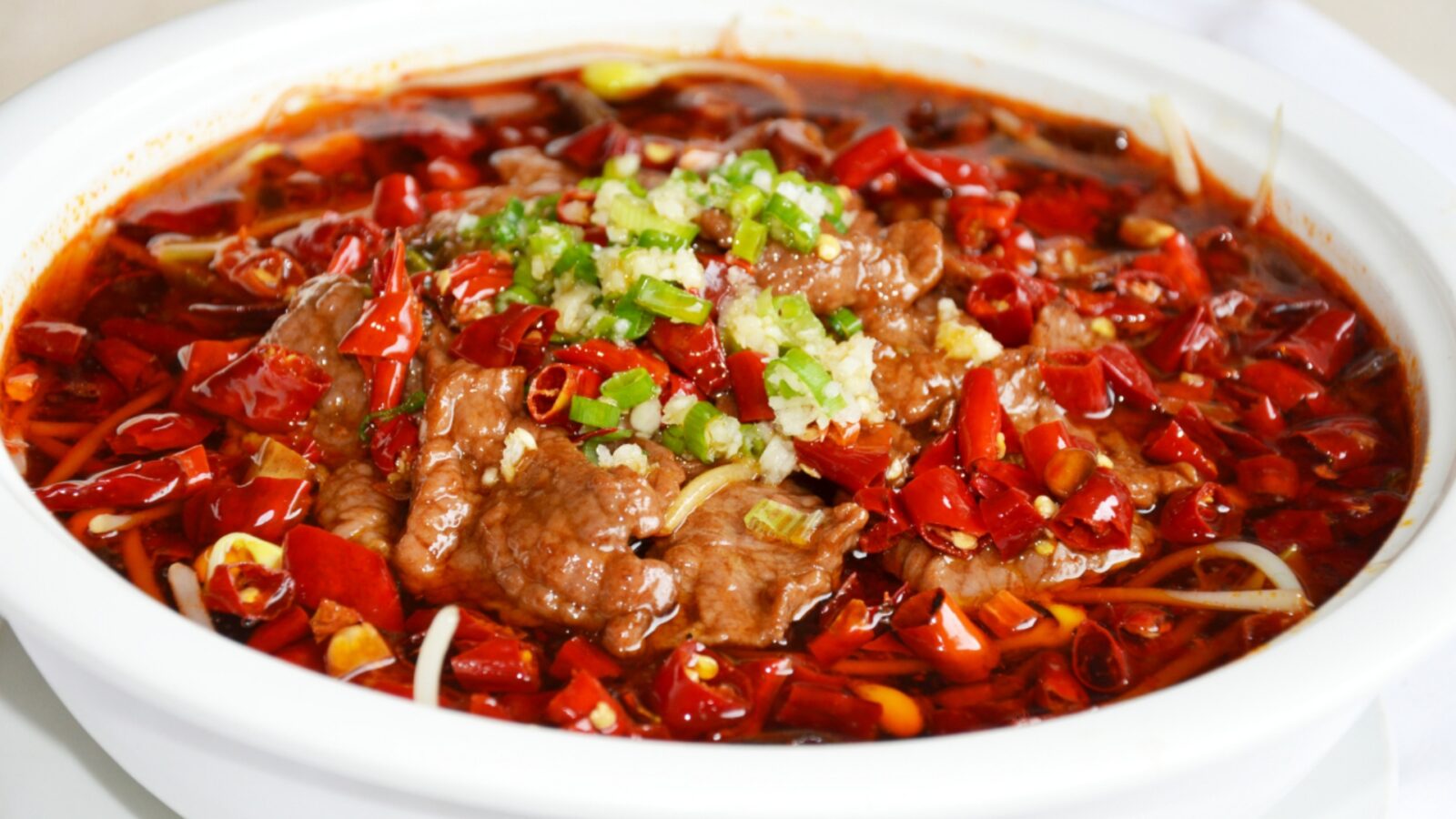
Spicy Boiled Beef
🌶🌶🌶🌶 Red Oil Intense
★★★☆☆ High Tolerance Required
Despite its deceptively plain name, Spicy Boiled Beef (水煮牛肉) is one of the most visually dramatic and intensely flavored dishes in all of Sichuan cuisine. Tender beef slices and vegetables are submerged in a deep crimson pool of chili oil and broth, then finished tableside with sizzling dried chilies and peppercorns poured directly over the top — the signature crackling sound signals the heat is now fully activated. The beef itself is velveted before cooking, resulting in a melt-in-the-mouth texture that contrasts dramatically with the aggressive surrounding heat. This is not a dish that eases you in — it commits fully from the very first spoonful.
🌶 The Tableside Theatre Moment
The dramatic final step — hot oil poured sizzling over dried chilies — is not merely visual. It releases the chili's aromatic compounds instantly and permanently changes the dish's flavor profile. Therefore, eat immediately after the oil is poured. Waiting even two minutes allows the oil to cool and flatten the peak intensity of this carefully engineered sensory moment.
8. Dry Chili Chicken / Lazi Ji(辣子鸡)
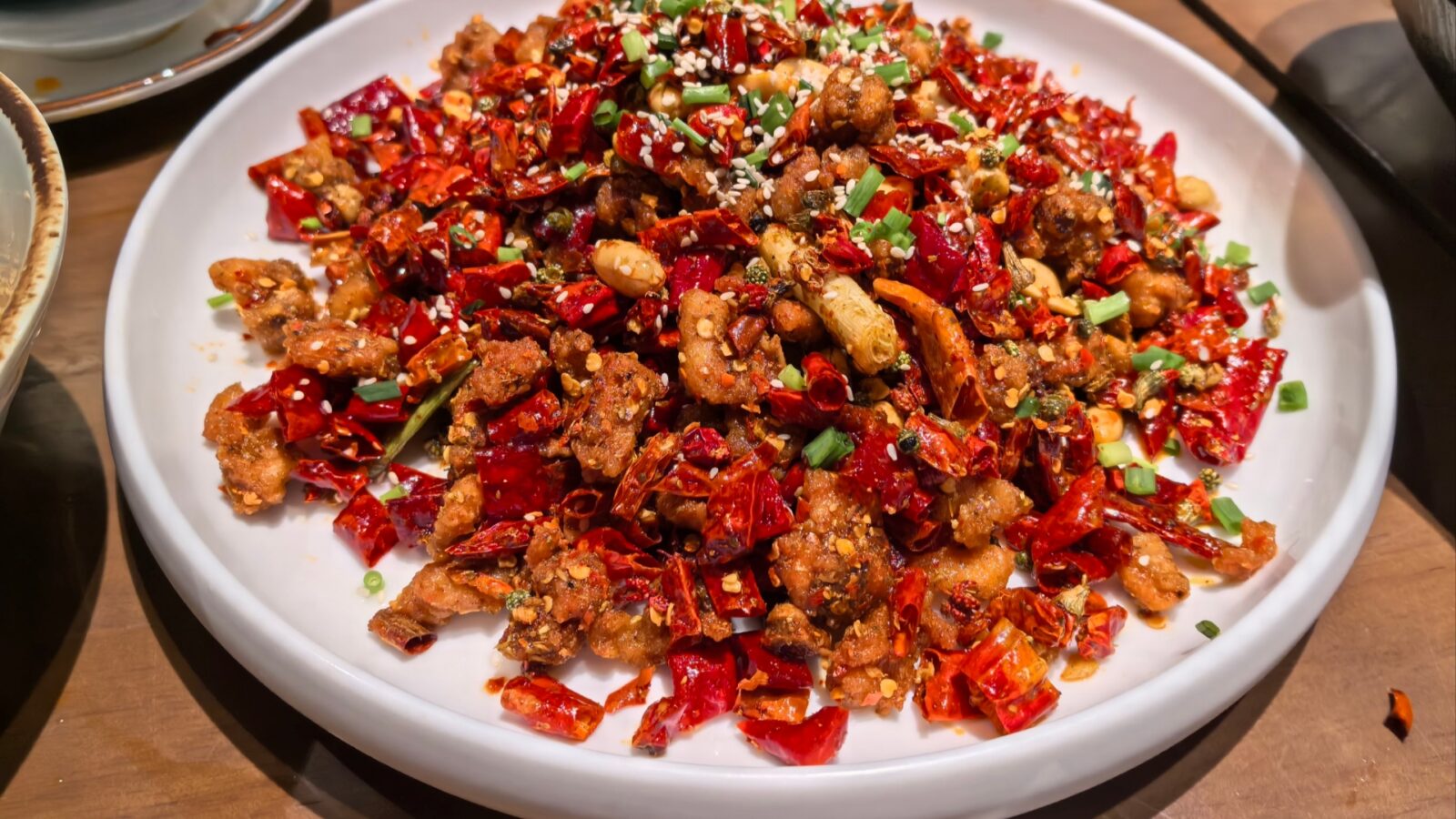
Lazi Ji
🌶🌶🌶🌶 High Heat
★★★☆☆ Worth the Challenge
This dish arrives as an intimidating and towering mountain of dried red chilies. Consequently, golden, crispy chicken chunks hide completely within this spectacular pile. Furthermore, the cooking process prioritizes fragrant and aromatic dryness over any wet sauce whatsoever. Therefore, finding each tasty piece of chicken genuinely feels like a thrilling and rewarding treasure hunt. The dry chili heat is cumulative — it builds quietly and steadily with each successive bite throughout the meal. However, the chicken's crispness provides a deeply satisfying textural contrast that keeps pulling you forward. Lazi Ji originated from Chongqing's Gele Mountain, where an entire dedicated street still serves only this one dish.
9. Twice-Cooked Pork(回锅肉)
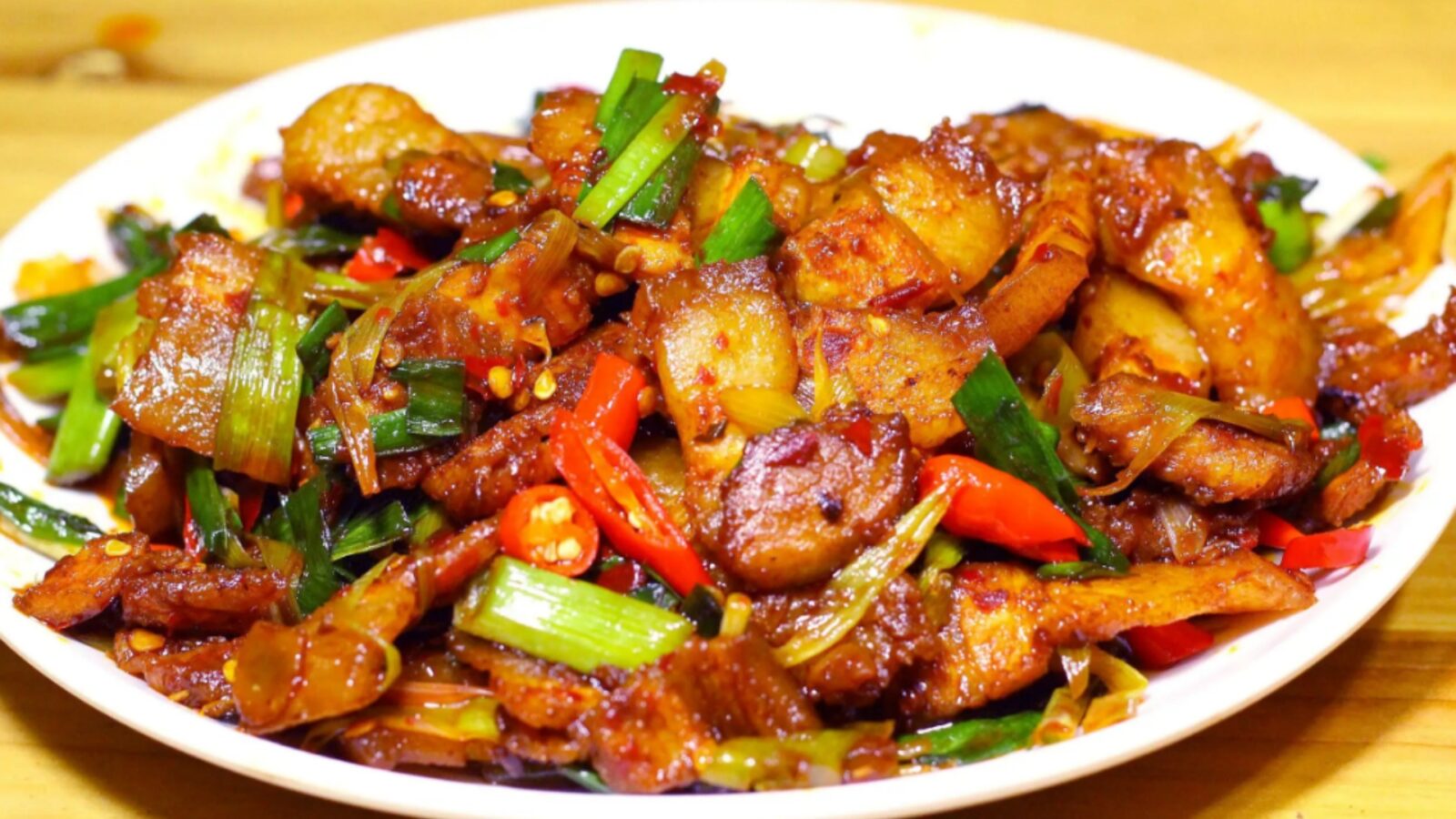
Twice-Cooked Pork
🌶🌶 Savory Heat
★★★★★ Family Table Staple
Twice-Cooked Pork (回锅肉, huí guō ròu) is the dish that Sichuan families eat without occasion — the benchmark recipe against which every home cook measures their own skill. Pork belly is first simmered whole until just cooked, then sliced and returned to a blazing wok with doubanjiang, fermented black beans, garlic sprouts, and a small measure of sweet bean paste, producing caramelized edges on every slice and a sauce that stains rice a deep amber red. The spice is present but secondary — this is fundamentally a savory, umami-driven dish where the fermented chili paste provides complexity rather than punishment. For many foreign visitors, Twice-Cooked Pork becomes the unexpected favorite of their entire China trip.
🌶 The Wok Hei Secret Every Local Knows
The caramelized edges on each pork slice — the result of extreme wok temperature — are non-negotiable. They carry the concentrated flavor of doubanjiang and provide the dish's defining textural contrast. A home version cooked on a domestic burner never quite replicates the char that a restaurant wok delivers. Therefore, when in Sichuan, always order this dish from a kitchen you can hear from the street.
10. Husband and Wife Sliced Beef(夫妻肺片)
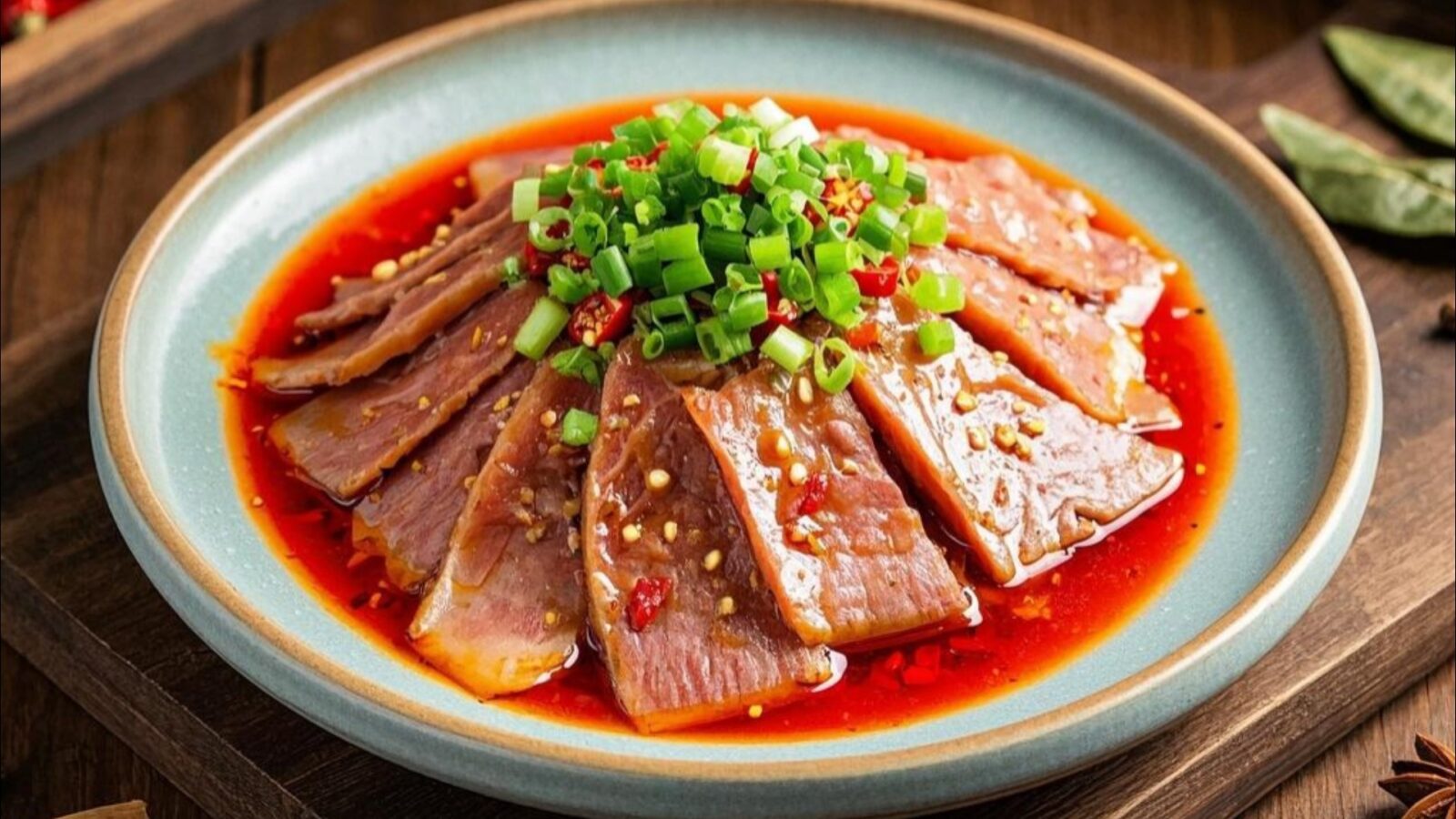
Husband and Wife Sliced Beef
🌶🌶 Mild-Medium Cold Dish
★★★★☆ Ideal Entry Point
This iconic cold appetizer from Chengdu carries a wonderfully romantic origin story at its core. Historically, a dedicated married couple sold these marinated slices on Chengdu's streets daily. Consequently, the dish inherited both their names and their enduring local reputation. Furthermore, modern chefs slice beef and tripe so thin that every piece fully absorbs its rich chili oil completely.
The Nutty Aroma — your first impression
- Crushed peanuts on top deliver a deeply roasted, welcoming fragrance before any heat arrives
- This familiar nutty note makes the dish psychologically accessible even to first-time spice beginners
The Slow Burn — the real experience underneath
- Subtle mala warmth coats the tongue gradually and gently — it never overwhelms you suddenly
- Cold serving temperature further buffers the chili impact, making it ideal as a meal opener for anyone
Why foreigners love this dish consistently
- Familiar textures combined with manageable heat create an immediately rewarding and confidence-building experience
11. Mouthwatering Chicken(口水鸡)
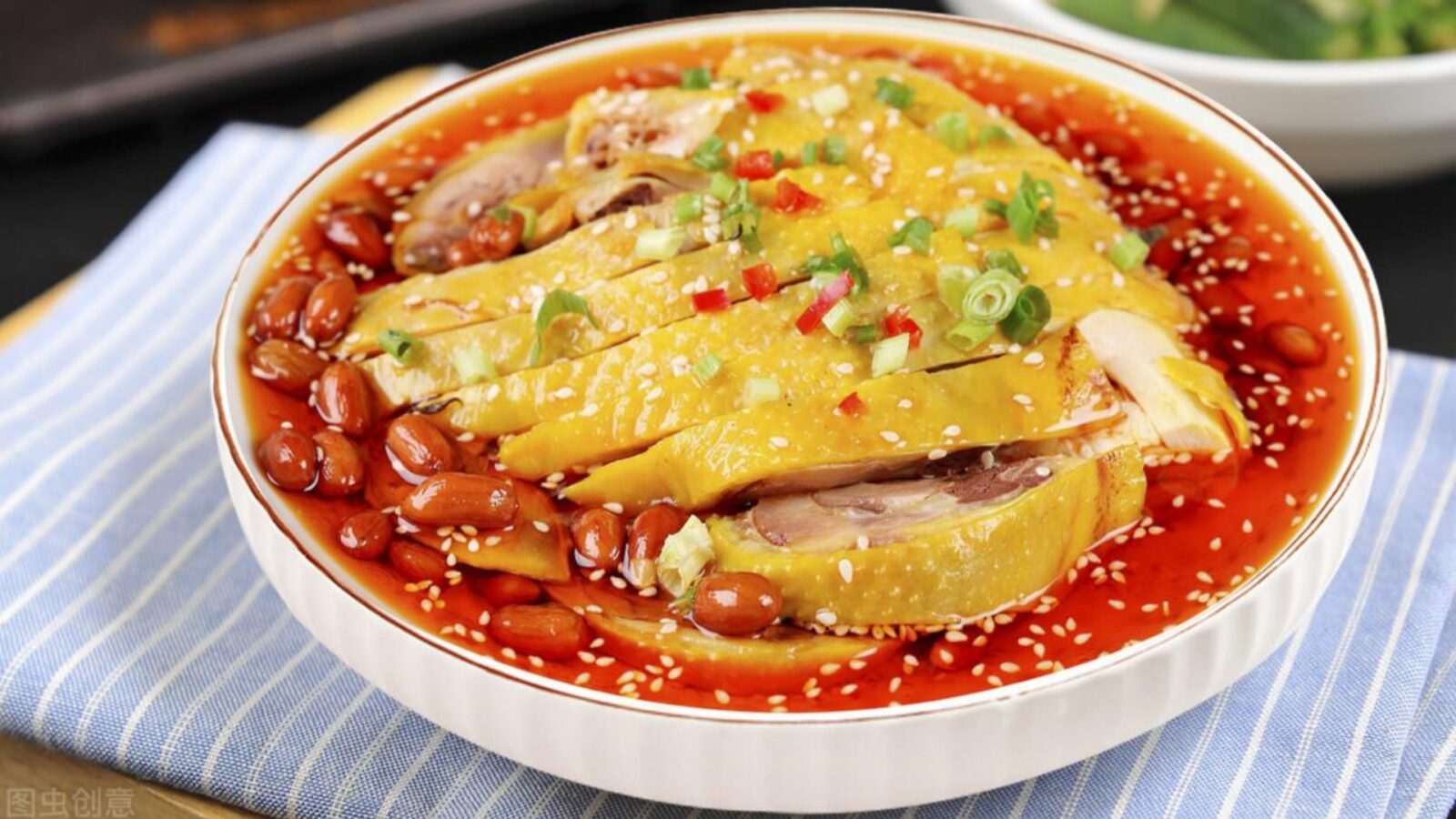
Mouthwatering Chicken
🌶🌶🌶 Mala & Sesame
★★★★☆ Cold Dish Revelation
Mouth-watering Chicken (口水鸡) earns its evocative name from a simple truth — the layered aroma of chili oil, sesame, and Sichuan peppercorn triggers an immediate salivary response before the first bite is taken. Poached chicken is chilled, sliced thin, and blanketed in a glossy red sauce that balances numbing mala heat with sesame richness and a whisper of sugar. Unlike most Sichuan spicy dishes, it is served cold — allowing every flavor to settle and deepen rather than arrive all at once. Consequently, this cold temperature transforms what could be an overwhelming spice experience into a layered, almost meditative one.
12. Spicy Crayfish(麻辣小龙虾)
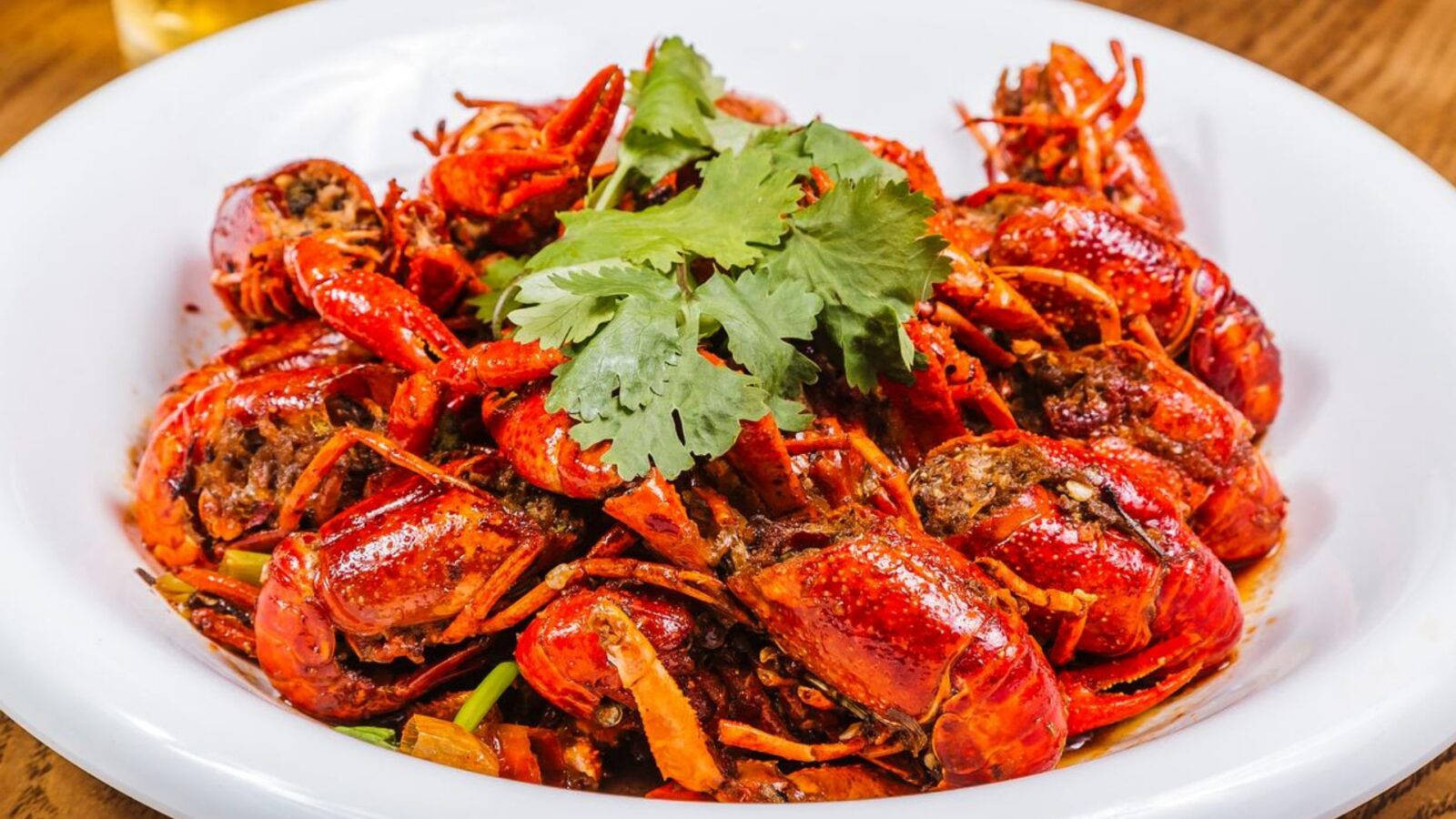
Spicy Crayfish
🌶🌶🌶🌶 Aromatic Fire
★★★☆☆ Requires Commitment
Every summer across China, and especially in Changsha and Wuhan, entire streets transform into open-air crayfish halls where the primary activity is tearing into spiced shells with bare hands while beer flows freely and conversation gets loud. Mala Xiaolongxia (麻辣小龙虾) is the centerpiece of this ritual — crayfish braised for hours in a complex sauce of doubanjiang, Sichuan peppercorn, garlic, and spices until every molecule of the shell has absorbed its flavor. Eating it properly is a physical act: cracking, sucking, and dissecting, with sauce coating hands and face throughout. The experience is deliberately messy, communal, and deeply satisfying in a way that a restaurant table and utensils simply cannot replicate.
13. Blood Curd Stew(毛血旺)
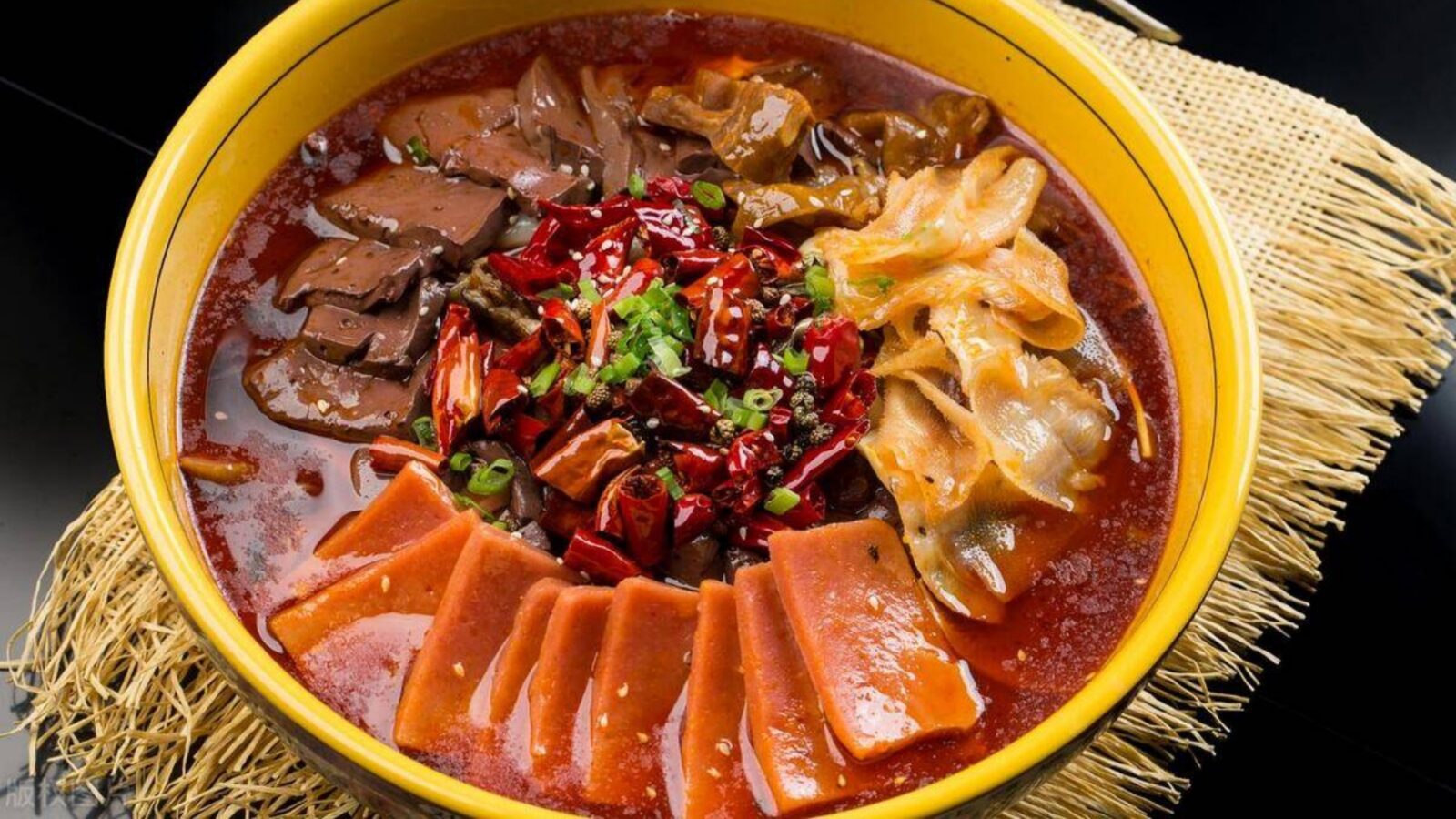
Blood Curd Stew
🌶🌶🌶🌶🌶 Extreme Mala
★★☆☆☆ Adventurous Eaters Only
Mao Xue Wang (毛血旺) is Chongqing's most uncompromising communal dish — a bubbling cauldron of duck blood, tripe, pork offal, and tofu submerged in a ferociously spiced beef-tallow broth. The variety of textures — silky blood curd, springy tripe, tender tofu — is as remarkable as the heat itself, which arrives in relentless, cumulative waves with each bite. This dish carries deep working-class roots and remains a staple of Chongqing's night market culture, eaten at communal tables amid steam and noise and cold bottles of local beer. Approaching it requires genuine preparation — but for those who do, it delivers an experience that no amount of description can fully anticipate.
14. Suancai Fish(酸菜鱼)
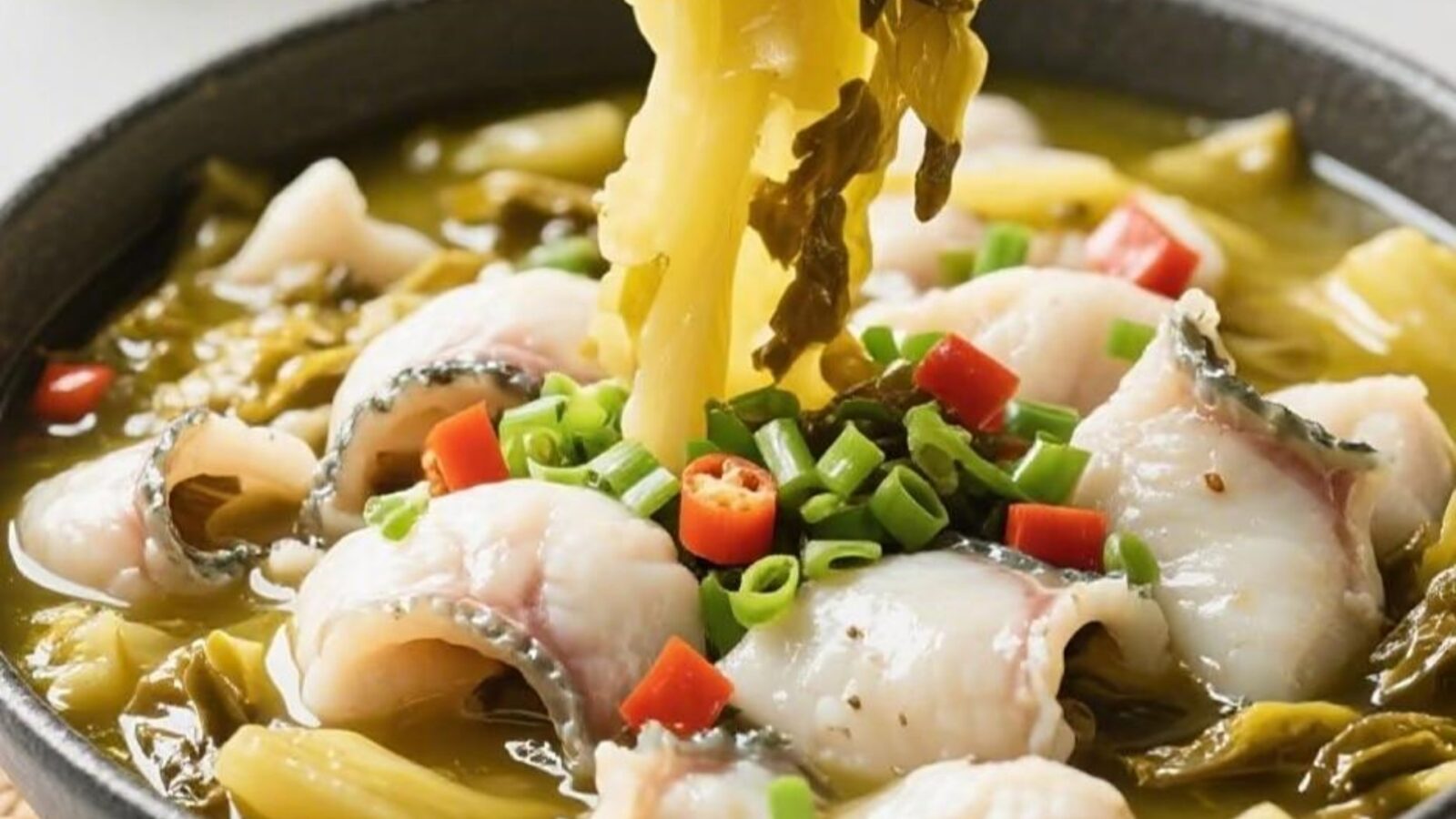
Suancai Fish
🌶🌶 Sour & Spicy
★★★★☆ Best Chongqing Entry Point
Suancai Fish is the smartest first order for any first-time visitor to Chongqing — its pickled mustard greens (酸菜) introduce sourness that softens the regional spice intensity significantly without diluting it. The fish is velveted and sliced thin, cooked briefly in the tangy broth so it remains impossibly tender, while the pickling fermentation adds a savory depth that makes this dish far more complex than its modest appearance suggests. For those intimidated by Chongqing's fiercest offerings, Suancai Fish provides the perfect calibration point — challenging, but never punishing.
15. Big Plate Chicken / Da Pan Ji(大盘鸡)
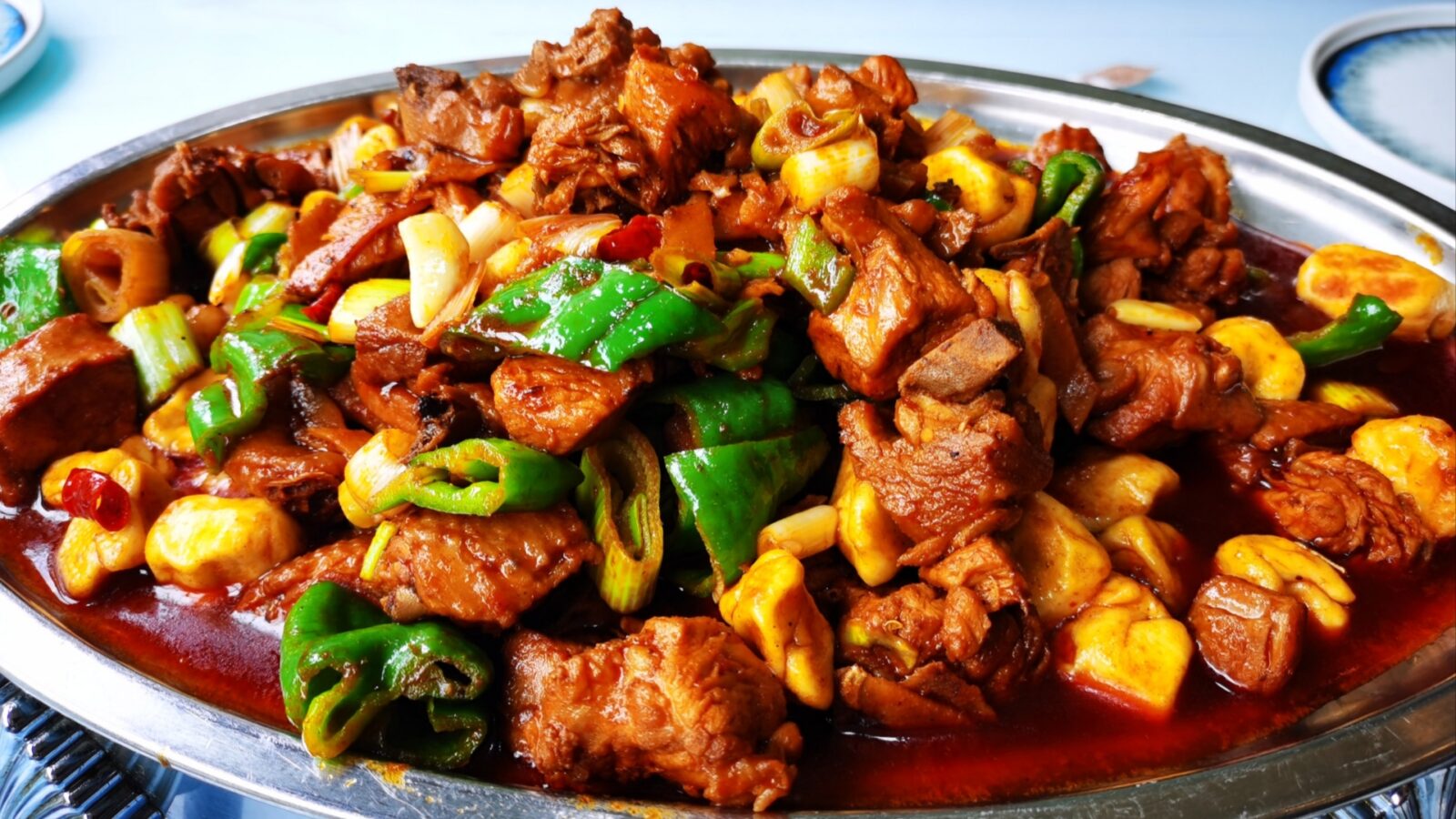
Da Pan Ji
🌶🌶 Mild-Medium Savory
★★★★☆ Highly Accessible
Traveling northwest to Xinjiang reveals a completely different kind of spicy food Chinese experience. Specifically, this generous stew features bone-in chicken, soft potatoes, and a deeply savory broth. Consequently, the warming depth suits cold weather and long communal table gatherings perfectly. Furthermore, the spice level remains highly accessible for most cautious expats at any table setting. Therefore, Da Pan Ji provides one of the most welcoming and comforting entries into regional Chinese spice culture available anywhere.
16. Sour Soup Fish / Suan Tang Yu(酸汤鱼)
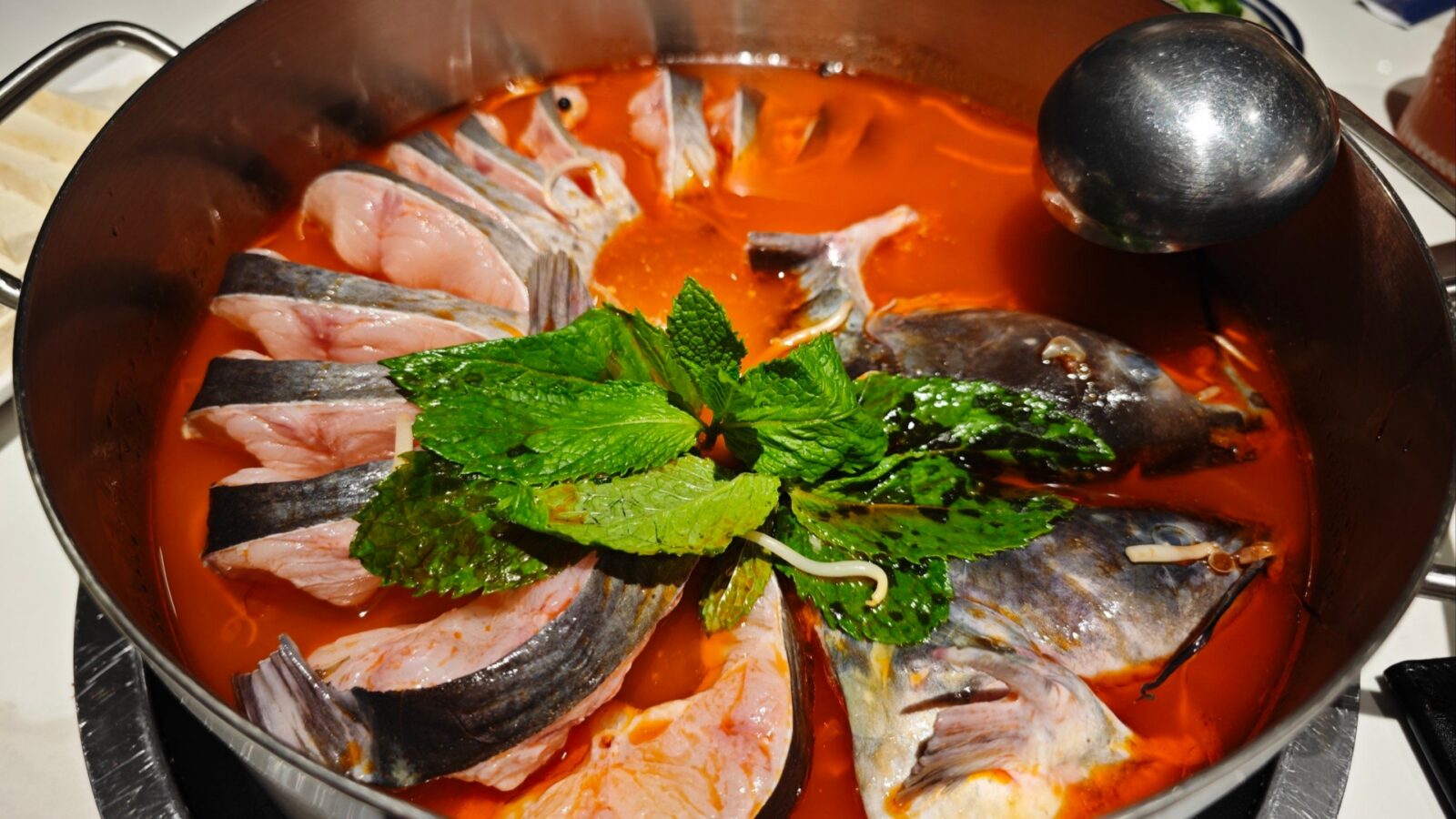
Suan Tang Yu
🌶🌶🌶 Sour + Spicy
★★★★☆ Foreigner-Friendly
Guizhou cuisine masters a sour and spicy combination that stands entirely apart from all regional competitors. Local chefs ferment wild tomatoes to create the utterly unique and irreplaceable broth base. Consequently, the resulting soup tastes zesty, refreshing, and surprisingly light for a genuinely spicy dish. Furthermore, bright acidity cuts continuously through the chili heat and resets the palate throughout the meal. Therefore, your digestive system handles this particular spicy food Chinese experience with far more ease than any oil-heavy alternative. In addition, the fish slices remain remarkably tender due to the gentle and beneficial acidic cooking environment. Next time a Chinese spice menu feels intimidating, start here — it builds confidence in the most elegant possible way.
17. Chongqing Small Noodles(重庆小面)
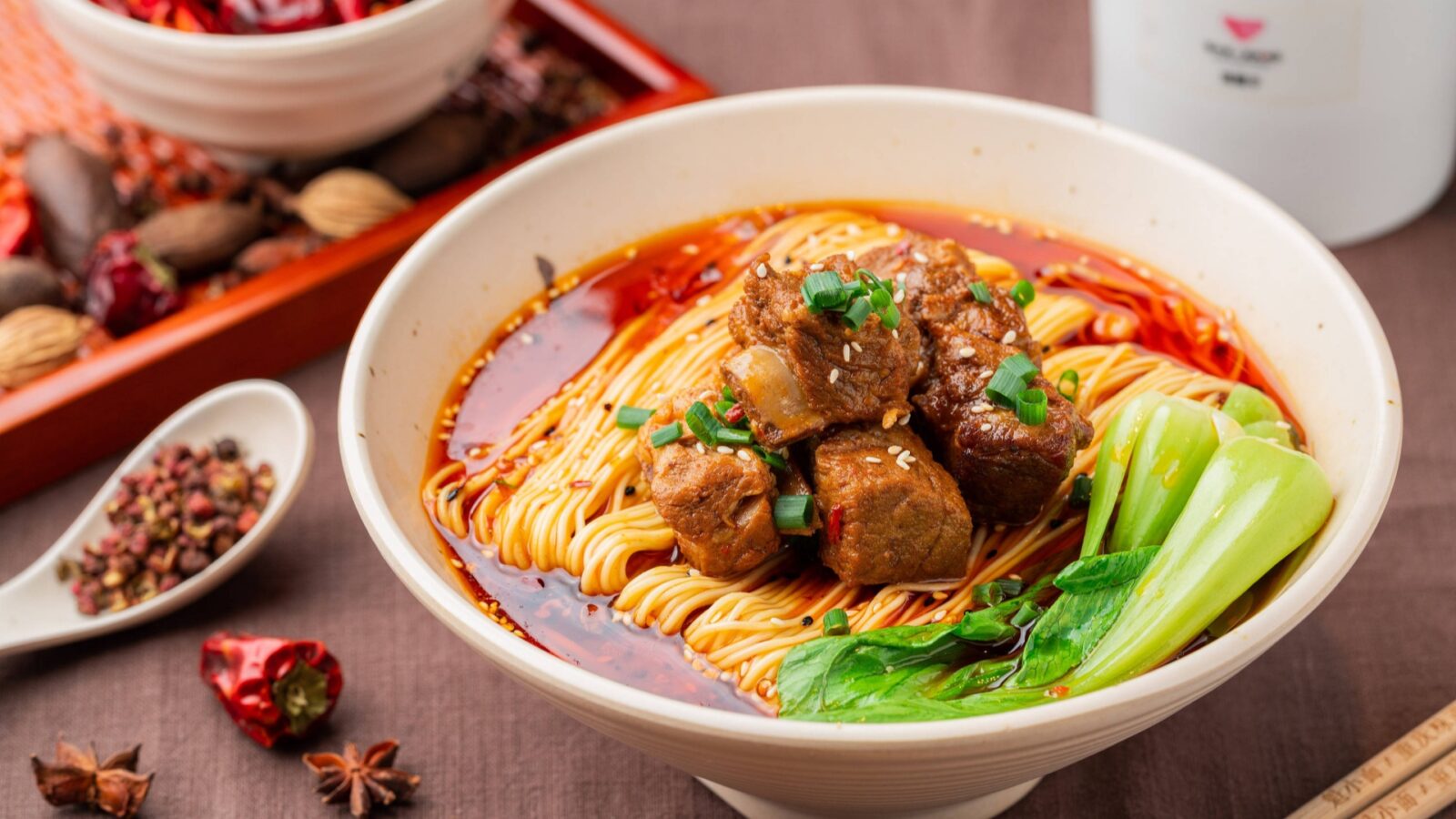
Chongqing Small Noodles
🌶🌶🌶 Numbing Spice
★★★☆☆ Local Breakfast Classic
Chongqing residents argue passionately and endlessly about which neighborhood stall makes the best small noodles — a debate that has persisted for generations and shows no signs of resolution. This deceptively simple bowl of wheat noodles carries a sauce built from a dozen ingredients: doubanjiang, sesame paste, chili oil, peppercorn, garlic, ginger, and Yacai mustard greens, all assembled by hand to a personal formula that each vendor guards jealously. It is served as breakfast throughout the city, eaten standing at street stalls with loud slurping entirely acceptable and expected. The heat is direct and front-loaded — a proper small noodle bowl will wake you up more effectively than any coffee.
18. Hunan Spicy Beef(小炒黄牛肉)
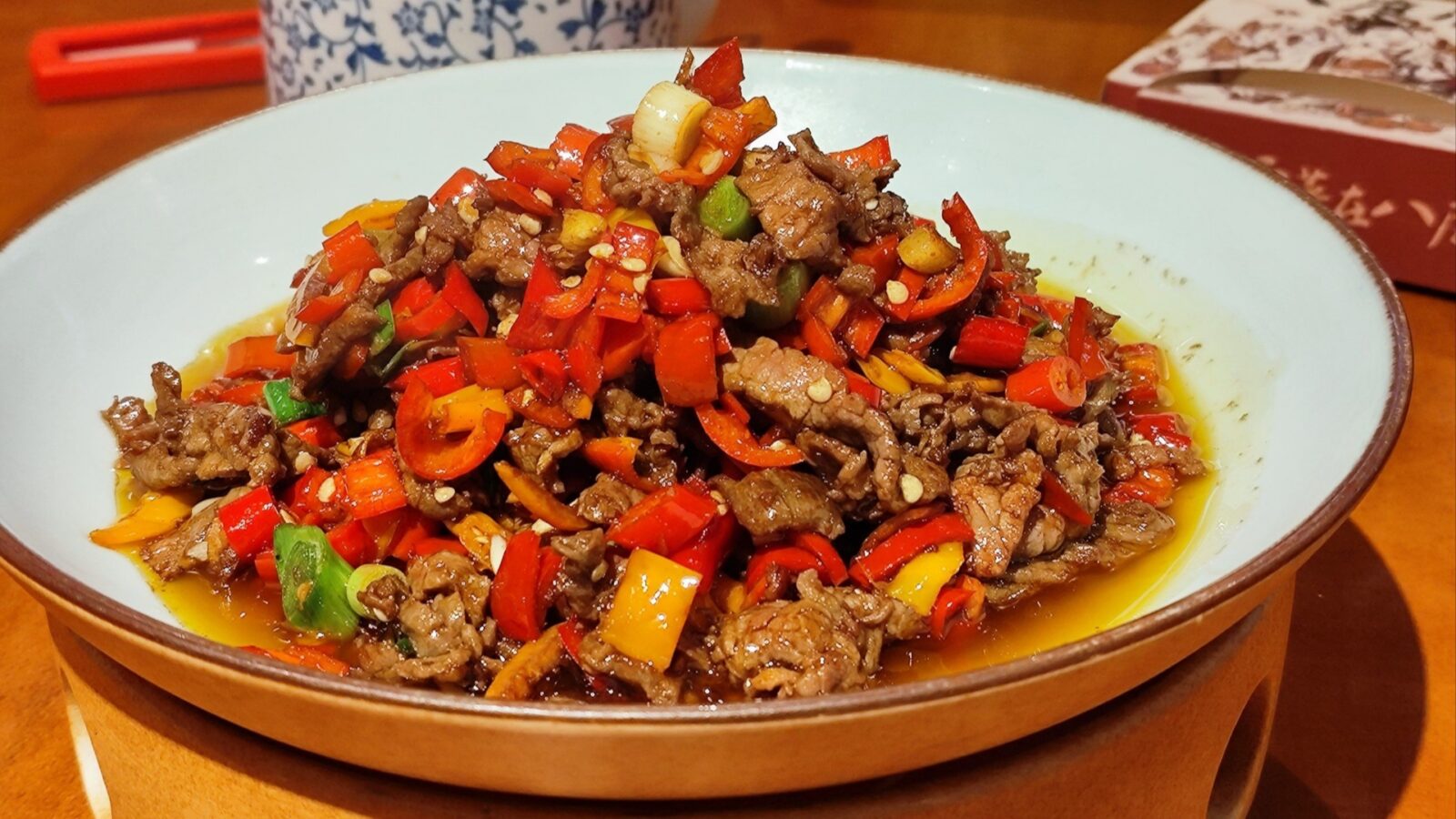
Hunan Spicy Beef
🌶🌶🌶🌶 Fierce Raw Fire
★★★☆☆ For Confident Spice Lovers
Xiǎo Chǎo Huángniúròu (小炒黄牛肉) is widely considered the finest expression of Hunan's raw, unmediated fire — a rapid wok stir-fry that cooks thin slices of yellow cattle beef with fresh green and red chilies at temperatures that leave distinctive scorched edges on every piece. The beef's natural sweetness and the chilies' uncooked ferocity meet in direct confrontation with no buffer between them, producing a flavor that is simultaneously simple and startlingly intense. This is a dish that demands quality ingredients and a skilled wok — and in Hunan, where both are taken as given, it consistently ranks among the province's most beloved everyday plates.
19. Snail Noodles(柳州螺蛳粉)
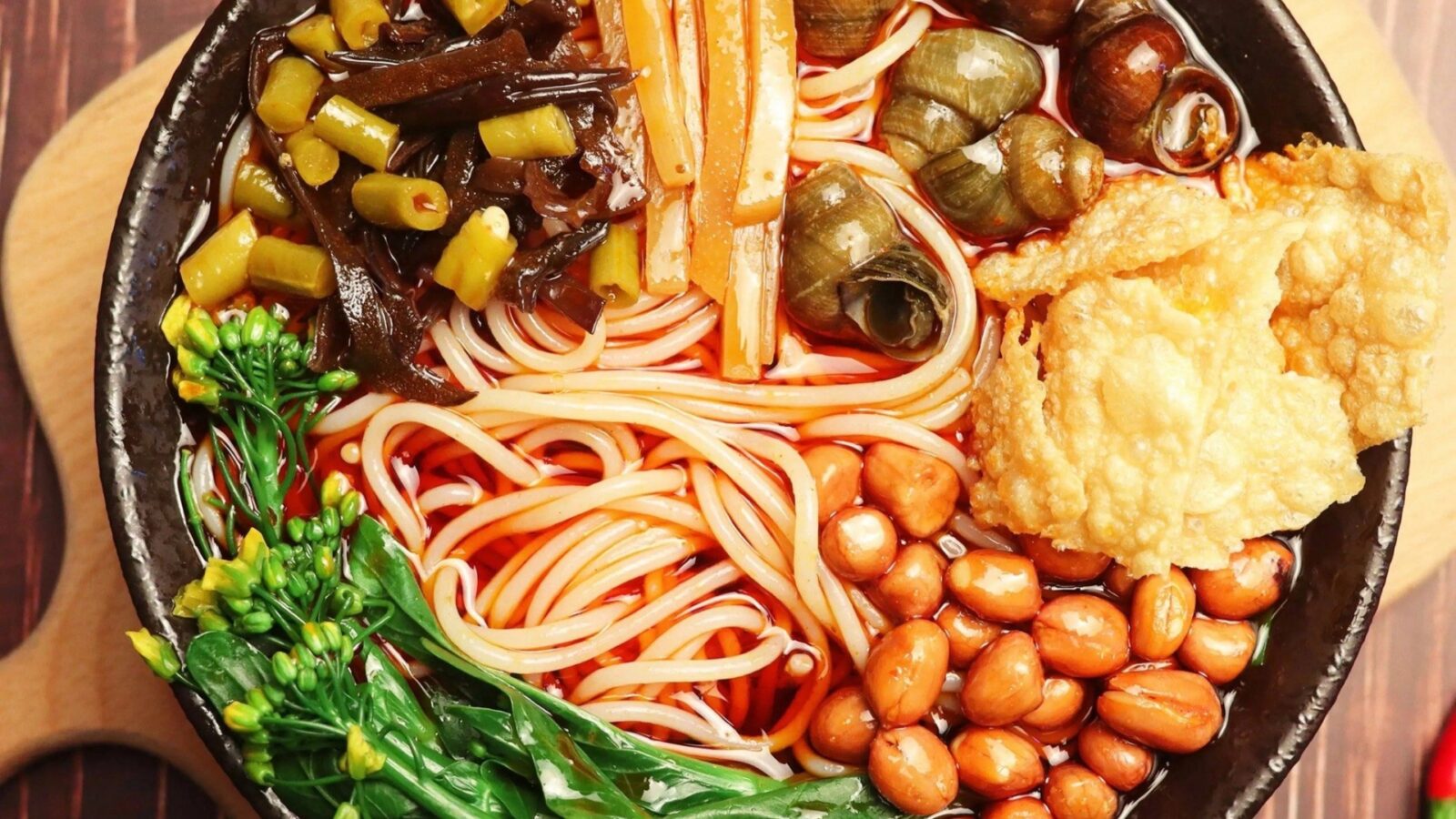
Snail Noodles
🌶🌶🌶 Sour & Funky
★★☆☆☆ For the Adventurous
Liuzhou Luósi Fěn (柳州螺蛳粉) is the most divisive bowl in China — a fermented snail broth poured over chewy rice noodles and topped with sour bamboo shoots, fried tofu skin, peanuts, and a bright chili oil that cuts through the fermented depth. The smell alone stops most newcomers at the door — an intense, pungent aroma produced by the aged bamboo shoots that ferment for weeks before use. Those who push past the initial sensory confrontation consistently report that the flavor inside is complex, savory, and deeply addictive in a way that no description adequately prepares you for. It became a nationwide obsession during China's 2020 lockdown period, when packaged versions sold out across the country.
20. Guizhou Spicy Chicken(贵州辣子鸡)
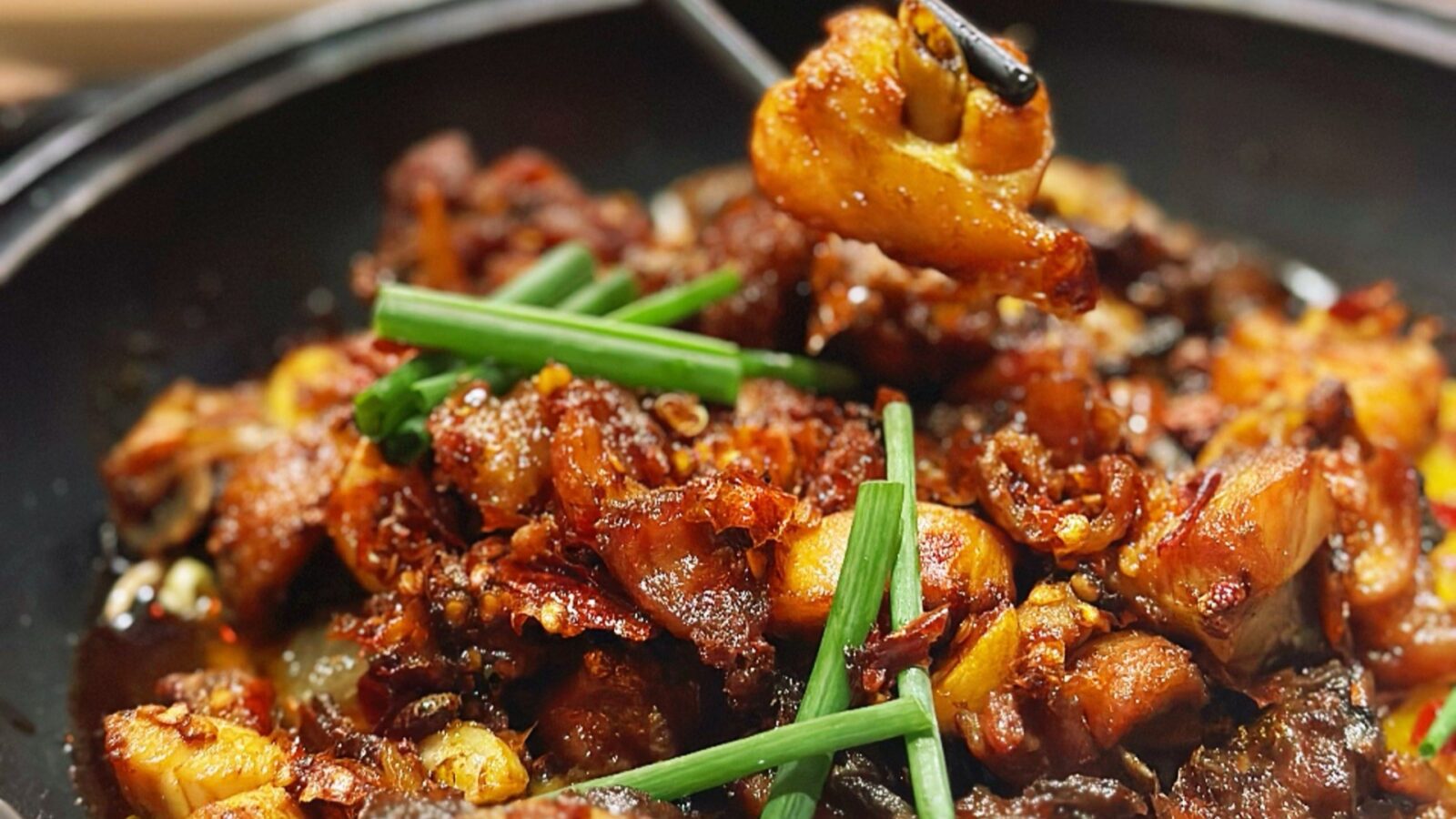
Guizhou Spicy Chicken
🌶🌶🌶 Fermented Heat
★★★☆☆ Distinctive Regional Flavor
Guizhou's辣子鸡 (làzi jī) shares its name with Chongqing's famous version but is built on an entirely different flavor logic — where Chongqing uses dry heat and fragrant oil, Guizhou relies on lactic-fermented chili paste (糟辣椒, zāo làjiāo) that introduces acidity, funkiness, and a mellower but deeply penetrating heat. The chicken is stir-fried until the skin crisps and the fermented chili paste caramelizes into the surface, creating an amber-red crust that carries the entirety of Guizhou's complex chili tradition in every bite. This dish is a compelling argument for why Guizhou, despite being less internationally recognized than Sichuan or Hunan, deserves serious culinary attention from any explorer of Chinese spice.
21. Big Plate Lamb(手抓羊肉)
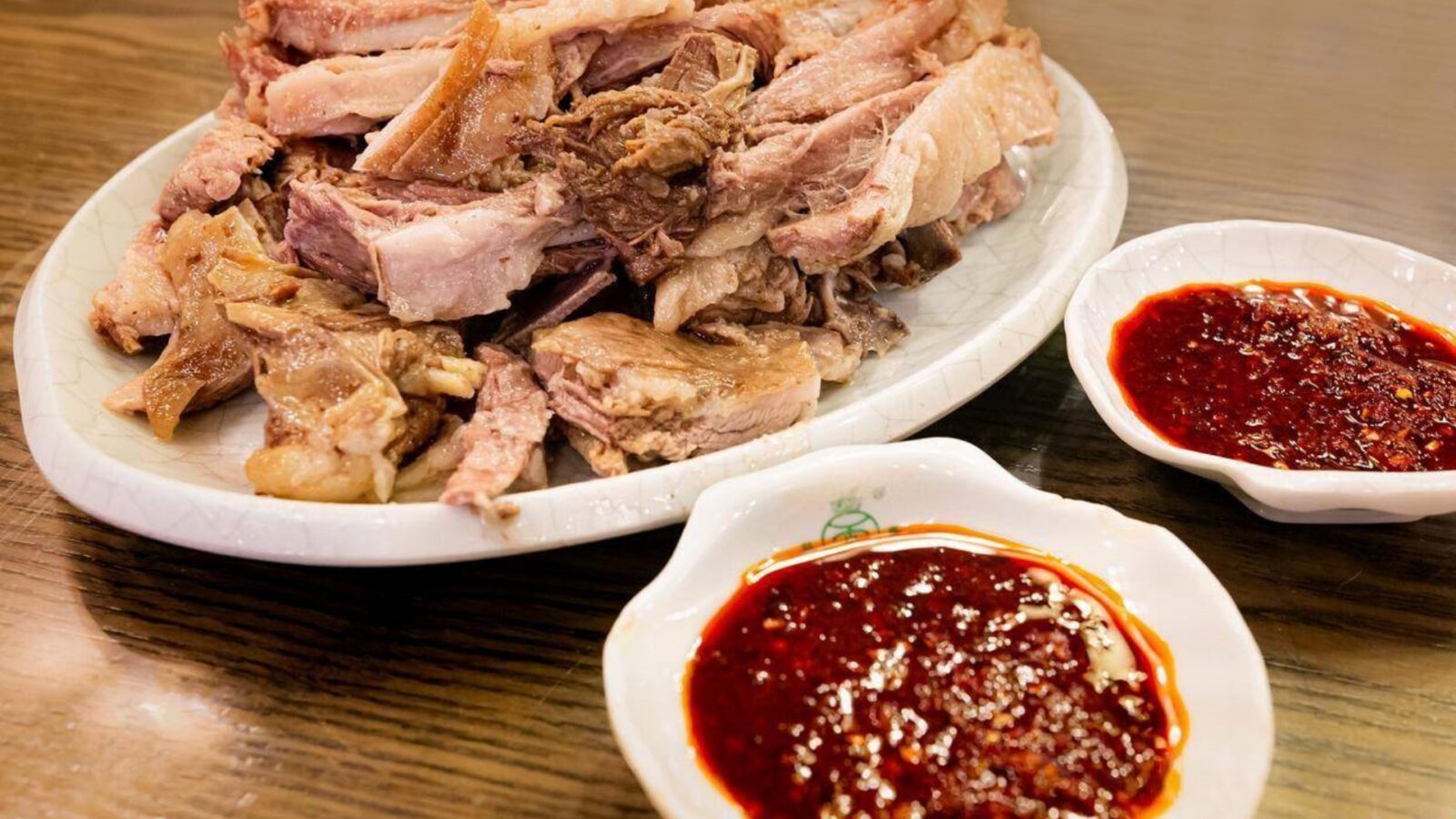
Big Plate Lamb
🌶🌶 Cumin & Chili
★★★★☆ Accessible & Deeply Satisfying
Xinjiang's hand-grabbed lamb (手抓羊肉, shǒu zhuā yángròu) introduces Chinese diners and foreign visitors alike to a spice tradition built on cumin, dried chili, and black pepper rather than the peppercorn-forward Sichuan model — reflecting the province's Central Asian culinary heritage as much as its Chinese identity. Lamb joints are braised until the meat pulls apart effortlessly, then seasoned with a dry spice blend that has more in common with the cooking of Uzbekistan than Chengdu. The dish is eaten with hands as the name demands, at communal tables where the lack of utensils signals something important about the directness and generosity of Xinjiang's food culture.
22. Nanchang Stir-Fried Rice Noodles(南昌炒粉)
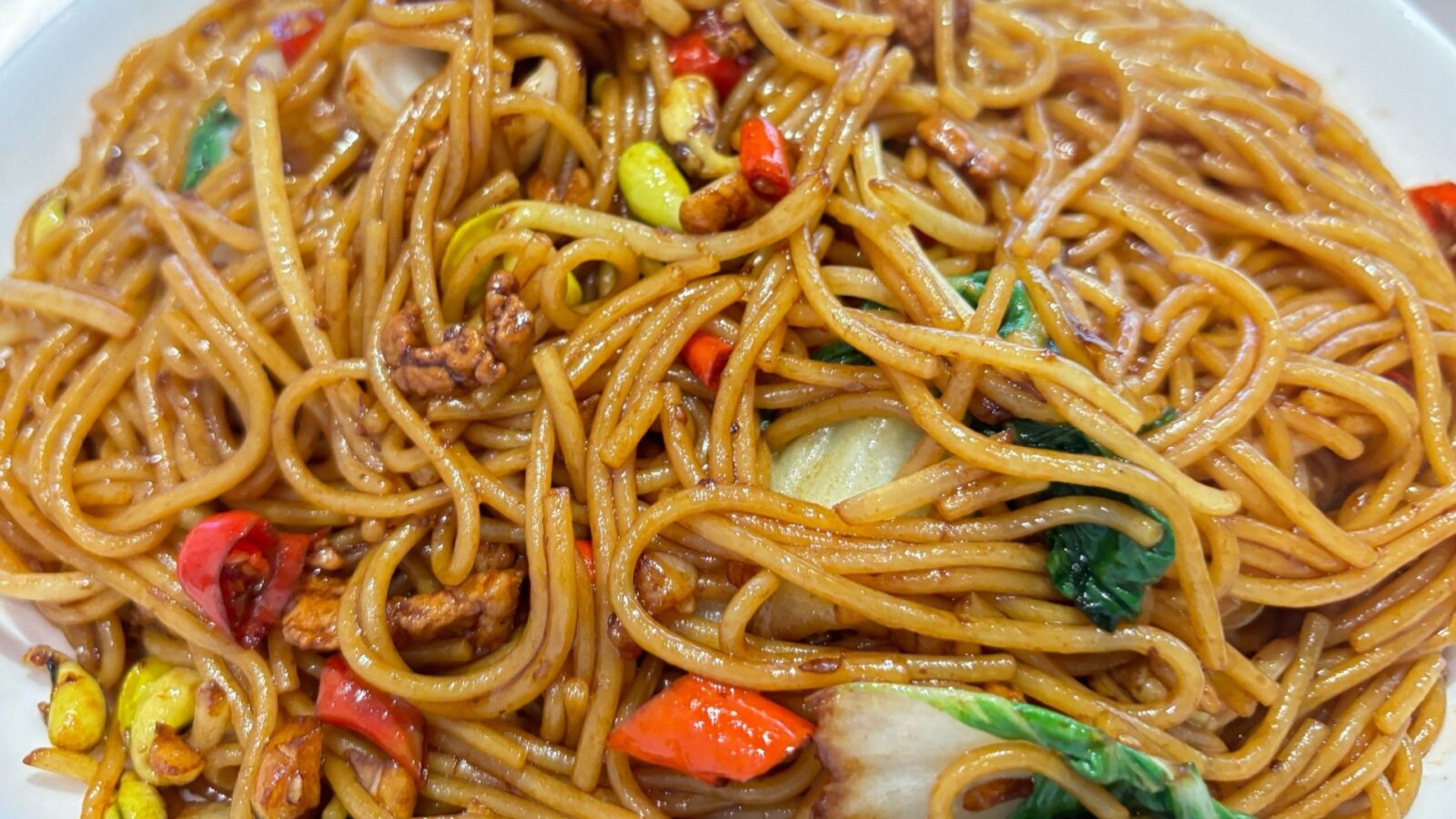
Nanchang Stir-Fried Rice Noodles
🌶🌶🌶 Sharp Spice
★★★☆☆ Worth Discovering
Nanchang炒粉 (chǎo fěn) is Jiangxi's answer to the spicy noodle — flat rice noodles wok-tossed with bean sprouts, chives, pork, and a generous hand of fresh and pickled chilies that deliver a sharp, clean heat with none of the numbing complexity of Sichuan. The dish is Nanchang's quintessential breakfast and late-night snack simultaneously, eaten at tiny street stalls with no ceremony and maximum speed. Its fame rarely crosses provincial borders — which means encountering it for the first time in Jiangxi feels like discovering a secret that the rest of China inexplicably overlooked.
23. Liangpi Cold Noodles(凉皮)
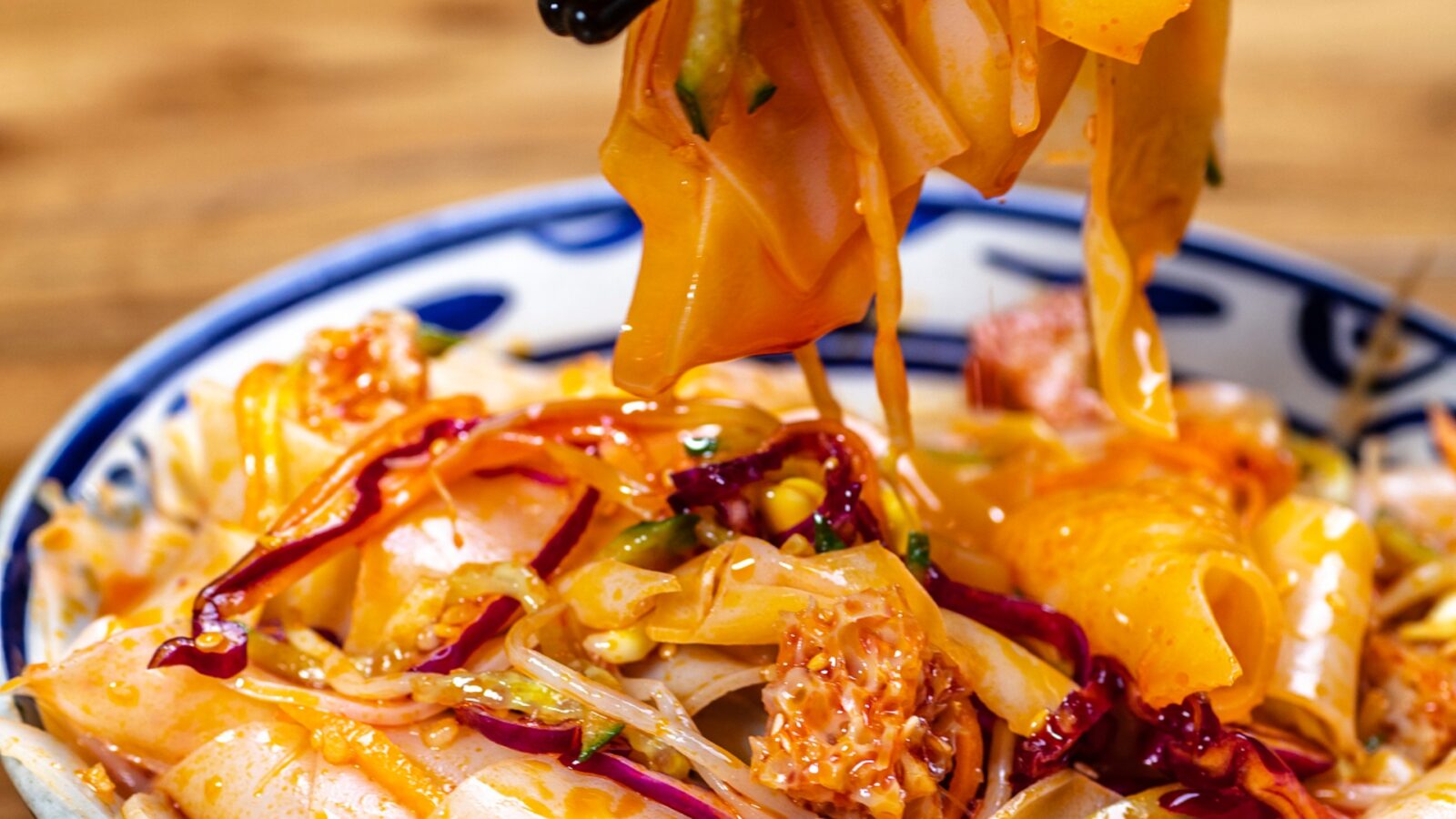
Liangpi Cold Noodles
🌶🌶 Vinegar & Chili
★★★★☆ Refreshing Heat
Liangpi (凉皮) from Xi'an is proof that spicy food can be simultaneously cooling and refreshing — wide, chewy sheets of wheat or rice starch noodles served cold, dressed with black vinegar, chili oil, sesame paste, garlic water, and cucumber julienne. The spice here arrives as a bright, acidic burn rather than a deep or cumulative one — the vinegar amplifies the chili's sharpness without adding oil-weight or long-lingering heat. On a hot Xi'an afternoon beside the Muslim Quarter, a bowl of properly made liangpi eaten standing at a street stall is among the most satisfying and restorative eating experiences the country has to offer.
24. Hot & Sour Soup(酸辣汤)
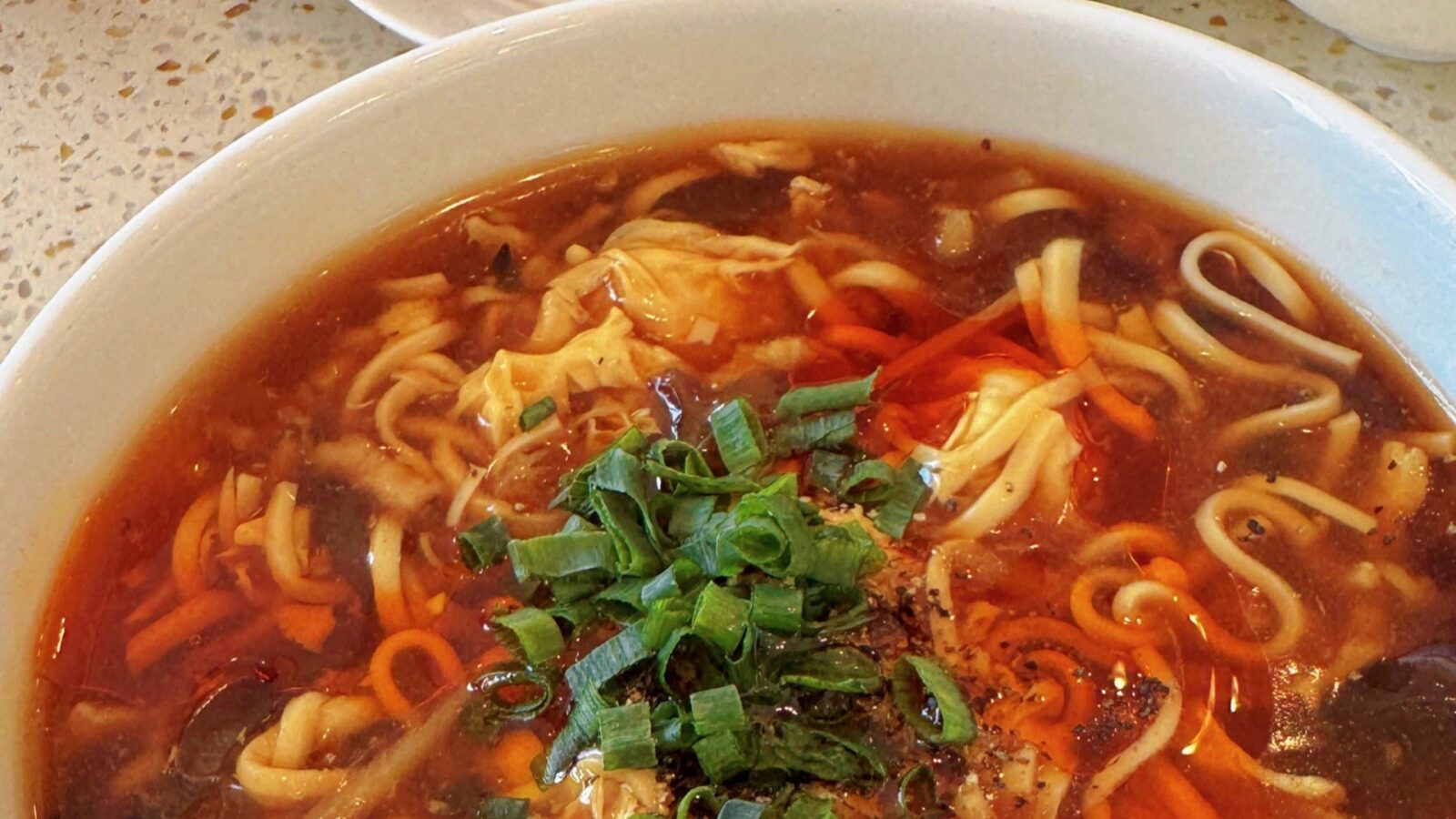
Hot & Sour Soup
🌶 Sour & Pepper
★★★★★ Perfect for All Levels
Hot and Sour Soup (酸辣汤, suān là tāng) is the one dish that appears on menus from Harbin to Hainan with almost no regional variation — a gentle, vinegar-spiked broth with silken tofu, wood ear mushrooms, bamboo shoots, egg ribbons, and a restrained heat from white pepper rather than chili. The sourness comes from black vinegar added at the end of cooking, giving the soup a bright, lively quality that stimulates appetite without challenging the palate. For cautious beginners, it is the ideal first taste of Chinese spice culture — warm, nourishing, and accessible at absolutely every tolerance level — while for experienced diners, it remains the most reliable comfort bowl in the entire repertoire.
25. Stir-Fried Bacon with River Greens(藜蒿炒腊肉)
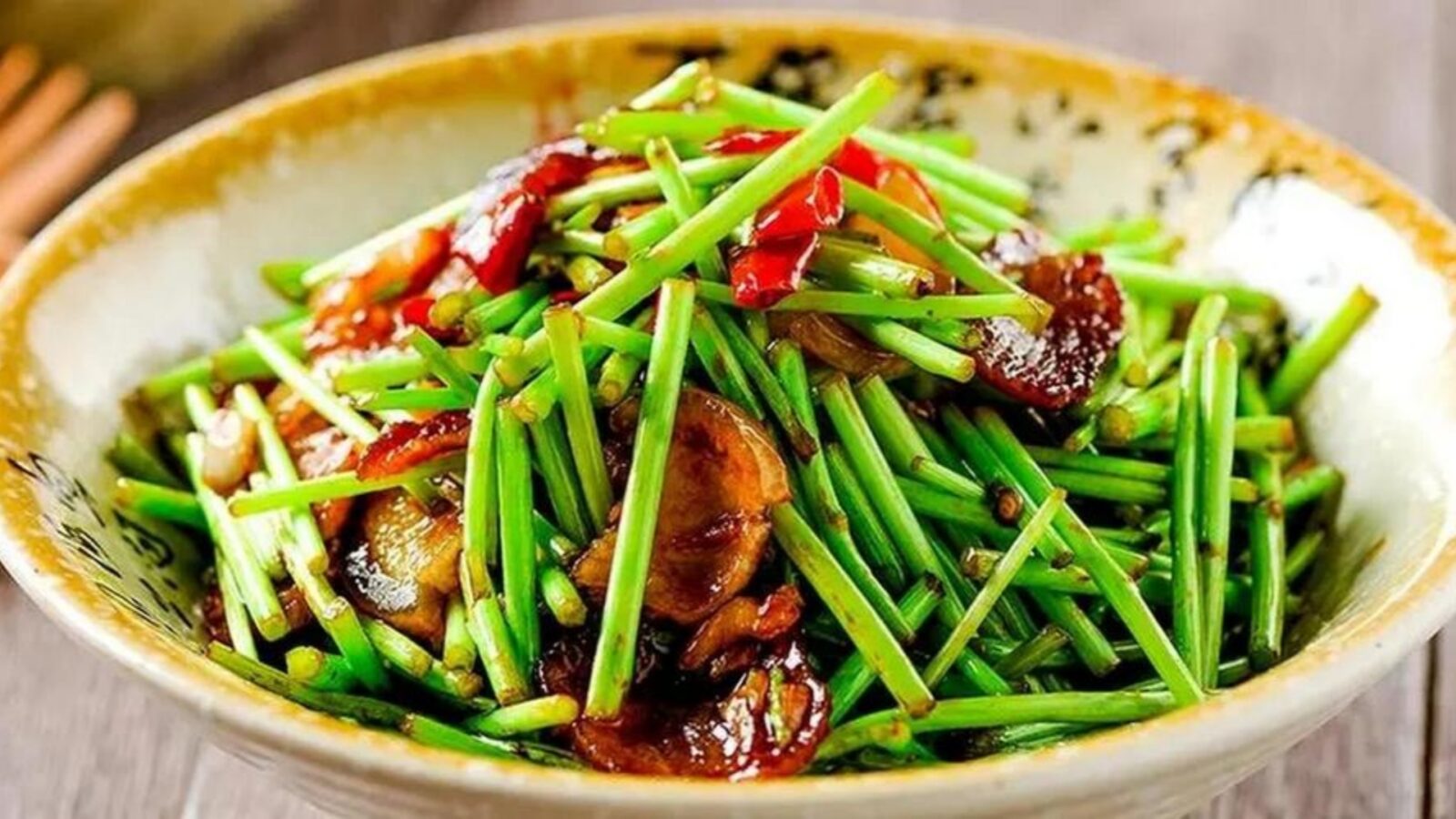
Stir-Fried Bacon with River Greens
🌶🌶 Smoky Fresh
★★★★☆ Hidden Regional Treasure
Lí Hāo Chǎo Làròu (藜蒿炒腊肉) is one of China's most seasonally specific and regionally proud dishes — wild artemisia river greens harvested from the shores of Poyang Lake in early spring, stir-fried with slices of smoke-cured pork and a scattering of fresh red chili. The greens carry a distinctive herbaceous bitterness and a reed-like freshness that exists for only a few weeks each year, making this dish a genuine seasonal event for Jiangxi residents rather than a menu constant. The cured pork provides smoky, saline depth while the chili adds punctuation rather than volume. Encountering this dish outside Jiangxi is rare — which makes finding it an authentic discovery rather than a curated tourist experience.
City Guides to Spice Capitals
Chengdu (成都)
Chengdu is the ideal and universally recommended entry point into the Chinese spicy food universe. The city's mala flavor is bold but not extreme — it challenges without punishing beginners unfairly. Furthermore, the food scene is extraordinarily dense — outstanding restaurants occupy virtually every block of the city. International visitors consistently find Chengdu more accessible than any other spicy Chinese city. Therefore, first-timers should always begin their spicy food Chinese journey here and nowhere else first. UNESCO's Creative City of Gastronomy designation reflects both the exceptional quality and remarkable diversity found throughout.
Chongqing (重庆)
The defining experience — beef-tallow hotpot
- The most intense and celebrated spicy food Chinese encounter available anywhere on earth
- Dense animal fat broth traps heat and releases it progressively with every ingredient consumed throughout the meal
Must-eat list for all visitors
- Chongqing Hotpot, Chongqing Small Noodles (重庆小面), Lazi Ji, Suancai Fish, Blood Curd Stew
Night market culture in Jiefangbei district
- A dense cluster of hotpot restaurants and outdoor spicy stalls comes fully alive every evening after 8pm
The essential survival rule for any first visit
- Always choose 鸳鸯锅 (split pot) — committing to full red broth alone on a first visit is an extremely serious undertaking
Changsha (长沙)
Changsha offers a completely and fundamentally different spice experience from any Sichuan city. There is no numbing peppercorn here — Hunan heat is direct, fierce, and unapologetically frontal. However, the city's food culture wraps its intense spice inside vibrant street life and social ritual. Taiping Old Street comes fully alive after dark with stinky tofu vendors, crayfish stalls, and smoky meats. Therefore, Changsha rewards genuinely adventurous food travelers more generously than almost anywhere else in China.
🌶 Hunan's bold street food goes even further — uncover the full history, flavors, and cultural obsession behind Big Latiao, the legendary chewy chili strip that turned a Hunan snack into a nationwide phenomenon.
Survival Tactics for Dining Out
Simple Mandarin Phrases for Ordering Less Spice
Knowing these six phrases transforms your entire dining experience in China immediately and measurably. You no longer depend on the restaurant's default — and often extreme — spice setting. Instead, you take full control of every single meal from the very first sentence spoken. Furthermore, Chinese kitchen staff respond warmly to foreigners who attempt even basic Mandarin ordering. Therefore, practice these phrases before your first serious spicy food Chinese restaurant visit.
| Situation | Mandarin (普通话) | Pinyin | What It Does for You |
|---|---|---|---|
| Want mild spice | 请给我微辣 | Qǐng gěi wǒ wēi là | Safest entry-level option for all beginners |
| No spice at all | 不要辣,谢谢 | Bù yào là, xièxie | Zero heat — works in every single restaurant |
| Ask about spice level | 这个有多辣? | Zhège yǒu duō là? | Intelligent pre-ordering intelligence gathering |
| Request more heat | 可以加辣吗? | Kěyǐ jiā là ma? | For seasoned lovers who want maximum intensity |
| Emergency cooldown | 有没有白米饭/酸奶? | Yǒu méiyǒu báimǐfàn / suānnǎi? | The two most effective proven fire extinguishers |
| Order a specific dish | 我要一份宫保鸡丁 | Wǒ yào yī fèn gōngbǎo jīdīng | Direct ordering by full name — always understood |
Proven Ways to Cool Your Burning Mouth
🧯 The Two Most Reliable Fire Extinguishers
White rice (淀粉) absorbs capsaicin physically from the mouth lining immediately on contact. Full-fat milk or yogurt contains casein protein, which bonds directly with capsaicin and neutralizes it chemically. Use either option the moment heat becomes genuinely unmanageable at any point during the meal. However, never reach for ice water — it spreads capsaicin across a wider area and makes burning significantly worse. ❌
White rice — most effective, always available everywhere
- Starch physically binds capsaicin molecules and removes them from the mouth's entire surface lining
Full-fat milk or yogurt — scientifically the most reliable option
- Casein protein wraps around capsaicin molecules and neutralizes them at the biochemical level instantly
Sweet desserts — moderate and temporary relief only
- Shifts sensory attention and reduces perceived heat temporarily; does not address the biochemical cause
Warm tea — mild and soothing throat relief
- Always choose warm rather than iced versions — cold liquid spreads capsaicin more broadly across the palate
Ice water — avoid entirely under all circumstances ❌
- Dilutes saliva temporarily but distributes capsaicin more broadly across the entire mouth surface
FAQs: Common Questions about Chinese Heat
Q: Is Chinese food always spicy? Which regions are NOT spicy?
Chinese food is absolutely not universally spicy. Spicy food Chinese concentrates in four main provinces: Sichuan, Chongqing, Hunan, and Guizhou. Cantonese cuisine from Guangdong, Shanghainese food, and Huaiyang dishes are all mild and delicate by long tradition. Furthermore, even within the hottest provinces, non-spicy options always appear in abundance. Simply say 不要辣 (bù yào là) and any Chinese kitchen will adjust willingly without hesitation.
Q: What is the spiciest Chinese food? Can foreigners actually survive it?
The most universally intense spicy food Chinese experience is Chongqing full red hotpot with pure beef-tallow broth. Most foreigners tolerate small amounts with genuine preparation and proper strategy in place. However, large portions on an empty stomach are inadvisable for almost anyone without real experience. Therefore, always start with the split pot first. Keep white rice and cold yogurt immediately accessible at all times. Approach it with real curiosity, not competitive ego.
Q: What's the real difference between Sichuan and Hunan spicy food?
Sichuan spicy food Chinese delivers a dual sensation simultaneously: peppercorn numbs while chili burns at the same time. Hunan skips numbing entirely — its heat is direct, raw, and relentlessly forward with every single bite. Therefore, Sichuan spice feels electric and pleasantly layered, while Hunan spice arrives like a clean and powerful punch. Both are extraordinary experiences. However, each demands completely different mental and physical preparation from any first-time visitor.
Q: What does "mala" mean in Chinese food? Is it simply the same as spicy?
Mala (麻辣) is definitely not simply "spicy." In authentic spicy food Chinese tradition, mala combines má (numbing from Sichuan peppercorn) and là (heat from chili pepper) into one uniquely compound experience. The numbing sensation comes specifically from hydroxy-alpha sanshool compounds present in the peppercorn itself. Therefore, mala is simultaneously hot and pleasurably anesthetic — a uniquely Chinese sensory achievement with no real global equivalent anywhere else on earth.
Q: How do I say "less spicy" or "no spice" when ordering Chinese food?
Controlling spicy food Chinese on your own terms is completely straightforward with four essential phrases. Wēi là (微辣) means mildly spicy — the universally safest beginner choice. Zhōng là (中辣) means medium heat. Bù yào là (不要辣) means absolutely no spice whatsoever. Furthermore, qùdiào làjiāo (去掉辣椒) removes the chili peppers entirely from any specific dish. Master these four expressions and no Chinese restaurant can surprise you negatively again.
Q: Is spicy Chinese food genuinely bad for your stomach? How should I prepare?
Short-term overconsumption of spicy food Chinese can genuinely irritate an unaccustomed digestive system and cause real discomfort. However, simple preparation prevents most problems entirely before they start. Never eat spicy food on an empty stomach under any circumstances. Always pair it generously with white rice throughout the entire meal. Furthermore, build heat tolerance gradually over multiple consecutive days. If traveling in China, carry 藿香正气液 — a traditional stomach remedy available at any pharmacy for under ¥10.
Q: What is the single best beginner spicy Chinese food for foreigners?
Kung Pao Chicken is the globally recognized and consistently recommended gateway into spicy food Chinese for newcomers. Its heat level is genuinely mild and its flavor profile is multi-layered and comfortingly familiar. Furthermore, it is available in virtually every Chinese restaurant worldwide without exception. After Kung Pao, progress naturally to Mapo Tofu to experience the mala numbing sensation deliberately for the first time. This two-step introduction covers all essential foundations comfortably and effectively for any beginner.
Q: How is Chinese spicy food different from Indian or Thai spicy food?
Chinese spicy food is uniquely defined by mala — the numbing heat combination found only in Sichuan and Chongqing cuisine anywhere on earth. Indian spice uses slow-building aromatic blends of turmeric, cumin, and coriander. Thai spice is bright and citrusy, with chilies beautifully balanced by lemongrass and lime. However, no other global spicy food Chinese tradition carries the peppercorn-numbing dimension whatsoever. That specific quality remains genuinely exclusive to Chinese culinary culture alone.
Q: Can I really get non-spicy food in Sichuan or Hunan restaurants?
Absolutely, and without any real difficulty whatsoever. Even inside the heartland of spicy food Chinese culture, non-spicy dishes appear in abundance on every menu. Sichuan menus always include Twice-Cooked Pork in mild versions, steamed fish, and various dumplings requiring no chili adjustment at all. Hunan restaurants similarly offer many excellent stir-fried dishes entirely without hot peppers. Therefore, never avoid entire spicy provinces out of heat-related fear. Simply request 不要辣 with full confidence every time you order.
Q: Where can I buy Chinese spicy food ingredients outside China?
Key spicy food Chinese ingredients are now widely available internationally across many accessible channels. Pixian Doubanjiang (郫县豆瓣酱), Sichuan peppercorn, dried chilies, and chili oil are the four core essentials to acquire first. Find them at Asian supermarkets including H Mart and 99 Ranch Market across North America. Furthermore, online platforms like Amazon, Yami, and Weee ship these ingredients globally with reliable speed. Pixian Doubanjiang is by far the most important single purchase — it is the irreplaceable soul of all authentic Sichuan cooking.