Funny Chinese Proverbs in Chinese
Most lists of Chinese proverbs give you characters and a translation, then stop. They never tell you when a Chinese person would actually say these words, or how to drop them into a conversation without sounding like a textbook. This article fills that gap. Below are 13 classic and modern funny Chinese proverbs — in Chinese characters, pinyin, and English — with the specific moments when a visitor to China can use each one and expect to be understood.
The proverbs are organized by context: you'll find what to say at a dinner table, what to expect at a market, and which phrases work best among new friends. No prior Chinese knowledge is assumed.
Quick Facts
Classic Funny Chinese Proverbs with Pinyin
Classic Funny Chinese Proverbs with Pinyin
Traditional proverbs travel well. These six lines have been part of Chinese conversation for generations, and you'll hear at least one in almost any group setting in China. Each one is a four-character idiom (成语 chéngyǔ) or a two-part saying (谚语 yànyǔ). Learn the pinyin, the literal meaning, and the scenario where it fits naturally.
Proverbs About Effort and Patience
Use these when talking about long-term goals, unexpected setbacks, or the reality that results take time.
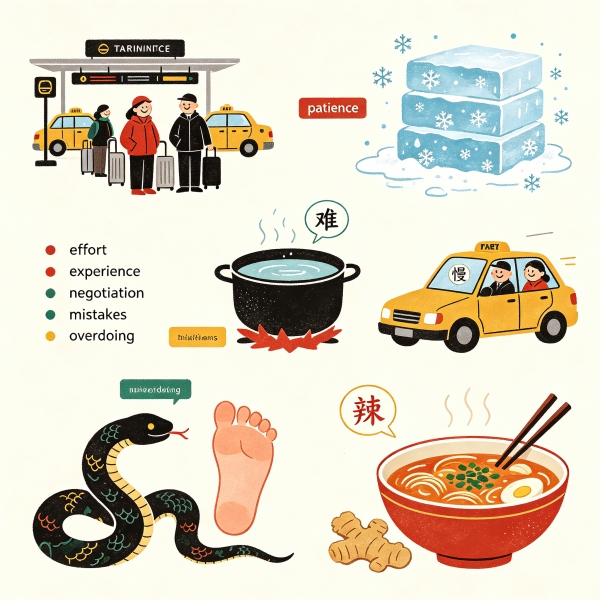
- 万事开头难 — wàn shì kāi tóu nán — Literal: "ten thousand things, beginning difficult" — Meaning: Every big task feels hardest at the start — When to use: Stuck in a long taxi queue at the airport. Sigh and say this to a local waiting beside you — expect a knowing nod and a laugh.
- 一口吃不成胖子 — yī kǒu chī bù chéng pàng zi — Literal: "one mouthful cannot make a fat person" — Meaning: Results come from habit, not from a single effort — When to use: After your first Chinese lesson goes slowly. Say it as a polite self-deprecation — the response will be encouraging.
- 冰冻三尺非一日之寒 — bīng dòng sān chǐ fēi yī rì zhī hán — Literal: "three feet of ice is not the cold of one day" — Meaning: Problems, habits, and situations build slowly over time, the Chinese version of "Rome wasn't built in a day" — When to use: A shop owner explains a price that seems high. Understanding this proverb makes the negotiation feel more collaborative.
- 失败是成功之母 — shī bài shì chéng gōng zhī mǔ — Literal: "failure is the mother of success" — Meaning: Mistakes are the parents of progress — When to use: A Didi driver laughs about taking a wrong turn. Drop this line and you'll hear approval — it reframes the mishap positively.
Proverbs About People and Experience
These work best when discussing skill levels, seniority, or when someone has clearly outdone you.
- 画蛇添足 — huà shé tiān zú — Literal: "draw snake, add feet" — Meaning: Overdoing something that is already complete — When to use: Your tour guide keeps adding detours to a plan that was already full. A light comment earns a grin from others in the group. Origin: From an ancient Chu-state painting contest where adding feet to a finished snake lost the prize.
- 姜还是老的辣 — jiāng hái shì lǎo de là — Literal: "ginger, still, old one's spicy" — Meaning: Experience beats freshness every time — When to use: After an elder recommends a restaurant and the food is excellent. Say this to show respect for the recommendation — expect a satisfied smile.
💬 Master Online Shorthand: Want to understand the shorthand and number-based puns your local friends use in WeChat messages? Read our breakdown of Chinese Number Slang.
Modern Funny Chinese Sayings You'll Hear
Modern Funny Chinese Sayings
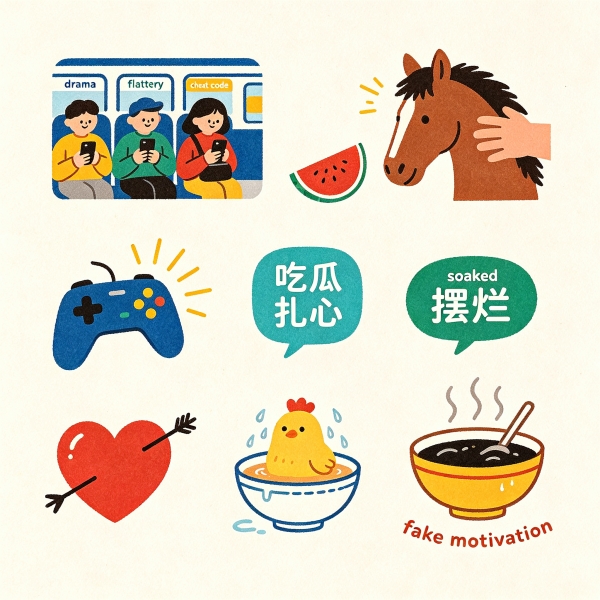
Younger Chinese use these phrases daily — on social media, in text messages, and in conversation. They come from internet culture, gaming, and food metaphors, so they shift fast. Learn these and you'll understand what people are laughing about on the metro or in a café.
Everyday Slang and Internet Phrases
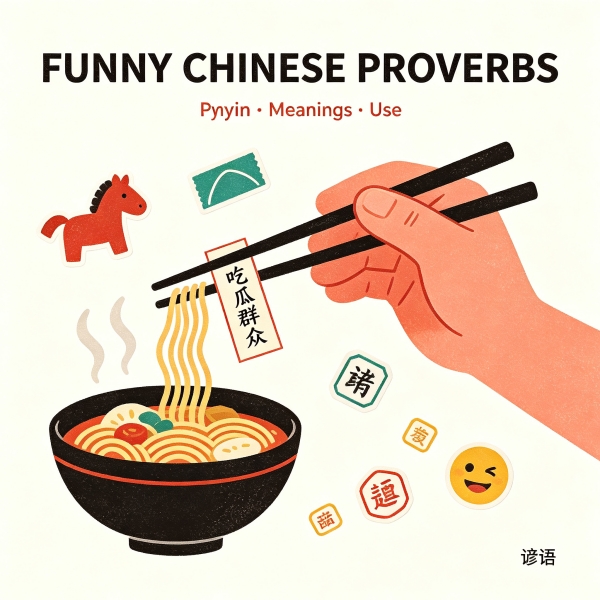
- 吃瓜群众 — chī guā qún zhòng — Literal: "melon-eating masses" — Meaning: Bystanders watching drama unfold — When to use: On the metro, everyone is scrolling a viral video. Comment "I'm just a 吃瓜群众" — it shows you understand the meme.
- 拍马屁 — pāi mǎ pì — Literal: "pat a horse's butt" — Meaning: Excessive flattery — When to use: A friend compliments a guide too enthusiastically. Tease them with this phrase — the group will laugh.
- 开挂 — kāi guà — Literal: "open a cheat code" — Meaning: Effortless excellence, originally from gaming — When to use: Describing a guide who knows every shortcut. Say "他们开挂了" to mean "they're running cheat codes" — it's a genuine compliment.
- 扎心了 — zhā xīn le — Literal: "pierced the heart" — Meaning: "Ouch, that hit me" — When to use: A friend teases you about your chopstick skills. Say "扎心了" as a playful comeback — it lands well and shows you know the phrase.
Food-Inspired Sayings
Food metaphors run deep in Mandarin. These three phrases all come from kitchen or meal situations but are used in wider social contexts.
- 落汤鸡 — luò tāng jī — Literal: "dropped-in-soup chicken" — Meaning: Someone soaked to the bone — When to use: Caught in a sudden Shanghai downpour. Say "我变成落汤鸡了" as a self-joke — locals will laugh and may offer to help dry off.
- 毒鸡汤 — dú jī tāng — Literal: "poisonous chicken soup" — Meaning: Fake motivational content, a sarcastic twist on "chicken soup for the soul" — When to use: When a guidebook reads like pure marketing copy. Say "这真是毒鸡汤" — younger Chinese will agree immediately.
- 摆烂 — bǎi làn — Literal: "let it rot" — Meaning: Embracing giving up, a post-2022 youth catchphrase — When to use: After a delayed train with a hostel-mate. Say "我只想摆烂" as a joke — it's a relatable complaint that builds quick rapport.
✨ Understand Lucky Icons: Curious why certain characters and visual symbols are painted on doorways and gift envelopes during festivals? Discover the meanings in Chinese Prosperity Symbol.
Real-Life Scenarios in China: When to Use Them
Real-Life Scenarios in China
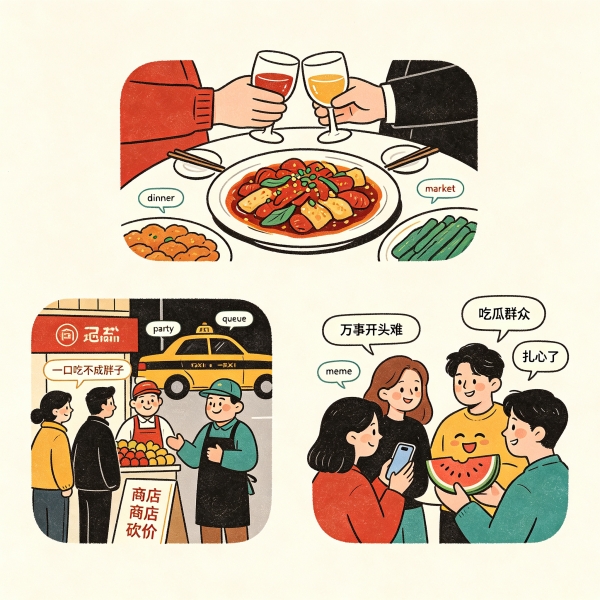
The best time to use a proverb is when it fits the moment naturally. Below are the three contexts where foreign visitors most commonly find themselves in social situations — and the exact phrase to use in each one.
Restaurants and Dinner Tables
- Toasting at a host's dinner: Raise your glass and say 一口吃不成胖子 (yī kǒu chī bù chéng pàng zi) — "small bites make big results." It reframes a toast as a reminder that progress is gradual. Expect your host to nod approvingly and refill your glass.
- Complimenting a dish: After tasting something exceptional, say 姜还是老的辣 (jiāng hái shì lǎo de là) — "the ginger is still spicy from the old one." It implies the chef's experience shows in the flavor. Your dining companions will recognize the compliment.
- When a dish is too hot or spicy: Point at yourself and say 落汤鸡 (luò tāng jī) as a self-joke after sweating through a Sichuan dish. You'll exchange knowing laughs across the table — this one works even if your pronunciation is a little off.
Markets, Taxis, and Shops
- Long taxi queue: Turn to the person next to you and say 万事开头难 (wàn shì kāi tóu nán) — "everything is hard at the start." Commiserating with locals in this way breaks the ice and often leads to travel tips.
- Vendor drives a hard bargain: Half-joking, say 失败是成功之母 (shī bài shì chéng gōng zhī mǔ) — "failure is the mother of success." It reframes the negotiation as a learning process. Vendors appreciate the lighthearted approach.
- Bargaining over a souvenir: When your friend starts flattering the vendor excessively, say 拍马屁 (pāi mǎ pì) playfully — "careful, that's too much flattery." The vendor and your friend will both laugh, and the mood lightens.
Parties and Casual Gatherings
- Reacting to hostel gossip: At a hostel common room, say 吃瓜群众 (chī guā qún zhòng) — "I'm just here eating melons" — meaning you're watching the drama unfold. It's light, safe, and shows you understand the meme.
- Friend shows off a skill: When someone impresses everyone, say 开挂 (kāi guà) — "they're running cheat codes." It's a genuine compliment that also earns a laugh — gaming culture runs deep in younger social circles.
- Friend teases you about your Chinese: Hit back with 扎心了 (zhā xīn le) — "you pierced my heart." It's the perfect playful comeback and shows you know internet slang without overusing it.
👤 How Names Work: When using friendly proverbs among new acquaintances, it helps to know how surnames, personal titles, and nicknames are structured. Read our guide to a Typical Chinese Name.
How to Read Pinyin in 30 Seconds
Pinyin is the Latin alphabet system used to represent Mandarin pronunciation. Every sound in Mandarin is written with a letter combination, and four tone marks (ā á ǎ à) sit above the vowel to indicate pitch. If you can read the word "cat," you can already read pinyin — the alphabet is the same.
The tricky parts for English speakers are a few consonant sounds that don't exist in English:
- q sounds like "ch" — qi is "chee"
- x sounds like "sh" — xi is "shee"
- zh sounds like "j" — zhi is "jur"
- ü appears in ju, qu, xu — write it as "u" but round your lips as if saying "ee"
The Four Tones at a Glance
Changing the tone changes the meaning completely. The syllables mā, má, mǎ, and mà are four unrelated words. Tone accuracy matters more than perfect vowel sounds — close-enough pinyin still gets understood.
Cultural Tips for Using These Proverbs
Knowing the words is one part. Using them at the right moment, with the right tone, is another. These tips help you deploy proverbs without missteps.
- Match the audience. Use these phrases with peers, friends, and casual acquaintances. Avoid 拍马屁, 摆烂, and 落汤鸡 with elders, strangers, or in business settings — they carry a casual register that can read as disrespectful.
- Smile and gesture. Pair every proverb with a smile, a light laugh, or a gesture. Facial expression softens imperfect pronunciation and signals that you're being playful, not formal.
- Tone beats consonants. Get the tone mark roughly right, and the word will be understood. Perfecting "q" or "x" takes months; landing the correct tone takes minutes. Prioritize the pitch.
- Laughs are good. When a Chinese person smiles or laughs after you use a proverb, that's approval — not mockery. It signals curiosity and goodwill, not failure.
- Mild mistakes become shared moments. If you mispronounce something, the response will almost always be a helpful correction and a laugh. This is how locals warm up to foreigners who are trying.
- Classic proverbs travel further. 万事开头难, 失败是成功之母, and 画蛇添足 work in both casual and semi-formal contexts. Modern slang stays in social settings.
Frequently Asked Questions
Q: What are the most popular funny Chinese proverbs?
吃瓜群众, 画蛇添足, 落汤鸡, 姜还是老的辣, and 万事开头难 are the ones you'll hear most often on Chinese social media and in casual conversation. All are covered above with pinyin, meaning, and usage scenarios.
Q: How do I pronounce the four tones correctly?
Tone 1 is high and flat, Tone 2 rises, Tone 3 dips then rises, and Tone 4 falls sharply. The same syllable — mā, má, mǎ, mà — means four completely different things (mom, hemp, horse, to scold). Focus on tone accuracy over perfect consonants; close-enough tones get understood.
Q: Are these proverbs still used in everyday Chinese?
Yes. The classic ones (万事开头难, 画蛇添足, 姜还是老的辣) appear regularly in conversation and writing. Modern slang (吃瓜群众, 摆烂, 扎心了) circulates heavily on Weibo, Douyin, and among people under 30. Elders know the classic set but may not use the newest internet phrases.
Q: Can I use these proverbs in formal situations?
Stick to the classic set (万事开头难, 失败是成功之母, 画蛇添足) in formal or business contexts — they carry weight and show cultural awareness. Avoid slang like 拍马屁 or 摆烂 with elders, strangers, or anyone where you lack established rapport.
Q: What's the difference between yànyǔ and súyǔ?
谚语 (yànyǔ) means "proverb" — a formal category including lines like 失败是成功之母. 俗语 (súyǔ) is broader and covers colloquial expressions including 姜还是老的辣. 成语 (chéngyǔ) specifically refers to four-character idioms like 画蛇添足. They are not interchangeable terms.
Q: How do Chinese people react when foreigners use proverbs?
Most reactions are positive. Accurate use of either a classic proverb or modern slang draws smiles, laughter, and follow-up questions. Treat imperfect pronunciation as a shared joke rather than a failure — tone accuracy matters more than perfect consonants.
Q: Where can I practice using these phrases in China?
Dinner tables are natural for 一口吃不成胖子 and 姜还是老的辣. Markets and taxis suit 万事开头难 and 拍马屁. Hostels and language-exchange meetups are ideal for 吃瓜群众, 开挂, and 扎心了. WeChat groups and online language partners offer daily low-stakes practice.