Chinese Merchants
For centuries, Chinese merchants built empires that stretched from the teeming port of Canton to the banks of the Pearl River delta, from the vaulted courtyards of Shanxi to the misty villages of Anhui. Then, they navigated a society that officially ranked them below farmers and scholars, yet their silver-lined ledgers financed dynasties, their draft banks connected an entire empire, and their descendants reshaped the commercial face of Southeast Asia. This article traces the arc of that remarkable story — from the licensed Hong merchants of the Canton System to the salt traders of Shanxi, from the inkstone dealers of Huizhou to the clan networks that still thrive across Malaysia, Singapore, and beyond. Whether you are a history enthusiast, a culture traveler, or simply curious about the forces that shaped modern China, the merchant heritage detailed here rewards a closer look.
Quick Facts
Hong Merchants and the Canton Trade System (1757–1842)
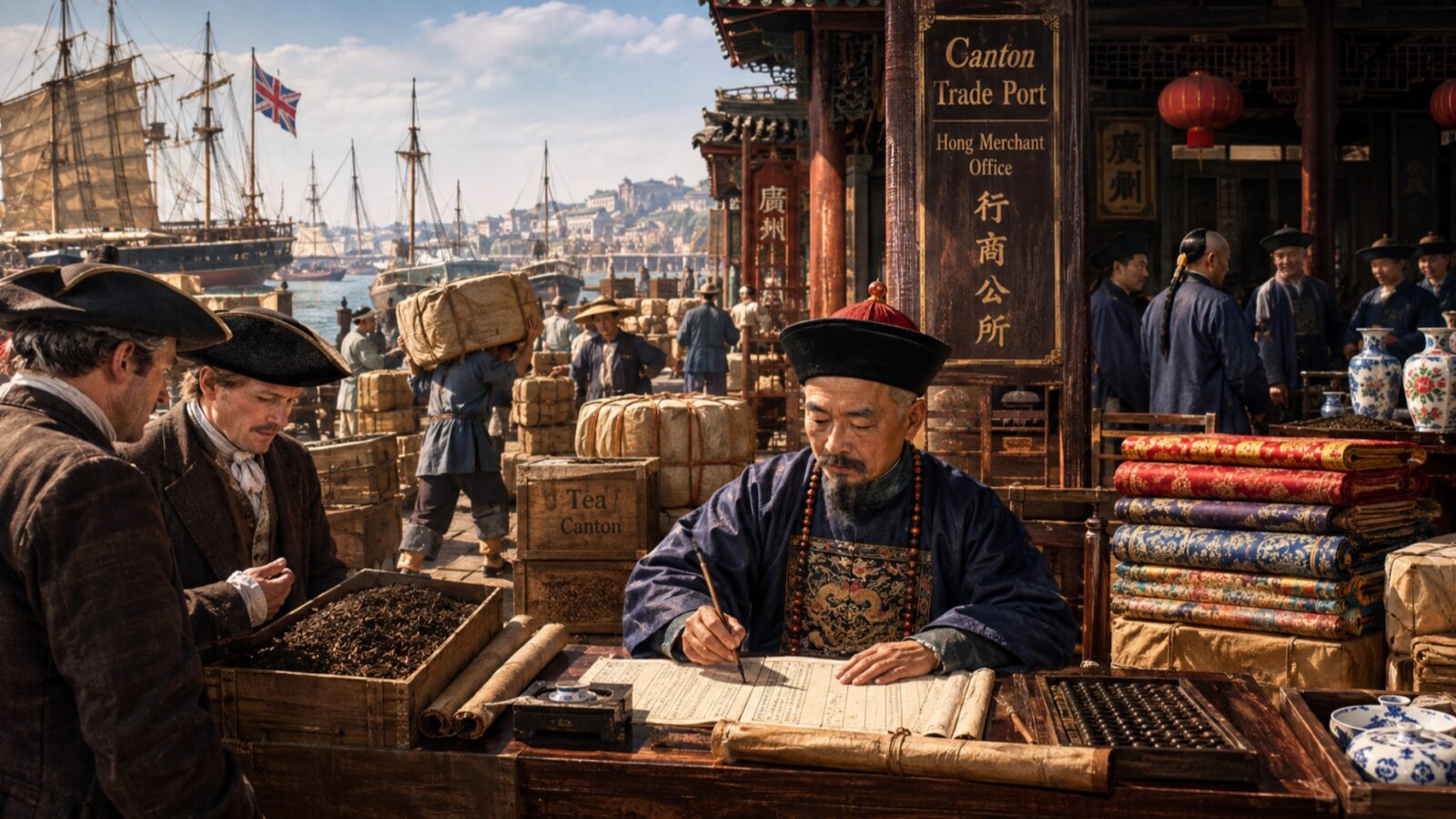
Canton Trade System
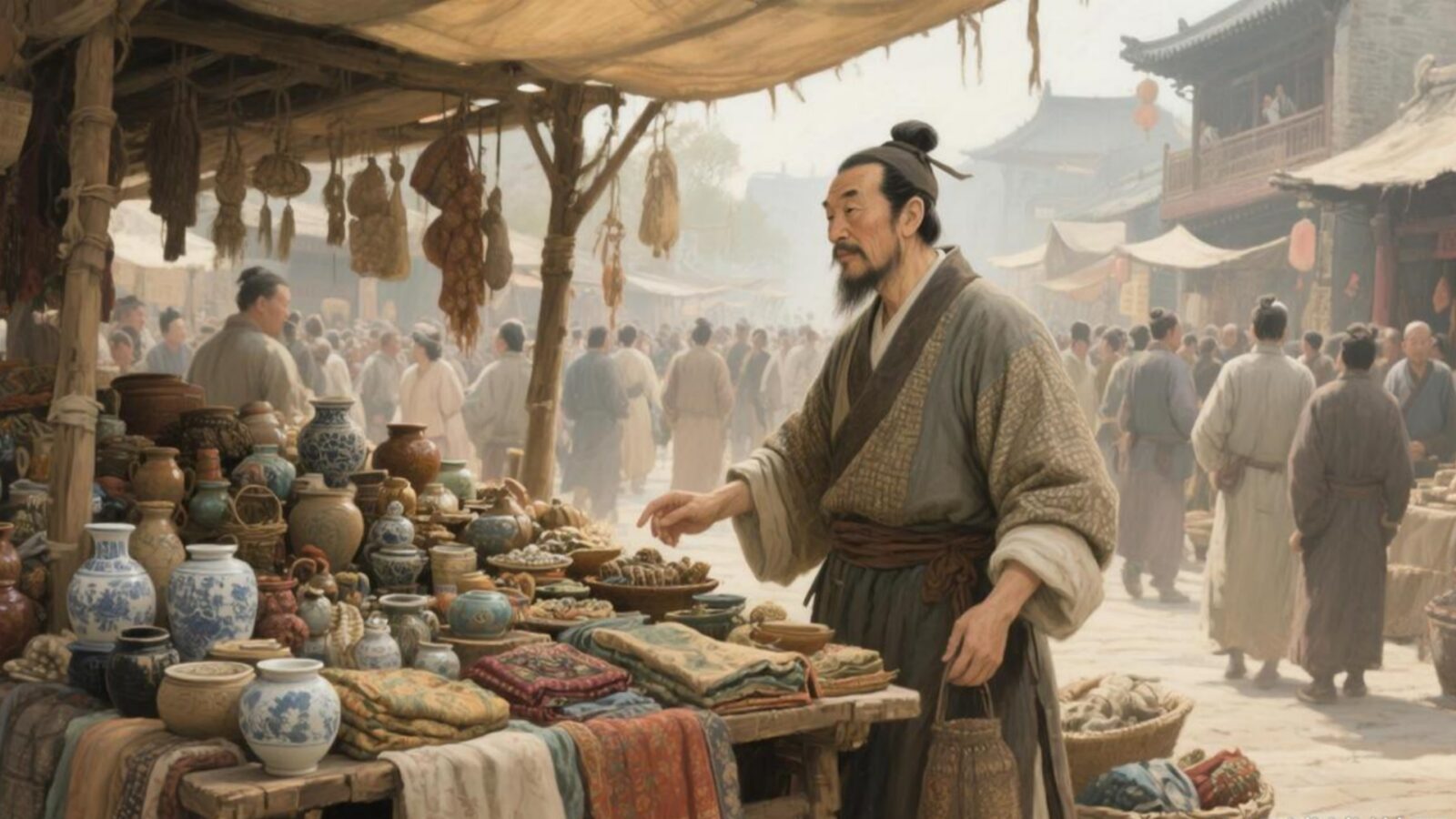
From 1757 until the first Opium War ended in 1842, the Qing government confined all Western trade to a single Chinese port — Canton, now Guangzhou. No foreign ship could unload anywhere else, and no foreign trader could deal directly with Chinese producers. Instead, every overseas transaction had to pass through a licensed Hong merchant (行商), men who held a government-granted licence and served as the sole legal intermediary between the outside world and the Chinese market.
The Hong merchant system was not simply a trading arrangement. These men collected customs duties for the imperial court, adjudicated disputes between foreign captains and Chinese pilots, and effectively held a monopoly on the allocation of the goods that European merchants prized most — tea, silk, and porcelain. In return, the system gave its most successful participants extraordinary wealth and a peculiar kind of official tolerance.
- Licence requirement: Only men holding a Hong merchant licence from the Qing government could legally transact with foreign traders; unlicensed Chinese merchants faced severe penalties for direct dealing.
- Dual role: Each Hong merchant acted simultaneously as trader, customs collector, and diplomatic buffer between the Qing court and foreign consuls.
- Monopolistic leverage: Because Hong merchants controlled access to tea — the single most valuable import into Europe and America — they set prices and allocated supply to competing Western trading houses.
- System collapse: The 1842 Treaty of Nanking, forced on the Qing after the Opium War, opened five additional treaty ports and effectively ended the Hong merchant monopoly by 1843.
Houqua and the Boston Trading Connection
The most celebrated of all Hong merchants was Houqua, born Wu Bingjian in 1769. Over four decades he built a fortune estimated at $26 million, which placed him among the wealthiest individuals in the world at that time. His wealth was not merely abstract — it manifested in a private garden at Poon Yu painted in the 1830s by the artists Lam Qua and George Chinnery, a visual record of merchant opulence that still commands attention in art collections today.
What set Houqua apart, beyond his scale of operations, was the depth of his personal relationships with American trading houses. His surviving letterbooks document decades of correspondence with John Murray Forbes and the Cushing family of Boston, revealing a level of mutual trust and credit extended that was unusual for cross-cultural commerce of the era. Houqua died in 1843, within a year of the system's collapse, and his personal decline mirrored the end of an entire commercial order.
What the Hong Merchants Traded
The goods flowing through Canton were divided sharply between Chinese exports and foreign imports, with silver filling the gap when trade was unbalanced.
- Outward — tea: Bohea and hyson varieties dominated; tea accounted for roughly half the value of all Canton exports by the late 18th century and was the primary driver of European demand.
- Outward — silk: Raw silk and finished silk piece goods were the second-largest export category; nankeen cloth — a durable blue-dyed cotton — was also in steady demand.
- Outward — porcelain and specialty goods: Porcelain, rhubarb (prized in European medicine), cassia spice, and sugar rounded out the export catalogue.
- Inward — silver and English cloth: Spanish American silver pesos arrived via Manila; English broadcloth, lead, and furs moved in the other direction as European manufacturers sought any advantage in the tea trade.
The Confucian Merchant Tradition (Rushang)
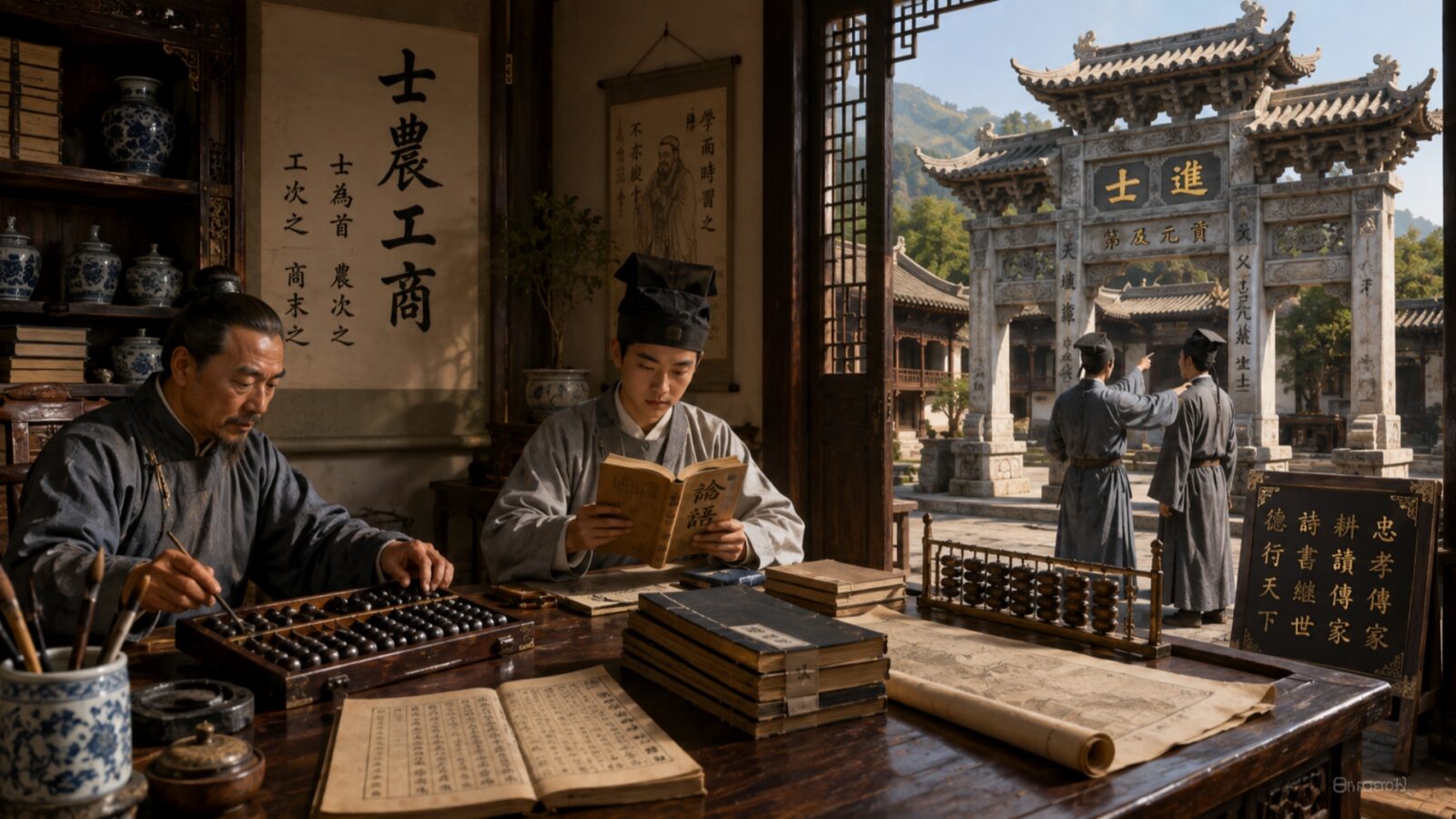
Confucian Merchant Tradition (Rushang)
Imperial Chinese society ranked all occupations into four categories: scholars at the top, followed by farmers, craftsmen, and merchants at the bottom. This hierarchy, shi-nong-gong-shang, was not merely philosophical — it carried legal weight. Merchants paid higher taxes, faced official restrictions on ostentatious dress and building scale, and faced one decisive barrier: their sons were barred from the civil-service examinations that opened the door to government office and official status.
Wealthy merchant families responded to this stigma with a pragmatic strategy that proved remarkably durable. By educating at least one son in the Confucian classics while allowing others to continue the family trade, these families pursued respectability through a divided inheritance of scholarly and commercial success. The ideal that emerged — half Analects, half abacus — became known as the rushang, or Confucian merchant, tradition.
- Four-occupation hierarchy (士农工商): Scholars, farmers, craftsmen, and merchants — merchants ranked last, officially.
- Examination ban: Merchant-class families were formally excluded from the state civil-service examinations, denying them the route to official rank.
- Wang and Hu family pattern: The Wang and Hu clans of Huizhou in Anhui, active from the 14th century onward, exemplified the dual strategy — one branch passed the imperial exams while others expanded the trading network.
- Modern revival: The term rushang has regained currency in contemporary Chinese business culture as entrepreneurs seek an ethical framework grounded in Confucian tradition rather than Western management theory.
The Social Position of Merchants in Imperial China
The legal and social disabilities placed on merchants were a deliberate Confucian policy, rooted in the Mencian idea that trade created no value — it merely redistributed goods already produced by farmers and craftsmen. The tax surcharge on merchant income reflected this view; so did the prohibition on merchant sons sitting for examinations. For a merchant family, the only paths to recognized status were wealth deployed publicly — in road-building, temple sponsorship, or ancestral halls — or the education of at least one son who could clear the examination hurdle and bring official standing to the entire clan.
The Analects and the Abacus: How Merchants Clawed Back Respect
Two concrete strategies allowed merchant families to accumulate social standing alongside commercial success. The first was the educated son — a family would fund rigorous classical preparation for one or more boys, betting that examination success would elevate the whole household. The second strategy was architectural: merchant profits poured into land, ancestral halls, and the elaborate stone memorial archways called paifang that declared a family's achievements to every passerby.
- Strategy 1 — educate: Send at least one son to study the Confucian classics full-time, targeting the state examinations as a route to official rank and legal equality with the scholar class.
- Strategy 2 — display: Invest trade profits in visible markers of legitimacy — rural estates, ancestral halls, schools, and paifang archways that recorded examination successes and official titles.
- Wang/Hu canonical example: A Hu family descendant from Huizhou passed the state examination and received a royal paifang erected at Xidi village in his honor — that archway still stands today.
- Surviving legacy: The villages of Hongcun and Xidi, the merchant courtyard compounds of Shanxi, and the Tunxi Old Street all physically embody the wealth deployed by families following these strategies.
Shanxi Merchants and the Courtyard Mansions (Jinshang Dayuan)
While Hong merchants operated at the maritime edge of the Qing empire, another merchant class was building an inland commercial empire across the north. Shanxi merchants — known as Jinshang — specialized in salt, grain, and the remittance business that moved money between armies, garrisons, and provincial treasuries. From the 1820s onward they pioneered piaohao, a draft-banking system that functioned as China's earliest national clearing network, predating the modern banking system by nearly a century. The profits from this empire of silver and credit built the great fortified courtyard compounds — dayuan — that still line the roads of Jinzhong and Lingshi counties today.
- Qiao Family Compound: Located in Qi County, Jinzhong; famously used as the filming location for Zhang Yimou's Raise the Red Lantern.
- Wang Family Compound: Located in Lingshi County, Jinzhong; described as larger than the Forbidden City footprint by some published measures.
- Cao Family Compound: Located in Lingshi County; noted for its exceptional stone, brick, and wood carving work.
- Chang Family Compound: Located in Yuci District, Jinzhong; features a 12-km internal walking corridor linking gardens and school halls.
Qiao Family Compound and Wang Family Compound
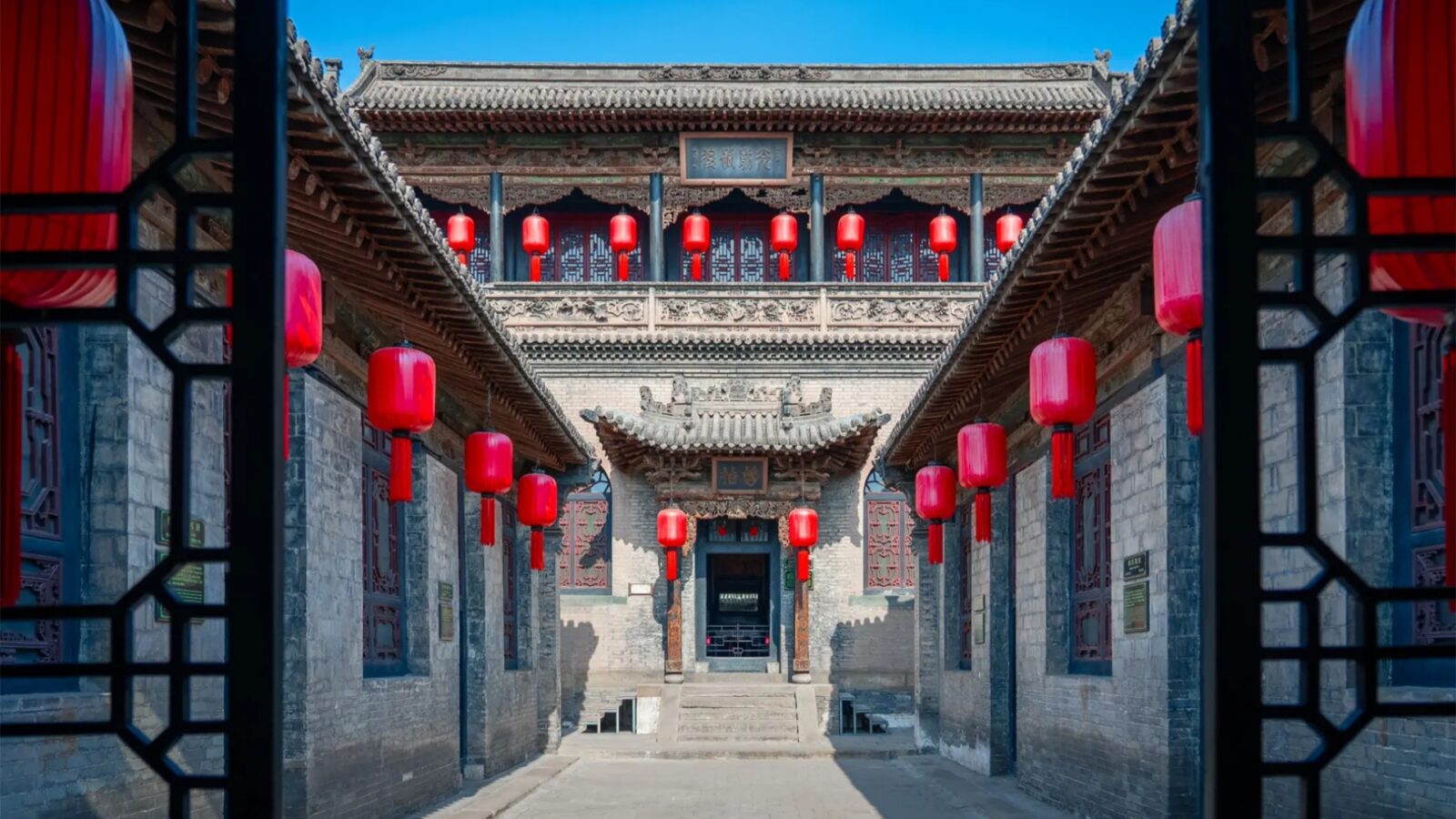
Qiao Family Compound
The Qiao Family Compound (乔家大院) draws the largest crowds, partly because its compact 6.5-hectare footprint with 313 rooms was captured on screen in Raise the Red Lantern — a film that turned these grey-tiled walls into one of the most recognizable images of traditional Chinese domestic architecture. The ticket runs about $22 (¥138), and the compound fills quickly on weekends with tour groups. We recommend visiting on a weekday morning to experience the courtyard's proportions without the crowds.
The Wang Family Compound (王家大院) in Lingshi County is harder to grasp in a single visit — at roughly 25 hectares it is substantially larger than the Qiao site. Some published figures compare its footprint to the Forbidden City, which is a useful scale marker even if the comparison is approximate. The ticket is about $22 (¥150), and the compound rewards a slower pace: the network of defensive walls, connecting corridors, and ancestral halls was designed to accommodate an entire extended clan, not a single wealthy household. Allow extra time here if your schedule permits.
Cao Family Compound, Chang Family Compound, and Other Shanxi Mansions
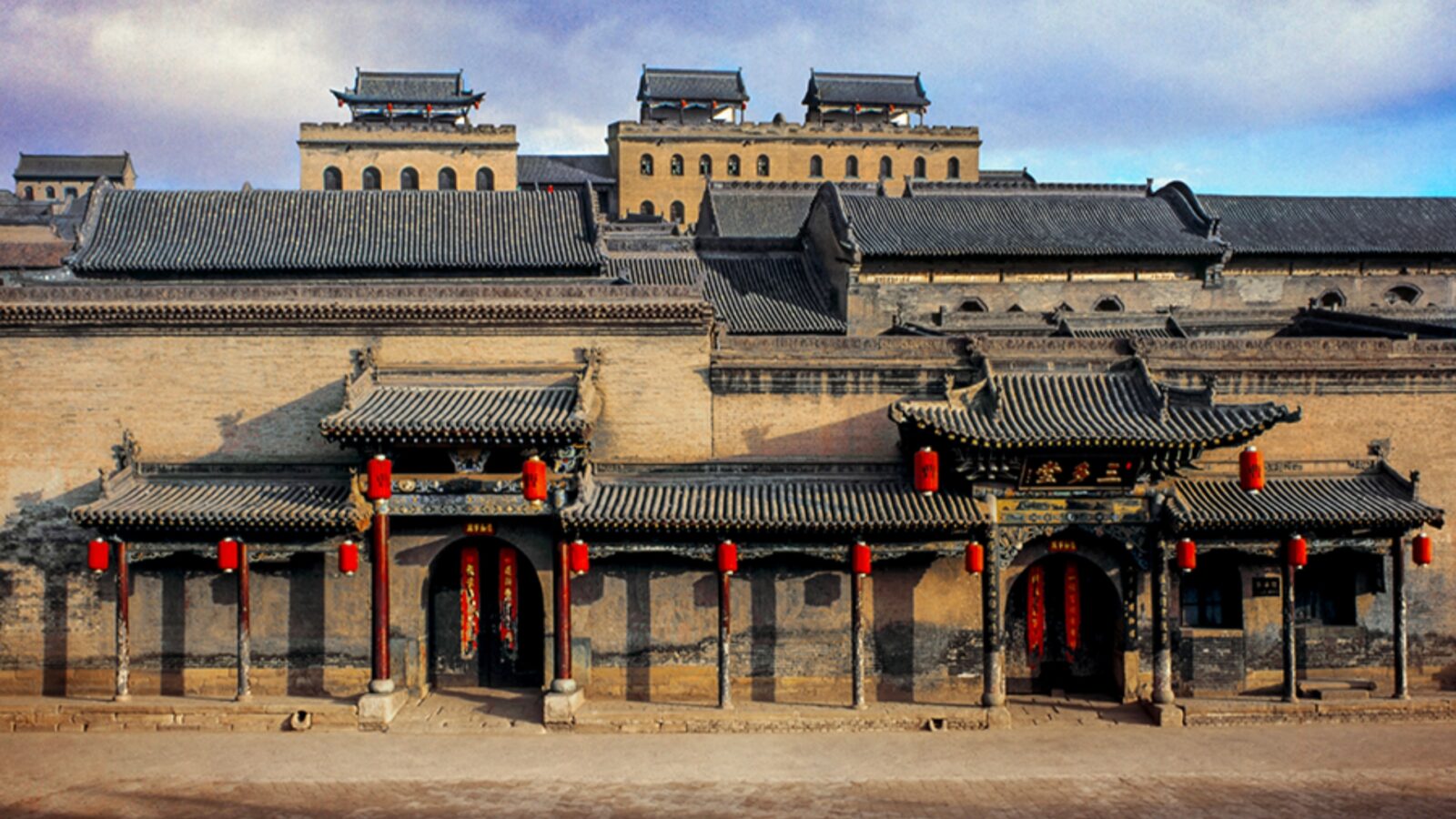
Cao Family Compound
The Cao Family Compound (曹家大院) in Lingshi County is the smallest of the major four, but its carvings repay attention. The site is known for the "Three Carvings and One Color" technique applied to its stone, brick, and wood surfaces — a decorative tradition that reached its peak in late Ming and early Qing merchant architecture. The ticket runs about $15 (¥108), making it a good choice if you are traveling on a tighter budget.
The Chang Family Compound (常家庄园) in Yuci District occupies a different scale entirely. The Chang clan built an internal walking corridor stretching roughly 12 km, linking gardens, school halls, and residential courtyards into a single walkable compound — a kind of private walled city designed for clan life rather than defense. The ticket is about $17 (¥120). Two additional compounds — the Hou Family Compound and the Wang Family Compound at Jingyu — round out the route for visitors with a deep interest in merchant domestic architecture.
Visiting the Shanxi Courtyard Mansions Today
Anhui Merchants, Huizhou Villages, and Tunxi Old Street
Anhui merchants — known as Huishang — were the southern counterpart to the Shanxi Jinshang. Where Shanxi merchants moved north, managing salt transport and banking the empire's frontier garrisons, the Huishang operated along the lower Yangtze corridor and south into the tea-growing hills of Huangshan. They dominated the tea trade, the inkstone and calligraphy-brush trade, the timber float-trade down from the hills, and the salt business in the lower Yangtze basin. Like their Shanxi counterparts, they peaked during the Ming and Qing dynasties, and their wealth left a visible imprint on the landscape of southern Anhui that visitors can still walk through today.
- Hongcun: UNESCO-listed village in Yi County, Huangshan; built around an ox-shaped water system of channels and ponds; ticket about $13 (¥90) alone.
- Xidi: UNESCO-listed village in Yi County, Huangshan; 124 surviving Ming–Qing merchant residences and the famous royal paifang archway; ticket about $11 (¥75) alone.
- Tunxi Old Street: About 1 km of Qing-era shop-houses in Huangshan city; free to walk; known for the Four Treasures of the Study (brush, ink, paper, inkstone).
Hongcun and Xidi Villages
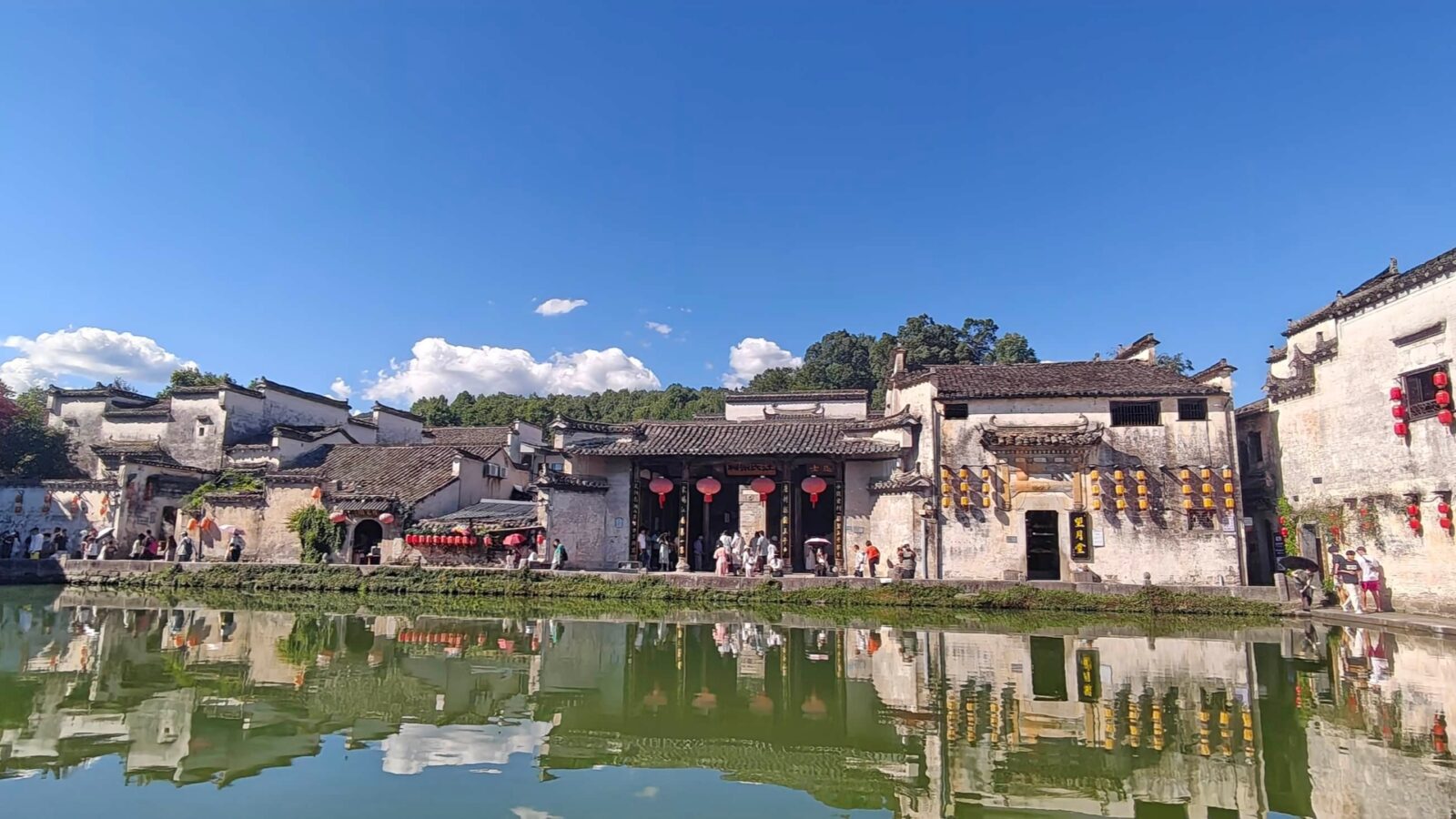
The Hongcun
Hongcun and Xidi were inscribed together on the UNESCO World Heritage List in 2000, recognized for their exceptionally well-preserved Ming and Qing merchant architecture and their testimony to the wealth and cultural ambitions of the Huishang trading families. Hongcun's defining feature is its water system — a network of channels, sluices, and ponds arranged in the shape of an ox, with two ponds that reflect the surrounding eaves in still weather. This hydraulic design served both practical and feng shui purposes, and it makes Hongcun one of the most photographed villages in China.
Xidi is more compressed and architectural. The village contains 124 surviving merchant residences built between the Ming and Qing periods, many with carved wooden screens, marble doorframes, and courtyard gardens that reveal the taste of wealthy trading families. The most famous single feature is the paifang — a monumental stone archway at the village entrance that was erected by imperial decree to honor a Hu family scholar who passed the state examinations. The combined ticket for both villages costs about $17 (¥104), with each village accessible separately at the individual rates.
Tunxi Old Street and the Four Treasures of the Study
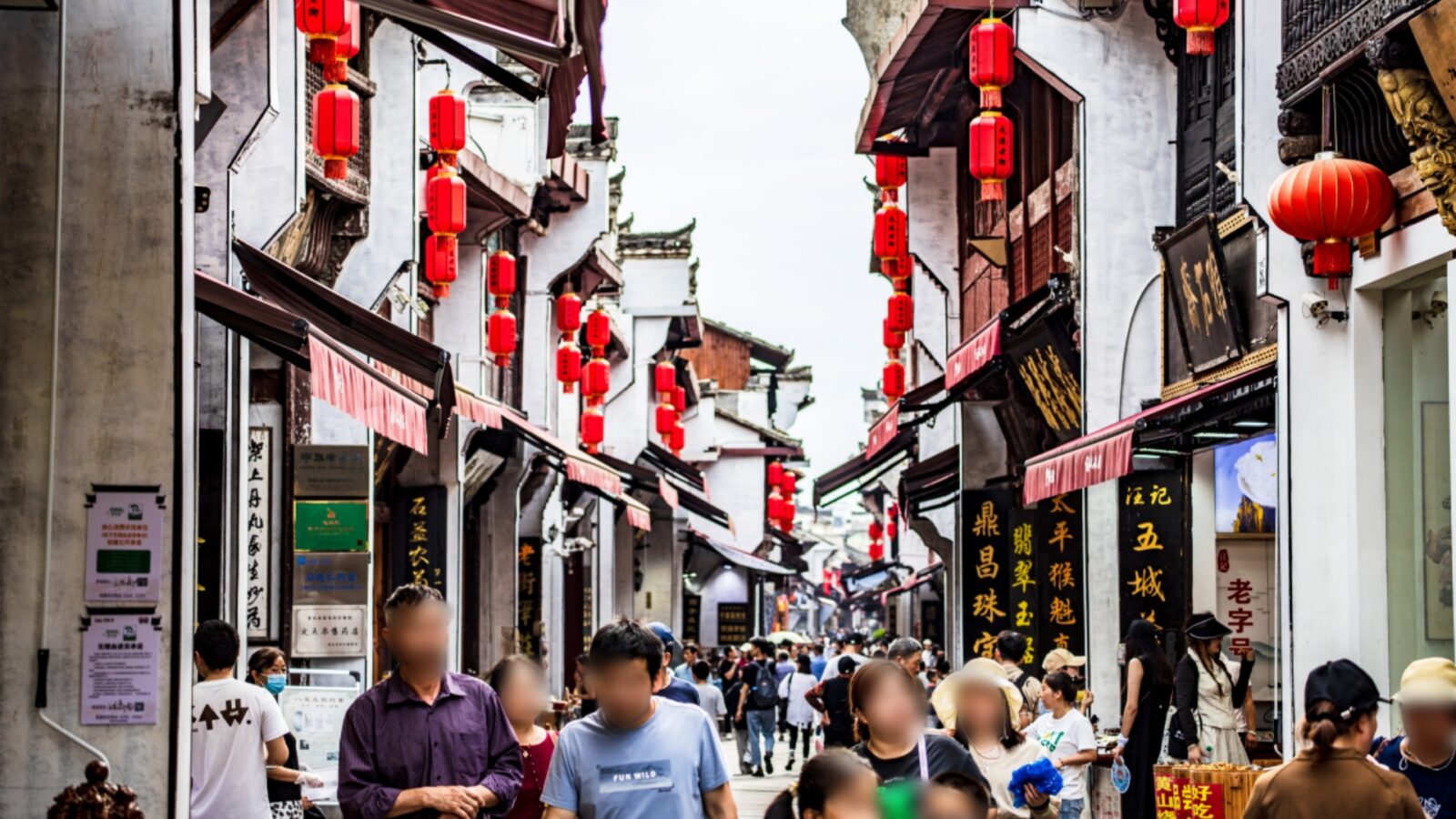
Huangshan Tunxi Old Street
Tunxi Old Street (屯溪老街) runs for roughly 1 km through Huangshan city and is the surviving commercial heart of what was once the most important inland market town for Huizhou merchant goods. The street's Qing-era shop-houses still stand, though most now operate as retail outlets rather than trading firms. The defining products on offer are the Four Treasures of the Study — brushes (笔), ink (墨), paper (纸), and inkstones (砚) — the four implements essential to Chinese calligraphy and painting. Huizhou had been a center for these crafts since the Ming dynasty, and Tunxi retains a cluster of workshops where visitors can watch inkstone carving or select a brush made from weasel hair.
- What to see: Walk the full 1-km stretch; visit the inkstone workshops and brush shops that still operate as craft ateliers rather than tourist stalls.
- What to buy: Genuine Huizhou inkstones and calligraphy brushes make distinctive, portable souvenirs; prices vary widely depending on material quality and craftsmanship.
- Suggested pairing: Plan Tunxi as a half-day activity paired with either Hongcun or Xidi; stay overnight in Huangshan city to allow a full morning at one of the villages before returning.
Chinese Merchant Communities Across Southeast Asia
From the Ming dynasty onward, Chinese merchants established long-distance trading networks that carried them across the South China Sea and into the port cities of Southeast Asia. They settled in Malacca, Manila, Batavia (now Jakarta), Bangkok, Saigon, and dozens of smaller ports, forming diaspora communities that often outlasted the colonial regimes that initially hosted them. These merchants organized themselves through clan associations and guild halls called huiguan, institutions that provided credit, dispute resolution, and mutual aid within the Chinese community while negotiating with colonial authorities on collective matters.
Many of those huiguan buildings survive today as heritage sites, museums, or community centers in Penang, Melaka, Singapore's Chinatown, and the old Chinese quarters of Bangkok and Jakarta. Descendants of those early merchant families still form substantial Chinese-minority communities in Malaysia, Singapore, Indonesia, Thailand, Vietnam, and the Philippines, where family names and clan affiliations often trace directly back to the Huizhou, Fujian, or Cantonese trading networks of the 18th and 19th centuries.
Frequently Asked Questions
Q: How did Chinese society view merchants in imperial times?
Merchants occupied the lowest rung of the four traditional occupations (shi-nong-gong-shang, or scholars, farmers, craftsmen, merchants). They faced higher tax rates, official restrictions on ostentatious display, and a formal ban on their sons sitting for the civil-service examinations. The rushang ideal — a merchant who combined commercial success with Confucian ethics and education — emerged as a path to reclaim social respectability.
Q: What is a Hong merchant?
A Hong merchant (行商) was a Qing-licensed trader based in Canton who served as the sole legal intermediary between Western merchants and the Chinese domestic market. The system operated from 1757 to 1842. Houqua, whose fortune reached about $26 million, was the wealthiest and most famous example.
Q: What is the difference between Shanxi merchants and Anhui merchants?
Shanxi merchants (晋商) specialized in northern trade — salt transport, draft banking (piaohao), and remittance services for frontier garrisons. Anhui merchants (徽商) operated in the south, dominating the tea trade, inkstone and brush crafts, timber, and the salt business along the lower Yangtze. Both peaked in the Ming–Qing period and left distinct architectural legacies.
Q: Where can tourists see the homes of wealthy Chinese merchants today?
The four major Shanxi courtyard compounds — Qiao, Wang, Cao, and Chang — are in the Jinzhong and Lingshi area of Shanxi province, accessible as day trips from Taiyuan. In Anhui, the UNESCO-listed villages of Hongcun and Xidi preserve merchant domestic architecture, and Tunxi Old Street in Huangshan city retains a Qing-era commercial street. Houqua's former garden site is in Guangzhou.
Q: How did Houqua become one of the richest men in the world?
Houqua (Wu Bingjian, 1769–1843) held a Canton-trade licence that gave him monopolistic control over the allocation of tea exports to Western traders. Decades of close personal relationships with Boston trading houses — including the Cushing and Forbes families — cemented his access to credit and markets. His fortune of about $26 million, accumulated across the 1810s–1830s, placed him among the wealthiest individuals of his era.
Q: Did Chinese merchants trade luxury goods for silver?
Yes. Tea, silk, and porcelain flowed outward from Canton in exchange for silver that arrived largely via Spanish American pesos carried through the Manila galleon trade. This silver-for-goods exchange sustained the global silver economy of the 18th century and made the Hong merchant system commercially viable for the Qing court.
Q: What is a Confucius merchant (rushang)?
儒商 — a rushang is a merchant who combines business practice with Confucian ethical principles. Historically the term described families that educated at least one son in the Confucian classics while others ran the family trade, creating a dual path to social legitimacy. The motto "half Analects, half abacus" captures the dual literacy the ideal required.
Q: Are there Chinese merchant communities outside China today?
Yes. Malaysia, Singapore, Indonesia, Thailand, Vietnam, and the Philippines all host substantial communities descended from Ming- and Qing-era merchant diasporas. Many are still organized around clan associations (huiguan), and several historic guild hall buildings survive as heritage attractions in Penang, Melaka, Singapore, and Bangkok.
Q: What is the biggest Shanxi merchant courtyard mansion to visit?
Wang Family Compound in Lingshi County — about 25 hectares — is the largest. Some published comparisons describe its footprint as exceeding that of the Forbidden City, though these are approximations. Qiao Family Compound is more compact but draws more visitors because of its Raise the Red Lantern filming connection.