Chinese Sweeties
Chinese sweeties span everything from individually wrapped White Rabbit milky candies sold at every Shanghai convenience store to intricately boxed mooncakes handed over as Mid-Autumn gifts. For travelers, the candy aisle, the dim sum cart, and the heritage bakery each open a different window into the country's relationship with sugar — and a different answer to the same question: which ones are actually worth taking home.
This guide covers 15 widely recognized Chinese sweeties, narrows them down to the half dozen best suited for souvenir gifting, then maps where to buy each, what to expect in price, and how to get them home without breakage or customs trouble. Use it before you pack.
Quick Facts
Top 15 Chinese Sweeties for Travelers
🍿 Explore Everyday Snack Variety: Beyond traditional bakeries and wrapped candies, discover the savory, spicy, and crunchy treats locals love in popular chinese snacks.
Best Chinese Sweeties to Bring Home
Not every sweetie survives a suitcase and a 12-hour flight. The six picks below are durable enough for gifting, available across multiple channels, and unlikely to trigger customs flags in most countries.
White Rabbit Creamy Candy
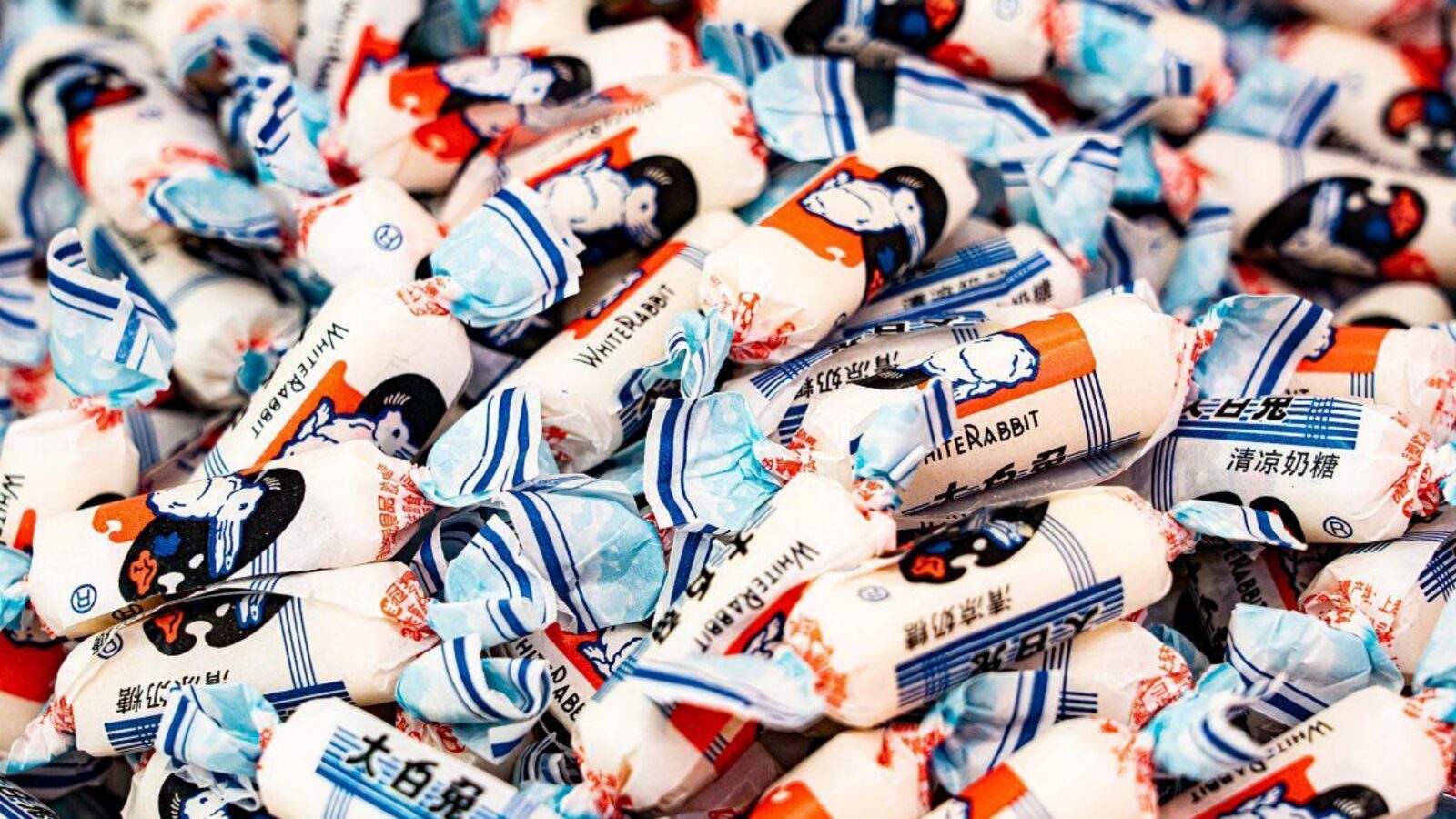
The White Rabbit Creamy Candy
White Rabbit Creamy Candy works best as a universal icebreaker. The individually wrapped milky candy in its instantly recognizable blue-and-white packaging costs roughly $1–$2 (¥7–¥15) for a loose bag and $15–$25 (¥108–¥180) in a printed gift box with 10–12 foil-wrapped pieces inside.
- Packaging: Loose cellophane bag (budget option) vs. sealed printed gift box (presentation option)
- Typical recipients: Children, coworkers, anyone; mild flavor profile suits most palates
- Price tier: $1–$25 (¥7–¥180) depending on format
- Where to find: Every city supermarket, convenience stores (7-Eleven, Lawson, FamilyMart), duty-free shops, and Trip.com
🍬 Explore Classic Milky Flavors: To understand the creamy taste profile and famous edible paper wrapping of this nostalgic Shanghai classic, discover white rabbit candy flavor.
Mooncake Gift Boxes
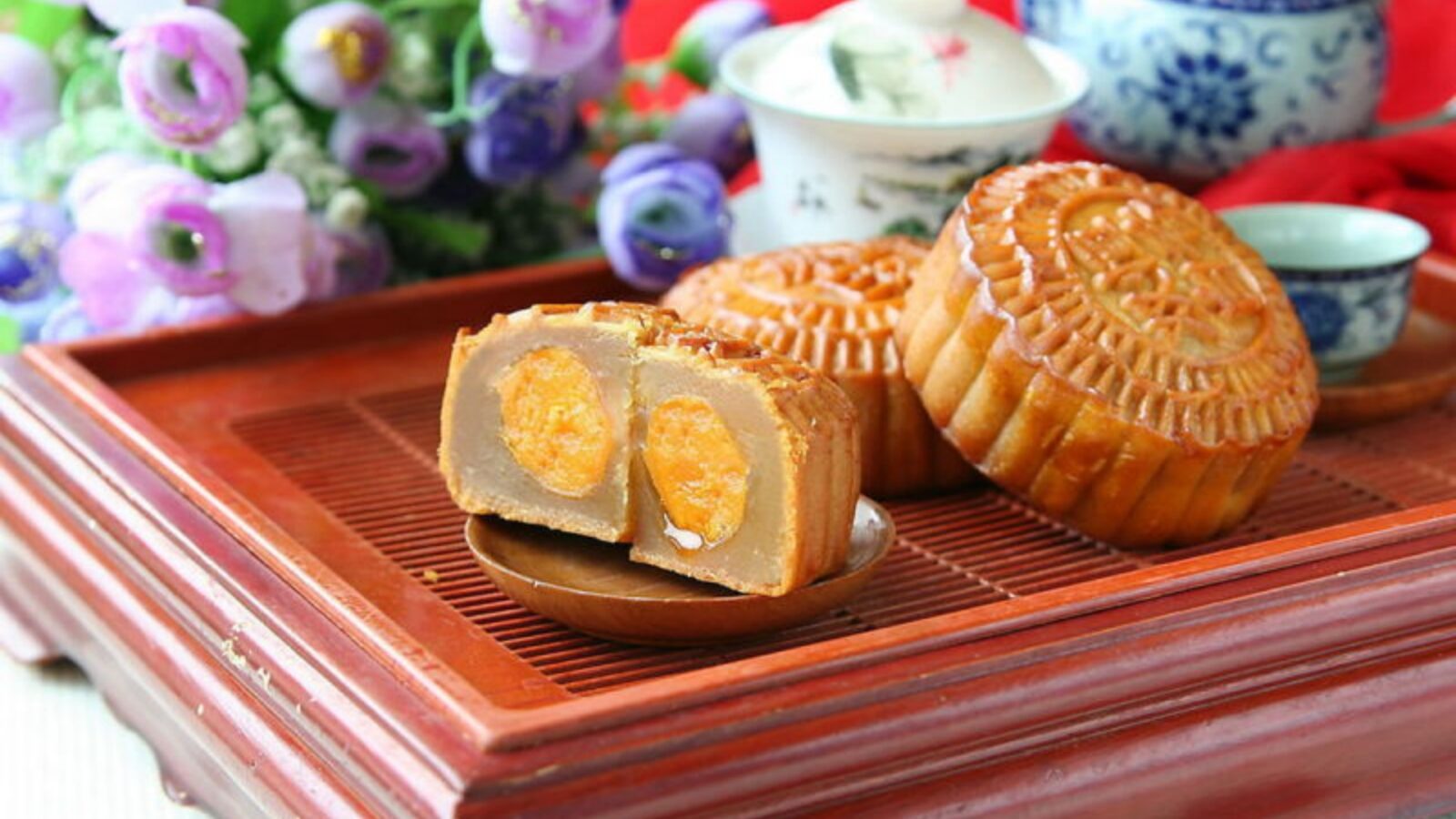
The Mooncake Gift Boxes
Mooncake gift boxes occupy the premium end of the Chinese sweetie gifting spectrum. Premium boxed sets from time-honored brands — with lotus seed paste, salted egg yolk, and snow skin variants — range from $15–$50 (¥108–¥360) depending on the brand tier and filling complexity.
- Packaging: Printed rigid box with individual paper cup compartments; some brands include decorative tins
- Typical recipients: Family members, hosts, business contacts; mooncake culture expects the gift to be shared
- Price tier: $5–$50 (¥35–¥360); supermarket packs sit at the lower end
- Where to find: Department stores, time-honored brand shops, supermarkets (year-round at lower tier; peak gift sets mid-Aug to mid-Oct), and Trip.com
Sachima
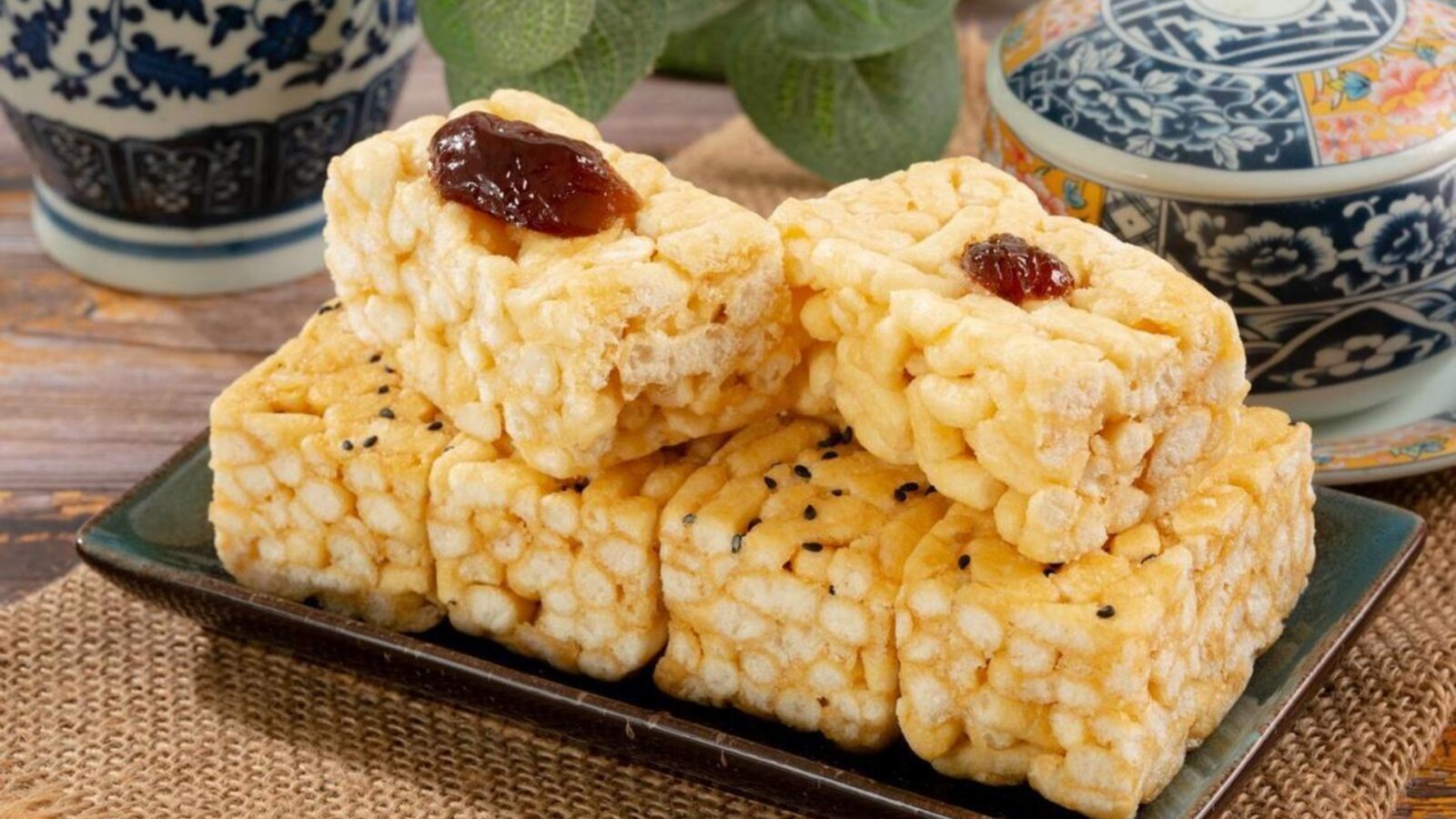
The Sachima
Sachima is among the most practical choices for international travel. The Manchu-origin sweet — layered fried dough bound with sugar syrup — comes vacuum-packed in sealed boxes that keep freshness for 3–6 months at room temperature.
- Packaging: Vacuum-sealed plastic box; each piece separated by a thin rice-paper liner
- Typical recipients: Adults and children alike; mild honey and flour taste is widely acceptable
- Price tier: $2–$6 (¥15–¥45) per box
- Where to find: Daoxiangcun, Vanguard and BHG supermarkets, Trip.com
Dragon Beard Candy
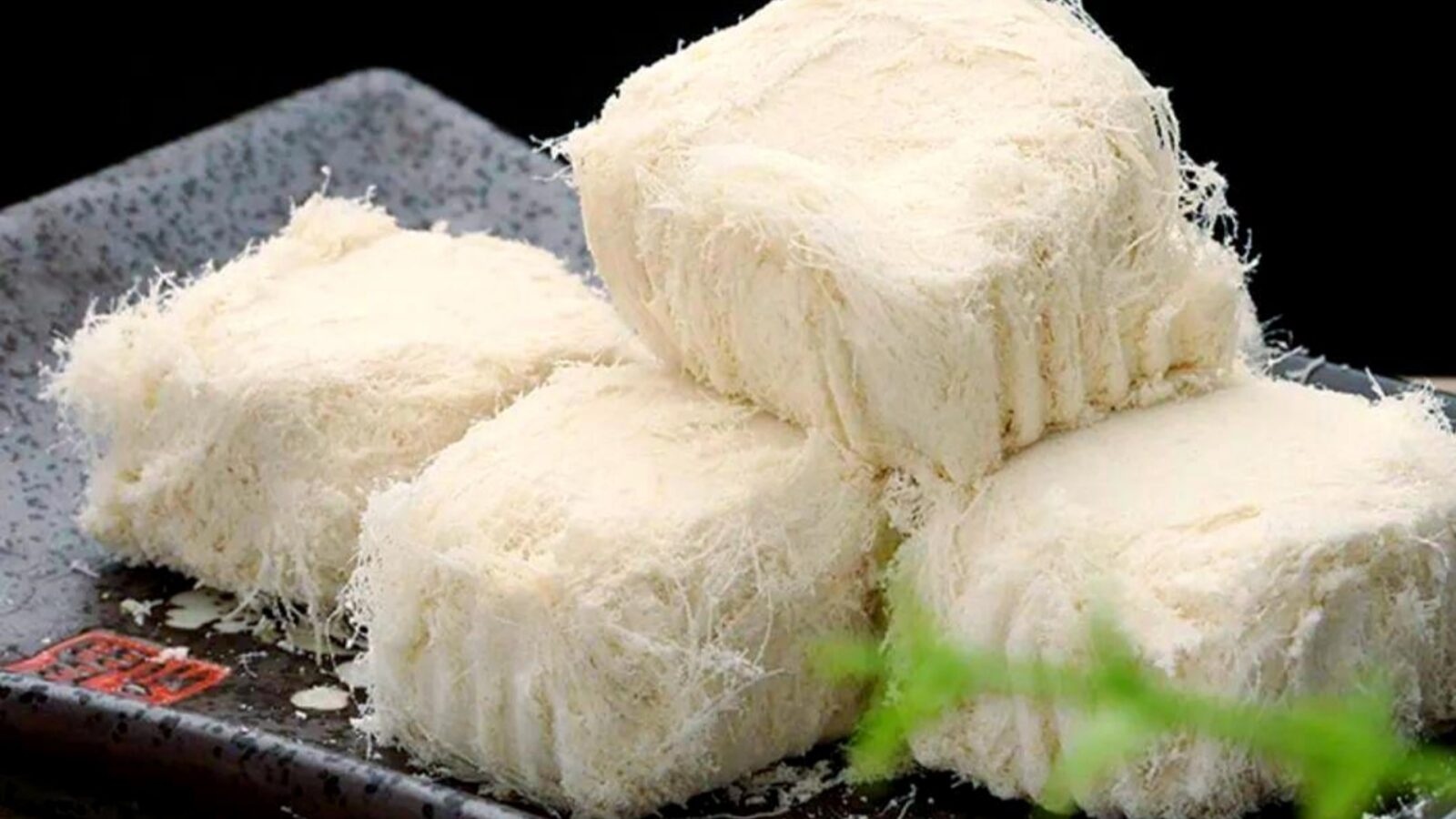
The Dragon Beard Candy
Dragon Beard Candy is Beijing's most theatrical confection: ultra-fine threads of maltose sugar stretched until they resemble silk, wrapped around a core of crushed peanut and coconut. The effect is memorable, and the packaging is designed for display — but the threads shatter if the box takes a hard impact.
- Packaging: Flat paper box with thin separators between each piece; the visual appeal is part of the gift
- Typical recipients: Hosts, food enthusiasts, anyone who appreciates craft over sweetness
- Price tier: $3–$8 (¥20–¥55) per box
- Where to find: Beijing specialty confectionery shops, Trip.com
Osmanthus Cake (Gui Hua Gao)
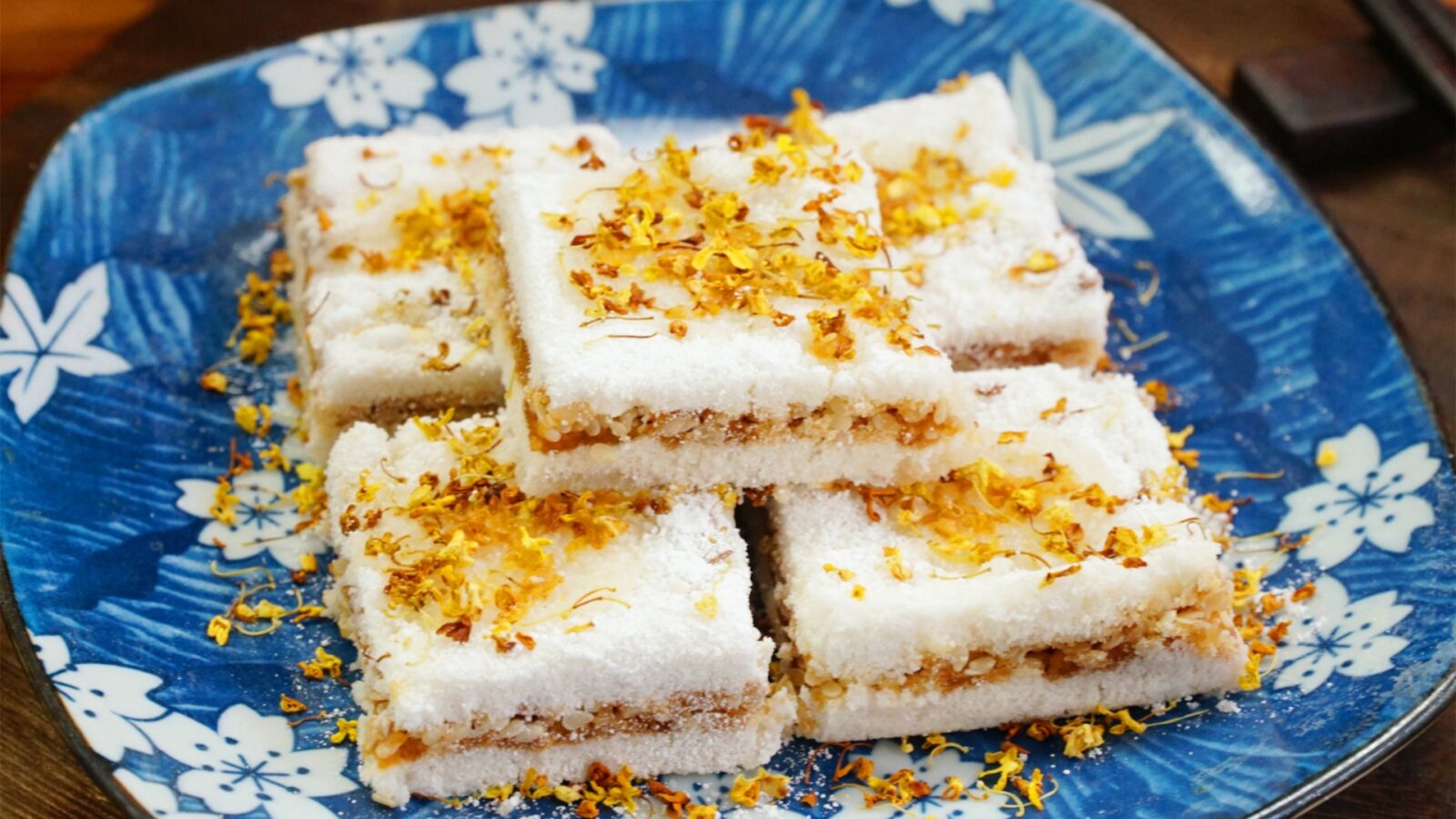
The Osmanthus Cake (Gui Hua Gao)
Suzhou's osmanthus cake offers a floral, subtly sweet profile that stands apart from the heavy pastry and candy mainstream. Each square is individually wrapped in the factory, making them easy to portion out as gifts.
- Packaging: Individually sealed squares stacked inside a printed cardboard box; elegant without extra wrapping
- Typical recipients: Older relatives, formal hosts, anyone who prefers light flavors over dense sweetness
- Price tier: $3–$6 (¥20–¥45) per box of 6–10 pieces
- Where to find: Suzhou time-honored brands, online via Trip.com, and specialty Chinese food retailers abroad
Koi Kei Peanut Candy
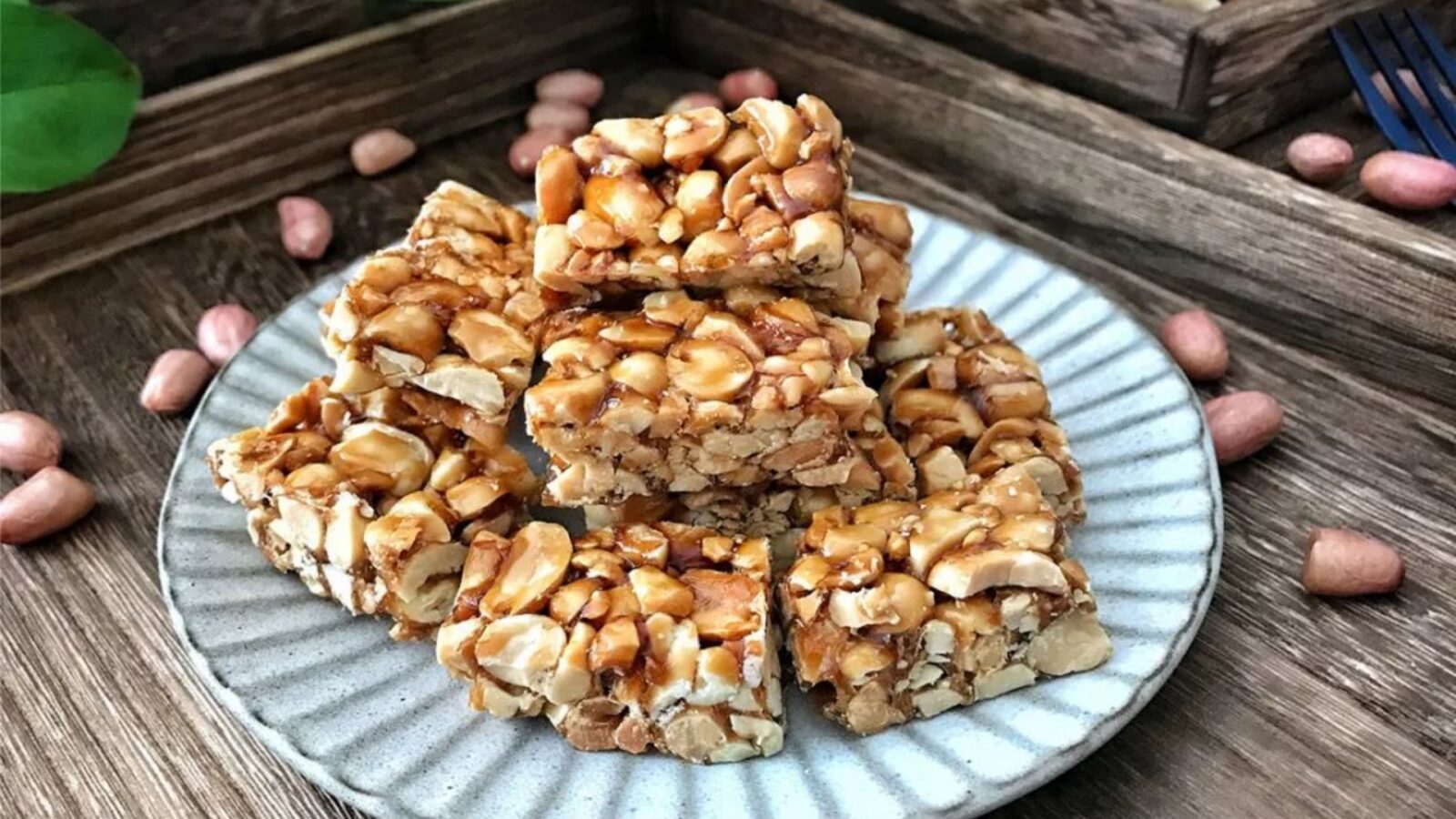
The Koi Kei Peanut Candy
Koi Kei Peanut Candy originates from Macau and Hong Kong, where the brand operates namesake shops at major tourist sites. The candy consists of chewy rice-flour squares coated in roasted peanut crumbs, individually wrapped in branded foil. The product is widely counterfeited — the only reliable source is an official Koi Kei shop or the brand's own website.
- Packaging: Branded foil wrapper per piece, boxed in the shop; authenticity seal on the box
- Typical recipients: Snack lovers, peanut-sensitive friends; rich and chewy texture
- Price tier: $3–$8 (¥20–¥55) per box; slightly higher at airport duty-free locations
- Where to find: Koi Kei shops in Macau (Rua de Felicidade) and Hong Kong (Temple Street, Mong Kok); Trip.com for select packages
🌶️ Discover China's Famous Spicy Snack: For a chewy, savory contrast to sweet treats that holds a massive cult following across the country, read our feature on la tiao chinas spicy snack with a cult following.
Where to Buy Chinese Sweeties
The best channel depends on whether you need a sealed factory pack, a gift-wrapped box, or a last-minute purchase at the departure gate. Below is a comparison across six primary channels.
Regional Chinese Sweeties Across the Country
Chinese confectionery traditions vary significantly by region — from the nutty, subtly sweet pastries of Beijing to the buttery baked goods of Hong Kong. Knowing which city produces what helps you target the right purchase instead of grabbing whatever is closest to the hotel.
Beijing & Tianjin
Beijing and Tianjin lead with nuts, beans, and sugar. The flavor profile tends toward mild sweetness without heavy fillings, making these sweets approachable for first-timers. Dragon Beard Candy, Tanghulu, Mung Bean Cake, and Fried Dough Rings dominate the bakery windows and night market stalls.
- Dragon Beard Candy: Cotton-sugar threads over peanut and coconut; a Beijing specialty with theatrical appeal
- Tanghulu: Hawthorn or strawberry skewered and coated in hardened rock sugar; best eaten fresh at Wangfujing or Nanluoguxiang night market
- Mung Bean Cake: Pressed and lightly sweetened; packaged in sealed tins for travel
- Fried Dough Rings (Ma Tuan): Deep-fried wheat rings dusted with sugar; sold at temple fair stalls and morning markets
Shanghai & the Lower Yangtze
The Shanghai and Lower Yangtze region favors milk-forward and floral notes. White Rabbit originates here, and the osmanthus cakes from Suzhou's Daoxiangcun are a benchmark of the style — gossamer-fine桂花 (osmanthus) blossoms suspended in a soft rice-flour cake.
- White Rabbit Creamy Candy: Milky, buttery, wrapped in edible rice paper; Shanghai's most recognized export
- Sachima: Fried-dough ribbons in honey syrup; Manchu origin, sold everywhere in the Lower Yangtze
- Osmanthus Cake: Suzhou-style; floral, light, individually wrapped; ideal for formal gifting
- Shanghai Su Pastries: Flaky layered pastries with sweet or savory fillings; time-honored brands along Huangpu River
Hong Kong & Macau
Hong Kong and Macau baked goods lean buttery and less sweet than mainland pastries. Egg tarts with caramelized tops, pineapple buns with their signature crackled crust, and Koi Kei Peanut Candy from Macau define the regional character.
- Egg Tarts: Flaky pastry shell with set custard and caramelized sugar top; a Kai Tong or Taikong branch staple
- Pineapple Bun: Despite the name, contains no pineapple — the crust pattern resembles the fruit's skin
- Koi Kei Peanut Candy: Foil-wrapped chewy rice-flour squares coated in roasted peanut crumbs; buy at official Macau shops
- Wife Cake: Baked Cantonese pastry with a layered dough and sweet winter melon filling
Canton / Guangdong
Cantonese sweeties come largely from the dim sum tradition. Sesame Balls, Custard Lava Bao, and the familiar Wangzai QQ gummies all originate in or near Guangzhou and Shenzhen. These are best eaten fresh at the cart; packaged versions serve as souvenirs.
- Sesame Balls (Jian Dui): Deep-fried glutinous rice dough coated in sesame seeds, hollow inside; served in dim sum restaurants
- Custard Lava Bao: Steamed bun that releases a molten salted egg yolk custard when bitten; eaten immediately after serving
- Wangzai QQ Gummy: Fruit-flavored gummy squares with a slightly firm, gelatinous bite; sold in convenience stores across China
- Almond Cookies: Shortbread-style cookies with ground almond; sold at Cantonese bakeries in branded tins
Taiwan-Influenced Coastal Regions
Taiwan and Taiwan-influenced coastal regions around Xiamen and Fuzhou share a taste for buttery soft-baked pastries with tropical fruit fillings. Pineapple Cake — not the Hong Kong bun, but the rectangular Feng Li Su with a pineapple cube inside — is the signature export.
- Pineapple Cake (Feng Li Su): Soft-baked pastry with a cube of candied pineapple at its center; the most recognizable Taiwan souvenir
- Wangzai-style Gummies: Taiwan-origin gelatin squares in tropical fruit flavors; sold throughout Xiamen and Fuzhou
- Sun Cake: Small layered pastry with a malt syrup center; a Taichung and Taiwan railway staple
🛍️ Top Souvenir & Gift Shopping Guide: Looking to pair boxed heritage sweets with teas, silk, or handicrafts for your flight home? Explore items to buy in china.
Tips for Choosing, Packing & Transporting Chinese Sweeties
A box of dragon beard candy looks perfect in the shop and arrives as crumbs in a broken box. These practical steps minimize that outcome and keep your souvenirs edible at the other end of the journey.
Check Expiry & Sealed Packaging First
Always read the manufacture date and best-before label before purchasing. Factory-sealed packs have a clear advantage over open bins at tourist-site shops, where sweets have been exposed to humidity and direct handling.
- Date check: Locate the best-before date on the packaging; prioritize packs with at least 3 months remaining
- Seal integrity: Inspect for torn film, bulging vacuum packs, or missing inner wrappers before paying
- Avoid loose street sweets for travel: Tanghulu and fresh dim sum pastries are fine to eat on-site but do not survive long-haul transport
- Allergen note: Check ingredient lists for peanut, sesame, dairy, and gelatin — common in many Chinese sweeties
Pack to Survive the Flight Home
Checked luggage offers more protection than carry-on for fragile pastries, but weight limits still apply. A hard-shell suitcase handles the bulk of packing; clothing adds cushioning around delicate boxes.
- Hard-shell suitcase: Use one for egg tarts, dragon beard candy, and anything with a printed box you want to keep intact
- Clothing cushioning: Wrap sachima and osmanthus cake boxes in a sweater or rolled jacket for impact absorption
- Weight split: Distribute sweetie boxes between two bags if carrying multiple; most airlines cap checked bags at 23 kg
- Vacuum bags: Vacuum-sealed sachima packs reduce bulk significantly for the return trip
Customs & Import Rules for Sweets
Most sealed candies and packaged pastries pass through US, EU, UK, and Australian customs without issue. However, two categories deserve attention before you pack.
- Sealed candy and pastries: Generally permitted without declaration in most countries
- Meat-filled mooncakes: Some countries restrict月饼 with pork or duck filling — confirm before packing
- Fresh fruit jellies: May face restrictions depending on destination; dried hawthorn candy in sealed packaging is usually safe
Storage After You Land
Once through customs, storage depends on the product type and moisture content. Hard candies tolerate pantry conditions; fresh pastries need refrigeration or immediate consumption.
- Pantry (6–12 months): Sealed White Rabbit, hawthorn candy, ginger candy, Koi Kei in foil wrap
- Cool dry place (1–6 months): Sachima, osmanthus cake, mung bean cake, mooncake gift boxes
- Refrigerate (2–3 days): Fresh egg tarts, custard lava bao, pineapple buns — eat quickly
Frequently Asked Questions
Q: What is the most popular Chinese sweetie?
White Rabbit Creamy Candy and Mooncake are the two most widely recognized. White Rabbit dominates the everyday snacking category across every city and convenience store. Mooncake leads in gift-giving, with peak demand during the Mid-Autumn Festival from mid-August through October.
Q: Are Chinese sweeties gluten-free or vegan?
Most hard candies and gummies — including White Rabbit, hawthorn candy, and Wangzai QQ — are gluten-free but contain dairy or gelatin. Mooncake pastry, sachima, and wife cake all contain wheat flour. Traditional Chinese sweeties are rarely vegan, as most use animal-based fats or gelatin.
Q: How long do Chinese sweeties last?
Sealed hard candy and Koi Kei peanut candy keep 6–12 months at room temperature. Sachima and osmanthus cake last 3–6 months in a sealed package. Mooncake gift boxes hold for 30–60 days. Fresh pastries such as egg tarts and custard lava bao keep 1–3 days refrigerated.
Q: Can I bring Chinese sweeties through airport customs?
Sealed candies and packaged pastries generally clear US, EU, UK, and Australian customs without declaration. Meat-filled mooncakes and fresh fruit jellies may be restricted depending on the destination country — check the specific rules for your country before flying.
Q: Where can I buy Chinese sweeties outside China?
Asian supermarkets in North America and Europe — such as 99 Ranch, H Mart, and SeeWoo — stock White Rabbit, Koi Kei, and mooncakes. Trip.com and Klook carry a selection for international delivery. Hong Kong and Macau specialty shops including Koi Kei ship abroad through their own websites.
Q: When are mooncakes sold each year?
Peak season runs mid-August to mid-October, building toward the Mid-Autumn Festival on the 15th day of the 8th lunar month. Supermarkets and department stores carry mooncakes year-round at lower price tiers, but the freshest and most varied gift boxes appear 6–8 weeks before the festival.
Q: Is "sweetie" a Chinese sweet or a romantic nickname?
"Sweetie" maps to two distinct Chinese uses. The food meaning — 零食 (snacks), 糖果 (candy), 甜点 (sweets) — covers the products in this article. The romantic nickname meaning — 甜心 (tián xīn) or 亲爱的 (qīn ài de) — appears in Chinese dramas and films. Titles such as "The Billionaire's Sweetie" use the affectionate sense, not the confectionery one.
Q: How do you say "sweetie pie" in Chinese?
A literal "sweetie pie" can be rendered as 甜馅饼 (tián xiàn bǐng) or 甜心派 (tián xīn pài), though these are not common everyday terms. The more natural choices are 甜心 (tián xīn) or 亲爱的 (qīn ài de) for the affectionate meaning, and 甜点 (tián diǎn) or 小吃 (xiǎo chī) for the food meaning. Chinese speakers choose based on context rather than direct translation.