Chinese Proverb About Love
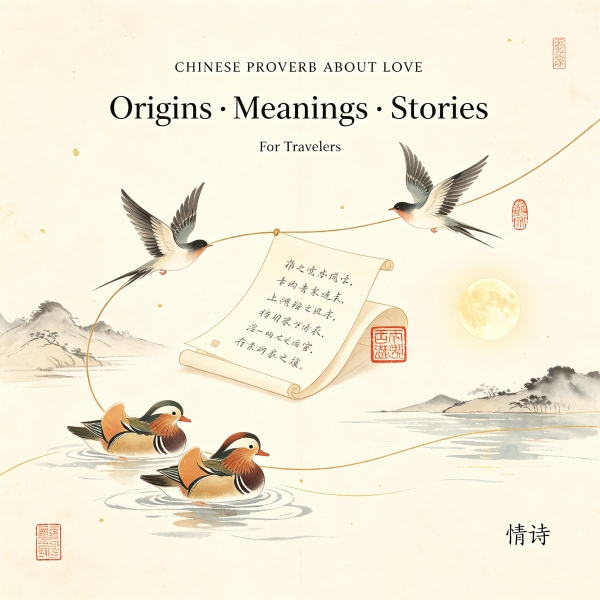
Chinese proverb about love carries centuries of feeling into just a few characters, turning up at wedding banquets, on souvenir calligraphy, and inside tourist markets from Beijing to Hong Kong. Visitors often ask which proverbs actually mean what they appear to mean, where they originated, and which travel well across cultures. This guide collects the most quoted Chinese proverbs about love, traces each to its source poem or dynasty, and shows the real-world scenarios in modern China where they actually appear — from banquet halls in Chengdu, to calligraphy shops in Beijing's Wangfujing, to romance tours of Hangzhou's West Lake.
Quick Facts
Classic Love Proverbs with Origins & Stories
Classic Love Proverbs with Origins & Stories
Every proverb listed above has a precise origin — a specific poem, a real historical figure, and a context that modern usage often obscures. The gap between the original meaning and the contemporary greeting-card version is exactly what most travelers want to understand, and tracing each line back to its source reveals why these phrases have endured for millennia.
From the Classic of Poetry
The oldest love poetry in the Chinese language comes from the Classic of Poetry (诗经), compiled between the 7th and 6th centuries BC. Three lines from this collection remain in constant use today, though their original settings may surprise visitors.
- 执子之手,与子偕老 — from 诗经·邶风·击鼓. This line was not a wedding vow when it was written. It appears in a poem about a soldier separated from his comrade by a long military campaign, expressing a promise made in grief. Centuries later, Chinese couples recite it at their wedding ceremonies as the ultimate commitment.
- 窈窕淑女,君子好逑 — opens 诗经·周南·关雎, the most famous poem in the collection. A young man sees a virtuous maiden gathering aquatic plants by a river and pines for her. The line means a gentleman of good character is a fitting match for a modest, graceful woman.
- 关关雎鸠,在河之洲 — the opening couplet of the same poem, describing mandarin ducks calling on a river islet. The image of paired 鸳鸯 (yuanyang) as symbols of conjugal fidelity originates here, which explains why yuanyang designs dominate Chinese wedding décor today.
Tang Dynasty Verses on Eternal Love
The Tang Dynasty (618–907 AD) produced China's most celebrated poets, and three of their love verses have become wedding-standard quotations. Each one emerged from a personal drama — imperial tragedy, forbidden longing, or widowhood.
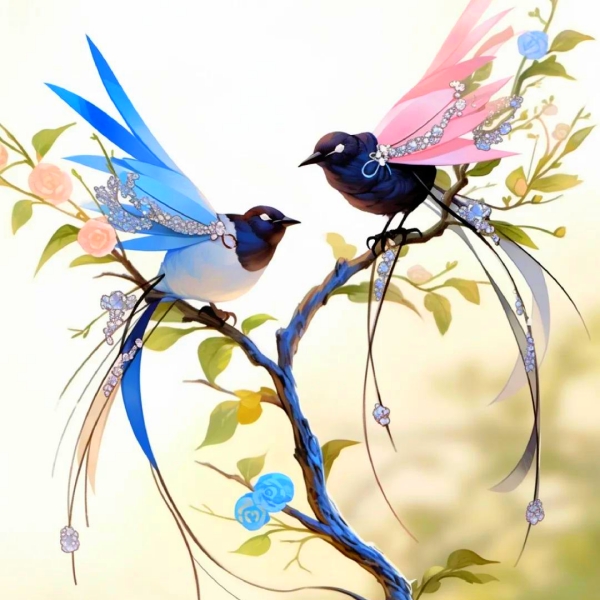
- 在天愿作比翼鸟,在地愿为连理枝 — from 白居易's 长恨歌 (Song of Everlasting Sorrow), the 9th-century epic poem about Emperor Xuanzong and his consort Yang Guifei. The couple swears this oath before their separation by political upheaval and death. The pairing of 比翼鸟 (mythical birds that must fly together) and 连理枝 (branches that fuse into one) makes this the most recognizable wedding couplet in China.
- 身无彩凤双飞翼,心有灵犀一点通 — from 李商隐 (Li Shangyin), the Tang's most enigmatic love poet. The phoenix-wing image conveys physical separation, while 灵犀 (the mythical unicorn's horn) represents a supernatural connection that needs no words. Couples use it to express intimacy across distance.
- 曾经沧海难为水 — from 元稹's poem 离思, written after the death of his wife Cui. "Once you have seen the ocean, ordinary waters lose all meaning." Widely used at gravesides and in memorial contexts when a surviving partner speaks of the impossibility of loving again.
Song Dynasty Voices on Longing
The Song Dynasty (960–1279 AD) shifted Chinese love poetry toward personal introspection, and several of these lines address distance, longing, and the tension between fate and human effort — themes that resonate with modern readers navigating long-distance relationships.
- 但愿人长久,千里共婵娟 — from 苏轼's 水调歌头 (Prelude to Water Melody), written in 1076 for his brother during the Mid-Autumn Festival. The moon becomes a shared symbol between separated people. Today it appears on gifts between lovers who live in different cities, and the line often shows up on Chinese social-media posts during holiday separations.
- 两情若是久长时,又岂在朝朝暮暮 — from 秦观的 鹊桥仙 (Fairy of the Magpie Bridge), the Song Dynasty's most famous treatment of the Cowherd and Weaver Girl legend. The question it poses — does true love require daily presence? — has made it the go-to proverb for couples enduring separation.
- 衣带渐宽终不悔,为伊消得人憔悴 — from 柳永's 蝶恋花, describing how lovesickness literally wastes a person away. The image of a loosening belt has become shorthand for the physical toll of unrequited or long-distance love.
🏮 Auspicious culture background: Many love‑themed phrases share symbolic logic with traditional lucky motifs. Read our breakdown of cultural good‑fortune imagery in Chinese Prosperity Symbol: What Characters, Animals, and Objects Mean Across China.
Where Travelers Hear Love Proverbs in China
Where Travelers Hear Love Proverbs in China
These proverbs are not only in textbooks — visitors encounter them constantly in three predictable settings: wedding celebrations, tourist-market calligraphy shops, and romantic heritage sites. Understanding the scene transforms an apparently decorative phrase into a lived cultural moment.
At Weddings and Banquets
A Chinese wedding banquet is saturated with literary symbols, and most visitors who attend one as a guest will notice the red banners before they understand what they say. At a typical Chengdu or Hangzhou banquet, four red fabric banners frame the couple's table, each carrying a different proverb.
- 有情人终成眷属 — invoked by the emcee during the formal toast, the moment when the MC raises a glass and declares the couple destined for this union. Guests join the toast at this signal.
- 百年好合 / 永结同心 — embroidered on the bridal bed quilt (龙凤被) and printed on the large wall scroll hung behind the couple's seats. These are the two most visually prominent phrases at any Chinese wedding.
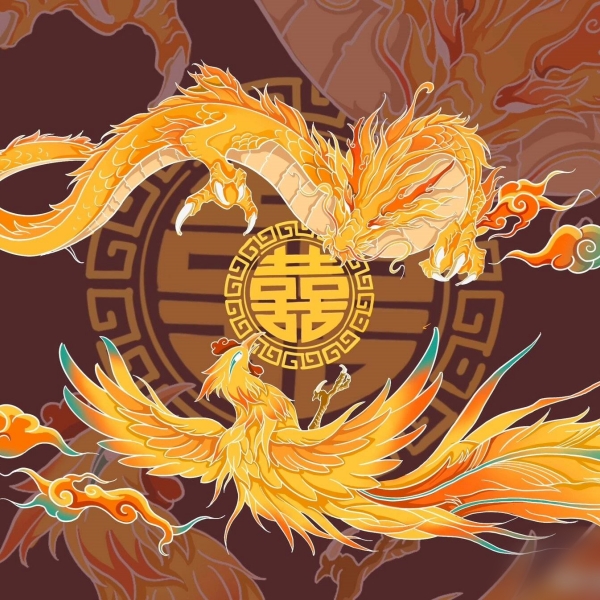
- 比翼双飞 / 龙凤呈祥 — carved into the wooden plaque placed over the entrance to the bridal chamber. The dragon-and-phoenix motif (龙凤) carries imperial connotations of an auspicious, balanced match.
On Calligraphy, Gifts and Decor
Red-character calligraphy shops in every major tourist district sell pre-written wedding scrolls, custom-printed invitations, and engraved gifts. The same proverbs that appear at banquets reappear here, which means a visitor who learns the Quick Facts table can walk into a Wangfujing shop and read what is on offer.
- 百年好合 — the single most common printed phrase on red wedding 请柬 (invitation cards), as well as on small paper fans given to guests as take-home favors.
- 永结同心 — printed on Chinese-style pendant charms and silver lock sets sold at Temple Street night market in Hong Kong, Nanjing Road in Shanghai, and Wangfujing in Beijing. These items are popular gifts from wedding guests to the couple.
- 天作之合 — engraved inside betrothal jewelry (rings, bracelets) exchanged between families during the formal 过大礼 (gift-giving ceremony) before the wedding day.
At Romantic Destinations and Temples
China's most celebrated scenic sites are bound to specific love legends, and the proverbs tied to those sites give visitors a vocabulary for the experience. Guides at these locations use the phrases naturally, and understanding them deepens what would otherwise be a beautiful view into a cultural conversation.
- 化蝶 (huà dié, "transforming into butterflies") — referenced by guides at Hangzhou's 断桥 and at the Butterfly Lovers tomb in Ningbo, tied to the legend of Liang Shanbo and Zhu Yingtai, whose spirits became butterflies rather than submit to separation.
- 月下老人结红线 — the prayer spoken at 月老 shrines in temples across China, especially at the 蓬岛瑶台 in Hangzhou and the dedicated 月老祠 in Cixi, Zhejiang. The phrase means the Old Man Under the Moon ties the red string of fate between destined couples.
- 山水有相逢 — inscribed on stone tablets at scenic lookouts and used as a warm farewell by guides, conveying the hope that even rivers and mountains — things that seem permanent yet never stay exactly the same — will meet again.
🏮 On‑the‑ground reference tip: Ancient love poetry frequently mentions personal names and honorific titles. Expand your understanding of Chinese naming conventions in 100+ Typical Chinese Names with Pinyin and Meaning.
Marriage Blessings and Wedding Sayings
Marriage Blessings and Wedding Sayings
The wedding-specific vocabulary is larger than the banquet banners suggest. Different phrases belong to different moments — the engagement gift, the invitation card, the bedside blessing, the emcee's toast — and knowing which line goes where is a detail that Chinese guests notice and appreciate. The table below maps the five most common wedding proverbs to their specific ritual context.
Blessing the Newlyweds
The banquet toast is the most emotionally charged moment of a Chinese wedding, and the phrases shouted across the tables during the 敬酒 (toast-rounds) carry a mix of formality and playful directness that visitors either find charming or overwhelming.
- 百年好合 — the default blessing, appropriate for any wedding. It appears on nearly every piece of printed wedding material, from the invitation envelope to the bedside scroll to the thank-you cards.
- 永结同心 — more literary than 百年好合, this phrase is preferred on the couple's personal items: their wedding pendant, the seal stamped on the invitation card, the embroidery on the bridal pillow. It signals a slightly more intimate register.
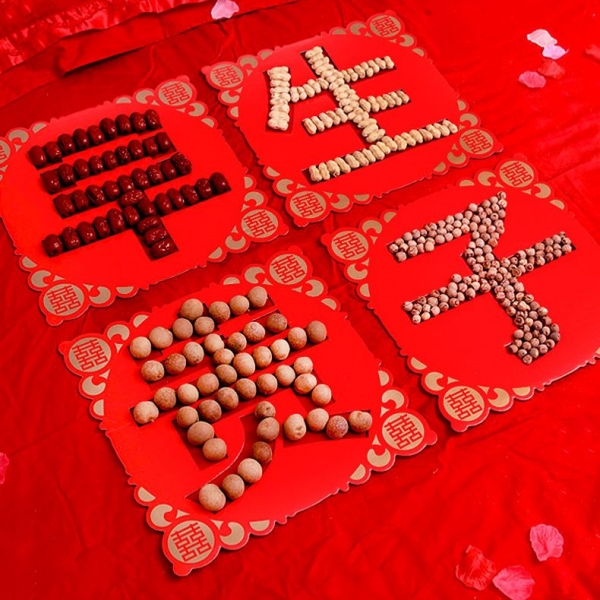
- 早生贵子 — the crowd-pleasing toast line shouted by elder relatives, often accompanied by clapping. The phrase carries a homophone pun: the characters for 枣 (jujube), 花生 (peanut), 桂圆 (longan), and 莲子 (lotus seed) are scattered on the wedding bed, each sounding like a blessing for offspring.
Matchmaking and Engagement Idioms
The formal matchmaking vocabulary reflects a classical Chinese understanding of marriage as a union between families as much as between individuals. These four-character idioms are drawn from historical texts and retain their literary flavor even in modern conversation.
- 郎才女貌 — "the man has talent, the woman has beauty." Describes the ideal balanced match and appears in matchmaking references when families discuss a prospective couple.
- 天生一对 — "a pair made in heaven." Used by friends commenting on a couple's obvious compatibility; the phrase signals wholehearted approval.
- 金玉良缘 — "a destined match of gold and jade." Drawn from 红楼梦 (Dream of the Red Chamber), this is the most literary of the engagement idioms, appreciated by guests who recognize its novelistic origin.
- 门当户对 — "matching gates and matching households." The classical Chinese matchmaking principle that two families of equal social and economic standing form the most stable unions. Still used in conversation when families evaluate a match, though younger urban couples increasingly challenge its relevance.
🏮 Festival custom context: Weddings and romantic festivals often feature decorative lantern installations. Discover the layered cultural meaning behind this classic festive decor in Chinese Lanterns Meaning: Symbolism, Colors, and Cultural Roots.
Bittersweet Sayings for Heartbreak and Loss
The love proverbs most familiar to Western audiences tend to cluster around happy endings, but the Chinese literary tradition gives equal weight to love's harder passages — mourning, separation, and the bittersweet knowledge that fate does not always deliver what affinity promises. These proverbs appear at funerals, in memorial calligraphy, and in conversations about relationships that ended despite clear connection.
Mourning a Loved One
Three proverbs dominate the vocabulary of grief, each originating from a different historical context that gives the line its emotional weight. Visitors encountering these phrases in a memorial hall or a shop selling funeral calligraphy will find them far more specific than they first appear.
- 问世间情为何物,直教生死相许 — from 元好问's 摸鱼儿·雁丘词 (Jin Dynasty, 12th–13th century). The poet witnessed a hunter who had killed two lovebirds rather than let them be separated; the surviving birds called for their mates and died. Struck by this, the poet asked what love is that it compels living beings to pledge their very lives. This line appears at funerals and gravesides when a surviving partner speaks of devotion that transcends death.
- 衣带渐宽终不悔,为伊消得人憔悴 — from 柳永's 蝶恋花 (Song Dynasty). Originally written as lovesickness, the image of a loosening belt has been repurposed to express grief's physical toll on the bereaved. Family members sometimes inscribe it on memorial scrolls.
- 曾经沧海难为水 — from 元稹's 离思, the poet's declaration after his wife's death that having known true love, nothing else can ever satisfy. Survivors quote this at gravesides to express the impossibility of forming a new bond, a use that extends the poem's original mourning into contemporary grief.
The Red String of Fate
The 月下老人 (Old Man Under the Moon) legend is China's most pervasive love mythology, and the phrases associated with it appear everywhere — on temple prayer plaques, in conversation about meeting "the one," and in the vocabulary of relationships that failed despite evident connection. The shrine network makes this one of the few love-proverb encounters that takes place in a specifically religious setting.
- 千里姻缘一线牵 — "a thousand-mile marriage is pulled together by a single red thread." The central line of the 月老 legend and the most quoted phrase for destined love in Chinese. Temple visitors write this aspiration on prayer plaques at 月老 shrines.
- 有缘千里来相会 — "fated ones meet even from a thousand miles apart." Used when friends or family members are separated by distance, and quoted as a warm wish when a couple finally closes the gap.
- 有缘无分 — "fated to meet, not fated to be together." The standard Chinese phrase for relationships that ended despite evident connection. It acknowledges the painful gap between destiny and circumstance.
- 缘分 / 姻缘 — the matched pair of nouns meaning "the fate that binds two people together." 缘分 applies broadly to any meaningful connection (friendship, family, work), while 姻缘 refers specifically to the romantic-matrimonial bond. These terms underpin the entire conceptual framework of Chinese love vocabulary.
Funny, Modern and Family Sayings
Xi Shi
Beyond the literary and ceremonial, Chinese love culture includes a robust vein of humor and self-deprecation, as well as a distinct vocabulary for family affection that operates separately from romantic love. The proverbs in this section cover the widest emotional range in the guide, from internet-age jokes about singledom to classical imagery of parental devotion.
Witty One-Liners
The humorous side of Chinese love sayings falls into two registers: classical-witty (literary phrases with an ironic edge) and modern-internet (social-media slang and tongue-in-cheek jokes). Both registers are widely understood and appear on mugs, posters, and phone cases throughout China.
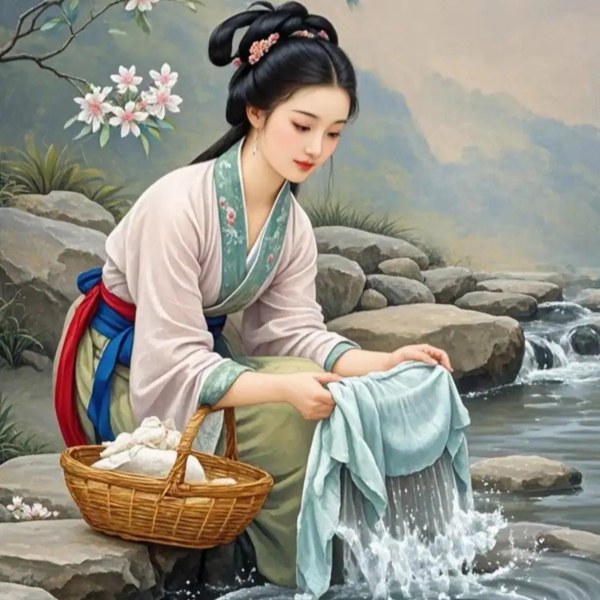
- 情人眼里出西施 — "in a lover's eye, even a plain face is Xi Shi." Xi Shi was one of the legendary Four Beauties of ancient China. The proverb means beauty truly lies in the eyes of the beholder, and it carries a warm, slightly teasing tone.
- 有情饮水饱,无情食饭饥 — "with love, even water fills you up; without love, even rice leaves you hungry." A Cantonese-rooted saying that plays on the paradox of emotional versus physical nourishment. It appears on gifts between close couples who tease each other affectionately.
- 单身狗 — literally "single dog," the dominant self-deprecating internet label for unmarried young Chinese people. Found on Weibo bios, Douyin captions, and humorous merchandise. The tone is camaraderie among the unattached, not bitterness.
- 恋爱中的女人智商为零 — "a woman in love has zero IQ." A tongue-in-cheek joke appearing on social-media graphics and novelty mugs, implying that romantic feelings override rational judgment. The gender-specific phrasing makes it playful rather than serious.
Family Love
Chinese culture distinguishes clearly between romantic love (爱情) and family affection (亲情), and the vocabulary for each operates independently. Family-love proverbs appear at Lunar New Year dinners, on home wall scrolls, and in conversation when people discuss what matters most. Several of these phrases are also understood by Chinese communities worldwide, making them useful for overseas visitors encountering Chinese culture in diaspora settings.
- 家和万事兴 — "when the family lives in harmony, all affairs prosper." The single most-quoted Chinese saying for domestic unity. It appears on home wall scrolls, at New Year dinners, and as a blessing from elders to younger family members beginning their own households.
- 父爱如山,母爱如水 — "father's love is a mountain, mother's love is water." A modern four-character saying that captures the classical observation that paternal and maternal affection operate differently: the father provides stability and shelter, the mother provides flow and nourishment.
- 青梅竹马 — "green plums and bamboo horses," meaning childhood sweethearts who grew up together. The image comes from a Tang Dynasty poem describing Li Longji and his future consort Yang. It describes the deepest, most familiar kind of love — the kind built over years of shared history.
- 落叶归根 — "fallen leaves return to the roots." Used when overseas Chinese speak of returning home to family, and quoted at family gatherings when elders welcome younger relatives back. The proverb frames belonging as a natural, inevitable cycle.
Frequently Asked Questions
Q: What is the most famous Chinese love proverb?
The most widely recognized is 执子之手,与子偕老, drawn from the 诗经·邶风·击鼓 (Classic of Poetry, 7th–6th century BC). It began as a soldier's lament for a fallen comrade before becoming the standard Chinese wedding vow. Pronounced zhí zǐ zhī shǒu, yǔ zǐ xié lǎo.
Q: What does 执子之手,与子偕老 mean in English?
Literally: "hold your hand, grow old together with you." The idiomatic meaning is "I want to be with you for the rest of my life" or "I will stay with you till death do us part." It is vow-language, not casual speech — appropriate for wedding ceremonies or written gifts, not everyday conversation.
Q: Are Chinese love proverbs used at weddings today?
Yes, extensively. At a typical wedding banquet, four red banners frame the couple with phrases such as 百年好合 (a hundred years of harmony) and 永结同心 (forever one heart); the emcee invokes 有情人终成眷属 during the toast; calligraphy gifts given by guests often carry 比翼鸟/连理枝; and modern invitations frequently print 百年好合 or 龙凤呈祥. Visitors can also commission custom scrolls in calligraphy shops in Wangfujing (Beijing) or Nanjing Road (Shanghai) in under an hour.
Q: What is the red string of fate in Chinese love stories?
A thread tied by 月下老人 (the Old Man Under the Moon) around the ankles of destined lovers, ensuring they will meet and marry regardless of distance or obstacles. The central phrase is 千里姻缘一线牵 ("a thousand-mile marriage tied by a single thread"). Visitors can see 月老 shrines at 杭州蓬岛瑶台, 上海城隍庙, and the dedicated 月老祠 in Cixi, Zhejiang.
Q: Are there funny or playful Chinese sayings about love?
Yes. 情人眼里出西施 (in the lover's eye, every face is Xi Shi) is the classical equivalent of "beauty is in the eye of the beholder"; 单身狗 ("single dog") is the modern self-deprecating internet label for unmarried young Chinese; and tongue-in-cheek lines like 恋爱中的女人智商为零 ("a woman in love has zero IQ") appear on social-media graphics and mugs. None of these are classical proverbs, but all are widely understood in modern usage.
Q: What Chinese saying is used when mourning a loved one?
问世间情为何物,直教生死相许 ("what is love, that bids us pledge life and death") comes from a Jin Dynasty poem by Yuan Haowen, inspired by a hunter who watched two lovebirds die rather than be separated. Yuan Zhen's 曾经沧海难为水 ("once you have seen the ocean, ordinary waters hold no charm") is also commonly quoted at the graveside by a surviving spouse. The condolence phrase 节哀顺变 ("restrain your grief, go with the change") is heard at funerals.
Q: Can a foreigner use a Chinese love proverb on a wedding card?
Yes, and it is well received. The safest, most universally appropriate lines are 百年好合 (a hundred years of harmony) and 永结同心 (forever one heart). Avoid 早生贵子 (may you soon bear a noble son) for couples who may not want children. Adding pinyin beneath the characters shows extra effort and is genuinely appreciated by Chinese recipients.
Q: Do Chinese people usually say "I love you" out loud?
Rarely in older generations. The phrase 我爱你 (wǒ ài nǐ) exists but is used less casually than in English-speaking cultures; the older convention is to express love through acts of care — cooking a favourite dish, giving a warm coat — or through proverbs and poetry on a written card. Younger urban Chinese on WeChat and Douyin increasingly use 我爱你, but proverbs and four-character idioms remain the more customary public register.