China Family Vacation
China blends ancient wonders and modern thrills in a way that captivates every age group. From walking sections of the Great Wall to watching fireworks over Shanghai's skyline, the country rewards curious families with experiences found nowhere else on earth. This guide covers four cities that work particularly well together — Beijing, Shanghai, Xi'an, and Nanjing — each offering a distinct chapter of China's story alongside attractions designed to keep younger travelers engaged.
Getting around is simpler than many first-time visitors expect. High-speed trains connect major cities in hours, English signage is widespread at airports and tourist sites, and the four anchor cities in this guide all have metro systems that families can navigate with a map app. Whether the family has one week or three, these destinations slot together into a logical route and cover the full spectrum of what makes China extraordinary.
Quick Facts
Best Family Destinations for Families in China
These four cities cover the range of China's attractions and link together conveniently. The table below summarizes the case for each as a family base.
Beijing with Kids: Great Wall and the Forbidden City
Beijing anchors the history-and-wonder chapter of any China family vacation. The city delivers two of the country's most unforgettable sights — the Great Wall and the Forbidden City — alongside attractions that give younger children room to move. Most families fly into Beijing first, then travel south and east by high-speed rail.
- Mutianyu section: cable car ~$11 (¥80) up, toboggan ~$7 (¥45) down — a kid magnet
- Badaling: closest section, easiest access, most crowded with tour groups
- Forbidden City: advance booking mandatory via the official Palace Museum channel; bring your passport
- Beijing Zoo panda house: a quiet half-day for families with children under eight
- Temple of Heaven park: open space, morning tai chi, minimal tourist infrastructure — authentic and free
Avoid visiting during National Day Golden Week (October 1–7). Crowds at the Wall and the Forbidden City reach peak density during this window, and queues can stretch for hours.
The Great Wall for Families
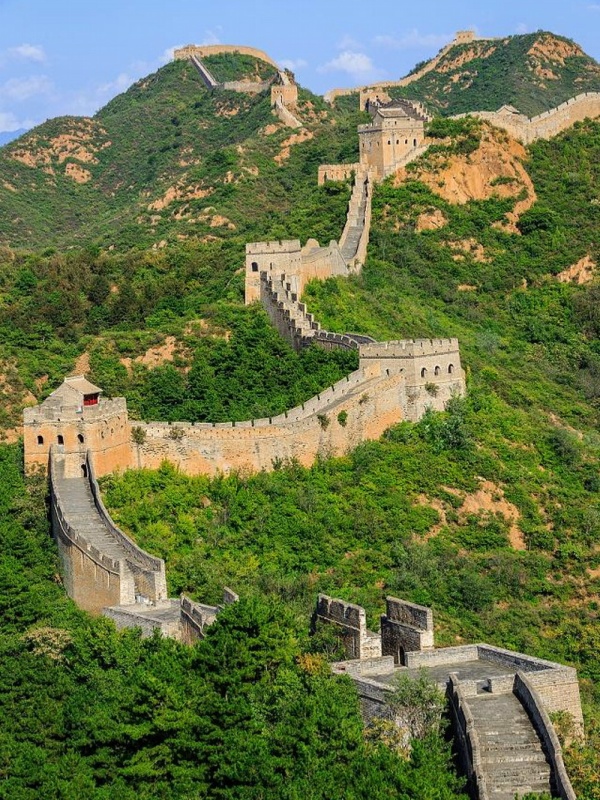
Beijing to Badaling Great Wall
Mutianyu and Badaling each suit different family priorities. Mutianyu sits roughly 90 minutes from central Beijing, offers a cable car to the top, and features a smooth toboggan descent that children consistently rate as the highlight of the trip. The section is less restored in places, which actually adds to the atmosphere — families get a genuine sense of scale without the commercial feel of Badaling.
Badaling lies closer to the city, about 70 kilometers out, and draws the largest visitor numbers of any Wall section. The terrain is steep in places, making stroller navigation difficult. For families with older children who want a more physical challenge, Jinshanling on the eastern edge offers a hike-focused experience. Regardless of which section you choose, arrive before 9:30 am or after 2 pm to sidestep the biggest tour-bus arrivals.
Forbidden City and Tiananmen Square
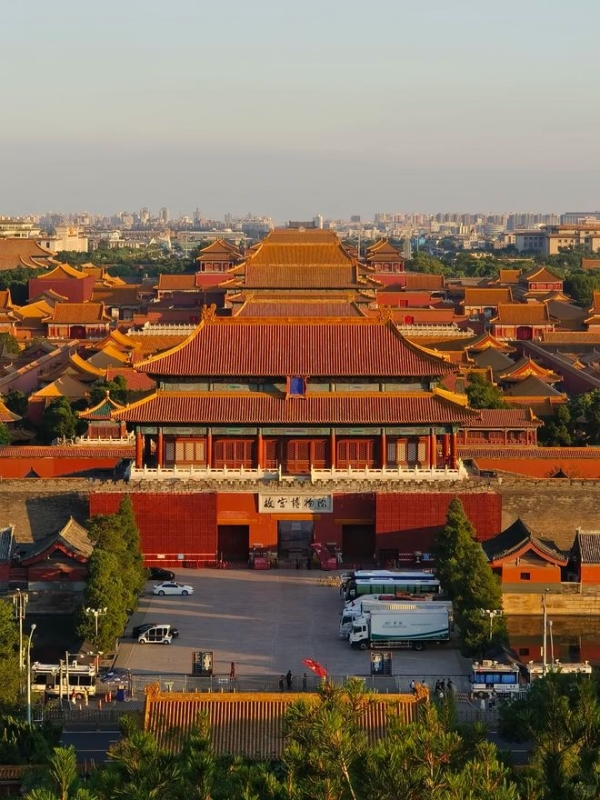
Forbidden City
The Palace Museum opens at 8:30 am, with last entry at 3:30 pm, and closes entirely on Mondays. Foreign visitors must reserve tickets in advance through the official Palace Museum website and present their passport on arrival. A combined ticket covering the main complex, the Treasure Gallery, and the Clock Gallery costs about $12 (¥80). Plan for three to four hours — the central axis is flat and stroller-friendly, though the side galleries involve more walking.
Shanghai with Kids: Disney and the Bund
Shanghai is the most English-friendly city in China for international families. The metro, tourist signage, and hotel services all support foreign visitors without Chinese language skills. It is also the most visually stimulating for children — the city's skyline, the Maglev train, and Disneyland provide a contrast to the historic sites further inland.
- Shanghai Disney Resort: peak adult ticket ~$80 (¥599), child ~$60 (¥449); designed for English speakers throughout
- The Bund: free riverside walk; the evening light-up transforms the colonial architecture and Pudong skyline
- Shanghai Tower 118F: the second-tallest building in the world, with an observation deck at 552 meters
- Yu Garden and Nanxiang Street: old-town courtyard and steamed-dumpling counters within walking distance
- Shanghai Maglev: reaches 431 km/h on the 8-minute run from Pudong Airport; ticket ~$6 (¥40) one-way
Shanghai Disney Resort
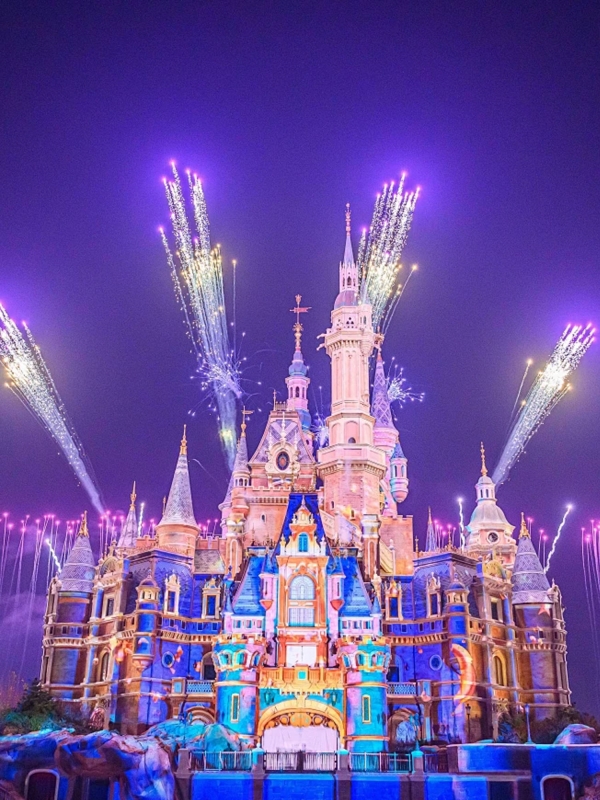
Shanghai Disneyland
Shanghai Disneyland operates the most English-friendly theme park in China. Cast members speak English, signage is bilingual throughout, and the park's castle is the only one in the world themed around a Disney fairytale written originally in Chinese. Tickets range from $60–80 (¥475–599) for adults and $45–60 (¥355–449) for children depending on the date; book through Trip.com or Klook before arrival.
Families with younger children should consider staying at the Toy Story Hotel, which provides early park entry and avoids the commute from central Shanghai. Arrive 30 minutes before rope drop — the first hour at TRON Lightcycle Power Run and Pirates of the Caribbean: Battle for the Sunken Treasure is noticeably shorter than mid-afternoon queues. Allow a full day; the park is large and the evening parade and fireworks add genuine value.
The Bund, Yu Garden, and the Skyline
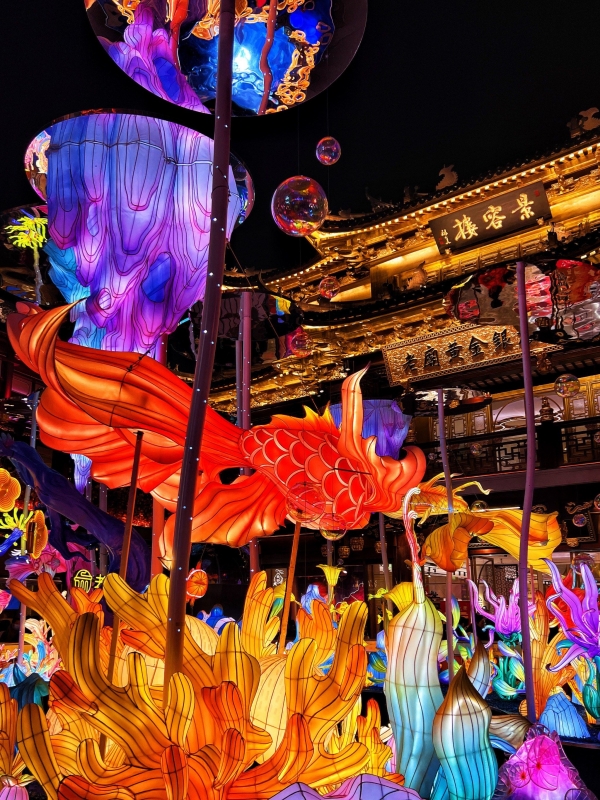
Mythical Goldfish Lantern at Yu Garden
The Bund waterfront is free to walk and offers some of the best cityscape photography in Asia. Yu Garden, a 400-year-old classical garden, charges about $5 (¥35) for entry and sits a short walk from Nanxiang Street's dumpling counters. Among the three-tower observation decks clustered in Pudong, the Shanghai Tower 118F at 552 meters is the standout — a ticket costs about $22 (¥155) and saves families from having to visit all three.
Xi'an with Kids: Terracotta Warriors and the Old City
Xi'an gives a China family vacation its history-and-adventure chapter. The city wall is one of the few in China where visitors can pedal a full circuit, and the Terracotta Warriors remain one of the world's most staggering archaeological sights. Xi'an also sits a manageable high-speed rail ride from Beijing (roughly 4.5 hours) or Shanghai (6–7 hours), making it a natural second or third stop.
- Terracotta Warriors Museum: adult ~$14 (¥120), child ~$7 (¥60); mandatory shuttle ~$7 (¥50) from the visitor center
- City Wall bike rental: ~$3 (¥22) per hour; tandem and child bikes available; full loop is 14 kilometers on flat terrain
- Muslim Quarter: street food — roujiamo "Chinese hamburger" ~$1.50 (¥10), biangbiang noodles ~$3–4 (¥20–28)
- Big Wild Goose Pagoda: evening fountain show visible free from the square
- Tang Dynasty show: dinner combo bookable for ~$55–85 (¥400–600) per adult
Terracotta Warriors Museum
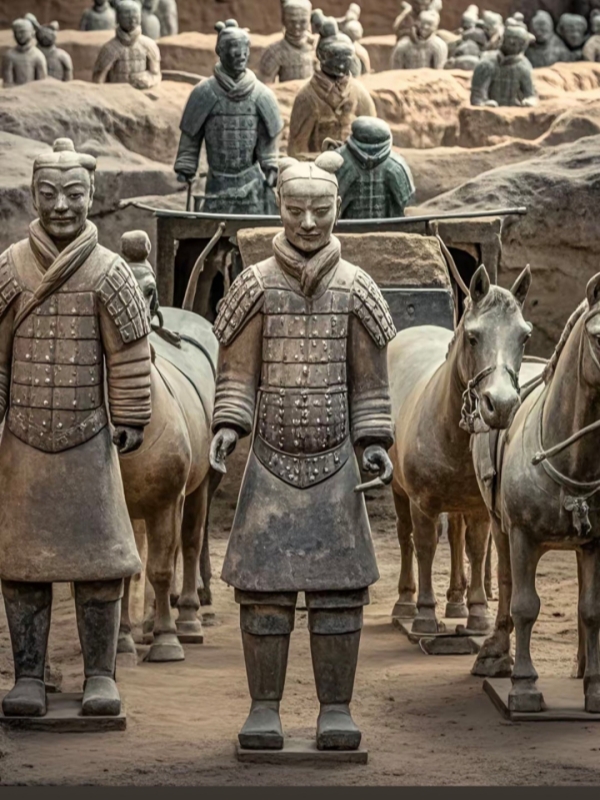
Terracotta Warriors
Pit 1 is the centrepiece — a vast underground hall holding thousands of life-sized warriors in formation. Pits 2 and 3 display figures in more intact states, with better lighting for photography. Plan for three hours including the mandatory shuttle from the visitor centre. An English audio guide costs about $5 (¥35) and is worth the fee for context. Arrive before 9 am to stay ahead of Xi'an-based day-trip groups, which tend to peak between 9 and 11.
Xi'an City Wall and Muslim Quarter
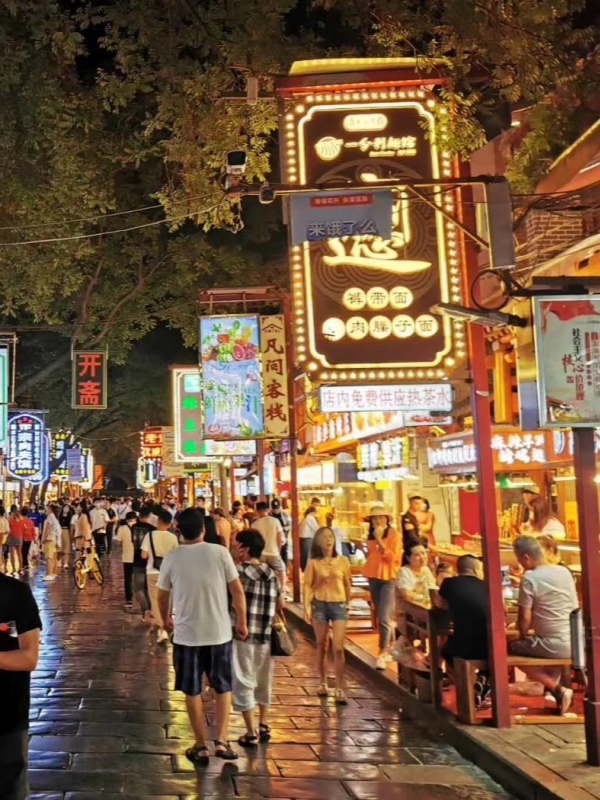
Xi'an Muslim Quarter Night Market
The City Wall's 14-kilometre loop is best experienced by bike. Rental costs about $3 (¥22) per hour, with tandem bikes and child seats available at South Gate. Gates along the wall close at varying times depending on the season — confirm the closing schedule at the South Gate before setting out. After cycling, the Muslim Quarter nearby serves roujiamo (roughly $1.50 / ¥10), biangbiang noodles (about $3–4 / ¥20–28), and persimmon cake (around $1.50 / ¥10) in a lively street-food atmosphere that children tend to find exciting.
Nanjing with Kids: Purple Mountain and Sun Yat-sen Mausoleum
Nanjing is the most overlooked of the four anchor cities — and the most rewarding for families who want to avoid the crowds that define Beijing and Xi'an during holiday periods. Purple Mountain groups three to four attractions into a single cable-car zone, meaning a family can visit the Sun Yat-sen Mausoleum, Ming Xiaoling, and the Purple Mountain Observatory in one efficient day without backtracking across the city.
- Sun Yat-sen Mausoleum: free entry; advance reservation required via the official portal; passport needed for each booking
- Ming Xiaoling: UNESCO-listed tomb complex, ~$7 (¥50); the Sacred Way's stone animals captivate younger children
- Purple Mountain Observatory: planetarium and historic telescopes, ~$4 (¥30)
- Linggu Temple: ~$4 (¥30); included in the combined ticket
- Nanjing Museum: free entry; one of China's largest, with English signage on the main halls
The combined Purple Mountain scenic ticket (covering the Mausoleum, Ming Xiaoling, Linggu Temple, and the observatory shuttle) costs about $11 (¥80) and saves roughly 30 percent compared with buying individual tickets.
Sun Yat-sen Mausoleum and the Advance Reservation System
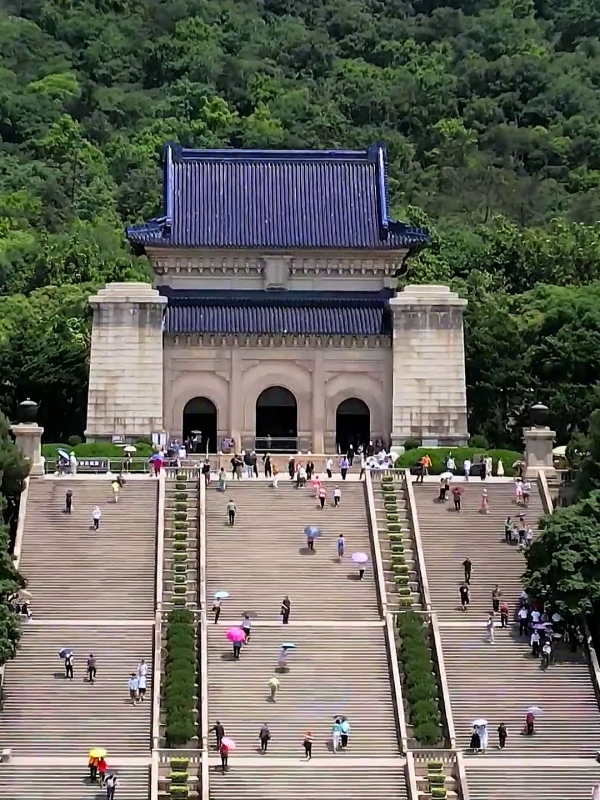
Dr Sun Yat-sen Mausoleum Nanjing
Entry to the Sun Yat-sen Mausoleum is free, but the site operates a strict daily cap enforced through advance reservation. Foreign visitors must book through the official Sun Yat-sen Mausoleum reservation portal, providing a passport number and intended visit date. Weekends fill fastest; book one to seven days ahead for the clearest chance of securing slots. Every family member, including children and infants, counts toward the daily limit — all must be included in the booking.
Reach the site via Metro Line 2 to Muxuyuan Station (苜蓿园), then transfer to the scenic-area shuttle bus. The mausoleum closes on Mondays. The site involves a significant walk up the central stairway — younger children may need carrying at points, but the gradual incline is manageable for most school-age kids.
Purple Mountain Observatory and Ming Xiaoling
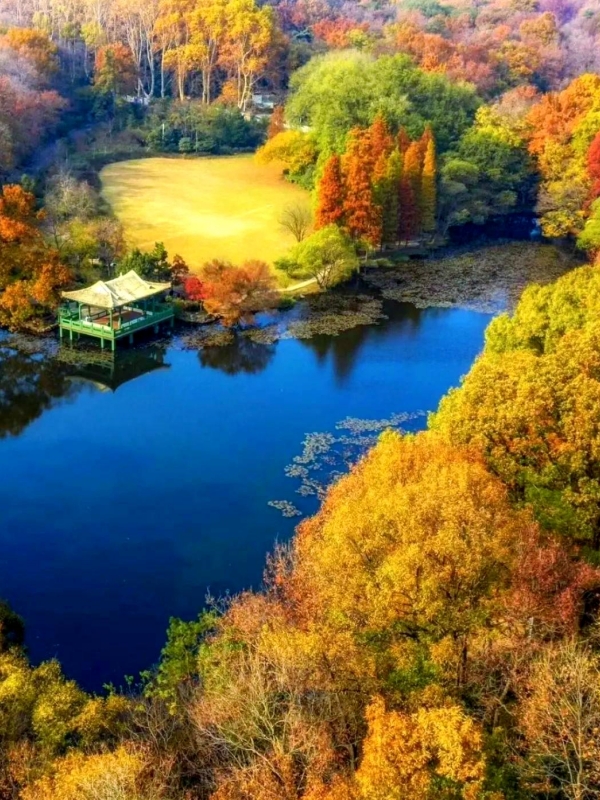
Purple Mountain Observatory
The Purple Mountain Observatory occupies the western ridge of the scenic area. A cable car link from the Ming Xiaoling side reduces the climb significantly. Ming Xiaoling's Sacred Way features rows of stone elephants, camels, and officials that younger children find approachable — the statues are large, visible from ground level, and come with minimal crowd pressure compared with the Terracotta Warriors.
The combined Purple Mountain ticket (approximately $11 / ¥80) covers the mausoleum, tomb, temple, and observatory shuttle, offering roughly 30 percent savings over single-site purchases. Families with older children interested in astronomy will find the historic telescope installations and planetarium shows a genuine point of difference from the other three cities.
Planning Your China Family Trip
Sound planning separates a smooth family vacation in China from a stressful one. The visa, timing, and transport decisions made before departure have a direct impact on the experience in-country. The four anchor cities slot together logically: fly into Beijing, travel by high-speed rail to Shanghai, then on to Xi'an and Nanjing before departing from any of the four hubs.
- Passport validity: must be valid for at least six months beyond your planned return date
- Visa: most Western nationalities require a standard tourist "L" visa; apply at a Chinese embassy, consulate, or official visa service centre
- Timing: September–October and March–May offer the most reliable weather for outdoor sightseeing
- Transport: high-speed rail is the family default for city-to-city travel; domestic flights suit longer legs
- Tickets: book the Forbidden City, Sun Yat-sen Mausoleum, and Shanghai Disney online before arrival
- Apps: download a VPN-compatible map app, pre-load Alipay (English mode available), and set up Trip.com for attraction bookings
Visas and Entry Requirements
Each family member — including infants — requires their own Chinese tourist ("L") visa sticker, applied for individually at a Chinese embassy, consulate, or official visa application service centre. Standard processing takes four to seven working days. Ensure your passport is valid for at least six months past your planned return date, and carry printed confirmation of hotel bookings and onward travel as supporting documentation.
Best Time to Visit
September through October delivers autumn temperatures around 19 °C, low rainfall, and clear skies across northern and eastern China. March through May follows a similar pattern at roughly 20 °C. Both windows avoid the summer heat wave, when many cities exceed 32 °C in July and August, and sidestep the October 1–7 National Day Golden Week crush that clogs the Great Wall, the Forbidden City, and Xi'an's City Wall.
Chinese New Year week (typically late January or February) should also be avoided — domestic travel demand drives up transport costs and closes smaller attractions. Northern cities like Beijing and Xi'an drop below freezing from December through February, which is difficult with young children unless your itinerary is entirely indoors.
Getting Around China: Flights, Trains, and City Transport
Three transport modes cover most family needs. The table below compares them.
Within cities, metro systems are fast and inexpensive. Beijing and Shanghai rides cost roughly $0.45–0.70 (¥3–5) per trip; Nanjing's Metro Line 2 runs directly to Purple Mountain's Muxuyuan entrance. Metered taxis start at around $2 and are practical for families with luggage or when travelling after dark. Always pin your destination in Chinese characters and show the screen to the driver — this eliminates the majority of communication difficulties.
Frequently Asked Questions
Q: Is China safe for family travel?
Major cities are safe for tourists, with a visible police presence in tourist zones. Petty pickpocketing occurs at crowded sites like the Forbidden City and popular Wall sections — keep bags zipped and phones secured. Coastal cities face typhoon risk from June through September. The emergency number is 110. Travel insurance covering medical evacuation is strongly recommended for all family members.
Q: How much does a family trip to China cost?
A rough budget for a seven-to-ten day family vacation for four people breaks down as follows: international flights $2,500–5,000 (¥18,000–36,000), domestic transport $400–700 (¥2,900–5,000), mid-range hotels $1,000–2,000 (¥7,200–14,400), attraction tickets including Disney and Terracotta ~$300–450 (¥2,100–3,200), and food $400–700 (¥2,900–5,000). A mid-range total sits around $4,600–8,850 (¥33,000–63,000).
Q: What is the best age to take kids to China?
Ages six to twelve represent the sweet spot — children can manage the Wall's stairs and wait patiently in queues while still finding Disney, the Terracotta Warriors, and the Nanjing stone statues genuinely wondrous. Under threes travel well with a stroller on flat terrain, though skip long Wall hikes. Teenagers are better suited to more demanding routes such as Jinshanling.
Q: Do I need a visa to visit China?
Standard tourist "L" visas are required for most Western passport holders. Apply at a Chinese embassy, consulate, or official visa service centre. Processing typically takes four to seven working days. Each family member, including infants, must submit a separate application.
Q: Can young children visit the Great Wall?
Mutianyu and Badaling are both suitable with cable car access. Mutianyu's toboggan descent is a genuine highlight for children of school age. Avoid steep unrestored sections such as Jiankou with young kids. Strollers work on the paved base areas but cannot be used on the tower staircases.
Q: Is Shanghai Disney worth it for kids?
Yes. The park is the most English-friendly attraction in China, with bilingual signage and English-speaking cast members throughout. The Toy Story Hotel appeals particularly to younger children. Purchase tickets in advance through Trip.com or Klook, arrive before the park opens, and plan for a full day — the evening fireworks add real value.
Q: Will my family get by with English in China?
Major hotels, Shanghai Disney, airport signage, and high-speed rail stations all have English support. Outside tier-one cities, English drops off sharply. Pin your destination in Chinese on a map app to show taxi drivers. Ride-hailing apps such as DiDi have English interfaces, and Alipay now offers an English-language mode.
Q: Great Wall or Terracotta Warriors for a short family trip?
For a three-day add-on to Beijing, the Great Wall (specifically Mutianyu) wins on novelty for children. For a deeper culture day-trip from Xi'an, the Terracotta Warriors win on historical impact. If the family has one day in each city, do the Wall in Beijing and the Terracotta in Xi'an — the two experiences complement each other rather than overlap.