WeChat Pay International Card Fees
WeChat Pay international card fees are normally zero for payments of ¥200 or less and 3% of the full amount above ¥200. An eligible new-user offer can remove that platform charge, but your bank's currency costs remain separate. Before paying a mainland Chinese merchant through WeChat Pay (微信支付), check the selected card, any waiver, and the total in yuan. A successful card link alone does not establish that your next purchase is free. For larger bills, the useful questions are whether the offer covers this payment, what your bank adds, and how much of a charged fee returns if you later receive a refund.
Quick Facts
🏦 Using WeChat Pay Without a Local Account: Visiting China without a mainland bank card or +86 phone number and want to set up mobile wallet payments before landing? Check out our tutorial on How To Use Wechat Pay In China 2025 No Chinese Bank Card Needed.
Fees above the ¥200 threshold
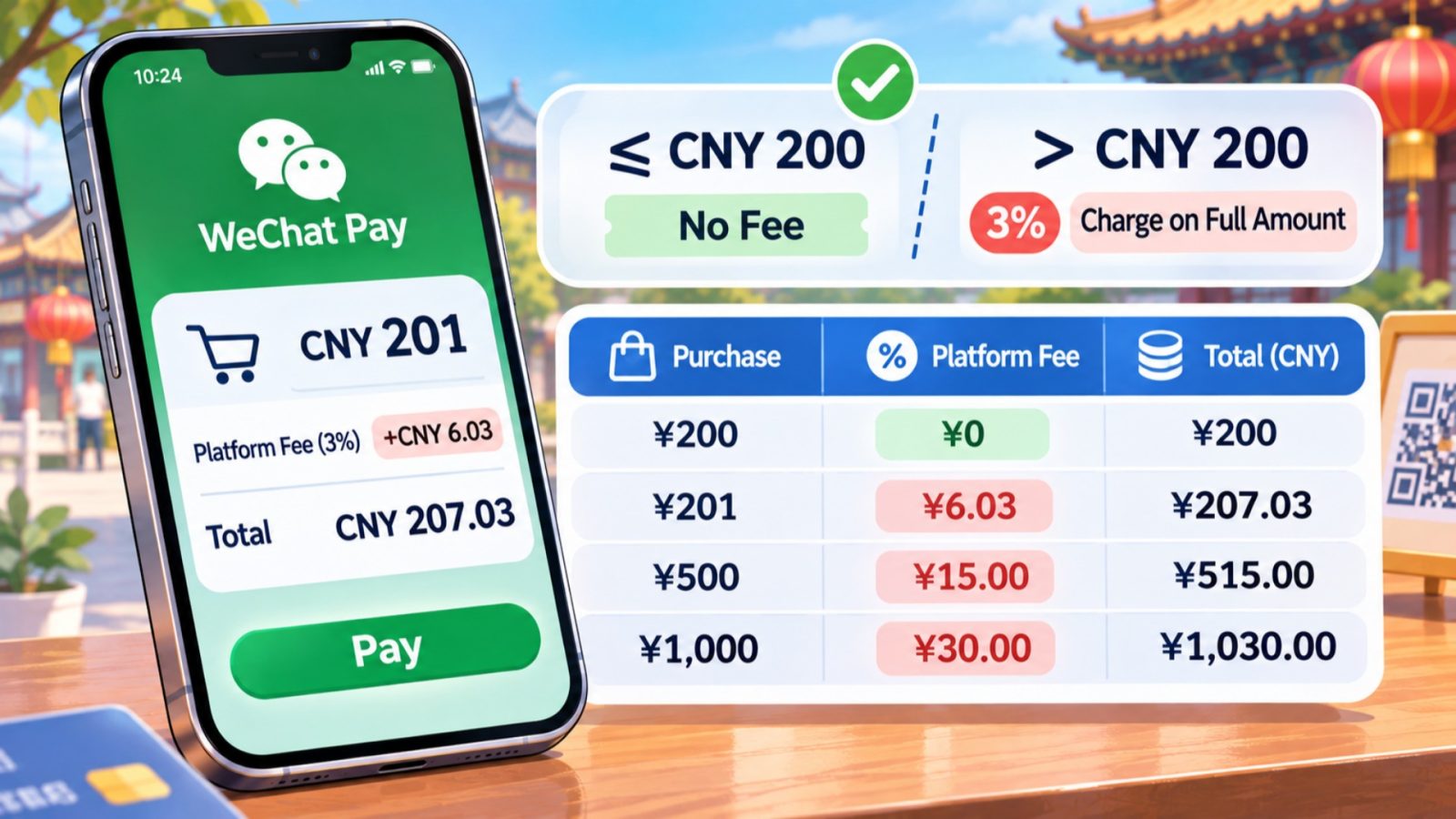
WeChat Pay International Card Fee Threshold Rules
The important boundary is inclusive: exactly ¥200 qualifies for the standard exemption. Once a purchase exceeds that amount, the standard calculation uses the whole purchase price. Tenpay (财付通), the payment operator, states this in its January 15, 2026 international-card rules.
The full purchase amount
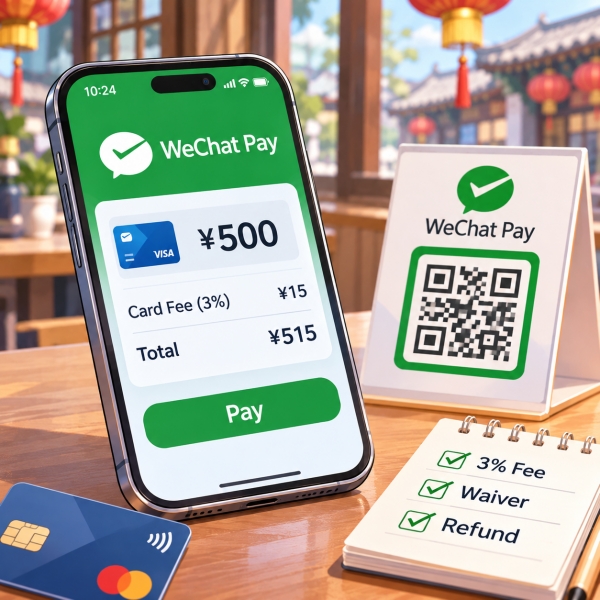
Think of ¥200 as a condition for a fee exemption, rather than a free allowance deducted from every bill. On a ¥500 purchase, subtracting ¥200 before calculating the fee would produce the wrong total. The amount above the threshold does not form a separate charging band.
- Purchase amount: Start with the merchant's charge for the goods or service, in yuan.
- Platform fee: Apply the standard rule to that purchase, then account for any displayed fee waiver.
- Card statement: Check the final charge separately for currency conversion and any issuer costs.
This distinction matters when comparing a quoted price with what you will pay. A restaurant menu, shop label, or booking page may show the purchase price. That number alone does not tell you the cost of funding the payment with your overseas card.
Bills with and without a waiver
These are illustrative calculations of WeChat Pay international card fees, using the standard rate without a promotional waiver. The totals exclude any separate bank charges or currency conversion. They are examples, rather than actual purchases or quotations for a particular card.
The jump between ¥200 and ¥201 explains why a slightly larger bill can feel disproportionately expensive. However, the decision is still about the purchase you actually need. Buying something unnecessary to reach an offer, or changing an order without checking the total, can erase any saving.
💳 Updated Overseas Payment Caps: Planning large purchases and want to understand the single-transaction and annual spending limits for linked international cards on Alipay and WeChat Pay? Read our breakdown on Alipay Wechat New 5000 Limit For Foreigners 2026.
Check the 90-day fee waiver
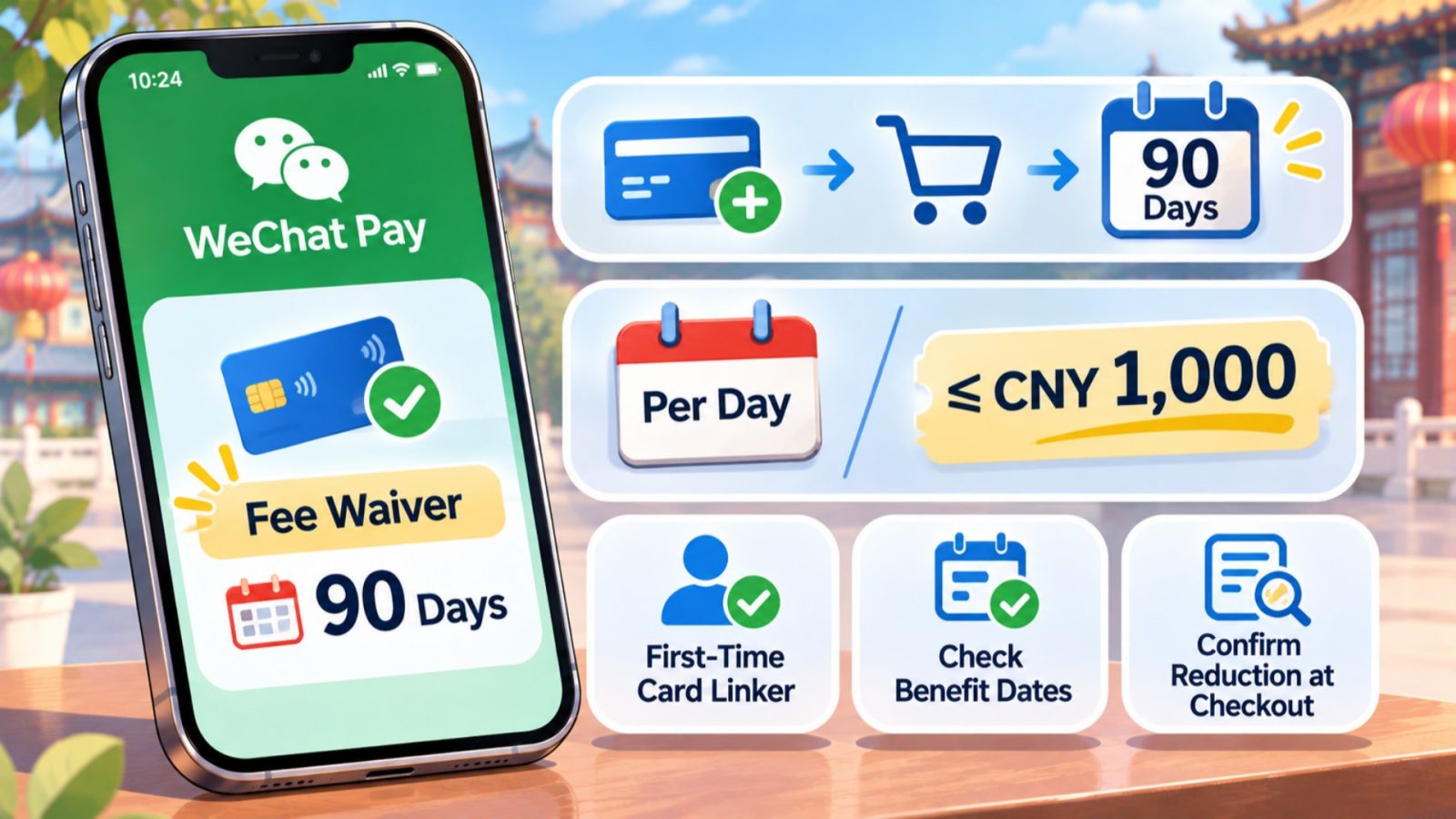
WeChat Pay 90 Day Fee Waiver Promotion Details
Tencent (腾讯) announced a 90-day international-card fee waiver on May 27, 2026. It describes first-time users linking an international bank card to WeChat, with the period starting at their first transaction. The advertised benefit covers eligible spending up to ¥1,000 per day.
First-card eligibility and timing
The first transaction matters when planning a trip. Linking a card and completing a purchase are different events. Before making an early purchase, read the offer shown for your account so you know when its benefit period begins and when it ends.
For WeChat Pay international card fees, check your own eligibility before building a travel budget around a waiver. Having a newly issued card, revisiting China, or adding another bank card does not establish that the first-time-user condition applies again.
- Previous card use: Read the eligibility notice for your account, especially if you linked an international card on an earlier trip.
- Benefit dates: Note the period the app actually grants. A short visit still needs to fall within that period.
- Selected payment method: Check that the transaction uses the card-based service covered by the offer. Another wallet or payment route has its own terms.
Daily allowance at checkout
The announcement says “per day,” so do not budget for unlimited fee-free purchases of ¥1,000 each. Also, a daily promotional allowance is different from permission to spend: card acceptance and account limits still matter even when a fee reduction applies.
Before a larger purchase, look for the actual reduction and remaining benefit information available in your app. The public announcement does not explain every boundary calculation, such as a purchase crossing the remaining allowance or a refund restoring that day's benefit.
A group meal after several earlier purchases is a useful situation to remember. The meal may fit under the advertised daily figure by itself, while your day's spending does not. Check the new bill as a fresh decision, rather than relying on the fee treatment of breakfast.
📲 Linking International Cards to WeChat Pay: Need a step-by-step walkthrough on verifying your passport, adding Visa or Mastercard details, and activating merchant QR payments? Follow our guide on Adding Foreign Credit Card To Wechat Pay.
Check the fee before paying
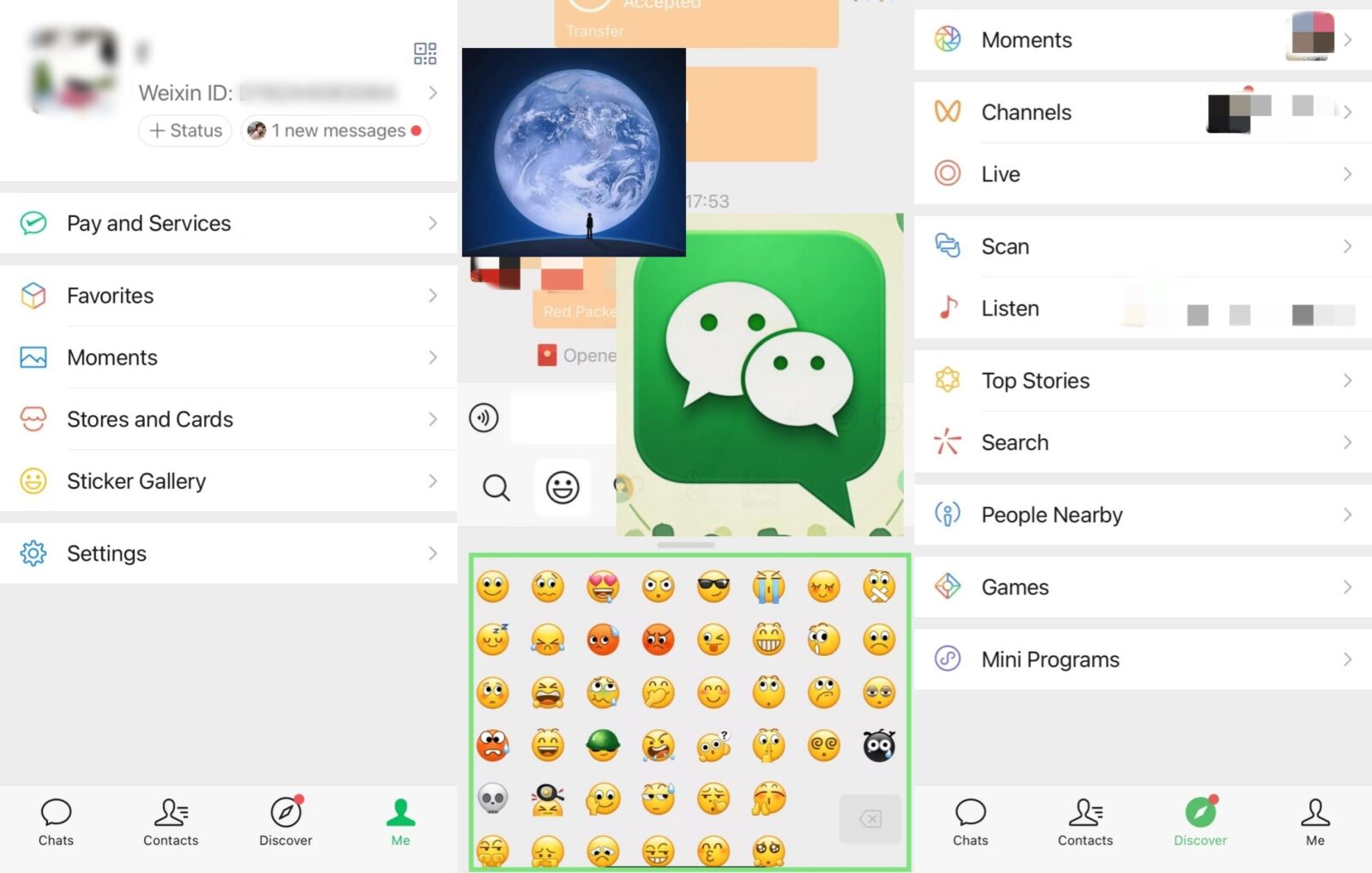
Use an eligible card issued in your own name and complete the verification requested by the app and bank. Public payment guidance gives the card-management path as Me → Services → Wallet → Bank Cards. Labels can differ by app language or version.
Select the intended funding card
Open the wallet's bank-card area before reaching the cashier if you need to check which cards you have linked. This is especially useful when you carry several cards with different currency terms. Adding a card is preparation; the selected funding source for each purchase still matters.
- Card identity: Match the displayed card details to the card you intend to use.
- Account prompts: Complete any required verification through the official app or your bank's own process.
- Payment route: Confirm that you are making a merchant purchase, rather than trying to send money to a personal recipient.
Shanghai's published guidance describes two payment methods: scanning a merchant's code or displaying your payment code for the cashier to scan. They do not always give you the same opportunity to pause. Some cashier-scanned payments can debit without another password prompt.
Confirm the merchant payment
For a merchant-code payment that lets you review the charge, use this sequence to assess WeChat Pay international card fees before approval. Exact screen layouts vary, so follow the displayed information rather than searching for a particular unverified button name.
- ① Scan the merchant's payment code. Check the recipient with the merchant and enter the agreed purchase amount if the page requests it.
- ② Check the selected card. Make sure the funding source is the card whose charges and offer terms you intended to use.
- ③ Review the fee and waiver. When a fee applies, Tenpay's rules require disclosure of its amount, rate, and any reduction.
- ④ Confirm the total. Compare the yuan amount with the agreed purchase plus the displayed fee. Pause if the difference remains unexplained.
- ⑤ Authorize and check the result. Look for the payment success page and ask the merchant to confirm completion before leaving.
Keep the successful payment record, particularly for a larger purchase or anything you may return. Save the merchant, transaction amount, time, and identifying reference where available. These details connect a later question to one transaction, rather than a general complaint about your card.
If the result is unclear, check the payment record and the merchant's order before paying again. A bank notification alone may not explain the merchant's final order status. Sorting out that uncertainty first is usually easier than asking for a duplicate payment back later.
💰 Minimizing Alipay Transaction Fees: Comparing Alipay's fee thresholds and looking for practical ways to avoid the 3% surcharge on bills over ¥200? Explore our guide to How To Avoid International Card Fees On Alipay.
Separate bank and currency costs
A waiver of WeChat Pay international card fees does not determine your total cost in dollars, euros, or another card currency. The operator's agreement separates currency settlement from the platform service charge. Your issuing bank's statement provides the details of the foreign-currency transaction.
Read your card's currency terms
Check the card you actually intend to use, rather than relying on a brand's general travel advertising. Different products from the same bank can have different overseas-payment terms. A card described as having no foreign-transaction fee can still fund a purchase carrying the platform's own charge.
- Transaction currency: Ask how the bank processes a mainland merchant purchase through the linked card.
- Conversion and charges: Check the applicable exchange-rate method and any foreign-transaction or cross-border charges in the card's terms.
- Refund treatment: Ask how the bank handles returned purchases, including its own fees and currency conversion.
There is no useful universal percentage to add for every visitor. If your card charges nothing separately, do not invent an extra bank fee. If it does charge, a platform waiver does not cancel that contractual cost. Use the issuer's actual terms for your estimate.
After a purchase settles, compare the final posted amount with the payment record. If you need an explanation, ask the bank to identify the yuan amount it processed, the conversion applied, and any separate fee. That question is more precise than asking why “WeChat charged extra.”
Compare a payment backup
For a larger bill, also ask whether the merchant accepts your physical bank card directly. Shanghai's official guidance makes clear that acceptance depends on participating merchants and the networks they support. Direct card payment is therefore an option to compare, rather than a guaranteed free substitute.
Cash can also be a practical backup when an electronic payment fails. However, account for how you obtain the yuan: your exchange provider or ATM arrangement may have its own costs. Prepare a usable alternative before a payment problem leaves you negotiating at the counter.
Do not treat topping up a wallet or sending money to another person as interchangeable with paying a merchant. Linking an overseas card does not unlock every wallet function. Moving to a different product can introduce separate eligibility, funding, or fee conditions.
Recover fees and failed payments
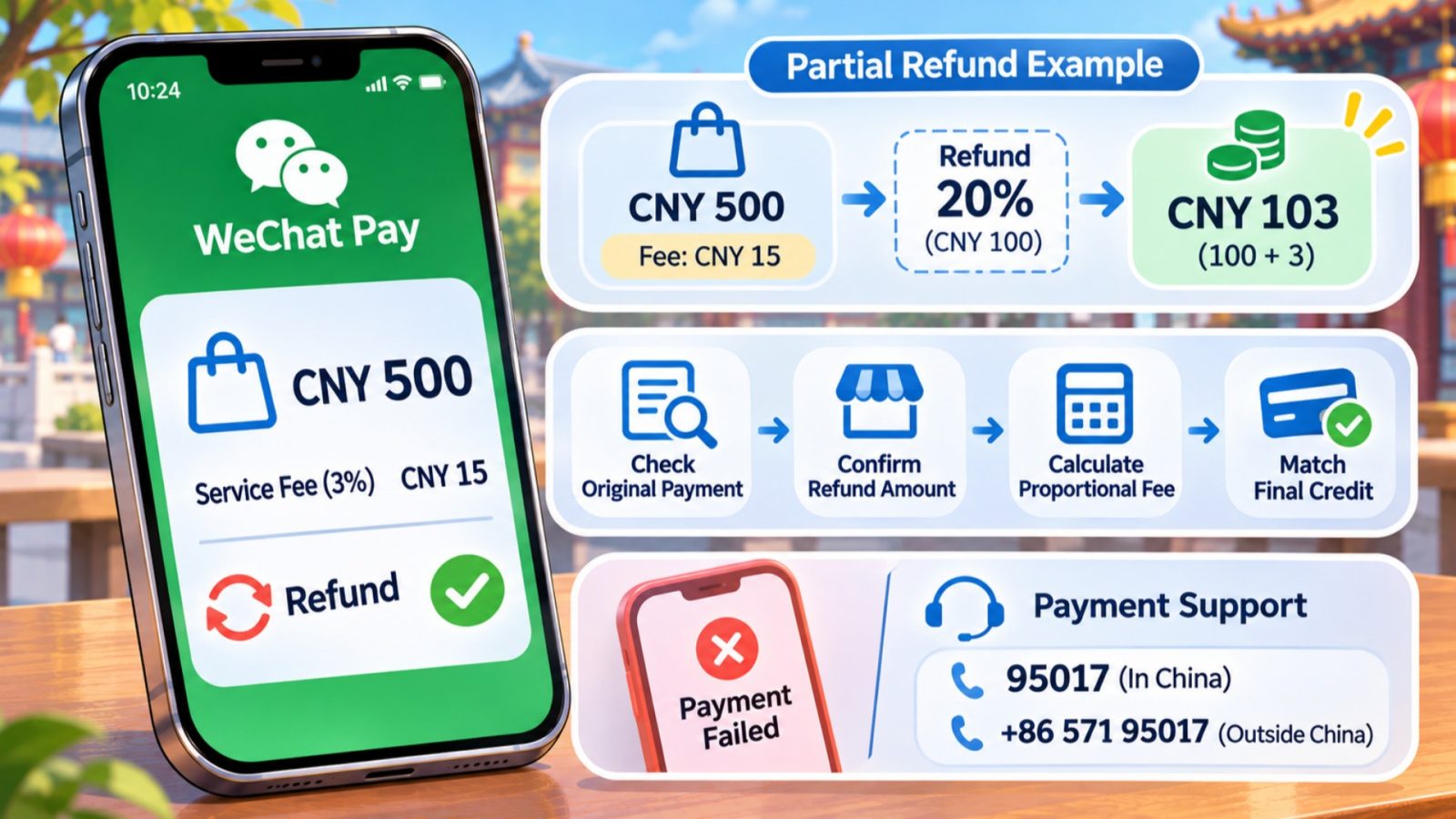
WeChat Pay International Card Refund Fee Calculation
Start a purchase-refund request with the merchant, using the original order and the amount you want returned. A proportional return of WeChat Pay international card fees follows a transaction refund. It does not create a separate right to cancel the goods, booking, or service.
Calculate the refundable fee
Tenpay's rule returns the corresponding fee in the same proportion as the purchase refund. Use the service fee actually charged on the original transaction. A waived fee was never paid, so it cannot produce an additional 3% refund or cash benefit.
The calculation follows the refunded share of the original purchase. Do not recalculate the transaction as though you had initially bought only the remaining goods. Instead, use the original bill and charged fee to establish the proportion that returns.
- ① Find the original payment. Identify the merchant purchase and the service fee you actually paid.
- ② Agree the purchase refund. Confirm the goods or service amount the merchant will return, including any relevant cancellation conditions.
- ③ Calculate the proportion. Divide the refunded purchase amount by the original purchase amount, then apply that proportion to the charged fee.
- ④ Match the records. Compare the purchase refund and corresponding fee return with the payment record and eventual card credit.
Match the refund to your card
For a complete refund of the illustrative ¥500 purchase, the corresponding platform fee return is the full ¥15. That yuan calculation is separate from the amount your bank ultimately credits in the card's currency. Do not promise yourself an identical home-currency reversal.
- Merchant amount: Check what the seller actually agreed to refund.
- Platform fee: Check the proportional return of the original charge.
- Card settlement: Ask the issuer about the credited amount, conversion, and treatment of its own fees.
If the refund appears incomplete, identify which layer differs before raising the question. Give the merchant the order reference for a missing purchase refund. Ask payment support about the corresponding service fee. Ask the bank about a foreign-currency difference after the credit posts.
Resolve a rejected payment
A fee exemption does not override merchant support, verification requirements, or issuer restrictions. Read the failure message and retain its wording. If the problem concerns the issuing bank, the service agreement allows trying another international card in your own name or an alternative payment method.
Avoid repeatedly submitting the same purchase while its result is uncertain. First establish whether the merchant received payment and whether a completed record exists. Then choose the supported next step: resolve verification, ask the bank about a refusal, or use a payment method the merchant accepts.
Frequently Asked Questions
Q: Does a payment of exactly ¥200 have a fee?
No international-card service fee applies under the standard rule at exactly ¥200. The inclusive boundary matters: ¥201 normally attracts a fee on the full amount unless a waiver applies. Your issuing bank's conversion or other charges remain separate, so a zero platform fee does not establish your final cost in your card's currency.
Q: Does a zero-foreign-transaction-fee card remove the 3%?
No. That card feature concerns the issuing bank's charges, while the platform applies its own international-card rules. Check whether your payment qualifies for the small-payment exemption or an applicable promotion. Then examine the issuer's currency terms separately. A card can remove one layer of cost without removing another charge on the same purchase.
Q: Will another card restart my 90-day waiver?
Do not assume so. Tencent's announced offer concerns first-time users linking an international card, with the period running from their first transaction. It does not establish that switching cards creates new eligibility. Read your account's offer details before budgeting for further savings, and ask payment support if your previous card history makes eligibility unclear.
Q: Can I use my linked card to send money?
An overseas card linked for merchant purchases does not provide a general money-transfer service. Public guidance says foreign credit cards do not support transfers or red packets. If a seller asks for a personal transfer, ask about an accepted merchant-payment method or another supported option. Do not assume that linking the card enables that request.
Q: Do WeChat Pay international card fees return after a partial refund?
Yes, the corresponding platform fee returns proportionally to the transaction refund. For example, refunding ¥100 of a ¥500 purchase returns 20% of the fee actually charged. If that fee was ¥15, its return is ¥3. Your bank's separate charges and currency treatment require their own check; they are not part of that calculation.
Q: Is the ¥1,000 waiver a payment limit?
No. The advertised daily figure describes a promotional fee benefit, while payment permission also depends on account limits, the merchant, and your card issuer. A larger payment may be possible with a fee, but the offer does not guarantee authorization. Check both the transaction's permitted amount and the actual fee before committing to the purchase.