Alipay/WeChat New $5,000 Limit for Foreigners 2026 Spending Cap
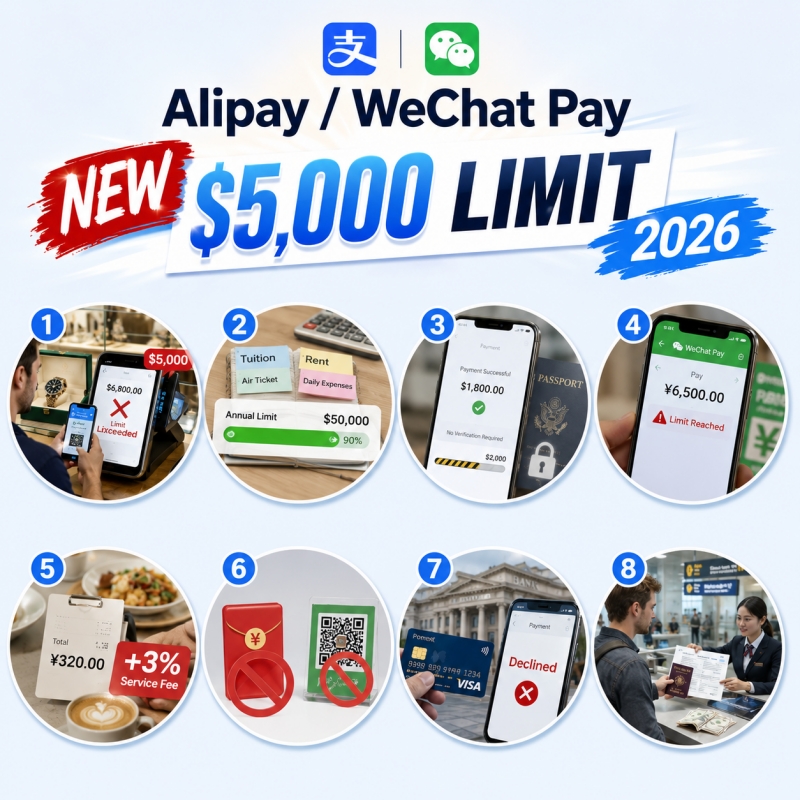
The Alipay/WeChat New $5000 Limit for Foreigners 2026 is the new standard for foreigners binding international cards with Alipay and WeChat Pay: a per-transaction ceiling of $5000 and a rolling annual cap of $50,000 — a considerable revision up from $1000 and $10,000. The 2026 “package” also provides for /61(3) a no-verification experience up to $2000, fee-free status below ¥200, a daily ¥1000 roll-back for 90 days when you bind for the first time, and support for 36+ foreign wallets. This guide documented every new “paper” the reform rolled out — and how to respond to them.
Alipay vs. WeChat Pay 2026 Comparison
Alipay/WeChat Pay Limit Changes 2026
Limit 1: $5000/$50,000 — Institutional Ceiling, Not Personal Floor
What changed: PBOC raised the institutional ceiling from $1000/$10,000 to $5000/$50,000 — a fivefold increase.
- Institutional ceiling, not personal floor: The $5000 ceiling belongs to Alipay and WeChat Pay as licensed institutions. To access it, complete passport-based identity verification. Without it, you are on the experience tier — capped at $2000 or less.
- Issuing bank sets a second cap: Even with full verification, your actual limit is the lower of the platform ceiling ($5000) and your issuing bank's own channel cap. Visa/MC debit cards are commonly pre-set at $1000–$2000 on this channel by their issuers.
- Annual period is undisclosed: Neither Alipay nor WeChat Pay consistently discloses whether "annual" means a calendar year or a rolling 365-day window.
What to do: Complete passport verification as early as possible (WeChat: seconds; Alipay: 1–3 days). Call your issuing bank before binding and ask: "What is my per-transaction limit when bound to Alipay or WeChat Pay?"
Limit 2: $2000 Experience Tier — Ceiling, Not a Floor
What changed: 2026 added a no-verification experience tier: bind with card number, expiry, and CVV only, and spend up to $2000 immediately.
- $2000 is the ceiling, not a guarantee: The platforms apply dynamic risk allocation — most users report actual caps of $200–$500 per transaction.
- Blocked outright when hit: When the experience ceiling is reached, the transaction is blocked and the system prompts passport verification — often at the worst moment: hotel check-in or hospital registration.
- Some merchants require full verification: Flights, hotel pre-authorization holds may be risk-controlled even within the experience tier.
What to do: Use the experience tier for coffee, subway, and convenience stores only. Complete your passport scan before you land or as soon as you arrive.
Limit 3: WeChat's RMB Tier — Revealed Once the USD Tier Rose
What changed: WeChat Pay's USD institutional ceiling rose from $1000 to $5000.
- A parallel RMB layer always existed: WeChat runs ¥6000 per transaction, ¥50,000 monthly, ¥60,000 annual. Before 2026, the $1000 USD cap was tighter, so this layer stayed invisible.
- The RMB layer now bites first: With the USD tier at $5000 (≈ ¥36,000), WeChat's RMB cap of ¥6000 (≈ $850) becomes the constraint you hit most often in daily life.
- Marketing figures do not apply: The "¥35,000/¥500,000" figures in ads are for domestic bank account holders — not foreign-card users.
What to do: Check your wallet's limit display before large purchases. Route large buys through a foreign-card POS terminal to bypass the RMB cap. Opening a domestic bank account eliminates both ceiling layers.
Limit 4: Fee-Free Is Tiered — Reduction Has an Expiry Date
What changed: Flat 3% → three layers: ¥200 and under fee-free; above ¥200: full 3%; plus 90-day daily ¥1000 reduction for first-time binders.
- The ¥201–¥1000 zone is the awkward middle: Restaurant dinners (¥300–¥500), high-speed rail tickets (¥300–¥600), airport taxis (¥230) — above the fee-free line, outside the 90-day reduction window, paying 3% in full.
- 90-day reduction resets daily: Not a rolling 90-day pool. Day 1 ¥800 spend, Day 2 ¥1200 hotel: only ¥1000 gets the reduction, the remaining ¥200 incurs 3%.
- The 3% reflects interchange fees: Removing it entirely requires cross-network fee renegotiation — making universal fee-free unlikely. The 90-day reduction expires December 31, 2026; renewal is uncertain.
What to do: Concentrate mid-range spending (dinners, train tickets, long rides) within the first 90 days. After that window closes, use AlipayHK, Kakao Pay, or other integrated foreign wallets to bypass the 3% structure entirely.
Old Boundaries: Unchanged in 2026
- Red packets and personal transfers remain blocked on foreign-card accounts — FX compliance regulations prevent these functions entirely, and no change is expected in 2026–2027. The only workaround is opening a domestic Chinese bank account.
- Issuing banks in Europe and Asia commonly cap foreign-card usage on third-party wallet channels at $1000–$2000 per transaction. If you see a "transaction failed" error, it may be your bank hitting its own limit rather than the platform ceiling.
- Since January 1, 2026, cross-border remittance of $1000 or more requires Customer Due Diligence (CDD) verification — a separate regulatory requirement from the $5000 payment limit, despite sharing the same digit.
How to Set Up Alipay/WeChat Pay
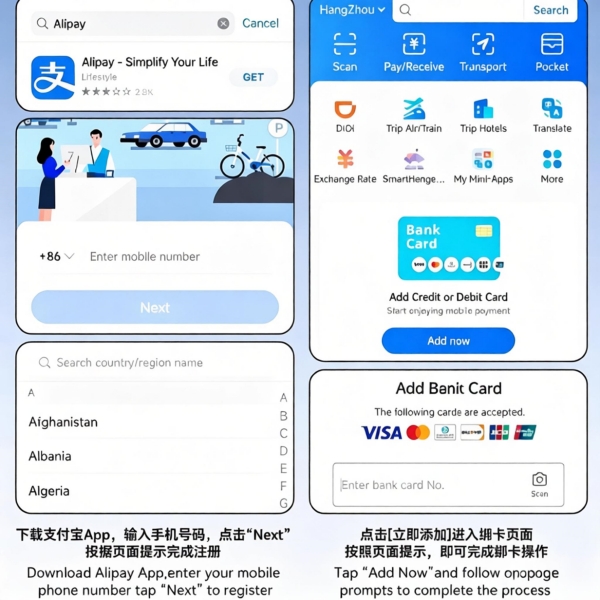
Quickly Set Up Alipay as a Foreigner
Download and Choose an App
Alipay is a standalone app with full English support and integrated travel mini-apps (Didi, Trip.com). WeChat Pay is a payment function inside the WeChat social app. Use Alipay as your default app; use WeChat for transfers to friends or group payments.
Register with an International Phone Number
Chinese SIM card: Not required. Your home country's number works fine.
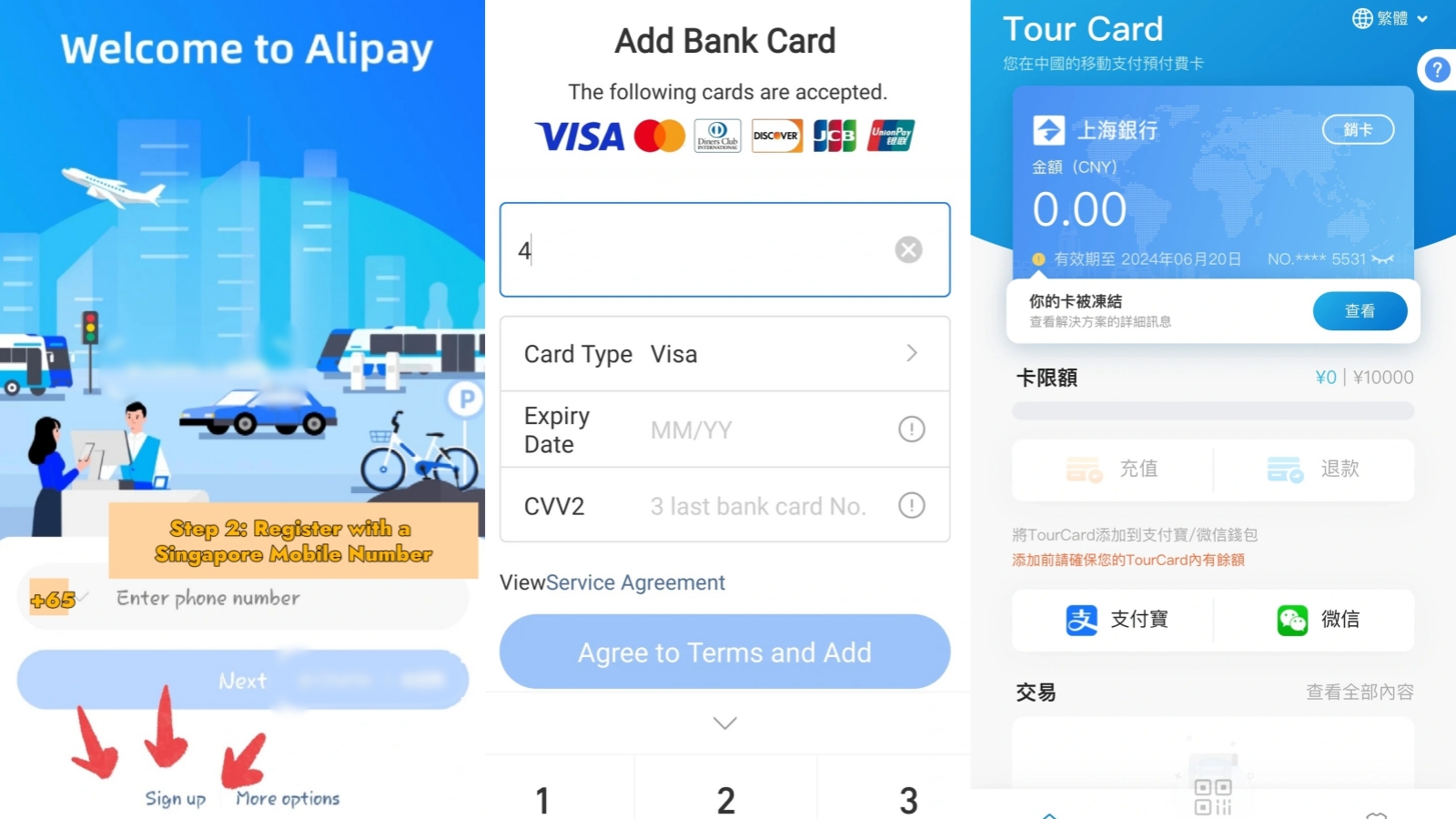
- Alipay: Enter international number → receive OTP → set login password → done
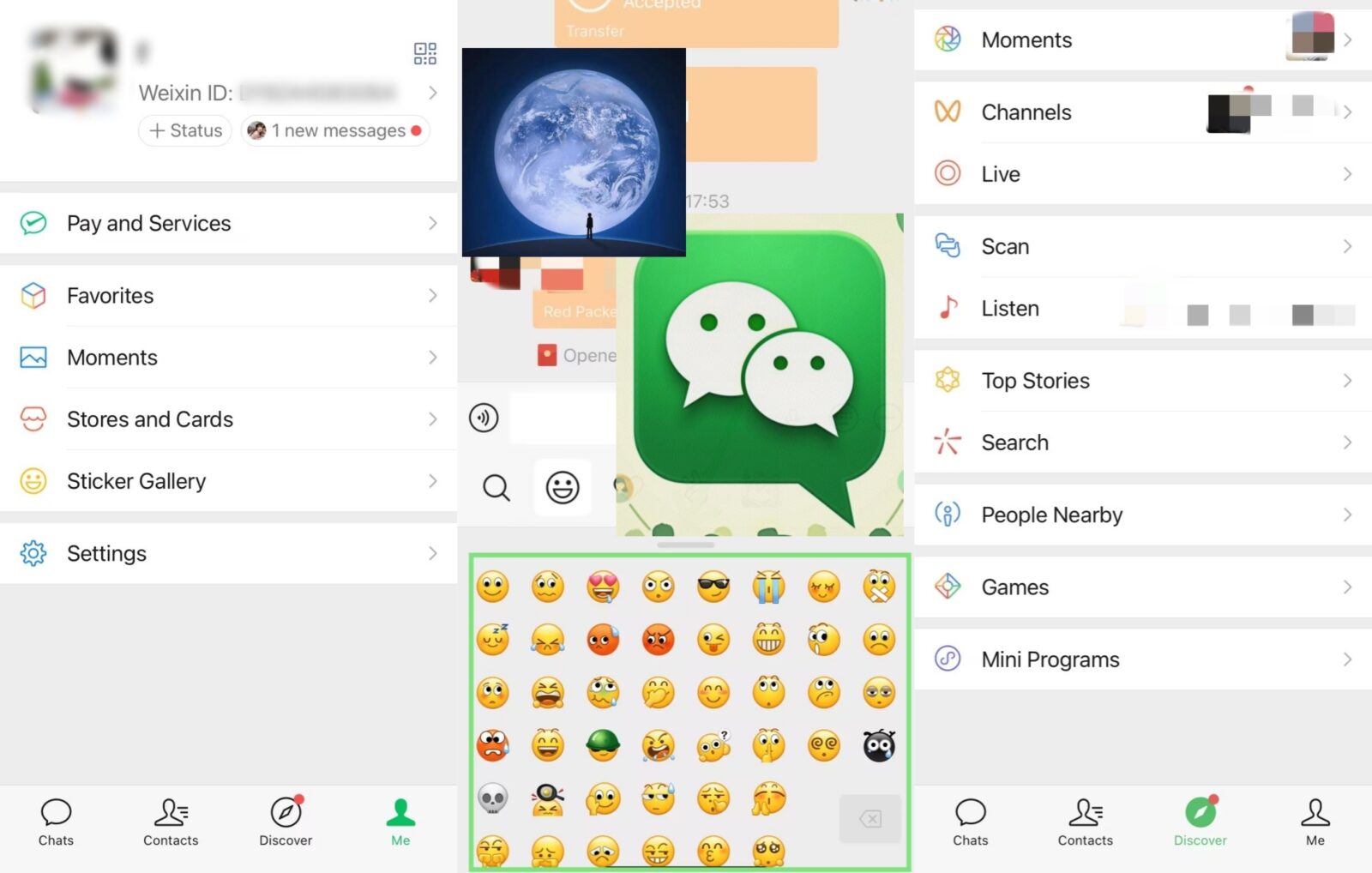
- WeChat: Enter international number → receive OTP → set display name → done
After registration, go to Settings → Region → set to China. Some travel mini-apps only appear for mainland China region.
- 📈 Alipay limits & setup for foreigners: Check official spending caps and verification steps in the Alipay for Foreigners China Guide.
Identity Verification: Passport Scan & Common Issues
Image your passport on a dark, matte surface. Use natural window light, not desk lamps or sunlight. Hold your phone ~30cm away with 2x optical zoom to avoid laminate glare. Enter your name exactly as it appears in the MRZ at the bottom of your passport - SURNAME first, then GIVEN NAMES, swapping the order will trigger Error 10002. For face recognition, avoid backlighting, have a simple background, and keep a neutral expression. The process takes less than 2 minutes. When you see “Under Review” in your email, that means you should wait 24 hours. A rejection is almost always a lighting issue. Do the verification at home before your trip.
Link an International Card: Visa, Mastercard & AMEX
Card support: Visa and Mastercard are fully supported on both platforms. AMEX works on Alipay across most merchants; WeChat acceptance is lower outside premium hotels and malls.
- Alipay path: My → Bank Cards → Add Card
- WeChat path: Me → Services → Wallet → Cards → Add
3D Secure: Activate "international online purchases" and "3D Secure" with your issuer before you travel. This prevents 90% of binding failures.
- 📲 Link international credit cards to WeChat: Read the step-by-step setup details in the Adding Foreign Credit Card to WeChat Pay guide.
- 👛 Use WeChat Pay without a Chinese bank card: Learn how to set up your digital wallet effortlessly via How to Use WeChat Pay in China: No Chinese Bank Card Needed.
Direct Binding vs. TourCard
Direct binding deducts from your card in real time — no preload needed, recommended for all users. TourCard is a prepaid virtual card with a 5% top-up fee on every load; only use it if 3D Secure keeps blocking the binding process.
💡 Quick Reader's Note: To help you seamlessly navigate China's modern travel and payment ecosystem, this comprehensive guide includes real-time policy updates, practical setup steps, and official external resources. You can bookmark this page for easy reference during your trip.
How to Pay in Real Scenarios
Payment Methods & Where They Work
Supermarkets, Convenience Stores & Self-Service Counters
You show a barcode, the cashier scans it. On Alipay, tap "Pay/Collect" to display your barcode. This works at Yonghui, Hema, RT-Mart, FamilyMart, 7-Eleven, Lawson, McDonald's, KFC, and vending machines — with zero fees for transactions under ¥200.
Street Vendors, Small Restaurants & Markets
Simply scan the vendor’s own QR code as you enter the amount. Tap “Scan” on Alipay → point camera at QR code → enter amount → enter 6-digit PIN → confirm. Look for a QR sticker on the cart or wall. A small percentage still only take cash; we keep about ¥200 in small bills just for these rare vendors.
Didi, Taxis & Ride-Sharing
Didi is fully built-in with Alipay - no separate app needed. Just go Home → Didi → enter destination → request a car. The payment automatically processes about 2 minutes after the ride is finished. Do not scan your driver’s personal QR code unless the Didi app tells you that payment failed (and the Didi app will tell you that). If you do this, you might pay twice.
Fees, Limits & Refunds for Foreign Cards
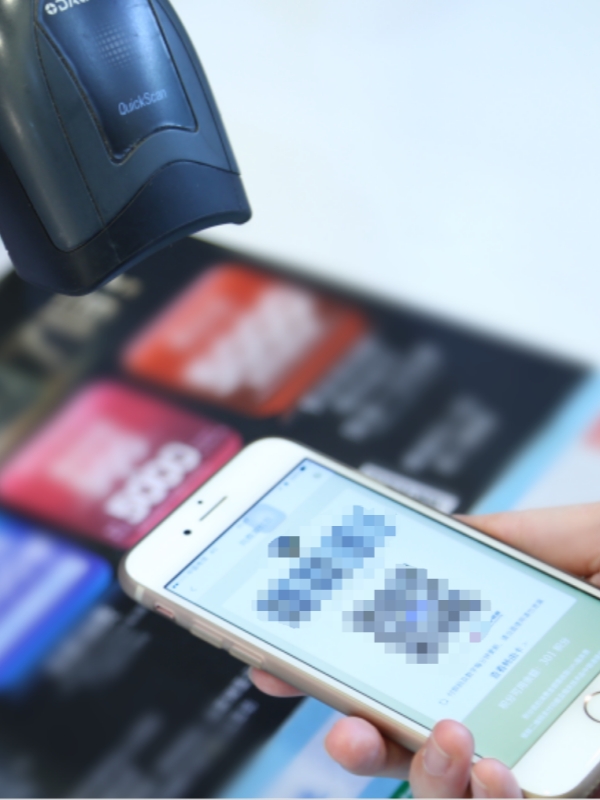
Merchant Scans Your QR Code
The ¥200 Rule
Transactions of ¥200 or less incur 0% fee. Above ¥200, a 3% fee applies — charged by Visa or Mastercard and added to the total. AMEX cards carry slightly higher fees. All amounts settle in RMB at your bank's daily mid-market rate.
Annual Limit: How to Check
- Alipay: My → Payment Settings → Annual Limit
- WeChat: Me → Services → Wallet → Limit Management
Refunds: Where the Money Goes
Refunds to international cards never appear in the Alipay balance — the merchant initiates a refund, Alipay processes it, and it goes directly to your credit card statement. Chase, Citi, or Capital One: 3–5 business days. HSBC or Standard Chartered: 5–7 days. Smaller issuers: up to 10 days.
Payment Errors, Fixes & Edge Cases
VPN: Why It Blocks Payment
VPN in use or fake GPS error: Your VPN says you’re in a foreign country, but your GPS says you’re in China. The payment system says No and blocks the transaction. Fix: (1) Shut your VPN App completely and make sure the icon is out of your status bar. (2) Make sure that GPS is on and showing that you are in the correct location in China. (3) Open Alipay or Wechat Pay. (4) Go to the payment code screen. (5) Complete your payment. (6) Switch your VPN back on after the payment if you need to. To ensure your VPN is truly off, go to Baidu and search for my IP address. If it shows a location in China, you’re good.
Bank Blocks: Prevention and Fixes
Before heading out on your journey, call your bank and say “I will travelling to China and using Alipay and WeChat Pay. Please enable international online purchases on 3D Secure.” If your card is blocked, call the number on the back of your card ASAP and quote as the merchant name “Alipay International / Ant Group / Tenpay” and the amount you are attempting to purchase. For Error 60007 your bank rejected the 0.01 verification charge (for security), so call them and get them to authorize “Tenpay / Alipay” then wait a minimum of 24 hours before resuming.
Offline Payment: Does It Work Without Internet
The Pay/Collect barcode works offline — it refreshes every minute and merchant scanners complete transactions without a live connection, as long as your app is open. Scanning vendor QR codes, refund lookups, adding new cards, and identity verification all require internet.
Cash, ATMs & Emergency Backup Options
Cash and ATM Guide
¥200 in small bills is enough for emergencies — ten ¥10 notes and five ¥20 notes, easy for taxi and vendor change. Don’t carry around more than a few ¥100 notes, as a lot of vendors won’t be able to give you change. ATMs: ICBC is recommended — the most reliable English interface, there’s an “English” button at the bottom-left. Single withdrawal limit: ¥5000, and fee about ¥15-25 per transaction set by your home bank. Never, ever exchange a lot of notes at the airport currency counters - the rates are terrible. Use the ATM.
Key phrases
- Ni sao wo ba (sweep me): show your payment barcode to a merchant
- Wo wang buhao, deng yixia (My internet is slow, please wait): useful when the payment stalls
- Shou xianjin ma? (Do you accept cash?): ask when a vendor's QR code is down
- Qing wen tuikuan ma? (Can I get a refund?): ask after a failed or cancelled transaction
e-CNY: Digital RMB Payments in China
Best for friend transfers and red packets — Alipay does not support these. Also handles group payment collection within WeChat group chats naturally. For retail, transport, and official platforms (Didi, 12306, Ctrip), Alipay is the stronger choice with broader merchant acceptance and a cleaner English interface.
e-CNY (Digital RMB): A separate payment rail issued by the People's Bank of China. Foreigners can register with a passport and use it without WeChat or Alipay.
- Advantages: No annual cap. Zero fees. Dual offline NFC that works even when both phones have no signal.
- Coverage: Available at airport desks in Beijing (PEK T3), Shanghai (PVG T2), and Guangzhou (CAN). Merchant coverage is about 60% — not a replacement for Alipay in daily use, but a valuable backup for large purchases that would otherwise hit the annual limit.
Practice tip: Download the Digital RMB app and register before your trip. Top up ¥500–1000 at the airport e-CNY desk. Use it for hotel deposits, medical bills, and luxury purchases. Keep daily spending on Alipay.
Practical Travel Tips for Foreigners
Before you take off, six things worth sorting in advance:
- Call your card issuer before departure: Some banks require advance activation of international transaction permissions — without it, a successfully bound card will still fail at the point of sale.
- Carry a small amount of RMB cash: Small vendors, roadside stalls, and remote attractions may accept cash only. 2026 regulations still require merchants to accept cash while five exchange channels remain operational.
- Install both apps and keep your foreign wallet active: Alipay as primary, WeChat Pay as backup, your foreign wallet as a third layer — three options throughout the trip.
- For stays of three months or longer, open a domestic bank account: This single step bypasses the $50,000 annual cap, eliminates the 3% fee, and restores personal-transfer functionality for the full duration of your stay.
- Confirm clinic payment methods in advance if covering medical treatment: Hospital deposits and surgery prepayments can exceed $5000, and foreign cards cannot transfer to clinic personal accounts even when the amount falls within your stated limit.
- Claim departure tax refunds on large purchases: Refunds start at ¥200. Beijing's ceiling is ¥220,000 RMB. Hunan, Fujian, Guangdong, Guangxi, and Hainan implement mutual recognition from July 1, 2026.
Frequently Asked Questions Answered
Q: What is the Alipay limit for international users?
The Alipay/WeChat New $5000 Limit for Foreigners 2026 sets a single-transaction ceiling of $5,000 and an annual cumulative ceiling of $50,000 for foreigners binding foreign cards with passport verification. The actual available limit depends on your issuing bank's channel-specific settings and card tier. Without passport verification, transactions are capped at $2,000 per transaction via the experience tier.
Q: Can I use WeChat Pay without a Chinese bank card?
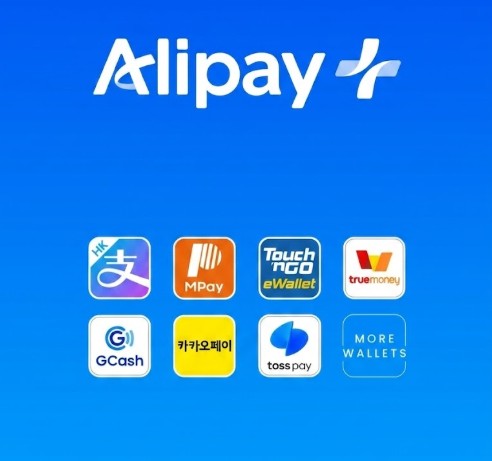
Yes, the Alipay/WeChat New $5000 Limit for Foreigners 2026 system supports this directly. WeChat Pay accepts Visa, Mastercard, JCB, Diners Club, and Discover cards linked through Me, Services, Wallet, Bank Cards. For travelers who prefer not to bind any card, foreign wallets including AlipayHK, Kakao Pay, and Touch'n Go scan directly without registration. US PayPal users gained direct WeChat merchant-code scanning via the May 2025 partnership between TenPay Global and PayPal World.
Q: How to avoid the 3% Alipay fee for foreigners?
Under the Alipay/WeChat New $5000 Limit for Foreigners 2026 framework, the 3% surcharge applies only to transactions above ¥200 per transaction. Staying at or below ¥200 is fee-free for all foreign-card users year-round. First-time binders receive a 90-day reduction window covering up to ¥1,000 per day (resets daily, not cumulative). Using a foreign wallet such as AlipayHK or Kakao Pay runs on its own settlement network and bypasses the 3% structure entirely.
Q: What is the WeChat Pay limit per transaction for foreigners?
Under the Alipay/WeChat New $5000 Limit for Foreigners 2026 terms, foreign-card users on WeChat Pay operate under two parallel ceilings: a USD tier of $5,000 per transaction and $50,000 annual, and a separate RMB risk-control tier of ¥6,000 per transaction, ¥50,000 monthly, and ¥60,000 annual. The stricter of the two applies — for everyday purchases below ¥3,600, the ¥6,000 RMB cap (approximately $850 USD) is the effective limit.
Q: Does WeChat Pay work for US citizens?
Yes, the Alipay/WeChat New $5000 Limit for Foreigners 2026 arrangement covers this directly. US citizens can link an international Visa or Mastercard directly to WeChat Pay via the standard card-binding process. Additionally, the May 2025 partnership between Tencent's TenPay Global and PayPal World allows US PayPal users to scan WeChat merchant codes directly with their existing PayPal wallet, without downloading WeChat or binding a card at all.
Q: How do I set up Alipay as a foreigner?
Download Alipay from the App Store or Google Play (globally available). Register with your international phone number and SMS code. Bind a Visa, Mastercard, JCB, Diners Club, or Discover card via Me, Bank Cards, Add. Transactions up to $2,000 process immediately. For the full $5000/$50,000 limits under the Alipay/WeChat New $5,000 Limit for Foreigners 2026 system, select "Foreign" identity type and upload your passport — Alipay typically completes verification within one to three business days.
Q: Is Alipay safe for foreigners in China?
The Alipay/WeChat New $5000 Limit for Foreigners 2026 reform operates under formal PBOC guidelines established since 2024, with full regulatory authorization. The $5,000 per-transaction and $50,000 annual ceilings represent institutional guarantees from China's central bank. Users should be aware that the $5,000 figure is a regulatory ceiling for the platform, not a personal guarantee — actual available limits depend on issuing bank settings and account verification status.
Q: How long does Alipay verification take for foreigners?
Under the Alipay/WeChat New $5000 Limit for Foreigners 2026 framework, verification timelines vary by platform. WeChat Pay typically reflects full account status within seconds of submitting passport details. Alipay usually requires one to three business days for the passport review to complete. Travelers arriving with pre-bound cards on the experience tier can use the account immediately for small purchases while waiting for full verification.
Q: Can I send red packets with a foreign card on Alipay?
No. The Alipay/WeChat New $5000 Limit for Foreigners 2026 system explicitly restricts this function. Sending digital red packets requires transferring to a personal account, and foreign-card-linked Alipay accounts are restricted from all personal transfer functions by foreign-exchange compliance regulations. This restriction is not expected to change in 2026 or 2027. The only functional path to red packet access is opening a domestic Chinese bank account and using the account-based payment function.