How to Cross from Vietnam to China: Train, International Bus and Flight
Getting to China from Vietnam is easier than ever. There are four main ways across, a sleeper international train from Hanoi to Nanning, a direct coach from Hanoi through Friendship Pass (the main port crossing) and also from the local bus station Sapa to Hekou, or flying from Hanoi or Ho Chi Minh City. Each transport option caters to different budgets, travel styles. and departure points, but all require decent preparation — a visa, printed turns at various steps in the process, and a clear plan for the rest of the journey. In this comprehensive guide, you’ll find every answer to how to cross from Vietnam to China, from visa acquisition and border procedures to onward transport. Follow these steps and the Vietnam to China crossing will be the easiest part of your trip.
Essential Documents and Visa Requirements
Chinese Tourist Visa Application Criteria (L Visa)
Apply for a Chinese tourist visa (L visa) at the Chinese Embassy/Consulate in Hanoi or Ho Chi Minh City. You’ll usually need a passport valid for at least six months (and with two blank pages), passport photos, and a completed application form (see consulate’s website for full details). Itineraries need to be ideally day-by-day and otherwise hotel bookings, a letter of invitation and proof of transport. For land crossings, a booking confirmation for bus or train to the border will suffice for proof of transport. Turnaround time is around four working days, but requirements do change so please check with the consulate directly beforehand and apply early. If approved electronically, print the e-visa — digital copies are not accepted at land borders. For a full overview of which visa category suits your trip, our guide on Chinese visa types covers every option in detail.
Pre-Departure Document Checklist
Before departure, confirm the following items are ready:
- Passport — valid for at least 6 months from the entry date, with at least 2 blank pages
- Chinese visa — valid, with correct entry dates and passport number
- E-visa approval letter — printed (if approved electronically)
- Hotel booking confirmation — printed for at least the first 1–2 nights
- Day-by-day itinerary — printed and stored separately from the passport
- Bus or train booking to the border (as transport proof if required)
Keep all printed copies separate from your passport. Store digital backups on your phone as well.
4 Established Cross-Border Transport Methods
| Route | Journey Time | Approx. Cost | Best For | Reliability |
|---|---|---|---|---|
| 🚆 Train — Hanoi to Nanning | ~12 hours (overnight) | ~CNY 215 | Comfort seekers; scenic overnight travel | ★★★★☆ |
| 🚌 Bus — Hanoi to Nanning | ~8–9 hours | ~CNY 188 | First-timers; budget travelers | ★★★★★ |
| 🚶 Local Bus + Walk — Sapa to Hekou | ~3–4 hours from Sapa | ~30,000 VND | Sapa-based travelers heading to Yunnan | ★★★☆☆ |
| ✈️ Direct Flight — Hanoi / HCMC to China | ~2–4 hours (flight only) | ~CNY 580–1,450 | Time-sensitive travelers; inland destinations | ★★★★★ |
Option 1: International Train — Hanoi to Nanning
-
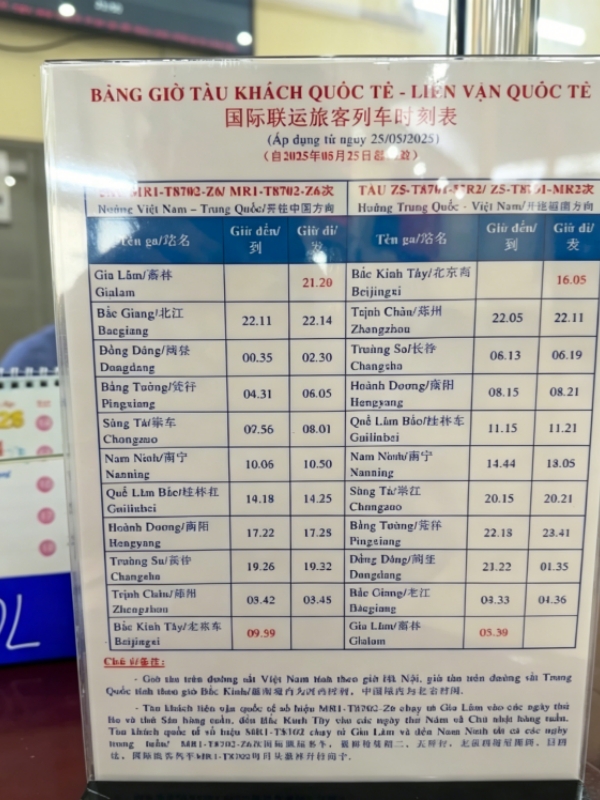

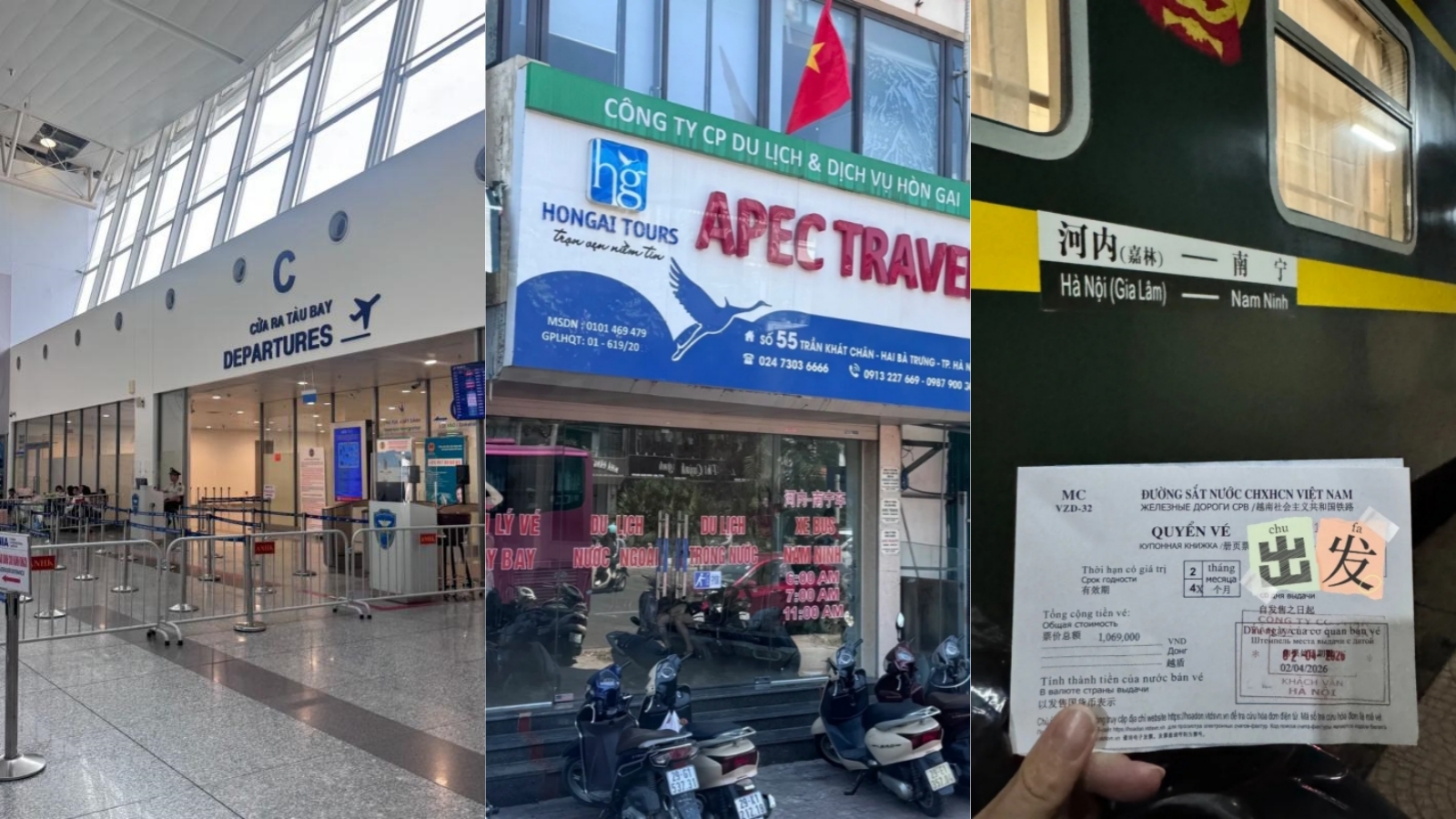
- Hanoi (Gia Lam) to Nanning International Train Timetable
-
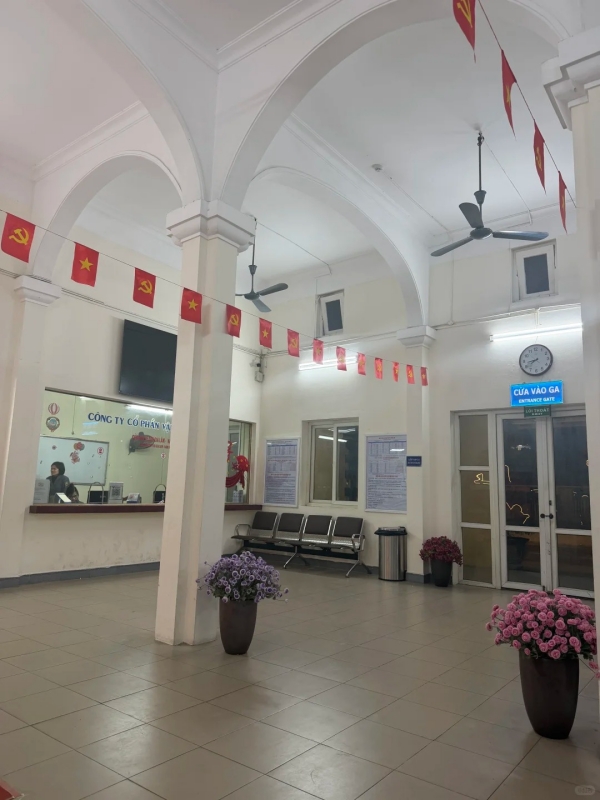
- Gia Lam Railway Station Waiting Hall
-
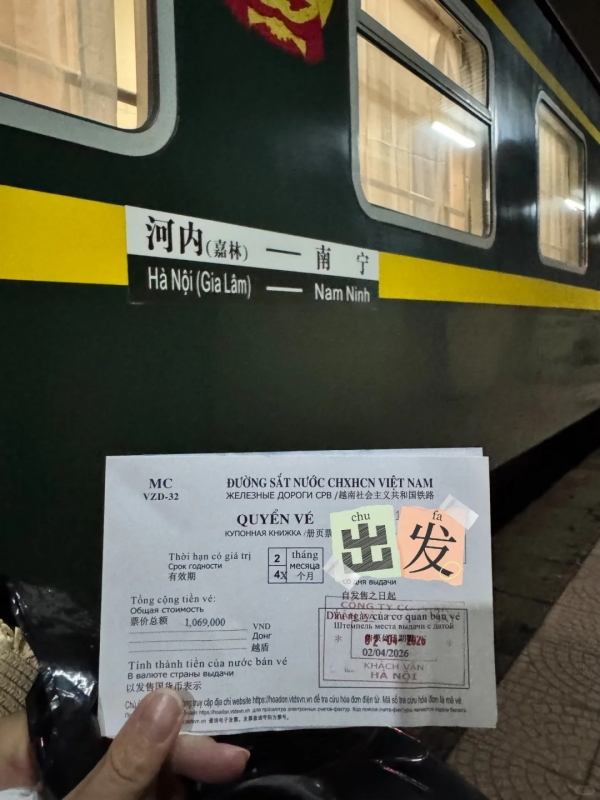
- Vietnam to China Train Ticket
Route: Hanoi Gia Lam Station → Dong Dang (Vietnam exit) / Pingxiang (China entry) → Nanning Railway Station
Train Schedule — MR1
- Departs: 22:20 from Gia Lam Station, Hanoi
- Arrives: 10:06 next morning at Nanning Railway Station
- Vietnam time is 1 hour behind Beijing time — allow for the time zone shift.
Buying Tickets:
Tickets must be bought in-person at the ticket window – passport required, ideally at Gia Lam Station in Hanoi (on the Vietnamese side of the river) at the time of publishing. On the China side, options include stations at Nanning and Pingxiang. A ticket will set you back about CNY 215 (or around 1,000,000VND) and all private rooms are soft-sleeper 4-person compartments; upper and lower bunks were the same price when we travelled. Don’t buy until you’re committed to the date, because tickets are non-refundable.
Border Immigration — Done Overnight:
- Vietnam Exit — Dong Dang Station (~00:55 Vietnam time). Take all luggage off the train. Queue for the exit stamp. Return to your berth by approximately 02:50.
- China Entry — Pingxiang Station (~04:31 Beijing time). Collect an entry card on board or at the station. Complete entry formalities and baggage check. Return to the train by approximately 05:05.
What to Pack for the Overnight Crossing:
- Eye mask and earplugs — the compartment is noisy during border stops
- Thin blanket — air conditioning runs cool overnight
- Power bank — charging ports on board are limited
- Travel light; you carry all luggage twice through immigration
Station Connections: Gia Lam Station is about 10 minutes from Hanoi city center by Grab or taxi — arrive at least 1 hour early. In Nanning, the station connects directly to Metro Line 1.
Option 2: International Bus — Hanoi to Nanning
Route: Hanoi pick-up point → Friendship Pass (Huu Nghi Quan) → Nanning Langdong Bus Station
-
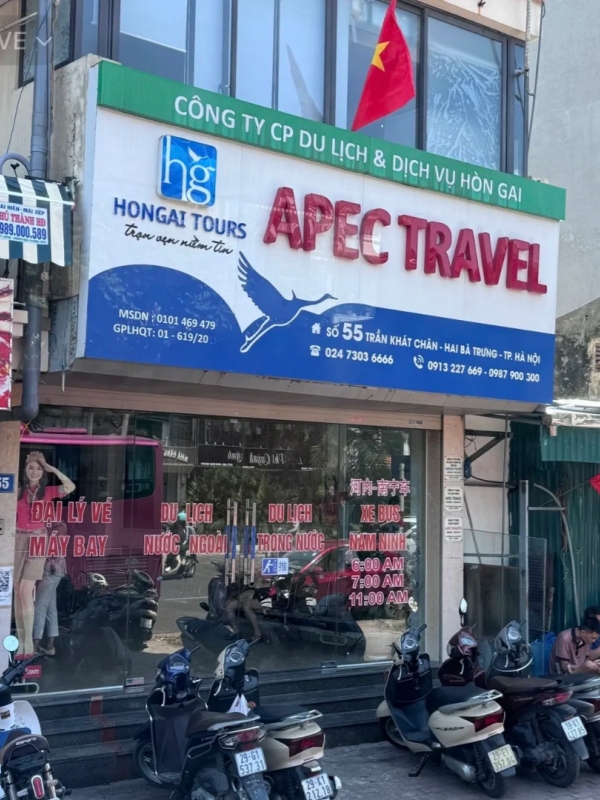
- Hanoi Boarding Point(Số 55 Trần Khát Chân, Hai Bà Trưng, Hanoi)
-
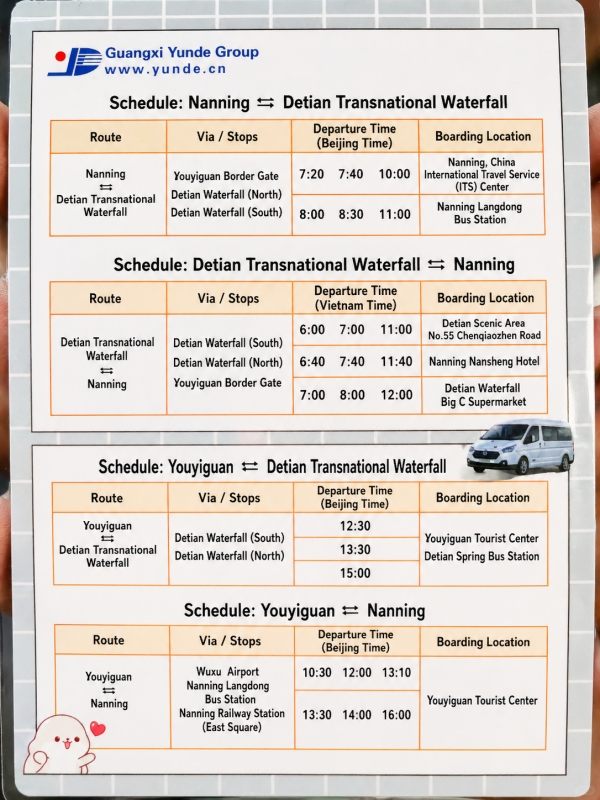
- Nanning-Detian Waterfall Bus Schedule
This is the most popular and beginner-friendly option. The operator runs a fixed schedule and guides passengers through both sets of immigration. Next to the overnight train, it is the most straightforward way to travel this corridor.
Buying Tickets:
-
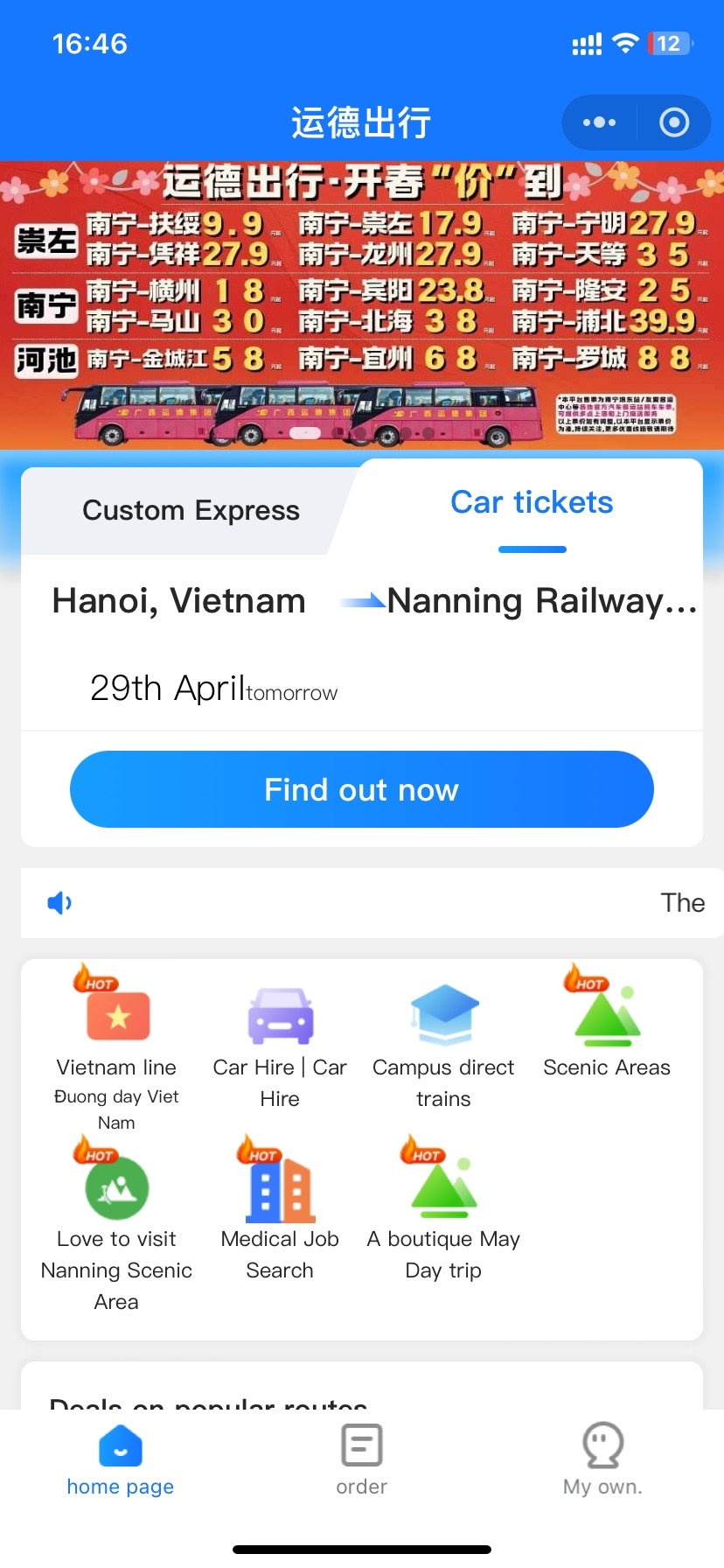

- Hanoi to Nanning International Bus Ticket Purchase (Step1)
-
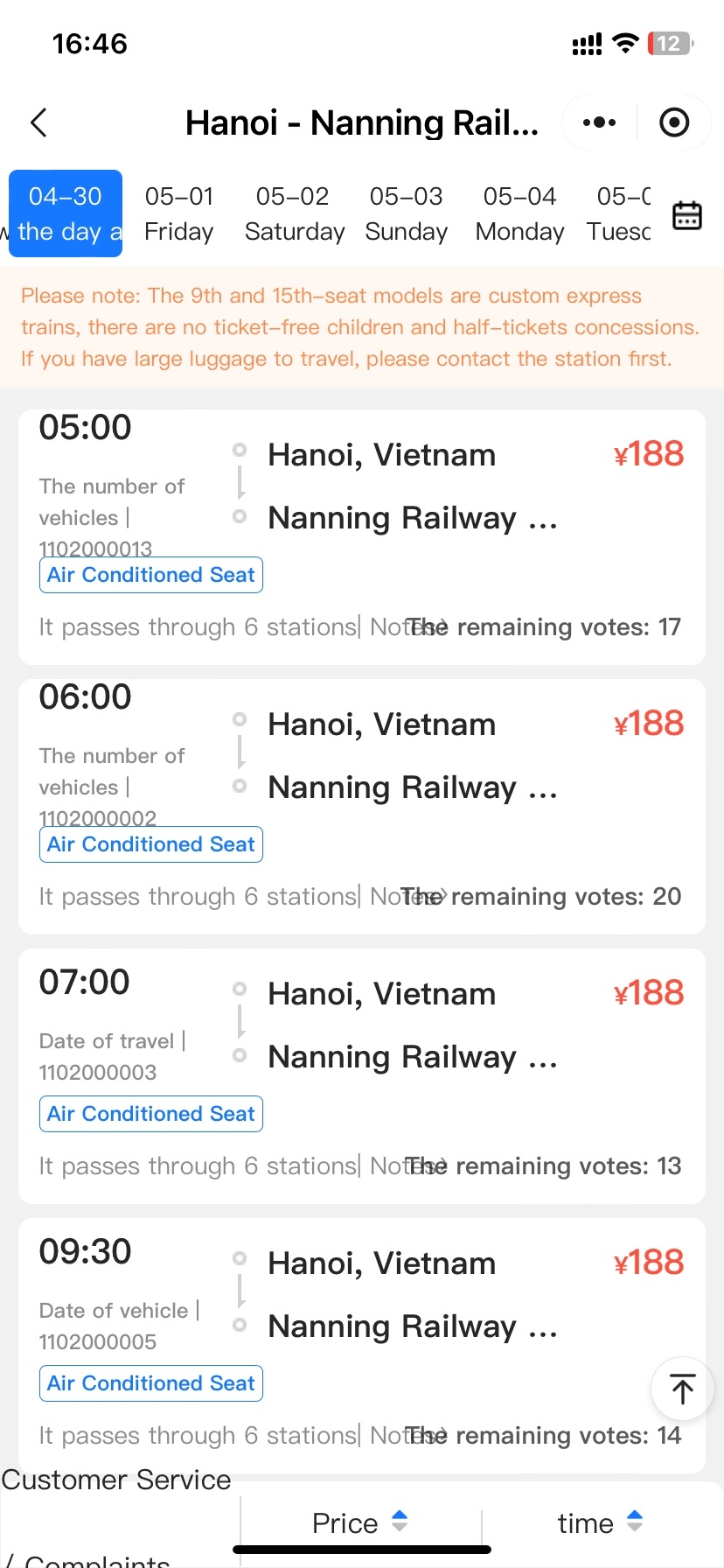
- Hanoi to Nanning International Bus Ticket Purchase (Step2)
-
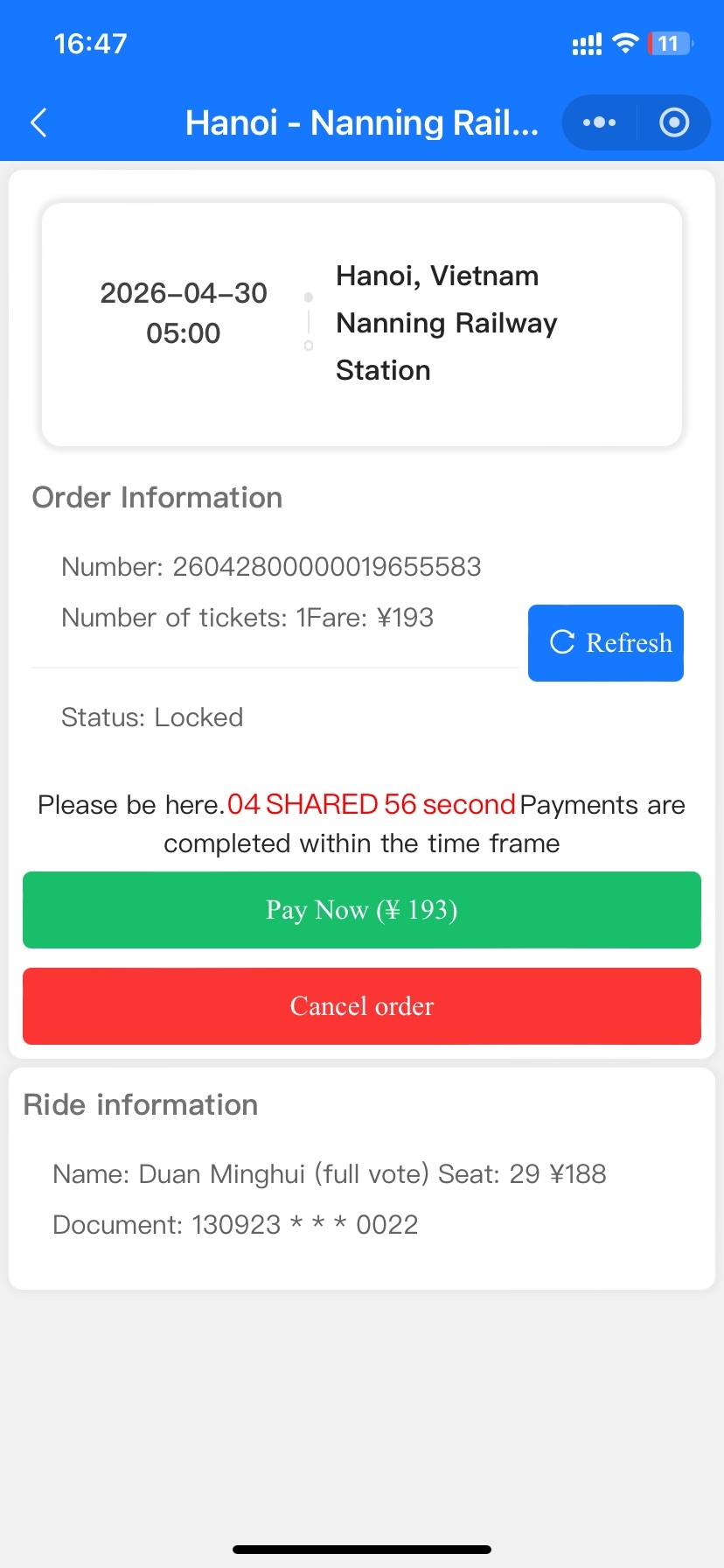
- Hanoi to Nanning International Bus Ticket Purchase (Step3)
Book online via WeChat Mini Program: search "琅东汽车站" or "运德出行". The fare is approximately CNY 188. If the mini-program is difficult to navigate, try the contact number listed on the page. Alternatively, purchase in person at the Hanoi boarding point on the day.
Hanoi Boarding Point: Số 55 Trần Khát Chân, Hai Bà Trưng, Hanoi. Confirm the exact location on Google Maps before departure.
Journey Timeline
- ~11:00 — Depart Hanoi (Vietnam time)
- ~14:00 — Arrive Friendship Pass (Vietnam time)
- — Border crossing + time zone adjustment (+1 hour to Beijing time) —
- ~16:00 — Board connecting Chinese bus (Beijing time)
- ~19:00 — Arrive Nanning Langdong Bus Station
At the Border:
The passengers alight at Friendship Pass & clear immigration themselves. A connecting Chinese bus will be waiting at the other side. There are small kiosks on the Vietnamese side which will exchange any residual VND to RMB at fair rates — use them before you cross. All formats of visa to China are valid at this crosssing.
Option 3: Local Bus + Walking — Sapa to Hekou
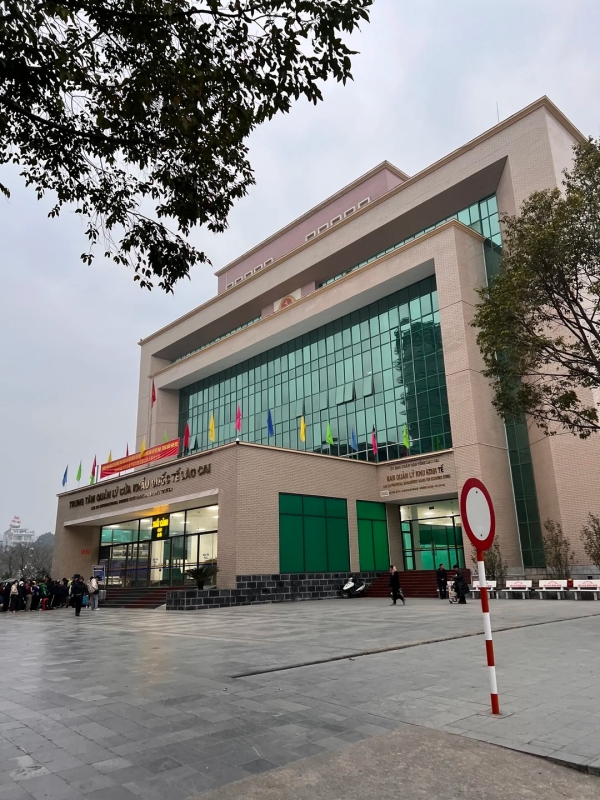
Lao Cai International Border Gate (Vietnam)
Route: Sapa → (local bus) → Lao Cai → (on foot) → Hekou, China
This route suits travelers coming from Sapa who want to continue directly into Yunnan Province. However, expect a more hands-on crossing — fewer Western tourists use this gate, so checks on the Chinese side are typically more thorough.
Step-by-Step:
- Board the local bus at the stop next to Sapa church. Destination: Lao Cai town. Fare: ~30,000 VND. Journey: ~1 hour. Tell the driver clearly: "Border to China."
- The bus stops after crossing a river bridge. Get off immediately, turn left, and walk approximately 1 km to the Vietnamese exit building.
- Clear Vietnam immigration at Lao Cai border gate. The process is quick — the officer may ask about return plans. A brief "travelling through China" answer is sufficient.
- Walk across to the Chinese immigration hall at Hekou. Follow the signage.
- At the Hekou entry counter: present passport, visa, and completed entry card. First-time entrants register fingerprints near the entrance — this takes under 2 minutes. Officers are thorough, so have hotel bookings and itinerary printed.
Currency Exchange: Exchange leftover VND to RMB at booths near the Vietnamese border building before crossing. Do this on the Vietnamese side.
Getting Onward from Hekou:
Hekou's train station currently does not operate regular passenger services. Therefore, take a taxi (~10 minutes) to the long-distance bus station and travel onward to Kunming by bus (~4–5 hours). Download Maps.me and cache offline maps before arriving — Google Maps requires a VPN to work inside China. For broader navigation tools and daily logistics, our China survival guide covers everything a first-time visitor needs. One more thing worth knowing: squat toilets are standard across most of China — our China toilet guide will save you a few surprises at the bus station.
Option 4: Direct Flight — Hanoi or Ho Chi Minh City to China
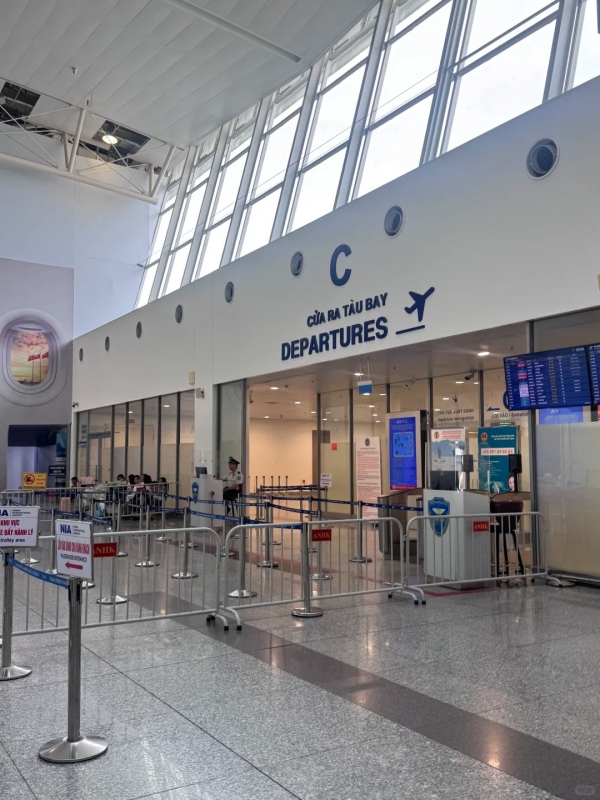
Noi Bai Airport (HAN), Hanoi
Route: Noi Bai Airport (HAN), Hanoi — or Tan Son Nhat Airport (SGN), Ho Chi Minh City — direct to Guangzhou, Kunming, Nanning, Shanghai, Beijing, and other major Chinese cities.
Flying is the fastest option and the most practical if your destination is not near a land border crossing. All land border formalities are bypassed; immigration is handled at the Chinese arrival airport instead.
Booking Tickets:
Find tickets through Trip.com, Ctrip or Google Flights. Vietnam Airlines, China Southern and China Eastern ply these waters. Advance bookings cost CNY580–900; expect spikes to CNY1,000–1,450 or more close to departure and during peak seasons. Check in at least two or more hours ahead and take a printed visa; airlines to China occasionally check documents at the gate.
Common Routes & Approximate Flight Times
- Hanoi (HAN) → Guangzhou (CAN): ~2 hours
- Hanoi (HAN) → Kunming (KMG): ~1 hour 50 min
- Ho Chi Minh City (SGN) → Shanghai (PVG): ~3 hours 30 min
- Ho Chi Minh City (SGN) → Beijing (PEK): ~4 hours
Airport Connections: Major arrival airports connect to city centers by metro or high-speed rail. Have at least CNY 200–300 cash ready for taxis or buses on arrival.
🚆 Route Specifics: If your primary goal is to reach the highlands of Southwest China, explore the How to Travel from Vietnam to Yunnan: The 5 Best Transport Options (Bus, Train & Flight) for detailed schedules and pricing.
Standardized Exit and Entry Procedures
Vietnamese Departure Hall Protocol
Vietnamese exit procedure is accompanied by no hassles. Make your way toward the departure hall at your border and get in line in the lane for foreign passports. Present your passport along with your valid Chinese visa and your exit card (if issued when you first entered the country, it will have to be handed in). An officer may ask very briefly “Why are you leaving?”, with “travel finished, going to China” as a sufficient reply. The exit stamp is now issued and you are out of Vietnam and heading to the Chinese immigration hall. Just make sure your passport possesses the entrance stamp from Vietnam; without it you can be slowed down at the exit counter.
Chinese Immigration Biometric Registration
This is the most document-intensive stage of the crossing. Prepare all documents before joining the queue.
- Collect the China Entry Card. Available inside the immigration hall. Fill in your name (exactly as on your passport), nationality, passport number, transport number, and first accommodation address in China. Write the hotel name in both English and Chinese if possible.
- Join the immigration queue. At land crossings — especially Hekou — fewer Western travelers pass through compared to airports. As a result, officers sometimes ask more detailed questions. Stay calm and patient.
- Hand over your documents. Present passport, visa, and completed entry card. Common questions: purpose of visit, destination cities, first night's hotel, and return or onward plans. Keep answers brief, consistent, and polite.
- Biometric registration (first-time entrants). If this is your first China entry with the current passport, the officer directs you to a fingerprint scanner near the counter. This takes under 2 minutes.
- Entry stamp. The officer stamps your passport. Before leaving the counter, check the permitted duration of stay printed on the stamp.
Potential Border Officer Inquiry Topics
| Common Question | Suggested Answer |
|---|---|
| What is the purpose of your visit? | Tourism / sightseeing |
| Where are you going first? | Nanning / Kunming / [your destination city] |
| Where will you stay tonight? | [Hotel name] — have the printed booking ready |
| How long will you stay in China? | [Number] days — keep this consistent with your visa |
| Do you have an onward ticket? | Yes — mention flight or train booking if available |
Onward Connections and Destination Logistics
Most travel guides end at the entry stamp. However, the hours immediately after crossing are when unprepared travelers run into the most problems. Plan this leg before you leave Vietnam.
If you crossed via Friendship Pass → arriving in Nanning:
| Destination | Transport | Duration | Where to Book |
|---|---|---|---|
| Nanning city center | Bus from Langdong Terminal | 30–40 min | On-site |
| Guilin | High-speed train from Nanning East | ~1.5 hours | 12306.cn / Trip.com |
| Guangzhou | High-speed train from Nanning East | ~3 hours | 12306.cn / Trip.com |
If you crossed via Lao Cai → arriving in Hekou (Yunnan):
| Destination | Transport | Notes |
|---|---|---|
| Kunming | Long-distance bus from Hekou Bus Station | ~4–5 hours. Hekou Bus Station ≠ train station — take a taxi (~10 min) to reach it |
| Kunming | Train (if passenger service is running) | ~3.5 hours. Verify availability in advance — services vary |
- Pre-download Maps.me offline before entering China — Google Maps requires an active VPN to function.
- Have at least CNY 300–500 cash ready for taxis and bus tickets immediately after crossing.
5 Common Mistakes to Avoid at the Vietnam–China Border
1️⃣ Missing VPN Installation Prep
The problem: Google Maps, Gmail, WhatsApp, and most international apps stop working the moment you cross into China. Without a VPN installed beforehand, navigation and communication become impossible instantly.
The fix: Install, subscribe to, and test a reliable paid VPN on all devices before leaving Vietnam. Free VPNs rarely work. VPN app stores and download sites are also blocked inside China, so this must be done in advance. For instance, check whether your current SIM works across the border — our guide on whether your phone will work in China explains what to expect, and our best SIM card for China travel guide helps you pick the right data option.
2️⃣ Unconfirmed Post-Border Transit Plans
The problem: Border crossings are not transport hubs. Hekou does not even have scheduled train services; you will need to take a bus from its one train station. Nanning’s bus terminal is a long taxi haul from the city centre. Travellers doing no research will either pay over the odds for a taxi or sit in limbo for hours with no plan.
The fix: Research the onward route before departure. Know the bus station name in Chinese characters. Book a confirmed first night's accommodation in the border city as a buffer.
3️⃣ Inadequate Local RMB Cash Exchange
The problem: Electronic payment is widespread in China, but it requires a linked local bank account. Near border areas, small purchases — taxis, bus tickets, snacks — still require cash. ATMs near smaller crossings can be unreliable.
The fix: Exchange at least CNY 300–500 of leftover Vietnamese dong at the kiosks on the Vietnamese side before crossing. Rates are fair for small amounts. Once you're deeper into China, setting up a digital wallet makes daily transactions seamless — our step-by-step Alipay setup guide for foreigners walks you through it.
4️⃣ Unprinted Digital Travel Documentation
The problem: At the land borders, they often want a printout. Showing a hotel booking on your screen holds up the process — particularly if the officer doesn’t speak much English. An e-visa that’s not printed out can lead to refusal of entry.
The fix: Print your e-visa approval letter, hotel bookings for the first 1–2 nights, and a rough itinerary. Store these separately from your passport. Confirm your passport has at least 6 months of validity and 2 blank pages before leaving Vietnam.
5️⃣ Dependency on Restricted Navigation Tools
The problem: Google Maps does not function in China without a VPN. Live translation at checkpoints signals confusion and can attract inflated prices from taxi drivers. English is limited at smaller border crossings.
The fix: Download Maps.me and cache an offline map before entering China. Write your destination in clear Chinese characters on paper or your phone screen — show it to drivers instead of speaking. Key phrase: 去[目的地名] (Go to [destination]). For more essential tools and strategies, our China survival guide covers navigation, payment, and daily logistics from arrival onward.
Primary Regional Destinations and Travel Itineraries
Your point of entry will largely dictate where to go from there; those arriving over the border at Hekou (from Sapa), or by the bus route through Nanning, will literally be in the best place to launch straight into China’s most rewarding region for first-timers, Yunnan, which is by far the easiest to reach from Vietnam.
Natural First Stop in Yunnan Province
From Hekou a direct train or bus will take you to Kunming, the provincial capital, in around 3.5–4 hours. Kunming is the usual entry point into the rest of Yunnan, and it’s a pleasant place to linger for a day or two before moving on. The classic route northwest of Kunming is Dali then Lijiang, both reachable by high-speed rail or long-distance bus.
- Kunming — A relaxed, walkable city with year-round mild weather. A good base for your first night in China. Read our guide on spring travel in Kunming to plan your visit.
- Dali — A laid-back old town on the shores of Erhai Lake, popular with travelers who want to slow down. See our full things to do in Dali guide for the highlights.
- Lijiang — A UNESCO-listed old town at altitude, with cobblestone lanes and views of Jade Dragon Snow Mountain. Our Lijiang Old Town guide covers what to see and how to get around.
If you have more time, Yunnan has enough to fill two to three weeks on its own. Our guide to Yunnan's top attractions gives a broader overview of the province's highlights beyond these three cities.
Eastern China Routes via Nanning
Your route through China is well charted if you arrive through Friendship Pass (Pingxiang) and are travelling on to Nanning. Because Nanning is on China’s high-speed rail network, travel by train to Guilin (approximately 1.5 hours) or Guangzhou (approximately 3 hours) and from there to Guangxi’s many stunningly beautiful karst fairyland formations will be extremely easy. A suitable way to move through southern China if you do not intend spend time in Yunnan.
Faqs: Vietnam to China Border Crossing
Q: Is it possible to travel from Vietnam to China by land?
Yes, and the process is well-established. Three main land routes are regularly used by foreign travelers: the overnight international train from Hanoi to Nanning, the direct international bus via Friendship Pass, and the local bus-and-walk route from Sapa to Hekou. Each Vietnam to China land route has a clear immigration procedure on both sides, and thousands of travelers complete these crossings every month without incident.
Q: Do I need a visa to cross from Vietnam to China by land?
Most nationalities require a valid Chinese tourist visa (L visa) before crossing. Apply at the Chinese Embassy or Consulate in Hanoi or Ho Chi Minh City. The Vietnam to China land crossing requires this visa regardless of which gate you use — Friendship Pass, Hekou, or Pingxiang. Always confirm current requirements directly with the consulate, as policies can change without notice.
Q: Which is the easiest border crossing from Vietnam to China for first-time travelers?
Friendship Pass via the Hanoi–Nanning international bus is generally the most beginner-friendly option. The Vietnam to China bus route is well-structured, the operator guides passengers through both checkpoints, and the full journey from Hanoi city center to Nanning takes approximately 8 hours. Staff at this crossing are familiar with foreign travelers and the process tends to run smoothly.
Q: How long does it take to cross the Vietnam–China land border?
It depends on the route. The Vietnam to China overnight train covers Hanoi to Nanning in roughly 12 hours, including two border stops. The Hanoi–Nanning bus takes 8–9 hours in total. The Sapa-to-Hekou walk crossing adds roughly 3 hours of travel from Sapa before reaching the gate. Allow extra time at smaller crossings where queue lengths vary throughout the day.
Q: Can I buy the Hanoi to Nanning train ticket online?
No. The MR1 train ticket must be purchased in person at the station ticket window with your passport. For the Vietnam to China train route, the most reliable option is Gia Lam Station in Hanoi on the Vietnamese side, or Nanning and Pingxiang stations on the China side. No reliable online booking platform currently exists for this international rail route.
Q: What currency should I bring when crossing from Vietnam to China?
Exchange remaining Vietnamese dong to Chinese yuan (RMB) at kiosks on the Vietnamese side of the border before crossing. For any Vietnam to China land route, aim to have at least CNY 300–500 in cash immediately after entry. This covers taxi fares, bus tickets, and food before you reach a reliable ATM or can set up mobile payment through WeChat or Alipay.
Q: Will I be questioned at Chinese immigration when crossing by land?
Yes — particularly at smaller crossings like Hekou. The Vietnam to China land border sees fewer Western travelers than international airports, so officers sometimes conduct more detailed interviews. Have printed hotel bookings and a rough itinerary ready. Answer questions briefly and politely. The process is routine; preparation is all it takes to move through efficiently.
Q: Is Hekou or Nanning the better entry point into China?
It depends on your onward route. For travelers heading into Yunnan Province — Kunming, Dali, or Lijiang — the Vietnam to China crossing at Hekou is the logical gateway. For travelers heading east to Guilin, Guangzhou, or other major cities, Nanning offers far better high-speed rail and bus connections. Consider your overall itinerary when choosing between the two.
Q: Do I need a VPN before entering China?
Yes — and it must be set up before crossing. The moment you enter China, Google Maps, Gmail, WhatsApp, and most Western apps become inaccessible without a VPN active. For anyone making the Vietnam to China crossing, a reliable paid VPN is non-negotiable. Download, subscribe, and test it while still in Vietnam. Free VPNs are inconsistent inside China and should not be relied upon.
Q: What happens if my visa has an error or is rejected at the border?
If an officer identifies a discrepancy — an incorrect entry date, expired visa, or missing documents — entry may be refused at the Vietnam to China gate. There is no on-the-spot correction available at a land crossing. Therefore, verify every detail on your visa before departure: entry date, passport number, and personal details. Contact the Chinese consulate in advance if anything appears incorrect.