Traditional Chinese New Year Outfits
Spring Festival brings streets alive in red and gold, and visitors who want to join the celebration often ask whether they can wear traditional Chinese clothing. The short answer is yes. Tang suits, qipao, and hanfu are readily available for rent in every major tourist city. Renting beats buying for most travelers: sizing is tricky, the outfits see heavy use during the holiday, and a same-day rental typically costs less than $50. Below is a practical guide to the main outfit types, where to find them, what to expect to pay, and how to put together a complete look.
Quick Facts
The Main Traditional Outfits
Tang Suit (Tangzhuang 唐装)
Traditional Chinese New Year Outfits
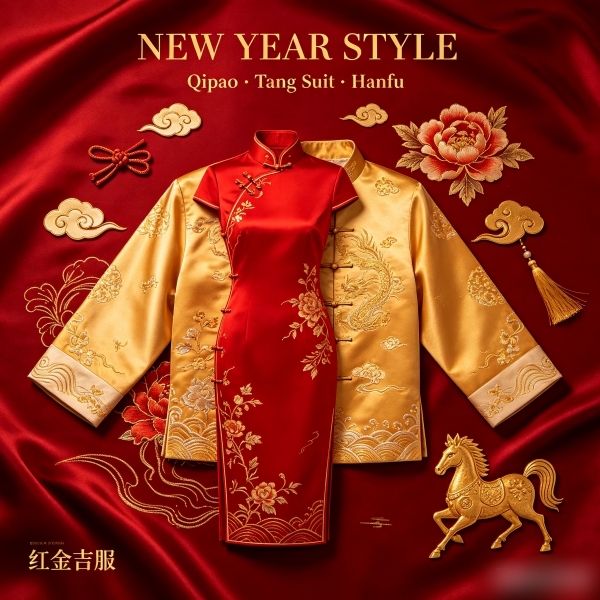
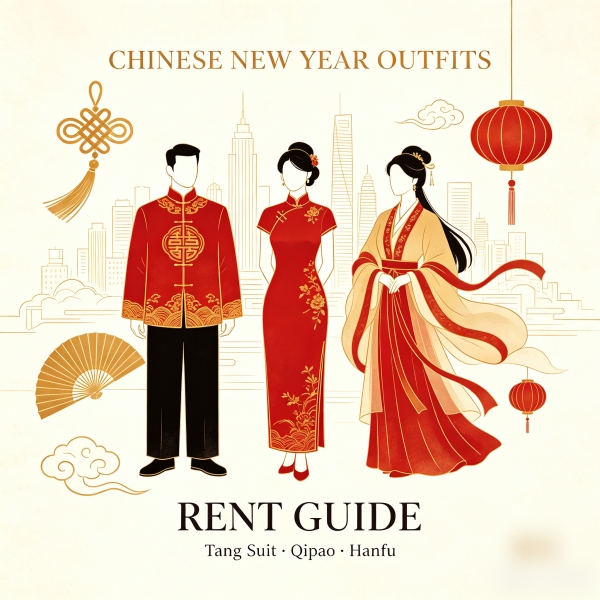
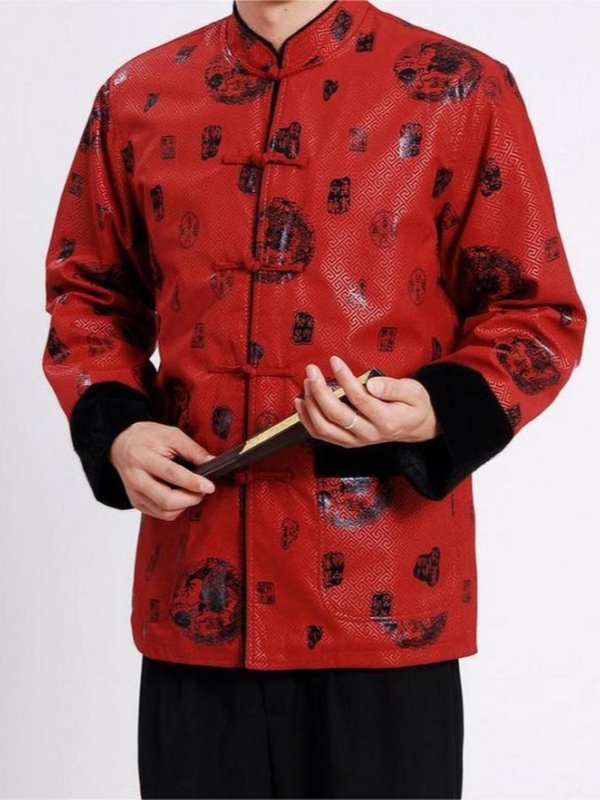
The term Tang Suit is a modern label for a jacket style that emerged from Qing-era man-tou jacket cuts combined with Western tailoring techniques. It features an upturned collar, straight lapels, and a closure secured by Chinese-knot buttons — the round, braided frog buttons that are now the outfit's most recognizable detail. Fabric choices run to brocade, often embroidered with auspicious symbols such as dragons, phoenixes, or longevity characters. During Chinese New Year, it is the most common traditional outfit worn by men, and its popularity among women and children has grown steadily.
The style gained international prominence at the 2001 APEC summit in Shanghai, when world leaders posed in matching brocade Tang suits. That image cemented the outfit as the default Chinese formal garment in the global imagination.
Qipao and Cheongsam
Traditional Chinese New Year Outfits
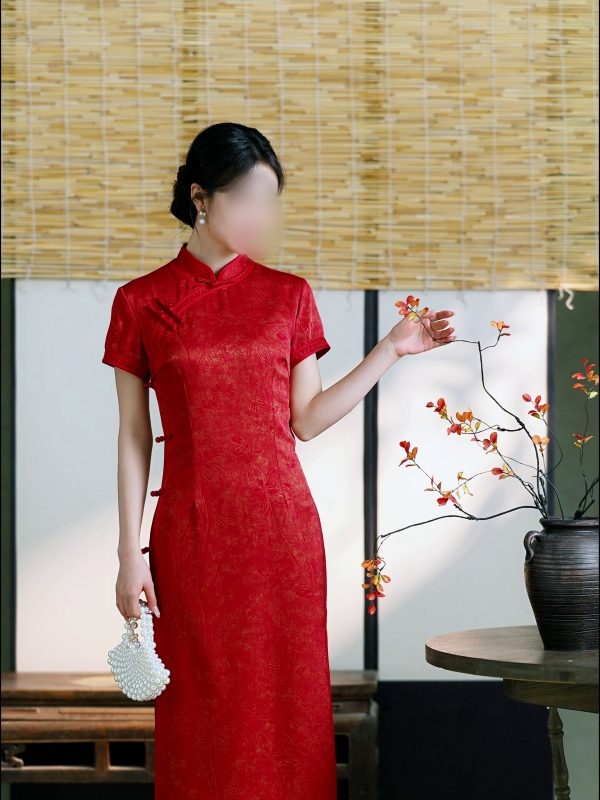
Qipao (旗袍) entered mainstream dress during the Qing dynasty and became the defining silhouette for women. The modern version is a tight-fitting dress that follows the body's contours, features a mandarin collar, closes with frog buttons, and includes side slits that can sit high on the thigh. The Cantonese term Cheongsam refers to the same garment in Western markets; in some contexts it denotes the men's long shirt (长衫). Qipao is the most globally recognized traditional Chinese dress for women.
Ready-to-wear rentals are widely available in tourist areas. Custom tailoring is the preferred route for buyers, but visitors who want a one-day wear will find plenty of stock in standard tourist sizes.
Hanfu (汉服)
Traditional Chinese New Year Outfits
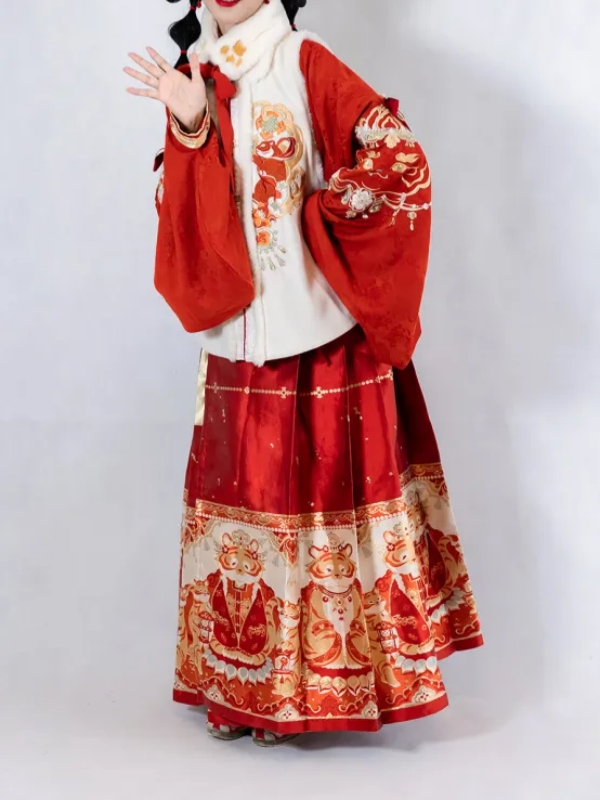
Hanfu literally means "clothing of the Han ethnicity" and covers a broad family of pre-Qing garments — the variants are too numerous to count. The typical construction pairs a crossover-collar shirt with a skirt that sits above the bosom, secured by a sash. Sleeves are long and wide. Historical dynasties left distinct sub-styles: Tang-dynasty hanfu influenced the Japanese kimono, while Ming-dynasty hanfu shaped the Korean hanbok.
Among younger Chinese, hanfu has experienced a significant revival as everyday cultural wear. For tourists, it is the dominant choice at photo-shoot locations across historic districts.
Modern Hybrids and Child Sizes
Rental shops also stock modified versions: shortened hanfu skirts blended with Western cuts, Tang suits in colors beyond red, and child-sized Tang suits printed with cartoon characters. These hybrid styles account for a large share of rental inventory in tourist zones and represent the easiest entry point for first-time foreign wearers who find full traditional dress unfamiliar.
🛍️ Bargain Shopping in Shanghai: If you prefer purchasing custom accessories or affordable attire, explore the bustling stalls beneath the Science & Technology Museum metro station in our guide to AP Plaza Fake Market Shanghai.
Where Tourists Can Rent Outfits
Rental shops cluster in historic tourist districts, making it straightforward to pick up an outfit near a major sight and return it the same day. Foreign visitors without a mainland phone number should avoid WeChat mini-programs; instead, search Trip.com experiences, ask the hotel concierge, or simply walk the old-town streets and look for storefronts displaying 服装, 古装, or 汉服 signs.
- Xi'an: Datang Furong Garden, Tang Paradise, and the Big Wild Goose Pagoda area carry the city's strongest Tang-suit rental scene alongside hanfu options.
- Beijing: Nanluoguxiang, Yandai Xiejie, and the Houhai hutong area stock Tang suits and qipao year-round.
- Shanghai: City God Temple, Yu Garden, and Xintiandi lean toward qipao rentals.
- Lijiang: Old Town offers Naxi ethnic dress and hanfu popular for photography against the stone streets.
- Luoyang / Hangzhou / Suzhou: Hanfu-heavy markets near Longmen Grottoes, West Lake, and the classical gardens respectively.
👗 Explore Local Fashion Hubs: From historical qipao tailors at the South Bund Fabric Market to modern boutiques along Huaihai Road, find the best shopping districts in Shanghai Clothing Stores.
Rental Prices and What's Included
Same-day rental typically covers the outfit, a basic hair accessory, and a simple makeup touch-up at qipao and hanfu shops. Most locations provide a locker for belongings and set a return-by-closing-time deadline. Higher-tier packages add professional hair styling, a photography permit for a nearby scenic spot, overnight rental, and shoes. Figures below are converted at roughly ¥7.1–7.2 per $1 and bookable via Trip.com experiences or in-shop.
Styling, Accessories, and Under-Layers
January and February temperatures in most Chinese New Year destinations hover between 2°C and 10°C, so practical under-layers matter. Rental shops have adapted their stock to the cold, but knowing what goes underneath helps travelers dress quickly and correctly.
- Under-Tang-Suit: a plain white or black T-shirt paired with thin trousers. Brocade fabric traps heat; a cotton underlayer absorbs moisture and keeps the outer layer clean.
- Under-Qipao: seamless nude undergarments avoid visible lines under the fitted silhouette. Opaque tights are standard in winter; shape-wear shorts are widely worn and sold in tourist-area shops.
- Under-Hanfu: the inner yiyao (襦袄) layer is typically included with the rental. Travelers with a larger chest build should bring a thin tank top to wear underneath for a smoother line.
- Shoes: cloth embroidered shoes pair with hanfu, low-heeled Mary Janes complement qipao by emphasizing its walking gait, and black leather shoes suit a Tang suit. Most rental shops sell matching shoes on-site for $4–14 (¥30–100).
- Hair: rental shops can pin a simple bun for hanfu or qipao in 5–10 minutes at no extra charge. Men can leave hair natural under a Tang suit; no styling is required.
- Accessories: a jade-bead or red-thread bracelet ($1–7 / ¥10–50) adds auspicious symbolism, a small silk fan works for qipao or hanfu ($3–7 / ¥20–50), and an embroidered pouch worn at the waist completes the hanfu look ($4–11 / ¥30–80).
- Children: child-sized Tang suits in red and gold are the easiest traditional outfit for kids and the most widely stocked. A boy and girl in matching Tang suits is a common Spring Festival family-photo setup.
👔 Southern Wholesale Fashion Hubs: For travelers visiting Guangzhou, check out one of the country's largest apparel hubs for ready-to-wear garments and traditional attire in Guangzhou Baima Costume Market.
Etiquette and Photo Spots
Foreign visitors wearing traditional dress are generally welcomed warmly. A brief xinnian kuaile greeting — "Happy New Year" — goes a long way. The main dress rules are straightforward: active worship halls at temples call for modest coverage, and overly theatrical costume choices suit photography spots better than formal gatherings.
- Etiquette rules: red is the safest and most auspicious color; black and white read as mourning colors and are best avoided; avoid wearing full traditional dress to a formal business dinner unless explicitly invited; active temples prefer modest coverage; a friendly greeting in basic Mandarin is always appreciated.
- Photo spots: Xi'an Tang Paradise and the Big Wild Goose Pagoda provide Tang-suit backdrops with Tang-dynasty architecture. Beijing's Forbidden City outer courtyards and the Temple of Heaven are well-suited for Tang suits — no outfit changes are permitted inside the palace, but the courtyards offer striking shots. Shanghai's Yu Garden and the Bund waterfront are classic qipao locations. Lijiang Old Town's stone streets suit Naxi ethnic dress and hanfu. Suzhou's Humble Administrator's Garden and Lion Grove provide classical garden settings for hanfu and qipao.
Frequently Asked Questions
Q: Can foreigners wear traditional Chinese New Year outfits?
Yes. Most Chinese people react positively when they see foreigners in Tang suits, qipao, or hanfu. The qipao has become a global standard for Chinese-themed events. The only exception is wearing full traditional dress to solemn occasions such as funerals.
Q: Where is the best city to rent a Tang suit in China?
Xi'an is the strongest Tang-suit rental market, driven by its Tang-dynasty heritage and photo-friendly venues such as Datang Furong Garden and the Big Wild Goose Pagoda. Beijing's Nanluoguxiang and Yandai Xiejie hutongs offer a reliable year-round alternative.
Q: How much does it cost to rent a Qipao for a day?
$21–50 (¥150–360) is typical across most tourist hubs. Beijing prices run slightly higher at $28–56 (¥200–400). A basic hair-styling package adds $7–14 (¥50–100).
Q: Is it cultural appropriation to wear Hanfu as a tourist?
No. Hanfu is widely worn as everyday cultural dress by young Chinese people and is rented in tourist cities precisely so visitors can participate. Wearing it respectfully — clean, neat, correctly paired — is welcomed, not policed.
Q: What do you wear underneath a Hanfu or Qipao?
Under a qipao, use seamless nude undergarments and opaque tights for the January–February cold. And Under a hanfu, the inner yiyao layer is usually provided with the rental — bring a thin tank top if needed. Under a Tang suit, a plain T-shirt and trousers suffice.
Q: When during Chinese New Year should you wear new clothes?
Traditionally, new clothes are worn from New Year's Day onward. Most visitors rent on days 1–3 of Spring Festival through the Lantern Festival. Shops also see high traffic in the week before New Year's Eve as locals and tourists prepare.
Q: Which colors should be avoided during Chinese New Year?
Black and white are typically avoided as they are associated with mourning. The most auspicious colors are red and gold. Bright pinks, blues, and greens work fine for hanfu and qipao, but red remains the safest default choice.
Q: Are there traditional outfits suitable for kids?
Yes. Child-sized Tang suits in red and gold are the easiest option and the most widely stocked. Child qipao and hanfu are also available, though sizing is narrower — call the shop ahead if traveling with young children.
Q: How long does it take to get dressed in Hanfu?
A basic hanfu outfit with one assistant takes 15–25 minutes. A multi-layer hanfu with professional hair styling can run 30–45 minutes. Rental shops build this time into the service, so arriving early is wise.