TopUp WeChat Wallet in China
WeChat Pay runs nearly every transaction across the country — street food, taxis, hotels, hospitals. For any foreigner arriving in 2026, getting this right before stepping off the plane is as essential as getting flights booked. The first thing to grasp: you can’t topup a WeChat wallet — should that be your plan — via a foreign card. China’s (ridiculous) foreign-exchange restrictions bar that, no matter what older guides may tell you. What does work is linking your foreign card, for real-time payments, to WeChat. No pre-paying is needed. Those referents cover the main way, and alternatives, for getting WeChat wallet ready to move.
✔ Recommended — covers 90% of needs
Path A: Link Your International Card for Direct Payments. Your card charges at the moment of purchase. No pre-loading or top-up involved. This path covers virtually every payment scenario in China — restaurants, taxis, shops, apps.
For specific cases only
Path B: Get RMB Balance Into Your Wallet. Relevant only if you want to receive red packets (红包) or hit an edge case requiring a wallet balance. Two sub-methods: accept a transfer from a friend in China, or use the WeChat Travel Card.
Bottom line: Complete Path A and you will pay smoothly everywhere in China. Path B is a situational extra — pursue it only when something specific demands it.
Paying Directly with Your Foreign Card
Tencent built this solution specifically for international visitors, and it answers the “how to use WeChat Pay in China” question for 99% of travelers. Paying with a linked international card runs as follows: merchant QR code → WeChat → your card → your bank → done. No intermediate wallet balance exists. ANo pre-loading step exists. No currency conversion falls on you to manage.
Supported networks include Visa, Mastercard, American Express, and JCB. Discover cards have variable acceptance — functional for some users, blocked for others — so lead with Visa or Mastercard whenever you have a choice.
How to Link Your International Card
-
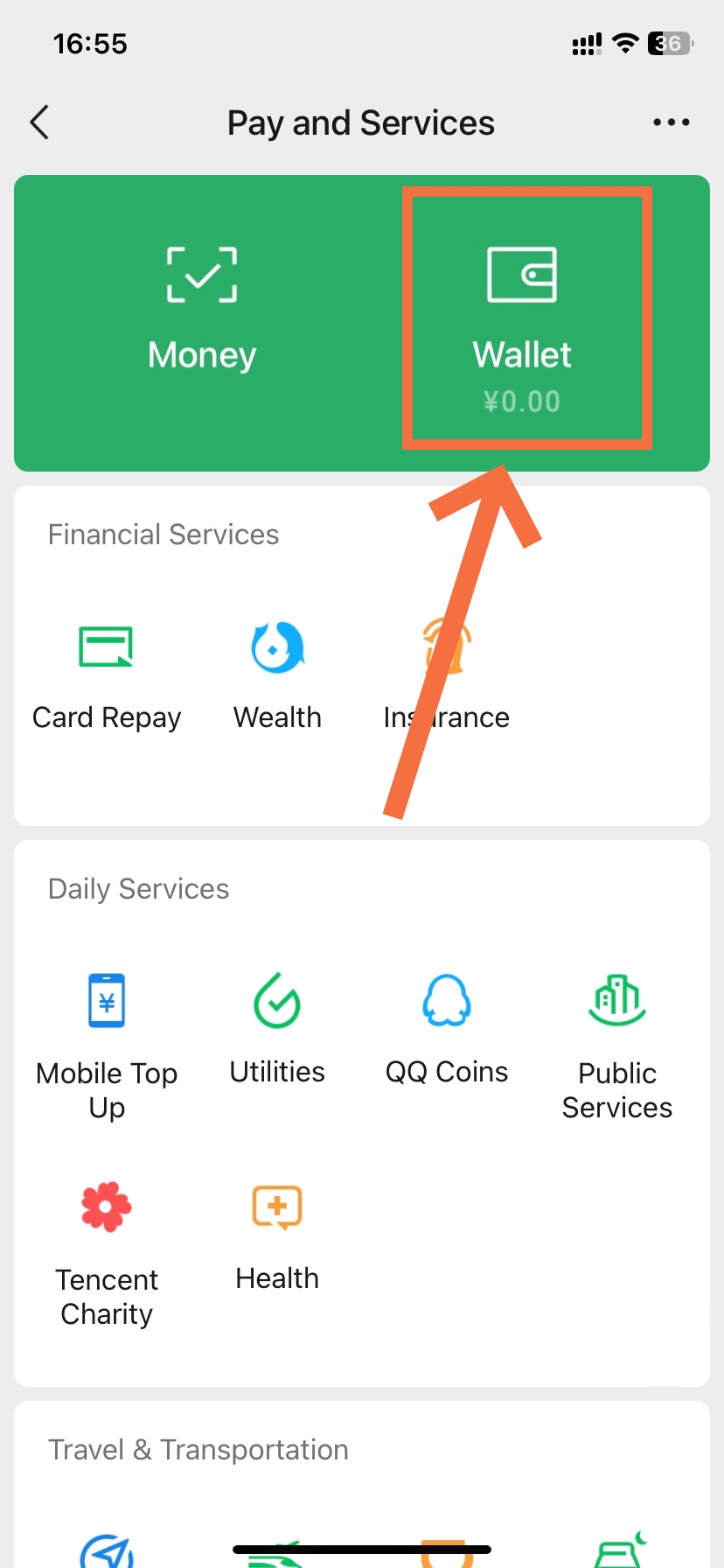

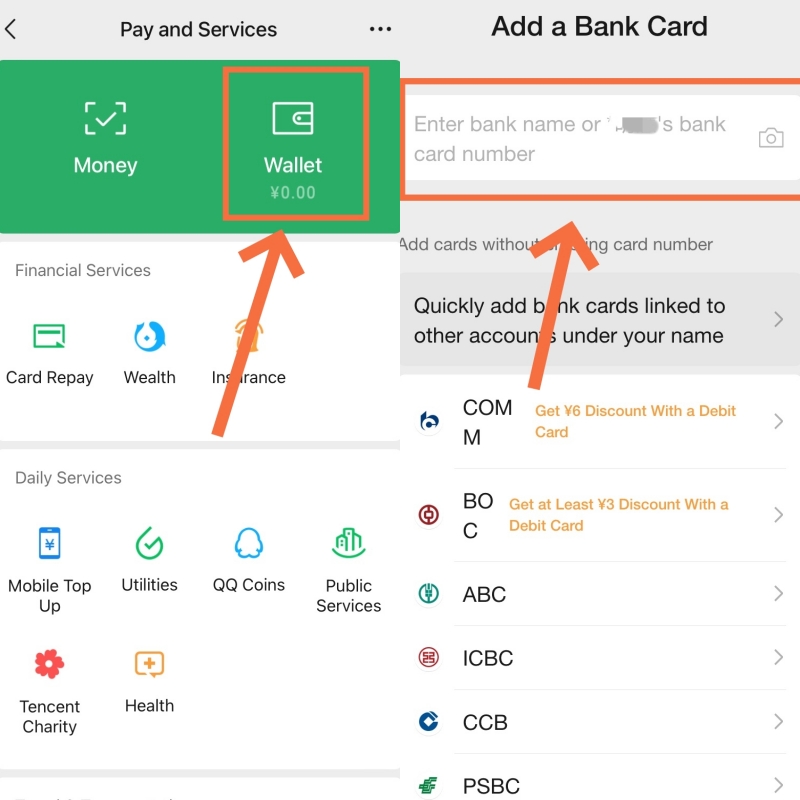
- WeChat Wallet
-
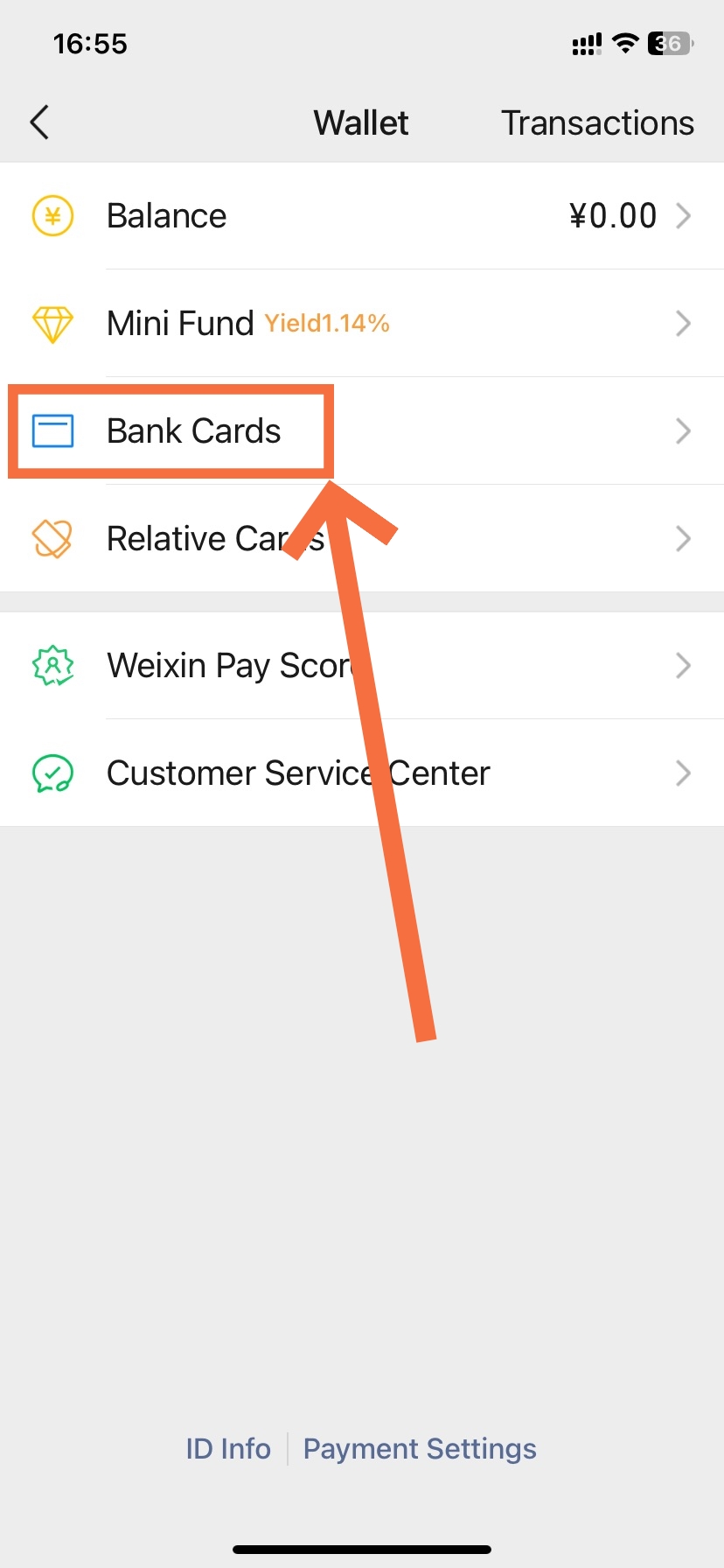
- Tap Bank Cards
-
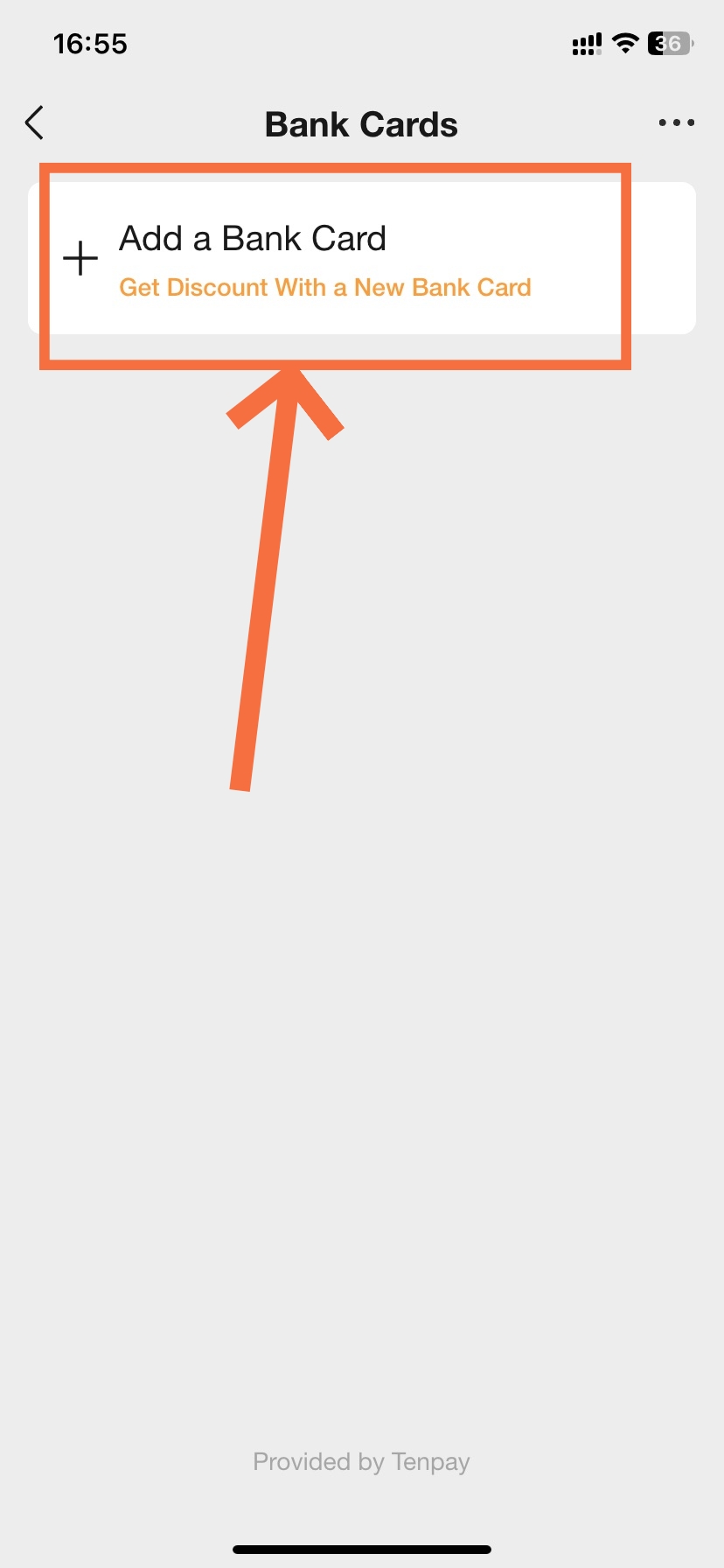
- Tap to Add Bank Card
-
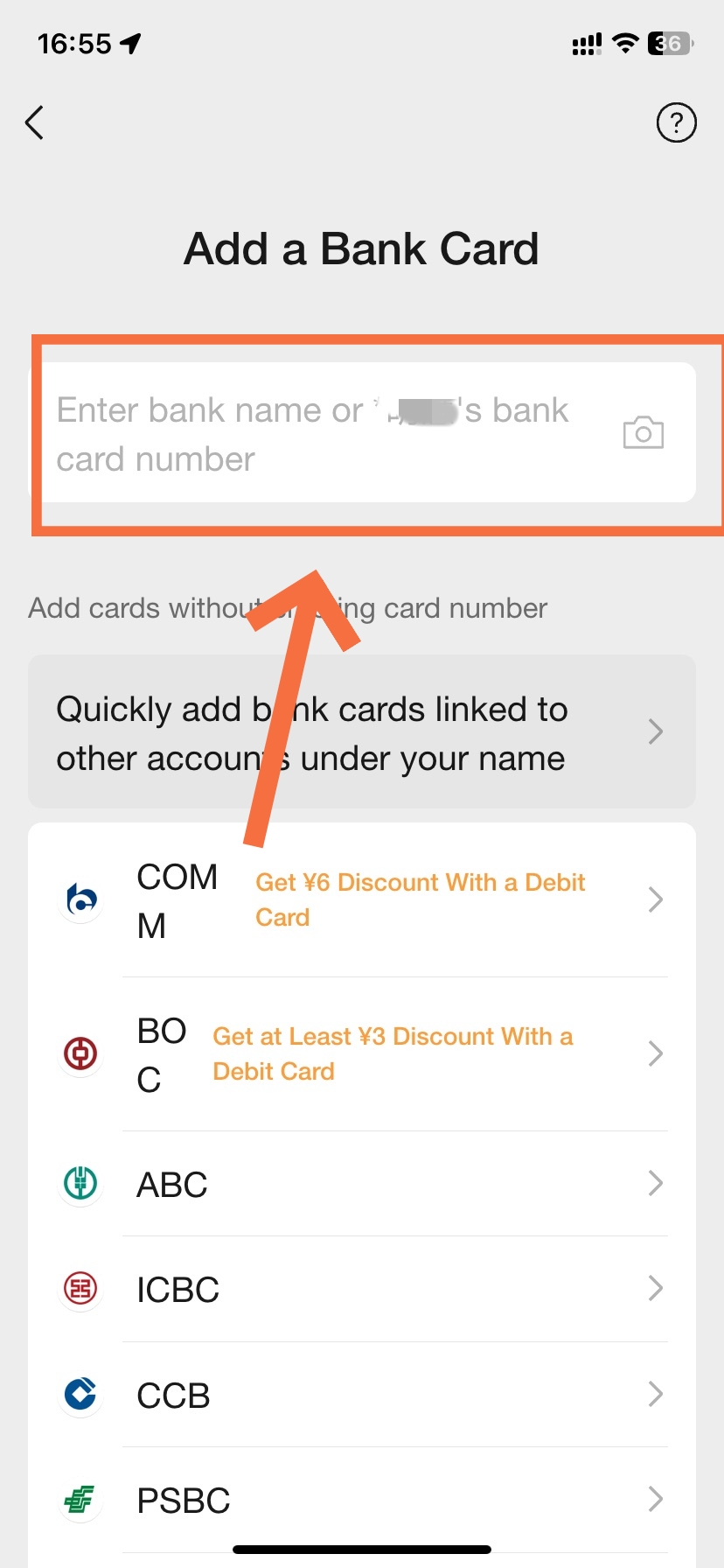
- Enter Bank Number
- Step 1 — Open WeChat and navigate to Cards
- Go to Me → Services → Wallet → Cards, then tap “Add a Card” to begin.
- Step 2 — Select your card network
- Choose Visa, Mastercard, Amex, or JCB. WeChat loads the appropriate entry form for your selection.
- Step 3 — Enter your card details and name
- Input your card number, expiry date, and CVV exactly as printed on the physical card. For the name field, match your passport spelling precisely — not the card if they differ. This is the single most common cause of linking failure, and the check is case-sensitive.
- Step 4 — Enter your overseas billing address
- Use your home-country billing address, not a Chinese one. WeChat cross-checks this against your card issuer’s records, even if you are already in China when linking.
- Step 5 — Confirm with the one-time passcode
- A verification code arrives on your registered phone number. Enter it promptly to confirm the link request.
- Step 6 — Set your WeChat Pay passcode
Linking still failing after all of the above?
Most linking failures trace back to your issuing bank’s risk controls, not a WeChat problem. Call the international service number on the back of your card and say: “Please authorize cross-border transactions through WeChat Pay (Tencent), confirm 3D Secure is active, and flag my account so the next WeChat transaction clears.” Attempt the link again immediately after the call. One phone call resolves the problem in the majority of cases.
🛠️ Setup Deep Dive: Need a more visual, step-by-step walkthrough? Follow our Adding Foreign Credit Card to WeChat Pay: 2026 Setup Guide to troubleshoot common verification hurdles and ensure your wallet is travel-ready before you land.
Real-Name Verification for Smoother Transactions
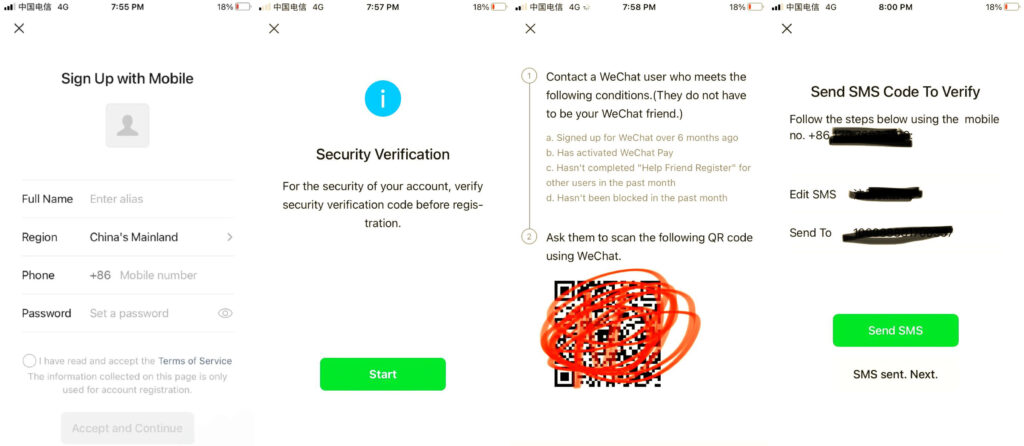
Register your account and pass security check
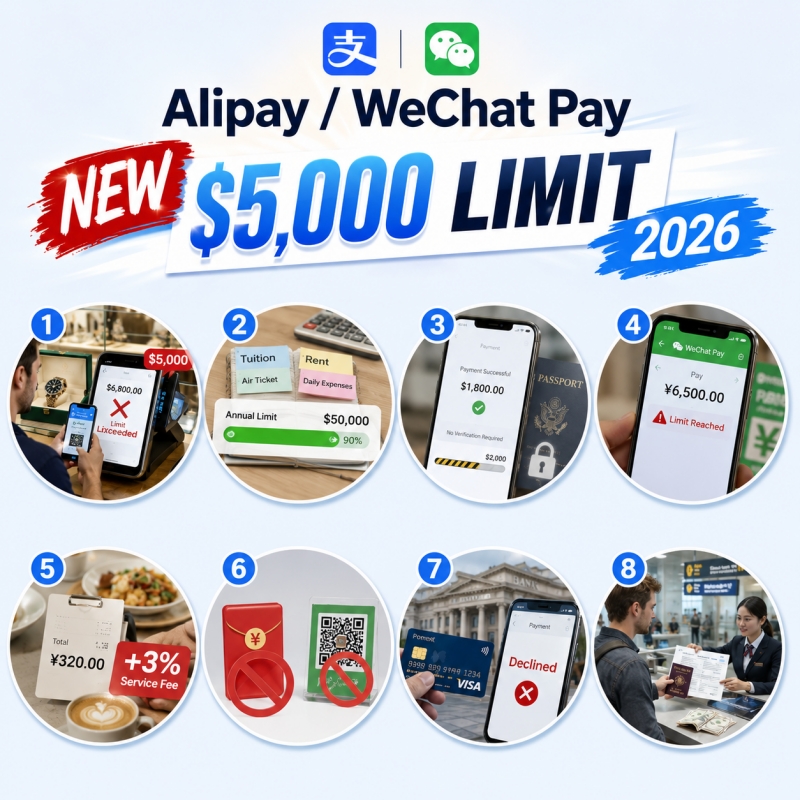
While real-name verification isn’t mandatory for card linking, opting out of it caps the value of each transaction you make. With a verified account, your single-transaction limit is around ¥5,000 RMB and your monthly limit is about ¥50,000 RMB — the unverified equivalents sit at ¥2,000 and ¥10,000 respectively. For most visitors that delta matters.
- Navigate to Me → Services → Wallet → Real-Name Verification
- Upload your passport photo page and follow the on-screen prompts. Processing takes minutes.
- Verification ties your account to your passport identity under Chinese anti-money-laundering regulations — the same standard applied to every WeChat user, domestic or foreign. Do it once; the status holds for the lifetime of your account.
🔑 Real-name verification done and your card linked — you are ready to pay for anything in China. Our full walkthrough on how to use WeChat Pay in China as a foreigner covers every scenario you will encounter on the ground, from street markets to hotel check-ins.
Fees and Transaction Limits (2026)
Transaction Limits
| Account Status | Single Transaction | Monthly Cumulative |
|---|---|---|
| Passport-verified | ~¥5,000 RMB | ~¥50,000 RMB |
| Unverified | ~¥2,000 RMB | ~¥10,000 RMB |
WeChat modifies these amounts according to your account type, your actual recent (and upcoming) activity, and what, when, and how much the regulators and the platform want to let you get away with. Treat as gospel the arbitrary number the app tells you you can use on the actual screen you’re looking at.
Service Fee Structure
- Standard rule: Transactions above ¥200 RMB carry a 3% WeChat service fee. Amounts at or below ¥200 attract no WeChat fee at all.
- 2025–2026 new user promotion: WeChat waives the 3% fee for the first 60 days after card linking, on transactions up to ¥1,000. The payment confirmation screen shows whether the waiver applies before you confirm.
- Bank-side FX fee: Your card issuer may add 1–3% for currency conversion on top of any WeChat fee — the two charges stack independently.
ℹ Cut Bank FX Fees to Zero
Travel-focused cards like Revolut, Wise (formerly TransferWise), and YouTrip convert at the interbank rate with no markup, eliminating the bank-side fee entirely. On a two-week trip with active daily spending, the combined saving across dozens of transactions often covers an entire day of meals.
💳 Fee stacking matters especially on longer stays. For a side-by-side breakdown of China’s two major payment platforms, our comparison guide Alipay vs WeChat Pay for Foreigners covers which platform to prioritize, where each one works, and how to avoid overpaying across both.
Getting RMB Wallet Balance When Needed
Before proceeding any further, ask yourself whether you even need this section. A linked international card (Path A above) works at nearly every WeChat Pay merchant in China, and you only actually need genuine Wallet Balance — stored RMB sitting inside the app — in two real situations:
- You want to receive red packets (红包) from Chinese friends or colleagues, which credit to wallet balance rather than a linked card.
- A specific mini-program or service checks for wallet balance and offers no card fallback — a genuinely rare edge case in 2026.
Neither situation applies to most visitors. Skip to the next section if your trip falls outside those two scenarios.
Option A: Receive a Transfer from a Friend in China
-
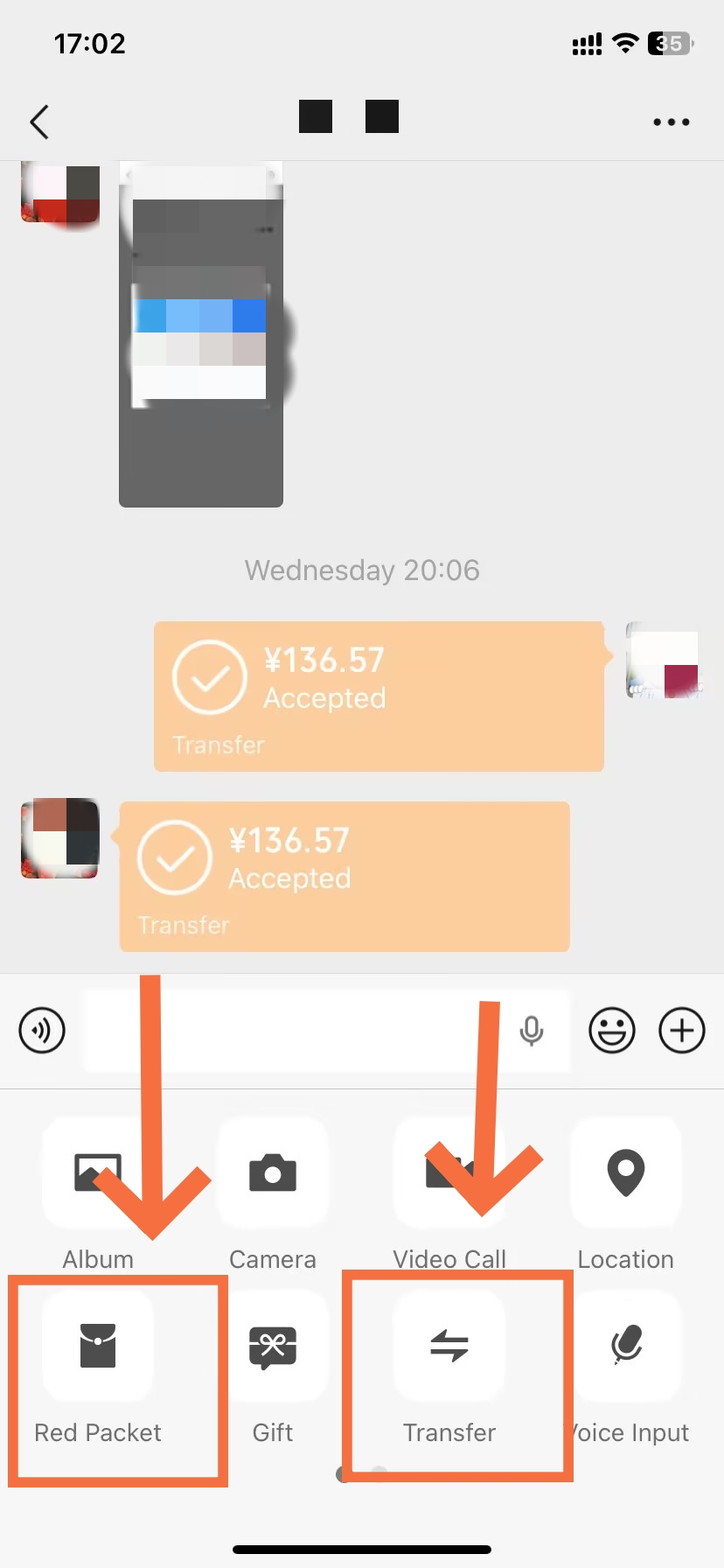
- Red Packet and Transfer
-
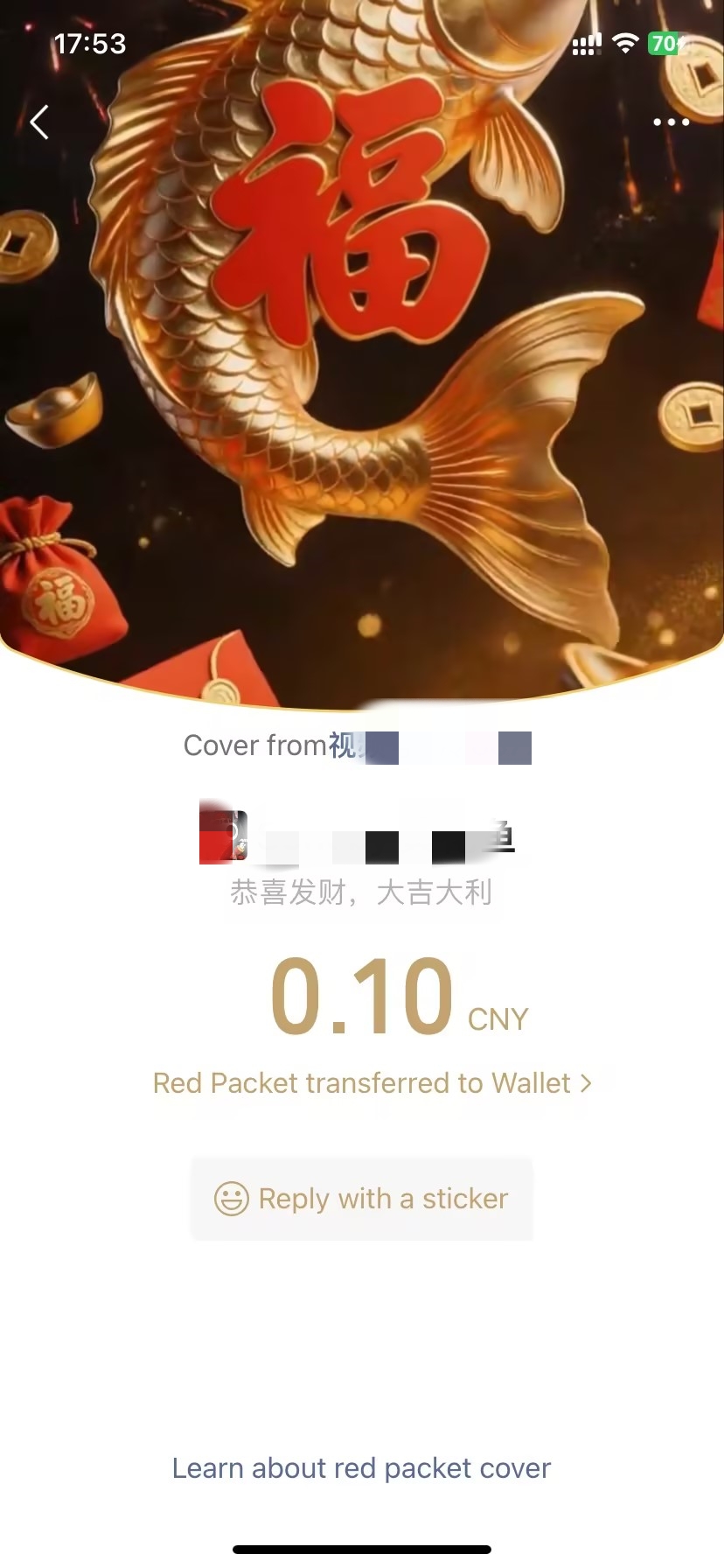
- WeChat Red Packet
-
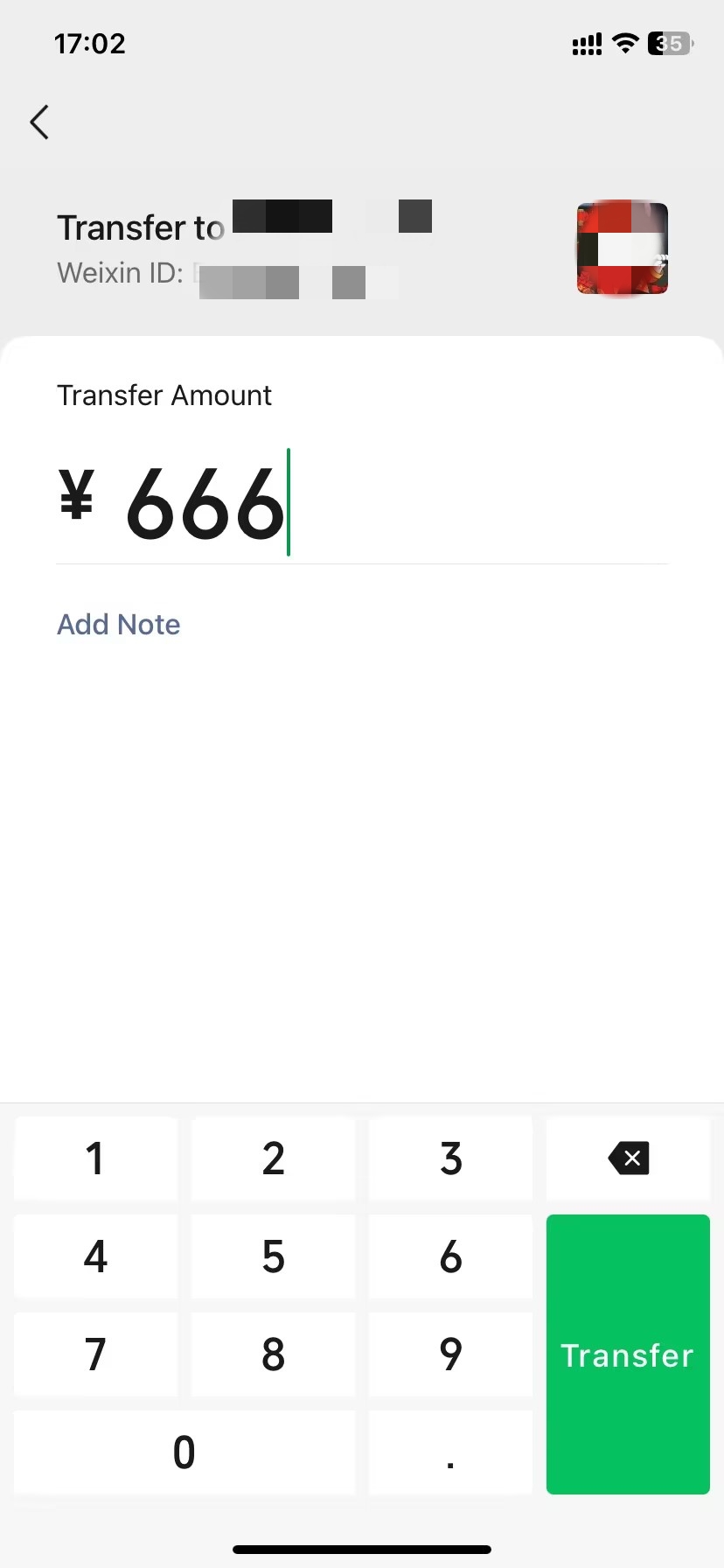
- Transfer Money
Any WeChat contact with a verified account linked to a Chinese bank card can push RMB straight into your wallet. The sender opens your chat, taps the “+” icon, chooses Transfer, enters an amount, and confirms with their payment password. Funds land in your wallet within seconds.
🚫 No Withdrawal to Foreign Accounts — Ever
Any RMB sitting in your WeChat wallet — whether from a friend’s transfer or any other source — cannot move to a foreign bank card or overseas account under any circumstances. China’s regulatory framework treats this as a hard boundary with no exceptions. That balance spends freely at merchants inside China, but no exit route to an international card exists. Ask your contact to transfer only what you plan to spend before leaving — any remainder stays locked in the wallet indefinitely.
Option B: Use the WeChat Travel Card (微信旅行卡)
-
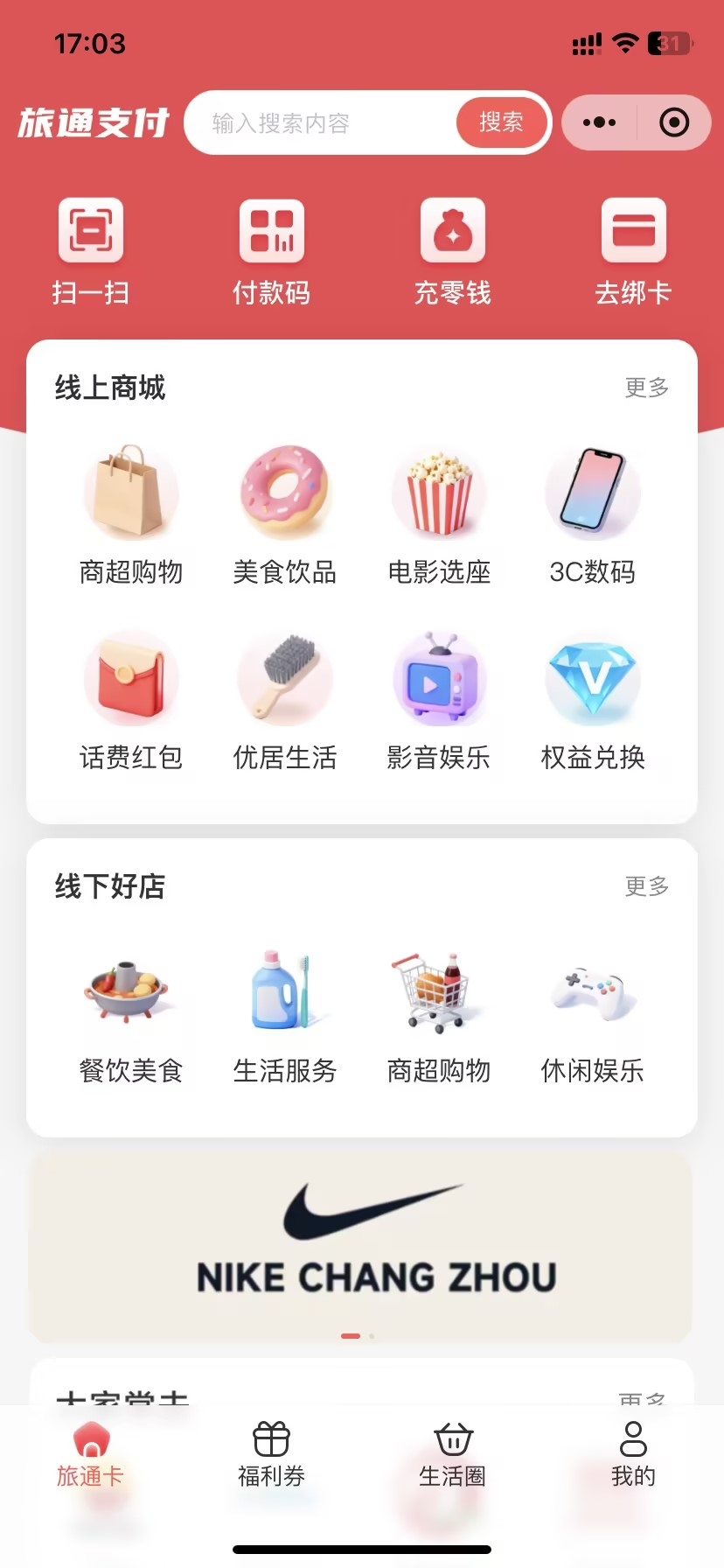
- WeChat Travel Card
-
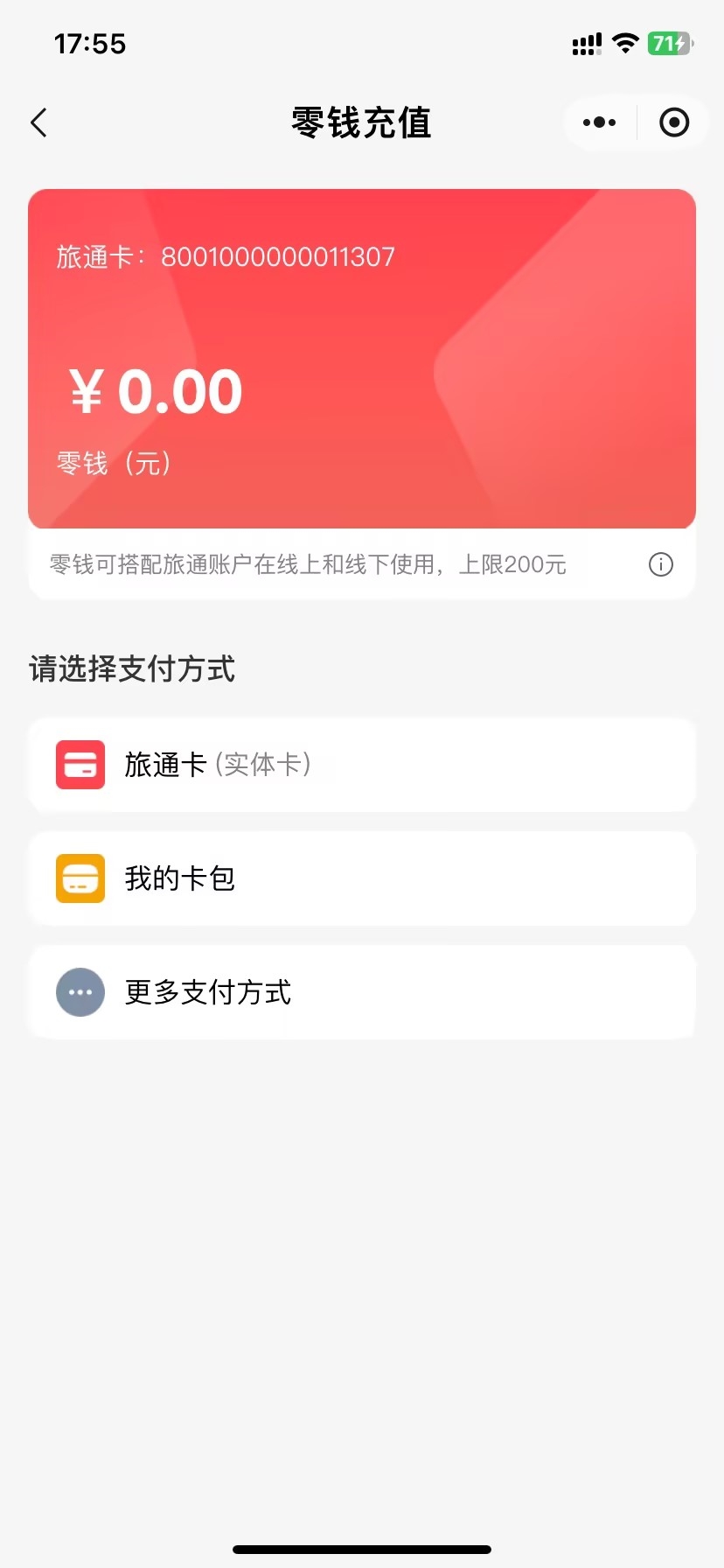
- WeChat Travel Card Wallet
The WeChat Travel Card (微信旅行卡) is a virtual prepaid RMB sub-account run through Shanghai Pudong Development Bank, purpose-built for international visitors who need a legitimate way to hold wallet balance. It takes your international card as a funding source and converts the deposit into spendable RMB.
How to Open the WeChat Travel Card
- Step 1 — Find the WeChat Travel Card mini-program
- Tap the Discover tab → Mini Programs, then search for “WeChat Travel Card” or “微信旅行卡”.
- Step 2 — Complete the passport upload
- Follow the identity prompt and upload your passport photo page. The mini-program processes this through the same real-name system as the main WeChat wallet.
- Step 3 — Select your top-up amount
- Choose how much RMB to load. The 5% loading fee displays clearly at this step — review it before confirming.
- Step 4 — Pay with your linked international card
- Confirm the payment and the RMB equivalent — minus the 5% fee — lands in your wallet balance within seconds.
ℹ WeChat Travel Card — Key Parameters
- Loading fee: 5% of each top-up — applies every time you add funds
- Lifetime load cap: Typically ¥10,000 RMB total
- Card validity: 180 days from activation
- Spending scope: Merchant purchases only — peer-to-peer transfers and red-packet sending are blocked
- Refund: Unused balance typically returns to your originating card, subject to a processing fee
- Issuer: Shanghai Pudong Development Bank (浦发银行) — a regulated banking product, not a Tencent product
Honest assessment: The Travel Card is trustworthy as the official top-up route for foreigners. However, the downside is a 5% loading fee ie ¥500 in charges for every ¥10,000 you add. Path A is fee-free. Save your Travel Card for when you genuinely need wallet balance — not as a matter of course.
💳 For a similarly detailed guide on setting up Alipay — WeChat Pay’s main alternative, required at some merchants and platforms — see our complete guide: How to Top Up Money to Alipay. The Alipay Tour Card is also worth bookmarking as a complementary option for tourists who prefer a pre-loaded payment route.
Fee Comparison: Primary vs. Backup Solutions
| Scenario | WeChat Fee | Bank / Load Fee | Total Overhead |
|---|---|---|---|
| Primary — linked card, transaction ≤ ¥200 | 0% | 0% (travel card) or 1–3% (standard card) | 0–3% |
| Primary — new user 60-day promo (≤ ¥1,000) | 0% (waived) | 0% (travel card) or 1–3% | 0–3% |
| Primary — transaction > ¥200 (after promo) | 3% | 0% (travel card) or 1–3% | 3–6% |
| Backup B — WeChat Travel Card load | 5% (load fee) | 1–3% (bank FX on load) | 6–8% |
| Backup A — friend transfer (spending only) | 0% | 0% (friend’s RMB) | 0% (no withdrawal possible) |
💡 Alipay runs a comparable top-up product worth understanding. Our guide on the Alipay Tour Card explains how the fees compare and when it makes sense alongside WeChat Pay.
💰 After mastering wallet top-ups, discover how WeChat's other essential features work together in our How to Use WeChat in China guide.
Four Common Payment Scenarios
Shops, Restaurants and Street Markets
-
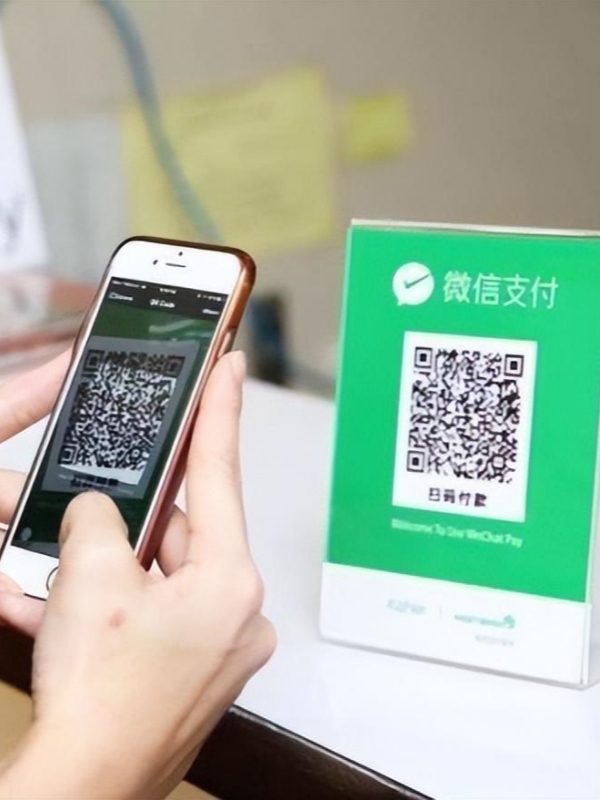

- You Scan the Merchant
-
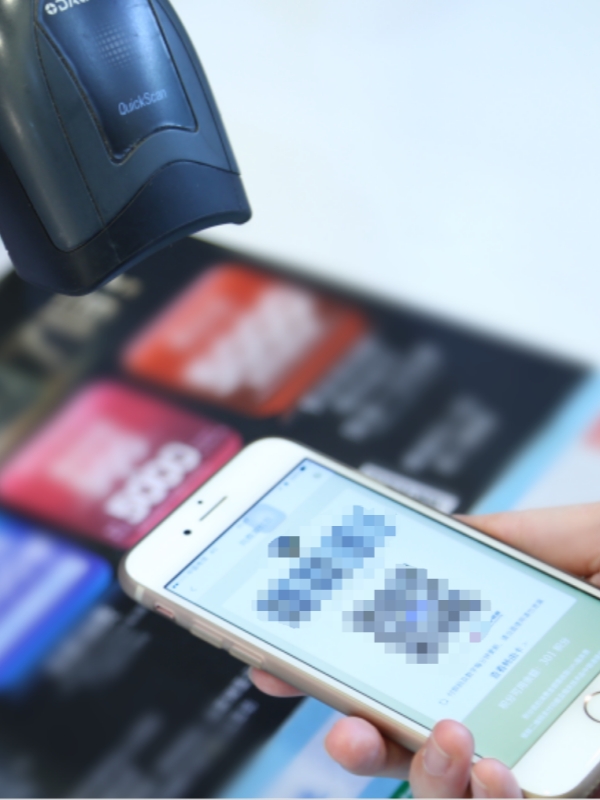
- Merchant Scans Your QR Code
- You scan the merchant:
- Step 1 — Open WeChat → tap the Scan icon (top-right of home screen).
- Step 2 — Point your camera at the merchant’s QR code.
- Step 3 — Enter the amount if the screen prompts you.
- Step 4 — Confirm with your 6-digit passcode. WeChat draws from wallet balance first; any shortfall charges to your linked card automatically.
- Merchant scans you:
- Step 1 — Open WeChat → Me → Services → Receive Money, or go to the payment QR shortcut.
- Step 2 — Hold your screen barcode up to the merchant’s scanner.
Subway, Bus and Ride-Hailing
-
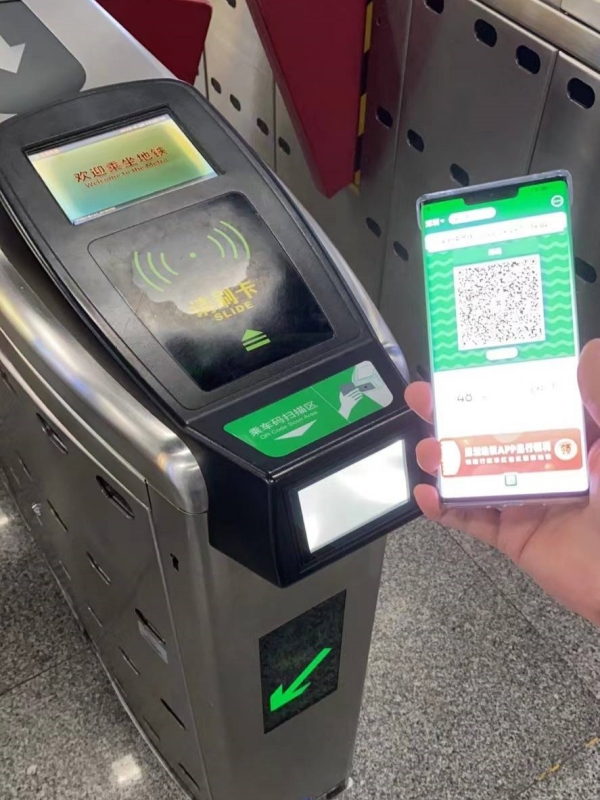
- Metro Transport QR Code
-
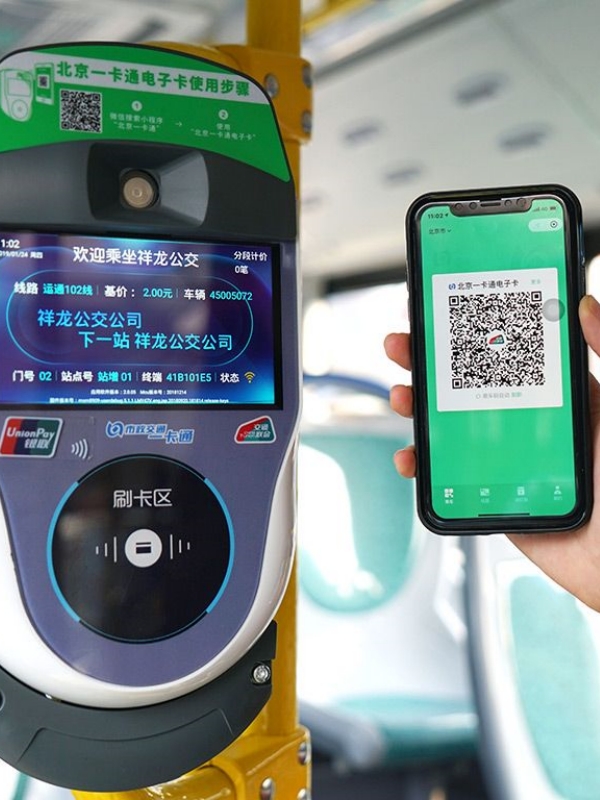
- Bus Transport QR Code
Beijing, Shanghai, Guangzhou, Shenzhen, Chengdu, and Hangzhou all integrate transit directly with WeChat Pay via 乘车码 (Transport QR Code). Setup runs in under two minutes:
- Step 1 — Tap the WeChat search bar at the very top of the home screen and type “乘车码”.
- Step 2 — Select the result matching your city (e.g., “上海乘车码” for Shanghai).
- Step 3 — Open the mini-program and grant location access when prompted.
- Step 4 — Hold the QR code that appears to the reader at the subway turnstile or bus terminal.
Everything is simply done through your regular WeChat Pay setup — once you’re good to go with payments, there’s nothing else to do. If you’re ride-hailing with Didi Chuxing, just select WeChat Pay at checkout in the Didi app and the charge flows through your card as usual.
Online and In-App Checkouts
- Step 1 — At checkout on any Chinese e-commerce platform or booking app (Ctrip, Meituan, etc.), choose “WeChat Pay” as the payment method.
- Step 2 — A redirect takes you into WeChat to confirm with your 6-digit passcode.
- Step 3 — The charge hits your linked card (or wallet balance if funds are available) with no extra setup beyond the primary linking process.
Family Card for Long-Term Stays
-
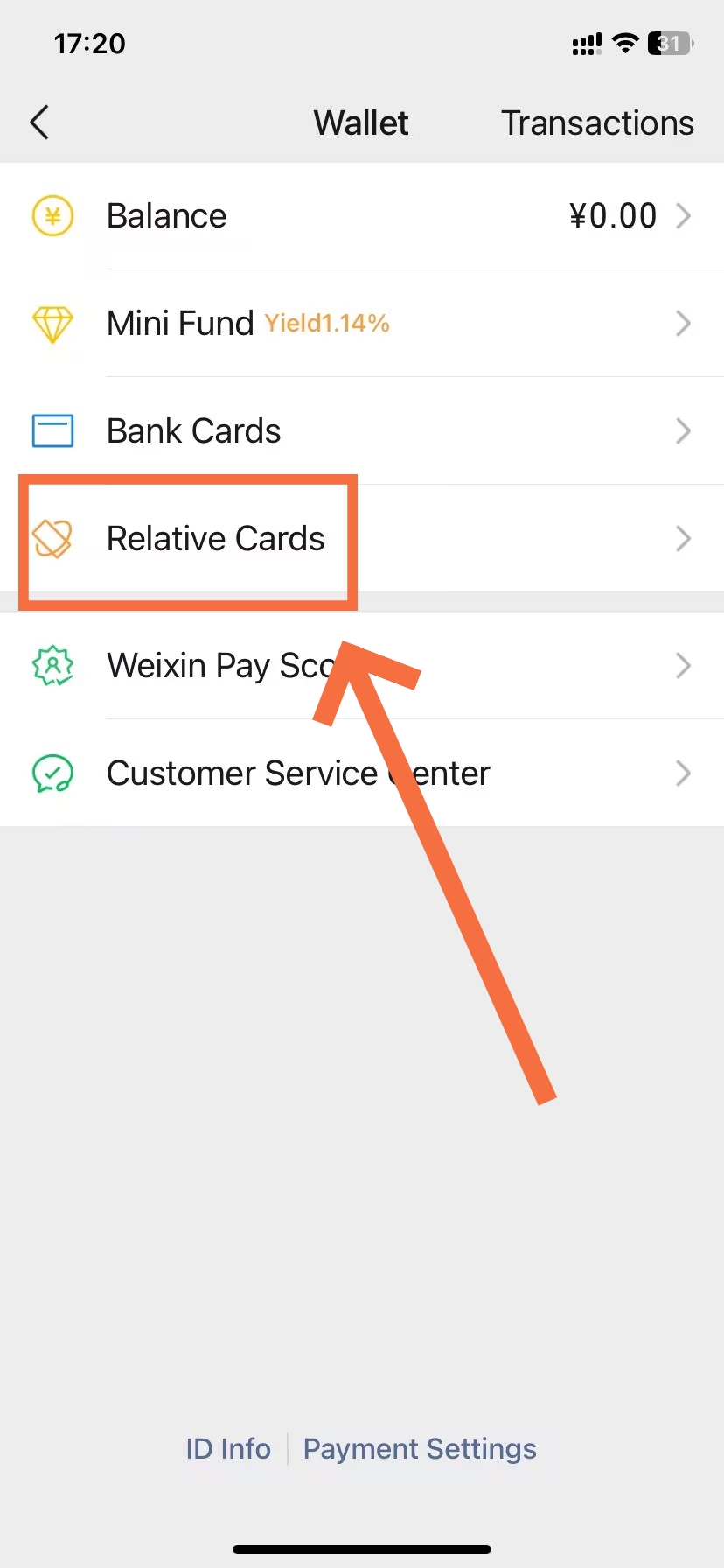
- Tap Relative Cards
-
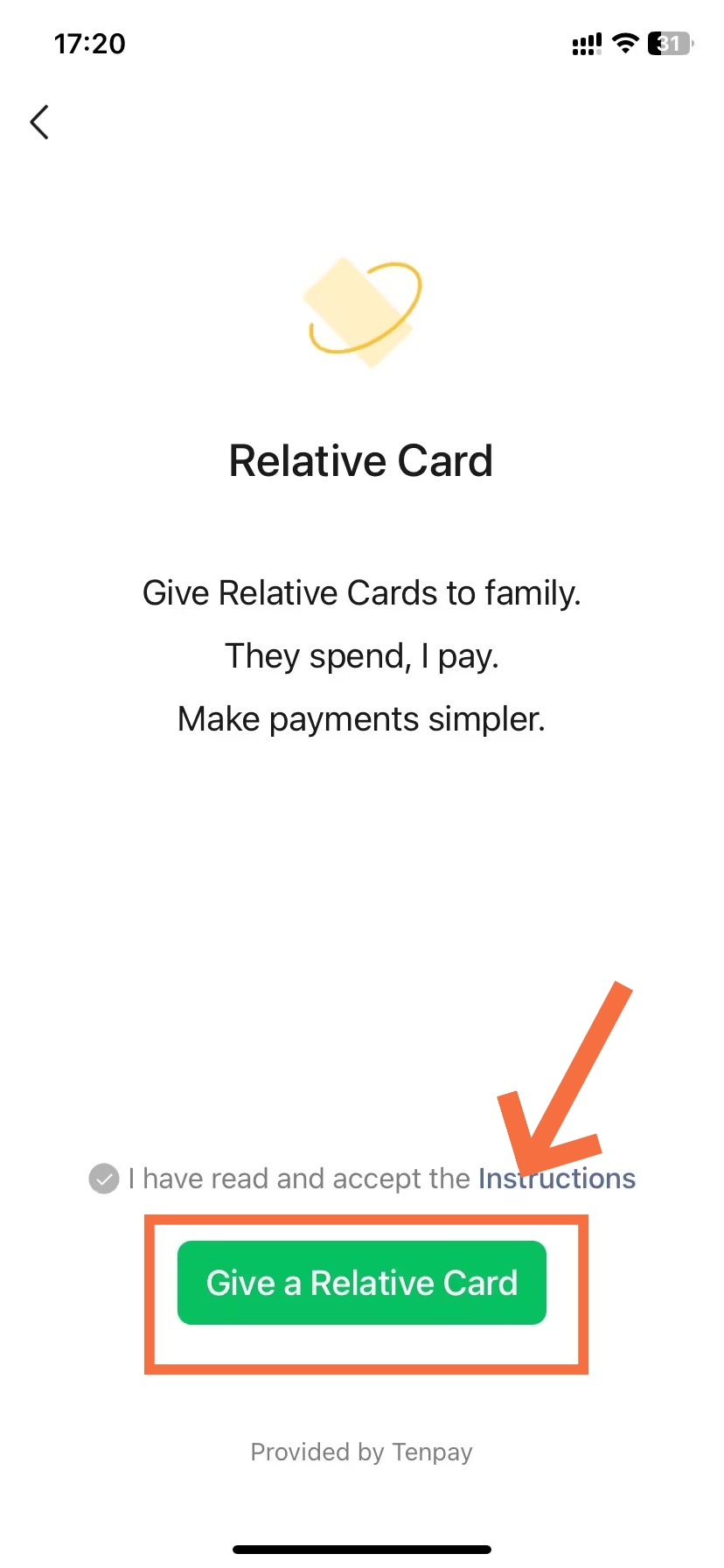
- Give a Relative Card
-
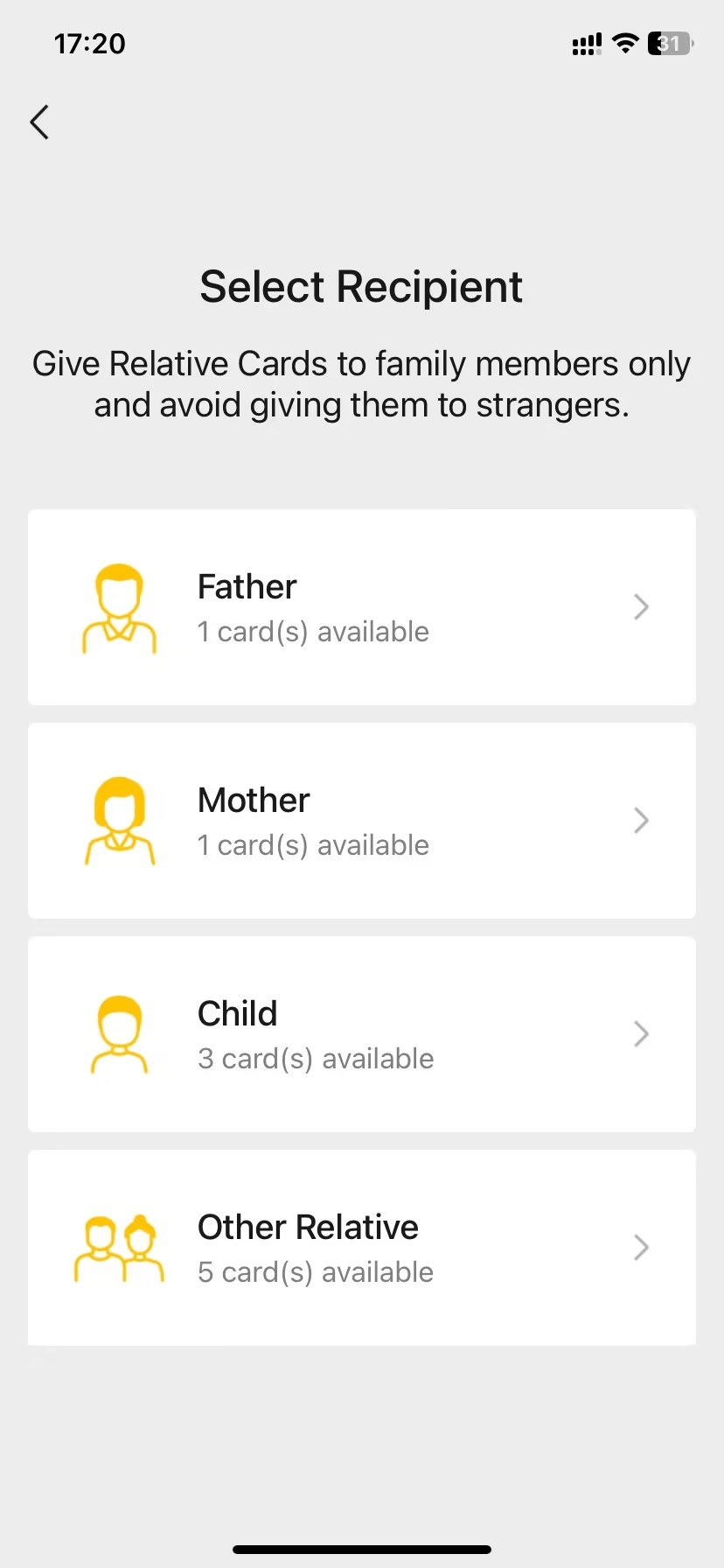
- Choose Who You Want to Give
- Step 1 — Ask your family member or trusted contact in China to open Wallet → Family Card in their WeChat.
- Step 2 — They add you via your WeChat ID. Both accounts need completed real-name verification before this step works.
- Step 3 — Once you accept the invitation, they load the sub-account from their Chinese bank balance.
- Step 4 — Spend from the dedicated sub-balance exactly as you would any wallet balance.
Students and long-term visitors benefit most from this arrangement — families back home can top up and monitor spending without performing repeated manual transfers.
Faqs: 10 Troubleshooting Questions Answered
Q: My Card Keeps Getting Rejected During Linking — What Now?
Stop retrying — repeated failures trigger bank fraud alerts. Call your card's international service line, authorize "WeChat Pay / Tencent" cross-border transactions, and confirm 3D Secure is active. One fresh attempt after the call resolves most cases. If rejection continues, switch to a different card network. Our full guide on how to topup WeChat wallet covers every fallback option available to foreigners.
Q: When I Scan to Pay, Which Source Does WeChat Debit First?
WeChat draws from wallet balance first. A sufficient balance covers the full amount; any shortfall charges to your linked card automatically. Zero balance means the card handles everything. No manual source selection exists — the system manages priority on its own. This hierarchy also explains why most visitors never need to think about how to topup WeChat wallet at all during a standard trip.
Q: Can I Link More Than One Card to WeChat?
WeChat supports up to 10 linked cards per account. Adding a backup card before departure is a straightforward safeguard — a mid-trip block on your primary card becomes manageable rather than critical. Set a default in the Cards section; all others stay available as alternates. Multiple linked cards also give you more flexibility when deciding how to topup WeChat wallet spending across different issuers.
Q: Does American Express Work? What About Discover?
American Express links reliably for most users, with the same ~¥5,000 single-transaction ceiling as Visa and Mastercard on verified accounts. Discover is inconsistent — some cards link cleanly, others face repeated rejection. Always carry a Visa or Mastercard as a fallback. Any successfully linked card works identically for payments and as a funding source when you need to topup WeChat wallet through the Travel Card route.
Q: Why Can't Foreigners Top Up WeChat Wallet Directly from a Foreign Card?
China's foreign-exchange framework (外汇管理) prohibits foreign currency from flowing freely into domestic mobile payment balances. Tencent cannot override that — the restriction sits at the regulatory level. Linking a card for direct real-time payment is the compliant solution Tencent designed in response. The WeChat Travel Card remains the one officially sanctioned method to topup WeChat wallet with a genuine RMB balance as a foreigner.
Q: My Card Expires Next Month — What Should I Do?
WeChat can stop processing on cards up to three months before the printed expiry date. Verify your card extends at least four months past your return date before departure. A mid-trip expiry calls for an immediate second card link. As a short-term fix, a trusted contact can topup WeChat wallet via peer-to-peer transfer to cover urgent spending while you arrange a card replacement from your bank.
Q: Why Do Different Sources Quote Different Transaction Limits?
WeChat calculates limits dynamically — verification status, account history, and current regulations all factor in. Passport-verified accounts typically see ~¥5,000 per transaction and ~¥50,000 per month; unverified accounts run lower. The app always shows your actual current ceiling at payment time. For anyone who needs to topup WeChat wallet beyond standard card-payment thresholds, the Travel Card carries its own separate lifetime load cap of ¥10,000.
Q: A Chinese Colleague Sent Me a Red Packet — Can I Transfer That Money Home?
No. Red-packet funds — and any RMB balance received via transfer — carry no exit route to a foreign account. China's regulations treat this as an absolute boundary, with no exceptions. That balance spends freely at any WeChat Pay merchant inside China, but withdrawal to an international card is not possible. The same restriction applies to any balance you topup WeChat wallet with through the Travel Card — it is China-only once loaded.
Q: Is It Safe to Link a Foreign Credit Card to WeChat?
WeChat Pay uses industry-standard encryption, and your full card number never appears in plain text after storage. Tencent handles hundreds of billions of transactions annually under direct Chinese regulatory oversight. Standard hygiene applies: keep your 6-digit passcode private, confirm payments only inside the official app, and treat any external link claiming WeChat payment status as phishing. The same practices apply whether using direct card payments or the topup WeChat wallet route via Travel Card.
Q: Does WeChat Pay Work Through Apple Pay or Google Pay?
No. WeChat Pay and Apple Pay / Google Pay are entirely separate ecosystems with no integration in mainland China. Every payment must start directly inside the WeChat app — there is no shortcut through your phone's native wallet. An iPhone lock screen shortcut to your WeChat QR code speeds up scan access, but the transaction still routes through WeChat's own system. All topup WeChat wallet management also happens exclusively within the WeChat app itself.