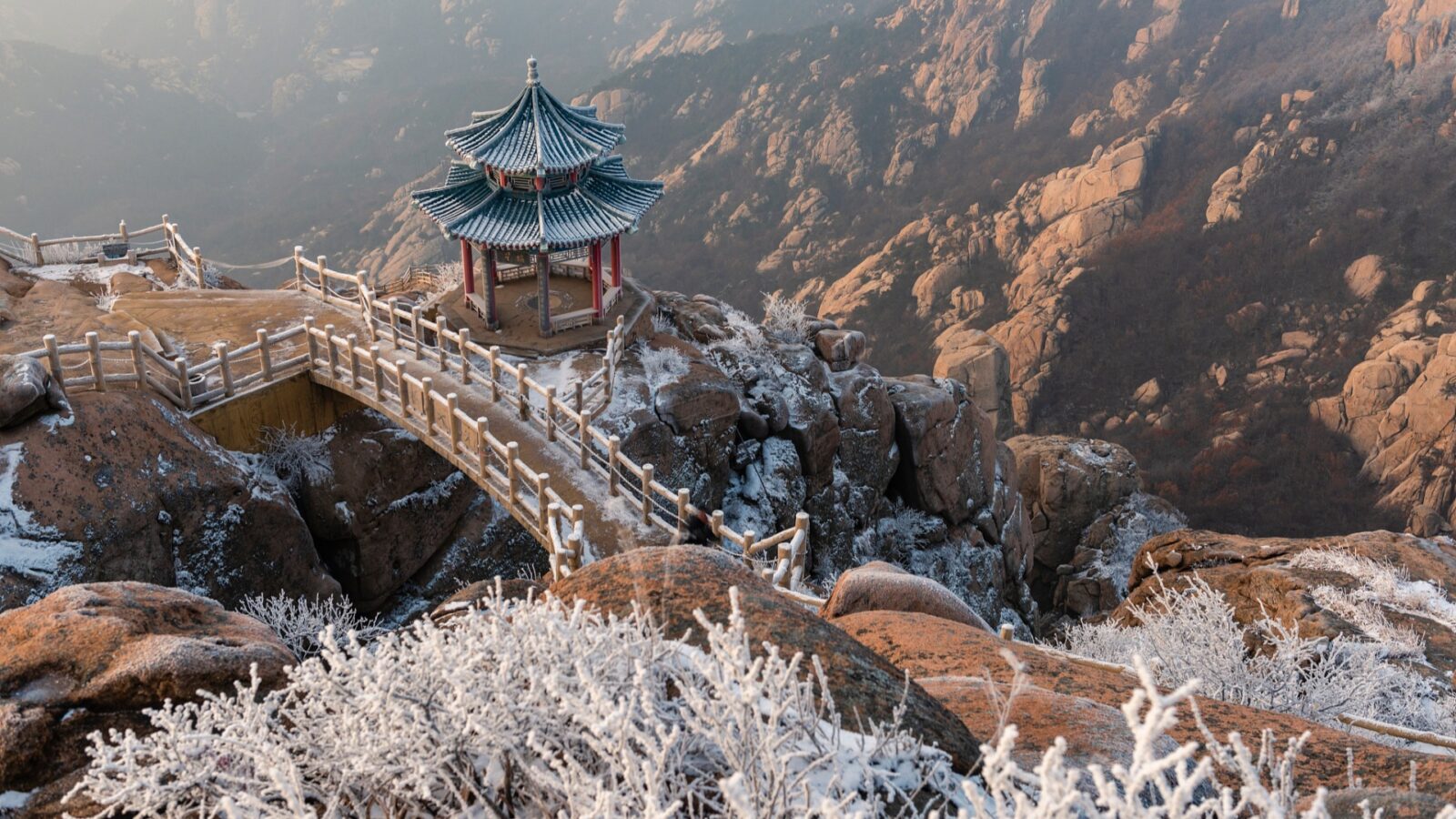
Mount Song
Songshan Mountain rises in Henan Province as one of China's Five Great Mountains — the western peak among the sacred group traditionally worshipped by Chinese pilgrims. The mountain draws visitors for two reasons that rarely share the same itinerary elsewhere: Shaolin Temple, a 1,500-year-old Buddhist monastery at the western foot that gave Shaolin martial arts its name, and the granite peaks of the Songyang and Shaoshi ranges, where stone steps climb toward Liantian Peak at 1,512 meters. Dengfeng, the small city at the foot, sits roughly 70 kilometers west of Zhengzhou, making a day-trip feasible by high-speed rail in under an hour. The scenic area holds an AAAAA rating — China's top tourism classification — and forms part of a UNESCO World Heritage Site inscribed in 2010.
Most foreign visitors pair the temple and a partial mountain hike in a single day from Zhengzhou. The temple fills within hours, but the peaks demand more time; a full summit push to Liantian Peak can take four to seven hours round-trip. This article covers what to see at Shaolin, how the two mountain ranges differ, which transport mode suits your schedule, and the ticket options that let you do both without paying twice.
Quick Facts
Why Visit Songshan Mountain
Songshan Mountain
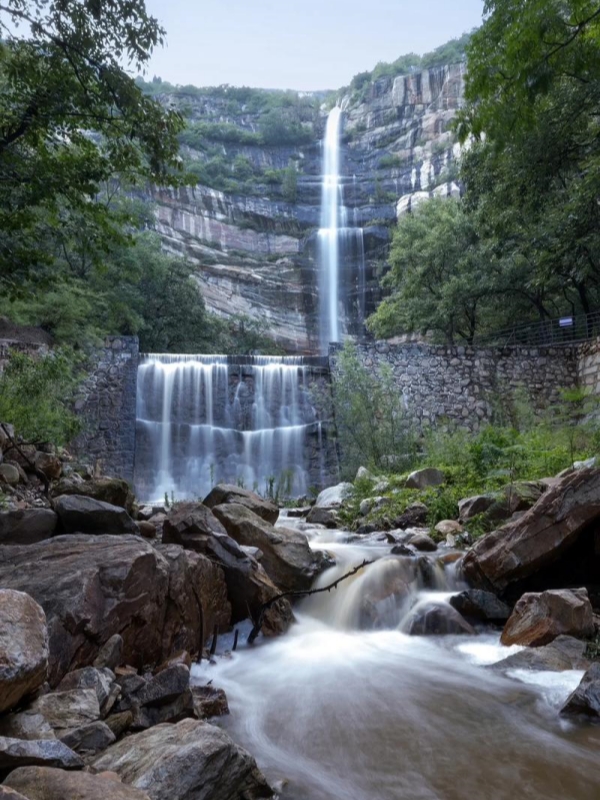
Songshan holds a unique position among China's sacred mountains. It is the western peak of the Five Great Mountains — a group of four directional mountains plus Songshan, each associated with a cardinal direction and a Chinese dynastic energy. Southern peak of the northern mountains sounds like a contradiction; the naming follows an older cosmological logic where the south-facing slope of the northern range earned Songshan the title.
A Mountain of Two Identities
Most visitors arrive seeking one thing and leave having experienced another. Shaolin Temple at the western foot is a working Buddhist monastery with a 1,500-year history tied to the origins of Chan (Zen) martial arts. The mountain rising behind it — Shaoshi and Songyang ranges — is a granite hiking destination with a summit at 1,512 meters. A single high-speed rail line from Zhengzhou deposits visitors at Dengfeng South station, where the temple gate lies 15 minutes away by taxi and the eastern trailheads add another short drive. The two experiences share a zip code but require different gear and time budgets.
UNESCO "Centre of Heaven and Earth"
The mountain's significance extends beyond scenery. The Historic Monuments of Dengfeng in "The Centre of Heaven and Earth" became a UNESCO World Heritage Site in 2010. Eight component sites make up the listing, including Shaolin Temple itself, the Songyang Academy of classical Confucian learning, the Zhongyue Temple at the mountain's base, and the Gaocheng Astronomical Observatory. The UNESCO designation covers the cultural landscape of the Dengfeng basin rather than the mountain alone, meaning a visit to Shaolin Temple automatically places you inside a World Heritage area.
Geological Time Capsule
Songshan's rock record spans approximately 3.5 billion years. Chinese geologists use the range as a reference section because it exposes unusually complete stratigraphic sequences from five geological periods — the Taishan, Yangtze, Huabei, Yanshan, and Himalaya. Visitors walking the Wuru Peak trail cross exposed bands of ancient granite and sedimentary rock that represent distinct chapters of Earth's formation. The mountain functions as both a spiritual and scientific document.
⛰️ Explore China's Iconic Peaks: As one of the Five Great Mountains, Songshan holds a special place in the country's geography alongside legendary summits like Mount Tai, Mount Huang, and Mount Emei. Discover more breathtaking mountain ranges across the country in our ultimate guide to Mt in China.
Shaolin Temple & the Pagoda Forest
Songshan Mountain
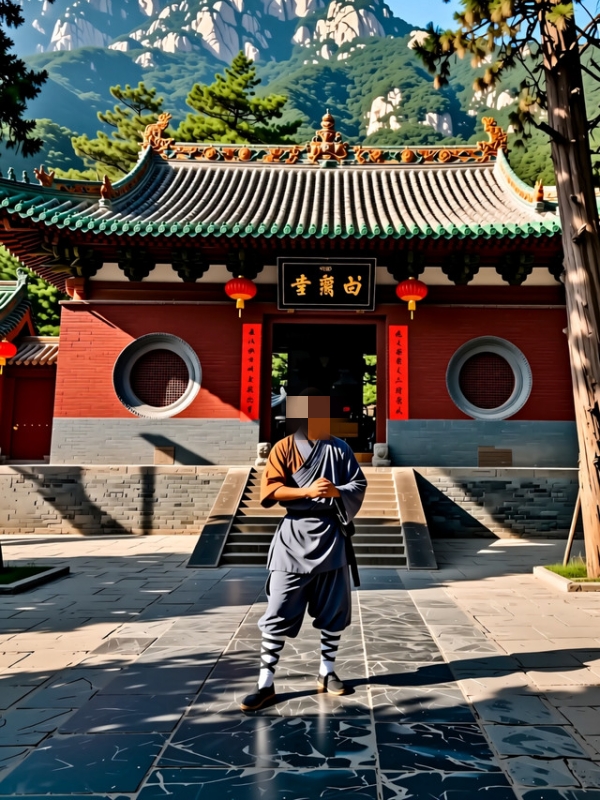
Shaolin Temple was founded during the Northern Wei Dynasty (386–534) and has operated continuously as a Buddhist monastic complex for over 1,500 years. The main temple complex covers roughly 36,000 square meters. Its distinguishing feature is the integration of Chan Buddhist doctrine with Shaolin martial arts — a synthesis that made the temple synonymous with a global martial art. The Wushu performances staged daily inside the temple grounds are included with the entry ticket.
The Temple Complex
The surviving architectural sequence runs from the Shanmen (mountain gate) through the Mahavira Hall to the Thousand-Buddha Hall. A golden ginkgo tree in the central courtyard is estimated at 1,500 years old, roughly contemporary with the temple's founding. Visitors move through a working monastic environment where monks conduct daily rituals; modest dress and quiet behavior in the worship halls are the expected norm. Photography is generally permitted in the outdoor courtyards but restricted inside the active halls.
Pagoda Forest (塔林)
The Pagoda Forest lies west of the main temple complex. It holds the tombs and stupas of eminent Shaolin monks — more than 240 individual pagodas spread across a site exceeding 14,000 square meters. This is the largest pagoda group in China by number and collective size. Each pagoda's tier count, height, and architectural style reflect the rank and deeds of the monk it commemorates. The Pagoda Forest is included with the Shaolin Temple entry ticket, making it the highest-density concentration of historic stonework in the scenic area.
Martial Arts Performances & Etiquette
Daily Wushu demonstrations take place on dedicated stages within the temple grounds. The shows are free with a valid Shaolin Temple ticket. Performances showcase a range of styles including staff, sword, and bare-hand forms. The choreography draws on traditional Shaolin sequences rather than contemporary Wushu competition routines. On the etiquette side, visitors should remove hats in worship halls, keep voices low in the courtyards, and avoid photographing monks in private areas. The temple operates as an active place of worship alongside its tourism function.
☯️ Discover Sacred Traditions: While Songshan is globally famous for Shaolin Kung Fu and Zen Buddhism, it also harbors rich Taoist roots through the ancient Zhongyue Temple located at its base. Explore the broader landscape of sacred sites and spiritual hubs in our guide to the Holy Cities of Daoism.
Hiking Songshan Mountain: Shaoshi, Songyang & Wuru Peak
Songshan Mountain
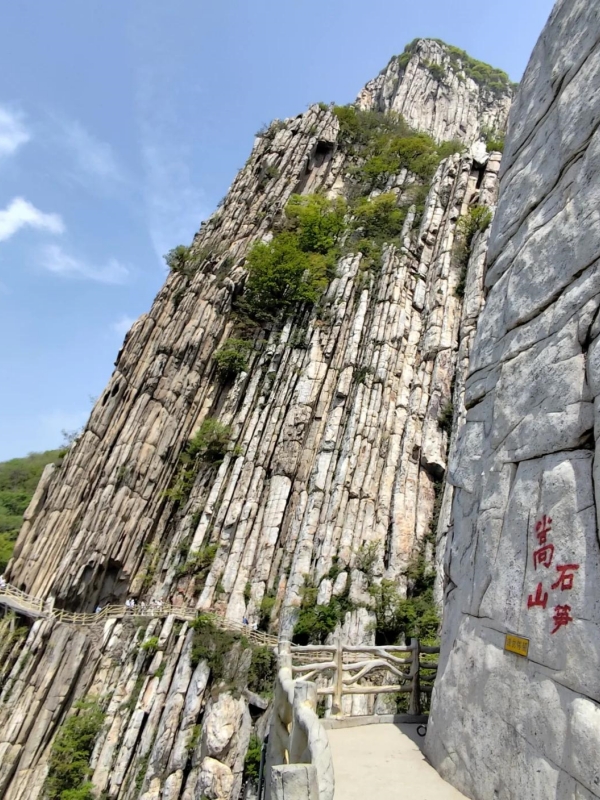
Hiking at Songshan splits between two distinct ranges. Shaoshi Mountain (少室山) rises directly behind Shaolin Temple — this western range is the more photographed section, home to the iconic Book Slopes cliff face and the Three Tians natural bridge area. Songyang Mountain (嵩山) occupies the eastern side and holds the higher terrain, including the main summit. A single combined ticket covers both ranges. Cable cars operate on the busiest sections of Shaoshi Mountain, providing an option for visitors who want summit views without a full climb.
Songyang & Shaoshi — the Eastern and Western Ranges
The two ranges share a combined entry ticket but differ in character. Songyang to the east is quieter, with longer trails and less visitor infrastructure. Most of the serious elevation gain happens here, and the path toward Liantian Peak starts from the Songyang side. Shaoshi to the west draws larger crowds because it backs directly onto Shaolin Temple. The distinctive Book Slopes cliff — a near-vertical granite face where the rock layers appear as stacked book spines — is Shaoshi's signature formation. Visitors who want both ranges in one day should plan the Shaoshi loop first, then transfer to the Songyang trailhead for the summit push.
Wuru Peak (五乳峰)
Wuru Peak rises to 1,265 meters on the forested shoulder directly behind Shaolin Temple. The peak carries legend: it is the site where the Buddhist monk Bodhidharma is said to have faced a wall in meditation for nine years, giving rise to Chan Buddhism and, indirectly, to Shaolin martial arts. The Wuru Peak trail forms a loop accessible from the temple grounds, requiring no additional ticket beyond the standard Shaoshi-Songyang entry. Most visitors complete the loop in one to two hours, making it the practical choice for those who want mountain air without committing to a full summit day. The path passes through pine forest with granite outcrops; the ridge near the top offers wide views over the Dengfeng basin.
Liantian Peak (1,512 m) — the Summit
Liantian Peak is the highest point of Songshan Mountain at 1,512 meters. The full ascent from the Songyang side takes four to seven hours round-trip, depending on fitness and whether cable-car segments are used on the lower Shaoshi face. The upper trail narrows to stone steps cut into the granite, with exposed ridges near the summit where wind picks up. Near the top, the terrain flattens into a small plateau with views across the surrounding plain. A descent in the same day is standard for fit hikers, but those attempting the full route should start early — ideally before 8:00 — to avoid hiking the upper section in afternoon heat.
Trails, Time & Maps
- Wuru Peak loop: 1–2 hours; start from temple grounds; no extra ticket needed
- Shaoshi partial climb: 3–4 hours; cable car available on lower section
- Liantian summit push: 4–7 hours round-trip; start early; bring water and snacks
- Maps: Official scenic-area maps available at both entrance gates; Chinese with partial English signage on major trails
🌿 Compare Sacred Mountains and Monasteries: If you enjoy pairing scenic mountain hikes with ancient religious heritage, you can also explore the lush, misty sanctuaries of Southwest China that served as the birthplace of Taoism. Plan your next mountain retreat with our visitor's guide to Mount Qingcheng.
How to Get to Songshan Mountain from Zhengzhou
The nearest major hub is Zhengzhou, roughly 70 kilometers east of Dengfeng. Three transport modes cover the route at different price points and time budgets. High-speed rail is the fastest option at 30–40 minutes. Long-distance buses take roughly 90 minutes for less than half the rail fare. Private drivers offer the most flexibility for combining temple and mountain in a single day.
High-Speed Rail (Recommended)
Trains depart Zhengzhou East and Zhengzhou West stations for Dengfeng South. The journey takes roughly 30–40 minutes on second-class seating, with a fare of about $7–9 (¥50–65). From Dengfeng South, a local bus or short taxi ride — approximately 10–15 minutes — completes the trip to the Shaolin Temple gate. Trains run multiple daily services; ticket availability is generally good except during the National Day holiday week in early October.
Long-Distance Bus
Coaches leave from the central bus station area in Zhengzhou and arrive at the Dengfeng long-distance bus station. The journey takes roughly 90 minutes. A connecting local bus or taxi is needed to reach the temple or the Songyang trailhead from the bus station. The bus is the cheapest option but offers less schedule predictability than the rail service.
Private Driver / Taxi
A full-car transfer from central Zhengzhou costs roughly $55–75 (¥400–500) and takes 1.5–2 hours depending on traffic. This option suits travellers who want to pair Shaolin Temple with a full Liantian summit push in a single day, as it allows direct drop-off at both the temple gate and the Songyang trailhead without backtracking. DiDi (China's ride-hailing platform) requires a mainland phone number, so visitors without one should arrange a driver through their hotel or book through a tour platform.
Tour & Transfer Options
Packaged Zhengzhou-to-Songshan day tours appear widely on Trip.com and Klook. These typically include hotel pickup in Zhengzhou, an English-speaking driver or guide, and Shaolin Temple entrance. Prices range from about $45–90 per person depending on group size and inclusions. For foreign visitors without a mainland phone number, a packaged tour is often the simplest way to handle logistics, transport, and ticketing in a single transaction.
Tickets, Hours & On-Site Practical Info
Three ticket products cover the scenic area. The Shaolin Temple ticket covers the monastery, the Pagoda Forest, and the daily Wushu performances. The Shaoshi + Songyang scenic-area ticket is sold separately at the mountain gates and covers both ranges and their trail infrastructure. The combined ticket covers all three and is the standard choice for visitors planning to see both the temple and the peaks in one day. Opening hours across the full scenic area run from 7:00 to 18:00 daily.
Tickets & Combo Passes
Opening Hours & Best Months
The full scenic area opens from 7:00 to 18:00 daily, with last admission typically one hour before closing. The busiest periods are April–May and the first week of October during National Day. Quietest months are December through February, when some inner-mountain services may be reduced. Late March through early November marks the official tourism season, when trails and cable cars operate at full capacity.
Discounts & Booking Channels
- Free entry: children under 1.2 m; visitors aged 70+ with valid ID
- Half-price: minors aged 6–18; adults aged 60–69; full-time students holding a valid student ID
- Booking channels: Trip.com and Klook handle foreign-card transactions without requiring a mainland phone number or Alipay/WeChat Pay; the official scenic-area website offers an English landing page
Frequently Asked Questions
Q: Is Songshan Mountain the same place as Shaolin Temple?
Shaolin Temple sits at the western foot of Songshan Mountain. The mountain encompasses the larger landscape — two ranges (Shaoshi and Songyang) with multiple peaks, the highest at 1,512 meters. Shaolin Temple is one specific site within the scenic area. The combined ticket covers both.
Q: How far is Songshan Mountain from Zhengzhou?
Dengfeng lies roughly 70 kilometers west of Zhengzhou. High-speed rail from Zhengzhou East or Zhengzhou West to Dengfeng South takes 30–40 minutes, making a same-day visit practical for most travellers.
Q: Can you climb Songshan Mountain in one day?
Yes for the Wuru Peak loop (1–2 hours) or a partial Shaoshi climb (3–4 hours). A full Liantian Peak summit push typically requires 4–7 hours round-trip; we recommend pairing it with an overnight stay in Dengfeng rather than rushing back to Zhengzhou the same evening.
Q: Do I need a separate ticket for Shaolin Temple and the mountain?
Individual tickets for Shaolin Temple and for the Shaoshi-Songyang scenic area are both available. The combined ticket (about $28 / ¥200) covers both and is the standard one-day choice for visitors planning to see the temple and the peaks.
Q: What is the best time of year to visit Songshan Mountain?
Late March through early November is the official tourism window. April–May and the first week of October (National Day holiday) draw the largest crowds. For a quieter visit, consider late September or mid-November before winter services reduce.
Q: Is Songshan Mountain part of a UNESCO World Heritage Site?
Yes. The Historic Monuments of Dengfeng in "The Centre of Heaven and Earth" was inscribed as a UNESCO World Heritage Site in 2010. Component sites include Shaolin Temple, Songyang Academy, Zhongyue Temple, and the Gaocheng Astronomical Observatory.
Q: How long should I spend at Songshan Mountain?
Most foreign visitors allocate a Zhengzhou day-trip of 8–10 hours, covering Shaolin Temple and either a Wuru Peak loop or a partial Shaoshi climb. A two-day Dengfeng stay lets you add a full Liantian summit push and the UNESCO component sites such as the Songyang Academy and Zhongyue Temple.
Q: Is there English signage or an English-speaking guide?
Signage inside the scenic area is primarily Chinese with partial English on major trails and at gate checkpoints. English-speaking guides can be booked in advance through Trip.com and Klook. The official Songshan scenic-area website has an English-language landing page.