PEK vs PKX:Compare Proximity, Speed, and Reliability to Choose Your Arrival Hub
In May 2026, U.S. President Donald Trump landed at Beijing Capital International Airport (PEK) in the Air Force One for his first presidential visit to China in nearly nine years. Chinese Vice President Han Zheng welcomed Trump on the tarmac. Accompanying Trump were Tesla’s Elon Musk and Apple’s Tim Cook. A summit with President Xi on May 14 would focus on building a constructive U.S.-China strategic relationship — pulling the world’s attention back to China. Trump at PEK underscores the airport’s iconic status as China’s primary international gateway.
But for travelers booking their own flights to the Capital, the PEK vs PKX question is a genuinely perplexing one — and knowing the right answer can save you hours of aggro from the first moment you touch down.
✈️ Choose PEK (Capital Airport) if:
- Your hotel is in northeast or central Beijing — Guomao CBD, Sanlitun, Embassy District, Wangfujing, or near Tiananmen
- You're a first-time visitor with an itinerary centered on the Forbidden City, Summer Palace, or Temple of Heaven
- You're heading to Mutianyu Great Wall or other northern Beijing attractions
- You prefer a classic, time-tested airport experience with a mature international network
🚄 Choose PKX (Daxing Airport) if:
- You need predictable, traffic-proof transfer times — no highway gambles
- Your destination is near Beijing West Station or Xicheng Financial Street
- Your China itinerary is built around high-speed rail connections
- You want a modern, tech-forward terminal experience
- You're arriving on a late-night red-eye flight and need reliable ground transport
Airport Identity: PEK's Classic Heritage vs. PKX's Futurist Efficiency
-
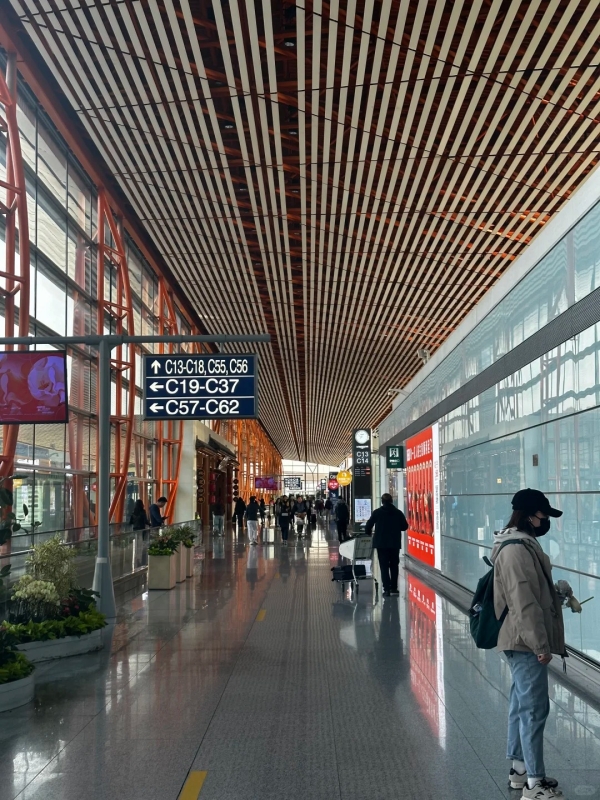

- Beijing Capital International
-
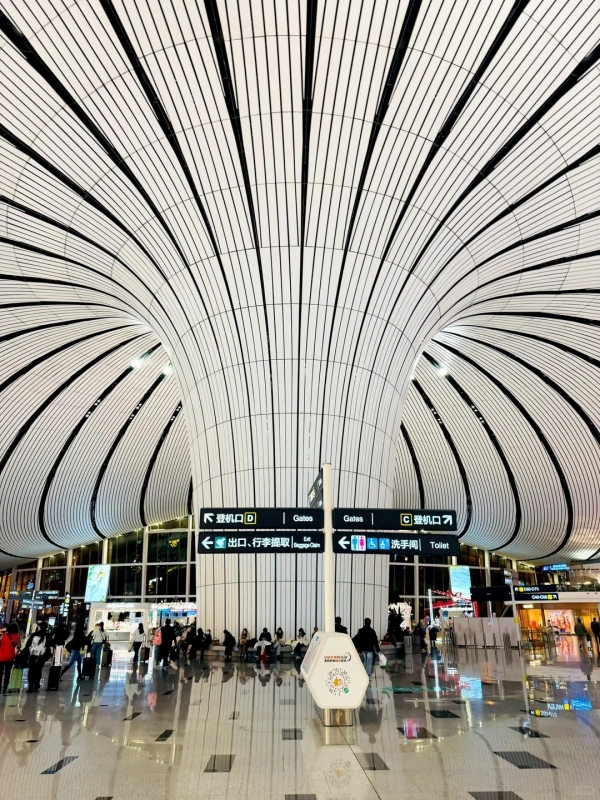
- Beijing Daxing International
Before diving into the specifics, it helps to understand what each airport actually represents. These aren't just transit points — they're architectural and operational reflections of two different eras of Chinese ambition.
Core Features: PEK's History vs. PKX's Innovation
| Category | 🏛️ PEK — Beijing Capital International | 🦅 PKX — Beijing Daxing International |
|---|---|---|
| Core Identity | China's traditional "First Gateway" & global aviation hub | A future-facing super-hub built for speed and efficiency |
| Year Opened | 1958 (T3 opened before the 2008 Olympics) | September 2019 |
| Design & Symbol | "The Dragon" — designed by Norman Foster; Olympic heritage meets cultural tradition | "The Phoenix" — designed by Zaha Hadid Architects; named one of the "New Seven Wonders of the World" |
| Location | Northeast Beijing, Shunyi District — ~25–27 km from Tiananmen Square | South Beijing, Daxing District — ~46 km from Tiananmen Square |
| Main Airlines | Air China (primary hub); most major international carriers | China Southern, China Eastern; select international airlines |
| Key Strengths | Closest to central Beijing; unmatched international network; rich cultural atmosphere inside the terminal | Maximum efficiency; predictable timetabled transfers; seamless air-to-rail connection; advanced passenger technology |
| Experience in a Word | Classic, storied, convenient | Modern, seamless, future-ready |
| Best For | Tourists heading to northeast/central Beijing; first-time visitors; international transit passengers | Travelers heading west/south; HSR-focused itineraries; business travelers needing certainty; late-night arrivals |
Decision Logic: Matching Location With Transport Efficiency
The choice between the two airports is a simple matter of one question: where are you going? Open your hotel booking and check the address. If it resides in northeast — Chaoyang, Dongcheng, the Embassy Belt — it makes sense to use PEK. If you are headed toward the west or the south or your plan in China depends on a specific high speed rail departure, then PKX starts to look a lot more appealing.
Beyond distance, the real divergence is in how Beijing's infrastructure connects you once you land. That difference — predictable rail versus unpredictable road — is where most travelers end up making their final call. For context, travelers who've previously navigated Shanghai Pudong International Airport will find Beijing's dual-airport setup conceptually familiar — but the geographic stakes here are uniquely large, given how far PEK and PKX actually are from each other.
Location Matching: PEK's Absolute Proximity vs. PKX's Rail Connectivity
✈️ Location of PEK (Capital Airport):
🚄 Location of PKX (Daxing Airport):
Understanding each airport's position relative to your destination is the single most important factor in this decision. Here's how to match them up quickly and confidently.
Destination Mapping: Aligning Itineraries With Airport Proximity
| Airport | Best-Matched Destinations / Activity Areas | Why It Works |
|---|---|---|
| PEK | Sanlitun, Liangmaqiao, Embassy District | Geographically the closest option — no contest |
| Guomao CBD, Dongzhimen | Airport Express reaches Dongzhimen hub directly, with easy Metro Line 2 & 13 connections | |
| Wangfujing, Forbidden City, Tiananmen | Shorter in straight-line distance; the intuitive choice for first-time visitors | |
| Mutianyu Great Wall, Gubei Water Town | Avoids crossing the entire city — critical for north-bound day trips | |
| PKX | Beijing West Station, Financial Street (Xicheng) | Jing-Xiong Intercity Rail reaches Beijing West in ~20 minutes |
| Temple of Heaven, Beijing South Station area | Southern geography aligns naturally; rail connections are smooth | |
| HSR-focused itineraries across China | Direct access to the national high-speed rail network via the terminal basement | |
| Travelers prioritizing fixed transfer times | Rail schedules are fixed — zero dependence on road traffic conditions |
Northeast Geography: PEK's Direct Downtown Access Advantage
PEK sits in Shunyi District in the northeast corner of Beijing, on the boundary between the townships of Tianzu, Liqiao, Renhe, and Nanfaxin, at the border of Chaoyang District. The main road access is via Airport West Road. On any map, it appears as Beijing’s natural northeastern anchor. It is the most direct, lowest-friction option for anyone headed toward Chaoyang, Dongcheng, or the more traditional core of Beijing. For travelers with destinations in the northeast or the center, PEK simply does not force you to cross the city in the wrong direction.
Southern Geography: PKX's Strategic High-Speed Rail Position
PKX lies on the southern periphery of Beijing proper, on the boundary between Daxing District and the city of Langfang in Hebei Province – specifically Yufa Township, Lixian Township, and Jiuzhou Township. Farther south of the metropolis, closer to Xiong’an, yet it is still part of Beijing territory. Getting into the heart of the city, or even to the northern parts at Dongzhimen, means traversing a large slice of the metropolis. The perk: rail service makes that distance a constant, perfectly predictable journey rather than a lottery of traffic. If you're considering staying near the airport area before an early morning departure, our look at airport hotel options in China gives a useful sense of what's typically available near major Chinese terminals.
Transit Options: PEK's Road Access vs. PKX's Rail Predictability
-
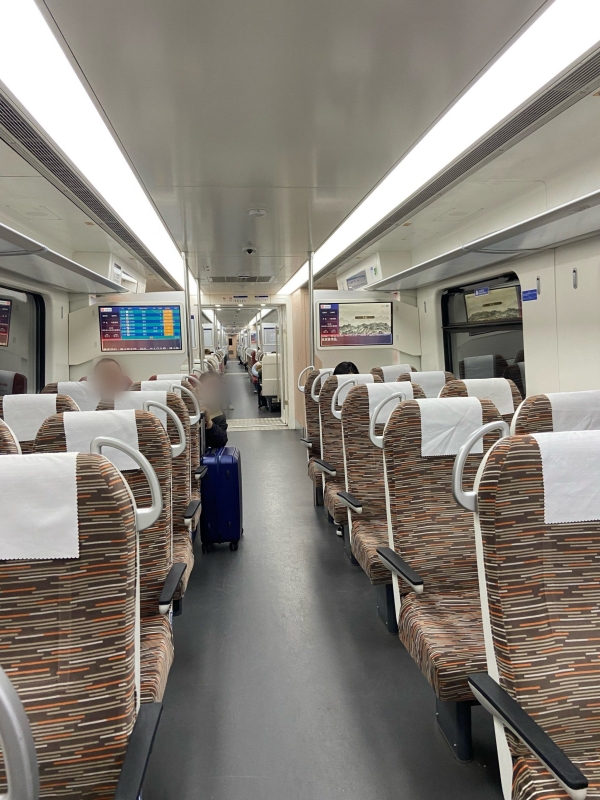
- Capital Airport Express Line
-
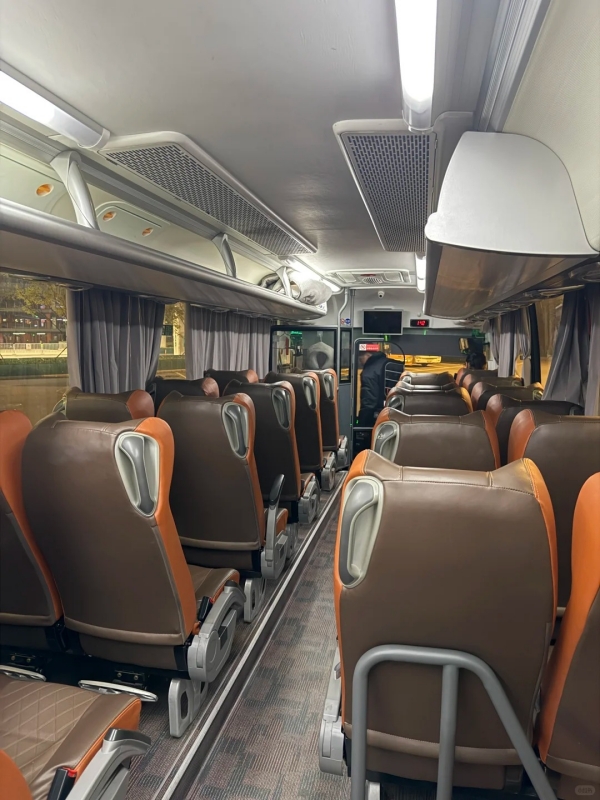
- Daxing Airport Night Flight Bus
This is where the rubber meets the road. How you get from the airport to your hotel shapes your entire first impression of Beijing — and the two airports offer very different answers.
Transfer Modes: Evaluating Speed Against Journey Costs
| Mode | 🏛️ PEK (Capital Airport) | 🦅 PKX (Daxing Airport) | Key Takeaway |
|---|---|---|---|
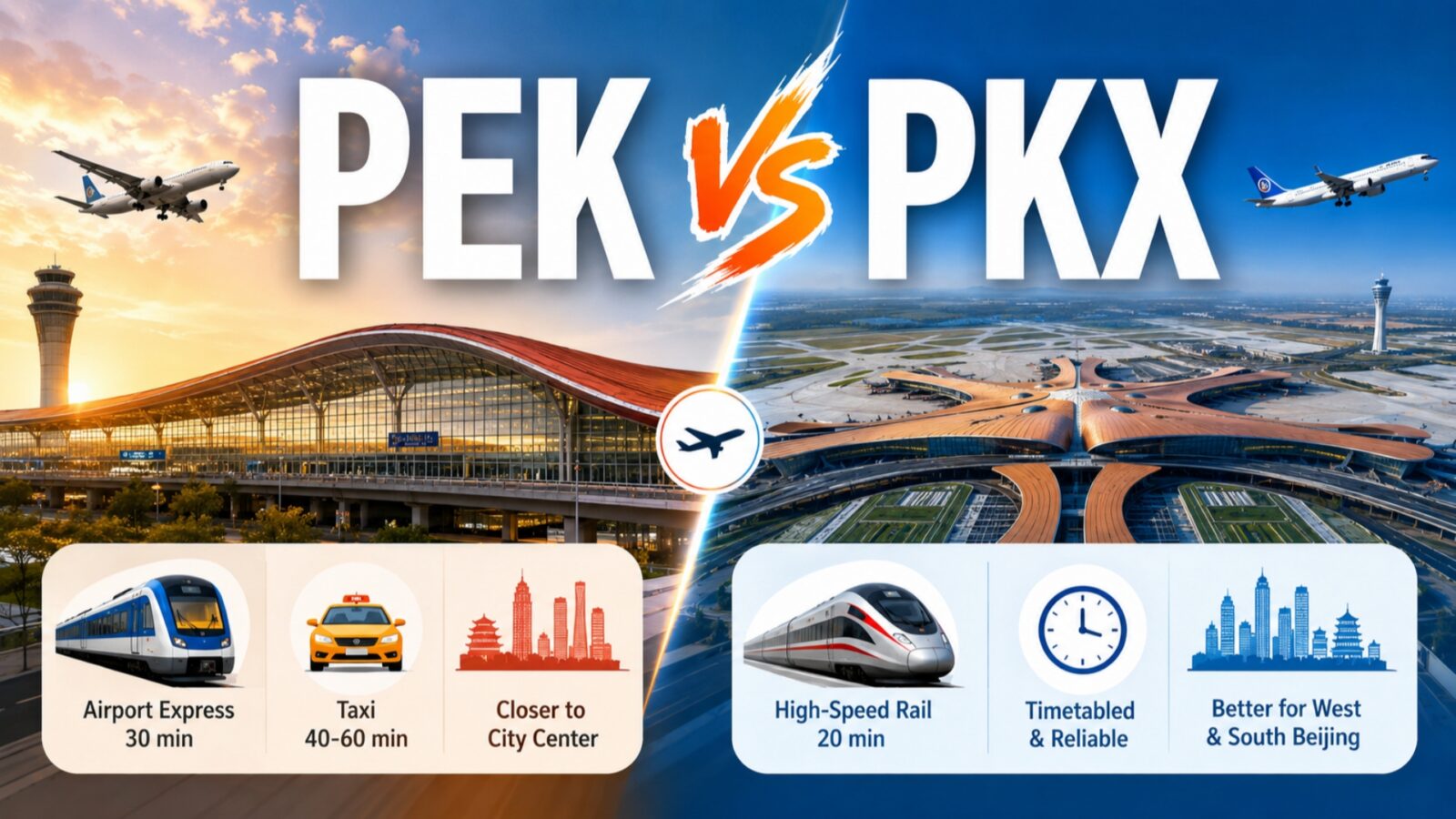
| Airport Express / Metro | Capital Airport Line → Dongzhimen, ~30 min, ¥25 | Daxing Airport Line → Caogqiao, ~19 min, ¥35 | PKX wins on predictability; PEK's endpoint is a key interchange hub |
| Intercity Rail | Not available | Jing-Xiong Intercity → Beijing West Station, ~20 min, ¥25–30 | PKX's exclusive advantage — true air-to-rail transfer |
| Airport Bus | Many lines, wide coverage, ¥20–30, 60–90+ min | Good daytime service + dedicated night bus lines, ~¥40, 60–90+ min | Both are traffic-dependent; PKX's late-night buses are a real differentiator |
| Taxi / Rideshare | ~¥100–150 to city center, 40–60 min (traffic-dependent) | ~¥160–200 to city center, 60+ min | PEK is cheaper; however, both carry heavy peak-hour time risk |
| Private Transfer | Highest cost; door-to-door; ideal for families or late arrivals | Same convenience; longer distance means higher fare | Both are about trading money for certainty and comfort |
Rail Predictability: PKX's Immunity to Traffic Congestion
For many travelers — especially business visitors and those with tight itineraries — knowing exactly how long the transfer will take matters more than raw airport proximity. That's where PKX quietly wins the argument.
PEK’s pain point is real: whether you’re in a taxi, rideshare, or airport bus, your travels are hanging out there in Beijing’s maddening traffic. At evening rush hour, a 40-minute journey to Guomao can stretch to 80 minutes or more. Lines like PKX’s Daxing Airport Line and the Jing-Xiong Intercity Rail? 19 minutes to Caogqiao. 20 minutes to Beijing West. Timetabled and almost guaranteed. If you’re catching a connecting train or racing to an AM meeting, oh that certainty is worth something. Lay out the logistics in ahead of time? Our guide to Beijing airport transfer options breaks it all down with current pricing and up-to-date route recommendations.
Express Networks: PEK's Convenience vs. PKX's Speed
Capital Airport Line (PEK): Connect T2 and T3 terminals to Dongzhimen transport hub in about 30 minutes; trains approximately every 10 minutes. ¥25. Dongzhimen connects cleanly to Metro Lines 2 and 13 — helpful for reaching Northern city regions and Beijing North Station (de facto gateway toward Badaling Great Wall). Daxing Airport Line (PKX): Reach Caogqiao in just 19 minutes. Departures about every 8.5 minutes. Standard seat fares ¥35; business-class seats ¥50. From Caogqiao, connect to Metro Lines 10 and 19. 19 is an express that traverses Financial Street and other western districts.
Intercity Rail: PKX's Exclusive High-Speed Transit Superiority
This is arguably PKX's most compelling advantage. Directly beneath the terminal, the Jing-Xiong Intercity Railway carries you to Beijing West Station in as little as 20 minutes for approximately ¥25–30 (second class). For travelers connecting onward to Xi'an, Chengdu, Shanghai, or beyond via the national high-speed network, this is a genuinely seamless air-to-rail transfer. PEK offers no equivalent. For those planning a broader China journey, our overview of getting around China by train and transit is a smart starting point for route planning.
Bus Services: PKX's Late-Night Operation Advantage
Both airports have an extensive bus network during the day covering the majority of city hubs. The network around PEK is more mature, and tickets are ¥20–30; around PKX tickets are closer to ¥40. Either way they are fully dependent on the road network — expect 60 to 90 minutes or more in either direction during peak hour. What PKX has going for it in this regard is its dedicated night bus (夜航Lines 1–4), which continues to operate until the last flight has landed. These night buses serve major destinations including Zhongguancun, Beijing Railway Station and Tongzhou, making them a cheap and efficient alternative when daytime transit has stopped running.
Private Rides: PEK's Shorter Distance Cost Efficiency
From PEK to central Beijing (e.g., Guomao), expect to pay ¥100–150 including highway tolls, with a journey of 40–60 minutes under normal conditions. From PKX, fares rise to ¥160–200, with 60+ minutes even in light traffic. Peak-hour congestion can double either figure. For northeastern destinations, PEK taxis offer the most straightforward door-to-door experience — though you're accepting time uncertainty. DiDi is the standard platform for ridesharing in China. If you haven't used it before, this guide on how to use DiDi as a foreigner in China is essential reading before you arrive.
Private Transfers: Trading Premium Cost for Certainty
Private transfers; bookable through travel sites, hotels, or car hire firms, they provide door-to-door pickup, name-board greeting, fixed pricing and no language barriers. Costs are highest of all options, but the return in peace of mind – especially if you’re part of a family, group, travelling with excessive baggage or arriving late at night – is often worth every yuan. Transfers originating from PEK generally have shorter waiting times due to the larger fleet and better-established pickup points.
Practical Tips: Ensuring Smooth Point-to-Point Navigation
Refuse "black cab" touts: In the arrivals hall, ignore any driver who approaches you. They typically overcharge significantly and provide no safety guarantees. Instead, walk directly to the clearly marked official taxi rank or the designated rideshare pickup zone.
Carry your hotel address in Chinese: Write — or screenshot — your hotel's full name and address in Chinese characters and show it directly to the taxi driver. Most drivers have limited English proficiency.
Set up your apps before you fly: Download Baidu Maps or Gaode Maps for navigation and real-time traffic. Ensure your Alipay or WeChat Pay is linked to an international card — it's by far the easiest way to pay for metro tickets and fares. Also note that China has specific rules around lithium battery packs in carry-on luggage; it's worth reviewing the latest China power bank regulations before you pack your bag.
Terminal Architecture: Cultural Heritage vs. Modern Layout
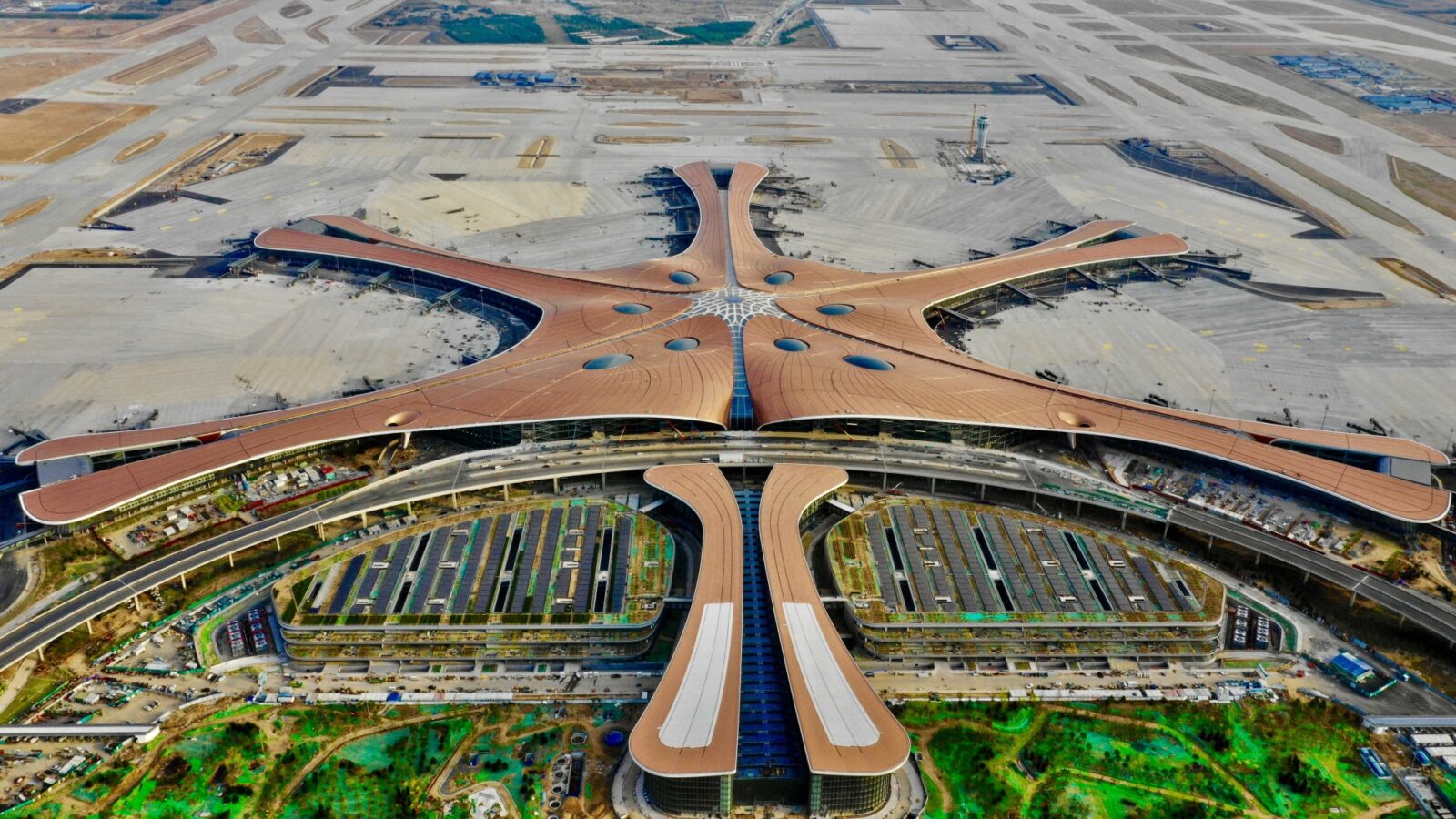
Beijing Daxing International Airport Aerial View
Both airports are far more than transit facilities. They're architectural statements — and visiting either one for the first time is genuinely memorable. Here's what to expect on the ground.
Cultural Design: PEK's Iconic Olympic Era Grandeur
Designed by British architect Norman Foster, the 3.25-kilometer roof profile of Terminal 3 is reminiscent of China’s most famous symbol, with skylights formed of individual “dragon scale” panes of glass. We walk through its “backbone” feeling the red and gold dragone scales shimmer.
Constructed specifically to be the "crown jewel" of the 2008 Olympics, T3 is more than just a massive building; inside it holds a vast version of the the Qingming Shanghe Tu drawn into bronze urns resembling those in the 600-year-old Forbidden City, with an earnest intention of matching classical Chinese art to modern functionality. It's nothing if not sweeping, proven, and deep-seated: some facilities are dated, but international operations have been refined by decades of work and traffic signs are unconfusing.
Intelligent Layout: PKX's Radial Concourse Walking Efficiency
Designed by the late Zaha Hadid Architects alongside ADP Ingenierie, PKX's five radiating concourses form the silhouette of a phoenix with outstretched wings — a cultural counterpart to PEK's dragon, together forming a "dragon and phoenix in harmony." The terminal's central zone is a breathtaking column-free space held up by just eight massive C-shaped columns, with natural light pouring through the roof in dramatic cascades.
Efficiency is built into the DNA of this building. Thanks to the radial design, the maximum walk from the central hub to the farthest boarding gate is under 600 meters — about 8 minutes on foot, dramatically reducing passenger fatigue. Self-check-in kiosks, automated baggage drop, and facial recognition boarding are standard practice. Then, at the tips of the five concourses, five distinct Chinese garden courts — the Silk Garden, Tea Garden, Porcelain Garden, Chinese Garden, and Rural Garden — invite travelers to pause before boarding and breathe in a piece of traditional landscape design. China's airport ambitions stretch far beyond Beijing, too — from the remarkable cloud-top terminal at Wushan Airport in Chongqing to an expanding network of architecturally significant regional hubs.
In summary: PEK offers a rich, storied, classically grounded airport experience. PKX offers something efficient, fluid, and forward-looking. Both are worth experiencing — but for very different reasons.
Traveler Profiles: Tailoring Choices to Journey Priorities
No two travelers arrive in Beijing with the same needs. Here's how the PEK vs. PKX decision plays out across five distinct visitor profiles.
Tourist Itineraries: PEK's Superior Central Landmark Proximity
Primary concern: Simplify the journey. Reduce transfer friction from the moment you land.
If your hotel is in Dongcheng or Chaoyang District — around Wangfujing, Qianmen, Dongzhimen, or Sanlitun — PEK is the natural choice. Take the Airport Express to Dongzhimen, switch to the metro, and you're in the heart of the city with minimal effort. For trips to Mutianyu Great Wall or Badaling, the geographic head-start from PEK is hard to overstate — you avoid crossing the entire city to travel north. However, if your itinerary gravitates toward the Temple of Heaven or you plan to depart from Beijing South Station, PKX's rail connections align more logically with your route.
Business Trips: PKX's Timetabled Rail Transit Reliability
Primary concern: Reliability. Every unplanned minute matters.
If your meetings are in the Guomao CBD, Sanlitun, or the Liangmaqiao/Yansha Embassy Belt, PEK gets you there with fewer kilometers — but always build in buffer time for road congestion. For appointments in the Financial Street district or near Beijing West Station, PKX's timetabled rail eliminates uncertainty entirely. Swapping an unpredictable 60–90 minute taxi for a guaranteed 35-minute rail journey is, for most business travelers, not even a close call.
Late Arrivals: PKX's Comprehensive Night Bus Network
Primary concern: Safe, reliable, and affordable access to the city after midnight.
Landing at PEK late at night means limited public transport options if your hotel isn't nearby. In that case, pre-booking a reliable airport transfer is the safest approach, even at a higher cost. For PKX, the picture is notably better: the dedicated night bus network (夜航 Lines 1–4) runs until after the last flight lands, serving Zhongguancun, Beijing Station, and Tongzhou at reasonable fares — a rare combination of affordability and reliability for red-eye arrivals.
Family Travel: PEK's Streamlined Taxi Queue Infrastructure
Primary concern: Point-to-point ease. Minimum luggage-schlepping and maximum simplicity.
First, use your hotel's location to select the airport (see the destination matching table above). Then, regardless of which airport you land at, seriously consider a taxi or pre-booked private transfer. The extra cost compared to a metro journey is usually worth it when you're managing strollers, suitcases, or tired children. PEK generally offers faster taxi queue times thanks to a larger fleet and more established pickup infrastructure.
Flight Connections: PKX's Seamless Domestic Transfer Layout
Primary concern: Smooth connections, enough time between flights, and no nasty surprises.
Always double-check your itinerary: confirm whether both flight legs share the same airport code (PEK or PKX). A missed three-letter code is one of the most common — and costly — mistakes travelers make in Beijing. Even within a single airport, Beijing's terminals are enormous: allow at least 3 hours for an international-to-domestic connection, covering customs, baggage claim, re-check-in, and security. If you face a cross-airport transit (strongly not recommended), budget 5 hours or more and research the inter-airport bus in advance — it takes roughly 2 hours and remains subject to road conditions. PKX has a processing advantage: its one-document clearance system and compact concourse layout make international-to-domestic flow noticeably smoother. For travelers continuing onward to Zhangjiajie after Beijing, our Zhangjiajie Airport guide for foreign visitors is a helpful next step in your journey planning.
Departure Preparation: Essential Steps for Smooth Transits
Once you've made your decision and confirmed your ticket, run through these steps before departure day arrives.
- Verify the airport code: Confirm your ticket clearly shows either PEK or PKX — not just "Beijing."
- Confirm the terminal: PEK travelers must know whether they're at T2 or T3. The terminals are not adjacent — arriving at the wrong one causes serious delays.
- Plan your ground route: Use Baidu Maps or Gaode Maps before you fly. Input your hotel address and simulate both the transit route and a taxi from your airport — note the estimated time and cost.
- Set up your payment: Ensure Alipay or WeChat Pay is linked to an international card, or carry enough CNY cash for metro tickets and transport fares.
- Save key info: Screenshot your hotel's Chinese-language name, address, and phone number. Keep a paper backup too — phones die, and data connections can fail unexpectedly.
FAQs: Addressing Common Airport Selection Dilemmas
Q: What is the main difference between PEK and PKX?
The core distinction in the PEK vs PKX debate comes down to location and era. PEK (Beijing Capital) is the older, more centrally positioned airport in the northeast, with a mature international network and shorter proximity to traditional city districts. PKX (Beijing Daxing), opened in 2019, is a southern super-hub with superior rail connectivity, more advanced passenger technology, and a radically efficient terminal layout designed from the ground up.
Q: Which airport is closer to the center of Beijing?
PEK is unambiguously closer to central Beijing. In the PEK vs PKX comparison, PEK sits roughly 25–27 km from Tiananmen Square, while PKX is approximately 46 km away. For travelers heading to the Forbidden City, Wangfujing, or the Embassy District, PEK saves meaningful transit time and reduces exposure to cross-city road congestion — making it the default choice for most sightseeing-focused itineraries.
Q: Is it easy to get from PKX to the city center?
Easier than the distance might suggest. In the PEK vs PKX transfer comparison, PKX's rail options are fast and timetabled. The Daxing Airport Line reaches Caogqiao metro station in 19 minutes (¥35), connecting to Metro Lines 10 and 19. The Jing-Xiong Intercity Rail reaches Beijing West Station in 20 minutes (¥25–30). Both run on dedicated tracks, making them traffic-free and highly reliable options regardless of the time of day.
Q: Which airport is better for connecting to high-speed rail?
PKX wins without question. In any PEK vs PKX comparison focused on high-speed rail access, Daxing Airport holds an insurmountable advantage. The Jing-Xiong Intercity Railway runs directly from beneath the terminal to Beijing West Station — a major national HSR hub — in approximately 20 minutes. PEK offers no comparable rail link, meaning HSR connections require a cross-city taxi or bus journey from there.
Q: Can I arrive at one Beijing airport and depart from the other?
Technically yes — but it's strongly discouraged. The PEK vs PKX inter-airport transfer takes roughly 2 hours by direct bus and remains fully subject to road traffic. If your itinerary appears to require a cross-airport connection, budget at least 5 hours and research the bus schedule carefully in advance. A smarter strategy is to book flights that use a single airport for your entire Beijing stay, eliminating this risk entirely.
Q: Which airport is better for late-night arrivals?
PKX holds a clear advantage here. In the PEK vs PKX comparison for red-eye arrivals, Daxing Airport operates dedicated night bus lines (夜航 Lines 1–4) that run until after the last flight of the day lands. These buses reach Zhongguancun, Beijing Station, and Tongzhou at affordable fares. PEK's late-night public transport is more limited — making a pre-booked private transfer the safer bet for most northeastern destinations after midnight.
Q: What is the main difference between PEK and PKX?
The PEK vs PKX decision ultimately comes down to location and generation. PEK (Beijing Capital) opened in 1958 and sits ~25 km northeast of Tiananmen — closer to the traditional city core, with a vast international network built over decades. PKX (Beijing Daxing), opened in 2019, is positioned ~46 km to the south, designed from scratch for maximum efficiency, timetabled rail access, and seamless high-speed train connections. In the PEK vs PKX comparison, neither is objectively "better" — your destination and transfer priorities decide the winner.
Q: Which airport is better for first-time visitors to Beijing?
For most first-time visitors, PEK is the more intuitive starting point — it's closer to the Forbidden City, Wangfujing, Sanlitun, and the Embassy District. The Airport Express reaches Dongzhimen hub in 30 minutes, putting you squarely in the city's northeast core. However, the PEK vs PKX calculus shifts if your hotel sits near Beijing West Station or your itinerary centers on high-speed rail travel. In that specific scenario, the PEK vs PKX answer flips firmly in favor of Daxing's faster, traffic-free rail connections.
Q: Can I arrive at PEK and depart from PKX, or vice versa?
Technically yes — but strongly avoid it if possible. The inter-airport journey in a PEK vs PKX cross-transfer takes roughly 2 hours by direct bus, fully subject to Beijing's unpredictable road traffic. Budget at least 5 hours if your itinerary forces this. A far smarter approach: confirm your full ticket uses a single airport code throughout your Beijing stay. Mixing PEK vs PKX across arrival and departure adds unnecessary risk, cost, and stress — especially during peak travel seasons when traffic congestion is at its worst.