Camping at the Great
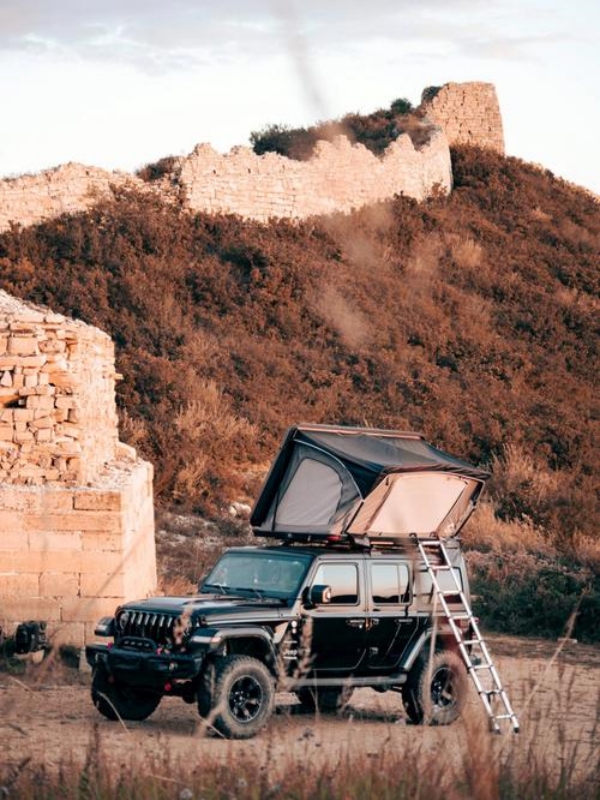
Camping at the Great Wall means trading the cable-car day-trippers for an overnight stay on a wild, unrestored section — usually Jiankou, Gubeikou, or Huanghuacheng — where the wall has no lights, no toilets, and no shops. The draw is a quiet watchtower, a sunrise nobody else is photographing, and a stretch of wall you have largely to yourself. Temperatures on the ridge drop to around 59°F (15°C) even in midsummer, so this is not a casual overnight.
This guide covers where you are actually allowed to camp, how to reach each of the three main trailheads from Beijing, what a 2-day wild-wall tour really costs, and the rules, gear, and weather realities you'll face on the mountain.
Quick Facts
Where You Can Camp on the Great Wall
Three wild sections are the practical choice for overnight camping on the wall — Jiankou, Gubeikou, and Huanghuacheng. Each has its own terrain, distance, and permit situation, so the right pick depends on your fitness, how much solitude you want, and how close to water you like to sleep. Rules shift year to year, so confirm with local authorities or book through an operator that handles the paperwork.
Jiankou — Wild, Steep, and Photogenic
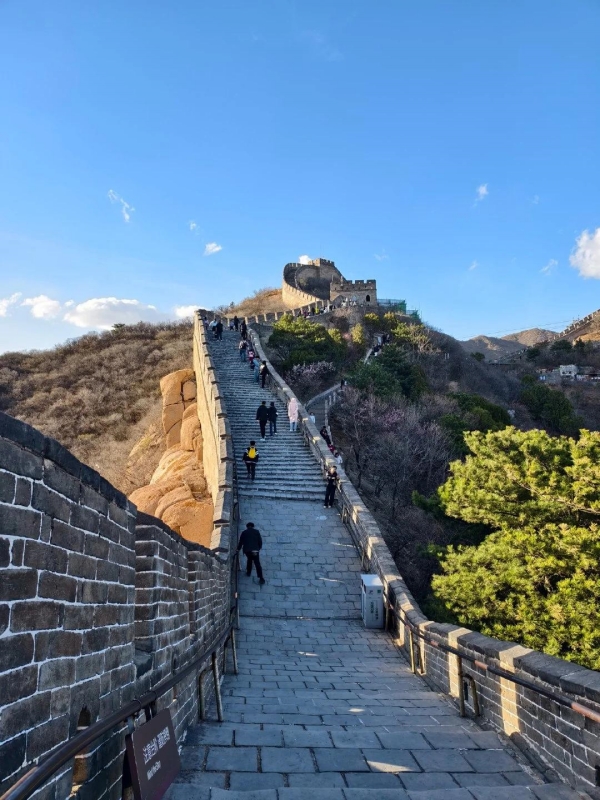
Great Wall of Jiankou
Jiankou is the wall on the calendars — unrestored, jagged, and steep. There is no entrance fee, the trailhead sits at Xizhazi Village in Huairou, and the climb to the wall takes 1.5–2 hours through chestnut forest. Two landmarks define the section: the "arrow loop", a sharp U-turn of wall climbing a ridge spur, and the "Beijing Knot" watchtower cluster where multiple ridges meet. Footing is loose, drops are real, and a written permit is sometimes required from the local cultural heritage office. Recommended for hikers with overnight-ridge experience, not first-timers.
For more, see our guide to China Travel Itinerary 2 Weeks.
Gubeikou — Long, Quiet, and Half-Restored
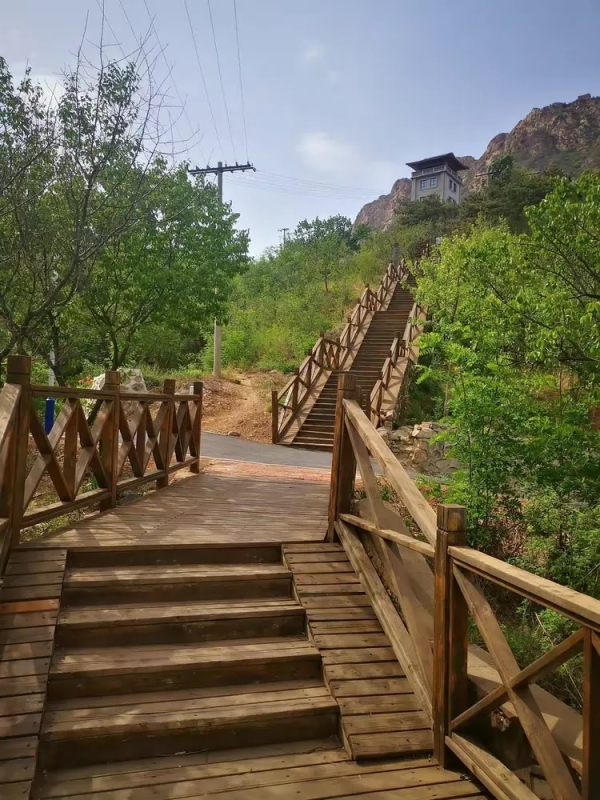
Great Wall of Gubeikou
Gubeikou runs 20–25 km of mostly continuous wall — half restored, half wild — for a small entrance fee of about $5–7 (¥35–50). The trailhead is a short walk from Gubeikou town, the access is straightforward, and the difficulty is moderate. There is less climbing than Jiankou, more wall to walk, and noticeably fewer foreign visitors than nearby Jinshanling. A few of the watchtowers used as bivouac sites have loose-stone floors, so a sleeping mat is not optional here.
Huanghuacheng — The Wall Meets the Reservoir
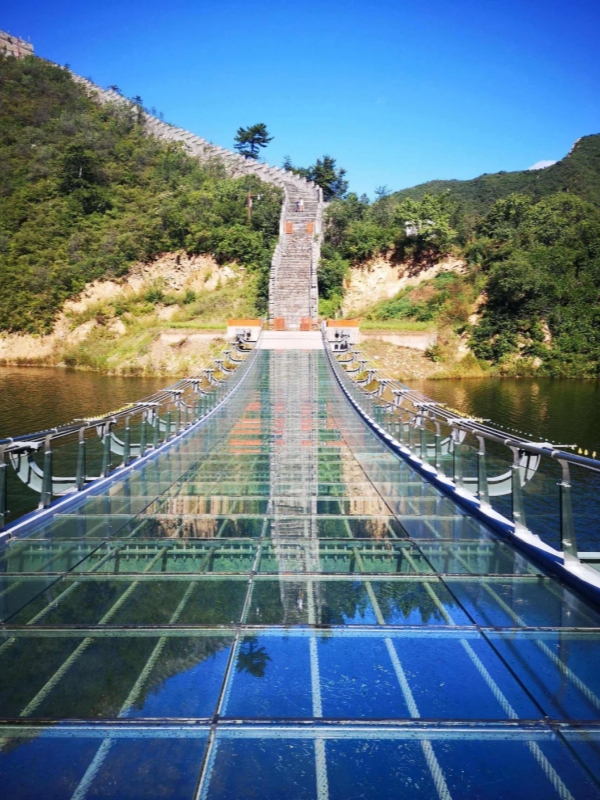
Great Wall of Huanghuacheng
Huanghuacheng is the only Great Wall section defined by a major water landscape — the wall dips into the Xishuiyu Reservoir, with stretches submerged when the water level is high. Entrance runs about $8 (¥55); the trailhead is at Huanghuacheng village, and the climb is the gentlest of the three at roughly 20–30 minutes. The scenery peaks in summer when the surrounding hills turn green, while in winter the falling reservoir exposes more of the submerged stonework.
Why Camp and What the Night Is Like
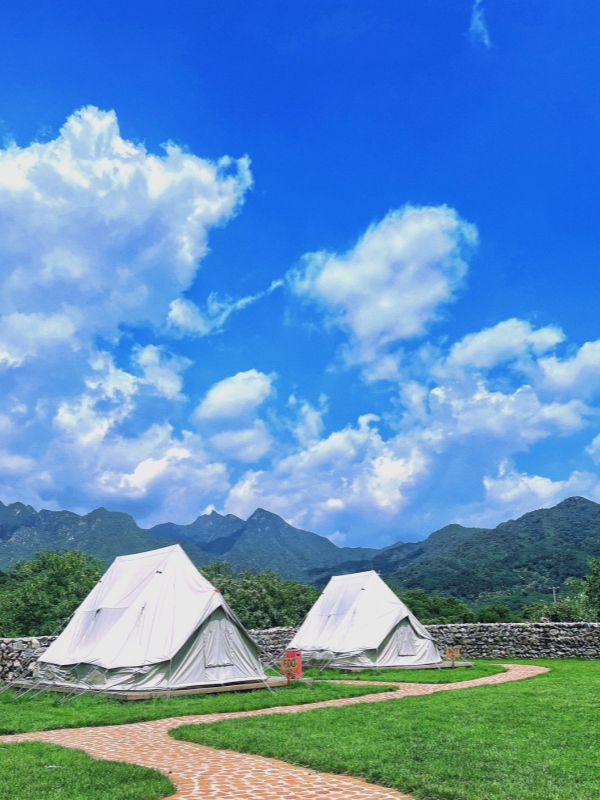
Wild-Wall Camping Tours
Day-trip crowds clear out around the last cable-car departure, and the wall goes quiet in a way the restored sections never do. Sunset on a west-facing tower and sunrise on an east-facing ridge are the two real draws — plus a sky dark enough for stars, since Beijing's light dome doesn't quite reach these mountains.
Sunset, Sunrise, and Stars Away from the City
Last cable-car and shuttle departures typically run to about 16:30–17:30 in summer, later in shoulder season, so most day-visitors are off the wall by sunset. Pick a west-facing tower — parts of Gubeikou and west Jiankou work well — for sunset, and an east- or ridge-top tower for sunrise. Away from the city light dome, the sky is dark enough for stars. If you want a clean Milky Way shot, a moon-phase calendar matters more than usual here.
What You'll Have and What You Won't
You will have silence, stars, sunrise, and the wall to yourself. You will not have electricity, plumbing, reliable cell signal in every spot, drinking water on the wall, a fire ring, or a marked tent pad. Simatai is the only section lit up at night, but it isn't a wild-camping section, so its glow is visible only as a distant wash from some Jiankou and Gubeikou campsites on clear nights.
Getting to Each Campsite from Beijing
All three trailheads need a bus plus a short taxi from central Beijing. The subway does not reach any of them directly. Door-to-door private transport is the practical choice once you're carrying camping gear.
Beijing to Jiankou (via Huairou)
Subway plus Bus 916 runs Dongzhimen to Huairou for about $1.50 (¥12) in roughly 1.5–2 hrs, then a local taxi from Huairou to Xizhazi Village adds another $12–17 (¥80–120) and 30 minutes on mountain roads. Door-to-door from Beijing with full gear runs about $60–90 (¥420–630) by private car, which is the easier choice when you are carrying tents and sleeping bags.
Beijing to Gubeikou (via Miyun)
Take the Miyun-line bus from Dongzhimen to Miyun for about $2 (¥15) in 1.5–2 hrs, then a local bus or short taxi into Gubeikou town for another $5–14 (¥35–100). The trailhead is a short walk from town — making this the cheapest of the three at roughly $7–17 (¥50–120) one-way by public transit.
Beijing to Huanghuacheng (via Huairou)
Bus 916 reaches Huairou in about 1.5–2 hrs for $1.50 (¥12); from there, a local bus or taxi covers the 30–40 minutes to Huanghuacheng village for $7–14 (¥50–100). Easiest of the three because the wall is closest to the road, and the total public-transit budget lands near $9–17 (¥65–115) one-way.
Tour Options and What They Really Cost
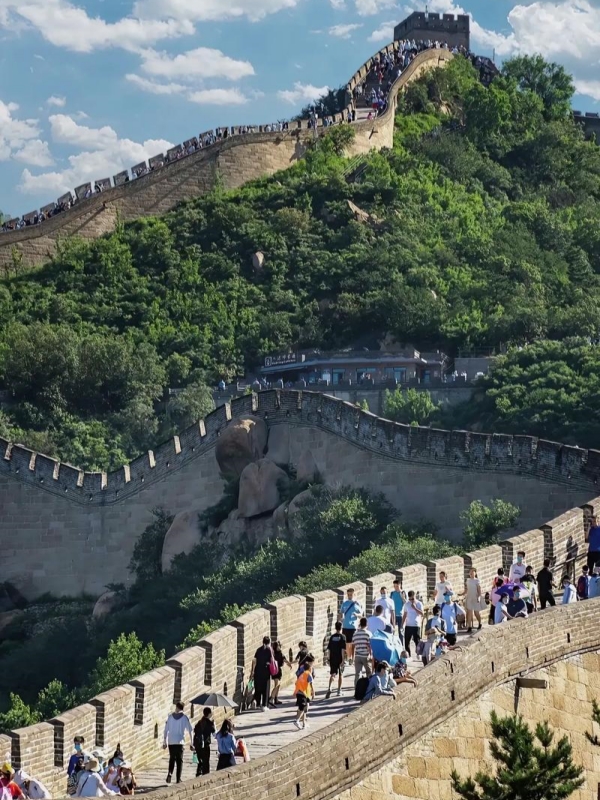
Steep Stairs of Great Wall
Multi-day wild-wall camping tours and one-day hike-and-camp combos are both available. A guide is effectively mandatory for permit access and trailhead logistics, which is why most foreign visitors book through an operator rather than going DIY.
Multi-Day Wild-Wall Camping Tours
The standard 2-day itinerary: Day 1 is hike-in and overnight on a watchtower; Day 2 is hike out to a restored section (often Mutianyu) or return to Beijing. Per-person rates drop sharply as group size grows, with reference prices below. Most operators include the same core package:
- Guide: English-speaking, with permit arrangement handled for you
- Gear: tent, sleeping bag, sleeping mat, and a small repair kit
- Meals: trail dinner and breakfast
- Transport: Beijing hotel pickup and return drop-off
One-Day Hike-and-Camp Combos
A compressed option for travelers short on time. The pattern is usually: morning hike into Jiankou or Gubeikou, several hours on the wall, sunset camp on a tower, early-morning sunrise hike out, and back to Beijing by afternoon. Per-person price runs roughly $99–150 (¥700–1,050), often with a 2-traveler minimum. Guide and permit are typically included; verify meals and gear at booking, since operators vary.
How Foreign Visitors Actually Book
Trip.com and Klook accept international cards and list several wild-wall camping tours in English — start there. Beijing-based operators that explicitly accept international cards (bookable through established tour platforms) are a third route. Avoid WeChat- or Alipay-only operators unless you have a mainland phone number and Chinese payment setup, which most short-term visitors can't easily arrange.
Permits, Safety, and On-Site Rules
Beijing Cultural Heritage Bureau rules prohibit overnight camping on the busy restored sections — Badaling, Mutianyu, Juyongguan, Jinshanling, and Simatai. Wild sections may allow it, but the rules shift year to year, so confirm with local authorities or book through an operator that handles the paperwork.
Permits, Fines, and Off-Limits Sections
Off-limits for overnight stays: Badaling, Mutianyu, Jinshanling, Juyongguan, and Simatai. Wild sections typically allow camping with a local permit — sometimes informal, sometimes a written document depending on the village and the year — and permit cost, when charged, runs about $7–30 (¥50–200). Fines and short detentions have been reported on restricted sections, which is why most operators bundle permit cost into the tour price rather than leave it to chance.
Weather, Wildlife, and Night Hazards
Best months are May, June, September, and October. Avoid July–August, which is peak thunderstorm season: trails turn slippery, exposed ridges are dangerous in lightning, and remote camps become hard to evacuate in heavy rain. Winter is technically possible but temperatures fall well below freezing and daylight runs short. Wildlife is sparse — snakes in tall summer grass and ticks (do a morning check) are the realistic concerns. The most common actual injury is twisted ankles on loose stones after dark, so a headlamp is essential, not optional.
Leave No Trace
Pack out all trash — there are no bins on the wall. For human waste, there are no toilets at wild campsites, so bring a trowel and a sturdy zip-lock or WAG-bag system and carry waste out with you. No campfires anywhere on or near the wall. Most operators forbid portable stoves too, so no-cook meals are the simplest workaround. Report any new graffiti or damage to your operator or to local authorities.
What to Pack — Gear, Food, and Clothing
Three categories drive packing: shelter and bedding (a cold-rated sleeping bag is essential), food and water (no-cook is the safest answer to the no-fire rule), and clothing and lighting (layered, waterproof, and headlamp-led). Budget travelers can rent a full kit in Beijing for about $30–60 (¥200–400) per night, or buy a basic setup for $80–200 (¥550–1,400) at a Beijing outdoor shop.
Tent, Sleeping Bag, and Sleeping Mat
A three-season tent is enough for the dry months; double-wall is the safer pick for July–August humidity. Your sleeping bag should be comfort-rated to roughly 5°C / 41°F minimum — even summer nights on the ridge drop to 59°F (15°C) and wind chill makes it colder on exposed towers.
- Mat: closed-cell foam is bulletproof on the rough stone floors of watchtower bivouac sites
- Mat: inflatable is more comfortable but a real puncture risk on loose rock
- Repair kit: small, but worth the grams in your pack
Food, Water, and the No-Fire Rule
Plan on 1.5–2 L of drinking water per person per day, plus a bit more if you intend to cook. No campfires anywhere on the wall, and portable stoves are tolerated by some operators and forbidden by others. The safe default is no-cook food:
- Protein: jerky, vacuum-packed tuna, or nut butter
- Carbs: instant noodles rehydrated in cold water, energy bars, vacuum-packed rice
- Snacks: trail mix, dried fruit, chocolate
- Cleanup: double-bag all trash and carry everything out — there are no bins
Clothing, Footwear, and Lighting
Layered clothing even in summer is the rule — thermal base, fleece, windproof shell is the standard stack. Add a waterproof jacket for July–August rain.
- Footwear: sturdy hiking boots with ankle support — running shoes are a mistake on loose stone
- Lighting: headlamp plus spare batteries; phone flashlights are too weak on rough watchtower floors
- Power: 10,000 mAh+ power bank, since there is nowhere to charge overnight
- Pole: a trekking pole helps on Jiankou's steep sections; less necessary at Huanghuacheng
Frequently Asked Questions
Q: Can you camp on any Great Wall section?
No. Restored sections — Badaling, Mutianyu, Jinshanling, Juyongguan, and Simatai — prohibit overnight camping and have been reported to issue fines. Wild sections (Jiankou, Gubeikou, Huanghuacheng) generally allow overnight stays, sometimes with a local permit costing roughly $7–30 (¥50–200). Always check current rules with local authorities before you go.
Q: Can you camp at Mutianyu and ride the toboggan?
Not as an overnight — Mutianyu is one of the restricted sections, and overnight camping is not allowed. The toboggan slide is a day-use attraction, roughly $14 (¥100) per ride. The practical pattern is to overnight at Jiankou or Huanghuacheng and visit Mutianyu on a separate day for the toboggan.
Q: How much does a 2-day Great Wall camping tour cost?
Multi-day wild-wall camping tours run from $199 per person for groups of 6 or more up to $499 for a solo traveler, typically including guide, permits, gear, meals, and Beijing transport. One-day hike-and-camp combos are $99–150 (¥700–1,050) per person. Per-person rates drop sharply as group size grows.
Q: When is the best season for camping at the Great Wall?
May, June, September, and October are best — warm enough at night, dry weather, and low thunderstorm risk. Avoid July and August, when heavy rain and lightning on exposed ridges make remote camps hard to leave. Winter is possible but temperatures fall well below freezing and daylight is short.
Q: Is solo camping on the Great Wall safe?
Generally not recommended. Cell signal is unreliable on the ridges, terrain is loose stone with real drop-offs, and weather changes fast on exposed towers. A twisted ankle in the dark becomes a serious problem in a remote spot. Most experienced visitors go with at least one partner or join a guided tour.
Q: Do you need a permit to camp on the wall?
It depends on the section and the year. Some wild sections allow informal camping without paperwork, while others require a written permit from the local cultural heritage bureau or village office. The simplest solution is to book through a tour operator that handles the permit as part of the package.
Q: Are there toilets at Great Wall campsites?
No. The wild sections have no facilities at all. Bring a trowel and a sturdy zip-lock or WAG-bag system and carry waste out with you. Some tour operators include a portable toilet in their overnight camp setup, so ask at booking if that matters to you.
Q: Can you see a lit-up Great Wall from a campsite?
Simatai is the only Great Wall section lit up at night. From some Jiankou and Gubeikou vantage points on clear nights you may see Simatai's lights as a distant glow, but you cannot camp at Simatai itself. The lit-up view is a side effect of wild-wall camping rather than the main event.
Q: How do foreign visitors book a Great Wall camping tour?
Trip.com and Klook accept international cards and list several wild-wall camping tours in English — start there. Beijing-based operators that explicitly accept international cards are a third route, bookable through established tour platforms. Avoid WeChat- or Alipay-only operators unless you have a mainland phone number and Chinese payment setup.