China Travel Itinerary 2 Weeks
A China travel itinerary 2 weeks covers the country's headline draws in one north-to-south sweep. You'll thread five regions — Beijing's Forbidden City and Great Wall (like Tourist Spots in Beijing), Xi'an's Terracotta Army, Chengdu's panda base, Zhangjiajie's sandstone pillars, and Shanghai's Bund — using high-speed rail and short flights to keep transit tight. Meanwhile, the arc moves Beijing → Xi'an → Chengdu → Zhangjiajie → Shanghai across 13 nights plus a departure day. Most travelers spend 2–3 nights per city to balance the major sights with one signature activity, such as cycling Xi'an's ancient wall or riding the Bailong Elevator at sunrise.
Quick Facts
Before You Go — Visa-Free Entry & Connectivity
China's visa-free transit policy covers citizens of around 50 countries for 144- or 240-hour stays, provided you enter and exit at different approved ports. First, check your nationality's status on the National Immigration Administration site before booking flights. A 30-day visa-free entry also runs for several European, Asian, and Pacific passport holders. If neither applies, a tourist (L) visa takes 5–7 working days at a Chinese consulate; your passport needs 6+ months of validity and 2 blank pages.
Set up two apps before flying: Alipay (international version) and WeChat Pay. Both link to Visa or Mastercard, and together they cover around 95% of payments — attractions, hotels, restaurants, and DiDi rideshares. However, international cards work almost nowhere outside luxury hotels and major malls. As a result, carry ¥500–1,000 in cash for street vendors and small-town shops.
Connectivity needs work in advance:
- eSIM: China Unicom or China Mobile tourist eSIMs run about $7–14 (¥50–100) for 10–30 GB over 15–30 days; order through foreign-friendly OTAs or roaming providers before departure.
- VPN: China blocks Google, Gmail, WhatsApp, Instagram, Facebook, and X. Install a paid VPN on your phone before leaving, or pick an eSIM plan with built-in roaming that bypasses the firewall.
- Apps: download Pleco (offline dictionary), Google Translate with the offline Chinese pack, Amap (Chinese maps, accessed inside Alipay), and Trip.com for bookings.
- Documents: your passport is required at every attraction, every HSR gate, every hotel check-in, and any police request. A photocopy is not accepted.
☀️ Summer Wardrobe Essentials: As you prepare to transition between Beijing’s historic walking tours, Zhangjiajie’s humid mountain trails, and Shanghai’s breezy skyline, ensure you pack the right lightweight clothing and sun protection by checking our ultimate China Summer Packing List.
The 2-Week Route by City
This China travel itinerary 2 weeks runs north-to-south: Beijing (3 nights) → Xi'an (2 nights) → Chengdu (2 nights) → Zhangjiajie (3 nights) → Shanghai (3 nights). The two HSR legs take 4.5–6 hours each; the two short flights save 8+ hours over their rail alternatives, which can drag 10–18 hours with transfers. In total, in-China transit across all four legs runs 14–18 hours door-to-door, leaving most daylight for sightseeing. Each city below gets its own H3 with 2–3 days of activities, named attractions, USD-first ticket prices, and a one-line evening suggestion. Hotel choice matters more than brand: a central location near a metro station typically cuts 30–60 minutes off every daily outing. As a result, travelers with limited time should pay for location over amenities.
See also our Pek Vs Pkx guide.
Beijing (3 Nights) — Forbidden City, Great Wall & Hutongs
-
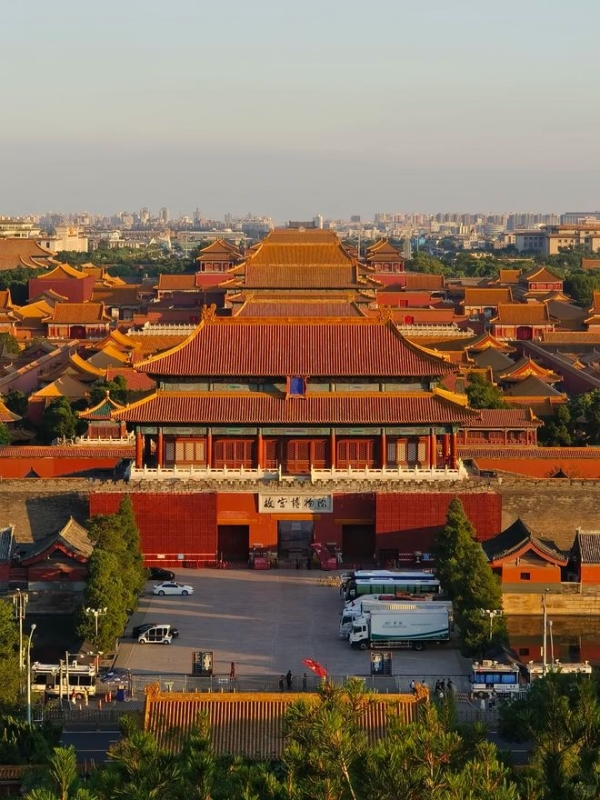

- Forbidden City
-
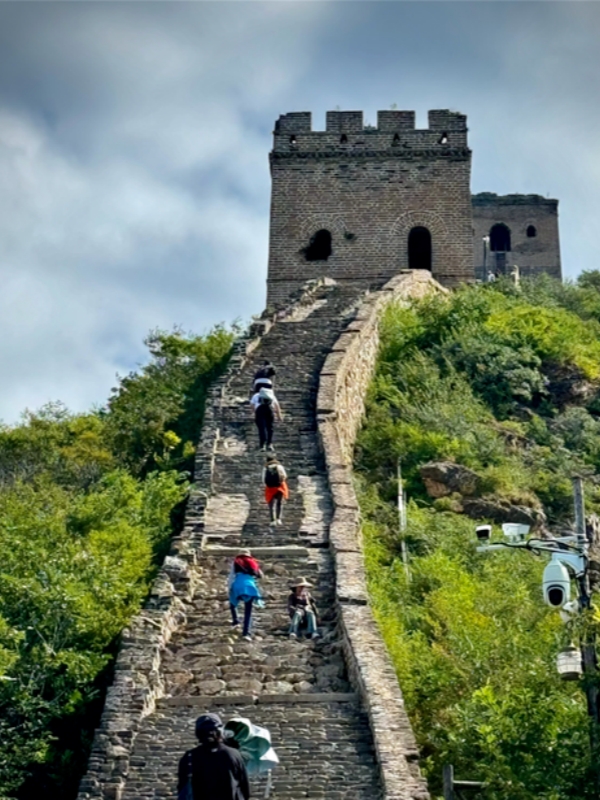
- Steep Stairs of Simatai Great Wall
-
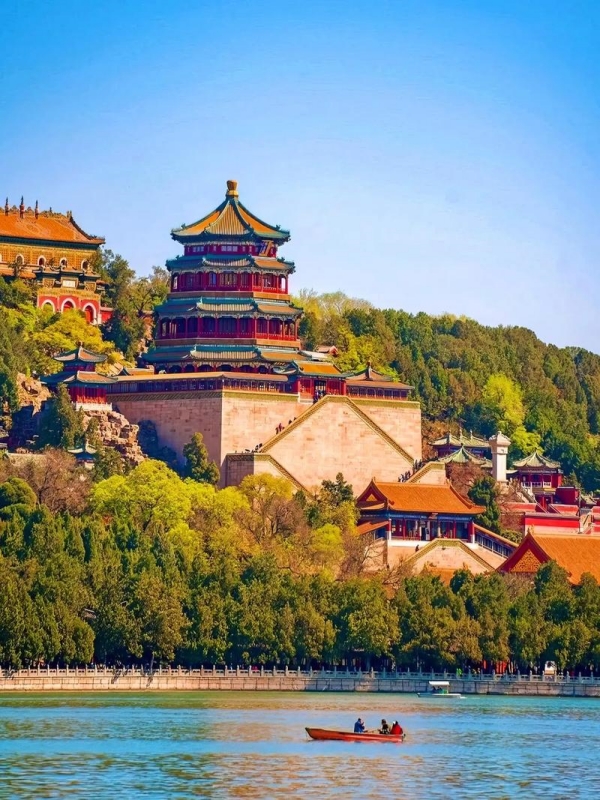
- Summer Palace
-
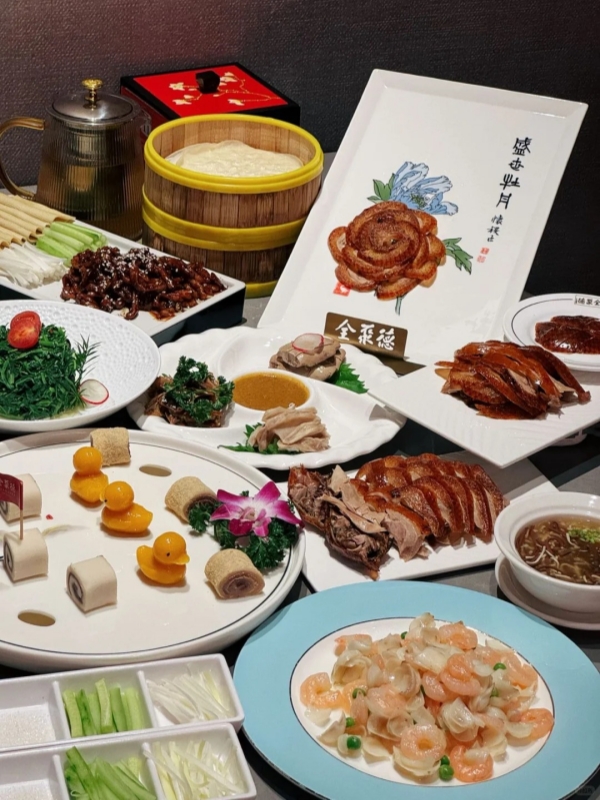
- Quanjude
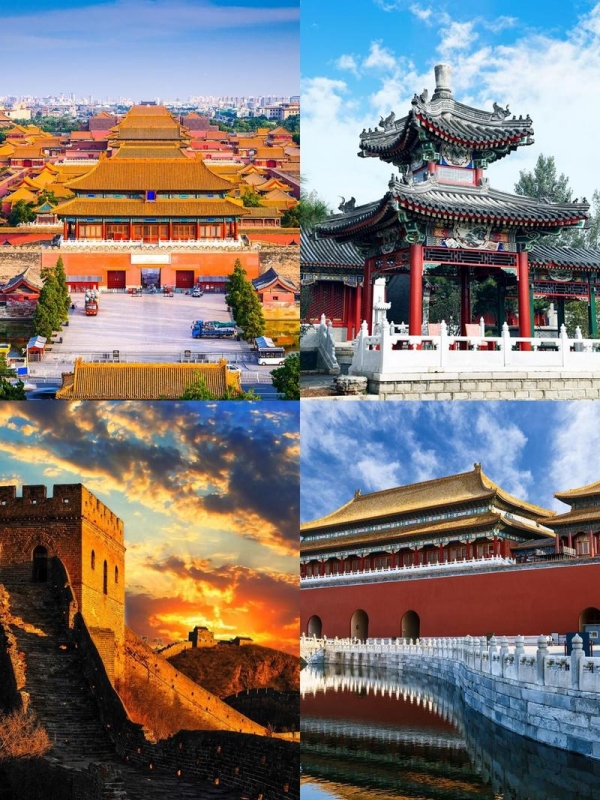
Day 1 covers central Beijing. Start at Tiananmen Square (free; passport reservation via the official site, 1 day ahead). The Forbidden City next door costs about $8 (¥60) in peak season and $6 (¥40) in low season; it's closed Mondays and capped at 30,000 visitors daily — book a timed slot through Trip.com. After the palace, climb Jingshan Park ($3 / ¥20) directly north for the panorama over the Forbidden City rooftops. End with Peking duck at Duck de Chine, Da Dong, or Siji Minfu; expect $25–40 (¥180–280) per person.
Day 2 reaches the Great Wall at Mutianyu. The drive runs about 1.5 hours from central Beijing by DiDi or tourist shuttle. Entrance costs $8 (¥60); cable car plus shuttle bundles run $22–28 (¥160–200). A toboggan descent is available. Mutianyu has more recent restoration work and fewer crowds than Badaling. Allow 4–5 hours on-site and stay into late afternoon for softer light on the wall.
Day 3 slows the pace. Temple of Heaven runs $5 (¥35) and the Summer Palace $6 (¥45) with a Kunming Lake walk to the Marble Boat. Late afternoon, take a hutong rickshaw ride (about $10 / ¥70) around Nanluoguxiang and the Bell Tower. For example, an optional evening: Peking Opera at Liyuan Theatre ($35–55 / ¥250–400) or a Houhai Lake bar street stroll.
For more, see our guide to 18 Ponds of the Dragon King.
Xi'an (2 Nights) — Terracotta Army & Ancient Walls
-
- Ancient City Walls
-
- Terracotta Army
-
- Shaanxi History Museum
-
- Biangbiang Noodles
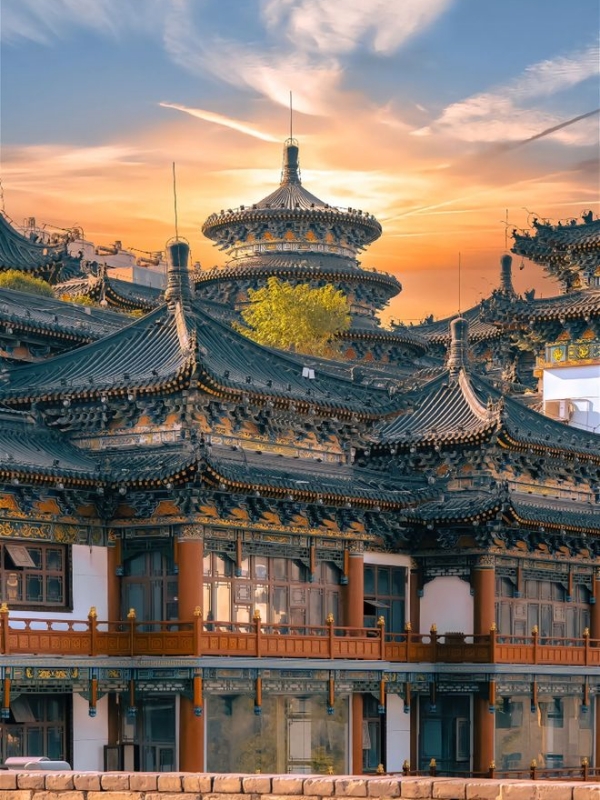
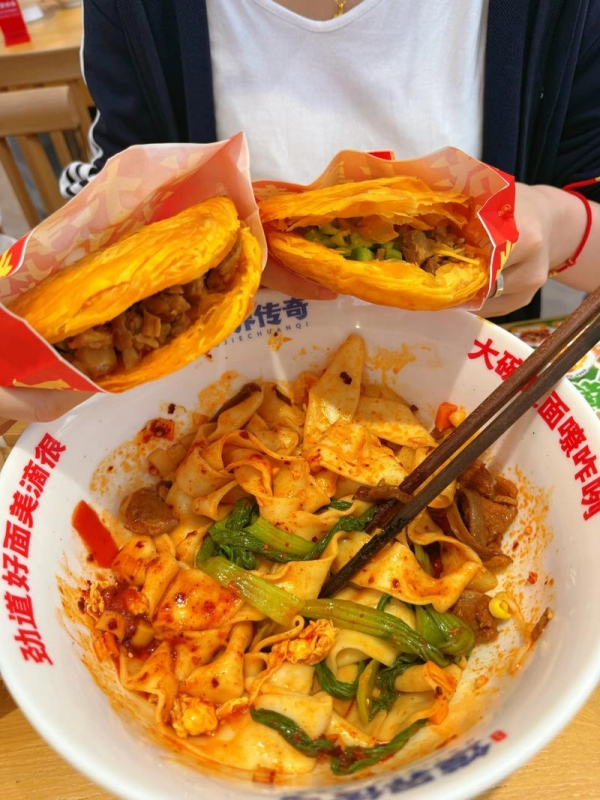
Day 4 begins with the HSR from Beijing West Station to Xi'an: 4.5–6 hours, second class $80–110 (¥600–800). Spend the afternoon on the Xi'an City Wall ($7 / ¥54) — the best-preserved ancient city wall in China, 14 km around. Rent a bike for $5 (¥35) per hour. In the Muslim Quarter afterward, eat roujiamo, liangpi, biangbiang noodles, and persimmon cakes; budget $3–7 (¥20–50) per dish.
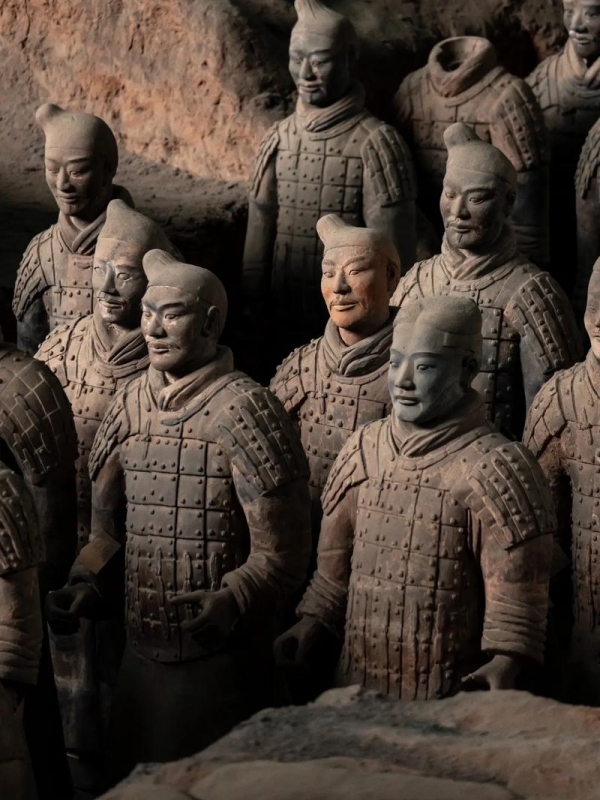
Day 5 is the Terracotta Army. A DiDi or tourist bus reaches Lintong in about an hour. The site ticket runs $15 (¥120); three pits and the Bronze Chariot exhibit fill 3–4 hours. On the return, stop at Huaqing Palace ($7 / ¥50), the Tang-dynasty hot-spring complex at the foot of Mount Li. For an optional evening, a Tang Dynasty show with dinner runs $55–80 (¥400–580).
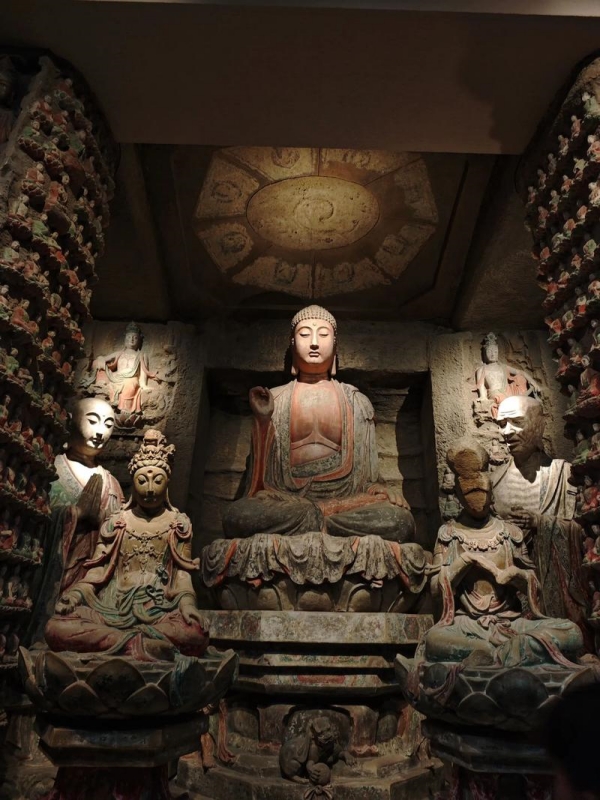
If a third day opens up, the Shaanxi History Museum is free with a passport reservation and ranks among China's best provincial museums. The Giant Wild Goose Pagoda runs $5 (¥35), with an evening fountain square beside it.
Chengdu (2 Nights) — Panda Base, Teahouses & Sichuan
-
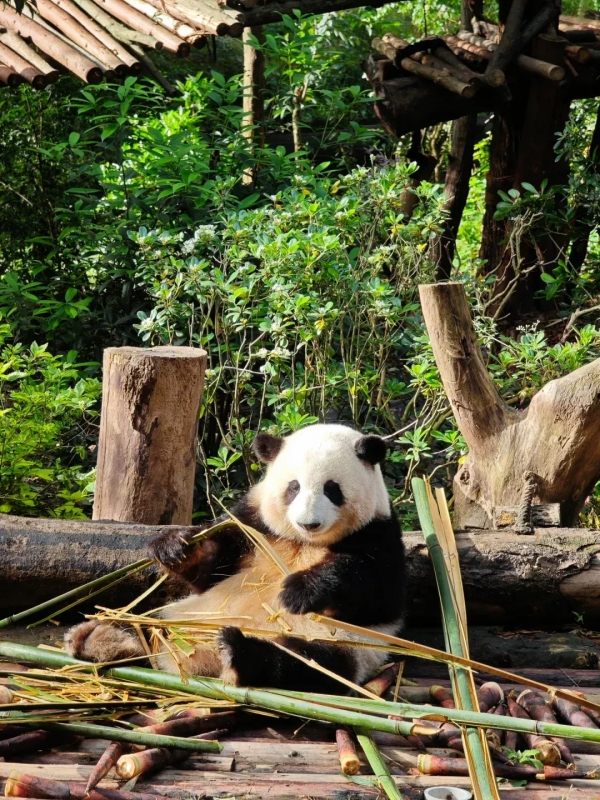
- Giant Pandas of Chengdu
-
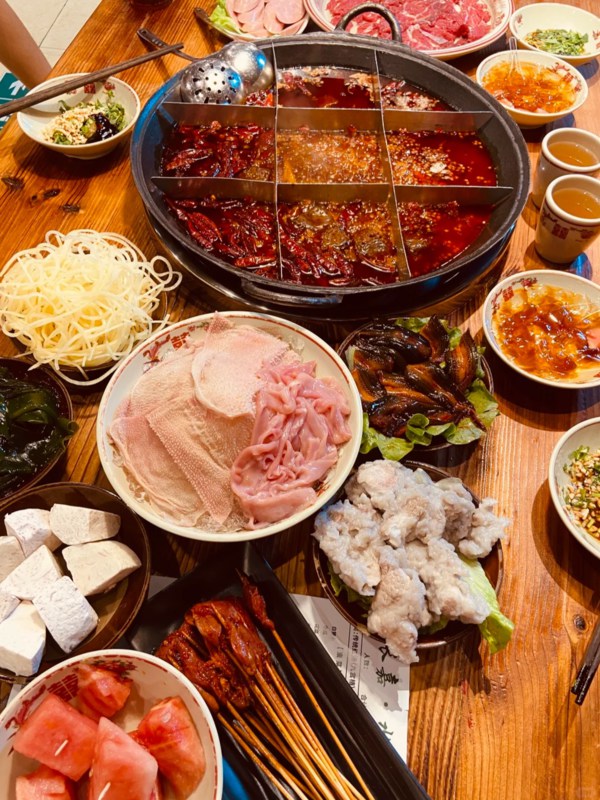
- Hotpot in Raffles
Day 6 arrives from Xi'an. HSR takes about 3.5 hours and runs $65–80 (¥470–580); a flight takes 1.5 hours and costs $80–130 (¥580–950). Spend the afternoon in People's Park. Order a bowl of jasmine tea (about $3–5 / ¥20–35), watch the ear-cleaning service, and listen to mahjong tiles clicking nearby.
Day 7 starts at the Panda Base. Arrive before 8 am, when pandas are most active. Entrance runs $9 (¥65); allow 3 hours for the breeding center, nursery, and red-panda enclosures. Afternoon: Wuhou Shrine ($5 / ¥35), the Three Kingdoms-era temple honoring Zhuge Liang, then Jinli Ancient Street for Sichuan snacks ($3–7 / ¥20–50 per dish).
Evening is Sichuan hotpot. Shuda Xiaoguan, Xiaolongkan, and local chains run $15–25 (¥100–180) per person for the pot plus ingredients. Order a yuanyang pot — split spicy and non-spicy broth — if spice is unfamiliar.
Zhangjiajie (3 Nights) — Avatar Mountains & Glass Skywalks
-
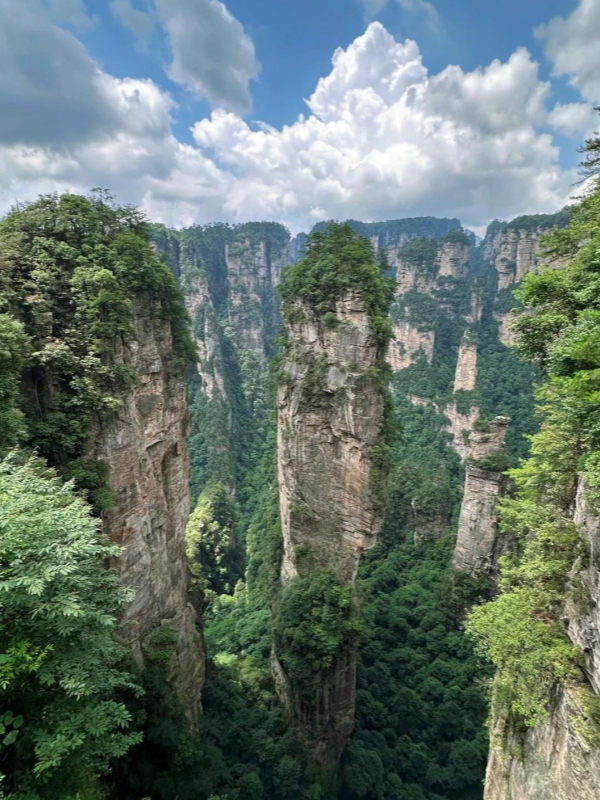
- Yuanjiajie
-
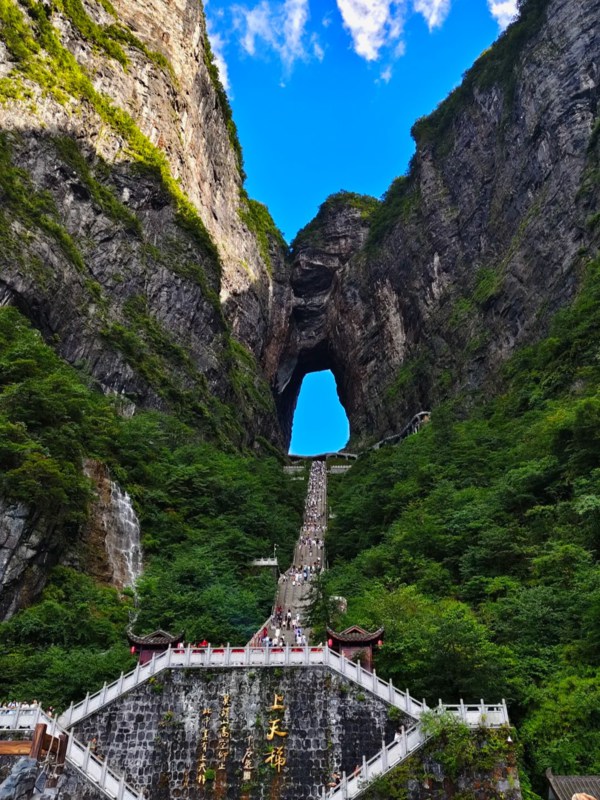
- Tianmen Mountain
Stay in the Wulingyuan district, the eastern gate to the national park. Most hotels arrange park tickets, sometimes at slightly better rates than foreign-facing OTAs.
Day 8 covers Yuanjiajie and Tianzi Mountain. Park entrance costs $32 (¥225) for a 4-day multi-entry pass, the standard ticket. Take the Bailong Elevator — the world's tallest outdoor lift at 326 m — up to Yuanjiajie. This area inspired the floating Hallelujah Mountains in Avatar. Cross the First Bridge under Heaven, then bus to Tianzi Mountain for a panorama of 40+ sandstone pillars. Allow a full day; 20,000 steps is normal here.
Day 9 moves to Huangshizhai and Golden Whip Stream. Cable car up Huangshizhai runs about $14 (¥100) round-trip, a quieter alternative summit. Descend and walk the Golden Whip Stream trail — 7.5 km of stream-side forest, the park's easiest half-day hike.
Day 10 is Tianmen Mountain, a separate ticket at about $32–37 (¥225–261) including the cable car. The drive from Wulingyuan takes about 1 hour. Take the 7.5-km cable car up, walk the 99-Bend Road, stand on the Glass Skywalk over a 1,430-m cliff, and descend via Tianmen Cave — a natural arch in the cliff face. A mountain zipline option costs about $13 (¥95).
The four park areas to know:
- Yuanjiajie: Avatar-style sandstone pillars, First Bridge under Heaven, served by the Bailong Elevator.
- Tianzi Mountain: viewing platform over 40+ pillars, best at sunrise.
- Huangshizhai: quieter summit by cable car, a half-day alternative.
- Golden Whip Stream: 7.5-km stream-side trail, the easiest walk in the park.
Wulingyuan is a UNESCO World Heritage Site, designated in 1992.
Shanghai (3 Nights) — The Bund, Yu Garden & Pudong Skyline
-
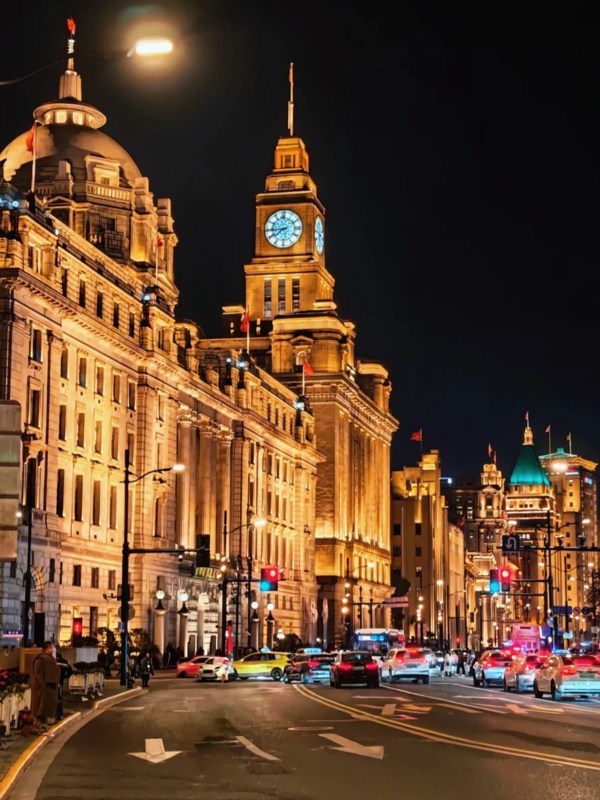
- The Bund
-
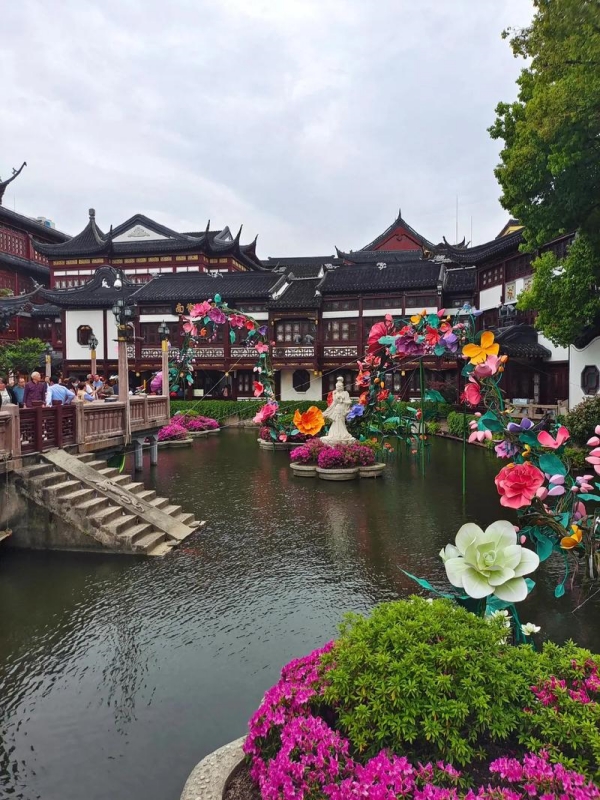
- Yu Garden
Day 11 arrives by flight from Zhangjiajie: about 2.5 hours, $100–150 (¥700–1,100). Check in near the Bund or in Jing'an. Walk the 1.5-km colonial-era waterfront facing the Pudong skyline — Oriental Pearl Tower, Shanghai Tower, Jin Mao Tower, and Shanghai World Financial Center. Free, best at sunset.
Day 12 covers Old Shanghai. Yu Garden runs $7 (¥50), with an adjacent bazaar. City God Temple costs $5 (¥35). Afternoon: stroll the French Concession along Wukang Road and Tianzifang's shikumen lanes. The Shanghai Museum is free with a passport reservation; it holds China's premier collection of bronzes, ceramics, and calligraphy.
Day 13 goes up. The Shanghai Tower observation deck runs $30 (¥199) on the 118th floor at 632 m — China's tallest building. The Oriental Pearl Tower costs $30 (¥199). Across the street, the Shanghai Ocean Aquarium runs about $25 (¥180). Evening: Nanjing Road pedestrian shopping, then Xintiandi for dinner — a mix of Cantonese, Shanghainese, and international cuisine, $20–40 (¥150–300) per person.
Getting Around — HSR, Flights & City Transit
City transit is straightforward. DiDi rideshare is built into Alipay, so no separate account is needed. Subway systems in all five cities have English signage; a single ride runs $0.30–1 (¥2–7). Beijing's Airport Express to the city center costs about $5 (¥35). Shanghai's Maglev from Pudong Airport to Longyang Road costs $8 (¥50) — it hits 431 km/h in 7 minutes.
Train tickets go on sale 15 days ahead on the 12306 app or through Trip.com. For the cheapest second-class fares on the Beijing–Xi'an corridor, book 7–14 days ahead, especially during Chinese public holidays — May 1–5 and October 1–7. Trains run on time; arrive 30 minutes early.
Costs, Best Time & Practical Tips
Daily budget tiers per person (food, local transit, attractions; hotel cost varies by tier):
- Budget $40–60 (¥280–430): hostel stays, street food, subway.
- Mid-range $80–130 (¥580–950): 3–4 star hotels, sit-down restaurant dinners.
- Luxury $200+ (¥1,400+): 5-star hotels, private guides, fine dining.
Add about $350–500 (¥2,500–3,600) for the four inter-city legs combined.
Practical tips:
- Water: drink bottled only; tap water is not potable.
- Shoes: pack comfortable walking shoes; 15,000–25,000 steps per day is normal.
- Tissues: carry a small packet — some public restrooms lack paper.
- Translation: pre-load Pleco and Google Translate's offline Chinese pack.
- Late arrivals: reconfirm your hotel keeps a 24-hour front desk.
Frequently Asked Questions
Q: Is 2 weeks enough for a first trip to China?
Yes — for the headline draws. This China travel itinerary 2 weeks covers Beijing, Xi'an, Chengdu, Zhangjiajie, and Shanghai with 2–3 nights per city. It does not allow for the Tibetan Plateau, the Silk Road, or a deep Yangshuo/Guilin detour, since each of those needs its own separate trip.
Q: Do I need a visa for a 2-week China trip?
Possibly not. China offers 144-hour and 240-hour visa-free transit for citizens of about 50 countries, but you must enter and exit at different approved ports. A 30-day visa-free entry also applies to several European and Asian passports. Confirm your nationality on the National Immigration Administration site before booking. Otherwise, a tourist visa takes 5–7 working days.
Q: How much does a 2-week China itinerary cost?
Mid-range travelers typically spend $2,500–3,500 (¥18,000–25,000) per person for 14 days including domestic flights and HSR, hotels, attraction tickets, and meals. Budget travelers can do it for $1,200–1,800 (¥8,500–13,000). Luxury runs $6,000+ (¥43,000+). Internal flights and Zhangjiajie tickets are the main fixed costs.
Q: What is the best time of year for a China trip?
April–May and September–October. Mild weather in the north, clear skies in the south. However, avoid May 1–5 and October 1–7 — the Golden Week holidays. HSR sells out, hotel prices double, and attractions hit peak crowd.
Q: Should I take the high-speed train or fly between cities?
Take the train for Beijing–Xi'an (about 5 hours, scenic, city-center to city-center) and Xi'an–Chengdu (about 3.5 hours). Fly for Chengdu–Zhangjiajie (about 1.5 hours) and Zhangjiajie–Shanghai (about 2.5 hours) — the rail alternatives take 10–18 hours with transfers. Total in-China transit on this China travel itinerary 2 weeks runs roughly 14–18 hours.
Q: Can I get by with English in China?
Limited. Major attractions have English signage and ticket machines; HSR stations and airports are navigable. Outside that, menus are often Chinese-only, taxi drivers rarely speak English, and small hotels may have no English at the desk. Download Pleco and Google Translate with the offline Chinese pack; use Amap within Alipay for maps.
Q: Is China safe for tourists?
Yes. Violent crime against tourists is rare; pickpocketing in crowded tourist sites is the main risk. Carry your passport at all times. Police checks happen, and hotels must scan it at check-in. Meanwhile, tap water is not drinkable; stick to bottled or boiled water.
Q: Can I pay with a credit card in China?
Almost nowhere outside luxury hotels, large malls, and chain restaurants. Set up Alipay (international version, Visa/Mastercard link) and WeChat Pay before arrival. Together they work at most attractions, hotels, restaurants, supermarkets, and DiDi rideshares. Carry about ¥500–1,000 in cash as backup.