Cities Close to Beijing
Within a few hours of Beijing sits a ring of cities, towns and heritage sites worth a day trip or a weekend escape. Tianjin offers European concession-era architecture and riverside promenades; to the north, Chengde holds the Qing-dynasty Summer Resort; to the east, the seaside town of Qinhuangdao fronts the Bohai Gulf. Just outside the city limits, Gubei Water Town, Baiyang Valley and Cuandia Village offer quieter alternatives to Beijing's busiest sights. This guide maps out the cities close to Beijing, what each is best for, how to reach them by high-speed rail and bus, and what to budget.
Quick Facts
Closest Cities Worth Visiting
-
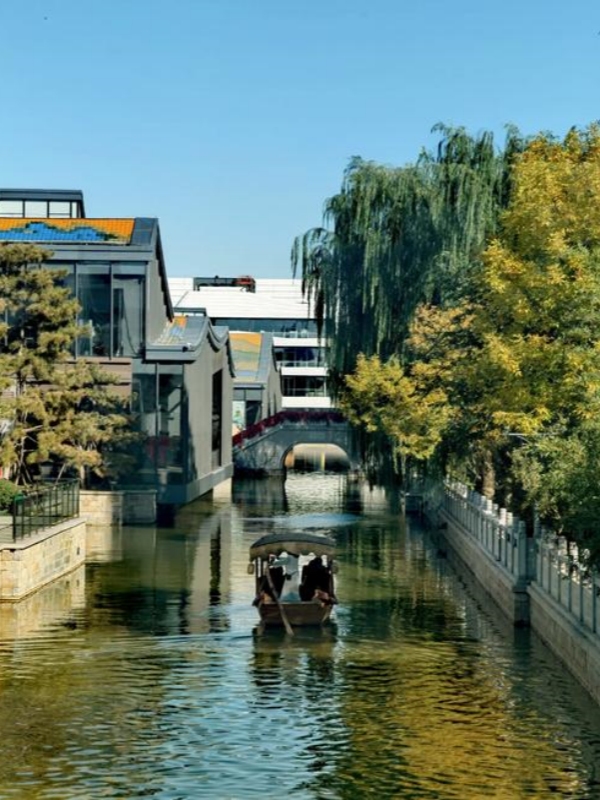

- Langfang near Beijing
-
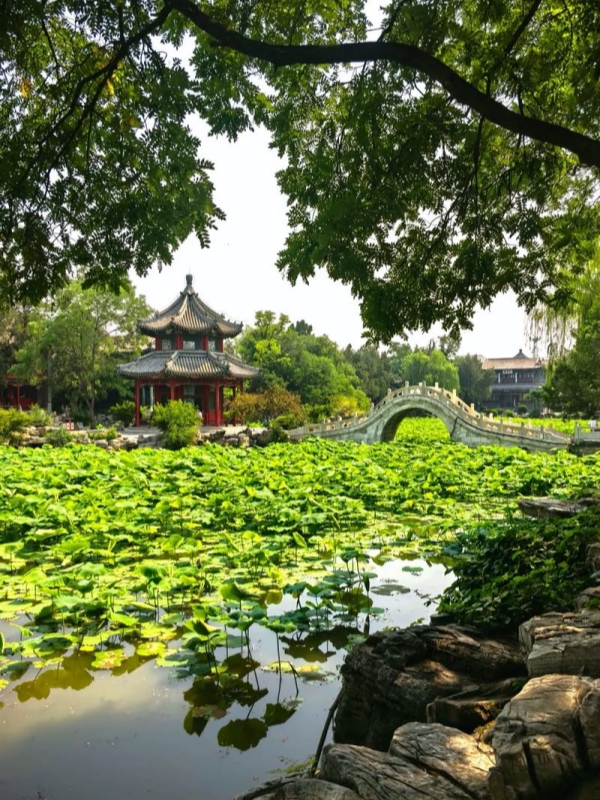
- Baoding near Beijing
-
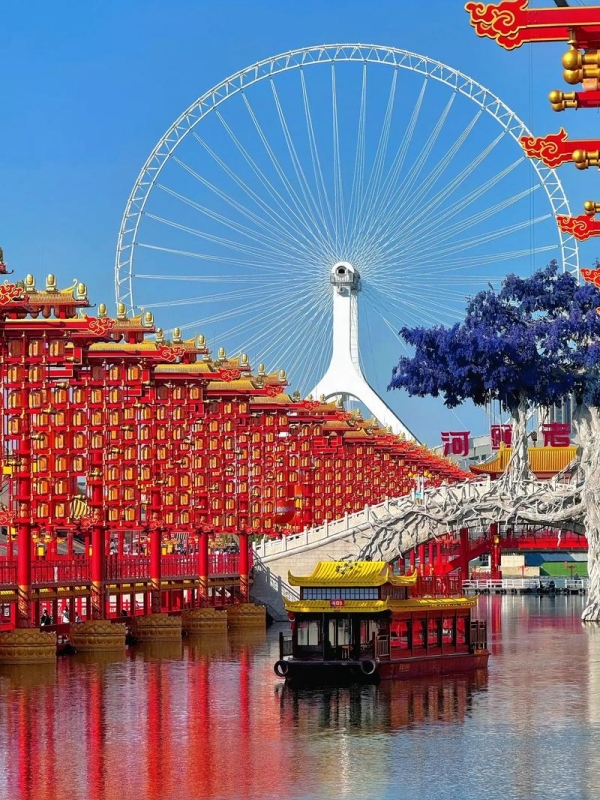
- Tangshan near Beijing
-
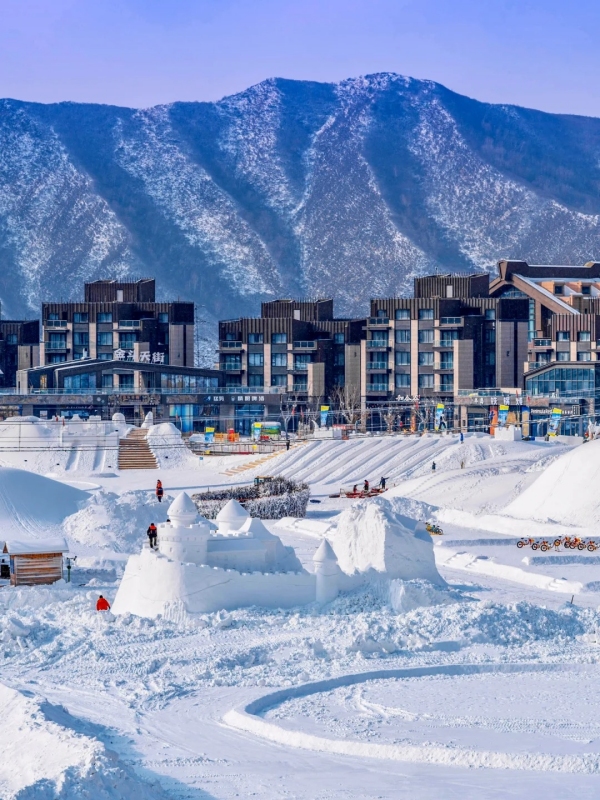
- Zhangjiakou near Beijing
Eight Chinese cities sit within 300 km of Beijing, all served by frequent high-speed trains. The under-200 km cluster works for half-day and full-day visits; the 200–300 km cluster holds the stronger weekend picks for travellers who want a longer overnight.
Inside Two Hours by Train
Five cities reach Beijing by G-train in 50 minutes or less. Tianjin at 114 km is the only one most foreign visitors will actually spend a day in: its concession-era riverside core is a clear urban contrast to Beijing. Langfang at 47 km works mainly as a transit junction rather than a destination. Baoding (140 km) was the Ming-Qing Zhili provincial capital and still holds lotus-stem ponds inside the old governor's office. Tangshan (155 km) is an industrial city best known for the 1976 earthquake memorial and Nanhu Park lake. Zhangjiakou (165 km) hosts the Chongli and Thaiwoo ski resorts in winter and served as a 2022 Winter Olympics cluster.
For more, see our guide to China Travel Itinerary 2 Weeks.
Three to Four Hours by Train
The longer-haul cluster pulls double duty as weekend destinations. Chengde at 225 km holds the Qing-dynasty Summer Resort (Bishu Shanzhuang), a UNESCO World Heritage Site; trains now take about 1 h 20 min from Beijing North. Shijiazhuang at 280 km functions mostly as a transfer point for western Hebei and Shanxi. Qinhuangdao at 300 km is the seaside option, with Beidaihe beach in summer and Shanhaiguan — the eastern end of the Great Wall — within easy reach.
Tianjin in One Day
-
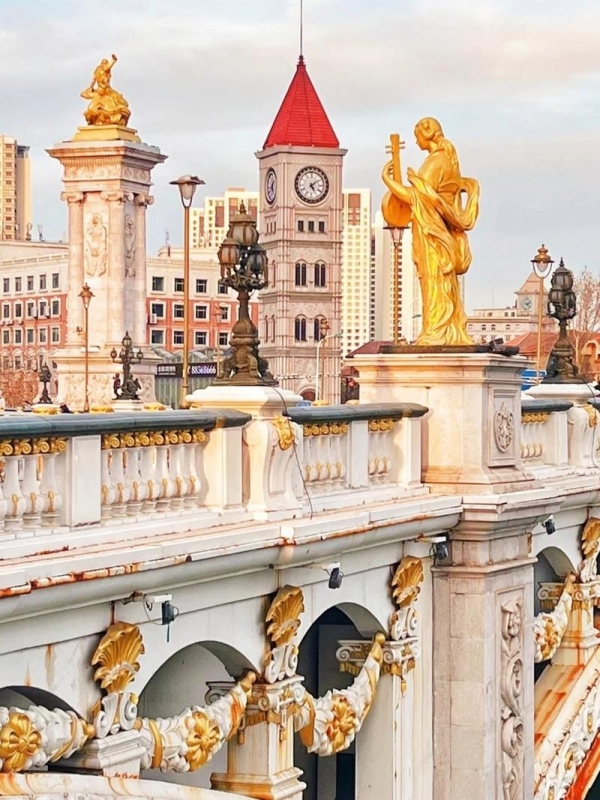
- Italian Town in Tianjin
-
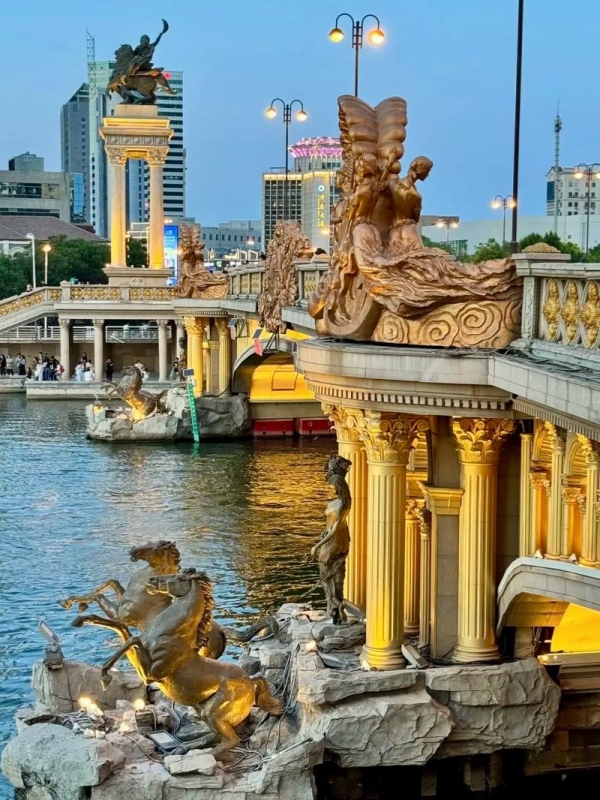
- Italian Town in Tianjin
-
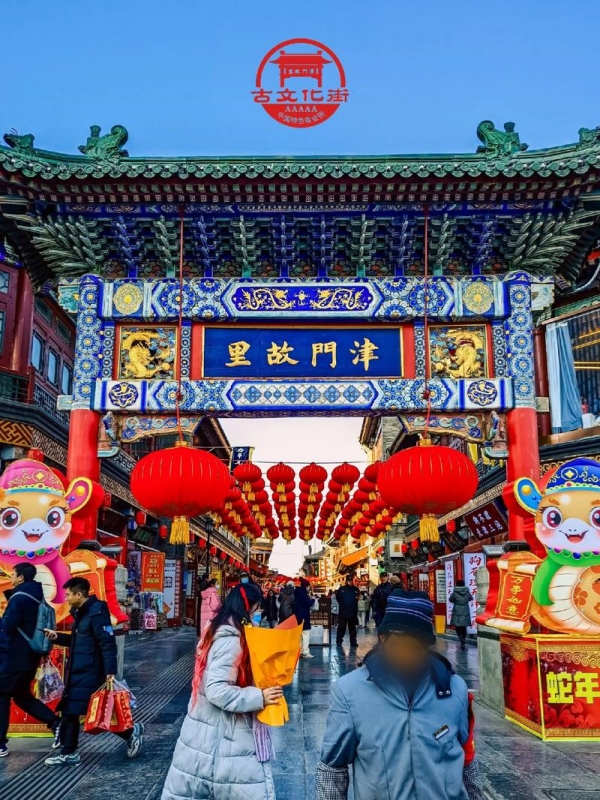
- Ancient Culture Street in Tianjin
-
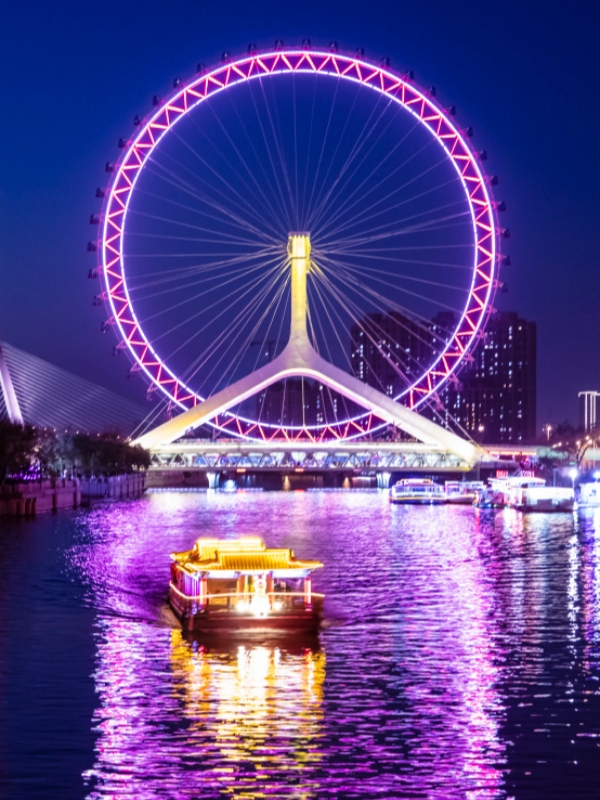
- Tianjin Eye
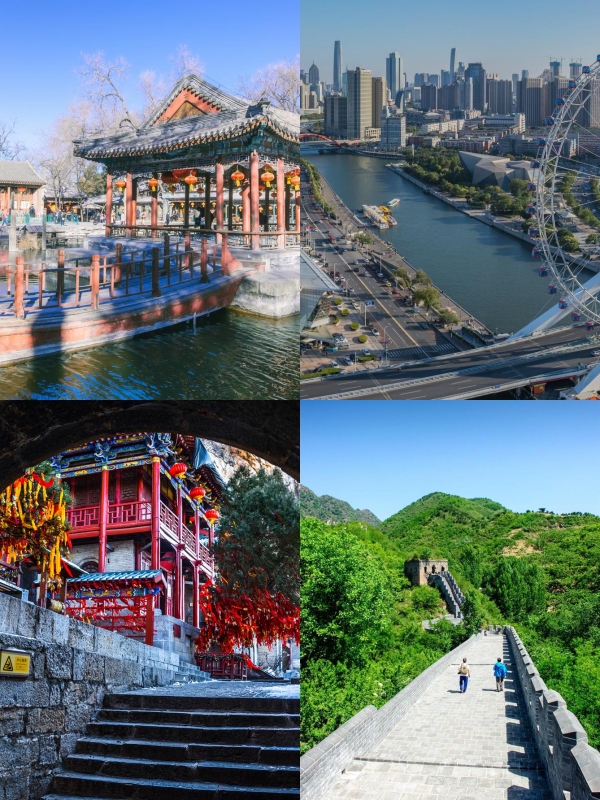
Tianjin is the strongest day trip from Beijing: 114 km south, roughly 30 minutes by intercity G-train. The draw is the foreign concession architecture along the Hai River, built up between 1860 and 1945 by British, French, German, Italian, Japanese and Austrian settlers. Plan for two or three sights in a single day and add the Tianjin Eye at dusk for the strongest light.
Must-See Sights
Five sights carry most of the day. Pair Italian Town in the morning with the Tianjin Eye around sunset to catch the river lighting.
- Italian Town (意大利风情区): a colonnaded piazza block in Hebei District that recreates a slice of late-19th-century Mediterranean architecture; free to walk.
- Five Great Avenues (五大道): a 1.5 km² grid of early-20th-century European villas, walkable in an hour and free to roam.
- Porcelain House (瓷房子): a French-period mansion decorated inside and out with historic ceramic shards; entry about $7 (¥50).
- Ancient Culture Street (古文化街): a crafts market for Tianjin-style mahua twists, paper cuts and clay figurines; free entry.
- Tianjin Eye (天津之眼): a 120 m ferris wheel spanning the Hai River; a standard ticket runs about $10 (¥70).
Getting to Tianjin from Beijing
Intercity G-trains depart Beijing South every 10–20 minutes from around 06:30 to 22:00. The journey takes about 30 minutes. Trains terminate at either Tianjin Station in the city centre, closer to most sights, or Tianjin Binhai further east near the airport. Second-class fares run about $8 (¥54.5); tickets are bookable on Trip.com or Klook.
- Best departure window: 09:30–11:00 to skip the 07:30–09:00 commuter rush.
- Return ticket: same price; last evening departures run past 21:00.
- Overnight option: hard-sleeper K-trains to Tianjin West take around 3 hours at roughly half the HSR fare.
Hidden Gems and Small Towns Near Beijing
-
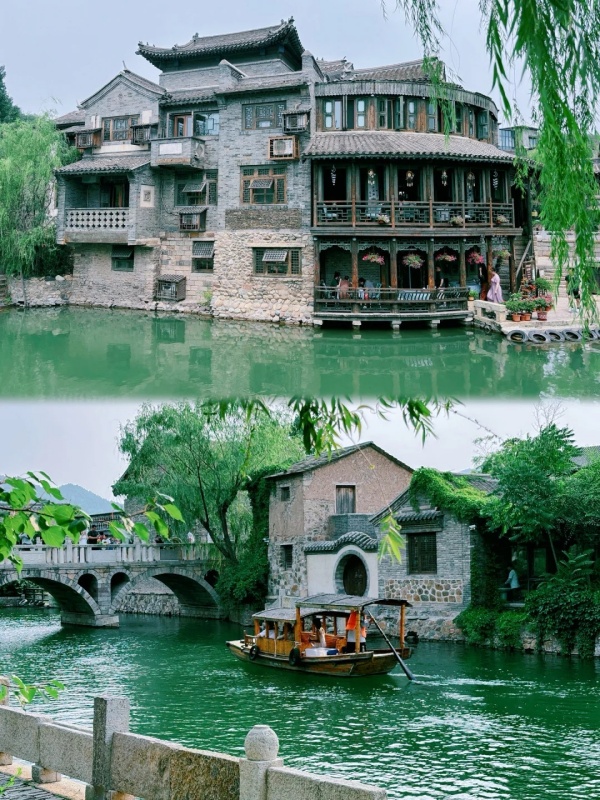
- Canal View of Gubei Water Town
-

- Gubei Water Town
Beyond the big-city shortlist, four off-the-main-tour stops sit 2–3 hours from Beijing. Each pairs well with a half-day or full-day plan from the city.
Gubei Water Town
A Jiangnan-style canal town in Beijing's Miyun District, built in the 2010s but modelled on the water towns of the lower Yangtze. Stone bridges and hilltop Simatai Great Wall views give it the closest heritage atmosphere to central Beijing. Entry costs about $21 (¥150) for a walk-through; an all-attractions pass including the Great Wall cable car runs about $49 (¥350). Direct shuttles leave Dongzhimen for the 2-hour ride and cost about $11 (¥80) round-trip.
Baiyang Valley
A primitive forest gorge in Beijing's Changping District, popular with hikers and day picnickers. Entry runs about $5 (¥35). Allow roughly 1.5 hours by car or 2 hours on bus 345 from Changping subway station. Trails work best from May to October; the gorge runs dry in winter.
Cuandia Village
A Ming-Qing courtyard village in Mentougou District, set in a mountain fold along the G109. Entry is free and most homestays offer a home-cooked tofu feast. Allow about 2 hours by car each way, longer by bus. Weekends add folk opera and lion dance at the village square. The nearby Cuandian Xia Shuihu stream walk makes a useful half-day pairing.
Jinshanling and Gubeikou Great Wall
The wildest Wall sections within reach of Beijing, both in Luanping County, Chengde prefecture. Jinshanling's restored section runs about $9 (¥65); Gubeikou opens free on unmaintained stretches. Allow about 2.5 hours by car or shuttle from Wangjing West. The trade-off is fewer crowds than Badaling or Mutianyu, at the cost of rougher footing and longer round trips.
Getting There from Beijing
HSR is the default for any major city within 300 km. Stations are well-signed in English, tickets are bookable on Trip.com or Klook, and trains run on fixed minutes. For the small towns and wild Wall sections, driving or a hired car is the realistic option.
High-Speed Rail
Beijing South serves most southbound G-trains; Beijing North and Qinghe handle northern routes to Zhangjiakou, Chengde and Datong; Beijing West covers Hebei-south and central-China departures. Allow 30 minutes at the station for security.
Regular Trains, Buses, and Driving
K- and T-trains run to Chengde, Tangshan and Qinhuangdao at roughly half the HSR fare but 2–3× the journey time — worth considering for an overnight hard-sleeper. Long-distance buses leave from Bawangfen (north), Liuliqiao (west) and Sihui (east), useful where HSR coverage is thin. Didi and rental cars are the only realistic options for Gubei Water Town, Baiyang Valley, Cuandia Village, Jinshanling and Gubeikou — all sit 2–3 hours by road with limited public-transport last mile.
Picking the Best Option
Default to HSR for any city with a G-train service: Tianjin, Baoding, Shijiazhuang, Zhangjiakou, Chengde, Qinhuangdao, Tai'an and Datong. Use buses or a hired car for the hidden gems and the wild Wall sections. Use overnight K-trains only when an HSR alternative is missing, or when you want the hard-sleeper experience. Book Jinshanling shuttles early on weekends and, for any Wall section without HSR, take a tour operator unless you hold a Chinese driving licence.
Frequently Asked Questions
Q: What are the closest cities to Beijing?
The five closest Chinese cities by air-line distance are Langfang at 47 km, Tianjin at 114 km, Baoding at 140 km, Tangshan at 155 km and Zhangjiakou at 165 km, each reachable in under 50 minutes from Beijing on a G-train. By straight-line distance, the closest foreign capital is Pyongyang in North Korea at roughly 810 km away.
Q: What cities near Beijing are worth visiting?
Tianjin is the strongest day trip for European concession architecture and street food; Chengde for the UNESCO Qing Summer Resort; Qinhuangdao for Beidaihe beach and Shanhaiguan, where the Great Wall meets the sea. Zhangjiakou works in winter for the Chongli and Thaiwoo ski areas. For quieter heritage walks, Gubei Water Town and Cuandia Village both sit within two hours by car.
Q: Which Beijing airport is closer to the city center?
Beijing Capital International Airport (PEK) sits about 25 km northeast of Tiananmen Square, reached in roughly 30 minutes on the Airport Express subway for about ¥25 (about $3.50). Beijing Daxing International Airport (PKX) is further out, 46 km south, taking around 40 minutes on the Daxing Airport Express for about ¥35 (about $5).
Q: Where is Tai'an in relation to Beijing?
Tai'an sits in Shandong Province about 470 km south of Beijing, and connects to Beijing South by G-train in around 1 h 50 min. It lies closer to Shanghai, roughly 700 km away, than to the capital. Mount Tai on the city's edge is a UNESCO World Heritage Site and is the standard reason visitors come.
Q: How far is Tianjin from Beijing by high-speed train?
Tianjin is 114 km from Beijing. Intercity G-trains depart Beijing South every 10–20 minutes across the day and cover the distance in about 30 minutes. Second-class fares run about $8 (¥54.5). End-point options are Tianjin Station in the city centre and Tianjin Binhai further east, closer to the airport.
Q: Can I visit the Great Wall as a day trip from Beijing?
Yes. Mutianyu and Badaling sit inside Beijing municipality, roughly 1.5–2 hours from the city centre. Jinshanling and Gubeikou are 2.5–3 hours away in neighbouring Hebei, with far smaller crowds. Allow a full day at minimum, and check cable-car hours in advance since most main sections stop running by late afternoon.
Q: What is the best time of year for day trips from Beijing?
April, May, September and October offer the mildest weather and clearest Great Wall views. Avoid the July–August school-holiday peak, when Gubei and Jinshanling fill up quickly and ticket queues lengthen. Zhangjiakou's ski season runs late November to early March across the Chongli and Thaiwoo resorts.