Luohu in Shenzhen:Vibrant Urban Zone Integrating Nature, Local Cuisine & Leisure Commerce
Luohu is the entry point to China in Shenzhen, where around a million people live in 78.76 square kilometers on the border with Hong Kong; the place almost all international visitors set foot on Chinese soil. It’s taken in a five minute ride on the MTR East Rail Line; a world away in texture, pace, and price. luohu district in china spans centuries of history, beginning with its Ming Dynasty market roots and continuing into the the front line of China's economic reform in the 1980s. Today it boasts Shenzhen's oldest commercial street, the country's largest gold jewelry trading hub, a nationally rated botanical garden, and border crossing that handle over 25 million travelers each year.
Most people use Luohu as a shopping stop and leave. This guide is for everyone who wants more than that. You'll find step-by-step crossing instructions, the real breakdown on what's worth buying and what isn't, where to eat across three distinct food scenes, and how to time everything so the trip actually works. Read through once before you go — it'll save you real time on the ground.
Understanding the Basics of Luohu District
Before diving into the details, here's a fast-read snapshot of everything you need to know about Luohu China at a glance.
| Category | Details |
|---|---|
| 📍 Location | Southern Shenzhen, Guangdong Province — directly bordering Hong Kong's New Territories |
| 📏 Area | ~78.76 km² (30.4 sq mi) |
| 👥 Population | ~1 million residents (comparable to San Jose, California) |
| 🌤️ Best Time to Visit | October – December (cool, dry autumn weather) |
| 🗣️ Languages | Cantonese (local primary), Mandarin; basic English near the border crossing |
| 💰 Currency | Chinese Yuan (¥ / CNY) |
| ⏰ Time Zone | GMT+8 (China Standard Time) |
| 🌡️ Climate | Subtropical monsoon — hot humid summers, mild winters |
| 🎯 Top Draws | Luohu Port, Luohu Commercial City, Dongmen Old Street, Fairy Lake Botanical Garden, Shuibei Jewelry District |
| 🚇 Easiest Entry | MTR East Rail Line to Lo Wu Station (40–55 min from central Hong Kong) |
| 💵 Daily Budget | Budget ¥300–500 | Mid-range ¥700–1,200 | Luxury ¥2,000+ |
| 🛡️ Safety | Generally safe; watch for shopping scams near the commercial city |
| 🛍️ Shopping Highlights | Commercial City (custom tailoring, replicas), Shuibei (gold jewelry), Dongmen (local fashion, night market) |
Exploring the Deep History of the District
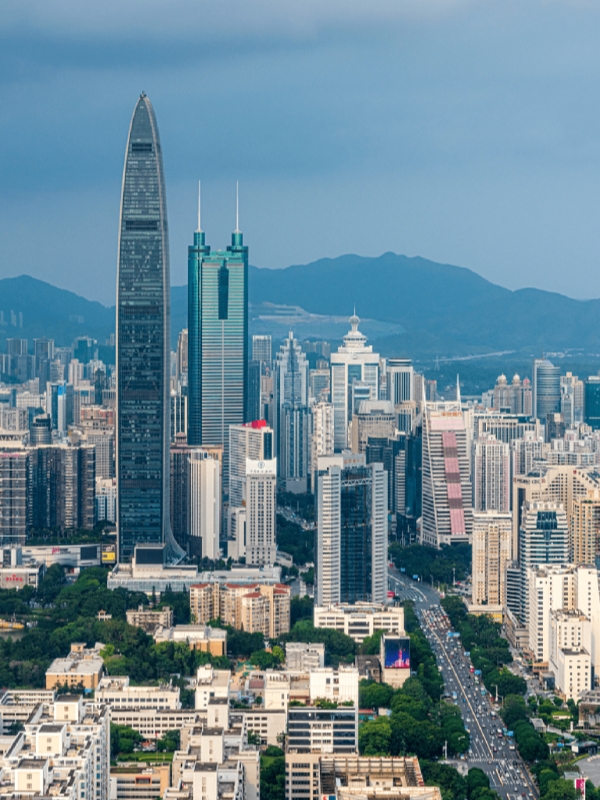
Shenzhen Luohu Central Business District Skyline
Most visitors arrive in Luohu and head straight for the mall. Understandable. But the district has centuries of history behind it — and knowing even a little makes the whole place click differently.
This Area Began as a Busy Ming Dynasty Market
Long before Shenzhen appeared on any map, the Pearl River Delta was populated by the Baiyue: the various tribal peoples who populated Lingnan, the land south of the Five Ridges in present-day Guangdong. As a frontier people removed from the imperial heartland, they developed something that would stick: a regional culture that was pragmatic, outward-looking, and commercial.
That commercial instinct took shape during the Ming Dynasty (1368-1644), when the area now known as Dongmen Old Street became the market of Shenzhen. Villages such as Chikan, Luohu, and Getang clustered around it. In English, Dongmen means East Gate, one of four gates marking the original limits of the market. That street has been doing business for fully 600 years.
Early Economic Reform Turned the Border into a City Hub
When China designated Shenzhen a Special Economic Zone in 1980, Luohu was the obvious candidate to move first. Its closeness to Hong Kong made it the logical point of contact for foreign money and ideas, and the Guomao Building, completed in 1985 at the astonishing rate of a floor every three days, gave the nation a glimpse of what reform-era China could do, coining the phrase “Shenzhen Speed.” The Qingshuihe rail corridor tells a quieter part of the same story.
For decades, those tracks carried goods grown on mainland farms to the Hong Kong market, a physical thread binding together two economies that required one another. And for decades the tracks sang a lullaby. These days, the old Caopu freight station is a railway park, the 1967 locomotive, built in Dalian, still parked on the tracks, pressed up against a skyline of glass towers. That contrast—of memory inside industry—is Luohu in a picture.
Finding the Best Attractions in the Area
Luohu's reputation starts and stops at the Commercial City for many visitors. That's a real miss. The district has three distinct experiences that most day-trippers never reach — plus a live calendar of local events worth timing your visit around. 🗺️
Fairy Lake Botanical Garden Is a Very Peaceful Place to Visit
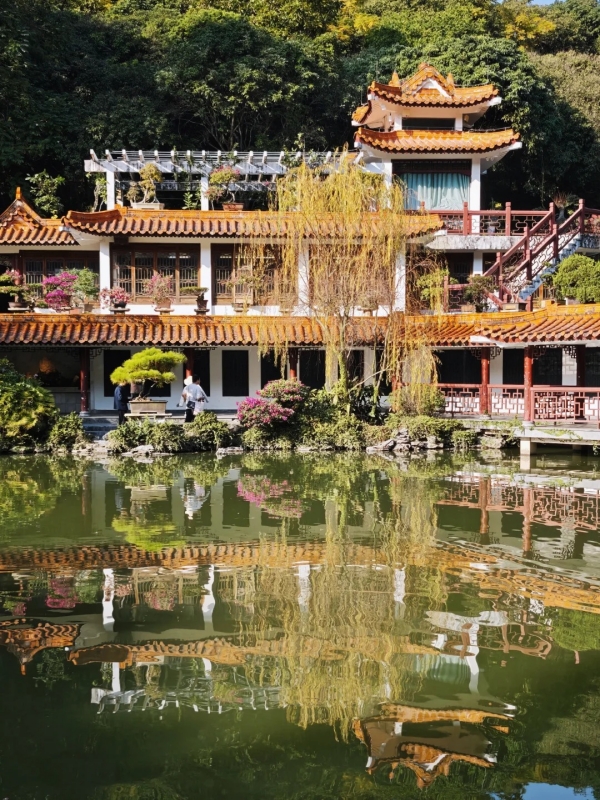
Fairy Lake Bonsai Garden
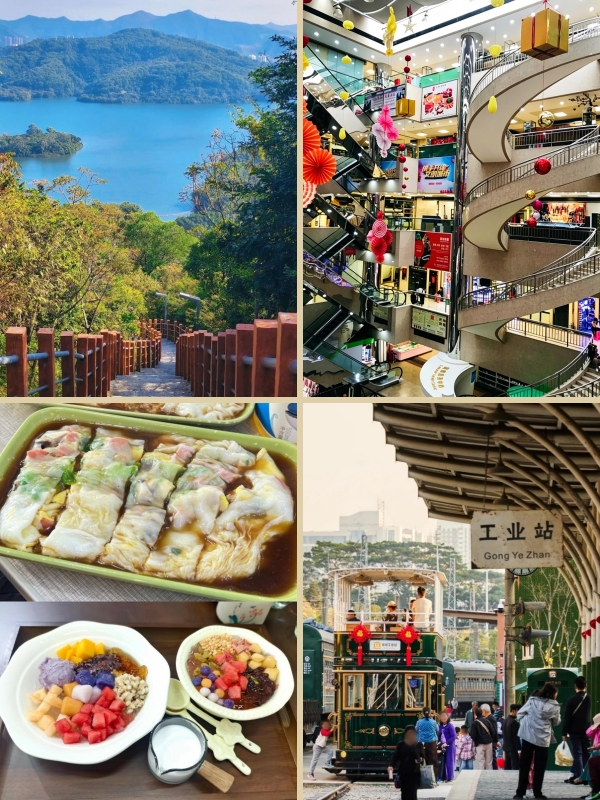
Thirty minutes from the border by metro, Fairy Lake Botanical Garden (仙湖植物园) sprawls over 6.68 million square meters on the western slopes of Wutong Mountain. With a national 4A (2007) and national key park (2008) rating it undoubtedly deserves them. Six scenic zones cover a fossil forest, a desert plant pavilion, and a Suzhou-style garden. At the eastern edge of the lake lies Hongfa Temple (弘法寺), the main Buddhist temple in Shenzhen covering over 30,000 square meters partway up the mountain.
- Address: 160 Xianhu Road, Luohu District
- Metro: Lines 2 or 8 to Xianhu Road Station
- Hours: Full access 06:00–21:30; ticketed entry 08:00–18:00; free entry 06:00–08:00 and 18:00–21:30
- Tickets: ¥15 full price; ¥5 half price (students, seniors); Hongfa Temple: free
Seasonal note: The Spring Flower Festival (春花节) runs mid-February through early March — in 2026 it ran February 14 to March 3. Crowds are large; advance booking through the official WeChat mini-program is required. Don't drive on festival weekends — parking closes. Take the metro.
Visiting tips:
- Budget 2.5–3 hours for the garden; 30–60 minutes for the temple
- Wear comfortable shoes — paths include slopes and uneven stone steps
- The 06:00–08:00 free window is genuinely peaceful and ideal for photography
Qingshuihe Railway Park Tells Stories of Old Train Routes
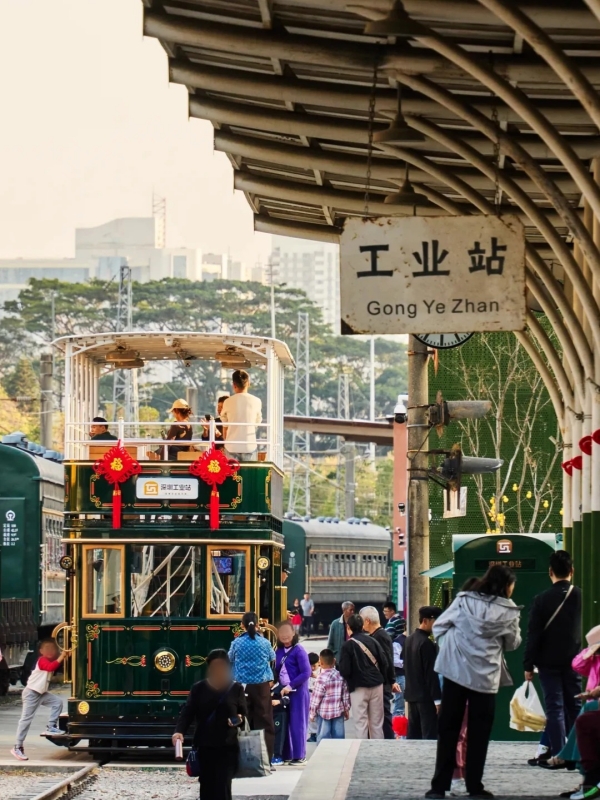
Industrial Station, Qingshuihe Railway Park
Most visitors to Luohu china don’t find Qingshuihe. The former Caopu freight station - the historic junction where agricultural products were transferred between mainland farms and Hong Kong markets - was converted into an interpretation park based around one of China’s oldest diesel locomotives; a sensational Dalian built 1967 workhorse. In advance of 2026, the park has undergone a significant renovation. Now hosting China’s first museum dedicated to the Three Express Trains (三趟快车), the freight services that ran from 1962 to 1997, a rail cinema recreates those routes through projected visuals and atmospheric sound. During the 2026 Spring Festival the public were able to take rides on replica tram-cars (铛铛车) around the grounds.
- Address: Qingshuihe Subdistrict, Luohu
- Metro: Line 3 to Caopu Station, Exit D3
- Hours: 09:00–18:00
- Entry: Park free; museum and experience activities may have separate fees — confirm before visiting
Budget 2–3 hours. This is no longer just a locomotive on a plinth.
Local Festivals Keep the District Lively All Year Long
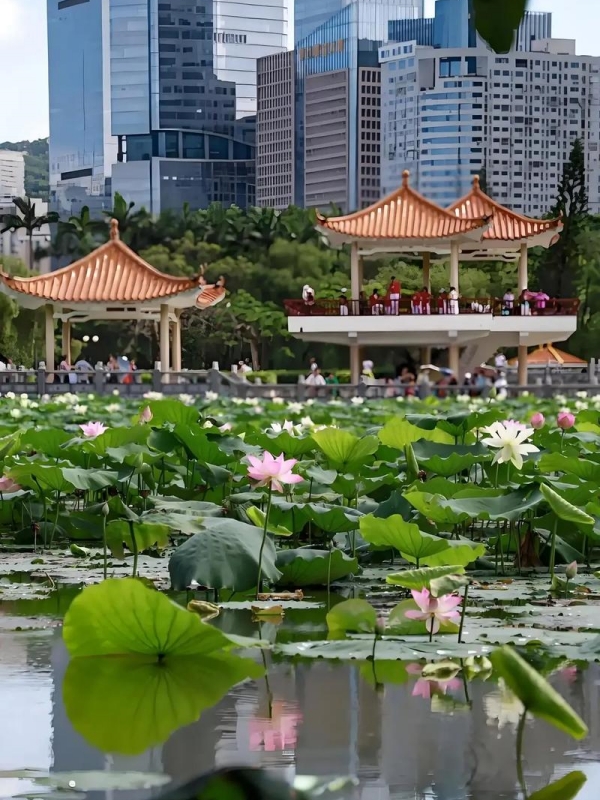
Honghu Park Lotus Pond, Luohu
Luohu in Shenzhen, China maintains a steady calendar of events around China’s major holidays. May Day Golden Week is another busy one. In 2026, Luohu staged “Active Luohu: Sports for Everyone” highlighting the connection of Jinpifang Art District, Qingshuihe, Honghu Park and the Jewelry Museum in a family orientering festival. That same week “Drive, Drink, Play, Shop” lined the street of Qingshuihe with market stalls and modified cars on exhibit. At Chinese New Year and National Day, Dongmen is decorated with light installations, intangible cultural heritage performances, and seasonal food markets.
- Follow "罗湖发布" (Luohu Release) on WeChat for current activity schedules
- Metro congestion increases sharply during festivals — avoid peak hours 08:00–10:00 and 17:00–19:00
- Some events require pre-registration through local apps; check at least three days ahead
Dongmen Old Street Offers a Great Night Market Experience
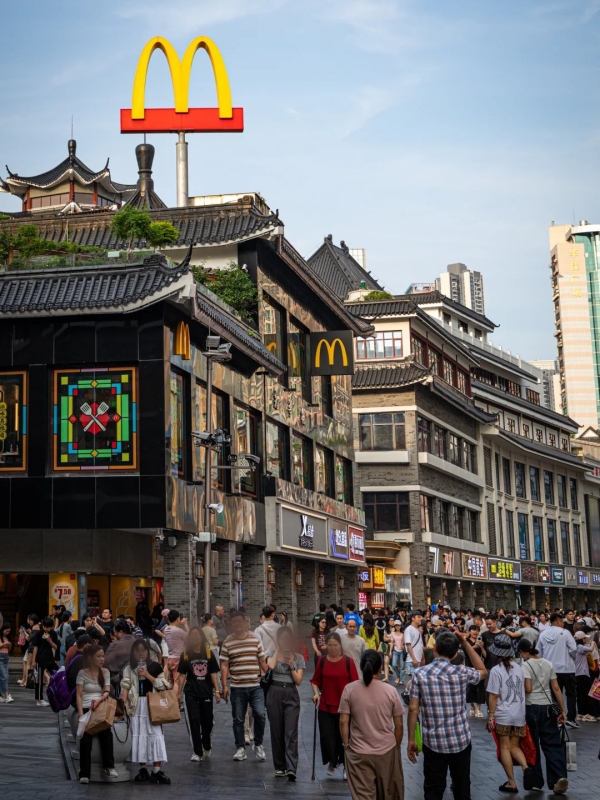
The Dongmen Ding Food Street (North Gate)
Dongmen is easy to dismiss during the day. Come back at 7 PM and it transforms — street performers, food stalls firing up, livestream hosts broadcasting to thousands from makeshift ring-light setups on the pavement. The energy is specific to Shenzhen: loud, spontaneous, completely alive.
Visitors arriving in 2026 will find a noticeably improved Dongmen. Between March 2024 and late 2025, the "Dongmen Metamorphosis" (东门蝶变) project redesigned 21 building facades and upgraded five side lanes without ever closing the street. The result is a layout of two main streets, four gathering plazas, and eight branching alleyways — wider sightlines, smarter lighting, and a consumer complaints system called "Yi Ma Dang Xian" (一码当先). Go at night and explore the side alleys, not just the main drag.
- Address: Bounded by Lixin Road (N), Shennan Road (S), Dongmen Middle Road (E), Xinyuan Road (W)
- Metro: Lines 1 or 3 to Laojie Station, Exit E
- Hours: Open all day; night market peaks 18:00–22:00
- Entry: Free
Night market street food worth trying:
- 肠粉 (Chángfěn) — silky rice noodle rolls, stuffed with egg or pork; mild and endlessly satisfying
- 糖水 (Tángshuǐ) — Cantonese sweet soup desserts; red bean or grass jelly versions
- 卤味 (Lǔwèi) — braised meats and tofu; point at what you want, vendor portions by weight
- 烧烤 (Shāokǎo) — grilled skewers; squid, lamb, mushrooms — order by quantity
- 炒粉 (Chǎofěn) — wok-fried noodles; choose char siu pork for a local flavor
If your dates overlap with a public holiday, lean in rather than work around it.
Shopping Tips for Markets and Gold Jewelry
Shopping in Luohu rewards preparation. The Commercial City is the obvious start, but Shuibei operates at a completely different level. Knowing the difference saves time, money, and potentially a customs headache. For Shenzhen's wider retail picture, the Shenzhen shopping area guide covers the full city.
You Can Find Many Affordable Goods at Commercial City
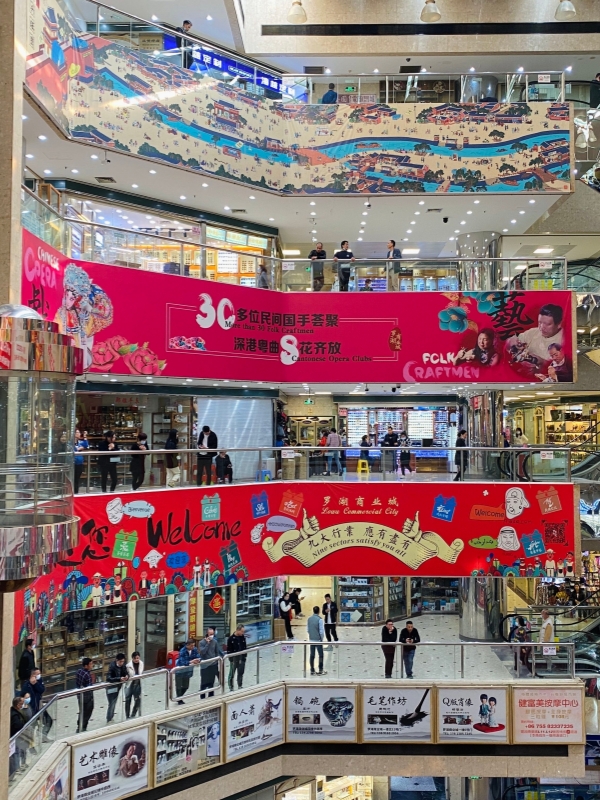
Luohu Commercial City
Walk out of Luohu Port, cross the plaza — you're there. Luohu Commercial City (罗湖商业城, Luóhú Shāngyèchéng) is a seven-floor complex immediately next to Shenzhen Railway Station. For most international visitors, it's the first shopping destination on mainland Chinese soil. The goods density is hard to match.
The building breaks down roughly like this:
- Floors 1–2: Bags, accessories, watches, fashion — replica branded goods concentrated here
- Floor 3: Electronics, phone cases, cables, audio gear
- Floor 4: Restaurants, tea shops, convenience food
- Floors 5–6: Tailoring, fabric, custom garments (suits, qipao, casual wear)
- Floor 7: Service vendors — massage, dental
Custom suits and qipao are worth considering. Most tailors use real fabric and deliver in 24–48 hours. Inspect stitching on display samples first. Massages and dental work are authentic at 40–60% less than Hong Kong prices.
Bargaining is expected. The protocol:
- Start at 30–40% of the asking price
- Hold firm or walk slowly toward the exit
- A final price of 50–60% of the original ask is a normal outcome
- Never agree to the first price; never show enthusiasm before negotiating
Useful phrases for bargaining:
| Situation | Chinese | Pinyin | Use it when... |
|---|---|---|---|
| Ask the price | 多少钱? | Duōshao qián? | You want to know the price |
| Ask for cheaper | 便宜一点 | Piányí yīdiǎn | Opening your counter-offer |
| Decline firmly | 不要了 | Bú yào le | Walking away |
| Final push | 最低多少? | Zuì dī duōshao? | You want their floor price |
- Address: Adjacent to Shenzhen Railway Station; 2-min walk from Luohu Port exit
- Metro: Line 1 to Luohu Station, direct connection
- Hours: Approx. 10:00–21:00 (individual stalls vary)
- Entry: Free
The MixC Shenzhen Brings Global Luxury Brands to the Heart of Luohu
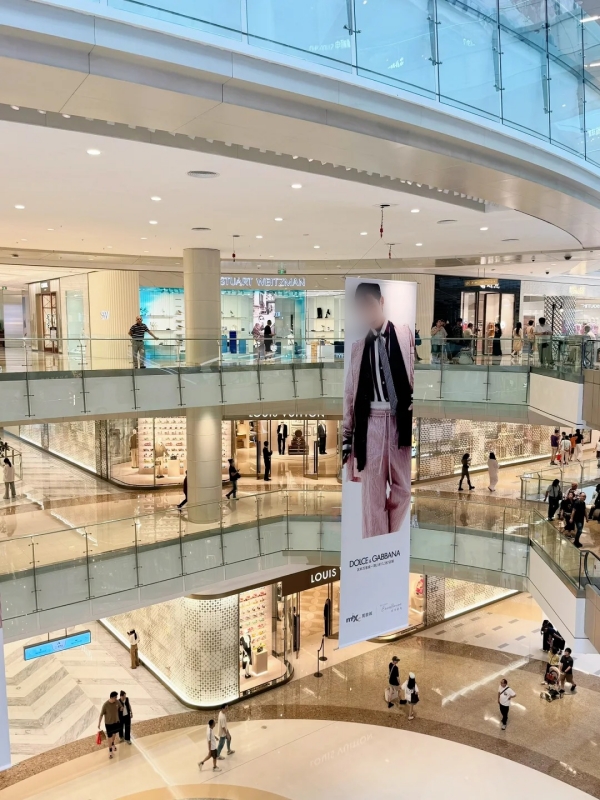
MixC Luohu Central Atrium
Five minutes from the border crossing by metro, The MixC Shenzhen (罗湖万象城, Luóhú Wànxiàngchéng) operates at a completely different level from the Commercial City. This is Luohu's premier luxury destination — 210,000 square meters across six floors, 500+ brands, and consistently one of the highest-revenue malls in China. LV, Gucci, Hermès, Prada, Dior, Chanel, Cartier, Bulgari — they're all here. So are an Olympic-standard ice rink, IMAX and Dolby cinemas, the Dior Café, a Michelin-recommended restaurant, and an Ole' supermarket stocked with imported goods.
What's inside:
| Category | Highlights |
|---|---|
| 💎 Luxury retail | LV, Gucci, Hermès, Prada, Chanel, Dior, Cartier, Bulgari, Fendi — 500+ brands total |
| 🍽️ Dining | Shanshiliu Guizhou Cuisine (Michelin-recommended), Banu Hot Pot, Dior Café, full food court |
| 🎬 Entertainment | IMAX + Dolby cinema; Olympic-standard real-ice skating rink |
| 🛒 Other | Ole' imported supermarket, Sisyphe bookstore, rotating art exhibitions in the atrium |
The MixC and the Commercial City serve entirely different shoppers — but both fit inside a single Luohu day trip. Bargain goods and tailoring in the afternoon; luxury retail, dinner, or a film at The MixC in the evening.
- Address: No. 1881, Bao'an South Road, Luohu District
- Metro: Lines 1 or 2 to Grand Theatre Station, Exit C or F
- Hours: Sun–Thu 10:00–22:00; Fri–Sat 10:00–22:30
- Entry: Free
Shuibei Jewelry District Is Where Most Gold Is Sold
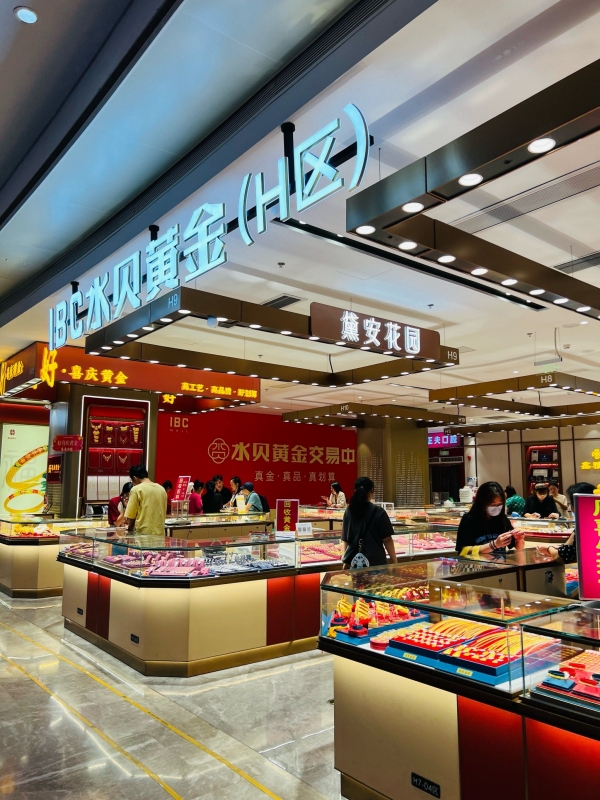
Shuibei Jewelry Wholesale Market
About fifteen minutes northeast by metro, Shuibei (水贝) is China's largest gold and jewelry trading hub. The local saying: "For the finest jewelry in China, go to Shenzhen; for Shenzhen's finest, go to Shuibei." The area supplies over half of the country's gold jewelry output, and individual buyers are welcome.
The three core destinations:
| Mall | Location | Focus | Best for |
|---|---|---|---|
| Shuibei International Jewelry Trade Center | Tianbe 4th Road × Beili North Road | Gold, jade, mixed jewelry | Broad selection, good for browsing |
| Jinli International Jewelry Trading Center | Beili South Road | Mid-range and designer pieces | More curated options |
| Shenzhen Gold Plaza | 1 Shuibei Road | Pure gold (足金999) by weight | Buying at daily market rate |
Gold at Shenzhen Gold Plaza is priced at the daily spot rate per gram — transparent and typically cheaper than Hong Kong. Check Hong Kong Customs' current declaration rules before carrying gold back across the border.
- Metro: Line 3 to Tianbei Station, Exit C
- Hours: Approx. 10:00–21:00
- Entry: Free
For anyone comparing Shenzhen's wholesale markets more broadly, Shuibei sits in a different category — but the scale produces retail prices that rival wholesale elsewhere.
Where to Find Great Local Food
The food in Luohu reflects the city's migrant history. Cantonese and Hakka traditions dominate — two styles that approach ingredients very differently and both reward a proper sit-down meal. 🍜
Dongmen Night Market Is Perfect for Delicious Street Snacks
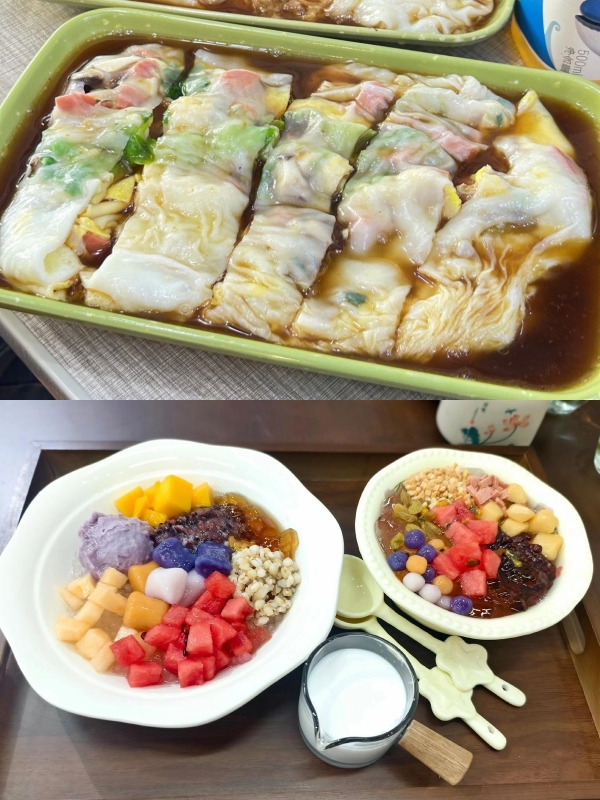
Rice Rolls and Cold Sweet Soup
For a first meal in Luohu, skip the restaurants and go straight to Dongmen. The side streets off the main strip transform after dark into one of Shenzhen's better street food scenes — informal, cheap, and reliably good. Stalls cluster most densely between 18:00 and 23:00. Most vendors work through pointing and calculators; Google Translate's camera function handles anything else. Payment is cash or mobile — foreign credit cards are not accepted at stalls.
- Address: Dongmen Middle Road and surrounding lanes
- Metro: Lines 1 or 3 to Laojie Station, Exit E
- Hours: Stalls mainly 18:00–23:00; some restaurants open all day
- Budget: ¥30–80/person
What to eat:
- 肠粉 (Chángfěn): Rice noodle rolls with egg, pork, or shrimp; gentle flavor, great texture
- 糖水 (Tángshuǐ): Sweet soup desserts — red bean, grass jelly, taro; light after savory food
- 卤味 (Lǔwèi): Braised meats and tofu by weight; not spicy
- 烧烤 (Shāokǎo): Grilled skewers — squid, lamb, corn; order by number of sticks
- 炒粉 (Chǎofěn): Wok-fried noodles; choose char siu (BBQ pork) for local flavor
Authentic Cantonese and Hakka Meals Offer Great Comfort
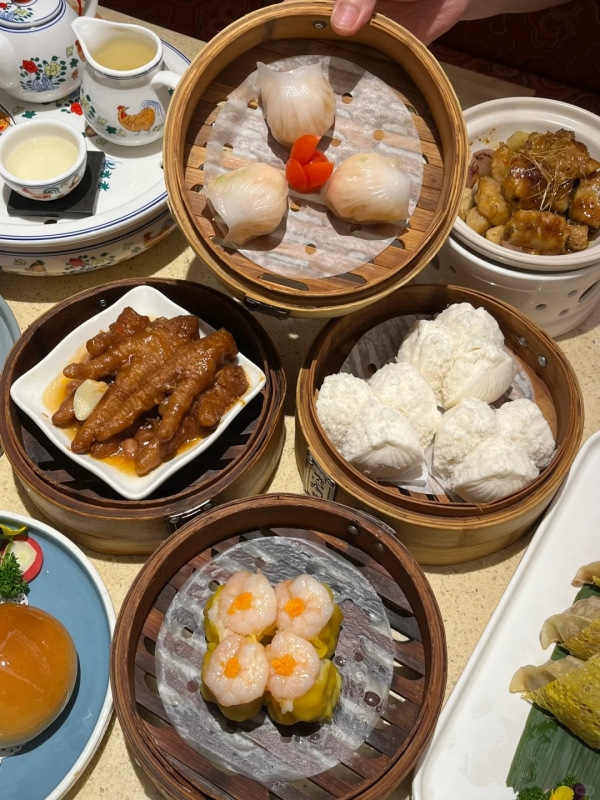
Cantonese Dim Sum
Luohu's food runs deeper than night market snacks. The district sits at the intersection of Cantonese (广府, Guǎngfǔ) and Hakka (客家, Kèjiā) traditions — and both are worth exploring on their own terms.
Cantonese cuisine here is shaped by Hong Kong proximity. The morning tea ritual (早茶, zǎochá) is an institution: teahouse, oolong, an unhurried procession of dim sum baskets. Arrive before 09:00 on a weekday to skip the wait. Har gow, char siu bao, cheung fun — deceptively simple, endlessly variable in quality. Hakka cooking is earthier: salt-baked chicken (盐焗鸡), braised pork belly with pickled mustard greens (梅菜扣肉), and stuffed tofu (酿豆腐) are the ones to order specifically.
At a glance:
- Dim sum teahouses: Morning tea 07:00–14:00; dinner 17:00–22:00; ¥60–100/person
- Hakka restaurants: Near Shuibei and residential areas; ¥80–150/person
- Cantonese highlights: 肠粉, 虾饺, 叉烧包, 艇仔粥 (sampan congee)
- Hakka highlights: 盐焗鸡, 梅菜扣肉, 酿豆腐
- Local souvenir: Lychee wine (荔枝酒, lìzhī jiǔ) — slightly sweet, worth one bottle
For how Shenzhen's food fits the wider Guangdong picture, the things to do in Shenzhen guide covers culinary neighborhoods across the city.
Eateries Near the Border Station Are Very Easy to Find
Not every visitor wants to navigate far for their first meal. The 4th floor of Luohu Commercial City — Cantonese restaurants, fast food, tea shops, noodle stalls — is two minutes from the border exit and gets the job done. Quality is adequate, not exceptional. Right choice when you're carrying bags or short on time. For a meal worth lingering over, head to Dongmen or the Shuibei area instead.
- Address: Luohu Commercial City, 4th floor (2-min walk from Luohu Port exit)
- Metro: Line 1 to Luohu Station, direct connection
- Hours: Approx. 10:00–21:00
- Budget: ¥40–90/person
How to Travel Easily from Hong Kong
Over 25 million border crossings were recorded at Luohu Port in 2026, with single-day foreign visitor counts hitting historic highs. The crossing is well-designed and generally smooth — but it rewards timing and preparation.
The Train Is the Fastest Way to Cross the Border
The MTR East Rail Line terminates at Lo Wu Station, which connects directly to Luohu Port — no taxi, no bus, nothing extra needed.
Here's the process, step by step:
- Buy an Octopus Card — at any MTR station or the Airport Express arrival hall; covers all fares without buying individual tickets
- Board the East Rail Line to Lo Wu (final stop); 40–55 minutes from central Hong Kong
- Follow signs to Hong Kong Exit — immigration hall inside the station; allow 5–15 minutes
- Walk the connecting bridge between Hong Kong and mainland halls (3–5 minutes)
- Pass through China Immigration — passport and visa documentation ready; allow 10–30 minutes
- Collect belongings and exit through the arrivals area
- Walk two minutes to Luohu Commercial City or Shenzhen Railway Station
Total time from Kowloon to walking into Shenzhen: typically under 90 minutes on a normal weekday.
You Can Easily Travel Here from the International Airport
From Hong Kong International Airport, the most efficient route:
- Airport Express to Hong Kong Station or Kowloon Station (24–31 minutes)
- Transfer to MTR East Rail Line toward Lo Wu
- Total journey: approximately 75–90 minutes from the airport
- Airport Express ticket: ~HK$115 (Hong Kong Station)
- East Rail to Lo Wu: ~HK$50–60 (from central Hong Kong)
- Total journey time: 75–90 minutes from airport
Skip the bus route via Tuen Mun — multiple transfers, significantly more time.
Check the Latest Rules for Your Visa-Free Entry
Most foreign passport holders need a Chinese visa. But a significant policy change in December 2024 made entry far more accessible.
China now offers a 240-hour (10-day) visa-free transit policy for eligible nationalities — including citizens of the US, UK, EU member states, Australia, Canada, and many others. Luohu Port is a designated entry point. No advance booking required; apply in the visa-free transit lane on arrival.
Key conditions:
- Hold a confirmed onward departure ticket to a third country or region
- Apply at the port of entry — no advance booking needed
- The 240-hour window starts at the moment of entry
- Activity zone covers a wider geographic area than the previous policy — check nia.gov.cn for current permitted regions
Always verify current eligibility at the China National Immigration Administration (nia.gov.cn) before you travel.
Plan Your Crossing Times to Avoid Busy Periods
Luohu Port processed over 25 million crossings in 2026. Timing matters.
| Day/Time | Direction | Congestion Level |
|---|---|---|
| Weekday 06:30–08:00 | Either | Low |
| Weekday 08:00–10:00 | Shenzhen → HK | High |
| Weekday 10:00–12:00 | Either | Low (optimal) |
| Weekday 17:00–19:00 | HK → Shenzhen | High |
| Weekend morning | Either | Medium–High |
| Public holidays (first 2 days) | Either | Extreme |
| Public holidays (final day) | HK → Shenzhen | Extreme |
Best window: weekday 10:00–12:00 — queues clear in under 20 minutes. Worst times: the first and last days of Chinese New Year and National Day Golden Weeks — two to four hours is normal.
Simple Tips for Your Upcoming Trip
When to go, where to stay, how to get around, and how to pay — here's the practical side, kept short.
Travel During Autumn for the Best Possible Weather
Shenzhen's climate is subtropical. Two pleasant windows exist: autumn and spring.
| Season | Rating | Temperature | What Works | What Doesn't |
|---|---|---|---|---|
| Spring (Mar–May) | ⭐⭐⭐ | 18–26°C, humid | Fairy Lake in bloom | Afternoon rain, dampness |
| Summer (Jun–Aug) | ⭐⭐ | 28–35°C, oppressive | Hotel discounts | Extreme heat and humidity |
| Autumn (Sep–Nov) | ⭐⭐⭐⭐⭐ | 18–26°C, dry | Best walking, best photos | National Day Golden Week (Oct 1–7) |
| Winter (Dec–Feb) | ⭐⭐⭐⭐ | 10–18°C, mild | Thin crowds, fast crossings | Spring Festival chaos |
Best start date: October 8 — the day after National Day Golden Week ends. Avoid summer unless hotel discounts specifically matter to you.
Pick a Hotel That Is Near a Metro Station
Prioritize hotels on or near MTR Lines 1 or 3 — those two lines reach every destination in this guide.
| Tier | Price Range | Hotel | Location Advantage | Best For |
|---|---|---|---|---|
| Luxury | ¥800+/night | Renaissance Shenzhen Luohu (万丽深圳罗湖) | Metro-connected, strong brand | Business travelers |
| Luxury | ¥700+/night | Crowne Plaza Shenzhen Landmark (皇冠假日地标) | Adjacent to Dongmen | Business + leisure |
| Mid-range | ¥400–700/night | Kapok Shenzhen Luohu (凯悦旗下) | Boutique design, metro access | Quality-conscious leisure |
| Budget | ¥150–300/night | Chain hotels near Luohu Port | Walking distance to border | Day-trip extensions |
The cost of living in Shenzhen guide breaks down accommodation pricing across all districts if you're comparing options.
Use the Metro to Travel Around the Entire City
Lines 1, 3, 2, and 8 cover every destination in this guide. A Shenzhen Tong (深圳通) card gets you a fare discount and works on buses.
| Destination | Nearest Station | Line | Exit |
|---|---|---|---|
| Luohu Port / Commercial City | Luohu Station | Line 1 | Direct connection |
| Dongmen Old Street | Laojie Station | Lines 1 or 3 | E |
| Shuibei Jewelry District | Tianbei Station | Line 3 | C |
| Fairy Lake Botanical Garden | Xianhu Road Station | Lines 2 or 8 | — |
| Qingshuihe Railway Park | Caopu Station | Line 3 | D3 |
For taxis, use Didi (China's Uber) — upfront pricing, no negotiation, English interface.
Use Mobile Apps to Pay and Communicate Easily
On payments: Foreign cards work at major hotels and large malls. Nowhere else. The 2026 solution is WeChat Pay or Alipay — both support international bank card binding.
WeChat Pay specifics:
- Transactions under ¥200 are fee-free per transaction
- After your first purchase, transactions under ¥1,000/day are fee-free for the first 90 days
- WeChat Pay is interoperable with PayPal and 36+ other international wallets — US PayPal users can scan WeChat QR codes directly, no separate binding needed
- Set this up before crossing; it takes about 15 minutes
Keep ¥200–500 in small RMB bills as backup.
On language: Commercial City vendors manage with basic English and calculators. Restaurants and markets run almost entirely in Mandarin or Cantonese. Camera translation (Google Translate) handles menus.
| Situation | Chinese | Pinyin |
|---|---|---|
| How much? | 多少钱? | Duōshao qián? |
| Cheaper please | 便宜一点 | Piányí yīdiǎn |
| No thank you | 不要了 | Bú yào le |
| Where's the metro? | 地铁在哪里? | Dìtiě zài nǎlǐ? |
| This one (pointing) | 这个 | Zhège |
On safety: Luohu is safe. Two scam types are worth knowing:
- "Tea ceremony" invitation: Strangers invite you to a tea tasting; the bill arrives at ¥800–2,000+. Decline immediately, no exceptions.
- "Investment tea" scam (2026 police alert): A polished version pitching high-end tea as a financial product. Same response: decline and walk away.
Use Didi; confirm driver name and plate against the app before getting in.
See How Luohu Compares to Other Parts of Shenzhen
Shenzhen has nine districts. Four matter most to international visitors.
Match yourself to the right district:
- ✅ Coming from Hong Kong for the day → Luohu (border location, walkable, high experience density)
- ✅ Shopping + historical culture → Luohu (Commercial City, Dongmen, Shuibei — all here)
- ✅ Tech campus visits / internet culture → Nanshan (Tencent, OCT Loft, Sea World)
- ✅ Upscale malls + business travel → Futian (Shenzhen CBD, MixC, Vientiane City)
- ✅ Three-day+ exploration base → Luohu as a hub, day trips to other districts by metro
Futian is newer and better for premium retail. It doesn't have Luohu's border convenience or historical depth. For a first Shenzhen visit from Hong Kong, Luohu wins on almost every practical metric. The Shenzhen districts overview covers the full comparison for multi-day itineraries.
Considering Guangzhou as part of a wider Guangdong trip? The guide to Guangzhou's districts — including the modern Tianhe District — makes a useful companion. Guangzhou is 40 minutes from Shenzhen by high-speed rail.
FAQs: Essential Inquiries for Luohu Travelers
Q: What is Luohu most famous for?
Luohu China is best known for Luohu Port — the busiest land crossing between Hong Kong and the mainland — and for Luohu Commercial City, the seven-floor shopping complex that sits steps from the border. Dongmen Old Street, now upgraded after its 2024–2025 renovation, gives the district genuine historical weight. And Shuibei Jewelry District, which supplies over half of China's gold output, makes Luohu a surprisingly serious destination for jewelry buyers.
Q: Where exactly is Luohu Commercial City?
Luohu Commercial City is on the Shenzhen side of the border, directly opposite the Luohu Port immigration exit — about a two-minute walk. It sits next to Shenzhen Railway Station and connects directly to Luohu Metro Station on Line 1. The building has seven floors. Most shops open around 10:00 AM and close by 9:00 PM, though individual stalls vary. When people talk about shopping in Luohu China, this is almost always what they mean.
Q: Do I need a visa to visit Luohu from Hong Kong?
Citizens of many countries — including the US, UK, EU member states, and Australia — can enter Luohu China under the 240-hour (10-day) visa-free transit policy introduced in December 2024. You apply at the port of entry, in the designated lane. You need a confirmed onward departure ticket. For nationalities not covered by this policy, a standard Chinese visa is required. Always check current eligibility at nia.gov.cn before you travel — policy updates happen without much notice.
Q: Can I use my credit card in Luohu, China?
Major hotels and large malls in Luohu China accept foreign Visa and Mastercard. Street stalls, small restaurants, and most vendors inside the Commercial City do not. The practical answer for 2026 is WeChat Pay: it supports foreign card binding, offers fee-free transactions under ¥200, and US-based PayPal users can pay directly via WeChat QR codes. Set it up in Hong Kong before crossing. Carrying ¥200–500 in small RMB bills covers everything else.
Q: How long should I spend in Luohu, China?
A half-day covers the Commercial City and the border area. A full day — say 10 hours — lets you add Dongmen night market in the evening and either Fairy Lake Botanical Garden or Shuibei Jewelry District during the day. Two days in Luohu China allows a thorough exploration: the upgraded Qingshuihe Railway Park with its Three Express Trains Museum, Hongfa Temple, a proper Hakka dinner, and time to explore the renovated Dongmen side alleys without rushing.
Q: Is Luohu District in China safe for tourists?
Luohu China is generally safe. Violent crime is uncommon and the district is well-patrolled. The main risks are commercial scams: the classic "tea ceremony invitation" (strangers who invite you to a teahouse and present an enormous bill) and a newer 2026 variant called the "investment tea" scam, where high-end tea is pitched as a financial product. Decline both immediately. For taxis, use the Didi app exclusively to avoid overcharging. Inside the Commercial City, inspect goods at the point of purchase to avoid bait-and-switch substitutions.
Q: What is the best way to get from Hong Kong to Luohu?
The MTR East Rail Line to Lo Wu Station is the answer for visiting Luohu China from Hong Kong. It runs frequently, takes 40–55 minutes from central Hong Kong, and the Lo Wu exit connects directly to Luohu Port without any additional transport. Buy an Octopus Card at any MTR station to handle fares without buying individual tickets. From Hong Kong International Airport, add an Airport Express connection — total journey time runs 75–90 minutes.
Q: When is the worst time to visit Luohu in China?
The two periods to avoid are Chinese New Year Golden Week (late January to early February) and National Day Golden Week (October 1–7). Luohu China recorded over 25 million border crossings in 2026 — and those numbers spike dramatically during holidays. Wait times of two to four hours in each direction are not unusual during Golden Weeks. If those dates are fixed, plan the crossing for late morning on a weekday within the holiday period, when traffic eases slightly. The best crossing window on a normal day: weekdays between 10:00 AM and noon.
Q: Is everything in Luohu Commercial City fake?
Most branded goods are counterfeit or high-quality replicas — that's widely known and largely the point of the Commercial City within Luohu China. What isn't fake: the tailoring, massage, dental services, and restaurants on the upper floors. Custom suits use real fabric. Massages are genuine. Dental work is real. The legal risk lies specifically in carrying fake branded goods across international borders — customs authorities in Hong Kong, the US, and the EU have authority to confiscate them. Check your home country's customs rules before you shop.
Q: Which Shenzhen district is best for first-time international visitors?
Luohu China is the strongest choice for most first-timers arriving from Hong Kong. The border access, the walkable scale, and the density of experiences — shopping, history, food, parks — within a contained area make it unusually easy to navigate. Futian suits visitors prioritizing upscale malls and a business-hotel environment. Nanshan is the pick for tech and culture. But if you have one day and you're coming from Hong Kong, Luohu gives you the most complete picture of what makes Shenzhen distinct — without needing a full itinerary to access it.